Star Trek Meets Evolutionary Biology (And Good Things Happen)
From Safeguarding Sound Science by National Center for Science Education
November 26, 2025 · 58 min · Season 2 · Episode 9
About this episode
The episode explores the intersection of Star Trek and evolutionary biology with insights from experts in the field.
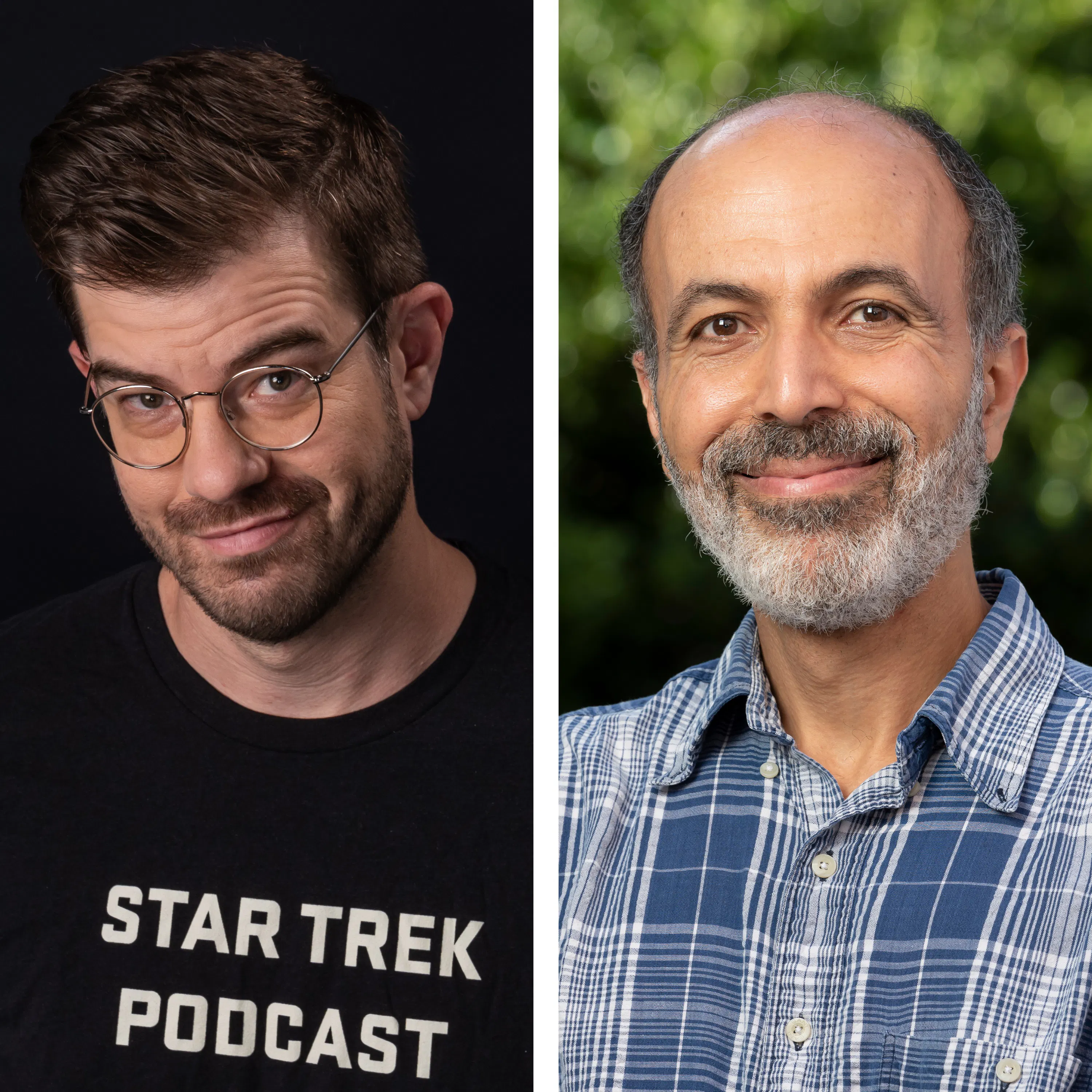
Star Trek is one of the greatest science fiction universes ever created, spawning 12 main television series and 13 movies over the last 60 years. Who among us hasn't tried the "live long and prosper" hand signal or used our old flip phones as a communicator? But what about the science behind the fiction? Mohamed Noor, professor of biology at Duke University, is the author of Live Long and Evolve: What Star Trek Can Teach Us about Evolution, Genetics, and Life on Other Worlds. He is also a science consultant for the Star Trek franchise, and he joins us to discuss the ways in which Star Trek characters and plotlines can be used to understand fundamental aspects of evolutionary biology. Joining Noor is Benjamin Ahr Harrison, co-host of the wildly popular and enjoyable Star Trek podcast, The Greatest Generation. Together with host Mat Kaplan, they share laughs, show off amazing recall of specific Star Trek episodes, and delve into the biological science of alien life forms as they boldly go where only a few humans have gone before. Learn more about your ad choices. Visit megaphone.fm/adchoices
People in this episode
Host: Mat Kaplan
Guests: Mohamed Noor, Benjamin Ahr Harrison
Topics covered
- Star Trek
- evolutionary biology
- science fiction
- genetics
- alien life forms
Keywords
- Star Trek
- evolution
- biology
- genetics
- science fiction
- alien life
Mentioned in this episode
Organizations: Duke University, Star Trek, The Greatest Generation
Books & works: Live Long and Evolve: What Star Trek Can Teach Us about Evolution, Genetics, and Life on Other Worlds
Explore listener stats, chart rankings, contacts and more on the Safeguarding Sound Science podcast page.