
Sam's Healing Podcast
by Samuel
Is this your podcast?Insights from recent episode analysis
Audience Interest
Podcast Focus
Publishing Consistency
Platform Reach
Insights are generated by CastFox AI using publicly available data, episode content, and proprietary models.
Most discussed topics
Brands & references
Total monthly reach
Estimated from 1 chart position in 1 market.
By chart position
- 🇮🇸IS · Society & Culture#773K to 10K
- Per-Episode Audience
Est. listeners per new episode within ~30 days
1.5K to 5K🎙 ~2x weekly·68 episodes·Last published 2w ago - Monthly Reach
Unique listeners across all episodes (30 days)
3K to 10K🇮🇸100% - Active Followers
Loyal subscribers who consistently listen
900 to 3K
Market Insights
Platform Distribution
Reach across major podcast platforms, updated hourly
Total Followers
—
Total Plays
—
Total Reviews
—
* Data sourced directly from platform APIs and aggregated hourly across all major podcast directories.
On the show
From 14 epsHosts
Recent guests
Recent episodes
Ep 75: Healing the Shame and Patterns Behind Porn Addiction with Jeremy Lipkowitz
Aug 18, 2026
Unknown duration
Ep 74: Why the Unfaithful & Betrayed Both Miss Each Other's Needs with Michael Webb
Aug 12, 2026
Unknown duration
Ep 73: How to Heal After Betrayal Trauma and Reclaim Your Identity with Lora Cheadle
Jul 1, 2026
Unknown duration
Ep 72: Why Emotional Avoidance Keeps Betrayal Trauma Alive with Dr. Eddie Capparucci
Jun 27, 2026
Unknown duration
EP 71: The Psychological Games Unfaithful Partners Play with the Betrayed with Michael Webb
Jun 12, 2026
39m 15s
Social Links & Contact
Official channels & resources
Official Website
Login
RSS Feed
Login
| Date | Episode | Topics | Guests | Brands | Places | Keywords | Sponsor | Length | |
|---|---|---|---|---|---|---|---|---|---|
| 8/18/26 | Ep 75: Healing the Shame and Patterns Behind Porn Addiction with Jeremy Lipkowitz | What does real recovery from porn addiction look like when simply "stopping" isn't enough? In this episode of Sam's Healing Podcast, Sam sits down with Jeremy Lipkowitz, founder of Unhooked Academy and host of the Unhooked Podcast, for an honest conversation about moving beyond sobriety and addressing the shame, emotions, and patterns that often live underneath compulsive behavior. Jeremy shares how porn addiction can become a way of escaping stress, anxiety, loneliness, boredom, insecurity, and other uncomfortable emotions—and why relying on willpower or chasing another sobriety streak may not create the deeper change needed for long-term recovery. Together, Sam and Jeremy explore what it means to understand the behavior rather than simply fight it, how mindfulness can help create space between an urge and an action, and why recovery is ultimately about building a life rooted in connection, purpose, integrity, and fulfillment. In this episode, we talked about: • Why shame can keep porn addiction hidden and make recovery harder • Looking beyond sobriety as the only measure of recovery • Understanding the emotions and patterns underneath compulsive porn use • Why willpower and "white-knuckling" only go so far • Using meditation and mindfulness as tools for recovery • Learning to sit with loneliness, boredom, stress, and discomfort instead of escaping them • Jeremy's four-phase recovery framework: Reset, Rewire, Rebuild, and Restore • The role of habits, environment, relationships, and connection in lasting change • Building a meaningful and fulfilling life beyond addiction If you've struggled with porn addiction—or you love someone who has—this conversation offers a compassionate look at what recovery can become when the focus shifts from simply avoiding a behavior to understanding yourself and creating meaningful change from the inside out. About Jeremy Lipkowitz Jeremy Lipkowitz is a former Buddhist monk, meditation teacher, and ICF-certified executive coach who helps high-achieving men break free from compulsive behaviors—especially porn addiction—and build lives of integrity, discipline, and deep fulfillment. With more than 13 years of meditation experience and hundreds of days spent in silent retreat, Jeremy blends ancient wisdom with cutting-edge science to guide individuals toward emotional resilience and personal freedom. A former genetic researcher who earned Bachelor's and Master's degrees in Genetics & Genomics and pursued a PhD at Duke University, Jeremy left academia after confronting his own struggles with addiction, shame, and self-judgment. A period of monastic training in Myanmar deepened his mindfulness practice and marked the start of a lifelong commitment to personal growth and service. As the founder of Unhooked Academy and host of the Unhooked Podcast, Jeremy is a leading voice in destigmatizing porn addiction and educating the public on effective, science-based recovery strategies. His work helps men overcome shame, understand the neuroscience of addiction, and create lasting transformation through mindfulness, emotional intelligence, and habit change. For over a decade, Jeremy has taught at universities, recovery centers, and global companies across the U.S. and Asia. His calm, grounded presence and ability to bridge analytical thinking with inner work make him a sought-after guide for professionals and executives looking to reclaim their lives from digital distractions and self-sabotaging patterns. Credentials & Training • CPCC, Co-Active Training Institute • ACC, International Coaching Federation (ICF) • Certified Teacher, Search Inside Yourself Leadership Institute (SIYLI – developed at Google) Connect with Jeremy: Website: https://unhookedacademy.com Facebook: https://www.facebook.com/jeremylipkowitz2 YouTube: https://www.youtube.com/c/JeremyLipkowitz Instagram: https://www.instagram.com/jeremylipkowitz Connect with Sam's Healing Podcast Website: https://www.samshealingpodcast.com Instagram: https://www.instagram.com/samuel_healing Facebook: https://www.facebook.com/profile.php?id=61572200762649 Subscribe to Sam's Healing Podcast for more honest conversations about recovery, healing, betrayal trauma, relationships, and personal growth. | — | ||||||
| 8/12/26 | Ep 74: Why the Unfaithful & Betrayed Both Miss Each Other's Needs with Michael Webb | You keep trying to do everything right. But nothing seems to get through. The betrayed feels invisible. Unheard. Like their pain doesn't matter. The unfaithful feels attacked. Misunderstood. Like they're being punished forever. And the distance between them grows. What if the problem isn't that one of you is wrong? What if you're both responding to something so deeply rooted that you don't even know it's there? In this episode, Michael Webb—a therapist with 30 years of experience—breaks down the processing bias. He reveals how your childhood literally trained you to look for betrayal, abandonment, and danger. And why, no matter how hard you try, that part of you is still running the show in your marriage. Whether you're the betrayed or the unfaithful, this conversation will change how you understand what's actually happening. It's not about blame. It's about understanding. And understanding is where healing begins. In this episode, we talk about: ◾ What processing bias is and how your childhood created yours ◾ Why you were trained to look for betrayal—even when it's not there ◾ Ego states and parts work: understanding the different versions of you ◾ Why the unfaithful often can't see the damage they've caused ◾ What the betrayed actually needs (and it might not be what you think) ◾ How emotional maturity changes everything in recovery ◾ The prefrontal cortex, survival mode, and why your brain is working against you ◾ How to move from your child-self back into your adult frame of mind If you feel stuck in your healing right now, this episode is for you. You are not broken. You are not unlovable. You are responding to patterns that were set long before your marriage. And those patterns can be healed. The most connected relationships aren't built on perfect partners. They're built on two people willing to understand themselves—and each other—deeply. There is hope for you. And there is a way through. "Clarity brings awareness, and awareness brings healing." - Michael Webb - Samuel Connect with me: Instagram: https://www.instagram.com/samuel_healing Tiktok: https://www.tiktok.com/@samshealingpodcast www.samshealingpodcast.com Connect with Michael Webb: Psychology Today: https://www.psychologytoday.com/us/therapists/michael-webb-flower-mound-tx/90215 Available for therapy in Texas and coaching nationwide | — | ||||||
| 7/1/26 | Ep 73: How to Heal After Betrayal Trauma and Reclaim Your Identity with Lora Cheadle | You didn't cause it. You didn't deserve it. You didn't ask for it. But you are the one who has to heal from it. When Lora Cheadle discovered her husband had been cheating on her for 15 years with five different women, she didn't just lose her marriage. She lost her sense of reality. She lost her identity. She lost trust in herself. She laid on the floor. She couldn't stand up. She wanted everything to go away. And then she made a choice. Not to remain a victim. To become the architect of her own healing. About Lora: Lora Cheadle, JD, CHt is a former corporate attorney turned clinical hypnotherapist, TEDx speaker, and betrayal recovery coach. She doesn't just teach betrayal recovery. She lived it. And eight and a half years out, she and her husband have built something more real, more connected, and more deeply committed than anything they had before. If you are trying to figure out how to heal after infidelity or understand what betrayal trauma is really doing to your body and mind, this episode is for you. In this episode, we talk about: ◾ Why infidelity is not a marriage problem and why jumping straight into couples therapy can actually make things worse ◾ What betrayal trauma does to the brain and nervous system and why healing after an affair feels like recovering from a full-body trauma response ◾ The real stages of healing after betrayal: grief, self-blame, hypervigilance and why you cannot skip them ◾ Why the betrayed lose trust in themselves, not just their partner and how to reframe that with compassion ◾ The power of somatic healing and using your voice to release what your body is holding ◾ How to break free from the victim mentality without dismissing the very real pain you've been through ◾ What rebuilding trust after infidelity actually looked like inside Lora's own marriage, including her husband's journey ◾ Why focusing on individual healing, not saving the marriage, is what actually gives the relationship a real chance If you are in the depths of betrayal trauma right now, this episode is for you. You are not stupid. You are not broken. You trusted someone because you are a trusting person and that is not a flaw. That is your goodness. Learning how to heal from infidelity starts with understanding that betrayal uncovers the truth of everything that needs to heal. And it can lead to the most connected relationship of your life or the most beautiful and empowered new beginning. Either way, there is a way through. "Infidelity doesn't just break trust, it breaks your reality. Healing begins when you stop asking 'Why did this happen to me?' and start asking 'Who do I want to become after this?'" by Lora Cheadle There is hope...... Samuel Instagram: https://www.instagram.com/samuel_healing www.samshealingpodcast.com Connect with Lora Cheadle: Website: https://loracheadle.com Get Her Free Betrayal Recovery Guide: https://BetrayalRecoveryGuide.com YouTube: http://youtube.com/@LoraCheadleLifeChoreographer Facebook: https://www.facebook.com/lora.cheadle Instagram: / loracheadle | — | ||||||
| 6/27/26 | Ep 72: Why Emotional Avoidance Keeps Betrayal Trauma Alive with Dr. Eddie Capparucci | If you're in infidelity recovery, you've probably felt this: the betrayed partner is desperate for safety, honesty, and emotional presence, but the unfaithful partner keeps shutting down, explaining, minimizing, or pulling away. The betrayed partner is not asking for perfection. They are asking for presence. They want their spouse to sit with the pain they caused. To stop defending. To stop avoiding. To stop making the betrayed partner feel like their grief, anger, fear, and questions are the problem. But for many unfaithful partners, emotional distress feels unbearable. They may have gone to intensives. They may have listened to podcasts. They may have read the books. They may even know the right words to say. But when the betrayed partner is hurting in front of them, something happens. They freeze. They get defensive. They go quiet. They explain. They try to escape the moment instead of entering it with humility and ownership. This is one of the most painful patterns after betrayal. My great friend and therapist Eddie Capparucci joins me to talk about why emotional avoidance keeps betrayal trauma alive, and why so many unfaithful partners struggle to regulate their own emotions after infidelity. Eddie explains how many betrayers are emotionally underdeveloped, not because it excuses what they did, but because it helps explain why they keep failing to show up in the moments that matter most. When someone never learned how to identify their own emotions, sit with pain, or attune to another person's distress, they often respond to their betrayed spouse's pain with avoidance instead of empathy. And that avoidance creates more injury. The betrayed partner starts to feel like they are carrying the burden alone. They may wonder: Why can't they just sit with my pain? Why do they keep making this about their discomfort? Why do they explain when I need validation? Why do they shut down when I need honesty? Why does it feel like I have to pull empathy out of them? Round and round it goes. The betrayed partner feels unseen and unsafe. The unfaithful partner feels overwhelmed and ashamed. And instead of repair, both people get trapped in another cycle of pain. This episode is not about excusing betrayal. It is not about blaming the betrayed partner for needing answers, reassurance, or emotional presence. It is about naming what is happening underneath the surface so real healing can begin. Eddie and I talk about emotional regulation, the Inner Child Model, why avoidance often begins long before the affair, and why the road to recovery must include learning how to sit with emotional distress instead of running from it. Because if the unfaithful partner cannot sit with pain, they will keep trying to escape it. They may distract. They may minimize. They may defend. They may shut down. They may make the betrayed partner's emotions the enemy. But healing requires something different. It requires slowing down. It requires awareness. It requires ownership. It requires learning to see pain instead of hostility. It requires the unfaithful partner to stop focusing only on their own discomfort and begin seeing the wound in front of them. The betrayed partner should not have to beg for empathy. And the unfaithful partner cannot rebuild trust while continuing to avoid the very pain they helped create. In this episode, we break down why emotional avoidance keeps betrayal trauma alive, how inner child wounds can affect infidelity recovery, and what has to change for the betrayed partner to feel seen, heard, and safe again. There is hope...... Samuel | — | ||||||
| 6/12/26 | infidelity recoverypsychological games+4 | Michael Webb | — | — | infidelitybetrayal+5 | — | 39m 15s | ||
| 5/30/26 | infidelityremorse+4 | Judith Nissen | — | — | infidelityunfaithful women+5 | — | 33m 22s | ||
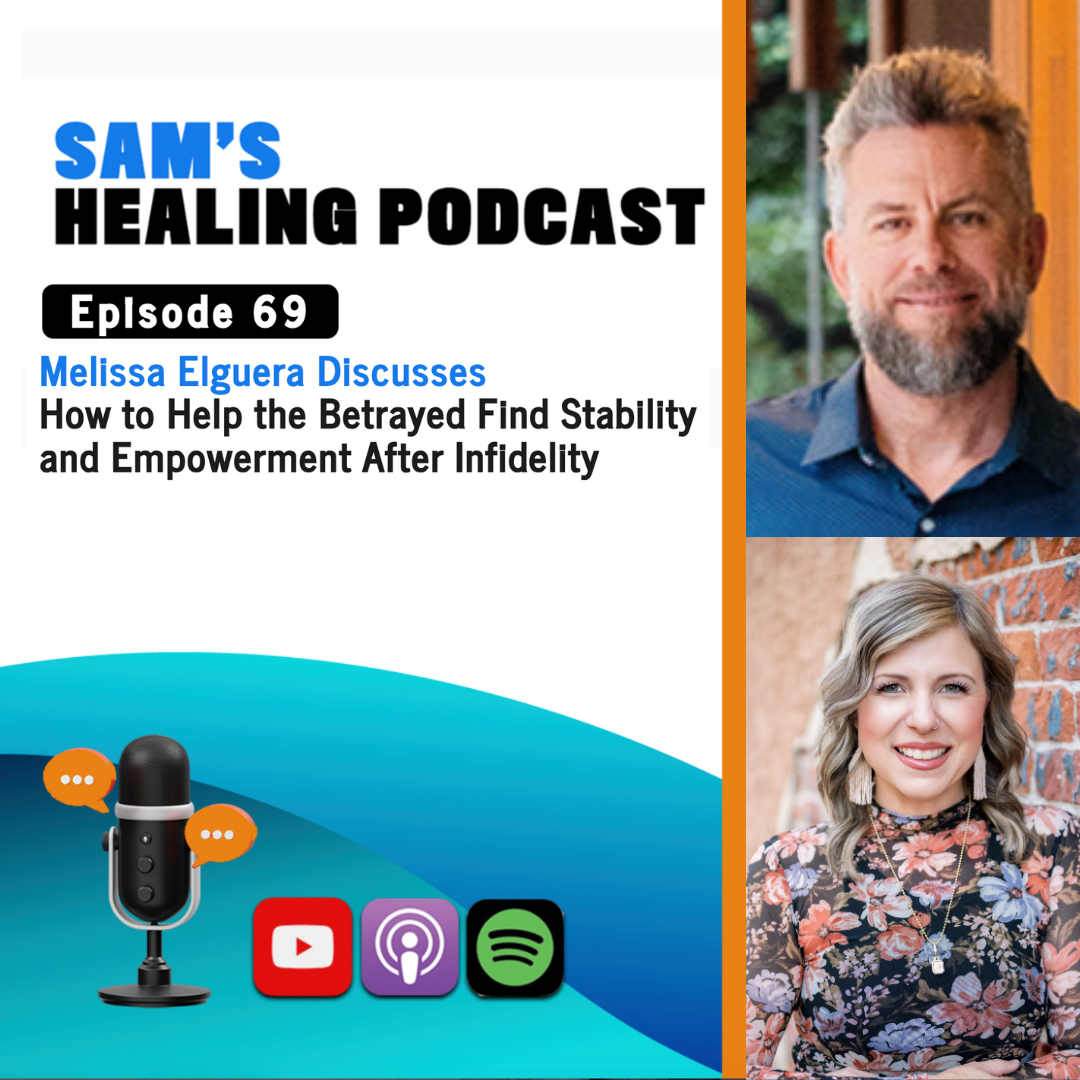
| 5/9/26 | infidelitybetrayal+4 | Melissa Elguera | Whole Heart TransformationIdentity Life Coaching | — | infidelity recoverytrauma coaching+4 | — | 43m 14s | ||
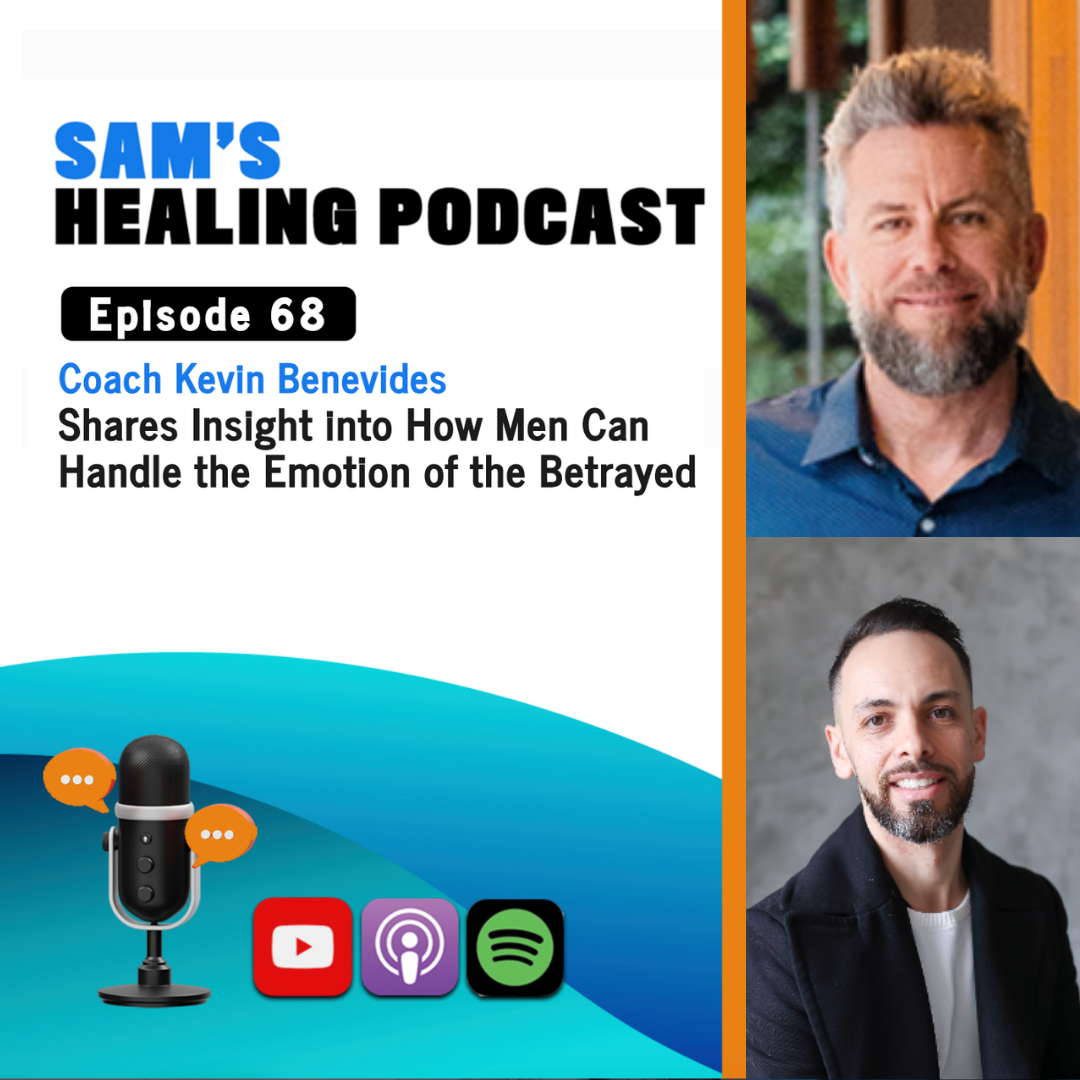
| 5/1/26 | emotional maturityinfidelity+3 | Kevin Benavides | — | — | trust rebuildingemotional regulation+3 | — | 39m 31s | ||
| 4/17/26 | infidelity recoveryrelationship dynamics+4 | Michael Webb | — | — | infidelitybetrayed partner+5 | — | 45m 18s | ||
| 3/26/26 | healing after infidelitymental health+4 | — | — | — | infidelityhealing+6 | — | 16m 56s | ||
Want analysis for the episodes below?Free for Pro Submit a request, we'll have your selected episodes analyzed within an hour. Free, at no cost to you, for Pro users. | |||||||||
| 2/11/26 | narcissistic abusemale survivors+3 | Bill | — | — | narcissistic abusehealing+5 | — | 33m 55s | ||
| 1/29/26 | infidelitybetrayal+4 | Adam Nisenson | — | — | infidelitybetrayal+7 | — | 33m 28s | ||
| 1/15/26 | infidelityemotions+4 | — | — | — | infidelityemotions+5 | — | 13m 43s | ||
| 1/7/26 | personal transformationhealing from infidelity+3 | — | — | — | infidelitybetrayal+3 | — | 12m 07s | ||
| 12/4/25 | infidelitywomen's issues+4 | Judith Nisenson | Women'sWRKAPSATS+1 | — | infidelitywomen who cheat+5 | — | 26m 37s | ||
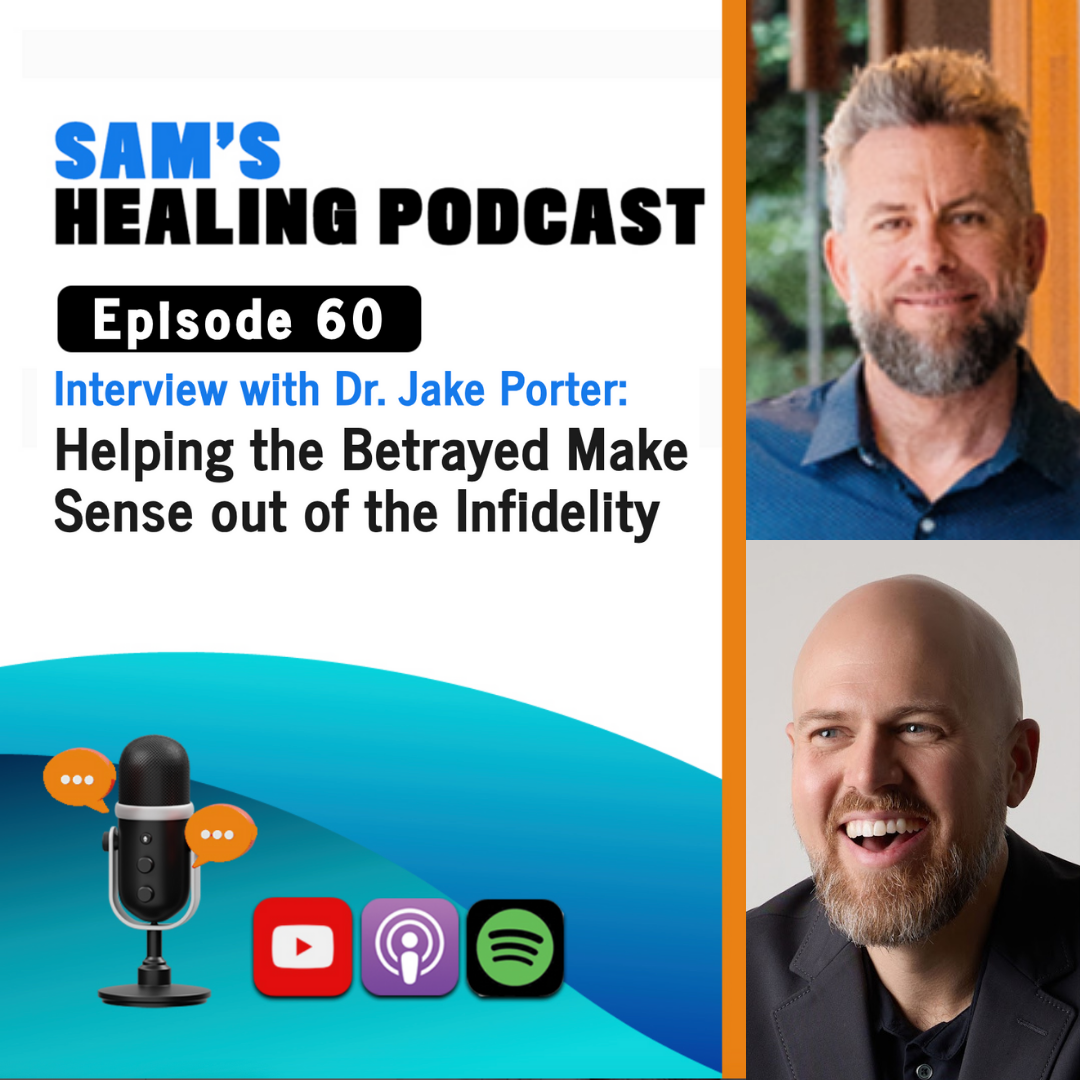
| 11/20/25 | infidelitybetrayal+4 | Dr. Jake Porter | — | — | infidelitybetrayal+5 | — | 33m 41s | ||
| 11/12/25 | infidelitybetrayal+4 | Sharon Rinearson | — | — | infidelitybetrayal+5 | — | 31m 43s | ||
| 11/5/25 | infidelitybetrayal+4 | Joanie | — | — | infidelitybetrayal+6 | — | 27m 41s | ||
| 10/30/25 | 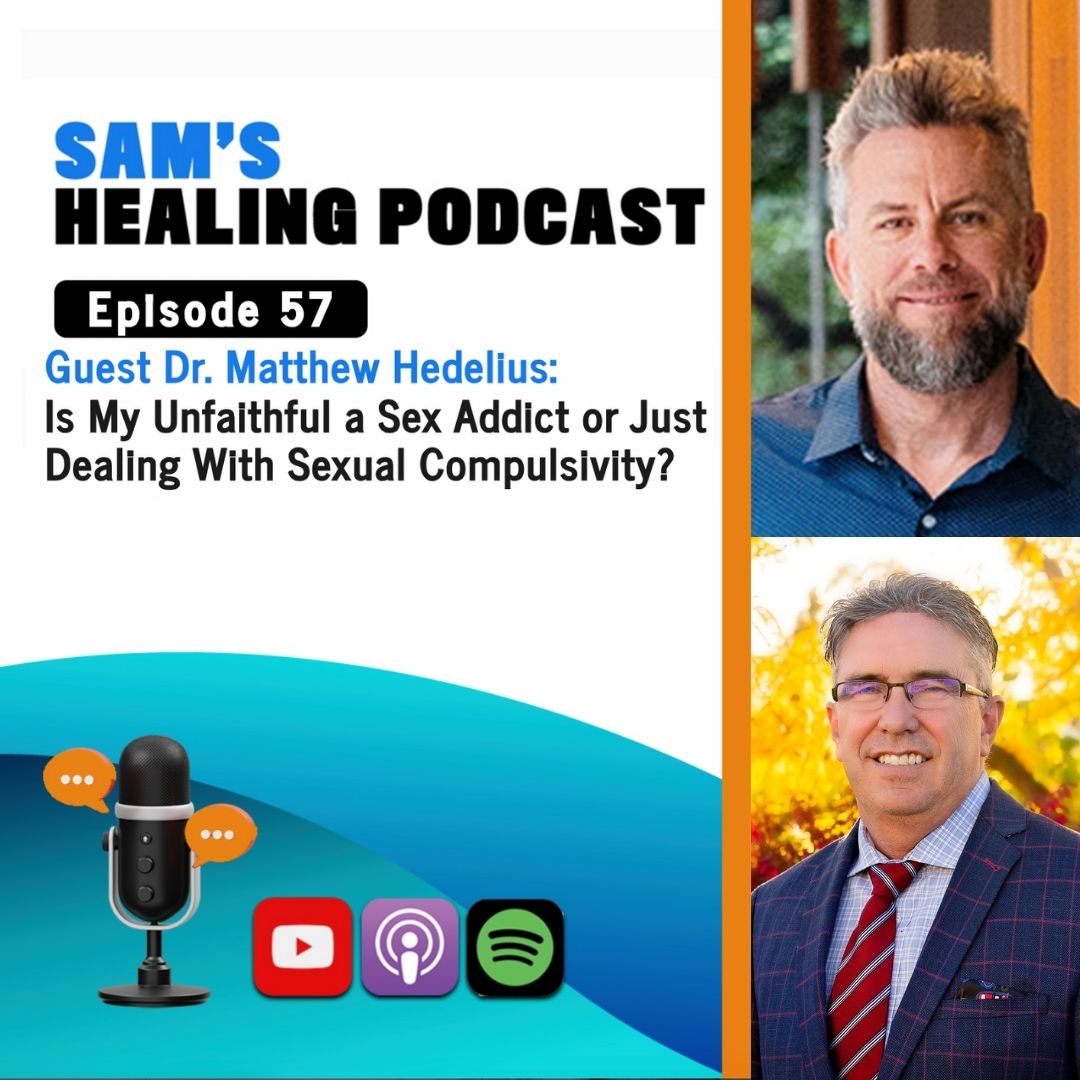 EP 57: Dr. Matthew Hedelius: Is My Spouse a Sex Addict or Just Dealing with Sexual Compulsivity? | Have you ever wondered if you or your partner was truly a sex addict? Perhaps you're wondering if you or your partner are maybe dealing with sexual compulsivity? What in fact is this 'sexual compulsivity?' Today you'll meet Dr. Matthew Hedelius Psy. D., LCSW, CSAT-S who has been a regular guest on the podcast over the years and is the Director of Paradise Creek Recovery Center. Dr. Matthew Hedelius earned a B.S. degree in Family Sciences, a Masters Degree in Clinical Social Work and a Doctor of Psychology Degree. He has provided treatment for both men and women who are suffering from trauma and problematic sexual behaviors for over 26 years. He utilizes principles of neuroscience and interpersonal neurobiology to help individuals achieve the healing they are capable of. He has specialized training in Eye Movement Desensitization and Reprocessing and is a Certified Sex Addiction Therapist. To Healing, Sam [email protected] | — | ||||||
| 10/1/25 | 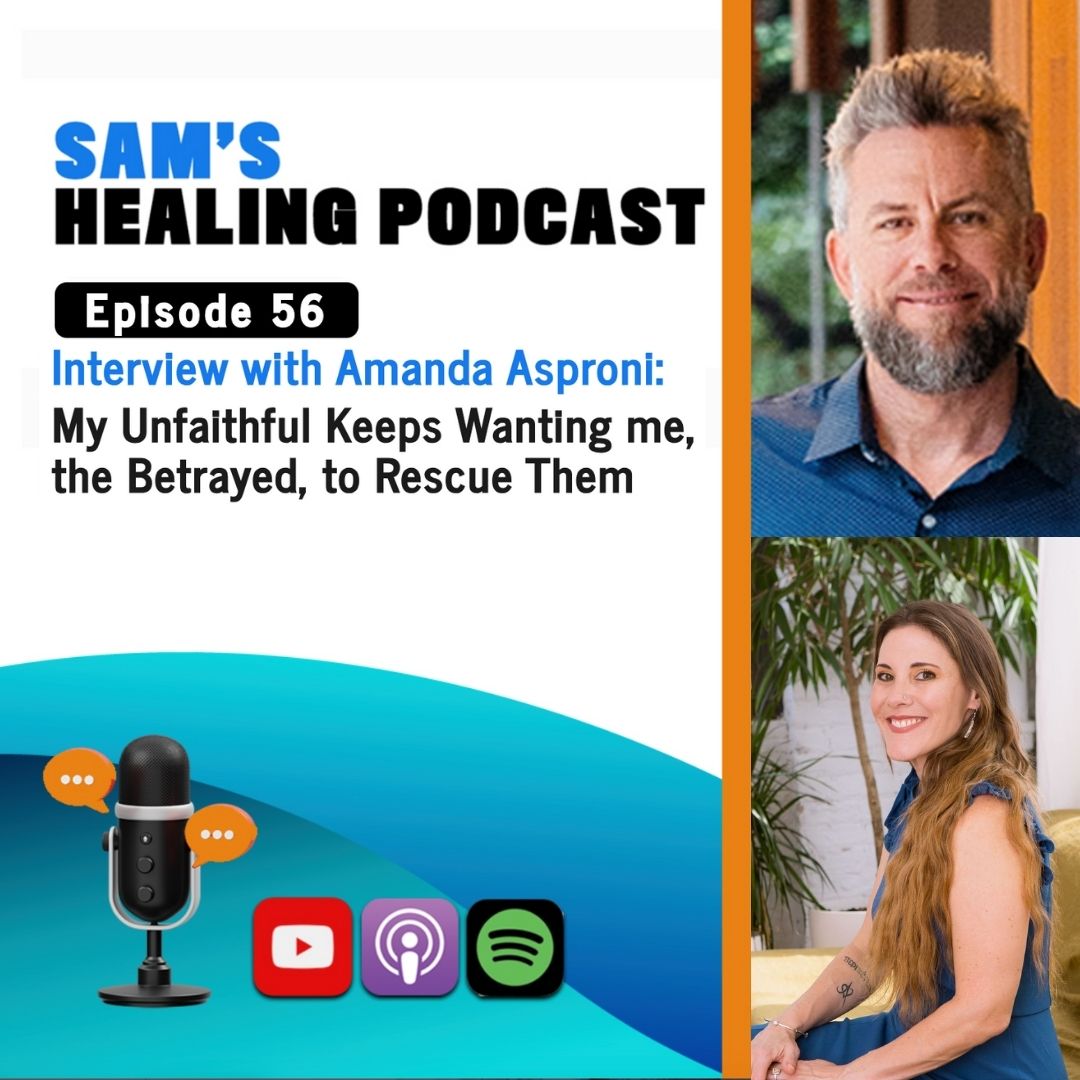 EP 56: Guest Amanda Asproni "My Unfaithful Keeps Wanting me, the Betrayed, to Rescue Them." | Today's episode of Sam's Healing Podcast features a courageous and deeply empathetic interview with Amanda Asproni as we confront the raw realities of infidelity and betrayal trauma. Together, we examine why so many unfaithful partners desperately want those they've betrayed to show up for them—longing for their partner to absorb and manage their shame, rescue them emotionally, and shoulder responsibility for healing, even after breaking trust. Amanda offers clear, compassionate insight into the tangled mix of guilt, regret, and helplessness that often overwhelms individuals who cheat, highlighting their yearning not to be cast as "the villain," but as someone still worthy of grace and second chances. In parallel, the episode speaks to the devastation suffered by betrayed partners—especially those who are also survivors of childhood sexual abuse. With frank honesty, Amanda shares how the pain of abuse and infidelity can "murder the soul," leaving a person gasping for air in a world of devastation, confusion, and total loss of safety. The heartbreak does not end with the exposure of the affair; it ripples through every part of a survivor's life, sometimes reopening ancient wounds and triggering a cascade of trauma responses. This profoundly destructive impact is named, respected, and never minimized in our conversation. The episode also speaks directly to the devastation suffered by betrayed partners, whether or not they are survivors of childhood sexual abuse. Yet, the heart of today's show is hope and practical help for both sides of these complex relationships. For the unfaithful, Amanda outlines the importance of facing shame head-on—not expecting the betrayed partner to fix or soothe what only the unfaithful themselves can resolve. Through self-reflection, accountability, and a commitment to genuine repair, the unfaithful learn that true healing starts only when they stop seeking rescue and start taking ownership for their choices and consequences. For betrayed partners and abuse survivors, today's episode sends a powerful message of validation. You will hear a call to honor your pain, protect your boundaries, and pursue the kind of healing that puts your needs first—whether or not the relationship survives. Amanda and Sam discuss how survivors can reclaim their sense of safety and worth, refusing to be defined by betrayal or tragedy. With a direct but compassionate approach, today's episode stands as a guide for moving honestly through pain, confronting shame together, and beginning the work of lasting recovery—no matter which side of infidelity you're on. To Healing, Sam [email protected] | — | ||||||
| 9/25/25 | Helping the Unfaithful Move From "Not It!" to "Got it!" | On today's episode of "Moving from Not It to Got It," Sam takes listeners on an honest journey through the pivotal moment when an unfaithful spouse chooses to stop deflecting and starts owning their actions. The episode opens by breaking down the psychological reality of the "Not It" phase—where self-protection, avoidance, and justification keep an individual stuck, unable to truly connect with their partner or heal the damage from infidelity. The reality is, "Not It" causes a significant amount of collateral damage including but certainly not limited to: blocking all forward progress minimizing and justifying the affair(s) blame shifting subconsciously expecting the betrayed partner to handhold the unfaithful into the most basic recovery work The heart of today's episode centers on what it takes to shift from "Not It" to "Got It" not only earning self respect but simultaneously the respect of the betrayed partner. This means facing the hard truths head-on and making the conscious choice to drop the defenses and problematic patterns which may have created the acting out in the first place. The transformation can be palpable: when an unfaithful spouse authentically claims responsibility, they lay the foundation for rebuilding trust, self-respect, and hope for their relationship. Note: This episode is educational, not therapy. Please reach out for professional guidance at [email protected] to learn more about coaching or intensive options. To Healing, Sam | — | ||||||
| 9/24/25 | 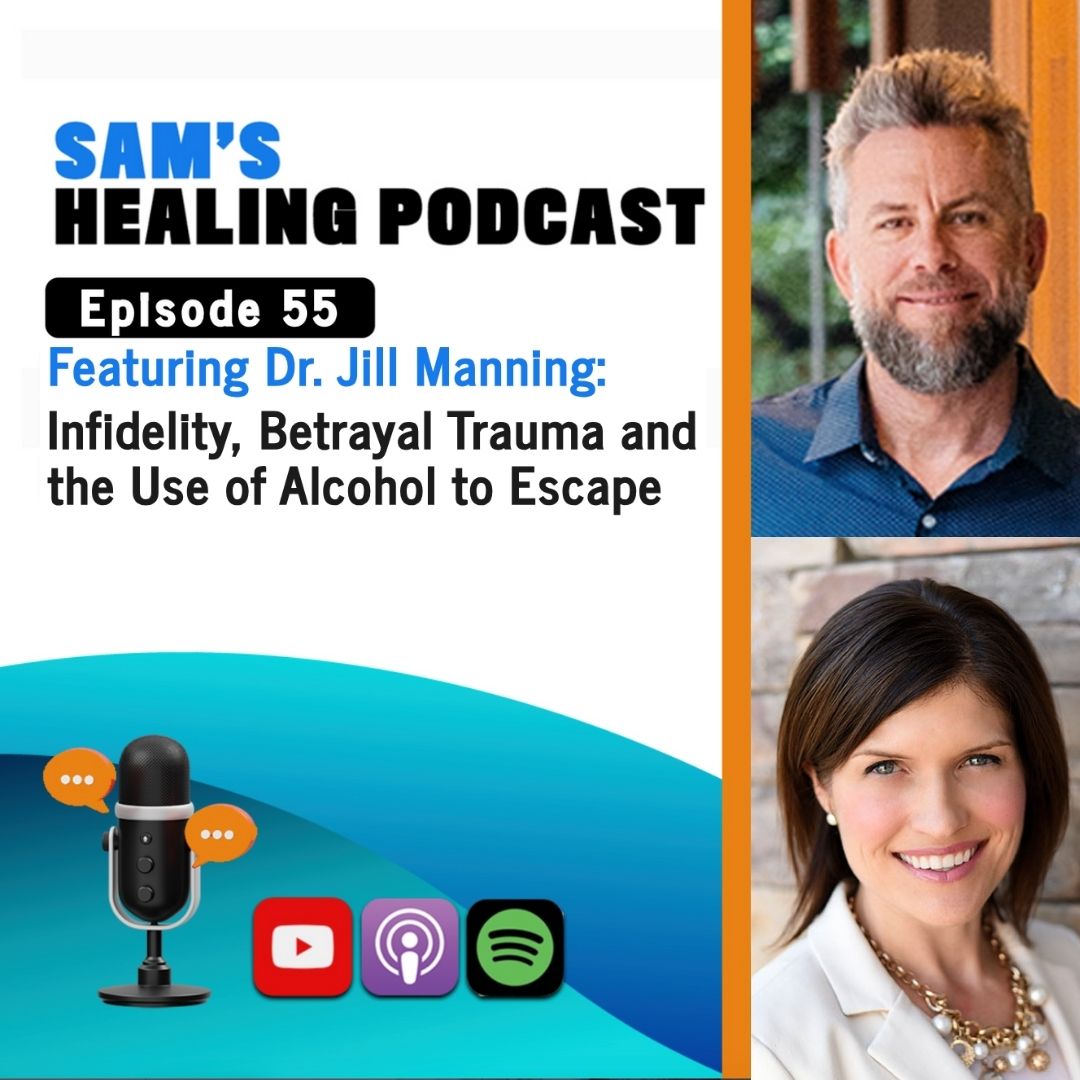 EP 55: Dr. Jill Manning: Infidelity, Betrayal Trauma and and the Use of Alcohol to Escape | In the aftermath of betrayal trauma, many adults turn to alcohol or other substances in search of relief. It might feel like a way to escape, to quiet pain and overwhelm, or simply to get through another day. What's really happening is "numbing out"—using alcohol and drugs to suppress painful emotions, calm anxiety, and insulate from distressing memories. The urge to numb out is understandable, but over time, relying on substances creates new problems and blocks authentic healing. As a clinician, Dr. Jill Manning is seeing a troubling increase in alcohol use among those suffering betrayal trauma. This isn't just a passing trend—it's now a daily topic in her practice, and it's changing the way we approach recovery. Healing requires the brain and body to metabolize and sort through overwhelming emotional information. Alcohol doesn't help; it makes this process harder. Recent health data from WHO, CDC, and SAMHSA show rising rates of problem drinking, especially among women. Alcohol-related deaths and other consequences are climbing, prompting many professionals to use the AUDIT (Alcohol Use Disorder Identification Test) as a standard intake screen. This is a clear public health concern. Let's look at betrayal trauma symptoms: -Anxiety and hypervigilance -Troubled sleep -Depression and hopelessness *Irritability and anger -Cognitive fog -Somatic symptoms (GI distress, headaches, fatigue) -Relationship sensitivity and conflict Alcohol intensifies every one of these symptoms. It keeps anxiety stuck by destabilizing neurotransmitters, fragments sleep and reduces restorative REM, worsens depression by lowering serotonin and dopamine, and increases irritability and aggression. Alcohol impairs memory and focus, disrupts hydration and gut health, and makes relational conflict more likely by reducing judgment and emotional control. The very symptoms survivors are trying to escape only get worse with drinking. What does alcohol really do to the brain and body? Imaging research by Dr. Daniel Amen shows alcohol reduces blood flow to key brain areas, leading to atrophy. Alcohol's numbing effect keeps the nervous system dysregulated and locks people into cycles of shame and avoidance—preventing the full processing of trauma and blocking real recovery. The good news: reducing or eliminating alcohol speeds healing and dramatically lowers health risks. Start with honest tracking—use the AUDIT screener—and try a 30-day break to observe changes in sleep, mood, and clarity. Replace drinking with restorative habits—herbal teas, breathwork, grounding rituals. Prioritize sleep hygiene, hydration, and connect with trauma-informed therapy or support groups. Leading voices like Dr. Amen, Dr. Huberman, and global health agencies urge caution: alcohol impedes recovery from trauma. Every step toward cutting back is a powerful investment in your healing journey. Here is the Alcohol Use Disorders Test: https://auditscreen.org/ For further help during the holidays you can also see this link: https://drjillmanning.com/product/navigating-the-holidays-after-betrayal/ To Healing, Sam | — | ||||||
| 9/3/25 | 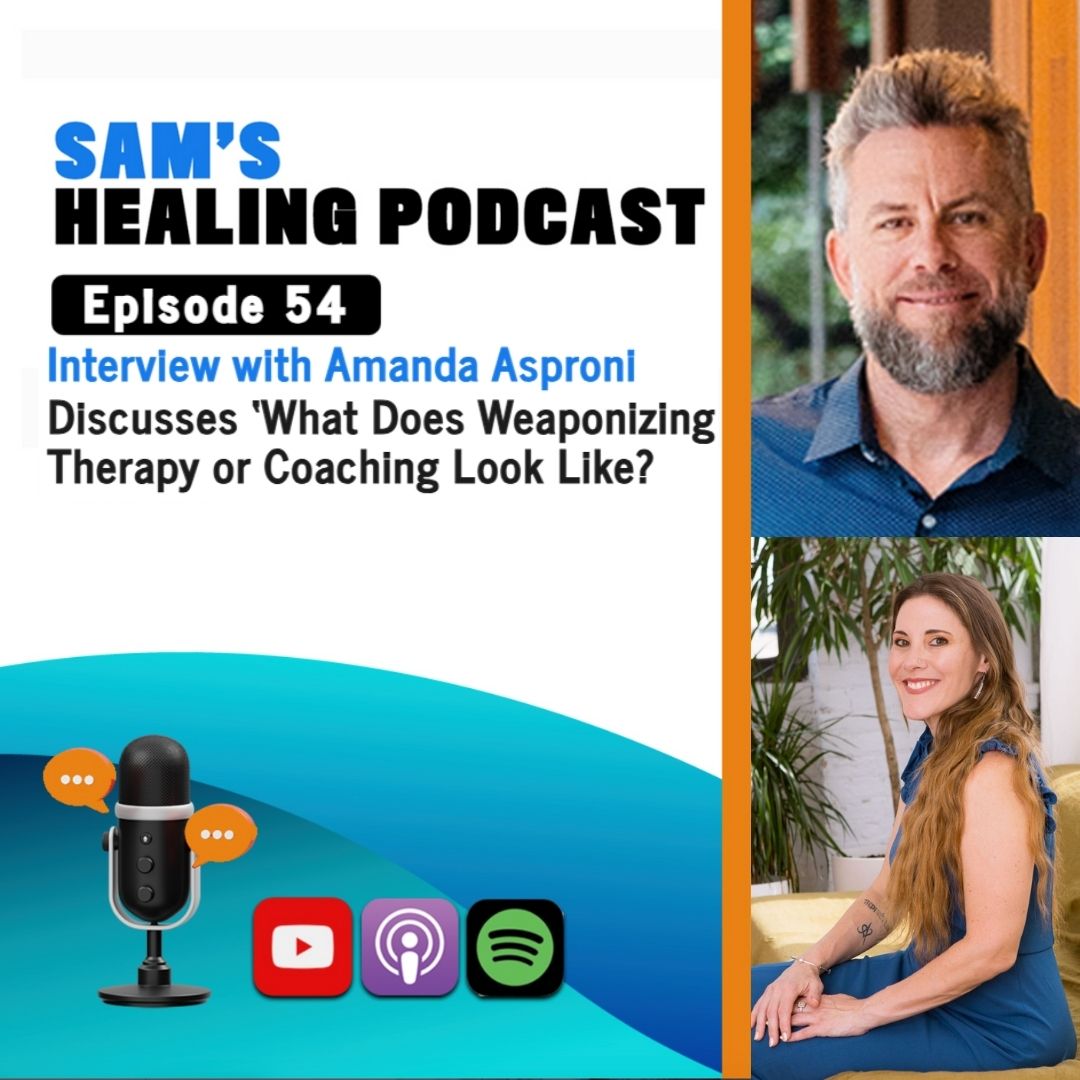 EP 54: Guest Amanda Asproni Discusses: What Does Weaponizing Therapy or Coaching Look Like? | When infidelity or addiction has shaken a relationship, couples often turn to coaching or therapy for healing. These tools are designed to help people rebuild trust, understand pain, and create healthier patterns. At their best, they provide safety, empathy, and clarity. But when the language and frameworks of therapy or coaching are misused, they can become weapons. Instead of supporting healing, they deepen wounds, reinforce blame, and prevent genuine repair. After cheating or addiction, emotions are raw. One partner may grasp at therapy concepts to regain control or avoid accountability. Common misuses include: Pathologizing: Labeling the hurt partner as "codependent" or "trauma-bonded" instead of acknowledging their pain. Playing therapist: Acting like the "expert" in recovery rather than an equal participant. Gaslighting with therapy-speak: Saying, "This is just your trauma—it's not about me," to minimize betrayal. Misusing boundaries: Declaring boundaries as a way to dodge hard conversations, e.g., "I won't discuss the affair again—it's crossing my boundary." Exploiting disclosures: Using what a spouse revealed in therapy (such as past wounds) as ammunition during conflict. These tactics shift focus away from accountability and silence the betrayed partner's voice, halting healing before it can even begin. Infidelity and addiction often leave the offending partner flooded with guilt and shame, and the hurt partner overwhelmed by anger and grief. In this fragile space, weaponizing therapy language can become a defense mechanism. The unfaithful spouse may use it to deflect responsibility. The betrayed spouse may use it to label and control. Both can misuse "healing" jargon as armor against vulnerability. When therapy language is weaponized in recovery: Trust erodes further—the betrayed partner may feel manipulated or dismissed instead of heard. Shame deepens—labels like "damaged goods" or "triggered" or "once a cheater always a cheater" can compound existing pain and keep couples stuck. Repair stalls—genuine accountability and empathy get replaced by analysis and argument. Emotional safety collapses—the relationship becomes a battleground of diagnoses rather than a place for healing. What couples need most after betrayal is compassion and honesty, not one-sided, weaponized expertise. Therapy and coaching can be transformative in recovering from cheating or addiction—but only when used with humility. Healthier approaches include: Speaking from feelings: "I feel hurt and unsafe," rather than diagnosing a partner's reactions. Taking responsibility: The betraying partner owning their actions without hiding behind jargon. Seeking mutual support: Using therapy to create shared language, not to score points. Protecting vulnerability: Ensuring that disclosures in therapy remain safe, never weaponized. In this context, therapeutic tools become bridges to understanding instead of barriers. Couples healing from infidelity or addiction can protect their recovery by: Agreeing that therapy insights are for healing, not for argument. Practicing humility—both partners are learners, not experts, in the process. Honoring disclosures—treating shared vulnerabilities as sacred. Focusing on accountability and empathy over diagnosis or control. Working with a neutral guide—a therapist or coach who holds space fairly for both sides. Infidelity and addiction test relationships at their core. Coaching and therapy can provide the tools to rebuild, but only if used with care. When weaponized, they become tools of avoidance and control, keeping wounds open. When applied with honesty, humility, and empathy, they foster the safety needed for real healing. True recovery comes not from labeling or diagnosing, but from the hard work of accountability, compassion, and rebuilding trust—together. To Healing..... Sam [email protected] ------ Sam's Healing Podcast is brought to you by one of infidelity recovery's most prominent and gifted influencers and YouTuber. For 15 years, Samuel has been online as one of the the leading spokespersons for healing and recovery of both betrayed and unfaithful spouses. After more than a decade of blogging and filming under one of the betrayal trauma's founding fathers, famed clinician Rick Reynolds of affairrecovery.com, Sam has ventured out to pursue, create and live out his lifelong vision and passion for healing those touched by the trauma of infidelity. Through his new podcast and YouTube channel Samuel will continue to bring his own personal experiences with infidelity recovery along with delivering the most current and up-to-date clinical wisdom and healing modalities for recovery after an affair. Sam will also be expanding into the other critical areas of developing healthy relationships such as emotional and sexual connection, the impact of childhood sexual abuse and dysfunctional patterns of relating on marital intimacy, problematic communication patterns, complex, attachment and intergenerational trauma, compulsive sexual behavior, boundaries and the importance of inner-child healing work. Reach out to contact Samuel for personal coaching sessions at [email protected]. | — | ||||||
| 8/27/25 | 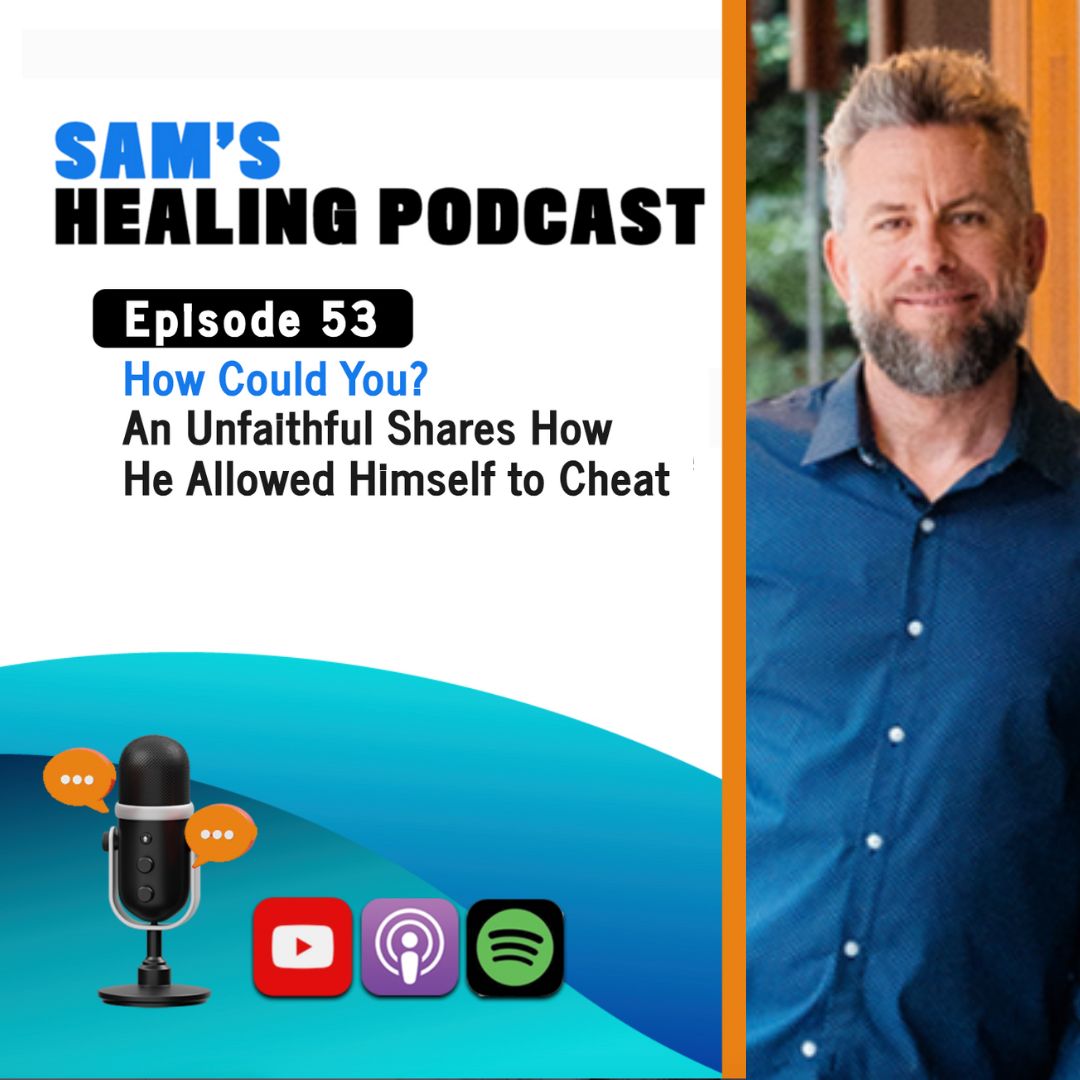 EP 53: How Could You? An Unfaithful Shares How He Allowed Himself to Cheat | Why does the unfaithful cheat or act out? What allows them to go against their moral compass and engage in an extramarital affair? How do they justify it to themselves? The truth may challenge what you've come to believe about some unfaithful partners. For some it's anger and getting their needs met. For others it can even be subconscious retaliation for the perceived rejection by their partner or spouse. For others it's an exit affair. Today you'll hear from Ryan who shares his own individual story of why he acted out and what was going on inside his mind. It's hard hitting but it's insightful for those who have always wondered just how the unfaithful justifies their affair both to themselves and everyone else around them. ------ Sam's Healing Podcast is brought to you by one of infidelity recovery's most prominent and gifted influencers and YouTuber. For 15 years, Samuel has been online as one of the the leading spokespersons for healing and recovery of both betrayed and unfaithful spouses. After more than a decade of blogging and filming under one of the betrayal trauma's founding fathers, famed clinician Rick Reynolds of affairrecovery.com, Sam has ventured out to pursue, create and live out his lifelong vision and passion for healing those touched by the trauma of infidelity. Through his new podcast and YouTube channel Samuel will continue to bring his own personal experiences with infidelity recovery along with delivering the most current and up-to-date clinical wisdom and healing modalities for recovery after an affair. Sam will also be expanding into the other critical areas of developing healthy relationships such as emotional and sexual connection, the impact of childhood sexual abuse and dysfunctional patterns of relating on marital intimacy, problematic communication patterns, complex, attachment and intergenerational trauma, compulsive sexual behavior, boundaries and the importance of inner-child healing work. Reach out to contact Samuel for personal coaching sessions at [email protected]. | — | ||||||
| 7/29/25 | 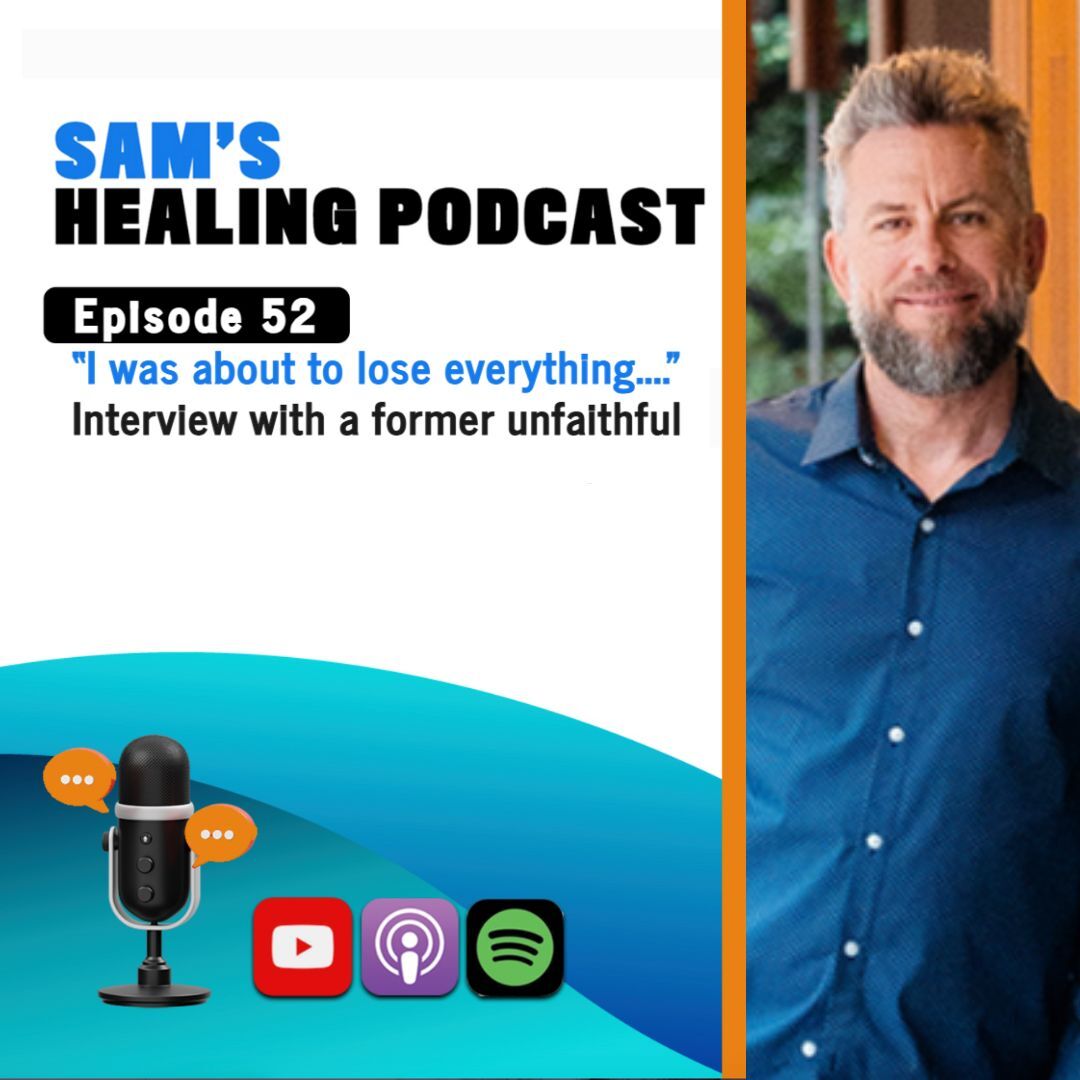 EP 52: "I Was About to Lose Everything I Valued...." Interview with Ryan a Former Unfaithful | Have you ever wondered what goes through the mind of an unfaithful when they are about to lose everything? Have you considered that maybe, just maybe there are those who sober up, realize what they are about to lose and actually do recovery work? Today you'll hear from Ryan again, a former unfaithful who shares more of his compelling journey to healing as an unfaithful spouse who finally GOT IT. He's no rock star. He's no superman or super human. He's simply one of so many who have chosen to do the work and do whatever it takes to save his family. Maybe he is special? Maybe he chose to bottom out, hit rock bottom and listen to the many voices of healing, confrontation and sobriety that were placed in his life? Today you'll hear more about how he was on the verge of losing all that he cherished and all that he held dear.... I don't know where you're at or what you're facing as an unfaithful or betrayed. What I do know is that there is hope for YOU and your own recovery and I hope you'll listen to another courageous soul who chose to do the work. To Courage and to Healing.... Sam ------ Sam's Healing Podcast is brought to you by one of infidelity recovery's most prominent and gifted influencers and YouTuber. For 15 years, Samuel has been online as one of the the leading spokespersons for healing and recovery of both betrayed and unfaithful spouses. After more than a decade of blogging and filming under one of the betrayal trauma's founding fathers, famed clinician Rick Reynolds of affairrecovery.com, Sam has ventured out to pursue, create and live out his lifelong vision and passion for healing those touched by the trauma of infidelity. Through his new podcast and YouTube channel Samuel will continue to bring his own personal experiences with infidelity recovery along with delivering the most current and up-to-date clinical wisdom and healing modalities for recovery after an affair. Sam will also be expanding into the other critical areas of developing healthy relationships such as emotional and sexual connection, the impact of childhood sexual abuse and dysfunctional patterns of relating on marital intimacy, problematic communication patterns, complex, attachment and intergenerational trauma, compulsive sexual behavior, boundaries and the importance of inner-child healing work. Reach out to contact Samuel for personal coaching sessions at [email protected]. | — | ||||||




Showing 25 of 74
Pitch Fit is a Pro feature
See how bookable this show is for guests, which brands already advertise, the per-episode ad value, and the best-fit guest and sponsor profile. The numbers are blurred on the free plan.
How readily this show books outside guests like you.
How proven this show is for host-read sponsorships.
For Guests
ProFor Advertisers
ProUpgrade to Pro to unlock guest cadence, sponsor categories, fit scores, and per-episode ad value for this show.
Chart history for Sam's Healing Podcast
Peaked at #77 in IS, currently #77 in IS.
| Market | Genre | Peak | Current | Trend |
|---|---|---|---|---|
| IS | — | #77 | #77 | — |
Chart Positions
1 placement across 1 market.
Chart Positions
1 placement across 1 market.