

Insights from recent episode analysis
Audience Interest
Podcast Focus
Publishing Consistency
Platform Reach
Insights are generated by CastFox AI using publicly available data, episode content, and proprietary models.
Most discussed topics
Brands & references
Total monthly reach
Estimated from 1 chart position in 1 market.
By chart position
- 🇸🇪SE · Science#1811K to 10K
- Per-Episode Audience
Est. listeners per new episode within ~30 days
300 to 3K🎙 Daily cadence·50 episodes·Last published yesterday - Monthly Reach
Unique listeners across all episodes (30 days)
1K to 10K🇸🇪100% - Active Followers
Loyal subscribers who consistently listen
400 to 4K
Market Insights
Platform Distribution
Reach across major podcast platforms, updated hourly
Total Followers
—
Total Plays
—
Total Reviews
—
* Data sourced directly from platform APIs and aggregated hourly across all major podcast directories.
On the show
From 10 epsHost
Recent guests
Recent episodes
Bad Idea #58 “Environmentalists Are All the Same” with George Monbiot
Jun 24, 2026
Unknown duration
Bad Idea #57 “Hands off Mother Earth” with Anni Pokela
Jun 18, 2026
Unknown duration
Bad Idea #56 "Just leave it to the market" with Tom Crowther
Jun 10, 2026
Unknown duration
Bad Idea #55 "Life's only about competition" with Rowan Hooper
Jun 3, 2026
Unknown duration
Bad Idea #54 "Shut down the cobalt mines" with Nicholas Niarchos
May 27, 2026
Unknown duration
Social Links & Contact
Official channels & resources
Official Website
Login
RSS Feed
Login
| Date | Episode | Topics | Guests | Brands | Places | Keywords | Sponsor | Length | |
|---|---|---|---|---|---|---|---|---|---|
| 6/24/26 | 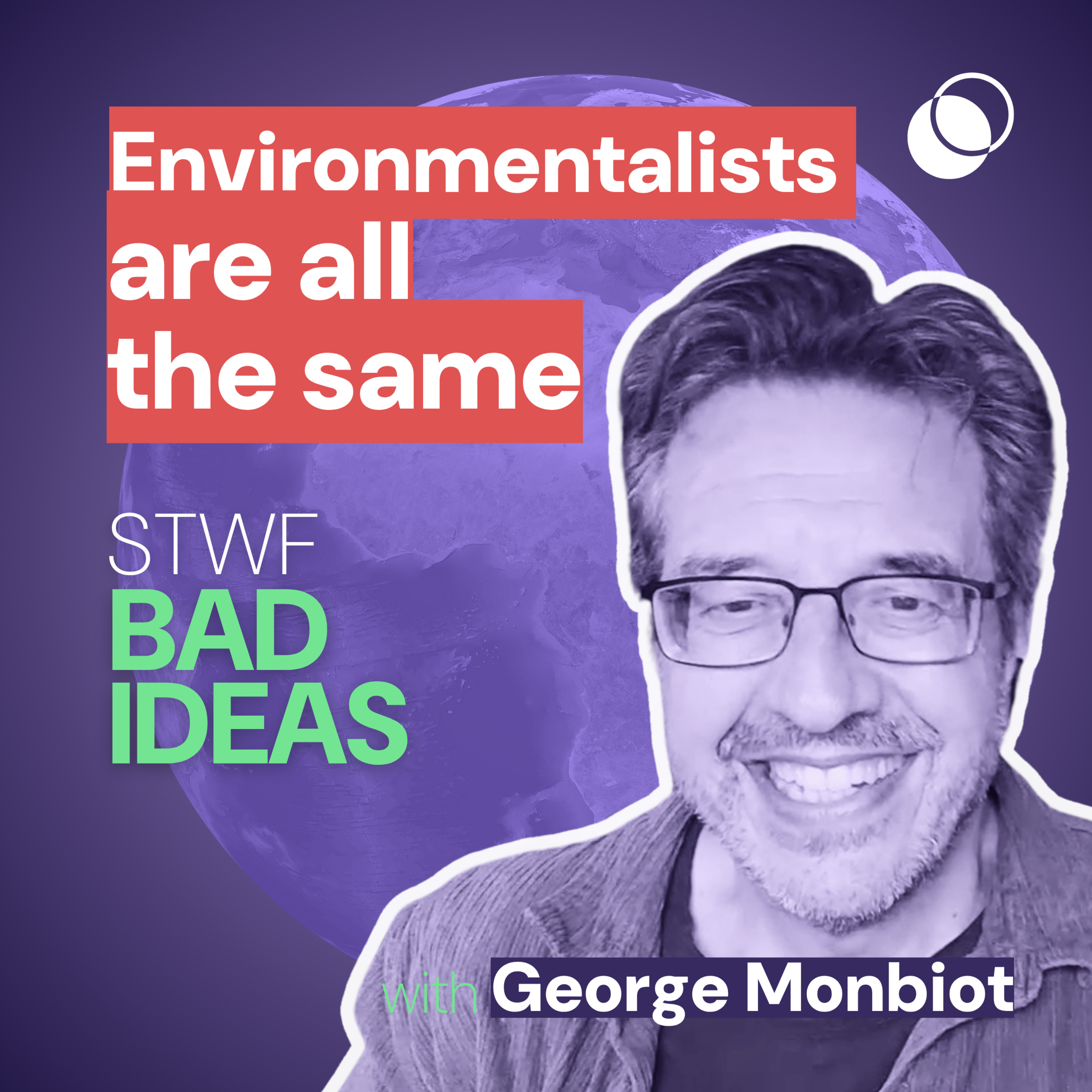 Bad Idea #58 “Environmentalists Are All the Same” with George Monbiot | In this season-ending episode of Saving the World from Bad Ideas, host Mark Lynas is joined by environmental journalist and author George Monbiot to explore a new framework for understanding environmentalism. George argues that what is often treated as a single movement actually contains three distinct and frequently conflicting philosophies: Green Liberationism, Green Pragmatism, and Green Social Nostalgia. The conversation traces the historical roots of each tradition, from anti-colonial activism and technocratic climate policy to rural revivalism and its relationship with fascism. Along the way, Mark and George discuss population debates, food systems, ecomodernism, the influence of religion on environmental thought, and the growing challenge of far-right infiltration into parts of the green movement. It's a wide-ranging examination of the ideas and tensions that shape environmentalism.🧠 Topics Discussed🌱 Why environmentalism may be better understood as three competing philosophies rather than a single movement✊ What George calls "Green Liberationism" and how it draws on civil rights, anti-colonial struggles, feminism, and social justice movements⚙️ What "Green Pragmatism" looks like in practice, from clean energy deployment to technocratic climate governance🌾 What George means by "Green Social Nostalgia" and why he sees it as a powerful but problematic force within environmentalism📜 Why George argues that rural revivalism became a foundational component of twentieth-century fascist movements🌳 How post-war environmentalism inherited ideas from both progressive and deeply conservative traditions🍽️ Why George believes many nostalgic visions of agriculture struggle to answer basic questions about feeding large populations👶 How population anxiety became embedded in parts of environmental thought and why George sees it as politically unhelpful⛪ How Christian traditions, pastoral imagery, and millenarian thinking continue to shape environmental narratives🧘 How wellness culture, alternative health movements, and environmental politics can become vulnerable to far-right influence🌍 What figures like RFK Jr., Vandana Shiva, and other controversial environmental voices reveal about ideological drift within green movements🍔 How precision fermentation, microbial protein, and cultivated foods could transform debates about meat, land use, and sustainability🤝 Why successful environmental politics requires combining technological innovation with democratic participation and social legitimacy🚨 Why the environmental movement may be underestimating the challenge posed by far-right actors adopting green rhetoric👤 Guest BioGeorge Monbiot is an environmental journalist, author, and campaigner known for his work on ecology, politics, land use, food systems, and climate change. A longtime columnist and public intellectual, he has written extensively on environmental justice, rewilding, democracy, and the social forces shaping ecological crises. 📚 Recommended Reading & Resources📖 Feral — George Monbiot📖 Regenesis — George Monbiot📖 The Anatomy of Fascism by Robert Paxton📖 Works by Wendell Berry📖 Writings and debates surrounding Paul Kingsnorth and the Dark Mountain Project💬 Quote Highlights💬 “You can have rural revivalism without fascism, but you can’t have fascism without rural revivalism.”— George Monbiot💬 “Power and politics don't disappear when you push people out of the way.”— George Monbiot💬 “You needed the technologies in order to realise the more political liberationist vision.”— George Monbiot💬 “We’ve been far too unprepared for the takeover of aspects of our movement by the far right.”— George Monbiot🌐 About WePlanetWePlanet is an international movement campaigning for science-based solutions to the climate, nature and development crises. 📥 Join the Conversation💬 podcast@weplanet.org 📩 https://weplanet.org/podcast👁️ https://twitter.com/weplanetint | — | ||||||
| 6/18/26 | 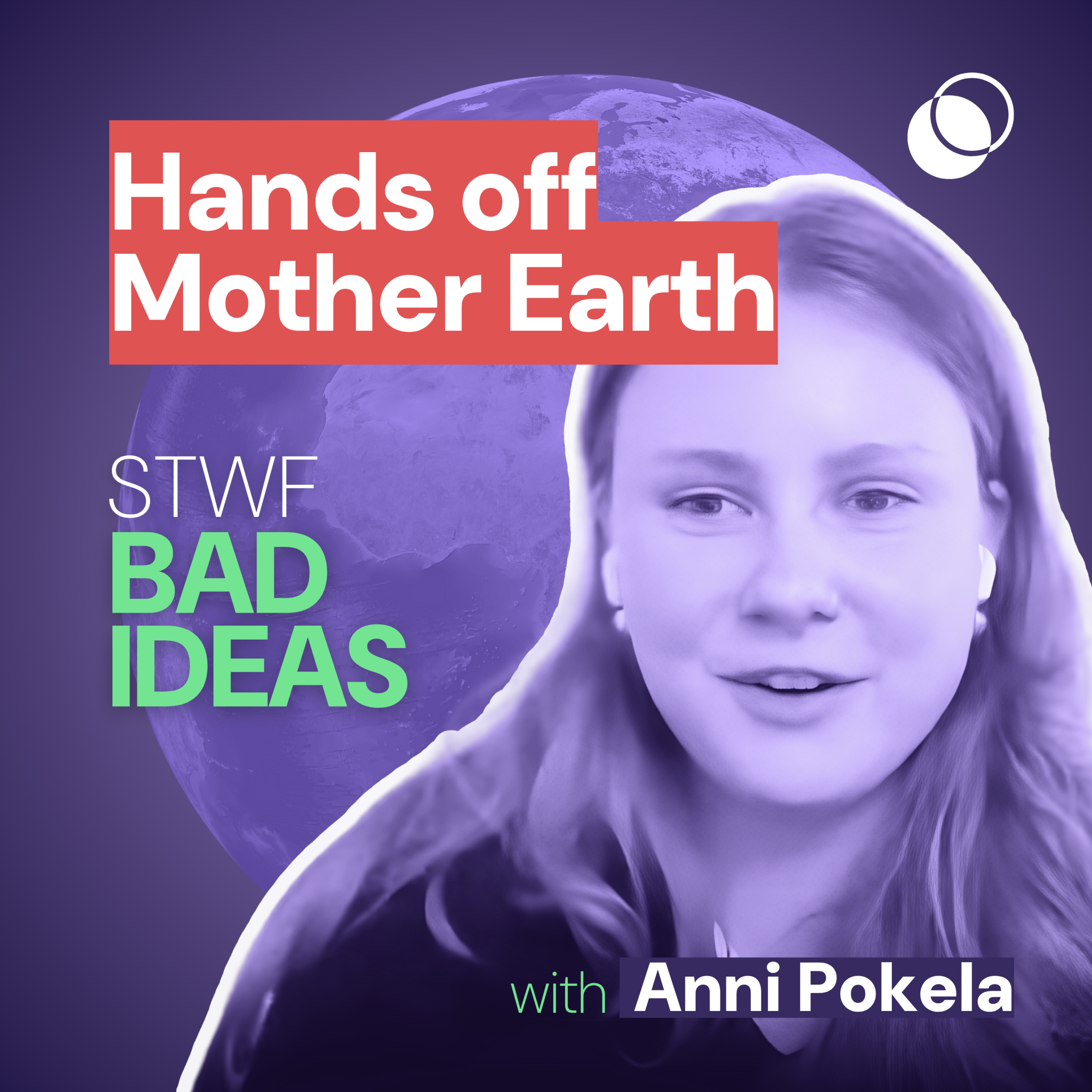 Bad Idea #57 “Hands off Mother Earth” with Anni Pokela | In this episode of Saving the World from Bad Ideas, Mark Lynas speaks with Anni Pokela of Operaatio Arktis about why “Hands off Mother Earth” is no longer a serious response to the climate crisis. The conversation explores how humans are already deeply entangled with planetary systems, whether through emissions, land use, or atmospheric pollution, and why the real question is no longer whether we intervene, but how we do so responsibly. From Arctic tipping points and AMOC collapse risks to solar radiation management, social license, indigenous engagement, and the politics of research, this is a probing discussion about climate intervention in a world where inaction is itself a form of intervention.🧠 Topics Discussed🧊 Why Arctic tipping points pushed former climate activists to rethink the limits of conventional climate politics🌍 Why the term “geoengineering” may be misleading if humans have already been reshaping the planet for centuries🌊 Why the weakening AMOC has become a major concern in Finland and across the Nordic region☀️ How solar radiation management, especially stratospheric aerosol injection, entered the climate debate☁️ What marine cloud brightening is, and why it is being explored in places like Australia⚖️ Why climate intervention has to be understood through risk comparison, not moral purity🗳️ Why shutting down research is undemocratic, especially for countries on the front lines of climate impacts🚨 How the “dangerous distraction” argument can end up policing climate discourse instead of opening it🧪 Why more public, transparent, internationally shared research matters before private actors shape the field🧭 What Scopex revealed about indigenous consent, scientific arrogance, and the need for better governance🤝 Why Anni argues that these technologies should be approached through entanglement, responsibility, and democratic legitimacy rather than technological denial🌐 Why the biggest risks may lie less in the particles themselves than in geopolitics, power, and unequal decision-making📚 Why this whole field needs more input from humanities, philosophy, sociology, and justice-oriented perspectives, not just climate modeling👩🏫 Guest BioAnni Pokela is part of Operaatio Arktis, a Finnish climate strategy and communications organization founded by former Extinction Rebellion Finland activists. The group works with researchers and institutions to support responsible, ethically sustainable climate intervention research, with a particular focus on Arctic risks, tipping points, justice, and democratic governance.📚 Recommended Reading & ResourcesOperaatio ArktisResearch on AMOC weakening and Arctic tipping pointsWork on solar radiation management and marine cloud brighteningDiscussions around Scopex, social license, and indigenous consentResearch on climate intervention governance, justice, and public legitimacy💬 Quote Highlights💬 “The question then ceases to be whether we should intervene or not. The question then becomes how do we do it?”Anni Pokela💬 “How are we responsibly in that relationship and in that entanglement with the planet?”Anni Pokela💬 “Shutting down public research around this topic... it’s madness.”Anni Pokela💬 “It only sort of benefits the people who want to do this in the shadows.”Anni Pokela💬 “Things. You know, when we... have the blue dot that we can save... the question then kind of ceases to be whether we should intervene or not.”Anni Pokela🌐 About WePlanetWePlanet is an international movement campaigning for science-based solutions to the climate, nature and development crises. Through conversations like this one, we challenge bad ideas, spotlight better ones, and make the case for a more abundant, resilient and hopeful future.📥 Join the Conversation💬 podcast@weplanet.org 📩 https://weplanet.org/podcast👁️ https://twitter.com/weplanetint | — | ||||||
| 6/10/26 | 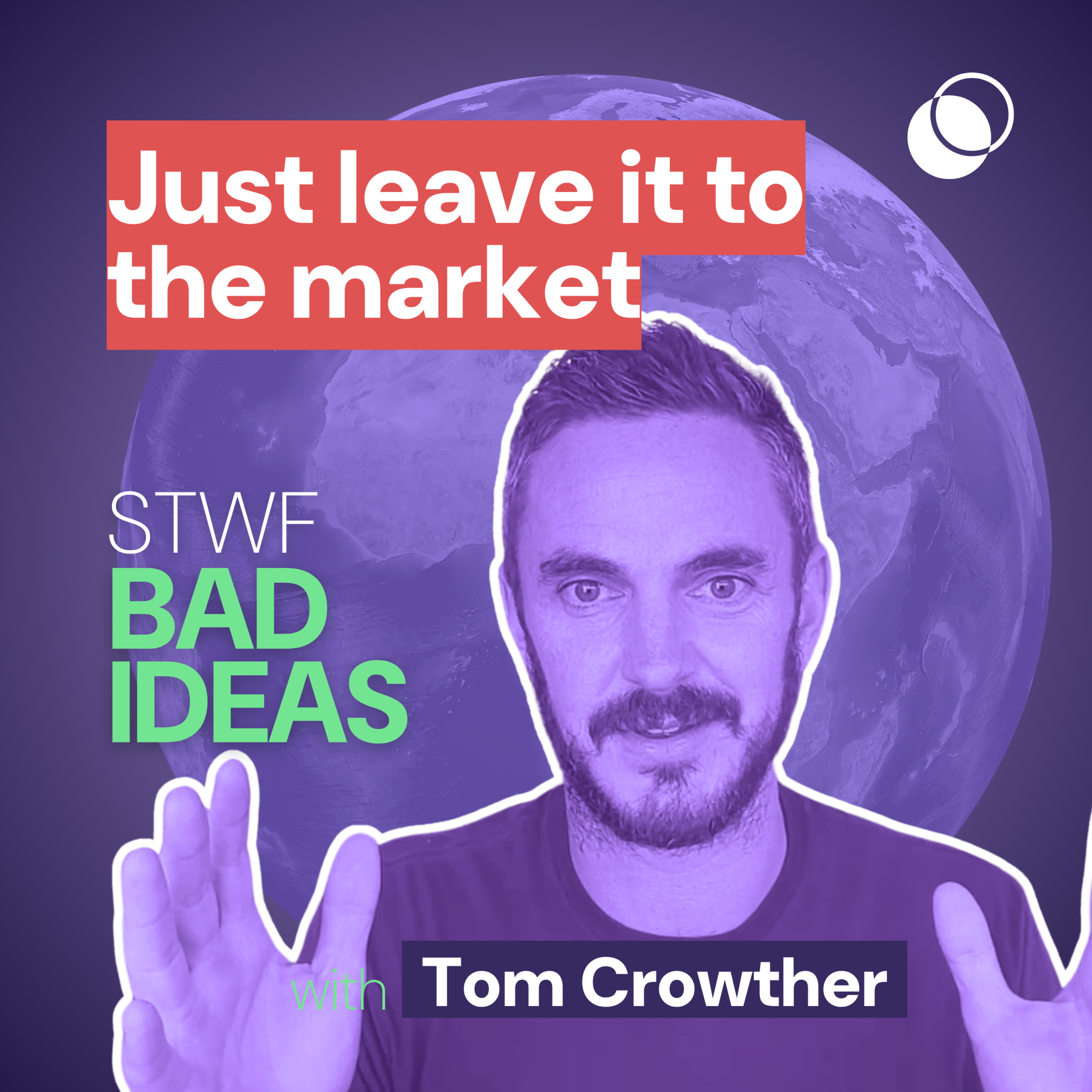 Bad Idea #56 "Just leave it to the market" with Tom Crowther | In this episode of Saving the World from Bad Ideas, Mark Lynas speaks with global ecologist Tom Crowther about a seductive but dangerous assumption: just leave it to the market. While part of the conversation focuses directly on capitalism, inequality, poverty, and wealth redistribution, the discussion is much broader than economics alone. Drawing on Tom’s new book Nature’s Echo, they explore how feedback loops shape everything from the birth of stars to the spread of ideas, the dynamics of ecosystems, the structure of societies, and the possibility of ecological recovery. The central argument is that markets can generate growth, innovation, and momentum, but without balancing forces they also drive instability, degradation, and collapse. It is a wide-ranging conversation about regeneration, resilience, scientific thinking, and how human systems might better mirror the stabilising logic of the natural world.🧠 Topics Discussed🔁 Why feedback loops are one of the most useful ways to understand nature and society🌌 How the same looping dynamics help explain the formation of stars, life, and ecosystems😱 Why climate doomism can become self-fulfilling if it closes off regenerative possibilities⚡ Why renewables and electrification may now be driven by powerful self-reinforcing momentum📉 Why no exponential growth system lasts forever, and why overshoot matters🌱 How regenerative feedback loops can build when livelihoods improve alongside nature🚜 Why Tom distinguishes regenerative livelihoods from simplistic anti-industrial romanticism🌾 How nature loss can eventually reduce agricultural yields, even in intensive systems🥩 Why plant-based proteins and nuclear energy could radically reduce ecological pressure💸 Why poverty is one of the strongest drivers of environmental degradation🧾 How wealth redistribution can act as a stabilising feedback in both society and ecology🌳 What the trillion trees controversy got wrong about restoration🗺️ How the Restore platform helps land stewards, funders, and the public support regeneration on the ground🧪 Why science needs both rigour and humility, especially when defining the world in fixed categories🧠 How constructivist thinking, belief, and consensus shape the way societies understand reality👩🏫 Guest BioDr Tom Crowther is a global ecologist working across multiple universities, with his foundation based in Switzerland. His research spans biodiversity, forests, restoration, agriculture, and the feedback loops that shape planetary systems. He is also the author of Nature’s Echo: Harnessing Ancient Feedback Loops to Heal a Changing Planet, which is now available.📚 Recommended Reading & ResourcesNature’s Echo: Harnessing Ancient Feedback Loops to Heal a Changing Planet by Tom CrowtherThe Restore platformResearch on ecological restoration, regenerative livelihoods, and nature recoveryWork on feedback loops in climate, biodiversity, and social systemsWriting and debate on trillion trees, reforestation, and restoration policy💬 Quote Highlights💬 “For me, the bad idea is that we’re doomed to a bleak future.”Tom Crowther💬 “There’s unbelievable potential for regenerative loops to build momentum as well.”Tom Crowther💬 “I am trying to think like a natural system.”Tom Crowther💬 “I think our economic system needs to perfectly mirror that.”Tom Crowther💬 “Poverty is the biggest driver of degradation.”Tom Crowther💬 “When they are lifted out of poverty, that is when nature thrives and they start to thrive more, which makes nature thrive more.”Tom Crowther🌐 About WePlanetWePlanet is an international movement campaigning for science-based solutions to the climate, nature and development crises. Through conversations like this one, we challenge bad ideas, spotlight better ones, and make the case for a more abundant, resilient and hopeful future.📥 Join the Conversation💬 podcast@weplanet.org📩 https://weplanet.org/podcast👁️ https://twitter.com/weplanetint | — | ||||||
| 6/3/26 | 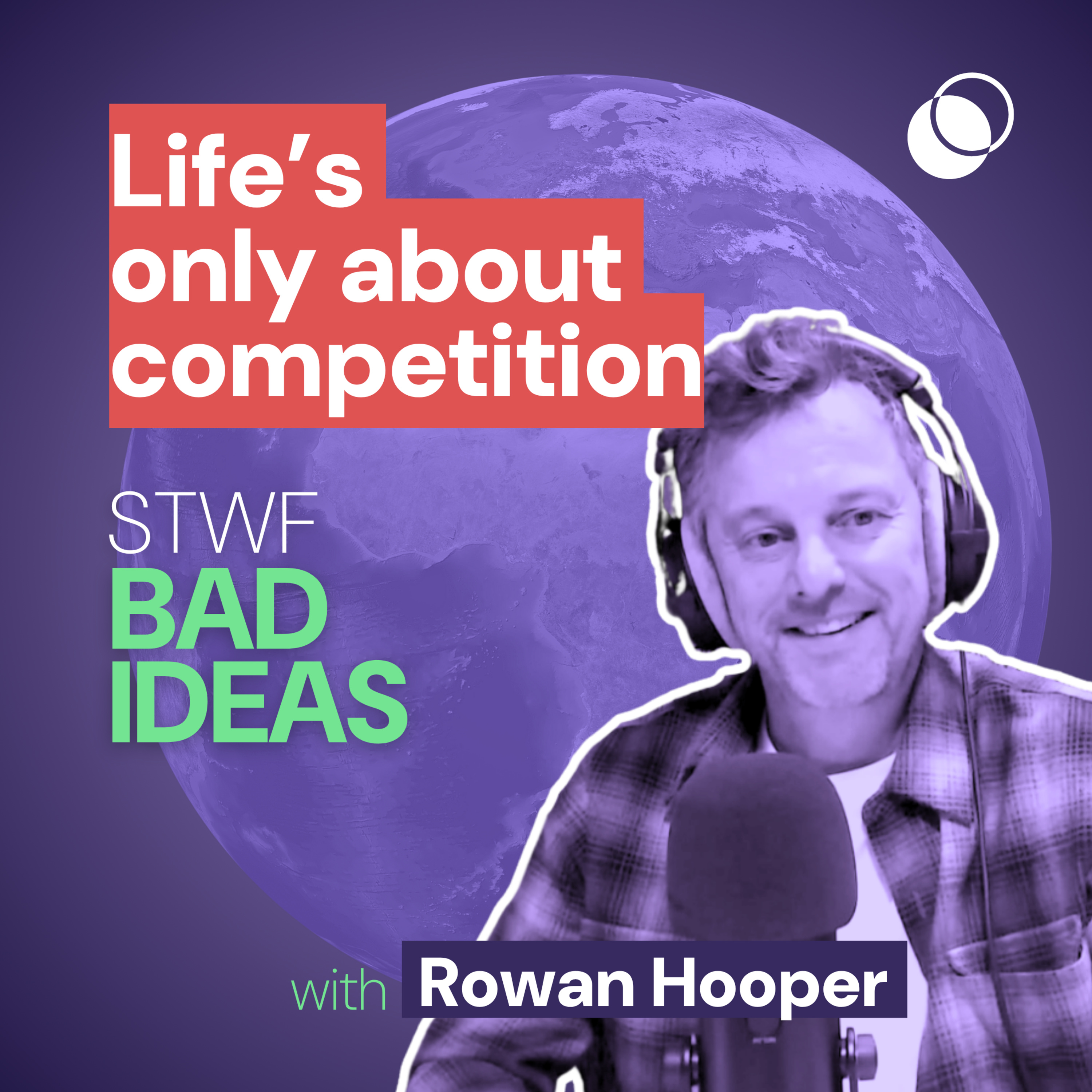 Bad Idea #55 "Life's only about competition" with Rowan Hooper | In this episode of Saving the World from Bad Ideas, Mark Lynas speaks with science writer Rowan Hooper about one of the deepest misconceptions in biology: that life is only about competition. Drawing on Hooper’s new book Togetherness, they explore how symbiosis and cooperation run through life at every scale, from lichens and corals to ants, orchids, the human microbiome, and even the origin of complex cells. The conversation also revisits Darwin, Malthus, ecology, overconsumption, and the ways modern society has been shaped by an overly narrow reading of evolution. It is a wide-ranging discussion about why life’s greatest successes often come not from ruthless struggle alone, but from collaboration, interdependence, and living together.🧠 Topics Discussed🧬 Why cooperation and symbiosis have been neglected in biology for so long🍄 How lichens show that radically different life forms can combine into one successful organism🪸 Why coral reefs depend on symbiosis between animals and algae🔋 How mitochondria and chloroplasts reveal that complex cells were built through endosymbiosis🦠 Why humans are ecosystems, not just individuals, thanks to the microbiome🧠 How symbiotic microbes influence digestion, mood, sleep, and immunity📚 Whether modern understandings of symbiosis challenge Darwin, or deepen him⚔️ How Darwin strategically emphasized competition to make his theory acceptable📈 Why Malthusian thinking shaped both Darwinism and modern ideas of scarcity🌾 How artificial fertilizer helped humanity escape Malthus, while creating new ecological damage🐜 How leaf-cutter ants became extraordinary farmers through fungal symbiosis🌸 Why orchids cannot even germinate without fungal partners🌍 How ecological stress and climate change are breaking down vital symbiotic relationships🧪 Why technologies such as genetic engineering may help restore ecological function🌱 What it means to live more ecologically on a crowded planet👩🏫 Guest BioDr Rowan Hooper is a science writer and author whose work explores biology, evolution, ecology, and what science can tell us about the human place in nature. In this episode he discusses his new book, Togetherness: Symbiosis and the Hidden Story of Life’s Greatest Collaborations. The book is published on June 4 in the UK, and on August 14 in the US and Canada.📚 Recommended Reading & ResourcesTogetherness: Symbiosis and the Hidden Story of Life’s Greatest Collaborations by Rowan HooperCharles Darwin’s On the Origin of SpeciesWork on Lynn Margulis and endosymbiosisResearch on the human microbiomeWriting on ecology, soil health, plant-fungal symbiosis, and coral bleaching💬 Quote Highlights💬 “The emphasis ever since Darwin has been on competition. And while that is correct in many ways, it’s led to a terrible neglect of cooperation and symbiosis.”Rowan Hooper💬 “That’s done real damage to the way we live in the world.”Rowan Hooper💬 “I am an ecosystem, mobile ecosystem.”Rowan Hooper💬 “Darwin was actually... a very cunning plan basically. He did it deliberately in order for his book to be accepted.”Rowan Hooper💬 “Orchids are super successful and the whole root of their success is through symbiosis.”Rowan Hooper💬 “From the origin of life to now and then into the future. We need it.”Rowan Hooper🌐 About WePlanetWePlanet is an international movement campaigning for science-based solutions to the climate, nature and development crises. Through conversations like this one, we challenge bad ideas, spotlight better ones, and make the case for a more abundant, resilient and hopeful future.📥 Join the Conversation💬 podcast@weplanet.org📩 https://weplanet.org/podcast👁️ https://twitter.com/weplanetint | — | ||||||
| 5/27/26 | 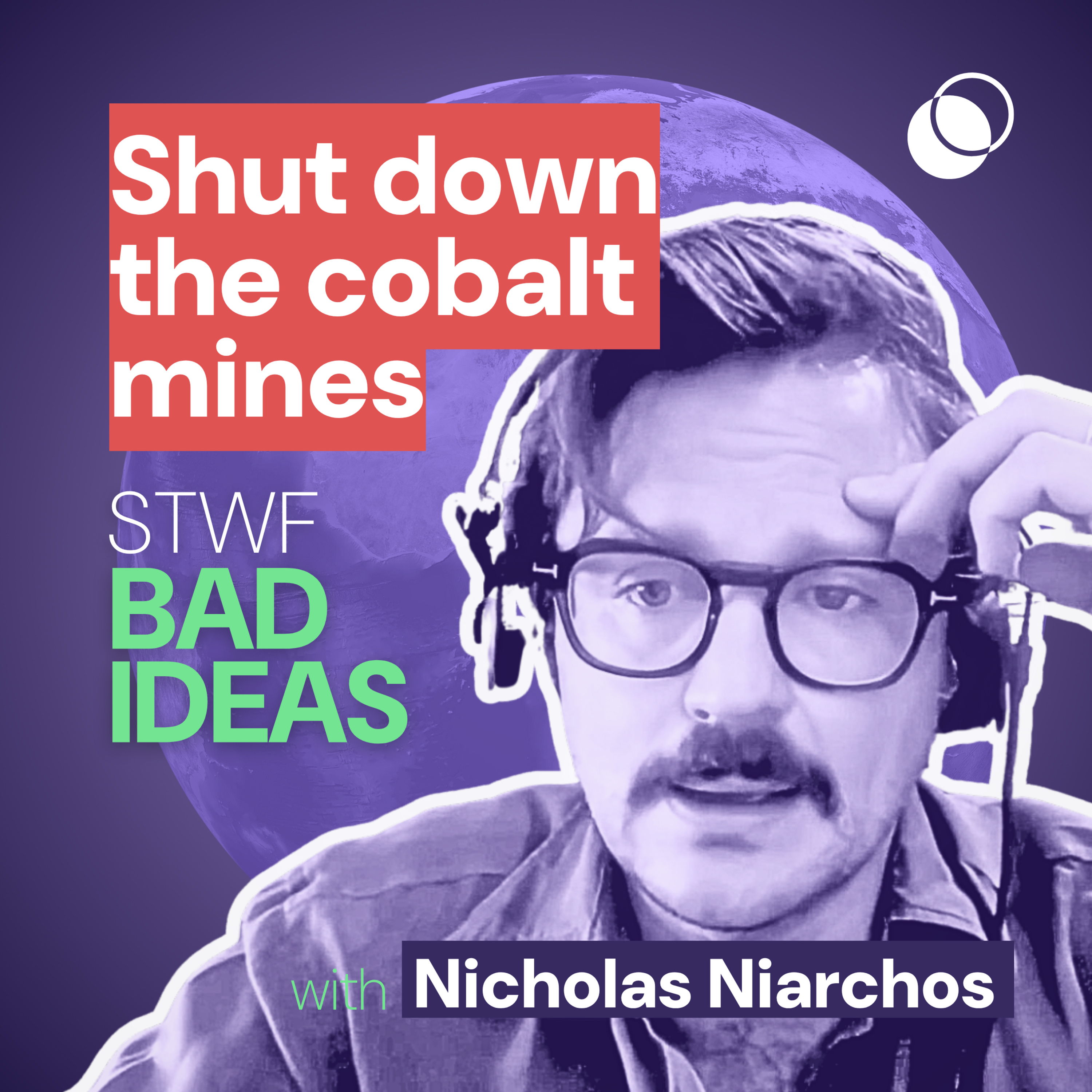 Bad Idea #54 "Shut down the cobalt mines" with Nicholas Niarchos | In this episode of Saving the World from Bad Ideas, Mark Lynas speaks with journalist and author Nicholas Niarchos about the dirty, dangerous, and politically fraught supply chains behind lithium-ion batteries. Using cobalt mining in the Democratic Republic of Congo as a central case study, they explore how a technology essential to electrification and decarbonisation became tied to child labour, unsafe artisanal mines, corruption, colonial legacies, and weak global accountability. The conversation pushes back against a simplistic response, namely shutting down cobalt mining altogether. Niarchos argues that cobalt is a highly effective battery material and that the real problem is not the mineral itself, but the governance failures and moral outsourcing that allow abuse to persist across global supply chains.🧠 Topics Discussed🔋 Why lithium-ion batteries became central to the clean energy transition⚙️ Which minerals go into modern batteries, including cobalt, copper, lithium, nickel, graphite, and phosphates🏭 How Exxon helped pioneer lithium-ion battery research before abandoning it🚗 Why lithium-ion batteries made modern electric vehicles viable⛏️ Why cobalt from the DRC became so important to battery chemistry👷 The realities of artisanal mining, including child labour, mine collapses, and extreme precarity📱 How major brands such as Apple are tied to these supply chains, even when they claim high standards⚖️ Why industrial mines and artisanal mines differ, but both still raise serious questions♻️ Why recycling alone does not solve the underlying justice problem🧪 Whether sodium-ion and other new battery chemistries will reduce dependence on cobalt🌍 Why the goal should be fixing the supply chain, not abandoning battery technology or Congo itself👩🏫 Guest BioNicholas Niarchos is a journalist and author whose work focuses on conflict, extraction, inequality, and global supply chains. In this conversation he discusses his book on the hidden human and political costs behind lithium-ion batteries and the minerals that power the energy transition, especially in the Democratic Republic of Congo.📚 Recommended Reading & ResourcesThe Elements of Power by Nicholas NiarchosReporting on cobalt mining and battery supply chains in the Democratic Republic of CongoResearch on artisanal and industrial cobalt miningWork on battery chemistry, electrification, and critical mineralsAnalysis of colonial extraction, governance, and resource politics in Central Africa💬 Quote Highlights💬 “The bad idea is the battery supply chain itself, which arose from a series of decisions that didn’t seem to be taken particularly consciously, but seem to be driven by avarice, essentially.” - Nicholas Niarchos💬 “I have been to mines that sit directly in Apple’s supply chain and watched as people without shoes go into these mines.” - Nicholas Niarchos💬 “The iPhone is the great success story for Apple. Don’t forget it. This success was built on the backs of these kinds of labor conditions. - Nicholas Niarchos💬 “If we start recycling all our material, which we’re admittedly a very, very long way off from, what gets left in Congo? - Nicholas Niarchos💬 “There’s no need to go to sodium. There’s no need to try and figure out new technologies... because we have the technology. The technology is the lithium ion battery.” - Nicholas Niarchos💬 “The bad idea is the supply chain, not the use of cobalt in batteries.” - Mark Lynas🌐 About WePlanetWePlanet is an international movement campaigning for science-based solutions to the climate, nature and development crises. Through conversations like this one, we challenge bad ideas, spotlight better ones, and make the case for a more abundant, resilient and hopeful future.📥 Join the Conversation💬 podcast@weplanet.org📩 https://weplanet.org/podcast👁️ https://twitter.com/weplanetint | — | ||||||
| 5/21/26 | 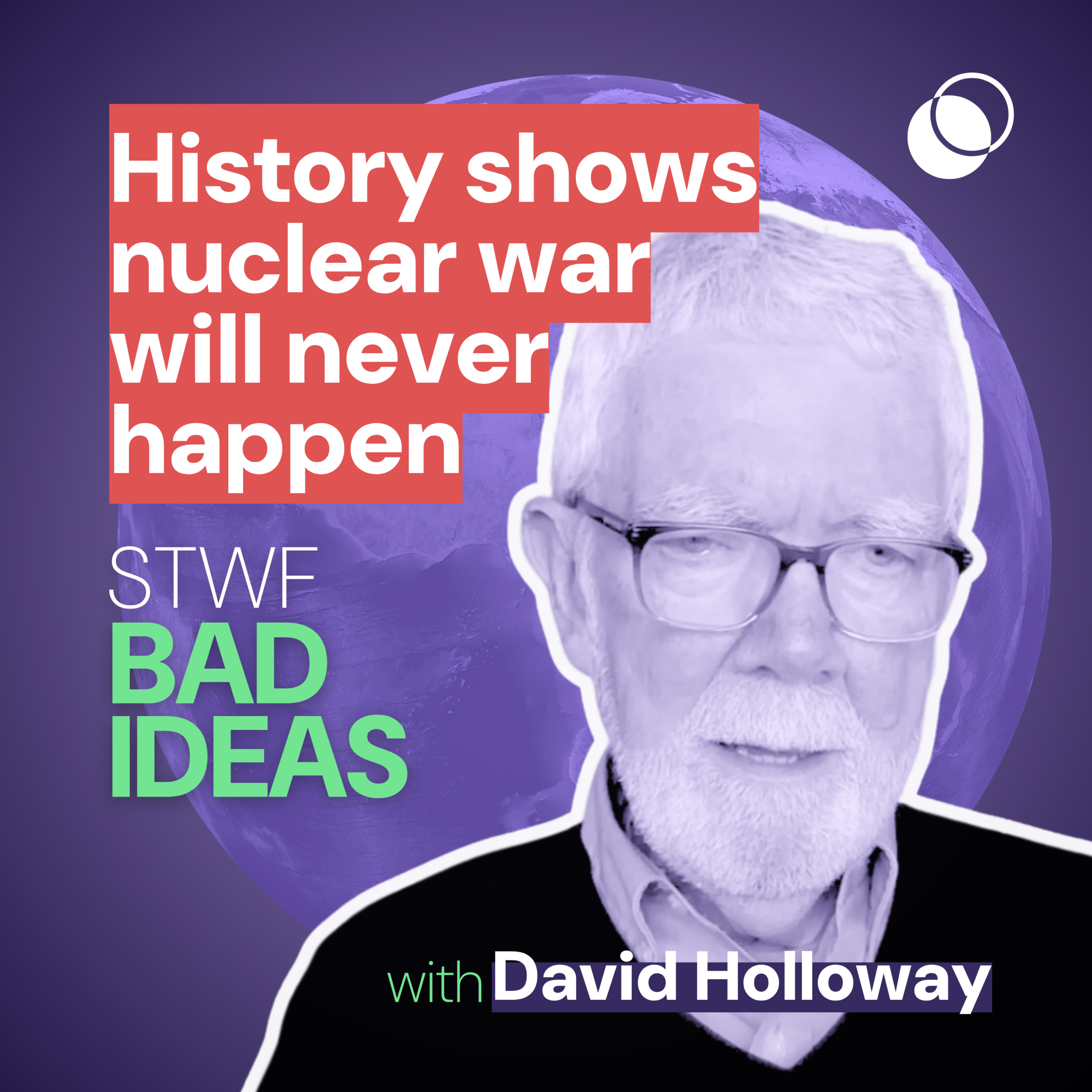 Bad Idea #53 "History shows nuclear war will never happen.” with David Holloway | In this episode of Saving the World from Bad Ideas, Mark Lynas speaks with Stanford historian David Holloway about one of the most dangerous assumptions of the nuclear age: history shows nuclear war will never happen. Drawing on Holloway’s new book Nuclear Weapons and International History, they trace the development of the bomb from the Manhattan Project to the thermonuclear age, the Cuban Missile Crisis, launch-on-warning doctrines, arms control, and the unraveling of the post-Cold War nuclear order. The conversation makes clear that the fact nuclear war has not happened yet is no guarantee it never will. Instead, it is a story of repeated near misses, fragile restraint, and a continuing risk that humanity has learned to treat as background noise.🧠 Topics Discussed☢️ Why David Holloway wanted to write an international history of nuclear weapons💥 The difference between atomic bombs and hydrogen bombs🔥 Why thermonuclear weapons transformed the scale of human destructiveness🧊 How the Cold War became a confrontation shaped by catastrophic nuclear risk🚨 How close the Cuban Missile Crisis came to becoming a nuclear war🛳️ The Soviet submarine incident on Black Saturday and the role of sheer luck☎️ Why the hotline and early arms control efforts emerged after Cuba🕊️ How scientists helped launch the anti-nuclear movement🎯 How deterrence, mutual assured destruction, and launch-on-warning doctrines evolved⚠️ Why false alarms and misread signals remain one of the greatest nuclear dangers🤖 How artificial intelligence and new technologies may make nuclear risk worse🛰️ Why missile defense systems like Star Wars and the proposed Golden Dome are so controversial📉 How the arms control system built during the Cold War has eroded🌍 Why a world with fewer nuclear weapons is still a world in grave danger❓ Whether humanity can find an alternative to living indefinitely with nuclear arsenals👩🏫 Guest BioDavid Holloway is Emeritus Professor of History at Stanford University and one of the world’s leading historians of nuclear weapons and the Cold War. His work has focused on the Soviet Union, international security, nuclear strategy, and the political history of the atomic age. His new book, Nuclear Weapons and International History, offers a sweeping account of how nuclear weapons shaped global politics from 1945 onward.📚 Recommended Reading & ResourcesNuclear Weapons and International History by David HollowaySix Minutes to Winter by Mark LynasResearch and historical accounts of the Cuban Missile CrisisWriting on the Russell-Einstein Manifesto and the Pugwash movementHistories of nuclear deterrence, arms control, and the thermonuclear arms race💬 Quote Highlights💬 “I think we’re entering a new and very dangerous period, partly linked to changes in the world order.” - David Holloway💬 “The H-bomb is a big step forward in terms of sheer destructiveness.” - David Holloway💬 “It was a war they didn’t want that they came close to having.” - David Holloway💬 “We’re entering a new and very dangerous period.” -David Holloway💬 “We can live with nuclear weapons... I think it’s a very bad idea.” -David Holloway🌐 About WePlanetWePlanet is an international movement campaigning for science-based solutions to the climate, nature and development crises. Through conversations like this one, we challenge bad ideas, spotlight better ones, and make the case for a more abundant, resilient and hopeful future.📥 Join the Conversation💬 podcast@weplanet.org📩 https://weplanet.org/podcast👁️ https://twitter.com/weplanetint | — | ||||||
| 5/14/26 | 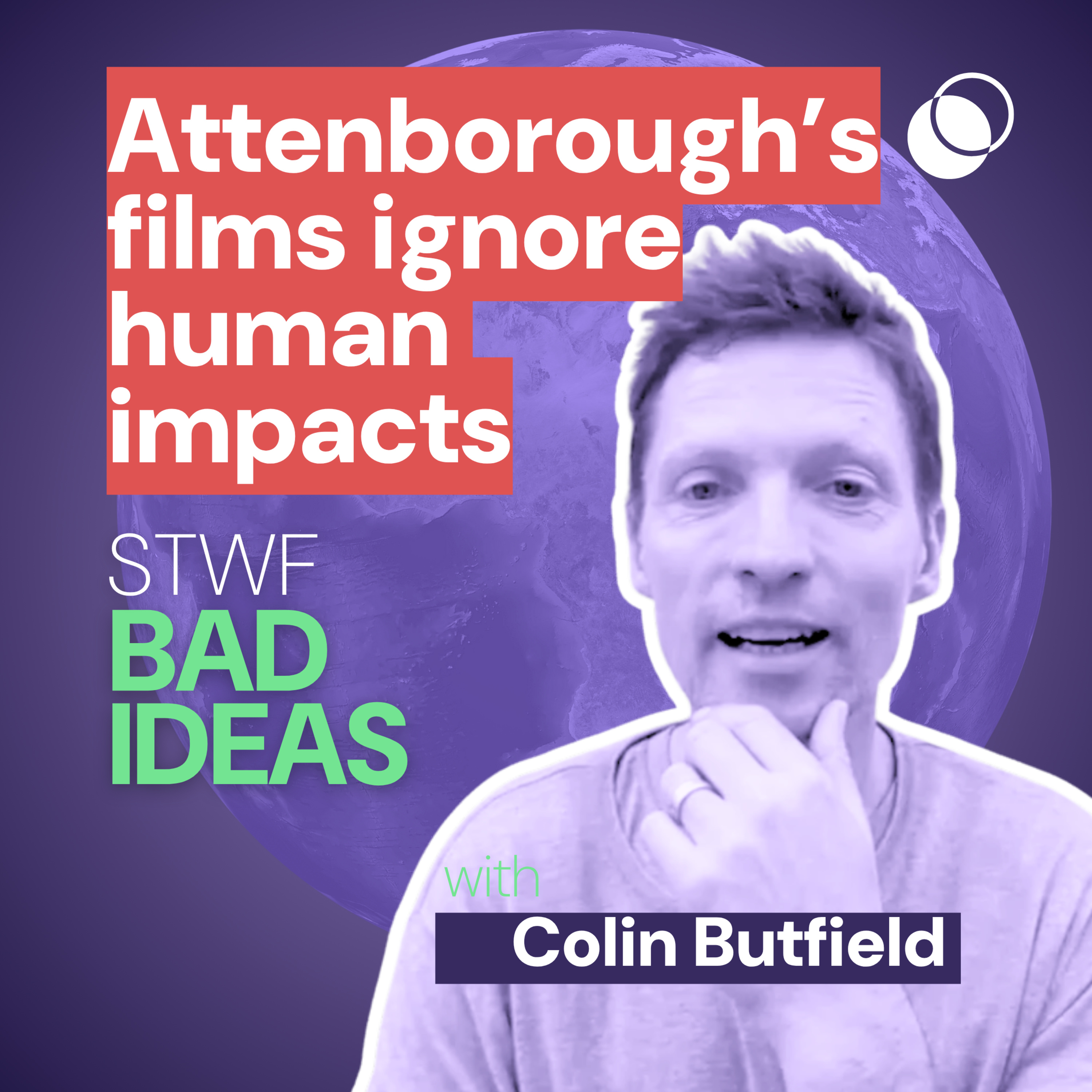 Bad Idea #52 "Attenborough’s films ignore human impacts” with Colin Butfield | “Attenborough’s films ignore human impacts.”In this episode of Saving the World from Bad Ideas, Mark Lynas speaks with filmmaker and environmental storyteller Colin Butfield, co-founder of Open Planet Studios and a long-time collaborator of David Attenborough. They discuss how Attenborough’s work has evolved from classic nature spectacle toward a much more explicit confrontation with ecological destruction, restoration, and humanity’s role in shaping the living world. Through the making of Ocean with David Attenborough, they explore the shocking reality of bottom trawling and Antarctic krill fishing, the changing grammar of nature documentaries in the Anthropocene, and why stories of damage now have to sit alongside stories of recovery. It is a rich conversation about storytelling, responsibility, and the power of film to show that human impacts can no longer be ignored.🧠 Topics Discussed:🎥 What it is like working with David Attenborough over nearly two decades🗣️ How Attenborough delivers those iconic pieces to camera🌍 How nature documentaries shifted from pristine spectacle to ecological reality🌊 Why Ocean with David Attenborough was made as an urgent film about human impacts🐟 How bottom trawling devastates marine ecosystems on an industrial scale🛑 Why bottom trawling is still allowed in many marine protected areas🐋 How Antarctic krill fishing competes directly with whales and destabilises the Southern Ocean food web🧾 Why “sustainable” seafood labels often deserve much more scrutiny📚 How films can remain true to documentary storytelling while still driving real-world campaigns🎬 Why Open Planet gives footage away for education and advocacy🌱 What ecological recovery can look like when people choose restoration and protection🤝 Why humans are not inherently destructive and can become a force for good🐻 What it takes to film extraordinary wildlife and wild places around the world🚀 Why “we can always go and live on Mars” is its own terrible environmental fantasy👩🏫 Guest Bio:Colin Butfield is co-founder and director of Open Planet Studios. As a filmmaker, writer and environmental storyteller, he has worked on major productions including A Life on Our Planet, Breaking Boundaries, Our Planet, and Ocean with David Attenborough. He has also co-written Ocean with David Attenborough and works at the intersection of documentary storytelling, conservation, and public engagement.📚 Recommended Reading & ResourcesOcean by David Attenborough and Colin ButfieldOcean with David AttenboroughOpen PlanetCampaigns and research on bottom trawling in marine protected areasWork on marine protection, krill fisheries, and ocean restorationSea Shepherd footage and reporting on the Southern Ocean krill fishery💬 Quote Highlights💬 “This is what we’ve chosen to do as a society or chosen to allow.”Colin Butfield💬 “I can absolutely sympathize with a community casting nets, even bottom trawling though I hope we can get away from that to feed their families, feed their communities, and earn a living. That’s a million miles away from going all the way down to Antarctica, hauling up krill for pet food and supplements.”Colin Butfield💬 “You just got to a point where it felt very strange... not to mention humanity or talk about the changes that are happening in them.”Colin Butfield💬 “It was unavoidable. You just can’t ignore this. It’s crazy to ignore it.”Colin Butfield💬 “I don’t think humans are inherently bad.”Colin Butfield🌐 About WePlanetWePlanet is an international movement campaigning for science-based solutions to the climate, nature and development crises. Through conversations like this one, we challenge bad ideas, spotlight better ones, and make the case for a more abundant, resilient and hopeful future.📥 Join the Conversation💬 podcast@weplanet.org📩 https://weplanet.org/podcast👁️ https://twitter.com/weplanetint | — | ||||||
| 5/7/26 | 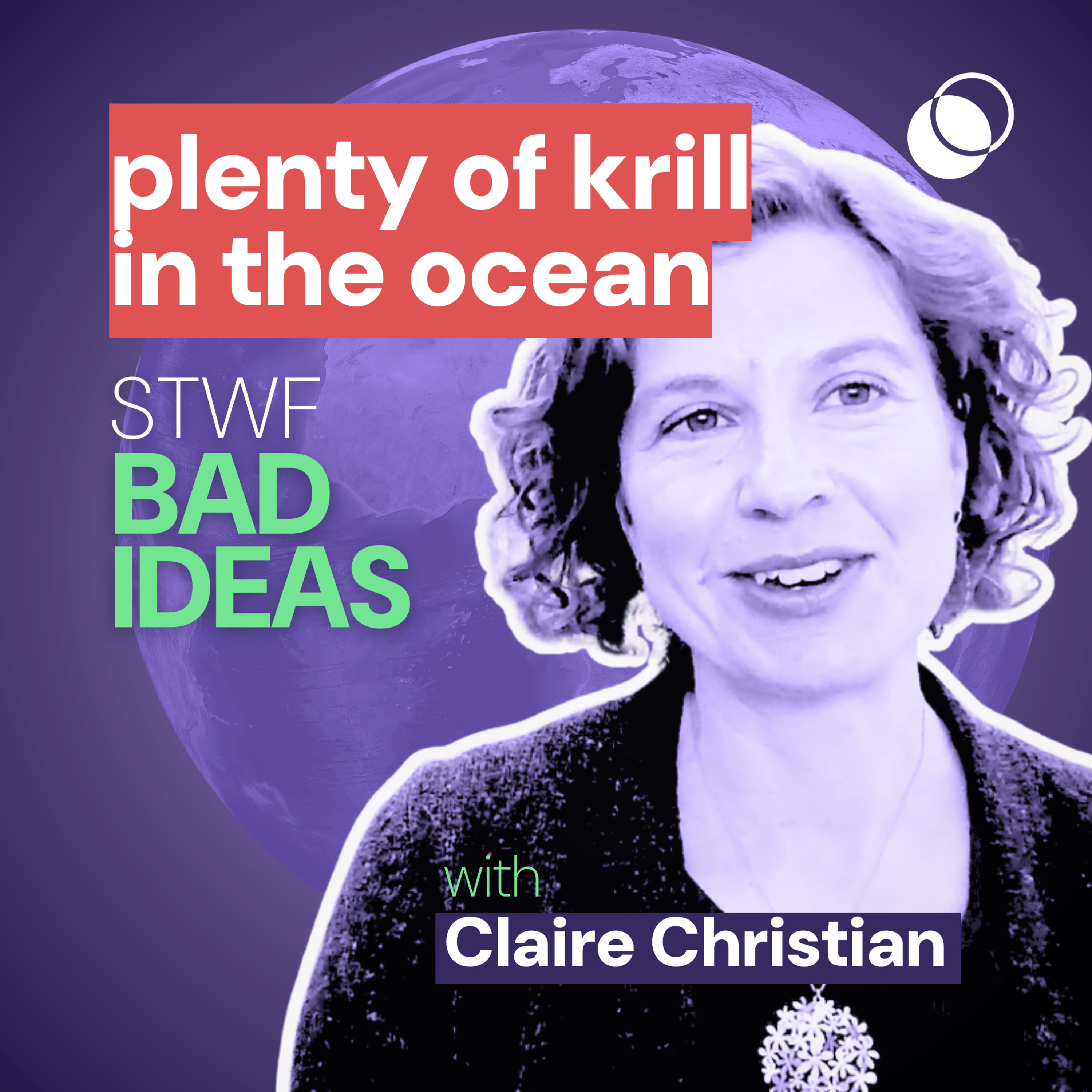 Bad Idea #51 "plenty of krill in the ocean" with Claire Christian | Antarctica is the least disturbed continent on Earth — and for some of the world's most powerful fishing nations, that's not a reason to protect it. It's a reason to go there next. Claire Christian, Executive Director of the Antarctic and Southern Ocean Coalition, joins Mark Lynas to make the case that the bad idea is to look at the antarctica regian as a pantry, plenty of krill in the ocean, right? That idea still persists, debated in closed rooms in Hobart, and dressed up in sustainability labels.Christian traces the arc from industrial whaling and penguin-boiling in the early 1900s — one of the first modern wildlife protection campaigns — through the Cold War-era Antarctic Treaty miracle, to today's battleground: krill. The Southern Ocean krill fishery is small by global standards but growing fast, dominated by Norwegian vessels, eyed hungrily by China, and certified "sustainable" by the Marine Stewardship Council despite trawlers threading directly through the feeding grounds of recovering whale populations.What emerges is a picture of governance under pressure. CAMLR — the commission governing the Southern Ocean fishery — operates by consensus, meaning Russia and China can block marine protected area proposals indefinitely while simultaneously pushing to expand catch limits. Two MPAs exist (the Ross Sea and the South Orkneys). More are on the table, extensively researched, scientifically rigorous — and stalled. The Antarctic Peninsula, one of the fastest-warming places on the planet, still has no formal protection.Christian also unpacks the krill industry's favourite talking point: that the catch is less than 1% of total biomass. The problem isn't total biomass — it's where the fishing happens. Krill concentrate in a few small areas. So do the penguins, seals and recovering whale populations that depend on them. The wildlife can't go elsewhere. The ships could. So far, CAMLR hasn't required it.The meta bad idea, in Christian's own words: that the burden of proof should rest on nature rather than on us.🧠 Topics Discussed:🐧 The original sin: industrial whaling, seal hunting, and boiling penguins for oil — and the early 1900s campaign that became one of the first modern wildlife protection efforts🐳 The recovery miracle: humpback whales possibly back to 80% of pre-whaling numbers — and the extraordinary discovery that more whales actually means more krill🦐 Krill 101: why almost everything in the Southern Ocean either eats krill or eats something that eats krill — and why a 50-armed predatory starfish is just as important as a penguin📜 The Antarctic Treaty system: how Cold War geopolitics accidentally produced one of the most forward-looking conservation treaties in history🎣 How krill fishing started: the Soviet Union, the El Dorado effect, and the logic of "the whales are gone, so there must be more krill for us"🏷️ The MSC certification problem: how a "sustainable" label on suppresses pressure on CAMLR to actually improve management 🌡️ Climate change as wild card: sea ice loss, shifting krill distributions, and why uncertainty is an argument for more precaution, not less🗳️ CAMLR's consensus trap: how Russia and China demand more science before protecting — but not before fishing⚖️ The burden of proof argument: who should have to prove harm — industry or nature?👤 Guest Bio:Claire Christian is the Executive Director of ASOC, the Antarctic and Southern Ocean Coalition — a global network of NGOs dedicated to the protection of Antarctica and the Southern Ocean. She has been an observer at CAMLR negotiations and has written extensively on marine conservation governance, MSC certification, and Southern Ocean fisheries management. 📚 Recommended Reading & Resources:ASOC — Antarctic and Southern Ocean CoalitionCAMLR — Commission for the Conservation of Antarctic Marine Living ResourcesThe Antarctic Treaty SecretariatHigh Seas Treaty (BBNJ Agreement) — IUCN overview | — | ||||||
| 4/30/26 | 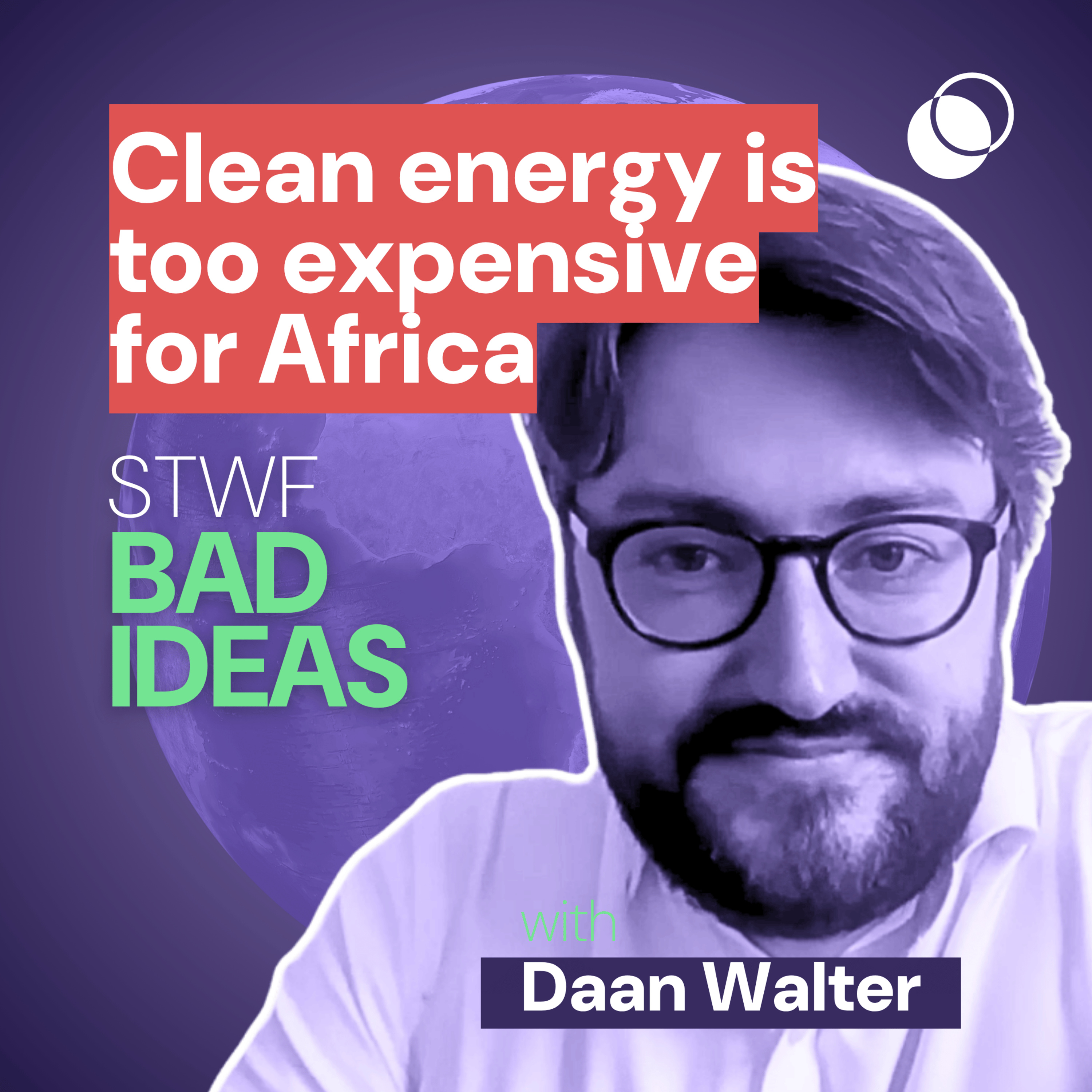 Bad Idea #50 "clean energy is too expensive for Africa" with Daan Walter | Clean energy won't work in the global south... right? At a moment when the fossil fueled economy is cracking under geopolitical pressure, Daan Walter of EMBER brings the data that reframes everything: clean energy is moving ahead, in developing countries — it's already winning. Walter unpacks EMBER's latest electricity review findings: for the first time, wind and solar absorbed nearly all global electricity demand growth in 2024, causing fossil fuel generation to actually fall. And unlike the economic shocks of 2020 or 2013, this is structural.The episode covers the ElectroTech revolution's three core drivers — none of which are explicitly about climate. Walter explains why emerging economies, far from lagging, are leapfrogging the West: over 50% of CVF nations now out-solar the United States. The Strait of Hormuz crisis is accelerating everything. Pakistan's bottom-up solar revolution — millions buying off Alibaba, DIY-installing, disconnecting from failing utilities — is the preview of what comes next everywhere.Nuclear gets a candid assessment too, the question is how it can play nice with solar dominating the grid. Walter closes with a refreshingly honest admission: we don't know yet how to solve the last 5-10% of the grid cleanly — but that's fine. The right move is to sprint the 90% we can solve and invest in R&D for the rest, rather than let perfect be the enemy of transformational.🧠 Topics Discussed:⚡ ElectroTech defined: why wind, solar, batteries, EVs, and heat pumps all cluster around electricity as their magnetic center📉 Bad idea autopsied: "clean energy is too expensive for developing countries" — true five years ago, dangerously wrong today🌍 CVF nations leapfrogging: 50%+ of the world's most climate-vulnerable countries out-solar the US💸 Capex parity moment: upfront costs of EVs and solar panels now matching fossil alternatives — the game-changer for capital-constrained economies🌞 Solar as baseload: 80-90% uptime solar + battery achievable at ~$100-120/MWh; UAE Masdar project hit 99.5% uptime below $70/MWh🛢️ Hormuz crisis as accelerant: biggest energy shock since the 1970s, turbocharging electrotech exports from China globally👨💼 Guest Bio:Daan Walter is a Principal at EMBER, where he leads global energy strategy research. His CV spans Rocky Mountain Institute (batteries, efficiency, mineral demand), McKinsey, and two graduate degrees from the University of Cambridge — one in nuclear energy, one in theoretical physics. He's one of the sharpest analysts tracking the real-time pace of the ElectroTech revolution.💬 Quote Highlights:"The answer is not 'you're wrong.' The answer is: you were right five years ago." — Daan Walter"The poorest countries in the world and the poorest families within countries are adopting ElectroTech because it's the cheapest option now, not the most expensive." — Daan Walter"We identify three key drivers of the ElectroTech revolution across the world. None of those three are explicitly climate." — Daan Walter"Every country in the world has a small Saudi Arabia worth of energy falling from the skies on them every year. All they need to do is put a panel up and capture it." — Daan Walter"By 2040, we might be in a very highly electrified, very low-carbon economy — in the same way that by 2040, we might be in an economy that largely runs on AI white-collar work." — Daan Walter🌐 About WePlanet:WePlanet is a global citizen and science movement challenging bad ideas and championing evidence-based solutions for climate, nature, and human progress. Learn more at weplanet.org📥 Join the Conversation💬 Email: podcast@weplanet.org📩 Subscribe: weplanet.org/podcast👁️ Follow: @weplanetint | — | ||||||
| 4/23/26 | 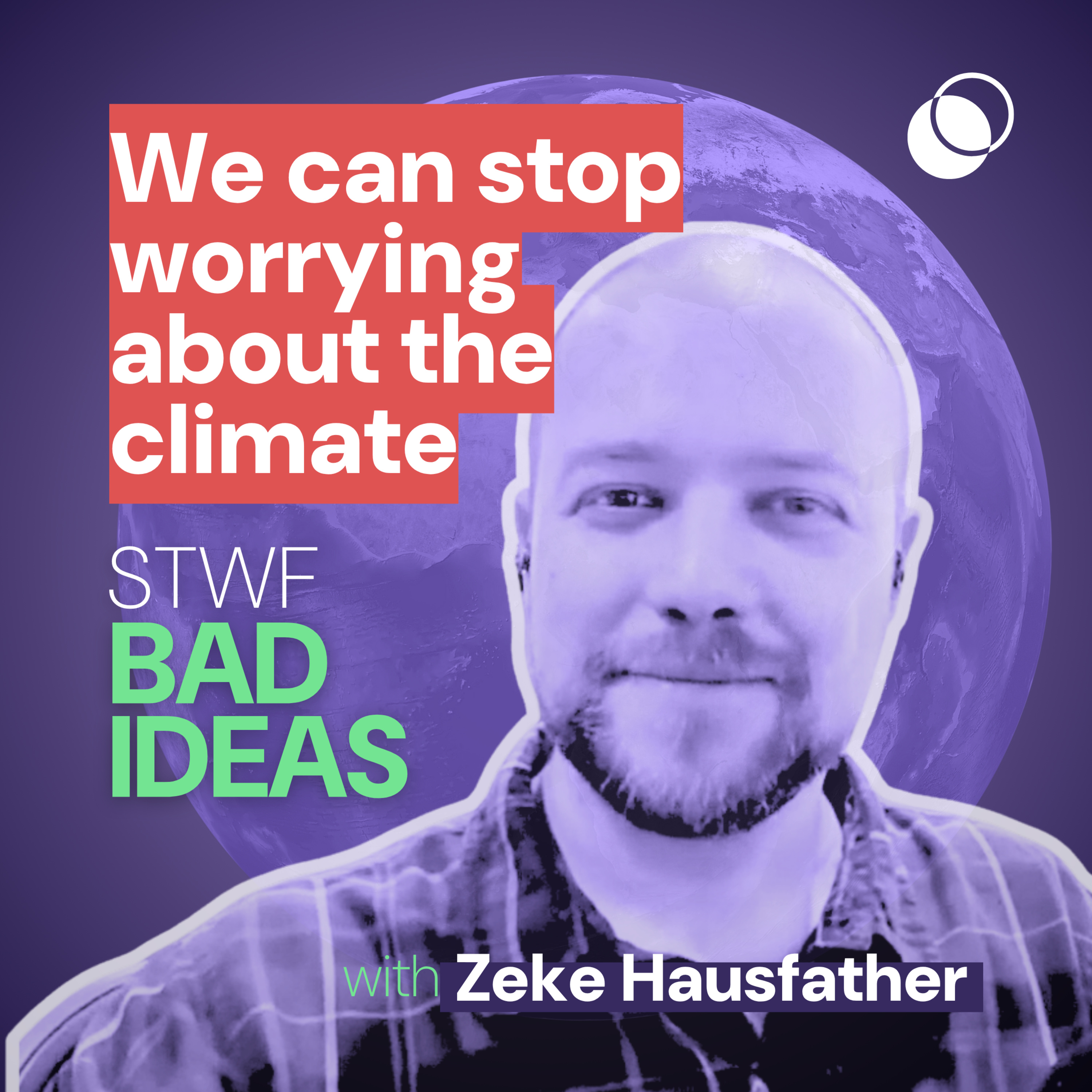 Bad Idea #49 "We can stop worrying about the climate" with Zeke Hausfather✨ | global warmingaerosols+6 | Zeke Hausfather | StripeCarbon Brief+6 | Arctic | climate changetemperature records+2 | — | 1h 13m 14s | |
Want analysis for the episodes below?Free for Pro Submit a request, we'll have your selected episodes analyzed within an hour. Free, at no cost to you, for Pro users. | |||||||||
| 4/16/26 | 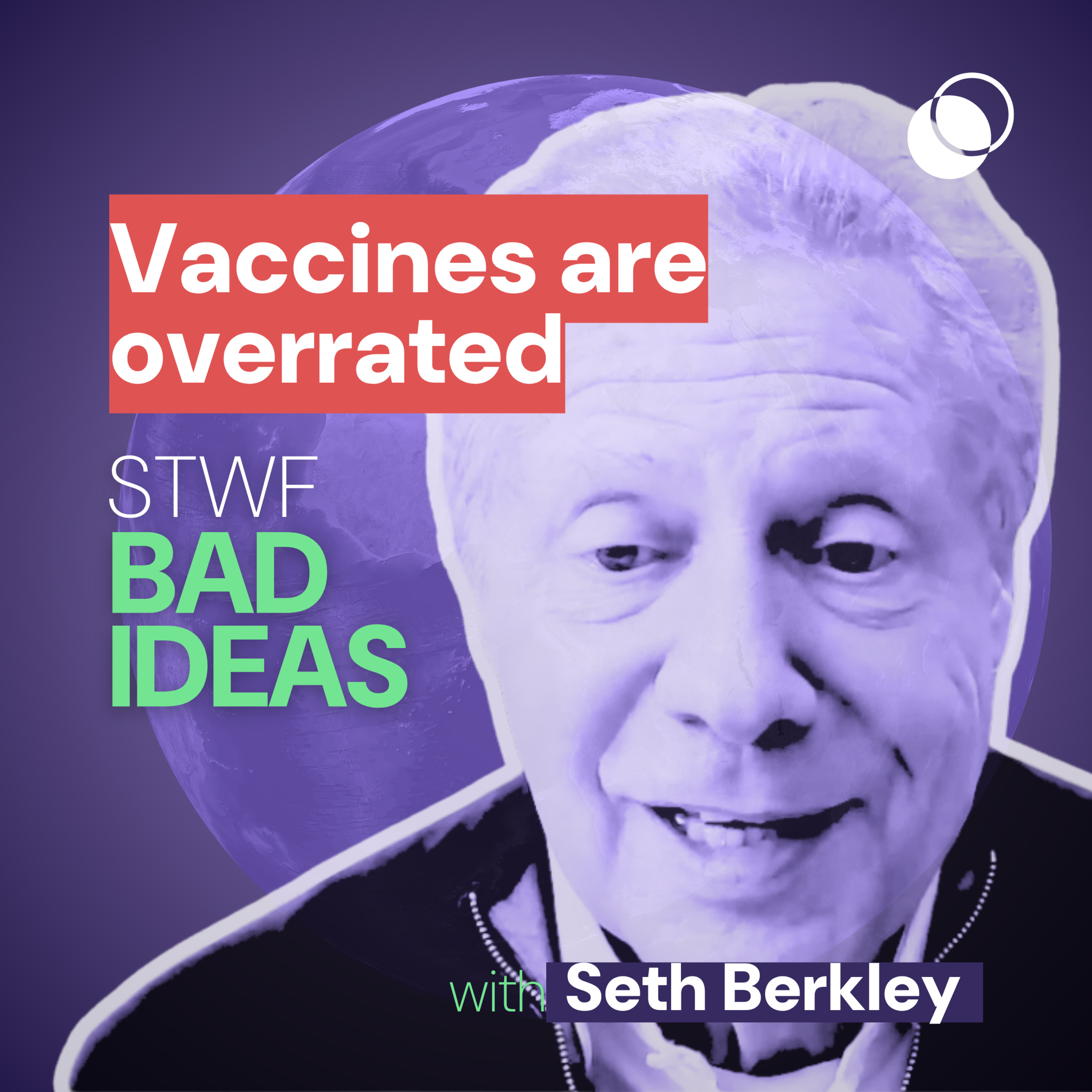 Bad Idea #48 "Vaccines are overrated" with Seth Berkley✨ | vaccine equitypandemic preparedness+3 | Dr Seth Berkley | mRNA vaccinesGavi+10 | — | COVID-19mRNA vaccines+3 | — | 46m 20s | |
| 4/8/26 | 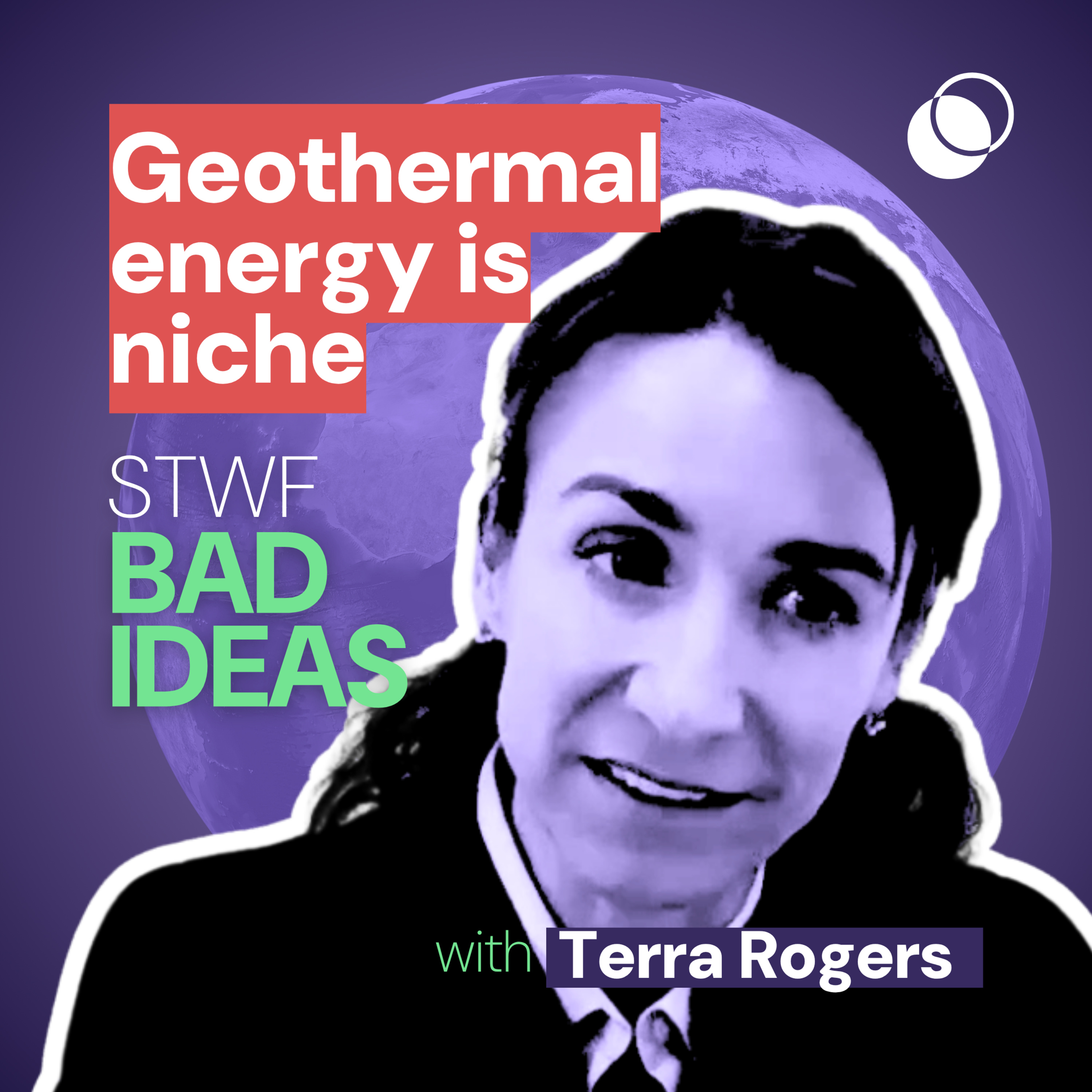 Bad Idea #47 "Geothermal energy is niche" with Terra Rogers✨ | Conventional geothermalSuperhot breakthrough+1 | Terra Rogers | FervoForge+8 | EarthIceland+9 | geothermal energycarbon-free power+2 | — | 56m 05s | |
| 4/1/26 | 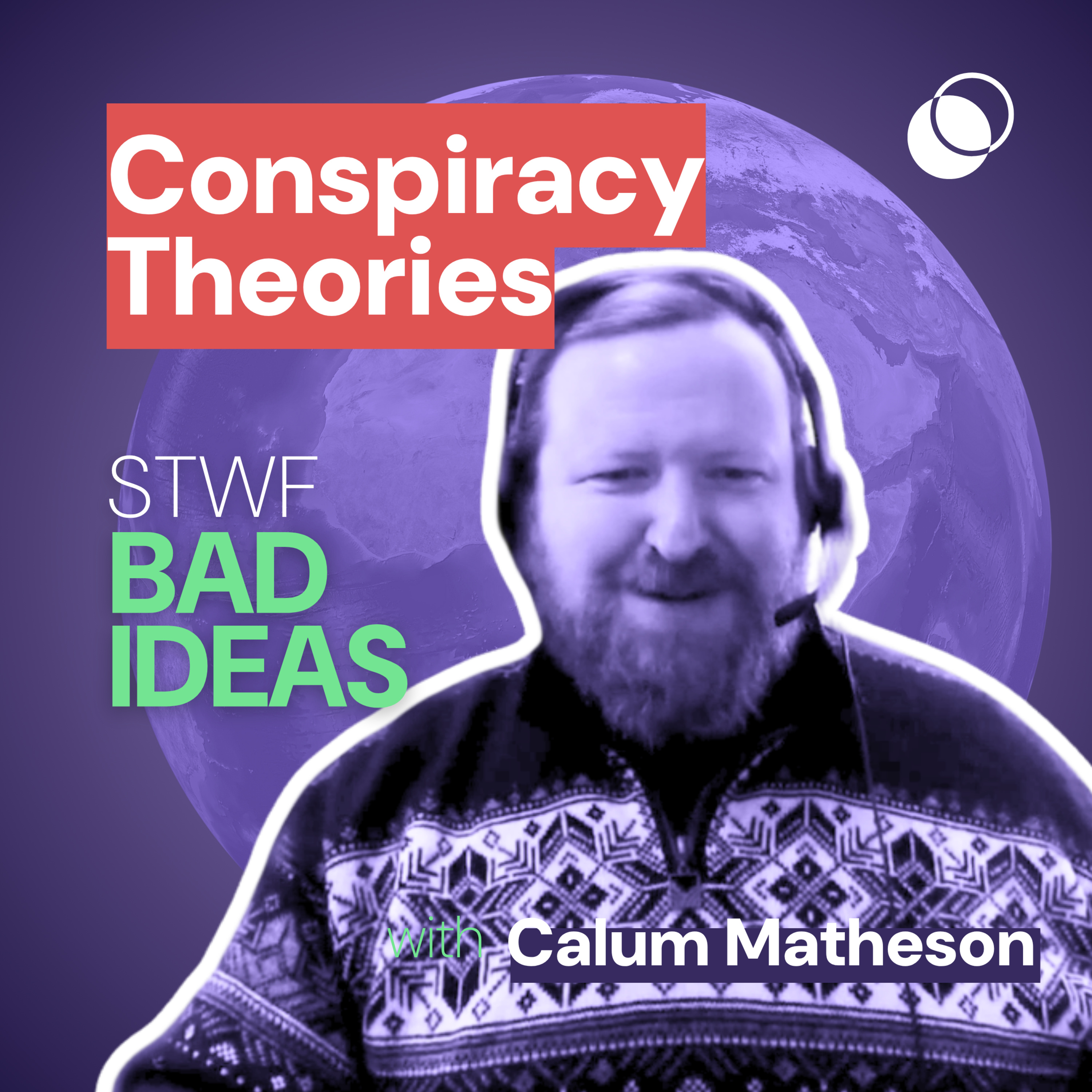 Bad Idea #46 "Conspiracy Theories" with Calum Matheson✨ | Conspiracy TheoriesPsychology+3 | Calum Matheson | QAnonthe University of Pittsburgh+10 | — | QAnonEpstein files+4 | — | 1h 04m 06s | |
| 3/25/26 | 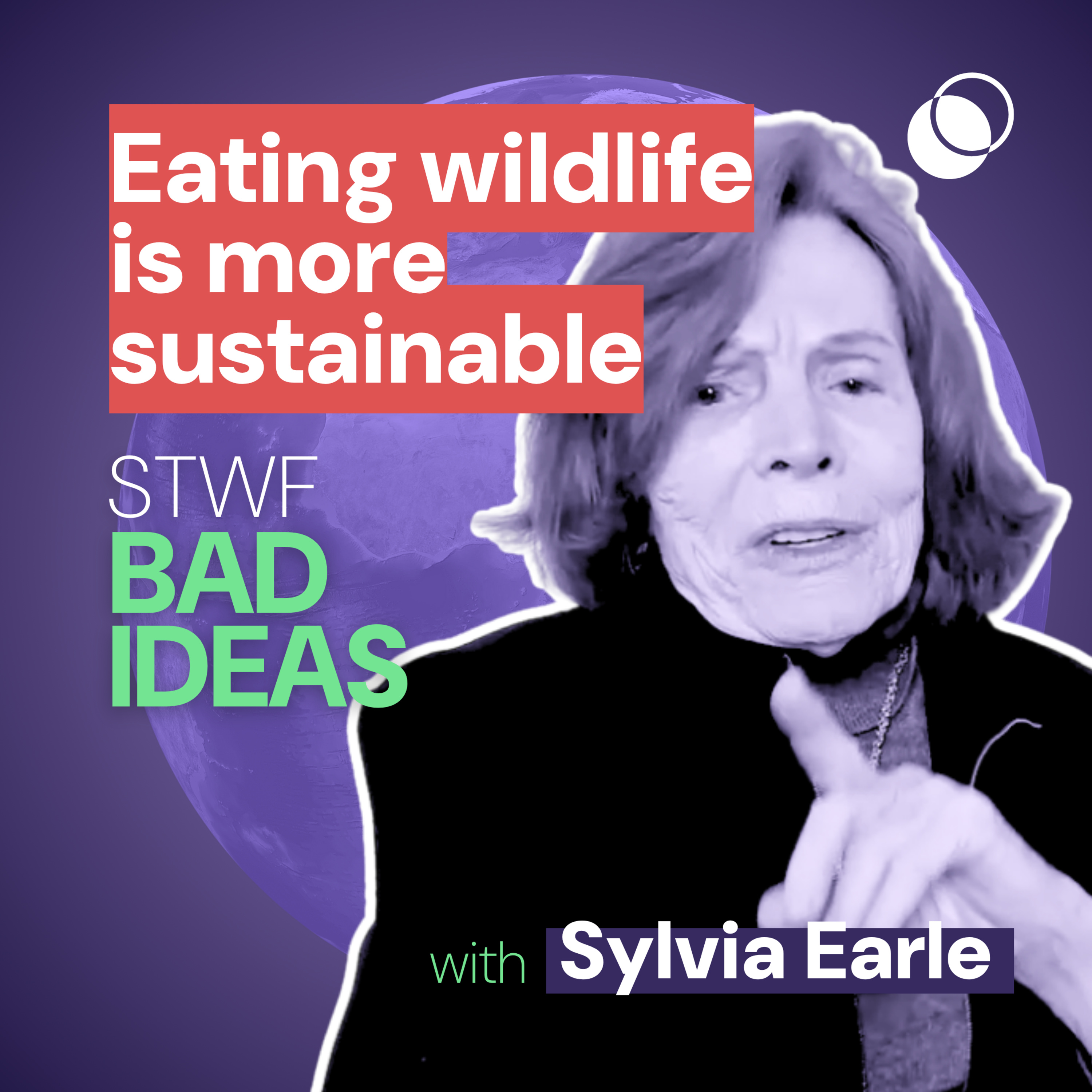 Bad Idea #45 "Eating wildlife is more sustainable’" with Sylvia Earle✨ | Sixth mass extinctionWhale recovery+3 | Sylvia Earle | scubacell-cultured fish+4 | AntarcticSingapore+1 | sustainabilityocean change+3 | — | 1h 48m 09s | |
| 3/19/26 | 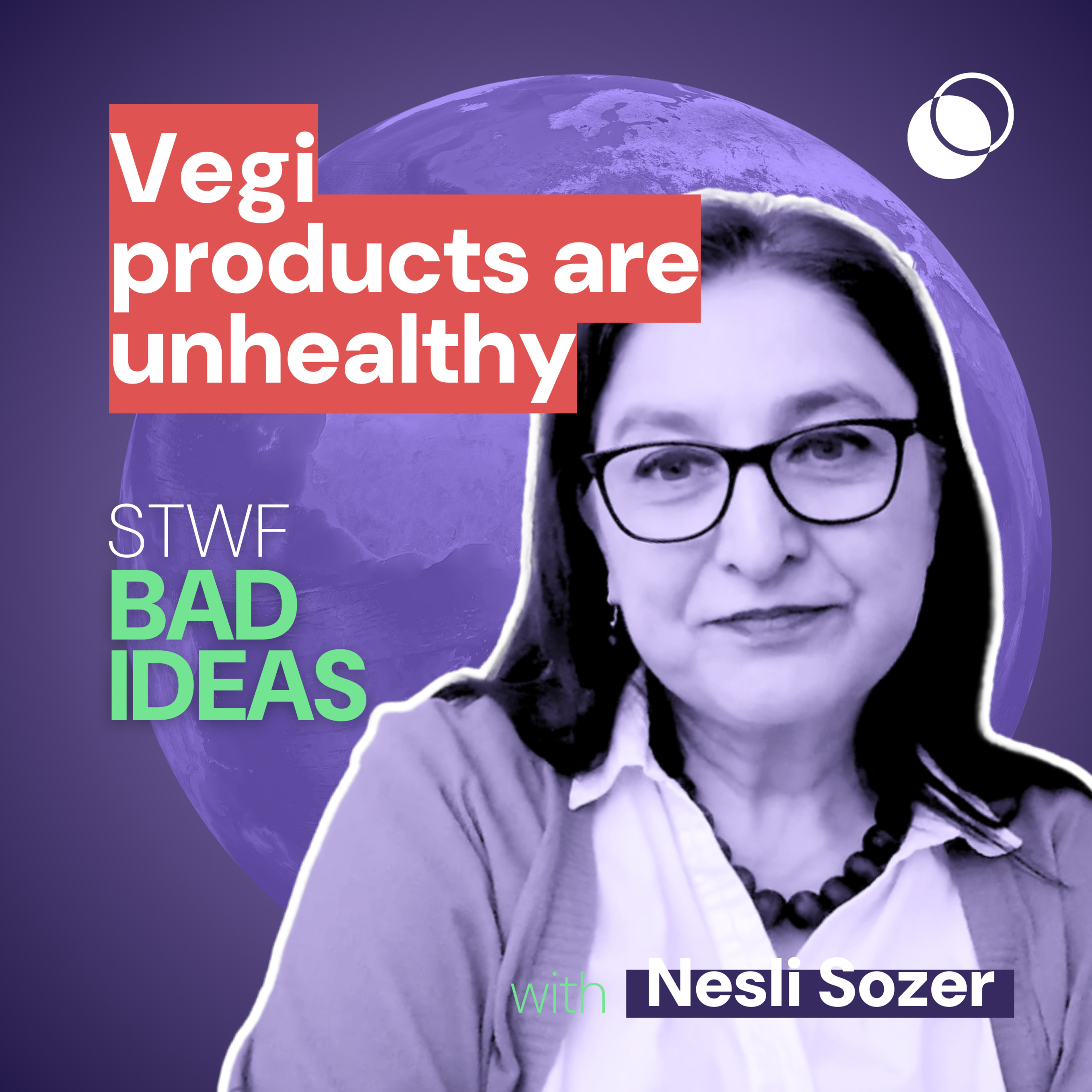 Bad Idea #44 "Vegi products are unhealthy’" with Nesli Sözer✨ | NOVA classificationultra-processed foods+4 | Nesli Sözer | Solar Foodswhole grain bread+14 | FinlandEU+1 | ultra-processed foodsmyth dismantling+3 | — | 54m 28s | |
| 3/12/26 | 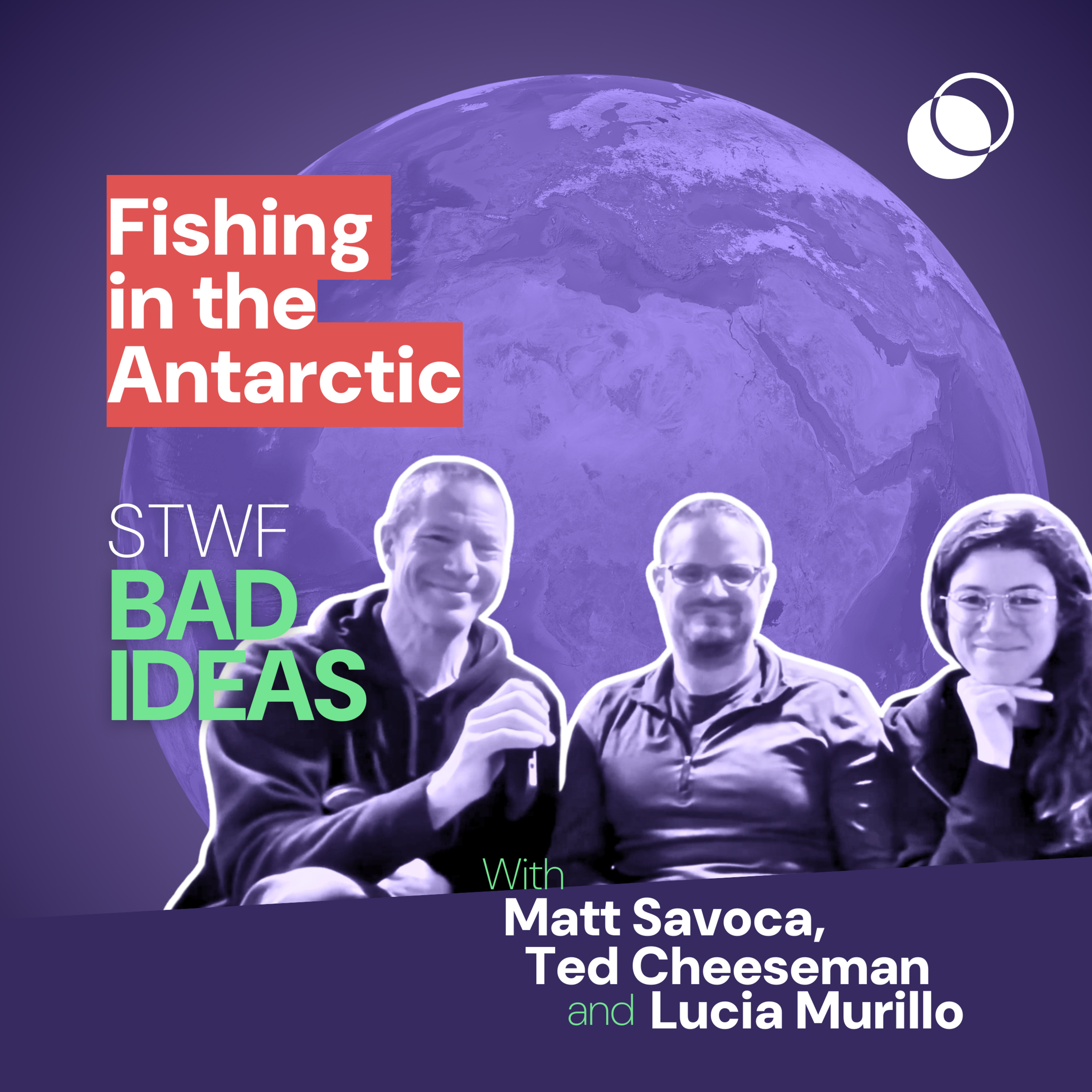 Bad Idea #43 "Fishing in the Antarctic" with Matt Savoca, Ted Cheeseman, and Lucia Morillo✨ | Fin whale recoveryKrill fishery+3 | Matt SavocaTed Cheeseman+1 | ASOCWePlanet+12 | Antarcticthe Southern Ocean+7 | Antarctickrill+3 | — | 1h 15m 51s | |
| 3/4/26 | 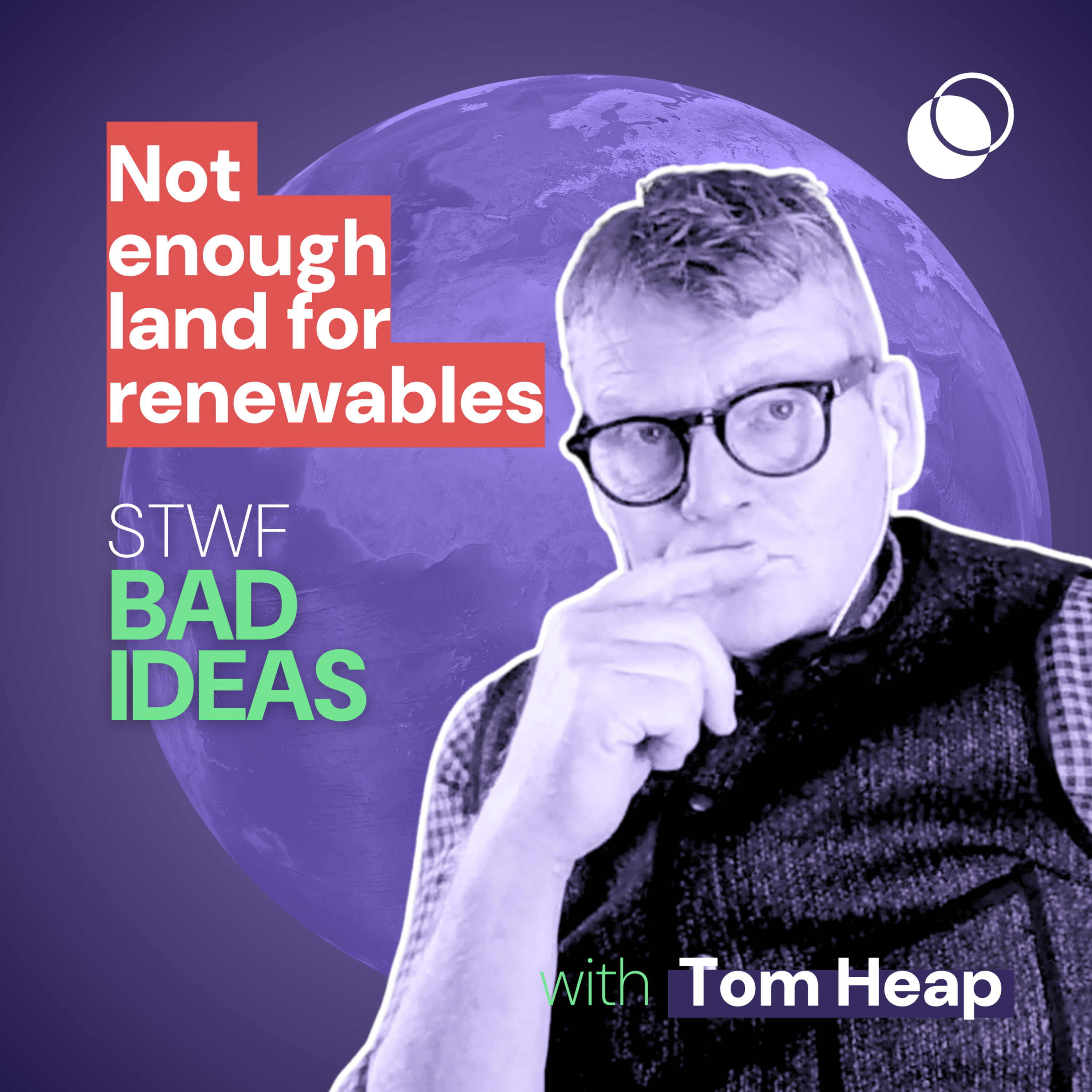 Bad Idea #42 "not enough land for renewables" with Tom Heap✨ | land userenewable energy+7 | Tom Heap | Land Smart: How to Give People and Nature the Space to ThriveBBC Countryfile+6 | EarthChina+3 | environmental issuesenergy output+2 | — | 55m 46s | |
| 2/25/26 | 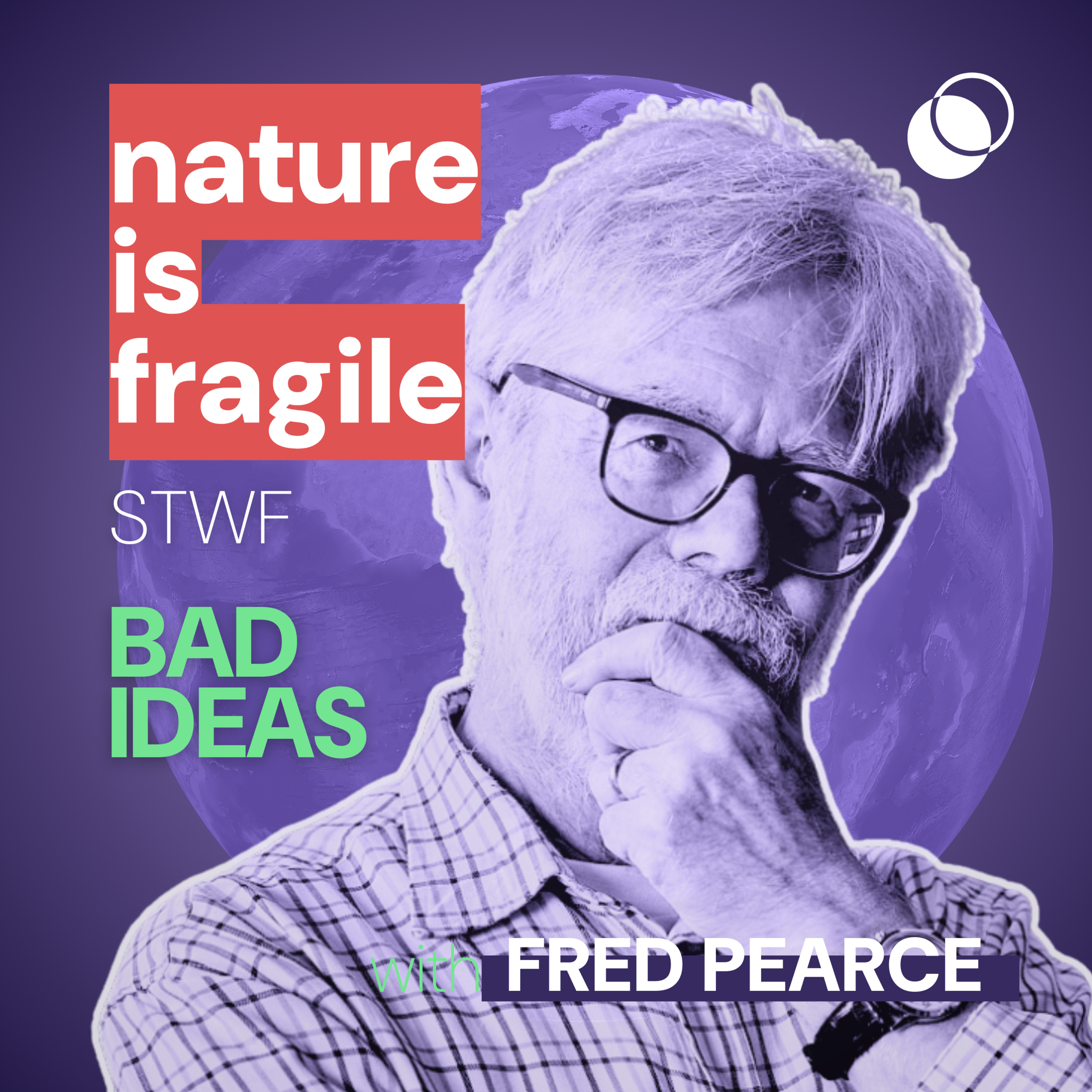 Bad Idea #41 "nature is fragile" with Fred Pearce✨ | nature's resilienceenvironmental optimism+3 | Fred Pearce | Despite It All: A Handbook for Environmental HopefulsNew Scientist+3 | EuropeChina+1 | environmental journalismecological change+3 | — | 51m 05s | |
| 2/18/26 | 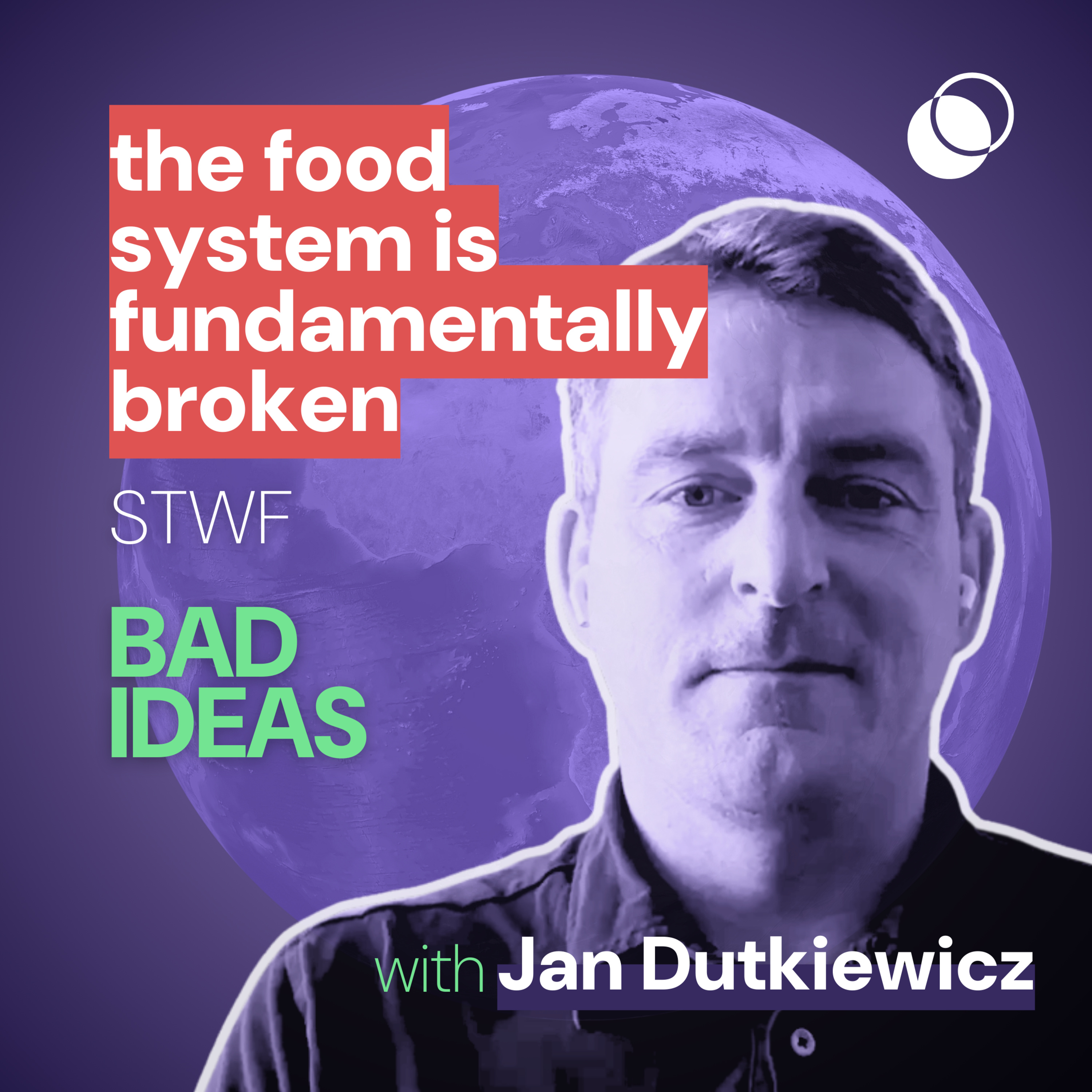 Bad Idea #40 "the food system is fundamentally broken" with Jan Dutkiewicz✨ | Defining industrial food: scale, standards, regulation creating abundanceWhy 'the food system is broken' is the wrong diagnosis+5 | Jan Dutkiewicz | Feed the People: Why Industrial Food is Good and How to Make it Even Betterthe Pratt Institute+4 | EuropeBrooklyn+1 | industrial foodfood system+3 | — | 1h 07m 16s | |
| 2/13/26 | 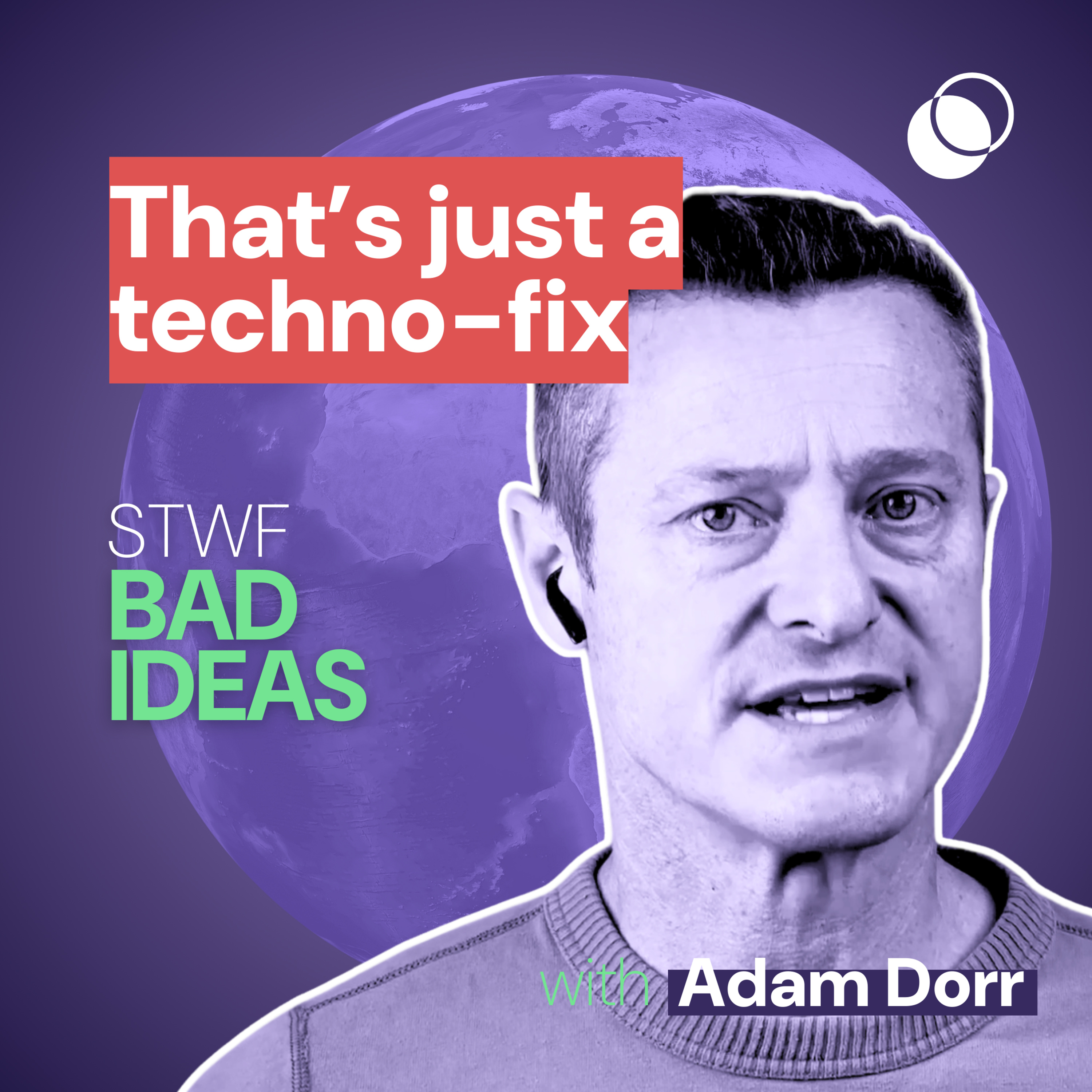 Bad Idea #39 "but that's just a technofix" with Adam Dorr | Can technology save us from environmental collapse — or is it just another false promise? In this epic conversation, Mark Lynas sits down with Adam Dorr, Director of Research at RethinkX and author of The Degrowth Delusion, to explore four simultaneous technological revolutions reshaping our world: energy (solar, wind, batteries), transportation (EVs and autonomous vehicles), food (precision fermentation), and labor (AI).🧠 Topics Discussed:💡 Technology as "practical knowledge" and how it compounds autocatalytically (self-accelerating)📈 S-curve adoption and X-curve decline: Why disruptions happen in 15-20 years, not centuries⚡ Solar, wind, batteries (SWB): Now the cheapest electricity ever, with near-zero marginal cost🌞 Why massive solar overbuilding beats battery storage (the Clean Energy U-curve)📦 Modularity advantage: Solar/batteries work from wristwatches to gigawatt plants🔌 From scarcity to super-abundance: Rethinking efficiency as "use what's available" not "use less"🚗 EVs and autonomous vehicles: Battery breakthroughs and transportation-as-a-service🥩 Precision fermentation and cellular agriculture: 10-100x more efficient than animal farming🏛️ Political resistance: GMO bans, cellular meat bans, and horseshoe theory opposition🤖 The fourth disruption: AI replacing cognitive, operator, and general human labor💼 Post-labor economics: Universal basic income, luxury services, and navigating abundance🌍 Why abundance makes allocation easier than scarcity (and nobody has all the answers yet)⚛️ AI existential risk vs opportunity: Superintelligence as doom or salvation?🌟 Star Trek vs Terminator: Which future will we choose?👨🏫 Guest Bio:Adam Dorr is Director of Research at RethinkX, a nonprofit think tank analyzing technology disruption. He authored The Degrowth Delusion: Dispelling One of History's Truly Terrible Ideas and researches energy, food, transportation, and labor disruption. He's also a science fiction author exploring superintelligence and humanity's cosmic future.📚 Recommended Reading & Resources:● The Degrowth Delusion — Adam Dorr● RethinkX research reports https://www.rethinkx.com● Clayton Christensen — The Innovator's Dilemma● Tony Seba and disruption theory https://tonyseba.com● Mark Lynas — Six Degrees: Our Future on a Hotter Planet https://www.marklynas.org/books/six-degrees/💬 Quote Highlights:"Life is unequivocally better on almost every indicator you care to measure than it was historically — life expectancy, infant mortality, literacy, everything down the line." — Adam Dorr"The more energy we have available, the more abundant energy is, the more useful things we can do to garner prosperity." — Adam Dorr"My team has documented more than 1,700 instances of new technologies spreading like wildfire once they catch — it only takes 15 to 20 years." — Adam Dorr"Solar panels just sit there and happily make electricity for decades at near zero marginal cost. They really are a marvelous technology." — Adam Dorr"We're headed into a world of fantastic abundance. That means hugely expanding our capacity to restore ecologies we've damaged." — Adam Dorr"Our environmental issues are not an epic struggle of good versus evil. They are just problems. And problems are solvable with the right tools. Now for the first time in history, we finally have the tools we need." — Adam Dorr🌐 About WePlanet:WePlanet is a global citizen and science movement challenging bad ideas and championing evidence-based solutions for climate, nature, and human progress. Learn more at weplanet.org📥 Join the Conversation💬 Feedback or questions? Email: podcast@weplanet.org📩 Subscribe to new episodes: weplanet.org/podcast👁️ Follow us on X/Twitter: @weplanetint | — | ||||||
| 2/5/26 |  Bad Idea #38 "Solving energy is enough for solving climate" with Bruce Friedrich | Can we really solve climate change just by fixing energy — and ignore food? In this episode of Saving the World from Bad Ideas, Mark Lynas sits down with Bruce Friedrich, founder and President of the Good Food Institute, to tackle Bad Idea #37: “Solving energy is enough for solving climate.”Bruce argues that focusing exclusively on decarbonising energy while ignoring food systems is one of the biggest blind spots in climate policy. From antibiotic resistance and zoonotic disease to geopolitics, national security, and the S-curve of technological change, this conversation makes the case that the protein transition must stand alongside the energy transition if we’re serious about saving the planet.🧠 Topics Discussed: ● ⚡ Why decarbonising energy alone only solves about half the climate problem ● 🍖 Global meat demand: why “eat less meat” has never worked ● 🌍 Land use, deforestation, and rewilding at planetary scale ● 🧫 Cultivated meat, fermentation, and next-generation plant proteins ● 📉 The inefficiency of feeding crops to animals ● 🦠 Antibiotic resistance and industrial animal agriculture ● 🦆 Pandemic risk and zoonotic spillover from livestock systems ● 🐟 Cultivated seafood and the future of ocean recovery ● 📈 The protein S-curve and lessons from solar, EVs, and the internet ● 🏛️ Why government support matters — and where it’s already happening ● 🇨🇳🇮🇳 China, India, and the geopolitics of alternative proteins● 🌱 Farmers, land sparing, and the future of agriculture ● 🌎 Food security, resilience, and feeding a growing world👨🏫 Guest Bio:Bruce Friedrich is the founder and President of the Good Food Institute (GFI), a global non-profit accelerating the transition to alternative proteins. He has worked for more than three decades at the intersection of food, climate, and innovation. Bruce is the author of Meat: How the Next Agricultural Revolution Will Transform Humanity’s Favorite Food and Our Future, and a leading global advocate for plant-based, fermentation-derived, and cultivated meat as climate, biodiversity, and food-security solutions.📚 Recommended Reading & Resources: ● Meat: How the Next Agricultural Revolution Will Transform Humanity’s Favorite Food and Our Future ● Good Food Institute● GFI Europe ● SYSTEMIQ & Good Food Institute – The Protein Transition: Pathways to Lower Climate, Land, and Water Impacts● What’s Cooking? (UNEP alternative proteins report)● Livestock’s Long Shadow (FAO) ● World Resources Institute: Creating a Sustainable Food Future● IIASA land-use & food systems research● Our World in Data: Meat and dairy production ● UNEP & ILRI: Preventing the Next Pandemic 💬 Quote Highlights:“Focusing on energy alone while ignoring food is like lifting your foot off the accelerator — but keeping it on the highway to hell.” “If alternative proteins reach 50%, we could free more land than the entire Amazon rainforest.” “People aren’t going to give up meat — so we need to change how meat is made.” “This isn’t a moral problem. It’s a science and engineering problem.” “The protein transition is one of the most tractable climate solutions we have.”🌐 About WePlanet:WePlanet is a global citizen and science movement challenging bad ideas and championing evidence-based solutions for climate, nature, and human well-being. Learn more at https://weplanet.org📥 Join the Conversation: 💬 Feedback or questions? Email: podcast@weplanet.org 📩 Subscribe to new episodes: https://weplanet.org/podcast 👁️ Follow us on X/Twitter: https://twitter.com/weplanetint | — | ||||||
| 1/28/26 |  Bad Idea #37 "1.5 degrees" with Kwesi Quagraine and Erle Ellis | Is the 1.5°C temperature target helping or hindering climate action? In this episode of Saving the World from Bad Ideas, Mark Lynas sits down with his co-authors Kwesi Quagraine (climate scientist at NCAR) and Erle Ellis (professor at University of Maryland Baltimore County) to discuss their groundbreaking new paper published in Nature that proposes a complete rethinking of how we measure climate progress.The team argues that global average temperature targets — the organizing principle of climate policy since Paris 2015 — are intangible, unactionable, and increasingly counterproductive now that we've essentially crossed the 1.5°C threshold. Instead, they propose the Clean Energy Shift (CES) — a simple, measurable metric that tracks how fast clean energy is displacing fossil fuels in real time.🧠 Topics Discussed: 🌡️ Why global average temperature targets are intangible and don't translate into clear policy actions🔢 The problem with "1.5 to stay alive": What happens when you cross a threshold framed as a limit of safety?📊 Introducing the Clean Energy Shift (CES): Growth rate of clean energy minus growth rate of total energy demand🔌 Why clean energy is now the cheapest option in most developing countries🌍 How regional climate impacts differ dramatically from global average temperature (Africa vs Europe vs small islands)🎯 Why "percent clean energy" should replace temperature as our north star metric (aiming for 100%)📉 The challenge of measuring energy: Primary vs useful energy, and why efficiency gains complicate the numbers⚡ Heat pumps, electric vehicles, and electrification: 💡 Why clean energy shift creates positive competition between countries (not just climate guilt)🗳️ Why clean energy targets need to enter UNFCCC discussions alongside temperature goals🔬 The data challenge: Why IEA and others need to release standardized, open-access energy data📐 The paradox of our time: Passing "safety limits" while developing real solutions🔭 The narrative shift from "avoid catastrophe" to "build clean energy abundance"👨🏫 Guest Bios:Kwesi Quagraine is a climate scientist at NCAR (National Center for Atmospheric Research) and former senior lecturer at the University of Cape Coast, Ghana, where he taught physics, meteorology, and atmospheric science. Originally from Ghana, Kwesi brings vital perspectives on how climate policy impacts developing nations and expertise in climate modeling, including solar radiation management research.Erle Ellis is a professor of geography and environmental systems at the University of Maryland Baltimore County. His work with the United Nations Development Program's Human Development Report focuses on aspirational indicators for making a better future. Erle has spent decades studying global environmental change and teaching students how human societies interact with planetary systems.📚 Recommended Reading & Resources:● The Clean Energy Shift paper — Quagraine, Ellis, Lynas et al. (Nature, 2025) https://www.nature.com/articles/d41586-026-00246-z● Michael Liebreich — "The Pragmatic Climate Reset" essay Part 1 / Part 2● EMBER energy data and analysis https://ember-climate.org● International Energy Agency (IEA) energy statistics https://www.iea.org/data-and-statistics● Mark Lynas — Six Degrees: Our Future on a Hotter Planet https://www.marklynas.org/books/six-degrees/● WMO (World Meteorological Organization) temperature data https://wmo.int/topics/climate● Paris Agreement (2015) — text and NDC framework https://unfccc.int/process-and-meetings/the-paris-agreement🌐 About WePlanet:WePlanet is a global citizen and science movement challenging bad ideas and championing evidence-based solutions for climate, nature, and human progress. Learn more at weplanet.org📥 Join the Conversation💬 Feedback or questions? Email: podcast@weplanet.org📩 Subscribe to new episodes: weplanet.org/podcast👁️ Follow us on X/Twitter: @weplanetint | — | ||||||
| 1/22/26 |  Bad Idea #36 "No infinite growth on a finite planet" with Adam Dorr | Is “degrowth” a noble environmental solution — or one of history’s truly terrible ideas? In this episode of Saving the World from Bad Ideas, Mark Lynas sits down with Adam Dorr, Director of Research at RethinkX and author of The Degrowth Delusion: Dispelling One of History’s Truly Terrible Ideas.Dorr argues that degrowth — the increasingly popular environmental movement calling for economic contraction — meets every criterion of a “Truly Terrible Idea”: it sounds virtuous, promises the moon, spreads easily, appeals especially to the young, and catastrophically backfires when implemented.Mark and Adam explore why degrowth misunderstands economic growth itself, why material “stuff” is not the same as value, how technological progress consistently decouples prosperity from environmental harm, and why shrinking the global economy could never solve climate change — and would instead cause mass deprivation, collapse, and tyranny.If you’ve ever heard the phrase “you can’t have infinite growth on a finite planet,” this conversation will challenge your assumptions. And it lays the groundwork for next episode’s deep dive into the optimistic, data-driven alternative: a future where humanity and nature both thrive.🧠 Topics Discussed:💡 What makes an idea a “Truly Terrible Idea” (TTI) — and why degrowth qualifies🌍 Why degrowth’s core logic (“too many people consuming too much”) is seductive but false📉 Why “infinite growth on a finite planet” misunderstands value, not stuff🐎 How technological progress (e.g., cars replacing horses, digital replacing film) eliminates old harms🔌 Why degrowth would block the very innovations (solar, EVs, biotech) that solve environmental problems🔥 The “house on fire” analogy: why reducing emissions 50% still leaves the house burning📉 GDP vs wellbeing: is economic growth actually correlated with human development?🌐 Why degrowth is a luxury belief seldom embraced by people who’ve experienced real poverty😡 The role of resentment, pessimism and misanthropy in the appeal of degrowth🏛️ Why degrowth requires authoritarian state control and cannot be implemented democratically🤝 The win–win path: how technology enables prosperity and ecological restoration🔭 Why environmentalism desperately needs a credible, optimistic, tech-enabled vision of the future👨🏫 Guest Bio:Adam Dorr is the Director of Research at RethinkX, a nonprofit think tank analyzing how new technologies disrupt existing systems. He is the lead author of The Degrowth Delusion, a sweeping critique of degrowth ideology and a roadmap for a technologically enabled, sustainable future. Dorr’s work spans energy, food, transportation, and long-term civilizational pathways.📚 Recommended Reading & Resources: ● The Degrowth Delusion — Adam Dorr ● RethinkX research reports (energy, food, transport disruptions) ● Studies on GDP vs Human Development Index (UNDP) ● The Limits to Growth: Malthus and the Classical Economists ● Steven Pinker — Enlightenment Now ● Literature on zero-sum vs non-zero-sum thinking💬 Quote Highlights:“Truly terrible ideas don’t die out on their own — they must be actively refuted.” — Adam Dorr“It’s not that we need to do less — it’s that we need to do better.” — Adam Dorr“There is no sustainable amount of fire. Reducing emissions by half still leaves your house burning.” — Adam Dorr“Poverty is not virtuous. It is not something to aspire to. To believe otherwise is a failure of compassion.” — Adam Dorr“Technology is the only way we have a rational, data-driven basis for optimism.” — Adam Dorr🌐 About WePlanet:WePlanet is a global citizen and science movement challenging bad ideas and championing evidence-based solutions for climate, nature, and human progress. Learn more at weplanet.org📥 Join the Conversation💬 Feedback or questions? Email: podcast@weplanet.org📩 Subscribe to new episodes: weplanet.org/podcast 👁️ Follow us on X/Twitter: @weplanetint | — | ||||||
| 1/15/26 |  Bad Idea #35 "THIS is the Future" with David Wallace Wells | Welcome to season three of Saving The World From BAD IDEASBad Idea #35: ‘THIS is the Future’ Why Forecasts Fail – with David Wallace-WellsIn the season three opener of Saving the World from Bad Ideas, Mark Lynas sits down with David Wallace-Wells, New York Times columnist and author of The Uninhabitable Earth, to tackle a deceptively simple bad idea: the belief that we can predict the future with confidence.David explains how even sophisticated models can be wildly sensitive to small assumptions, drawing on examples from climate economics and the pandemic era, when many expert forecasts failed to anticipate outcomes even a couple of weeks ahead. The conversation moves from climate targets and energy transitions to the psychology of “normalisation”, the social aftershocks of COVID, and the way politics can swing dramatically with small changes in public mood.The result is a wide-ranging, clear-eyed discussion about uncertainty, risk, and how to stay serious about climate and democracy without pretending the future comes with a reliable timetable.🧠 Topics Discussed: Why long-range climate and economic modelling can hinge on fragile assumptionsWhat COVID forecasting revealed about the limits of near-term predictionHow humility about uncertainty gets weaponised by those who want inactionDavid’s shift since The Uninhabitable Earth: less apocalyptic certainty, more systems thinkingFaster-than-expected clean energy rollout, and the stubborn unknowns around fossil retirement“Normalisation” as a human superpower, and as a moral failure when disasters fade from viewThe post-pandemic social hangover: loss of trust, atomisation, and the politics of public healthVaccine backlash, the contradictions inside “anti-establishment” health coalitions, and what might endureWhy the “world is drifting inexorably right” narrative misses how messy politics really isA cautious look toward 2050: warming, geopolitics, AI hype cycles, and nuclear risk👩🏫 Guest Bio:David Wallace-Wells is a journalist, writer, and weekly columnist at The New York Times. He rose to global prominence with his 2017 essay “The Uninhabitable Earth”, later expanded into the bestselling book The Uninhabitable Earth: Life After Warming. His work spans climate change, politics, and the social consequences of crisis, including the COVID-19 pandemic.David Wallace-Wells, The Uninhabitable Earth: Life After Warming (Penguin Random House)David Wallace-Wells, “After Climate Alarmism” (New York Magazine, 2021)Martin L. Weitzman, “Fat-Tailed Uncertainty in the Economics of Catastrophic Climate Change” (Review of Environmental Economics and Policy)💬 Quote Highlights:“Everything we think we know about where we’re heading is bedevilled by epistemic problems.” David Wallace Wells“The future is more manageable than what we feared, though the system is still full of unknowns.” David Wallace Wells“We normalise a lot, and that will govern a lot of our climate future.” David Wallace Wells“Every small shift in the vibes feels permanent, until a few weeks later it doesn’t.” David Wallace Wells“Treating one percent per year as a precise forecast feels abstracted from how decisions actually get made.”David Wallace Wells🌐 About WePlanet: WePlanet is a global citizen and science movement advancing bold, evidence-based solutions for climate, nature, and prosperity. We challenge bad ideas and champion better ones, grounded in human wellbeing and ecological restoration. Learn more at weplanet.org.📥 Join the ConversationEmail: podcast@weplanet.orgSubscribe: weplanet.org/podcastFollow on X: @WePlanetInt | — | ||||||
| 12/11/25 |  Bad Idea #34 “Nuclear? No Thanks!" With Bryony Worthington | Is nuclear power too slow, too expensive, or too essential to ignore? In this episode of Saving the World from Bad Ideas, Mark Lynas sits down with Baroness Bryony Worthington — crossbench peer, climate policy architect, and co-host of the Cleaning Up podcast — to take on Bad Idea #34: “Nuclear? No Thanks.”🧠 Topics Discussed: ● ⚛️ Why nuclear costs haven’t fallen — and why China may change that ● 🇫🇷 What France got right (and wrong) in its Mesmer-era nuclear buildout ● 🇨🇳 China’s nuclear ecosystem: HTRs, molten salts, SMRs, and industrial policy ● 🧱 Why huge gigawatt-scale reactors fail — and when modularity matters ● 🌡️ Heat: the forgotten one-third of global energy that renewables struggle to replace ● 🇺🇸 The growing bipartisan nuclear consensus in the U.S. ● 🔥 Geothermal, CSP, and advanced drilling as zero-carbon heat sources ● 👾 AI and data centres: the quiet driver of surging electricity demand ● 🧪 Thorium, molten salt reactors, and the cult of “better nuclear” ● ♻️ Nuclear waste, fuel recycling, plutonium, and the politics of the NRC ● 🛡️ Risk, radiophobia, and why safety rules became so irrational ● 🌍 Authoritarianism, industrial strategy, and what China’s system gets right (and wrong)👩🏫 Guest Bio: Baroness Bryony Worthington is a crossbench member of the UK House of Lords and one of Britain’s most respected climate policy thinkers. She was a lead author of the UK’s Climate Change Act, co-founded the children’s environmental charity Sandbag, and serves as co-host of the global energy podcast Cleaning Up with Michael Liebreich. Bryony currently leads work on clean industrial transitions, including repowering coal infrastructure with zero-carbon heat from nuclear, geothermal, and advanced solar technologies.📚 Recommended Reading & Resources ● Cleaning Up podcast – https://www.cleaningup.live ● BloombergNEF – https://about.bnef.com ● Kairos Power (advanced reactors) – https://kairospower.com ● Oklo (fast microreactors) – https://www.oklo.com ● TerraPower (Natrium reactor) – https://www.terrapower.com ● High-temperature gas-cooled reactors (HTR info) – https://en.wikipedia.org/wiki/High-temperature_gas-cooled_reactor ● Molten salt reactor background – https://en.wikipedia.org/wiki/Molten-salt_reactor ● Tsinghua University Institute of Nuclear and New Energy Technology – https://www.inet.tsinghua.edu.cn/ineten/ ● Repower Initiative – https://www.repower.world/ ● Jamie Beard on geothermal – https://www.texasgeo.org ● IAEA on nuclear fuel recycling – https://www.iaea.org/topics/spent-fuel-management ● Waste Not (WePlanet nuclear fuel recycling report) – https://www.weplanet.org/reports/waste-not ● China’s solar overcapacity & exports – https://ourworldindata.org/renewable-energy ● Our World in Data: electricity mix – https://ourworldindata.org/electricity-mix 💬 Quote Highlights:“Once you build nuclear, you never regret it — it just quietly produces heat and power for 80 years.” “China has already built almost everything we were going to tell them to try.” “Heat is a third of global energy. Batteries can’t solve that. Nuclear can.” “Radiation is everywhere — from rocks, from the sun, from your partner in bed. We’ve regulated nuclear as if none of this exists.” “I’m not pro-nuclear everywhere. I’m pro-nuclear where it makes the transition faster.” “I’m a pro-humanity environmentalist. Nuclear is part of that story.”🌐 About WePlanet: WePlanet is a global citizen and science movement challenging bad ideas and championing evidence-based solutions for climate, nature, and human well-being. Learn more at https://weplanet.org📥 Join the Conversation 💬 Feedback or questions? Email: podcast@weplanet.org 📩 Subscribe to new episodes: https://weplanet.org/podcast 👁️ Follow us on X/Twitter: https://twitter.com/weplanetint | — | ||||||
Showing 25 of 60
Pitch Fit is a Pro feature
See how bookable this show is for guests, which brands already advertise, the per-episode ad value, and the best-fit guest and sponsor profile. The numbers are blurred on the free plan.
How readily this show books outside guests like you.
How proven this show is for host-read sponsorships.
For Guests
ProFor Advertisers
ProUpgrade to Pro to unlock guest cadence, sponsor categories, fit scores, and per-episode ad value for this show.
Chart Positions
1 placement across 1 market.
Chart Positions
1 placement across 1 market.