
Science Behind the Glass: illuminating the human side
by Science behind the Glass
Is this your podcast?Insights from recent episode analysis
Audience Interest
Podcast Focus
Publishing Consistency
Platform Reach
Insights are generated by CastFox AI using publicly available data, episode content, and proprietary models.
Most discussed topics
Brands & references
Est. Listeners
Insufficient chart data. Estimates will improve as the show charts.
- Per-Episode Audience
Est. listeners per new episode within ~30 days
N/A🎙 Daily cadence·93 episodes·Last published 1w ago - Monthly Reach
Unique listeners across all episodes (30 days)
N/A - Active Followers
Loyal subscribers who consistently listen
N/A
Market Insights
Platform Distribution
Reach across major podcast platforms, updated hourly
Total Followers
—
Total Plays
—
Total Reviews
—
* Data sourced directly from platform APIs and aggregated hourly across all major podcast directories.
On the show
From 10 epsHost
Recent guests
Recent episodes
Chemistry for a Sustainable World with professor Adam Lee
Jun 11, 2026
1h 00m 53s
The Invisible Price of Nature with Dr Cesar Ruiz
May 28, 2026
52m 40s
El precio invisible de la naturaleza con el Dr Cesar Ruiz
May 14, 2026
1h 08m 05s
Cuando la ley falla al planeta: Irán, guerra y ecocidio
Apr 30, 2026
25m 40s
When Law Fails the Planet: The Iran War, Nuclear Fears, and the Ecocide
Apr 17, 2026
35m 47s
Social Links & Contact
Official channels & resources
Official Website
Login
RSS Feed
Login
| Date | Episode | Topics | Guests | Brands | Places | Keywords | Sponsor | Length | |
|---|---|---|---|---|---|---|---|---|---|
| 6/11/26 |  Chemistry for a Sustainable World with professor Adam Lee✨ | sustainabilitycatalysis+4 | Professor Adam Lee | Science behind the Glass | Africa | catalysissustainable future+5 | — | 1h 00m 53s | |
| 5/28/26 |  The Invisible Price of Nature with Dr Cesar Ruiz✨ | environmental economicsecosystem valuation+3 | Cesar Augusto Ruiz Agudelo | Science behind the Glass | — | ecosystemseconomic development+3 | — | 52m 40s | |
| 5/14/26 |  El precio invisible de la naturaleza con el Dr Cesar Ruiz✨ | valoración de la naturalezaservicios ecosistémicos+3 | Dr Cesar Ruiz | — | Colombia | capital naturalecosistemas+3 | — | 1h 08m 05s | |
| 4/30/26 |  Cuando la ley falla al planeta: Irán, guerra y ecocidio✨ | derecho internacionalguerra en Irán+4 | Gary Meyers | Corte Penal InternacionalEE.UU.+1 | IránLíbano | Iránguerra+5 | — | 25m 40s | |
| 4/17/26 |  When Law Fails the Planet: The Iran War, Nuclear Fears, and the Ecocide✨ | international lawmilitary actions+4 | Professor Gary Meyers | International Criminal Court | IranUnited States+3 | Iran Warnuclear fears+5 | — | 35m 47s | |
| 4/9/26 | 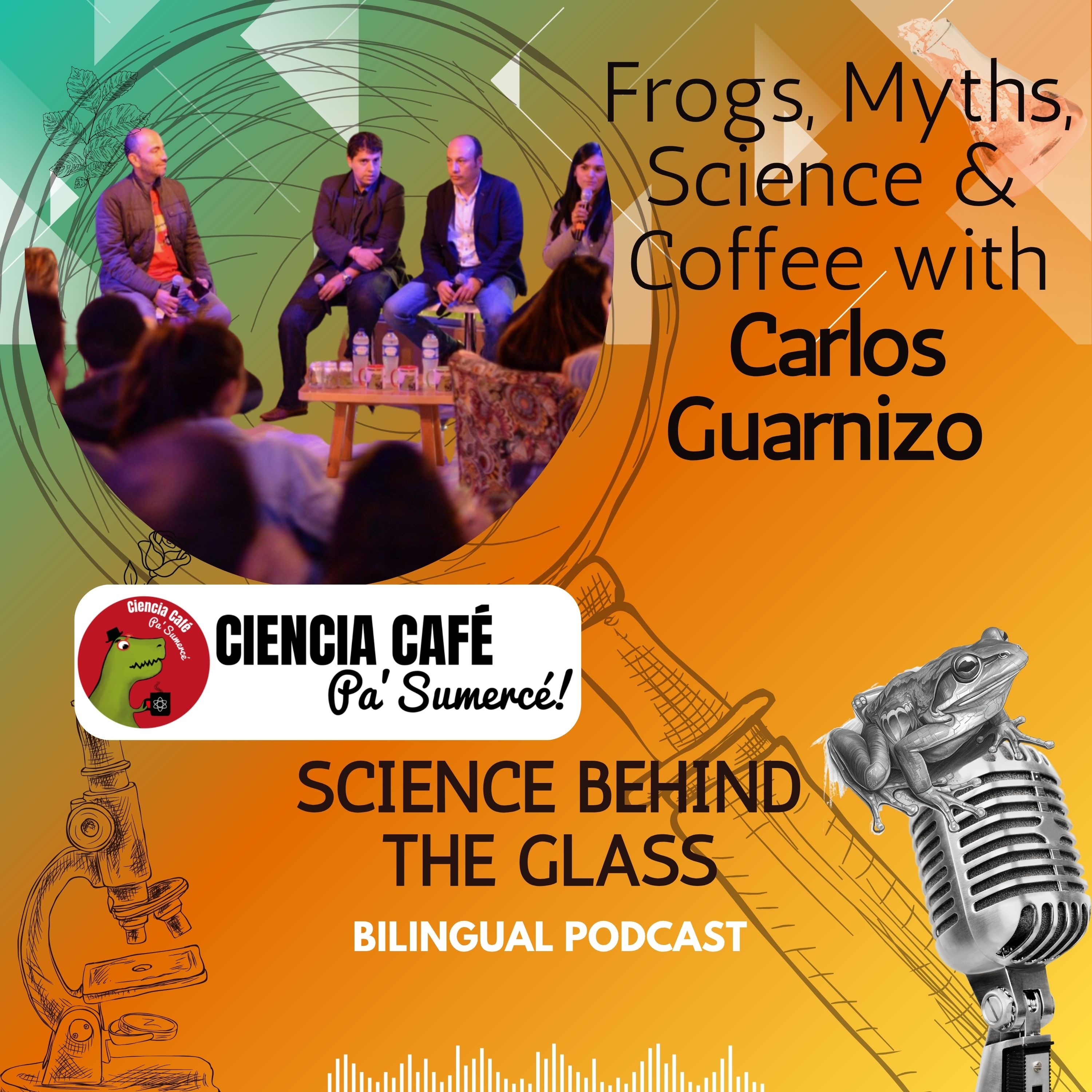 Frogs, Myths, Science & Coffee with Carlos Guarnizo✨ | science communicationart and science+3 | Carlos Guarnizo | Ciencia Café Pa SumerceBogotá Philharmonic Orchestra | ColombiaBogotá | science communicationCiencia Café+5 | — | 30m 14s | |
| 3/26/26 | 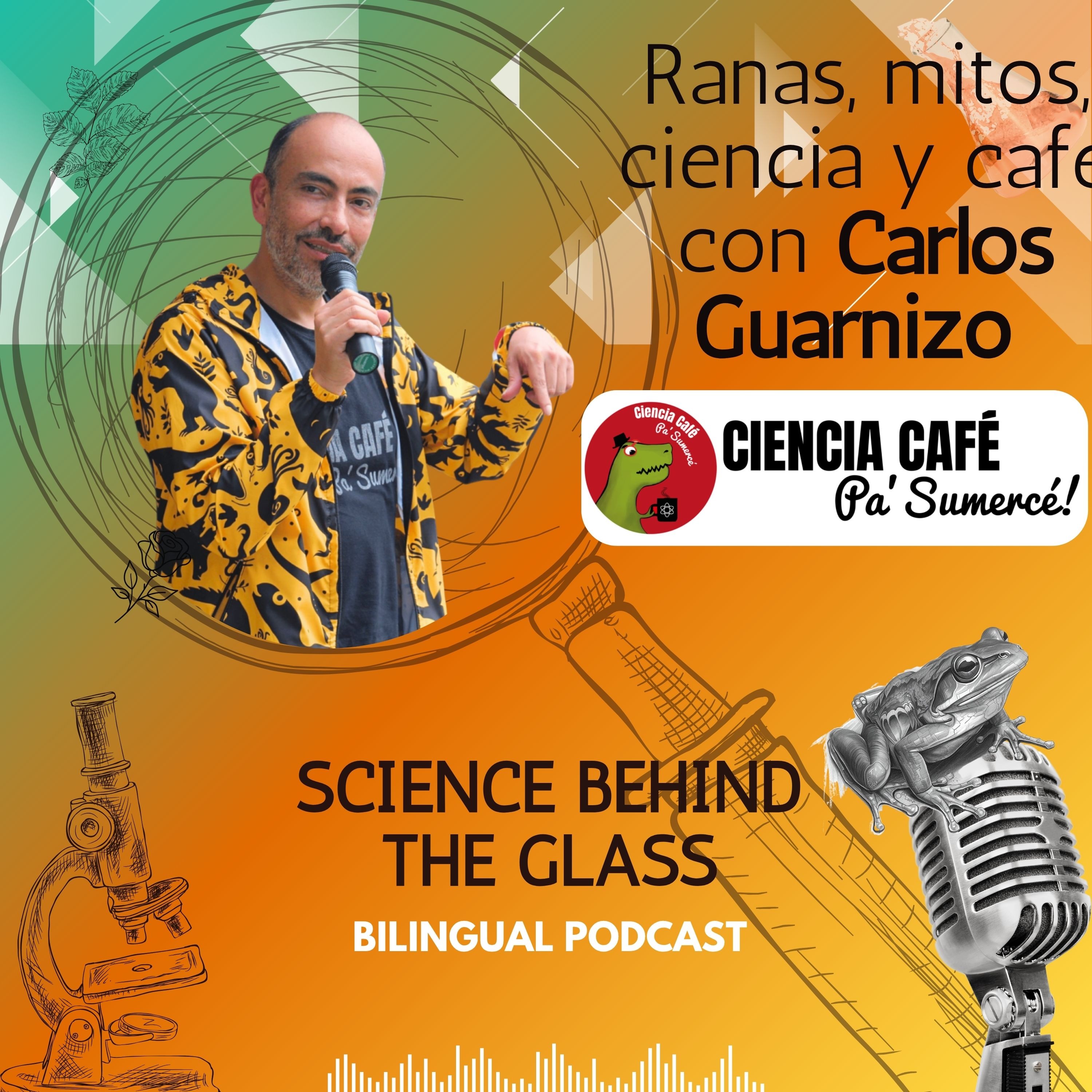 Ranas, mitos, ciencia y café con Carlos Guarnizo✨ | divulgación científicacomunicación científica+3 | Carlos Guarnizo | Ciencia Café Pa' SumercéBiocore Universidad de los Andes+1 | — | divulgación científicacomunicación+3 | — | 55m 24s | |
| 3/12/26 |  Bugs that save harvests: the invisible allies of crops with Dr. Karen Muñoz✨ | agriculturecrop biodiversity+4 | Dr. Karen Muñoz Cárdenas | Science behind the Glass | Colombian | cropsbiodiversity+5 | — | 53m 13s | |
| 2/26/26 |  Bichos que salvan cosechas: los aliados invisibles de los cultivos con la Dra Karen Muñoz✨ | agriculturebiodiversity+3 | Dra. Karen Muñoz Cárdenas | Science behind the Glass | ColombiaEuropa | agriculturebiodiversity+3 | — | 55m 30s | |
| 2/16/26 |  Descifrando la politica global: Entendiendo las fuerzas que moldean nuestro mundo actual con Profesor Gary Meyers✨ | derecho internacionalpolítica global+4 | Gary Meyers | Naciones UnidasCorte Penal Internacional+4 | Venezuela | derecho internacionalCarta de la ONU+5 | — | 29m 42s | |
Want analysis for the episodes below?Free for Pro Submit a request, we'll have your selected episodes analyzed within an hour. Free, at no cost to you, for Pro users. | |||||||||
| 2/8/26 |  Unlocking Global Politics: Understanding the Forces Shaping Our World Today | In this conversation, Gary Meyers discusses the significance of the UN Charter, the challenges of enforcing international law, and the implications of US foreign policy on global relations. He explores the roles of the Security Council and the International Criminal Court, as well as the impact of environmental treaties. The discussion also touches on recent initiatives, such as the Board of Peace, and concludes with a note of cautious optimism regarding future diplomatic efforts.Chapters list00:00 Understanding the UN Charter and Its Importance14:06 The Role of the Security Council and Enforcement Challenges27:26 The Impact of US Foreign Policy on Global Relations40:32 Hope for Diplomacy and Future Global CooperationFollow us on:Instagram: sciencebehindtheglassX: @sbtg_podcast @daniesguerra @LINDAHE1988FB: Science behind the GlassTikTok: https://www.tiktok.com/@sbtgpodcast?_t=ZS-8u2DmABj4Us&_r=1Refrences🔗 https://theconversation.com/geoffrey-robertson-believes-international-law-is-failing-us-but-the-solutions-are-unclear-272174🔗 The UN Security Council and the Politics of Veto DOI: 10.1080/13533312.2019.1647896🔗 Article 2(4) and the Use of Force in International Law DOI: 10.1017/S002058931700015X🔗UN Reform and the Future of Multilateralism https://brill.com/view/journals/gg/gg-overview.xm🔗 https://www.scmp.com/news/china/diplomacy/article/3342092/trumps-peace-board-no-match-un-and-possible-boon-china-analysts-find🔗 Climate Justice and International Law in the Age of Breakdown https://academic.oup.com/jel | 41m 29s | ||||||
| 2/5/26 | 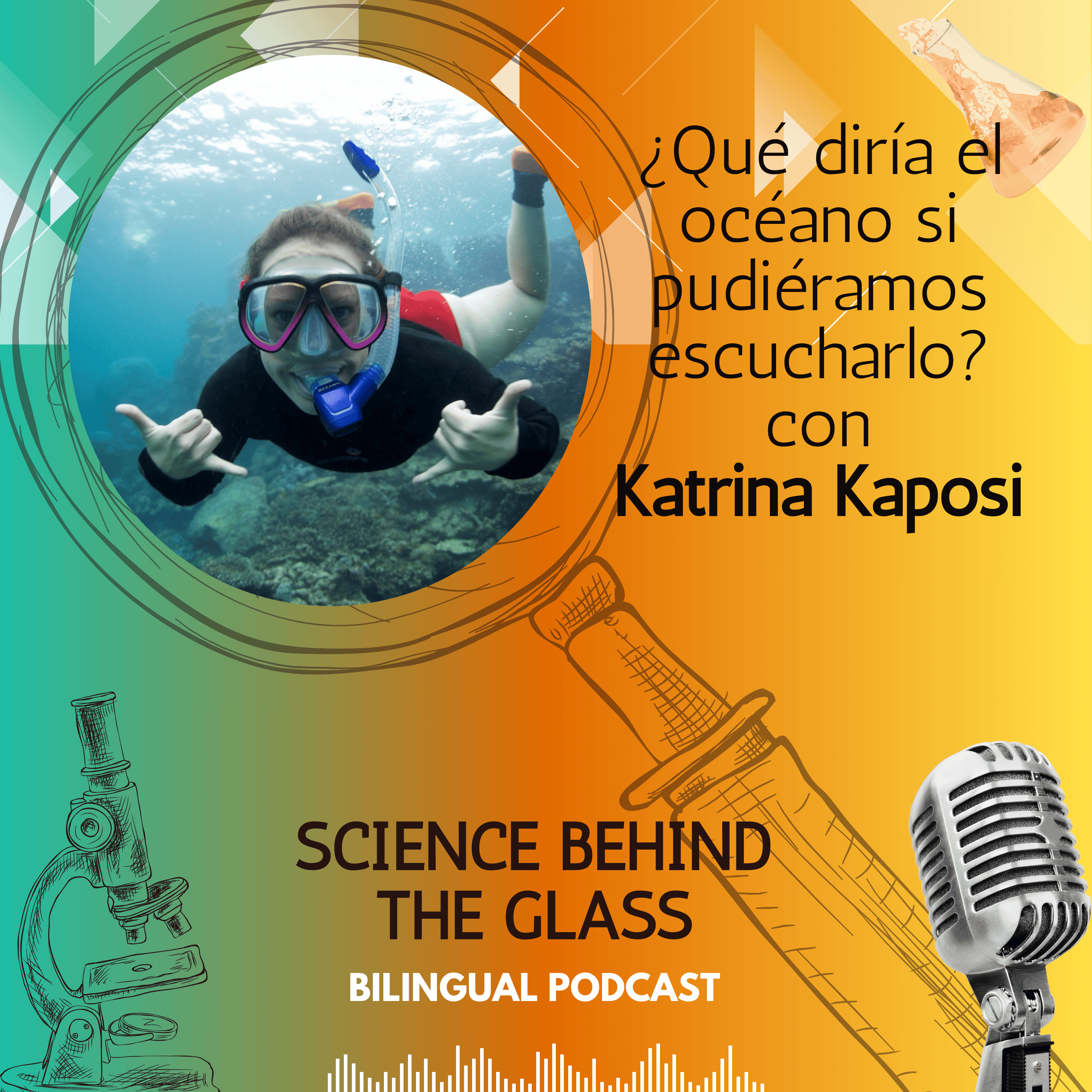 ¿Qué diría el océano si pudiéramos escucharlo? con Katrina Kaposi | ¿Qué pasa cuando el océano se calienta… y la vida tiene que adaptarse? En este episodio de Science Behind the Glass, conversamos con Katrina Kaposi: bióloga marina, investigadora, comunicadora y creadora de experiencias educativas que llevan el arrecife a las personas que nunca han podido verlo de cerca.Hablamos de cambio climático desde el lado humano: el blanqueamiento coralino como crisis energética y de supervivencia, y por qué la ciencia no basta si no logra conectar con la gente. Katrina también comparte la realidad de investigar en el mar: expediciones, turnos extremos, cansancio, asombro… y el poder de contar historias para transformar la forma en que cuidamos lo que amamos.Capítulos (timestamps):00:23 Introducción: ciencia que se siente01:32 Vocación y camino personal04:21 Corales, veneno y supervivencia06:22 Blanqueamiento y calentamiento del mar10:16 Hallazgos e implicaciones16:45 Educación y Reef Literacy20:49 Storytelling: ciencia para el público24:55 Expedición en mar profundo36:30 Impacto, conservación y políticasTimestamps00:00 Introduction to Marine Science and Personal Journey03:17 Understanding Coral and Their Venom Ecology06:15 The Impact of Coral Bleaching08:50 Research Findings on Coral Venom and Bleaching11:59 The Role of Coral in Ecosystems14:58 Starting a Marine Education Business18:11 The Importance of Storytelling in Science Communication21:13 Experiences on the Research Vessel23:54 The Interconnectedness of Marine Ecosystems27:11 Future of Marine Science Communication41:55 The Ocean's Vital Role in Our Well-Being43:06 Connecting Through Science and CommunityFollow us on:Instagram: sciencebehindtheglassX: @sbtg_podcast @daniesguerra @LINDAHE1988FB: Science behind the GlassTikTok: https://www.tiktok.com/@sbtgpodcast?_t=ZS-8u2DmABj4Us&_r=1Reference linkhttps://www.reefliterasea.com.au | 34m 05s | ||||||
| 1/22/26 | 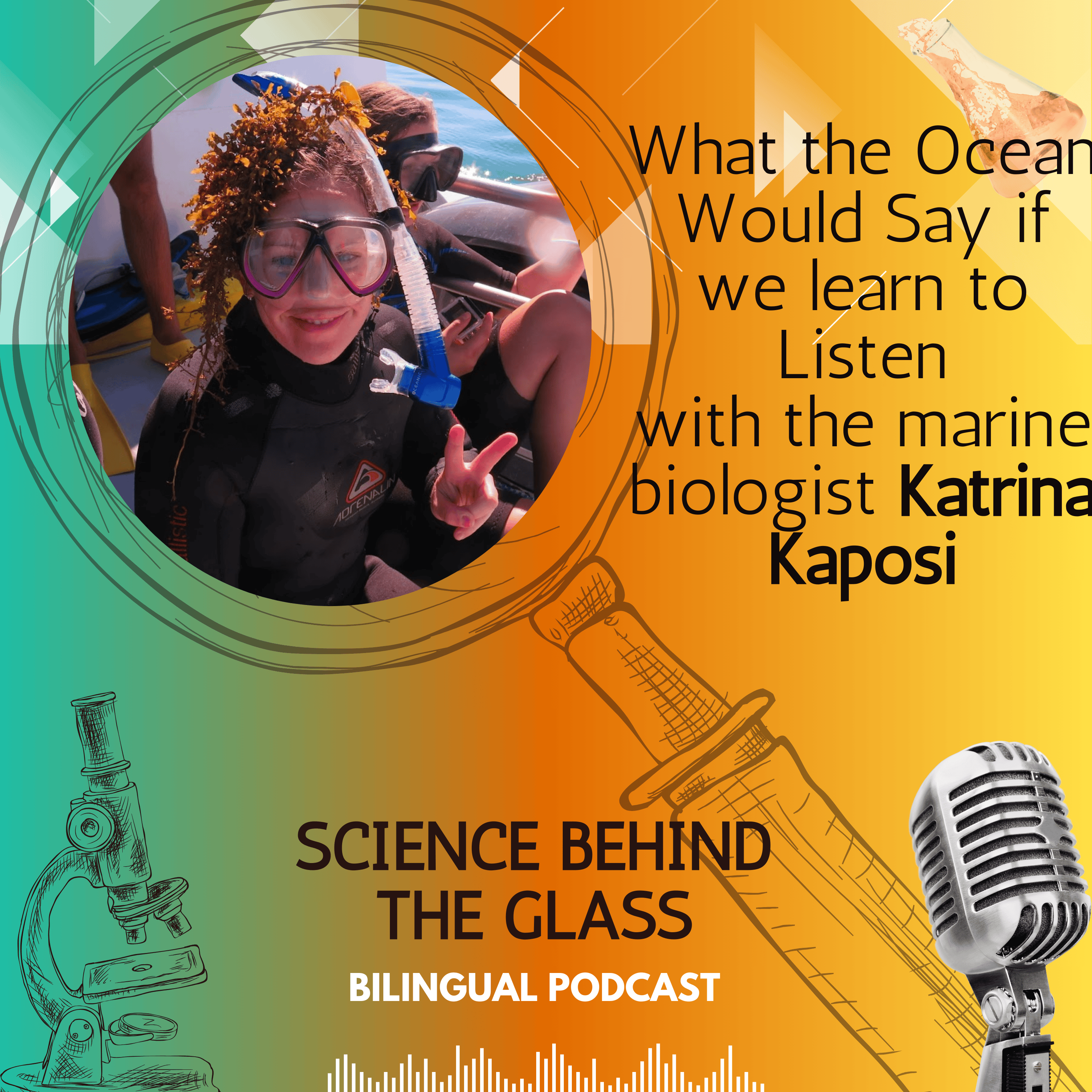 What the Ocean Would Say if we learn to Listen with Katrina Kaposi | Dive beneath the surface with marine biologist, storyteller, and ocean explorer Katrina Kaposi on Science Behind the Glass!She’s not your average scientist. Katrina’s journey stretches from failing science in high school to studying venom in coral reefs and helping shape how we think about climate change and coral survival. If you thought coral was just colourful rock, think again. These animals sting, fight, adapt, and communicate in ways we’re only beginning to understand.In this episode you will learn:In this episode, you will learn:Why coral reefs are venomous: how their tiny stinging cells, called nematocysts, help them feed, defend, and even fight for space on the reef.🌡️ What really happens when corals bleach🔬 How cutting-edge research is revealing coral resilience🌊 What life is like aboard a deep-sea research vessel —💬 Why storytelling matters in science: ReefliteraSEATimestamps00:00 Introduction to Marine Science and Personal Journey03:17 Understanding Coral and Their Venom Ecology06:15 The Impact of Coral Bleaching08:50 Research Findings on Coral Venom and Bleaching11:59 The Role of Coral in Ecosystems14:58 Starting a Marine Education Business18:11 The Importance of Storytelling in Science Communication21:13 Experiences on the Research Vessel23:54 The Interconnectedness of Marine Ecosystems27:11 Future of Marine Science Communication41:55 The Ocean's Vital Role in Our Well-Being43:06 Connecting Through Science and CommunityFollow us on:Instagram: sciencebehindtheglassX: @sbtg_podcast @daniesguerra @LINDAHE1988FB: Science behind the GlassTikTok: https://www.tiktok.com/@sbtgpodcast?_t=ZS-8u2DmABj4Us&_r=1Reference linkhttps://www.reefliterasea.com.au | 43m 20s | ||||||
| 1/8/26 | 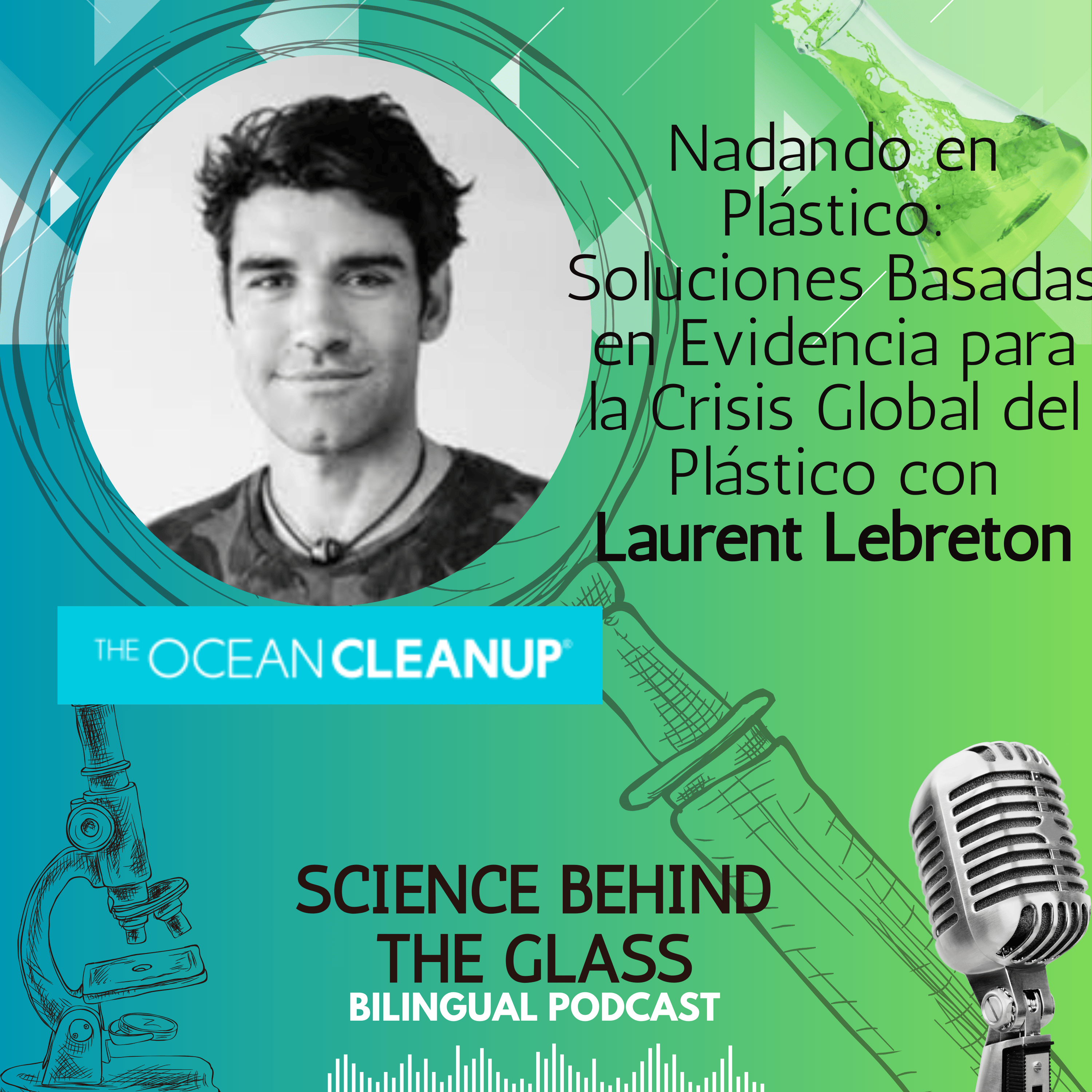 Nadando en Plástico: Soluciones Basadas en Evidencia para la Crisis Global del Plástico con Laurent Lebreton | En este episodio, nos sumergimos en una de las crisis más invisibles pero urgentes de nuestro tiempo: la contaminación plástica en los océanos. Charlamos con Laurent Lebreton, jefe de investigación de The Ocean Cleanup, sobre cómo la ciencia, los modelos de datos y la cooperación internacional pueden ayudarnos a enfrentar este desafío global.Desde la Gran Mancha de Basura del Pacífico hasta los ríos urbanos más contaminados, Laurent nos guía por el lado científico y humano de una misión que busca limpiar el mar… y cambiar el sistema.En este episodio aprenderás que:Mil ríos contribuyen al 80 % de la contaminación plástica en los océanos.La Gran Mancha de Basura del Pacífico contiene unas 100,000 toneladas de plástico.La contaminación por plásticos no es solo un problema ambiental, es una falla sistémica que involucra infraestructura, políticas públicas y responsabilidad global.Existen soluciones científicas y tecnológicas de vanguardia para enfrentar el plástico en el océano.Los gobiernos y las corporaciones deben rendir cuentas por su papel en la crisis del plástico.00:00 Introducción al episodio – La crisis del plástico02:06 Inicio de la entrevista con Laurent Lebreton02:28 Infancia, conexión con el océano y vocación científica03:44 Cómo inició su trabajo con plásticos y Ocean Cleanup05:01 Modelos para rastrear y predecir la contaminación plástica06:30 ¿De dónde viene el plástico? Los ríos como arterias del océano08:27 ¿Qué países son los mayores contaminantes?11:16 La Gran Mancha de Basura del Pacífico: ¿qué nos dice?13:00 Redes de pesca y desechos de la industria pesquera16:10 ¿Cómo evitar dañar vida marina durante las limpiezas?19:35 Microplásticos vs. macroplásticos: prioridades en la recolección22:14 Evaluando el impacto ambiental de las limpiezas23:40 Aves marinas y cómo el plástico engaña a sus sentidos24:16 El fracaso del tratado global sobre plásticos27:00 Diferencias en políticas entre países – el caso de Guatemala30:23 ¿Qué se debe hacer en los próximos 5 años?32:30 Estandarización de plásticos y reciclaje inteligente34:28 ¿Qué pasa con los bioplásticos?37:46 Cultura de usar y tirar: el verdadero problema38:59 De la observación a la acción: un llamado como científicos y ciudadanosFollow us on:Instagram: sciencebehindtheglassX: @sbtg_podcast @daniesguerra @LINDAHE1988FB: Science behind the GlassTikTok: https://www.tiktok.com/@sbtgpodcast?_t=ZS-8u2DmABj4Us&_r=1Reference linkhttps://theoceancleanup.com/ | 33m 05s | ||||||
| 12/11/25 | 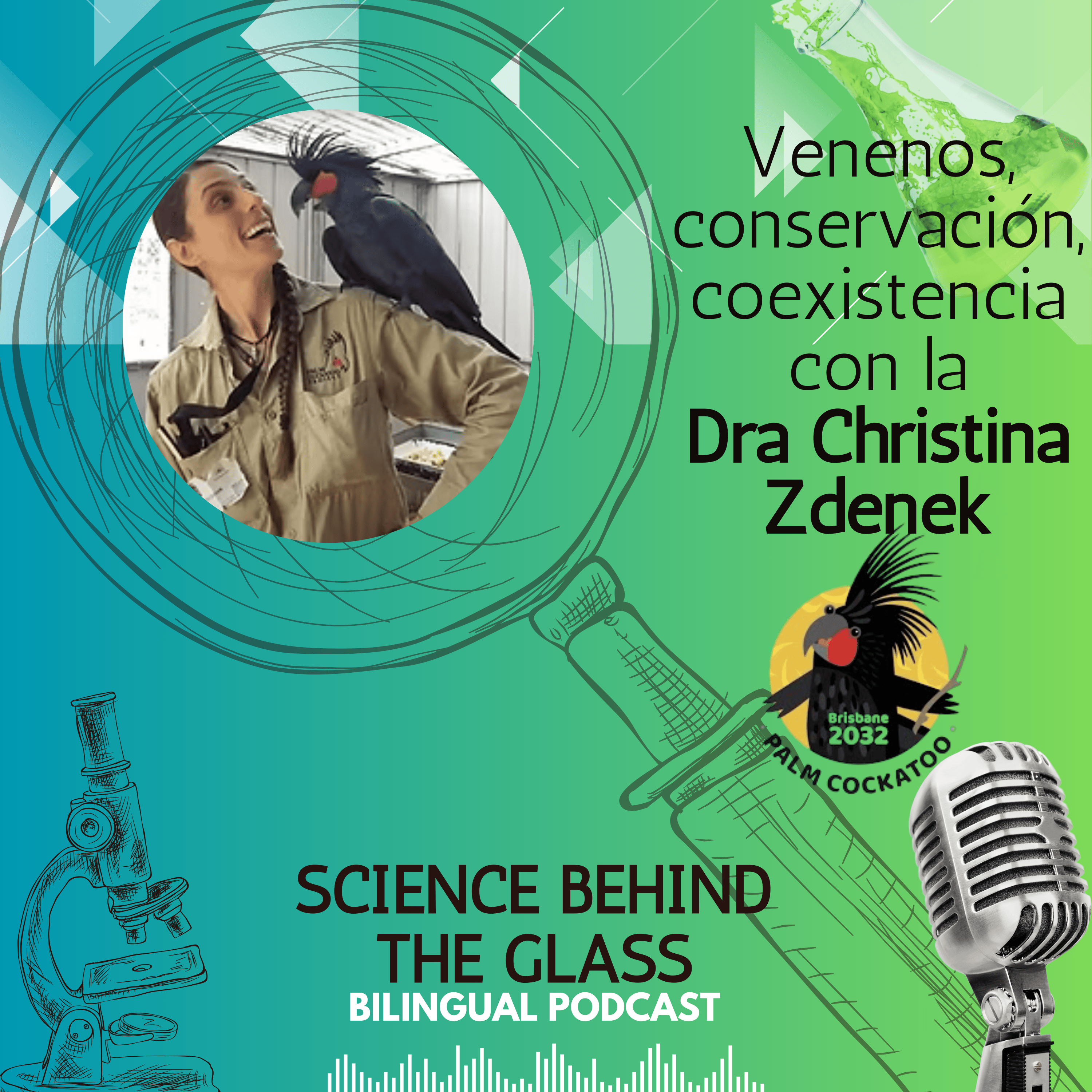 Venenos, conservación, coexistencia con la Dra Christina Zdenek | La Dra. Christina Zdenek llega a Science Behind the Glass para romper mitos, encender la curiosidad y mostrarnos cómo la ciencia y la pasión pueden reparar nuestra relación con la vida silvestre.Desde serpientes venenosas hasta los majestuosos Palm Cockatoos, Christina combina ciencia, aventura y empatía para cambiar la forma en que vemos al mundo natural.- Líder de proyectos pioneros como Under the Snakefluence y Beyond the Bite.- Investigadora de cócteles de veneno que salvan vidas.- Embajadora de conservación junto a comunidades indígenas y creadora de contenido que está transformando la ciencia en Australia.En este episodio descubrirás:Cómo las serpientes inspiran medicina moderna y por qué no deberíamos temerles.🦜 El sorprendente “drumming” de los Palm Cockatoos, las primeras aves percusionistas del planeta! 💡 Cómo nuestras percepciones moldean el futuro de la conservación.Timestamps en Español02:05 – La fascinación por las serpientes desde la infancia 03:37 – Cómo los animales moldean la percepción humana 04:58 – El conflicto entre humanos y serpientes 07:15 – Miedos y fobias: lo que las serpientes revelan sobre nosotros 09:22 – ¿Qué es una "Death Adder"? Exploración de una víbora australiana 11:10 – El veneno como herramienta científica 13:00 – El trabajo de campo en Australia: desafíos y anécdotas 15:45 – El rol de la comunicación científica en cambiar percepciones 18:20 – El vínculo entre cultura, emoción y ciencia 20:05 – Experiencias personales con mordeduras y riesgos reales 23:10 – El poder de la curiosidad frente al miedo 25:00 – Reflexiones finales: ¿qué podemos aprender de las serpientes?Follow us on:Instagram: sciencebehindtheglassX: @sbtg_podcast @daniesguerra @LINDAHE1988FB: Science behind the GlassTikTok: https://www.tiktok.com/@sbtgpodcast?_t=ZS-8u2DmABj4Us&_r=1Referenciashttps://cnzdenek.wixsite.com/cnzdenekMy TEDx talkInspiring Australia Queensland | 42m 37s | ||||||
| 11/27/25 | 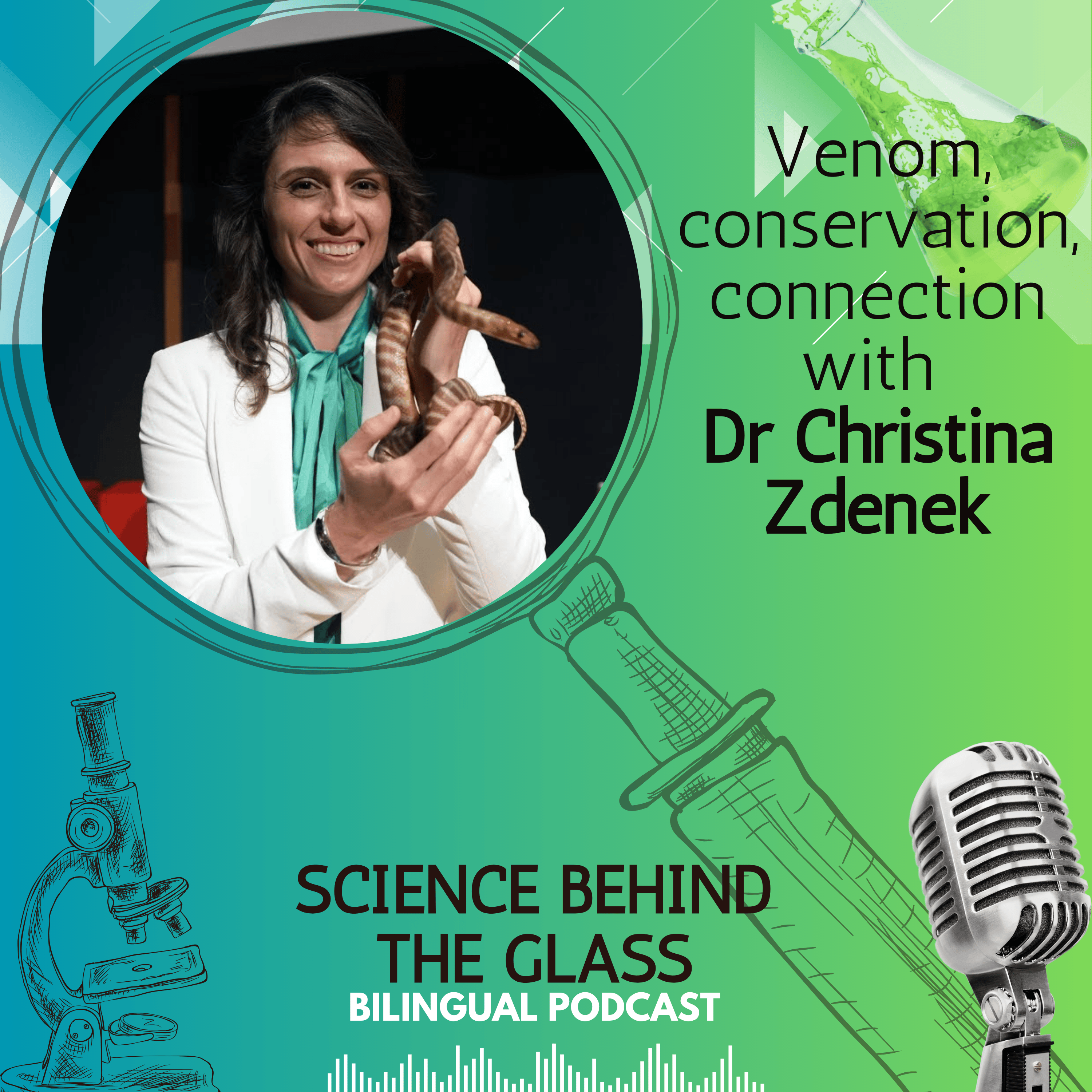 Venom, Conservation and Connection with Dr Christina Zdenek | Dr Christina Zdenek, a world-class biologist and science communicator whose mission is clear: to repair the relationship between humans and wildlife. From venomous snakes to endangered parrots, Christina has led conservation projects across Australia and beyond, including groundbreaking work on Palm Cockatoos, Death Adders, and even research into how people perceive snakes.She’s the mind behind global initiatives like "Under the Snakefluence" and "Beyond the Bite", and the driving force behind some of the most innovative science communication in Australia, from ABC's Top Five Scientists to her ambassadorship with Inspiring Australia.Whether she’s tracking tool-using parrots with Indigenous communities, testing antivenoms, or leading workshops on safely handling venomous snakes, Christina blends fearless fieldwork with heartfelt advocacy.In this episode, you will learn:Human-Snake Conflict: Unseen Interactions Shape Perceptions.Venom's Medical Use: Surprising disease diagnosis and treatment.Snakes as life symbols vs. fear icons.Palm Cockatoo Drumming: Unique behaviour in social and territorial roles.Timestamps00:21 Introduction to Episode00:56 Guest Introduction: Dr Christina Zdenek01:43 Cristina's Welcome and Background03:42 Human-Wildlife Interaction06:19 Snake Venom Research09:56 Health and Snakes Connection21:01 Global Survey on Human Perceptions of Snakes27:31 Palm Cockatoo and Conservation34:45 Data to Policy Impact38:46 Ecological Grief and Conservation Follow us on:Instagram: sciencebehindtheglassX: @sbtg_podcast @daniesguerra @LINDAHE1988FB: Science behind the GlassTikTok: https://www.tiktok.com/@sbtgpodcast?_t=ZS-8u2DmABj4Us&_r=1Reference linkhttps://cnzdenek.wixsite.com/cnzdenek | 54m 24s | ||||||
| 11/6/25 | 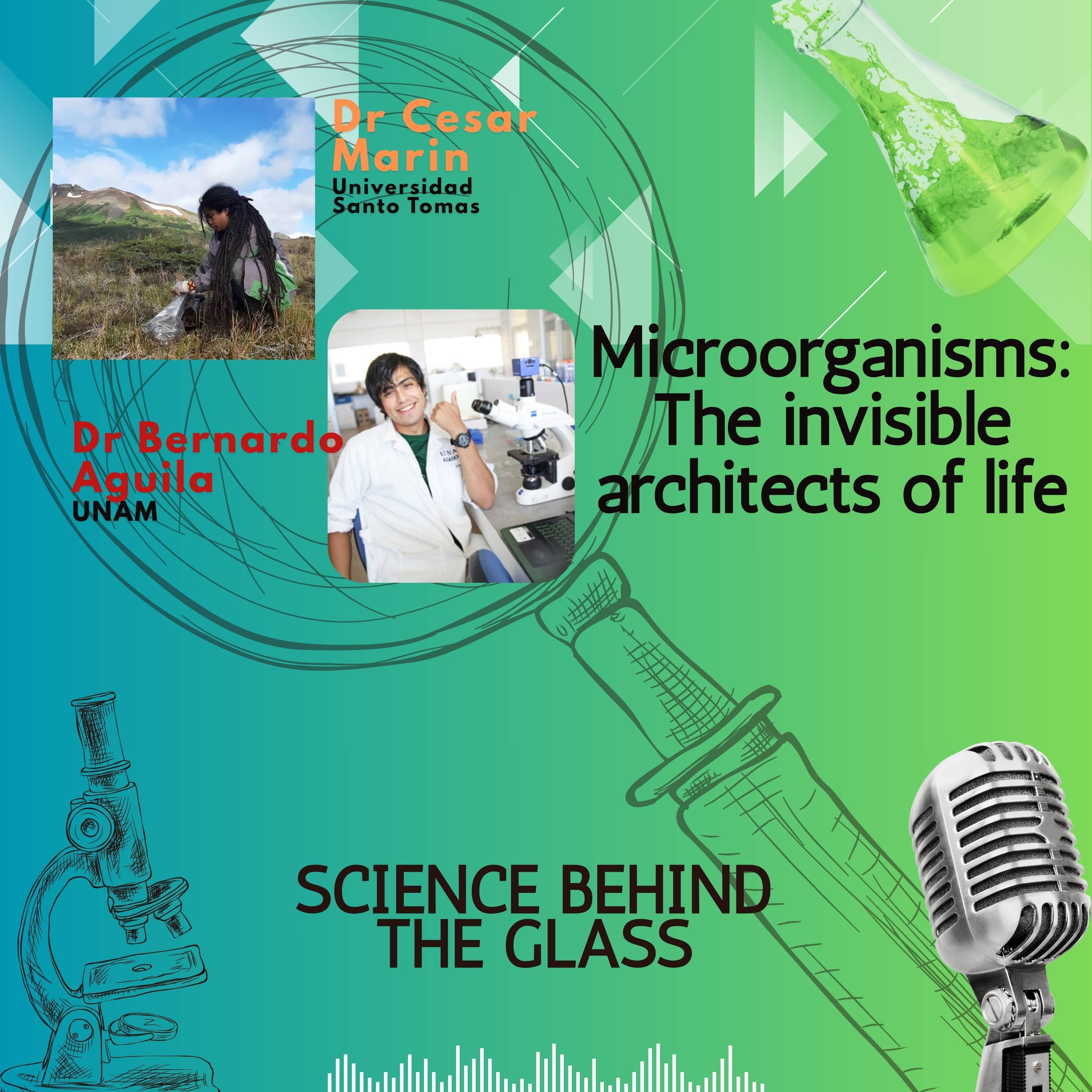 Microorganisms: The invisible architects of life | In this episode, our guests Dr. César Marín, professor at Universidad Santo Tomás in Chile, and Dr. Bernardo Águila, researcher at UNAM, Mexico, take us into the fascinating world of microorganisms—the foundation of life on our planet. They share insights about the importance of fungi, their associations with plants and bacteria, and their own personal stories.In this episode, you will learn:The essential microorganisms for ecosystem and biodiversity health.Mycorrhizal fungi form symbiotic relationships with plants, aiding in nutrient absorption.95% of crops depend on mycorrhizal fungi for nutrient uptake.Microorganisms play a crucial role in the bioremediation of contaminated environments.Tips for agriculture and farmers.Conservation efforts must consider soil health and microbial diversity.Timestamps:00:01 Introduction to Science Behind the Glass00:30 Meet Dr. Cesar Marin and Dr. Bernardo Aguilar02:10 Understanding the Microbial World03:38 Personal Journeys into Microbiology07:08 The Role of Mycorrhizal Fungi08:54 Exploring Hyphae and Their Functions10:22 Microbial Interactions and Ecosystem Services12:19 Fungi's Importance for Sustainability16:37 Soil Health and Biodiversity Indicators18:29 Conservation and Climate Change Mitigation20:39 Challenges in Reforestation and Soil Management24:34 Advice for Farmers and Conservationists30:08 Experiences in Latin American Science36:03 Academic Challenges and Opportunities43:17 Closing Remarks and Call to ActionFollow us on:Instagram: sciencebehindtheglassX: @sbtg_podcast @daniesguerra @LINDAHE1988FB: Science behind the GlassTikTok: https://www.tiktok.com/@sbtgpodcast?_t=ZS-8u2DmABj4Us&_r=1 | 44m 02s | ||||||
| 10/23/25 | 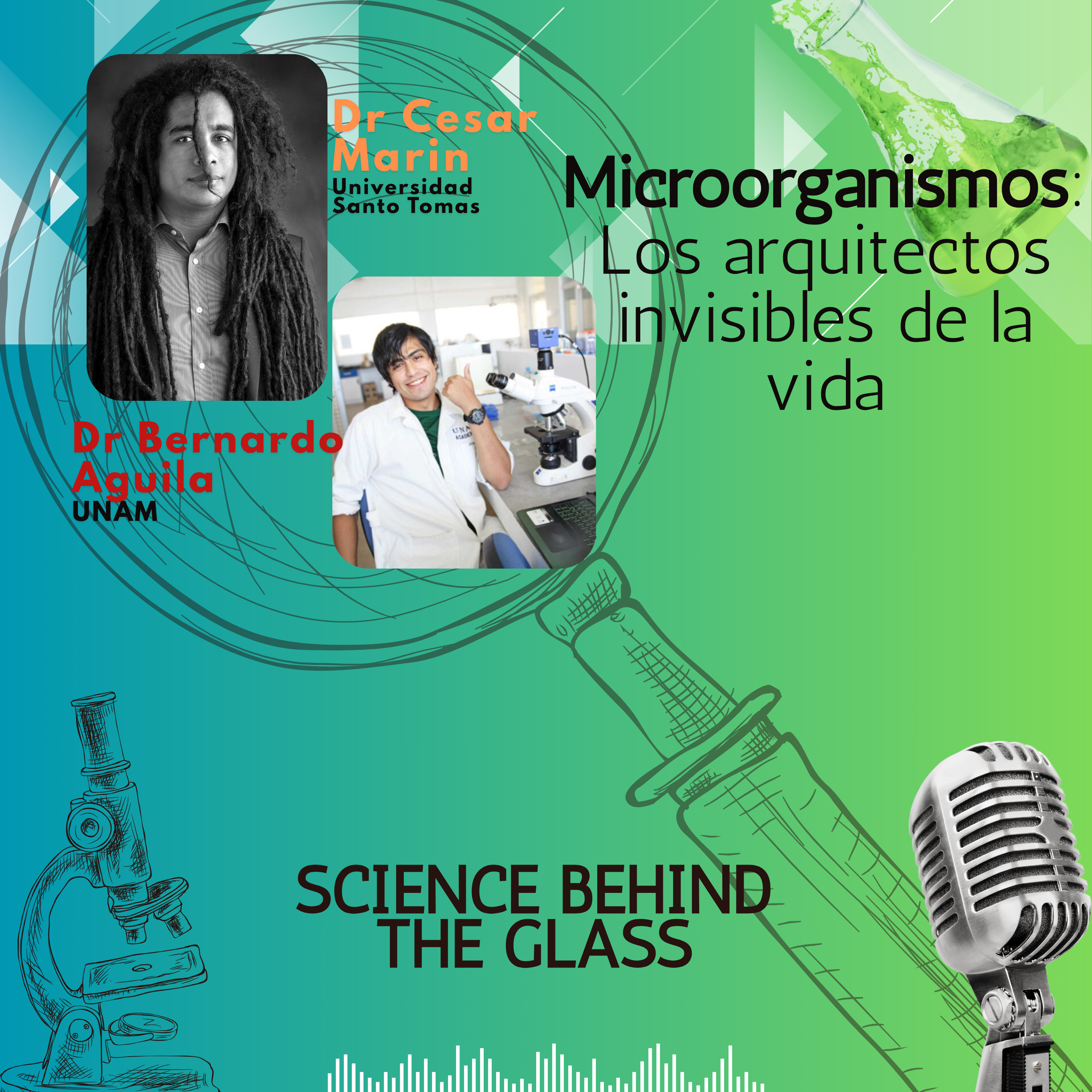 Microorganismos: Los arquitectos invisibles de la vida con Dr. Cesar Marin & Dr. Bernardo Aguila | En este episodio, nuestros invitados Dr Cesar Marin, profesor de la Universidad Santo Tomas de Chile, y el Dr Bernardo Aguila, investigador de la UNAM, Mexico. Nos llevan al fascinante mundo de los microorganismos, el cual sosteniene la vida en el planeta. Nos cuenta de la relevancia de los hongos y sus asociaciones con plantas y bacterias y sus historias personales.En este episodio usted aprendera:Los microorganismos esenciales para la salud de los ecosistemas y la biodiversidad.Los hongos micorrízicos forman relaciones simbióticas con las plantas, ayudando en la absorción de nutrientes.El 95% de los cultivos dependen de los hongos micorrízicos para la absorción de nutrientes.Los microorganismos juegan un papel crucial en la biorremediación de ambientes contaminados.Consejos para la agricultura y los agricultores.La conservación debe considerar la salud del suelo y diversidad microbiana.Sigannos en:Instagram: sciencebehindtheglassX: @sbtg_podcast @daniesguerra @LINDAHE1988FB: Science behind the GlassTikTok: https://www.tiktok.com/@sbtgpodcast?_t=ZS-8u2DmABj4Us&_r=1 | 53m 58s | ||||||
| 10/9/25 | 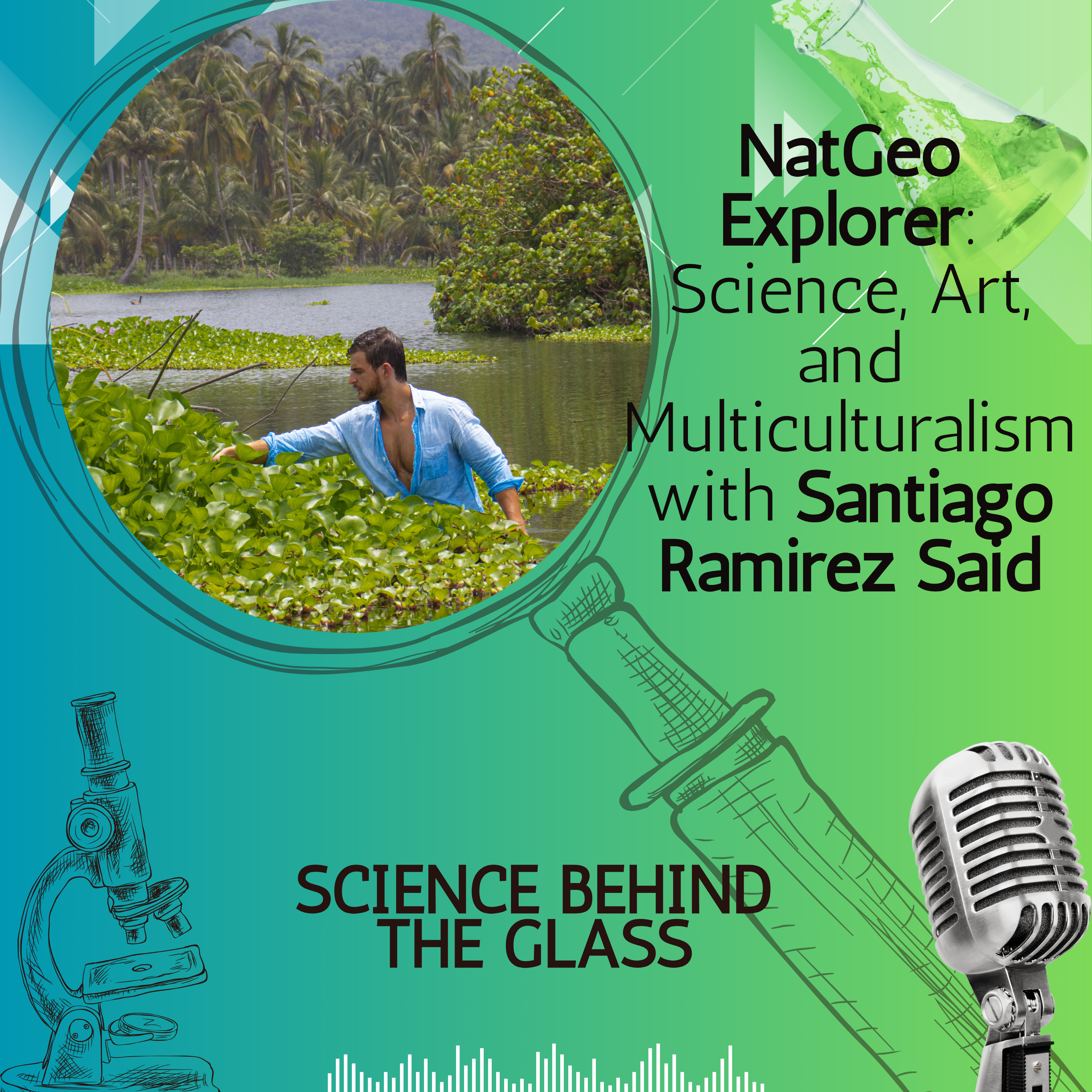 NatGeo Explorer: Science, Art, and Multiculturalism with Santiago Ramírez Said | In this episode, Santiago Ramírez, National Geographic Explorer, botanist, and artist, shares how science, art, and culture intertwine to create new ways of understanding and caring for our planet.From exploring Indigenous knowledge to tackling the challenge of sargassum in the Caribbean, Santiago shows how collaboration and creativity can turn science into a bridge for social and environmental transformation.Sigannos en:Instagram: sciencebehindtheglassX: @sbtg_podcast @daniesguerra @LINDAHE1988FB: Science behind the GlassTikTok: https://www.tiktok.com/@sbtgpodcast?_t=ZS-8u2DmABj4Us&_r=1 References:https://explorers.nationalgeographic.org/directory/santiago-ramirez- saidhttps://www.unesco.org/en/articles/empowering-communities-through-science-and-storytelling-santiago-ramirez-saidhttps://www.sargastream.org/ | 38m 35s | ||||||
| 9/25/25 | 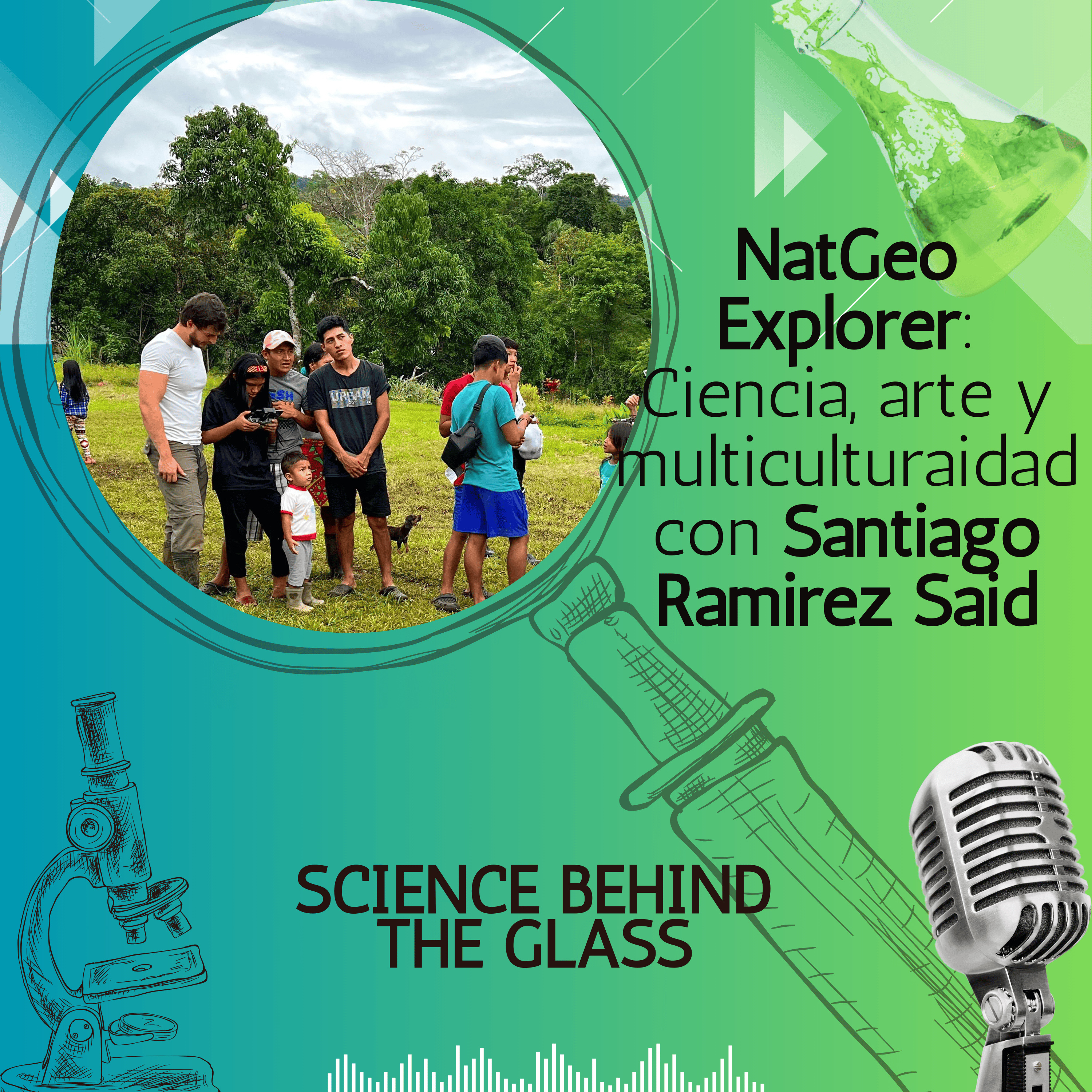 NatGeo Explorer: CIencia, arte y multiculturaidad con Santiago Ramirez Said | Santiago Ramírez Said, explorador de National Geographic , une la ciencia con la identidad cultural para impulsar la sostenibilidad. Su trabajo integra saberes indígenas y enfoques científicos para enfrentar retos como el sargazo, alga marina, y el impacto ambiental en comunidades costeras. Con sensibilidad y visión, Santiago nos invita a descubrir cómo la escucha, la colaboración y el conocimiento compartido pueden abrir caminos hacia un futuro más justo, resiliente y lleno de esperanza.Capitulos:00:00 Introducción a la ciencia y la transformación social01:33 Identidad cultural y multiculturalismo08:28 Colaboración entre culturas17:15 Integración del conocimiento indígena y occidental23:18 Estrategias innovadoras de conservación28:27 Financiamiento y colaboración en conservación30:23 Camino hacia ser explorador de National Geographic32:21 El proyecto del sargazo y el cambio climático39:20 Impacto del sargazo en los ecosistemas costeros41:03 Usos sostenibles del sargazo46:44 Construyendo confianza con las comunidades52:19 Iniciativa Ciudadanos Verdes de la UNESCO55:37 Mensajes de esperanza e impacto localMas sobre Science Behind the Glass: www.sciencebehindtheglass.comSigannos en:Instagram: sciencebehindtheglassX: @sbtg_podcast @daniesguerra @LINDAHE1988FB: Science behind the GlassTikTok: https://www.tiktok.com/@sbtgpodcast?_t=ZS-8u2DmABj4Us&_r=1 Referencias:https://explorers.nationalgeographic.org/directory/santiago-ramirez- saidhttps://www.unesco.org/en/articles/empowering-communities-through-science-and-storytelling-santiago-ramirez-saidhttps://www.sargastream.org/ | 57m 09s | ||||||
| 9/11/25 | 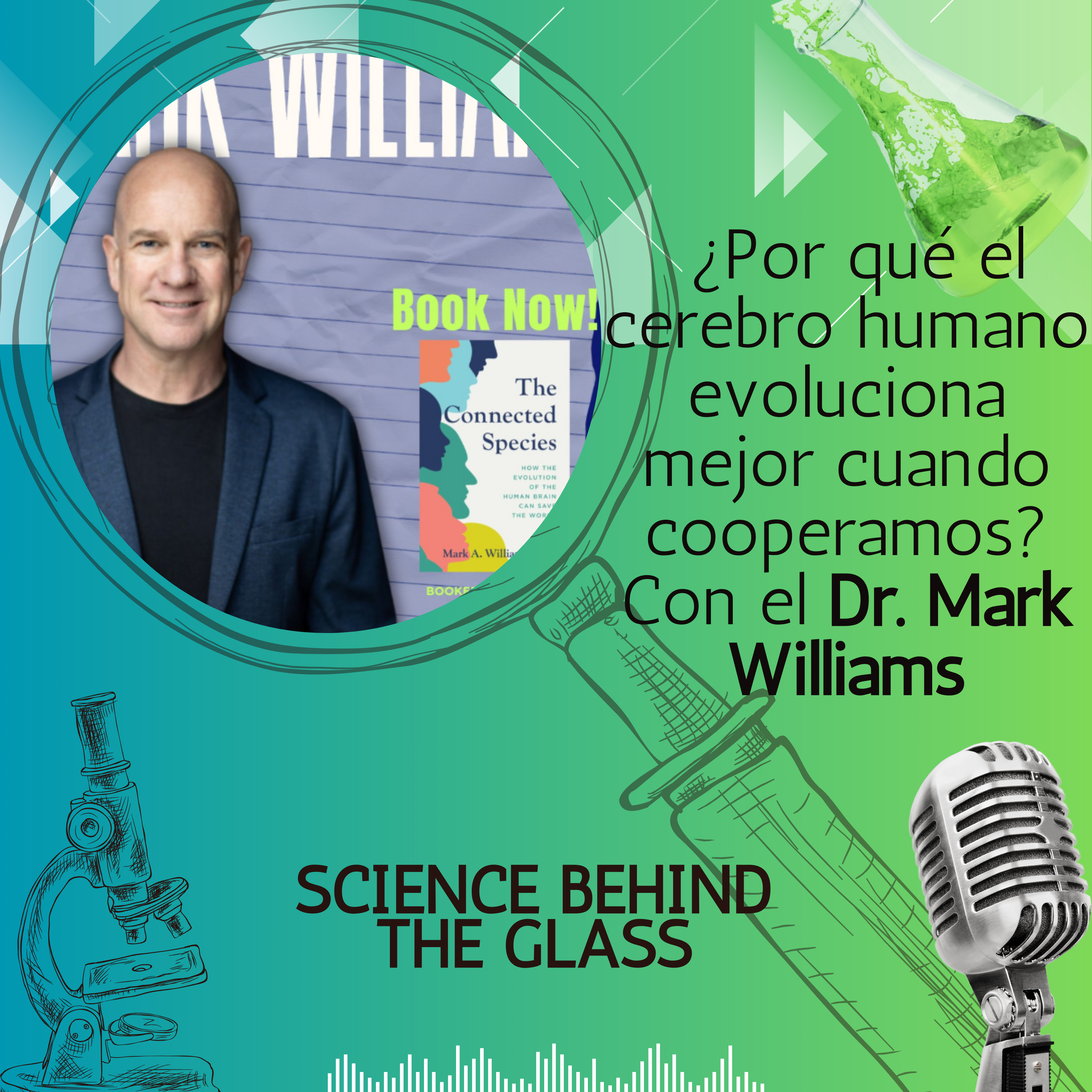 ¿Por qué el cerebro humano evoluciona mejor cuando cooperamos? | Desde los salones de clase hasta la neurociencia de la empatía, el Dr. Williams nos guía a través de los misterios del cerebro humano y cómo nuestras conexiones sociales impactan profundamente nuestra evolución, aprendizaje y bienestar.More about Science Behind the Glass: www.sciencebehindtheglass.comSubscribe and follow us:Instagram: sciencebehindtheglassX: @sbtg_podcast @daniesguerra @LINDAHE1988FB: Science behind the GlassTikTok: https://www.tiktok.com/@sbtgpodcast?_t=ZS-8u2DmABj4Us&_r=1 Referenceshttps://www.impactboom.org/blog/2024/04/22/dr-mark-williams-on-the-neuroscience-linking-doing-good-with-living-a-happier-and-healthier-lifehttps://www.brainonllm.com/ | 50m 06s | ||||||
| 8/28/25 | 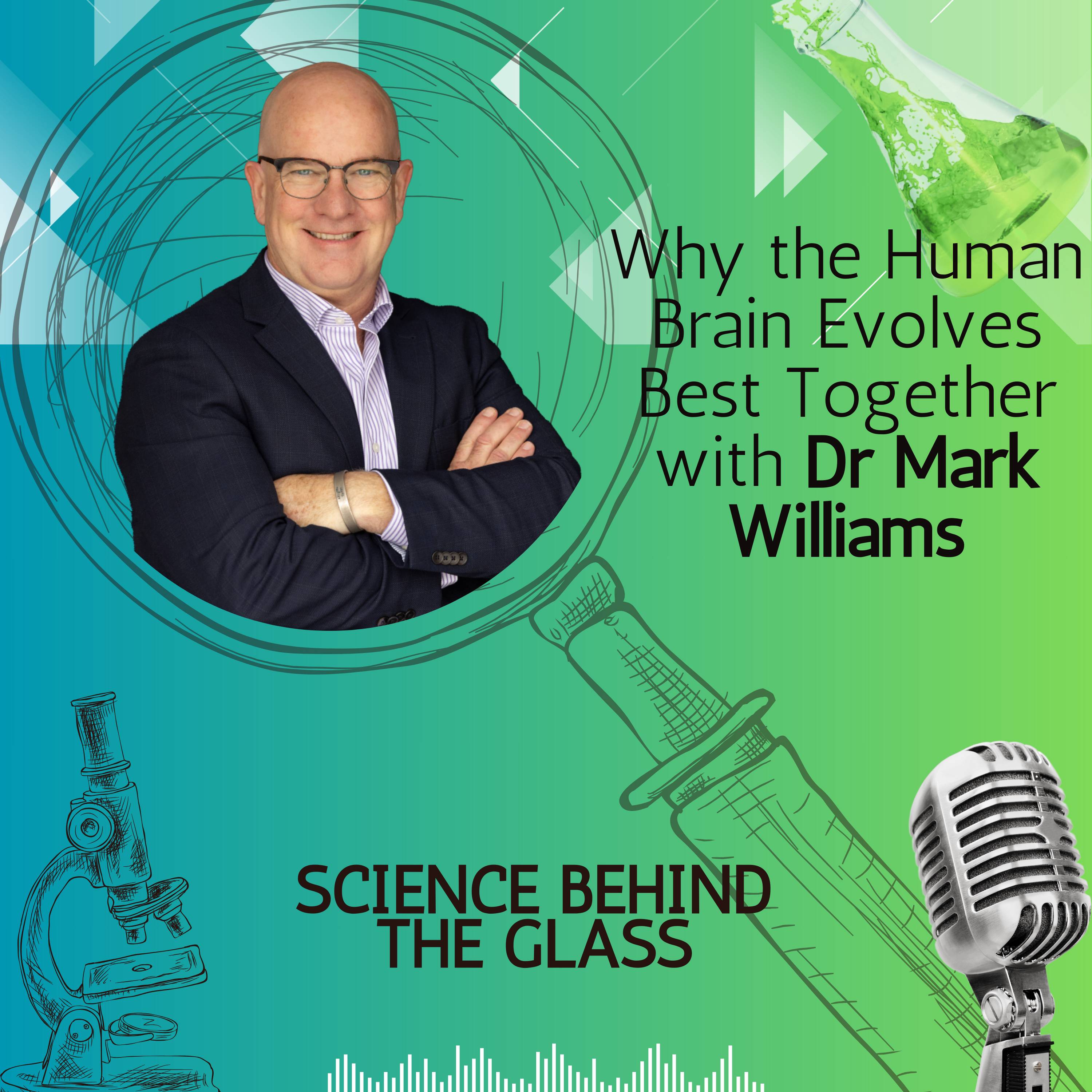 Why the Human Brain Evolves Best Together with Dr Mark Williams | Meet Dr. Mark Williams, the groundbreaking neuroscientist who's reshaping our understanding of the human brain! With over 25 years of research and a bestseller, "The Connected Species" Dr.Williams reveals how our brains evolved through connection, not competition. Discover the secrets behind empathy, technology's impact on brain development, and how we can build a more connected future.TimeStamps:(00:00) Introduction to Neuroscience and Humanity(02:07) Mark Williams' Journey to Neuroscience(05:09) The Misconceptions of Natural Selection(06:32) The Role of Connection in Human Evolution(10:07) The Importance of Face-to-Face Communication(15:03) Impact of Technology on Brain Development(19:27) AI Tools in Education: Challenges and Opportunities(24:41) Transforming Education Through Reading and Engagement(29:43) Rethinking Education: Beyond Testing(30:43) The Ineffectiveness of Punishment(33:20) Reforming the Justice System(36:38) Nature vs. Nurture: The Role of Environment(37:14) Successful Mentoring Programs3(8:38) Collaboration Over Competition in Justice(40:03) The Importance of Empathy in Society(43:58) Practical Neuroscience: Daily Applications(46:19) Managing Teenagers and Social Media(49:25) Video Games: The Good and the Bad(50:47) Challenging Assumptions About Human Nature(51:42) The Role of Empathy in Society(52:04) Encouraging Critical Thinking and ConnectionMore about Science Behind the Glass: www.sciencebehindtheglass.comSubscribe and follow us:Instagram: sciencebehindtheglassX: @sbtg_podcast @daniesguerra @LINDAHE1988FBScience behind the GlassTikTok: https://www.tiktok.com/@sbtgpodcast?_t=ZS-8u2DmABj4Us&_r=1 | 52m 14s | ||||||
| 8/21/25 | 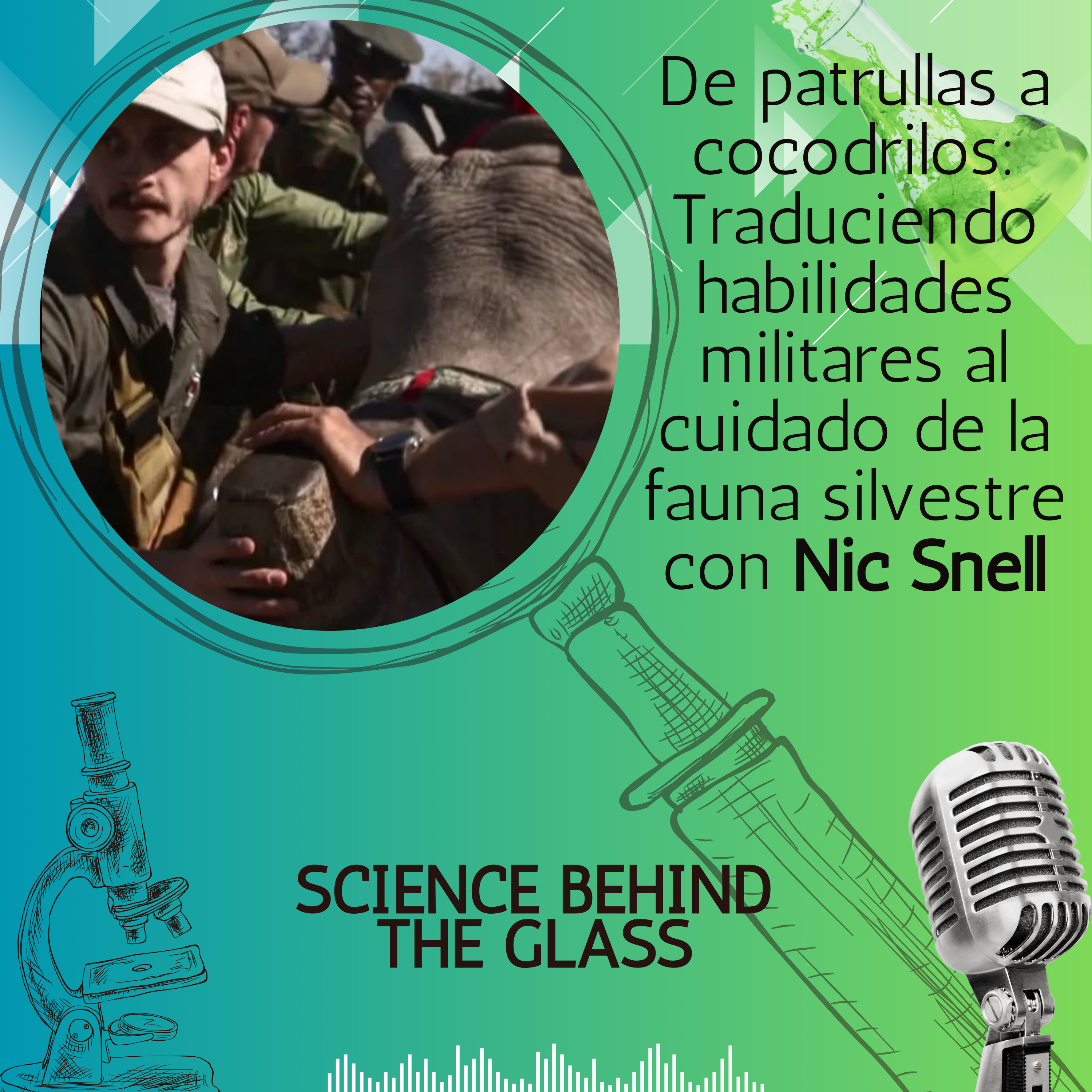 De patrullas a cocodrilos: habilidades militares al servicio de la fauna silvestre con Nic Snell | La historia de Nic Snel no es única, pero sí profundamente humana. Como Gavin Maxwell, que cambió un fusil por un cuaderno de campo para estudiar nutrias; o como Sir Peter Scott, que pasó de la marina británica a cofundar el WWF, Nic demuestra que el servicio no termina con un uniforme. Su tránsito de Afganistán a los incendios de Black Summer, de los leones africanos a los cocodrilos del norte de Queensland, es parte de una misma lección: toda disciplina y toda pasión pueden converger en la protección de la vida. | 25m 22s | ||||||
| 8/7/25 | 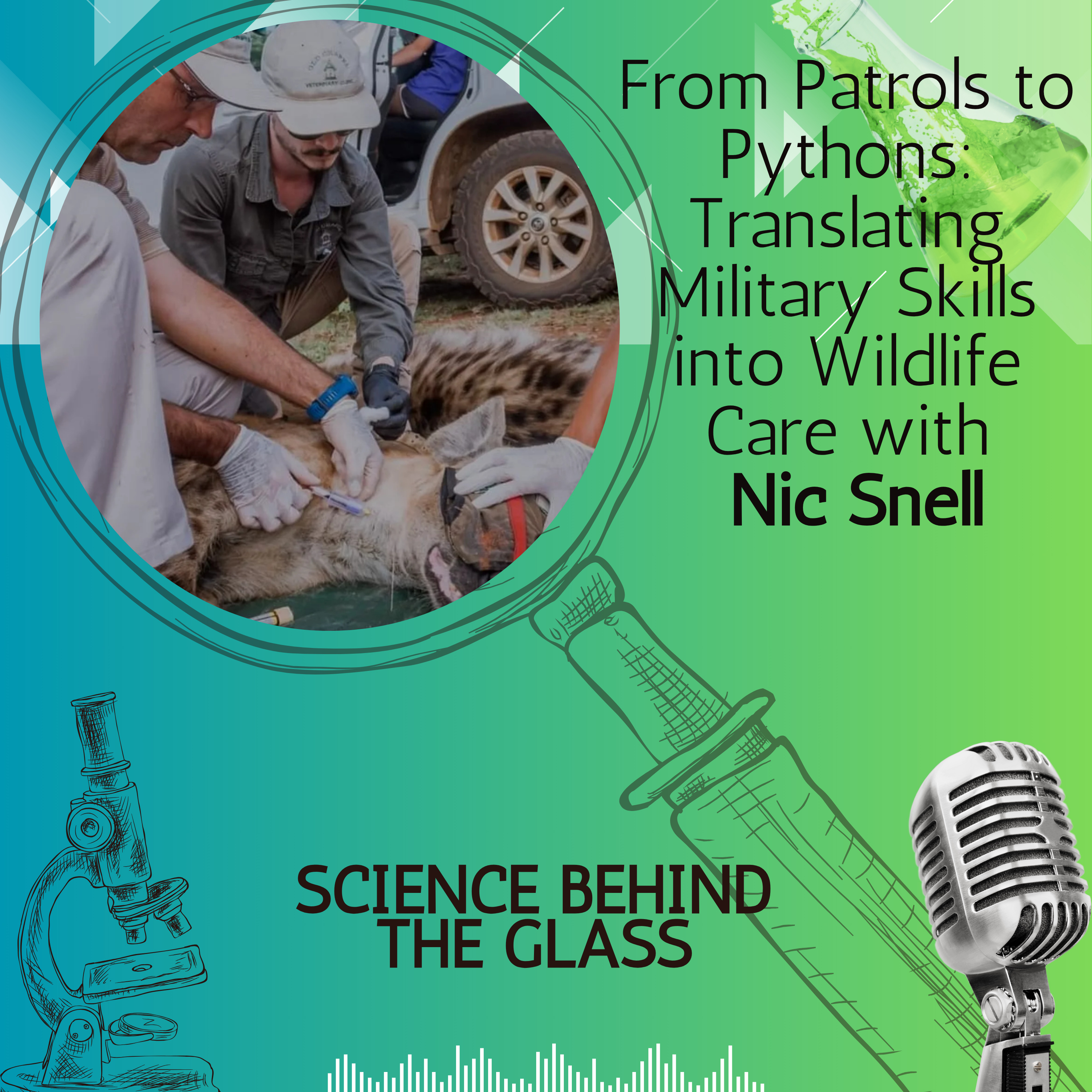 From Patrols to Pythons: Translating Military Skills into Wildlife Care | Travel from koala country to Afghan checkpoints to crocodile territory in one narrative ride. In this episode of Science Behind the Glass, we follow Nic Snell, koala rescuer, former Army reservist, big-cat helper, and now the public voice of CrocQld, on his quest to turn every life skill into frontline conservation. References:Koala Conservation Australia - The Port Macquarie Koala HospitalJessica Burckhart | The Lion CenterThings to Do in Townsville - Billabong Sanctuary Wildlife Park,Croc QLD | 31m 22s | ||||||
| 7/17/25 | 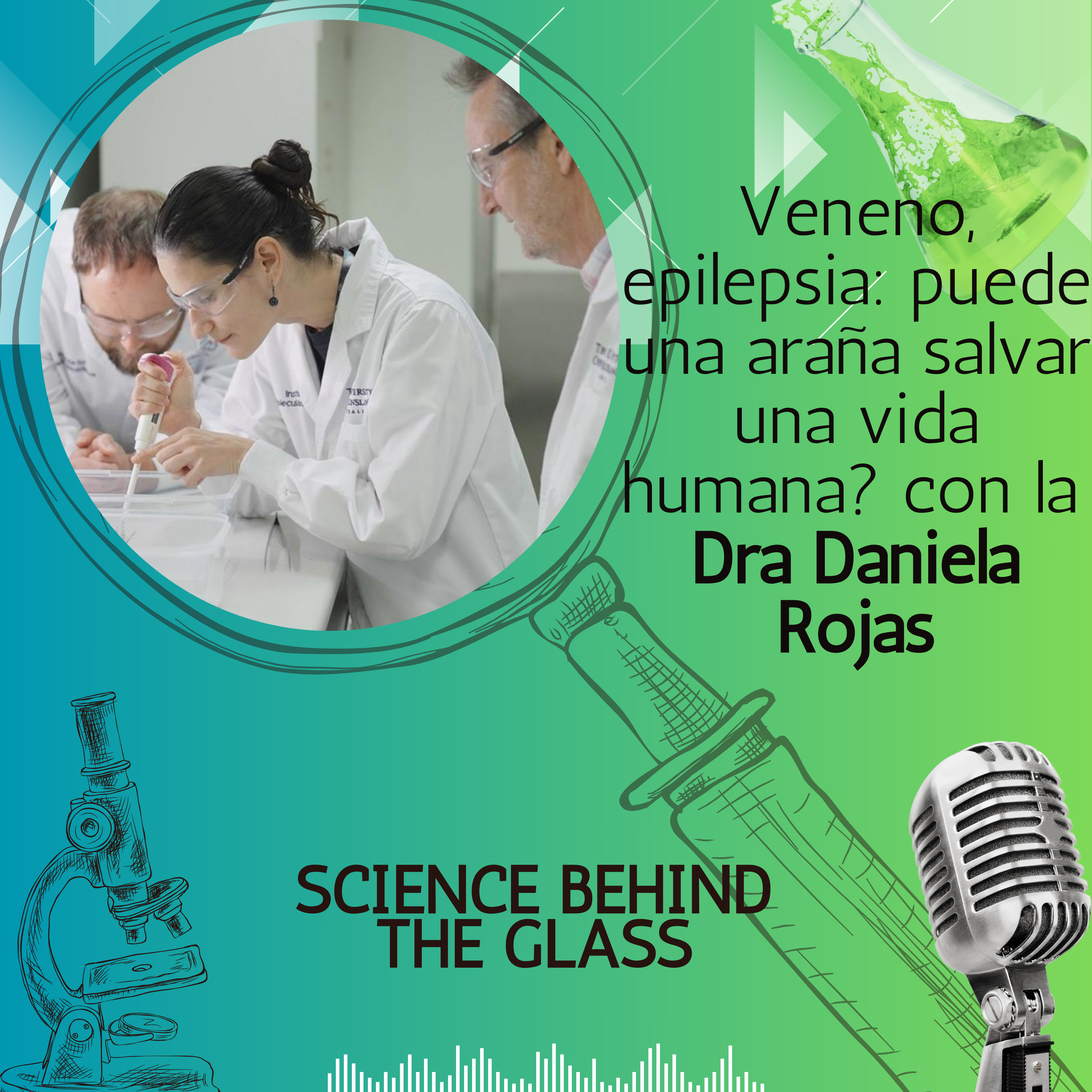 Veneno & epilepsia: puede una araña salvar una vida humana? con la Dra. Daniela Rojas | Imagina que una sola gota de veneno pudiera apagar la tormenta eléctrica que provoca una crisis epiléptica.Ese es el reto que guía a la Dra. Dani Rojas Azofeifa, bióloga costarricense y postdoc en la Universidad de Queensland. Desde los bosques de Costa Rica, donde empezó recolectando escorpiones, hasta el laboratorio de venenos más grande de Australia, Dani rastrea péptidos capaces de ayudar con mutaciones que disparan epilepsias infantiles difíciles de tratar.Este es un podcast sobre su travesia! | 42m 42s | ||||||
Showing 25 of 97
Pitch Fit is a Pro feature
See how bookable this show is for guests, which brands already advertise, the per-episode ad value, and the best-fit guest and sponsor profile. The numbers are blurred on the free plan.
How readily this show books outside guests like you.
How proven this show is for host-read sponsorships.
For Guests
ProFor Advertisers
ProUpgrade to Pro to unlock guest cadence, sponsor categories, fit scores, and per-episode ad value for this show.