
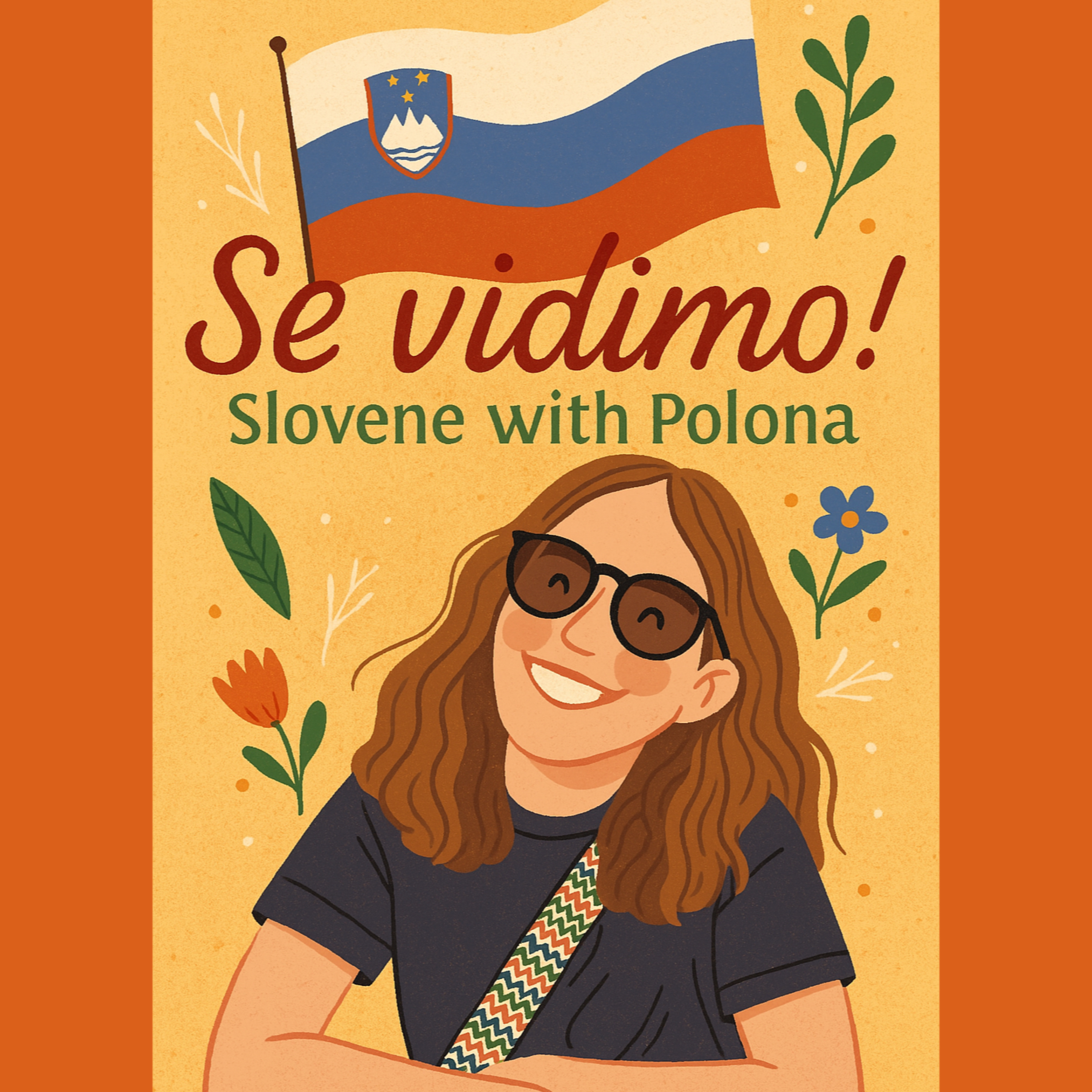
Insights from recent episode analysis
Audience Interest
Podcast Focus
Publishing Consistency
Platform Reach
Insights are generated by CastFox AI using publicly available data, episode content, and proprietary models.
Total monthly reach
Estimated from 2 chart positions in 2 markets.
By chart position
- 🇦🇺AU · Language Learning#1655K to 30K
- 🇲🇾MY · Language Learning#144500 to 3K
- Per-Episode Audience
Est. listeners per new episode within ~30 days
2.8K to 17K🎙 ~2x weekly·28 episodes·Last published 3w ago - Monthly Reach
Unique listeners across all episodes (30 days)
5.5K to 33K🇦🇺91%🇲🇾9% - Active Followers
Loyal subscribers who consistently listen
2.2K to 13K
Market Insights
Platform Distribution
Reach across major podcast platforms, updated hourly
Total Followers
—
Total Plays
—
Total Reviews
—
* Data sourced directly from platform APIs and aggregated hourly across all major podcast directories.
On the show
Recent episodes
Episode 28: Dativ 2. del
Apr 19, 2026
Unknown duration
Episode 26: Velika noč
Apr 5, 2026
Unknown duration
Episode 25: Volitve - elections
Mar 29, 2026
Unknown duration
Episode 24: Dativ in poklici
Mar 22, 2026
Unknown duration
Episode 23: Naš, vaš, njun obisk?
Mar 15, 2026
Unknown duration
Social Links & Contact
Official channels & resources
Official Website
Login
RSS Feed
Login
| Date | Episode | Description | Length | ||||||
|---|---|---|---|---|---|---|---|---|---|
| 4/19/26 | Episode 28: Dativ 2. del | In Episode 28, we learn how to use the dative case in the dual and plural in Slovene, including the typical endings for all three genders. Through practical examples and common verbs, you’ll see how the dative works in everyday situations, ending with a short listening segment about what different politicians support and oppose. | — | ||||||
| 4/5/26 | Episode 26: Velika noč | In this episode, we teach you Slovenian words connected to Easter, from decorated eggs to the special Easter breakfast, while sharing stories behind Slovenia’s holiday customs. Se vidimo! | — | ||||||
| 3/29/26 | Episode 25: Volitve - elections | In today’s episode, we focus on elections in Slovenia while learning useful vocabulary related to voting and politics. Se vidimo! | — | ||||||
| 3/22/26 | Episode 24: Dativ in poklici | In this episode of Se vidimo, we start learning the final Slovene case – the dativ. You’ll learn singular endings, keyprepositions like k/h, proti, and kljub, and expand your vocabulary with common professions. | — | ||||||
| 3/15/26 | Episode 23: Naš, vaš, njun obisk? | In this episode, we review possessive pronouns and learn howto use them in dual and plural, with examples for masculine, feminine, and neuter nouns. You’ll also hear a short text about Slovene visiting culture. Se vidimo! | — | ||||||
| 3/8/26 | Episode 22: Svojilni zaimki in dan žena | Learn how possessive pronouns in Slovenian (singular) workand listen to a short text about Women’s Day in Slovenia, followed by five comprehension questions for practice. Se vidimo! | — | ||||||
| 3/1/26 | Episode 21: Pogojnik | In this episode, we’re talking about how to say wouldin Slovene. You’ll learn how to use bi in everyday situations — from imagining “If I had a million euros…” to making polite requests. Se vidimo! | — | ||||||
| 2/22/26 | Episode 20: Modalni glagoli | In this episode, we dive into Slovene modal verbs and howthey help you express what you want, have to do, are allowed to do, or are able to do. You’ll learn how to use želeti, hoteti, smeti, morati, treba, moči, and lahko in everyday sentences, including how negation works and when to use the infinitive. Se vidimo! | — | ||||||
| 2/15/26 | Episode 19: Pust, vreme in letni časi | In Episode 19, we talk about Pust, Slovenia’s colorful carnival tradition, with its costumes, parades, and sweet treats. Then we move on to everyday weather vocabulary—learning how to describe the weather, seasons, and common winds in Slovenian. Se vidimo! | — | ||||||
| 2/8/26 | Episode 18: Instrumental 2. del | In this episode, we learn how to use the instrumental casein the dual and plural in Slovene. After a quick revision of the instrumental singular, we focus on endings for all three genders and practice them through real-life dialogues at a train station and in a travel agency. Se vidimo! | — | ||||||
Want analysis for the episodes below?Free for Pro Submit a request, we'll have your selected episodes analyzed within an hour. Free, at no cost to you, for Pro users. | |||||||||
| 2/1/26 | Episode 17: Jejmo, nakupujmo in potujmo s Polono | This episode focuses on practical Slovene for everyday situations. Through dialogues in a shop and a restaurant, you’ll learn essential vocabulary and expressions. The episode also introduces the instrumental case and common modes of transportation. Se vidimo! | — | ||||||
| 1/25/26 | Episode 16: Kje je lekarna? | In this episode, we continue with the Slovene locative case,focusing on dual and plural forms. You’ll practice asking for directions, talking about places in the city, and learn useful everyday phrases. We wrap up with a short overview of Piran, Bled, and Predjama Castle. Se vidimo! | — | ||||||
| 1/18/26 | Episode 15: Gremo na kavo z lokativom in akuzativom | In this episode, we focus on city vocabulary and learn howto ask “Where are you?” in Slovene. You’ll be introduced to common buildings in a city and learn how to use the 5th case (locative) in the singular to describe where you are and where you live. We also clarify the difference between movement (accusative) and location (locative). Se vidimo! | — | ||||||
| 1/11/26 | Episode 14: Appearance, character and clothing | Episode 14 focuses on how to describe someone in Slovene. You’ll learn vocabulary for appearance, character, hair, eyes, and clothing, and how to use common adjectives and the verb nositi (to wear). Se vidimo! | — | ||||||
| 1/4/26 | Episode 13: Cats and colors | In this episode learn how to say “hungover” in Slovene, explore New Year traditions, and return to the basics of Slovene grammar. This episode focuses on nouns and adjectives, how they work together, and includes basic adjectives and colours. Se vidimo! | — | ||||||
| 12/28/25 | Episode 12: Zbogom 2025! Farewell 2025! | In the last episode of this year, we practice past, present, and future tense in Slovene through short, everyday texts and useful vocabulary. You’ll also learn how to say “Happy New Year” in Slovene and discover New Year traditions in Slovenia. Se vidimo! | — | ||||||
| 12/21/25 | Episode 11: Part 2 of the future tense and Christmas | Episode 11 continues with the Slovenian future tense, focusing on the dual and plural forms through clear examples and guided practice.The episode also explores December traditions in Slovenia, including Miklavž and Christmas, with seasonal vocabulary and a short listening exercise. Se vidimo! | — | ||||||
| 12/14/25 | Episode 10: Future tense and Slovenian food | In this episode, you’ll learn how to talk about the future in Slovene. We compare the past and future tense, practice forming prihodnjik with biti, and use common time expressions for plans and invitations.To finish, we explore must-try Slovenian dishes like potica, štruklji, kranjska klobasa, and kremšnita. Grammar, examples, and a taste of Slovenian culture in one episode. Se vidimo! | — | ||||||
| 12/7/25 | Episode 9: Past tense (dual, plural) and family | In this episode, we dive into the Slovene past tense in the dual and plural, and learn how participle endings change based on gender and number. We also explore useful family vocabulary like mama, oče, sestra, and more. A lesson to help you talk about your past and describe your family in Slovene. Se vidimo! | — | ||||||
| 11/30/25 | Episode 8: Past tense and France Prešeren | In this episode of Se vidimo! we explore the Slovenian past tense – preteklik.You’ll hear examples in context, learn how to form the past, discover irregular verbs in the past, and listen to a short story about France Prešeren. Se vidimo! | — | ||||||
| 11/23/25 | Episode 7: I like, I don't like | In this episode, we explore how to say what you like and don’t like in Slovene. You’ll learn the accusative and genitive forms you need, plus a quick refresher on nominative endings in singular, dual, and plural. | — | ||||||
| 11/9/25 | Episode 6: Everyday phrases | Learn how to use everyday Slovene in real-life situations — from saying hvala and ordering coffee to chatting with friends, shopping, or answering the phone. This episode is full of simple, useful phrases you can start using right away. | — | ||||||
| 11/2/25 | Episode 5: Days of the week and accusative case | In this episode of Se vidimo!, learn how to describe your daily routine in Slovene. Explore the days of the week, months, and common adverbs of frequency, and get a clear introduction to the accusative case — an essential part of Slovene grammar. | — | ||||||
| 10/27/25 | Episode 4: Regular, irregular? Verbs! | In this episode, we dive into one of the most important parts of Slovene grammar — verbs!You’ll learn how to use the verb to be, how to spot regular and irregular verbs. We’ll also practice a few examples together and look at some fun patterns that make Slovene verbs easier than you might think.Tune in, repeat out loud, and as always — se vidimo! | — | ||||||
| 10/19/25 | Episode 3: Introduce yourself | Welcome back to Se vidimo! In this episode, we’re learning how to introduce yourself in Slovene — from asking someone’s name and where they’re from, to talking about your job, age, and the languages you speak. We’ll also review some tricky Slovene pronunciations, practice spelling names the Slovene way, and look at how to switch between formal and informal speech. By the end, you’ll be ready to start a friendly conversation in Slovene with confidence. Hvala lepa, in se vidimo! 👋Words to practice "od kod si?": Maribor, Lizbona, Čile, Hrvaška, Dunaj, Argentina. | — | ||||||
Showing 25 of 28
Sponsor Intelligence
Sign in to see which brands sponsor this podcast, their ad offers, and promo codes.
Chart Positions
2 placements across 2 markets.
Chart Positions
2 placements across 2 markets.