
Insights from recent episode analysis
Audience Interest
Podcast Focus
Publishing Consistency
Platform Reach
Insights are generated by CastFox AI using publicly available data, episode content, and proprietary models.
Total monthly reach
Estimated from 13 chart positions in 13 markets.
By chart position
- 🇩🇪DE · How To#1805K to 30K
- 🇫🇷FR · How To#4330K to 100K
- 🇪🇸ES · How To#5030K to 100K
- 🇮🇹IT · How To#7610K to 30K
- 🇯🇵JP · How To#1051K to 10K
- Per-Episode Audience
Est. listeners per new episode within ~30 days
59K to 210K🎙 Weekly cadence·186 episodes·Last published today - Monthly Reach
Unique listeners across all episodes (30 days)
118K to 419K🇫🇷24%🇪🇸24%🇬🇷24%+10 more - Active Followers
Loyal subscribers who consistently listen
35K to 126K
Market Insights
Platform Distribution
Reach across major podcast platforms, updated hourly
Total Followers
—
Total Plays
—
Total Reviews
—
* Data sourced directly from platform APIs and aggregated hourly across all major podcast directories.
On the show
Recent episodes
Sketchnote Podcast: Danny Gregory - S1/E2
May 12, 2026
Unknown duration
Federica Tabone & Claudio Nichele ISC26IT Verona
May 5, 2026
Unknown duration
A New Chapter of the Sketchnote Podcast: Same heart, new energy.
Apr 28, 2026
Unknown duration
All The Tips - Season 17
Nov 25, 2025
Unknown duration
Andrew Park transforms complex ideas into compelling visuals - S17/E03
Nov 18, 2025
Unknown duration
Social Links & Contact
Official channels & resources
Official Website
Login
RSS Feed
Login
| Date | Episode | Description | Length | ||||||
|---|---|---|---|---|---|---|---|---|---|
| 5/12/26 | 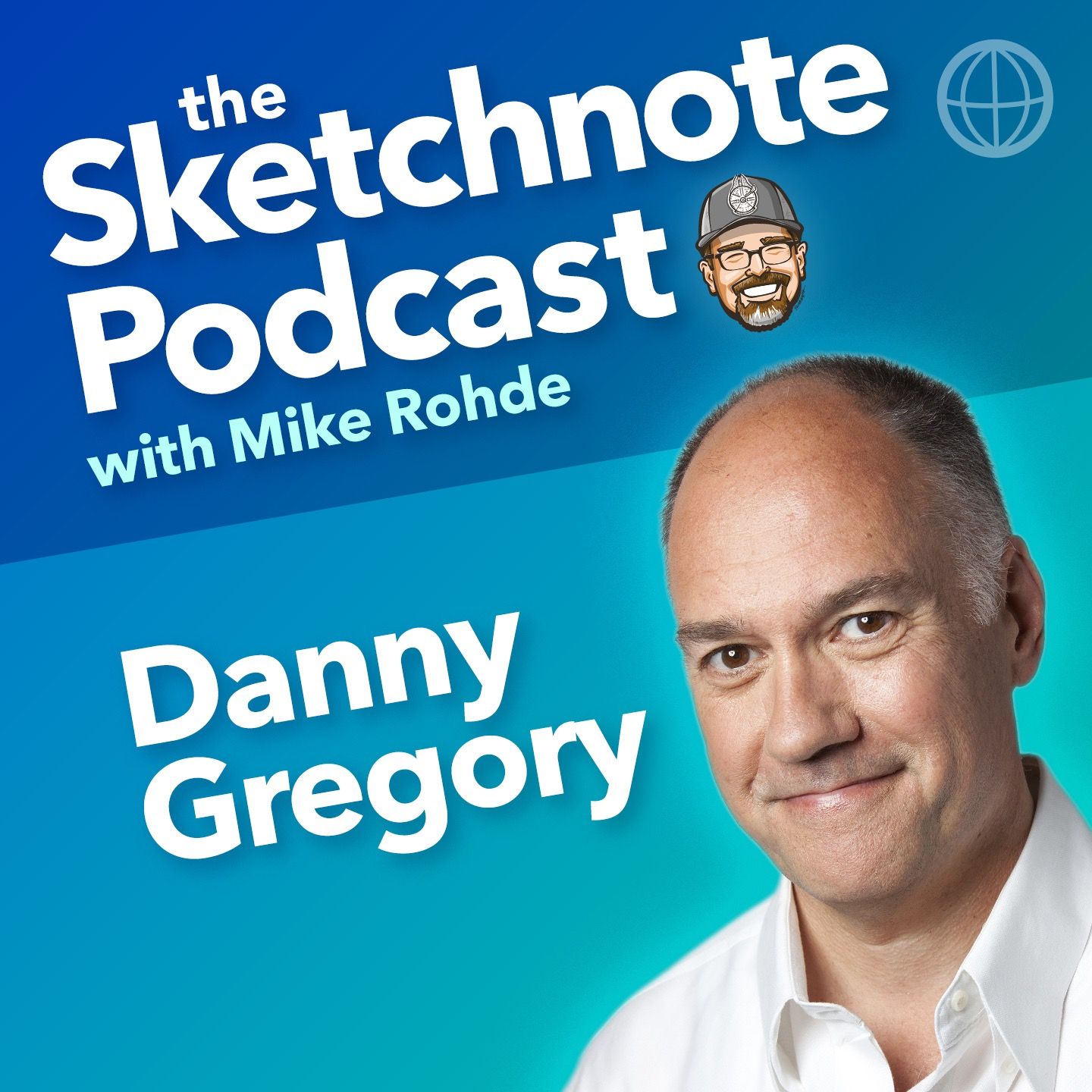 Sketchnote Podcast: Danny Gregory - S1/E2 | Hear how Danny Gregory transformed personal challenges into artistic opportunities, with the power of creativity and travel. | — | ||||||
| 5/5/26 | 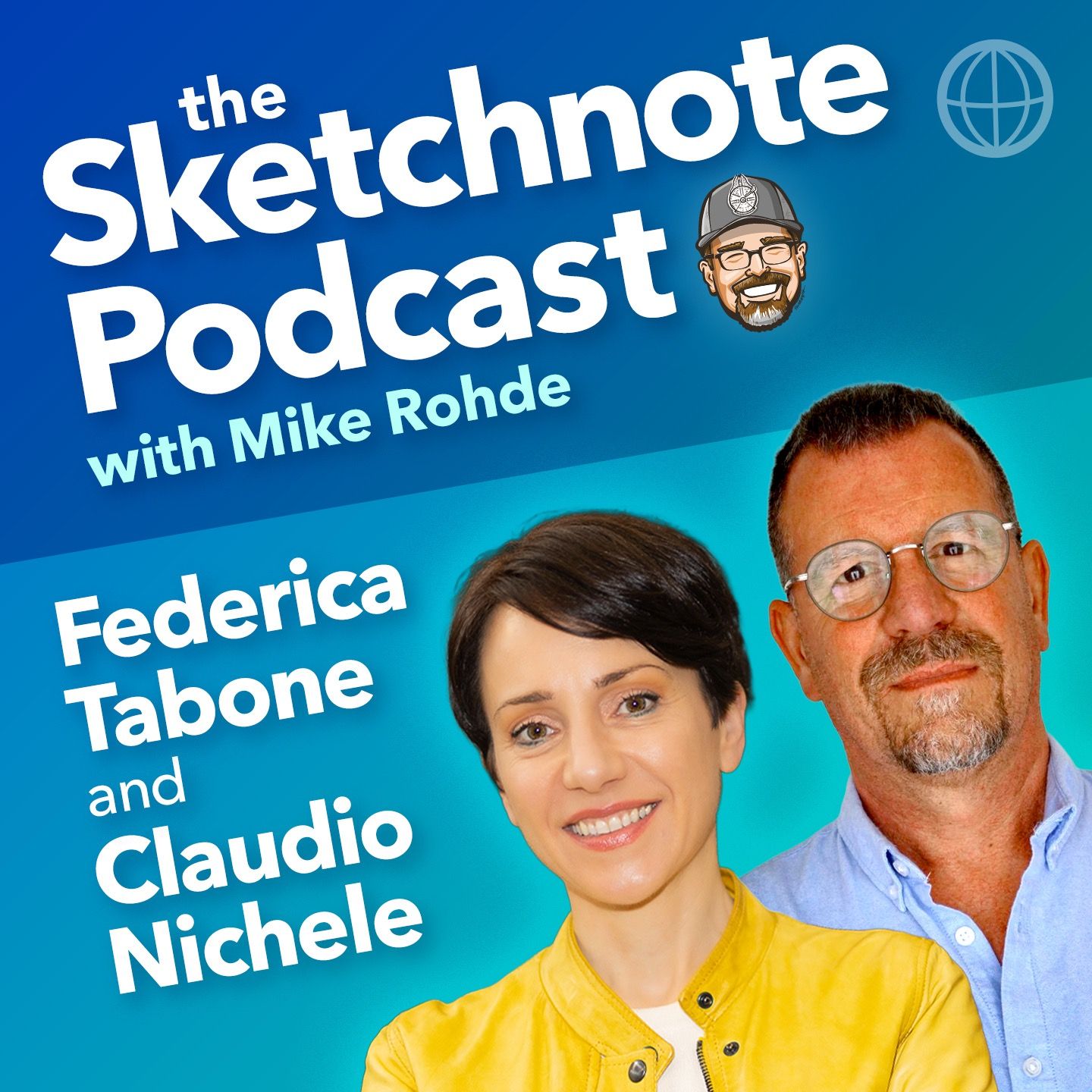 Federica Tabone & Claudio Nichele ISC26IT Verona | Federica Tabone and Claudio Nichele talk with Mike about the 9th International Sketchnote Camp, in Verona, Italy. | — | ||||||
| 4/28/26 |  A New Chapter of the Sketchnote Podcast: Same heart, new energy. | New guests. New look. New home. The Sketchnote Army Podcast reborn as the Sketchnote Podcast. | — | ||||||
| 11/25/25 | 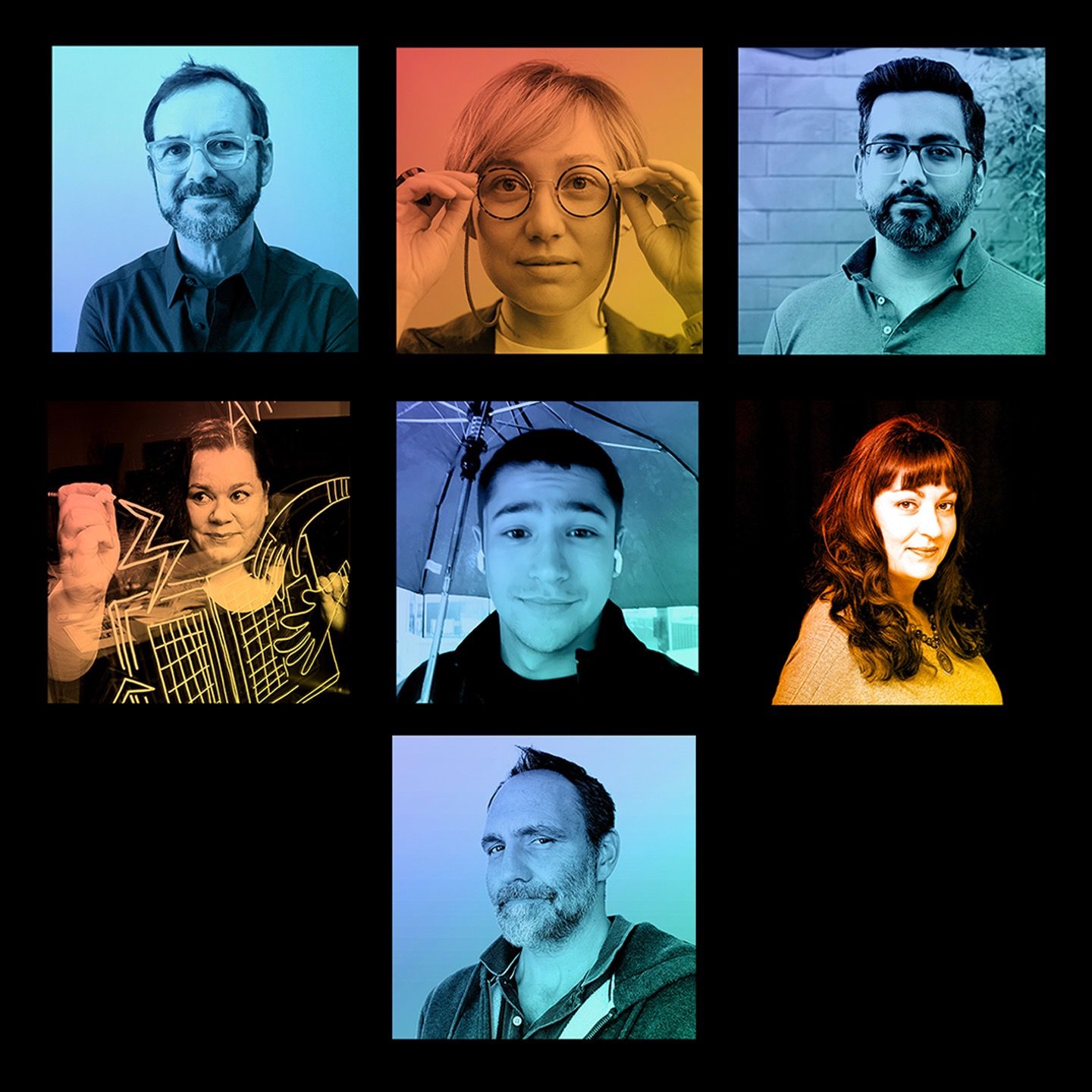 All The Tips - Season 17 | In this final episode of The Sketchnote Army Podcast season 17, we’ve compiled the tips from nine great visual thinkers into a single All The Tips episode. We hope these tips inspire and encourage you on your visual thinking journey. Happy Holidays!Hear tips from: Dan Roam, Katya Balakina, Nishant Jain, Cara Holland, Ted Schachtman, Lindsay Wilson, and Andrew Park.Sponsored by The Reflective Travel Sketchnote Workshop VideoHave you ever wanted to create travel sketchnotes from an experience you’ve had, just using the photos and memories you’ve got? In the Reflective Travel Sketchnote Workshop Video, I’ll guide you through my process for creating travel sketchnotes and then help you reflect on your own photos and memories so that you can make travel sketchnotes of your own trips, too!This 2-hour recorded video includes a set of downloadable, printable sketching templates and a process to kickstart your own travel sketchnoting practice. All this for just $20.https://rohdesign.com/travelBuy me a coffee!If you enjoy this episode of the Sketchnote Army Podcast, you can buy me a coffee at https://sketchnotearmy.com/buymeacoffeeRunning OrderIntroDan RoamKatya BalakinaNishant JainCara HollandTed SchachtmanLindsay WilsonAndrew ParkOutroLinksDan's websiteKatya’s LinkedInNishant's Sneaky Art newsletterCara's SubstackTed’s LinkedInLindsay’s Ink Factory Studio WebsiteAndrew’s Hairy Hand ProductionsCreditsProducer: Alec Pulianas Shownotes and transcripts: Esther OdoroTheme music: Jon SchiedermayerSubscribe to the Sketchnote Army PodcastYou can subscribe to the podcast via iTunes, Google Podcasts, Spotify, Amazon Music, YouTube, or your favorite podcast app.Support the PodcastTo support the creation, production, and hosting of the Sketchnote Army Podcast, buy one of Mike Rohde’s bestselling books. Use code ROHDE40 at Peachpit.com for 40% off! Subscribe to the Sketchnote PodcastYou can subscribe to the podcast through iTunes, Google Podcasts, Spotify, Amazon Music, YouTube or your favorite podcast listening source.Support the PodcastTo support the creation, production, and hosting of the Sketchnote Army Podcast, buy one of Mike Rohde's bestselling books. Use code ROHDE40 at Peachpit.com for 40% off!Sketchnote Lab is Mike Rohde’s space designed to bridge the gap between sketchnote theory and practice. You don’t need to be an artist to think visually. Join Mike and learn to use sketchnotes to clarify your thinking, solve problems, and move forward. Learn more about Sketchnote Lab.Mike is the author of The Sketchnote Handbook and The Sketchnote Workbook, bestselling books that teach regular people how to start sketchnoting and build a regular sketchnoting practice.He founded the Sketchnote Army and hosts the Sketchnote Podcast, where he interviews visual thinkers to understand what makes them tick.Mike teaches recorded, live, and in-person workshops to accelerate your sketchnoting practice and provides personalized coaching for your specific visual-thinking challenges.He is the illustrator of bestselling books like REWORK, REMOTE, The $100 Startup, Honest SEO, The Culture Playbook, and The Future Begins with Z.Become a Supporting or Founding Lab Partner to support Mike’s work.Some links in Sketchnote Lab posts are affiliate links. If you purchase through them, I may earn a small commission at no extra cost to you. I only recommend tools and resources I use and believe in.©2026 Mike Rohde, Sketchnote Lab | — | ||||||
| 11/18/25 | 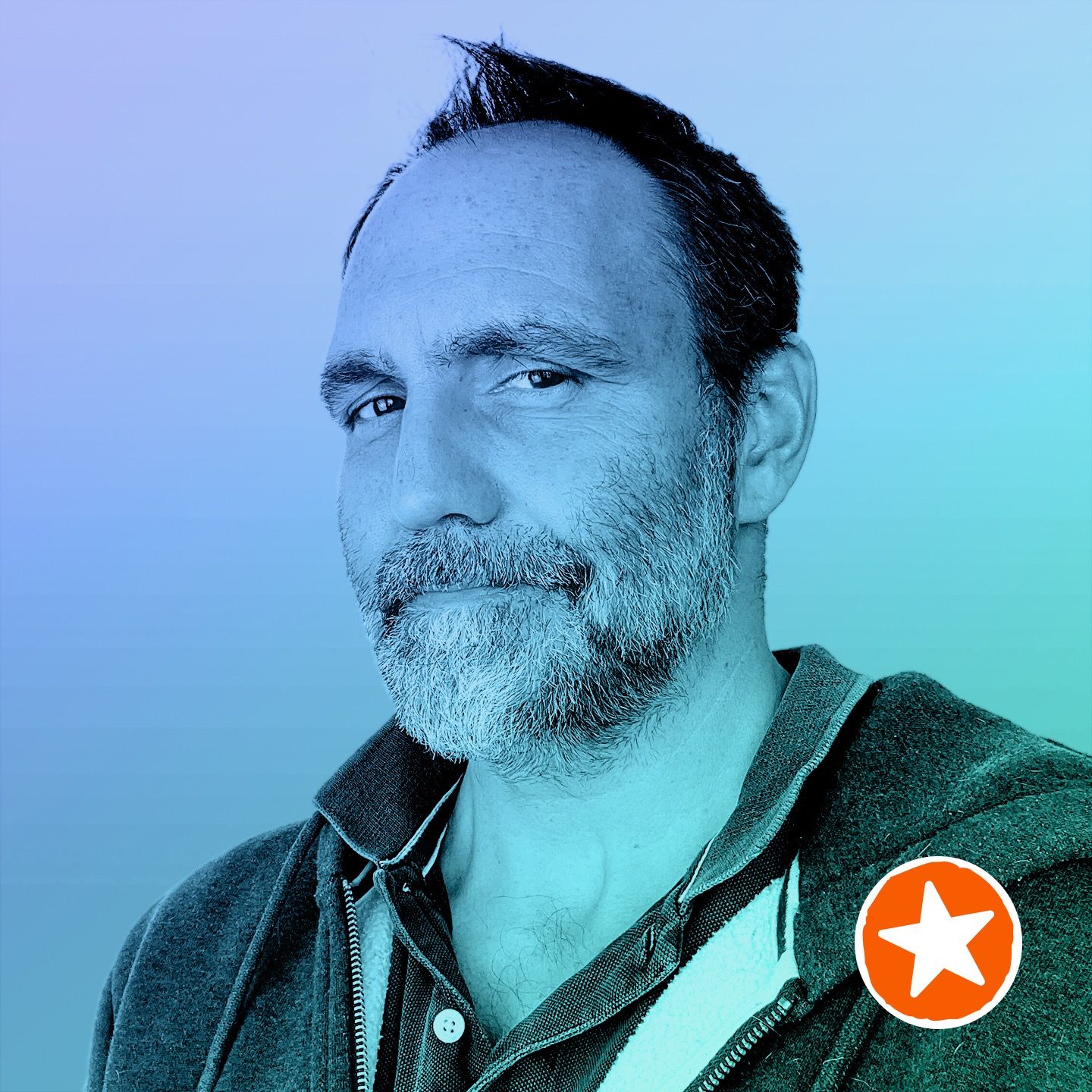 Andrew Park transforms complex ideas into compelling visuals - S17/E03 | In this episode, Andrew Park shares how he crafts connected narratives across space and time using a range of tools. As the creator of the RSA Animate whiteboard animation series, Andrew shares how he’s used visuals to enhance learning in business and education.Sponsored by The Reflective Travel Sketchnote Workshop VideoHave you ever wanted to create travel sketchnotes from an experience you’ve had, just using the photos and memories you’ve got? In the Reflective Travel Sketchnote Workshop Video, I’ll guide you through my process for creating travel sketchnotes and then help you reflect on your own photos and memories so that you can make travel sketchnotes of your own trips, too!This 2-hour recorded video includes a set of downloadable, printable sketching templates and a process to kickstart your own travel sketchnoting practice. All this for just $20.https://rohdesign.com/travelRunning OrderIntroWelcomeWho is Andrew Park?Origin StoryAndrew's current workSponsor: ConceptsTipsToolsWhere to find AndrewOutroLinksAmazon affiliate links support the Sketchnote Army Podcast.Hairy Hand ProductionsThe Visual Flaneur PodcastAndrew on InstagramAndrew on YouTubeToolsAmazon affiliate links support the Sketchnote Army Podcast. Whiteboard paint Red and black Office marker pens Staples Whiteboard Moleskine sketchbook Leuchtturm sketchbook Photoshop Wacom Cintiq tabletsTipsUse thinking visual German to go through ideas or solve problems.In a visual way, don't procrastinate, just draw, create.Don't be too precious with stuff. Find what works for you.CreditsProducer: Alec Pulianas Shownotes and transcripts: Esther OdoroTheme music: Jon SchiedermayerSubscribe to the Sketchnote Army PodcastYou can subscribe to the podcast through iTunes, Google Podcasts, Spotify, Amazon Music, YouTube or your favorite podcast listening source.Support the PodcastTo support the creation, production, and hosting of the Sketchnote Army Podcast, buy one of Mike Rohde’s bestselling books. Use code ROHDE40 at Peachpit.com for 40% off!Episode TranscriptMike Rohde: Hey everyone, it's Mike and I'm here with Andrew Park. Andrew, welcome to the show. Thanks for coming.Andrew Park: Thanks for having me on. It's a real pleasure.MR: We were chatting probably longer than I should have chatted with Andrew before the recording 'cause I'm a huge fan. So I'm excited to have you on. I think there's lots of fans who probably are in this podcast or watching the video that—and we were talking about that a little bit. The idea of when you do something that's notable, often you're blind to the impact on other people. I know that I am. I occasionally get these emails in, like, "Your book changed my life." Like, oh, really? It was just a book to me. So welcome to the show. And I guess we'll just start off, tell us a little bit about what you do for your day job. I guess I know you as the RSA animate illustrator or animator.AP: Yep.MR: Or both, I guess. Obviously, you do more than that, so I'd love to hear what you do.AP: Yeah, it's misnomer. Actually. I'm not a very good animator. I know the principles of animation, but I have a really talented team that actually bring my drawings to life. If I was gonna say anything, I probably would class myself as a cartoonist. Cartoonist illustrator. But then I'm a visual thinker as well. I know how to sort of join up concepts and, you know, build maps of things. A joined-up thinking cartoon is possibly, it's a bit of a mouthful, but that's kind. So in my day jobs, obviously, the RSA films were quite successful and it enabled me to build a company around the methodology. So in about 2008, we developed the methodology, the process. It weirdly hadn't existed before. There were a couple of little smatterings of it out in the world. I think they did, I think a UPS commercial used a whiteboard and had a guy drawing on it as a commercial, I think, early on.MR: Yeah, I remember that.AP: But the genesis of it was graphic recording or scribing. That's where I learned how to put my pictures together. And then literally had a camera over my shoulder. I think that hadn't been done before, surprisingly. And I think one of the innovations of that, and it wasn't me that came up with it, was actually RSA themselves. They sent me a video of someone taking notes in a journal for the New York Library, and they'd sped the hand up. It was really interesting actually. I thought that's the missing component, because I was trying to literally draw these things live, fast which wasn't really working. I had the missing thing in my brain that why can't I draw a hundred miles an hour? And I literally couldn't work out, oh, you can speed it up. It's video. You know?MR: Yeah.AP: So once I saw that, it all sort of fell into place. There's an author called Steven Johnson. Do you know him? Where Good Ideas Come From?MR: I need to find that book now.AP: It's really good. And he talks about ideas don't come as eureka moments. They often come as slow hunches. You know, they build, they bubble up and things percolate. And I think in terms of the RSA anime, that's kind of what happened. I've been working, scribing, capturing conversations live, graphic facilitation, graphic recording. And then when you then put a video component in that and think, well, how do I make that work?The hand from the New York video, New Library video was the, the kind of thing as a catalyst that made me think, here's how it could work. And then if you notice from the early RSA animates, they're really ropey, really rough, really handmade, if you like. And then as we've gone through, they've become more refined and more, you know, you just start thinking, oh, how, what can I do with these things? How can I—MR: Process, yeah.AP: So my day job now, is trying to talk about this stuff, extend it in the community. You know, people were interested in how visual thinking can help them. I work with companies and work with businesses to tell the stories. On the back of the RSA films clients came to us and said, "Hey, we want one of those. This seems like a really good way of telling our story." So yeah, over the last, ooh, 20 years now, building a company. I'm really proud of the team I've got. I've got some really fantastic visual thinkers and illustrators, animators that have taken it in their own direction. You know it's not just—I practice it in my way, but then the company has lots of different flavors of how that—MR: That's nice.AP: -kind of permeates the role. So, yeah, I'm really proud of those guys. There's some fantastic visual thinkers in Cognitive.MR: That kind of gives your clients a menu in a sense, right? So you can show them different styles. Is that something that they think about?AP: Yeah, I mean, there's a stylistic overlay that can go across the films, but if we're gonna talk about the methodology of whiteboard animation, it has the same DNA at its foundation which is showing information in space so that you can see the relationships between things.MR: Yes. Yeah.AP: Taking people on a narrative or a journey. There's lots of zooming in and zooming out.MR: Keeping the focus, holding the focus. Yeah.AP: Keeping the focus. I mean when we do plan stuff out, we are often—you know, you build the big map and you show a client the end state, it's really overwhelming for them. And then you say, don't worry, it's not gonna do that. We're gonna take you right into the beginning. And things draw and they build up in time. So what we have to do in the way that we work, is to have that end-state in mind when we build stuff. I suppose with Sketchnoting, you know, you are building it in time live, right?MR: Yes. Yeah. Typically, yeah.AP: Yeah, that's what you do. Whereas we would probably plan it to end up with that end-state, and almost then erase all that, and then go back to the beginning and—MR: Work backwards. Yeah.AP: -work backwards. Yeah. So that's how it kind of works.MR: I was mentioning when we first chatted before we recorded that the first thing I thought when I saw the RSA—I don't know which one I saw first. Probably Dan Pink, the first thing I thought was, wow, there was a lot of preparation that went into making this video that I don't know people necessarily realize has been going on. Because as an old print designer, like a graphic designer who did print production, everything I designed, I had to find a way to make that print on paper. And I learned the hard way when things didn't work. And I changed my process based on it. And I knew once I saw that, like, wow, okay, somebody did some serious planning, and exactly what you said, they kind of reverse engineered from state backwards.Okay, which, here's how it looks when it's finished. How do we piece this together in a logical way that holds focus and brings people through to the end? That was pretty immediately apparent. And I thought it was just like, wow, this is really cool. And I couldn't stop watching them. So as is true for a lot of people, right, it was a huge—I don't know, came outta nowhere, I guess, for a lot of people. And suddenly there's this cool thing and you can't get enough of it, which I guess is, was good for you, I suppose.AP: Oh, it was great. But like you say, you know, you sometimes don't know 'cause you can't see the wood for the trees. You are involved in it, you're working in it closely, and it's rare that you put your head above the parapet. I mean, obviously I knew early on the RSA when we put a first couple out, they said, these are really popular. They're more popular than the talking head videos. And we were like, oh, great, cool. Then we should make some more then.And then we continued. It was very much organic, let's make the next one and then the next one, you know. And then we started to—I think it was like the Dan Pink or the Ken Robinson RSA animates that just went bang. And millions of people watched those, which was really surprising. That enabled us to sort of think differently about—you know, I was no longer thinking, well, I still go out and scribe. And James, you've interviewed my friend James.MR: James Bailey, yeah.AP: Yeah, James Bailey. He said, "Oh, you've done a Beatles. You know, you don't play live anymore. You're in the studio." Which I thought was quite funny. Subsequently, I really do still go out and do scribing still.MR: That's good.AP: I like it. I like meeting people. I like talking to people. I like seeing things happen in the room live. Which you don't get when you're making animations, you know? There's a bit of a delay. Obviously, you have to make this work. But like you said, with the planning, weirdly there was a bit of planning, but I tend to work very organically and it's probably really annoying for my animators when I plan stuff, because halfway through I'm like changing my mind of things.And in a normal animation pipeline, you know, you're making something for Nickelodeon or the Cartoon Network. All of this stuff's mapped out at the beginning, you know. It's rigid, you do your pencils, you do your, you know, inks, you whatever, until it's finished. And there's hardly any kind of room for maneuver, because it's all on tight deadlines and budgets and things.Whereas because the whiteboard animation processes is quite organic, but it's also quite cheap, really. In the early days, it was just a camera over my shoulder filming on a whiteboard. So you could actually rub it out with your thumb and do it again. You know, it wasn't like, oh, there's a whole pipeline of people. It was literally at the beginning, me and an animator called Rob, and we were kind of shackled together a bit like Picasso and Brack when they were doing cubism, right? They were like egging each other on.So I would draw pictures and say, "I wanted to do this. How can we do this, Rob?" And Rob would be like, "Let me go and think about that tape clean." Then you'd come back in about half an hour and go, we could do it this way. And it was literally, that's how those early ones were made. They were ramshackle experiments. Even the RSA team were the same. And as these things became quite popular, the RSA got approached by quite big clients, you know, big multinationals, and saying, how big's your marketing department or your creative team? It's like, well, there's just me doing the script and that was Abby. And then there's Andrew. They probably didn't even know Rob existed at that point, you know.They were like, well, there's about four of us. And they were like, what? How can you make this thing that is a global thing with four people? I think it's just doesn't happen anymore. Things don't work like that anymore. I suppose now with TikTok and things like that and individual creators, you can do stuff on your phone, which we couldn't back then. You know, the early stuff was you had to have video cameras and they were quite big.MR: Yeah. They had tripod. Yeah.AP: The first film we made was with a flip cam. I dunno if you remember those.MR: I think I that had one of those. I think I have one. Yeah.AP: It had a red button on the back. You press it and it comes on. That was the RSA animates first film. I didn't wanna invest any money in the equipment 'cause I thought, they might not want these. So I thought Webcam. I dunno how much that was. Couple of hundred quid or something. And I thought, all right. Then the next one, we hired a camera, and then the next one we hired a better camera, and then we bought a camera. You know, it started like that.MR: Escalated. Yeah.AP: Yeah. So I think, you know, most things happen this way, don't they? They're very much kind of shuffling along and building as you go.MR: Yeah, I think so too.AP: No one has a plan.MR: Yeah. And I think, you know, the comment that you know, "Only four of you are doing this." I think actually most innovations seem to come from small teams, because at some point, if the teams get too big, it can get really wonky. And it's hard to—suddenly people are worried about making mistakes or, you know, the impact, right? You gotta have a small team to have that agility, it seems like.AP: Yeah. Agility's the key word, I think. You can make decisions on the fly, you can throw things away, you can change your mind. All of those sort of things are really important. And it's ironic now that I spend a lot of my working life helping large, complex teams talk about their stuff in a simple way. So it's like, you know, these multinational companies, they've got a lot of moving parts, functions, people, tires of work, you know. And they can't see their whole organization.And the thing about what we do in the animations, we show their whole—you know, you can draw it in one ispan. You can draw a big picture of it and show how it works. And that's one of the really good benefits of—I think what I've learned over the last 20 years is being able to help people tell complex stories in a simple way.MR: Maybe that's encouraging for people who do work, like any kind of visual work, whether it's animation like you do, or even mapping, live mapping. I've done some of that stuff.AP: Yeah.MR: The idea that these big companies are so big and so rigid and so conservative and worried about making mistakes that they're almost unable to do the kind of innovative, small, agile work. And so therefore they have to bring in agencies like yours and others to kind of see them because they can't, they're blind to it. Or, you know, they can't quite get their head around it. And so, they need someone to do that for them or with them.AP: Yeah. I mean, complex—I just did a workshop with a professor of business, his name's Jonathan Trevor. And he says that "Complexity is the alignment killer." Which I thought was a really good phrase.MR: That's interesting.AP: Because complexity just adds all of this fog that you can't see around. And most businesses really need to align all of their functions and all their processes in order to achieve their goals, right? And I think that as a visual thinker, like, you know, if you're sketchnoting or capturing things live or making animations like we do, it's like a lighthouse. It cuts through that fog. It shows people direction. It shows the linkages, the joint, you know, the stories, the narratives. Sometimes even the process of mapping stuff out like you do, when you capture things live at an event, these things emerge. And they are aha moments for a group of people. They'd never have seen this before. It's almost like pulling a sheet off and look, it's there. And we can see it as visual thinkers, right? But they can't.MR: Yeah.AP: So it is a superpower.MR: I think about this ability to make connections is really valuable. And I think many visual thinkers do it naturally because it's just the way, I guess we're processing information. And so then revealing it in this way and showing the connectivity, to us, it just feels like, well, of course, doesn't that make sense? And everybody's like, wow, this is amazing. Like, sometimes I'm confused by that.I can tell you that my whiteboard story for you is I worked at a financial services company and we used to map out interfaces with a whiteboard. So I was pretty inspired by your work. And we had this giant wall-sized whiteboard. And every Monday it was whiteboard wire frame Monday. So we would sit the team down. It was developers, product owners, and business analyst. And the business analyst on the team was my buddy. And he assisted me. And we would queue up the feature and we would say, okay, this is the feature we're working on today.We might look at it in the application. We had an old app that we're building as a web app. So we'd say, this is how it used to work. What can we do with this? And then we'd start the discussion, and I would go to the board, and as people talked, I would be drawing the stuff they were saying. I mean, just listening and visualizing it and annotating it.And I remember there was one developer who, one day I was drawing something and he came up to me afterwards and says, "How are you drawing what I'm thinking?" It's like, "I don't know. I'm just listening to you. I'm making the connections. What you're saying makes sense to me, and I've got this capability 'cause I'm working with the software too." Like, oh, I see where he is going. And I would just visualize it on the whiteboard.And it worked really well. It became sort of a unifying—and now that you say that, alignment, it was alignment really because the whole team was there. They all saw it going down. I mean, some of our most successful features were actually the ones that we had to struggle with three, four, five times in a session until we figured it out because It was complex. And we forced ourselves to work our way through that.And a lot of times, I wasn't the one really coming up with the great ideas. It was the developers who would say something, or even better, they would say, "Hey, can I draw this?" Like, yeah, come up. And I would give them the pen and they would visualize it on the whiteboard. So they were starting to get into it. That environment was really fun. And I could see how it would be exciting for, you know, someone that you're working with who doesn't do that every day, that could be quite exciting to be participating in.AP: Without being a bit woo woo about it, I think that I always look at what we do as in a kind of shamanistic way, right? So if we go back to the cave paintings of Lascaux you know, 30,000 years ago. You know, these paintings, they're a whiteboard on a cave wall, right? They function in exactly the same way as what we do. And we just do it on paper or whiteboard. You know, what you are essentially doing is taking a group on a journey and taking what's in everybody's brains and putting it in a group space.So you know, I love cave painting. I think they're really, really fascinating. And I think that in a way they probably helped us evolve our thinking. I think they're very special in that way that they helped us develop as humans. Yeah, being able to show that probably. I mean, the use of psychotropic plants probably helped. But, you know, these things I was always fascinated by, by these cave paintings, because I was reading about the flickering flames that, you know, these were subterranean caves, pitch black, couldn't see anything down there, and they were actually quite dangerous to get to.And, you know these artists, shaman, whatever you wanna call them, were responsible for taking people on those journeys. They were the ones that painted those images and they were the ones that's told those stories in order to—you know, no one knows exactly what the reasons were for those paintings, but they have some idea that they work some kind of rituals or tools, or maybe some kind of training and development. You know, they're like, training and development tools. hey, this is how they kill the animals that we want to eat. So it was almost like, you know, an onboarding course. Yeah. Come and join us on—MR: That would make a hilarious video actually. You could have a shaman and, you know, like cavemen going down in the cave and like, "Okay, it's time for our learning and development session."AP: "Here's how to kill the Jaguar." But the flickering frames are also really interesting. They have found evidence on some of the kind of outcrops of the cave where they've drawn different states of the animal, right? So when the flames flicker, it creates a sort of animation, like movement. So the leopards head moves when the flames flicker.MR: Oh, interesting.AP: And it makes it weird, right? And they've also found like little zoetrope things. So these little disks with a deer on one side and a lying down deer on the other. And they put a strap between the two and it spins.MR: Spin it so you can see the movement.AP: So you create a kind of deer that goes up and down. So they were experimenting with animation.MR: Wow. All that time long ago. Wow.AP: Yeah. And we think, oh, well, you know, these people were primitive. No, they weren't. You know, they had a limited tool set, but they were thinking exactly the same ways that we were thinking. You know, how can we get people on board with our hunting or whatever they were trying to do.MR: Alignment. Here we are at alignment.AP: Yeah, definitely. It was the alignment of the day.MR: With the tools available.AP: With the tools available. But I love all that. So I rather grandiosely say that we are kind of shamanistic than what we do. We have the abilities to take people that don't think they have those abilities. And you are doing a lot of work with that. You know, you are enabling people to think, oh, I can't draw. But you are enabling 'em to think in that way using sketchnotes. But for what we do, we take people that are just totally involved in, you know, strategy and business and say, you know, out of that ether, here's what you are thinking. And they go, oh my God. But you know, you are channeling just what they're saying. They said it. Like you said, with the app development, you know, it wasn't you doing it. You were kind of like an idiot Savon. You were like, oh.MR: Exactly. Yeah. I was just channeling it. Yeah. Bringing it in.AP: Yeah, channeling it.MR: Yeah. I think it almost helped too, that me being a designer, like I knew how the materials of the software work, but these guys had to build it. So like, I could come up with crazy stuff and they might look at me and like, oh, Mike, building that, that's gonna be a challenge. So, you know, I had to rely on them. So I think a lot of it was just trying to see the opportunities. Yeah, that's really interesting. It's almost like being a facilitator, guiding people into a state of mind. Right, in a lot of ways, it's a state of mind.That's what I always say when people, it's like the sketch noting stuff is way more mindset and listening. I could care less if you're drawing is not great. That's not the point. The point is, are you listening? Are you identifying the things that are valuable and then capturing them in a way that you can refer back to them or that someone else is inspired, right? That's where the exciting stuff happens, so.AP: Yeah, definitely. Yeah. Yeah. The ability to draw is, is kind of secondary. And you could probably do a lot with it, with the process, but, you know, just using shapes and stuff like that. You know, someone like Kelvy Bird would do something where she's doing a lot of shapes and patterns and forms to suggest emotions and things like that with her generative scribing stuff.MR: Exactly. Yeah.AP: It doesn't need like your—for people like me, I'm drawing like people 'cause I'm fascinated by people and anthropomorphic things. You know, it's a teacup with a face and it's doing stuff. You know, I love all that.MR: This blend of things. Yeah.AP: So, it's horses for courses, right. You tell your brand of storytelling or facilitation with what you like. I mean, I've come from a comic book background, you know.MR: Right. You can see that clearly in your style.AP: I love people like Will Eisner and all that sort of stuff. I actually went on a course with Scott McCloud up in Minnesota.MR: Oh, wow.AP: And he was a great guy.MR: Yeah.AP: And interestingly, when I was on the course with Scott—'cause I wanted to meet Scott. 'cause I love—have you read Understanding Comics?MR: Oh yeah, definitely. I met him once. He came to Milwaukee and I think he signed my copy of the book. So that was fun to see him.AP: I was in America at the time, I was living in Chicago. And I thought, well, let's go up there. He's running this course, 73 days or something. I went up there and I did it and he was running comic strip course, but weirdly, and this is before the RSA animates and everything like that. My way of doing stuff—I didn't want to do panels. I was just doing like mapping. And he was like, "You're not getting this." I was like, I don't want put panels around things. I'm kind of like formal around. I just like mind mapping it all. And he was like, "Well, I kind of want you to do panels, blah, blah, blah." Anyway, so I kind of did like that.MR: You fulfilled his requirements.AP: I fulfilled somewhat, and he was like a bit disappointed with it. And interestingly—MR: That's funny.AP: - when the RSA animates came in, I saw that he was using them in his slide deck and saying, this is one of the ways of the future of comics. And I was like, what? You told me to book panels here.MR: You convinced him by delivering, right?AP: Yeah maybe.MR: You had to deliver the vision, and then he revised his thinking.AP: Exactly. Well, I think the only thing that probably saved it was the fact that you could use animation with it, you know, rather than. You have to have some mechanism to drive people's attention around it.MR: Yeah. Yeah.AP: Yeah. I just thought it was quite funny.MR: That's kind of funny how the worm turns, right? That's funny. I'm kind of curious. You mentioned that you'd be willing to kind of broadly talk about your process. Has it changed much since the early days? Obviously, you've figured things out and now it's probably more established. What does a typical project look like at a high level?AR: Yeah, it starts with the client, really. It starts with their story. So we do an end-to-end process. The early RSAs, were all about response. So someone like Dan Pink, looking if his talk and they chop it down to 10 minutes and then they just give me the audio, right? "Here have that." And I would give them the animate. Yeah, there was no real—weirdly, there was no like, feedback or anything. I'd be like, they gave me the audio, I have gave them an animate.MR: Whatever you wanted, right? Yeah, you get to decide. Totally.AR: So I've been so lucky having that creative process. My team aren't so lucky 'cause they have to do all the client stuff. But when I do work now, I tend to just make my own stuff. And I'm quite unmanageable, really. I can work with clients, but I'm very much like, "No, this is the way it goes. This is how it fits together. So you gotta trust me on this." So a typical process in our team, it starts with the client. We get to unpack all of their information. So they tell us everything. So they bring their stories, anecdotes, slides, books, whatever they bring. We have a meeting with them, and then we can then write a script. And so we've worked out over the years that the sweet spot is a probably a two and a half minute, three-minute animation.MR: Yeah. Sounds about right. Yeah.AR: Because you're using multimodal approach, IE words, pictures, text on screen, vignettes, symbols, speech balloons, the whole pantheon of like visual, you know, what you're dealing with, you know, boxes, arrows, all of that visual language, you can actually tell quite a complex story in a short amount of time. And so, we're kind of geared up to doing that. So once they've got a script, then we can get into what we call story mapping, which is creating a blueprint. Literally, this is the point where the visual thinkers get to translate the words on the page to the images on screen. And we kind of build that big flat end state. That's the box where everything goes in, right?MR: Mm-hmm.AR: The frame. And then it is just a question of just directing the flow, the animation from that point, where do we zoom in? Where do we zoom out? What bits pop on? What things get drawn on with the hand? I mean, the hand is a big part of it. You see things getting drawn. And to be honest Mike, over the years we've learned the formalities of the process. When I first developed it, it came instinctively. And, you know, sometimes, like you probably did with writing your book, you have to then think, what am I doing here? Formally, how is this working in order to teach people, right?MR: Yes.AP: So you build the process after you've built it, right? Understand setting up the Ikea wardrobe once you've built the Ikea wardrobe, kind that's how it rolls really. So yeah, we formalized all the processes and then it's just the questions tightening those things up over time or innovating certain areas, but the basic building blocks are there. It's telling a connected narrative in space and time using various tools. Yeah.MR: Yeah. Interesting. So I'm kind of curious, so you talk about doing the end-state as a blueprint, and then the next step is the flow and like zooming in and out and effects.AP: Yeah. So you kind of know what you start with, right? It's like whatever they—I dunno. Whether it's an app they're talking about, like a widget or something, or whether it's a process or whether it's like a story, you know, it could be, you start with, the hand comes on and draws the character, the main character, and then you pull out slightly and then the world builds around them and then an arrow. Do you know what I mean?MR: Yeah.AP: But we know what the end state's gonna be like. We know the scenes and how it fits together.MR: How to get there. Yeah.AP: But you start off with a kind of magical planting of that seed and it visually grow.MR: So do you do storyboards to kind of think through those changes? Do you do an overlay on the larger story to kind of map, we start here to kind of work through like that? How do you kind of get between the pieces?AP: When I used to work—when I first developed the RSA animate series, I had a big whiteboard. Not on the first ones. Actually, ironically did the first one on paper. Bizarre.MR: Oh wow.AP: But about the fourth one, I got this stuff called idea paint. Have you heard of this stuff?MR: Mm-Hmm. No.AP: Essentially like whiteboard paint, you paint on a big wall.MR: Okay. Yeah, so I think I've purchased cans of that. I don't think it had that name.AP: Yeah.MR: Yep. I know what you mean.AP: Yeah, it's basically whiteboard paint. So I wanted to get as much real estate as possible because when you are doing this stuff, you wanna leave it up.MR: Yes.AP: And then in the animation, there might be some things over here that you cut to, but they're not in the main picture. So you need lots of kind of working area. But what I used to do was, initially I'd listen to the audio probably about 30 times. So a 10-minute RSA animate, I'd listened to and when I was driving. I think I used to burn it to CD. So I'd get the thing and burn it to CD. I had CD in the car and I used to listen to it over and over and over again and over and over again. So weirdly, the first protocol when I started these was the audio.It was really interesting because I would get to know—you know, when you listen to a record and you know the beats and you know when they breathe in and when they did the guitar, that you know exactly where things fit. That's what I kind of did with the audio for the RSA. I used to know the beats and so that would give me some indication of where to draw things slowly, the hand doesn't speed up too much or where to pop things on or where to slide the film over here. So it was starting with the input of the audio, but then I would start to build pictures in my mind as I was driving and kind of construct them. And then when I got to the studio, I'd have to like jot them down.MR: Quick draw them. Yeah.AP: You know, I'd make really, really rough pencil sketches, block shapes, match characters, whatever. And then I would number them in sequence. What goes where, when. So that would be the flow. Obviously, it's a bit more sophisticated now.MR: I guess. Yeah.AP: Yeah. And there is a kind of story map that the senior creatives in my company talk clients through and they do the same thing, which is go a number, the picture, and then they took them up. At this point we may go up on the top left of the thing and we'll zoom into that bit. We don't tend to storyboard, I don't like to crunch my thing. Look, this is where Scott McCloud comes in againMR: Yeah, back to the boxes. Yeah.AP: I don't like panels. I don't want to do—I kind of like free form stuff, so. Plus, I was lazy. You know, drawing panels all the time.MR: It's extra work. Right.AP: It's extra work. Yeah. And white balls were brilliant for like, oh, I could just rub that bit out and then redraw that bit, not the whole thing.MR: Yeah.AP: Right.MR: Took advantage of the medium. Yeah.AP: A lot of the technique came from, at this point, I'm just gonna rub that character out and draw it in a different state rather than I have to draw the whole scene again.MR: Yeah. That's smart. I think about like, you're using the material in the way that it works, right? You're taking advantage of the materials as they ought to, yeah.AP: Is was a lot of lazy boy techniques, I think. Could be. How can I be really efficient with this? And you know, over the years—so we've migrated now to doing purely a digital whiteboard, but we still draw on screen. So we have these Cintiq monitors where we actually draw and record our drawings live, but from the inside of the computer rather than having a camera.MR: I see. Yeah, you don't need the camera anymore. Yeah.AP: Yeah. And then we put the hand on it too.MR: That's interesting.AP: But they are hand drawn and there's a lot of kind of knockoff. You might have seen this kind of digital DIY work on a whiteboard.MR: I was gonna ask you about that. Yeah, the whiteboard tools where a fake hand draws or something.AP: Yeah. They're weird. I think they're kind of built by technical people, not visual thinkers.MR: I think so too.AP: It's not Microsoft, it's like PowerPoint. It's made by techies. They're not made by people who communicate very well. That's why it's kind of linear and you know, if you go into that clunky. And I think these, these DIY whiteboard that they—there was a story I heard recently in friend of mine talked to me about it. Do you know Concord, the Supersonic plane?MR: Mm-hmm.AP: The British and French developed a plane in the '70s and '80s that could fly to New York in three hours or whatever. It's a beautifully designed aircraft. But the Russians got hold of like, they saw this and thought we are gonna make a Concord, right. But they didn't know how it worked, but they saw a picture of Concord and so they'd made a replica Concord. It looked like Concord, but it had like, I think weird jet engines on it. You know, all the mechanics inside of this plane weren't real. It had afterburners on or something like that, which they could only fly the two hours and they couldn't fly fast enough or whatever. It looked like Concord, but it didn't fly like Concord.MR: Yeah.AP: I think with these DIY softwares, they kind of look like what we do, but they don't fly like what we do. Stylistically this is what they think it does. It's a whiteboard, it has this, it draws in time with a VO, but it's like, well that's not what we do. That's part of our visual thinking. What we do is we tell visual stories and we unpack at the the DNA level, what is your story about? And a lot of these DIY things, I think people don't understand is, "Hey, I've downloaded this now it's gonna make it for me. I just pressed the animate button.MR: Yeah.AP: And it doesn't. You know, you've gotta go, oh shit, I've gotta write a script and I've gotta work out the flow. All the stuff we do, they've gotta do themselves, but it makes you look like, you know.MR: You take the burden on yourself in a way.AP: Yeah.MR: And you're not prepared for that.AP: And so, we've had a lot of people come back to us and say, yeah, sorry. We went down the cheap route and tried to do it for 30 quid a month, or buy the software and they come back to us, said, we tried it actually, the cost of making it, you know, my time, scripting, trying to animate, working out what drawings I need. It's like you don't go to a restaurant and cook your own dinner, right?MR: Yeah. And then it's probably limited too, right?AP: I mean those things, I was originally mad at them thinking, what are you doing your, 'cause you're kind of diluting the methodologies. You're making it appear rubbish. 'Cause I think it does a really good thing. It solves good problems. And when you dilute it with a kind of crappy solution, people think that's what it does. And it does take a lot of work to go. It's better than that.MR: Yeah. Now that was the question I had for you is, does that software actually bring more people to you? Because I think of it this way, the more they have to do in that software, they realize what you're doing and suddenly your service becomes a real value. Right. Because you're really good at it. I'm sure they probably run into situations where I wanna do this, but the software won't let me because the software was built to just do MVP, whatever and whatever it can technically pull off. Which is not everything, right. You're not really getting the full capability of a team like yours. So that would get frustrating and probably push people back to you. That seems true.AP: Yeah, it has happened. I mean, obviously, I think people are still motivated by price in a lot of ways. But I do think that essentially what this is, is like Microsoft clip art, but with moving components. 'Cause the thing about what we can do as visual thinkers and including yourself, Mike, is that we can draw things bespokely, you know?MR: Exactly.AP: Things that haven't existed before. You know, very niche things. Where a company comes to you and go, "This is what we do, and we're very niche." You can actually go, "Okay, we could draw exactly that." Whereas with these DIY softwares, it is like I kind of need an office scene, but it needs a little, and then they have to get it off the peg and it's not quite right. So they're compromising their storytelling by using flip art.MR: Spare parts in a way. Yeah.AP: Yeah. And so, they're building a kind of hash together story, which then obviously they're gonna feel frustrated at 'cause it's not doing what they want it to do. I dunno, some people might be happy with, that'll do, but it doesn't help with telling nuanced stories.MR: Yeah. Not for the kind of clients that you're normally working with. Right. So, interesting.AP: Yeah. I mean, I'd imagine it works to talk about very simple stories in a school setting, maybe where it's like one or two concepts and you're not having to dig too deeply with the visual concepts or whatnot. I'm sure it's fine. It's like, but then you might as well use PowerPoint.MR: Yeah. Yeah. And I guess there probably is some sweet spot of someone who the tools are just enough, and it does exactly what they want. And they would probably never hire you to do it because they don't have the budget for it. So there's probably an ideal of customer, but, you know, beyond them, that's—AP: And I think that what those guys do well is good marketing. You know, they make it look like it's gonna solve all their problems, gonna panacea to, you know, their visual thinking nightmare, and then they get it and they go, oh, I'm a bit embarrassed about asking for my money back. It's only $30 or whatever.MR: They just, you know, cancel the subscription and not worry about it anymore. Yeah.AP: Yeah. Cancel the subscription.MR: Interesting.AP: And it's like having a bad restaurant, isn't it? Bad restaurant by the seaside, you know, these people aren't coming back every year. They're gonna have a bad meal and then they're never gonna come there again, so.MR: Exactly.AP: Whereas, you know, if you want a nice restaurant, you've gotta work on it and you've gotta make sure it has great food, great service, so you attract repeat business.MR: It's gotta have all the pieces. Yeah.AP: Yeah.MR: You mentioned something before we began and you said that you did some work for an education company with the kind of stuff you're doing.AP: Yeah.MR: I would really be curious to hear what your thoughts are on that, that the visuals that you're using can teach, like mathematic concepts and stuff. How do you feel about that kind of thing? We've been talking probably more like commercial applications, like selling our software or our service or whatever, but like, learning, and we talked a little bit about this too, that schools often because of the industrial era where they began focus a lot on producing industrial workers.And so, therefore it's a lot of verbal capability and they're sort of forgetting a lot of the visual capability. It was interesting that you mentioned that this education company, doesn't matter who they were, would use it to kind of communicate learning. So talk a little bit about that and your thoughts on using this technique and this approach for learning.AP: I mean, it's a logical step, isn't it? If you are—I mean, and it happened at just post pandemic there where everything went indoors, right? Everybody was learning at home and they needed to have viable solutions that were in classroom based. They'd seen the RSA films and other films that we'd made in that style, and they asked us to put together a kind of proposal and an example of what they could do. And it was really nice collaboration actually. Interestingly, we learned a lot about how they would structure their lessons so that we then responded in, if you're gonna structure lessons this way, we'll respond in that way. So there was an advanced organizer, you are familiar with the concept of an advanced organizer?MR: Mm-Hmm. No, tell me about that.AP: It's a piece of content that kind of primes you for what's gonna be learned.MR: Oh, okay.AP: "In this lesson we're gonna be doing this and it's gonna do that." That was an interesting thing because when you're priming people to be educated, then they get into the zone and that's it.MR: Switch into that mode, right? Yeah.AP: I thought, oh, that's a really interesting way. They were like, oh, why are you animating that? We were just giving you a heads up of what the thing was about. I said, no, but that's perfect though, isn't it? Because they're gonna get a advanced organizer to tell them what's they're gonna learn, they're gonna learn the stuff. And then we did a recap, which is you learn this. This is kind of how we structured it was like, tell them what they're gonna learn, tell them what they're learning, and then tell them what they've learned. At the end of the videos, the hand would go, you learn about this and this and this. And it literally pointed to content on the screen.MR: Interesting. Yeah.AP: We lent very much into the kind of literally a whiteboard how it would be used in a school, right? I am a teacher, I'm teaching you this stuff, and it's gonna be in order, and you're gonna learn that, and we're gonna drill down into this bit, and then I'm gonna tell you that you've learned that bit. So it was kind of like that. You know, we made like 200 or so degree-level films. It was biology, physics, some chemistry. And then we've got into statistics and mathematics. Now, I will say that statistics and mathematics are slightly harder to visualize because they do rely very much on the equations themselves.MR: Yeah.AP: But interestingly, my son is, he's into math and science, you know, I dunno why. I dunno.MR: Not sure how that happened.AP: I don't know it happened. He talks to me, I'm like, you're talking in—I can't understand the word he says, but anyway, he's very much into seeing a hand just draw equation is how he learns. You know, those symbols mean stuff to him. So we kind of lent into that, which was have the hand come on and literally draw those equations, like it would be drawn on a whiteboard and it seems to be perfect for them, you know, and then you can put some little storytelling notes around it, and some vignettes and things. But mostly with those ones, the sort of physics equation, the math equation, you just draw them as they are taught. And that seems to work.MR: Interesting. These 200 films, they were kind of overviews about the topic and then the ideas was then you would do some kind of activity that was deeper or practice, or were they quite detailed?AP: They Initially were on their education platform and then they kind of got rolled out to YouTube. I'll give you the links, people can check them out if they want afterwards. But yeah, they would be things like what is photosynthesis, for example? Or how do cells work? And then you would have an animation. All the kind of stuff inside a cell. Some of the physics stuffs were like gravity, just yeah, the sort of basic physics electronic components or, you know, all of that sort of stuff.MR: Kind of conceptual learning in a way. Like you're getting the concept of it, and if you have a good foundation, it makes everything else easier.AP: It would be the groundwork for it. But we were really happy to see that over the course of a year, you know, while we were doing these films that I think they were viewed more than a hundred thousand times.MR: Wow.AP: No, actually no. It's 1.4 million times.MR: Wow.AP: And 100,000 subscribers.MR: Wow. That's having an impact.AP: It does prove that this stuff, A, is engaging and it does work. You know, back in the day when I first when the RSA started to get popular, I was skeptical 'cause I was thinking, why is this working? And so, we got approached by a psychology professor called Professor Richard Wiseman. And he phoned us up one day and we ended up doing some research about these things. So he ran a test, a talking head video versus an animation. So we set up an experiment and it ended up being that, you know, our work, few, thankfully ended up being more shareable, more entertaining and more memorable. You know, these are the three components to be tested for. I can send you the link. I did a little case study video and Richard talks about this, so I can send you the actual research. But yeah, we are keen on—you know, it's not just a style thing. We want to make sure this stuff actually works and it's does work—MR: It work very effective, actually. It's effective, yeah.AP: Yeah.MR: Huh. Wow. That's really interesting.AP: I can give you all those links, definitely.MR: Yeah. We can put 'em in the show notes for sure. There might be some fans here that will definitely wanna see the educational ones. We'll dig up. I'll have to reach out to you separately and like, it would be fun to see the first one if it's on YouTube and—AP: Then, oh yeah, definitely. Yeah.MR: You know, like pick sort of something in the middle and something now and sort of see the progression. That would be interesting to see.AP: So the documentary I'm making, because I was interested in just how things start and then how things end 'cause we don't make RSA films anymore. They stopped doing them, but if you look at the last one I did compared to like the first one, it just worlds apart.MR: Yeah, I bet.AP: So I can give you the first one. I'll give you the last one.MR: Yeah. Then people when they're done listening here, they can go watch those videos and do the comparison because they're only a couple minutes long. So you can see them both pretty quickly.**AP:**Well, they got shorter actually. I think. The first ones are actually 10 minutes and then they kind of cut them down then called the mini mates instead of animates. And they kind of ended up being five minutes long. People's attention spans got less.MR: Shrinking.AP: It's ironic though, isn't it? Now everyone's like listening to podcasts for over an hour.MR: Yeah, I think that what I'm learning is YouTube, especially people put it on in the background and go, you know, wash the dishes or something like that and let it run in the background, so.AP: Yeah.MR: Someone's probably doing that right now with us.AP: Are we going out live at the moment then?MR: No, this is all recording. It'll be released later. Yeah.AP: Yeah. You're gonna chop it up a bit.MR: The only time I've cut these is when someone sneezes or coughs or something, or says something wrong and said, "Oh, I need to do that again." Otherwise, it's just pretty much we turn on the mic and the camera and we roll and we just let it be what it is. This community's, you know, they love all of it, so we don't need a lot of editing, which is great.AP: All right.MR: Makes my life easier.AP: It certainly does.MR: So typically in these podcasts we talk about tools that you like. So you mentioned one already, which is that whiteboard paint, which I'm gonna research that and put a link in.AP: Yeah.MR: Are there any favorite like whiteboard markers that you used? Are there brand that you like and any other tools that you think might be interesting for people?AP: Yeah, so when I did the RSA animates—do you have a company called Staples in America?MR: Yes. Yep. It's a office supply company. Mm-hmm.AP: Yes. Office supply company. So I used to go to Staples and they used to do black markers and red markers, like in a 12 pack or a 10 pack or something.MR: Yeah. Their own brand, right? Their house brand.AP: Yeah. Their own brand. And that's all I used. Why I liked them was when they were new, they had a really thin bit of the chisel nib, which you could get really fine stuff going on. Obviously, they splay out over time.MR: Yeah. They get soft.AP: And it's interesting, when I first started because the camera was over my shoulder and it wasn't a particularly high-resolution camera when we started, couldn't pick up a lot. We used red and black because they were picked up on the camera flip. And when you look at all the people that were copying the RSA animates, they would be red and black, right?MR: Uh-huh.AP: It wasn't a style choice. It was just literally because they were the things that showed up on cameraMR: The limitation, yeah.AP: But it's interesting how it kind of permeates in into the kind of methodology that it ends up being. That's the style. Well, that was only because the greens and the blues didn't show up.MR: Interesting.AP: So yeah, the Staples markers, the Staples whiteboards were great.MR: Okay. That's a surprising one. I wouldn't have guessed that, but that's pretty interesting.AP: Yeah, they're not fancy at all. They were just like—MR: I'm a big fan of Office Supply stuff.AP: I could buy them in bulk. I think that was the thing. And they would run out pretty quickly, you know, 'cause I would be—not like the usual whiteboard. You know, some of these pens probably last years in some people's offices, but with me, I would get a new box for every animate I did.MR: Wow. Okay. Staples markers. That's nice.AP: I dunno if they've kind of gone bust in this country, I think. So I think you could probably get them in America if you want to go old school and make some old school RSA animates, go down to Staples and get the red and black.MR: I'm gonna go take a look now.AP: Obviously, we've gone digital, so I just draw on Photoshop. I love Photoshop.MR: You mentioned Cintiq. A few people use those.AP: Yeah. I've got a Cintiq. I've got a 16-inch and I've got a little travel one. It's a 13-inch that I sometimes use.MR: There's a lot of people on here that are more iPad people they may not have experienced. Cintiq is basically a—it's a monitor that you can draw on with a dedicated pen that's got pressure controls and such.AP: It's like an iPad without the computer in it.MR: Mm-hmm. Yeah.AP: The Wacom people that make the Cintiq, the pressure sensitivity is really quite good.MR: Yes. Yeah.AP: I had an iPad, but I could never bridge the gap. I'm an old folk, so I know my way around Photoshop. I could never—well, I only use—MR: You've perfected your system.AP: Well, I only use like one thing really in Photoshop. If I do work, it's pretty much drawing with a black marker pen.MR: Basic nib.AP: You know, it's a Photoshop brush, but I've made it, and it's got the precious sensitivity and it feels like a pen for me.MR: Mm. Interesting.AP: I don't tend to use all the fancy stuff and cross thatchy brushes and, you know, I just like black pen. There you go, draw.MR: Keep it simple.AP: It's old school.MR: Yeah, exactly. I think, you know, when it comes down to it and you're under pressure, having those solid things can often be a huge benefit. You mentioned sketchbooks. Are there any sketchbooks? Do you carry a sketchbook around and do doodles and such like that? Or when you're done with work, do you kinda leave it behind and you just, you know, you'd rather have a tea and read a book? I dunno.AP: My sketchbooks are actually—I always am impressed by people that can do really nice sketchbooks, you know? And they're kind of works of art in themselves, whereas mine is a utility device.MR: Yeah. I think I'm like you in that way. Yeah.AP: How do I get my thinking down so that it's recorded, it's scratchy. They're the next step to get me to the level. And then I'll take it into some other medium. Or they're not the thing itself. They're just the delivery of my ideas to some plane where I can remember them. But you know, you can go on Instagram and Pinterest, you just see these beautifully rendered things. I mean, if you look at someone like Peter Duran, you know, his sketch notes are Just really bloody neat. And you think, I haven't got time. I literally haven't got time for that. I've got time for Peter's work, but I haven't got time to do that myself. I'm not as disciplinedMR: Yeah. Exactly. Yeah. I think of somebody like Danny Gregory, if you've seen his work, his stuff is really amazing. This interesting story about—I should see if I can get Danny Gregory on. He started quite late, I think he was under stress or something, and he started drawing as a way to relax himself or something like that. And now his whole business is teaching people how to draw, so.AP: That's cool.MR: He is an interesting guy.AP: That reminds me of the Kurt Vonnegut book, Bluebeard. Have you read Bluebeard about Kurt Vonnegut?MR: I've read Vonnegut, but not that one.AP: There's a character in it called Dan Gregory.MR: Really?AP: And he's an illustrator and I think he's based on—who's the guy that used to do all the kind of covers for the kind of Americana, you know, kids in getting haircuts and—MR: Oh, that was—I was just thinking about it.AP: Rockwell.MR: I know who you're talking about. Rockwell. Norman Rockwell.AP: Norman Rockwell. So Dan Gregory was based on Norman Rockwell, but I think it's quite nice. But I think it's quite funny that you're talking about Daniel Gregory as an artist.MR: As an actual real person.AP: That was his story.MR: Yeah. Yeah.AP: It's not real.MR: Interesting.AP: Sketchbooks, so I use Moleskines and actually, I like Leuchtturm.MR: That's a German brand competitor to Moleskine. I like those too.AP: Yeah. I like the kind of little wallet thing in the back. I quite like just copy paper sometimes. Just sheets of paper just to make notes notes on.MR: Not very pretentious at all. Yeah.AP: No, not at all.MR: A funny story is when I started teaching workshops, I had this idea that I had to give away fancy Moleskines and pens and it quickly became clear that people were very intimidated if they didn't know how to drop by these fancy tools. So I almost immediately switched to a—I would buy a ream of printer paper and a box of flare black pens. That was it. And I would pass 'em out. They were cheap. The great thing about printer paper is if you don't like it, you crumple it up and recycle it and take another sheet. They cost you, you know, a fraction of a cent, right. So there wasno pressure to make anything beautiful with copy paper.AP: I used to have a little sign on my desk, Mike, that said, "I will not be afraid to make bad art."MR: Hmm.AP: Because I think that in a way, if you have, you know, sometimes these tools, as you say, they inhibit your thinking. If you're too precious about them and you don't want to make your precious little sketchbook rubbish with your imp crappy drawing.MR: Imperfect.AP: Yeah. Imperfect. Then you tend to be petrified by it and don't do it. You know, I keep all my crappy little sketches because I think they're just a nice sort of imprint of my brain over time, you know? And sometimes there's things in there I think, oh, that's a good idea. I forgot about that.MR: Yeah. I do the same. One of the things I mentioned is I'm a blue-collar guy, grew up that way. Everything, I need to have a practical angle. So one of the things I do in the podcast is ask guests to think about what are three things that you would encourage somebody with if they were sort of stuck or they just need some inspiration. They can be practical things, it could be mindset things, but just three tips that you could give them. What would that be?AP: The way that I visually think through ideas sometimes, or problems, or try and solve problems is, I call it thinking visual German. Because the German language is constructed with a lot of compound words, right?MR: Right.AP: They just tend to like string them along until it's a 40-letter word.MR: Yeah, exactly.AP: It means the same thing. It's like they bootstrap them together. And I think that if you do that in a visual way with concepts, it often helps you get around problems. You know, if you think about having, I dunno, a photocopier, a double decker bus for example. You know, put those two together. What does that look like and what problem is it solving? You can draw this kind of weird machine. It's a bus that copies things or I don't know.When you are applying these in kind of visual thinking terms or in storytelling terms, A, they're memorable 'cause they're weird. But they also help you start to think about the connections between things and then the reasoning why you've done that. So I love visual German in a way of just put juxtaposition is good and putting stuff together just to see what happens. Putting one thing near another and watching what the chemical reaction is.MR: I like that.AP: So, that's one, visual German. I think a lot of people procrastinate. And so half of the challenge is just draw something. Even if it's to write a title or do a circle and then write something in it and then mind map it. Just break the seal of the paper or break the seal of the whiteboard, or just make your mark is the other thing I would suggest to do. Because I think there's some psychological studies that say that procrastination can only—this sounds really obvious. Like procrastination can only be beat by doing something. So if you just take the step to do it, then you win, right?MR: Yeah.AP: You end up like, oh, I've done it. Oh, what was I procrastinating about? So there's that. So in a visual way, just don't procrastinate, just draw, create.MR: Do something. Yeah. Just to get moving.AP: Do do something. Yeah. And what's the other thing. What the other thing is, I'm not one of those people that, you know, it's like learn to draw and all that nonsense. Yeah. Okay, fine. That's a facility and if you wanna do that, go for it. And there are courses and things to do. So I would just not be too precious about it. So find solutions that work for you. I love collage. I'm a collagist. I love making collage because my whole visual thinking career, including the RSA animates, are literally collages. And I think life's a collage. We have a collage of experiences that we manifest, which creates our life. So like putting one thing against another is collage, right? It's juxtaposition.So don't be too precious with stuff. Find what works for you. Don't procrastinate about it and just do it. So there are solutions out there. If you just draw matchstick people, you know? Draw boxes, whatever it is to get your ideas down. Something will happen over time. You'll look at my early RSA animate films and they're really, really ropey because I didn't know what I was doing. I was learning on the fly. If you look at the last one, and we can put the links in the show notes, you'll see the difference. It's miles apart. I think that for people listening to this, just don't worry about that. Don't worry about being perfect, just do it and you'll get better and you'll find a way that becomes you. Like what you said to me, pretty cool, Mike. You said, "Oh, you've definitely got a style."MR: Oh, yeah.AP: Which is interesting for me 'cause I never think I do have a style, but that style has only happened over me just doing stuff, right?MR: Practicing. Yeah.AP: Yeah. So I can't remember what those three things were there. So visual, German visual, just do it, don't procrastinate and find a way. Don't worry too much about how you do it.MR: Great.AP: So they're quite practical, aren't they?MR: Yeah.AP: They're not really arty should be more arty than that.MR: But they can play in anyway, right?AP: Yeah. And you don't have to be a visual thinker to do that, right?MR: No.AP: If you're writing a book, you can do it.MR: Excellent. Well, thank you so much for making time for us. What is the best place, if someone wants to see your work or visit your company, where should they go?AP: Website is first port of call, www.wearecognitive.com. I have a podcast called The Visual Flaneur, which I'm starting to talk to all of the people that I've animated their RSA films. So I've interviewed all those guys, so you'll be able to hear from the horse's mouth about stuff there. If you wanna see my collage work, I've got an Instagram. I could put that the show notes.MR: Yeah, we can get that for sure.AP: Yeah, so mostly through our website and YouTube.MR: Cool.AP: And you know, you're seeing the really talented people that work at Cognitive, not just my work.MR: Yeah. Yeah. Well, and then we'll look forward to the documentary that you're working on. So, you have to let me know when that comes out and we'll share that with people so they can watch.AP: Yeah. Yeah. So, the podcast is actually, I'm building the documentary piecemeal, I'm putting it out as podcast in a way to organize my thinking.MR: Got it.AP: Rather than trying to eat the elephant all at once at the end.MR: Yeah. Bits at a time. And then at the end you kind of make sense of it all and think it just like the process, tight. Find the story and reveal it.AP: Exactly. I'm, yeah, doing it organically.MR: Cool. Well, that's the way that works for you. So it makes sense to me. Cool. Well, thanks so much for all the amazing inspiration that you've given the world in doing your animation, and now you're building a company and team and they're doing the same. That's a pretty cool thing. So thanks for doing that for us. I appreciate you, and you definitely have a style. I think people will back me up on that one. And hopefully we can maybe meet up in the UK when I'm over, so.AP: Yeah, I'll definitely make time to come up to Birmingham, and that sounds like a whole lot of fun.MR: Sounds good. Well, thanks, everyone. Everyone who's watching or listening, that's another episode. Till the next one, talk to you soon. Subscribe to the Sketchnote PodcastYou can subscribe to the podcast through iTunes, Google Podcasts, Spotify, Amazon Music, YouTube or your favorite podcast listening source.Support the PodcastTo support the creation, production, and hosting of the Sketchnote Army Podcast, buy one of Mike Rohde's bestselling books. Use code ROHDE40 at Peachpit.com for 40% off!Sketchnote Lab is Mike Rohde’s space designed to bridge the gap between sketchnote theory and practice. You don’t need to be an artist to think visually. Join Mike and learn to use sketchnotes to clarify your thinking, solve problems, and move forward. Learn more about Sketchnote Lab.Mike is the author of The Sketchnote Handbook and The Sketchnote Workbook, bestselling books that teach regular people how to start sketchnoting and build a regular sketchnoting practice.He founded the Sketchnote Army and hosts the Sketchnote Podcast, where he interviews visual thinkers to understand what makes them tick.Mike teaches recorded, live, and in-person workshops to accelerate your sketchnoting practice and provides personalized coaching for your specific visual-thinking challenges.He is the illustrator of bestselling books like REWORK, REMOTE, The $100 Startup, Honest SEO, The Culture Playbook, and The Future Begins with Z.Become a Supporting or Founding Lab Partner to support Mike’s work.Some links in Sketchnote Lab posts are affiliate links. If you purchase through them, I may earn a small commission at no extra cost to you. I only recommend tools and resources I use and believe in.©2026 Mike Rohde, Sketchnote Lab | — | ||||||
| 11/12/25 |  Lindsay Wilson brings spoken words to life through visuals - S17/E06 | In this episode, Lindsay Wilson reflects on her evolution as an artist… from sketching playful portraits at 7 to the defining moments when constructive feedback reshaped her career path. She discusses her role at Ink Factory, hints at upcoming projects, and offers thoughtful perspectives on the intersection of AI and visual art.Sponsored by The Reflective Travel Sketchnote Workshop VideoHave you ever wanted to create travel sketchnotes from an experience you’ve had, just using the photos and memories you’ve got? In the Reflective Travel Sketchnote Workshop Video, I’ll guide you through my process for creating travel sketchnotes and then help you reflect on your own photos and memories so that you can make travel sketchnotes of your own trips, too!This 2-hour recorded video includes a set of downloadable, printable sketching templates and a process to kickstart your own travel sketchnoting practice. All this for just $20.https://rohdesign.com/travelRunning OrderIntroWelcomeWho is Lindsay WilsonOrigin StoryLindsay's current workSponsor: ConceptsTipsToolsWhere to find LindsayOutroLinksAmazon affiliate links support the Sketchnote Army Podcast.Ink Factory Studio WebsiteInk Factory Studio on IntagramInk Factory Studio on LinkedInLindsay on LinkedInInk Factory Studio on TikTokInk Factory Studio on Facebook Ink Factory Studio Chicago OfficeToolsAmazon affiliate links support the Sketchnote Army Podcast. Spiral bound sketchbook Sketching pencil Correction tapeTipsFind a community that's right for you, whatever your practice, and lean into it. Find feedback that could help you or give a direction on something that you could improve or work on, or even practice.Look for avenues to practice, or within the community.Warming up and giving yourself time to get prepared in that space whether you are sitting, standing, on a long day, or on a short day.CreditsProducer: Alec Pulianas Shownotes and transcripts: Esther OdoroTheme music: Jon SchiedermayerSubscribe to the Sketchnote Army PodcastYou can subscribe to the podcast through iTunes, Google Podcasts, Spotify, Amazon Music, YouTube or your favorite podcast listening source.Support the PodcastTo support the creation, production, and hosting of the Sketchnote Army Podcast, buy one of Mike Rohde’s bestselling books. Use code ROHDE40 at Peachpit.com for 40% off!Episode TranscriptMike Rohde: Hey everybody, it's Mike, and I'm here with Lindsay Wilson. Lindsay, welcome to the show.Lindsay Wilson: Hello. I'm so excited to be here. Thank you for having me.MR: It's great to have you. I've been wanting to—the problem with having a show like this is the longer that I do the show, the more people I want to get on the show, and it's like impossible to get everybody all at once, so you just have to wait your turn, I guess. But [crosstalk 00:20].LW: Understood. Amazing, amazing. Happy to be here. And as we talked about in the preamble, have been following all the great work that you have been doing across the globe. I know you're going to the UK soon.MR: Yeah. LW: And, you know, just excited to be here and get to share a little part of my story.MR: That's great. Well, let's go ahead and get that started. Tell us a little bit about who you are, what you do, and then jump right into your origin story. Everybody's used to it now. The listeners know the origin story's coming. LW: Okay. Jump right in. Excellent. Well, I am Lindsey Wilson. I am one of the co-founders of Ink Factory. Some of you may know me as my—before I got married, Lindsay Rofe, but I go by Lindsay Wilson in a professional capacity. And as I said, one of the co-founders of Ink Factory, a visual note-taking firm located here in Chicago. Just about an hour—what would we be south, southwest, or Southeast of you in Milwaukee? MR: Yeah. Yeah.LW: But my origin story, woo hoo. I have listened to some of your podcasts, and I was like, how far back do we go here? And I'll just start at the beginning.MR: Yeah. Cool.LW: I was lucky enough to have parents in the military, and I was born in Germany, Heidelberg, Germany. And I share that with someone else that you've interviewed, Brandy Agerbeck. We were both born in Heidelberg, but soon transitioned to grow up in Texas, believe it or not, even though I consider myself to be a mid-Westerner, through and through, I have lived in Chicago longer than I have in Texas. But I grew up in Fort Worth, Dallas-Fort Worth area. And you know humble beginnings, I would say. And I know lots of people talked about if they were creative at a young age, and I have to jump in and say, yes, I love to draw. I feel that I came from some talented people. My father, although never practiced art, is very, very talented, as was my grandfather. So I get it through those genetics. But I was also encouraged to, and I know that maybe other people's experiences growing up didn't have maybe that much encouragement, but I was good at it. I was encouraged to do it, and it felt like I just followed that path. I'm sure I wanted to be a veterinarian at some point, maybe an astronaut, but when it came time to decide a major, I did go to study art at university. And I think one thing, when I was thinking about this story and what might be helpful to share, I wanted to share two poignant crossroads that I had in my journey to where I am now, and I feel like without those two moments, my path would be completely different. And as someone who starts out at university, we think everything is possible. And I had big ideas about what I wanted to be and really honed in on graphic design. And so, I went to a special university, Texas Christian University, that had an amazing graphic design program that you actually had to test into. So I had to take a whole semester where I had to prove myself worthy for this program. And fell in love with it. Absolutely fell in love with graphic design, spending so much time understanding typography, studying it. We didn't get into the actual technicality as far as like the programs and the technology that was available in 1998. We did everything by hand, and I loved it. I ate it up. I loved the whole process of working with my hands and laying out things, and again, studying all the key elements of typography. I feel like that shows up sometimes in my work. So when I talk about this poignant moment, I was on a trajectory. I was, you know gonna graduate, thought, you know, I'd already done an internship, I'd done all the right things, but my professor came to me in my senior year saying, "Lindsay, I think we need to talk about some things." And I'm like, let's talk. What do we wanna talk about? Thinking about, it's my senior show, or stuff like that. And he said, "You know, I think you're struggling." And, you know, of course, you know, that took a more serious tone.And my professor really sat me down and said, "You know, what I'm seeing with you is that you, albeit you're doing what's being asked, where I feel that your execution isn't where the other students are. However, your storytelling and your ability to define the purpose and again, the story of everyone else's work and the critiques," he's like, "You land the message like the other students are not, but their execution is better." So we had this whole conversation, and he basically was telling me, "I don't wanna let you continue down this path because I don't think it would be fruitful for you." And of course, I'm looking at him, you know, wind knocked completely out of my sails and thinking, well, what am I supposed to do now? I'm an artist. I'm a graphic designer. This is what I've spent the last four years doing. And we had a hard conversation. And, you know, he said, "I think I actually need to walk you across the building to our speech communication department." And what? What? I don't even know what you're talking about. So the reason I bring that up is because this person thought enough of me to tell me the truth and to tell me that this wasn't where, you know, he saw a trajectory for me, and how about this? And, you know, I did what every senior college student was due. I cried for at least two days. And then I said, you know what? I'm gonna dig in. And I ended up with a degree in speech communication and a minor in graphic design because I had essentially finished the program.And that was a moment in my life that, again, I could have packed up. I could have, you know, done so many different things, or I could have—he gave me the option 1to go back and remediate some of the classes, and that did not feel right 'cause, you know, I felt that my passion had been kind of tampered, but that gave me so much insight into another muscle that I have. And that is, again, what I didn't even know was possible, and it is that storytelling. So I learned to have a voice. I learned to be able to really ask questions and understand some of those nuances and how humans communicate. And I think it primed me perfectly for what I do. Although we aren't there yet, 'cause I didn't even know I would get there.So we continue on. I've graduated, I made the decision that maybe I would go into advertising. And what felt right for me was Chicago. So I packed up, moved to Chicago, didn't have a job, but I had purpose, and I had gumption. And I showed up and thought, okay so this is fast forward 2003 you know, that I could just land in Chicago and find a job. Well, thankfully, somebody pointed me in a direction that was like, "Lindsay, if you don't find anything, this avenue might just be perfect for you." And I don't wanna be a broken record 'cause I know that you've talked to other people before, but I come from the MG Taylor model. So I landed as a knowledge worker with Cap Gemini Ernst & Young back in those days for people like Kelvy, Christopher Fuller, Brandy Agerbeck, Alphachimp, both Peter and Diane. These were all people that they were my mentors, some of them I never met. I only heard their names and saw their work. But essentially, I ended up becoming this knowledge worker in this very collaborative, very fast-paced business environment that I wasn't prepared for, but I got the indoctrination of a lifetime, and I could not be more grateful for it. To all the people that shared their knowledge, shared their time, and training. And for Matt and Gail to set up the system, I learned on the job. And I didn't start scribing, or I was forced politely to get up to the wall. And in the ASC, the accelerated solutions environment, all of our work was big. We were on large curved whiteboard walls. The intent was that our work was meant to be seen by all, to be able to be referenced and viewed. So, real-time time it wasn't necessarily meant to be pretty, it was meant to be an actual capture of the conversation. And so, that is where I got my start. And like I said, being forced up there and then realizing that I had pins in my hand, whiteboard markers, and that if I moved, if I physically moved, people in the room could see what I drew. And I was like, woo, this is intense. But somehow through practice and a lot of encouragement, you know, practiced that craft and got better. The second poignant moment was I spent 11 years with Cap Gemini Ernst & Young. They even got rid of the Ernst & Young, and it was just Cap Gemini and stayed with them, but also contracted with a lot of the other big consultative firms that were harnessing this methodology with their clients, this visual scribing methodology, [coughs] excuse me.And it was at the 11th year where I had really maxed out all the levels. I knew everything. I was a process facilitator, which means I was helping manage these events. And I was told by two of the consultants that I had reached my limit and that there was no further progression for me. And that's what another hard-to-hear thing when this is something that you lived, eat, and breathed, and it was also your income. And they didn't owe me anything because I was a contractor, but it was a hard message to receive. And the fact that I felt I had learned purposely to help embellish the work that they did and help deliver. And then, you know, just was politely told that this is what they had to offer.And thankfully, my two business partners, who also were knowledge workers, and that is Dusty Folwarczny and Ryan Robinson, were also knowledge workers and very talented scribes. We just started a conversation, and they had heard a similar message. And it was at that point that we just said, you know what? I think we could do this outside. I think we could start something together. And we started having conversations. And Mike, you mentioned something about this podcast being accidental or just those accidental meetings that you have. I thought I was starting a club with Ryan and Dusty. I didn't think I was starting a business. And they tell me that I'm an idiot every time I say that. I'm like, guys, you really don't know what was on my mind. I thought we were just starting a fun club where we could, you know, share work with one another or stuff like that.But that is where we get to Ink Factory. So this would be 2011. And we, Steve and Ryan, and I were, again, just having conversations in the background. And there were others, talented scribes that had gone on to do many other things, do this professionally on their own, start their own businesses, and, you know, so we had an inference that it was possible, but, you know, we had to make our own way. And so, that's where we decided to start Ink Factory. And it was just the three of us. And I don't know that we had the intentions that we do now and or did we dream that the trajectory would take us here? But I'm so grateful that we have just been along for the ride, and we have said yes to a lot of things. And we've also admitted when we don't have the information and chose to seek it out. So when I think about how young Lindsay drawing you know, silly portraits when she was seven, to where I am now, again, I'm grateful for those two moments where people gave me the truth so that I could make decisions that were right for me, because otherwise, I don't know where I'd be right now, and would I be happy? MR: That's a great story. I think the questions that come up for me is number one, if you're listening and you hear something or you feel something for someone, it's really important that you be honest with them in a kind way, and let them know the truth, right? Because it's so easy to just kind of roll by and not give the truth. I know it's challenging for me. And it's important to remember that, you know, they need your honest truth because, like, what would happen if say the instructor in the university didn't tell you that you probably would've become a production designer, maybe, right? LW: Yeah. yeah. MR: And doing the work—so I came up as a print graphic designer, did everything the old way, you know, marking up boards, and T-squares and all that kind of stuff, right?LW: Yes. MR: So I know that world, and I saw where it went to, right? You know, that where it went is everybody that made boards manually within a couple years didn't have a job anymore because they were switching over to Macintosh computers, and you know, page layout tools and Photoshop and Illustrator. And if you didn't make that transition, you probably had limited options. So I think it's so important that someone told you the truth when the truth needed to be told. Like, that's really great. And then the other thing I guess I would say is in the second one, it would be interesting to dive more into what that looked like, that you had maxed out what you could do at Cap Gemini, and that that encouraged you to start something new. I suspect that there were other people behind you, and maybe the intention was, is to make room for those coming up behind, but it does sound like a pretty interesting opportunity where you actually built a business out of the work that you did there, and that the opportunity that you had other people there with you was pretty convenient and probably critical that you would make that choice. So I think it's really important if you're listening and you heard Lindsay's story, is that if you have something that's in your gut that you feel like you need to tell someone, you should do that. Obviously, find a nice way to do that. It sounds like at least maybe one of the two were gentle in the way they told you these things. Maybe the second one maybe wasn't, and I think it's really important that you tell people the truth. I had to do that with a friend who was gonna get married, and I had concerns about his choice of person, and I had to sit down and tell him that. And I said, "I will still go through with the wedding and be your best man and all that, but I have concerns about what I see."LW: Right. MR: Unfortunately, in the long run, it didn't last, and he's now happily married to someone else, but I felt like I had to say something as his best man. Like, I can't let that slide, right? So if there's any lesson you take away from this, it's be honest with the people that you're work with and that you spend time with.LW: Absolutely. And I think the counter to that is if you are the receiver of information like that, yes, it can, as I said, knock the wind out of your sails and change, you know, the steps that you have put in place or that you saw in place. And, you know, again, I can talk about it now 'cause hindsight it's 2020.MR: Yeah. LW: In the moment, both of those—MR: Weren't very nice. LW: -those cross sections in my life, it took me a moment to recenter, regroup, and take action. But those are choices that we make. So I definitely think, yes, if there's something that you could share with somebody, it helps to be honest, but also take a moment if someone's being honest with you, and receive that.MR: Right. And I think, you know, the other thing too is like, I think about it, I don't know your whole situation, but like, in some ways, coming to you when you were a senior, I suspect that person probably should have told you when you were a junior. Now, I don't know the program or all that stuff. LW: Yeah. MR: Maybe you weren't ready to hear it then. You know, like, maybe he or she hoped that you would, oh, you know, it's junior year, they're gonna figure it out in their senior year, right? LW: Yes. MR: And then when it became clear, like, okay, I just see this being a problem and that her life is going to be problematic. Like, I gotta stop this before she gets stuck in this path, right? So, I mean, you know, that's always a balancing point of when. I mean, probably, it's not easy anyway you go, but I think, you know, it sounded like you eventually, after the shock of it, I mean, you telling me the story, I was being shocked, like, oh man, I can't imagine what that would feel like, right?So I could feel it even as being told a story that once you get past the shock of it, like the reality, there were probably things that he's said that probably resonated with you after you got over the shock of it. Like, you know, he's got a point, and, you know, actually, I do like the storytelling part. I mean, the other interesting tidbit I thought of knowing the creative field is like, you probably would've made a really good creative director or an art director, right?LW: That's what he said.MR: Yes. LW: That's what he said. No, and those are all fair points. You know, I think I wish he would've told me earlier, but I think the time in which he told me was when we started using the technology, and that's where I definitely struggled. MR: Okay. LW: I'm very good with my hands. It's when it came to understanding the programs and being able to do that. That's where, again, the voice and the muscle memory of my hands really helped. But yeah, I appreciate both of those. And again, it took me a long time to even be able to share these two stories because I took those as reflections of a deficit, versus, you know, what these people actually—you know, believe it or not, I should go find them and thank them. I haven't because again, those were hard conversations, but as I've evolved as a human, I am grateful that I had those. So if you have those situations in your life, again, handle it with grace if you're given the feedback and grace, if you're receiving it.MR: Yeah, that's good. LW: Yeah. MR: That's a good thing to remember.LW: Absolutely.MR: And I think it's really interesting too that you point out those two pivot points in your life, like, had you not had those things happen, and they were typical in the moment, you wouldn't be where you are now, right? Number one, you might be a graphic designer struggling to find work right now. I don't know. LW: Yeah. MR: I mean, maybe you would've found it after all. Anyway, I mean, it kind of seems like you're pretty tenacious once you got your teeth into something. So you would've found something, right? I think I get that sense. LW: Yeah. MR: And then I think the other opportunity is having been told in the second instance, and having Dusty and Ryan both kind of feeling the same vibe, and the fact that you were there together, that you could do it as a threesome and go together, you had support network, right? To do it solo is tough. I know Brandy Agerbeck did it solo. She probably took the tough way, or Kelvy, or you know, whoever else, maybe had to go solo. It's pretty tough that way. So, it actually probably in a great sense, like having the three of you do it together probably was a blessing that you couldn't have imagined in the moment, right?LW: No, not at all. And again, all of this origin story is a hundred percent—right now, is me looking backwards in hindsight, and I can see some of those serendipitous moments, you know, those struggles, et cetera. But I'm glad you brought up Ryan and Dusty at that time because in a business, we are very unique. We are a threesome, and that threesome has been a huge benefit to the fact that we have played to our skills, our innate skillset in forming the company and growing it to where it is today and leaning into those 'cause Ryan, Dusty and I, although we practice the same craft, we are three very, very unique individuals that bring unique skill sets that help the company grow.MR: Yeah, that would be a strength, I would think, having those three different perspectives and three different skill sets, makes you stronger. And that would be kind of what I was alluding to, versus an independent individual, is you have these skills that you're really good at and stuff, I don't like the accounting. I mean, you could hire a lot of that thing out, right? But like there's, you know, a business sense that someone might have might be a big advantage, or in your case, the ability to tell the story and to weave it all together could be a really important skill to convince the client, like, hey, what we've done for you is actually what you asked for, and here's how we can apply it. Because often the customers themselves don't know what they want or how it can apply, right? So you have to guide them, especially the first time through. LW: Yes, yes. Right. A hundred percent. And, you know, being in a partnership versus solo, I can definitely echo those moments where, you know, certain things, like I've heard from a lot of practitioners, practitioner imposter syndrome, feeling legitimate, you know, just being able to feel credible in a space that sometimes hasn't been a legitimate place for artists to show up. You know, we have been able to bounce ideas off of each other, but also, you know, scaffold that support of like, no, this is right, you know. Or client B is being what client B wants to be and isn't listening. And so, having that partnership has been really great along the way.MR: Well, and I understand, you know, you started with three of you, but I suspect now that you're a bigger business, you have staff that work with you, you're guiding and leading them. So talk about what is Ink Factory look like now compared to those early days of the three Amigos.LW: Great question. Yes, the three crazy Amigos. So, yeah, so we started in 2011. October 2011. Will be 14 this year in October— MR: Congrats.LW: -when I think this airs. So hello, future folks. Ink Factory has grown steadily and intently. So when we took on our first employee team member it was done with what we hoped was a lot of intent around being able to craft a company that again, gives legitimacy to a skillset that sometimes can be—you know, everyone's gonna have their opinion, and we have to combat that a lot with our clients about is what value does this bring? And, you know, just artists in general showing up in a business capacity. So how can we create a company that when we bring somebody on, we aren't, oh crap, a couple weeks later, having to let that person go.So as a business owner, we wanted to make sure that we were to designing to have staying power and scalability. So right now, currently we have 16 full-time employees. Ten of those are artists. All artists that we have trained. None of our team has come from any of—I know that there's probably many schools, but two in the U.S., as far as the MG Taylor model and those that got trained from The Grove, David Sibbet's, and then anywhere in between. But all of these team members have found us in some capacity of wanting to draw, and we have trained them and how we practice visual note taking. The others are administrative and sales folks, and without them, Ink Factory would cease to exist. So each team member plays an enormous role on making sure that we show up on social media that we're showing up where we need to, and that we're also having a seamless experience with our clients because again, they do pay the bills.And really, with this acquisition of talent, we're also trying to push the envelope of what is next. And I can't answer that right now 'cause the client ultimately will help us prove that. But you know, I've heard others mention, you know, how did we pivot in COVID, and you know, we used to be a hundred percent, "We have to be in the room." You know, "No, you need to fly us out to wherever." And then COVID chain changed all of that and gave us permission, to be quite honest, to explore the digital side, 'cause we were doing digital before, but it was not a common request. So now we're able to show up for a one-hour meeting, you know, somewhere in a different time zone. So it just begs the question, what's next? What is possible? And you know, I am always and Dusty as well, Dusty and Ryan are both our big thinkers. I'm the operations lady. I'm the one handling the money, making sure you know, we're requisite with all the things that we need to be where I lean on Dusty and Ryan to be the big thinkersBut AI is bringing up all sorts of questions on how this field continues. And while I think there is right to be—I try not to lead with fear. Fear sometimes is my guiding emotion is to be aware, not to fear it, but to be aware of where it's going and how we can do it. And my team right now is leaning into understanding how we can use those tools, and dare I say, doing a little bit of training ourselves of the AI to see where it can go. MR: Yeah. I mean, that's oddly enough, the last two years since ChatGPT hit the mainstream, really, almost every discussion seems to touch on AI eventually. One of the other ones in this series for this season with Dan Rome, who's kind of leaning into it and trying to find ways that he can use it as a tool. I think, you know, there's all different feelings all over the place, right? LW: Mm-hmm.MR: Like you said, if you lead with fear, it's like, "It's gonna take my job," and, you know, to some degree, it's going to do some of the work that we maybe used to do. I mean, that's just the reality, right? LW: Yep. MR: But I always think too, that—and the reason I say this is because I've worked with technology since it first entered the market, and I see it in like desktop publishing, which we sort of hinted at.LW: Yeah.MR: Came up in a similar timeframe. And, you know, I've seen the great things about desktop publishing, and then I switched into web design, and I've seen great things there, and other technological revolutions always seem to promise more than they can deliver. LW: True. MR: And they, you know, usually have the thing that's promised, and then the thing that's the reality is somewhere back over here, right? LW: Yeah. MR: You know, it's never as bad as you said it thought it would be, but it's never as good either. It finds sort of an equilibrium somewhere in the middle. LW: Exactly. MR: And so, I suspect maybe we enter a place where, yeah, you know, you can go on ChatGPT and make a Studio Ghibli version of some icon or some images. But can it hold in its mind a whole three-hour meeting broken up by breaks, look at the consistency outside of just notetaking text and make visual sense of all that information, where a human is sort of built to operate storytelling space, both as a receiver and to hear the stories, right. Hearing is really important to the work we do, and then visualize it, right, to connect the things together and see the connections, which maybe there's a place for AI to help catch the details, and then you just review and refine, maybe, I don't know exactly. And that's ultimately the discussion is always, we don't know, but it's interesting to see what it can offer. And just my experiences, you know, the technology is always gonna need like fiddling and maintenance. And it's never gonna exactly—you can't just turn it loose and let it do stuff and trust it totally. At least not yet. I mean, hallucinations are still in there, and mistakes are still in there. I've experienced, you know, plenty of them in my experience. So there still does need to be somebody, even if you're using these tools, kind of overseeing it as an art director, as I mentioned earlier, like managing and making sure things make sense, and then aligning it to the expectations, so.LW: Absolutely. I think you get as visual note takers, we get to be a part of a lot of those conversations that are happening now. Like you said, I don't think I've been in a meeting yet, or in the last six months, maybe a year, that hasn't somehow mentioned AI. And I think the theme that I keep hearing from those that are smarter than me keep talking about the human in the loop. You know, let's AI do what it can do to help us, but there will always be a human in the loop. And Mike, you brought up about the changes in desktop publishing. And yes, you and I probably did so many things by hand that were like a computer to do it, but you have to know how to do that stuff by hand before you can really get the computer to do that for you. So I still think there's value in slowing down before you get to using AI or slowing down before you get to the computer and making sure that you're trying everything in what I hope is a very free environment, no critique of just putting marks on a piece of paper versus going straight to an iPad where—MR: Finished. Yeah.LW: -yeah, you can put that line, and you might spend eight hours putting that same line, but had you been a little freer, I think it helps with the actual, the actual work and the practice of being visual.MR: I think that's really important. And I did a post about a year ago, and I talked about don't give away the thing that makes you special to the robots. I call them AI robots, right? LW: Yeah. MR: Because I think my concern, and some of the studies that are starting to come out now with people who use it for writing, is the people that use it for writing and rely on it start to have less ability to process and be critical about information. LW: Use this muscle. Yeah. MR: Yeah. And the same thing is like, if you have a process where you deliver stuff, there's places where maybe it helps you. Maybe it's in pre-research, or maybe it's taking, documenting the text while you're working, and then you can review and say, oh, I missed that little bit, I'll add that, right? It could be that, but like, if you give away whole parts of your process to some tool, which you don't control that you know, suddenly, you know, OpenAI decides we don't think that feature's important anymore, and that your whole process now depends on that. That's a problem. LW: It is.MR: And you know, the other thing would be, you know, if you're even considering using tools like this, map out your process, understand how it works, and selectively use it in places where, you know, if let's say OpenAI just changes a feature that if that disappeared, you could now step back in and do a human part of that, or find another way to solve that problem, right. So it's really like process ownership and then being aware of like where you allow these automated tools to fit in so that something doesn't cripple you, right? Because—LW: Exactly. MR: Yeah. And I—LW: Go ahead.MR: And you, the other point that I liked was knowing how it works. And I think about this when the digital design era came, you know, I used to build boards and use these ink pens, and I would draw the crop marks, and we had blue line pencils, and I stuck wax on pa—you know, we did it all manually, and we achieved a result. LW: Yeah. MR: But what I think, you know, as cool as it was, it was also very limiting, right? LW: Sure. MR: There were certain things you just could not do, or it was so difficult that the time you have, you would make that decision. Like, okay, I could do that, but like, do I wanna spend the time? Is it worth that effect? You would make those decisions. LW: Sure. MR: Desktop publishing made those possible, but now the other problem was you could now do stuff that you shouldn't do. It was possible, but it would be a disaster on press because, you know, by experience, you know that that's never gonna work because these colors are gonna mush together and turn to green or whatever. LW: Yeah. MR: The thing was right, you had to kind of know the basics and understanding, just 'cause you can do it doesn't necessarily mean that you should do it, right? That kind of a thing. LW: Right.MR: So.LW: Yeah, and I think whether that's a purist thought process or not, I still think it comes down to yeah, understanding what is possible and knowing that craft, and then you can bring in technology to help you. And so, I guess coming from the background that we did, I see things differently where, you know, I have three generations on my team, Gen X right here, and we've got millennial, and Gen Z, and I can see how they instantly go straight to technology to do things where I'm grabbing my handy dandy sketchbook and using paper and pencil before I ever go into you know, getting on the computer and designing.MR: Yeah, exactly. I think there's sort of, in some ways an attraction too to this that I've noticed that like everything for Gen Z is so digital. Like there's kind of an attraction. I see it in my son and my nephew's fascination in record albums, Polaroid cameras, like shooting film, like these kinds of things that you can easily do them digitally, and there's some advantages, but there's sort of an interest in the process, in the vibes of it, I guess. So that's interesting. And, you know, part of what I like to do is provide these drawing skills, and I you guys do this too to people so that they have the ability to visualize their thinking, right? LW: Mm-hmm.MR: And I think further, like, as you know, I know that you guys teach visual, you know, note-taking basics. I do the similar stuff. There's a bunch of people that do it. I honestly believe that it actually makes our profession more, I don't know, how would you describe this? It gives a reality check. So if a client learns how to do visual note-taking, and they can do it to a basic degree that fits their needs. They will also realize, holy cow, that is hard, hard work, and now I know why I hire Lindsay and her team because they are really good at it. You know, it's sort of like the Nailed It show, right? Where you try to like replicate a cake by someone and you realize how hard it is, and you appreciate the skill level of those other people that produce those things, right? Yeah. It's kind of cool.LW: Yeah. Yeah. Well, you mentioned teaching, and yes, we have dipped our toe in that water. And, you know, anyone who's interested in a workshop—you know, I know we have other visual practitioners that want to learn it, but a lot of the people that reach out, they have a day job. MR: Yes. LW: And, you know, so I often say to them, I'm like, you know, our approach to this is we're not trying to train you to get paid to do this. I mean, that is a path, but it's more to give you skills and confidence to capture information differently. And, you know, if you're a kinesthetic learner or, if you're a visual learner and have multiple disciplines, just being able to take notes for yourself, not for anybody else to see. I love lots of sketchnoting, it just really helps give you another tool in your tool belt, but not to be your full-time job.MR: Right. I think that's great.LW: Although I feel like some people that try it and like it, they're then like, do I want to be this other person that I'm doing right now? MR: Yeah. That might be an option. I mean, that might be the way to find your next talent. Right, and you never know. LW: Exactly. No, true. MR: Interesting. LW: True, true, true. MR: Interesting. Well, I love this discussion. I think, you know, it's an ongoing discussion. It's not been settled, and we have to figure out where, as a community and as a profession, how we're gonna deal with it. And it may change. LW: It's true. Yeah. MR: Right. So we can't even—as much as we wanna settle it, it's probably not going to be for a while. LW: Yeah. MR: But I like your idea of not leading with fear and leading with openness and curiosity, and like, how could this interesting tool be helpful, and what parts do I wanna keep under my control? Because I feel like what I provide that thing can't do, right. And that makes you unique. I think that's really important to thing to think about as a visual person. LW: I mean, yeah. I like it.MR: Yeah, exactly. Exactly. LW: Yeah. MR: Moving away from AI as a tool, what are some of the tools that you just find yourself always using all the time? What do you come back to? Are there like, stuff you keep in your purse, in your backpack, in your pocket that you just love? That can include pens, pencils, books, spur, whatever you like.LW: D, all of the above. If you saw the bag or the bags that I bring to events, you'll be like this is overkill. And I'm like, I am a belt-and-suspenders type of person. My whole team jokes they're like, "What the heck are suspenders?" And I'm like, shut up. You're too young. But I would say I love a sketchbook. I know that people have different opinions, but I prefer a spiral-bound because I like to work multiple different ways, and I feel that my fat figures and stuff get in the way. But when I think about a sketchbook, I really am thinking about the actual paper. You know, the weight of the paper that I'm using so to make sure that it doesn't bleed. This is a sketchbook that we designed for workshops.MR: Yeah, it's a cool one.LW: And, you know, we did a lot of research to find out, you know, like what paperweight was gonna be the best for some of those great pens that we use. I can't name them all. But also, to think about lined versus unlined. We even have some gray scale that has grids on it, just because, again, sometimes having a little grid helps, you know, your handwriting be a little straight, but I always go to paper first. When I think about maybe other tools, I am a huge fan of a pencil. I'm a gestural drawer by nature. And so, if that pencil gives me permission to put marks, that if I go straight to a pen, any kind of pen feels more permanent. So I'm always drawing with a pencil.And I think my favorite thing when people come up to me on events and they see me drawing with pencil, and they're like, "Oh, oh, you trace that." And I'm just looking at them, and I'm like, how do you think these marks got on this board? Like, just 'cause it's a pencil, you know? And I love sometimes demystifying the drawing process for people 'cause they're like, "Oh, you're doing it in pencil. You've traced it." And I'm just like, came from this hand. But anyways, I love a flare. I love a pencil. MR: Oh, yeah. LW: And then I think my go-to tool that I don't talk about enough, and don't get too excited. I have dyslexia, and I have done my best to overcome it for years. But being able to have some correction tape—MR: White out tape? Yeah.LW: I'll have it in my pocket. I have it in my bag. I have backups to this because, you know, I'm doing—well, as we do this craft, we're doing so many things at once, spelling sometimes goes out the window. And it keeps me honest and make sure that the client's not upset. So having some correction tape or just the ability to know that I can undo something. Now, have I drawn something really big? That's a lot of correction tape. But yeah, I would say those are my go-to tools.MR: Interesting. And, you know, the correction tape, I know what that is because we're old GChen X. LW: Yes. MR: But like, you know, Gen Z, like, "What the heck is that thing you got?" You know, you guys gotta demonstrate it.LW: Exactly.MR: But it's 'cause they've never had to type a paper with a typewriter or an electric typewriter or a printer and then have to fix something, right?LW: We used to have to wait for it to dry, you know. MR: Yeah. LW: Now, we don't even have to do that, but yeah. No, my team definitely leans into having the ability 'cause again, we're often working analog, markers to a physical board.MR: Yeah, that's pretty cool. I've forgotten about correction tape. I used to use white out in the little bottle, but it'd always give gloopy. You know, it'd get gloopy on the brush. You'd have to clean the brush off.LW: I mean, it smells good, you know. MR: Yeah. Well, and you had to be careful, certain markers would kind of taint it and it would turn like gray. And then if you put it in, now you basically have gray out, right? LW: It's like, should we be white? Maybe gray should be the back of the board. No, I hear you. Yeah.MR: Yeah. Exactly. So, well, that's pretty cool. Really simple tools. I love it. And they're easy to get any place. Right. LW: Exactly.MR: And I've seen your notebook. It looks really cool. I love the spiral and the style of it, and the size of it is great. And like you said, you know, the paper is so important. It sounds it's great that you've done research and obviously got just the right kind of paper that makes it work. So I'm glad to hear that. LW: Yeah.MR: Where can people pick up that notebook? Is that available at the Ink Factory website in the shop?LW: You know what, I don't think it's currently available because we've believe—thank you for asking. We've actually put some pause on our Think Like Ink, just because we're doing some other things behind the scenes.MR: Yeah. Okay.LW: I can't really talk about it just yet. MR: That's fine. LW: But we've got some things in the mix, but it is our hope to have something to offer 'cause, you know, we wanted this to be made in the U.S. and worked with a provider here, but it's just when is the right time to sell it.MR: Right. Yeah. Well, it's good to hear that you got something in the works, so that's exciting. Look forward to and to keep an eye on, right? LW: Yes. Yes.MR: That's pretty fun.LW: You heard it first, but I can't tell you. Shh. MR: Well, you know, maybe by the time this actually releases, it'll be out and we can put that in the show notes. LW: Wooo, yes.MR: We'll see, we'll see.LW: We hope.MR: Cool. the last thing I'll ask is, yeah, so I'm just a practical person. You know, and I think it's important that we teach practical techniques and have practical mindsets, right? LW: Mm-hmm.MR: I think that just is reality, how we have to deal with life. So let's assume there's a visual thinker listening, and there maybe are stuck in a rut, or they just need a little inspiration. What would be three tips that you would give that person to kind of encourage them to help them out of a rut? Just to give them a different way of looking at something?LW: Okay. I have found myself in those ruts many times. I think that again, is where, you know, what you provide Mike, as far as a community, I think, you know, not AI, but technology, we have so much at our fingertips that sometimes it gets overwhelmed to even know where to look. So I would definitely say that, you know, finding a community that's right for you, whatever your practice is, and leaning into that. I'm also a huge, huge proponent—is that the right word? I agree with feedback, looking for feedback. Again, I got feedback from two people in my life that I wasn't prepared to receive, but if you go seeking feedback and asking, you're in a position to receive that. So I think if you can find maybe not your best friend, you know, again, maybe someone in the community to provide feedback that could help you or give you a direction on maybe something that you could improve or work on, or even practice.Because my second offering would be practice. We teach it in our workshops, and it is what most people don't wanna hear when they're starting something new, is that it takes practice, and it takes you know dedication with that practice. And so, I think, again, with the community, you can find ways to do that, or you know, look for avenues to practice. Then my third one would be because I often—you know, I should have added it to the tool as one of the tools, but maybe I'll add it here, and we'll say both, but your body, like, I don't think enough of us pay enough attention. Well, that's rude of me. I don't know who's listening. I bet you're all great practitioners and mindful of your body. But what we are doing is physical, whether you're doing sketch notes you know, in a small capacity doing something large, this is our physical body, this is our brain. And, you know, we're all getting older, I'm just realizing that, you know, warming up and giving yourself time to get prepared in that space, whether you're sitting, standing, a long day, a short day, I really think understanding and paying attention to your body. So I think that both a tool but could also help you get out of a rut in that if you're often sitting, when you're drawing, stand up, get big. You know, I talk about your body as a fulcrum. We've got a fulcrum in our shoulder, we've got one in our elbow, in our hands. And so being able to get physical with your work, I think can help you find some of those images that maybe wouldn't have come out if you were sitting or—MR: That's great.LW: -the opposite, so.MR: Yeah. I love all three of those, and the last one especially because I thought often, you know, like you say, we sort of so conditioned to think digitally. And like, I've had cases where I've done projects where I've done sketchnoting all day with my iPad, and I came back and my shoulder was so twisted up, I just was not even thinking about it, I had to go to the masseuse and get massaged so I could loosen it up like duh. LW: Which was probably nice, but.MR: Yeah, I kind of felt like I had to at that point 'cause it was just so bothersome that, you know, the masseuse kind of loosened it up, but it made me aware too. LW: Yeah. And the thing that just occurred to me is that, you know, one of our team members was struggling with being able to write continuously in a straight line, always going up or sometimes going down. MR: Yeah, sure. Probably common.LW: And, you know, through practice, you know, it got better, but I was like, you know what? I actually want you to step back and, you know, I wanna see your whole arm getting into this. And, you know, once they were able to kind of practice some of those bigger movements, all of a sudden that strain that was causing them to go up, I can't remember if it was the up or down, was overcome. So again, your body, your little fingers, your wrist, everything we need to take care of it and figure out how we can make it stronger so that we can continue to do this.MR: Yeah, that's a good point. I think that's something that's often forgotten and not even in our awareness a lot of times. LW: Yeah. MR: So that's a good one. I like that. LW: Awesome. MR: Well, Lindsay, where is the best place to find you and your company's stuff?LW: Oh, amazing question. We are Ink Factory, Ink Factory Studio on Instagram, on LinkedIn. We are even on TikTok. MR: Nice.LW: We love good TikTok. If you're over there and wanting to giggle, we do some fun things over there. And then where else? Also on Facebook, but really, you know, we're in Chicago, and if you're ever in the area, would love for you to reach out. Happy to make new friends and new faces in the community, but otherwise, Instagram is probably where we show up the most. We love it over there.MR: Got it. And I would assume that your website is Ink Factory.com in case someone wants to hire you for—LW: Inkfactorystudio.com.MR: So, inkfactorystudio.com. Thanks for correcting me, yeah. We'll make sure we get that right on the show notes. LW: Yeah, I think a tattoo parlor got there before us, but that's okay.MR: Yeah, that's a good point. I've thought about tattooing, yeah.LW: Oh, we have people come into the studio, like literally knock on our door and are like, "Hey, can you guys do a tattoo?" And we're like, where's the no soliciting sign, and we are not tattoo artists.MR: Yeah, that's funny. Interesting that the impact that you're naming has that you don't think about in the moment. LW: No, they don't, yes. Exactly. MR: Yeah.LW: We will do tattoos, you just might not like it. I'm just saying.MR: Well, they may not be that permanent, right? With a Neuland marker, you know, eventually gonna wash off. Yeah.LW: I love that.MR: Cool. Well, thanks so much for being on the show, Lindsay, and thanks for you and the Ink Factory doing the great work that you're doing and helping people and encouraging and teaching. I think that's really important. LW: Yeah, thank you. MR: So thank you.LW: Well, I thank you for having me, and you know, so great to finally make your acquaintance.MR: Yeah.LW: And for anyone who's listening, would love to hear feedback. Again, I'm open to it and ready to start conversations. So thank you for having me. MR: Cool. Well, thank you. And we'll have to say everybody, wave at her little dog back there. What's your dog's name?LW: I know. This is Dennis. Dennis—MR: Hey Dennis. LW: -you say hi. MR: Hey, big guy,LW: He's been quiet the whole time.MR: Yeah, he is. Been a good boy. Good boy, Dennis. Good boy. LW: Yeah, good boy. MR: Well, and for everyone who's watching or listening, that's another episode. Until the next episode, we'll talk to you soon. Bye. LW: Bye. Subscribe to the Sketchnote PodcastYou can subscribe to the podcast through iTunes, Google Podcasts, Spotify, Amazon Music, YouTube or your favorite podcast listening source.Support the PodcastTo support the creation, production, and hosting of the Sketchnote Army Podcast, buy one of Mike Rohde's bestselling books. Use code ROHDE40 at Peachpit.com for 40% off!Sketchnote Lab is Mike Rohde’s space designed to bridge the gap between sketchnote theory and practice. You don’t need to be an artist to think visually. Join Mike and learn to use sketchnotes to clarify your thinking, solve problems, and move forward. Learn more about Sketchnote Lab.Mike is the author of The Sketchnote Handbook and The Sketchnote Workbook, bestselling books that teach regular people how to start sketchnoting and build a regular sketchnoting practice.He founded the Sketchnote Army and hosts the Sketchnote Podcast, where he interviews visual thinkers to understand what makes them tick.Mike teaches recorded, live, and in-person workshops to accelerate your sketchnoting practice and provides personalized coaching for your specific visual-thinking challenges.He is the illustrator of bestselling books like REWORK, REMOTE, The $100 Startup, Honest SEO, The Culture Playbook, and The Future Begins with Z.Become a Supporting or Founding Lab Partner to support Mike’s work.Some links in Sketchnote Lab posts are affiliate links. If you purchase through them, I may earn a small commission at no extra cost to you. I only recommend tools and resources I use and believe in.©2026 Mike Rohde, Sketchnote Lab | — | ||||||
| 11/4/25 |  Ted Shachtman’s Mental Atlas Method uses imagination as a pathway to improve memory retention - S17/E05 | In this episode, Ted Shachtman talks about his discovery of the Mental Atlas Method, an imaginative new approach designed to strengthen memory retention. He explains how the method works, why it’s different from traditional techniques, and even guides Mike Rohde through a live trial so listeners can experience the process in real time.Sponsored by The Reflective Travel Sketchnote Workshop VideoHave you ever wanted to create travel sketchnotes from an experience you’ve had, just using the photos and memories you’ve got? In the Reflective Travel Sketchnote Workshop Video, I’ll guide you through my process for creating travel sketchnotes and then help you reflect on your own photos and memories so that you can make travel sketchnotes of your own trips, too!This 2-hour recorded video includes a set of downloadable, printable sketching templates and a process to kickstart your own travel sketchnoting practice. All this for just $20.https://rohdesign.com/travelRunning OrderIntroWelcomeWho is Ted Shachtman?Origin StoryTed's current workSponsor: ConceptsWhere to find Ted ShachtmanOutroLinksAmazon affiliate links support the Sketchnote Army Podcast.Ted on LinkedIn(https://www.linkedin.com/in/ted-shachtman-70930b239/)The Mental Atlas Method(https://www.mentalatlasmethod.com/)CreditsProducer: Alec Pulianas Shownotes and transcripts: Esther OdoroTheme music: Jon SchiedermayerSubscribe to the Sketchnote Army PodcastYou can subscribe to the podcast through iTunes, Google Podcasts, Spotify, Amazon Music, YouTube or your favorite podcast listening source.Support the PodcastTo support the creation, production, and hosting of the Sketchnote Army Podcast, buy one of Mike Rohde’s bestselling books. Use code ROHDE40 at Peachpit.com for 40% off!Episode TranscriptMike Rohde: Hey everybody, it's Mike Rohde again. Got my friend Ted Shachtman here. Ted, how are you doing?Ted Shachtman: I'm good. How are you?MR: I'm good, man. It's good to have you. So, Ted is a very unique guest for the Sketchnote Army podcast in that he is someone who has discovered and has been developing this concept called the Atlas Method. Is that the right way to describe it? TS: It's the Mental Atlas Method, but yeah, typically we just call it the Atlas usually.MR: Yeah, yeah. After a while, you just sort of, the thing. You know, the thing we do. And so, I'm gonna have Ted talk about what he does in his origin story so he can say what it is. But I've experimented with this technique. And it's a way of improving or retaining memory, or I guess both those things. And I found it really fascinating. And I thought for visual thinkers to have expanded memory is always a good thing because in the work we do, where we're trying to take information, complex information, process it, make sense of it, and then put it on a board or on a screen or on a page, is really hard. And anything we can do to expand our capacity, our cache, our whatever it is that we're using to process this is a benefit for us. And then additionally, the way that we're going to do a little demo, it actually gives the capacity for you to not have to draw anything, if you wish to. I think that would be a fair way to frame it, think? TS: Yeah.MR: Okay, so with that, Ted, tell us who you are and what you do.TS: Sure. So as said, Schachtman. I am an educator and software engineer, and cognitive scientist. I went to Vanderbilt University for elementary education and cognitive studies. I've been a teacher for the past three years, and I'm also getting a master's in computer science. So the story with the Atlas was, in around November, and I asked myself this question, which was, how do I become the most general smart person? Like, almost like by the time I'm 50, how can I become just the best leader, CEO, researcher? And I kind of just embarked on this question and led me to a bunch of research, just kind of explored different paths, started visualizing things, talking while I was visualizing. And then the end result after about like eight months of constant work and research is the Atlas Method.MR: So that leads me to the next question, of course, is tell us a little bit about the Atlas Method and how you developed it, in with the framing of an origin story like a superhero.TS: Yeah, yeah. Okay. So, I personally have a really, really bad part of my brain that takes what I'm currently thinking and writes it to long-term memory. You know those games where everyone goes around in a circle and is like, okay, name your name and something you eat, like your favorite food. I'm terrible at that. I'm really bad at watching lectures. I have to watch a video six times. And I wanted to get rid of that because I've always been pretty creative. And I was always looking for some technique or something that would allow me to, I guess, learn faster. And so, the actual origin story is I started talking out loud and visualizing at the same time back in October or November. And I would be analyzing some lecture I watched. And I noticed that as I was visualizing the lecture and talking out loud, it would really start to make more sense, like doing both of those things at the same time. And just happenstance, I would take another lecture I watched and be like, man, I want to compare between these. I would switch from like visualizing one to visualizing the other, and it would just be awful. Like I'd have to like go like, urgh! Like going from one to the other. And one day, I just tried putting them in the same space, like visualizing one video here and the one video here, like right next to each other. And it felt so much easier. It felt like I was able to hold both in my mind at once. And this kept going. I would analyze around two at a time. And then one day I was like, all right, well, I want to get a third. I put a third one in there, and it worked. I stayed at three, and then I went to four. And then I remember I had about nine full videos, like nine full 20-minute lectures all in the same visual space, and it was somewhat different than it had been before. Like, I started noticing connections between all the videos that I didn't typically find. And it stayed at this point. I'd visualize where 9 or 10 at a time. But I always had this idea that was, surely, I can't keep going, right? Surely nine, like it's impossible. I was like, what am I doing? MR: Set boundaries.TS: And then I started reading a lot of research. I started reading a lot of research that essentially said when people switch visual contexts, they lose so much information, and when people are searching from the same context, they can hold so much. Like visualizing someone's hometown, for instance, they can hold that whole thing, but as soon as you go hometown and then like a college campus, they incur so much cost. It's almost like it's hard to think of when you do that cost. And so, the origin story, how this all started, is I was on a call with my friend Ben, and at this point, I've been telling him like, you know, my cognitive science ideas. You know, just techniques to try to improve this process, and he wasn't super into all of them. He would be like, "Okay, that's a fine one." And I told him the following idea. I said, it seems like if I actually stored everything in one big space, meaning not just nine videos, but every single video I watched, every concept I'd want to think about, in one big space, it seems like that should be more efficient, all the research points to that. And I was waiting for him to say, all right, sure, maybe, but, you know. But he didn't. He paused for about 10 seconds and said, "You know, Ted, that's not a bad idea." And I just kept going with it. So essentially, the journey is exploring the following question. What if you take your hometown, like Memory Palace, like a method of loci style, and you're building these huge interactive visuals and doing a voiceover on top of them, like describing what you see, the patterns you notice. And you just keep putting these huge visuals all around your hometown. And you don't stick with nine. You go higher and higher and higher. And so, I kept practicing this. And so, the real origin story, where I guess this technique became not just a way for me to remember things, but kind of the Atlas as it is today, is I was reasoning about one of the videos, and I noticed a pattern about one of them. And as soon as I noticed that pattern, my visual attention just zoomed, snapped over to another one. And it felt like automatic. It almost felt like if somebody says, say you're looking at a wall of food in the grocery store, and someone says, find the cheese, and your eyes just go to the cheese. Except this happened with a really complex pattern. And I was like, that was weird. And I added more videos to the Atlas, and it kept happening. And then I sat with a hypothesis. I did the following experiment. I visualized my bathroom and then said, find the sink. Found it, visual attention snapped there. You guys can try to follow along. I said, find the shower curtain. And that was fine. And then I visualized my hometown. Like my whole hometown, I said, okay, find the front door to my friend's house. Find the apples in the grocery store. And it snapped, just like that. And I thought to myself, it doesn't seem to be any different to my visual system, whether I'm searching among my bathroom or whether I'm searching among my entire hometown. And this snap that I would get between simple objects like the apple in the grocery store or the shower curtain felt exactly the same as the snaps I was getting between these incredibly complex videos and the patterns in these complex videos. And so, I really sat there and I said to myself, this seems preposterous, but the logic says that I should be able to scale this up. And as I scale this up, the snapping will work just as much, and I'll probably find a lot better patterns. And it turned out I was right. So it wasn't an easy journey. Many pitfalls, many weeks of me doing the wrong thing, not realizing why it was the wrong thing and then figuring out why. But then the end results, I shared this in May on Reddit, an R/pneumonics, and it got a really, really great response. Like now it has like 10,000 views, like 60 upvotes, like 100 comments. And kept sharing it. Now it's getting researched by Professor David Uttal. It's got endorsements from a neurosurgeon neuroscientist who just found the technique. And it's kind of great. And I use it all the time, like eight hours a day, just to think. And you can use it to do some really, really amazing cognitive feats. So that's the origin story, superhero style.MR: Wow. Wow, that's interesting, and it seems to me like when you tell that story, it feels like the brain just works this way, and you're sort of like reverse engineering the features in a sense, right?TS: Yeah, yeah.MR: Like so, like well, what if I plug this in here, just got a shock that's probably not good, you know what I mean, like it's almost like that, right?TS: Yeah, the best way I guess to describe, like exactly what you're talking about is like your visual system has four properties. First one is huge, durable storage. You can like pull up your visual of your hometown, super easy, and it's super light on your mind too. Not only do you have the storage, it's like really easy to use. And then also the method of loci says you can write to that storage. You can like store if you want to remember, like your grocery list, you can store a picture of zucchini, and it's really durable. And next, you have like semantic meaningful search across your whole visual space. Like the example I gave is you can find the pairs in your grocery store if you're searching in your hometown. Totally fine. And it's kind of like as soon as the idea of pair enters what you're thinking of, you just snap to it. So you have like search among this. And also, your visual system it doesn't only just represent like shapes and like objects, like a triangle, it can represent real meaning. Like, if you try to pull up right now a visual of your family member, it feels like them. Like, when you pull up that visual, it feels like you're looking at the idea of them. And so essentially, the Atlas technique is asking, what can you do to make these things useful, where you have this one huge space where everything is durable? You have search across it, and you can store everything with tons of meaning. And through a lot of cognitive science and research and discovery, I guess.MR: Experimentation?TS: Yeah, experimentation. That's what the technique does.MR: So when you first reached out to me, the first thing I thought of was Memory Palaces in the type of or the Momento Mori, is that?TS: I think the name is--MR: Is that the name of it? I'm not sure. Oh, yeah, maybe.TS: Yeah, maybe. I think that's of loci. Yeah, yeah, I think it is, yeah.MR: So talk to me about that concept and how this differs because I think that might be the most similar thing that someone listening or watching would snap to and think about, right?TS: True. The method of loci is static, meaning--well, I guess here's the mechanical differences. With the method of loci, you don't use dual coding, meaning you don't verbalize, and you don't talk and look at the same time. And also, it's mainly to store just like objects. It's mainly for memory. With the method of loci, you walk around to remember things. With the Atlas, you actually never walk around. Like I remember in our demo, I actually instructed you to store things miles apart in your town. You don't walk in the Atlas. Instead, you snap around, just like that demonstration of find the apples in the grocery store, or find the front door to your friend's house.Next, the mind palace is for memory, meaning if you want to remember all the digits of pi, use the mind palace. The Atlas is extending the mind palace to include those other features of your visual system, not just durable storage, but also the semantic search and the meaning. For instance, a lot of practitioners of the mind palace say, okay, it's useful, but let's say I want to use this to really for dynamic problem solving. I can't store the concept of supply and demand in a meaningful way where it's useful for reasoning. I can store like supply where it's like the word supply or like a supply drop or something. MR: A symbol for it.TS: Yeah, a symbol for it. Where the Atlas is fundamentally about reasoning and fluid reasoning, and I guess creativity and thinking, and intelligence usage and all that good stuff. It looks a little bit like the memory palace, it's built on that foundation, but it is fundamentally for a different purpose, which is, I guess, reasoning and learning.MR: So this is like the extended capabilities would probably be attractive. TS: Yeah.MR: I'm thinking of a sketchnoter who we deal with concepts and metaphors and those kinds of things, or anybody doing visual thinking, those are kind of the places that we work. And I think there's something that struck me and I think about before, and that is that our brain--so our eyes are the way that we perceive the world. For those of us who can see, right? But effectively, what we see is translated by our brain, right, to mean something. So our brain is actually doing all the work to manufacture meaning, and we're sort of interpreting it in our brain. So basically, what you're saying and in the test that we're going to do in a minute, I close my eyes, right, for some of it and imagine with my eyes closed. So in a lot of ways, the same tool that we might be using visually to draw and stuff is actually happening in the brain. It's just that we've trained ourselves as visual thinkers to take what we're seeing in our mind's eye and then translate it to the page or the screen or the board, and for graphic recorders, right? TS: Yeah.MR: So that stands to reason that if we could develop this capability of our mind's eye, in a sense, or this Atlas technique to visualize concepts that that would be really fascinating and potentially a game changer for visual thinkers. And I'm going to bring up somebody else who I know and I know has been experimenting with this, is my friend Andy Gray. And he's talked about--so his story, and I'm hoping to get him on the show soon. His story was he went to an event. He was supposed to do graphic recording, which is basically this big board and markers. He listens to what's happening. He processes the information and he does a metaphorical or representative on this board of like the discussion. Both what the person says from the front and any reactions, right? He sort of tries to capture this. And normally, you do this inside on a stand with a board. But the guy decided, the speaker decided, hey everybody, let's go out and sit in the yard under the tree and I'll tell you for an hour and a half or whatever about this concept. And so, Andy had been training himself with memorization techniques. I don't know that he's run across your techniques, so I've connected you with him. But basically, he sat out in the yard, and he basically used the techniques they did have to memorize the talk and then come back in and reproduce it on demand. I thought that was really fascinating and that's where I think like this thing that we're talking about could be really valuable both for, let's say you know you're going to go into a complex talk, you can do the research on what this person's talking about, use the Atlas system to memorize the concepts and store them in your brain. So when you get on the board or on the page or the screen, you now have access to the concepts that they're talking about. That often is a challenge with--so another friend, Rob DiMio, talks about the challenge he faced with sketchnoting scientific speakers. They kind of come in assuming you've read all their research up to that moment, right? And they'll present some new thing to you, assuming that you know all the basics. They're not going to give you a primer and talk to you about all the stuff prior. That's just not the way it works. And he realized that. So he talked about when he started doing sketch noting of scientific talks, he would do a lot of research, but these were like amazing scientists that would come right to his installation, where he worked. So he would research them, learn about the basics, learn about their perspectives, and sort of build up this, group of knowledge before he then went to the event to listen to the thing they talked about. He now had background. And I could see again this atlas method being really fascinating way to do that preparation and have it immediately on demand in your mind by just closing your eyes, oh that, this and this and then and then making it happen, so.TS: Yeah. So you speak to a pretty cool, I guess, novel ability of the Atlas, which is learning speed. So I have demos online that involve a couple other people, and other people can have also like tried this. And you've actually experienced this in the demo--MR: Yeah.TS: -where you watch really complex subjects. And the Atlas essentially allows you to absorb and remember and really understand conceptually the topics and videos really well in a way where you retain it excellently and you're able to use it immediately for creative tasks and reasoning. To speak to this use case of researching the scientist and then having it all right into your brain, that is absolutely an amazing use case where you really can with it learn quite quickly. Like I referenced in the beginning of this talk how I guess what sparked this whole journey was my brain is not very good at learning. Meaning like, yeah, when I watch a lecture without the Atlas, I'd have to watch it like six times. With the Atlas, you can see the demos online, it's pretty quick. yeah, like I have no issue in, for instance, like watching like a 30-minute rules video on some complicated board game and then just playing immediately and knowing all the rules, which is a cool skill to whip out on game night. MR: Yeah.TS: But yeah, so that is a really awesome ability of the Atlas. Yeah, so thanks for bringing that up.MR: Yeah. No, and when we were when we did the tests, we did a short version which will do a demo for you in a minute around goals and then we did a longer session, which Ted recorded it's up on his YouTube channel, where he walked me through watching videos and memorization techniques. It was pretty fascinating. And I'm pretty you know it was the first time I did it, and I was getting something out of it so I would imagine the more I practice the more natural it would become. But the thing that I sort of reacted to is that it's a little bit like the matrix you know, Neo goes in and they put the cartridge in he says, "I know Kung Fu," right? It's kind of not quite like that, but it's pretty close, right as close as we can get.TS: Yeah, that is a good way to describe it. It's a little bit like when you're actually absorbing the concept, like something you're able to do is in real time, watch the video. And this is one of the coolest things that I guess I'm able to do is you in real time, watch a complex video and you're building the video as a 3D model in your head, and you're describing how this 3D model works. And at the end of the video, you've watched the whole thing in real time, you have it in your head. Like in a fully inspectable, full detail model, and it's super durable. So in that way, it is like downloading Kung Fu. Like it feels very different than just watching the video regularly, where you're like, sure, yeah, I get it. Yeah, I get it, and then you end up you end the video and you're like, what was that again? With the Atlas instead, it's like it's literally right there, like the whole videos right there, and yeah, that is a really cool feature.MR: And what you think about it is basically very intentional listening and building, so you're doing something in a lot of ways like sketchnoting visual thinking is over and above listening. So if you just go and sit and listen to a talk that's like level one, but if you can now like really intently listen and then the next level is I'm actually drawing the concepts. So, for me, I do sketchnoting physically with an iPad or a piece of paper and a pen or whatever because for me, once I switch into that mode, I am really engaged with the content. I'm really processing it. I think I'm using a lot of these features and don't realize that I'm using them. But then my purpose is to get them on the page in a concise, compact way. As an example, when I go to church, I'll do the sermon and I use my iPad. I'll produce a sketch note. It's pretty basic. It's nothing fancy. And I send it off to the team, and it gets bound up with questions that people ask about the sermon in between weeks, right? So it serves me to help me to stay engaged, but then it actually produces a reference that other people can scan what the sermon was about in about five minutes and then have a discussion about it without having to watch the whole 40-minute thing, right? I just think this could be really useful, and I think what we want to do is, Ted is gonna have me walk through a demo so you can actually see what it looks like and sounds like. I'll be the guinea pig. And I think before we begin, it would be helpful for you to describe like--because I think this audience would appreciate like describing for them maybe even individually like what are the components and how do they work together, before we do the demo? So then they as they're listening to me do this, they can sort of in their mind put together and make sense of what's happening.TS: Totally, yeah. So a small note is this will only work for people who answer yes to a couple questions. You need a certain level of high visuospatial ability to really get the full benefits from it. So the first question is, can you visualize your hometown as a 3D model that you can fly around in? And it's almost like the whole thing doesn't--you don't have to wait for each part to load. It's kind of just like one big model you can fly around in. The next question is can you stand outside of your house in your mind's eye and, without moving, confidently point in the direction of landmarks? For instance, you point in the direction of the library, point in the direction of your favorite restaurant. The next question is, when you're holding a visual, does it take a lot of focus? You don't want it to take a lot of focus. For instance, people who answer yes to this question can really easily just visualize the front of their house while they're talking, their eyes open. So if you answer yes to these three questions, then you can go ahead and follow along, and it'll work for you. MR: Okay.TS: So with that being said, the actual mechanisms of like, how is this thing gonna work? So it starts out just like the mind palace, where you're gonna visualize a place you know really, really well. Let's take your hometown. Then choose a specific spot you can clearly visually see, such as let's say in your house, let's say your kitchen table. What you're going to do is when you get a concept you want to put into your atlas, you're going to come up with a symbol, like an analogical symbol that represents the concept you're going to build that as a 3D model and you're going to put it on that spot in your house or in your big space. And then once you've built that 3D model, you are going to while visualizing that 3D model talk and describe what you want that symbol to mean. So an example of this would be, say you want to understand the concept of heat stroke, you might visualize a bison falling over and panting, and a little sun above it. You might put that in your kitchen sink. And then while visualizing that bison with the sun over it, simultaneously, you might describe this is the concept of heat stroke. Some examples of heat stroke are a runner who's running a marathon and they get too hot, or a bison who's been out in the sun too long. So while you're saying that, you want to be simultaneously visualizing the 3D model. That's pretty much the only mechanism you use to actually put things in your Atlas. And then we'll figure out, we'll see later what it looks like to actually use the Atlas to solve a pretty cool, I guess, goals task, where you plan for what goals, you want to accomplish.MR: Okay. So Ted and I talked a little bit, and we thought it might be fun to do the first test that I did, in maybe an abbreviated banner just for time purposes. And that was to set goals using this technique for something that I need to do this week. I've got plenty of things that need to be done. So it seemed like a really logical thing to do. So with that framing, why don't you go ahead and start the test, and then we'll run it. And I think maybe let's go for like two goals just for time purposes. I think I have two goals in mind I can pick.TS: Yeah, perfect. Okay, so the first step is choose a spot in your hometown that you can clearly see. MR: Okay, got it.TS: Okay, and where is it?MR: I think for this demonstration, I'm sitting at my dining room table.TS: Sure, great. So now what's the first goal?MR: So the first goal is I need to pull some weeds today, now that it's cool, it's been blazing hot, so.TS: Great. Awesome. So, can you come up with an analogical symbol that represents this idea of needing to pull weeds? An example might be you reaching down and literally pulling weeds. MR: Yeah. The physical act, yeah. I can imagine the weeds that I need to because I've seen them a lot and I can imagine--actually it's very satisfying this particular weed when you pull it it's sort of like if you pull little bit it actually pops and the whole root comes out with it so I can use that--I can imagine that.TS: Cool. Okay. So now take that 3D model and put it on your dining room table.MR: Okay.TS: Okay, now, while visualizing the 3D model you just put on your dining room table, describe what you want this to represent. MR: Okay.TS: So here's the best way I found people can understand what this task is. Imagine if you just drew this 3D model on a whiteboard and then a whole room of people are wondering, like, what does this thing mean? Like, what does this mean in the rest of the lecture? Now, you need to be visualizing the 3D model you built the whole time while you're talking. You can imagine if your eyes are going somewhere else, or if you're like picturing something else, or you're not even picturing it, that's like you're pointing at something else on the whiteboard, and the whole class is like, what's this guy talking about? So as long as you're visualizing a 3D model the whole time and you're speaking, describing what this symbol is supposed to represent, it's gonna work. So give it a shot.MR: Okay, all right, here we go. So I'm sitting at my dining room table, and here we go. So I'm imagining me pulling out these weeds, which have a nice satisfying pop as the root comes out. So I need to pull the weeds on the east side of the house because they've grown outrageously high in the sun and the heat, because my wife is being frustrated by these weeds being there, and she would be happy for them to be gone. So tonight, after dinner, when it's cool, I will go out and I will spend 15 minutes pulling as many weeds as possible.TS: Awesome. Okay. So you just executed the three steps, which is choose a spot, make a model, and then do a voiceover. Now you're just going to repeat those, but like we referenced earlier, you're not going to put this on a journey. You're not going to walk between these. Instead, find a place in your hometown that's like miles away from this spot. And let me know when you have it and where it is. MR: Okay, I think I picked a good spot.TS: Okay, and where is this?MR: So this is a little coffee shop that's about a mile away.TS: Cool, awesome. So now, what's your second goal?MR: So my second goal is I'm helping a friend with a logo, and I need to do the style guide for this logo. So colors and rules and such.TS: Okay. Awesome. So now what's a 3D model that might represent as a symbol this goal?MR: Well, in this case, I've got a logo so I can actually imagine her logo and make that into a 3D model, which would make a lot of sense here.TS: Yeah, so go ahead and place that in the coffee shop. MR: Okay, got it.TS: And now do the voiceover. What does this symbol mean? What do you want this to mean?MR: All right, so this is the Westfall Law logo design. I produced the logo, the customer is pleased with it, but now I need to take the logo and produce the branding document or rules so that when the logo is passed off to printers and other people that need to use it, they will have references to colors and limitations, and good and bad uses for the logo.TS: Awesome. So, now you have two icons in your Atlas. You can use these to reason about a problem. So, this would work for if you had like 20 goals. We actually did a demonstration earlier where you had more goals. But since we have two, it's totally fine. The task you're going to do is now come up with a plan that accomplishes both goals. And your job is to come up with a synergy plan. So don't be like, I want to pull the weeds and then do the logo. So, an example might be like, okay, if I pull the weeds on Tuesday, then I'll be too tired to work on the logo. So you want to see how they interact. And what you'll notice while you're doing this is when you're focused on one and you're analyzing it, as soon as you notice something that would have to do with the other goal, your visual attention will just snap. You won't have to go, I remember that it has to do with this other goal, and then you'll move your visual attention over manually. It'll just happen. And the other thing you'll notice is as soon as your visual attention snaps over, the entire idea of the second goal is going to hit your mind immediately. And you'll kind of just understand how these two things interact. So what you're going to want to do to start is visualize just one of your goals, and you can talk out loud and start analyzing it and try to be almost as abstract as you can, like analytical as you can when you're analyzing it.MR: Okay, I think I'll start with the second first and see if somehow the weeds relate to my logo problem. TS: Sure. Yeah.MR: All right, so I'm going close my eyes. I'm sitting at the cafe and imagining this logo. So the reason that I need to work on this is, conceptually there's a problem when logos tend to go to third parties, is they tend to screw them up. They use the wrong colors, they put them in the wrong proportion, they stretch them. There's weird things that happen with logos. And if I don't define how I want them to appear, all bets are off, and it could appear in any number of ways. So the goal around doing this guide is so that those people who use the logo have a clear idea of what it is they need to achieve, and then they can produce the logo in the right context in the right way to make my client happy.And as I'm thinking about this, actually, this is pretty weird, but there's something visual about pulling the weeds on that side of the house that I'm imagining that just come to me. So it's oddly enough that the idea of the weeds just automatically snapped into mind. And there's something about the alignment, like I'm defining for my house how I want the plants to operate, and weeds are not part of that plan. Is that weird? Okay, that's like pretty bizarre. Like I didn't--TS: Yeah, yeah.MR: Okay.TS: Yeah, that's actually kind of the really cool part of the Atlas. The types of connections you find are not like, oh, you know, this is this has colors. The weeds are like have a color. It typically works on extremely deep, unintuitive, creative abstract pattern finding. So the when you say like, was that weird? Is that a weird thing to snap to? That's actually like why it's good. MR: Okay.TS: So the what happens when instead of storing like two goals, right, two pretty simple concrete things, what happens when you store something like 16 lectures, which is one of the demos I did, is you'll be analyzing one of the lectures, like the anatomy of the heart, and you'll notice something where it's like a bilateral mechanism. And as soon as that idea enters your mind, you'll just snap over to some other lecture that in incredibly abstract way shares this pattern. And in a way that you just wouldn't have thought of. And if someone said, up with something that like complicated and abstract, what you'd essentially have to do is hold the idea of one topic in your mind and then iterate through every other topic. I mean, like go over one by one and go, does this have this exact pattern? Does this have this exact pattern? Which is just really slow and also not fun. MR: Right. Yeah.TS: With the Atlas, you almost get a different mechanism. It essentially asks this question across in your Atlas. Let's say you notice a pattern like you did when you were designing the logo, or you were fitting the logo to exactly what you wanted it to be. What essentially happened in your Atlas is that pattern, that complex idea, entered your thoughts, entered your working memory. And it got sent down to the part of your brain that stores the Atlas. And it asks this wonderful question. What object in the entirety of Mike's hometown is this pattern?And it evaluates this in parallel. It goes to your couch in your living room, and goes, is this this incredibly abstract pattern of designing the space? And it's not. And it goes to every single object. And there's one that's more that pattern than the others, which is you designing your house and pulling the weeds. It's like a big competition where all of these circuits in your brain that represent the objects in your hometown compete, and the one that matches this pattern the best wins, and you just snap to it immediately. You experience this in less than a fraction of a second. MR: Right.TS: You experience this as just a connection and the real like I guess magic or wonder of the Atlas and why it's kind of like the realization I came to in the origin story which is what happens at scale is you did this with two items, right? You did this with two goals. The question is, what happens when you practice this for nine months? Like I have in my case, and you have not two things, but you have 4,500 things. And the objects aren't simple goals, but like really complex lectures. Essentially what happens is you will snap to the best pattern, but it's not the best pattern among two things. You snap to the best pattern among all the things. And so, what practitioners at the Atlas get when they scale up is incredibly unintuitive and wonderful connections. Well, they'll be analyzing some lecture and then they'll just snap to some lecture they've watched months ago that they wouldn't have thought of this ever, but it has the exact same underlying abstract structure. Like in your experience, when they snap to it, the entire connection and idea just kind of pops into mind at once. And the really, really cool part is for typical cognition, that task is tough, like almost impossible. If you ask somebody, if you give someone just a concept, and you say, generate a super abstract, deep analogy with something else. People struggle as in experimentally, this is like an impossible task. With the Atlas, it's easy. And you might be wondering, why does that task matter? Like, why would I want to see connections? Throughout history and in the research of like, what makes a good scientist? What makes someone who can actually make breakthroughs in fields? It typically is someone who is more skilled at seeing connections between different things that nobody else can.MR: Hmm. That's really fascinating. Going back to that, I was totally focused on describing the logo problem, and the idea of how the plants fit it just snapped themselves onto what I was talking about that was really interesting. So that brings me to another interesting question is if your brain always finds the best match. Let's say you've now got 4500, let's say it brings to you an idea that's the best match, can you tell your brain, or you can enact this activity that says what are the other 10 things that are similar? Can it do that kind of stuff?TS: Yeah. Yeah.MR: Okay.TS: You can. Yeah, so the way it feels is like you snapped the best match, but you almost get this tingly feeling, how people describe it, where if you hit something. Like say in my Atlas, I go like the color green, that almost goes like, it's almost like it's too bright in my eyes. MR: Yeah, it's too many things, right? A lot of green things in there.TS: Yeah, but when I hit on something that's maybe like four patterns, it feels like a burst and almost like I have to fight to not think--to think of them one by one. When it gets to around 10, it's a little overwhelming. If I search for something like rotation, that's a little uncomfortable because there's just too many things. It's like, what do you mean rotation? There's hundreds of things that have rotation. MR: Right.TS: But yeah, you generally cannot just find one best match, but you can find 10 if you just keep searching in this really, really cool way. And then also allows you to do an amazing feat, I guess, which is you notice a pattern, and then you snap to something that has that pattern. You start analyzing this, you snap to something else that has that pattern, you snap to something else that has that pattern, and you get like 10 items deep all within the span of 20 seconds where you just snapped all these 10 things. And you sit there with yourself and go, what's going on? I just have 10 abstract ideas, like how a Vibro hammer works or how back propagation works or something really, really complicated subject. And you notice this abstract pattern among all 10 of these lectures that you had no idea existed. And you sit there, and you go, wonder what this thing is. And you actually get to explore. typically, personally, if I try that task without the atlas, I literally can't. The act of thinking across 10 things at once and rapidly finding patterns across just things you've learned in the past. I can't do. With the Atlas, though, I can. And this experience is shared by at least like, I guess, 15 people now who have active testimonials saying they experience this exact same thing.MR: So it almost seems like our brain has the capacity there and like us trying to manually brute-force it is not a great solution. It's better to just work with a system that exists like the giant river, right, or whatever.TS: Yeah. Yeah.MR: I mean the other question I had with the last question I'll ask before we go to where to find this reference is could you theoretically sit and say you know work snap through these things and then group them like imagine a new place and then take all these things that relate to each other and then drop them down in this new place and have another, almost like a grouping so you could take those 4500, take a subset and then group them and stick them in a new place and now this becomes--it's still the same 4500, but now you've got a different grouping that could then all these things related to rotation that I think are important are now in a place could you do that?TS: So, you can't do that specifically, but the intention of what happens when you notice an abstract pattern, like how do you store that? That is actually so wonderful. You can do the same thing that you would do with a heat stroke icon, which is what we call the visuals. You essentially, let's say you notice this rotation pattern in 110 items. You make that itself an icon and it turns this abstract idea into this concrete thing that you can then see and manipulate. And you can do this at infinitum, where typically when I'm thinking, I'll think of around 20 things at once, and I'll find patterns among them, and then I'll notice a pattern, I'll make an icon, and then I'll notice another pattern among the 20, and I'll make another icon, and then I'll notice a pattern between the icons, and so I make an icon. And you end up with this pretty expansive system--MR: Network really. Yeah.TS: -or just map of this sea of abstractions, but they don't feel hard to think about at all. The way a medical student who found the technique describes it is when you get experienced with the Atlas, it feels like walking through your imagination. And I really, really like that verbal description. It very much does feel like that, where you have pretty much everything you've thought of, every thought you've had since you've been using the Atlas, at your fingertips. And you can just see it all, like all at the same time. And you would think this is exhausting or heavy, but it's not. It feels light.MR: Only because our brains have built over a long time to work in this way, and we're just uncovering these functionalities it seems like. TS: Yeah.MR: So Ted, I think the next thing we need to do is just tell people where they can go to see the demos, to read the materials, like what's the best place to go or best places to go.TS: Sure. Yeah, you can take a look at the Mental Atlas Method, sorry, mentalatlasmethod.com. We have all the resources there, links to the demo, me and you did, a couple other demos, the research, all the testimonials. And then also reach out if you're interested in doing research or learning more about the method, or you think you have something to contribute to this burgeoning idea. Yeah, absolutely reach out.MR: Well, this seems like the right audience to ask that question of because these are typically visual thinkers who I can imagine could imagine their hometown and do this visualization pretty straightforwardly so you might have a nice collection of regular people who can do the tests.TS: Yeah, true.MR: Cool. Well, Ted thanks so much for making time to be on the show and explain this and do this little demo. And, you know, I was thinking like well what if it doesn't work, and it did, so I don't know what to think about this, but it's pretty cool and I you know I'm still trying to figure out like how do I integrate this, but I think it's great to have the option, and I'm gonna keep on working it, so thanks so much for making time to be here.TS: No problem. Awesome. Thank you, Mike. My pleasure.MR: Well for everyone who's watching or listening it's another episode in the CAN, we'll see on the next episode of the Sketchnote Army podcast. Subscribe to the Sketchnote PodcastYou can subscribe to the podcast through iTunes, Google Podcasts, Spotify, Amazon Music, YouTube or your favorite podcast listening source.Support the PodcastTo support the creation, production, and hosting of the Sketchnote Army Podcast, buy one of Mike Rohde's bestselling books. Use code ROHDE40 at Peachpit.com for 40% off!Sketchnote Lab is Mike Rohde’s space designed to bridge the gap between sketchnote theory and practice. You don’t need to be an artist to think visually. Join Mike and learn to use sketchnotes to clarify your thinking, solve problems, and move forward. Learn more about Sketchnote Lab.Mike is the author of The Sketchnote Handbook and The Sketchnote Workbook, bestselling books that teach regular people how to start sketchnoting and build a regular sketchnoting practice.He founded the Sketchnote Army and hosts the Sketchnote Podcast, where he interviews visual thinkers to understand what makes them tick.Mike teaches recorded, live, and in-person workshops to accelerate your sketchnoting practice and provides personalized coaching for your specific visual-thinking challenges.He is the illustrator of bestselling books like REWORK, REMOTE, The $100 Startup, Honest SEO, The Culture Playbook, and The Future Begins with Z.Become a Supporting or Founding Lab Partner to support Mike’s work.Some links in Sketchnote Lab posts are affiliate links. If you purchase through them, I may earn a small commission at no extra cost to you. I only recommend tools and resources I use and believe in.©2026 Mike Rohde, Sketchnote Lab | — | ||||||
| 10/28/25 |  Cara Holland turns stories into pictures to help people work visually - S17/E04 | In this episode, Cara Holland shares her move from social work to graphic recording and the development of graphic recording training in response to a need she identified at the beginning of her journey.She discusses how her art has evolved through various stages, provides insights into AI, explains why the unique process of graphic facilitation has yet to be fully captured by technology, and reflects on the story behind her book.Sponsored by The Reflective Travel Sketchnote Workshop VideoHave you ever wanted to create travel sketchnotes from an experience you’ve had, just using the photos and memories you’ve got?In the Reflective Travel Sketchnote Workshop Video, I’ll guide you through my process for creating travel sketchnotes and then help you reflect on your own photos and memories so that you can make travel sketchnotes of your own trips, too!This 2-hour recorded video includes a set of downloadable, printable sketching templates and a process to kickstart your own travel sketchnoting practice.All this for just $20.https://rohdesign.com/travelRunning OrderIntroWelcomeWho is Cara HollandOrigin StoryCara's current workSponsor: ConceptsTipsToolsWhere to find CaraOutroLinksAmazon affiliate links support the Sketchnote Army Podcast.Cara's SubstackVisual Edits NewsletterThe Journey Of Tiny ThingsGraphic Recorder ClubGraphic Change AcademyCara on LinkedInCara on IntagramDraw A Better Business BookToolsAmazon affiliate links support the Sketchnote Army Podcast.Neuland graphic boardNeuland roll of white paperNeuland markersLeuchtturm small notebookMicron PenCopic marker penFountain penWater colourProcreateAffirnityiPadTipsBe clear on what it is you're trying to achieve. Don't overproduce or overcomplicate what you're doing.Ignore the rules.Find a community, pull from each other and find ways to collaborate.CreditsProducer: Alec PulianasShownotes and transcripts: Esther OdoroTheme music: Jon SchiedermayerSubscribe to the Sketchnote Army PodcastYou can subscribe to the podcast through iTunes, Google Podcasts, Spotify, Amazon Music, YouTube or your favorite podcast listening source.Support the PodcastTo support the creation, production, and hosting of the Sketchnote Army Podcast, buy one of Mike Rohde’s bestselling books. Use code ROHDE40 at Peachpit.com for 40% off!Episode TranscriptMike Rohde: Hey everyone, it's Mike Rohde and I'm here with Cara Holland. Cara, how you doing?Cara Holland: I'm doing good, thanks. How are you?MR: I'm doing well. So Cara, talk to us about who you are and what you do.CH: I'm Cara Holland. I'm based in the UK, and I'm a graphic recorder and a trainer.MR: Okay, and talk to me a little bit. I think we all in this audience know what a graphic recorder does. Tell me about the training part. I'm curious about that.CH: Well, I guess there's quite a lot to it.MR: That's what I thought.CH: It's probably, in one way or another, about 50 percent of my time. We have an online academy called the Graphic Change Academy, and we train people to do what I do.MR: Okay, got it. Yeah, because I mean, when you say trainer, that could go in a lot of different ways, right? You could be an athletic trainer.CH: Sure.MR: You could be all different, but obvious it makes sense that you would teach the skills you know well and help people enter the business right because graphic recording and graphic facilitation and those sketchnoting are tough to do. They demand a lot of you as a person.CH: They do. They do.MR: Primarily, you are listening. I would argue that listening is way more important than your drawing skills, personally.CH: I agree. Yeah, I agree.MR: And we're not trained to be good listeners. We're trained to flip our screens and listen for two seconds and move on. So it's gotta be kind of an intense thing, but I suspect a fun thing, right, when you see people learning and then applying those concepts.CH: Yeah, it's great. It is great. I think it comes from being in the business myself and in the early stages of my career, feeling that lack of training and feeling like I wanted somebody to give me some hints and some direction. And it sort of came out of that place really, a need that I had that I found hard to fill.MR: Interesting. Huh, and so do you tend to focus on a certain student kind of profile or you're open to anyone who comes to you? And maybe in that case, who are the kind of students that come to you? What are their backgrounds?CH: It's really varied. And so, we've trained people in 92 countries so far.MR: Wow.CH: So it's really widespread. And we have a suite of courses. I guess people come for different reasons and there are different courses to suit. The two big courses are be a graphic recorder and be a graphic facilitator and they're two distinct courses. So people come with different desires for both courses.MR: Got it. I would think that if someone who is a facilitator now but doesn't do the graphic part might be more interested in the graphic facilitation side of things. Where maybe graphic recorders are someone more entry level who just wants to get into the business. Is that a wrong kind of assumption?CH: I would say that you're right probably on the graphic recorder side, it tends to be people who want to be graphic recorders, although we get quite a lot of in-house people who are wanting to draw more in their workplace. And then the facilitators are really, really varied. So teachers and educators, community workers, people doing that kind of engagement piece on whatever topic they're in who just want to be facilitating more creatively.MR: Yeah, integrating the visual component to some degree or another, right?CH: Absolutely. It's all about the visual.MR: Yeah, because I think, you think about a graphic facilitator, that is a really hard job. Like graphic recording is hard, graphic facilitation can be even harder because not only are you wrangling a room of people who may be squirrely, but then you're attempting to take the things that they're saying and make sense of them and then put them on the wall and then, you know, get a reaction and then obviously move them toward a goal or something, right? That's a lot of things to hold in your head and your body and get people moving forward.CH: It is a lot of things, but I think the beauty of graphic facilitation in the way that I interpret it, and obviously there's different interpretations to what even this language is, but how I interpret it is there's a lot of pre-creation. And so, if you can create the right template, if you can have the visual assets around the room that support whatever it is you're facilitating on your subject matter expert niche, then those visuals carry you an awful long way.MR: So, it's a lot to do with framing and preparation and research and understanding and strategy, those kind of things.CH: Yeah, definitely.MR: Like before you ever walk in the room with the people, you've got to have a pretty clear idea of where are we going to go with this? How are we going to get there? What are the elements that we're going to use to achieve it, right? All those things.CH: Exactly. What will you need as a facilitator to have been successful in that session? What do you need out of those people? And how can you use visual tools and visual assets in the room to help you achieve that in the most effective, painless way?MR: Right. I've done a little bit of this, I guess it would be facilitation when I worked for a financial services company as a contractor. And I worked on a whiteboard and we had developers that sat around the table with product owners and business analysts. And they, we took a feature by feature and designed them on those whiteboard. And I would just listen to what they said and draw what they were saying and then add my own commentary and notes to it. So it was in a sense, facilitation.I think the good thing about it that I saw was, and I tell this to colleagues now whenever I work and do something like a mock-up even or a wireframe, is at least we have something to argue about because the worst thing that could happen is this illusion of agreement where we all think we agree on something and we actually don't agree and we all have 5 or 10 different, slightly different variations of the concept and by visualization, it can be really made clear like, that's what you mean? That's not what I think. Okay, well let's hash it out and maybe we have to work through some stuff to get alignment, right?So ultimately the goal there is alignment, which is a long way toward your solution so that you are all aiming at the right thing. Because if five people are doing all five different things, you're have to have another meeting to clarify that.CH: Absolutely. Yeah. The power of working visually is like getting it out of your head, isn't it?MR: Yeah, yeah.CH: And if you get it out of everybody in the room's head, you can see where you're misaligned is, you know, is magic.MR: Yeah. Yeah, it's pretty cool. Those sessions were really popular. We did them every Monday and developers told me they always look forward to them. Honestly, I've told the story before. I did them because I was the bottleneck. I was one designer with 50 developers, product owners and business analysts all breathing down my neck looking for mockups. And so, my solution was, well, I can't hold up the whole team for my mock-up, so the other solution would be, let's just whiteboard wireframes, and worst-case scenario, we'd take a picture of our final solution with notes, and the developer could build it, and then come to me and say, hey, I built this thing, what do you think? And then I could react to it, right? That eased a little pressure. So that was a really practical. I think what I liked about it, it was very practical, it wasn't esoteric in any way, it was very practical, and it solved the problem, so.That was pretty fun. So it's really important for me to get origin story. So we know you're a graphic recorder and you're a teacher, a trainer, and you teach in these spaces. How did you get here? Were you always doing this stuff? I mean, graphic recording is kind of a new thing-ish. I mean, David Sibbitt did it in the '70s and it's sort of grown over time. But I mean, it's relatively new thing in the scope of, you know, design and creativity as a specific practice, right? So how did you come into it and what did you do before you became who you are now?CH: I mean, I guess the question here has to be how long do you want the origin story to be? Because I'm in my 50s, right? So there's decades that got me here. And I suppose, pinpoint moments that were maybe the stepping stones along the way.MR: That sounds good. Yeah. I mean, we have time here, so we're a podcast. We can go longer if we want to. So don't feel constrained. But I think focusing on highlights or pivot points, I look back at my life and I think like, wow, if that didn't happen, I might not be where I am now, right? So those are really fascinating to think about because listeners may be facing pivot points in their own life and think, okay, well, maybe I shouldn't brush off this pivot point. Maybe I should pay attention because this could really impact my future, right?CH: Sure. Yeah, yeah. Well, then I would say that I didn't go to university. So I'm to start there. I didn't go to university. I left home. I moved to another city. I started working in a picture shop because I was interested in art in the broadest sense, but I didn't consider myself in any way equipped to pursue anything to do with art. And so, I worked in a picture shop, and it seemed like, you know, maybe as close as I was going to get.MR: It's pretty funny.CH: And it served me well for a couple of years until I realized that perhaps I might actually want something that had a little bit of a career pathway or somewhere to go with it. And when I was 21, after a little bit of re-studying in social work, I got a job working in a hostel with young people, with teenage mums.MR: Wow.CH: And I was the only worker in this hostel that was present in the building. And I found myself using drawing as a tool. So we would draw to socialize, to create sort of like a relaxing space of something we could do together. And I would, with the young people draw in a--let's imagine what your flat might be like when you move out of the hostel, that kind of using drawing as a way. I didn't consciously do it. It's just I like drawing and I like to shoehorn things that I enjoyed into my work. So we would do a bit of drawing there. I didn't really give it any thought.And then my next job in my mid-20s, early mid-20s, was developing a new project for a charity. And I ended up having a team that I managed and we would have to do--this was pre-computers, which is, you know, mind blowing now to think, but we had paper files and filing cabinets. And if we were writing a report, you know, it would be typed up and copied and sent out. All very old school. And every year, me and my team would have like a planning meeting where we'd look at, well, what have we done in the last year? Where are we going in the next year? What do we want to achieve? You know, the kind of thing.And then every year in the early years, I was going about that, I take notes, we'd have flip chart, would write on the flip chart, that would get rolled up and turned into dust and rammed in a filing cabinet and lost forever. And one year, because I like drawing, for no other reason than that really, I decided we would draw our annual plan together. That annual plan went up on the wall. The team chose to display that annual plan because they were pleased that they'd done it, right? They were sort of impressed with the output.MR: Proud of it.CH: And they'd connected with the process by drawing, even though they were resistant at first. Everybody added to this picture. They drew the annual plan. The annual plan went up on the wall. And over the coming year, I would be at my desk in the corner of at sort of team office and I would see them come and get people and bring them in and show them the plan and then they would talk about the plan and occasionally they'd want to try and add something to the plan and by the end of the year everything on this plan had been achieved. And as a manager I was like well that's something like that's sort of gold dust right when you have a team doing the plan and feeling part of the plan and like they own the plan and they're proud of the plan. And that just got me curious, but I didn't really do anything other than start to shoehorn more opportunities for drawing into my job.And so, they liked drawing the plan, we'll draw more things. We'll draw an hour one-to-one supervision sessions. And so, I started to draw more at work as a tool without really thinking about it too hard. It just, seemed to work. I enjoyed it. All right, let's do that. And then in the early '90s, I had a different job by now and was managing different projects. And I met a psychologist. All of my work has been with children and young people. Back in my days, I was a social worker. I had gone to night school in the job working with, you the previous team and I'd got my degree. I'd qualified as a social worker. I'd done all of those things.And then I met a psychologist in this new job and she introduced me to person-centered planning and using visuals to help people plan the services that they're accessing and how they access them and where they are wanting to go and how that might be achieved. And that felt like a little bit of another light bulb moment. I went to a conference and at the conference was a guy called Jack Pierpont who, along with a woman called Marsha Forest invented a person-centered planet called the PATH. And Jack very kindly in this conference said, "If anybody's interested in learning how to do this, stay behind after, I'll teach you how."So this guy's like a, you know, in his field of inclusive education is like a force, right? He's a big name guy and he stayed behind. And me and one other person chose to stay behind. And he had like a big graphic wall. I'd never seen one of them. He had a big roll of paper. I'd never seen one of them. And some big marker pens, like all of the toys. And he taught me and this other person how to do a path. And it honestly was just a revelation. was just like, ah, not only is this a very exciting thing to do, but it's drawing and it's big and I get to do it and it seems like it's a really effective tool. So that was a little bit of a revelation to me.And it started me really thinking about, how can I how can I use tools that are used in person-centered planning in a more business setting? Which then got me exploring a little bit more widely. And I came across the Grove and David Sibbitt and started to think, actually, do you know what, there are these things going on in other parts of the world. And some of them have actually been going on for some time.Like I'd seen mind maps before, but I hadn't heard of Tony Busan. I hadn't looked into that history of people using visual tools to try and make meetings more effective conversations more efficient. And so, all of those things really just floated my boat and I thought, this is what I want to do. And so, in 2006--probably a little preamble to that. So between the years of maybe 2003 and 2006, I was doing this exploration and finding out that such a world of work existed. I had no idea it even existed. I just thought it was something I did because I liked it.And in this period of exploration, I started to build in more and more opportunities to experiment in my job. So I started to do visual templates for meetings. I started to graphic record meetings. I used to go out and train other people's teams in different things and I started to create big visual training sessions. So I would work through the session and fill bits in, you know, a big visual template.And so, over the next couple of years, I just did as much of that as I could get away with really. And then one day I was shopping in town and a guy who was the manager of a team I had done some training for came up to me in a shop and he said, "We're still talking about that training. We've still got the picture up on our wall. Can you come and train us in this other thing?" And I thought, well, that's really not my job. So I said yes. And then I went home and I set up my own business. And that was the beginning of the next phase, I guess, of having setting up Graphic Change and calling myself a graphic recorder and a graphic facilitator.MR: So how long did it take from that moment when you had the opportunity to--it sounds to me like you don't work in the other social work job anymore, so there probably was an endpoint to that.CH: I do not. A little bit less than a year, I went half time almost straight away. Luckily, my job structure just made that okay to do. Yeah, a little under a year, I worked half time still in my old job and half time as a graphic recorder. And then yeah, jacked it all in and went full time. Early 2007, I was full time.MR: Okay. So you saw enough work coming in that you could actually make that jump. Otherwise, you know, just because you have a company, it doesn't mean you can just quit your job necessarily. mean, but yeah.CH: No, that's really true. I think I was quite lucky that it was like it was nearly 20 years ago. So was a long time ago when I started. And I benefited, I think very much from the fact that it was very niche back then. And there weren't an awful lot of people doing it. So I think if you were looking as a company and the certainly the big companies were. If you were looking as a company, you would find me because there weren't that many people to find.MR: Right.CH: And what that meant was I got some, I guess, high profile clients quite early on, like big corporations. And that, you get to then put them on your website. That leads to the next thing, gives you a little bit of credibility.MR: Yeah, cred.CH: And I also had a good network from my years in social work. I had local work as well for different smaller organizations, so I had a balance from quite early on and you know, that served me well.MR: Yeah, you don't want to be beholden to just one big client because if they decide they don't want to hire you next year or to the next project, suddenly you've got a problem, right? You want to distribute those clients as much as is reasonable. I mean, you often don't get to choose your clients. They choose you, but having a mix is good.CH: Yeah, exactly. Yeah. So that was 2007. 2006, I started Graphic Change 2007. I went full time. And within the first couple of years, really, I'd started doing some training because I felt like it was missing. I felt like I would have liked some training to have stepped into and other people also might like that. So I started offering training and that was a very small part of my working percentages. And over time that just grew and particularly once we took that online then obviously it becomes--your reach is bigger but also, yeah, it's easier. It makes it easier to reach more people more widely.MR: Yeah. Well, and especially if it's recordings, people can watch at their leisure, right? You don't have to physically be there to teach them. They can follow that. And whether you have live sessions, which is one way people do it, or, you know, online support where you're just chatting, so.CH: Yeah. So we have a lot of the content is online because we have people from, you know, all different time zones. But for me, the thing that I really wanted, I think when I was, you know, in the early days, I really wanted feedback from somebody who knew what they were talking about.MR: Yeah, a mentor.CH: Yeah, I was conscious. I didn't know what I was doing. I was making it up. And I wanted somebody to sort of hold my hand a bit and give me some guidance. And so, from the very early days without training, like it's always been really important to me that everybody gets one-to-one feedback on everything. So every piece of work I see it, I feedback on it. It's an ongoing dialogue throughout the course. And to me, that was a really important part of it. And it's over the years that's built up.And so, I think that probably took me through the middle stage of my journey. Growing the training, still doing the graphic recording, and very much sort of business as usual with the graphic recording. And then, that brings us, in 2018, my wife joined the business, who is more technical than me. And she built the online academy that we have now. So that's our own platform. And what else? I had a book published in 2018. That was sort of a bit of a key moment for me, I guess.MR: What's the name of the book so people can go buy it?CH: It's Draw a Better Business.MR: Draw a Better Business. Sounds cool.CH: And that came about because I was really conscious that I was running a small business and other people are running small businesses, but creatives running businesses don't necessarily have business skills. Your main passion is what brings you into the business. Your creativity brings you to the business.MR: Right, doing your thing, yeah.CH: And suddenly having to learn how to run a business is tough. And yet I was in the other half of my life, I was in all of these, you know, high level business strategic meetings and learning all of this business knowledge. And I felt that sort of disconnect between coming in my ears was big business expertise, but the other side of it was running this very small one-person business. So yeah, that's what the book was about. Then what else can I tell you?MR: I'm kind of curious, so when pandemic came, were you relying more on like physical boards and being in person and how did that impact you? Did you shift to iPads or some online tool where you could continue to do that work? That seems like a theme for most agencies or individuals that do that work.CH: Yeah. I mean, I was very glad we had the academy when the pandemic hit because the training continued. But yeah, the jobs, they fell off a cliff, didn't they?MR: Yeah. Yeah.CH: So it went from, it went from busy to I had a little job board next to my desk and I was just pulling those post-its off, you know, every day. It was quite--MR: Yeah, crumpling them up and throwing them in the trash, right? Well, there goes that one.CH: Yeah, it was a daunting time to have, you know, that was our business was the only income into our household. So it really was from, you know, we were doing absolutely fine to almost zero coming in apart from courses we sold. When it started, the new term had launched sort of a month before. So we'd done all those sales and there weren't going to be any new sales for a little while. So yeah, that was a daunting time and it did absolutely kick me up the ass and make me learn to record digitally. And that has stood me in good stead because it's not, although it has gone back a little bit towards people wanting, you know, big paper. I would say more people ask for digital now than paper.MR: Yeah, I can see. I mean, there's, I think of immediate benefits to digital is often the format tends to be more conducive to sharing or publishing or posting where big, wall sized things are more difficult to, how do you show that without people's pinching and zooming, right?CH: Yeah.MR: So in a mobile context, they're great for in person, they're great for like your team to hang it on the wall. If you can convince them to do that. Because like you said, many of these pieces end up getting rolled up and put in a closet someplace. But it sounds like the kind of work you're doing typically would be stuff that would hang around and teams would hold onto and use basically with your mindset around it and why you would build it and maybe your recommendations to them, how to continue using it as a reference point, right?CH: Yeah, I mean, in an ideal world, that's what we all want, isn't it? We want what we've done to be useful and to have a life beyond.MR: Yeah, some period of time. Yeah.CH: Yeah.MR: Because eventually, you know, the one-year plan, after the one year, it's old news and you have to make a new one because all the context changes, right?CH: Definitely.MR: But that's good for you because then you have to go back and help them or at least be a facilitator. Unless you're teaching someone in the business to be a facilitator, which I guess is okay because then they would probably share with their colleagues like you guys should do this, talk to Cara and she'll get you set up.CH: Sure, So yeah, think the pandemic was a key sort of step change towards a new way of working. And I don't mind it. I work very happily digitally. I still do really enjoy working pen on paper or pen on cardboard or pen on random surfaces. And I think maybe what has evolved for me in more recent years, maybe since 2018, 2019, and then the pandemic has been--because I feel like I've been at work a long time.And to me now, what that makes me think is that I want to do work that makes me happy. Whereas when I was a little bit younger, my motivations were maybe slightly different. I wanted to work, I don't know, because I wanted to grow or I wanted to earn or I wanted a particular client. So I was striving, I think, for a long time, trying to work my way up and make my business successful. Whereas now in more recent years, I think my focus has shifted and I guess I'm lucky that it can, that I've got consistent enough work that I can shift my focus towards what do I enjoy, what sort of makes me happy, and how can I do more of that?MR: Yeah, having a reputation certainly helps there, right? Having a track record and a reputation means you can make those selections like, I'm choosing to do this and not choosing to do that because that one is more interesting and more fun.CH: Yes, definitely. And so, I think that's sort of the stage I'm at now, which I feel lucky to be in. It feels like another step change for me. And I'm enjoying being able to view it all just very slightly differently, maybe from further down the track than I've been able to before.MR: Well, that's great. That's great. It sounds like you're in a good place and, you know, this business seems to have lots of twists and turns, so we don't know what the next twist and turn will be.CH: That's really true.MR: I mean, probably the next thing will be, you know, we chatted before we got started with how will AI impact this? How will an influx of lots of graphic recorders and sketchnoters and facilitators impact the business? Like, does it get spread across more people? We don't know that, you know, is it still valued by companies? guess that's, again, that's our job is to show the value.CH: Exactly. Like I'm really conscious that I've been training my competition for a really long time now.MR: Yeah. Yeah.CH: But honestly, I like it. I think that the future for, I hope for me, I hope for other graphic recorders--this sounds maybe not how I intended. Artisanal, like, is a really misused word. But like I think the art of what we do is just is glorious. And I think the rise of AI just makes it more glorious. And I think the more people do in it and the more we can show the value of the human mind and human hand in the process, the more opportunity there will be. Like it will become more sought after, I hope.MR: Yeah, it'll be more unique.CH: Not less and what will drop off are those sort of lower end jobs that maybe what will happen--I don't know if this is true, but maybe what will happen is those early stepping stones will become harder to find for people who are starting out and as more experienced or people further down our careers, we're going to need to maybe find a way to build the ladder for those people because those low end jobs are what will disappear. Maybe that's the jeopardy is how do you, you're starting out, get those early gigs that are maybe the ones that are more likely to have been farmed out. And that's a dilemma--MR: For new people. Yeah.CH: -I think, you know, we need to, as an industry, figure out, because we do need new people. It isn't a closed gate situation. And the more people doing it, the more we can collaborate, the more people there are spreading the word.MR: Well, I think there's a lot of opportunity. Like all the work that we're doing, if you counted everybody doing this work, like it's a fraction. We're a small percentage, right? Like you think of it that way, even though there's more people coming in the space, it's still a fraction and there's so much opportunity. So thinking of it as like this competition, it sort of is, but like, I think what'll be interesting is new people that come into the space with different perspectives.Like you came from a social work perspective. What if somebody comes from, I don't know, a technical perspective or something else, like, they're bring a unique perspective and be able to address different people that you and I can't address because we're, because of our unique perspectives, right? Like, we have certain spaces that we fit naturally, and we hope that the skills of being visual and using it in a way to move things forward would expand into different areas that, you know, we can't address. That's what I always think when people write books, like you say you have a book. I'm excited about that because what that does is validate the space of visual thinking.CH: Definitely.MR: You know, my book is great, but maybe it doesn't excite certain people. Maybe your book is a better fit for them or, you know, like, just the reality that everybody's in a different place and like sometimes things just fit better because that's just who they are, right? It's not a knock against anyone's book or approach, but just that fits better.CH: One of the things that I really try and get learners to understand or appreciate is that they can start from where they're at. So they have expertise in their history, their subject matter, their degree, their previous jobs. Starting from that position and looking around, there will be opportunities already waiting to be tapped into this visual market. And you're already an expert in wherever you've come from. And we don't need to necessarily be looking at where somebody else is. And there's such power in seeing ourselves as a community and finding ways to collaborate or finding our peers and learning from each other. Yeah, think AI is a threat in the same way as the pandemic was a threat and going hybrid and working online was a threat, but that what we do is not confined to creating a picture that AI could do if we asked them to.MR: Yeah, I think, you know, the test that I've done and I haven't done one recently with AI is to tell it to build a sketch note from a--like, I gave like the Gettysburg address by Abraham Lincoln. Like it did something that looked like a sketchnote, but like all the words were gibberish and they were just random images. Like, I'm sure that it could probably improve, but like that is a very difficult skill to like make choices about what's important. Like it's really good at recording everything in a meeting. Like say we recorded this transcript, like it can do that pretty well because there's no--and it does summarization too, but sometimes those summaries are problematic.I know Apple and their summary engine has had issues where it takes something that meant one thing in its full context and tried to summarize it and it meant something completely different, right? So the risk is there, you're going to let the AI hallucinate your meeting and maybe say things that weren't said because it doesn't understand the context. And so those are challenges that I think I haven't seen it addressed yet, it may. I'm not saying it can't, but.CH: I've had clients already come to me who have come to me with AI images and said, "Can you improve the AI image? I've already got them to do this. Can you correct it?" So that's already happening, you know, where people are for--MR: InterestingCH: -for the, I don't know, their slide decks or what they see as sort of those everyday kind of visuals that maybe they would have hired somebody in to do, or maybe they would have used clip art. I don't know, but they use an AI for something more sophisticated to give them a more sophisticated visual. But they are so flawed, so flawed right now.MR: Yeah, I mean, it's interesting too. I guess maybe this season is going to turn into the AI season. don't know. The other past seasons have touched on it, of course. like, I think what, if people are going to use AI to replace someone who would do normally what we would do, maybe at the low end or a small project, like they're going to face all the problems that we face, right? That it's really complex to condense ideas and like, how do you think creatively? And I mean, the AI isn't really gonna think creatively for you, it's just gonna take other people's ideas and kind of mush them together. So it may not be satisfying.And then on top of which, like in my experience, I prompt a tool to give me a visual. I can't just go in and say, take away the six-fingered person and change their t-shirt to say this. And it just gives me like a whole new image. Like it can't do revision in that way, at least that I've seen. Again, it's possible, it's already happening, but like, think about all the overhead of a person who's just trying to get an image and they're struggling because they're constantly prompting and tweaking the prompting to get it to do that. Like at some point you're probably spending more time prompting than maybe, you probably should have hired someone just to do it, right? In some cases, I don't know. So it's interesting.CH: I think it's a real education piece that we need to be able to explain what it is we do and how the visual output is just the finished product. But the process of how we get there and the thinking involved is not something that can easily be prompted into AI. If you want somebody to draw you a logo or create you a picture, AI can do that. You can say, you know, draw me this, but that isn't what we do. We just happen to be thinking out loud, you know, with pictures. But it's the thinking that people are hiring us for, even if they don't, they, yeah. The processing, yeah.MR: Yeah, and the listening, right? The listening and, you know, those things, a combination.CH: Yeah.MR: I know a couple of seasons ago we had a guest on and she talked about using AI and she said her impression of like these large language model type applications, which is what most of us are dealing with. If they try to do everything, they struggle, right? Because it's hard, you know, and but if you give them guardrails and give them structure, and within a specific thing, like listen to our meeting and write everything down that I say and then summarize it to your best of your ability. Like that narrow framework, those tools seem to work better, but if you give it a swath of things that it has to consume and make sense out of, at least right now it struggles.And that's sort of, in effect, what the job we're doing, right, is taking all this crazy stuff, like what's it like in the room? Are the people angry? Are they happy? Where's the contention? It can only transfer what they say, but what is the attention behind it or in the context of like, well, that department's angry because they didn't get as much budget last year and they're worried that they're not gonna get as much budget so they're more aggressive and like all these dynamics are happening, but it's not being documented anywhere. It's sort of a spirit in the room. Like you kind of need a person to identify that stuff.And then like, okay, understanding that, how do we then approach this so that that department gets their message out so they feel like they're heard and they're not ripped off on not getting budget that they feel like they should have, right? How can I emphasize them? And, you know, that's all the kind of stuff that's going on, which is often misunderstood as not even being a thing, right?CH: Yeah, we're not graphic recording everything that happens in that room. We're filtering, we're prioritizing, we're making connections, and we're bringing clarity to the whole day's conversations and summarizing that into something that is relevant and concise and memorable.MR: Right.CH: So yeah, eventually AI will be able to do that, but it's a little way off, I think.MR: Yeah, well, I guess we'll see. You again, I don't say any of these things thinking it can never do it. I just haven't seen it yet. So it'll be interesting to see where the improvements come. Again, if it doesn't make money for the company doing the AI, they may not focus in those areas, right? If it's a really hard problem, it just may never do it because not that it couldn't do it, but no one is interested in making it do that, right? So--CH: Yeah, people will be cheaper, I think, for a little while than to have a raft of expert prompters figuring out how to un-wrangle a situation they haven't been in yet.MR: Yeah, potentially.CH: You know, it's complicated.MR: Yeah, it's interesting. Anyway, so that's our little AI chat. I guess it seems like it's hard to avoid these days with it appearing everywhere. So let's do a little shift. I'm really curious to hear about your favorite tools. Start with analog and then go digital. So I love to hear like pens, pencils, notebooks, post-it notes, I don't know, whatever those things are that you just seem to keep gravitating to because they work well in your work.CH: I guess different tools for different types of work. So if I start with the big stuff, if I'm working in a big scale at an event, then I'm gonna be using my old Neuland graphic boards that are ancient and they don't sell them anymore. But I don't want to upgrade because I'm quite short and I can't really handle those easels and boards. So I like my old ones and Neuland Roll of brilliant white paper and mostly Neuland pens, like I'm pretty much Neuland. And so, that would be big scale, but I really like, not everybody agrees to let me do it at a big event, but I like working small scale at big events and working on--you can get like biodegradable phone board or card and working at maybe A3 scale and creating lots of individual images that can be moved around on a wall as a live part of the event.MR: Interesting.CH: So it can be grouped or prioritized as an active part of the facilitation. So I really enjoy doing that and I think it has a different kind of value. So depending on what the client is trying to achieve, I might suggest that to them and I really like that. I also work on a small scale because I keep a public visual journal. And when I'm journaling, so I have like a Leuchtturm. So that's what I keep my journaling.MR: It's like an A4 size.CH: It's slightly smaller than A4. I think it's like B5 or something.MR: Okay, all right.CH: I might've made that up. So I really like that. And I would probably use like a Micron--MR: Microns, of course, yeah.CH: -pen and either Neulands or Copics for color. So that would be my journalling. When I'm sketchnoting, I quite like to work really small. So I have like--this is my current one, which is really small.MR: Yeah, it's even smaller than an A5. It's probably like a--it looks like a traveler's notebook size. Something like that.CH: And that's what I'll just use, you know, do sketching in. Yeah. Yeah, that kind of thing. So I really like working, you know, that kind of just with whatever pen. So whatever pen I have, I'll do that.MR: A little less precious, I guess, right?CH: Much less precious, and that's always in my bag, that one.MR: There you go.CH: And I really like, yeah, I just like the act of pen on paper. I wouldn't want to ever move too far away from that. And I think at the minute I'm exploring a bit more sort of graphic journalism, at the minute, I'm hoping to start a project that's based on that sort of live situation, illustration and pulling together a narrative from lots of individual stories. So that really interests me and that will all be pen and ink, probably a fountain pen, which I haven't decided which one yet, and watercolour, I would think. But that's a project I'm just sort of dabbling in now. So that would be my analogue tools.MR: That's great. Then I assume probably an iPad and maybe Procreate, which everybody says.CH: Yep, it's true. Yeah, it's hard to bit, I think, for ease of use.MR: Yeah, I'm a Procreate user for certain things, illustration a lot of times. Although I've been using Concepts a lot in the last couple of years and quite like it because I'm an old graphic designer who came up with Adobe Illustrator and vectors. So there's some very powerful things that it can do, which I suppose also would include Fresco if you're in the Adobe world. But basically, the idea of vectors and movability and resizability and those kinds of things are pretty cool. So, nice.CH: I've just, not quite just, but a few months ago, I made the move away from Adobe and to Affinity, but I'll be honest, I haven't learned to use it yet. So I'm waiting for something to make me learn to use it.MR: That project. Yeah, I'm like that too. Okay, that project I'm using that tool and then that sort of forces you to figure it out.CH: Yeah. Whereas now I'm thinking of more and more projects where I can just be more analogue. So I'm regressing, I think.MR: Or just, know, varying yourself. You know, if you think back, we talked about the pandemic before. I think one of the positive things. I mean, if you can take a positive thing out of that is I think it forced a lot of people who were really only doing, you know, physical boards to learn the digital and where it fits with them. And what it did for customers is it opened up the menu, right? So you didn't just have, okay, I can either do a big board or nothing. Or a small sketchnote or a big board or nothing else. And now you had digital and you could come into a meeting and do it live and switch the camera to it and, you know, have probably the ability.Like a lot of times when I do this kind of work, I will, I'll take a recording, I'll turn it into a sketch note so it's not necessarily live, feed it back to the client. They will then say, this isn't the focus we want or there's a typo right there and I'll just make some tweaks and then it. That's now ready for sharing or printing or whatever they need to do with it. So that's an interesting opportunity too. So I think having these more options is good for both customers and for us if we're willing to be adaptable.So I want to shift to the last thing we're gonna do, which is I always like something practical. Let's say there's someone listening to visual thinker or whatever that means to them and they're maybe stuck in a rut, or they just need a little inspiration, what would be three things you would offer them, mindset or practical tips that would help them kind of move forward and get excited again.CH: So first of all, I'd say be really clear on what it is you're trying to achieve. And by that, I mean, I think the perception of graphic recording is very shiny. It's very, it's these beautiful big graphics and it's all very slick. but graphic recording can be that stuff you talked about at the beginning, can be in the room, much more, you know, evolving in the moment.MR: Rough and tumble. Yeah.CH: It's more of a working tool, right? I call it that sort of roll your sleeves up and get a bit scrappy with the information. Doesn't have to be tidy. Doesn't have to be in a particular kind of pen. Doesn't have to be, can be on anything, in any tool, but it's graphic recording still, right?MR: Mm-hmm.CH: So be clear on what it is you're trying to achieve. What does the client need you to achieve and work accordingly. Don't over produce or over complicate what you're doing if you don't need to. That would maybe be my first tip. Second would be, second would be, maybe it's similar to first, ignore the rules. I think we're really good at thinking there is the right way of doing stuff. And there isn't, if you, if you think about what makes you happy, what subjects you're passionate about what way you like working, know, maybe you like working with I don't know charcoal and watercolor Well, do you graphic recording that? it?MR: Find a way to do it.CH: Exactly, so sort of pursue your passions and your way of being fulfilled because life is you know long and hard and you can make yourself stressed or you can make yourself happy in these little moments. We don't have control of everything or many things even but if we can make some choices about where we focus our work, then that's a good thing. And also it's a little bit about why your work is your work. So it's a little bit about individuality, I think.MR: That's good.CH: And then I guess the third thing is to find community. Like seek others, whether it's in in graphic recording, whether it's finding other people who share a passion for particular way of working or a subset of the graphic recording community that works in the way you do on the subject that you do. So to find your people and, you know, pull from each other and find ways to collaborate.MR: Get that support. Yeah.CH: I mean, even, you know, that'd be the most exciting thing. Find ways to work together and, you know, connect with the people where you can be mutually useful to each other.MR: Yeah, I found those are most satisfying when I've partnered up with people that I admire and we've done work together. It's been great.CH: Yeah.MR: Well, those are three great practical tips. Thank you for sharing those.CH: You're very welcome.MR: And then the last thing we'll do in the episode is how can people find you? Where do you do your work? I know you have a sub stack that you're doing and you probably get websites and training.CH: Yeah.MR: So tell us about those. We'll make sure they get in the show notes.CH: So Substack, I'm enjoying Substack at the minute. We have the Visual Edit is the graphic change newsletter. So that goes out to, I don't know, about 1400 people or so. And that's sort of practical bits about being a graphic recorder. But also, we've just started the graphic recorder club literally a couple of days ago. And that's sort of like a membership space on Substack where you can hopefully learn in a bit more detail and connect with other people. And also on Substack, keep my journal, the jot, so I have a couple of Substack publications. I like it as a format a lot. So if you're into visual journaling, that's where you'd find me.MR: That's the one I'm subscribed to and I enjoy it when you post.CH: If you're interested in training, we have the Graphic Change Academy site, graphicchangeacademy.com and on there you'll find all the courses. And I'm also still on Instagram, but honestly, I've got limited energy for social media and the energy I have is more on Substack right now. So technically I'm on Instagram and I'm also on LinkedIn, you know, I'm going to say, I'm going to say come to Substack, find me there. That's what I'm going to say.MR: Yeah, and your links to those other places like LinkedIn and Instagram will probably be in your profile so you can get to them. Yeah.CH: Probably. Somewhere, maybe, yeah.MR: Maybe.CH: There's a limit, isn't there, to where you can be.MR: Yeah, there's almost only so much energy you can put out there. So you have to make your choices.CH: Yeah.MR: You have to make your choices.CH: Yeah, definitely.MR: So cool. Well, thanks, Cara. Thanks for being on the show. Thanks for sharing your wisdom and your story. It's always great to hear another story and hear where you came from because I think in your story is the universal, which is everyone came from some strange place to this. Because like we said at the outset, this is a pretty new space. So everybody had to come from somewhere else.I mean, maybe now there's young people that are starting out in this space as professionals and will stay there their whole careers for all we know, right? But maybe for the generations before that, you would have come from somewhere else. And I think that's still going to be true. That people are going to come from odd places. And I think like you identified, bringing your unique perspective, whatever that interest it is and overlaying it on top of graphics is really powerful because that gives you a unique voice. So thanks for reminding us of that.CH: Yeah, you're welcome. And wouldn't it be great if they did teach that graphic recording existed at school? Like if I had known that in art class at school, it would have been just like a genius moment. But yeah.MR: Yeah, I mean, I think you could take private classes, kind of like graphic change, but I don't know that there's any universities teaching it. Again, it could be that we're just not aware of it. That would be cool. So maybe it's your opportunity.CH: I think there have been some moves towards certifying certain elements of it. But I'm not really into that either because think, yes, as we formalize it and say you have to have a qualification, it excludes so many people. you know, just tell everybody about it. That's enough.MR: Great. Yeah, yeah. Well, thanks so much, Cara. Thanks for being on the show and for everyone who's watching or listening, it's another episode of the Sketchnote Army podcast. Until the next episode, this is Mike, and I'll talk to you soon. Subscribe to the Sketchnote PodcastYou can subscribe to the podcast through iTunes, Google Podcasts, Spotify, Amazon Music, YouTube or your favorite podcast listening source.Support the PodcastTo support the creation, production, and hosting of the Sketchnote Army Podcast, buy one of Mike Rohde's bestselling books. Use code ROHDE40 at Peachpit.com for 40% off!Sketchnote Lab is Mike Rohde’s space designed to bridge the gap between sketchnote theory and practice. You don’t need to be an artist to think visually. Join Mike and learn to use sketchnotes to clarify your thinking, solve problems, and move forward. Learn more about Sketchnote Lab.Mike is the author of The Sketchnote Handbook and The Sketchnote Workbook, bestselling books that teach regular people how to start sketchnoting and build a regular sketchnoting practice.He founded the Sketchnote Army and hosts the Sketchnote Podcast, where he interviews visual thinkers to understand what makes them tick.Mike teaches recorded, live, and in-person workshops to accelerate your sketchnoting practice and provides personalized coaching for your specific visual-thinking challenges.He is the illustrator of bestselling books like REWORK, REMOTE, The $100 Startup, Honest SEO, The Culture Playbook, and The Future Begins with Z.Become a Supporting or Founding Lab Partner to support Mike’s work.Some links in Sketchnote Lab posts are affiliate links. If you purchase through them, I may earn a small commission at no extra cost to you. I only recommend tools and resources I use and believe in.©2026 Mike Rohde, Sketchnote Lab | — | ||||||
| 10/21/25 |  Nishant Jain captures everyday life with his sneaky art - S17/E03 | In this episode, Nishant Jain shares his transition from being a neuroscience PhD student to the Sneaky Artist who translates the essence of everyday life through quick, expressive drawings of people in public spaces. He reveals how stories, laughter, and reflections became his loudest form of storytelling.Sponsored by The Reflective Travel Sketchnote Workshop VideoHave you ever wanted to create travel sketchnotes from an experience you’ve had, just using the photos and memories you’ve got?In the Reflective Travel Sketchnote Workshop Video, I’ll guide you through my process for creating travel sketchnotes and then help you reflect on your own photos and memories so that you can make travel sketchnotes of your own trips, too!This 2-hour recorded video includes a set of downloadable, printable sketching templates and a process to kickstart your own travel sketchnoting practice.All this for just $20. Buy the videoRunning OrderIntroWelcomeWho is Nishant Jain?Origin StoryNishant's current workSponsor: ConceptsTipsToolsWhere to find NishantOutroLinksAmazon affiliate links support the Sketchnote Army PodcastNishant's Sneaky Art newsletterNishant’s WebsiteNishant on IntagramMake (Sneaky) Art BookFind Nishant on his book tourJohn Muir Laws Sketchnote Army Podcast EpisodeToolsAmazon affiliate links support the Sketchnote Army Podcast.Lamy Safari fountain penStillman & Birn brown sepia toned sketchbookMoleskin sketchbookiPadApple PencilTipsCarry a small sketchbook.Give yourself permission to be curious.Get started as quickly as possible.CreditsProducer: Alec PulianasShownotes and transcripts: Esther OdoroTheme music: Jon SchiedermayerSubscribe to the Sketchnote Army PodcastYou can subscribe to the podcast through iTunes, Google Podcasts, Spotify, Amazon Music, YouTube or your favorite podcast listening source.Support the PodcastTo support the creation, production, and hosting of the Sketchnote Army Podcast, buy one of Mike Rohde’s bestselling books. Use code ROHDE40 at Peachpit.com for 40% off!Episode TranscriptMike Rohde: Hey everyone, it's Mike, and I'm here with my friend, Nishant Jain. Nishant, it's so good to have you on the show.Nishant Jain: Hi Mike, thank you for having me. It's such a pleasure to talk to you.MR: Yeah, we've been talking for not quite a year, probably six months, but we've been aware of each other longer. I've been a subscriber to your Sneaky Artist Substack for a while.NJ: Mm-hmm.MR: And I think our meeting story was we were at—what's the name of the event that John Muir Laws puts on? The Wild Wonder event.NJ: Yeah, Wild Wander Conference.MR: And I think, was I doing something, or you were doing something, and I said, "Oh, look, it's Nishant Jain" And you're like, "What?" And you knew who I was. It was a funny moment, I think.NJ: Yeah. I think it was your talk, and I was curious about sketchnoting, and so I jumped into it.MR: Okay, got it. Got it. And for those who are not aware Wild Wonder is an amazing organization. You can go back—I'll put a link into the John Muir Laws interview from years ago. He's a super fascinating guy. If you listen to that podcast, you'll want to grab a sketchbook and a pen and go outside and sketch birds or something. Seriously, he's very, very exciting and inspiring person, and they run a workshop every year, I think around September. And they just have amazing people, and you can learn so much, and it's worth going to.After that sponsorship by Wild Wonder Foundation which I'm happy with sponsoring because they're great. So that's how we met. And then we just started connecting and chatting, and you were a great advisor to me in my Sketchnote Lab startup. You gave me a lot of mindset around the way you handle your Substack, which helped me a lot. That really accelerated the way that worked, and I think the way I think about it, which has been encouraging. So, thank you for that.NJ: Mm-hmm. I'm glad to hear that.MR: I think you do a lot of things, so before I assume what you do, coz I don't know, even if I know, tell us who you are and what you do.NJ: Sure, sure. Okay, so I'm Nishant and I gave myself this job title a few years ago of Sneaky Artist. It turns out you're allowed to make up job titles completely from scratch.MR: Oh, yeah.NJ: I was delighted to discover this, but I'm not just an artist, although art has become my primary medium of expression. I'm a writer, I'm also a podcaster, and as one has to be in this independent career climate, you cannot just be one thing. Everybody is multi-hyphenate. So as an artist, what I do, it's a practice that I did not think would make me an artist. I did not start this practice in order to become an artist. I just did it as a distraction technique. I just did it as a way to maybe learn to draw a little better.I was trying to be a cartoonist and I was trying to be a writer. And before all of this, I was an engineer. So I completed a master's degree—I have a master's degree in mechanical engineering. I've worked on race cars. I've worked on human prosthetics. And then I started a PhD program in neuroscience to become a neuroscientist working with stroke patients. But through this whole journey of education, I really, really—if you asked me, I would have said what I want to be is a writer. All I wanted to be was a writer. All I wanted to do was write political satire, write humor.And that's what I was doing every evening. I would do my studies, I would do my assignments and my projects and then for an hour or two hours, whatever time I'd get, I'd be writing stories. I wrote scripts for standup comedy. I tried open mic standup comedy. I wrote for television shows in India. I wrote a blog. I had a web comic of political humor for years. And I tried to express myself with everything that I could, you know?And for someone like me who isn't educated in these things, who isn't in the network of these things, the internet was a big boom. Immediately I started putting my work online first as a blog and then when Facebook came along, then Facebook, and then images became a thing on Facebook, so I pivoted to comics. So, I was very naturally agile around the medium of expression. For me, very quickly it became that you have an idea and then that idea can be expressed in lots of different ways and sometimes it is dependent on you to figure out what is the best medium to express this idea. Some things are better as a joke, some things are better as a comic, and some things are better as short stories.So quickly this became something for me to figure out and I became very excited by being able to do this as well. The freedom of the internet to let us express ourselves in any way we want and hopefully build an audience. So after a couple of years into my PhD program, I finally decided to commit to a life of creativity. I quit my PhD program. I moved in with my girlfriend, who's now my wife, and I started writing this big novel that was inside my head.And after years of writing and writing, it was such an amazing rush to be able to do it full time, but I would get about 30 percent into it and I would hit a block. And so, I would start again from zero and then again 30 percent and a block. And I wrote five drafts this way. The last draft I wrote by hand with a fountain pen thinking maybe just writing by hand will somehow unlock something special. And I kept hitting this block.And I was so frustrated and I was so mad at myself and I felt so many different feelings that I just in—there was this one day that I just grabbed my notebook and I grabbed my pen and I went out to a café and I decided that I was just done with words and words were just not working for me and I need to spend some time away from them. So I got a coffee and I started observing these people around me.I was an immigrant in North America. I was in Chicago then—and I'm fascinated, but Chicago is my favorite city in the world. I was fascinated by the people around me. These, you know, just the way people live their lives in America is so different from everywhere else. So I started observing them. I gave myself this room to observe them because I needed to distract myself. And I started making quick drawings of them.The drawings were quick because A, I am naturally impatient and B, I didn't know when they would leave. I thought they might just get up and go, so I need to draw very quickly. And finally, because I was very self-conscious of doing this very strange thing, I was trying to look at people and draw them and I didn't want anybody to see me do this funny thing, so I thought I'd be very secretive about it. I'll keep the book in the palm of my hand, and I'll draw very quickly, and nobody will see me do this "weird thing." This became the origin of Sneaky Art.MR: Right.NJ: I started calling it sneaky art because I was being sneaky and trying to get away with a sketch, an embarrassing sketch that wasn't very good and that you're not supposed to do. Like it just felt wrong. What a strange thing to want to do as an adult. And I realized this is a lot of fun. I finished a drawing in an hour, and it didn't look all that great, but I felt so proud of it because it just felt like a wholesome one hour had been spent, observing and translating, and it just felt good.So I came back to do it the next day and the next day and the next day and before I knew it I was on this journey to discover new things to see new people. I would go to different parts of Chicago, different neighborhoods and just sit in new cafés, watch these people and try to come away with something new. Did I do something today that I didn't do yesterday? Am I able to draw something today that I wasn't able to draw yesterday?And it began with this humble idea that I just want to be able to maybe draw slightly better comics. Maybe I'll learn how to draw nice backdrops and settings and, you know, like make a person look like a person. My comic so far for five years, I'd been published in newspapers and things, but still it was a stick figure comic because I just didn't know how to draw any better. So my goal with this was that maybe I learned to draw a little bit better in and make my comics richer, but it became its own thing.As a person who loves words, as a person who finds so much inspiration in books and novels and stories and humor, suddenly I found that just the art, just the lines and the shapes were saying things that I had been having a lot of trouble saying for the past few years, especially in the political climate that India was going through at that time and is now right in the middle of a right-wing authoritarian government. Not really leaving a lot of space for dissent and humor.A lot of people were coming under a lot of abuse on social media platforms for expressing views against the ruling party. And I felt really disheartened by this situation. I took it very hard. I wasn't thick-skinned enough. Like, I got a lot of negative opinions from a lot of people, some of whom I knew personally, and it just made me feel like there's something here that's missing. Like I'm trying to say something, but it's when I say it to them, they hear something else entirely.And I think we are able to see this now, the different realities people live in based on their spot on the political spectrum. And it made me feel that words are perhaps not very useful because they don't get the point across. And I think inside my heart, I was looking for something to say, something to express that could be just universally true, that wasn't up for debate, that couldn't be misinterpreted.And so, now looking back at it, I think the journey with art was a journey to find something that is universally true. When I think about my tiny people drawings now, and I talk to people about what my art is, I tell them this, it's a way to take away the differences between people and show you the universality of our human existence.I was an immigrant in North America. I was feeling really out of place as a brown guy with a beard in that particular situation in those years. And for me to feel like this place can be home, needed me to find these correlations between people. How are they similar to me? Not how they are dissimilar to me. And differences are very surface level, but this journey with art and drawing tiny people was a journey to peel away these surface differences. Take away the recognizability that makes them uniquely the person that I'm not and come to that level at which I can relate with them as a human, human to human. And that's what the art today is.Words made a comeback into my journey very soon because I love to write, and I started writing a newsletter when Instagram started to feel exploitative and poisonous and algorithmically driven, it started to feel like I'm being manipulated and this is not a good way to engage with people who like your work. So I started writing a newsletter.And so, now today I can say that I'm a writer as well because every week I put out a newsletter to share what I see in my world, the drawings I make of it, what it makes me think about, the things I read, the things I feel, and those are the things I write today. I also have a podcast. I make the Sneaky Art podcast in which I speak to other people who are obsessed with drawing from observation, from walking around their world and sitting in street corners and drawing into sketchbooks. And that's what we do. We talk about this on the Sneaky Art podcast. So these are the things I do.As of this year, I'm also a published author. We'll talk about that a little later, I'm sure. But yeah, like it's been a journey of—since I quit my PhD program, I promised myself that I would do everything that I wanted to do, and I would never narrow my path. And that's the journey I'm on. It's a journey of curiosity. It's directed by specific job titles. It's directed by what feels like fun and what I want to explore.MR: And I'm sure just like you talked about writing the book, and you'd get stuck at this 30 percent mark, you know if you're doing things as an experimental sounds to me like you're experimenting. If you did something, and it just didn't feel right, or it just wasn't working you would just leave it behind and move to the next experiment until you get a set of experiments that continue to work, right, and sort of think things that way?NJ: Mm-hmm. Yeah, you know, I think drawing comics brings that home really, because to try and draw a weekly or a bi-weekly comic means you generate ideas every moment of the day. And maybe one percent of those ideas you take to completion. So you have to get into the habit of having an idea, loving it, trying to develop it, and then it doesn't work, and you have to put it aside, and you have to do something else.And at first when you start, of course, it feels like a loss, like I got this, I have to finish it. But then I think over time, the more you do it, you get into this cycle of knowing that no good idea is ever lost. Everything stays in the back burner of your mind. And maybe in a few years or a few months, I'll be in a space to revisit it. It'll occur to me again, and I'll see it from a different perspective, and it'll work. So I think one of the boons of drawing comics for me and writing short stories was that no idea in itself is so precious and nothing is ever lost.MR: That's a great way to think about it. think this just happened to be last week in a project I did two and a half, three years ago, an interface design. It's someone came with a request and I mean that wasn't exactly that, but it was mostly based on what I'd done. So that thing that I did two and half years ago that went nowhere suddenly is revived and coming back to life again. So I see this in all of many other areas too.NJ: Yeah.MR: I always think I always wonder like sometimes the ideas are good, but maybe their timing is wrong, right? Like you have to wait for the time to be right.NJ: Absolutely.MR: Yeah.NJ: So, so true. Sometimes the timing is wrong. Sometimes the world isn't ready. Sometimes you're not ready. And one or the other needs to shift a little bit. And sometimes that's just about waiting.MR: Mm-hmm. Well, the other thing you didn't mention is you're also doing a course. So you do this tiny people drawing and you're teaching that in a course which I see on social media probably because I'm following you and like your stuff, but that looks really interesting too and why don't you talk a little bit about that, and we'll work backwards from that into the book that you're writing because I feel like they're sort of two halves of the same coin or something, or I don't know how you would—NJ: In a sense, yeah, the book has a larger ambit, but the course is quite focused on something that I am most popular for. The reason why my Instagram account blew up one day is that people love to see me draw these tiny people. So how it began is that firstly, I draw tiny people like I told you, because I'm fascinated by people. I love to see what people do. And as a new person in a new world, I was trying to figure out how I should fit in. How do I know how to live here? How to make these public spaces my space as well? How to give myself permission to enjoy this café, this park? And the way for me was to watch what other people do and the way to allow myself to watch other people was to draw.So, although I was super hesitant about taking on this role as an instructor, a bit of imposter syndrome kicks in, like I feel like I'm not equipped. Surely, I'm not qualified to be telling other people what to do. I think what worked is knowing that I have an experience to share, and sometimes you don't need to hear from someone who necessarily knows a lot more than you or is somehow the best at it, but just somebody who can give you permission to think a certain way. And I think of my role as a teacher to be that of a facilitator. I'm here to point the way to some interesting things and maybe people find something to do from it.So I did a bunch of Zoom workshops and I did a lot of in-person workshops, and you know, all of them are basically two hours, two and a half hours, and people can join you if they're physically near you or people can join you if that time zone works out for them. And as my audience started to grow and the number of people who wanted to learn from me started to grow, I realized this workshop business is not really doing them enough service.So I designed the course because a course is entirely self-paced. I get to make it to the level of depth that I want. There is over seven hours of content in this course, more than 50 different videos. I get to take people outside. I've recorded myself drawing and talking inside the café, at a street corner, on a train, things I can't do for a workshop that I do.MR: Right.NJ: Everybody around the world is able to buy it and then watch it at their comfort, watch it at their choice of speed, at their choice of day of week and hour, and follow along and consume it the way they want. So there's a lot of consent and mutual respect in this whole setup, which I'm really appreciating. I have the freedom, and they have all the freedom to do it, how they want.So this course has been a real blessing for me because I've put—this is a course specifically about how to draw tiny people. I think everybody should be in the business of tiny people drawing because it is—you know, I think one of the biggest crimes of our modern technology in our lives is, it's put us into little bubbles. We look at our little devices, we listen to our music, and we stay in, you know, this sensory bubble that insulates us from our world. We don't interact with our world so much.And everybody's like this. You go on a bus and everybody on the bus is on their phones inside their own little cocoon, not interacting with each other, not looking at each other. And I think it makes us more disconnected and it makes for a lonelier world if we are this way.So a sketchbook habit is a way to perhaps look at other people, to find commonalities, to perhaps understand how rich and beautiful our world is. And one of the reasons I wanted to make this course is I want other people to see that around you there is so much diverse human life, so much happening at all times of the day, and if you look, you will always find something beautiful.So now we have a little community, hundreds of participants sharing the tiny people they find in their corner of the world. Every morning I wake up and I see drawings of tiny people from Hong Kong, from London, from Australia, from somewhere in Europe, somewhere in South America, it's absolutely rich and beautiful.And you know what we're seeing? We're seeing that no matter where you go, you find humanity is still the same. A tiny person in Brazil having coffee is the same as a tiny person in the UK having coffee. There's something beautiful about that. And there's something beautiful that someone was able to share it with us. And so, it's been a real delight to be able to make a course and have people learn from me and see what they come up with.MR: There's something you mentioned in there at the outset, which is you had a little bit of imposter syndrome, like who am I to teach? I thought when I was asked to write a book about sketching, I'm like, why am I the right person to write about this? And the thing that brought me around was thinking, okay--and anytime I teach anything it's like I may not be the expert on Sketchnote layouts, but I have a way that I do it that works for me that I can share with you, right?NJ: Right.MR: That sort of brings it down to more local right? It's not like , I'm gonna teach you the right—again, that comes to like, what is the right way compared to what? Related to what, right? Again, that comes to context, like, well in this context it's this, and in that context it's that. Again, I think it's more relatable to share the things that you do well in a way that someone can then say, "Oh, Mikey, does it this way, I like what he does, but kinda I wanna do this other thing a little bit differently." And it gives you the permission to say, that right so that's really fascinating to hear that parallel.NJ: Yeah, so true.MR: And then, so I would imagine you've got the course, which now you're making me think about courses, which I had sort of dismissed a long time ago because a lot of what I thought was influenced a little bit by Seth Godin who created courses and he found like, know, he would get 30 percent of people that would actually finish the course. And the course creators would say, "Seth, that's amazing." And he was like, "That's terrible. Thirty percent is terrible." Right?I think, you know, there is that, but I think, the points that you bring out is offering it to people in a way that relates to where they're at. And maybe you shot 50 hours, maybe they need 20 hours and they're good to go, right? They don't need all 50, no?NJ: Absolutely. You know, so as I am a very distracted student. So if I'm in a class, I'm the guy looking out the window in my own train of thought. And I keep circling back to—like, I think I love to learn. I love learning all kinds of things that I don't know. So in a way, I'm a good student, but I am not a structured—you can't put me on a syllabus student. So I am part of that other 70 percent who might not finish a course that they bought, but I am always going to come away with two or three good ideas.And there are so many books I haven't finished. I'd never read them all the way through, but I still left with two or three good ideas. So, you know, I don't know what a good number is. Thirty percent to me, going from start to finish sounds like a very good number because I do think that the other 70 percent are still a subset of the general population. These are people who nevertheless committed to give time and money to something.MR: Right. Right.NJ: Maybe you are not the course that made them into an artist, but maybe you did something that inspired them to take a step towards this thing. And who knows when that pays off? Who knows how it makes them more—maybe it makes them more serious. Maybe it makes them think--you know, maybe they just didn't like what Seth Gordin did, or they don't like what Nishant did with tiny people, but they like the idea of having a course.So there's so many different ways that—like what I come away with, you know, is a general respect for the fact that not only do you think I am worth your time, you think I'm worth a certain amount of money. So I think there is a general level of respect I have for that. And then I put it at the same level as a New Year's resolution. Like New Year's resolutions fail all the time, but who knows? Like if you make them every year, maybe one year, you do fulfill them.MR: Yeah, that's a good point too to bring out that maybe you were the midpoint between doing something and something else and you ask them, well, how did you end up where you're at? Like they would never remember you, but does it matter? It doesn't matter.NJ: No, exactly.MR: Yeah.NJ: So in the beginning of my course, you one of the videos I tell people that what I'm trying to think of this is like, you know, being a guidepost. I'm not trying to—the Indian attitude towards teaching, which I grew up with is that of a guru who tells you exactly what's what and he is the most learned person.And I think this is where my imposter syndrome would kick in from that I am not that guy, but the more I learn, the more I understand that you don't learn necessarily because someone has all the answers. You learn from them or you want to learn from a certain person. Just like you like the art of a certain person, not because it's the greatest art in the world, but you relate to it for some reason. It works for you. And the same for teaching.So one of the first things I say in this course is that we're all on our individual creative journeys and I am not here to take charge of yours. I am not here to for you to make your journey all about me and my style and what I do. I'm just here to maybe walk with you for a little while. How long? It depends on both of us and maybe point out some interesting things to you that maybe you like just as much as I do. And then you go on in your journey and I go on in mine and we're not here forever.MR: Yeah, yeah, that's true you know thinking about time too like if you have limited time people are going to be efficient about what they take away and what they leave right just like you said so I think that's good to remember and you know expecting 100 percent, you know there's going to be some completion as to I started now I have to I have to check all the boxes or I'll never sleep right they're going to be there that's like one percent.NJ: Yeah, and I don't know how I feel about that. I don't think that's always a positive way to approach the learning job.MR: No I don't think so either. Yeah, now it becomes a burden, right, instead of a joy.NJ: Yeah.MR: Well, that's really interesting. And how do you relate the course with the book? Because the book sounded like maybe it's a little bit broader in some degree. Talk about that and the relationship.NJ: Yeah. Yeah. So I was lucky enough to be approached for this book. Quarto publishers contacted me and asked if I would be interested in writing a book to share my style of art and how I learn. My first instinct was to say no, because like I said, you know, I'm not a very structured student. I am not the guy who buys how-to books and learns from them. I learn in my own way.So my first instinct was maybe I'm not the best person to write a book like this. But they convinced me. They told me, "Maybe the job is to write a book that even someone like you would read." And I thought, okay, that is a challenge, and I want that challenge now. I want to figure out what is the kind of book that even someone like me would read.And me being somebody who's distracted, somebody who—you know when I get a book with pictures--for example, when I was growing up, we would get the reader's digest at home, I would go through it first all the way, very quickly, just flip all the pages from back to front and stop at all the cool images. And then maybe I would think about which chapter I want to read or which story I want to read inside it. I don't go from A to Z, I just hop around, especially with books that don't have a fixed narrative.And so that's the book I decided I wanted to write. I want to write a book so that you can open to a random page one day, and even if you have one minute, you come away with something in that one minute. And if you choose to read it A to Z, you get something. If you choose to go hop and skip in your own little trajectories, then you should also be able to get something. And that's the book I try to write.So again, I don't want to write a how-to-book. The book I want to write is why everybody should have a sketchbook. I think a sketchbook is a visual journal of your life. And I think everybody should have a journal. And everybody in some level understands that when you try to write, especially a journal, you're talking to yourself. It's a private space. And that conversation is of value even if you're not a professional writer, even if you're not a beautiful writer. Talking to yourself, writing to yourself has value.Similarly, a sketchbook has value even if you're not good at drawing, even if you never intend to become an artist. A sketchbook is a conversation with yourself outside of words and language without letting the politics and the messiness of words get in the way of your thought process. It's a way to see your world and to see the lines and the shapes and the colors that make it up. And then to bring it into your mind and then to translate it through your hand and the tool of your choice onto the page.And this business of input and translation and output is a very beautiful human thing to do. And sometimes if you're really in the flow of it, you can do it without any words getting in the way at all. And I think there's a level of beauty in that.I read something about the French philosopher Derrida. He said that every statement is a lie. Everything you say is said by you according to the meaning of the words that you have in your mind. But whenever somebody hears it, they have their own meanings to those words, which are maybe subtly different from you. So anything you say to them is not what you intended to say to them. And therefore, every statement is a lie. And words are all we have, but words are not very good at doing this job of meaning things.So I think maybe if we all had sketchbooks, we would understand where words fail and we would understand that there is a world outside of language, which is becoming difficult in an age of social media and texting. There is so much now that instantly becomes words and language. Everything we process--you know, seeing something absolutely incredible and we're at a loss for words. And we think that if we can't express it in words, it's not a real feeling. But being an artist and being a writer who is now an artist, I have come to appreciate how much of the world exists outside of language.And so, the point of this book is that everybody should make sneaky art. That's the title of the book, Make Sneaky Art. And everybody should have a sketchbook that helps them express themselves. That can be a private thing that you don't even need to show anybody. Who cares how you draw, it's nobody else's business. And why that would be such a good thing for us as individuals, but also us as a collective species.MR: So it sounds almost more like a philosophy of Sneaky Art than anything in a lot of ways.NJ: It is. Very much. So, tiny people is just one chapter in this book. The rest of this book is about the basic ideas that I have for how you can build a sketchbook habit, what can help you to draw every day and have something that fulfills you.MR: That sounds really cool and I can see now how they would overlap well. Like a little tiny bit of the tiny people in the book but the book is a lot more than the course in that sense. So you could purchase both and both would be really useful. I would guess the tiny people might get the be the spark to get you started and then thbook could then expand on well where else could I apply this sketchbook, or it could go the other way right where you start with this idea and then you specifically want to do little tiny people and then you do the course to get that depth, right?NJ: Absolutely.MR: So it works both directions.NJ: Yeah, absolutely. You know, it expands just the way my art practice also expanded. It started with trying to draw people, learning to draw people and so drawing them tiny, drawing them very quickly. But how it grew it—so, you know, this is what I explained to people that it started with me thinking sneaky art meant that I am being sneaky, trying to make something, but the definition of this phrase has changed in my mind the more I started drawing.MR: Yeah.NJ: I moved very soon from Chicago, I moved to small town in Wisconsin called Eau Claire. And for a moment I thought, what am I going to find here? It's not Chicago, you know, it's not a big city of the world. I'm not going to find these iconic landmarks. Where is the art now? How do I draw something? How do I keep this practice going? And I realized very soon from trying to draw every day, this is the new definition of Sneaky Art in my mind, that art is everywhere. Beautiful things are everywhere in ordinary places on ordinary days, featuring ordinary people doing ordinary things of daily life. It's our job, the artist's job, the human's job is to find that art, to be able to see it.And so, the art is sneaky in the sense that it's right there hiding in plain sight and it needs you to cultivate the mindset and be ready with the tools in order to see it and in order to translate it and to share it and express it. So this is what the meek, sneaky art of this book is. It's not that I think everybody should be sitting in corner seats in cafes with a little sketchbook trying to be secretive, but I think there is beautiful art everywhere waiting for you to see it. And that's what I want to help you see.MR: Wow, that's a really interesting way to think. That's quite a flip too. Almost a 360 degree flip in a way. That moves you away from—I'm trying to think, Stephen King's book on writing, the way he thinks about writing is he's almost like an archeologist, where the story exists and he's brushing away the bones and the bones and the dinosaurs that he's uncovering tell him the story. And then he just writes it down. That's an interesting way to think of it. In a way, that's the way you flipped your description of Sneaky Art is art is there, it's just a matter, are you gonna notice and be curious and then document it with your sketchbook or whatever.NJ: Mm-hmm.MR: That's an interesting way to think of it.NJ: Yeah, absolutely. Yeah, that's a very nice analogy. I like that one.MR: Well, you can have it. It's actually Stephen King's, so I guess I don't have a right to give it or take it. But I always found that fascinating. He talked a lot about it in that book. It's a great book about writing.NJ: Yeah, it reminds me of this quote, I think it's attributed to Michelangelo, the sculptor, that "Every block of marble has a statue inside it. And the job of the sculptor is to chip away the unnecessary parts."MR: Yes, exactly. Yeah that's a great way to think of it. Interesting. Well, these both sound great. I've already purchased the book. I haven't done the course yet it's next on my list. And I might do some research and see is there a course that I need to produce. We'll see.NJ: Oh, yeah.MR: But I think you know doing drawing is also fun for me so this might encourage me to do more drawing as well.NJ: Yeah, absolutely. You know, there are interesting things that people need to learn from each other. Like I can write and I can draw, but still the idea of sketchnoting the way you do it, I stumble. Like I keep hitting blocks and I think those are just little, little obstacles in my mind that I need somebody to show me the way around. Maybe I don't need the skill that I need to learn, but I just need to understand approach and ideas.And sometimes that's what we need. You know this is why a course helps. Like you can you don't have to edit yourself down to a very small amount of time and you don't know what somebody needs. Maybe I need only 20 percent of your course but that's the 20 percent that's been stopping me up.MR: Yeah. Right. Well, and you make 100 percent and they decide which 20 percent makes sense for them, right?NJ: Absolutely, yes, yeah.MR: Yeah, that's interesting. Cool. Well, and of course you're writing at Substack and at the end of the show, we'll have you give links and we'll put links in the show notes for people. I'm really curious now, let's switch over to tools. I know the answers to some of these things, but what are the tools you like? I think it comes down to like two things, you know, if you consider a sketchbook and a pen but tell us a little bit more detail about the pens and the sketchbooks and what you've sort of found that works for you at least.NJ: Sure. Yeah. So, you when I started learning, I slash teaching myself to draw, I took a lot of help from the iPad. So firstly, for anybody sketchnoting, for anybody learning to draw, somebody that loves to recreationally make art, I cannot recommend the iPad enough. I think it is a wonderful, wonderful piece of technology. An iPad and an Apple pencil taught me many, many, many things.I made pretty much all my comics that way for years and years. I made a couple of graphic novels that way. It was backbreaking literally, but it was so rewarding. And it became this zero-cost environment in which I could play with colors as somebody who's nervous around colors, try it and then undo it and then try something else and undo. And you haven't "wasted a drawing" in trying out a color. So I think I learned a lot from that, but there was a certain point I reached with it. I hit a wall when I realized that everything I do, and this is me thinking as an artist and a cartoonist trying to move forward, trying to go deeper.Everything I do is an Apple pencil on the iPad screen. So the tactile point of contact is always the same, whether I use a pencil tool, whether I use a marker tool or any other virtual tool, digital brush. So I felt like maybe I'm not using these brushes right because I don't know how they really feel. I need to understand the tactility of this device in the real world before I use the digital version of it. And if I learn the analog version, then maybe I'll approach the digital brush with more understanding and better skill. So that's when I started drawing with analog devices and painting with brushes again.This sort of sent me into a journey which meant I pretty much never use digital tools anymore, like hardly ever. So I don't think there is any right tool per se. I think what we have is—you know, so drawing and making art is joy in the process of doing it. It's not about the result, it's about the joy. Just like children, children paint because with crayons, you know, hold, gripping them tightly and, you know, completely ruining them sometimes, but they are enjoying the act of making this thing and they are not obsessed about what it will look like at the end.But something happens when we, as adults, we grow up, we become results oriented. I'll only do this if I'm good at it. I'll only do it if the result is so and so good. I'll only do it if it makes me X amount of money. So unless the result, the return on investment is worth it, I will not go through this process. And that's not how children think. That is not how an artist should think. Artists should be about process more than result especially amateurs and hobbyists. It's about the time you get to spend doing this rather than what it looks like at the end. It's irrelevant.So what tools you use is about what tactile point of contact you enjoy. As a writer, as a sketcher, I love how the fountain pen feels against the page. It gives me that little bit of friction. so my line goes a certain way. If I wrote or drew with a ball pen, with a roller ball pen, it would be a completely different line because the resistance and the friction is different. Like my pen is very smooth, but the little bit of scratchiness it has makes me feel like I have control over my line and I love how it feels against it. It's a joy to draw with it.So this is my tool of choice. It's a Lamy Safari fountain pen and I like a lot of fountain pens, but this is the one I keep as my workhorse, I keep coming back to it. I'm always using it every day pretty much for the last seven, eight years. Yeah, that's the one. Lovely.MR: This one right here.NJ: Yeah, that's a beautiful color. Wow.MR: This is a special edition and came with orange ink which I'm not using the orange ink but I did once and it worked out really well.NJ: Hmm. Yeah, that's a really nice color actually. So for me, the fountain pen does that. Like I love how it makes contact with the page. Another funny thing, I started writing with the fountain pen before I started drawing with it. And this has to do with—I'm very good at typing. I've been writing stories on my computers for years and years. So I am very fast as a typist. And maybe I'm too fast for my own thoughts. So I can type out a sentence and then reach the end and be like, I don't like it. So every sentence I write, I would edit it three times because I needed my thoughts to catch up with the pace of my typing.Writing by hand, drawing by hand, imposes a physical limit to how fast you can go. And in my opinion, as a writer, often the first draft of everything I write is by hand because it allows my thoughts and my writing to be in sync. And the sentence that comes out on the page is usually the third draft of that sentence that I started. It's not something that I write, I type and then I erase and then I type again and then I change again. So it allows me to be more in the flow of writing and constructing thoughts upon thoughts than typing.So writing by hand has given me a lot of joy. Drawing by hand has given me lot of tactile, pleasure, and a lot of joy in the process of drawing. And so this is what I recommend to people, that you should find, of course, the page is the other end of the equation. You also have to use the kind of paper that the fountain pen feels good against. Sometimes that means if you're drawing, it means slightly higher quality paper than the most basic, thinnest paper, but there are things you can find. Again, there is an equation you want to find.I love smooth toned paper. I love vellum paper sometimes for drawing in. I love hot press pages, which are like very smooth. The current sketchbook I'm using is textured. So it is cold pressed textured paper. And usually people prefer that for watercolors, but I also love how it feels with the fountain pen nib.Thing about art that I recommend most of all is that we should be excited for the journey. We should be excited to open our horizons, try whatever tools you can get access to, see how they feel, find what feeling gives you joy and make that central to your art practice, your writing practice, whatever sketchnoting practice, find the paper that feels good. If you're afraid of ruining things, you know, the right pen for you is the one you're not afraid to use.MR: Yeah.NJ: The right paper for you is the one you're not afraid to "ruin." The point is to do a lot. The point is not to think that some tool or some medium is so precious that you should only use it when you're ready for it. Whatever kills the hesitation is the right tool for you to use.MR: That's a great direction. And I learned that lesson when I did workshops. At first I thought people wanted fancy pens and Moleskine notebooks or sketchbooks. And I did the first workshop that way and then realized as I started to go on the road. People were afraid to draw on these fancy notebooks with these fancy pens.NJ: Yes.MR: So what I did is like I went 180 degrees switch and I went to a ream of printer paper and flare pens. That was it.NJ: Mm-hmm . Yep, that's it.MR: I think a total of like $11 or something. And it worked great because it was so unpretentious that people were willing to draw on it and then if they didn't like it they would crumple it up, leave them behind. It was so ubiquitous they could care less about the material.NJ: Exactly. Whatever it takes for you to think that you are the master of this universe. You cannot be subservient to your own tools. Whether it's a lie you tell yourself or what it is, whether it needs you to change your tools, but you need to feel like you are in control of this. You need to have the confidence to write something, to draw something, and to crumple it up and throw it behind you, knowing that the next day I do it will be better.I think when we become in awe of our own work, I draw something and I think, oh, my God, I'll never be able to draw as good as that again. What it means is the next day I'm going to hesitate to start drawing because it won't live up to it.I have a friend who draws, who doesn't draw in sketchbooks, who's an amazing artist, but only uses loose sheets of paper because his idea is that if I have a sketchbook, whenever I turn the pages, it's whatever I did before is going to intimidate me today, and I won't be able to, so it's a way of setting himself free. He's found his fix. So we should all find our fix in that way, but the goal is whatever helps you do more, whatever kills the hesitations, whatever means that you do something.MR: So having said all that and knowing that each person's unique situation determines their tools. We know you like the Lamy Safari. Is there a go-to notebook? Like if you were pressed like you have an hour, Nishant, and you need to buy a notebook at the store and you can go to the store and it's got hundreds of notebooks or sketchbooks which one would you choose?NJ: Right, right. Great question. So first I would choose between two sketchbooks based on the situation. One of them would be something that has helped me to bring color into my drawings as a person afraid of color is to use a toned paper sketchbook. I would buy, speaking of brands, the most convenient one in most art supply stores is Stillman & Birn.MR: Yeah, good. Good brand.NJ: I would recommend a Stillman & Birn brown sepia toned sketchbook of your choice of size. Somebody told me this when I said I'm afraid of using color they said, "Why don't you use brown paper because then the first color is already there and now you're just adding a second and it won't be such a leap to add a third." And it has completely transformed my art practice in that way. When it's winter I get a grey-toned sketchbook because of course I live in the Pacific Northwest and it is I live in grey couvre as it is sometimes called rain couvre as it is often called. Sometimes described as the wet apple, which it also is.So a grey-toned sketchbook is great for the winter months and then spring and summer, a brown-toned sketchbook is lovely. So that's one recommendation. The other one I would say is I would always look for something—you know, I like Moleskine. So Moleskine is one, but there are many, many brands that do this. So I never want to say brand. I want to say size and I want to say orientation.MR: Okay. Gotcha.NJ: So a four by six inch sketchbook, which you can hold basically in the palm of your hand. So a sketchbook which allows you when you're standing in line somewhere, when you're waiting for your coffee somewhere, I have two minutes, can I make a drawing now? Yes, I can make a drawing now. So a sketchbook that allows you to build a sketchbook habit with five minutes or less drawings.And that's a little sketchbook that can always fit in your pocket. You never have to think twice about carrying it. You never have to think about too many tools. One pen, one little sketchbook, and I'm set. I can now be in the business of observing my world and putting it down. I think that's very liberating. It's super empowering. So if I had no other decision to make, just a very quick thing, I will look for the quickest small little sketch pad or sketchbook I can get.MR: That's interesting you say that too. When I did sketchnoting, I had come from a place where I was writing longhand and large line notebooks and the inversion that I did was I purchased a Moleskine sketchbook at Barnes & Noble and I didn't know what to do with it, it was too beautiful. And I thought well I need to make use of this thing. The reason I chose it wasn't that it was beautiful at that point it was well it's really small I can keep it in my pocket and I can carry a gel pen in my front pocket and I don't have to carry bags or anything, I can just take it anywhere I go.And so, I took that to the first workshop and used it and it was great because it was so small for many years at the beginning of my exploration I started with those small notebooks and I still like them you know when I travel. Now I use a brush pen and I play with a mix of brush and gel pen to capture environments in a pocket notebook. There's a brand that I have to look for it now and I'll look for a link for it. Little tiny pocket notebooks from Baron Fig they make us really small pocket notebook. That's even smaller than the Moleskine's. I think it might be three by five or something so it's quite small.NJ: Mm-hmm. Yeah, there are some that are three by five, then even two and a half by three and a half.MR: Yeah, yeah little tiny one, so.NJ: You know what, another thing I really like, and this is something I do and why I hesitate to recommend a brand to anybody is, you know, a sketchbook is also—you know, you compose your scene upon a sketchbook. it's the same thing for sketchnoting. You are composing and organizing your thoughts based on the structure of the page that you have, whether it's landscape or it's portrait orientation, big or small, square or something else.So every time I finish one sketchbook, the next one I buy is a completely different orientation. Because the kind of page you have, is the page you compose upon, is also how you see your world. If I'm drawing on a very tall portrait sketchbook, the way that I look at my landscape is completely different from if I'm drawing in a long landscape orientation sketchbook. The way the information flows, the way my eyes flow on that page, all of those things make a difference to how I'm regarding this same space that I'm at maybe every day.You know, drawing is about seeing. Forget what you put down on the page. First, it begins with how you see, not only what, but how you see it and how you interpret it and how you compose it. That changes completely if you change your sketchbook paper size and dimensions. So I think it's a very wonderful exercise to change these things, to not get bound to one style and see if it unlocks something in your composition.MR: And you may even find too, like for me, like certain like that little tiny pocket notebook. If I travel somewhere, I can take that in two pens and I can do environments, I can do food, those kinds of things. And it's easy to bring. Like the friction is really low because it's in my pocket.But if I'm doing, if I'm doing like say I'm a do a job and I decide I want to do it analog, I probably would take an A5, right? Because I've got a little more space. The purpose is to capture information or if I'm doing for client work, maybe I would choose the iPad because clients always have changes there's something I'll miss I'm gonna make a typo, right, so the purpose drives in a way the tool.NJ: Exactly.MR: So you may by rotating through these different books in this case you would sort of discover this is really good for this kind of thing in my context and that's really good for that. So then you have like these collections of different types of books that you find work for you and so they're ready to go at a moment's notice so that can be valuableNJ: A hundred percent, yeah. Like I have three sketchbooks depending on mood and context that I pick up from my desk.MR: Wow, that's great. That's great. Well, this has been helpful and I think encouraging for your people to think about sketchbooks and tools in a way that is in context to the way they work. I think that's important. That's why, you know, just because you have the same notebook and pen as Nishant, you have a different experience and you have different environments and you need to take it in the way that makes sense for you. His tools will not make your work like his, nor should you make that your focus. He's really an inspiration, like he said, a facilitator to do that. So, interesting.NJ: Yeah.MR: The last thing I usually ask our guests on the show is the tips section. So I frame it like this. There's someone listening, they're probably a visual thinker, I would guess, whatever that means to them. Maybe they're stuck in a rut or they just need a little inspiration from you. What would be three things you would encourage them with?NJ: Yeah, sure, absolutely. So firstly, something we just spoke about, carry a small sketchbook, something that doesn't intimidate you, something that you're not afraid to whip out with even two minutes of free time. You can go from start to finish in the little bit of time you might have even in a busy day. What I think of is utilizing the slack periods of your day. Waiting for a bus, for example, sometimes. So carry a little sketchbook is number one.Number two is you have to give yourself permission to be curious. You have to not disregard your curiosity as silly or pointless. When I go out with a sketchbook, one of the things it does for me, even if I don't draw anything at all that day, is I can feel it in my pocket so I know that I'm in the business of observing and looking for things that are interesting. Be in the business of activating your curiosity and seeing what you've—you know, your curiosity tells you something about yourself.No matter how you draw, nonetheless you are learning, this is what I'm curious about, this is what grabs my attention. And so you foster something beautiful about yourself as a human being exploring your landscape. So carry a small sketchbook, number one. Number two, always be curious. Number three for me is get started as quickly as possible. You need to make your tools in such a way, you need to have your practice in such a way that you don't leave any room for hesitations. Hesitations don't do any good. All they mean is don't do this thing. There is no value to these hesitations. Start as quickly as possible. Whatever it takes for you to get pen to paper.As a self-conscious person in public spaces, you know, I started Sneaky Art out of being self-conscious. I'm still self-conscious. I take commissions and I'm in public, crowded spots, but I'm still self-conscious. But that these second thoughts and these stray thoughts that stop me from doing things vanish the moment that I touch pen to paper. Suddenly I'm in the zone of making something and now I'm in it. Now those second thoughts don't matter. So what I've learned over time over the past few years is I need to close that gap from wanting to draw to starting to draw. As soon as I can go to the other side, I'm fine. And I need to spend less time in this limbo.MR: Those are great great encouragements I think everyone could benefit from thinking that way for sure. Well, thank you so much for that. So what would be the best place to go to see the stuff you're doing, to find your book to find your course? Obviously, we can send people to your Substack but there's probably other places too do you want to share those with us?NJ: Yeah, well, I think the thing I really love is having that inbox relationship with people. So the number one place I send people is always my Substack newsletter because I think it's lovely to be able to come into someone's inbox once a week and share the things that I'm doing. And it's a good way for them to learn about me. And it's a good way for me to share something about what I want to share without the pressure of seeing it all very quickly. Substack is again a very consensual relationship that builds over time. So the newsletter is very important. It's something I like to bring people to. It's my best communication space.Of course, you're also free to visit my website where I have links to my print store, I have links to my course, I have links to all the other things that I'm doing. I try to update it as much as possible and often I fail, but there are lots of good ways to get in touch with me and see my work. Instagram is where I'm most popular, but Instagram is of course the worst way to stay in touch with anybody's work.MR: Yeah, no kidding.NJ: So, if you love my work and you want to see my work, maybe following me on Instagram is the way to ensure that that never happens. Yeah, I come back to newsletter. I think that's been my favorite way to share and to hear from people as well.MR: What's the link should they go to for the newsletter? Because I think that will guide people to everything else, right?NJ: Yeah, it's sneakyart.substack.comMR: Okay, great. That would be a great place to start. That's where I started and I've been following Nishant for I think over a year now, a year and a half.NJ: Yeah.MR: So, which is why when I saw you in my session, like, "Hey, that's Nishant." I think I said, "Are you the Nishant Jain? And you said, yes. What else are you going to say?NJ: Yeah. The only one I know, well.MR: There may be many in India, I don't know.NJ: Yeah, yeah, I'm pretty sure there must be many. Speaking of sketchbooks by the way, Mike, this week I made my own sketchbooks for the first time, I made my own journal for the first time, I'm learning how to do binding and it's been such a joy to work with my hands and to make something like that. It's been a really good expe—I might never buy a sketchbook again.MR: Yeah , well, there you go. interesting thing that you, if you're making your own sketchbook, you can have it with a mix of white paper, different, right?NJ: That's the goal exactly. So let me show you.MR: You can mix it all together, okay?NJ: This is the sketchbook I made and I've got all different kinds of paper inside it.MR: Oh, look at that.NJ: The goal is that every time I turn the page, I want a surprise. I want to not know what I'll see and I want to respond to it in the moment.MR: That's cool.NJ: So it's allowed me to mix up different kinds of paper, different colors of paper and then now my job is to meet that challenge.MR: And I think you did a meetup on Substack where you showed how you did that with a video, so if someone wants—NJ: Yeah, so we did this live on with the paying subscribers of my newsletter. We did this on live Zoom sessions. We did two Zoom sessions in which I had never done this binding before and I watched the YouTube video with the attendees and then we did this process. I think I pricked myself with the needle about five times and I saw there are like five different occasions in these sessions where I just scream out in pain suddenly.MR: So you can just come for the pain and you know.NJ: Yeah, you can just come for that, but it's so rewarding. Like the joy of achievement, but also the joy of creation, knowing that it's going to become something, you know. So I think this is the joy that I want to leave this conversation with, you know, something I think you would share. Whenever I get a new sketchbook or a new journal, you know, this is something I do, Mike, like I flip through the blank pages. Obviously, there's nothing there, but I flip through them and I imagine in a month or two or three, what's going to be there.Sometimes I think just like that sculptor, just like Stephen King writing about writing, that what I'm doing is I am uncovering what these pages already say and that the white blankness of this page is infinity and every line I put on it suddenly gives definition to that infinity into something finite. And I try to imagine what this beautiful journey with this sketchbook is going to bring me. And I think that joy is something we can all have. It's so easily accessible to us.MR: That's great way to end things. I can't say it any better. It's amazing. Well, thank you for being on the show. I really appreciate all the work you do, how you are so welcoming and encouraging to people and invite them in, in the way that you do. I really admire that. And I want to thank you for doing that for the world.NJ: Yeah, thank you so much, Mike. This was such a lovely conversation.MR: Yeah. For those of you who are watching or listening, it's another episode. Until the next one, talk to you soon. Subscribe to the Sketchnote PodcastYou can subscribe to the podcast through iTunes, Google Podcasts, Spotify, Amazon Music, YouTube or your favorite podcast listening source.Support the PodcastTo support the creation, production, and hosting of the Sketchnote Army Podcast, buy one of Mike Rohde's bestselling books. Use code ROHDE40 at Peachpit.com for 40% off!Sketchnote Lab is Mike Rohde’s space designed to bridge the gap between sketchnote theory and practice. You don’t need to be an artist to think visually. Join Mike and learn to use sketchnotes to clarify your thinking, solve problems, and move forward. Learn more about Sketchnote Lab.Mike is the author of The Sketchnote Handbook and The Sketchnote Workbook, bestselling books that teach regular people how to start sketchnoting and build a regular sketchnoting practice.He founded the Sketchnote Army and hosts the Sketchnote Podcast, where he interviews visual thinkers to understand what makes them tick.Mike teaches recorded, live, and in-person workshops to accelerate your sketchnoting practice and provides personalized coaching for your specific visual-thinking challenges.He is the illustrator of bestselling books like REWORK, REMOTE, The $100 Startup, Honest SEO, The Culture Playbook, and The Future Begins with Z.Become a Supporting or Founding Lab Partner to support Mike’s work.Some links in Sketchnote Lab posts are affiliate links. If you purchase through them, I may earn a small commission at no extra cost to you. I only recommend tools and resources I use and believe in.©2026 Mike Rohde, Sketchnote Lab | — | ||||||
| 10/15/25 |  Katya Balakina transforms information into engaging visual storytelling - S17/E02 | In this episode, Katya Balakina shares her incredible journey from drawing in her early years to becoming a journalist in Russia during a hard time for the country. She shares her discovery of graphic recording at art school and winning an art contest, which gave her the confidence to pursue art full-time. In this discussion, Katya offers valuable tips and insights from her career as a graphic recording artist.Sponsored by The Reflective Travel Sketchnote Workshop VideoHave you ever wanted to create travel sketchnotes from an experience you’ve had, just using the photos and memories you’ve got? In the Reflective Travel Sketchnote Workshop Video, I’ll guide you through my process for creating travel sketchnotes and then help you reflect on your own photos and memories so that you can make travel sketchnotes of your own trips, too!This 2-hour recorded video includes a set of downloadable, printable sketching templates and a process to kickstart your own travel sketchnoting practice. All this for just $20.https://rohdesign.com/travelRunning OrderIntroWelcomeWho is Katya Balakina?Origin StoryKatya's current workSponsor: ConceptsTipsToolsWhere to find KatyaOutroLinksAmazon affiliate links support the Sketchnote Army Podcast.Katya on LinkedInKatya On InstagramToolsAmazon affiliate links support the Sketchnote Army Podcast. Neuland Markers Procreate Adobe FrescoTipsStop overthinking. You are good enough.Simplify your work.If your drawing can be a photograph, you are not pushing.You are doing everything right.It's good to remember that you are not going to one day just create a perfect board.CreditsProducer: Alec Pulianas Shownotes and transcripts: Esther OdoroTheme music: Jon SchiedermayerSubscribe to the Sketchnote Army PodcastYou can subscribe to the podcast through iTunes, Google Podcasts, Spotify, Amazon Music, YouTube or your favorite podcast listening source.Support the PodcastTo support the creation, production, and hosting of the Sketchnote Army Podcast, buy one of Mike Rohde’s bestselling books. Use code ROHDE40 at Peachpit.com for 40% off!Episode TranscriptMike Rohde: Hey everybody, it's Mike Rohde, and I'm here with Katya Balakina. Katya, it's so good to have you on the show. Thanks for coming.Katya Balakina: Hi, Mike. Thanks so much for having me. That's very exciting.MR: Yeah, I've seen your work around mainly on—not Instagram, I think LinkedIn, actually. And really liked how clean and simple, and clear your work was. We were talking about this before we started recording. How did I find you? I'm not totally sure. I suspect it's the algorithm on LinkedIn that sees other graphic recorders and visual thinkers and puts them in our feed.KB: I guess.MR: I'm not totally sure, but I'm really happy I did because you seem like a really fascinating person with really nice work, and that's the kind of person that fits really well on the show. So, thank you for being here.KB: Thanks so much, Mike, and thanks for your kind words about my work. and I guess I didn't waste my time on LinkedIn if it helped you to find me.MR: Yeah, for sure. For sure. So, the way this podcast works is we first understand who you are and what you do, and then we go right into origin story, sort of bring us back from when you were a little girl and your experiences that brought you to where you are. I think in those origin stories, which I love we can learn a lot about you as a person and how you got where you are, but also, I think it can be beneficial for listeners to think, oh, I'm so different. I can't do that. And then you hear the origin stories and think, oh, wow, you know, Katya actually has a lot of similarities to me, and she's doing it, so maybe I can do this, right? So that's the thinking around origin story. Let's just jump right in. Tell us who you are, what you do, and then go right into your origin story.KB: Sure. As you mentioned, I'm on LinkedIn, so I do graphic recording, visual notes scribing. I dunno the right way to call it. They're just old terms we use.MR: Yeah, yeah.KB: I've been doing that for, I would say, about eight years. Maybe I can say 10, but exclusively more than eight. I've been working as a graphic recorder here in the States for last two years. And before that, I used to work with Scriberia. Your audience probably knows about that company.MR: In the UK, yeah.KB: In the UK. Yeah, they're very inspirational. Their work, I would say it's what defines word scribing and graphic reporting for many people. And a lot of people start learning about scribing from like Googling Scriberia stuff. And before that, I graduated art school back in Moscow. And that's where I learned for the first time about graphic recording from my art teacher there. So that's kind of my journey from just hearing about graphic recording and being full-time graphic recorder here in the States.MR: So, I'm kind of curious, going into your origin story, when you were a little girl, did you always draw since you were little, and then you managed to just keep drawing? Or did you pick up drawing later in life? When did that start for you?KB: Sorry, I missed the second half of your question. Can you repeat that, please?MR: Okay. It was, tell me a little bit about when you were a little girl, have you always drawn, or is it something you learned later? How did that happen for you?KB: I think it happened naturally. I've always drawn, and I have one of the first photographs of me with like a box of markers on the floor. I think I was less than 1-year-old.MR: Wow.KB: But since I was born and grew up in Russia in the late '80s, early '90s. Very challenging time, transformational time. Russia was relatively like poor state back then, so I have all those like black and white photographs that look like from I don't know, '20s in America. So yeah, people are having a hard time to believe that those are from my childhood. But yeah, I have like an old black and white picture of myself with markers. Yeah, I have been into drawing and doodling my whole life, but I guess I hear a repeat story of many people who were into this kinda like creative stuff that my parents had an idea that it's impossible to sustain any kind of like, normal life being, I don't know, a doodler whatever, an artist. I don't know, what word would they use back then.So I grew up with the idea that I do love drawing, but I cannot do it as something real in my life, so I have to find something else. And I became a journalist because I also loved writing. I used to work like a kid journalist for a local newspaper in our super tiny city. I grew up in a very rural area. And so, that was like, I dunno, I had 10 readers maybe, but I was super into it, and I was making illustrations for the newspaper and writing text. So since I thought art is not gonna be helpful for my future career, I decided to become a journalist. And I spent 80 years being a journalist in Russia. I used to work as a radio journalist, but then—my Google keeps showing me weird notifications. Sorry. Let's hope it's—MR: That's okay.KB: Yeah. Let me click something here. So yeah, by 2012, it became kind of dangerous to keep being a journalist in Russia, so I had to make a decision between am I staying in that field being a journalist, and being ready to get assaulted or whatever could happen, or should I compromise and only be like a good journalist talking about good things, or I should choose something different. And I decided to quit journalism and pursue art career because by that age, I would say I overgrew fears that art is not good to sustain like a normal life.MR: You felt like then at that point, you could actually make artwork, probably as a journalist, and being aware as you grew, you probably realized there were things you could do that were different than journalism.KB: For sure. Also, that happened that around that time I used to work as a journalist in Perm. It's like a regional city in the middle of Russia. And around the time I was a journalist there, the city had an art contest. I accidentally won. I didn't have plans of winning. My friend told me, "Hey you might wanna try." And I tried and I won. And it gave me a huge, like, self-confidence boost that I can actually do something with art.MR: Wow.KB: And yeah, by the time I quit journalism, I had like a very shy idea that I can do something art-related. But I didn't know what, I started thinking about illustration. I moved to Moscow started art school there. So I have a degree in editorial illustration, but again, I don't know, I felt that I cannot express myself fully with editorial illustration. And I kept putting little notes next to my drawings all the time. Some kind of like speech bubbles or little descriptions, funny descriptions.And I remember my teacher used to say, "Remove from your illustrations. You are in art school. You have to express yourself with visual tools. That's it." And I just couldn't get it. I kept putting words. And I remember when he told me about—Victor Millime is my art teacher's name. He told me about scribing. I was like, that's it. I see illustrations. I see little text next to it, feels like something that exist just for me. What do you think? How did this origin story?MR: That sounds interesting. So, now you've discovered graphic recording through your teacher who kept trying to lean you away from putting words into your illustrations, and you realize, like, okay, I can't stop her, so maybe she needs to go in that direction.KB: Yeah. I talk to my art teacher every once in a while, and I constantly thank him for that discovery in my life. Because also the first ever experience of graphic recording, of scribing I had when I was in art school. We did one of like TEDx Moscow events. That was the first ever scribing I did. And when I realized that it's something I absolutely love doing, but it took me another three, four years to start doing it as my work. Partially because I moved abroad, I left Russia, and I started working as a graphic record in Estonia, working in English. And since I'm from a very rural part of Russia, I never studied English really in any kind of academic environment. I had to learn English from pretty much scratch.MR: Wow.KB: My first graphic recordings were a lot of like notes, a lot of trying to figure out what people are talking about.MR: Yeah. That would be tough. Wow.KB: That was really tough. But it took a while to get here, where I am right now.MR: Well, it's interesting that your first scribing opportunity, you know, no pressure, but let's do a TED. Let's do a bunch of TED talks.KB: It was I loved about my—MR: What you try to go for is like when you're five years in, not like your first one. So maybe you just like difficult things, like as challenges.KB: You know, I would say I believe deeply that you are always ready for what you wanna be ready for. Exactly as I was telling you like five minutes ago, when I was a journalist, kid journalist, I didn't learn anywhere how to write. I just had an idea that I'm a journalist, and all of a sudden, I got a spread in a local newspaper to fill in. So I like that about myself, that I don't really have that perfectionism.You know, sometimes I talk to people who are great, like I see their work and they're great, but they are afraid to start. They feel like they might wanna do like five more boards and then they can start looking for real client, where I say, hey, you gotta go straight there because you already have everything you need, and whatever you don't have, you'll find that on the journey while you are already diving deep into it, so.MR: I like that attitude. It reminds me, I had a project that I did actually in Chicago many years ago. It was a blackboard. A company wanted to have illustrations on the blackboard, and they said, "Hey, Mike, would you come and do it?" And I gave him a quote, and they liked it. And so I took the train down, and when they asked me, "Hey, Mike, have you done lots of blackboards before?" I said, I've never done any blackboards before, but by the end of the day, I should be an expert.KB: That's awesome. Yeah, yeah, I like that too.MR: So, you know, and they laughed about it, and they were really happy with the blackboard that I did. And it lasted, I think a year or something, and then they brought someone else in to do a new one. And so, it was fun to do that work. And also, it was a good reminder that for many people, when you do the work you do, like, you're very critical of your own work. And it's not up to your detail, but to other people, it's like amazing. Like, how do you do that? Like, even your worst stuff can often be very amazing for other people. So it's a good reminder to you know, don't let that hold you back.KB: Absolutely.MR: So, this is great.KB: I would say that what also I learned from Scriberia, because when I joined, I worked—that was during the pandemic. And I was the only remote. I mean, everyone was remote, but I was the only person living outside the country.MR: Outside the UK. Yeah.KB: So that was really challenging for me to kinda work and learn at the same time because obviously when you are not in the same room with the team, it takes extra effort. I was really nervous before scribing, digital scribing. Like most of the work, back during the pandemic was done remotely. And someone from s Scriberia told me that, "Remember you're gonna be in the room of people, even if it's a digital virtual room. You are the only person who knows what you're doing. Those people they're professionals in their own industries, but you are gonna be the only person who is a professional scriber. So that's it. Be confident, you know better than anyone what you're doing." And that attitude really saved me a lot of stress.MR: I bet.KB: It allowed me to feel as confident and as I could be, understanding 40 percent of what people were talking about, especially with British accent, but yeah, it really helped me, that attitude.MR: I sort of picked up on something when you said you moved to Estonia and you started scribing in English, my assumption is most people in business, I guess, are speaking English in Estonia, or did you need to learn Estonian as well?KB: Yes. Estonian is a very beautiful language, but very difficult to learn. I know Estonian on you know, those like levels of knowing language, A1, A2?MR: Yeah.KB: I have B1 in Estonian. That's enough to have a very basic conversation, but it's absolutely not enough to do a graphic recording. To get to the B1, that took me about two years. It's the one thing that is just against my nature to wait to get ready for something that might not happen. So I just thought, okay, what tools I have right now available to me that I can use immediately for graphic recording? And my very basic English was one of those tools. That's why I chose English. I would say I had a lot of projects when I lived in Estonia because Estonia is a very developed country. It's like an IT capital, one of the IT capitals of Europe. Estonia has a lot of great famous startups that everyone knows about. Like Skype is an Estonian invention.MR: Okay. That's right. Yeah.KB: So it's very technically advanced country. They do have fair amount of like international conferences. And it's where I started working with Samsung, for example. They're in Estonia and other more local names. And those events were in English. But I felt like there is a limit to what I can do in Estonia without speaking Estonian language fully.MR: Yeah, for sure. I suppose the advantage of having an international conference in a place like Estonia is you're going to get people from literally everywhere in the world. So English for everyone is probably not their primary language. So that maybe work to your advantage. I suppose.KB: Yep. Absolutely. That's a great, great point. Yeah, yeah, because we just spoke basic English to each other with different accents. And it also helped me to feel more confident about working on-site in a language I'm learning. And just like in general, not looking for perfection. And also—MR: And then—KB: -yeah, go ahead. Sorry.MR: Oh, go ahead. You finish your thought.KB: I was just trying to say that nobody expected me to speak perfect English, too. One thing I love about America that nobody expects me to speak perfect English here as well, because so many—I meet people with from very different backgrounds here. And they're all working together, and that's fantastic. I think that something I also kind of learned in Estonia—MR: Interesting.KB: -not to expect like high professionalism in terms like—again, not to expect things to be perfect.MR: More like functional. Yeah.KB: Yeah. Just like a tool. Language as a tool. It's one of the tools I use for my graphic recording. I would say that.MR: Yeah, of course. Now, I'm kind of curious, you said, so you're in Estonia, you're doing work locally. Now work in Scriberia, and then you decided to come to the States. What caused that decision? And then how did you get established again where you are?KB: Okay. That part of the story might get a little boring, or not, I dunno.MR: We get to judge that.KB: I met my husband, John, in Estonia. He is a traveler. He used to be a travel editor for a publishing company. He wrote a book about travels himself. So I met that traveling guy in Estonia, and we started traveling together. And during the pandemic, we got stuck in Georgia country. I dunno if you know, it's not far from Tokyo—MR: Country of Georgia. Yeah.KB: -on the Black Sea.MR: Yeah.KB: Beautiful place, but we got stuck there for a year and a half.MR: Oh, wow.KB: 'Cause the pandemic and travel restrictions. And we were married, so I couldn't go to Estonia with him. He couldn't go to the states with me. So we decided to stay there and see what's going on with the world. During that time, I started working with Scriberia. So by the time we got back to Estonia, most of my clients were through Scriberia. I didn't have a lot going on in Estonia. Since John is from Kansas City, America, it's like a big market, big opportunity. Again, everyone speaks English, so I wouldn't have to be limited by like a very few English-speaking conferences like it was in Estonia. Working with Scriberia was fantastic, great clients. But I really wanted to leave that virtual space and start working offline. And that was just challenging because I was in Estonia, Scriberia is in London.MR: Yeah.KB: So moving to America seemed again, like an organic, natural decision we made. And about like two and a half years ago, we moved to America. Started from Kansas City and then moved to Chicago.MR: And here you are. I looked in your LinkedIn profile. It looked like you've worked for the Sketch Effect in the past, which—KB: I work with them still. They're a fantastic team.MR: So I know both those guys.KB: I love them.MR: Yep. Alejo and the crew there is pretty great.KB: Yeah, yeah. That's a fantastic team. And that was really one of the game changers in establishing my career in America, because it's one thing where you are on your own, and there is another thing when you started knowing people from the same industry, see how they work, talk to them in person. And I've been deprived of that while working for Scriberia remotely. And it felt really awesome to like, meet other artists that do the same thing and talk to them.Here's a funny bit from my mother-in-law. She loves what I'm doing, and she refuses to believe there are other people doing the same thing. So every time I tell her that I met this artist, I met this artist, she just says, "No way. Nobody else can do what you do, right?" So that was great to find out other people doing the same thing and learn from them and be friends with them. That's huge.MR: Yeah. That really makes a difference being involved in the Sketchnote community, and specifically the International Sketchnote Camp, which is basically a physical meetup of people in the community that started in 2017 in Germany and has continued organically now seven times. We, of course, had a skip during the pandemic. We were all going to Belgium, and, you know, it ended up being delayed about a year, and then they decided to go online and do the online version. So we did have something.But other than that, it's been happening every year since 2017. And meeting those people that think like you and often are professionals and do it in some professional manner, but not all of them, you know, some people are just do it as a hobby. Or do it as a way to solve problems within the profession they're in, is really great to meet those people in person. It makes a difference.KB: Absolutely.MR: Especially, you know, when you talk to them online, because now you've got that physical, you've been with them and you know them. Yeah. It's great.KB: It is different to learn from people when you look at their work on the screen and when you actually see them doing things.MR: Making it, yeah.KB: They just unlock something, just like understanding. And you mentioned a sketchnote community. I feel like I felt bummed that I missed the gathering in July in Texas.MR: Oh, yeah.KB: But my friends went there, and I couldn't go for a good reason because I had a baby in June.MR: Oh, yeah. That's kind of important.KB: I was very fresh mother and I could barely leave my apartment at that point, but I talked to my friends—MR: We missed you.KB: -who went, they loved it. They loved every minute.MR: Yeah. It's happening in Birmingham, England this next summer. So going to the UK. One of the things we—going off on a little tangent. In the U.S., we sort of had to start over because so much of the community had been built in Europe. A lot of Europeans involved. Especially a lot of Germans, right? It's very popular in Germany. So, going to the States meant that a few came over from Europe.KB: Right, right.MR: And there were a lot of new people from the States and from Mexico and Central America as well. So it was good, but it meant that it was a smaller group. Which in its way was also good. But I guess now going back to the UK, we have the opportunity to kind of merge the two together. So hopefully, it continues to grow. It's pretty exciting to see it happening in Birmingham.KB: Yeah. Hopefully, I can join one day as well. That'd be great.MR: Yeah, we'd love to have you. You'd fit right in.KB: That'd be awesome.MR: I would love to switch to talking about tools that you like. I could guess what you probably use because you're doing it, you know, on boards, but you could be surprised. I would love to hear any kind of tool that you use. What are certain boards that you like? Are there markers that you like? Any other things that you use to do your work in person? And then you can talk a little bit about digital, too, if you like, after that.KB: Sure. I don't think I am gonna be very original talking about the tools I like. I use Neuland markers. I think a lot of your guests use the same thing.MR: Yeah, for sure.KB: Yeah, I'm very happy now they have their store in the states, and I suppose we don't have to pay $45 for delivery anymore, but I haven't ordered from their local website yet. So, yeah, I just use Neuland markers. For my outline, I mostly use brush nib. That was a huge game changer for me because I'm not as good with the Chisel nib as I am with brush. I dunno why. I know a lot of guys and girls who do a lot of great stuff with the chisel, but for me, it just takes an extra second to think how to like turn it. And that second it's where I would prefer to use it to think, to understand, and to listen. So when I've discovered brush tip, that was a huge game changer for me and allowed me to work much faster. But I only use it for outlines. For my colors, I still use the chisel.MR: For filling.KB: Yeah. I guess another tool I never go on site with that is my notebook, but not because I make notes, but because I create a grid on my board with a little notebook. It's kinda this size.MR: Oh, okay.KB: So I go from top to the bottom, from left to right, making a quick grid with my notebook. I dunno if it makes sense. This what I'm—MR: It's basically a template. Yeah.KB: Kind of. I just don't wanna think about writing straight. So I use it just to make sure my lettering is—MR: You've got some structure there, yeah.KB: -it is not falling down because—MR: It's easy to happen.KB: I mean, my first boards, like everything started here and happened in the bottom right corner. It was not fun. So that's what I use most of the time.MR: That's smart.KB: So, whenever I'm on site without my little notebook, I feel almost like I forgot a marker, a color.MR: Something is missing. Yeah.KB: Yeah, yeah. Just one of the things I always do.MR: That suggests to me, too, that if you're using this notebook as sort of a grid-making template, that it means you probably use the same-size boards most of the time because you would have to know that the book would make the grid fit on the board properly.KB: We use different sizes. The grid is not that—it's very—how would I say?MR: Say it's loose, maybe? That loose grip.KB: Yeah, yeah. Yeah. How it looks most of the time. I have a paper here. I just put like my notebook like this. Like a little line under. So basically, the size of each square is the size of my notebook.MR: I see. Got it. I hope it makes sense.KB: Yeah. And I am assuming you're using pencil later if you wish, you can erase that pencil.MR: Mm-hmm. Yeah, yeah. I mean, those are just like little tiny lines. They kind of anchor me when I do lettering. It's mostly for lettering. Why I'm sharing that tip with everyone I work with because so many people, just like you said at the beginning, that you like how my work is like clean. A lot of people say, Hey, fantastic lettering, very clear, it's almost looks like printed.And I say, you can do the same thing, don't worry about it. Just make a grid and you're good. Because one thing I don't like feeling when people think something is impossible to do, and I really try to communicate that in graphic recording, as long as you want to do it, things are possible. There is nothing that should stop a person from doing it. If you're not good at lettering, it's possible to improve without spending five years learning.MR: Good. I like that attitude as well. Yeah. It sounds like you use pretty standard stuff for your physical and in-person things.KB: Yeah.MR: What about digital? It sounds like you're moving away from that, but I suspect it must come up from time to time. Is there a tool set that you like there?KB: Absolutely. I mean, I use Procreate, I use Fresco as my two main tools for digital graphic recording. Some clients want to have like a big image. In those situations, I use Fresco because it's a vector. I love doing digital graphic recording, but I prefer markers on board, I would say, because I really like telling stories, and it was a huge part of my life since I was a child journalist. I was like writing stories for my peers, then when I was like just a journalist, a regular journalist, and I would tell stories to people. And I like that being a graphic recorder still allows me to tell stories, share information, and I just feel like when I do it in person, on a board, it works much better. When people see you working on an iPad, a lot of people assume, I don't know, it's free drawn, it's done with like some kind of software, maybe AI.MR: Magic. Yeah.KB: Exactly. So people are like, oh, it's on iPad, okay, never mind. Graphic recording, in my opinion, loses a lot when people are not interacting with it right away or during the process. But when I do graphic recording on a board, people are excited about it, people wanna share their ideas, people excited seeing their ideas appearing on the board, and it just creates that real magic between people telling me their stories, and I'm absorbing their stories and sharing the stories with the audience. So I would say I love digital tools because they give us so much freedom. Any colors I wanna use, any shapes I wanna use, gradient, but real satisfaction from my work I get when I do stuff on board with markers.MR: It's a different dynamic, I think, you know.KB: That's my difference for me. Uh-huh. Absolutely.MR: Like you said, people come up and there's really nowhere to hide when you have a board there because you got markers and a board and you, that's it.KB: True.MR: People watch it growing over the time, and they come and talk to you, and what are you doing? And wanna know? And like you said, there's more of an interaction than with an iPad, where, in a way, you're sort of hiding inside the machine.KB: Absolutely.MR: It can be difficult to share. I mean, you can show the screens and stuff, so, I mean, there's advantages, of course, on each side, but again, it sounds like depending on what you want to achieve with the audience, might determine which approach you would take, right?KB: True, true. I have a little story about that if we still have time.MR: Yeah, of course.KB: I worked on one project with like very serious topic and very serious business topic, very serious business crew. All men, suit, very serious, like not a smile. I did I think four boards throughout the day. And I had my flight a little before the end of the event, so I had to say a quiet goodbye, and kind of walked backwards from the room. And I was closing the door. So I stared at them through like this—I dunno how to say between the door and the wall, just like one last look at the room. And I saw those very serious men wearing suits, looking at the boards and smiling and laughing.MR: Wow.KB: And like pointing things to each other, I wouldn't even say like kids, and that was fantastic to witness because that's exactly what I want people to feel. I just don't want them to feel that burden of the information they want to share with each other. I kind of want to want that burden to turn into something lighter and easier to absorb. And witnessing that image of like really serious team acting really silly and in a funny way in front of my boards, that was very inspiring. And one of the things I felt like I did something right here. I really like that feeling.MR: You tied it all together in a lot of ways. I've often felt that when I do digital sketchnotes or whatever, that there's sort of a delayed reaction. I noticed this back when I went to Stake South by Southwest for many years. One thing I noticed was using Twitter at the time, I would do sketchnotes of a session, and I was pretty fast, so I would be done, but it was just black and white. It was in a little notebook. I would sort of capture the sense of it. This is when I first had a phone, I could immediately go out and take a picture and post it on Twitter. And the thing that I noticed was if you talked about being at South by Southwest, especially in the design community, some people would actually block people because they felt like, oh, I couldn't go, and I'm left out. Like there was this feeling of being left out, right?KB: Okay.MR: If you talked about it too much, you would get blocked by some people, right? And so, it was like a have, have not situation, but the thing I noticed is when I would go to these sessions and sketchnote them, and then take a picture and post it almost immediately afterward, that people really felt like they were part of it. It was almost immediate for them. They could react to it almost as fast as the people were in the session. So it sort of changed the dynamic. And I really liked that. And I noticed that over time as I would do projects where I would sketchnote and I didn't have that immediate sharing, whether it's in person with a board or posting someplace like, let's say you worked on it and I did all these typo fixes and such and we delivered a PDF, that you sort of lose the reaction, right?That people are probably reacting to it and like, wow, maybe they're printing it and putting it on their office wall or whatever, but there's no feedback loop when you go that way because you sort of lost the moment in a way. So I can definitely see huge advantages to doing it in person, even though it's more challenging, and you know, all the different problems of it. There are some huge advantages to that physical in person work, for sure.KB: Yeah. Absolutely. And it's what I learned from my art teacher. Again, I asked for feedback on some of my graphic recording works, I dunno, five years ago. And he said one thing I still keep thinking about when I'm trying to be like a perfectionist, he told me that you can work, you can do like perfect lettering and beautiful drawings, but nobody gonna care about them the next day. What matters it's to be done right there. I think that's very valuable to remember about that part of the process, feedback loop, that really with graphic recording, it is a part of the process. It's not something separate. It should be there. Otherwise, something important is missing.MR: That's really good. Yeah, I think there's some immediacy component that often is—you know, it's understandable too that in some cases, like when you were working for Scriberia and you were doing these online things like that was a great service, and I guess I suppose you could build in something virtually where you could afterwards walk through and answer questions. You'd have to have an organizer who would build that in which, you know, on online it's sort of like you're sort of trying to avoid long-time on Zoom calls. Like in my head, there's like a two-hour limit. After two hours, you have to do a break. I don't like going more than an hour before a break because people just get fatigued, right?KB: Exactly.MR: Like, if you're trying to squeeze everything tighter, there's not really that time that in between that transitional time that you would have when you're standing by your board between sessions or after the thing, and the people that are drawn to it could come to you. And then there's a whole opportunity to discuss that. So, you know, they're in the place, it's immediate. They can talk now where with often with the digital side, it takes a lot more effort to reach out to someone and, you know, it does happen, but I think there's a lot more friction in place that you don't have to deal with in person.KB: Absolutely.MR: That's a good thing to remember for all of us, but there are definitely advantages, you know, as much as, you know, some artists may like to like hide in their iPad and, you know, hide in a quarter and do their work, right. There is an advantage to being seen and having that interaction if you're able to do it, so.KB: Absolutely. And I can relate because like I have a baby now, and that would be so much easier to do most of my projects from home, digital, remote.MR: Yeah, for sure.KB: But I just don't like it that much as working in person. I mean, my husband is doing a great job babysitting while I'm working, while I'm traveling like crazy.MR: That's good.KB: But yeah, it's what I do because it just makes more sense to me. I mean, I'm not saying digital, I mean, just what you said.MR: It definitely has its advantages. Yeah, for sure.KB: Absolutely. Absolutely. And a lot of events are happening, like in hybrid space right now, when part of the team is remote, part of the team is in the room. So it makes sense for a lot of things, but I just personally like being out there more.MR: Yeah. I think, you know, that's also an important consideration as a sketchnoter, graphic recorder, visual thinker, you need to find where do your best work and then lean into that. So there might be people that like doing the visual stuff digitally for their own reasons, and maybe they're introverted, they don't like being in the space with the people. Maybe that's actually a better fit for them. So everyone needs to find, you know, sort of your window and where you work. Obviously, it sounds to me like that interaction, that in-person part is very important for you.KB: Absolutely.MR: And that sort of drives what you do. Right? So it's gonna show up in your work, right? If you don't like what you're doing, it's eventually gonna show up in the work. So that's a good thing to remember.KB: One hundred percent. I remember how, when I just started working for Scriberia, I was very nervous. Very nervous about things you can imagine. And I had a call with one of the founders of Scriberia, Dan Porter. And I think I was sitting there on the call, like bright, red sweating. I couldn't speak one word. And he said, "Remember, still the most important thing in this field is for you to have fun." And back then, palms were sticking to the table, and I thought, wow, what a stupid thing to say. Like, what kind of fun I can have. I'm about to have a heart attack. But, again the thing that it's very valuable thing to remember, and if someone asked me, what is my primary goal in this field? Like sharing information, storytelling would be one, but having fun would be almost as important as like telling stories, sharing information.MR: That's really interesting to hear. That's good to hear. That leads me to sort of the final section, and that is tips. We love to be practical. I sort of frame the question as, imagine there's someone listening who's visual thinker, and maybe they feel like they're in a plateau, or they just need some inspiration or something like that What would you tell them? What would be three tips you would tell that person to kind of get out of the funk or maybe think of things differently? I would love to hear what your thoughts are on that.KB: Sure. I do have conversations like that fairly often because people reach out online and they ask me, like, what to do. They show their work. And the first thing I wanna share with everyone, and we already touched it in today's conversation, I would say, stop overthinking. You are good enough. You're good enough to go out there. You're good enough to reach the client you want to reach. Just like you and the blackboard. It doesn't matter if you don't have like a big portfolio of big clients. Being courageous, being excited about what you do, understanding why you wanna do that. Those are the most important things you need to have.And it's a really sad, again, when I see people who like their work is fantastic, just more practice, actual practice in the field would improve their work. They're just afraid to get in there because they think they're not good enough. And I wanna tell that frustrated person, you are good enough. You are better than good enough. So go for it. Email, whoever. Email or Google. Another great tip, it's probably the part of this tip is I told you that I started doing graphic recording in English in Estonia on my own. My first gigs were pro bono when I would just reach to the organizers, describe what I'm doing, and they would just let me on site, like do whatever kind of attitude. And they didn't expect much. And when they saw the results, they were fascinated.Even though five, six years ago, my graphic recordings they didn't look as clean, nice. Grammar was all over the place, you can imagine, but people liked the result anyway. And it's how I started getting real clients from those pro bono, when I would just show up on site and tell everyone what I'm doing. And that's exactly what I started doing when I came to the United States as well. Because it's hard to establish yourself when you know nobody. Just my husband and his family and their dogs. That's it. So I started reaching out to like local libraries, pro bono events, volunteering opportunities, just to do what I wanna do for real, not in my little notebook where nobody can see it. And I think that's a huge part of it.So that would be the first tip. Just go for it. You are good enough. The second tip I would say simplify your drawings. You don't need perspective. You don't need dimensions. You don't need a lot of stuff that can get on the way of you working fast. And it's not only about graphic recording, it's about all the illustration fields. It's important to know an anatomy. It's important to know where the shade should go, shadow, but you shouldn't overthink that kind of stuff. We had a great exercise at Scriberia of redrawing famous paintings with very minimal amount of lines. And it turns out people recognize Mona Lisa, if it is just three lines, people still see—MR: Yeah, you don't need much.KB: Exactly. So much we can translate through simple images. It's fantastic. So I would say if someone is struggling with drawing realistic people, I show those people examples of my work when I don't really count fingers, when I have ears sometimes floating in the air, when I draw hair as three lines. And that's enough. People see what they need to see, what I want them to see. And that's more important than being very accurate. And again, of course, it's great to practice. And I try to do a lot of practice with my drawing, but mostly how to simplify my drawings even more because I value drawings on the board. I think balance is important, text and images. And I understand how hard it is to think about an image while you are drawing live, and people are talking, and you have to store the information they're talking about, think, how to put it on the board.MR: A lot is going on.KB: A lot. Yeah, too much. Almost. So it's important to be able to draw something real quick. Value of the drawing is huge. So that would be tip number two. And the tip number three, again, something I learned at Scriberia, you notice that I'm really thankful to that experience, even though it was remote and I've never been to the studio, to the office. And I've never met anyone in person from Scriberia, but it just feels like I know—I worked for them almost for two years, and yeah, never met anyone. But I learned a lot. And I value that knowledge and experience.This tip is more for graphic recorders, visual thinkers. If your drawing can be a photograph, you are not pushing hard enough. That tip helped me a million times on-site. Means if you just draw and laptop when someone is talking about computer science, hmm, maybe—MR: Yeah, move a little harder.KB: Yeah. Do something more fun. It's such a simple filter. Like, can it be a photograph or not? And you can apply that one side within seconds to the drawings you're about to make. It can work super simple. You don't have to—again, I understand pressure of time, and it's hard to think about deep metaphors often because, since you said so much is going on, but you can draw a little arm added to your laptop, little face, and it's already gonna do more than just an image of a laptop. You can put a person on the screen doing something. And you just can do so much to make your image more rich and try to communicate more through the image. So yeah, think of if something can be a photograph, do something more fun so it's not just a photograph.MR: And maybe for someone who's new, let's say a new graphic recorder, and you're facing that and you want to incorporate that, maybe the solution is you're doing a pro bono thing, that's where you test this stuff, right?KB: Absolutely.MR: Where if you fail, they're not gonna take their money back 'cause there wasn't any, right?KB: Yeah. First of all, another discovery I made while working as a graphic reporter, it's so hard to fail, and people would really understand that you fail.MR: Right.KB: A lot of people say, "Man, I failed here, my frame is not straight."MR: Nobody cares.KB: Absolutely. I've done, I think over the last five, six years of active work, I dunno, 200 gigs, maybe more. I've never counted, but never anyone would walk to me and say, "Hey, this is not good. This drawing is not good." So people dunno if you think you did something wrong.MR: Yeah, definitely.KB: It would be tip now number four.MR: There you go.KB: You are doing everything right. And it's also good for mental health because I understand the pressure is insane.MR: A lot going on.KB: And if something can take that pressure off, I think I do it from my sake. Like, otherwise, as I told you from that call with Dan. I would just melt of stress. And yeah.MR: Yeah. Lately, I've been trying to change this mindset with people to think of the work you do at Sketchnoting or whatever as an experiment. Every time you do an experiment, you're gonna learn something. You know, scientists don't go into the laboratory and it fails, They never do the experiment again.KB: Exactly.MR: That's actually the reason to do it again and try something else, and totally keep exploring. 'Cause every time you do it, you're learning. But I think it sort of changes. I notice in my own self, when I think of things as experiments and I'm playing, I loosen up and I ha take more chances and have more fun. And it feels like the results are more successful. Even if there's failure, because I've learned something, it changes dynamic, the relationship to the work, when I think of it that way, then, oh, I have to deliver this amazing thing for these people and if like you said, the border isn't perfect, they're gonna see that. Like, nobody cares.On the podcast here, I've talked to many people like you, who when they look back at their first work, like, oh my gosh, how did they pay me for that? That work is terrible from my perspective, right? But that what's that saying is look how far you've come from where you began, and you were still good enough. They still paid you, they still loved it, it's still caused them to think in a different way.Like, that's what we're here for, right? Like, we get so hung up on the perfection of the production that we forget that the movement forward in ideation and conception and retention, those are really where the value comes for these organizers. That they remember that event, and they had that lady who was doing that stuff on the boards, remember they talked about this, and you've now been a success, right? They don't even remember what the drawing looked like anymore.KB: Exactly.MR: So, it's pretty exciting that we get to do that.KB: Also, good thing to remember that you are not gonna one day just create your perfect board. It's not gonna happen. And even if it happened, like then what? To walk around to do perfect boards? So, where is fun? So I like thinking about that every next board is gonna be better in some way.MR: Even better.KB: Maybe it's something is not gonna go exactly right, but it's just that fun, creative process that I chose to deal with daily. And that's what I really love.MR: Small wins, you know, look for small wins.KB: True. I mean, maybe they're not even small. I consider every win as a big win.MR: Yeah. Right, you can frame it however you like. Yeah, for sure.KB: Definitely. Every new climb.MR: Well, Katya, this has been really wonderful to chat with you, and thanks for sharing your tips. What's the best place for someone who wants to reach out to you to do so? Would you send 'em to a website, to LinkedIn, to somewhere else?KB: We just learned that LinkedIn is a place to find me. I think I'm Katya Balakina there, if I remember right.MR: Yeah.KB: B-A-L-A-K-I-N-A, spell it right. And also Instagram. I post a lot of on Instagram. Also, on my Instagram, I post some of the creative stuff outside graphic recording. I do canvases. And it's Xrenobl. I dunno, maybe you can put it in the description, but also if you search Katya Balakina on Instagram, you're gonna be able—MR: You'll see it. Okay.KB: Yeah, I have a profile picture of a screaming coconut.MR: Okay, cool. Well, Esther is my person who does the transcripts and does all the show notes. So she'll find you. She'll hunt you down and find you, and we'll have links in the show notes for you.KB: That'd be great.MR: So people can connect with Katya and reach out and say hi or see her work. Her work is really excellent, so.KB: Thanks so much, Mike. Thank you.MR: Yeah, thank you so much for being on the show. I just wanna thank you for doing the work you do, for continuing to push forward and do work and share it so we can see your work and we can admire it, and it inspires other people to do great work too. So thank you for the work you do.KB: Thanks so much.MR: It's appreciated.KB: Thanks for having me, Mike. And I hope this conversation inspires young graphic recorders to go for it, to be perfect.MR: Yeah, I think so. I think so. I mean, the beauty of a podcast is it lives on for a long time, and you never know who it might influence. So that's why we do these things.KB: Awesome.MR: So, well, thank you everyone who's watching or listening, until the next episode, this is another episode of the Sketchnote Army Podcast. Until then, talk to you soon.YouTube:Through graphic recording, Katya Balakina transforms information-sharing into an engaging storytelling experience that’s both fun and insightful - S17/E02In this episode, Katya Balakina shares her amazing journey from starting to draw in her early years, to becoming a journalist in Russia during a very hard time for the country, discovering graphic recording while in art school, and gaining the confidence to pursue art full-time after winning an art contest. Along the way, she offers valuable tips and insights from her career as a graphic recording artist.SPONSORED BY CONCEPTSThe Concepts Sketchnote Workshop video — a unique, FREE, hands-on workshop video where I show you how I use the Concepts app to create sketchnotes on an iPad Pro with an Apple Pencil.In this one-hour, eighteen-minute video, I cover: The Infinite Canvas as a sketchnoting power feature How vectors give you complete control of brushes and sizing as you create sketchnotes and How vector elements let you size and repurpose your drawings for ultimate flexibility.The workshop video includes answers to common questions about Concepts.Watch the workshop video for FREE at:https://rohdesign.com/conceptsBe sure to download the Concepts app at concepts.app and follow along with me during the workshop!RUNNING ORDERIntroWelcomeWho is Katya BalakinaOrigin StoryKatya's current workSponsor: ConceptsTipsToolsWhere to find KatyaOutroLINKSAmazon affiliate links support the Sketchnote Army Podcast. Katya on LinkedIn - https://www.linkedin.com/in/katya-balakinaKatya On Instagram - https://www.instagram.com/xrenoblTOOLSAmazon affiliate links support the Sketchnote Army Podcast. Neuland Markers - https://www.neuland.com/en-usA little notebook - https://www.amazon.com/Amazon-Basics-Notebook-Hardcover-8-25-Inch/dp/therohdesignwebsProcreate - https://procreate.comAdobe Fresco - https://www.adobe.com/products/fresco.htmlTIPS Stop overthinking. You are good enough.Simplify your work.If your drawing can be a photograph, you are not pushing.You are doing everything right.It's good to remember that you are not going to one day just create a perfect board.CREDITS Producer: Alec Pulianas Theme music: Jon Schiedermayer Shownotes and transcripts: Esther OdoroSUBSCRIBE TO THE PODCASTYou can subscribe to the podcast through iTunes: https://itunes.apple.com/us/podcast/sketchnote-army-podcast/id1111996778Google Podcasts: https://podcasts.google.com/feed/aHR0cHM6Ly9mZWVkcy5zaW1wbGVjYXN0LmNvbS9qMGwwSFo5MASpotify: https://open.spotify.com/show/43JnvyFtK4klPMFstgUUyL?dl_branch=1&si=Mp6ClNHxSFiNsATj2mLqwAAmazon: https://music.amazon.com/podcasts/12040d42-b399-4295-90e8-c417bb6e0df1/sketchnote-army-podcastYouTube: https://www.youtube.com/c/MikeRohdeSUPPORT THE PODCASTTo support the creation, production, and hosting of the Sketchnote Army Podcast, buy one of Mike Rohde’s bestselling books. Use code ROHDE40 at Peachpit.com for 40% off! Subscribe to the Sketchnote PodcastYou can subscribe to the podcast through iTunes, Google Podcasts, Spotify, Amazon Music, YouTube or your favorite podcast listening source.Support the PodcastTo support the creation, production, and hosting of the Sketchnote Army Podcast, buy one of Mike Rohde's bestselling books. Use code ROHDE40 at Peachpit.com for 40% off!Sketchnote Lab is Mike Rohde’s space designed to bridge the gap between sketchnote theory and practice. You don’t need to be an artist to think visually. Join Mike and learn to use sketchnotes to clarify your thinking, solve problems, and move forward. Learn more about Sketchnote Lab.Mike is the author of The Sketchnote Handbook and The Sketchnote Workbook, bestselling books that teach regular people how to start sketchnoting and build a regular sketchnoting practice.He founded the Sketchnote Army and hosts the Sketchnote Podcast, where he interviews visual thinkers to understand what makes them tick.Mike teaches recorded, live, and in-person workshops to accelerate your sketchnoting practice and provides personalized coaching for your specific visual-thinking challenges.He is the illustrator of bestselling books like REWORK, REMOTE, The $100 Startup, Honest SEO, The Culture Playbook, and The Future Begins with Z.Become a Supporting or Founding Lab Partner to support Mike’s work.Some links in Sketchnote Lab posts are affiliate links. If you purchase through them, I may earn a small commission at no extra cost to you. I only recommend tools and resources I use and believe in.©2026 Mike Rohde, Sketchnote Lab | — | ||||||
Want analysis for the episodes below?Free for Pro Submit a request, we'll have your selected episodes analyzed within an hour. Free, at no cost to you, for Pro users. | |||||||||
| 10/8/25 |  Dan Roam, The Journey of a Visual Storyteller - SE17/EP01 | In this episode, Dan shares how his childhood love for drawing led him to discover surprising parallels between visual thinking, biology, and organic chemistry.He reflects on his journey from the analog days of graphic design to the digital era, drawing comparisons to what is currently happening in the AI space. Dan also reveals the origin stories and ideas behind his bestselling books and how they came to life.Sponsored by The Reflective Travel Workshop VideoHave you ever wanted to create travel sketchnotes from an experience you’ve had, just using the photos and memories you’ve got?In the Reflective Travel Workshop Video Replay, I’ll guide you through my process for creating travel sketchnotes and then help you reflect on your own photos and memories so that you can make travel sketchnotes of your own trips, too!This 2-hour recorded video includes a set of downloadable, printable sketching templates and a process to kickstart your own travel sketchnoting practice.All this for just $20.https://rohdesign.com/travelRunning OrderIntroWelcomeWho is Dan RoamOrigin StoryDan's current workSponsor: ConceptsWhere to find Dan RoamOutroLinksAmazon affiliate links support the Sketchnote Army Podcast.Dan's websiteDan on LinkedInDan on IntagramBack of the Napkin 2.0The Back Of The NapkinBlah Blah Blah: What To Do When Words Don't WorkShow & Tell: How Everybody Can Make Extraordinary PresentationsDraw to Win: A Crash Course on How to Lead, Sell, and Innovate With Your Visual MindPop-Up Pitch: The Two-Hour Creative Sprint to the Most Persuasive Presentation of Your LifeCreditsProducer: Alec PulianasShownotes and transcripts: Esther OdoroTheme music: Jon SchiedermayerSubscribe to the Sketchnote Army PodcastYou can subscribe to the podcast through iTunes, Google Podcasts, Spotify, Amazon Music, YouTube or your favorite podcast listening source.Support the PodcastTo support the creation, production, and hosting of the Sketchnote Army Podcast, buy one of Mike Rohde’s bestselling books. Use code ROHDE40 at Peachpit.com for 40% off!Episode TranscriptMike Rohde: Hey everyone, it's Mike and I'm here with Dan Roam, the Dan Roam calling to us from his studio. You can see he's got whiteboards and he's got paintings. He's drinking tea, it looks like.Dan Roam: Absolutely.MR: So welcome to the show. Thanks for being here, Dan.DR: Mike, it is always, always a pleasure. You and I've been talking for a long time, and every time we get to, I enjoy it. So this is fabulous. Thanks for having me.MR: Same here. Same here. So our history is in 2016-ish, I recorded a podcast with you, and I lost it. Something happened with the audio, and that's bugging me for like forever. And so, having Dan Roam on the show is like a huge get for me. So I feel really excited to have you here. Even though you know, I've been on your sessions and stuff and we've done stuff together. Like, it's always bugged me that I lost this, and we had a really good discussion, which I can't prove. So now we're just got to do it again.DR: Oh, we'll just do it again and we'll take it into completely different way. And the other thing, Mike, just if I might, is just the fact the nature of our careers and our passion is so interwoven, if you will. Like we keep popping up.MR: Yes.DR: I just keep seeing you everywhere. It's like, hey, there's Mike, you know.MR: Same thing with you.DR: Yeah, exactly. So it's a pleasure.MR: So, the couple things I wanted to talk about were your books, of course. I'm kinda curious about your painting.DR: Hmm.MR: But we always sort of start the show off with origin story. So I think we all know what you do, but you can start with what you do and then go right into like how did you end up here? Like as a little kid, what drew you into this visual thinking stuff? I think we're both also user experience people. So maybe that had some impact. I'm really curious about that trend. Like how did you get here?DR: Wow. Well, that's a fantastic question, Mike. And what a great place to start. And the simple, simple answer is, I actually drew something out in anticipation of this.MR: Nice.DR: As a little kid, you know, there I am like everybody else, I'm looking at the world and it's awfully confusing.MR: Yeah.DR: People are telling you to do things and here's how to act and here's what to learn. And a lot of it was very confusing. And I've spent everything, this is the entire summary of what we're gonna talk about. How can I figure out a way to go from that to that so that things are clear. So, like every kid I drew a lot, but like many kids, I never stopped the drawing part. So I've learned to draw badly really, really well. And I'm sure that people who follow you probably have similar types of stories.MR: Yeah.DR: Like the visual thinking side, the visual storytelling side. Maybe can I have, you know, mom, dad, school teacher, maybe could I have a few less words and maybe a few more pictures. And so, that's really the origin story. Nothing particularly unique there. But I would add one thing, Mike, if I could, because that kind of powered me up through university, but I had this kind of critical catalytic moment when I was at university, maybe my second year of school. So I was studying out here in California in Santa Cruz, and I thought that I wanted to be a doctor at that time. So I was on the pre-med track.MR: Interesting.DR: So I was taking biology and lots of chemistry. And if anybody's ever taken, you know, organic chemistry back in the old days, pre-digital, anything, you know, you'd build everything out with these models of molecules. And so, organic chemistry was entirely visual. And as a model builder, which I've always been to plastic models, airplane models, that kind of thing the idea of trying to understand what the professors were teaching us about these fundamental concepts of how do atoms bond to create these molecules, And you can model it out. Because there are very specific rules of how each of these different types of atoms is gonna bond with the other ones. So that was really cool. And so I'd be in chemistry class and learning that.And then I'd go over to painting class 'cause I was also taking painting, and our professor would be talking about you know, fundamentals of really good composition. And he'd be talking about the golden mean and the Fibonacci numbers. you know, you don't have to paint that way. But if you look at the works of Leonardo, or if you look at the works of Michelangelo, if you look at really, really outstanding classic beautiful artworks, the Parthenon, they seem to follow these kind of beautiful harmonic mathematical formula.And I thought, wait a minute, this is crazy. I'm over there in chemistry, and they're teaching me like visually, how things fit together so that they work. And now I'm over in art, and they're teaching me ways to visually put things together so that they work. And it's like these rules are the same. Isn't that amazing? And so, I kind of created this path happily, as I mentioned, I went to a school called Santa Cruz, part of the UC system, down on the beach in California.MR: That's Santa Cruz.DR: And at Santa Cruz, even in the 80s, or especially in the 80s, it was a pretty funky school. And they were like, hey, design your own major. So I designed one that was an intersection between fine art and biology slash chemistry. Because I really found that, you know, an interest—and you can imagine my parents, I get a degree in painting and degree in biology, and you're functionally unemployable. Like what are you gonna do with that, other maybe than do scientific illustration? Which was a potential path.MR: Yeah, that's true.DR: But I did not really have a talent at that, which is a side note as to why. And so, what I did instead is I became a consultant. I had worked my way through school doing graphic design, like basic, fundamental pre-digital pay stuff, like Exacto knives, wax machines, Galley of type on paper.MR: I've done that.DR: Like all that. So that was a skill that I had. So I was able to get a job with a newspaper in San Francisco. And I was working in the advertising department, like doing longhand analog advertising design. And I realized I was really interested when I would talk to the advertisers to custom build for them an ad, you know, for their furniture store, for their car wash, or so for their dance party or for their theater production. Talking to the people who are buying the ad to find out what is it that you're really doing? Like what? That's cool.You know, what is your theater production, or tell me about the strategy behind your car wash. Like how does that overlap? Because I really wanna make an ad that's going to appeal to what you're trying to achieve. And long story short, Mike, that became really the career path, is talking to people who have an idea, asking them what they're trying to do, and then translate it using these visual skills and, you know, abasta, that's the story. So does that make sense?MR: Yeah, that totally makes sense. That's really interesting. You talk about this connection between painting and biology and you know, debating if you should be a medical illustrator. So I mean, what did your parents think when you went through this whole degree and then you're doing, you know, like layout at this newspaper, like where they bummed out? Obviously, it's worked out pretty well, but what did they—and maybe the lesson I'm asking for is sometimes you make these decisions to go and do things that don't always make sense in the moment, but if you still have a vision for it, that it makes sense in the long term.And then the other thing that I was commenting to someone on Substack the other day where they talked about, they did this weird job that if you thought about it, it would make no sense in your future career, but in the context of looking back, it totally made sense. And I have one of those experiences too. I was a wash rack kid at a car dealership. So I got to negotiate with salespeople and learned who were the good guys and who were not the good guys and how to kind of do stuff. And that's really influenced my whole career. So now I'm like totally off on this question, but you get a sense what I'm thinking. Yeah.DR: Everything only makes sense when you look at it backwards. Like, how did any of us—and I'm talking about you me, anybody who might be watching this or listening to this, anybody—you know, you ask someone, how did you get where you are? And everybody will say, "Well, it was a long and winding road, but I ended up here." And it all kind of makes sense when you look at it backwards. And it's really interesting 'cause just the other day I have a friend who's a school teacher who teaches 10th grade and he asked me to come online and we do it a virtual session with his 10th graders. And they had similar questions.'Cause hey, you're a published author. You, you know, you've, you managed to have created a career of things that you seem to have been passionate about your whole life. How in the hell do you make that happen? And you know, the 10th graders, I'm like, kids, you know, I wish I could tell you, but the, the fact is, you gotta think between what is a kind of applicable, practical part of what you wanna do because you are going to have to eat. Like that's true.MR: Right.DR: There is an applied practical element to life. You have to put Cheerios on the table every single day. And so, in order to do that, you've gotta make some money. So you have to have some practical side. But on the other side, let's not forget the aspirational side because if you're just eating breakfast and you're not dreaming, why are you even living? So you've gotta be able to do the practical and the aspirational. So you gotta eat and you gotta dream. And you're lucky, you're lucky as heck if by building upon the practical and loving your creative side, your dreaming side, you can weave them together into something that will get someone to pay you a dollar to do that.And kind of explaining it—and again, same thing Mike, you're saying, is it only makes sense looking backwards. Something you were starting to ask me, how did my parents think about this sort of weird mishmash education? Well, they were delightful. Maybe it was a little bit of a different era, but by the time I left home and went to college, like you're out of the house, you know, parents are like—MR: You're not my problem.DR: "You've got agency now. You're self-propelled. Godspeed, good luck. We're here if you need us. But you know, we're moving and not leaving the address behind." So they were just delighted by the fact that I was able to earn money doing graphic design.MR: Cool.DR: And then I'll tell you though, and this is gonna be relevant to where this conversation right now might take us. The really critical moment when I was working for that newspaper, doing that advertising design, perhaps there were two. One was learning to ask people, I can draw you the picture, but to what end? To what purpose is your ad? If I know what you're trying to achieve, I can make a whole lot better creative advertisement. So one was learning to ask good questions and listen, then convert that into a visual or a story.The second one is just by virtue of luck. Being in the right place at the right time. the newspaper I was working with was one of the first in San Francisco, which was kind of on the bleeding edge at that time, given proximity to Silicon Valley to move to digital layout tools. This was in the late 1980s. And so, at that newspaper we got the first Macs, we had the first Adobe PageMaker, we had free hand. These are tools that to folks today are the ancestors, the legacy—MR: Yeah, archaic, too.DR: -to what Adobe is. Now, Adobe barely even existed at that time. There were other companies.MR: Right. Right.DR: The trick there, why I think that's important is not only are you learning to be creative and tell a visual story using tools analog or traditional, but now you're meeting at this intersection of this arrival of new technology that is scary as heck and seems to put a lot of your skills out of work. Because if PageMaker is gonna set up literally the page for me and run the right line length for my text and do the letting and suddenly gives me options for, you know, in the early days, 75 different fonts.Well, a week before I was running that through a Linotype machine. And this is, you know, old man telling stories that don't matter, but that was a trade. Like you had to know how to spec things by eye. And now the computer's doing it for you. And it's like, well, it's putting me outta work, but it is enabling me to focus on the parts of layout that were compelling anyway. So we're gonna get to that 'cause This is where I think we're at another inflection point right now.MR: I think so too. Yeah, it's a great discussion.DR: If I might share one more story, this was learning and it's gonna be relevant for today, is I was working at a small scrappy newspaper here in San Francisco. And at that time The San Francisco Chronicle was the big daily newspaper, former Hearst Newspaper, you know, William Randolph Hearst, all the stories. Big money, long history. And it was really interesting, and I don't know how this is gonna land with people, but we went over to visit the Chronicle production room and they were a union shop. And it was really fascinating 'cause we came in to say, these are some of the digital tools we're bringing to bear. And they were highly resistant. Because looking at it, if we move to those digital tools, a lot of our journeyman production people are gonna be outta work.MR: Yeah.DR: Well, I have no particular opinion about that. I know what I'm gonna do. I'm not part of a union, I'm not part of a labor force to the degree that I know, but I'm gonna go ahead and use these tools 'cause they amp up what I do and we're in a scrappy little shop, da da da da da. And you know, it's kind of interesting how that played out 'cause None of those people—if you didn't make the move to digital, you were out of a job. Within a couple of years, it was done. And then a decade later, I found myself in New York working for a very fancy design firm right at the beginning of the internet, boom, 1997, 1998. And I was working for a very famous former magazine designer who'd been smart enough, a guy named Roger Black.MR: Oh yeah, Roger, yeah.DR: Who had been the designer of Time Magazine, Newsweek Magazine, Smart Magazine, Vanity Fair. I mean, he was the original art director for Rolling Stone Magazine under Dan Wener back in the glory days for them of the 60s. Suffice it to say Roger was very smart, and he's like there's this thing called the internet and all these publications are coming to our design studio and they're saying, can you help us make a website out of our magazine? And he's like, let's do that. So again, by the luck of being in the right place at the right time, technology revolution, one, digital or rather analog paste up to digital paste up, been there, learned a lot.Transition two, let's go from print media to online media. And so, we were there, we were designing, again the original time.com. We were doing ibm.com. We designed the original Barnes and Noble.com before even anybody knew what Amazon was. And again, forgive me for the old man stories, but it's relevant in the sense that once again, how many of those magazine design people are even around 10 years later. This is the nature of this beast that we have. And you know, we're in another inflection point right now, which you can imagine where we might wanna talk about. I'm gonna stop there. But that's the origin story. Looking back, how does that land with you?MR: That sounds great. And we have so many parallels because I was fortunate, I was a student coming into the industry when that analog, the digital transition happened. So I learned how to use a Haber rule, and you probably know what that is.DR: I do.MR: This weird yellow plastic thing to measure typewriter type. You could calculate it and send it to a typographer who would then send you the galley of type, which then I would wax and cut and layout. So I immediately saw when the Macs started coming in. Like that was a huge leap forward in what was capable. And it favored me, again, being there at the right place at the right time. Same thing with the internet. Kind of, almost the same story shifting away from graphic design. So I feel those stories. And for a long time, I felt like, you know, the AI stuff that we see happening in a similar way presents us with a challenge and an opportunity. And the question again is how do we as curious people that think visually adapt to this situation. So maybe that's a good place to—DR: You said it first. You said AI first, but let me tell you, I got a backside to this whiteboard, which I've already prepared. So that's where we're gonna go. And it's gonna get contentious as all heck, but why not?MR: Yeah. Yeah.DR: I just came from a remarkable presentation last night. Again, I live in San Francisco, so I'm just across the bridge from Berkeley. And there is an organization at Berkeley in their computer science school called the Simons Institute for the Future of Computing. And every month they'll put on like a symposium about something that's related to obviously the fundamentals of computing. And last night they had three leaders, one from Google Deep Mind, one from Anthropic and one from not OpenAI, but was one of the founders of OpenAI. And they were talking about why are we so surprised by the sudden arrival of AI and where are we gonna go next and when are we gonna hit AGI, you know artificial general intelligence.MR: Right.DR: And it was a fascinating, fascinating conversation. We'll get there, but that is the technological transition that we're in right now that's gonna impact every one of us that draws for a living or writes for a living. And it's a challenge and an opportunity and we gotta nuance that, so.MR: Yeah, it's definitely a mix. I mean, you know, just last week we're recording this in April, we got the Studio Ghibli feature in ChatGPT where you can drop an image in and it'll turn it into a, is it Miyazaki is the—DR: Miyazaki. Absolutely.MR: Miyazaki, it'll take that style, which, you know, I have real mixed feelings about it, honestly. It's cool what it does. My son did a picture and sent it to me and he thought it was cool. And people are posting it. And at the same time, I feel really strange about someone scraping all of Studio Ghibli's stuff and turning it into just another filter in a tool, right? Like it's sort of like both at the same time. I dunno how to describe that. It makes me uneasy and excited. How do you deal with that? I don't know. I dunno if I have the answer for that, but it is an interesting time that we find ourselves in.DR: We don't have the answers, but I've been spending, like you, a lot of time trying to form some opinions and I have some. And they're always open to shift. But if we want to go there before this hour is up, I'd be delighted to flip this whiteboard over and talk it through. And in fact, you know, your show, there is a bit of a through line that I could throw out there. You'd said, let's talk about your books. So I did a—yeah, it was a really good exercise for me because like, you, you write your books and then you move on. And it's interesting sometimes I think to go back and reflect on how did I write that one? What was it about, what did I learn and how did that affect the next ones? And again, the same thing we're talking about like these life stories.MR: Yeah.DR: In hindsight, there's a through line at the time there's not, but it's interesting. I mapped them out, identified a through line and I would love to share it with you if you think that's appropriate.MR: Yeah. I think we should do that. And then we can tie it to AI and sort of wrap up on the AI discussion and just sort of state where we're feeling 'cause I think like you, I don't have any hard and fast opinions. And then I do have a couple, I guess. So it'll be interesting to see where we fall on that. And I'm totally open to being, you know, convinced of different ideas too, so.DR: Oh, well, that's the way we have to be.MR: Yeah, yeah.DR: Yeah. Well, you remember what F Scott Fitzgerald said of, you know, great Gatsby fame. He said the sign of a good intelligence is someone who's able to keep two competing ideas in mind at the same time and not lose their shit. That's a paraphrase. But that's close to what he said. So let's hope we're all intelligent enough to keep the two. You know, life is a balance.MR: Yeah, it is. Definitely.DR: Let's try to keep both sides moving. Yeah.MR: Yes. So start with Back of the Napkin. That's the one that I was introduced to and it blew my mind. I was like, wow, people are writing books about visual thinking. I was just starting to get into it. I'd met Dave Gray, I went to one of his events and it was starting to like form in my mind and like, I looked backwards and I was doing it in college and doing it in my work, but I didn't know what to call it. And so when your book came out, it was like, wow, okay, this is cool. So let's start there and then work your way through the books and how they tie together.DR: Mike, let's do it. Okay. So on the whiteboard, here we go. Let's grab a red pen. And we'll do through, it's really, really quick. And again, this was a useful exercise for me just before this call. I went and mapped things out. So back in 2004 I thought, let's write a book about thinking with pictures 'cause nobody else had done it that I could find. So it took four years for that to happen. So that book finally came out in 2008. And that was number one, and it did really well. And I was more surprised than anyone. My publisher was surprised too. It sold a million copies, it's in 27 languages. It was like—MR: Wow, that's awesome.DR: That literally allowed me to quit my day job 'cause I was still working for an agency at the time. We won't name any names, but I had gotten to the point where I hated it. And this was the thing that enabled me to say, I'm gonna go out and do my own thing. So that was the genesis of it. And the idea was how do I kind of codify the tools that I've developed on my own to try to take this complexity and make things clear by drawing it out. So there was a lot of cognitive science, there was a lot of triangulations with what was going on in people who were studying, how does the human visual mind work?And then the outcome was, sort of, the key to The Back of the Napkin is there's a formula at a macro level for neuro mechanically, how the human vision system processes the world. And when you understand that, you can hijack it. So the idea of The Back of the Napkin was if you seek to deconstruct something really, really complicated with your visual mind, here is a formula that you can do, use that. That was the big breakthrough.And then the second book was, well what about words? So I wrote a book called Blah, Blah, Blah. It took me two years to get out that. And it was really about combining the pictures and the words. So here's, I've got the pictures and the words, and we came up with something—I came up with something I called vivid thinking. Which is really verbal plus visual, move them together into one notion. So let's be vivid. Let's use both our words and our pictures. And then I was doing a lot of public speaking and people were saying, well, how do I present effectively using those words and pictures? So that was the book Show and Tell.And then the publisher was really happy 'cause the books were selling and they said, hey, it's time for you to do a greatest Hits album. So I came up with a book called Draw to Win. This I think was about 2016. And what this is, is it's a short series of maybe 12 very simple, very fast lessons on just how to really quickly use your visual mind to solve things, sell things, teach things, understand things. A lot of the same principles that you talk about in Sketchnoting, a lot of the same things.And then I started to become really enamored of the work of Joseph Campbell. And you and I were talking about Star Wars there and the hero's journey, like the classic story. So I said, well wait a minute. We've got these pictures, we've got these words, we've got this ability to present, we've got all these skills now. Wouldn't it be awesome if we could figure out how to make a very persuasive slide deck that's just 10 slides long because if you really break the Hero's Journey down, you can break it down meaningfully into 10 very discreet beats.You know, and for those who are not familiar with what we're talking about, the Hero's Journey is exactly the storyline that George Lucas used, line for line when he created Star Wars, number one. And he had discovered it from a guy named Joseph Campbell who passed away several years ago. But Joseph Campbell lived through almost, you know, from 1910 to 1990, something like that, and traveled all over the world and was a collector of great stories from all the myths and all of the great stories from cultures around the world that had withstood the test of time, whether it was like Indian Upanishad or whether it was stories from the Old Testament or whether it was great myths from Southeast Asia, what have you.And he realized that these stories that stand the test of time and get told over and over and over and become these cultural touchstones for humanity, all follow a virtually identical storyline and it moves along these beats. And so, what I did is I wrote a book called The Pop-Up Pitch, this is three years ago now. That really took everything and put it into a kind of a formula of saying, look, if you want to create a pitch in a PowerPoint deck or Google Slides or on a whiteboard, and you're trying to share an idea with someone with the idea of convincing them, or well, more persuading them, gently persuading them to at least understand your perspective and perhaps to take action, the building of the slide order has already been done. This problem has already been solved. And so, I just codified it. So that's the through line. Does that makes sense?MR: Yeah, that's sense. I love the way it's sort of builds. So you see it's starting with these componentry and over time it's building up into—eventually you're getting to the point of like, how do you use all these skills to then convince people or get people to open their minds to a different idea or an idea that maybe they didn't consider and move them forward into that direction.DR: Yeah, exactly.MR: That's pretty cool.DR: Yeah.MR: Yeah.DR: Well, and again, it's like where we started, Mike, it's like this all makes logical sense now, but that's only again, looking back. Is you can kind of see, oh, that came from that which came from that. There was nothing that said, here, let's start in order to achieve that.MR: Mm-hmm.DR: No, it didn't work that way. And I don't often think that it does. Our life is always a meandering journey and it has a direction. You know, the direction is always back to this original one. This makes me uncomfortable, this gives me some comfort. And I'd rather be comfortable than not. And just expanding sort of the scope of that processing of complexity and confusion to understand it, to clarify it, and then to be able to share it with someone else, so that hopefully you then pass the baton to them pass. And they can do the same thing. So that's up till now. With your permission it ain't over. I'd like to flop the board.MR: Go for it.DR: Here we go.MR: Let's do it.DR: Drum roll. Okay. So let me tell you for a moment about the consulting work. All those books lead to three types of businesses that I do. For anybody who wants to pursue this path and how do you make money doing this? Well, number one is if you have an opportunity to do work for a client, we'll call that what I would call the consulting side of the work. Someone pays you by the hour or by the project to use your tool sets or your talents or your skills to help them solve a problem. Cool. So I make money doing the consulting side. Then the second thing is, if you're paying attention to what you're doing, as you do that, you might have a couple of interesting ideas, which could become a book. So you could write a book.Now whether that's published traditionally or self-published or a series of blogs or posts on LinkedIn, they're all cool. But the idea is you're creating content. You're creating a book, a corpus of knowledge based on the things that you've learned from your consulting work. That's cool. And once that's out there, you get recognized as a bit of a thought leader, hopefully. And then people will ask you to come in and talk to them or train them for making money. So now you've got three ways to make money. You do the work, you write about the work, and then you get to talk about what you wrote about.And the beauty of those is they then are also a self-fulfilling cycle because then you're out there in front of people talking about the book, about the work, and someone says, "Can I hire you to do some more work?" And on you go. So over the last 10 years, the consulting work, I started to map this out. I have been blessed with the opportunity to do a fair amount of consulting work with people in cloud computing companies like Snowflake. I've been doing a lot of work with Snowflake. So they're a ginormous multi-billion-dollar cloud computing company.Cybersecurity. So companies like Mimecast and Proofpoint and some of those companies that provide cyber protection for all of the data and whatnot. So I've been doing consulting work with them. I live in the Silicon Valley, so I've been doing technology-focused work forever. And these are both tech companies, as you can imagine, work with Microsoft, work with Google. All of those are focused on innovation, you know, a real thing. And then over the last two years, interestingly enough, I got a consulting gig to work with an electricity company.MR: Interesting.DR: Yeah. So, I never expected that to happen. So a consultancy that's here in California that works primarily with our three big utilities in California, so PG&E, Southern California Edison, and San Diego Gas and Electric. So if you think about it, I think California by itself is like the world's fifth largest economy just in the State of California. And those three utilities are together, far and away collectively the largest of electric and gas utilities in the country. And what's been interesting is to have a chance to work with them. And I didn't know anything about the electricity industry, but I sure as heck do now. And it's fascinating 'cause Mike, everything, every single thing comes down to power.MR: Yes.DR: Everything comes to power. It's amazing. Without energy and specifically for the way we live, without electricity, nothing else happens, right? Like you talk about Maslow's hierarchy of needs, like baseline, you gotta power this stuff. And I was unaware of how it works, how is it monetized, how is it evolving? And the fact that electricity, while theoretically infinite, which it is, the sun, is an infinite power source for us. An infinite, giant thermonuclear reactor that's right there in front of us. Not 24/7. You know, 12 and maybe five if you will. It's not always visible to us, but suffice it to say we are surrounded by energy. And yet using it, finding a way to generate it, store it, transmit it more often than not, becomes as contentious as anything else in human life.So it's fascinating and I wanna wax too poetic about it, but suffice it to say cloud needs more of that, cyber needs more of that, all tech needs more of that. And along the way, I still continue to work with a lot of different businesses and I continue to work in the realm of creativity. Now, if you were to look at an intersection of all of these, are you ready for the unveil?MR: Go for it.DR: There she is, ladies and gentlemen.MR: Right in the middle.DR: Right in the middle. This is it. This is the revolution of the day. And AI in particularly generative AI, which is the one that has the ability that, you know, large language models, the fusion models have completely captivated my interest, completely captivated my interest. The good and the bad. The challenges is the opportunities. Like you said, your son getting to use you know, ChatGPTs, new diffusion model to generate studio Ghibli style drawings from a stick figure drawing. Well, good for him, and tricky.So that's where I'm putting my attention. I'm digging deep into—specifically I'm interested in the image generation AI, so tools like you were talking about. We can dive into all kinds of detail. And I do have some opinions about sort of the ethical side of it, which may or may not be of interest to anyone. But for me, here it comes, my friends, sometime within the next year to two, expect a new book called The Back of the Napkin 2.0: Solving Problems and Selling Ideas with the Robot. So the Robot is Here, and earlier I'd mentioned, you know, the production teams at the newspaper who didn't want to upgrade. My perspective is that if we are in the creative industry, we have to.MR: We have to pay attention. Yeah.DR: Not more than that, Mike. More than that. We have to learn how that thing works. We have to learn, it is a tool set. That's what it is. Maybe it's paradigm shifting, maybe not, I don't know. We hit paradigm shifting technologies all the time. This is a big one. And it was pretty fascinating being with that panel last night over at Berkeley, where they were talking about when does AI become sentient, if you will, and lots of debate. One of the guys said not for 20 years, one of the guys said never. And the woman on the panel said, "I think it's gonna take place within the next 12 months." So, and these are the experts. So fascinating stuff.I would love to talk about it more, but that's where I'm going. How does all the stuff you saw on the other side of the board, how do I use my visual mind to declutter a complex world? How do I use my visual mind in concert with my words and my verbal mind to understand what I'm talking about and convey it to someone else? How do I do that beautifully, effectively, efficiently, thoughtfully? All of that's gonna change with this, and I want to try to figure that out.MR: Hmm. Yeah. That's a big question.DR: Yeah,MR: Part of me thinks a little bit about both using these tools, but also remembering that the way we operate still requires people to do some of it. Like going back to the transition from say, analog to digital and then into internet, I would—let's go back to the one that's more analog to digital. I was there for that. I was a student, so I was more on the digital side because I didn't have any old habits necessarily to unlearn. I was pretty new to it. I could do all those things. The beginning of my job began that way, but ultimately, I could see the benefits. My dad had computers to get us ready for the computer revolution. So when the time came, not only was I an art director, but I was a system manager and I managed the network and ran the backup tapes. And like I was into it. Like I've always had sort of this blend of the two.So on the one hand, I'm excited about the capabilities and I've certainly used the tools. And on the other hand, my concern is, how we use them, how we fit them in so that we don't lose the thing that makes us unique. So in other words, rather than sketching and thinking, if I'm just asking the tool to generate it for me, like where does that line cross and where's the machine doing the work that maybe I should be doing? And then the other thing that I've seen being in technology is knowing that you can become dependent on the way a thing works. And we know that technology never stays the same. So what happens when that thing changes if you've offloaded too much of your agency to the system and you can't do it on your own, like the power goes out or something like that, what do you do?The last thing I'll say is, so in this time period when the new technology came on, I was in a small design firm, system manager, designer. When the power would go out in the area we were in, because it was growing, everybody would just be sitting around with twiddling their thumbs 'cause Cork Express and their Macs were off. Nobody could work. And you know, not to brag or anything, but I had been trained in the old way. So I just got sheets of printer paper out and started sketching and kept moving and had stuff. By the time the power came up, I was ready to go and I just brought it in the machine.So I always thought of the machine as a tool. And I think maybe that's what I'm kind of getting at is how do you remember that it's a tool and not give away too much of your skill to the machine or selectively give it to the machine when it makes sense. Maybe that's kind of where I'm sort of sitting. Not even talking about any of the ethical things about you know, learning, which I think probably could be a whole nother podcast. And maybe it doesn't make sense for us. It's kind of foregone conclusion probably at this point. So, anyway.DR: How are we doing on time, Mike? 'Cause I've got a little model that I think I could draw out that's evolving in my mind. I've been putting a lot of cycles into this and I'd love to share a little bit of a thought exercise. It's gonna take maybe five minutes. Are we good for that?MR: Yeah, let's do it. Yeah, let's do the five minutes.DR: All right. So, let me just kind of map out here starting from some basic principles and some data, how I think a story starts to emerge that could be interesting not to answer those really good questions you had, but just a way of thinking about them. So I just wanna start with some research that I've seen lately that says that one third—and this is research that's been conducted for people who are interested. Adobe every year does a creativity survey and they go and talk to thousands of business people across the United States, and I think around the world. And they ask 'em things about creativity.So it turns out the Sharpie and Papermate, the company that own them. Interesting. They also do a creativity study. Mckenzie does a creativity study. So I've gone through them and one piece of data that emerges, which I think is quite fascinating, is one third of adults think that they're as creative as they could be. So one third of adults think are as creative as they like to be.MR: Kinda of satisfied where they're at, or?DR: Yep. Which makes the two thirds have said, I want to be more creative than I am. Only one third are saying I'm as creative as I'd like to be. And I'm given the opportunities at work and at life to be creative. Two thirds of adults most wanna be remembered for their creativity. Like, when you die, what do you wanna be remembered for? I wanna be remembered—my legacy to be my creativity. What did I put back out into the world? What did I write? What did I paint? What did I share? So we've already got a creativity disconnect, so something's up. But here's the truth is there is a way to span this. And that is AI generative tools.Now there are lots of ways, there's a thousand ways for people to expand their creativity. There's a thousand ways for people to meet this. But one of the ways that is true, especially for people who struggle with their creativity, I don't know how to be creative. I'd like to be, but I don't know how, I don't know how to draw all the things that we've heard forever, generative AI tools actually offer a solution because they are a relatively straightforward. Assuming you have enough money to have a computer and an internet connection and you can pay, you know, individually, I'm going to just say AI generative tools represent a solution to empower creativity.But to your point, there's a big downside. Number one, they steal. They steal other people's work. They scrape the whole internet and they use that as the models from which they're gonna feed you. It is awful that there is now a way to turn anything into my Miyazaki style. Because he of all people who has thrown away all technology, get it out. He is the one animation studio on earth that still does everything longhand, but they steal. The second thing they do is they generate an incredible amount of crap.MR: Yeah. I think I've heard slop used as—yeah.DR: Oh my God, just awful, awful stuff. Number three is they displace people. And number four, they burn a tremendous amount of electricity.MR: Electricity. Yeah.DR: So there's probably other downsides. But here's the thing about creativity. So all of these by themselves, AI steals, AI generates crap, AI displaces people, and AI consumes a lot of electricity is non-sustainable. All right, so here's the way creativity works. Creativity thrives against constraint. If I say I need you to get to the moon and here's the thousand dollars, you're gonna be a lot more creative in your thinking than if I say, get to the moon and there's an infinite amount of money. Okay, creativity thrives under constraints. So let's just say that these are our constraints. So how do we reframe every one of these constraints into a positive?Well, you know, Austin Kleon. Our good friend Austin Kleon. How? Steal like an artist. Steal with honor. There are good ways to steal and there are bad ways to steal. So if you're gonna steal, do it well. How? Acknowledge your sources, be open, steal primarily from yourself, be thoughtful, acknowledge where things come from. Read Austin's book, Steal Like An Artist. Picasso was the one who said it. Steal like an artist, steal with honor and amazing things are gonna happen to your creativity. So what you've done is you've taken a negative and turned it into a positive.All right. If it generates crap, well how are we gonna do that? Let's be very, very thoughtful. Let's not generate crap. Let's make things that matter. So let's be very thoughtful about what we create. Don't accept that it's shit. You know, I don't need another AI generated image of dogs playing poker that looks in the style of Van Gogh. I mean, look, the fact is that's gonna burn itself out very fast. If you look at the home screens from most of the visual AI tools, the excitement, we get over it really fast. And we get overloaded and begin—MR: Pretty faddish. Right?DR: So be thoughtful, displace people. Okay, the only answer I can give to that is become irreplaceable. Become one of the people that can't be replaced. And how do you do that? Because you figure out how to take advantage of this thing. And then the third one, and this is a stretch and this is what I've learned about the electricity piece. This is absolutely fascinating. And at the risk of like over pontificating, the trick with electricity is that for the most part it can't be stored. I never knew that.MR: Mm-Hmm. Yeah.DR: Yes, there are batteries, but they are highly inefficient.MR: Inefficient. Yep.DR: They're incredibly expensive and they don't even come close to one percent of what any functioning society needs. The trick with electricity is that it has to be consumed as it's being generated. You can't store that stuff. You have to figure out a way to consume it. And here's an amazing thing. I never knew this install until I started working with PG&E, you know, Northern California electric utility. Every time I plug this in, every time I turn on a light, every time I turn on my water heater somewhere in the world, a turbine spins up to generate electricity in real time to account for the action I just took. The fact that it works at all is a miracle.You know, there's a lot of downside. California, we've been having a lot of fires that have been, you know, most likely, in some cases completely likely generated by poor electric infrastructure or poorly maintained electric infrastructure. There's a lot of downsides. Specific Palisades fire. We're gonna see how that came out. Northern California fires. Anyway, the idea is this, bear with me 'cause it's gonna be a stretch. One of the ways to store electricity is you can store it in a battery. Another way, and let's say that's a battery, is that you can actually convert the electricity into data, store the data, which doesn't require electricity to be stored. Store it somewhere. And let's assume that that data is valuable, that that is insight or data or information has value. Later on, you pay money for that data and you reconvert it back to electricity.Now this assumes that electricity is abundant and it will be abundant again. Safely? We don't know. But there's a really interesting notion here that says if you're gonna burn electricity, what possible use could be ever better than being able to use it to realize your dreams? So the idea is if you're gonna be burn electricity for AI, be thoughtful. Recognize that every time you put in a prompt or draw a picture, you're burning electricity. But if you are generating something of value, you're actually converting electricity into storable value.It's a stretch, but I wanna work on that because there's something there. If you are creating valuable work that someone else is gonna look at your AI generated images or texts or ideas later, and they will be valuable enough down the line for that person to say or that robot to say that's valuable. You're actually gonna be retaining the energy in the form of data. Anyway, that's my pitch. I don't know how that lands, but that's where I'm going.MR: It's funny when you talk about the last one, I think about, well the poster behind me, Back to the Future, he says, "You made a time machine out of DeLorean." And he said, "Well, if you're gonna make a time machine, you might as well do it with style."DR: You might as well. Yeah. Absolutely. Yeah. So, I don't know. I think, to me—-MR: Interesting,DR: -I wanna learn how to steal with honor, I wanna learn how to be thoughtful about the things I produce, I wanna become irreplaceable, and I want to be able to dream big and understand that my dreams are burning electricity, but what else would I do with that electricity that's more valuable than dreaming big. Not me, everybody. Why not? So anyway, that's where I am on it.MR: Yeah, that's really interesting. I mean, you know, like I said, I don't have a hard fast thing. I'm sort of torn in between, and I think maybe a lot of people are in the same place, or maybe they're now coming to that. Like if they start digging into it, like, oh, there's some problems here, but there's some promise here. And I just keep going back to both these transitions you talked about and you know, the old timers had a lot of boogeymen around these technologies and I just looked at 'em logically and said that that doesn't totally make sense because we're eliminating the part that's takes the most time in design, the laying out the boards.I mean, I used to draw boards out with my Rotring pens and blue line pencils. And you know, it was tons of work, right? I mean, I could do it. But when we switched over to, I think we were in Cork Express, you know, that took that whole process out of the loop and I was now focusing on, well, what kind of interesting layouts can we do? I think you think about like David Carson and other Californian, like some of the crazy stuff he did. And he came from a not design background. He did some really crazy design stuff that probably pushed people in other places to go in different directions than they might've.Like where would we be if—I mean, I don't know what he would've done if there was no technology. Maybe he would've found a different way to do it, but he's a pretty resourceful guy. So yeah, I just think there's an opportunity to do something with it. And then the question is what do we do with it? And how do we do it in the way you're talking about in a thoughtful, honoring way that makes what we're doing useful for other people that we're working with or we're serving, right?DR: Yeah. Hey Mike, can I give it a one more? Are we outta time or we got 30 seconds more?MR: Yeah, we got 30 seconds.DR: I've been thinking this through and I want like make another thought model illustration for those of us who are maybe struggling with how do we deal with this revolution that is coming about because of AI. And the fact that the AI revolution is contemporary to other revolutions that are taking place around us, is just notable word, a very interesting inflection point. You know, it's funny 'cause just the age I grew up and you as well and you know, there was this kind of notion-like back in the 1990s, the Cold War's over, the Berlin wall is done, history is over. It's all easy from here on.Well guess what? History and over history comes back with a vengeance and history is looking at us right in the face right now and saying things are upside down. There's a lot of revolutions going on right now, and one of them happens to be AI. The fact that they're all coming at the same time is quite fascinating. I mean, academically fascinating. May you live in interesting times? We sure do. But to give myself a little bit of solace to give myself a little bit of calm, I think through the following thing. Imagine this. Imagine Music. Are you a music person?MR: Oh yeah.DR: I see it. Looks like a turntable back there, you've got? You've got some vinyl.MR: Yep.MR: Okay. So think about this. That's a perfect example. In the world, in the entire history of humanity, up until about 1890, so roughly 130 years ago, the only way any human could ever hear music was to have it played live. Either you played it yourself or you hired a band. Or if you're really rich, you hired a court composer, a Mozart or a Bach or a Beethoven. And then if they wanted to perform their music, they would, you know, build a big concert hall and people would come and hear it because there was no way to record that music. None. The gramophone is invented.Imagine the moment prior to 1890 entire conservatories universities, cultures, industries were created around the creation of live music because everybody loves music. There was no radio, there were no iPads, there were no earbuds, nothing. Think about the revolution that represented if you had dedicated your life to studying harp because you were in demand, because at every wedding someone needed a harpist, and they're gonna pay you. And now it can be recorded. Holy smoke. I'm at my next wedding and I have a gramophone vinyl recording of a harp. I put that on. How many harpes have I just put outta work?MR: Yeah.DR: All of them except the one who was recorded. But here's the deal, why I can find some sort of comfort in this. Music isn't over. We actually now after these multiple music revolutions of technology have more music, more availability. And I think the same thing's gonna happen. It's a scary inflection moment, but it ain't gonna kill us.MR: Yeah. Well, and you know, live music is now coming back with a vengeance in a lot of ways because digital music is, eh, normal, right?DR: Exactly. And now with the sheer amount of crap that gets generated. Even in these early generations of, of image generation AI, actual paintings become even more valuable, not less.MR: Yep.DR: I've got a painting show coming up here in San Francisco starting on May 1st. Live paintings. Can't wait to do it. I love to paint in large part as a remember your roots. And if you're gonna steal, steal honorably, even if it's from yourself. So what I've done is I've digitized all my paintings. I've fed them in to my own diffusion model, which is the type of model that an AI engine does. And now I'm trying to teach the robot to paint like I do.MR: Like you. Like a student.DR: Not to replace me, but because it's frigging cool and I can feed in ideas and see what it does. It's like I never would have thought of that.MR: Yeah, it's crazy.DR: I've got a sidekick now, it's awesome, which I never had before, so.MR: Wow.DR: There's a lot there. Thanks for letting me share so much, Mike. I really appreciate it.MR: Yeah, this has been great. Thanks, Dan. Is the best place to go find you is danroam.com, I'm guessing?DR: Yeah, absolutely. So just good old danroam.com. Instagram is dan.roam. And then LinkedIn of course. And I'm gonna start posting. All of this is gonna go up on LinkedIn as I ramp up to working on the next book. You know how it is. You gotta feed the beast, so.MR: Well, thanks so much for being on the show and talking about this. We didn't really didn't plan this, but it turned out really great. So I'm really happy you were on to talk this way. So thanks so much.DR: Well, you're a great interviewer, Mike, and I really appreciate you giving myself and other people you're talking to the time to, you know, let us go off on our weird tangents. I appreciate that.MR: That's my job.DR: And you're good at it. You're very good at it.MR: Well, thanks Dan.DR: You got it.MR: You have a great day, and we'll talk to you soon. For everyone listening or watching, it's another episode. Talk to you soon. Subscribe to the Sketchnote PodcastYou can subscribe to the podcast through iTunes, Google Podcasts, Spotify, Amazon Music, YouTube or your favorite podcast listening source.Support the PodcastTo support the creation, production, and hosting of the Sketchnote Army Podcast, buy one of Mike Rohde's bestselling books. Use code ROHDE40 at Peachpit.com for 40% off!Sketchnote Lab is Mike Rohde’s space designed to bridge the gap between sketchnote theory and practice. You don’t need to be an artist to think visually. Join Mike and learn to use sketchnotes to clarify your thinking, solve problems, and move forward. Learn more about Sketchnote Lab.Mike is the author of The Sketchnote Handbook and The Sketchnote Workbook, bestselling books that teach regular people how to start sketchnoting and build a regular sketchnoting practice.He founded the Sketchnote Army and hosts the Sketchnote Podcast, where he interviews visual thinkers to understand what makes them tick.Mike teaches recorded, live, and in-person workshops to accelerate your sketchnoting practice and provides personalized coaching for your specific visual-thinking challenges.He is the illustrator of bestselling books like REWORK, REMOTE, The $100 Startup, Honest SEO, The Culture Playbook, and The Future Begins with Z.Become a Supporting or Founding Lab Partner to support Mike’s work.Some links in Sketchnote Lab posts are affiliate links. If you purchase through them, I may earn a small commission at no extra cost to you. I only recommend tools and resources I use and believe in.©2026 Mike Rohde, Sketchnote Lab | — | ||||||
| 1/2/25 |  All The Tips Season 16 | In this final episode of The Sketchnote Army Podcast season 16, we’ve compiled the tips from nine great visual thinkers into a single episode. We hope these tips inspire and encourage you on your visual thinking journey. Happy New Year!Tips from: Emily Mills, Joran Oppelt, Kelvy Bird, Javier Navarro, Blanche Ellis, Peter Durand, James Durno, Diana Ayoub, and Justin Hamacher.Sponsored by ConceptsThe Concepts Sketchnote Workshop video — a unique, FREE, hands-on workshop video where I show you how I use the Concepts app to create sketchnotes on an iPad Pro with an Apple Pencil.In this one-hour, eighteen-minute video, I cover: The Infinite Canvas as a sketchnoting power feature How vectors give you complete control of brushes and sizing as you create sketchnotes and How vector elements let you size and repurpose your drawings for ultimate flexibility.The workshop video includes answers to common questions about Concepts.Watch the workshop video for FREE at:https://rohdesign.com/conceptsBe sure to download the Concepts app at concepts.app and follow along with me during the workshop!Buy me a coffee!If you enjoy this episode of the Sketchnote Army Podcast, you can buy me a coffee at https://sketchnotearmy.com/buymeacoffeeRunning OrderIntroEmily MillsJoran OppeltKelvy BirdJavier NavarroBlanche EllisPeter DurandJames DurnoDiana AyoubJustin HamacherOutroLinksAmazon affiliate links support the Sketchnote Army Podcast.Emily’s websiteJoran on LinkedInKelvy's websiteJavier's websiteBlanche's websitePeter’s websiteJames' websiteDiana on LinkedInJustin on LinkedIn1. Emily’s TipsKeep on experimenting.Try something outside your practice but still creative.Be careful when sketchnoting becomes work then find something else to supplement that joy factor.2. Joran’s TipsOwn the problem.Break down the big thing into smaller digestible pieces.Ask for help.3. Kelvy’s TipsExperiment and try new tools/approaches.Preserve a sense of mystery and beauty in your work.Prioritize self-care both physically and mentally.4. Javier’s Tips Don't be obsessed with perfect illustrations. Work around your strengths. Improve your craft one step at a time. Ask clients a lot of questions before the onset of a project. Prep a lot. Always remember that it is all about the audience. Train your mind to be visual 24 hours.5. Blanche’s TipsTry different ways into the same activity.Keep experimenting to find your style.Keep a Sketchbook with you always.Only show the kind of work you want to do.Don't underestimate the background of being an entrepreneur as an artist.Appreciate the part that you do well.Drawing on public transport.6. Peter’s TipsCreate custom color palettes for each client/event.Manage self-negative talk and nerves through preparations and rituals.Approach your work as a gift to share rather than something to be self-conscious about.Being positive and supportive of each other's work.Look for inspiration from artists and eras that are not closely adjacent.7. James’ TipsSlow down to speed up.Abandon the idea of perfection. Practice, but practice makes proficient, not perfect.Learning the rules, principles, and elements of what makes a good art.Listening to understand.A drawing is not just what we intend it to be but also how it's understood. Make sure that we get it right in terms of what we pack into a drawing.8. Diana’s TipsJust doodle. Just let yourself go with the pen.Keep a sketchbook on you all the time.Talk to people. Find a community, a group of people who inspire and motivate you to think outside the box.Join the Think Visual Meet-up.9. Justin’s TipsDraw where you aren't conventionally permitted to do so. Push your boundaries of drawing. Have the easiest materials possible that you will use.Try to have you and your tools as close to each other as possible to develop that relationship and open those channels of expression and communication with yourself.CreditsProducer: Alec Pulianas Shownotes and transcripts: Esther OdoroTheme music: Jon SchiedermayerSubscribe to the Sketchnote Army PodcastYou can subscribe to the podcast through iTunes, Google Podcasts, Spotify, Amazon Music, YouTube or your favorite podcast listening source.Support the PodcastTo support the creation, production, and hosting of the Sketchnote Army Podcast, buy one of Mike Rohde’s bestselling books. Use code ROHDE40 at Peachpit.com for 40% off! Subscribe to the Sketchnote PodcastYou can subscribe to the podcast through iTunes, Google Podcasts, Spotify, Amazon Music, YouTube or your favorite podcast listening source.Support the PodcastTo support the creation, production, and hosting of the Sketchnote Army Podcast, buy one of Mike Rohde's bestselling books. Use code ROHDE40 at Peachpit.com for 40% off!Sketchnote Lab is Mike Rohde’s space designed to bridge the gap between sketchnote theory and practice. You don’t need to be an artist to think visually. Join Mike and learn to use sketchnotes to clarify your thinking, solve problems, and move forward. Learn more about Sketchnote Lab.Mike is the author of The Sketchnote Handbook and The Sketchnote Workbook, bestselling books that teach regular people how to start sketchnoting and build a regular sketchnoting practice.He founded the Sketchnote Army and hosts the Sketchnote Podcast, where he interviews visual thinkers to understand what makes them tick.Mike teaches recorded, live, and in-person workshops to accelerate your sketchnoting practice and provides personalized coaching for your specific visual-thinking challenges.He is the illustrator of bestselling books like REWORK, REMOTE, The $100 Startup, Honest SEO, The Culture Playbook, and The Future Begins with Z.Become a Supporting or Founding Lab Partner to support Mike’s work.Some links in Sketchnote Lab posts are affiliate links. If you purchase through them, I may earn a small commission at no extra cost to you. I only recommend tools and resources I use and believe in.©2026 Mike Rohde, Sketchnote Lab | — | ||||||
| 12/27/24 |  Justin Hamacher’s hand-drawn road trip leads to a visualization of Jungian insights – S16/E09 | In this conversation, Justin Hamacher delves into how drawing became a powerful tool for learning and recounts his remarkable journey through teaching, punk music, and Jungian analysis.Sponsored by ConceptsThe Concepts Sketchnote Workshop video — a unique, FREE, hands-on workshop video where I show you how I use the Concepts app to create sketchnotes on an iPad Pro with an Apple Pencil.In this one-hour, eighteen-minute video, I cover: The Infinite Canvas as a sketchnoting power feature How vectors give you complete control of brushes and sizing as you create sketchnotes and How vector elements let you size and repurpose your drawings for ultimate flexibility.The workshop video includes answers to common questions about Concepts.Watch the workshop video for FREE at:https://rohdesign.com/conceptsBe sure to download the Concepts app at concepts.app and follow along with me during the workshop!Buy me a coffee!If you enjoy this episode of the Sketchnote Army Podcast, you can buy me a coffee at https://sketchnotearmy.com/buymeacoffeeRunning OrderIntroWelcomeWho is Justin HamacherOrigin StoryJustin's current workSponsor: ConceptsTipsToolsWhere to find JustinOutroLinksAmazon affiliate links support the Sketchnote Army Podcast.Justin on LinkedInJungian workJustin's Upcoming book:The Visual JungJustin's Art WorkMemories, Dreams, Reflections by C.G.JungKnowledge In a Nutshell by Gary BobroffEgo and Achertype by Edward F. EdinderInner Work by Robert A. JohnsonJung and Shamanism in DialogueToolsAmazon affiliate links support the Sketchnote Army Podcast. 0.5 Steadler fine liner marker pen Fabriano pad Neuland markers Copic markersTipsDraw where you aren't conventionally permitted to do so. Push your boundaries of drawing. Have the easiest materials possible that you will use.Try to have you and your tools as close to each other as possible to develop that relationship and open those channels of expression and communication with yourself.CreditsProducer: Alec Pulianas Shownotes and transcripts: Esther OdoroTheme music: Jon SchiedermayerSubscribe to the Sketchnote Army PodcastYou can subscribe to the podcast through iTunes, Google Podcasts, Spotify, Amazon Music, YouTube or your favorite podcast listening source.Support the PodcastTo support the creation, production, and hosting of the Sketchnote Army Podcast, buy one of Mike Rohde’s bestselling books. Use code ROHDE40 at Peachpit.com for 40% off!Episode TranscriptMike Rohde: Hey, everyone, it's Mike Rohde, and I'm here today with Justin Hamacher. Justin, good to have you here.Justin Hamacher: Hello. Very happy to be here.MR: So you're an interesting guy. We've been connected for years and years, and you popped back up in my life recently. You've come from the design background a lot like me, but you've done a shift, which I found was really interesting. And it seemed like it could be really fascinating to bring you on the show, not only as a designer and what you're doing now, but you're also a visual thinker, and you've done something interesting in this new direction you've gone by integrating visual thinking into the training that you've taken. So rather than me try to explain it, 'cause I don't know the details, tell us who you are and what you do, and then if you'd like, go right into your origin story, like from a little boy, how did you end up to this moment now?JH: Oh man. How many hours do we have? Oh, I'll do my best. I'm so happy to be here. This is a wonderful base for the community to learn about individuals and how they use visual thinking.MR: Yeah.JH: It's striking to me how relegated it is by the educational system and by our employers and other places, really into a background or kind of novelty identity. For some of us, it's the way our brain works, you know? And it's so hard to have to put things into writing or words or other things without being able to be visual. So I'm really happy this is taking place. Let's see. So, I'll just kind of pop back to when I was little, and then we can work our way forward. Is that okay?MR: Yeah. Sounds great. Yeah.JH: Okay. So, one of my very first memories, I swear I'm not gonna talk for hours, I was just joking, is I remember being in preschool and drawing a bird and sitting there and not knowing any other kids. Actually, it was kindergarten because I knew the kids in preschool and, you know, feeling some anxiety, and the room seemed really big and there was a lot of other people around me, I didn't know. I wasn't afraid, but I was a very extroverted kid, you know, but cautious and a little shy.And I was drawing this bird, and I knew how to draw feathers on a bird. If I look back at the bird now, it's rather comedic, but at the time, for other little kids, they thought that was really cool. And I remember this one little boy coming over and he didn't know me, but he saw me drawing and he said, "Whoa, you can draw feathers on a bird. Oh my gosh." And he knew the other kids 'cause they'd gone to preschool or something. He ran over and grabbed like four kids and brought 'em to the table where I was sitting alone. And they were all like, "Would you show me how to draw feathers on birds? I wanna draw feathers on birds. Oh my gosh."It felt so good to be expressing myself in a way that was personal. I wasn't holding up the bird feather drawing or something, but to have it resonate with people and to have people wanna learn and share. And then I was able to look at what they were drawing and stuff. It was just a really wonderful start to kindergarten.So, you know, I knew from being really young, my main identity was an artist. I drew a lot for myself. Scribbled on the interior walls of my closet in my bedroom as a little kid. My mom didn't know about that until we moved when I was around 10, and she was like, "Oh my God, what did you do in here?" There's just, you know, a whole cosmology on the interior. Yeah, it was just scribbles and stuff though.Yeah, so going through school, it was not easy. I went to parochial schools, so little Catholic grade schools, and they hated drawings. I'm not, you know, universally gonna say they all did, but most my teachers specifically would tell me to stop drawing and to take better notes and to write down what was being said exactly as it was being said. Not to elaborate or have an imagining come off what I was recording.And that was really stifling because you as a creative guy myself, as a creative guy, other creative people, you have lots of ideas and you wanna kind of suss out the tendrils and see where they go and what they might become. You don't have to follow all of 'em, but that's how you keep your mind alive, you know? So that was really challenging going through all parochial school and pretty much continually being told, "Don't imagine, don't do those things."I do remember in third grade, there was a big contest for the grade school. The grade school is called Our Lady of Fatima in Seattle, Washington, Magnolia. If anybody out there happens to be from that grade school, what's up. We had a contest for the city of the future. And it was all the students in each grade, eighth grade, seventh grade, sixth grade, fifth grade, you know, down to first grade.Each student was gonna do a drawing. And then the class would elect one big representative drawing, and then we would make a big drawing and put it on the exterior of our classroom door. Then the teachers would walk around and vote on which class they thought did the coolest one. I was in third grade, and my thing was a city of the future that had, you know, sky cars and floating houses and gardens where people could eat and solar stuff.It was good surprisingly 'cause most kids like to draw battleships and Star Wars kind of stuff, but for some reason, I laid off that and I drew this. Well, it won for the class, and then it won for the whole school. I remember that feeling so good to see seventh and eighth graders walking by our little third grade classroom and looking at the drawing and being like, "Wow. All right, who did that? Oh, Justin, you did that? What's up kid? Like, dah, dah." I was like, "Oh, man, this is—"MR: Good job, man. Yeah.JH: Yeah. This feels good. Some of the other ones were battleships and, you know, big space wars and stuff. I think the teachers wanted to go with a more holistic kind of view of the future. Maybe we could share it with our politicians or something. Anyway, so yeah, grade school, high school, coming more comfortable with an artist's identity, but, you know, at the same time really kind of becoming not—well, there were moments of misanthropy, but like, just, you know, angry at the society and becoming a punk rock musician out of that.Then my identity in Seattle after college was a punk rock musician for like 10 or 15 years. But in college, I majored in woodblock printmaking. My parents wanted to kill me, but I was inflexible on that point. They made me promise to minor in something they saw some utility in.MR: Something practical.JH: Yeah. So, English and psychology were the minors. Then fast-forward to life, just young musician, art teacher teaching kindergarten art, which was fricking awesome and my favorite job of my entire life. It was just wonderful how broad their imaginations were. And also, the little boys and little girls, they hadn't quite been pushed into emotional regulations associated to gender.So there were some really caring little boys that would give each other hugs when they came to class. It was just great. It was just like such a free wild little group of people. Did that for a few years. And then, let's see I was having trouble paying my bills. As you can imagine, traditional woodblock, printmaking in the year 1999, not really—MR: Hiring per demand. Yeah.JH: No. Also, it was really hard to get access to presses, like to do litho. There were a couple good places in Seattle, but those presses are huge, and they're expensive, and I didn't have the money to join those memberships to participate in them. So I went back to school, became a designer. Went to Cornish.I didn't actually wanna become a designer. I wanted to go back and study sculpture and video, but the head of the art department was sick the day I went in to do interviews. The design chair was there, and she said, "You can take sculpture and video as electives. I'll give you a scholarship if you join design." I was broke. And I thought, "Well, okay, let's do it." So did that for two years, got out. All my classmates were in—this is a while ago. There was no Amazon in Seattle, I mean, at all.MR: Yeah. Microsoft back then up in Redmond, right?JH: Yeah. That was about it. The big design companies people were interested in, if you're a designer, were Starbucks and REI. Those were the two places young designers wanted to work. I wanted to have nothing to do with that. I still was, you know, pretty central in my punk rock ethos.MR: I was gonna say punk rock would be resisting all that stuff, right?JH: Oh my God. Yeah. I'll drink a Starbucks now, but back then you'd have to pin me down and pour it in my mouth. I'm not kidding. So, started my own small design studio and worked with small businesses and I loved it. So coffee shops, bakeries, massage parlors, therapists, artists, websites, boutiques. It was great. That was really what got me interested in user research too. So having those conversations with business owners and really hearing about their needs, and like having to unwire my brain.In design school at the time, we didn't even talk about UX. That wasn't a thing. We were trained as—I know you love comic books, like, what was gonna be our superpower and how were we gonna be the authority that came and solved in a heroic way, you know, whatever it was we were trying to solve. I really had to unwire that from my brain. I was doing small business stuff for a few years, then I took a UX certificate course.Well, then the market crashed, right, in 2008. I had a small business. It was doing pretty well. The market crashed. I lost all my clients. I had a lot of real estate development clients in Seattle, like Paul Allen, some of his projects and stuff. I tried to return the deposits to the people, and they wouldn't even return my calls. I don't know if the, you know—MR: Just, puff, disappeared, huh?JH: Yeah, were just gone. So I had to go downtown to take a job, which I really did not want to do, but I had to. I'd borrowed some money from my sister to buy a motorcycle, and she was about to have a baby. I was like, "I gotta take care of this." I went down and worked for a consultancy called Slalom, which was a small at the time. Now it's pretty big.Then they had a educational program where they'd pay you to take some classes. So I took some at UDub, got into UX certificate program. Really liked it, really liked the people, the instructors. That program used to be called Technical Communication, so it had more of a scholarly HCI orientation. Understanding how more humans' interactions.MR: Academic. Yeah.JH: Yeah. And I really appreciated that. So anyway, got a master's in that. Then I started switching companies, worked in gaming—went from consulting to gaming, and then from gaming I joined a small Indian company, and that was a crazy ride. That started getting, acquired, like 1500 people, 8,500 people, 16,000 people, 33,000 people.MR: Wow.JH: Yeah. And finally, Samsung bought it, and I was along for that ride. And I was the UX director, then. I was a creative director, then. I was a global creative director. And I was going to India and managing a team there, flying there and stuff. But I was not happy. So if you have a line for career trajectory going like that, and you have another line for like, my spirit and my creative soul just like that.MR: Yeah, was going way.JH: - Yeah. That led to crisis. You know, not like a explosion or an implosion, but a lot of nightmares at night. Kind of archetypal nightmares about not expressing the self and feeling lost. Anyway, luckily couldn't stick with that. I went to Spain on vacation, and while I was there on the Island of Menorca in a cave, actually, which sounds crazy, I realized I had to just quit that job. I came back, and my boss wouldn't let me quit the job. He kept canceling all our meetings.MR: Wow.JH: I wanted to quit, and he kept canceling. I wanted to do it nicely, you know? And he kept canceling all these meetings for three weeks. And finally, I was just like, "Dude, you gotta meet with me." In my head, I'm like, "I'm not gonna be here Monday unless you do this." That led to me going to the University of Washington and becoming a full-time professor there teaching human computer interaction and design.And while I was there working with graduate students, I really tried to form a bridge between design and the computational realm and the fine arts. That was kind of my personal mandate. They weren't super excited about that. I think the art department was, they were like, "Oh my God, a designer's actually coming over here and talking to us. We love to talk to you guys, but you never do." But for some reason, design was pretty insular and kind of at the time, trapped in a typography spiritual realm or something where they thought it was like the end all be all for all forms of visual expression, right?MR: Mm-hmm.JH: But I loved that. I was there for two years, and then I was in an experimental program, so it was funded by departments, and then we free-floated in the middle. They re-orged that, and the director left and I left. Then I went and started training as a Jungian analyst. So that was the big pivot point for me. It was like, all right—MR: Yes. Yes, that's what I wanted to get to. Yeah, for sure. Make sure we covered.JH: Yeah. So doing the self-inventory, it was like, what lights you up? What are you most excited about? It was like, I like helping people, working with people, having a chance to hear their personal stories and using creative means to help people self-actualize or, you know get to other levels of their consciousness or other spaces in their consciousness. So that kind of brings us to today. I think I just talked for 20 minutes.I've been training for seven years as an analyst. First in Boston for two years, then for five years in Zurich. Now I'm what's called a diploma candidate. So I have a small practice here in Portland where I do analysis with folks. I'm also a licensed psilocybin facilitator. I do both those things here in Portland, Oregon. How the visual stuff ties into all this is, you know, as I became a creative director and stuff, luckily you get to set the tone for a lot of your projects. And the clients do—the more high-end and imaginal clients want wild ideas and they want sketches. They like that.If you're a B-rate consultancy, you're gonna give 'em wire frames. If you're an A-rate consultancy, you'll give 'em those wire frames, but you're also getting 'em storyboards, and you're gonna give them some imaginal stuff and really push the boundaries. The people that really love that the most are the CEOs. My experience has been a lot of CEOs are pretty imaginative and do think big.Some aren't, but you know, some get a bad rap for not being visionary enough. But if you can get 'em in the right context and break them away from all the VPs and everybody else, and do some workshopping with them, they're in incredible. Some of 'em are very imaginative people. I was able to do more and more drawings, but as I got into my training—would you like me to just kind of start into that, or do you wanna break off and completely—?MR: No, I like the flow.JH: Yeah, yeah. Okay. So I'll share some visual artifacts with folks too, if you want.MR: Yeah, that'd be great. That'd be great.JH: I left the UDub and University of Washington, and I had—my dad had an RV for his business, and I knew I needed to be in Boston to interview at the Union Institute there. I think it was in late June. My dad was a kind of hard ass character, not always very friendly. He called out the blue, and he said, I was expecting to fly there, probably though I woken up like three months earlier in the middle of the night, and I'd done this drawing with a map of the United States and all these different towns and places, and I drew my cat on it.It kind of became a joke for my students that I was gonna leave the University of Washington to go on this big RV trip with my cat. They knew I was gonna interview to be an analyst, and some of 'em were excited about that, or to train to be an analyst, but I didn't have a way to make that happen. So suddenly my dad calls, and he is like, "Hey, do you want the RV for a month?"MR: Oh, wow.JH: At the exact timing I needed, I hadn't mentioned the trip, I hadn't mentioned anything about it. I was like, "Are you kidding? Like, that's insane." And he didn't make offers like that very much. So it was the first bit of synchronicity around that training. I drove across the country, and as I drove, I really wanted to have an open-hearted and imaginative experience going. I decided the best way to do that was with people and meeting people. So each place I went that I met an interesting person, I drew them as a card.MR: Oh, wow. The same thing.JH: Yeah. I kept these with me, and then each next town I would go to, at night, I would go to a café or a pub, and I would journal all the people I met. This was so awesome to have done this because I met more and more people, right.MR: Yeah.JH: I started with five drawings, and then I'm at a pub drawing, and suddenly more people are coming and being like, "What are you drawing? What's your story?" So I'm meeting all these really cool people by doing these drawings. I did this big deck of all these people. It was really fun. That one's super funny. You can see the guy's crack there with a kid keep going cream at some coffee shops. So I made this big deck.MR: Wow.JH: One of the funniest things about it was I got back to—this young woman, was so cool. She was in Rockport, and she had just started a jewelry business and was really making a go at it and out on the end of this pier. So I bought a ring from her and some other things. It's just a great way to remember trips and journeys. Then when I got home, I think the most fun thing about it probably was sitting with my friends, and they were like, "How was your trip?"And I'd lay these out on a table, like a big tarot deck or something, and go, "These are all the people I met, who would you like to hear about?" And they were like, What?" Then they'd put their finger on one, and I'd be like, "Oh, yeah, that's Josh in Woodstock. He was super nice. When I parked my car, and he gave me some help, and dah, dah." You know, it was just kind of really fun.I started with that, and that was a great tone setting for the start of my Jungian studies. I was accepted to that institute, and then I came back to Seattle and I got a job at a startup. And I made the startup agree that I could have the first Thursday and Friday of each month off because I had to fly to Boston Friday, Saturday, Sunday of each month. The first part, we had classes there.MR: I see.JH: So I was doing that training. So they were into that. This is kind of what I'm super excited about, is to share a few of these.MR: Yeah. Another big stack.JH: Oh my God. The very first day I'm in Boston, I fly out there, and I've got my Fabriano Bristol board style drawing pad, you know, it was crisper, cycled nice paper. I was gonna go to Cambridge and draw some of the churches and the buildings at Harvard and other stuff. And I had that, and I had my laptop, and I'm super into this training. I'm like, "Oh, dude, this is gonna be life changing and this is the path forward for me. I'm all in, dah, dah. I'm committed to this. I can't believe I got in." So excited.The first lecture stands up to start to teach. And I have my laptop open, and I'm like, "I gotta capture everything they say. Oh my gosh, there's gonna be so much here, and we had to read these things beforehand, and I don't wanna miss anything." And I happened to have my sketch pad there with you know, a few architectural drawings, and it was really like this kind of two roads diverged in the wood's moment. It was like this Robert Frost kind of moment.He started talking, and I took—I hadn't thought about it. I wasn't like, "I'm gonna draw the lectures." It was such a natural decision. I just closed the laptop and I picked up my sketch pad and I just started drawing. And I hadn't ever really sketch noted. I'd always had this distinction. I'd write my notes and then on some other pages, I might draw some wild drawings like, Ooh, here's whatever, and now, I'm not gonna mention—MR: Separate from each other. Yeah.JH: Yeah, yeah. Almost cognitively. Like, here's the purely imaginal realm. Here's a pollen air, you know, thinking function realm where all that's being captured. So I sat down and I just did it, and I didn't stop. So for seven years I've drawn all these lectures in real time. And they you know, they're—MR: Pretty detailed.JH: - they're done with—yeah, they're really detailed and they're done with crisp—you know, I use a Staedtler architectural pen, and then I use a Copic marker. And I've got just a ton of them.MR: Wow.JH: Yeah, and they're each really specific to that lecturer on that date and that topic we were talking about. So we're trying to make a book of these. I have about 180 pages, and it would be—this one's kind of cool, shows you how to analyze dreams.MR: Oh, wow.JH: Got like a body scan methodology we learned about and some other things. Yeah. So this will be a book and also my thesis when I finish my training. The book is about how people—well, it has all those artifacts. So it's kind of like autoethnography art space research, looking at myself, but then there's a companion portion, which is how do people creatively process psychically rich material, or heavy material? What are the means we do that by?I'll interview a bunch of Jungian analysts to talk to them about how they, in their training, learned all the stuff that was required. Like, how does a choreographer or a dancer get through this material? You know, how does an architect, how does a painter, how does a designer, how does an artist, a musician, accountant, you know, how do people handle this material?You know, it's a matter of how do you embody it? How do you retain it? How do you comprehend it? How do you spark other areas of your imagination with it? And then how do you socialize it? How do you come back to the community and enrich your learning and their learning by talking and sharing it? Yeah.MR: Wow. Wow. There's so many questions I have after you kind of revealed this. Maybe I'll just sort of go in with the first one on the top of my head. It seems to me that your decision to choose between the laptop and drawing was really critical for you, now looking back. Also, it seems to me like the preparation before, like doing those little single squares over your trip out east almost primed you for that moment. And it's an interesting choice because right now personal knowledge management is this huge space really valuable, right?Using these text editors, like Roam Research or Obsidian, there's all kinds of tools out here, but it's very text-based. I think sometimes even through the exclusion of attachments, although that these systems do handle visuals in some basic way, and that you could have gone in that direction and had this searchable database, but you chose to go in this other direction and that you were primed there.Would you say that all of this travel and that—I think the other thing that's fascinating, is that you limited yourself to this square, which to me says that you kept yourself from being overwhelmed by having this small space to work in. So you knew you could handle it, right? I could do this, like I could take a lunch and I can draw a square. I can handle that. You had reasonable minimums.But then you had the option to, later on you talked about going to a pub or something, or in your hotel or whatever, and then reflecting on that experience after having drawn it and then writing in more detail. Which then led you to when your friend said, "Tell me about John and Fargo or whatever." That you could look at that image, that it would bring back all the memories, and then it would kind of tap back into the writing that you had probably done, whether it's long or short, that sort of sparked all these memories that you could then tell a whole story out of these seemingly limited artifacts.Even if you were to read the writings and look at the picture, there's way more in you that's tied to that, that only comes out when you're asked, right. So it's almost like you have to turn on that memory bank and then that stuff comes flooding out, and you probably remember things as you're talking, and it gets broader if you could probably keep going, right. It's really fascinating.And it's sort of, I guess for me, in this big long ramble, reinforces this idea that visual thinking in this way, sketch noting, if you wanna call it that, using visuals as a way to remember is really powerful, right? I think you're sort of living proof in a lot of ways that this is actually doable and it's not—and I think the thing I love about it is there's not a huge expectation or extra work that you had to do to enter into it.JH: No.MR: Is that fair way to kinda?JH: Oh, yeah, totally. You know, if we think about a divergent energy and a convergent energy and things that are defined and things that are undefined, you know, if we think about things in that way, these kind of panel drawings and sketch noting are so wonderful because they are really are launching points for more divergence. If we have an AI capturing all the text, or we have a volume from the philosopher or person we're interested in reading, that's concrete, you know?MR: Mm-hmm.JH: Thoughts and ideas can come off of that. Often, we're so devoted to the physical artifact and what it contains, that we don't allow our minds to go beyond that container. And that's why I love these kind of things 'cause every time I tell the story, it's different. If I had written down three paragraphs, "Josh and Fargo worked at such and such place. He wore these clothes and he helped me park my car. He seemed—" If I were to do it, you know, then I come back. My friends also don't really want to hear that, like, as a story. That's not a story. That's like there's something else, you know?MR: Yeah.JH: So they're great for story building. And then if we're trying to have a living knowledge rather than a fixed knowledge, we need to feed the process somehow. Images are great for that 'cause images often lead to more images. If you have a dream or you meditate, or you do psychedelics or something, and you have an image, it's like a river going by. Very naturally. Next comes another image, next comes another image. Some you might wanna grab others, you just let float by. But they seem like a very divergent and rich starting point for narratives.MR: It's really fascinating when I compare, like that work that you did, the travel, the panels, the writing, and then sketchnoting, basically your whole education, and I compare that back to you started out by saying, I went to this parochial school, and all the teachers at least in that location, were sort of trying to beat that out of you. And it focused toward a known, structured, rigid, listened to what we tell you and remember the things, you know, very rote, stuff would almost be like, in some ways the opposite pole of like what you ended up doing with this work, right.Because the stuff that you captured, I almost think of it as like, these things you did are the essence of the concept, and they can be endlessly generated from, right. So those squares, I would think—the other thing I think that's interesting is context, right? So you draw a square of this person in this place, if one person asks you to tell the story, you would consider their context and maybe tell them a different story. And then this other person has a different context or interest, you would tell the story differently. It would probably reveal other details or things you were thinking that because that person asked you in their context that would come up, that might not have come up in the other story.So in a lot of ways, it's like this inexhaustible resource. I dunno, it's probably exhaustible, but I mean, it's generative, right? It's like we think of generative AI, and it can only work with the stuff that exists, and it's often not very good. But we as people are like the original generative, you know, thinkers. So this sort of provides these generative starting points that you can just keep on, you know, using them in an interesting way.JH: Oh, yeah. Oh, yeah. We have our unconscious. You know, we have that working for us. So if we start with an image, you might not know why or how, but a few other images that are associating with it. And you might mention one of those to a friend as you're telling the story, or just even more empathetically, you might know they're a gardener, and you're like, "Oh, dude, I got a shoot. I met so-and-so at the Bread and Puppet theater in Vermont, Olivia, she was so cool. And she showed me her pictures of her sunflowers." There's no sunflowers here, but I know—MR: It's embedded. Yeah.JH: - my friend is a gardener, you know?MR: Interesting.JH: Yeah.MR: Probably for those who don't know, l would include me, what are the basic tenets of a Jungian approach to analysis of people? What are the components? And then I'm really fascinated, like, how do visuals kind of fit into that? It seems like they were open to you doing this. Did they have a reaction to you sketch noting every lecture and having this collection? What's the reaction from the Jungian space getting exposed to this visual thinking thing?JH: Yeah. I've just been doing it for myself, and I was kind of that dude sitting in the back of the room constantly drawing. Then a couple people were peering over my shoulder and they're like, "What are you doing over there, man? Like, that's wild." I was like, "Oh, thanks. This is just how I process and remember things. I have to do it this way. There's no other way." I would've quit if I wasn't allowed to do this 'cause I would've been bored out my skull.I think if you're an artist too, you have to generate. We don't wanna sit in a class and have a unidirectional podium delivery. We're not there to catch the confetti from what other people say. We wanna be a part of the process and co-generate and co-create. So that's the other beauty of these kinds of notes, is they're co-creative. So the person's giving you information, you're adding that part of yourself to it, and then you come out with this melded thing, which has so much more energy for me, and for probably for you, and for people like us than just sitting there and writing things down.MR: Right.JH: Man, you put me on the spot with, what are the foundations of the Jungian stuff?MR: It's probably huge, right? That might be a podcast of its own, right?JH: It is actually, or a series, but I'll do my best.MR: Okay.JH: Images are foundational.MR: Oh, really interesting.JH: Yeah. Because what Jungians are trying to do in analysis is take the unconscious elements of it, bring it into consciousness, observe it, understand it, see where the blockages are, which we would call complexes, and where the opportunities are and where people wanna be in their future selves, and then integrate it. So bring it all together.Well, we know the unconscious is just full of images. It's a cauldron being stirred and bubbles come up, and you know, dream, or you know, you're on a long drive and your mind wanders, and you're dissociating. You're like, "Where on earth did that memory come from? Or that image come from?" So it's all image based and it's pre-language. If we go back through biological anthropology, before we had the spoken word and language, we had image. So the basis of this psychology is image based.We do that through a lot of dream analysis, working with fantasies, creative practices, sand play is part of the Jungian realm where you take figures, little kind of action figures even almost and in a sand tray, you will recreate a scenario or describe it there, and then the analyst will work with you to understand what it's about. It's really super image based, but there an issue in the Jungian realm.Particularly, there's such a strong intellectual component, and the educational environments have trouble letting go of the thinking function and really wanting to create taxonomies and categorize and microscopically dissect and understand things with so much intentionality that they can lose that divergent free-flowing engagement with personal narratives and the unconscious.So that's a thing. I think if somebody doesn't get this book that I'm working on, you know, they're kind of like, it's a parlor trick, or it's like a gimmick or something like, "Ah, that person just sits and listens to things." Then people that get it though, it's like, "No, that's how they embody it." We all have our own ways of doing that.MR: Right.JH: You know, a child in class, they need a break. You know, if they're learning to spell words or something, they might prefer to go out on the playground and do jumping jacks while they spell words. You know, orange, O-R-A-N-G-E. That works for them 'cause there's a somatic pathway into retention and embodiment and learning.The biggest challenge for all of us, I think in the world, is calling a time out from the conventional realm and from the pressures and the voices and the demands, and beginning to understand individually how we learn and how we grow and how we can master this life experience, you know, in a healthy way. That timeout is probably the hardest thing 'cause we know there's so many demands from society, family, and finances and things like that.MR: Wow. That's really fascinating. If someone was wanting to go a little deeper, is there like a primer that they could look at or something to watch that might give them a little bit more depth? Because I would imagine it's a huge ocean of resources that you could get easily swept away in and lost in without some—and maybe that's something you give me a show note link. Like you'd have to think about and give me some links if someone wanted to look further into the Jungian space and understand what it means.JH: Yeah. I can give you some links to some books and some other things. Yeah, because it is really heady. I think what happens is people might pull the book off the top shelf and go, "Oh, dang. This isn't for me because I can't intellectually grasp it." But there's an entire other way to get into this knowledge, and that's what I'm trying to do here.MR: Yeah. You're sort of coming at it from a different perspective.JH: Yeah.MR: Let's come back to the Jungian space and those practitioners and the other ones like you that maybe aren't as visual, or maybe they just haven't released the visual capabilities because they haven't really thought about it that way. They just came to it from, you know, schooling, right? You learn how to type stuff or, you know, you write things. What has been their reaction to the sketch notes?You talked about people, you know, being surprised. How has that continued as you've—because obviously you have been dedicated, I see that stack of sheets, and that's a significant investment. Obviously, you needed to do it 'cause that's the way you work. But like, there had to have been a reaction by not only students, but professors. How do they react to that? Do they want copies of it? Do they wanna know how to do it? I'm curious about that side.JH: Yeah, absolutely. I have had professors request the sketches of their lectures because they were gonna deliver additional lectures on that topic and they thought that would be useful and good to share. I think a lot of the analysts that are running the institute in Zurich are pretty forward thinking and imaginative. They really do want to shift more into a feeling and artistic and visual space. So that's great there. There's a real health around that.I think there's a lot of people—I love what you just said about "maybe they haven't discovered that capacity yet" because, you know, if you've ever taught little kids art and then watched them go through school and seen them as adults or our friends or ourselves, people have tremendous capabilities which get shut off by society.So it's important to have those small classes. I know you do a bunch of these and they're fantastic. To just help people get back in touch with that, to oil the machinery, and with, you know, no sense of shame, no sense of deliverables or a timeline just in a very open way, go into it slowly and try to build that capacity. And folks are interested in that. You know, when I began my training, I told a friend that was a poet and another friend at the university that I was starting this, you know, switch into this part of my life. They didn't like it. They were very dismissive.MR: Really?JH: Yeah. They were like, "Carl Jung, that that's crazy stuff, or that's a cult, or that's weird, or dah, dah." And I was like, "Man, oh, that's so strange my good friend just said that. Conversely, one of my bosses in the tech space who was a VP business guy, MBA, one of the most boring people you can imagine on the surface, but had a lot underneath going on, told him out at a coffee, he just lit up.MR: Wow.JH: And he was like, "What? That is so incredible. Oh my gosh. That's so cool." And then you, you learn, he majored in art history in college. He had this whole other side, an undeveloped part of himself. There's an opportunity for all of us to look at those underdeveloped parts of ourselves and through this kind of activity or another activity or something else, begin to open those up. Yeah.MR: Well, and I would suspect so, the book that you're trying to produce here and that you're producing, I would guess the consumers of that are probably two, at least that I can think of off the top of my head. One, are Jungian practitioners of some level, right. Because it would be a reference. "Let's go look in the index. I wanna learn about dream interpretation and the body thing you talked about." You could find the page and look at it. "Oh, that's right. Yeah. I remember learning that."That would just like your little squares, it would spark their memory from probably learning similar things in their education that's maybe easier to enter into than to read like a really dense book about the process where you could actually look at it, just be reminded and, "Oh, that's right. Okay, let's try this. Maybe we'll put a little spin on it and do this other thing and experiment a little bit." So that would be one space.JH: Yeah.MR: I think the other space would be maybe someone like me, I don't know anything about Jungian thinking, it might be really fascinating to think of this as a primer in a way. Of maybe it's a little deeper than that, but to be able to look through and understand like, oh, okay, this is kind of, you would form an opinion off of it, but it's more approachable and accessible than a very dense, you know, tome in in German or something. Where you'd have to learn German to read it and understand it in the original language or whatever, right. Because Jung I think he was Swiss. I think. He was a contemporary and a little bit of a—I always remember that he and Freud were sort of like frenemies, I guess. I dunno. Like they—JH: That's a good way to frame it.MR: Is that the right way to describe them.JH: He was a protege and then they were arch enemies after really falling out.MR: Really.JH: Yeah, unfortunately, or at least Freud exiled Jung from the realm because their theories diverged in places that were irreparable apparently.MR: Interesting.JH: But no, you're right. One thing is this book is not an explainer text. 'Cause we have to remember these are all live drawings. These were done in the classes. There's a lot of stuff that didn't make the drawing.MR: Oh yeah, sure.JH: You know, it's in the hour it's me going, "Oh, that's cool. Oh, that's cool." Like you said, they're just sparks. You could look at the page and be like, "Oh, that's a reference to such and such writer. Maybe I'll go read that person. Oh, here's this thing, maybe I'll go explore that." So there's that. You know, the other thing for me is it's a memento. It's a milestone of the training. It's like, "Dude, here's seven years of your life. You gotta turn this into a book." Because someday when I'm like 83 and I'm talking to my grandkids or whatever, I wanna be like, "See, I did a thing. You kids never listen. And I actually did a thing, whether you wanna believe it or not."Then for lay people, I think there's also kind of this mystique around if people even know what Jungians are. There's probably people listening to this podcast that are like, "I have no idea what this particular episode's about." But for people that do know the history of psychology and the different methodologies and ways you can work on your psyche, they may be very curious about what the training is. It's kind of this Hogwarts sort of thing with a big door, you know, and you, how do you walk through the subway portal in the brick wall? What goes on in there?This is a nice snapshot into, these are the courses that were taken, this is the material that was covered. The book also has reflections. So it has 180 pages of this, my personal reflections, dreams. So I found key dreams from my training, and I can put those in there. And then exercises. So it has exercises I developed over those seven years people can use. This one with the travel is one of those exercises I talk about.MR: Yeah, I that would make sense. Yeah.JH: Yeah. I want it to be more fun than just, "Here's these drawings." You know, I want it to be active. Yeah.MR: Yeah. Yep. You wanna have some practicality out of it as well with, you know, actions that you can draw from it. So that, you know, explaining that, it seems to me like maybe your primary audience are Jungian practitioners, and maybe they could be people in college who are considering picking a Jungian path and wanna know, like you said, there's a big dark door and lots of thick German writings that I don't have to like—you know, unless you're a German reader, which there's a fair amount of German people that listen to the podcast and watch it.So but like, you know, there's lots of opacity to getting an idea of it. If you were in a point where you're like considering maybe one approach versus another, this could be a good way. Maybe you check it out at the library, right. Maybe you see this at libraries, right. So that's your gift to the world. And then some kid in the future who's considering this path could get at least some kind of a sense of where this might be headed, right. That could be another thing, right.JH: Totally. Totally. And maybe if people are going into heavier thinking function-oriented trainings, they can understand, you know, via you and your work and your podcasts and your classes and this book and other things, can see like, oh, it's okay to process in other ways. I'm not bad. My second grade Nun which I had, is not hitting me with a ruler because I'm drawing in the margins of my spelling journal or whatever, You know?MR: Yeah, yeah.JH: Yeah.MR: Well, that's really interesting. We just got back from the International Sketchnote Camp in San Antonio, and there was a little bit of talk afterwards. I mean, one of the sessions was about how to make this a business. And I think that's a valid thing, right? Is how do you take these visual skills you have and then use them as a way to share with companies to hire you to do this work for them. I think I'm most fascinated by more like this stuff where people keep their day jobs, but they find ways to integrate visual thinking into the work they do.They don't have to leave the thing that they're good at. Like say you're an accountant, or something like that. That's really fascinating is how do you integrate this visual skill in your unique context. And I think that in some ways can be powerful 'cause I think it can reach a lot deeper inside of organizations and reach to individual people, maybe more than a professional coming and doing visual thinking on demand, which has got value, right Especially if it's interactive, but it feels like it can reinforce this idea that, oh, only the professionals can do that.You know, "I'm not a good artist. I could never do that." And it kind of reinforces. A lot of the work that I've done has been trying to break down those ideas and then just set the bar really low. Like, you don't really have to be a great artist to do this work. Now, if you're really good at it, you could elevate to that level. It's really interesting to hear this and think the work you're practically doing is could impact the Jungian space in a way that maybe hasn't been done since the beginning. I don't know. This seems pretty unique to me.JH: No one's ever drawn all their classes. It's the first. Either I'm a madman or I'm onto something. I don't know. Maybe both, but per your comment, think about how much rigid thinking there is in society.MR: Oh yeah.JH: How, just in terms of politics or arts theoretical spaces or other things where people are either here or they're here. Having just a civilization that has more plasticity in our thinking and a way to look at things from different directions, doesn't mean we have to agree with them, but we can at least examine 'em, open up, feel things through. I mean, that would be so wonderful to have scientists thinking that way, to have mayors and people leading towns, politicians, you know, teachers, everybody just kind of drawing as a way of thinking. 'Cause it is so divergent, you know? It's really like that. I mean, at some point it comes back in, but it's just a wonderful, rich external exploration, you know?MR: This has been really fun to see. We'll definitely have to have you take a couple shots of maybe a couple of pages and, you know, some samplings of these little squares so we include those in the show notes, maybe throw 'em on your site or something or social media or wherever so people can see, if they're listening, you can click on the link and see those images.JH: Oh yeah.MR: We'll do that as for you. So that brings me to—typically, this is where we talk about tools. I'm really curious about the tools that you chose here. It seems like you went really simple, right? You had a pad, you had you had a fine liner and then a Copic for shadows. And that was pretty much it. Tell me a little bit more about the tools you chose and why.JH: One trick you know well, and I know and others that have been drawing for a little while, is if you're gonna do a set, find your most comfortable tool and stick with it throughout the whole set. Probably don't switch. So I just happened to have my architectural drawing tools on that day in Boston. And it was a 0.5 Staedtler.MR: Yep. Fine liner. Super popular.JH: Yeah. And a Fabriano pad, which I'll get it, it's right here.MR: I think I've had Fabriano pads in the past more like a spiral bound notebook?JH: No, it's this recycled paper and bleached and it's so—MR: Oh, wow.JH: I love this. I you may have trouble ordering 'em 'cause I ordered so many 'cause I—MR: You cornered the market.JH: I wanted to make sure—yeah. But these are great. It's this really crisp white paper. It's sort of between paper and Bristol.MR: It's something like a sticker card stock almost.JH: Yeah. 94 pounds.MR: Okay, so somewhat heavy. Yeah.JH: Yeah. Those, and then for other illustrations, I do, I use the Neuland markers, which I —MR: Oh yeah. They're great. Yeah.JH: - learned from you and like that gives a thicker line like that. And then I use a Copic N2 grayscale.MR: Adds some tone.JH: Yeah, and that's it. Just keep 'em real simple. The book will not be digitized. So this is gonna be a print-only book which I do that for a number of reasons. I might have to self-publish it. I've had some good conversations with publishers, but the response has been basically, "We don't know how to handle 180 pages of—we don't do that." You know, "That's beyond where we're at." Some of the graphic novel publishers, it's not really in their—MR: Yeah. It sort of falls in this middle space in a way, right?JH: Totally. So if anybody's listening and they wanna gimme a holler about a book deal, if there's any agents out there or anybody, please don't hesitate.MR: Wow.JH: Yeah.MR: And then for the little squares, did you just take that same pad and pull them out of the book and then cut them in quarters? How did you produce your little squares? Or are they—JH: Those exact?MR: Okay.JH: No, totally same. So they're six two-page, they fit. 1, 2, 3, 1, 2, 3. And I draw them in here, and then I cut them out.MR: And then you cut them out. Got it. Okay.JH: Yeah.MR: You probably use your maybe a pencil to stroke the break points for the six panels, and then work your way through them and cut them out at the end. Probably good for managing, like, on that trip. Right. You would keep them in a central place so that they wouldn't get lost 'cause I would think with loose squares like that, like ordering them then becomes more complex than if they're bound into a book. At least maybe while you're doing the production.JH: Well, I actually cut 'em out every night because the payoff was like, if you spread like 55 squares on a table, it's pretty visually impactful. And I wanted to talk to people. I didn't know anybody as I drove across the country. So if I arrived in Minneapolis and was at some cool cafe, you know, oftentimes another artist would come up and be like, "Oh dude, what are you doing? Like, that's really cool." And I was like, "Hey, who are you? What do you do?" You know.MR: Make another square.JH: Exactly. Exactly.MR: Interesting. It's like the thing beget more things in a way.JH: Yeah. Kind of is.MR: That's funny. So we'll definitely have to—we'll get some links specifics for you guys out there listening if you wanna check out these pads. Let's shift into practical tips. So this is where I invite people to do tips for listeners. And the way I frame it is, imagine there's a visual thinker listening. Maybe they've reached a plateau or they're just feeling a little bit burnt out, or, you know, they just wanna see a change. What would be three practical or theoretical things, tips that you might offer them?JH: Yeah, totally. The first is gonna be draw where you aren't conventionally permitted to do so. Like, push the boundaries of drawing. So if everybody else on the bus is on their phones, they're staring out the window at the raindrops, draw. If you're at a lecture, if you're at the symphony, if you're at a very boring social function with your in-laws, you've gotta be careful there, but just draw. Start to push the edges and in the massage of that boundary, you will start to loosen up your own expressive capacity. So that would be one is, is draw where you're not really encouraged to draw.The other would be have the easiest materials possible that you know you will use. You know, sometimes people wanna get into photography and they think that means buying the, you know, four-foot-long telescopic lens and dah, dah, dah. That's not true. The best camera is the one you're going to use.So find tools that feel good in your hand. The pen should feel really good. You should have a relationship with your pen and then paper that feels really good. For some people that's gonna be more granular. Other people, it's gonna be smooth. For some people, it'll roll up nicely. Others will be really firm. I just love thick card. I don't know why. Maybe it's my printmaking background or something.MR: Yeah. It could be.JH: So that would be the second one. And the third would be the way I learned how to play guitar when I was a punk rock musician—I've had other younger guitars say, what advice can you gimme on learning guitar and stuff? What they expect is you to tell 'em some scale technique or something. That's not it. This sounds so weird, but to fall asleep with my guitar. So to actually at night play it—this is a long time ago, I learned to play guitar. You're watching like David Letterman on TV around midnight or whatever it was on, playing guitar. Always was in my hand.As in college, in my apartment, that guitar was in my hand. I'd fall asleep and that guitar was with me. I might wake up in the middle of the night and kind of remember a melody and I'd pluck it out. I'd kind of fall back asleep. It was always there. So, related to that, try to have your drawings and your materials with you as often as possible. Another reason these are the size is because one of my favorite coats has an interior breast pocket right here.I capture my dreams too. I'm a Jungian, I draw various dreams I've had. And then I will take those dreams. And this is an exercise in the book actually. I will put 'em in the breast pocket of that jacket in the winter with my big scarf on. I'll walk around the city and I'll sit at cafes and then I'll pull the deck back out. I'm not trying to meet people or socialize during this exercise, but I'll reflect on things, put it back in my pocket, walk some more throughout the city. Might take an hour or two to walk. I walk a lot. Go to the next place, pull 'em out, look at 'em, shuffle 'em around, have a relationship with them.So it's the third bit of advice is that like, try to have you and your tools as close to each other as possible to develop that relationship and to open up those channels of expression and communication with yourself 'cause that's really what's going on, right? You gotta talk with your deeper self to get in touch with these processes.MR: You want the tools to kind of step out of the way and be there when you need them and perform enough to do that.JH: Yeah.MR: I've been bullet journaling for years. I just recently bought a leather—I could show you this leather thing that I had made.JH: Nice.MR: So just a leather wrapper for my Neudstram. I had my little logo put here in the corner.JH: Oh, cool.MR: And then I decided to get a Lamy safari fountain pen.JH: Oh, nice. I love those.MR: It feels great in my hand. It's got weight to it. I actually just shifted the tip from a fine to a medium 'cause I wanted more juice out of my ink. I like juicy inks. They need to flow. I've noticed that it's changed my relationship with writing. I really enjoy the writing a little more. All I did was change the tip, which is really easy on a Lamy, you put scotch tape and you pull it off and you just stick the other one on. You can even do it with ink inside. It's crazy. So it's a really good trick.JH: Wow.MR: Yeah.JH: I didn't know that. I love Lamy. What kind of tip did you put on it? Like a more fine one, or?MR: Yeah, I bought it with a fine tip on it, and it felt scratchy to me and it kept bothering me especially when it would run out of ink. And I thought, you know what? I'm gonna do it. The ink is low. This is the time to do it. So I looked up a video and it showed do, you could do it when it was loaded with ink 'cause the tip sits on top of, whatever, the feed, and you just use some scotch tape and you put it on and you pull out and down and it just pops off. You take the other one and just snap it on there and start writing. It's a really ingenious design from Lamy with their tips.JH: Oh, I gotta look at that. I gotta look at that. Do you use Noodler's ink? Are you a Noodler's guy or what are you like?MR: I have not tried Noodler's yet. For this one, I bought the Lamy ink. I kind of wanted to go all stock with it. I've heard good things about Noodler's. I haven't tried it. I think it's water resistant or if not waterproof. So, yeah, I think I just have found going back to this tool, which, you know, I mean, I think the pen was like $40 for this heavy pen. But it changes my relationship with my writing. I've noticed that Neuland markers do the same thing, like the quality.Like there's something to be said by using cheap pens that are available at the grocery store, and the truth is, is that you get really excellent pens at a grocery store or a corner drug store, like, you know, Energels or G2s really amazing. Like the technology is improved so much that they can also be, you know, something that you like. But it seems like my relationship with writing and reflecting in the bullet journal context has changed by switching the tools that I use. And it makes me more expressive. It's little, it's a small friction, but it's definitely works.JH: I hear you. I think their stock tips, especially for the fine ones can be really scratchy like you're saying.MR: Yeah. Yeah.JH: Yeah, yeah.MR: So, you know, you gotta find—I think it goes back to you finding what are the tools that are right for you? And don't feel like, just 'cause everybody uses this tool that I have to, you can break from the pack.JH: No.MR: You know, be a punk rocker like Justin was. You know, find the thing that works for you. Well, this has been really fascinating and fun and enlightening and I'm looking forward to seeing your book published. I'd love to see it when it comes out and have a print copy.JH: Oh yeah.MR: Tell me a little bit more about where people can find you. This is especially helpful if someone has ideas—If you're in the publishing space and you have ideas for Justin about how he might go about it to reach out to him. Do you have a website? Are you on socials? How would you like people to reach out to you and see your work or chat with you?JH: Yeah, yeah, totally. I have a few things. For my Jungian work, it's cascadejungianservices.org. So if people wanna learn about Jungian stuff or psychedelics in Oregon and how we support that as well here with licensure in the state, they can go to that. For the book. I just got the Instagram handle, The Visual Jung, J-U-N-G.MR: Good.JH: So that's that. I'm gonna just start posting stuff there. Then for my work as an artist Justin_hamacher_artist on Instagram. Those are the three best places to get in touch about all those things.MR: We'll put those in the show notes along with all the other resources. So if you're curious, you can go in there and dig in there and follow your passion and find out more. Well, thanks so much, Justin. This has been a lot of fun. I've really enjoyed the discussion. I know a little bit more about Jungian concepts. Not enough to practice, but enough to play Jungian on TV, I guess. I don't know. Not really. Not really. But it's been really fascinating. It's makes me want to dig in a little bit more and understand Jung and like how we got to these ideas and maybe do some research on how could it apply to me? What are some practices that could help me? So it's interesting.JH: Oh yeah. Yeah, active imagination is a big one. That's the most visual. I'll send you some links and some books if folks are interested in.MR: Yeah, we'll put 'em in the show notes for sure. I think as visual thinkers, this audience might be well suited for this kind of work, these kind of practices potentially.JH: I think so. It really resonates. So much image basis in the unconscious in the Jungian space too. Yeah.MR: Interesting. Well, thanks so much, Justin. Thanks for being on the show and thanks for the work you're doing. Thanks for helping people in the way that you do. I think it's important that we each find that way and you found the way, which is great. Listening to your story and how you got to where you are, all that background's gonna help you, I think. So thank you for your contribution.JH: Thanks so much, Mike. Yeah, it's a pleasure to be here. Thank you for hosting this podcast. It's really fun to see all the folks out there doing visual thinking.MR: I'll never run out of people to interview, which is really great.JH: CoolMR: Well, everyone, if you're watching or listening, this is another episode. Until the next one, talk to you soon. Subscribe to the Sketchnote PodcastYou can subscribe to the podcast through iTunes, Google Podcasts, Spotify, Amazon Music, YouTube or your favorite podcast listening source.Support the PodcastTo support the creation, production, and hosting of the Sketchnote Army Podcast, buy one of Mike Rohde's bestselling books. Use code ROHDE40 at Peachpit.com for 40% off!Sketchnote Lab is Mike Rohde’s space designed to bridge the gap between sketchnote theory and practice. You don’t need to be an artist to think visually. Join Mike and learn to use sketchnotes to clarify your thinking, solve problems, and move forward. Learn more about Sketchnote Lab.Mike is the author of The Sketchnote Handbook and The Sketchnote Workbook, bestselling books that teach regular people how to start sketchnoting and build a regular sketchnoting practice.He founded the Sketchnote Army and hosts the Sketchnote Podcast, where he interviews visual thinkers to understand what makes them tick.Mike teaches recorded, live, and in-person workshops to accelerate your sketchnoting practice and provides personalized coaching for your specific visual-thinking challenges.He is the illustrator of bestselling books like REWORK, REMOTE, The $100 Startup, Honest SEO, The Culture Playbook, and The Future Begins with Z.Become a Supporting or Founding Lab Partner to support Mike’s work.Some links in Sketchnote Lab posts are affiliate links. If you purchase through them, I may earn a small commission at no extra cost to you. I only recommend tools and resources I use and believe in.©2026 Mike Rohde, Sketchnote Lab | — | ||||||
| 12/17/24 |  Diana Ayoub collaborates with clients using a user-centered approach to visual thinking - S16/E08 | In this episode, Diana Ayoub, co-founder of Sh8peshifters, shares her tech-infused upbringing, journey into sketchnoting, and efforts to build a vibrant visual thinking community through regular meet-ups.Sponsored by ConceptsThe Concepts Sketchnote Workshop video — a unique, FREE, hands-on workshop video where I show you how I use the Concepts app to create sketchnotes on an iPad Pro with an Apple Pencil.In this one-hour, eighteen-minute video, I cover: The Infinite Canvas as a sketchnoting power feature How vectors give you complete control of brushes and sizing as you create sketchnotes and How vector elements let you size and repurpose your drawings for ultimate flexibility.The workshop video includes answers to common questions about Concepts.Watch the workshop video for FREE at:https://rohdesign.com/conceptsBe sure to download the Concepts app at concepts.app and follow along with me during the workshop!Buy me a coffee!If you enjoy this episode of the Sketchnote Army Podcast, you can buy me a coffee at https://sketchnotearmy.com/buymeacoffeeRunning OrderIntroWelcomeWho is Diana AyoubOrigin StoryDiana's current workSponsor: ConceptsTipsToolsWhere to find DianaOutroLinksAmazon affiliate links support the Sketchnote Army Podcast.Diana on LinkedInDiana's InstagramSh8peshifters websiteThink Visual! Sketch Lab courseBook: Designing TomorrowAlan Chen's EpisodeToolsAmazon affiliate links support the Sketchnote Army Podcast. Zig dual-tip brush markersTombow dual-tip brush markers ProcreateAdobe PhotoshopHuion TabletsNotionTipsJust doodle. Just let yourself go with the pen.Keep a sketchbook on you all the time.Talk to people. Find a community, a group of people who inspire and motivate you to think outside the box.Join the Think Visual Meet-up.CreditsProducer: Alec Pulianas Shownotes and transcripts: Esther OdoroTheme music: Jon SchiedermayerSubscribe to the Sketchnote Army PodcastYou can subscribe to the podcast through iTunes, Google Podcasts, Spotify, Amazon Music, YouTube or your favorite podcast listening source.Support the PodcastTo support the creation, production, and hosting of the Sketchnote Army Podcast, buy one of Mike Rohde’s bestselling books. Use code ROHDE40 at Peachpit.com for 40% off!Episode TranscriptMike Rohde: Hey everyone, it's Mike, and I'm here with Diana Ayoub. Diana, it's so nice to have you.Diana Ayoub: Thanks for having me, Mike.MR: Yeah, so Diana is coming to us all the way from down under, and she works with someone who was on last season's Sketchnote Army Podcast, Alan Chen. They are the two superheroes that make up Sh8peshifters with an eight. Where the A should be, there's an eight, is that right? S-H-8-P-Eshifters.DA: That's Right.MR: Yeah.DA: Yeah.MR: Yes. You're probably one of the dynamic duo, I guess, going with the superhero theme, I guess. I don't wanna belabor it too much, but anyway you guys make up Sh8peshifters. You do amazing work. Both Alan and I thought it would be great to have you on the show since he was on last season, to kind of talk about your perspective about visual thinking in the world, in Australia, and with the clients that you work with, the students that you teach, but first, let's get started and learn who you are and what you do at Sh8peshifters.DA: Yeah, thank you, Mike. I'm very lucky to work with Alan. He's actually the reason I started this journey of drawing and sketchnoting again. But I guess going back to who I am, I'm a designer and illustrator, and I originally come from Lebanon. I studied my bachelor in graphic design in Lebanon. When I was growing up, I wasn't really pursuing drawing too much. It was more like something that I did in my textbooks in class. I just doodled while the teacher was talking, I guess to focus.I found that if I had a pen in my hand, I would focus more, but I never really pursued it as a hobby or anything. I just really enjoyed it. What I was really more into was technology 'cause I grew up in a very tech-savvy family. My dad was a software engineer. My mom teaches middle school students' computer and information technology. I taught myself Photoshop when I was 13, and I just really loved exploring software and, you know, doing animations and all these little things.I ended up doing graphic design and I worked in graphic design, web design for a while in Lebanon. And then I felt like I was kind of, let's say stuck creatively. I felt like I was being more like an operator for clients, just doing whatever they wanted on the software. So I decided to leave, and I pursued a master's in design in Australia. That's when I was introduced to a much bigger world of design in terms of design thinking and human-centered design. I realized that there's a bigger world out there of design where I could have more impact than just behind my screen, and I really fell in love with that again.At the same time, that's where I met Alan, who's now my business partner, but I was lucky to have him as a mentor for a few years. We collaborated on lots of different projects. We went into education together, so he was already teaching, obviously, and I started teaching as well. And then we headed an animation and design course together at a college for a couple of years. And we were working on lots of creative projects together for a while there.And then even after our paths kind of separated, he went into consulting and I became the head of the design course at a different college, we kept working and collaborating together on different creative projects. I guess, eventually we decided we'd like to do that full-time, and that's how Sh8peshifters came to life. Now, yeah, we work on Sh8peshifters, which is a visual communication agency where we love to help teams have more impact through the power of visual storytelling.MR: Yes. I think I saw something just last week on LinkedIn, a little video that was shot of you and Alan helping two authors, I can't think of their names now, writing a book. I think it was something like Design for Tomorrow or something like that. Was like, samples of you guys working. You must have been aware enough that you would shoot things while you were working so you could at the end, put this video together. It was really cool.DA: Yeah. Thank you. Actually, that video was created for an application for an award, which we won.MR: Ah, okay.DA: The book is called Designing Tomorrow.MR: That's it. Okay.DA: Yeah, and it was launched at the beginning of the year. It's an amazing project that we were very, very honored to work on, and we won the Good Design Award for Communication Design on that project. Actually, you can see the award right behind me.MR: Oh, there we go. Nice.DA: Yes, it's very recent, so we're very proud of it. I think what was amazing about the process was the collaborative aspect. We really love to work with the client collaboratively, and the way this project was created was not very typical of a book design process where the authors write the whole book and then send it off to the designer. What we did was we were working in parallel with them, so we would meet every couple of weeks, and they would've written two more chapters.MR: I see.DA: We would go through the chapters with them and live-sketch the different concepts, and they'd kind of have live input into it. Sometimes they'd even go back and change the words based on what we were discussing. So it was a really amazing co-design process. I think that's why the book I feel like it's quite powerful and impactful because of it.MR: Seems like it would be very well integrated, right, because it's not just a manuscript which you then convert individuals, but it's actually the visuals and the words sort of evolved together so that they became much more a unified whole in a way.DA: Yeah, exactly. Exactly. It feels like they complete each other quite well. Sometimes if we were developing—there's a lot of practical tools in it as well, so we were developing quite complex things and trying to make them very simple and easy to use by different people. And so, it was definitely complimentary. The content and the visual storytelling in it is quite complimentary.MR: That's really cool. That sounds like that would be the kind of a project that you would do at Sh8peshifters where ideally you would be in this collaborative mode with your clients to produce something. Obviously, not every project can be that way. Sometimes you just get last-minute stuff that you need to solve, but I guess, that would be like your ideal client kind of client, if you could get one, would that be fair to say?DA: Yeah, yeah, for sure. I think we try to at least pitch that to every client. Unless it's a live graphic recording where we're doing a live event, and we're just listening and synthesizing. Over the past couple of years, especially, we've been really pushing that because we feel like it's—first of all, the clients really involved, and they feel quite happy with the experience, but also it reduces the amount of feedback around and back and forth with the clients. So it's very effective, and it saves time, and it's quite like a really good way to work.As I mentioned before, I really love the human-centered design aspect and the design thinking principles. And this is a way for us to bring that into visual communication. It really produces much more effective outputs because it's exactly what the client wanted because we're basically creating it with them.MR: Yes. Yeah, so I suppose if someone comes to you and says—a client comes and says, I want something like this book that you just did, well, you would have a pattern for how that works and then say, this is the way we operate those projects, or does that work for you? And then, you know, bring them through that process in the same way. Interesting.DA: Yeah, exactly. Yep.MR: Interesting. You kind of hinted a little bit, you originally started in Lebanon taking graphic design. Can you tell me a little bit more, like, go back even further in time when you were a little girl, like you said you, you learned Photoshop by yourself when you were 13. I think there's some interesting origin story stuff before you get to Australia. Tell me a little bit about, what was it like growing up. Did you do a lot of drawing then? You said technology, you probably were playing with technology. If you folks were into technology, it was probably laying around waiting for you to discover. Talk a little bit about your early childhood and how that influenced kind of what you're doing now.DA: Yeah. Well, my dad was always on the computer 'cause he was a software engineer. It definitely influenced how me and my siblings saw technology. I think it was just such a normal thing around us. Yeah, it was at the beginning of Photoshop and all of these digital tools, and I just kind of felt like—it was just sort of a very intuitive way thing for me to just kind of go onto a new software and just start clicking around and exploring how it works.I think in terms of drawing specifically, it was always something—again, I think everyone in my family just knew how to draw and it was just something on the side that no one really put too much emphasis on. So I never really pursued it. Whenever I would try to do some crafts or painting and things like that, I would always start a summer project, for example, and then I just kind of leave it. I guess, I would give up too quickly. I'd be like, "No, this is not working. I'll just give up and let it go. But the thing that I was very persistent with was software.And so, I learned Photoshop and I started creating all these little greeting cards for my family. Every time there was a birthday, there'd be a nice little greeting card. I was drawing, I was actually drawing on Photoshop with the mouse. Manipulating different images and all of that. I remember experimenting on how to print on different cardboard, and I just really loved the process of discovering a new tool.I guess at school, the way that showed up was in my projects when whenever we had presentations and things like that, I would go all out. I would create this video of like—I would just direct a video and just edit it and present it. Yeah, so it was always a lot of fun. I think that was my fun way of my creative outlet.But in terms of drawing, yeah, as I said, I was just doodling a lot in my textbooks. I was almost ashamed of my textbooks to show them to anyone 'cause they were quite just messy. Very messy. Then, when I did my bachelor's in design, we took a few drawing classes. Again, it always was just part of design and I just didn't really see it beyond that.MR: Means to an end kind of thing.DA: Yeah, exactly. I did buy a Wacom tablet, and so I started drawing on Photoshop. I think that made me draw a little bit more on Photoshop, but even then, I didn't see it as drawing. I saw it still as kind of digital art, and I don't know what the difference is there, but so years later when Alan asked me if I drew, it was more like, "No, I haven't drawn in ages. At school, I used to doodle. Yeah, so that's my story.MR: You were kind of doing it, but you just didn't think about it in the same way. It's a little bit like, you know, well, of course we all speak English at home. You know, it's English. That's how we communicate to each other. You know, we all draw, and we don't make a big deal out of it. You just do it. That could have been the case as well.DA: Yeah, yeah. I think that's how it is. Yep.MR: Interesting. In the projects that you do for Sh8peshifters—well, I know Alan is very talented. I've seen his work. He's definitely done some training and he's got skill. So where do you fit in? If you're doing sketchnoting or visual thinking stuff, do you also go up to the board and draw or do you do drawing in that same way, or do you sort of divide up the roles differently based on what you like to do? How does that fit together as a team of two?DA: We have complementary skills for sure. So when we're working together on a project or with a client, we kind of work to each other's strengths. When I take on live events and things like that, I do come up and draw. I do live sketchnoting and things like that as well. I have definitely been lucky for the past 10 years to have Alan as an influence and a big mentor for me. So it's been yeah, quite good to rediscover that skill and hone it.But when we're doing live sketching sessions with clients usually Alan's the one live sketching and I'm the one facilitating. That's how our dual collaboration works. We find that it works really well 'cause I'm really good at bouncing off people's ideas and challenging them and questioning them. Alan is very good at creating live sketches that are very high quality so that people can see exactly what's happening on the page.We also have done a few projects where we're doing graphic facilitation and there's a workshop we're running, and we're both drawing at the same time we're running activities. So it depends on the project. But yeah, I think that's how it kind of is divided up mainly. With projects like explainer videos and book design and things like that, I'm usually the one on the software and Alan is on the iPad drawing.MR: I see. I see. Those skills that you built being comfortable in software definitely helped. I think that's a great way to say it. You said that you're complimentary. I think that's a really great way to think of a good partnership is I go back to when I did a Typeface. For my books, my Sketchnote handbook, I was a print production designer, so I knew how painful print production was, and I thought, there's no way I'm gonna hand write this whole book and then scan it because you know there's gonna be typos.So I reached out to some friends that said, "Who do you know that does typography? 'Cause I need to do a typeface of my handwriting." I found someone, my friend Delve Witherington, and we made an agreement, and we together worked on this Typeface, which now you can buy and use it on your projects. If you're an Adobe user, you can find Sketchnote Typeface for free as part of the Adobe Creative Suite.In the beginning, we just did it because I needed a Typeface so I could do the production, but then in the end, and as we were building this Typeface, I kept thinking, "Man, I've got the best deal in the world. All I have to do is draw the Typeface and give it to Delve, and he turns it into this amazing font with kerning and all this cool stuff." And then if you talk to Delve, he would say, "Oh man, I got the best job in the world. I don't have to draw anything. Mike gives me all these samples, I scan 'em, and I tweak 'em, and I can nerd out in my software."He thought it was the best thing ever. So we both kind of felt like we got a great deal. And I feel like the best partnerships tend to be that way where you both feel like you got the better end of the deal and then it works toward, you know, a solution or a collaboration that feels really natural. It seems to me, which you guys have been doing, is that, so that's really cool.DA: Yeah, yeah. For sure. Yeah, that's exactly that. I love the way you put it. Yeah.MR: I would also note that not always easy to find good partners who feel that way. I've worked with many different people and some people are easier to work with than others. It's just the way life is. So it's cool that you guys found each other and you found a way to make this work, and it seems like a good fit. So, pretty cool.DA: Yeah, I think we both count ourselves lucky. I mean, I feel like I am the most creative when I'm in a good kind of collaborative space. I think Alan has had lots of different partners you know, throughout time. It's really a very important thing to find the people you're very aligned to. And I think if you have the right vision even if you're not exactly the same, we're not the same at all, but as you said, quite complimentary. It can make things much more creative, but also fun. It's a very fun working environment.MR: That's great.DA: And I think sometimes artists they get a bit isolated in their minds, so it's really helpful to have someone else to get you out of that.MR: Yeah. Yes, a different perspective for sure. Interesting. Well, the last thing I'll mention about what you're doing with Sh8peshifters is it seems like, at least I see from LinkedIn, is having guests in and having groups of people come, and you're offering this teaching for like—I dunno what you would call this. A meetup of some kind pretty regularly, which is pretty cool. Were did that idea come from, and how is that going?DA: It's going really well. It's called the Think Visual Meetup.MR: That's right.DA: We started it in our office. We were very lucky to have an office in the city at the beginning of the year. And so, we've always talked about building a community around what we do around meeting new people that do the same thing, but at the same time opening up this visual thinking space to people across different industries. Because we meet lots of clients and people who say, "I can't draw." And we know that drawing is more of a thinking process, and it's something that both Alan and I are passionate about. We wanted a way to open it up to people to kind of come and see how they can put into practice in their own life, you know, even if it's just their personal life.So having that space at the beginning of the year made us think, "Okay, well, now that we've got a space in the middle of the city, why don't we use it to do that?" We have a big network of people that we know across different industries, so we started bringing in guest speakers every month. Every month we'd bring in a guest speaker and try to bring them in from a different industry, a different perspective, and they talk about how they use visual communication or visual thinking in their own practice. And it's usually very different.You know, we've had people talk about prototyping, we've had people who facilitate in workshops, and they use visuals to map out things with their clients. A very big range of people from education, product design, tech. And so, it's been a growing community over the past six months. We've got the next one on Wednesday, actually. This Wednesday. It's being hosted at KPMG. So we've got some graphic recorder friends at KPMG who have opened up the AI Innovation lab there in the city to host a bigger crowd 'cause it's grown too big for our office.MR: Yeah, in the office. Yeah.DA: Yeah, yeah. So it's been really good. I think people really love it. Every time people come, we encourage them to sketch notes. So it's really amazing. It's not like other meetups. You don't see people looking at the guest speaker. They're all looking down at their papers and sketching. And it's really great to see just everyone not hesitating and just feeling comfortable with drawing.MR: That's awesome. I love that. I have to find a way to come down under, and if I do, maybe I can come and visit your group. That would be fun.DA: That would be amazing. That would be great if you'd be a speaker.MR: Yeah, for sure. For sure.DA: Share your experience.MR: I have to get myself over there. That's the hard part. So Diana, tell me a little bit about the tools you like. We mix both theory and practice on the podcast. And one of the practical things I think that can help people is learning what types of tools you like. I always seem to discover some new thing that I—you know, you'd think after doing, I dunno, 160 of these episodes, I would've learned about every possible tool under the sun, but that's not true. I continually learned about new things. So tell us about the tools you like. Start with analog first and then digital second.DA: With analog, I really like black and white. I love brush markers like Zig and Tombo. They're the dual tip brush markers. I usually, most of the time it's black that I use with that. But of course, felt tip markers. So I usually use 0.3 or 0.4 felt tip markers. I started Inktober last week. Are you doing Inktober, Mike?MR: No, I've decided this year not to do Inktober with just so many things going on, but I have done it in the past. It's fun.DA: Fair enough. So I've had this brush marker for a while. It's not a brush marker, it's a brush pen with ink in it. So it's a refillable ink, and it's this Chinese tip brush. I started using that for Inktober, and it's just been really, really fun to use. It's very different. It's like painting rather than the brush markers that feel more like markers.MR: Yeah.DA: Yeah, so I'm really enjoying that one at the moment. For digital, usually Procreate is my go-to. Procreate on the iPad. Right after that would be Photoshop obviously, and I use a graphic tablet called Huion, and they're really good. Very affordable. And yeah, for the big screen and a smaller one.MR: I haven't heard of that brand. Maybe that's a newer one. Wacom, I've heard of a lot of, but maybe Huion is a new competitor.DA: Yeah, yeah. I think so. I can't remember, I think they're Chinese. A Chinese brand. I'm gonna have to check that, but—MR: Yeah, it sounds like it could be. Yeah.DA: Yeah. It's definitely newer than Wacom and more affordable. I was gonna say, that's why I discovered it. I used to use Wacom and I wanted to upgrade, and I found Huion and I thought, you know—MR: Give it a try.DA: Yeah. Both Alan and I actually thought we'd just kind of try that one, and it's really good pressure and the screen is very good. So it's definitely a new competitor.MR: Cool. Well, we'll have to put a link in there. Maybe it's something you can only get in Australia right now, but we'll see. We can put the link in to that in the brush pen. Any other tools that you like? Are there tools that help you do your work that aren't necessarily visual thinking tools, but you think maybe a visual thinker could benefit from software-wise or hardware.DA: Software wise? Notion. I think that's an interesting tool that over the past year I've been tinkering with. It's more of a project management, task management tool, but it's got so many tools and it's quite flexible. You can really use it to document everything you want, from projects to your schedule to writing content in it, so it's got a document kind of database. So I find that it's such a versatile tool, and you can even share different pages with clients. So it's quite flexible. Yeah, I think that would be the tool that I'd recommend.MR: Yeah, that almost seems like a box full of tools in a lot of ways, right? If you wanna build something, all the parts are there and you can kind of configure them in unusual ways if you wanted to, to achieve what you wanna do, which is pretty cool.DA: Yeah, exactly. Yeah. Yeah, instead of having several different tools, right? That's a kind of an all-in-one.MR: Probably the challenge there is any of those all-in-one type tools is you could spend hours and hours fiddling and making it just right instead of doing the work. So that's the flip side challenge of an all-in-one is the care and feeding of your tool, so.DA: I've definitely been guilty of that.MR: That can happen in any tool.DA: You spend hours.MR: Yeah.DA: Yeah.MR: Interesting. Let's talk a little bit about tips and tricks. So we love to have tips and tricks for people who are on the show, or—and the way I frame it is this way that imagine there's someone who's listening, who's a visual thinker, and maybe they feel like they've hit a plateau, or they just need some inspiration, what would be something, three tips that you would give that person to encourage them? They can be practical, they can be theoretical, whatever you like, and you can do more than three. Three is just a nice round number.DA: Well, I think I would start with just doodle. Just reflecting on my story, I realized that sometimes it doesn't matter what you're doodling, it's more about the relationship between your mind and your hand. If you let it go on for a while, you're bound to discover something new. And it's just about holding that pen and letting yourself draw even if you don't have any purpose of doing it, and even if it looks like just marks. I would say definitely just doodle. Let yourself just kind of let yourself go with the pen.I guess, another one that I personally need to keep reminding myself of is to keep a sketchbook. Keep a sketchbook on you at all times. I feel like I go through sometimes where I either forget or I've got too many things on that I just keep my sketchbook at home, and I start feeling restless, and I don't know why. The moment I just keep my sketchbook on me, I feel like I just start drawing more. Even though I didn't plan on it, it's just because it's on me all the time, whenever I find a little moment, I'll just take it out and start drawing. And so, I feel like that's something that everyone needs to be reminded of all the time.MR: Yeah.DA: I guess if you're stuck, and you want some inspiration, the best inspiration I found is talking to people. So find a community, find a group of people who inspire you. It doesn't even have to be individual thinking, but who just inspire you and can give you some motivation to think outside the box. Yeah, if you're in Sydney, come join us, Think Visual Meetup.MR: There we go. Yeah, I think there are a fair amount of Aussie listeners. It may not be in Sydney, but maybe if you're outside, if you're in another city, maybe you need a little bit of a tour, a visit. You need to take a little trip and attend one of these events. I know that if I live close enough, I would come, but it's a 24-hour flight or something for me. So we'll have to plan that. I've collected many friends in Australia, so I think I need to cash in my friends and come and see them.DA: Yes, please do. Yeah, you're definitely welcome here. You'll find lots of friends and a big community waiting for you.MR: Well, Diana, this has been great. Can you tell us what are the best places to find you? Of course, we have the Sh8peshifters website, which we'll put in the show notes. Are there any personal things that you'd like to share? Social media, websites, work, or any of that kind of thing that we can go and check out?DA: I think the best place to find me would be LinkedIn at the moment. I do have an Instagram account. I haven't really used it for a while, but I do have some stuff on there. It's A8temis with an eight. Again, I'll just send it to you and you can link it. And I suppose the other place would be sketchlab.online where we host some webinars, and we've got an online course that's self-based as well.MR: That's right. Yeah, I remember that. Alan mentioned that, and we'll make sure that gets into the show notes as well.DA: Cool. Yeah, I think LinkedIn would be the best place for people to find me.MR: Okay. Okay, great. I know when Alan was on before, he had talked about wanting as Sh8peshifters to do more publishing as a company. And he said, you guys are doing all this cool stuff, and you just weren't telling anybody about it. I would say in the last, whatever, however many months that's been, he's done a good job with you in kind of identifying those things and then starting to tell people about them, which has been really good. I think maybe going on the record on the podcast sort of made him make sure that he talked with you and made it happen. I don't know, but it's kind of fun to see what's going on with you guys.DA: Yeah. Well, you've definitely given him motivation. Lots of inspiration.MR: Cool.DA: So yeah, your chats with him have been very motivational.MR: Good. We'll have to keep the fire underneath him and keep him moving. Now I can put the fire under you, although I don't know that I need to, but. So thanks so much, Diana, for being on the show and telling us a little bit more about yourself and how you fit in with the Sh8peshifters work that you're doing with Alan.Thanks so much, you and Alan taking the community and making something happen locally. I think that's just so inspiring to see communities forming like that. And then, as you say, it's not uncommon to go in there and see lots of sketch notes happening while presenters are speaking. It gotta be cool for the speakers at the end to see all these sketch notes of their talk, right? Maybe they haven't been sketch noted ever before, and suddenly you've got like 10 or 15. That would be pretty cool.DA: Yeah. Yeah, they love it. They love it. It's very cool.MR: Nice. Nice.DA: Definitely, a great experience. Yeah, thank you, Mike. And thank you for doing this podcast. It's definitely a source of inspiration for a lot of people just to listen, including me, to listen to all the different perspectives and different people's experiences in this area.MR: Yeah, well, no problem at all. I'm really happy to do it. It's a passion project for sure. And, you know, I would do it whether or not five or more people listen. It's hard to know how many listens, but I think it's an important thing to do. So thank you for listening, and thank you for now contributing and being on the show and inspiring a new group of people.So we will make sure and get all these things that we talked about in the show notes for you. And until the next episode or the—oh, I dunno. I've lost my tagline, Diana, what's going on here? Until the next episode, this is Mike. Have a great day. Subscribe to the Sketchnote PodcastYou can subscribe to the podcast through iTunes, Google Podcasts, Spotify, Amazon Music, YouTube or your favorite podcast listening source.Support the PodcastTo support the creation, production, and hosting of the Sketchnote Army Podcast, buy one of Mike Rohde's bestselling books. Use code ROHDE40 at Peachpit.com for 40% off!Sketchnote Lab is Mike Rohde’s space designed to bridge the gap between sketchnote theory and practice. You don’t need to be an artist to think visually. Join Mike and learn to use sketchnotes to clarify your thinking, solve problems, and move forward. Learn more about Sketchnote Lab.Mike is the author of The Sketchnote Handbook and The Sketchnote Workbook, bestselling books that teach regular people how to start sketchnoting and build a regular sketchnoting practice.He founded the Sketchnote Army and hosts the Sketchnote Podcast, where he interviews visual thinkers to understand what makes them tick.Mike teaches recorded, live, and in-person workshops to accelerate your sketchnoting practice and provides personalized coaching for your specific visual-thinking challenges.He is the illustrator of bestselling books like REWORK, REMOTE, The $100 Startup, Honest SEO, The Culture Playbook, and The Future Begins with Z.Become a Supporting or Founding Lab Partner to support Mike’s work.Some links in Sketchnote Lab posts are affiliate links. If you purchase through them, I may earn a small commission at no extra cost to you. I only recommend tools and resources I use and believe in.©2026 Mike Rohde, Sketchnote Lab | — | ||||||
| 12/10/24 |  James Durno on Art, Innovation, and Lifelong Creativity - S16/E07 | In this episode, James Durno shares how growing up around art-focused environments shaped his creativity. He delves into developing diverse artistic skills, mastering spatial thinking, and examines the potential impact of AI on future generations.Sponsored by ConceptsThe Concepts Sketchnote Workshop video — a unique, FREE, hands-on workshop video where I show you how I use the Concepts app to create sketchnotes on an iPad Pro with an Apple Pencil.In this one-hour, eighteen-minute video, I cover:The Infinite Canvas as a sketchnoting power featureHow vectors give you complete control of brushes and sizing as you create sketchnotes andHow vector elements let you size and repurpose your drawings for ultimate flexibility.The workshop video includes answers to common questions about Concepts.Watch the workshop video for FREE at:https://rohdesign.com/conceptsBe sure to download the Concepts app at concepts.app and follow along with me during the workshop!Buy me a coffee!If you enjoy this episode of the Sketchnote Army Podcast, you can buy me a coffee at sketchnotearmy.com/buymeacoffeeRunning OrderIntroWelcomeWho is James DurnoOrigin StoryJames Durno's current workSponsor: ConceptsTipsToolsWhere to find James DurnoOutroLinksAmazon affiliate links support the Sketchnote Army Podcast.James Durno's websiteJames Durno on LinkedInJames Durno on InstagramToolsAmazon affiliate links support the Sketchnote Army Podcast.One-millimeter B lead PencilsPolymer EraserNeuland markersCopic MarkersFabriano paperPaintTipsSlow down to speed up.Abandon the idea of perfection. Practice, but practice makes proficient, not perfect.Learning the rules, principles, and elements of what makes a good art.Listening to understand.A drawing is not just what we intend it to be but also how it's understood. Make sure that we get it right in terms of what we pack into a drawing.CreditsProducer: Alec PulianasShownotes and transcripts: Esther OdoroTheme music: Jon SchiedermayerSubscribe to the Sketchnote Army PodcastYou can subscribe to the podcast through iTunes, Google Podcasts, Spotify, Amazon Music, YouTube or your favorite podcast listening source.Support the PodcastTo support the creation, production, and hosting of the Sketchnote Army Podcast, buy one of Mike Rohde’s bestselling books. Use code ROHDE40 at Peachpit.com for 40% off!Episode TranscriptMike Rohde: Everyone, it's Mike Rohde, and I'm here with James Durno from down in South Africa. Well, I guess it depends on your perspective, right, James? You might be up and maybe us in the Northern Hemisphere, maybe we're down, right? If you think about the way space works. Welcome to the show.James Durno: Good to be here.MR: James, tell us a little bit about who you are and what you do.JD: I'm an artist. I call myself a visual communicator because I communicate visually. I'm a visual thinker, but I come from a fine art background and illustration, cartoon, and commercial art background. I think that what defines my work largely is the fact that because of all of the different influences, I've kind of developed an offering and a way of working that's at the intersection of all of those different disciplines. My focus is largely on the kind of interdisciplinary osmosis that happens between fine art, drawing, painting different mediums, and then drawing those into the graphic recording and the visual communication space.I don't define myself as a graphic recorder as such although that's what I do. I think in terms of visual language and disciplines and a range of mediums and how I can pull those all together into something that's exciting and different from the norm. Then what comes me beyond that is actually, I'm a husband and a dad.MR: Excellent.JD: And a human being, you know, beyond and before that.MR: Always important to remember that. I think that's the most important thing we can offer, for sure. The word that struck me when you started to describe what you do is almost like a conductor of a symphony. So you're the one, you know, telling the symphony how to represent this piece of music in a sense except that it's your different disciplines kind of all coming together in this one pursuit of capturing what's happening in that moment. Would that be a fair way to describe it?JD: I think it's a fair metaphor. Also, I think if you think more in terms of jazz than say classical music or popular music, it's about on-the-spot kind of being able to reinvent oneself in real time. It's kind of also like cooking as well. It's about a range of ingredients and not really working according to rules at a certain point. Like, the master chef doesn't work according to a recipe, but understands the principles of flavor and texture and color and the harmony of the dish and what works.I think that goes for art as well. There's certain principles that we have. I mean, we're jumping straight beyond origin story and all of the stuff that would kind of be at the beginning of this conversation, you know, straight into the middle of things. But if one looks at graphic recording, sketchnoting, the whole broader area, and it's got multiple terms, and they're not exactly the same thing. I mean, sketchnoting and graphic recording people call them the same thing.But sketchnoting, in terms of how I would understand it in kind of the working in a notebook versus a large-scale events drawing, or a strategy session. They may happen in the same space, but they're not necessarily the same thing. I think a lot of visual practitioners, awful term, but they have it—a lot of visual practitioners' kind of look at the practice as it kind of sprung fully armed like a theater from the head of Zeus.MR: Yeah.JD: Like, it happened. It's this new thing and everybody speaks visual thinking and visual practices if it's a new something, whereas it actually draws on multiple different disciplines. So it owes a debt to fine art and to drawing into architecture. It's kind of narrowed down and simultaneously broadened into different tribes that are quite strangely siloed. There's a—I'm trying to articulate what I want to say here.MR: Yeah.JD: This is where you're gonna have to pull me back into the thread of conversation before we go too far off at a tangent. But you've got people that think in terms of metaphor. Those that are all about visual storytelling. You've got those that are all about icons. And they seem to think within that very siloed mentality whereas the exciting spaces where those overlap and where one can draw on all of those. If there's a moment for working in metaphor, that's the moment. If it's something that lends itself to visual narrative and a narrative thread, then sure.If you're wanting to use an iconography then great. You know, but they're different things. So for me, my focus, and to go back to the conversation around my background as an artist is the principles and also the metaphor, or the conductor or jazz, or the master chef is the principles of art, a balance, harmony, proportion, volume, unity, sort of tonal value, contrast, line, movement, depth perspective. Give me a few, help here.MR: I think you've covered most of them.JD: That those are not rules. They are something that is intrinsic to art, to design, to architecture, to the arts in general. Those are things that we need to internalize, that we need to then draw on and forget about. One learns those, and then we need to actually have them sort of embedded in ourselves and then draw on those. I don't know if that's—MR: No, I'm tracking with you. I think about coming back to the concept of jazz. And so, as a jazz individual, you know, you're always improvising in the moment, right? But I think you always think about a jazz typically is some kind of an ensemble, maybe three, maybe four people, and each one of those individuals is doing something. Now, in your case, I'm guessing that you do this work solo. So in the sense, it's like the knowledge centers are like the different music. So there's a bassist and a drummer, and a someone on keyboard and someone on saxophone, let's say, right?Those could be considered your different, maybe the strengths or the areas that you need. And at the right moment, you know, the saxs is important or at a different, you know, maybe the foundation is the keyboard. So it's always there. That could be some other aspect. So you're sort of bringing them and leaning on each one at the right moment to kind of make things happen as a rough maybe not perfect metaphor for what you're doing, but I totally understand that. Yeah.JD: It's a very good metaphor. I think for instance in a graphic recording, in a live capturing as a visual summary, one is tracking a linear process. Once there's a beginning to the day and there's an end to the day.MR: Yes, yes.JD: It's not entirely linear because certain content will conglomerate over time. It'll build out. A drawing will develop a certain gravitational pull that can hold other information around that. So rather than visual redundancies, one will backfill those visuals. At the same time, some of it will be information drawing. Other ones will be an image that lands that's strong enough to hold a lot of information. We can kind of zip file and pack information into that picture as a holding device.So we've concentrated and distilled a whole lot of stuff into one image that is a powerful visual. That's quite different to just information drawing, but then what does that visual communicate? How is it understood? How is it perceived by an audience? What is the quality of the line? How alive is it? How engaging is it? You know, what are the emphases, et cetera. So there's so many elements to that.And then what is the overall vision, the harmony of the actual picture, how balanced and harmonious is it? How readable is it? And then what is the comfort, in terms of the actual viewer or the audience, how well can they actually engage with it? And is it so cluttered or so messy or so detailed that it's inaccessible? It's about the information and the narrative thread. It's about the essence of the day, the mood and the atmosphere and the spirit. Oh, losing my earpiece. There. The spirit of the actual event or the room or the people. All of those things kind of soak up in the drawing. So there's so many different dimensions to it.MR: Yeah, I was thinking as you were talking about that in some ways it's like, you need skill, but you need to have balance of skill. So knowing when to use the right skill, which is what you talked about with the jazz band. But it's also in a way like meditation and being in the moment so that you can do the right thing at the right time. And I think ultimately, it comes down to experience that probably the only way to get better at this is to study and practice, and then actually practice doing it.And then there's a spiral of skill. Like as you get better, you start noticing like, "Ooh, that just happened. I need to capture that. Where can that fit?" Maybe like you said, you've got a kind of an anchor image where you keep up, that follows the same pattern, add that to the anchor image, and then the anchor image is getting richer over time, but knowing like, when do you stop adding to it? How do you avoid, like just packing the page with information and being more selective? Like all those are learned things just like a chef or a musician, right, knowing keeping the balance.So ultimately, it comes back to balancing all those things because if you have the skills, but you just fill the page with tiny imagery, no one's going to take the time to go through that page full of, you know, a forest of information. Part of what you're doing is that filtering a little bit of the decision-making about what feels like the most important thing to get on this board or screen, right? It's a little tougher to capture that skill. I'm bringing AI into it. I wonder if AI is capable of doing that kind of work or not. I think it's the jury is out, and I'm not sure.JD: I think the issue with AI—actually if we can park the AI for one brief moment, and I'll just respond to before that what you were saying is about hat flow state of experience and, and skill and confidence. It's not just about the information, what one is hearing and about what one is synthesizing and processing, but also responding to the room and to the moment so much that is intuitive how, just to take that and maybe it's a light touch. It's something that one senses rather than something that's conscious.And you were talking about balance, and it's a small thing, but I think most people, when they think of balance, in their minds they see scales, and they think in terms of symmetry, they think this is equal to this. And balance is entirely different. If we think of the human figure, we—I've lost my use again. If we think of the human figure, it's constantly balancing and counterbalancing and cantilevering, every single movement is finally calibrated. And so, so I think if we use that as a metaphor for everything, the grace and the harmony and the balance versus a rigid symmetry in thinking or in the visual, it's a big difference.MR: Yeah. That could be, you know, moving beyond just simply templates and doing the same template over and over again, which is maybe a good starting place to the level above that is being more in tuned to what's happening in the moment, and maybe breaking outta that template and doing something new or just following your—JD: The thing about the template thinking is that one, I think when one is in a group space, one's role is contribution, and you are at the service of that group in that moment. What I struggle with in terms of a template thinking or pre-designed templates, a lot of digital graphic record pre-designed their entire canvas. Everything's prepped, and then they're dropping in and sometimes even repurposing a whole lot of images in real time. And yet, to some degree that misses the whole point 'cause although it's a safety net, you're not in the moment responding to—you are already trying to fit the content into a pre-ordained image, and I'm not so sure about that.MR: You might be resisting the change in the direction simply to fit it within the template that you've predetermined, and then you maybe lose something. You lose an opportunity in a sense, maybe.JD: Indeed. I think it sets a dangerous precedent. You were talking about AI and I backtracked it.MR: We can come back to that.JD: Your question about AI, what was it?MR: My thought was basically the way you're describing this expert level ability to balance and maneuver and have different skills and deploy them at the right moments and maintain the balance that AI, at least not yet. It has a hard time, you know, with that kind of complexity, I think.JD: My take and what do I know, I'm just an artist.MR: Yeah, same here.JD: We both work off prompts, don't we? You know, in real time.MR: Yeah.JD: There's just more lag with me, you know, with AI. I think the issue that I have is that with AI, it's not so much that it's kind of trying to eat everybody's lunch. It's that, to some degree, people are outsourcing their thinking. I commented on one of your posts and said, "It's like a prosthetic brain out." People are outsourcing their creative process to AI or abandoning creative process. I remember in the Midjourney when it first came out, in an article that I read, it said, "It can't take away mundane tasks like the initial stages of design."MR: That's the most critical stage of the whole thing.JD: That's the point, is that AI—and the greatest advocates of AI are those who actually can't do it. Those who can't really draw, go. "Wow. You know, isn't it amazing?" So people speak about the democratization of various spaces from writing to poetry, and I think there's a level people actually believe that they've created those things because they gave the AI some promise. Not to take away from the really great prompt engineers who produce amazing stuff, but AI starts at the end and skips the whole middle. For us, it's all about that middle bit. It's drawing as thinking and, in that process, it can go anywhere.We might have an idea in mind where we think it's gonna go, but it seldom ends up where we think it will. So in that process, there's the push and the pull and the divergence and convergence and divergence. Even in a fine` artwork, one is producing a painting, one is euphoric with the experience, and then suddenly you just lose it, botch it, mess it up, and have to pull it back from the edge. And then you make a mistake. And the mistake defines the direction. You have those happy mistakes in the creative process. AI just, that's just not—that's part of our humanity.MR: Yeah. You kinda lose that process. Yeah.JD: So, and I kind of go, if people are talking about AI and as an ultimate creative freedom when it's anything, but ''cause it's kind of it's freedom that isn't tethered to our humanity. Like a kite, you know, you cut the string, you know, and I think that's what we are kind of doing to some degree.MR: My big concern in the post you mentioned around that, and we can wrap the AI discussion 'cause we could probably talk the whole session about that.JD: Sure.MR: But my bigger concern than AI doing things which obviously it's going to do, and it's not going away at least anytime soon, how far it reaches is unknown, but my concern was more for creative people, like you said, outsourcing the creative process, thumbnail, sketches, conceptual things, leaving it in your subconscious while you have a coffee and go for a walk, all the hard work of arriving at a solution. By bypassing that, you're actually losing creative muscle.And then what happens when the tool changes because the AI company decided they didn't need that feature anymore, and the feature you rely on is now gone, and now you've lost all your muscle to do that work. Now you're kind of in a pickle, right? So my call was for creative people just to be careful about how they use it and where they use it, and to not give away too much of their muscle because never know who might need it.JD: And to that point, and I mean, I know we gonna move on from the AI conversation, but it's relevant to everything else.MR: It is.JD: At a certain point, I don't see upcoming generations putting in the effort to learn things that AI can do. So will they pursue careers in these areas? Because most of the conversations are professionals in this area talking about how it currently impacts them and how it's a good thing, and you know, they can use it and harness it, but what happens with future generations where the less and less and less people actually put in the effort to learn those skills and at that point, what will AI be trained on? Will it become an infinity loop of copying itself?MR: Yeah, that's problematic because of model collapse which is basically when AI runs out of organic stuff that we produce, and it starts to ingest its own stuff, it starts to really hallucinate and have problems, so.JD: It's gonna eat its own tail.MR: Exactly.JD: Yeah.MR: Well, you said something in there that I thought could be a good segue, and that was how you got to this place. What I thought was it might be interesting to hear your story of how you got here from where you began. It sounds like maybe you didn't arrive here intentionally. Like most people on the show, they sort of come from all over the place. So I would love to hear like from when you were a little boy till now, what would be that journey maybe in a highlight view, the key moments where you shifted direction, maybe that could be interesting.JD: Sure. I think the people are only coming into graphic recording or into the whole area of visual practice as a career choice now because it's been—you know, but historically everybody has to come from somewhere else or has had to this point.MR: Yeah.JD: I've been doing this for 21 years down at the tip of Africa. I'm based in Cape Town, right on the peninsula, at the very tip of Cape Town. So I can't go much further, drive for half an hour, and you're at the end of the continent.MR: Wow.JD: I live on a mountain slope. My studio is on a mountain slope overlooking at a valley just five minutes' walk from the sea. I lead a less existence. I was born in Cape Town in 1968, so I think we probably are similar vintage. I'm not sure.MR: Yep.JD: Would you divulge your age on this podcast, Mike Rohde?MR: I could. I could. I'm a little bit further along than you. I'm at '64, but my brother is '60.JD: You're at 64?MR: Yeah.JD: Oh my goodness. You're in very good, Nick.MR: Yeah.JD: So I'm 56.MR: Born, born in '64, so I'm at 59. I'm a little bit ahead of you.JD: Oh, sorry. Born in '64.MR: Yeah.JD: Okay. That makes more sense.MR: Yeah.JD: So born I'm in 1968 in Cape Town. Then moved when I was six years old to a tiny, tiny town. The reason I'm kind of going back this way is I actually started storyboarding a little bit of my origin story, and for the first time certain things actually popped in a way that they hadn't before. Yesterday was my youngest son's 22nd birthday. We pulled out photo albums and I actually pulled out my photo album of when I was a little boy.MR: Wow.JD: I saw few photos relative to the digital age. When you look through that, you've got these photos as kind of that punctuate one's history, but scattered between that is so much stuff that's missing. One of the big things, I moved in when I was six years old, we moved to a little town in the Eastern Cape of South Africa. I grew up kind of in the center of it where I lived one block from my primary school, my junior school. Five blocks from my high school. One block further is where I studied art. I was seven blocks away from the theater and from the museum, and less than two kilometers from the art gallery.So if I look back as a bird's eye view, I can see the edges of my entire childhood and all my experiences. In terms of visualizing spatially, that has had a huge impact on my work and my thinking, because I had the opportunity to be involved in all of those things. I was involved in theater and in set design. I worked at the art gallery. I studied art, I went to school in one—but it was all within a tight, small area. I think that's one of the big things that's defined me to a large degree.I grew up with the—I'm a middle child with two wonderful parents. Both passed away now, but loving, wonderful parents, happy home. My father's fascination with books and history and art. And in terms of just his general interests, very much a kind of a renaissance man, very eclectic, but both my parents were involved in amateur dramatics. And so, as a founder, we got involved in that as well.I remember being a young boy sitting in the theater while they were rehearsing for a production and looking at the set and running up onto the stage afterwards because I couldn't believe that there was this miniaturized world. There were the cutouts of the city escape and then the perspective just in the shallow space. I think to a large degree that's also influenced my work, just looking back, is the idea that even in the work that I do, that when I draw little people, they are actors within a visual narrative. They tell a story in terms of how they act, their body language. When they speak, it's dialogue, little speech bubble. If they're thinking, it's a soliloquy.The whole idea of perspective or shallow perspective for a lot of my work, and I think in a lot of graphic recording and a lot of visual practice, the surface of the page is cluttered with content. You only have got so much space in which to draw stuff, but perspective or shallow perspective by breaking the picture plane, one can punch through that, and one composition content so that you can navigate that within space. So there's a spatial element to it as well.So I think that's one of the things that defines my work as well as I think spatially. Even my studio, I have different workstations where I'll draw there. I'll be at my computer here, I'll paint over there, and I lay out my projects spatially. Then I navigate that space. I walk from one to the next. Then—how are we for time by the way?MR: We're good.JD: Are we good?MR: Keep going. Yeah, keep going.JD: I studied fine art, and then I taught life drawing and painting for a couple of years. That as well is something that's foundational to how I think and how I work as well. Again, all the principles of art and design and that we spoke about earlier. Also, I think learning to think critically and to view things critically. I don't mean critical in a negative sense. I'm sure you would understand that, but not everyone does. To be constructively critical. So as a teacher to be able to constructively criticize someone's work whilst at the same time affirming them and being generous with one's praise, but pinpointing where they need to grow or change.We live in a world where one can if one criticizes somebody's work, they tend to take offense, but not see it as constructive input. I remember life drawing and life painting as a student and spending time drawing and painting, and then having my painting master come along and grab a brush and dip it in, you know, like squeeze out black oil paint and start drawing, you know, with a brush straight through my drawing and saying that, "This structurally the axis runs in this direction. The emphasis is there, the weight is there, the pelvis tilts that direction."And then he'd walk away, and I'd be left with this kind of. And yet it did teach me to think in terms of structure and foundations. I still work with a pencil. Not as a safety nest, although it is, but because it's a thinking tool in a way that a pen isn't. You can't un draw. You can't un draw this.MR: Yeah.JD: As one teases out ideas and pushes and pulls ideas with pencil, those thoughts, those visual thoughts, those are kind of nascent thoughts, but until you pen them, they remain charged with possibility. When you see it, you can understand it. And there's this kind of it's draw, see, process, push-pull, and explore and then pen. So for me, that's—I think a lot of people see that penning immediately is kind of like a gungho thing. You kind of, you jump straight in, you listen, you draw, because you've gotta do this quickly because you really gotta race through because time is marching on, and you've got, you know so many hours.MR: Window of time. Yeah.JD: One can get a lot further, a lot faster by slowing down. I work on the sidelines with a clipboard, and I'm constantly doing thumbnails before committing. Some of those, I'll loop back to much later in the day. Some I won't draw at all. It's a way of testing ideas and my understanding of those ideas before committing. Learning not to commit prematurely as well.MR: Almost like letting those form on the clipboard until they're at the right time to be placed. And then you would lift the concept up, and then build it in final form on the big board, it sounds like.JD: Even on the big board, I still will map in pencil just a few marks. It might just be a rhythm or a structural line just to—it's not built out or developed, but it means that I'm able to work confidently over that and give the work a strength and an energy that it might lack if I didn't have those. For me, that's an important something. On that note, I work with a one-millimeter B lead 'cause otherwise it scores the paper and then a high polymer eraser, because not all erasers are created equal. If one has a poor eraser, the friction will fix the pencil.MR: Doesn't erase it. Yeah, it forces it in. For those listening, A one millimeter B lead basically means a very thick, soft lead, so that it flows on the page and you could brush it with your finger and it would rub. Yeah.JD: Thanks for the translation.MR: I know what you meant, and I assume there must be people who maybe don't work with pencil much and wouldn't know what that meant to them. If you get too sharp of a lead, too hard of a lead, I mean, it can literally cut paper. If it's the right paper, it could be quite sharp. I could show you my 1.4-millimeter Faber-Castell with a soft lead that I like for sketching as well.JD: Lovely.MR: That's really fascinating that I've heard several people who practice, who use pencil. I like pencil. A lot of the reason I teach pen, it was more strategic in that when I'm teaching people, I think it tended to be too much of a crutch for people learning to draw. I wanted to show them number one, that using basic shapes is enough for now, and that you can do basic shapes with pen. And by committing, it kind of freed them from overthinking. Because I think the problem for new students is maybe they overthink it, and if I gave them a pencil, it would only reinforce that. So it was more of a strategic thing.JD: That's a fair point.MR: Yeah, in that context. Right. Not in every context though, but I use pencil as well.JD: I think if one always relies on the safety net, you don't necessarily go beyond a certain points. It's how I work, not because it's right, but because it works for me.MR: Right.JD: If I were going small scale on a sketch noting in a notebook, I would work directly with pen and just have a really nice, you know lovely quality black line.MR: Yeah. I mean, I've seen—JD: But for a larger scale.MR: Yeah, you probably need something. And at that scale you can see the pencil up close. That's another pro tip, I guess. Where you, up close to the board, you can see the pencil, but someone standing five feet back or something would never see it. Especially in contrast to the heavy ink that goes on. They would just—JD: I don't actually mind if they do. It's just part of the honest process. It's not really about the big reveal so much as being able to get the job done as well as possible and as eloquently as possible. Sort of like a visual eloquence.MR: Yeah.JD: To be visually eloquent and articulate.MR: Interesting. I'm really curious. You talked about being a life drawing teacher, you've talked about being a painter. Was there a moment when you discovered graphic recording as a practice and made the shift toward it? I'm really curious about that moment.JD: I came into that from being a—after I taught, I moved from that little town to the business center of South Africa to Johannesburg. That's where I met my wife, and we had kids, and I lived there for 25 years. I worked as, as an artist, but struggled. I worked as an illustrator, as a cartoonist, as a commercial illustrator, so for magazines, editorial stuff, advertising and that taught me to be a chameleon, to reinvent myself, to brief. If a job came up, and they said, "Can you do this?" I'd say, "Sure." And then I'd go—MR: What did I just get myself into?JD: Yeah. And then I had to learn how to do that. My wife, her name is Yolanta. My wife, I remember one day—I did work obviously through agencies. So there would always be a middleman and generally, so often you'd find that that would be there'd be miscommunication from the end-client through the agency to me. Also, they would've been sitting on this for ages, and I'm at the end of the line in terms of delivery and they're charging the client the expedite fee, and I'm doing the hard work for them. So I remember my wife saying, "Why do you have to go through an agency? Can't you just go directly to the business?" And I remember saying, "My darling, you can't do that. There's just no way that you'd say, 'Hello business. Can I draw pictures for you?'"MR: Yeah.JD: Then in 2003, two friends of mine that were management consultants, said, "There's this thing overseas in America called graphic recording." And so, they introduced that to me, and we worked together where they would facilitate groups and I would draw at that stage, just standing at a flip chart and sweating, adrenaline. It was terrifying. But it didn't really work out. The businesses didn't need somebody to facilitate so much as have someone that could draw. At the point of which they went back to get a job, a year or two later, I carried on, and it took up for me from that point. I think that at that point I had this kind of epiphany. It was like in three parts.Essentially, the one was you know, selling a cartoon or being commissioned to illustrate a cartoon or an illustration for editorial or for advertising, et cetera. There's a cap on what would be paid, what is the intrinsic value of that piece of art, you know, even selling a painting, but what is the value of a well communicated strategy? What is the value to that organization? That was one of the big ahas.The other one was, you know, in terms of the middleman. And this was essentially my entire business model. There's the client and there's me, and wedged in between is the agency or the middleman. And there's the broken telephone of miscommunications up and down the pipeline because one doesn't have direct access to the client. There's the money aspect and what I'm getting paid versus what the client's being charged. There's the money aspect, and then there's the time aspect. There's the you know, "I'm getting this thing at the end of the line."MR: Last minute. Yeah.JD: And they've been sitting on it for a couple of months. You know, what if one can leapfrog that entire chain of command and I deal directly with the business?MR: Just like your wife suggested, right?JD: Just like my wife suggested.MR: Your wife was right again.JD: So I drew for myself a picture of pouring a cup of tea through a hose pipe, it arrives cold and late and, you know, how necessary is that? How necessary is the hose pipe? You know, you don't need it.MR: Yeah.JD: So, choice to go—I didn't abandon working with the middleman. I just went, "I will not work with a middleman who wedges themselves in the middle and doesn't allow access to the end client. I will only work with the middleman where I'm able to partner with them."MR: Yeah, that's smart.JD: Or work directly with the end user.MR: That's possible. Yeah.JD: That was a big sort of aha.MR: A subtle shift, but important shift, right? You know, that getting the direct [crosstalk 44:27].JD: Aha in three parts, AH-AH-HA.MR: Exactly. Well, it sounds like then, you know, the two guys you had partnered with sort of fell away and you continued. Did you find it hard? I mean, this was early, not only was it early in South Africa, it was early, I think across the United States. I mean, David Sibbet's been doing this since the '70s and has had a good business down in Silicon Valley where there's lots of business stuff happening and has found himself in a great spot. But I do know, like, you know, 2003, 2005, it was pretty early.I didn't really stumble into sketch noting until 2006, and that was just, "Well, this just makes sense to me." But I do know that that practice had been going on before that. So what were the clients like, and did you just have a unique angle that provided you access that allowed you to practice and continue that work?JD: It was by word of mouth. The work that I had it created more work. So it kind of seeded new work.MR: That's the best work.JD: Just in terms of word of mouth and because there weren't other people doing that. There wasn't really competition at that stage. Well, you know, or just there weren't other people in that landscape. Although I might not have been servicing a lot of clients relative, you know, relative to what was out there or the potential that was out there. I was busy, or increasingly busy.MR: It was enough for you, which is really all that could you think about.JD: It was enough for me . And so, I kind of worked in isolation because I wasn't really connected at all with what was happening abroad. In terms of a journey of the explorational visual language, 2010 kind of going icons, and I created in collaboration with a local business. We started looking at building an icon library that we called Conversation. Still have the domain, but we never launched it. It defined to a large degree my work as well because I was able to use that as a visual thinking tool, less in terms of like high-powered, you know, high performing organization, HPO.You know, and you've got rockets taking off at 45 degrees, equals or, you know, time flies, you know, alarm clock, you know, or whatever time is of the essence or whatever. It's kind of those where you pack where you have a whole swades of text and an icon sort of punctuating that. I think that that one can be maybe a little bit more thoughtful with those as a learned as a library. I think they're valuable, and I think it's good. I just think people are a bit lazy with them at times.MR: Yeah, they can be. Yeah.JD: I think where they're not really—what people don't generally do, but what I think is very valuable is to look at them in terms of the building blocks of the component parts as pictograms or for pictographic sentences in the sense. You can actually in combination build pictographic sentences or use them in various ways or build them out.MR: Interesting. And so, then the practice started running. and you started serving local community. Is that still the case now? Do you focus on these clients that you've worked with for years? Have you spread out to more businesses in the in South Africa and I guess worldwide, and how does that work?Especially, we sort of commented about digital. Lots of graphic recorders have shifted to using iPads to do the same work, but digitally because of the pandemic, right. It was a necessity. I do know that there's a few people, and it sounds like you're one of these who went in a different direction and maintained the analog practice, but simply upped their game with camera capture. So can you talk a little bit about that and how you arrived at it and how you use that in your work?JD: I stuck with analog because there are other people that do digital better. For me, virtual is a huge chunk of my work, but not necessarily digital. I use digital for my illustration work, but not for live graphic recording for live meetings.MR: Interesting.JD: The reason is a big chunk of my time is spent in a kind of a visual meeting space where I work with groups exploring ideas and co-creating that visual. So instead of just listening and drawing, we have a conversation, and we push and pull the idea under camera and collaborate on what that looks like until one reaches a consensus view that can then be taken to finished piece of work. And it's full of parts—MR: It's pretty unique. Yeah.JD: - because it's producing that in real time and everybody's able to contribute to what that looks like. It's not my drawing, although I'm drawing it so much as a co-created output that is shaped in the space between us. So in terms of getting on the same page, that drawing pan beneath the camera is that page on which everyone gets. And so, it's a very powerful tool for groups to be able to all contribute towards a single visual output in real time and push and pull that. The reason that I don't do that digitally is because seeing a digital illustration spidering across the page as a disembodied picture is not the same as seeing something that's—there's an honesty to the messiness of the process, to scribble with a pencil, erase, rub that out—MR: Not to sanitize. Yeah.JD: - pen it. All the while, there's a hand drawing it, which is the human point of contact. So people are able to connect with it, and they're able to position themselves at any given time within that drawing because they can see where the hand is and where the pen point is.MR: Yeah. It's a reference. Yeah.JD: Where the pen is. And it's important. My focus is kind of on the humanity of like the paper and pens and hands and art.MR: It's interesting. It's important for that context, and I think it provides a unique—like everyone's along for the ride. Everyone's had a sense. I've told this story before. I used to do this with software developers on a whiteboard, and they were there for the whole session. What they were saying I would be capturing, and then we'd have back and forth about certain things. Often, I would invite them to come and draw on the board. So altogether we would craft this visual structure about a feature that we're talking about and how it would work with maybe drawings in black and then annotations and say, red white whiteboard marker.And they would be part of that process. Then a photo would go into a repository so any developer could pull it up and look at it or pull it and use it as a reference to build the thing we talked about. They really loved those sessions that we did together. 'Cause If you ask somebody at the end, like, "Who designed the features?" Like, "Well, we all did. We were all in the room together."JD: Yeah.MR: It's a really powerful thing.JD: I think people are invested in that. That co-ownership is important in terms of workshopping and output as well. Because everybody's a part of it. At the end of it, there's a visual brief that everybody is agreed so constitute sign off. So there's no comeback. I don't need to—and it's a direct translation into a visual of our thinking, of our collective thinking as opposed to my interpretation of a brief, and they're different things entirely.MR: That's really fascinating. That can be a challenge for those listening to maybe find ways to get yourself in a situation where you can be a partner in that sense of a group and do that kind of capture. That might be a challenge for those of you who tend to be just recording from a distance or interpreting, like in a sketch note where you're putting your own spin on things, but maybe actually to be a collaborator could be a fun, a space that you haven't explored yet. That could be really valuable not only for you, but more importantly for the customers you're serving.And then they would see—I think what I see in that is people see the value of the visualization because they were part of it, right. It's often hard to defend why a visual is important. And yet, going through that process, you would see exactly why, because you were part of the process, and you saw it unfolding, right. Again, coming back to the AI, that's something an AI would struggle to do, right. To do that kind of interactive collaboration, I think, at least right now, but we'll stay away from the AI topic 'cause we could get lost.JD: Yeah.MR: It's pretty fascinating. It's really interesting to hear, you know, where you started and where you've come from and how your background really informed and provided you skills to do what you're doing now, which is really cool. I'm really, really happy to hear what you're up to and how you're having an impact with the people you work with. That's really, really wonderful.JD: Thank you.MR: Let's shift a little bit. I wanna talk a little bit briefly about tools. I think primarily using analog, if I were to guess, I would guess you're using Neuland, but maybe there's other markers that you're using.JD: I use a mix of anything and everything. I'm not sponsored by anybody. I don't necessarily draw on Neuland paper. We can Neuland here in South Africa. I do work with Neuland, but I work with a mix of acetone-based pens. Just because of the speed at which it dries. So I work a lot with Copic. I still have the Copic wide and refills, and I use that a lot as well. Then it's a mix of markers and a range of sizes. I tend to work probably kind of like 900 mils—90 centimeters, what's that in?MR: I'm not sure. The math is too heavy for me to do on the spot.JD: Anyway, just in terms of, it's easily scannable. It's kind of like any kind of corner print shop size. The running length, you know, isn't the issue, but the height. I can get good high-risk scans. So I tend to work to sort of set size. And then, this week I've got the South African Innovation Summit. So there, I work on a giant, you know, on a 10-meter by 1.5-meter wall. And that's over two days. Which is pretty intense.MR: I bet.JD: I don't do that often. I used to do it a lot when I was younger, but it's quite physically involving.MR: Physically demanding. Yeah. I would think so. Interesting.JD: There I work on a roll of Fabriano. It's good paper.MR: A big roll of paper.JD: Yeah. That's the paper materials. Pencil and pens and sometimes paint.MR: As a painter.JD: Not only on paper, but I've done some events, graphic recordings where, I've worked on giant canvases with paint.MR: Interesting.JD: It's a totally different exercise.MR: I bet.JD: There's the layering and the flow and the freedom of it. It's less words and far more imagery and far more kind of essence than information.MR: I would think. Yeah.JD: Different kind of approach. I don't know what else there is in terms of—MR: Pretty simple palette, it sounds like. Yeah.JD: Yeah. I work full color because of what color communicates as well. How we respond to color. One can tell a story with, with color in a way that one can't in a monochromatic kind of visualization.MR: It's a full richness in that sense. I'm curious—so let's switch to the tips section here. Popular part of our podcast. We collect these all at the end of the season and put them together in an all the tips' episode. So tell me, what tips would you give someone who's listening who maybe is feeling like they're on a plateau, or they could just use a little inspiration, what would be three things you would suggest to them?JD: I think we covered them, but I'll put the—that was the speeding up to slow down. Don't be so panicked at how much work you need to produce, but actually the idea is to produce meaningful output, not just volume. So be kind to yourself and slow down.MR: Okay. That's a good one.JD: I said speed up to slow down. I meant slow down to speed up, so work slower. The other one is, I'd say, abandon the idea of perfection. What one needs to do is target proficiency, skill. So, practice, but practice makes proficient not perfect.MR: I like that.JD: There are no shortcuts, and there are. There's a yes and no to everything. There are no shortcuts, but there are. The shortcut is the more you practice, the better you'll be. The more concentrated that practice, the faster you'll get there to get to being good. So practice. And the other one is about learning the rules and the principles and the elements of what makes good art. Read up about that. Not from a visual practice standpoint. Sure, do that.Probably somebody will be cross at me for saying this, but so many people have come through a how-to-course where they've learned the how to do this, but all of those courses, someone has a vested interest in that course. And it's not necessarily the way to do it. It's a way to do it. The more courses, or the more broadly one looks at drawing and art in general, and the principles of art, the more one has to draw on. It's to by all means, do that, but look more broadly.So for instance, if one is drawing the stick figure, draw it well, practice it well. But then, if you've learned how to draw a stick figure, don't think of it as an icon that is a placeholder for a person. Think of it as an actor performing that visual narrative. And then you are unable to observe stick figures, obviously 'cause there are those stick figures. But if one takes another view and goes, actually all of us are built on a stick figure. It's called the skeleton.MR: Yeah.JD: Structurally, in its most basic form, a stick figure is our skeleton button. If you think of how articulated that skeleton is, how balanced, how fluid, how mobile, you could draw stick figures that are unbelievably eloquent and visually eloquent and mobile and flexible. So, observe the human figure, even if you're drawing something as basic as a stick figure.MR: That's great. Those are three great tips, I think. Yeah, you got three. You can go more if you have one more.JD: I'll go. Then the listening to understand is the big one. Our drawings communicate, and they're not just about the information that they communicate. We are not illustrating words. We're illustrating ideas. We're visualizing ideas and packing that idea into a picture. If we don't understand what we're hearing and jump prematurely into—and that's why I suggest having a notepad on the side, so that you can test the idea and check that you actually know what you—MR: Before you commit. Yeah.JD: - what you're hearing, whether it's in terms of acronyms or whatever. You know, in terms of misunderstanding, someone says, "The sky's the limit." And you go, "This guy's the limit, what guy?" You know.MR: Yeah. Mishearing. Yeah.JD: Or you know, how do you draw an unaccompanied minor? Well, you draw a minor in a hard hat with a light on the front, and there's nobody with him, you know?MR: Yeah. Very literal. Yeah.JD: So, what we hear is not necessarily what is intended. And a drawing is not just what we intend it to be, but also how it's understood. Apart from the slightly facetious kind of comments on—I think that we draw something with a certain intention of how it's to be understood, but ultimately that drawing is what the viewer reads it as, how they see it, how they understand it, how they experience it. Ultimately, that's what the drawing is. So, we need to make sure that we get it right just in terms of what we pack into that drawing, body language, et cetera, et cetera. That was a slightly convoluted point 3C.MR: Or you could call it a four, right? You know.JD: Yeah, you could call it. A clumsy four.MR: So, all part of listening to understand. Yeah. Well, James, this has been really fun talking all over the place with you and exploring just this general space. I think these are some of my favorite episodes where we have fun and explore. Thanks so much for the work that you're doing, and you're having an impact where you are and influencing the world, and thanks for doing that for us and being part of this community. It's so good to have you as part of our family.JD: Well, lovely to chat. The conversation did kind of ricochet all over the place. Actually, those are fun.MR: Yeah, those are fun. Yeah. So let's wrap this up by, what is the best place for people to find you? Do you have a website or you're on social media?JD: I do. I do. I have a website. That's jamesdurno.com. Just J-A-M-E-S-D-U-R-N-O.C-O-M.MR: There we go.JD: So jamesdurno.com and then on LinkedIn.MR: Yeah, that's where I see you the most. Yeah.JD: I'm on Instagram, but more active on LinkedIn.MR: Yeah. That makes sense. I've seen a lot more activity on LinkedIn from visual thinkers, so it's fun to see people making an impact there and opening people's minds. So thank you for doing that as well.JD: Well, very lively online community on LinkedIn.MR: Yeah. Well, thank you, James. It's been so good to be with you. Thanks for being on the show making time for all of us. And until the next episode of the Sketchnote Army Podcast, for those who are listening or watching, this is Mike Rohde. Talk to you soon. Subscribe to the Sketchnote PodcastYou can subscribe to the podcast through iTunes, Google Podcasts, Spotify, Amazon Music, YouTube or your favorite podcast listening source.Support the PodcastTo support the creation, production, and hosting of the Sketchnote Army Podcast, buy one of Mike Rohde's bestselling books. Use code ROHDE40 at Peachpit.com for 40% off!Sketchnote Lab is Mike Rohde’s space designed to bridge the gap between sketchnote theory and practice. You don’t need to be an artist to think visually. Join Mike and learn to use sketchnotes to clarify your thinking, solve problems, and move forward. Learn more about Sketchnote Lab.Mike is the author of The Sketchnote Handbook and The Sketchnote Workbook, bestselling books that teach regular people how to start sketchnoting and build a regular sketchnoting practice.He founded the Sketchnote Army and hosts the Sketchnote Podcast, where he interviews visual thinkers to understand what makes them tick.Mike teaches recorded, live, and in-person workshops to accelerate your sketchnoting practice and provides personalized coaching for your specific visual-thinking challenges.He is the illustrator of bestselling books like REWORK, REMOTE, The $100 Startup, Honest SEO, The Culture Playbook, and The Future Begins with Z.Become a Supporting or Founding Lab Partner to support Mike’s work.Some links in Sketchnote Lab posts are affiliate links. If you purchase through them, I may earn a small commission at no extra cost to you. I only recommend tools and resources I use and believe in.©2026 Mike Rohde, Sketchnote Lab | — | ||||||
| 12/3/24 |  Peter Durand uses visual thinking to bring clarity to complex problems - S16/E06 | In this episode, Peter Durand explores the power of using a pen as a creative thinking tool, the beauty of embracing iterative processes, and how collaborating with professionals from different fields has deepened and broadened his artistic perspective.Sponsored by ConceptsThe Concepts Sketchnote Workshop video — a unique, FREE, hands-on workshop video where I show you how I use the Concepts app to create sketchnotes on an iPad Pro with an Apple Pencil.In this one-hour, eighteen-minute video, I cover: The Infinite Canvas as a sketchnoting power feature How vectors give you complete control of brushes and sizing as you create sketchnotes and How vector elements let you size and repurpose your drawings for ultimate flexibility.The workshop video includes answers to common questions about Concepts.Watch the workshop video for FREE at:https://rohdesign.com/conceptsBe sure to download the Concepts app at concepts.app and follow along with me during the workshop!Buy me a coffee!If you enjoy this episode of the Sketchnote Army Podcast, you can buy me a coffee at sketchnotearmy.com/buymeacoffeeRunning OrderIntroWelcomeWho is Peter DurandOrigin StoryPeter's current workSponsor: ConceptsTipsToolsWhere to find Peter OutroLinksAmazon affiliate links support the Sketchnote Army Podcast. Peter on LinkedIn Ye Olde Website Peter on Instagram Show Your Work Book by Austin KleonToolsAmazon affiliate links support the Sketchnote Army Podcast. Moleskine paperNeuland marker pensSharpie gel pensiPadApple penProcreateMuralTipsCreate custom color palettes for each client/event.Manage self-negative talk and nerves through preparations and rituals.Approach your work as a gift to share rather than something to be self-conscious about.Being positive and supportive of each other's work.Look for inspiration from artists and eras that are not closely adjacent.CreditsProducer: Alec Pulianas Shownotes and transcripts: Esther OdoroTheme music: Jon SchiedermayerSubscribe to the Sketchnote Army PodcastYou can subscribe to the podcast through iTunes, Google Podcasts, Spotify, Amazon Music, YouTube or your favorite podcast listening source.Support the PodcastTo support the creation, production, and hosting of the Sketchnote Army Podcast, buy one of Mike Rohde’s bestselling books. Use code ROHDE40 at Peachpit.com for 40% off!Episode TranscriptMike Rohde: Hey everyone, it's Mike, and I'm here with Peter Durand. Peter, thanks for being on the show. It's so good to have you.Peter Durand: Thank you, Mike.MR: Well, let's just get right into it. Tell us a little bit about who you are and what you do.PD: Well, first I wanna thank you for giving me the heads-up that I should dress in stealth mode with the black shirt and black cap. You know, this is the Captain America disguise.MR: That's right.PD: Yeah. Well, my name is Peter Durand. I go by Alphachimp, and that name emerged way back at the dawn of the internet when I was just starting off. I'm an artist. I went to art school. I was a squirmy kid sitting in math and science class, having a rough time tracking what the teacher was saying 'cause My mind was always in cartoon land, and I was always doodling and drawing.MR: Oh, yeah.PD: And it was only much later thanks to this book called The Sketch Note Handbook, that I realized I could have been using that the whole time to be a neuroscientist or PhD in physics. Yeah, I was an artistic kid, visual learner, and fortunately had parents that always supported that. Was surrounded by nothing but support to, you know, follow that direction. So, went off to art school in St. Louis, Washington University. Studied painting, printmaking 2D design, 3D design, but landed in illustration as a major and visual communications 'cause I wanted to tell stories. I really liked reading and comic books and graphic novels.And I think at that time, my real dream was to be whoever the dude or dudette is, who makes the illustration on the other side of a National Geographic foldout map. My grandfather was a geographer, so we grew up with a lot of maps and stuff, but I always liked the reverse side of those foldouts because they had little vignettes of watercolor paintings and, you know, it was like a full giant poster-size, graphic novel squee education thing. So that was my big aspiration when I went off to school.MR: I suppose it's easier to get paid as an illustrator than as a fine artist. At least regularly. Although maybe there's a few—Banksy maybe can defy that logic, I suppose, with his work.PD: My father was a lawyer, so I was actually born in Kenya because he went off to law school in the '60s after being in the Marine Corps. And he practiced law for one year and was super bored. And unfortunately, it was up near you, Mike. It was in Madison, Wisconsin.MR: Okay.PD: So he was in Madison, Wisconsin, and he was bored. He was like, "I don't think I wanna do this." Somebody had given him a brochure that he threw in his drawer for this thing called the Peace Corps.MR: Yes. The Peace Corps.PD: And so, he was in the first wave of the Peace Corps in the '60s and was working with magistrates and lawyers in countries that had just gained independence. So through that, well, he met my mom, who's also American, and they moved to Kenya. And so, I was born in Kenya, and he was using drawing and cartooning in his classes because he didn't have law books. I don't think.MR: Yeah, yeah.PD: So there's a picture of him over the right shoulder, his ear, his, you know, jaw, his shoulder drawing a cartoon. And so, now when I teach, I show a picture of that from 1965 in Malawi, and then this pretty much identical picture of my ear, same shaped head drawing is like, you know, this is—MR: Wow.PD: I'm just carrying the lineage forward.MR: Well, the person that I work with who supports me in doing transcripts and the show notes for this podcast is Esther. She lives in Kenya. So that's pretty cool. It's a cool connection.PD: Yeah.MR: Yeah.PD: Yeah. And then for me, it's gone full circle. About 10 years ago I went to Kenya on a project as a graphic recorder and visual note taker. And was working with a group that was studying the effect of climate change on women and girls and visiting a lot of different locations. And at that time, I don't think there were any, you know, professional graphic recorders, sketchnoters in Nairobi that I was aware of. I've just recently reconnected or connected with several that are there. So it's been great to see how this practice is put into use all around the planet.MR: Yeah. I have a feeling like graphic recorders, visual thinkers, sketchnoters, a lot of times we fly under the radar. I'll kind of include myself. You know, that I think people are there, but you don't always know about them. And I think that's one of the things that IFEP is trying to do in connecting more professional graphic recorders and facilitators so that there is that community.And I think the sketchnote community is doing the same. That's part of the international Sketchnote Camps job. We run a Slack thing for Sketchnote Army where people can practice and chat with each other. we share activities and whatever's coming up as a way to kind of tie the community together. So I think there's always, I guess, more work to do in that area to help us be aware of like who's where because you know, we can help each other for sure.PD: I know going to one of these gatherings is like being a unicorn at the Unicorn convention where you're just like, "Hey, wait, I'm used to being the only weird one in the room, and now they're all bunch of us."MR: "These are my people." That's what I said.PD: Which is a combination of like excitement and like, "Wait, I wanna be special again." I was just on a call right before this conversation with an artist who had just learned about this field, you know, she's maybe mid-career, and was so excited. I gave her my philosophy, and it's to build on what you just said, Mike, is that the greatest competition that we have, if we're doing this professionally, is nobody knows what to call us.MR: Right.PD: That's number one. Like, nobody knows what Google.MR: Describing it. Yeah.PD: Like, guy who draws while people talk and has a little book. You know, they don't know what to call us. And then the other is just, if somebody has a negative experience. So if a client does, you know, try out a sketchnote artist, story boarder, you know, whatever visual part of the spectrum, designer, and they have a negative experience. That's really bad. So it's up to us—MR: You gotta overcome that.PD: You've been a big part of this, just, you know, helping people raise their awareness, their basic skill set, being super generous with your time and knowledge, and that just makes everybody smarter, faster, better, stronger, and have more fun.MR: Well, that's the hope anyway. You know, I kind of increase the awareness is part of what I like to do. And we can certainly always improve that. Always looking for opportunities. Well, this is cool. So this is what you do professionally. I know you do teaching, you have Rockstar Scribe, at least it used to be your teaching program. Is that still true? Is that something you offer?PD: Yes. Yeah. It's gone through, you know, it's ups and downs. As you know, you go into it thinking, "Oh, this is gonna be so much fun, and I'm gonna make so much money." But actually, you produce a product that you have to take care of, right?MR: Yes. Yeah.PD: And so, all the marketing and reinvention and everything. So sometimes I get tired, you know, and I'm off doing other things. But just recently with my friend Christopher Fuller in California, he's a long-time superhero of graphic recording and facilitation, we did a course in Houston, called Learn Describe, and it was basically us just kind of like bringing our toys over to each other. And it was like, "Ah, here's my Legos mashed up with your GI Joes. Let's make something cool." For me personally, that's the real pleasure is people in a room lots of different experiences, different ways that they want to apply this skill, insights that they have. You may have one or two people who are instructors, but we don't know everything, right?MR: Right.PD: And so, getting to learn with and from other people, and then seeing the confidence level grow because they already had it inside of them, they just didn't know it, or they were shy about it, you know, and you get to see them just get looser and more confident. And then to see people learn from each other—MR: That's cool.PD: - that's where the juice is.MR: I suppose, too, that you, being a professional graphic recorder, your engagements tend to be similar, right? You're going into a company event, you're going into a conference, and they tend to follow pattern, like they're structured in a certain way. I think the advantage of maybe doing a scribing thing like this would be, you might get exposure to like, what does it look like if somebody does scribing as an internal person inside a company to maybe pitch an idea or to build a PowerPoint deck or something, you know, integrated that way. That might be something that you don't really encounter much just because of the nature of the kind of things that people are willing to pay you for, where you could see that this can have an influence, you know, in different areas of the business. Is that something you encounter?PD: Yeah. It kind of depends on what world you're from or you're stepping into. So I think for a lot of people who grew up in some area of the arts, you know, it really doesn't matter. It could be theater, could be a 3D sculpture. When we see this being done, we're like, "Oh, yeah, that makes sense," right? 'Cause that's how we work. Iteration, sketch things out, try things, you know, show it to somebody. They're like, "I don't know about that." Then you recombine. And for people that don't just kind of grow up in that natural way of working, it seems really exotic. Correct me if I misrepresent your background, but you kind of came through this through your whole design UX?MR: Right.PD: Web design—MR: Exactly.PD: - path, just thinking with a pen, right?MR: Mm-hmm.PD: And blocking out images, text interfaces.MR: Right.PD: And so, that's what's really cool is to see that people come with different experiences from their different genre. Engineers are really cool to work with as well. Because that's like the four-dimensional thinking is what I call it. You know, they're able to think of stress levels on curvatures and screws. You know, that's not what—MR: That that's not what we think about, Peter.PD: Oh, I would put googly eyes on it and say, "There you go." Yeah, but one of the masters that I learned from early on, and this does come back to your point of being inside a company and seeing the rapid sketching is my first professional gig was as a temp worker where I was sent to an innovation center where a lot of my friends, you know, that we come out of that world, the accelerated solution environment, it's called lots of different things now, but it's basically people in the room trying to figure out software and how to make it work for a company. And one of the guys that was my heroes is Brian Kaufman, and he went to the Colorado School of Mines.MR: Oh, really?PD: He's a geologist. Yeah. He studied rock formations. And when he did drawings about strategy, about conceptual stuff, you know, it always had this time-based plus three-dimensional aspect that blew my mind. You know, I was just like, how does your mind even convert this abstract thinking into that? So there are lots of different family trees that bring us to this, you know, way of working.MR: And we can learn from each other, right. What you saw there, maybe in some situation, if you somehow could get, like even the high-level understanding what he was doing, maybe there's a way to apply it, you know, in your setting. Maybe not to the degree that he would, 'cause he's got a different frame, but there might be interesting things you could steal from that that would make sense in certain contexts.PD: Yeah. One thing I'd add that I saw him do that at the time was a magic trick to me was synthesis. One of the first experiences I had with him, there was this big 3D or three-day strategy session, and it was about software, software implementations, like SAP implementation for this multinational company. And so, people have been working in breakout rooms on flip charts and whiteboards for two days, and all that stuff was up.And he came late, he parachuted in and then just walked all the different rooms and like, took everything in, and then went off in a corner and just started making models, sketching out models that synthesized a lot of that different stuff. And this was overnight, it was like late into the evening. So the next morning he presented that back and there were a lot of jaws that dropped from his capability. But it's a tool, it helped advance the work. So then people say, "Yeah, those two spot on. This third one, you're missing this critical aspect." And then it became a dialogue, you know, and a collaboration.MR: Yeah. Opens up. Yeah.PD: I think that's where it becomes really interesting, where you're not an artist in a corner or off to the side or the back of the room. You're in dialogue with the audience building something together.MR: I think that's a challenge in some ways because we often think of the work we do as the dead end. I mean, we would call it a dead end, but it's like the summation, the ending point. And nothing changes it. I think that's can be—I know that from design side that when I include my customers, like when I used to do logo design or icon design, I sort of built this practice where we would have discussions in writing.So I would try to understand what they were trying to do, and they would see every sketch that I made, and I would put in the bad sketches and the bad concepts, number 'em, and then tell them, "Yeah, this is not gonna work, and here's why." And so, it became a conversation. It was a means to an end, which was the brand or the icon. And I've noticed that too, when I did it with software where the sketch was just the means to the end, which is the software actually working. We're just using this as a way to think visually as well as like, we can talk as a way to capture that.But it was never seen as the final thing that you couldn't—you know, it's not like some holy document. It's just another step towards the solution. And maybe after we use the thing for a while, even though we think we've solved it, we might have to go back to the whiteboard and draw like, "Hey, here's the problems. How do we solve these and make some revisions?" So thinking of it as more of a in progress document and a way to kind of further the discussion, like you're talking about, is pretty cool.PD: Yeah. Do you use Figma, or do you?MR: I have used Figma. I'm lately using UX Pin, but I've used other Sketch and XD.PD: Okay. Yeah. Yeah.MR: Similar tools. Similar tools.PD: I use Miro, you know. So it's—MR: I do as well.PD: So I think that that history of the iterations, super important. It's one of the things that I think generative AI shortcuts and becomes—and I'm not a doom and goner, I'm not, a like, "Uh, doh, doh." It's that it's so fast, and it looks so good, it looks so complete, but there was no process in the middle for the group to think through things.MR: Right.PD: And when you're using something like whichever tool we just threw out there, if you have that track record—and this comes from architecture and graphic design, having that big wall, right? Where you have everything up, you get to see the history where it went off the rails. You know, the end product may look great, but it doesn't work.MR: Yeah.PD: Or, you know, I forgot this key aspect of functionality or a use case or a user story that was like the whole point of building the software. So having that living memory is just so useful especially when the client has to bring their stakeholders along. So, as an example, I did a whole year-long project that culminated in just a two-minute explainer video, which looked really simple, but it was community health workers.And there were interviews that we did. There were multiple whiteboarding and post it notes sessions. There was writing scripts. There were creating version A, B, C, D, trashing them all, starting all over. And we have all that in a huge mirror board. And that's what I use and that's what the client sometimes uses to bring their funders along and some of the institutions that they need to convince to be a part of this is to say, "Here's the story, but here's how we discovered the story."MR: Yeah. Yeah. I think that's really important to remember. It seems like every discussion in this season sort of touches on AI somewhere. How could it not? It's in every part of our lives now, right, at this moment in 2024. And I think the thing that I think is—if you use AI in the, I guess, I dunno if there's a right way, but the way I think makes sense is in tedious things that don't benefit from you spending seven hours, you know collapsing Excel spreadsheets into something, right?That would be a great application for it. And it's bounded and limited, right. It's not asking it to invent something. Where it becomes problematic, I think from a skill maintenance perspective, is what you talked about, is like, if I go in there and tell it to do—it's like, take an example writing. I just wrote a post a few weeks ago about what it was like to be a designer in the pre-computer era. And I struggled with it. It took a long time. I had to fight with it and really struggle. I had to reorient all the information the right way.If I'd gone to check GPT for an example, and I asked it to write a story like that, you know, it would've taken away that whole process of like, what am I trying to say? What's the message? There's a bunch of stuff that I wrote, and I just threw it away 'cause It was like too much detail. No one's gonna care. It doesn't move the story forward. And I think the same too with like visualization. It's really easy to go prompt and like get really complex with your prompt, but again, you're not entering into this understanding with living with it and iterating. And you're sort of losing that.And I think that's where we have to be careful is not letting AI take over the thing that helps us maintain our creativity and our ability to see. I think sometimes, like you might be going one direction and then through this process you see like, "Oh, we have to change direction." You wouldn't see that if you just sent it off to, you know, some AI tool to throw something back at. You'd miss that and maybe miss these opportunities.PD: Another fun thing that I've discovered is zooming in on whatever the AI has, you know, created. So like crowd scene, if you start zooming in, like the faces just start to become horrific. What I've figured out is—I'm probably not the first person to figure this out, is it's really an expressionistic and impressionistic tool.MR: Right.PD: So just like, you know, when we do sketches, if you're doing a crowd scene, you don't draw every single detail. It's just the suggestion of a face or leg or arm or shoulder or whatever. And then the aggregate, our brains as the viewer, we look at that and say, "Oh, that's a, you know, group at a café, or whatever it is. And that's what it's doing with writing as well is like it feels like a professional whatever. But then you start like zooming in. Like, this is a weird phrase, you know, that people don't use. They used to use it in maybe 1900s, or whatever.A final little side note on the expressionistic part is I did a lecture for a group of retired business people. And I was just giving a overview of like, you know, here's some of the tools that are out there and some things I'm playing around with. And I showed this crowd scene of people in Houston. It was like, "Eh, that looks great." But then you start zooming in and went, eh, you know, all the jaws, all crooked and eyeballs are up there.MR: Yeah. Yeah.PD: I showed paintings from Francis Bacon. You know, Francis Bacon, the eagle?MR: Mm-hmm.PD: You know, and he did that on purpose. He'd painted like the Pope and it'd be all distorted and everything. And I was like, this is what artists do is, is we take snippets, we make suggestions, we use just enough information so that the brain fills in the rest. And that's what, you know, the computers and algorithm are learning from what we've done in the past.MR: Yep, exactly. Well, I would love to hear a little bit more, I'd love to have my origin stories in these and so wanna make sure we have an opportunity to do that. You're born in Kenya. So take us from that point till now. What directed you to the place where you are? 'Cause obviously you probably bumped into a variety of things. You talked about your dad wanting to be an attorney and finding out like, "Oh, this maybe not for me, and went in a different direction because of it." What are the things that happened to you along the way that brought you to where you are now?PD: Yeah. Well, just to finish up on my dad, fortunately he remained an attorney, but you know, he just took this turn over to Africa for a little bit was a teacher and then returned to the United States. I grew up in East Tennessee, in Knoxville, Tennessee in a leafy suburb watching those movies that are in the background on those posters down here. I'm a child of the late '70s, '80s, and drawing and doodling and cartooning and doing all that stuff, you know, watching a movie and then recreating it on paper and all that kind of stuff.And then, as I mentioned got a lot of support to go off to art school. Never got any pushback at all. And was really fortunate the school I landed in was a university. So we had to take courses outside of just, you know, the fine arts and illustration and graphic design. So I was studying history and biology. This was in the late '80s, early '90s, as the Soviet Union was falling apart and massive transition in Eastern Europe and the first Gulf War.I was the art director for a political magazine on campus. Which meant I did all the illustrations. So I had to practice, even though my name was next to everything, I would experiment. And it looked like 18 different people illustrated this monthly magazine. That was 'cause I was messing around, you know? I had different heroes that I was emulating, or I wanted it to look more like a wood cut, or this one more as like a super hybrid detailed drawing.And that was great practice because in illustration, you have an assignment, so you have an audience, you have a theme. You have a topic you gotta execute. If you're a good, you know, illustrator, you have your style. So you kinda have these five ingredients say you're working with, and you got a deadline. So that was great practice, you know, and sure enough, Mike, I don't know about you, you're probably a lot more well-prepared. Every single time that magazine had to go to print, all-nighter. It was just like all-nighter, every single time doing all illustrations.But great practice because I was working with writers, editors, the head of the magazine who was also a student, and learning to respond to other people's opinion. Then having to meet that deadline. So when I've graduated from school, I was super lucky. I applied for a scholarship, and you had to write an essay and submit work, it was a travel scholarship. So I wanted to go to Eastern Europe where all these changes were happening, and I landed in Poland.MR: Oh.PD: Yeah, I was in Poland and the summer that I arrived was the summer the Russian army was pulling out of Poland finally.MR: Wow.PD: So now we're like full circle, you know, with the Russians saying, "Hey, we made a mistake, we're coming back." That was a time where it was transitioning, and I was just trying to figure out what the hell's going on here. I'm not Polish, I didn't speak Polish. I was working in a school teaching English, but it was a school for local democracy. They were training young people to go into the local government, basically like state and regional government. And they were just, you know, learning the basic skills, computer skills, writing, all the economics. And then I was teaching English.Through that I was really trying to understand and document what was going on. So it was sketchbooks that became my main, just primary activity was just writing, taking notes, journaling, sketching, diagramming stuff out. The organization that I worked for, they saw these, and they said, "Hey, can we use that drawing to explain that these people who are coming in to talk about sanitation or, you know, tourism, what's going on? 'Cause it'll help us explain it." That was another pivot point. I was like, "Oh, these little notes I'm taking are useful for other people." That was like the first time my sketch notes were used by my client to just get people up to speed and, you know, codify a bunch of stuff.MR: Sweet.PD: So I'm gonna jump cut. That was like time outside the United States. When I moved back, I moved to Chicago and was temping making PowerPoints, not having a great time, professionally. Complaining a lot to my temp agent who is my age. And she got a assignment that she didn't understand. She's like, "I have no idea what this is, but it mentioned drawing. You seem to draw a lot. Young man. You show me your sketchbooks all the time, so go check this out."And it was an innovation center in Chicago. They were using, I think I just mentioned this a few minutes ago, they were doing SAP implementations. My mentor, you know, he parachuted in, but you're in software, so it's one thing in a design software, it's another thing to sell software and it's another thing to buy it and then make it work for your business. So that's what this large multinational company was doing, was helping people integrate this software into making their businesses more efficient.And so, it was kind of a line from that moment where this organization in Poland looked at my sketch notes and said, "Hey, can we use that to explain what's going on to these new people, to just being in the process." So listening to people present, talk, creating big drawings or small drawings. And then they were part of the churn. So it was just iterations forward, iterations forward.Well, after couple years of doing that and helping develop or open innovation centers in different parts of the world Including Europe and Australia, I just got burned out. For me, it was the same conversations over and over again. I did want to do more illustration, more storytelling and to kind of be out of that technical environment of implementing software. And so along with my—she then became my wife, with Diane. We started Alphachimp.Then we're in the crazy phase of building company, being freelancers, starting a family and building that up. So I've gone through a whole bunch of different phases inside organizations, starting a company, being in a independent, moving around the country a few times. And now, I'm really enjoying not having employees, not having a boss, but having a lot of friends that I have all over the world that I collaborate with.MR: That's cool. Yeah. That's kind of nice 'cause then, you know, if it's something you can do solo, you can just do it. And then if it's something that requires additional help, then you can call on your network and team up. That's kind of fun.PD: And I think because of the pandemic, it's just so much more fluid, you know? It's just with everybody being able to collaborate online.MR: Yeah. Yeah, especially with tools like you mentioned Miro makes some of that possible, and many other tools that make that possible too.PD: Yeah.MR: Wow. That's pretty interesting. And so, now you're still solo. You work with collaborators when necessary. I'm kind of curious, what are the kind of customers that you work with mostly? Maybe there isn't a group, maybe it's pretty varied. I don't know.PD: Yeah. Fortunately, it is varied, but I did spend about 15 years in healthcare. So for three years I was helping to run one of these innovation centers at Vanderbilt University. You and I ran into each other in Nashville, a time or two ago.MR: Yes.PD: I lived in Nashville for about 10 years, and through that developed deep relationship with healthcare. So that's one sector. And I also really appreciate how the medical mind works because when we were doing software in other parts of my life, people would say, "Well, it's not neurosciences, you know, and no one's gonna die if we get this wrong." Well, in healthcare, yes—MR: They do.PD: Yeah, neuroscience is involved and human longevity and suffering are at stake. I really like working with healthcare professionals of all different levels. Whether they're on the medical side or the technical side or system side, because they know that there's a lot of stake. It's very complex. And then right now I'm in Houston, Texas. I've moved here in 2001, in October 2001. This is the energy capital of North America definitely and the great energy transition is going on.So more and more I'm working with either companies that have a ESG or climate focused initiative. Last week I was working for a company that has 9,000 hotels, resorts, and properties. And this was with their engineers. I have to say it was 110% dudes. It was like big large men who have to keep the boilers going and the air condition going, and the water flowing. But they were implementing their net-zero promises, which are very difficult to do.MR: Yeah, it is. It's tough.PD: So that's the new world that I'm spending a lot of time in.MR: I spent a little time, like three years with Johnson Controls in that space. So worked with facility managers and kind of an unsung hero in a lot of ways.PD: Absolutely.MR: You do a lot to make you safe and secure and keep the building going, and you're sort of outta sight, outta mind down in the basement. So really important people for sure.PD: Yeah.MR: I don't know if any are listening to this podcast, but if they are, thank you for your service.PD: Absolutely. You don't think about 'em until something goes wrong. Then you'll be really glad when they show up.MR: That's right. Yep.PD: Yep.MR: Well, that sounds like a pretty varied selection of customers, and you've got challenges that you're facing for sure with, you know, climate shifting. I imagine with energy, you're talking about maybe a move from fossil fuels to solar and battery and electric power kind of things. And that's gotta be a huge shift to think about. You know, how long ago we developed the gasoline car network that we now enjoy, at least from a convenience perspective, to kind of ramp up, you know, EV charging at the same degree. It's gonna take a while. It's not gonna happen overnight, you know, and we realize it's been a hundred years or something of building that network to where it is now. It's not gonna happen in, you know, even in 5 years or 10 years, maybe not to that degree.PD: Yeah, and it's all the things. That's what I'm learning. It's not like, let's move to one thing, it's a total reinvention.MR: Yeah.PD: It kind of maps back to my first experience going off the Poland where there is a whole reinvention of everything, the economy, energy, power, the political system. And that's the unifying theme I think, at least in my life, is just trying to understand systems and visualize them so that people can make a decision about what to do next. And whether it's software or healthcare or energy, there's a lot of stuff, a lot of moving parts.MR: Interesting.PD: And there's a lot of them, just like you said, the engineers are invisible. A lot of these systems are invisible too.MR: Yes.PD: So that's what we can do as visualizers is help make that invisible system visible, or it is just so large we can't wrap our heads around.MR: Yeah. That's a really valuable place for us to be, is to sort of identify the unidentifiable or the hidden things and make them visible. That's pretty powerful in an in and of itself, I think. Well, I would love to shift now and talk a little bit about the tools that you like to use. We'll start with analog and then go digital. You sound like you're using Miro, so you're probably digital guy too. What would be some of the pens and paper, and you mentioned sketchbooks, are there favorite tools that you like to use that maybe somebody could get inspired to try?PD: Well, Mike, I've learned that if I buy something really expensive, I will lose it. So I went down the whole route of, you know, Lamy pens and all these different pens. So it's kind of like whatever pen I can get my hands on and find 'cause I keep losing them in my bags. And now here's the whole cupholder right here, just like randomness.MR: Oh, wow. Yeah.PD: Yeah. But yeah, Moleskines are still like the consistent primary tool. It's just got that perfect balance of weight of paper and thickness. It's like an heirloom object. You know, I would be shocked if anybody listening to this, it's like, "I'm gonna get rid of all my old Moleskines." Like, no way. I invested a lot of filling that up. So that's that is definitely a primary tool. I still work just in, you know, black and white, so just black pen and Moleskine especially for me. I went through this phase last three months of taking in a lot of information, so I was going to a lot of sessions, webinars.MR: I saw that. Yeah.PD: Yeah. And that's what I—you know, you're work is inspirational to me. I just was like, "I need to show this." You know, this is just these are my scratchy notes. They aren't even sketch notes. They're scratchy notes, you know? And it's not meant as a product to be displayed. It's me trying to remember stuff. So Moleskine, number one. Any sort of black pen that doesn't fade over time. So that was analog. And then Neuland markers. So when I'm working, you know, doing my professional thing, like that's the go-to.That's a family-owned business. And I think Guido is either second or third generation, Guido Neuland. They have the craftsmanship. They pay real close attention to their users who are us, and they're always like throwing out, you know, new products and super responsive. And they're sturdy. I have those pens. I've had 'em for a decade. I still fill them up. So just in terms of a footprint on the earth, you know, you buy it once, you refill it forever.MR: Yeah. Those are great, great pens. As far as black pens, if you did go to like a Walgreens or something, or an Office Depot, like is there a pen that you would sort of gravitate to? I tend to be the guy who's in, you know, Office Depot looking at the gel pens. And I like those because I feel like, I guess pretty much in any city that I'm in, if my pen craps out, I can go to a Walgreens or an Office Max and like find a replacement or something approximating it. Is there a favorite one there that if you had a choice, knowing that you would lose it anyway?PD: Well, my daughter is 16, and she is very put together. She's got all the—you know, everything's dialed in, color coded, sleek, and so she turned me on to the Sharpie gel pins.MR: Oh, really? Yeah. I think I've liked those. I've tried those before. They're quite good.PD: They're pretty good. It does depend on the paper. I have this weird notebook that's made of stone. Paper's made of stone. I don't know if you've played with that. And this stuff just, you know, it just bleeds, so.MR: Oh, really.PD: When I teach as well, Mike, both online and in person, I emphasize go with what's easy and available. You don't have to plop down a thousand bucks on the high-end stuff. So I'm still dropping by CVS, Walgreens, picking up Sharpie from the school supplies, you know? And then I have the kit, like the professional kit.MR: Right. It's got your Neulands and such in there.PD: Yeah.MR: Interesting. What about digital? I'm guessing you maybe use an iPad and a Pencil and some applications, or?PD: Yeah, and probably not gonna sound unusual if people listen to this podcast a lot, but yeah, iPad with Apple Pencil and Procreate or Virtual Scribing and Note-Taking. Those are the go-to. I keep things fairly simple. So I developed—I either stole, bought, or made my own brushes in Procreate. And I keep it really simple. So it's like four brushes just because the more choices, that's the more cycling time you have to, you know, make a decision and go back and forth.MR: Yeah, that's what I recommend when people shift from one tool to another is kinda limit the template size, limit your brushes, limit your colors so that you focus on very few and you don't have many choices. It forces you to really adapt to the tool. Then once you nail that, then maybe you can do some tweaking and stuff. And that seems to be a good—PD: Yeah, exactly.MR: - recommendation.PD: We're kind of sliding into recommendations, but that's one of the recommendations that I have is, you're doing this virtually for a client, just know what the pallet is and then in Procreate, you can make your own infinite amount of pallets. So I have a pallet per client or per event, and it's usually just based off their corporate colors or their logo or the event colors sampled from that.MR: We'll shift into tips then right away. That could be your first tip is, you know, create new palettes of colors for your events or your clients, if they're clients so you can keep them separate and go back to them. I do the same kind of thing.PD: Yeah. Let's see. I was supposed to have three tips, so that counts as one.MR: Yep.PD: The other tip is around ego and negative self-talk. So this is not about drawing, it's about that insecurity. We all have it. I have it every time. Especially if I'm standing up and they're proud people behind me. Like, how do you spell any word? I forgot English. I don't know how to write. You know, the first board is usually janky and kinda awkward because I'm nervous.MR: Getting into the groove.PD: I'm thinking about me, I'm thinking about the audience's perception. So that negative self-talk, it's always gonna be there. And just, you know, getting rid of it. Whatever rituals you can do to help with that. A lot of times just getting prepared, like tidying up or, you know, if I'm working on Moleskine, just writing the title, you know, date, all these simple things, it gets me outta my head and into my hand.MR: Into the mood.PD: And then the ears just like, you know, focused on the content.MR: I know a trick that works for me in that case is I tell the client and I tell myself, this is gonna be fun. I mean, I believe it. It's not like I don't believe it. But I think when I look at it as play and an opportunity to play around and have some fun, changes a little bit of my mindset. That often helps me.PD: Yeah. There's only been one time I almost fainted in front of a crowd. That was 'cause I stopped breathing. The audience, this was doctors, they had just come from a really serious, I think, budget conversation. They were all on suits. I was Captain Goofy at the front of the room, and I just turned and looked at them. And in that case, I was like facilitating and drawing. So graphic facilitation, and I couldn't get anybody to smile. I couldn't get like—and I knew people in the room, but they were thinking, they were like in their head and the whatever. And I started to get tunnel vision and I got really lightheaded. And there was a guy at the back who was videotaping, and after, you know, we wrapped in, I went back there and sat down. He is like, "Dude, what happened up there?" Is like, "Oh, I don't know, man."MR: I was freaking a little bit.PD: I almost fainted. But that's a fear response, right. That's me worrying about me. So we'll put that all in the bucket of tip number two. Whatever habits or ritual you can do to just get in the zone. Athletes do it too. You know, if you've gotta listen to music or pace around. And then tip number three would be, yeah, you're sharing your work as a gift. And it kind of ties into that self-consciousness from tip number two is some people are like, "Eh, I'm not really an artist." Or, "I didn't do that good." Or, "I didn't—"You know, it's like, look, this is a service, and if we're gonna help people move forward in their ideas or their progress or their process, this is a gift, you know, you're just offering. It's like, "Hey, you know, here you go." That's it. You know, you don't have to explain yourself or trash yourself. And the more you do that, the easier it is. You know, you separate your ego from your output. And that was that benefit of doing a call back to being in college where I had to like, pretend to be 18 different illustrators for that, know, political magazine.MR: Different styles. Yeah.PD: Yeah. I just wore that person. It's like, "Oh, I'm gonna be Alan E. Cober. That was one of my stars. You know, and do it in his style. So, you know, I'm saying you, I have to recognize I'm in a role and that role is service. I'm doing my small little part, and I'm giving back. And so just, you know, share your work. Austin Kleon, you know, he's got a whole book on—MR: Show Your Work.PD: Show Your Work. Yeah.MR: Yeah. He's great. Well, that's really fascinating to hear the tips that you have. And they're a little bit different than our typical ones. I really appreciate them. They're great.PD: I thought I was gonna be boring. Say what everybody else says.MR: No, this has been a lot of fun. Well, I just wanted to take a moment as we wrap up before we send people to places to find you, is just thank you for all the work you've been doing in the community. I know you've been a huge cheerleader for me and inspiration to me. When I see your work, I'm just always inspired to see the cool stuff you're doing lot.PD: Oh, man, that means a lot.MR: Yeah. So it's really cool to have people in the community that you can cheer for and you can see the work they're doing and just live through how they're helping other people. So thank you for doing that great work.PD: It's fun having friends, isn't it?MR: Yeah. It is very important. I think we need more friends.PD: Can I turn that into a tip?MR: Sure.PD: It's more like advice. Let's be positive out there, people. You know, it's hard for everybody. And so, that's one of the great thing, you've been a supporter of me. The people I respect they acknowledge that, "Hey, doing anything is hard, and here, somebody puts something out there, let's, you know, give 'em a thumbs up or a little added bonus." You know, all those whole comments like, "Hey, I really like the way you capture that metaphor, whatever." 'Cause We're all friends. We're all just still kids. We're just like, doodling. Like, "Hey, check this out." And you want somebody to go, "Yeah, yeah, yeah. That's cool. Look at this."MR: Yeah. Yeah. Exactly. I think I go back to that we kind of have this idea that it's a zero sum game. That for you to win, that means I lose. Or if I win, you lose. I don't think it's that. I think there's so much opportunity, there's untapped opportunity for us in this space to help people visualize stuff to the point that we're not competing with each other really. We're really doing it together 'cause there's so much work to do.PD: We're competing against the robots now, Mike.MR: Yeah, exactly.PD: We all gotta stick together.MR: Yeah, that's true. Well, if someone wants to find you, what's the best place to find you, Peter? LinkedIn websites, social media, what's your thing?PD: Yeah, I think LinkedIn has really turned some sort of corner where it's actually been fun to hang out there. So I'm on LinkedIn. I'm just Peter Durand @linkedin/in/peterdurand. And then my website is Alphchimp. All one word, alphachimp.com. I am on Instagram, but I neglect it 'cause I'm just like, 'Beh." But that's @_alphachimp__.MR: Somebody got it before you did, apparently.PD: Yeah. I'm sure some like gamer kid, you know. This is how I use I Instagram, I follow artist-artists. So that may be tip number five is I look for inspiration outside. You know, from my friends, of course, but I look at street art. I look at old posters from 1900s. I look at Renaissance painting and illustrated books from the 1700s. You know, that's where I really get inspired is picking up visual language from artists and eras that aren't just like closely adjacent, you know, to the world I work in.MR: I think that's helpful. Well, five tips. Well, who would've thought, Peter—PD: Oh, bonus.MR: - when we started, you'd have to drop five tips in here.PD: Gotta pay extra for this podcast, baby.MR: That's right. That's right. Well, Peter, thanks so much for being on the show. It's been really great to have you on and to share your wisdom and some thoughts with us. For everyone who's listened, it's another episode of the podcast, or if you're watching another episode of the podcast, until the next episode, we'll talk to you soon.PD: Thanks so much, Mike.MR: You're welcome. Subscribe to the Sketchnote PodcastYou can subscribe to the podcast through iTunes, Google Podcasts, Spotify, Amazon Music, YouTube or your favorite podcast listening source.Support the PodcastTo support the creation, production, and hosting of the Sketchnote Army Podcast, buy one of Mike Rohde's bestselling books. Use code ROHDE40 at Peachpit.com for 40% off!Sketchnote Lab is Mike Rohde’s space designed to bridge the gap between sketchnote theory and practice. You don’t need to be an artist to think visually. Join Mike and learn to use sketchnotes to clarify your thinking, solve problems, and move forward. Learn more about Sketchnote Lab.Mike is the author of The Sketchnote Handbook and The Sketchnote Workbook, bestselling books that teach regular people how to start sketchnoting and build a regular sketchnoting practice.He founded the Sketchnote Army and hosts the Sketchnote Podcast, where he interviews visual thinkers to understand what makes them tick.Mike teaches recorded, live, and in-person workshops to accelerate your sketchnoting practice and provides personalized coaching for your specific visual-thinking challenges.He is the illustrator of bestselling books like REWORK, REMOTE, The $100 Startup, Honest SEO, The Culture Playbook, and The Future Begins with Z.Become a Supporting or Founding Lab Partner to support Mike’s work.Some links in Sketchnote Lab posts are affiliate links. If you purchase through them, I may earn a small commission at no extra cost to you. I only recommend tools and resources I use and believe in.©2026 Mike Rohde, Sketchnote Lab | — | ||||||
| 11/26/24 |  Blanche Ellis and the chance encounter that sparked a career in graphic recording - S16/E05 | In this episode, Blanche Ellis shares how dyslexia led her to discover graphic recording through a chance encounter. With a background in literature, music, and art, her work focuses on capturing the emotional essence of ideas and stories to build connections and understanding.Sponsored by ConceptsThe Concepts Sketchnote Workshop video — a unique, FREE, hands-on workshop video where I show you how I use the Concepts app to create sketchnotes on an iPad Pro with an Apple Pencil.In this one-hour, eighteen-minute video, I cover:The Infinite Canvas as a sketchnoting power featureHow vectors give you complete control of brushes and sizing as you create sketchnotes andHow vector elements let you size and repurpose your drawings for ultimate flexibility.The workshop video includes answers to common questions about Concepts.Watch the workshop video for FREE at:https://rohdesign.com/conceptsBe sure to download the Concepts app at concepts.app and follow along with me during the workshop!Buy me a coffee!If you enjoy this episode of the Sketchnote Army Podcast, you can buy me a coffee at sketchnotearmy.com/buymeacoffeeRunning OrderIntroWelcomeWho is Blanche EllisOrigin StoryBlanche's current workSponsor: ConceptsTipsToolsWhere to find Blanche EllisOutroLinksAmazon affiliate links support the Sketchnote Army Podcast.WORK Blanche's website LinkedIn InstagramPERSONAL Instagram Spotify YoutubeToolsAmazon affiliate links support the Sketchnote Army Podcast.Strathmore 400 sketchbooksWatercolorsSoft pencilsTextured paperNeuland MarkersMolotow MarkersiPadProcreateAdobeTipsTry different ways into the same activity.Keep experimenting to find your style.Keep a Sketchbook with you always.Only show the kind of work you want to do.Don't underestimate the background of being an entrepreneur as an artist.Appreciate the part that you do well.Drawing on public transport.CreditsProducer: Alec PulianasShownotes and transcripts: Esther OdoroTheme music: Jon SchiedermayerSubscribe to the Sketchnote Army PodcastYou can subscribe to the podcast through iTunes, Google Podcasts, Spotify, Amazon Music, YouTube or your favorite podcast listening source.Support the PodcastTo support the creation, production, and hosting of the Sketchnote Army Podcast, buy one of Mike Rohde’s bestselling books. Use code ROHDE40 at Peachpit.com for 40% off!Episode TranscriptMike Rohde: Hey everyone, it's Mike, and I'm here with Blanche Ellis. Blanche, welcome to the show. It's so good to have you.Blanche Ellis: Thank you, Mike. No, really nice to be here, and I'm looking forward to our conversation.MR: Yes, me as well. We've run across each other I think on LinkedIn. I saw some of your graphic recording work. I thought it was really unique and interesting. Wanted to have you on the show. So, let's just begin right at the beginning. Tell us who you are and what you do.BE: Okay. I am a multidisciplinary artist. I've always done quite a number of things, often at once which I think happens a lot to creative people. I'm a visual artist. I had my own practice of painting and drawing, and then I use graphics to facilitate the flow of ideas for other people and with organizations and workshops. Mostly with graphic recording, also a little bit with animation, a little bit with—or quite a lot with behind-the-scenes graphics. So not live, but working from conversations, documentation of sorts. And then I'm also a musician, and I'm a songwriter, so I spent quite a lot of years doing that in multiple forms as well.MR: Wow.BE: It all kind of wraps in and, you know, a bit of poetry, a bit of dance, a little bit of anything you can think of really is on my name.MR: Wow, that's really fascinating. So, I'm curious, you touched on a musician. Are there certain instruments that you like to play? Are you more of a vocal artist? Tell me a little bit about that. I'm just kind of curious.BE: Yeah, no, the voice is definitely my home. The voice is my first instrument. Singing harmonies is possibly the best feeling that I know in the world. Instruments, yes, I don't consider myself a great instrumentalist, but I play guitar, I play banjo. I used those, you know, to do songwriting and I perform with that. I even used to be in a band for a few years playing the washboard. Doing harmonies and playing the washboard.MR: Really?BE: Yeah.MR: Wow.BE: But mostly it's guitar and banjo.MR: Interesting. It sounds a little bit like Americana or bluegrass or something along those lines is the style I think of when I hear those instruments.BE: Mm. Yeah. Well, quite folk. So, I think—MR: Folk music, yeah, that's the word I was looking for, folk.BE: Poets with guitars, I think, is a good description. A lot of the music that I love, you know, Jenny Mitchell and Annie Cohen.MR: Yeah, of course.BE: That whole crew and the Ballad writers. So, storytelling for me is a large part of it. Like the music in itself and the rhythm and the physicality of that that goes beyond words, but then also the storytelling element is very strong, close to my core.MR: We've touched a little bit on using music and vocals for telling a story. So I would guess that maybe that's what's drawn you to this, you know, if we come back to the focus of the show, which is more visual thinking. Using those same techniques, but with a different part of yourself to either live capture what you're hearing and express it, or like you said, taking recorded bits or research or those things and turning it into something that encapsulates or consolidates that information. Is that a fair way to guess at how those things are working in the way you work?BE: Yeah, I think there's a really strong connection there, narrative seeking, which think of as, in a way, pulling on threads. You can do it through music, or you can do it through visuals, you can do it through writing, kind of pulling on threads and weaving. That's the feeling of it. And so, thinking with visuals is definitely something—I was the doodling kid in class always. Let's see, I dunno, before I even knew that this existed, Sketchnoting, graphic recording, I took some speeches or books that were really affecting me and turned them into—not exactly comics, 'cause I didn't have that style, but yeah, visual vignettes that for me, communicated that idea and opened it up in a new way. So, I think that's kind of connected.MR: And again, in a form that's in a way a story, right? You're telling the story of the thing that's impacting you. So again, here we are back at narrative again. It's sort of this core that draws you.BE: Yeah, and they both have an emotional element because you've got the bare facts, and you've got sort of just putting things down. But I guess I chose things that affected me. So at the time, what was it? One was a book, it was actually a book by a Finnish architect about space and how we designed space and how we live in it, and the multisensorial nature of space actually, in contrast to how everything in the modern world is designed.A lot of space is designed visually without considering how it would feel, how it would smell, how it would, you know, the enveloping senses. So anyway, that book, and then I felt very strongly about that. And the other one I can think of was like a speech by Neil Gaiman about—I think it was one of those, what are they called when everyone finishes university in the States, and they give a commencement speech or something.MR: Yeah. Commencement.BE: I dunno what it's called, but there was a really beautiful one that sort of captured that. And yeah, there's emotion to the song and there's emotion in the weight of the line. That is something in the narrative that can't be stripped back to bare facts. It's another layer.MR: Interesting. That's fascinating how these all fit together. You mentioned too, that you have a lot of things going on at the same time. I feel the same way. I suspect other listeners to the show feel similarly. I lately have gotten into making pizza and sourdough bread, and I see the same things involved in that as well, like being willing to start something and get it moving, but then you have to wait until it's ready. You can't rush sourdough bread in bulk fermenting, right. It takes five hours or whatever it takes to get to the place where then you can work with it. In some ways, the work that we do is a little bit like that sometimes, I guess.BE: Yeah. Actually, it's really well described, and it's a really good learning that maybe took me years I think when I moved into doing it professionally was, I sort of thought that the work was when I had my pen on the page, you know, pushing the lines forward to the final piece. And it took time to recognize the value of the reflective work of taking in the information, letting it move around, making lots of trials and experiments. There's parts that work well under pressure and there's other parts, it’s just that they're gonna take as long as they take to get to the right point.MR: Yeah. That's pretty fascinating. So it sounds like professionally, at least, it sounds like mainly what you would do is the graphic recording, graphic facilitation. Is that a fair guess? Or where would you say the core of your work is? Maybe that's the way to say it.BE: The core of my work has been graphic recording more than facilitation, although that's something I'm kind of sidestepping more into now from a different angle. But much more listening and digesting and giving back the information. The facilitation, I think happens mostly behind the scenes, or as I think of graphic facilitators, maybe as someone who's standing up and leading the workshop. I love to work with facilitators because then I think you really get the best outta the visuals because you can arrange, you can do interactive pieces, and create a more whole experience. So a lot of facilitation behind the scenes, and that's been part of it as well, learning to guide clients, guide people who want visuals, but they don't quite know what that looks like or how that could happen. And every job is different. I don't know if you experienced this.MR: Yeah. of course, it is. Yeah.BE: Yeah, so a large part of this kind of work is that there is no cookie-cutter and someone comes along, and they have this much information, and they want it to have this much impact or this much information, and they want the result to be something—MR: Fit in here.BE: - you know, really small and punchy. You know, 60 pages in one, easy to read graphic. And you're like, “Okay, so let's, you know, work out what's possible within this field.” Yeah, and that's kind of a dance that's always going on. That's I think where my facilitation part goes.MR: Got it.BE: And then the graphic recording, I kind of love just being the vessel. The information comes in, resonates, finds images, finds connection. Okay, back out onto the page. That's something more like a dance or flow of a different kind.MR: That's really interesting. I've seen the work that you've done is really beautiful. It's got a certain style to it that is very unique to you, I think. Maybe that's because of your background with visualization, drawing and painting and such. It just has a different—when I look at graphic facilitation or graphic recording, sometimes it can fall into very similar looking styles. I think a little bit of that maybe comes from where you're trained from and what your background is. I can clearly see that you've got artistic skills that you're applying in this way that's sets you apart a little bit. That's just me reacting to what I've seen, which I think is great. I think it really sets you apart and probably is why people wanna work with you. I would hope.BE: Yeah, I hope too. It's interesting to hear that because often I think a style is easier to see from the outside than from the inside. I feel like I have lots of variety, but I have that in my personal work as well, I think. There's loads of variety. Then someone who knows me or doesn't know me will come along and be like, “Yeah, but these all are clearly by the same person.” There's something in that. I think there's a very strong part of my practice that comes from drawing on the London Underground. Years and years and years of living in London, being a musician and a graphic recorder.And to be honest, a creative odd jobs person for many years. Like doing so many things and always on the move, two or three hours on the Metro for—well, the London Underground every day, and just drawing and drawing and drawing people. So you never knew how long you had, you weren't gonna see the people again, the stakes were low, the variety and the diversity of people was really high, and everyone's in their own world. I think that's a great trip tip just for drawing in general is drawing on public transport. Loads of people do it. So I learned that kind of like to speed and summarize expressions and scenarios in that kind of.MR: Speedy capture, I guess in a sense, right. Like you said, the next stop that person might get up and walk away and, you know, you hope that you've caught enough to capture their essence as much as you can in that two minutes or whatever you have.BE: Yeah, and it's a similar feeling to the graphic recording when the words are flowing past, and you're like, “I only have this moment to capture it. I can't capture everything. What am I gonna go for?” And it's kind of exciting and stimulating as well. It's something about life and movement that, you know, a static document, ah, you could read it today or later or whatever, but information that's in flow, whether that's visual or auditory, yeah, gives that kind of speed deep connection go to the essence.MR: Oddly enough, as you talked about that, I almost had the sense that you were like a fisherman or a fisher person standing in the stream, you know, like, which fish, putting your hook out and hoping you grab the most interesting things and bring them to shore or something. I dunno.BE: I like that. And then you're like, “Right, so this is what I've got now how do I make a great meal?”MR: Yeah.BE: And you connect it all up.MR: Yeah, exactly. Exactly. Well, this leads me to the next question, which is really common in the show, is tell us about your origin story. How did you get to this place? Because there are a lot of people that do graphic recording and do the kind of work you do. Obviously, you have a unique style. I can see it immediately. So going back to maybe when you're even like a little girl, like you said that you were the one who's doodling, just like, you know, I was always doodling and drawing, making something. Talk to me about that process. What led you to this place and what were the, the key, I guess, pivot points or turning points or influence points that led you to where you are now? That's really fascinating to me.BE: Yeah. It's a long—all right.MR: We have time. We have time.BE: Thinking about that, in school, I think, part of that, using visuals to process information, which is something I wouldn't have conceived of at that time.MR: Right. Yeah.BE: This kind of phraseology is preverbal, basically, you know. So putting information into joints, sorry. I think that could come in no small part because I had quite very strong dyslexia as a kid. My letters were upside down and backwards and mathematics was non-existent. In fact, when I started school and started writing, what I wrote appeared to be gibberish which confused the teachers because they were like, “She could talk perfectly well, she was understanding, but you pick up a pen, there’s no understanding.”And then actually what happened was one day it was my dad after work, he took my exercise book at school and joined up all the words, read them out phonetically, and then re-separated them. And it was something that made sense, but it was just I had made up my own visual code because I didn't get what other people were doing. So I guess that was some sort of creative solution, even though not one that worked.MR: Interesting. Yeah.BE: Yeah, that layer of like some kinds of communication being more difficult for me. Meant that I lent on others more strongly. And visual communication is definitely one of those. There was that. Then I think, part of it is being one of the people who never stopped 'cause we all do this as children and to some degree or another. There's a beautifully simple element of just being allowed to carry on or not stopping because it's a strong enough push. Meaning that I carried on, I had sketchbooks all the way through school. I think it was an art teacher who first suggested I draw on the London Underground at age 14 or something. I just started and never stopped. Now, I'm in my mid-30s and it's still—MR: Still part of you.BE: - part of my practice. Yeah. Also, I studied literature. So that's what I went to study after school, literature and creative writing, American literature and creative writing, which is how I ended up studying in the states for a year. And that all connects with storytelling. So, at the end of my degree in American literature, I ended up focusing on oral folk tales. And so, my love of folk art, folk music just grew and grew and grew and storytelling. And the idea that first of all that stories, they belong to everyone, they are accessible, they are living things. That's at least in folk music, folk art, folk stories, they don't belong to anyone in particular.It's information and flow in community. And it normally serves a purpose. Education, catharsis passing on learning, creating connection. It's really innate and natural and belongs to like the very first humans that we have any evidence of. And we just update the ways in which we use that. So yeah, so I studied all of that. Feel free to push, prompt me, or ask any questions 'cause I'm just jumping all over the place here.I came out of university, and I think actually I studied literature instead of art because my idea was like, “Oh, in art you don't get jobs.” For some reason, I thought that in literature you do. In my world that I was in, that made more sense. I know maybe you can be a journalist. I used to say to people, “Oh, well I'll be a journalist,” because it was the only thing I could think of that made sense of my studies.MR: Active writing. Yeah, every day.BE: Yeah, exactly. And I came out of university and I didn't think I was gonna be a journalist. I was like, “What am I gonna do?” I went to some interviews. I still had this idea that being in an office, chained to a computer, 9 to 5, that's what being a grown up meant. And I was gonna have to do that at some point. I was just playing around until like, that happened to me and then I'd be in it forever. Like, I really, really thought, that's how life is gonna go. Then I would go to these interviews and just shoot myself on the foot because I didn't want the job. Never get the callback.In the meantime, I was going to meetups all around London, anything to do with arts. So meetups for people working in the arts, for artists, for professionals, for gallerists, for anything. Just talking to people and telling them what I love to do and, yeah, discovering really. At some point, someone, and it was in North London in a pub garden with quite like dim lights.I can't remember the face of the person that I had this conversation with.But at that moment they were sort of like my guardian angel because they told me that this job, graphic recording existed as I told them what I like to do and how I describe things with visuals. And they were like, “You know that's a job. Right? I sometimes work with this agency that do this.” And they gave me the name. I gave those people a call and went to a very informal interview where they essentially pointed at a wall and said, “Draw while I talk.” I was like, “Okay.” I walked away, and I was like, “No idea what happened with that.” Then they gave me a call and sent me on a three-day job for a big trade show in—MR: That's pretty quick.BE: - with three other artists 'cause we always worked on teams with big jobs. It was essentially like single swim, like this is your trial job, but three days of it, which is great because I had time to like really get into it. And I never re-found that person. I asked the people in place. I was like, “Do you know who that is?” Like, so that was weird.MR: Maybe it was an angel.BE: Yeah.MR: Interesting.BE: Graphics, angel. Yeah. So then I worked with them for years. It was their freelance structure, small family business based in London and a freelance structure. I was still doing lots of other jobs around it. We always worked on teams. Almost always it was two to four people, and I loved that. It was a simplicity to—this is before I had my business, so someone else was doing all of the client work, all of the stuff that I now really appreciate as being like—MR: Yeah, a lot of work.BE: - 60% at least of the job. You just get the call, first one to answer the email, first ones that get sent on the job. Take a train, get your materials, take a train, set up, find out—you know, someone hands you the agenda if you're lucky, off you go. You find a working rhythm, like a dance with the other people you're working with, you know, tag-teaming the talks and sharing tips and styles and going along. And then at the end of the day, off home.MR: Job is done.BE: That was a lot of learning, very fast learning.MR: It did sound like, you know, that you'd sort of prepared yourself for that with all the work that you'd done 'cause obviously they wouldn't have just sent you out with the other two people if they didn't think you were at least potentially capable of doing it, right? If they didn't think you were qualified, there would've been, “Yep, see later.” Never heard a call from them. So obviously, you gave them enough to send you. Of course, they hedged their bets, right. At least had two other people. They wouldn't mess it up. I'm sure that they must have had to think that way, or?BE: Yeah. No, I mean the interview was informal, but they had their criteria. So they're like, you know, in essentially, because it's kind of recreating the circumstances of graphic recording, like an improv, little information potentially, you know, how do you perform under pressure? And what can you do? And of course, the main thing apart from being able to make reasonable lines on a page, the main thing with graphic recording is listening, you know, so.MR: Right. Right.BE: All of the literature studies, and I think all of the studies and the interests that I had in, I think beyond formal studies, the interest I have in studying life and the work that I'd done visually and visual summaries that all fit into the work. I like to go beyond keywords. I think sometimes graphic recording can be pushed—MR: Keyword heavey.BE: - too far down into the summary. And I sometimes find, I write a little bit more than other colleagues. But then also, like for me, there's so much contact in the details. And of course, it's a balance you put too much in and it's not accessible. But I really do think that the details sometimes give the flavor and the human connection. I don't know if that comes from studies and things where it's just the way that I feel about information and connect with it. It's in the songwriting as well. There's a word smithery. I think that that's connected to the graphic recording apart from the—MR: Like a smithery is like a smith, you know, where you're hammering on, you know horseshoes or something with a hammer.BE: Yeah. It is like a really old-fashioned word. I dunno where I got that, but I like the idea because it's sort of like exactly. It's like the tangibility of like physically working a material. I think you can do that with sound. You can do that with words and words smithery.MR: Well, the thing that struck me when you talked about your history, the one that stuck out to me was the folk storytelling. So you think about where that's coming from. It's people who are probably illiterate in a written sense, maybe in those folk environments where the story was everything, right. You said it belonged to everyone and they would share it.BE: Yeah.MR: You had to be a good storyteller on the one hand. So that's the outbound. What about the inbound? Like everyone, because of that environment, that culture, that expectation that there's an expectation of good listening. Because if you don't listen, you're gonna miss the nuance and the beauty of the storytelling. So there's an expectation that you're listening skills have to be up to par. And that's bound into it too, which you don't think about it until you start thinking about the context.So I would think that your listening skills probably improved quite a bit in those studies listening to lots of stories, I'm sure you listened to a fair amount of stories, spoken stories. So that was one part of it. Then the other thing that you mentioned too was so the keyword heaviness. I see that you're connected with my friend Dario Paniagua. He talks a lot about one of the tests he has for graphic recordings. He has a young daughter, and what he does, he gives it to her and he has her read them.In a past episode of the podcast, I interviewed him, and he talked about that. He pulled up some of my work. I didn't know he was gonna do this. And he started reading it, and he said, “You know, a lot of the graphic recording or sketch noting,” maps, he calls them, “You read them, and they don't make any sense 'cause it just keywords, this and this, and you jump, there's no connectivity to it.” He found that the best ones are ones where you can read it almost like a sentence. I mean, there's still visuals in it, but there's some thinking of visual structure that makes it fit together. Would that be a fair way to what you're describing? It sounded to me a little bit like that.BE: Yeah. I mean, I think visual grammar, which is so different to linear grammar, but is really, really important, and flow in the work direction as well. Guiding, I suppose the eye, which is something you learn in the fine arts as well in a different way. But it's connected to guide someone through a piece of work. And it depends on what you're trying to create as well. So, you know whether it's something that's very, very orderly or it's something that actually has many directions and like sometimes you're capturing a talk, and it's 1, 2, 3, 4, and you really need to understand that structure.Sometimes you're capturing a conversation that is voluminous, and it goes over days or many hours. And actually, it can be read in many ways as long as there's somewhere for the eye to rest and there are connections that make sense. You don't have to block it up to be, you know, unidirectional. It can actually be yeah. More multi-directional. And I think it depends, yeah, what kind of information you're dealing with and also what effect you want it to be having, where you think it will be seen. You know, is they gonna be in a place where people can stand and consider it for time or is it gonna be something that people are scrolling past, and you really need to have ultra clarity to get straight to them.MR: That makes me wonder too, I guess I've thought of this before, but this idea that the talk itself—so you, as much as you control what you hear and what you place, you have the degree of control, whatever that percentage is, there's gotta be some percentage, maybe it's small, 5%, 10%, 15% where the talk itself drives the structure, right? If somebody is distracted, and they're jumping around to different things, you can correct that to a degree, but like the core of the talk is distracted and jumping in all these places. And that's probably gonna come through a bit in the visual as much as you try to maybe not include it, or am I wrong in that?BE: Yeah, I mean I think that depends. Sometimes the speaker is basically a gift, you know, and they have a really clear structure, and they tell you where they're gonna go, and then they actually go there, and then they summarize it, and you're like, “Ah, beautiful. You've done half the work.” Sometimes it's more distracted. And then, yeah, there's part of, I mean, working spatially means that as they jump back and forth, you can group in a way that they haven't. That is possible. Sometimes, I mean, you're working with the material that you get and sometimes if it's a very, very confused speech. There are limits to what you can do at the moment. Joyfully with digital, you can move things around a little bit afterwards, but in the paper world, what is there, is there.MR: It is what it is. Yeah.BE: Yeah. Exactly.MR: That's really interesting. Well, and it sounds like now you've sort of come up to current date talking about your experience and where you came from. Really fascinating to hear all those different experiences and the way you approach things. It's funny that you said something about yours being a little bit more wordy. I think my default tends to be more wordy as well. People are surprised by this. When I wrote my book, I really wrote the text first. Probably 'cause I was a reader first. As a kid, I did drawing, but reading was sort of my source. My whole book was first written and once I had the manuscript structured, then I went and I illustrated the structure.So there was probably structure in my head. I see that occasionally where, you know, visualizations are maybe a little bit more wordy, but I appreciate that in some cases. Unless it's, you know, just all words. I mean, obviously that would be—at the other extreme, I don't think that's too common. People probably wouldn't necessarily pay for that unless it was, you know, functional something where you're just in this facilitation space where you're getting stuff on a board and maybe then you reprocess it into something more refined, I guess, at a later time.BE: Yeah. I think in the words, there's something about as well, like the human expression that people use when they're talking that they don't write down. Those things for me, really key to capture. Like, language is so colorful when we use it in the day-to-day and speak as warm bodies in a room. As things get formalized and written down and that can get reduced. So I think, that's where I like to be, I'm gonna capture that whole phrase because everyone who's there gonna remember the way that that was said and the emotion behind it.MR: I think this is gonna be sound really strange, but I've been playing around with Grammarly. It's this third-party tool which will help you, I guess correct your grammar and make you spell things better and such. I just wrote an article recently, and I was frustrated a little bit with it because I think the way I write is I write the way I speak and I wanna capture that. I want that to be in the way I write. Like it sounds like I'm telling it to you. If I were to read it, it would sound like I'm talking.I found that this Grammarly tool would make these recommendations. Like, “No, I don't want that. That may be technically correct, but I don't want it to sound that way. I want it to sound like I'm thinking it, or I'm saying it.” Which is kind of fascinating what you're talking about this, we say things, and then it gets kind of compressed and corrected into this readable form, which is not what we necessarily exactly what we said, which goes even further back to, you know, these stories that people told that were all, you know, oral discussion, right. There was nobody writing it down necessarily, right?BE: Right. I was absolutely fell in love when I first came across authors who wrote in the vernacular, like to Toni Morrison and William Faulkner and people who would write the way, and of course, they were writing about specific communities, you know, with their own dialects and accents and everything. The writing would flow the way our minds work, the way our conversations happen and sometimes do away with formal grammar altogether and certainly correct spelling and all of that kind of thing. But it was just understandable in this direct and innate way, but sometimes formal language, we sort of have to bring it in and then understand it. It's not as natural direct to the system. Yeah, exactly.MR: I remember encountering that when I read The Grapes of Wrath by Steinbeck. The way he would describe these machines running across the landscape. He is descriptive. I was like, “Wow, I've never read anything like this.” And it really influenced me at that point, at that time to want to do more description. Almost like he was painting a picture with words. I dunno how else to describe that. So that I found really fascinating. I think there is a connection between literature and, you know, visualization. It's all part of human communication we're trying to express, right?BE: Yeah, and it's naturally multidisciplinary. Art is graphic according you're a user of words and images in a way that's sort of actually in some ways kind of untraditional for each. The images are standalone, and it's not the words in the strict logical flow. It's, “Okay, what happens if we mash these up?” Very long traditions of as well, but it's a bridge. It's a bridge between modalities of thinking which kind of in that way gives broader access, I think. Because you can come in through the words and then let the visuals help you come in through the visuals and let the words help you.MR: Yeah. I think about music, you're trying to express emotion and all these things that we talk about, if you think about it, they're still limited in some way. You can't fully express your feelings for the things you're thinking. You're giving a reduced set that can be absorbed because we don't have the capacity to, you know, mind meld like Dr. Spock and see someone's thoughts or feelings or emotions. Even the best of times, it's still a pale expression of what we think and feel. Right. So by its nature it's limited to some degree.BE: Yeah.MR: This got really philosophical. This is fun. It's really interesting to think about these things, which is why we have guests like you on the show to go in different directions.BE: Yeah. I guess what you said, everyone comes from somewhere different.MR: Yeah. Hopefully, you know, someone's coming to this, and they feel aligned with where Blanche is coming from. That's the point of this, is to really provide different perspectives on how to come into this. And of course, the limitations, we do our best, but we are limited. And I think, you know, doing the best we can does communicate. And hopefully, what we're trying to do is, like you said, you know, just a block of text, you can read that at any time, but a visual adds another layer and maybe sound would add another layer. Whatever we're doing, we're trying to communicate these ideas and as direct as way as we can. So I do think visuals are another way.BE: Yeah. I think it's very much like building bridges between people, between ideas. Building bridges and all these different directions and creating ways into the theme, creating ways to connection. Yeah, I feel like one little piece that I haven't—I don't know, maybe you have another question, but something that I have in my mind that feels relevant in this space, if we're talking about all the different places we come from. You have a place that I did a little bit of training in art therapy, which is a place that has a vocabulary for things that I have understood for a very long time about the way the art works. Also, the accessibility of like, anyone can draw and it has so many functions. Some of them are communicative and some of them are emotional and some of them have all of those pieces involved together.And so, being a graphic recorder, so part of the facilitation can be participatory and creating spaces where people can bring their voice either by writing or drawing their own pieces to, you know, add to some co-creation piece or by sharing their voice and then seeing it represented by somebody else. So that's a space that I'm also really interested in where there's being a graphic record, but there's also opening that space and everything that it potentially contains those tools and to more people, to anyone who's interested, or to anyone who thinks that way. That's something that I feel is a beautiful place to explore and important as well.MR: Yeah, I agree. That would speak to being in person, right? There's some advantage to being in person. I think you can to some degree, do this remotely. It's probably a little tougher. But being in person—I think of the story I have is I used to do this kind of graphic recording or facilitation around interface 'cause I'm a user interface, user experience designer by day. That's what I do for my main work. And I was in a situation where we had a team of developers would come, and we had a big whiteboard and I would listen to what the tool was and how we were going to add this feature. So I would listen to what they were saying and be drawing on the board. I remember there's one guy would say, “How are you reading my mind?” “Well, you were telling me exactly what you were—I was just drawing what you were saying.”But the best moments in those environments where when someone would have an idea, and I wasn't quite capturing it enough, so I would offer the marker, and they would come, and they would always say, “Oh, I can't draw as well as you can.” I was like, “Ah, it doesn't matter. Just do it anyway.” And they would draw on the board and express. Those sessions were the best. Often it was a very difficult feature that was complex. I remember one that it took so long for us to process, I think before we began, I think I drew like a gravestone or something and said, you know, “Rest in peace,” this feature when we finished. That was one of the features that really was well done because we really thought about it from all these perspectives, and it involved everyone.If someone would say, “Well who designed this feature?” It's like, “We all did.” We were all in the room, we all contributed, we all guided. Some people even came up and drew on the board that weren't Mike. The purpose was not to do the drawing. The purpose of the drawing was to the feature. So it was in a lot of ways a means to an end. Those are the most exciting moments is when everybody was involved, and we were all— they were sort of buzzing at the end of it that I dunno how else to describe that, but it was really fun.BE: Yeah. There's a line I have in a song that's like, “There's nothing made that beats the joy you get from making.” It's not just joy, it's also connection. Like that buzzing is, I don't know what endorphins. Things reaching your brain and things connecting. That experience expands your capacity, your memory, your future, creative thinking, all of that. So that's a beautiful example of that happening.MR: Yeah. That's great. I still remember that was, I dunno, 2016, 2017, so years and years ago. Still when I see those people, they mentioned it too, so it was clearly impactful on them as well.BE: When did you start graphic recording?MR: I didn't know what graphic recording was actually. I stumbled into sketch noting on my own because I was frustrated back in 2007. But it had been going on a long time before that. If you look back to David Sibbet and maybe even some of his contemporaries were doing in the ‘70s, maybe even the ‘60s, sort of visualizing discussion. I suspect it's been going on longer than that under different names.BE: Absolutely.MR: So I really just stumbled into it. And I didn't know that graphic recording was a thing until I met the organization and turned out that we were kind of doing similar stuff. So it was pretty interesting to stumble into this space with my people. “Hey, these are my people.” So it worked out.BE: Yeah. Like, you're already doing it and then, oh.MR: Yeah. That was really great. Well, this has really been fascinating to kind of unpack your history and how all these were opening up the space to look at what you do from all these perspectives. It’s really fascinating. I'm glad we had a chance to open that up, and you were willing to.BE: Yeah. Thank you for proposing the conversation.MR: Yeah. Yeah. So I think now unless you'd like to add anything, sounds like we're at your current, your space where you're at now, independent, of course, you're appreciating all the selling and all the paperwork and all the logistics that the company did for you which now you have to do on your own.BE: Exactly. but also, there's hardness to it and there's also actually being able to accompany a whole process, control, and, I dunno, thoroughness, detail, being able to—yeah.MR: Participate from end to end. Yeah.BE: Yeah., yeah. It's beautiful too.MR: I guess influence too, right? I mean, you hinted at this before, you think of facilitation as, “My customer wants to achieve this thing, they don't know how to get there. They have all this material, or they have no material. How do I facilitate them getting to this end point with my experience knowing kind of what they want to achieve?” That's kind of fun, right? In a lot of ways, you're facilitating them achieving what they want to express, which is a little different than being in the room facilitating.BE: Yeah, it is.MR: In some ways it's the same and different. I dunno.BE: Yeah, it has a lot of back and forth. Ping ponging ideas back and forth and going through iterations and finding the unique shape for that particular thing. Then of course, it's really nice if what they're communicating is something that you really wanna support, as much and as often as possible, which I feel like happens quite naturally, which is very, very lucky. But yeah, exactly.MR: That could be the benefit of having your own firm, right? Where you get to choose like those people while, you know, I could do that work, maybe it just doesn't quite align with what I want to do right now, but that client really aligns. And so, it's a little bit easier to make that—and you have that choice, right? They emailed me, “Hey, Blanche, can you do this thing? We got two other people. Are you in?” Then you have to make a choice, maybe not even fully understanding like what the ask is other than you show up and do stuff.BE: Even who the client is, sometimes.MR: Yeah.BE: No, absolutely. That's a really important part of working for yourself is you can decide who to work with and where to go into and whatever work you show in your portfolio and all of this, like, that's what will come towards you. For me, that's one way to make that choice is I choose what to show and that's naturally fed that. I don't think I have anything that I wouldn't wanna show from quite a few years of work, but because also that kind of natural feedback loop.MR: Yeah. What you do attracts more of what you want to do, right?BE: Exactly. Yeah.MR: I think that's a really good way to think of it. Something to remember too when you're faced with that decision like, “I don't know if I feel good about this.” That might be a red flag to say, maybe it's not for you. Even though it's good work and maybe you need the money. Maybe if you're not proud of it, maybe that's a flag for you to pay attention to. Yeah.BE: Yeah. I don't know if I thought this, or I probably heard it somewhere, but like, just the idea that, “That's a great opportunity for someone, but not me right now.” For whatever reason, you know, like great opportunity. But you know, after the first years of starting off on your own and taking everything that comes and feeling like you should never say no. Learning to be like, it's okay to say no sometimes, you know? That's also an important part.MR: Yeah. That's part of the whole decision-making process.BE: Yeah.MR: I think if you're not into it either, you're not gonna be helpful to the customer, so you're really not serving them as well.BE: Absolutely.MR: It serves both you and them to find the right person.BE: Yeah.MR: Interesting. Well, this would be a good time for us to switch into tools. Now, it sounds like you do some analog, or at least you have. It sounds like you do digital. You hinted at that as well. Let's start with the analog tools, you know, pens, pencils, notebooks, paper, any kind of things that you find are helpful in the work you do that might be something interesting for someone listening to go check out and play with. Maybe that's their thing, and they've just never heard of it before.BE: Well, the first thing that comes to mind, for me, the most simple and the most obvious is having a sketchbook, and just that personal practice. That means that your visual world is always alive and growing. I make my own sketchbooks most of the time, so that's not very helpful.MR: I was gonna ask that.BE: It's a really nice thing that you can do is the simplest thing in the world, fold paper, tear paper, you know, make some holes and stitch it up, put some kind of cover on that you like. But yeah, finding materials that really feel good to you, touch them every single day, you know? I love watercolors and I like soft pencils. So where you can make the softest line and the heaviest line with the same tool and just lean into it and make it change. Let's see. In my early days of graphic recording, it was all on firm board because that was what the agency did. I really do like the finish sometimes of firm board, but I don't like the ecological aspects. Especially if I don't think they're gonna keep it and use it, you know?MR: Right. Throw it away.BE: Now that everything is so digital very often they'll take the digital image on, throw it away.MR: Chuck it, yeah.BE: Yeah. So, my preference is now paper. There's many papers. There's one I find in a local shop. It's almost like a canvas like weave. Still quite light, but it has a little bit of texture, which is nice. Then actually on live graphic recording work, I still like to use pencils. Although in the end I go with the marker. I have quite a sketchy style. And so, with a pencil I can be free and create a sketchy style. Then on top of that, work with the marker. Not always, there's time, you know, two layers is not always possible. But yeah, that’s for the analog. I suppose I am one of many to use Neuland because they're refillable and it's just—MR: Excellent work. Excellent tools. Yeah.BE: Yeah. As well as being excellent tools and refillable and that's great. And then also in recent times, oh no, what they're called Molo—maybe we could put it in the show notes.MR: Was that it, Molotow?BE: I think so. Yeah, I think so. They're also refillable, kind of acrylic markers that you can get really great colors in and mix your own colors and everything.MR: I think that's also a German brand, if I'm not wrong. I think that's a German based brand.BE: Yeah. I went to their shops, and it looks like all kind of like graffiti stuff that works really well for this.MR: Yeah.BE: Also, something else that I really enjoy, or maybe I wouldn't do this on every job, but paper cuts out, cutting out signs, cutting out lettering, cutting out creatures, making skyline profiles, you know, depends on the time you have and the budget if you're doing preparation or not, but that can be like another physical element that's really nice to have.MR: Interesting. Soft pencils, handmade notebooks. I did see there's a short course from Domestika on making your own books. That could be interesting for someone to look up. I can see if I can find a link to that. I know my friend Marro Tuseli was really into hand making books. They were pretty simple with paper. Is there a size that you like? Is there a size you like when you go to the tube?BE: Yeah.MR: They are quite small.BE: Quite like this size, and then they change shape. But I tend to like the tall ones all because I write a lot. So it's writing and drawing. Okay. And mine are really rough around the edges, and I think that's what I encourage anyone who wants to do it. It doesn't all need to be neat. I don't cut paper, I tear it. They're very rough and very lovely. You can make them as finished as you want, but it's actually very accessible way of creating something that feels unique for yourself.MR: I think too, if you've just torn the paper and put it together yourself, it's a little less precious in some way that—you know, when I first bought Moleskines, I had a resistance to use them 'cause they were too beautiful to use. I thought I would wreck it. And I learned, you know, doing teaching, I just bring a ream of printer paper and hand out the paper and a simple marker because, so you screw it up, you crumple it up, and we recycle it, life goes on, you know.BE: Yeah. That's great. Any tools that help with perfectionism are great because perfectionism or fear of breaking the, the blank in graphic recording is great for that anyway cause when the event starts and you're like, “I dunno what's gonna happen, but it's gonna happen.”MR: That's the fun part. Yeah. I think.BE: Exactly.MR: The other tidbit I thought about too, as you talked about shifting from foam board to paper and that you specifically like the paper with a little texture because I think for most graphic recorders that I've encountered, they like a smooth paper with very fine if any tooth. It sounds like you're actually okay with that. Maybe that's because you're coming from an artist's perspective that maybe you actually like the feel of that. Maybe it gives the look that you're trying to hit with your pencil that you lay, huh?BE: Yeah, I think there's something about the actual experience, So like the texture.MR: Yeah. Feeling it.BE: With material, you get that little bit of resistance. I think I'm quite like a firm maker, and so I like to feel that kind of resistance. Also, the finish looking at something. we live in such a world of screens and everything on screens is flat and shiny and textless.MR: Yeah, that's true.BE: And so, for an actual thing that's in space with you, for me, the more texture and presence it has, there's more connection for me.MR: That's just an observation. Pretty interesting. Sounds like pretty much stuff you can get at any art store if you're listening.BE: For sure.MR: Soft pencils, textured paper, tear it up and make it into a book. rolls of it on a—you know, it might be interesting for a major graphic recorder's listening who's got our training. Maybe they challenge themselves and go with a little bit textured paper this time on the next job and just see how it feels.BE: Yeah.MR: Pretty interesting. You mentioned you use digital. I assume you're using on iPad. What's the tool of choice that you like?BE: I am indeed on the iPad. In the very early days of the pandemic before I had an iPad and I hadn't fully moved into digital, I just made the leap as everybody else did at the same time, and I was using a computer that overheated regularly and a Wacom tablet. Had about a three-second delay.MR: Oh boy.BE: You know, you're just going on faith that what you're doing down here is gonna appear up there.MR: Eventually.BE: Eventually. That was very nerve-wracking, but when I got my hands on an iPad, I was like, “Okay, yeah, this is better.” So I use iPad, I use Procreate as to many colleagues. Other programs that I find really useful are the Adobe World because actually apart from the actual graphic recording itself, very often you're either taking photographs of work, you know, in uneven conference hall lighting and on [unintelligible 00:54:32] paper or something, and you need. And I do a bit of photography as well. I've got a light room. It's really great for, you know, getting a really—MR: Corrections.BE: - and light on everything. For corrections. Obviously, Photoshop as well. And there's a lot of pinging back and forth. So you maybe like take the photos, send it into Lightroom, clean it up the light, and then send it into Photoshop and clean up some other aspects and then send it back into Procreate and you know, add some extra drawings because you can. So there's sort of whole—sorry, it just started to hail, I think. I hope that's not too loud.MR: That's the life of a podcaster.BE: Yeah. But yeah, so all of those tools I find really useful in different ways. And I think that there's loads also like I have Adobe 'cause I use it a lot, but there's a lot of free tools that do all the same things. And it's just finding the ones that work for you. Also, I often find it's really unexpected what's gonna help. So like in the last project that I was doing, and basically an illustrated booklet front to back, the whole thing. It was quite like a large project. There were like 12 illustrations in it or something.MR: Wow.BE: And it was for a printed piece, which I love because I'm like, “Oh, you know, I have a beautiful project.” Yeah, equality in schools and really lovely thing. And I was really happy to know that it was gonna be printed, but also was talking to them about other ways of accessing it for people who weren't there that day or things like this. I've used InDesign a lot not normally this kind of work, but for creating catalogs for exhibitions. Creating liner notes for album artwork, you know, all this kind of thing. And I was like, “Hey, you know, I can make you an online PDF booklet where people can also go online and, you know, it's got the sound wosh as the pages go over and people can use an index to click back and forth and, and find all the pieces.”MR: Interesting. Interesting. Well, that's really cool that you gave them an additional space that they maybe hadn't thought of, you know, thought of the physical. This provided something a little bit more. Interesting.BE: All the tools cross-pollinate in the end. There's almost nothing you learn that isn't useful somewhere down the line. That's what I'm learning.MR: And the hail is back. The hail is back.BE: Yes. Maybe that's a sign.MR: Coming and leaves. Let's talk a little bit about tips that you might offer for someone. So this is a good spot where I frame it that maybe there's someone listening who's a graphic thinker of some kind, maybe they need some inspiration, maybe they're just in plateau, and they need some encouragement, what would be three things you would tell them could be practical, they could be theoretical, to help them maybe go to the next level or just think of things a little differently.BE: One would be to try different ways in to the same activity. So I did one recently, there was challenging myself to only draw, so not to write and then to go in afterward and give and write drawings.MR: Annotate. Yeah.BE: Annotate. Exactly. Not necessarily with exactly the words that were said, but like pulling from the drawings and then maybe you come out with something that was more synthesized than something came out in a long way. Instead of immediately writing all of that down and then trying to find illustration for it, you go straight to the visual meaning and then extrapolate back into it. So that's a fun game. And then, I dunno, experiment and find your own style. Like you said, there's a lot of people, some graphic recording can go into base in the style, and it's useful to have some plates, but also like, mess around with different materials and brushes or, or pencils or, you know, even digitally brushes and procreate, whatever it is. Like to find something that feels yours. I recommend.I don't know what other things, keep a sketchbook, only show the work you wanna do. I'm just repeating myself now, but those are things I think that are really important. And I think don't underestimate the background work to being an entrepreneur as an artist in any way, in any field. And appreciate that part that you do as well.MR: That's good to remember. Especially even if you're someone who does it on the side, appreciate all the work that not only that it's—you could really easily fall into the trap, “Oh, I have to talk to the client, I have to do this, I have to do that.” That can lead you to a place where you think of it negatively. Sometimes, this idea that “I get to do, I get to do,” could be a really interesting mental shift where yes, you have to do it, but you also get to do it. If you are responsible, you can change it. That's where you want to be, because then you can adapt to the situation or offer something that they had never thought of. So that's a positive thing.BE: Yeah, yeah. There’s a quote I heard the other day, oh gosh, I really hope I'm right, saying it was Tony Morrison. It was, “Freedom is a freedom to choose your own responsibilities.” I feel like as an entrepreneur that kind of thing is that, you know, very much to remember that because a lot of things can feel like obligation and there are favorite and not favorite parts of every process. But stepping into that space and taking those pieces on it, that's a chosen freedom, if that makes sense.MR: Interesting. The other quote I remember is from Mike Tyson, the boxer has this quote, he says, is that—I forget exactly how to say it, but it was something along the lines of “Discipline is doing the things you hate like you love them.” That was pretty deep, right? What if you took the things you hated to do that you acted like you loved them, like training and doing all the things that—getting up at 5:00 in the morning to do the thing that you don't wanna do. What would happen if you switched your mindset to say, “I love doing that.” That's kind of an interesting perspective, I guess along the similar lines of opportunity and choosing your responsibilities. Another thing as well.BE: Yeah. Nice.MR: This is the philosophical episode for those who've made it this far. We're just talking about philosophy all over the place.BE: Sorry, I dunno if that was the plan, but I've enjoyed it.MR: No, this is fantastic. Yeah, no, I love it. Each episode is unique, and each person brings their own unique perspective. And I appreciate the work that you're doing, Blanche, I love that you're doing it so uniquely that you're not necessarily following a pattern, that you're following your own way. I think that's really great because that encourages other people who see your work to do the same thing. I think we need more personality and variety and instead of everyone getting squished into all doing the same thing, like that would get quite boring. So I'm glad that you're doing that, and I appreciate that you are doing it and following your path that makes sense to you. So, thank you.BE: It’s a wiggly path, but I'm on it.MR: Good.BE: Yeah. Very good.MR: Now this would be a good time to ask what are the best places to connect with you, to see more of your work, to find you? Where are the places that you hang out? I know we crossed paths in LinkedIn, your Blanche Illustrates on LinkedIn if you wanna find her there. What would be some other good places to find you?BE: For my graphic recording work and graphic facilitation work, that's all Blanche Illustrates. So that's my website, www.blancheillustrates.com. My LinkedIn and on Instagram as well, Blance Illustrates. And then my personal artwork and some music can be found at Blanche Ellis Art, which is, so it's quite a different aesthetic, a different world. Through there there's links to other places. I have music on Spotify, on YouTube, and all around the place, just under my name Blanche Ellis.MR: Great. So Blanche Ellis or blancheillustrates.com is the one that I see here that's got your work-work.BE: Yeah. Exactly. My work-work. Then there's a million personal projects always running behind and most of them are under Blanche Ellis Art, yeah, exactly.MR: Okay, great. Well, we’ll put those in the show notes for sure and let people connect with you and find you. Thanks so much for being on the show. It's been really fun to have you and have this very deep discussion. I think it's good every now and then we get into these deep discussions. I look forward to them. So thank you for participating and sharing that with me.BE: No, thank you. I've really enjoyed that. As I said to you at the start, I'm not a public speaker, so I really appreciate speaking with someone who makes that really easy.MR: Yeah, no, you did great. You're a really fascinating person. So for those who are listening or watching, it's another episode of the podcast. Until the next one, we'll talk to you soon. Subscribe to the Sketchnote PodcastYou can subscribe to the podcast through iTunes, Google Podcasts, Spotify, Amazon Music, YouTube or your favorite podcast listening source.Support the PodcastTo support the creation, production, and hosting of the Sketchnote Army Podcast, buy one of Mike Rohde's bestselling books. Use code ROHDE40 at Peachpit.com for 40% off!Sketchnote Lab is Mike Rohde’s space designed to bridge the gap between sketchnote theory and practice. You don’t need to be an artist to think visually. Join Mike and learn to use sketchnotes to clarify your thinking, solve problems, and move forward. Learn more about Sketchnote Lab.Mike is the author of The Sketchnote Handbook and The Sketchnote Workbook, bestselling books that teach regular people how to start sketchnoting and build a regular sketchnoting practice.He founded the Sketchnote Army and hosts the Sketchnote Podcast, where he interviews visual thinkers to understand what makes them tick.Mike teaches recorded, live, and in-person workshops to accelerate your sketchnoting practice and provides personalized coaching for your specific visual-thinking challenges.He is the illustrator of bestselling books like REWORK, REMOTE, The $100 Startup, Honest SEO, The Culture Playbook, and The Future Begins with Z.Become a Supporting or Founding Lab Partner to support Mike’s work.Some links in Sketchnote Lab posts are affiliate links. If you purchase through them, I may earn a small commission at no extra cost to you. I only recommend tools and resources I use and believe in.©2026 Mike Rohde, Sketchnote Lab | — | ||||||
| 11/26/24 |  Javier Navarro applies fashion experience to make his visual practice unique - S16/E04 | In this episode, Javier Navarro, a former fashion designer, shares how his fashion experience adds a unique style to his visuals.Sponsored by ConceptsThe Concepts Sketchnote Workshop video — a unique, FREE, hands-on workshop video where I show you how I use the Concepts app to create sketchnotes on an iPad Pro with an Apple Pencil.In this one-hour, eighteen-minute video, I cover:The Infinite Canvas as a sketchnoting power featureHow vectors give you complete control of brushes and sizing as you create sketchnotes andHow vector elements let you size and repurpose your drawings for ultimate flexibility.The workshop video includes answers to common questions about Concepts.Watch the workshop video for FREE at:https://rohdesign.com/conceptsBe sure to download the Concepts app at concepts.app and follow along with me during the workshop!Running OrderIntroWelcomeWho is Javier NavarroOrigin StoryJavier's current workSponsor: ConceptsTipsToolsWhere to find JavierOutroLinksAmazon affiliate links support the Sketchnote Army Podcast.Javier's websiteDrwaing Your Mind InstagramJavier on InstagramDrawing Your Mind LinkedInJavier on LinkedInToolsAmazon affiliate links support the Sketchnote Army Podcast. Moleskine PaperWindsor & Newton PaperPentel fine tip brush penNeuland markersPantone Tria markersiPadProcreateTips Don't be obsessed with perfect illustrations. Work around your strengths. Improve your craft one step at a time. Ask clients a lot of questions before the onset of a project. Prep a lot. Always remember that it is all about the audience. Train your mind to be visual 24 hours.CreditsProducer: Alec Pulianas Shownotes and transcripts: Esther OdoroTheme music: Jon SchiedermayerSubscribe to the Sketchnote Army PodcastYou can subscribe to the podcast through iTunes, Google Podcasts, Spotify, Amazon Music, YouTube or your favorite podcast listening source.Support the PodcastTo support the creation, production, and hosting of the Sketchnote Army Podcast, buy one of Mike Rohde’s bestselling books. Use code ROHDE40 at Peachpit.com for 40% off!Episode TranscriptMike Rohde: Hey everyone, it's Mike, and I'm here with my friend Javier Navarro. How are you doing, Javier? It's good to have you here.Javier Navarro: Hi, Mike. I'm very happy to be here. Thanks for the invite.MR: Yeah, no problem. We crossed paths—I'm trying to think where we did it. Was it through some workshop that I did? I can't remember which one 'cause I did a couple really close together. Was it the bullet journal one or was it something else?JN: It was the lettering one. MR: The lettering one.JN: I remember the lettering one very well because I was really looking forward to that one. So yeah, it was the lettering one. I know your work from before, and I've been admiring your work for a long time, but that is where we started contact. Yeah.MR: Yeah. That was sponsored by Sketch Effect, which I don't think they have—they didn't record it, but there are some tidbits online. I think if you go to Javier's social LinkedIn and such, you can find it, which we'll talk about later. But anyway, that's how we came across each other, and I started looking at your work and thought your stuff is really cool. I need to talk to this guy and bring him into the community, so people can find him and be inspired and maybe chat with him and be aware.That's the fun thing for me, is discovering new people. Just when I think that I've talked to everybody, I just know that there's another person, 10 other people that I haven't talked to yet. So it's a never ending quest in the podcast to get new people and try and fit as many as I can in a season. So, welcome.JN: Thank you.MR: Why don't you jump right into, tell us who you are and what you do, and then you can go right into your origin story. Tell us how did you get to the place where you are from when you were a little boy.JN: Yeah. Like you said, my name is Javier Navarro. I'm a London-based visual storyteller, and I've been working in—visual storytelling is an umbrella term that I feel comfortable with. It's encompassing, like graphic recordings, sketchnoting, digital visualization, you know, there are many names to what we do. I've been doing this for the last four years. My journey is quite a long one. I'm a former fashion designer. I've been working for 10 years in fashion, 10 years in homewears, and basically drawing since I'm four years old.Illustration has been part of my professional journey all the time in different shapes and forms, but I came to graphic recording quite later, and I will get deeper into that. The thing is that during the time that I work in product design, I fulfill the whole process. I've been working with all kinds of companies, like corporate, startups, design strategy, creative strategy, training in research. So I fulfill the whole creative process and I think that informs and helps pretty much my practice as a graphic recorder as well because having been on the other side for so many years, I can understand team dynamics, team's struggles, and things like that.Even as a kid, I've always felt really, really comfortable drawing all the time surrounded by people. By that, I don't mean that I was doing graphic recording as a kid, but I never felt like—you know, there's people who felt kind of ashamed or tense around people looking at them over the shoulder, like, "What are you doing?" So actually, it was quite calming to me. Having people talking around on me when drawing, not necessarily about what was happening around me, but drawing all the time.Then what happened is that after this very long journey in product design, fashion, homewears, et cetera, around 2020, and that is a really relevant date for everyone as we all know. But maybe a year before that, I started realizing that I was done with product design. I didn't feel like it was contemporary. it was not contributing with anything in particular to the world, and there was no point in making more products. I was a bit of disappointed with the sector. I didn't feel it anymore.Then I started working for a nonprofit organization, and I was part of the branding department. Here in the UK, nonprofits are really powerhouses. They really take social responsibility, they make a difference, and they're very big. They pride themselves as big companies so they're really big structures. I was part of the branding department for the London branch for this particular nonprofit. Then, when we put the strategy for the whole year, the communication strategy, at some point, my manager at that time, she knew that I knew illustration, that I have done some visuals. She asked me, "Can you put together visually our strategy for the team because we need to share from the London branch to the national branches, to all the branches from this organization." And then I put, what, now I know is my first rich picture.The thing is that prior to that, I sometimes tried to work as an illustrator, but I always found that my ego was not in the right place. I was judging myself too much, or I felt judged by others, or maybe I was petrified of the blank page. I don't know. But the thing is that drawing with a purpose brings something different for me. When I realized that that was a thing, and there was a format where illustration, innovation, and service meet, for me, there was not turning back. It's like, "Okay, guys, I found my thing. This is what I wanna do for the rest of my life." I didn't know there was such a container. I did illustration before. I used illustration to develop product, but it was not the same thing.This was January 2020. Then we know that March 2020, the lockdown. Fantastic year to start a new job, new product, intersect or mail it. So proud. I say this with a lot of respect because I know that it was a really hard time for everyone. It was terrible to be at home. I know many people suffer, many people passed. I know it was very hard, but for me, it was an opportunity to train because after that I realized, "Okay, this is what I love. I need to learn about this." I got myself an iPad. I read a lot of books, yours being one of them. I mean, your books I read as well. So I got myself informed about what was this? Because I have to pull a lot of stress to find out what is this about?The great thing is that at that time, there were many, many talented people, very skilled, very experienced, bored at home with lots of time on their hands, very generous, extremely generous. Making lots of workshops, very open to meet other people, to make connections. Then in parallel, I was training myself in graphic recording as a craft, but also planting those little seeds of contacts and here and there, making some connections. When the world reopened, eventually those connections blossom, and they converted in actual projects and things that I could actually work with.MR: Wow.JN: That was a bit of the journey and this is where I am now.MR: Wow.JN: Very grateful by the way.MR: I'm kind of curious, going back to your fashion part. You talk about, it's really important for you to think—you talked about visual storytelling. Do you feel like that stories are told in fashion design? Is that something that we maybe miss? We just see, you know, the new seasons clothes are out, and the new color is burgundy. I dunno. And we just assume that there's like this machine that runs and just produces clothes, but would you say that in fashion there's a little bit more to it that we don't see that's more story oriented or maybe that isn't there, and it's frustrating. What's frustrating for you?JN: The thing is that I know, I understand, and I've been there that fashion from the outside looks like a very superficial and vain thing to do. But if you think about it, each and every one of us have cloths at home. We choose them from a very conscious place, whatever we want to be in fashion or not. But these are all anthropologically, it's a lot of information. If you walk on the street, you'll see people around wearing clothes, and in a very quick brain synapses, you understand who that person is. And it's something very unconscious happening.For me, that was the most important and interesting part of fashion because anthropologically, you can tell a lot, there's a lot of industries involved, the economy is always looking ahead in a way, is not casual at all. There are many layers, interesting layers about it. There's a lot of storytelling because we tell unconsciously stories through fashion. Even if you choose not to follow fashion, that is another—MR: That is a story. Yeah.JN: - statement. There's a statement, but there's still a story there. You are editing that story, you're casting the elements that you need to work around it. So there's definitely a visual narrative that at any level, all of us do. That said, at a personal level, I didn't find a way to monetize that point of view and that interest. It was the capitalist side of it that I was struggling with, because at some point it's like, it's overproducing. That was my personal experience.From a visual storytelling perspective, I know that we do. From one place or the other, we all have clothes at home we pick up and there's a inner narrative and there's a very unconscious choice. I mean, we pick up what we wear from very significant places without even knowing. You're attracted to certain colors, certain textures, certain shapes, and there's a reason why. To me, that's storytelling as well.MR: It's down to almost the instinct level in a way, right? It just feels right. I know that I'm fascinated by clothing. I don't know that I'm very fashionable necessarily, but I'm very picky about—when I go to the store, I have to touch the fabric and feel it, like there's something tactile about it. The shirt that I'm wearing now is actually a service—it's a shirt for people that work on cars, but there's some really nice details about it, because it's nice, heavy cotton. The buttons are actually hidden behind a panel here.The idea is when you're working on a car, if you have buttons exposed, you're gonna tear them off, sliding under the car, catching on something, so it covers it. Then on the shoulder, I think one of these shoulders, has a pen thing so you can put, I dunno, some kind of tool in there. For me, you know, I thought, "Hey, this is a perfect artist shirt." I can put a pen in my pocket. You know, it's free and floating, so I never feel constrained. It's really interesting that I accidentally stumbled on these red cap shirts that were intended for guys working on cars, but they actually fit really well for what I liked about clothing. I mean, it was a little bit more conscious, but it felt like, you know, it made some sense to me.JN: Yeah, yeah. Absolutely. There's a choice. I mean, there you have your own criteria, and then you start building your own. Those are the building blocks for your own narrative, so.MR: Interesting. Yeah, I just thought that was a fascinating. I think the other thing I think about is we've tried to do this at the International Sketchnote Camps in years past, where we've had people that are really into urban sketching. Where we've gone off and done sketching of buildings. I would imagine there must be fashion people who are finders, I dunno what the word is, but people who find the next fashion. Because I suspect that there's people that build a fashion profile that are on the street, right?Like you think maybe walking around Milan, and they're making these choices, telling these stories with their clothes, and someone is probably going out there and seeing like, “Well, what's going on in the street that could be the next thing that we could make more available?” There's probably people that look at that. It's a little bit like urban sketching in a way, except you're sketching people and seeing how does their overcoat flow, or what's the color choices, or all these little details. You could probably fall into a hole trying to discover all that stuff.JN: Actually, I used to work for one of the companies that are trend forecasting those kinds of things. It's very interesting because the sources where you—it is almost like really—not really in the future, but obviously you don't have a crystal ball, but the sign, little signs and the cycles as well. Fashion is really cycling. When one thing is full, then you go to the other extreme.One of the really interesting things that movies are a really, really guiding line to understand what is next because there's so much budget and money put behind blockbusters that you understand, okay, in a room of people thought that in two years’ time, this might be the content that people want, these are the themes, this is the angle, the perspective that you want to throw at them, and this is execution level.And they pick up that direction, not that one. There are more women. You know, things like that also inform all those trends. I think that's more like something that could be applied to any craft, to keep an eye on those things and see where those people are thinking ahead, where are they heading to, and then that informs backwards.MR: Kind of awareness and noticing. Being a noticer, right? Noticing the details and keeping your awareness antennas up so that you see what's happening, whatever your space is.JN: Yeah.MR: The other question I'm curious about with fashion is how did your fashion experience both in education and in work, how does that apply to the work you do now when you do these graphic recordings or the graphic storytelling that you're doing. How did that inform it? Was that important? Do you see fashion related ideas coming up in the work you do that sets you apart from other people?JN: Definitely, yes. Because there's a couple of things. One is very practical and one is more like a downside, but also downside story but that is also informing. I think that one of the things you need to do when you work in fashion is analyze visually a lot. Again, I'm very much aware that fashion has a reputation for being superficial. I agree it is, but at the same time there's a working process behind. So you have to constantly be very observant and also read a lot, read images, and judge a lot.Judge in a way that sometimes it's judgy, and sometimes it's just tagging things and moving things along. Maybe you go for a retro '70s with a bit of futuristic, and you put it together with a regular '90s look. Those little tags and observations, [clears throat] sorry, they really helped me when I have to do personas in graphic recording. For instance, if a client says, okay, this is our meeting, this is what we're discussing, and this is the audience we are targeting. I had a UX process that I have to visualize for a company, and I understood by what they were telling me, okay, these guys want the cast of Euphoria. You know the TV show?MR: Mm-hmm. Mm-hmm. Yeah.JN: I understood, okay, this is Gen Z, this is the profile. They were people with this kind of hair, this kind—I think that my fashion background really helped in profiling visually and creating those personas accurately.MR: I see.JN: You say, "I would like a middle age, central European man living in Zurich." I mean, I've been in Zurich, but I don't know exactly those people, but I can roughly picture those things. That really helps put the persona together very accurately. Sometimes it's maybe not so much for graphic recording because everything happens so quick, but for rich pictures, something that is more strategic, that really helps because in this case, with a client with Euphoria thing, he said, “You nailed that.” Because my final client, he really was targeting those people, and they can see it now. So it's very evident for them.MR: That's really fascinating.JN: Yeah, the downside, and I will wrap this one up, is that because I'm very used to judging, I have to do a really thorough work on myself to stop judging when I'm at event because I'm very used to be opinionated. Also, that having strong opinions is a value. You know, what we do, we are channel, we are just channeling information, reflecting on a board. What I hear on the back is not for me to judge. For me, it's been a bit of a journey because I had to make a very conscious choice, a genuine effort to say like, "Okay, no judgment."MR: Bring yourself back a little bit. Yeah.JN: Exactly. I mean, it's not about me, it's about them. This is a service, and I'm very loyal to that principle. So yeah.MR: You're probably always thinking of, who will be the people who see and understand this and is my strong opinion going to get in the way of them understanding, right. That's what you're probably, I sense you're concerned about is if I have a very strong opinion when I capture this and the people who are intended to see it think of things in a certain way because of my opinion, am I pushing them in a direction when maybe the goal of this is to just present the information and let them make that choice.I think that's a real challenge for graphic recording or sketchnoting for a client because you're always concerned about how much of my personality should I put into it? If it's just sketchnoting or something for me, I can question things or make fun of things or whatever, have my strong opinion 'cause that's really my personal approach. But when you're doing it for a client, things get a little more tricky.JN: I feel that responsibility a lot. Actually, that's one of the things I love more about what we do, the service side of it. In order to provide that service, you need to take one step back, have no judgment, even if you're invited to the conversation with some clients, very kindly, do not reframe yourself, but put it on a context. Like, okay, my opinion is not so much—I don't need to be that indicative of that opinion. It is something. And to be very mindful that your lens shouldn't be informing the result. It's more about their lens. What is useful for the brand, what is useful for the session, what they need to reflect. That it's a very abstract thing to do. Yeah.MR: Interesting. That's gotta be a challenge. You have to constantly remind yourself as you put things down, which is hard, right? Because you've spent so long building it as a almost a reaction, you know, the way that you think that you have to really be on your toes.JN: Yeah, exactly that. Sometimes you understand that people are buying your personal—I mean, the way you draw. I mean, the way you process things and then sometimes makes you wonder, okay, how much of these will be buying? I mean, if they're coming to me because they love what I do, and they like my style, and they love my drawing, but how much will that determine the content? That's a balance that you need to keep very—try to keep it balanced and everything.MR: Yeah. Really fascinating. Really interesting. I don't think we've ever had a fashion designer who's been on the show. So, you're a first there, Javier, which is great.JN: Pioneering.MR: Let's shift into, I would love to hear the kind of tools that you like. First, we'll talk about analog tools because honestly, when you talk about digital tools, it usually is very boring which is Procreate and iPad Pro is like everybody's answer. Now, sometimes you get some variation, but let's start with analog. What are the pens and paper and markers and whatever, you like to use in your work?JN: I'm afraid that I'm very cheap, but actually because I've been drawing forever, since I was a kid. I'm very used to drawing with literally everything. I would say for anyone who's willing to start drawing, I wouldn't obsess with having expensive tools around you, because I find that—I mean, I don't want to be determined by the fact that I don't have my fancy things with me. So if I'm in the middle of nowhere and I could grab like a tissue paper and a big pen, I would like to be able to communicate something with that. But if you want to elevate that, and I understand I wanna do it as well.For the analog thing, for the paper, I'm not too fussy. I use Moleskines in all the variations, and probably I'm losing a potential sponsoring team, but even the copies, the phony ones is everywhere. There's a chain here in the UK named Tiger, and they have very affordable stationary. I buy them bulk like 10 of them because I like to carry with me the small ones all the time, so I can draw, but Moleskines. The only paper I'm [unintelligible 21:12] is with Windsor & Newton. They have really, really nice notebooks. Slightly thicker texture paper, similar to [unintelligible 21:17] sometimes more so texture. They have really sturdy paper, so you can really throw any kind of wings, watermark, watercolor, anything you want to throw at it. Those are the papers.For the pen, I distinguish. I mean, for the graphing recording thing, when I work for clients is one thing. When I do my own sketching in my part-time, or when I'm sketching for a project, but it's not a final product. I love the Muji range, any Muji thing. They're again, very affordable. From the brush pens to the ball pens, all of them. They're all really good. They're quite durable and I would highly recommend. The one that I'm in love with that might be a bit more expensive is the Pentel brush fine pen, that's the name. I highly recommend. I don't know if you know that one.MR: I do. I think I just bought some recently in a box. Yeah.JN: I discovered them quite recently, and I'm crazy about them because it's such a flexible tip that you can have a proper lettering, but then also you have a more artistic nuance so that you can do more.MR: I'll show the—JN: Amazing.MR: Yeah, for those who are listening, I'm showing the tip. I don't think I'm getting it focused, but it's a little bit like a flare, but it's got a flexible tip, so.JN: Exactly that.MR: You could push it and make thin and thick lines almost like a brush pen. Not quite, but almost.JN: The thing with those is that they do color transparently, so you can overlay colors. I mean, they respond very well to having like all pens on top. I highly recommend. They slightly more expensive, but at the same time for what you get in terms of flexibility and how much can you use them, I mean, I would totally go for it. That is all. I mean, I'm crazy about that one. Then for the actual project, I realized that for drawing people, faces, shadows, the Neuland is of course the number one art version, that will be my one to go.Because again, it's quite similar to—it's like a more professional, not serious, but bigger scale version of the pencil brush, because you have that kind of ductility, you can still do some loose brush things and some effect and some shadowing. You can be also more specific. You have a very fine pointed thing and you can do some details. It's quite very flexible as well. Then my lettering was not great. Was much better on Pantone Tria. Pantone Tria the usual ones are very—those are the ones—I say, Pantone could be like copy colors, all that range of Sharpies that have been around forever. Those for me, they look very well for the lettering because it's very dry, and they are very thick, and you can do angles. You are a master lettering. I'm not that good at lettering. Lettering is not one of my trends. Then I found a tool that I feel confident enough to play a bit to elevate things, but it is still very simple and keeps me very much on track. I tried to swap places and use the Neuland where the Pantone is, doesn't work.MR: Yeah, that does have a certain style to it. I think I'm old school enough that when I was in school, I learned how to do marker rendering, which we used I think Letraset markers, which are similar. It's an alcohol-based marker. It has a certain look to it. Like when you see it, you know it right away. It has a feel to it. I think what you're saying is just this real crisp stroke, I guess.JN: Yeah, yeah. Also, for clarity, it really helps me because I can be like really very, not specific, but I can be really bold. Like, okay, this is a letter, this is what it's done, and then I can add some bits. But with something more like a brush, some more artistic, some people are really good at creating lettering with that. I feel that things are shaking, and I don't like the end result. With this little system, I realized that I have the quick side for the lettering, and then the more organic, the more fluid thing for the figures and the persona.MR: I see. Yeah.JN: The metaphors. Yeah.MR: Interesting.JN: It's just a good Combo for me.MR: Yeah. I think everyone has to find the right combination of things, which is why we talk about tools because, you know, I think you said you recently found out about the Art Marker. I learned about it from Austin Cleon, and he just learned about it too. Like they've been around for a while, and he stumbled onto them and bought a box like I did. You never know where the next tool that might be helpful would be coming from.JN: Yeah. Exactly that. Again, I try to not—I rather experiment and work on a budget and then try cheap stuff around me and some more expensive one, and have a wide range, rather than really be obsessed with getting the fancier box of, I'm not gonna name brands, but really expensive ones because it always feels like you need some validation to feel like a professional while the skill is somewhere else, for me. I mean, the tools help, that's for sure, but having a wide range of more affordable things that I can buy almost anywhere. Muji stores are everywhere. If I lost my luggage on the flight, I can go somewhere and get them, and I'm not panicking, finding the proper store, so, yeah.MR: Yeah. I think even in a pinch like eBay or Amazon probably sell Fuji stuff or Fuji's website, you can get it there too, so. Yeah.JN: Yep.MR: Very interesting. What about digital? I'm assuming you can have the answer like everybody else.JN: Oh yeah. Yeah, of course, Procreate. I would say, and I would like to know your opinion on that one, because I started my craft during the pandemic, so everything was online and digital. That's when I joined myself with Procreate and everything was very much digital. But right when things start opening, now the ratio of digital versus analog is like 60:40, I would say. People are really enjoying analog and Sharpies and boards. Is it the same for you?MR: Yeah. I've noticed a swing back. I think in the pandemic just because you had to go digital because you were calling in or something, right. And everybody was on Zoom, you had to turn it into something. That was a shift to, you know, iPads and Procreate being that tool of choice. Some of the places that I talked to during the pandemic said that they were fortunate that they had been experimenting, had bought some iPads and got Procreate and pencils and were ready. So when things hit, they were in a better position. Like Sketch Effect was one of those places. Said that they had been experimenting. Other people that I talked to, you can go back to the podcast episodes, were surprised, and they had to kind of scramble a little bit and get an iPad and or get the old iPad and see if they could make something work.And so, I think the experience is different, but it was definitely a forcing function. I think there are some places where that makes sense, but now that we're meeting in person, I think there is a desire to see the thing. There's a little bit of almost like a comedy or jazz like improvisation happening in front of you, right? Where you can see this thing emerging in front of you, you know, where if it's online, I mean, you're probably looking at speaker and not at the thing that's being drawn unless they're putting it in a little window. But there's something fascinating I think for people to see these things happen in real time.JN: Yeah, yeah.MR: ‘Cause You might think like, oh yeah, they just listened to the recording, which is another approach, right. Is get a recording and convert it. But to see it happening live, there's something fascinating about that. So I do think there is kind of a balanced back, but I think digital is probably here to stay. For certain projects, it just makes more sense, so.JN: Absolutely. Yeah. I embrace both, but the reaction from the audience is so different. The level of engagement and the way they engage is so different because with the boards and Sharpie, people, I can feel they can get closer, and they can talk to you and interact. And they don't feel like sticking a post is wrong. I mean, this is like what I thought, I'm not in this bit. And there's more like, I think that is a more like, of an ownership, whereas with digital, you have a very pristine, clean finish, but there's a distance to it. I think people see you like, wow, this is, this is great. But they get closer to a screen, they say, "I wanna take a picture." And they leave. So there's a different interaction, different engagement. So yeah, it dependsMR: In a way, with the digital, you become the operator with full access, and they become the observer, and all they can do is request. I think the same is true with physical things. But I think the cool thing is with physical things, like you said, depending on how you structure it and how you open the floor, it might come more like if they see you putting sticky notes on there with notes, then they might feel more open to it, or they come and talk to you and say, "Yeah, please, write something and put it on there." Like, "Oh, I have permission?" Like, yeah, they just don't feel like there's any way to do that with digital other than, "Javier, can you write this thing?" Well, now it's like in position on you to translate for them.Where if you're in more of a facilitating environment where, you know, you've got a group of people. I've been in those situations, the zone is a little closer, and you can sort of set the tone for the environment to say, “Hey, this board is for us and we're doing it together, and we're making something together.” The other place I see that happening is in whenever I do any kind of work, I like to include sketches with clients rather than going right to finish, because I think a lot of times when a client sees finish, they just see, "Well, I can't say anything. He's already at the end.” And they might feel bad. And so, by including them in the process with sketches, it makes it a lot more interactive. So, maybe that's what you're feeling as well.JN: Yeah. And the thing is that one of the things—my favorite project is one where there’s a co-creation with a client. So maybe it's more of a draft state, but there are a few projects where I've been working so close with a team, and it was literally like erasing things and drawing and erasing. “And no, that's not what I meant. It should be a different sports card. No, not this one. Different building.” But I love that one because there's only, there's not just an ownership, but there's a richness to the process.MR: Yeah.JN: Otherwise it's me interpreting, us interpreting our own thing. I want to think that most of the time it's very accurate interpretation, but might not be the case. And then if you're working hand in hand with them, I mean, that for me is my favorite thing. Being slightly more on the strategic side with them, draft early stages, and then I can polish and go back to my corner, my studio, I polish the thing and I send it back. But working with them closer to me, the co-creation process, to me, is the best one.MR: Yeah. They can identify themselves in the work. I think what that means is that long term if it's a means to an end. Let's say what you're doing is a means to doing something, which might be something else. The thing you're doing is not the final result. It's just a way to kind of get everybody aligned. That the likelihood of that project being what you captured on the board is higher because you had that interaction, and you're capturing the real voices and correcting. So that's what I've seen is when, you know, I did work like that for software, I had developers come up and draw on the board their ideas, right? So then I knew their voice was there and then we correct it. Then we were more likely to have produced something that worked, so.JN: And very interestingly, I think in my experience as an arc, so people at the beginning, this conversation, they say, “I'm not a visual person. I cannot draw. I have no idea what I'm doing. You're the artist.” But then as the conversation evolved, they realize how visual they are. And the most shy people—it is like karaoke of it. I mean, you know, when you're in a karaoke, nobody wants to grab the microphone.MR: Yeah.JN: But after a couple of songs, they were like, “No, no, this is my turn.” So there's a narrative and that informs how even people who think they're not visual, they can come with the most amazing visual metaphors. It is almost like a train, it's like you can heat up and you can train that muscle. And during the session that's growing, and you can see the growth in the same session, and they're way more confident at the end. So yeah. I thought that was an amazing process.MR: That can be an opportunity if someone's listening with a group that continuously meets. So as the example, I cited before I was with the software team, and Mondays was our whiteboard. We had a giant whiteboard, and we would go through features adding to the software and all the developers would sit at the table, and they would talk, and I would draw, and they would see the things, and sometimes they would say, “How are you reading my mind?” “Well, you're talking. I'm just listening.” But they would often come to the board and draw their own thing.And so, there was like, you know, our team, this is what we do. we draw on whiteboards, and we have discussions, and if we want to add something, we're welcome to come up. So you sort of build this a little micro culture of how things work. So over the period of four or five, six weeks, at some point, they just feel confident, “I'm gonna come up and draw something.” And it just—JN: That's great.MR: So I think—JN: That's great because also I bet that they made them more receptive to visuals eventually. Like part of them down the line, they were more receptive, and it felt like this is something that you stick to the world would never look at it again. They start thinking visually, which is a great, yeah.MR: You know, originally when I did this, it was because I was one designer and there were 50 developers and product managers, so, I was clearly a bottleneck however I wanted to slice it. So I thought, well, how can I reduce that pressure? My solution was this whiteboarding. When we would get done after every session, we would take a photo and put it in a SharePoint, so everybody had access to it. Very often the developers would be faster than me. I couldn't do a mockup as fast as they could start building just because of 50 of them and one of me.So they would grab, pull up the image, they could read through all the notes that I was taking, see the imagery. And you know, usually at the end when we would get done with a session, I would finish with—I would star things like, “We think this is the winner and here's why.” And I'd write little notes so they could go in and see this, and then just start building. And then they would call me over and say, “Hey Mike, what do you think about this?” I started building this thing we talked about last week. Does this make sense? Is there any UX stuff that doesn't make sense? And we would sort of work through that. So they felt confident to even move ahead simply with a sketch, right. It was enough. We didn't have to have a prototype of anything or a mockup. So that was pretty cool.JN: Wow. That's amazing. Yeah, sounds like a great process. I'm envious openly.MR: Well, it only lasted a few years. I was a contractor, so eventually that time ended, but they all remember that time that we worked together. And I think it gave them appreciation for visualization as a way of solving problems. JN: Exactly, yeah.MR: So, yeah. I think it was pretty cool.JN: Agreed.MR: Well, let's move to our practical tips. This is the fun part of the show, where we get practical. And Javier has indicated that he had may have more than three. I usually suggest three just to make it reasonable for my guests, but we always are welcoming more than three. If you have more. So, Javier, let us know what your tips are for someone who's listening, and they're a visual thinker, but they just need a little encouragement.JN: So I'll be quick. Some of them are more practical than others, so.MR: Sure. That's fine.JN: Yeah. I wanna say, first of all, please do not get obsessed with illustrations to be perfect and to be like the next renaissance artist because I was also a lecturer for fashion and fashion illustration, and I said so many times people get so tense, so rigid around drawing even the hands and the fingers were tense, and they were obsessing with the little tiny thing. And this is like, “No, this is not the way you should be doing.” I mean, my point is that this is about communicating. So this is about communication and service rather than the perfection illustration.Of course, illustration helps. But for me, for instance, and I'm not arrogant or cocky, I'm confident that I'm a fairly good illustrator because it's one of the skills I have, but still, I have to retrain myself to transfer that into a service because the mean is to make it work for someone else. So don't get obsessed about the illustration. Especially don't get pulled off by it. it's all about communicating.And some people, if you play charades or Pictionary, you know, where you have to throw a movie, people have the skill with three lines that they draw three lines and say, “oh, Star Wars, I know that.” So that is the kind of skill that you require, rather than have a very nice illustration perfectly done. That helps. That's helping. But to be honest, I've seen like really good illustrators doing like very poor graphic recording sessions because it's not so much about how intricate the design is, how accurate the faces are. It's not so much about that. It's about communicating what people in the room wanna talk about.MR: Yep.JN: That will be my first. Also, I would recommend that someone who has fairly recently started, build around your own strengths. I mean, for instance, in my case, I am not great at lettering. So instead of investing like six years and trying to get the level of the lettering people I admire, I work on making the lettering work for me. So it's clear, it's clean. I have some level of creativity where it can elevate and integrate. It'll be integrated in the piece. But I work around the other strength, which is the persona who we're talking about getting more the visual metaphors. That's something I feel is one of my strengths.So I would say if you are blocked, or you feel a bit anxious about things in graphic recording, find your strength. Say, okay, I'm really good at font lettering. This is my thing. So I can prioritize that over drawing. And then I could go with simple drawing or the other way around. My layouts are brilliant and super clear. I'm very structural focus on that. Of course, there's always room for improvement. Improve your thing one step at a time, but don't wait until everything is at the top level to crack on it. I mean, building blocks, and instead do your strongest thing at the core and build around it.MR: I love that. Yeah. I love that.JN: Thanks. Then another one, this is a practical one. When you get to the stage, when you have a client with a brief, ask millions of questions. So even things like size of the room, lighting, is there a stool for me? Is there a table? Is there a desk for me. What is my space? What do you expect from me? Ask about the brief, the audience. What do they need? What is the aim of the meeting? What is the tone? Is it gonna be a difficult conversation, you reckon? Do you want people to come to solutions? Do you want just to draft intentions? So try to be as granular as possible with the client at that stage.And another one is, and kind of tuning into that one is prep a lot. I mean, for me, prepping is key because it is very strange because what works for me is like prepping like a maniac because that gives me the freedom once I enter the room to be ready to teach everything that I prepared. I didn't be present, but I have the confidence of teaching everything that I prepared because I prepare it.MR: Yeah.JN: So I don't know if that makes sense, but for me, prepping, mind being clear about everything, and try to get familiar with the company craft, what they do, how they do it, acronym, their own lingo, how they talk, that really helps me to be focused on the meeting. Even if I'm ready to get—and it happens more time than many. I dunno if that is your experience as well, but more than many have to get rid of. Like, everything I prepare, it doesn't work here and that’s where [crosstalk 41:19].MR: You gotta adapt.JN: Yeah, but I feel more ready to adapt when I'm already more prepped. I mean, I don't know how this works, but.MR: I wonder if it's because you're internalizing it, right? By processing it, you're sort of putting it in a memory bank someplace and then if it can call on it. you can use it if you need it, but you can also feel free to go in a different direction knowing that you've done your prep. Yeah.JN: Exactly that and it's almost like even if you haven't met the whole team, everyone in the room, you are already familiar. So it feels comfortable. There's almost like a soft tense one. You get in there, you have an idea what is going on, you have a feel for it. And then that at least allows me to be in a much open space. That's my thing.MR: That's interesting. It's interesting you can observe that for yourself and maybe other people can try it and see if that works for them too.JN: Yeah. I mean, I will be curious to know how that portfolio—because also it's a very strange thing to share. I understand that is a bit like, “What do you mean? Prep or not prep?” I would say prep a lot. Get rid of it. That will be my tip. Then just a couple more. I mean, one thing that is not about you, it's not about me, it's about them.MR: Yeah.JN: So for me, I mean, it made the difference when I realized that, and I get asked by friends and family, and colleagues like, “Don't you panic when you’re drawing in front of all those people? Are you terrified?” But it's not like they're looking at you at the time, and it's not about you. It's about what they're talking. It's about them. Most of the time they don't look at me. I'm just a channel. I'm channeling information. I'm not so much in the center. So if anyone out there is panicking about that, it's not about you. We are not so important. What we do I think it's very important, but it's important for what it is for them, for the group, for the session.MR: What can we provide? Yeah.JN: Yeah. It's exactly that, what we provide, what we share, and how we contribute rather than us as individuals. So it's not about us. I embrace that a lot. That's a relief for me.MR: Yeah. That's a good thing. Yeah.JN: The last one is, I would suggest train your mind to be visual 24 hours. I would say, I mean, looking at a thing is free, you don't even have to have a notebook with you or a pen. Even if you're on the tube and then somebody has your hand very close to you, try to imagine how would you draw it and try to be visual on your everyday life in a way that start training your eyes on seeing things visually and how would you draw in your mind, everything surrounding you, so.MR: That's a good one.JN: I dunno, I mean, that's something that worked for me even before graphic recording. I love drawing. And I was thinking that angle, that food, that hand, that dog, and that's something that you don't need to switch it on only when you have a paper with you. It’s something that all they can travel with you, and you can be in that mindset.MR: The question I ask myself is what are the most interesting things I'm seeing? So that can benefit you as a photographer, right? Like, what's the most interesting shot I could take? Just not moving anywhere, just sitting where I'm sitting or standing where I'm standing. And what's most—JN: That's a really good one.MR: Yeah, so that could be a good one too.JN: Again, it's for free, so hey, you are just seeing things anyway, now that you're there, do something with it.MR: Turn it on. Yeah, exactly.JN: Yeah.MR: That's great. Thank you for all the tips. This has been wonderful.JN: You're welcome.MR: Of course, they will appear in the tips’ episode at the end of the season, so people can enjoy them twice, which is great.JN: Perfect. Fantastic. Thank you. Glad to help. Happy to help. Also, my experience is quite recent, so I've been in the shoes of people if they're trying to get into working visually.MR: Yeah, that's great.JN: It's quite recent, so I can empathize with the struggle. The struggle is real.MR: Yeah, yeah. So Javier, what's the best place for people to find you, websites, social media, so they can connect with you and see your work and such?JN: Yeah. Thanks for that. I mean my website is drawingyourmind.com, like drawing your mind, very clear. I got the.com because it's not such a common name, so I'm proud of that one.MR: Good move.JN: So, www.drawingyourmind.com and the same tag handle for Instagram, LinkedIn, and whatever platforms are coming our way with AI and everything going on. Yeah, both on Insta, LinkedIn, and Twitter threads everywhere, drawingyourmind.com. That will be me.MR: Got it. That's great. Well, Javier, thanks so much for being on the show. It's been great to have you and to hear your experience. I love the fashion angle. At some point in the future, you can guide me being a more fashionable guy. I used to get GQ Magazine just to see what was happening. I don't know why. I didn't have the money to buy anything they showed me, but I stole ideas the best I could, so.JN: I'm very happy to do that, but just bear in mind that I moved from fashion for a reason. I feel like it's best that we stay where we are. We need cloths, hat's fine. There are many options out there. I wouldn't go there. But yeah, let's embrace where we are now.MR: Sounds good. Sounds good. Well, thank you, Javier. It's been good to have you here, and I look forward to you being involved in the community. You're already involved in the community, so we're happy to have you. And for anyone who's watching or listening, this is another episode of the podcast. Until next time, talk to you soon.JN: Thank you very much. Bye-bye. Subscribe to the Sketchnote PodcastYou can subscribe to the podcast through iTunes, Google Podcasts, Spotify, Amazon Music, YouTube or your favorite podcast listening source.Support the PodcastTo support the creation, production, and hosting of the Sketchnote Army Podcast, buy one of Mike Rohde's bestselling books. Use code ROHDE40 at Peachpit.com for 40% off!Sketchnote Lab is Mike Rohde’s space designed to bridge the gap between sketchnote theory and practice. You don’t need to be an artist to think visually. Join Mike and learn to use sketchnotes to clarify your thinking, solve problems, and move forward. Learn more about Sketchnote Lab.Mike is the author of The Sketchnote Handbook and The Sketchnote Workbook, bestselling books that teach regular people how to start sketchnoting and build a regular sketchnoting practice.He founded the Sketchnote Army and hosts the Sketchnote Podcast, where he interviews visual thinkers to understand what makes them tick.Mike teaches recorded, live, and in-person workshops to accelerate your sketchnoting practice and provides personalized coaching for your specific visual-thinking challenges.He is the illustrator of bestselling books like REWORK, REMOTE, The $100 Startup, Honest SEO, The Culture Playbook, and The Future Begins with Z.Become a Supporting or Founding Lab Partner to support Mike’s work.Some links in Sketchnote Lab posts are affiliate links. If you purchase through them, I may earn a small commission at no extra cost to you. I only recommend tools and resources I use and believe in.©2026 Mike Rohde, Sketchnote Lab | — | ||||||
| 11/12/24 |  Kelvy Bird grounds her work in sustainability with a distinctively creative flair - S16/E03 | In this episode, Kelvy Bird shares how her artistic background influences her visual approach to scribing ideas and how it becomes a powerful tool for facilitating deeper understanding within groups.Sponsored by ConceptsThe Concepts Sketchnote Workshop video — a unique, FREE, hands-on workshop video where I show you how I use the Concepts app to create sketchnotes on an iPad Pro with an Apple Pencil.In this one-hour, eighteen-minute video, I cover:The Infinite Canvas as a sketchnoting power featureHow vectors give you complete control of brushes and sizing as you create sketchnotes andHow vector elements let you size and repurpose your drawings for ultimate flexibility.The workshop video includes answers to common questions about Concepts.Watch the workshop video for FREE at:rohdesign.com/conceptsBe sure to download the Concepts app at concepts.app and follow along with me during the workshop!Running OrderIntroWelcomeWho is Kelvy BirdOrigin StoryKelvy's current workSponsor: ConceptsTipsToolsWhere to find Kelvy BirdOutroLinksAmazon affiliate links support the Sketchnote Army Podcast.Kelvy's websiteKelvy's BookOtto Scharmer BookOtto Scharmer BookBill Isaacs BookToolsAmazon affiliate links support the Sketchnote Army Podcast.Neuland Outliner inkEagleCell Graphic boardsChalk markersMoleskine paperProcreateiPadTipsExperiment and try new tools/approaches.Preserve a sense of mystery and beauty in your work.Prioritize self-care both physically and mentally.CreditsProducer: Alec PulianasShownotes and transcripts: Esther OdoroTheme music: Jon SchiedermayerSubscribe to the Sketchnote Army PodcastYou can subscribe to the podcast through iTunes, Google Podcasts, Spotify, Amazon Music, YouTube or your favorite podcast listening source.Support the PodcastTo support the creation, production, and hosting of the Sketchnote Army Podcast, buy one of Mike Rohde’s bestselling books. Use code ROHDE40 at Peachpit.com for 40% off!Episode TranscriptMike Rohde: Hey everyone, it's Mike and I'm here with Kelvy Bird. Kelvy, it's so good to have you on the show.Kelvy Bird: Thank you so much for having me. It's an honor and a pleasure.MR: We've been trying to get you on—I think I've been trying to get you on, you may not know this, but for the last couple of seasons and it finally worked out, so I'm excited. You do some really cool stuff. You're really unique, I think, in the visual thinking space with the way you approach things and the way you think about things. That's my perspective, is you're really unique. And so, I wanted to bring that to other visual thinkers who may not know who you are, right. It's such a wide community that there's little pools and spaces where you may not know things, so it's always good to reveal that, to make you known. I'll just turn it over to you. Let's first hear in your own words, who you are and what you do.KB: Well, first, thanks so much. When you said I'm unique, I had a little bit of like, "I am?" That made me happy. Anyone who's watching the video, I have to apologize for my particularly summer feral 90-degree look, but for those of you listening, I hope you'll be spared. I'm Kelvy Bird. I grew up in the Hudson Valley in New York State. Just about an hour North of New York City. My whole family was from the city originally. I grew up near the woods.And a big part of my origin story, those people who do know me have probably heard this many times, is that my parents split up when I was three, and so I grew up going between households, between rule sets, between cultures. They were very culturally—well, I mean, not so much culturally different, but there were a lot of differences between the households at that time in the '70s. Both homes were in the woods, and so I have a strong continuity with nature. Also, that led to my probably keen sense of observation. When I'm in spaces I'm always kind of at the edge of a system before engaging with a system just from a very early childhood, you know, a safety mechanism of—MR: It's what you operated then?KB: Yeah. I mean, it's like, you wanna know that—if you're unsure of environments, you know, you kind of check it out before you really immerse yourself in them. That's really lent itself—well, I probably became ascribed in some ways because I have that natural inclination to observe. I studied art and art history at Cornell in Upstate New York and graduated, I think like '88 or '89 in the Reagan years when there was like, you know, "What could you do as an artist?" You could work in a gallery or a museum to feed your art or you could live in the woods and make candles. What I had planned to do was, I envisioned a really quiet slow life for myself. Which has been very much the opposite of what unfolded.MR: Of course.KB: At some point, so I was making art and then I was out living out in the Bay Area after school and I was doing collaborative art, and then I met some people who—Chris Allen, who was working with Matt—well, was working with an on the board for Matt and Gale Taylor and of MG Taylor. And so, he kind of got me connected into their work, and that was my introduction to scribing. I was working with them for a few years before I really started to be comfortable scribing. I did a lot of sketch noting, I guess now we would call it, thanks to you.MR: Yeah.KB: And you know, time to really learn my visual vocabulary and my method of processing information. Then learn from people like Christopher Fuller and Brian Kaufman. Francis Gillard was in the system then and alongside Peter Durand. Peter and I kind of came up together in that space.MR: Okay.KB: Yeah.MR: He's one of the other guests in this season.KB: Oh, cool.MR: So we can hear his story. You're gonna be in with him. I'm kinda—KB: There's—oh, go ahead.MR: I was gonna say, as I understand, I know I don't have a cursory overview of scribing in that space. My story was I started discovered the Sketchnoting 'cause it just made sense. Then as I got into it and started practicing it, stumbled into the whole scribing community. Like, "Wow, these are my people. I mean, they work on a large scale, but like the principles are the same." And as I understood over time, it seemed like there were two schools that you tended to come from. It was either MG Taylor or David Sibbet's space. That felt like the two, maybe there were more, I don't know, maybe there's some different ones in Europe, but in the U.S., those tended to be the two schools that you would come from. I think like Brandy Agerbeck, I think she's MG Taylor trained, right?KB: Yes. Yeah.MR: They're probably similar, but I'm sure there's probably cultural differences that are a little different.KB: The contemporary scribing with David Sibbet—I've written a little bit about the history, and I did some research for my book. Somewhere out there, there's a history and other people have expanded on it and brought it to be more current, but it originated in the '70s in the Bay Area with David and his colleagues. Then Matt and Gail were also working with this method in Boulder, Colorado with Jim Shannon, who was one of the first people to scribe in their context. The biggest difference I think is David and The Grove use visuals as part of a facilitative. They facilitate while they're drawing.I think now it's become maybe people who learn from them more graphic—I shouldn't speak for this because I don't really know, more like graphic recording. Then with MG Taylor, the scribing was embedded in a range of facilitated methods like music and documentation, the environment, how the chairs were set, how the room was set, how walls were set up for people. The whole scribing was one element of many domains of facilitation.MR: Almost thought of as an experience, like a whole experience and considered that way.KB: Yeah, yeah. It was a more immersive maybe. Also, it wasn't just the scribe scribing, the participants of these large-scale design shops, they're called, are all scribing. People while they're working, are using big walls to draw on. It's very social in that regard where it's immersive and social.Yeah, I should just say—one thing I didn't mention and is just after working with MG Taylor, I was living in the Cambridge area in Massachusetts and got involved in dialogue and systems thinking and human dynamics and the presencing work. And so, my scribing has taken a particular turn in that direction because of my experience post MG Taylor, you know, it all sort of weaves in, but yeah.MR: Interesting. Well, so you're a scribe and you do scribing for companies mainly, I would assume, and organizations?KB: No, mostly I'm scribing for—oh, sorry, you were still going with your question.MR: No, no. I'd love to hear who do you scribe for? Who are your main customers?KB: Now since the pandemic and even before, I was trying to focus more in educational context and less business. I haven't scribed in a lot of big business context for a while. Maybe a few companies here and there, but not like back, you know, 20 years ago. Then with the pandemic, even before I realized that the impact of flying on me as an individual and my own body system, and then also just what it was doing, contributing to for the environment and others, I didn't wanna fly, so I'm not flying anymore.That has really shifted work. So I've gotten more digital and clients have included. I go on site for stuff in Boston. I do a lot of work with MIT and I've been teaching locally at some of the various schools like Babson and Handover. I have a project at UMass here close to where I live and the Presencing Institute still, of course, you know, I work with them when we're doing things on site, but it's really reduced. Oh, I've done a lot of work with the UN in the past year or two, it's been all digital.MR: Interesting. That's an interesting shift because I think there was a huge shift and the pandemic forced it on, I think on a lot of people. It sounded like you were a little bit ahead of that curve. You were already edging toward doing digital stuff before you had to.KB: Not really. I picked it up pretty much—like the first week of the pandemic I was delivering a program. Then I quickly knew though, we all are gonna need to pivot. You know, it's like sometimes you can choose how you wanna evolve your practice and sometimes conditions evolve your practice for you. That was a case in point where you know, you could kind of figure out how to go with what was called for, what was needed. No, I was scrambling to figure it out. I had done some digital stuff before, but not live-scribing more like motion graphics.MR: Yeah. You hadn't fully invested in it as a primary way that you've worked, right. That would be not the case. I think a lot of people in the space, visual thinking space ran into the same thing. A lot of the interviews that I did around that time and after that time talked about the scramble. I talked with William at Sketch Effect and he talked about they were fortunate. They had been seeing digital and had been experimenting, but again, they had not committed fully to it. They were doing physical in-person stuff. They continue to do that.It'd be really interesting now that the pandemic's, you know, a couple years, you know, since it peaked, like how has that impacted these companies? What percentage of digital versus in-person? In some ways, to do a corollary, digital is a little bit like CDs or streaming. Then, you know, the scribing on a board is sort of like a vinyl record, right? It's like this thing or something, in some senses or in some perspectives.I don't deal with those two together much. I do most of my stuff digitally, but personally, I do you know, analog things. So it would be interesting to hear from—maybe do some polling of companies that do this. Like, "Hey, what is the percentage, what is the feeling in the space? What do companies and educators—and what do they want? What do they think they want?" Maybe that's—KB: Yeah, I think that business—sorry to keep cutting you off.MR: No, it's okay.KB: I'm very excited to talk, so I have to like—MR: Yeah, let's do it.KB: - talk, minimize my excitement here. From what I've observed, businesses where the digital scribing might be projected large in a conference with big effect, that seems to be really popular. When you have big audiences and you have a big screen, that really maximizes the show.MR: You can do a lot more than you can with just the board in front, which may be for the people in a large space, hard to see, right?KB: Yeah, certainly. I haven't worked like that in a while. What I tend to do are more immersive environments. I really like this feeling—my art was always like that. My fine art was more really geared towards deep reflection. If you go into a room of Roth Goetz, like at the Tate, modern or some space where you have—or like Donald Judd has a space out in like Marfa out in Texas.When you're in an environment that has art set up in a way where you go in and you are with the vibration of the work, that's a completely different experience than if you have one image on a wall that's projecting out or you go into a cathedral, right, you go into a space of mosaics or something that's been created to envelop you in vibration in some way. That's a very different experience than one, you know, board at the front of a room.I've done, you know, all different types of setups and I'm not dissing or I'm not throwing anything—I'm not putting anything down because they all have their place. I tend to prefer when you can create some resonance, like you create some sort of vibrational, a tonal thing that people aren't even aware of. It's just more of a feeling where the drawings help the sense of containment and safety in a space. Like a nest, you know, the drawings become a nest.When I work with executive education at MIT, for example, they have a few rooms with gyrus boards that go all the way around the room. And so, if I'm working for five days, the whole room will get filled by the end. The group that's in there has—there's a different type of pattern recognition that can also happen because you're looking at—if you were to have your drawings—a lot of them up from similar content or over the same set of time. You know, things come out on one session that then might repeat the third or the fourth or the 10th session.And so, you can create a visual icons or things that start to signal similar themes across time. That's really interesting to me. I'm trying to seek out those types of situations like where you're working with one client over time and the images become part of the cultural memory and knowledge, and yeah, does that make sense?MR: Yeah. That's totally fascinating. It made me think of, for a while, I worked for a company, Johnson Controls, a big multinational in Milwaukee, and they redesigned our studio space for our design space. They had this one corner by the front door, they didn't know what to do with it. It's like this long, narrow space, so they just put a door on it and then put whiteboards in there. I remember I had a big project that I was trying to sort out with lots of information, and that was my room. I claimed it. I had stuff everywhere on the walls. I had stuff on the whiteboards, stuff stuck on the walls.I always liked going in there 'cause I could go in there, I would immediately get up to speed with where things were and I would start saying like, "Oh, there's a connection between that wall and that wall." I would start seeing all this because it was concentrated in this space. I would tell people, "I'm gonna go live in my work for a little while." It was a pretty fascinating experience to be there, so.KB: That's so cool. Yeah, that's exactly what I mean, where, because you—and this goes, where talking earlier about slow and fast thinking. This goes back to helping the cognitive overload that we have in the world. If you're helping people slow their minds down, you present data back, so you scribe in a way that reflects the data and the information in a session back with the specific words and you know, particular images that might represent things, but then you're also setting it up for a slower absorption rate, you know, over a duration when the mind is not as pressed.Like in your room, you find other types of connections that you might not have made. I mean, for me, that kind of gets into the mystery of life, you know, where you're setting it up for discovery and curiosity. Instead of providing all the answers, you're creating some conditions for the unknown to live still.MR: Yeah, you're organizing the information to some degree, but you're not making the necessarily connections. You allow the observer to make those connections, it sounds like. You mentioned at the outset—we said that you're a little different. I think you're unique in the way that you approach things, which is I think awesome. I would love to hear, you talked about this difference when you went to Massachusetts that you started thinking about different stuff. Talk a little bit about that origin. How did that change what you had learned? Or maybe it didn't change it, but maybe it built on top of it, and how did that change your perspective and the work that you did? That's really interesting to me.KB: Yeah, that's a great question. Thanks for asking it. When I started—oh, I came to Massachusetts to help open one of the MG Taylor environments in Cambridge. While we were in that space, Peter Senge and the Society for Organizational Learning came in to see if they could use the space. Then another company called DialogOS came in to see if they could use the space because everyone in the area was looking for a large-scale space to bring people together. Ultimately, it didn't work out because the space was too open. The walls were movable, but they didn't offer enough containment and enough sense of—MR: Separation in some way, maybeKB: Separation and like quiet. There wasn't enough quiet in it. That didn't work out. But then I met these people and got really interested, what is this dialogue stuff? And so, I started working more in that area. What interested me and still does, is it comes back to this mystery. When you have a circle of people and they're sitting together intentionally with a certain awareness or mindfulness about being together and slowing down together, what comes through, that's the dialogue or, you know, that's the word coming through the space.That was really interesting to me. It probably links back to going between my parents. You know, I haven't made this connection, but the space between the ride between my mom and my dad’s was about 10 minutes or 15 minutes. Packing up from one household, going in the car with my brother, just like looking at the side icicles on big sheets of rock or moss along the way or vines or things, that was the, in-between space where I'd be able to—like a suspended reality.I used to love to fly for the same reason. Well, I never loved to fly, but once I was in an airplane and you're in that suspended state—I always like that suspended state. In the dialogue work, you are in a suspended state, so you're consciously letting other people speak and waiting until it's your place almost or when you're called to enter into the space. When the word is meant to come through you is when you speak. And so, I immersed myself there. I thought it was really interesting. I basically did whatever they needed. I took notes for years, texting notes I didn't draw.Then I started scribing in those environments, and then I started integrating. Then I realized like, oh, the drawings can represent this emergence space which is very different than the drawings representing the words. So it's both. Like the drawings representing the words and the drawings being like an echo in the pond. Like you throw a rock into a pond and there's the immediate plunk, and then you kind of have the ripples out and I don't know, maybe something like that.Then when I got involved in the presencing work, it furthered that that kind of inquiry that I had, my own personal inquiry about how we can just be together in different ways. You know, like as human beings. How can we be together as human beings in a way that feels whole and not fragmented, and how can drawings support that kind of wholeness? I think that's been my inquiry all along.MR: That's pretty cool. Talk a little bit more about presencing. I don't know if I have a good definition of it. I'd love to hear your definition.KB: The work was founded by Otto Scharmer and Katherine Kaufer and others, Arawana Hayashi. Dana Cunningham is another one who was in at the very beginning. Otto basically had done the research and the presence thing is when you bring the emergent future into the current moment, so you slow down enough to sense into what wants to unfold. The word itself is a combination of presence and sensing.MR: Oh, okay. Got it. Got it.KB: So you're intentionally reflecting in a way to allow the future to find you. I don't know, sounds kind of weird, but rather than projecting into the future and saying—like, letting it come from just your head of, I think this is a good idea. I'd like to build this building and then you just kind of—MR: Make it happen.KB: - make it happen, and you kind of force your way through which is our western, northwestern society for, you know, since the industrial revolution and before colonization. It's a process of being found, you know, rather than, yeah.MR: A little bit of like a—I sense emergence maybe as part of it. Like letting things emerge.KB: Definitely.MR: Like, I think about, it was, yeah, Stephen King. He talks about in on writing book that he would write these novels and he said he was more like an archeologist than a writer. He would have his brush and he would be brushing off bones, and the bones would tell him things. He said that he would write and he wanted to go in one direction with a character, and the character would just refuse and would go in a different direction and tell him what the character wanted to be or do. He thought that was really weird.It reminds me of this emerging—you're immersing yourself in this story, which in his case, he's making it up, right? He's setting the conditions for it to be this situation. He's setting out to say, I'm going to write a story about these seven characters, and here's the story arc, but like within that, these characters sort of tell him what they wanna be, that is really crazy. But it sounds a little bit like what you're describing in some ways.KB: Yeah. It sounds very parallel. You're listening. It involves really deep listening to what is what you're bringing forward. So when I'm drawing or scribing, a lot of things now—cooking, you know, you feel into what it is you're trying to create and you listen to it to say like, does it need more salt or does it need more red or does it need a big line here or does it need more containment? You know, so you're getting your cues from the thing and your observation or your ability to attend to what is coming to life as you're with it is what sets apart the quality of the life that's coming to form, if that makes sense.MR: Makes me think too about being in a state of flow or being in the zone.KB: Yes.MR: But, you know, getting in that, like—I've been in the flow state many times, and sometimes I'm able to get myself into it with conditions that I set music or a coffee or whatever. It's a great space to be, you know, time just disappears which is strange, but kind of cool. So, I mean, it sounds like all these things overlap a little bit.KB: Definitely, definitely.MR: The other thing I thought about when you talked about your trips between your parents was Dave Gray talks a lot. He wrote a book about liminal thinking. Talks about liminal spaces, so like the spaces in between. Even, you know, going back, we talked about, you know chatting a little bit about AI, our whole way we're thinking about doing things is changing. We're sort of in an, in-between state right now, I feel like, in these years, right? Going from, like, you might even say like pre pandemic to post pandemic is that we're in a transitional state. I don't where we're gonna end up or have we ended up somewhere? I don't know. It feels like there's always a transition happening, but it feels more transitional than normal.KB: Oh, definitely. I really agree with you there. I love Dave's work, by the way. I'm such a huge fan of his and I know that book. I think I've already mentioned, you know, the mystery, like preserving space is a mystery of a liminal space is beautiful because in some ways, for me, it's so hard sometimes to be in because things aren't clear and I want things to be clear. I want to know when the plumber will show up or I want to know what the weather will be so I can dress appropriately and not get caught in the rain like today.But then learning to be the acceptance, you know, just learning to be with what is, my gosh, that's like my lifetime's work. That liminal space, it can be so beautiful if we're not caught in anxiety and over—I should say, if I'm not caught in anxiety and overwhelmed by it, it can be a really mysterious and delightful place, but it's easy to get really it gets thick too, right? It can get a little bit, like, you just want clarity.MR: Yeah. Yeah. After a while, "Okay, I've had enough of this."KB: You just wanna wake up and get vertical?MR: No more liminal. Let's do something, you know?KB: Yeah.MR: I'm curious, this is a really outta left-field question, but when did you start drawing? Did you draw since you were a little girl? Like, you talked about these trips between like what was the spark for your drawing and how did that manifest over time? Obviously, you're still doing it, so, but you even talked about like when you met these people in Cambridge that you were taking tech notes, right?KB: Yeah.MR: So the visuals were not coming out. I've had those moments in my life as well, so, but it still seems like an anchor or a touchstone or something that keeps bringing you back to it. Talk to me about as a little girl drawing and then how that has changed over your life.KB: I always drew from, as long as I can remember. I mean, I grew up—my formative years were the '70s, and so in the early '70s we drew, we just did everything by hand. There was, obviously no computers or anything like that. Actually, my dad was a computer programmer, and so I did grow up drawing on punch cards. He'd bring home punch cards from coding. My early sketchbooks were punch cards.But yeah, it was always a sense-making method for me before even knowing—you know, obviously, at 10 years old or four years old, there's not like the word sense-making, but I was always drawing and you know, I was like, doodling like little shapes or things. We had lots of coloring books and both of my parents were pretty creative. My whole family's pretty creative, so we were surrounded by a lot of art and art was really valued which I think is something that I wish I saw more of in the world.Like every creative, anything that my brother and I did was celebrated and, you know, put up over the previous thing on the refrigerator. We were very encouraged in that way. So I never had, what a lot of people say is like, I drew and somebody made fun of it, and then it shut down the drawing and there was a lot of embarrassment about like, oh, I can't draw a certain thing. I never had that because my parents were so supportive of whatever we wanted to make. But also, you know, they were working all the time. They weren't around that much. So my brother and I would just go out in the woods and play with sticks and just be creative in lots of ways, but I always drew. Then going to art school, I drew in high school and—MR: Furthered it. Yeah.KB: Yeah. I went on an art program in high school with Parsons, with school of design. I was really, really privileged to have my creative thread supported my whole youth basically.MR: Yeah, because that—KB: What you asked, I got so enthusiastic about my parents there.MR: Yeah. No, I think that's all part of it. I'm just I always wanna dig into the motivations or the origins of how you ended up in a place, and it seems like there's so many people who start out drawing and then for whatever reason, there's all kinds of theories about why it happens. I'm sure it's varied for every person, but they kinda lose it, right? I experience it when I teach sketchnoting, the basics. My approach is to bring it back to like shapes, as simple as like five shapes so that you can just get into it without feeling overwhelmed. Then a lot of people that do it, they feel like they haven't drawn since they were maybe in middle school or something like that.KB: Yeah. I have to say, we talked earlier about maybe you're gonna ask a question around like if you get stuck, what people do when they get stuck, but I would just say for me, drawing there's nothing more freeing than working with my hands. Probably because it quiets my mind. I have a very rambling, anxious mind and overactive, you know, in good ways too, but when I draw, it calms my mind down.It could be with a stick in dirt or it could be, you know, then in elementary school we probably had different assignments, like, you know, making books for your parents at Thanksgiving. Then in college it was all the things you were supposed to do like painting and printmaking. Then scribing, it was also, scribing is just another sort of form. In essence, you're free when you draw. And I feel free and I do stuff that like nobody has to look at. That's the best is when you relieve the pressure of anybody—MR: Yeah, just do it for you.KB: - being it, just do it and make something on the inside visible on the outside for yourself.MR: Yeah. Well, it's been fun to hear and get more of a sense of where you came from and what you're into. You definitely have a different perspective about this stuff which I think is needed. A lot of times I think, you know, because its business oriented very often 'cause they pay the bills, there tends to be—you know, and I'm a practical functional person a lot because my dad was very practical, so I've always got this art side and the practical side, and they tend to merge in the middle, but there tends to be like this pressure to perform, deliver, and meet deadline. You know, and we have to, that's just part of life.KB: Yep.MR: I think it's really important what you're talking about here is to not forget to set aside time or space to just let things emerge and reveal to you. Really interesting. If you have anything, you can give us a show note for how to maybe get into this on a website or something, or a video that might help somebody who's curious about this to maybe experiment with that. That would be really interesting. We could talk about that after we're done with the show and put the link in so people could see what you're talking about and maybe give it a try.KB: Yeah, but I'll also say I'm also incredibly practical, so I haven't been talking about that, but you know, I've had my own business search for whatever, 30 years and I love spreadsheets. Anybody who knows me or has done any program with me, I'm like a spreadsheet maniac. I really like attention to detail and I really like numbers. I really like knowing that I can pay for things and they go hand in hand. My structured self of me supports the creative side.MR: Interesting.KB: And the creative side couldn't exist without the structure. If I were just like all, you know, emergent blah, blah, blah, you know, it would be ungrounded. It would be like this airy sort of like swirly thing. No, you need all the elements, so.MR: You need both sides. Yeah.KB: I've got boulders in my life too. I've got things holding me down and I appreciate them a lot. Yeah.MR: That's cool. That's good. Well—KB: So, yeah.MR: - it feels odd just to make a shift, a transition, but I'm really curious, what are the tools that you like to use? We talk a lot about tools, not so much the tools make a difference, but sometimes they do. Sometimes it's nice to have things or maybe they're—you know, my dad always taught me, "There's the right tool for the job. Don't be afraid to buy good quality tools because, you know, in five years you're gonna need to take off that whatever, and you're gonna need that tool." Right.So in my mind, I've got this idea of quality tools because the last thing you need is the marker or the whatever, failing at a critical moment, right? So you gotta get the good stuff that, you know, will be reliable. There's a reason why. So what are the tools that you like? Pens, paper, pen, computer software and things that help you.KB: I am right with you with tools. I love tools. I just restored an old chair from the '60s that I had. I could not find anybody to restore it and so I took it apart and I had to get all the glue off the little pegs. I got this like little file set and, you know, appreciated my teeny little files to file in the little grooves of those pegs. Yeah, I'm a big tool person too. In terms of supplies for our work, it's just been all these years of really refining what works.I don't have a massive amount of colors anymore. I have a very reliable toolkit for each surface. For dry erase, I have—I get all my inks from—I used to get them from Neuland, but now that I'm not flying, I can't really get them anymore, but I have a lot of—I mix my own colors also across all mediums. I've got a whole set of like chalk stuff for blackboards, dry erase, paper. Paper and foam board, not foam board eagle cell board, you know, that kind of slick rigid surface, but a sustainable version, not foam board.That's different than paper because paper has a life to it. Like this, you've drawn and it starts to—you know, it has humidity and it has other things going on, so I have a slightly different set for those. But yeah, I don't know, not getting into the details. You have to just find what works for you. I wouldn't suggest—I mean, the Neuland outliner ink is a total staple. I cannot work—that's a critical ink to have. I would pay anything to have that shipped to me, but I really lean towards what's sustainable.Now what I use or I get the—I don't have anything here, but I have the shells. I can't think of the brand. They're plastic shells that you can put—oh gosh, I can't think of my memory's going. But then I have the same shells for each ink, and then I get separate inks, and then I mix my own colors in those shells. I also have arthritis in my right hand so I had been wrapping all of my—I have like a wide marker with a raft, with like a grip so that my hand can hold a little more lightly, which I think contributes to—MR: You modified it.KB: Yeah, which I think contributes to the—a sense of flow is when you're not holding a pen so tightly. That's been a challenge with digital scribing. Like everybody I use procreate probably. The thing that I love about it are the layers, the colors. You know, using it in a way not to mimic what you can do by hand, but using it for its own—what you can only do with a digital medium.MR: Yeah, yeah.KB: That's something that I've been trying to experiment more with is what is each medium will lend itself to. You can do things on dry erase that you can't do on paper. Like certain textures, you know, putting something on and then using your hand to remove, but then you can't really blend colors on dry erase.MR: Yeah, there's limitations.KB: Yeah. Each have their pluses and minuses. For like large scale—another thing is I've been trying to be sensitive to the production of things. Like where am I getting my papers from? I haven't found a great paper source, but yeah, just trying to get things reduce shipping reduce waste, you know, only do things that can be recycled or erased and washed down. Just like minimizing footprint that is priority. That's kind of premium is just minimizing footprint beyond certain color or a certain brand or anything.MR: That's a consideration. Like circular economy.KB: Yeah.MR: This idea that—KB: Exactly.MR: It's got a plan.KB: Yeah, exactly.MR: Lifespan all the way from beginning to end and could be recycled in some form. Yeah. What about your personal—I'm guessing you maybe do like personnel books where you write in the journal and visualize, do you have a notebook—KB: Yeah, I should show you. I should show you—you're gonna be horrified. I've been journaling or doing like sketchbooks since I was probably 12, so I've got boxes and boxes, but at this point they're all—it's like this, but I write. It's like I write, so it's like, you know, I don't really—MR: It's a craft paper cover, flexible. It looks like one of those—maybe even like Moleskin I think makes sense, right?KB: It's Moleskin. Yeah, it's just like writing. And let's see if I have any drawings in here even. Yeah, I might have like little things. Sometimes like little symbols help get an idea across more than—but I've been using these for a long time and yeah, sometimes it's mixed. I aspire to do the whole sketchnoting thing. At some point, I will, because I think there's so much potential there, but yeah, they're not very organized.MR: Well, the great thing about sketch notes, the way I look at them as it's on a spectrum, right? You can have lots of writing and then just little images that help support that. That's one way or you can go full image with, you know, annotations at the other edge, so.KB: Yeah. Well, again, like I was talking about drawing being like a freeing art, writing is another freeing thing for me because—like, no one's gonna read these journals.MR: They're just for you.KB: Yeah, they're just for me. If I'm doing something for someone else, I'll tidy it up. Like, you know, it will be—MR: It's different requirements.KB: Yeah. yeah, I mean, if I'm taking notes for somebody else, I'd do it on my iPad at this point.MR: Your mind shift—you're in a different mind space when you're doing it for somebody else too.KB: Yeah.MR: If you're imagining who's the recipient, is this gonna help that recipient or not, and what's the most critical thing I can share with that person? Which I don't know necessarily.KB: Yeah.MR: Right.KB: But I have to say, like, one other thing is just, and I'm aware for you of the time and for people listening, but is I really do bounce between order and freeform. I'm in sort of like a meta trend of it now, of trying to be much more freeform in my life in general. Like, hence showing up like this today. But I've been ordered for a long time to be professional and have a business and, you know, do programs and get clients and have what I do, like look good and look professional, and it's been very tiring.I have to say it's been more exhausting than I realized. And so, I'm trying to balance that out with just more spaciousness, more gardening, more stuff like that doesn't have to do with work. That's like an age thing probably where I am in my career. If I had been more attentive to the extreme nature of our work earlier, I knew it was—I could keep up with the extremity of it, but traveling and being in different places away from home, hotels, whatever, all that stuff, different foods, there's a lot of rigor in that kind of work. If I had been more aware of balancing that along the way, I would have.MR: I mean, at the beginning it's exciting, right? It's part of the excitement of doing the work and at some point, it becomes a drag to a degree, right? I know that, you know, getting to the space where I'm doing the work is great, but like everything up to that point is like a struggle. And if you just have to do the struggle, right, you start to be more aware of the struggle, then it becomes less exciting in a way. I don't know. That's the way I would describe it.KB: I think it's been very exciting. More people are probably better at play. People with families have vacations built into their lives. I don't have a family, so I just worked all the time. It's on me, but if you don't have the structures of society kind of saying, "Okay, now it's summer, you should take time off." You forget. So I'm trying to remember all that now.MR: Trying to catch up, huh?KB: Relearn. I'm trying to catch up with all of you who know better. Yeah.MR: Interesting. Well, talking about guidance, let's jump into the question, the practical thing, and this is, give me three tips for someone who's listening, who's a visual thinker, whatever that means to them, who maybe is in a rut or just needs a little encouragement. What would be three things you might tell that person?KB: Yeah, so three tips. Coming back to the materials, I would say, change it up. Put yourself in a space where you can experiment. That would be one. Two would be, I guess just the theme of this whole conversation is—so one is experiment, two is mystery and beauty. Three—hmm, part of me wants to make it 10. Three, I guess it would have to be like, keep yourself healthy. Because if you wanna go full force and travel around the world and, you know, have that intensity, you need to have stamina for that and you need to look out for yourself physically and mentally.And if you choose to work locally, you know, in all ways, wherever, whatever medium you're using or wherever it is in the planet, looking out for our own health and wellbeing, mental and physical, and also that of our peers and our communities, I think is probably pretty key. Bodies age, you know, so take good care. Yeah. Experiment, mystery, care.MR: That sounds like a good combo. It's good trial [unintelligible 49:34].KB: I should listen to my own advice.MR: Sounds good. Well, where Kelvy can we find you? What's the best place to find your work websites? I don't know how much social media you do, but.KB: I have basically stopped social media. I mean, I still have all my accounts, but I'm posting very little mainly because of AI. I'm trying to pay attention to what's right underfoot, basically. That's the real thing. I have my website, kelvybird.com. I wrote a book called Generative Scribing. If people wanna learn more about the interior—it's not at all a how-to-book-on.MR: Sounds philosophical to me.[pause 50:27 - 51:05]Hey there. I kinda lost you for a minute.KB: Yeah, sorry about that. I think I froze, or I must have been talking—I was talking about getting off social media and trying to get more connected with what's right around me, and it froze.MR: I lost some of the—KB: Yeah, so my book—MR: I got like the first tip and then there was some breaks.KB: Oh, really?MR: Yeah. So for whatever reason, the network just was—I dunno if it's one of our side is a little bit flaky, so.KB: The first one was around experimenting.MR: Mm-hmm.KB: So just give yourself new tools, try new things, put yourself in new context, you know, be curious. The second was around mystery, like preserving the mystery of life and seeing beauty in things essentially. And the third was around self-care, mentally and physically 'cause the work takes a toll.MR: Got it. And then as far as the best place to find you, that would be kelvybird.com.KB: That would be my website, kelvybird.com. Also, I wrote a book, Generative Scribing. And so, if people wanna know more about the inner mechanics of my practice or generative scribing practice, they could go to the book. It has a lot of frameworks for dialogue and presencing and those types of things. Also, just talks about the model of practice that I use for my work.MR: So that would touch on, if someone, if you were listening about the presencing we had discussed before, that would be the place to go to go deeper on that book.KB: That would be a place that book that would intersect presencing with scribing and visual practice. If you wanna know more about presencing specifically, you could look for Otto Scharmer's work on Theory U. And there's a book, The Essentials of Theory U, that's a really good starting place. Then there's a book by Will Isaac’s on Dialogue, which I think is also pretty foundational to my practice. Yeah.MR: Interesting. You sort of taken these multiple worlds and blended them together in a way that made sense for you, sounds like in the book.KB: Yeah, probably it's my own—yes, in the book. It definitely is aimed to integrate the all the different pockets of work experience that I had had in practice. Yeah.MR: Oh, that's great.KB: It's very easy reading, I have to say. Each chapter's about two pages with pictures, so.MR: Excellent. Well, there you go. That sounds like a perfect visual thinker’s type of thing. Well, Kelvy, this has been so much fun to have you on the show and learn more about you and your history and how you think about things. Thanks so much for the work you've done and the impact you've had in the community and you continue to have. So thanks for being who you are.KB: Well, thank you for all that. And thank you for who you are because I'm just a huge fan of you and your work and all you've brought into the world and into our field of practice. So, right back at you.MR: Oh, thank you. That's really great.KB: Yeah.MR: Well, for everyone who's watching or listening, it's another episode of the Sketchnote Army Podcast. Until the next episode, talk to you soon.KB: Bye. Subscribe to the Sketchnote PodcastYou can subscribe to the podcast through iTunes, Google Podcasts, Spotify, Amazon Music, YouTube or your favorite podcast listening source.Support the PodcastTo support the creation, production, and hosting of the Sketchnote Army Podcast, buy one of Mike Rohde's bestselling books. Use code ROHDE40 at Peachpit.com for 40% off!Sketchnote Lab is Mike Rohde’s space designed to bridge the gap between sketchnote theory and practice. You don’t need to be an artist to think visually. Join Mike and learn to use sketchnotes to clarify your thinking, solve problems, and move forward. Learn more about Sketchnote Lab.Mike is the author of The Sketchnote Handbook and The Sketchnote Workbook, bestselling books that teach regular people how to start sketchnoting and build a regular sketchnoting practice.He founded the Sketchnote Army and hosts the Sketchnote Podcast, where he interviews visual thinkers to understand what makes them tick.Mike teaches recorded, live, and in-person workshops to accelerate your sketchnoting practice and provides personalized coaching for your specific visual-thinking challenges.He is the illustrator of bestselling books like REWORK, REMOTE, The $100 Startup, Honest SEO, The Culture Playbook, and The Future Begins with Z.Become a Supporting or Founding Lab Partner to support Mike’s work.Some links in Sketchnote Lab posts are affiliate links. If you purchase through them, I may earn a small commission at no extra cost to you. I only recommend tools and resources I use and believe in.©2026 Mike Rohde, Sketchnote Lab | — | ||||||
| 11/5/24 |  Joran Oppelt believes graphic consulting is a powerful tool for building community connections - S16/E02 | Joran Oppelt reflects on his journey through music, marketing, spiritual community-building, and visual consulting and how they’ve shaped his unique perspective. He offers an inside look at the latest developments at The Grove and thoughts on emerging AI trends.Sponsored by ConceptsThe Concepts Sketchnote Workshop video — a unique, FREE, hands-on workshop video where I show you how I use the Concepts app to create sketchnotes on an iPad Pro with an Apple Pencil.In this one-hour, eighteen-minute video, I cover:The Infinite Canvas as a sketchnoting power featureHow vectors give you complete control of brushes and sizing as you create sketchnotes, andHow vector elements let you size and repurpose your drawings for ultimate flexibility.The workshop video includes answers to common questions about Concepts.Watch the workshop video for FREE at:rohdesign.com/conceptsBe sure to download the Concepts app at concepts.app and follow along with me during the workshop!Running OrderIntroWelcomeWho is Joran OppeltOrigin StoryJoran's current workSponsor: ConceptsTipsToolsWhere to find JoranOutroLinksAmazon affiliate links support the Sketchnote Army Podcast.Joran on LinkedInJoran's EmailThe GroveIllustriousBooksToolsAmazon affiliate links support the Sketchnote Army Podcast. Neuland markersBell/malletDevice tote bagMuralProcreateZoomSessionLabiPadTipsOwn the problem.Break down the big thing into smaller digestible pieces.Ask for help.CreditsProducer: Alec PulianasShownotes and transcripts: Esther OdoroTheme music: Jon SchiedermayerSubscribe to the Sketchnote Army PodcastYou can subscribe to the podcast through iTunes, Google Podcasts, Spotify, Amazon Music, YouTube or your favorite podcast listening source.Support the PodcastTo support the creation, production, and hosting of the Sketchnote Army Podcast, buy one of Mike Rohde’s bestselling books. Use code ROHDE40 at peachpit.com for 40% off!Episode TranscriptMike Rohde: Hey everyone, it's Mike and I'm here with Joran Oppelt. Joran, so good to have you on the show. Thanks for coming on.Joran Oppelt: Yeah. Joran.MR: Joran. Joran.JO: Yeah.MR: I need to practice it, Joran.JO: Yeah.MR: Well, it's good to have you on the show. It's interesting because we crossed paths, I think on LinkedIn. I saw we've been following each other for a while, and I saw that you joined The Grove, which immediately ticked off flags in my head, like, The Grove, you mean, David Sibbet, The Grove? And sure enough, it is. For those who don't know The Grove and David Sibbet are legendary, I guess in the work that they've done in the visual thinking field. Probably a lot of what you count on as normal and routine was pioneered by David and his company back in the '70s, maybe even earlier. Welcome to the show. I would love to hear more about what you're doing there, and you can jump right into your origin story if you like as well.JO: Sure. Yeah, I'm now a senior consultant at The Grove, and I began this career in this field as a graphic recorder, so starting analog on Phone Core, you know, at an innovation consultancy in Florida 10 years ago. That's where I first discovered The Grove. My boss pulled out a Vision Journey template, and I was like, "Wow, really? We're just gonna draw a picture of an arrow going into the sun, and it can be that simple," you know? Of course, it's not that simple. There's a lot more that goes into visual consulting, but now, after having spent five years there and three years leading a consultancy of my own and now landing at The Grove, it does feel a little bit like `coming full circle. Yeah, it's just an honor and a privilege to be able to work alongside the team there at The Grove, so yeah. I'm thrilled.MR: I bet. That's really great. That's great. I think it's really exciting to see that they're continuing to invest in young talent to come in and lead the organization so they can continue to be relevant in business and in the world. That's cool.JO: Yeah. If you could consider of 48 to be young, then they continue to invest in young talent. Yeah, absolutely.MR: Well, I mean, you know, David is getting up there now. I think he's close to or is maybe is retired now. I'm not sure.JO: He is retired. Yeah, he just turned 80 and he's retiring. Gisela Wendling, his partner is now the new CEO of The Grove, and yeah, she is my boss. David's not my boss, so.MR: Wow. Wow.JO: Yeah.MR: Wow. That's pretty cool. Well, I'd love to—JO: We're definitely leading into like Grove 2.0 territory.MR: That's really cool.JO: You know, it's definitely, this is what the Grove looks like post David Sibbet, so it's an exciting time. And, you know, Gisela's got a real bent toward organizational development and that level of strategic consulting, so it's gonna be really fun to see what the organization can do and deliver in the future.MR: I think it's really important to reinvent yourself regularly. I know that that's been the case in my career, and I suspect individually it's important, but also organizationally important to reinvent. Which is speaks to what Gisela's thoughts around probably reinvention of the organization that you provide a different perspective in the company that you work with. That's pretty cool.JO: Yeah.MR: Well, I would love to hear how you got to this place. Maybe going back even to when you were a little kid, did you always draw, was that something that was part of you, or like, how did all that work?JO: I always drew, yeah, like sharks and dragons, sharks and dragons over and over and over. I drew comic books and I would staple them together, you know?MR: Me too.JO: I mean, that was my happy place. You know, I was at the dining table with a big stack of blank paper and pens and a stapler, and that was where I would draw books. It's funny, flashback to, what was it five years ago? When I discovered a Mural as a visual whiteboarding tool. It had been in our tech stack at Ridge for so long that we were like, "Well, we have these things like Proposify and whatever, and this thing called Mural, but we never used it." But then the pandemic hit and we were like, "Let's take this Mural thing off the shelf and see what it does 'cause we've gotta convert everything we do in person to virtual."When I opened up my first Mural and discovered it was just a blank, basically a big limitless sheet of paper, I was like, "What can I do with this?" Then I had the light bulb, "Oh, what can't I do with this?" Right? I started kind of gamifying our workshops and my background in graphic design and art direction kinda came back online. I was like, "Okay, this is like being able to design the room and decide where the furniture is and what's on the walls all at the same time." Creating those virtual experiences with whiteboarding tools, it took me right back to my happy place at the dining table with the blank paper and pens. So, Mural's been a real godsend and a real area that I specialize into.I'd say the origin story though, for me, feels more like there is this moment that I feel defines me as a facilitator, and that is trying to bring two sides together all the time. Bring different perspectives in alignment. That was my birthday party, I was probably eight or nine, and I had just moved to yet another small town in Midwest, Wisconsin, and thought, you know, I got these four or five good friends of mine, guys I used to hang out with. And now these new four or five guys that I'm hanging out with, and man, I'd love to hang out with 'em together on my birthday. I thought this would be a brilliant idea. I thought it'd be great. I thought they'd get along like Gangbusters.We get a Holiday Inn and got all these kids in one or two rooms, and it didn't go as planned, you know? I don't know if they were vying for my attention or loyalty, or if it was the competitor cities or schools that was at play, and people were acting out. I remember getting outta the elevator and one of my friends went like this and smacked my grandmother in the face. There was just stuff happening. It was like making the whole experience was going sour. Then we got in the pool, there was a swimming pool inside, and we'd ordered Domino's Pizza, and we had two liters of Pepsi and there were arcade games along the side, just behind like a little half wall centipede with a little track ball.I would jump in the pool and swim for a while, and I'd hop out and I'd grab a piece of pizza and I'd drink some Pepsi, and then I'd run over to the arcade game and I'd play Centipede, and it would electrocute me, I'd get these electric shocks from playing the game, and then I'd jump back in the pool, and then I'd hop back out and I played the video game, get electrocuted again. It was just this happy moment that I remember when all the guys were happy and finally getting along. I think that kind of defines the first time I successfully facilitated a group experience was this. Maybe it was the electricity powering me up in that moment from the video game, but I feel like that's the superhero origin story for me.MR: Was there something you did to bridge that gap between those two groups of friends? Was there some moment where you gave them an ultimatum or did you just work it?JO: No, I stopped trying and I started swimming. That's all it.MR: This is what we do in our group. We swim and we play games, and we eat pizza and drink Pepsi.JO: Yeah, and get electrocuted.MR: That's what we do, so if you wanna do that, you do what I do.JO: Yeah.MR: Interesting. Interesting. That could be a really interesting modern party for adults, right? Where you recreate that moment, maybe on your 50th birthday or something like that, with all those same friends.JO: Oh, that'd be a trip. Yeah.**MR: Interesting. Where did it go from there? You're now 8, 9, 10-years -old. What are the threads that you saw going through grade school and high school and college? Did you see those threads? Did you go in different directions?JO: Well, yeah, there are eras. There are these defining eras of my life. The first one was musical. I started a band, was writing my own songs for years and finally in high school, got people that would agree to play music with me. We'd play at the cool bars and clubs in Tampa Bay at the time, Brass Mug and Gasoline Alley. Green Day had just played at the Brass Mug, and we were freaking out like, "We're playing at the Brass Mug." That first era of songwriter, producer, band leader, front person, that whole thing, that skillset of writing songs, assembling them into an album, recording them in a studio, packaging them, presenting them, designing an experience, performing that experience, that whole thing was the first era.Then the second one was marketing. The first job that I had that then lasted over a decade was a marketing director at an alternative news weekly in the southeast, so this creative loafing, we were in Atlanta, Charlotte Tampa, Sarasota. I was a Marketing Director for the Tampa Paper for 10 years. That was where I learned to really get innovative and throw things at the wall to see if they would stick. This is right at the time in journalism, when journalism was being changed by things like Craigslist that was gutting the classified section and citizen journalists and blogging, which was changing the way stories were reported on and all kinds of things. Disruption was happening in journalism at the time.Being from the music scene, I was allowed to engage a local music store as a sponsor and build out our archive room with all the back catalog in there as a recording studio. We would bring artists in, and people to perform, and do interviews in this really cool room, free NPRs tiny desk. This was way before—I mean, the sales team didn't know how to sell or position this thing at all. They were like, "What's Jordan doing playing In the Closet again?You know, like, they didn't have any idea what we were doing, but we were able to innovate content in a way that yeah, really set everybody up for the future and where journalism ended up going. That was a fun time to be in that as a career, but then when I got out of that, marketing had changed. Marketing was all sales and ClickFunnels, and I didn't wanna do marketing anymore. That's when I found graphic recording and began my visual consulting journey.MR: What was it like early in those days? Was it hard to convince people or your firm to do that or was the firm pretty well established and knew how to sell, I guess, the services and the solutions that you're really offering? Was it tougher at the beginning?JO: You mean the first consultancy I landed?MR: Yeah. Yeah.JO: No, we didn't have any trouble in the beginning. I mean, my CEO who was doing most of the sales. She was just a compelling personality and magnetic and was really charismatic and really plugged in socially and a great networker and a great attractor, you know? Just did a great job of selling the work. We had a niche, we focused on innovation training. We were setting up internal innovation teams to do large scale change work in their organizations, but also write their internal innovation playbook along the way. We focused on one thing and got clear on what we were doing, and that made it easier.MR: That's interesting. What kind of things did you learn as you shifted? Were there, I suspect that both the music and marketing experiences probably bled or fed the work you did as a graphic recorder and graphic facilitator. Can you make any of those connections? Are there threads there that you could connect?JO: Yeah. I mean, I think it really is art as a community builder, that's been the thread, the common theme throughout all of it. The other big era in my life that I haven't mentioned was that of spiritual community. I was a prayer chaplain for a few years at a Unity church, which is like a new age, new thought, metaphysical spiritual community. It was too metaphysical Christianity for me and I wanted something that was more pluralistic and interfaith so I left the path of ordination through Unity and started my own just completely independent thing called the Integral Church, which was based on integral spirituality and integral philosophy.Carl Young and Joseph Campbell, and Alan Watson, you name it, like, "Where can we pull spiritual wisdom from?" And we really did a lot of creativity in that group, community as well. Like making art, mask making, music making, dance movement, you name it. That was a real central part. It was also really inspired by Matthew Fox's work around creation and spirituality which is really creativity centric. So, I would say art as community builder is the theme that runs through all of this. Whether it's graphic facilitation or spiritual community or marketing or music and performance. All of it is building a community of people who speak a common language and are leaning in the same direction towards some dream or vision, you know.MR: I suppose that's important too, if you're doing any kind of creative work, artistic work, ideally you want people to experience it, right. The reason you're doing it partially is for you. You do it 'cause you wanna do it, but you do like having someone experience it and the idea that someone else could have something turned on in them because of what you experience is really cool. As an example, I just wrote an article, I dunno, a couple weeks ago, where I talk about what it was like—I came up in the days when everything was analog, there were no computers, and I talked about what it was like to do graphic design in those days, the yield days, right?JO: Yeah.MR: In doing paste-ups and all this kind of stuff. Ultimately, I wrote it for myself 'cause it felt like it had to come out, it wouldn't let me let go of it until I finished, even though it was frustrating through much of the process, but I ultimately got there. The discussions I've had with other people of my generation who remember that, for them it brought to life, "Oh, that's right. I forgot about all that. What kind of markers did you use?" There's all this discussion that happened because we could connect at some level, and additionally it probably shares with other people who didn't experience that, like, "Wow, that's what it was. There was some cool things about that."You appreciated when that gave you context for when the desktop design revolution came, you could see why it took off because if you knew how it used to be done, the shift, it is sort of like, we're talking about AI now, right? What does that mean? It's real early, we can't imagine where it's gonna go. Just like we couldn't graphic-design in the desktop publishing. Ultimately, I did it for myself, but there was also, I wanted an audience to appreciate it, whoever that audience was. That seems like a thread that I sense in the work that you do.JO: Oh, yeah. I mean, you're speaking my language now, man. It's like my very first job in media was at Black and White Arts and entertainment—Arts and Fashion tabloid in Florida. It was like offset, we modeled it after Women's Wear Daily, which was a fashion magazine. And so, it was this really clean designed social paper. And I used Aldus PageMaker.MR: Oh yeah.JO: I had a wax roller, and I would wax the flats and I would print the pages out or sections of the pages out, wax them down, wax on the ads separately, and lay the page out on a cardboard flat, and then stack those flats in a cardboard box, drive that box to the printer 30 miles south where they would shoot 'em with a big camera. Nowadays, I tell my kids this is what I did, and they're like—part of 'em is like, "Why the hell did you do that?" Then the other part they're like, yeah, it's like a zine, you know? And I'm like, well, I guess. Yeah, exactly. I mean, it's like, if you still do collage or any kind of mixed media work, that hasn't changed at all.MR: Right. You could still do that work. Yeah.JO: But it's like the transition from like VHS and DVDs to all the content being in the cloud. Gone was the file cabinet full of 8 by 10 glossies that we had to scan and cut every time. Now, it was just a folder on the computer full of JPEGs, you know? So it was just a matter of storage and access and that was the big paradigm shift.MR: Yeah. It's funny how you look back and you see, like, you think AI is an example. I mean, there's all kinds of things you could point to. Oh, it's this radical disruptive thing and it's gonna be so different. I'm not sure that it is. It's just like if you look back in time, all these disruptions kind of follow a similar pattern. Now some had more influence than others based on the context they come into. I think there's gonna be probably a—the optimistic version of AI is probably not gonna be quite as great as we thought it was, but it's not gonna be as bad either.Probably it's gonna settle in at some middle point where we just—like now it's this big deal, but at some point, we're gonna like, oh yeah, of course, yeah, there's AI someplace in here. I think it does this thing for me. It's just the way I work and AI just does this, I guess. That's probably what it's gonna be like in 10 years. We won't even know where the AI is. Where now it’s like AI's getting slapped on everything because it's the new thing, right?JO: Yeah, and I feel like we're the Lars Ulrich of the Napser, you know, like, "You're gonna take my job away. You're taking money outta my pocket." It's like, yeah, we're gonna get to a point where we're we have other revenue streams that are feeding the artists in a different way. Granted, I get it that the modern 360 deal and the modern music scene is a mess. It's not what it was, but it's like, it's what it is now. There's more kids playing music now and it's like, that's how are you gonna measure success? A millionaire cash and a check or the amount of kids making music, you know?MR: Right. Or the influence you have. I've stumbled on this guy, his name is TribalNeed. It's a guy in Berlin. He goes into squares in Berlin, and he is got this old analog, I don't even know what it is, it's keyboard and he's got all these things hooked up to it. He's got a microphone and a keyboard and speakers. I guess he plugs in, it has a battery. He goes to these squares in Berlin and all over the world, and he just sits down on a blanket and he starts doing analog techno. He starts playing something and he's got looping and he does stuff with his voice and he taps a drum. You got these Germans, within half an hour, dancing and in this trance state, right.Is that successful? I think so, because he's influencing all those people in that square. All their kids are there, their awareness and they're watching this guy make this, right. We think about even the work we do, if it's digital, there can be a danger where our customers don't realize like, yeah, we worked really hard to do that, but they don't see it. They just see the output. So to see someone sitting in a square with this analog equipment, like, okay, he's a musician and he is producing something for me that will probably never be exactly repeated the same way.It moves in this direction of experience, which I think we, as coming back to visual thinking, I think there's opportunities where we can do the same thing with the skills we have. Even maybe integrating in the AI in some way. I don't know how that's gonna fit in for us. Maybe it will help us in our research phase that nobody sees that is annoying to do and takes time and maybe that gets compressed. I dunno.JO: Yeah. Even if it was just—I mean, I've done graphic recording in Tandem before, and that just means somebody's doing the capture and somebody's maybe coming behind and doing color fill or doing like little call outs or whatever or just doing capture on stickies and then slapping it up and then the person captures that. You know, you're just working as a tag team. Even if there was an AI version of the capture of that, spit me, you know, generate highlights from the last two minutes of the discussion. And then I'm gonna translate those visually, right?MR: Yes.JO: I'm gonna do the thing the robot can't do but leverage the strength of what the robot can do to make what I'm doing stronger, faster, more efficient. What'll take the stress and the cortisol levels down in my body so I can be more present with the iconography, whatever it is. Right. How do you partner with that bot to be stronger and better together?MR: Yeah. Because I mean, the bot might show you five things. It's like, oh, based on what I'm hearing of those five things, that one thing is most important.JO: There's the one Yeah, exactly.MR: Grab it and stick it in or recreate it based on that reference. So I think there's opportunities. Where that's gonna go, I dunno. Now we've completely veered off your origin story, but I think, it seems like we're at the place where you are, right? You're talking about The Grove, which is this, institution, I guess if you could even call it that in the visual thinking space, thinking about reimagining what kind of service you provide, maybe even the customers that you're gonna reach out to in a different way. Maybe talk a little bit about that, what you see now that you've been here while you haven't been there very long, what do you think the vision is, or at least that you can share?JO: Well, I can tell you what I've been brought on to help with, and that's to really help deliver and train around the team performance system. That is the Drexler Sibbet model of team performance, which is a seven-stage model of team development that's based on Arthur Young's theory of process. It's a beautiful, elegant, yet simple model. That's a system that's been used at Mars and Wells Fargo and Humana and Nike and Apple everywhere. Part of what I'm doing in my role is to continue to certify people in that model, whether you're a workshop graduate or a enterprise practitioner or a survey administrator. There's just a lot in the team performance ecosystem, and so, I've been brought in to help with that.Then there's another product called strategic visioning, which is basically the Grove's Visual strategic planning system. That instead of a V it's a figure eight, but it's also based on past, present, future and the four flows and going back before you can go forward and moving that kind of vertical continuum of ultimate freedom to ultimate constraint, from vision and strategy down to implementation and operations. That's another product that has a lot of offerings around, again, training, certifications, workshops, things like that.There's also just kind of one-off consulting work that may or may not be based on either of those models. There's also the fundamentals of how to be a graphic facilitator. Then there's the one-off of, you know, we need somebody to come and help us facilitate a session. We're working on some kind of org change or goal setting or, you know, sometimes it's just like a customer experience journey, whatever they need. So it's real similar to the work I was already doing, but at the heart of it is the products offerings and services that the legacy offerings that the Grove already has in place.MR: That's really fascinating. I hadn't realized how extensive, how broad the offerings were. I see what's going on. I'm on the mailing list, so I see things, but it was pretty interesting to hear it in that concise way. The idea of team dynamics is really fascinating because I think there is a real challenge, right? With we see the pandemic and how that's caused both hybrid teams and remote work. That has to be a challenge that companies are facing, right? They have to deal with these things. And how do we make our teams work regardless of the medium, right? Whether you're in person or not, or maybe it's a mix, right? That's gotta be a challenge that they face. So it seems well timed in that regard.JO: Yeah. Yeah, hybrid is the bane of my existence right now.MR: I think it's challenging for a lot of people. I know I've gone to my office usually once a week on a Wednesday. I used to go on a Monday, and I bailed on that because in Milwaukee, in the downtown area, nobody's there on Monday because of hybrid. They hit the middle of the week, so Mondays and Fridays are tougher. Actually, if you want to go Monday and Friday, that might be the day to get work done 'cause nobody will bother you and there's nobody around, right? So you could strategically use that. But it's an interesting dynamic that we—JO: For me as a facilitator, it's just easier if we just pick one, you know? I don't care if you're a hybrid team, but spend the money to bring everybody into a room and let's be there and feel the chemistry and the energy together and read the body language and feel the intention of each other or let's do it remotely and we'll use Zoom and we'll use Mural or we'll use Teams or whatever. This attempt to include everyone, even if we're half there and half out, it's never been successful to me, you know? And it's never felt like those people are really there with us.The most successful we've had has had a co-facilitator facilitate with those virtual participants. You've got some stuff going secondhand to them, and then maybe they're in a breakout of their own, and then that person will report out for them, but that then they're not in the room and it's like, you're still only hearing from one person, and it's not an elegant solution. So there's just no replacement for getting people in the room and being able to lean back in your chair and whisper behind somebody, which that's the speed of life, that's the speed of business, that's the speed at which these meetings need to happen. To me, it's still important to get people in the room for the important ones.MR: That feels ideal, yeah. I think like you do all remote if for some reason you're spread across the world.JO: Yeah. Sure.MR: Maybe in that case you just bite the bullet and bring everybody to one place that's central, right, and take that opportunity to connect people together. That's ultimately the, the point of much of this either teams or a strategic visioning, right?JO: Yeah.MR: You want people in the room represented so you get the full picture 'cause otherwise you could produce something that doesn't include somebody, and then you end up having to tear it up and do something else in the future if you don't get it right the first time as much as you can, right. Interesting. Well, this is feels like a good time to shift to tools. We haven't talked a lot about your specific practice, but I suspect you still do analog work as well as digital. You mentioned Mural. I would love to hear—JO: I don't, surprisingly.MR: Really.JO: I mean, sometimes, if I'm in the room and we're doing some graphic facilitation, I mean, you can see behind me, I'm still testing big Neuland markers. I mean, I still use markers on posters or boards. But I'm not myself doing the analog graphic recording or sketchnoting you might say, that I was doing at Ridge. At Ridge we had a team of like six graphic recorders that were doing this work. I would train them and work alongside them, but I eventually just kind of got out of that work and did more of the facilitation and the consulting and the coaching.MR: Got it.JO: I do in a pinch when it's just me in the room and somebody makes a joke about the organization is a sleeping giant or whatever, the membership of the organization is a sleeping giant, I might run to the wall with a marker and draw a giant laying down with Zs coming outta his mouth. It's just in me. I cannot do it, you know?MR: Yeah, exactly. What about you personally? Is there, when you process information, like you're thinking and brainstorming and things, is there anything you do there that might be analog? Are you pretty much focused on—using tools you're like Mural to do that work? Where do you do that work now?JO: Yeah. Mural, I mean, it's just my comfort zone. It's where I have a little like design shop if I'm working on concepts or process maps. I've got a project board that's just like task to-do list kind of things. If I'm taking notes in a meeting, I'm usually the one to say, "Hold on one second, let me create a Mural real quick." And starting to put stickies on and sharing my screen or inviting people into it. It's just become the place I lean to work visually.MR: Sort of a good center place.JO: Yeah.MR: Do you make use of any of the—I believe it's Mural, the one or Miro, the one that has the iPad app. I think it's Miro. Have you used any of the drawing capabilities of a tool with an iPad Pro? Is that something that's possible?JO: Yeah, yeah. The Mural has an okay—and I love Mural, but it has an okay drawing, you know, it has like maybe two or three different pen tips and that's about it, you know but you can draw on the mural and then that drawing becomes an object that you can move around. We've had graphic recorders in the Mural with us, drawing directly on the Mural and annotating if you would, but iconizing stuff and visually commenting on what's happening during the workshop. But for the most part, if there's a graphic record that needs to exist as a document, that is a takeaway, we just have them sharing their screen and doing a graphic recording in Procreate on Zoom, so you gotta look at Zoom to see the graphic recording and look at the Mural to do the work.MR: I see. Switch a little bit. Okay.JO: Yeah.MR: It sounds like maybe I'll just open it up to whatever tools you find interesting right now. You talked about Mural, so obviously that would be one. What are some other tools that you like? They don't have to necessarily be pens or pencils or notebooks. Sounds like you're not using that anyway or maybe you are, I don't know, but.JO: Yeah, I don't know. God, that's a good question. Mural virtually. I mean, the Neuland markers are still the go-to. I've got these cuddies I carry them, you know, everywhere I go. I will tell you a hack I found recently. This is a little case for electronic devices. You're supposed to put your cables and your chargers and your whatever, your iPad or whatever in it, but really this thing is great for—is to hold markers and tools. And then in the bottom is all my tape and my tennis ball that I usually use as a teaching tool. Like all that stuff is in the bottom half of it. The device tote is my latest favorite tool 'cause it's carrying stuff. I used to carry it around in a little like cardboard box, and now it's like in a nice little thing with a handle on it.MR: We'll have to hit you up for a link to the one that you like and share it for those who are curious about those objects and then they can filter what makes sense for them. It's kind of nice to have a go-bag, right. You can just have it all ready to go and grab and go.JO: Yeah, and I've seen people use travel shower totes too, where you would hang it on your shower head. You know, those things that kind of fold down vertically.MR: Yeah.JO: That same thing.MR: You can be creative in the tool that you're using to carry your tools.JO: Yeah.MR: I suspect you might take that to a meeting and maybe you don't touch it all. Maybe you spend your whole time in Mural, but maybe that's the meeting where the sleeping giant isn't announced. You can grab your marker outta your go-bag and go over and visualize it on a wall, right?JO: I have a chime like a bell in there too, with a little mallet that if people need to stop the breakouts or become present again, I hit it and it cuts through all the noise, you know, yeah.MR: Wow. That'd be interesting to hear what you use for that. We'll follow up in the show notes for any of these tools.JO: Yeah, cool.MR: We'll share 'cause they could be useful. I never thought about having a little bell like that.JO: Yeah.MR: That'd be nice.JO: Yeah, and there's these too, which are the, you like the fries are up kind of bell.MR: Oh, yeah. Yeah.JO: But the one I have is long and cylindrical. It's like, you can get it at any like Sam Ash guitar center or music store kind of thing, and it's only about five inches long and it's really just cuts through and has a nice sustain and everybody just quiets down.MR: Gets to their attention. Is there a certain note that seems to work best or is it just [crosstalk 33:55].JO: No, I don't even know what. Well, and the thing with chimes is like, they're not really tonal instruments. Same with like symbols on a drum set. They're kind of like all tones and frequencies at once. They're not really keyed in that way, so I wouldn't be able to tell you what key it's in.MR: Okay. Nor does it matter, right. It's just that object. Interesting. Any other tools that you can think of as you're starting to scratch through the corners of your mind here?JO: Well, SessionLab. I mean, shout out to SessionLab.MR: What do they do?JO: They're a website or an app I guess you would call it nowadays where you plan your agenda. For those of us who have had to like do them by hand or in a table or spreadsheet, every time a chunk in your agenda, a block in your agenda goes from 20 minutes to 45 minutes, you've gotta redo the fricking math from that point down, all kinds of things fall through the cracks and sometimes you make mistakes. This is an app that's block-based and you just tell it what block you wanna bring in. It's a report out, it's a Q & A, we're having break here, it's lunch here, we're doing this activity here.You set the times and then it adds up your total. You can export or print different views or versions of the agenda detailed or abbreviated. It's just a really great tool. They've got a little community. I say little, it's huge community around the tool that is always sharing best practices as well. That'd be a good tool for people to know about.MR: Yeah. That's even if, let's say you're a graphical recorder, sketchnoter, and you're responsible, you could build your own schedule to know, like for different reasons. Like, where can I sneak outta this thing if I have to go to the bathroom or whatever. There's ways to use it in multiple ways.JO: Yeah. I always call that meeting with the client, the content mapping where it's like, okay, you have these panels or these whatever pieces of content or right on top of each other. When is the graphic recorder going to the bathroom? When are they eating? You know, is this the time where we maybe talk about having a second graphic recorder on site if you want all of these things captured, you know?MR: Yep.JO: But that content mapping meeting in my mind is where yeah, you would pull up an agenda and say, okay, this is happening at such and such a time. And they usually provide something to you as the client does, but it's usually, yeah, again, a table in Word and it's cumbersome and it's, you know.MR: That could be nice too, even if you worked with that customer as an interactive tool where you're actually building it with them and say, "Okay, well, if we do this, like, okay, if they were to go the bathroom? Oh, okay, we can steal some from the next session. You can come in 'cause we're gonna do introductions, so you got five minutes." That gives you this way of working together to kind of nail down how things will go. And then they get a copy, right, so they know too.JO: Yep.MR: That's pretty fascinating. We'll definitely get some links for you all so you can check these things out and as much as we can. Joran, can we talk a little bit about tips now? I'd love to hear at least three. You can go beyond three if you like. And I frame it as someone, as a visual thinker that are listening to the show, watching the show and maybe they feel like they're in a rut, they just need a little bit of encouragement or a different way of looking at things. What would be some tips you might share with that person?JO: Lemme step away for just one second. I'll be right back.MR: Okay. All right.JO: Okay. The tips I will share, the three tips that come to mind first are from this book that I wrote with my wife and it's called Visionary Leadership. It's three steps for any leader who feels like they are stuck or at a crossroads or experiencing pushback or conflict or just something's happening with them. Based on all the interviews we'd done and all the consulting work we'd done, it felt to us like there were these three things that if leaders did this, they could break through those crossroads’ moments. The first step was to own the problem. Whatever is happening around you, it's sometimes easy to point your finger and deflect and blame and do all these things that aren't really taking responsibility for the things you can control, you know?Owning the problem is step one. Step two is to then break the big thing 'cause It always feels like a big thing. It always feels like a big rock, a boulder, an impasse. Break that big thing into smaller things. We compare that to, if you had an organizing project or you were cleaning out a closet, you'd basically pull everything out and you'd start to chunk it. Like, here's certain types of things, here's categories of things. I'm gonna get rid of these, and these are maybes, whatever, right? But you break the big monster Yeti of a thing down into smaller, digestible pieces, right?That could be just on paper, that could be in Mural, that could be physically, you know, organizing the work doesn't matter, but you gotta break it down into smaller chunks. Then that third step, and this is I think some of the best leaders I've worked with have the hardest time with this. The third step is ask for help. I think a lot of the times we want to do it. We have something to prove. We feel like we're leading by example, by, you know, taking the work back away from somebody and doing it ourselves. We think we're showing them how that's done.We're showing them how to take work away from somebody and take more back on our plate. That's what we're modeling in that moment. The asking for help piece is huge for, you know, not only scaling yourself and in a fast-moving complex, chaotic environment, but also kind of to keep you sane and centered and healthy in the midst of all of that. So yeah, own the problem, break the big thing into small things, and then ask for help.MR: Now those are three. Oh man, I love that I could apply that to my own life, like right now.JO: Yeah.MR: That's pretty great. I love it.JO: The other reason I ran to my bookshelf was, 'cause I don't know if you've seen this, this is my latest book, Facilitation. Let me just real quick find the page that you are on.MR: Oh, wow.JO: Let's see here. Yeah, we've got a whole section called MVGD. It's Minimum Viable Graphic Design.MR: Oh, nice.JO: It's the basics that any facilitator will need to know about working visually, right. We take Brandy Agerbeck's idea of like layers and levels, right. Things like that. You are the first section here in your seven types of sketchnoting composition.MR: Oh, yeah.JO: We just want to give you a little shout out here.MR: Oh, thank you. That's really cool. I'm very honored. That's pretty amazing.JO: So hopefully we've been pointing some people your way too.MR: Well, that's good. That's what I like about this community is it seems to me at the years that I've been in it, it's very much a everybody wins kind of community.JO: Yeah.MR: People wanna help each other, people wanna do things together, and they celebrate each other's wins. That's something else I've noticed. It's less of a, "Oh, you won, so I lose," you know, zero-sum game. It's more of a growth mindset. Everybody wins together. You know, every time you win, it makes it easier for me to win in the future, right?JO: Yeah.MR: I feel like that's true throughout the community and in all the cases that I've gotten run across it. I just wanna thank you for the work you're doing now with The Grove and that team, but also the work that you've done in the past and all the influence you've had that make my life easier. Thank you for doing that work. I appreciate it.JO: Yeah. Thanks, Mike.MR: This is where we wrap up the show. What would be the best places for people to find out about you? I suspect the Grove would be one place. I don't know, off the top of my head, what that URL is, but I'd love to hear your other places too.JO: Well, now it's, yeah, thegrove.com. You can find me there. My email address is Joran_oppelt@thegrove.com, and I can provide that to you. You can feel free to reach out to me anytime in the notes. Of course, there's books. I've written books visual, meetings, field Guide and Visionary Leadership, and this new one on facilitation. Of course, the Grove has a wealth of books out there. There's the visual series on Wiley, on visual leaders, visual teams, visual consulting all kinds of amazing books on graphic facilitation. Gisela, our new CEO just published a brand-new book called The Liminal Pathways Study. This is all about organizational change and how to navigate the complexities of change.MR: Which I think we're all dealing with right now. If anybody's listening and there's some way things are changing, we just touched on AI and how that's probably gonna change things, but there's all kinds of other change that we deal with and we will continue to deal with. It's part of being alive, I think, right, so.JO: Yeah. It's not going away.MR: It's really cool. I know that you're also on LinkedIn. Are there any other places where people might follow the stuff that you do and the things you share?JO: No, I'm on LinkedIn a lot. It's one of the tabs that stays open, so I would partly invite people to connect with me on LinkedIn. I mean, it's pretty clear if you're a spammer and trying to train people on how to sell or make videos. It's pretty clear the people I don't accept friend requests from, but I accept most friend requests, so please connect with me on LinkedIn. Yeah, absolutely.MR: Great. That sounds good. Well, for anyone who's listening or watching, that's another episode of the Sketchnote Army Podcast. Till the next episode, talk to you soon. Subscribe to the Sketchnote PodcastYou can subscribe to the podcast through iTunes, Google Podcasts, Spotify, Amazon Music, YouTube or your favorite podcast listening source.Support the PodcastTo support the creation, production, and hosting of the Sketchnote Army Podcast, buy one of Mike Rohde's bestselling books. Use code ROHDE40 at Peachpit.com for 40% off!Sketchnote Lab is Mike Rohde’s space designed to bridge the gap between sketchnote theory and practice. You don’t need to be an artist to think visually. Join Mike and learn to use sketchnotes to clarify your thinking, solve problems, and move forward. Learn more about Sketchnote Lab.Mike is the author of The Sketchnote Handbook and The Sketchnote Workbook, bestselling books that teach regular people how to start sketchnoting and build a regular sketchnoting practice.He founded the Sketchnote Army and hosts the Sketchnote Podcast, where he interviews visual thinkers to understand what makes them tick.Mike teaches recorded, live, and in-person workshops to accelerate your sketchnoting practice and provides personalized coaching for your specific visual-thinking challenges.He is the illustrator of bestselling books like REWORK, REMOTE, The $100 Startup, Honest SEO, The Culture Playbook, and The Future Begins with Z.Become a Supporting or Founding Lab Partner to support Mike’s work.Some links in Sketchnote Lab posts are affiliate links. If you purchase through them, I may earn a small commission at no extra cost to you. I only recommend tools and resources I use and believe in.©2026 Mike Rohde, Sketchnote Lab | — | ||||||
| 10/29/24 |  Emily Mills grows her illustration, visual facilitation, and business skills - S16/E01 | In this episode, Emily Mills shares insights she’s learned in illustration, visual facilitation, and business in this live interview recorded at the International Sketchnote Camp in San Antonio.Sponsored by ConceptsThe Concepts Sketchnote Workshop video — a unique, FREE, hands-on workshop video where I show you how I use the Concepts app to create sketchnotes on an iPad Pro with an Apple Pencil.In this one-hour, eighteen-minute video, I cover:The Infinite Canvas as a sketchnoting power featureHow vectors give you complete control of brushes and sizing as you create sketchnotes, andHow vector elements let you size and repurpose your drawings for ultimate flexibility.The workshop video includes answers to common questions about Concepts.Watch the workshop video for FREE at:rohdesign.com/conceptsBe sure to download the Concepts app at concepts.app and follow along with me during the workshop!Running OrderIntroWelcomeWho is Emily MillsOrigin StoryEmily's current workSponsor: ConceptsTipsToolsWhere to find EmilyOutroLinksAmazon affiliate links support the Sketchnote Army Podcast.Emily’s WebsiteEmily on InstagramEmily Mills LinkedInSketch AcademySketch Academy InstagramSketch Academy YouTubeThe Art of Visual TakingEmily Mills; Sketchnote Army Podcast S06 Ep 02Emily's Travel SketchnotesArt Tool kitMaria Coryell-Martin; Sketchnote Army Podcast S13 / EP04ToolsAmazon affiliate links support the Sketchnote Army Podcast. Travelogue Drawing bookMoleskine sketchnote bookU Brand Felt pensTombow Mono twin pensTombow dual brush pensZebra Midliner brush pensNeuland fine tip pensiPadAdobe FrescoTipsKeep on experimenting.Try something outside your practice but still creative.Be careful when sketchnoting becomes work then find something else to supplement that joy factor.CreditsProducer: Alec Pulianas Shownotes and transcripts: Esther OdoroTheme music: Jon SchiedermayerSubscribe to the Sketchnote Army PodcastYou can subscribe to the podcast through iTunes, Google Podcasts, Spotify, Amazon Music, YouTube or your favorite podcast listening source.Support the PodcastTo support the creation, production, and hosting of the Sketchnote Army Podcast, buy one of Mike Rohde’s bestselling books. Use code ROHDE40 at Peachpit.com for 40% off!Episode TranscriptMike Rohde: Hey everyone, it's Mike Rohde and I'm here doing the Sketchnote Army Podcast live in front of a studio audience with Emily Mills, who actually appeared at least on one episode. We have to verify the archives and see how many she's been on it. Maybe two others before, but welcome back, Emily.Emily Mills: Thank you. Glad to be back.MR: So when you were on, I think it was pretty earlier in your career, maybe not at the beginning, but it was pretty early in your career. I think you maybe were independent at the time.EM: Mm-hmm.MR: And that, I think you worked for a company for a while. Instead of doing it this way, let's first say who are you and what do you do.EM Yeah. My name is Emily Mills. I'm an illustrator, and that's the big umbrella term that I use now because I do a lot of different types of illustration, and I think for me, sketchnoting falls under that. So if I meet Joe Schmo on the street, I'm an illustrator, and then once I get to know you, then it's like I'm a book illustrator, I'm a graphic recorder, I'm a sketchnoter.MR: You can kind of refine into those sections.EM: Yeah, little buckets.MR: Got it. How did you come to that decision about umbrellaing underneath Illustrator? Did it go through some iterations?EM: Yeah, a lot of trial and error, because my background is in graphic design. And so, for a while, it was like, I'm a creative, I'm a designer, and then I stopped doing design and I had to refine the language. It's always an ever-evolving process. I'm sure it'll change in a year or two.MR: Got it. We talked about it in the original episode, but it would be fun to hear, now that we have got new period of time that you've been doing this work, your origin story, how did you get into this? And then bring us up to the current day. But you can go all the way back to when you were a little girl if you like, and sort of—EM: Crayons on the wall.MR: Yeah. Any kind of key moments that have sort of led to where you are now.EM: Yeah. So growing up as a kid, I really liked that. I started cartooning. I was very inspired by The Far Side and Calvin and Hobbes. I really liked Garfield. Just pretty much anything in the newspaper I was a huge fan of. And so I drew comics, cartoons. Growing up I had a little strip called Sheepish. I had a strip called Busted Wheel that was like a Western theme one. I had one about dingoes. I was really into animals. And then when I hit middle school, my school was kind of new, and so they started a school newspaper. And so, I did the school newspaper cartoon from eighth grade, actually, all the way through college.MR: Wow.EM: So my background was, I just like drawing, I like characters, I like creating stories that are very short. And then, studied graphic design in college because that was around the 2008 crash, and everyone in my life was saying, "You have to get a job." And I was like, "But I wanna do art." So studying graphic design was like my way of doing both. And studied the graphic design, went to graphic design career, but I still kept cartooning. In my office, whiteboard door, I would draw a little cartoon every week.Had a coworker that remembered that when he had left, he went to work for a video studio. They hired me to do a whiteboard video. I'd never heard of that or done one, obviously. And so, they brought me in to do that. We ended up doing two or three of those, and I kind of put that in my portfolio. Then a company saw the whiteboard video, and they were like, "Hey, have you ever done sketchnoting?" I was like, "I don't know what that is." But it was, kind of like a cool moment because by the time I had hit college, newspapers were basically no more. So my dream of becoming a newspaper cartoonist when I grew up were kind of dashed.MR: You sort of lived that life through your high school and college years.EM: Yeah. So it was like, "I'm gonna be a cartoonist for the newspaper when I grow up." And then it was like, "Oh, newspapers don't exist, so I don't know what to do anymore. I guess it's just graphic design." So when someone told me about sketchnoting it was like, "Wait, I can be a cartoonist for real, like when I grow up, it's like another avenue?" And so, I was excited about that. My style's more illustratory and less stick figures, more characters just because that's where my background is. But worked for a company for a short time doing graphic recording, and then went out on my own. And I've just been doing that since 2016.MR: Great. And I think I've seen you kind of refining the work you've done from that moment you went independent. In a lot of ways, I feel like you've narrowed your focus a lot because I think when you started, you were doing graphic design, you're still taking contracts for that, but I think you've narrowed it down to fewer things.EM: Right.MR: What would you say it would be your strengths areas that you sort of would lead with or you consider are your strengths that you do now?EM: I really like graphic recording at live events. So whether that's a virtual graphic recording gig on my iPad, or it's in-person at a giant eight-foot board. I really enjoy the live events. I think I just am the most experienced with that. But I also really enjoy book illustration doing—now when people hear that, they think kids lit. And that's not what I do at all. Like, I'm actually not a very whimsical, cute illustrator. And so, I don't do kids’ books. I just do adult business books. But I really think I do have like a cartoony style, but it lends itself well to business ideas. I really love illustrating "boring" things and kind of creating the life in it.MR: Making them more interesting.EM: Yeah.MR: Or revealing the interesting nature of the concepts or ideas.EM: Right. And so those are the two areas that I like to lead with. Like, "Oh, let me illustrate your live event." And if you don't have a live event, maybe you have an article or a blog or a book that I can illustrate for. I recently just took a workshop on visual facilitation because after doing live events for almost 10 years, I've learned a lot about meetings, and I've seen a lot of meetings run very poorly and I'm like, "You know what? I think I could learn to do that." And having the people skills to facilitate a room is a skill set that I don't have, but I'm excited about maybe stepping into.MR: Well, as someone new to that space and knowing graphic recording and sketchnoting and those things, how would you separate the skills needed for graphic recording, live sketchnoting with now facilitation from your perspective?EM: I think it's a spectrum. On the far left, you have straight-up illustration-like art. And then on the far right, you have facilitation, which is like, just writing. And I think in the middle is where it gets confusing. I would say sketchnoting is probably more on the left-hand side because of course it's ideas, not art, but we still like to add color and shapes and creativity. Then as you move towards the facilitation and on the right, you lose the art, but you can still be visual without having the art.MR: Do you think with facilitation, it's a little bit more of people skills that you're learning?EM: Definitely.MR: Because you own the visual skills, that's not an issue, you're confident there.EM: Yeah. The workshop I took was three days long, and the first day and a half was really focused on graphic recording. And a lot of the students in the class hadn't done it, so that was their first time for me, it was actually—MR: You had that advantage. Yeah.EM: It was a helpful review. I actually did learn a few new things, but the last day and a half was all facilitation. It was reading the room, learning how to deal with "problem children," and learning templates to bring people through problems. Facilitation is also about you not being the star, but the group being the star. So learning to get the focus off of yourself and into the group.MR: Yeah. You're a little bit like my friend Steve Silbert. He's an agile coach but like a scrum master in his perspective as someone who eliminates blocks from the group. So to let them flow and keep going, in a lot of ways the facilitators doing those same things, but in a room, in a meeting, in a set time. I could imagine in a meeting like this, talk about "problem children," someone who keeps throwing in some outside of the agreed upon scope of what we're gonna talk about and drawing the group into argument or something. And being able to shut that down and redirect, those are really important skills.EM: Yeah. And I think those skills lend themselves well to any profession, even if I never end up pursuing facilitation, I'm really glad I took the workshop.MR: So here's a question that's I didn't think about until we got into this discussion was, what if you're an introvert, someone who's not a people person, do you think you can be a facilitator or would that be challenging?EM: Yeah, that's a great question. I think it probably depends on the person because I think we all express our creativity and introversion and extroversion on a spectrum. Like me, I'm definitely an introvert, but I can turn on the extroversion. I might step into a facilitation role and thrive, but then I might need to take two days off after that.MR: Yeah and restore.EM: So maybe the extrovert can do that and then they just jump into work the next day. So maybe it's more about the recharging and less about the ability.MR: So sort of knowing yourself.EM: Yeah.MR: So the things you might do as an introvert would be, "I know this is stressful for me, so maybe I make sure I get rest on the front end. I do a lot of prep. I know my people, I read my information." Which is always good practice, but maybe that gives a introvert structure and confidence. And then knowing that I should not organize some brain-heavy thing the day after, would be just knowing yourself so that you don't do things that put yourself in a pinch.EM: Introverts might actually be in an advantage now that I think about it because an introvert doesn't want to be the star versus an extrovert—MR: That's a good point.EM: - who gets to be a facilitator, they're just like, "Oh my gosh, look at all these people looking at me. This is great." Versus an introvert who's like, "Let's get the attention off of me as soon as possible."MR: Yeah. I've been fascinated with restaurant stuff lately. You think about like, so there's back of house in front of house. So back of house where they make the food, the front of house is where they take the orders, but there's someone who, they call it manning the pass or running the pass. You're the one in between those two places. You take all the heat from the customers, but you don't often tell the people and back. You relay it in a nice way. And then you gotta yell at these guys, "Hey, I need a hamburger. Come on, I need a hamburger." And you're managing the expectations of the front of the house. So in a lot of ways that facilitators a little bit like that role.EM: That's cool. I love that.MR: Interesting. You've done this education. Do you have a sense whether that makes sense as another offering you might offer or is that an experimentation, you're gonna do?EM: It's definitely an experimentation. I think just having done graphic recording for nine years, I don't feel stagnant, I'm always looking to make things better. And I think it's easy to hit a wall and just stay there because I'm comfortable and it's, "I've hit my groove, I've hit my stride, I know what to do." But once I just keep showing up in the same way, it's like, "Hmm, I don't think I could keep going like this forever, how can I, I don't know, shake things up?" That's the best way I can phrase it.MR: And expand your skills so you could—if the job was maybe—so coming back to this is, I've heard in past discussions with people who do this work that often they'll have a facilitator and a visual person together in a room because it's really hard to do both.EM: Right.MR: It can be done. There are people that are really good that they could do it. The first person that comes to mind is Brandy Agerbeck. Really good at both, right? But that's like the unicorn skill, right, to be able to both do management. Manage the room, you know, stop the "annoying kids" from causing trouble and getting visuals on the wall, is really challenging.EM: Yeah, it is a lot.MR: Did they talk at all about that kind of setup where you maybe partner with someone?EM: Yeah, they did. They mentioned it's good to have all the skills so you can do what you can by yourself to the ability that you can. The instructor said he always works with another graphic recorder. Even if he knows how to graphic record, he hires somebody else because they're passive. They're in the background constantly capturing. And then he can always interact with them because he has that graphic recorder experience. They speak the same language. He can direct them in a way that helps create that artifact for the group. That, I think a graphic recorder could do by themselves, but the facilitator can help direct the graphic recorder. So many times, we get in a live event and we don't know what's gonna happen. We don't know if the speaker's gonna go over or if something's actually important or if it's a tangent. The facilitator can tell the graphic recorder, "This is a tangent, don't capture it." Or, "This is actually really important, draw that huge." So it could be a really cool partnership.MR: That makes me think too the way you partner. You could have two graphic recorder facilitators like a tag team in wrestling, right? Like, ding and you tag in and this person goes to the wall and they're drawing while this person's facilitating and then you would switch back, and you could have this kind of dual thing. Maybe there's strengths that one person has that the other doesn't have, and you get more out of that situation.EM: Yeah, I think partnerships would be really important moving into a group like that.MR: And I imagine too, as you do that work, a facilitator might like say, "I can do visuals, but it's not my strength. I really like the facilitation role." And they look for people who understand the dynamic but can do the wall stuff. And then the people that do the wall stuff could then have these partnerships and know, "Okay, I got this situation where I need a strong facilitator so I can focus on the visuals 'cause it's important." Then you would partner. So you have these options to mix and match based on what you wanna do.EM: Yeah.MR: So I heard you telling a story, and this will our last discussion on this space 'cause it's really fascinating, is you were just at the IFVP event in New Jersey.EM: That's right.MR: And you put yourself out there to say, "Hey, I will sketchnote the opening session." And then suddenly you got called up to the front. Tell us that story. I don't wanna lead too much with details, so.EM: Sure. So IFVP is the International Forum of Visual Practitioners. They have a conference every year. For the keynote and some of the workshops, they had a sign-up sheet for graphic recording those sessions, kind of on stage to the side. And it was just like, "Hey, if you wanna practice, get your practice in." And so, I just signed up for the first keynote 'cause I thought it'd be fun.MR: And you said nobody else signed up for it either, right?EM: Right. No one else. The keynote speaker is a facilitator and a consultant who's very experienced. He's written books. And so I think people were a little weary or wary of recording in front of him. It was like high pressure. But I didn't know who the man was. I'd never heard of him before.MR: What was his name?EM: Chris McGough.MR: Okay. I don't know him either. So I mean, now I'm learning things.EM: Yeah, we're all learning together. And so, I guess some people were a little intimidated by that, but since I didn't know, I didn't know any better, so.MR: Which is probably maybe the good trouble you can get yourself into, right?EM: Yeah, so I signed up, I got there early and I made a little title. Chris pulled me aside a short minute beforehand and said, "We're gonna work together. It'll be fine." And it was very—MR: What does that mean?EM: I was like, what does that mean 'cause I'm very used to being in the back of the room. No one talks to me, no one interacts with me. It's kind of different that it was on stage, but it's IFVP, we're all watching each other. It's professionals. So I kind of understood it. Well, then he gets 10 minutes into his keynote and which is about facilitation and working with a graphic recorder. And it was kind of meta. He was like, "And the artifact that Emily is creating is really important, so why is she off in the corner? Let's bring her up to center stage."MR: So he used as an opportunity to do a—EM: A teaching moment.MR: A lesson. Yes.EM: So he brings me on center stage. That was kind of intimidating. Again, I'm used to being in the corner and I love the corner.MR: As an introvert, that's a place you wanna be, your happy place in a lot of ways.EM: So be like me, dark, happy corner. So then he brings me up and then he talks about how it's a partnership. Like we were just saying, the facilitator and the graphic recorder have experience with each other's skills and strengths and so they can work together. So he was saying, "We're working together as a team and we also wanna involve the group." So he stopped kind of the keynote and reached out to the audience and was like, "Okay, so we're about 45 minutes into this presentation, what did she miss? Is there anything missing from this graphic recording that is important enough to add back in?There were some comments about gender. There was some comments about what kinds of drawings were there. Chris also had two flip charts that he was working on. And so, some of his images didn't get translated onto mine 'cause I was busy drawing what he was saying not what he was drawing. So I was like, "Well, he's got the flip chart, should I copy that? We already have one version." That was a lot for me to navigate.MR: Where you've got two streams of information and you have to make decisions. Yeah.EM: It was kind of a little overwhelming. I was just like making quick decisions in the moment saying, "Well, it's already on a flip chart. I don't wanna copy it. I'd rather just continue moving on."MR: You could capture it later if you needed to.EM: Right 'cause it's written down. I feel good about that. But then when he pulled the audience it was like, "Well, that thing Chris Drew is actually missing. We need to put it on the artifact." But I actually really enjoyed that process of involving the audience and getting their opinion because it's for them. It's great that I have this lens that I'm listening through, but if this artifact is for them, why don't they get a say? So that was a new concept for me. It kind of blew my mind. I was like, "That was actually really fun." It was stressful, but it was fun.MR: I guess that reminds you that you're just one individual with two ears doing your best. And you can't be omniscient and know everything and stop time and rewind it and stuff in a live moment.EM: Right.MR: It's a good reminder.EM: That also reminded me, so when people were giving their feedback, I also kind of just came to this realization on stage like, I can't please everybody in this audience. And so, I had to make decisions based on what I thought would be good for the group as well. One person said, "Add more emotion and color." And some person's like, "It's great as it is. Don't change anything." I can't please both people.MR: Right. They're going two different directions.EM: Right. So you just have to pick one and someone's gonna have their feelings hurt. That's just the reality of the world.MR: Well, and I think, if I'm not mistaken, graphic recording, there's a real emphasis to try and be as neutral as possible.EM: Right.MR: And it's impossible to be completely neutral 'cause you have a perspective.EM: Right. We're all biased.MR: So that, you just have to accept and you try your best to kind of neutralize that. But I mean, probably in the moment, it wasn't great to have people like throwing darts at you. "Emily did this wrong. You did that wrong."EM: Yeah. Afterwards, I had a few people come up to me and say, "I would've cried if I had been put on the spot like that." Or, "Oh, I'm glad it wasn't me."MR: Yeah, yeah. But I think that's when you learn. The other thing too is just like here at this conference, you're kind of among friends and people who, they're not there to beat you up, they wanna improve so you learn. So you take all of that in that context, which is really good.EM: Yeah. If it had been any other conference, I would've been probably way more scared to do that.MR: Oh yeah.EM: But if it's like, oh, we're all graphic recorders here. It's okay.MR: It was a lesson for everyone else too. They were taking notes. I think back in time of moments when I've done that kind of facilitation, it wasn't that formal, but I worked in a software company. I was the only designer and there were 50 developers and project managers and stuff. And the way we—I just made the decision because I knew I was a bottleneck. How can I alleviate a little bit of this bottleneck?So our solution was that business analysts and I, we had a big whiteboard in the space, and we had Whiteboard Mondays. And so, Whiteboard Mondays teams would rotate through and say, "Okay, what's the feature you're working on? Let's look at how it's done in the old app that we're replacing. Let's talk about what kind of stuff we think would be cool. While we're doing that, Mike will go up and draw what you're saying." And I would talk with people and try to capture that. So I would draw and then annotate in another color.EM: Cool.MR: And the cool thing was as we got into a rhythm where they got to expect and know how it worked. And I loved it when someone would say, "Hey, I have this idea, can I draw it?" I was like, "Yes." So I'd hand the marker off and they would draw their thing. I wouldn't redraw it, we would just leave it the way it was.EM: That's cool.MR: But they felt confident enough that they could come up and express their ideas. What I found was some of the most difficult features needed the developers to come up. The other thing was we would do sessions. I remember one session, it took like four or five or six iterations of sessions rehashing that idea 'cause it was complex. I think on the seventh one, before everybody came up, I drew like a tombstone and I wrote the feature on the tombstone and we were just having fun with it. But I think people really appreciated.And some of the most innovative stuff was those hash out sessions where we had to go over it over it again and developers are drawing, but we came up with really cool stuff that way. And I think probably in the end, seeing that it was facilitated that was most interesting was if someone said, "Well who designed that feature?" It's like, "We all did."EM: Yeah.MR: It wasn't me, it wasn't John, it wasn't Mary, it was all of us together we're feeding and building this thing and reacting and giving comments. And ultimately, the sketches we did would then be taken by a developer and built. And there was modifications at that level. But that was a kind of a cool feeling to feel like this is a real collaborative environment. And that's probably—EM: And it's not all on your shoulders if something fails.MR: Right. You're just one part of the team and even if things would go wrong, we would correct it. There was always this feeling like there was the ability to have a say and correct things as we went through the process. I really enjoyed that. Now that is in a comfort zone for me. I knew that topic and I had a system. I wonder how I would do in unknown topics. And that's the challenge, right. You're always going into these unknown topics and trying to make sense of them. I guess you have the advantage of being an outsider. You hear and see things that the insiders miss 'cause it's now a blind spot for them.EM: Mm-hmm.MR: That's really interesting. That's exciting to hear that you're doing that and you're thinking about adding that, augmenting your skills that way.EM: We'll see what happens.MR: Yeah. Yeah, that's really great. Maybe you'll get some work from this. I don't know. So, we'll see. Probably the other thing that I think is big since you were on last at least that I'm aware of is, you were single at that point and now you're married. You also lived, I think in Nashville at the time.EM: Mm-hmm.MR: And now you live somewhere else. Talk a little bit about the transition personally and where you're at.EM: I met my husband in Nashville. We were actually both from Colorado and we both moved to Nashville for job opportunities. And then we met at a drawing event that I was hosting called Drawing in Donuts.MR: I remember you promoting that. Yep.EM: So that worked out great. We were in Nashville seven years total. Neither of us are really big city people. I grew up in Colorado Springs. He grew up in Pueblo, which is like a south of Colorado Springs. I think we're both introverts. He's a little bit more extroverted than I am so big cities just aren't really our vibe. That's the best way I can put it. We also just had trouble connecting. I think Nashville's a different culture than we were used to. The South is very different from the Rockies and even the West coast. So, we just couldn't really adapt and fit in. And it just got old after seven years.MR: Banging your head against the wall for seven years, right?EM: Right. We just kept renewing our lease. Like I guess we'll stay, but after the pandemic, my in-laws, one of them retired and said, "Hey, we're gonna go on a grandkid tour. Why don't you come live in our house for free for a year?" And so, we were like, "Yes."MR: Wow.EM: Saving money is always a great thing especially after the pandemic. And we wanted to buy a house and Nashville was booming even more than it was when we moved there.MR: Super difficult to find anything.EM: Yeah. We were just kind of getting priced out and we didn't love it. So it's like, "Why are we here?"MR: Right.EM: So we just decided to go live with my in-laws for a year and then just figure that out. We thought maybe we'll go back to Nashville or maybe we'll go to Colorado or maybe there's something else that we haven't thought about. That was just a very temporary, like, "Hey, let's go figure it out. Just take the next step and we'll figure it out as we go." So we lived in my in-Law's house for a year and we loved it so much. We stayed. We moved out, got our own little rental in Bend, Oregon.We love the culture there. We got connected to a church community really quickly. We made friends faster in Bend than we did in Nashville. And so, it just felt like a really good personal fit. I was a little worried moving from a city to a smaller city for work 'cause I do live events and all these conferences. And my work has shifted. I obviously don't do as many big conferences anymore, but I am doing a lot more virtual events.MR: Which has also changed after the pandemic.EM: Right. As people have been asking me here at the conference, how much are you working? What's your travel ratio? What's your graphic recording to illustration ratio? And I just say, "I am sorry, I don't have a good answer. Everything's been weird since the pandemic. Some years have been really great and other years it's been a struggle and I can't really pinpoint it to any one thing." I just kind of have a lot of things factoring into why business might be good or bad. And moving and pandemics don't really help with your data.MR: Yeah. Yeah. It's kind of all mixed up.EM: Yeah.MR: It sounds like you found the right alignment. It sounds like even making friends with people was probably due to alignment. It aligned with the way you guys thought and were.EM: Yeah. And I think just, I'm happier in drier climates than I am in humid ones.MR: Yeah. Like everybody is maybe, I dunno.EM: I got into birding during the pandemic. That was my hobby.MR: I see that.EM: And so Nashville has great birds and then we moved to Bend and it was just like, "Ooh, new birds." And so, like spending out time outside hiking and discovering the nature there, it's just been like personally fulfilling and really fun. I feel like I was creatively stifled in Nashville 'cause it wasn't a personal fit. Now that I'm in Bend, I feel like I'm personally thriving, but professionally, it's a little wonky still.MR: Maybe I think that will come into alignment 'cause you're personally aligned.EM: Mm-hmm.MR: Which is, you're talking about doing facilitation, so that's another challenge.EM: Right.MR: And I would suspect that's a kind of a thing that you have to do in person more often than virtually.EM: Mm-hmm.MR: Which is probably also a challenge for you, right. You can't be in your dark corner, you gotta step out. Even though you're not the center of attention, it requires you to physically be somewhere.EM: Yeah. And Bend is a resort town, so a lot of professionals from California and Portland and Seattle come to Bend for their retreats. So I see an opportunity interesting for maybe being a local facilitator or graphic recorder at these resorts. Maybe they don't have to bring in somebody from out of town. Maybe I can be the option.MR: You wouldn't travel anywhere.EM: Yeah.MR: Hmm. Does Bend also offer a reasonably large airport so you can get places easily?EM: Yeah, we have about five airlines.MR: Oh wow.EM: We have two baggage claims. It's a tiny little airport, but it connects to a good number of places.MR: Oh, that's good. Well, and if you've got resorts there, people are at least coming in, which means they have to go out again.EM: Right.MR: So seems like it's worked out pretty well.EM: Well, I'm only two years in, so I guess it can only go up from here.MR: You've always got options, you know. So, let's talk a little bit about tools. We talked in the past, I don't even remember what tools you said. I'm sure you used Neuland markers at the time. What are you using now and are there new things that you've discovered that you might wanna share that people can check out?EM: Yeah. One thing I've learned in the past couple years is I just got really bogged down in my tools. They were holding me back. So I used to use this—gosh, whatever that standard Moleskin size is, like the half page.MR: Five by eight, or something.EM: Yeah, five by eight. That was my go-to for eons. Then I realized I wasn't creating as many sketch notes because the page was too big. It just felt like a lot of work and I was like really busy with illustration. And so, my fun sketchnotes took the back burner.MR: It become work.EM: It became work. And I was like, it's too much to do. It's gonna take too long. So I just stopped. But once I got a smaller sketchbook, I felt like I was doing it way more often. I switched to these pocket Moleskin sketchbooks that are—MR: And they're kind of horizontal, right?EM: They're like a three by five. You can orient them horizontally or vertically. I really like those. I'm vacillating between those and, let's see if I can remember the brand name, handbook. It says hand.book on the cover. It's a sketchnote or sketchbook, that I found. Mike Lowery, who's an illustrator uses them a lot. I got the tip from him about these sketchbooks. They're square. I think it's maybe five or six by six. The paper is pretty thick and I really like those. So, usually have, one of those two sketchbooks with me.MR: Going on. Okay. And I suppose the other thing too is those smaller books, a lot of the reason when I started Sketchnoting, I used a pocket-sized Moleskine was because I could stick it in my pocket, and only travel with a pen and the book. And I was always ready to go at any time. So like cycling or birding or hiking. That's the kind of thing you could take anywhere.EM: Yeah, yeah. The big Moleskine journals, I never took them anywhere.MR: Too clunky.EM: My purse wasn't big enough.MR: What about pens and things, have you found any different, have you gotten into any watercolors or anything like that? What stuff are you using in the books?EM: U Brands has a felt tip pen. They're pretty similar to microns. You can buy 'em at Target or OfficeMax. I really like those. They're not very black, but they're pretty light, not light fast. They don't bleed. So I can write with the U Brand's pen and then put yellow over it and it doesn't bleed. I love that. And they don't bleed through the paper, which is great. Bleed through is my number one pet peeve right now.MR: Okay.EM: I do like Tombow Mono Twin pens.MR: I love those too.EM: Those bleed, but they're also really black suits, like pros and cons.MR: Trade off. Yeah.EM: And then, I don't really do watercolor. I'm still pretty much on the marker train. I use Tombow dual brush pens and zebra mild liner brush pens. Neuland, I don't have the fine tip Neulands as much. The ones I have are probably 10 years old. So the nibs are starting to wear out and I haven't replaced them, but Neuland fine ones. And then iPad, I use Adobe Fresco.MR: Okay. So it sounds like maybe you're not doing as much board work as maybe you have in the past if your Neulands are getting old and they're getting frayed.EM: Well, those are the fine ones. I still have the number ones and the big ones that I use for the board work. But yeah, board work has definitely decreased over the years.MR: Hmm. There's an interesting company called Art Toolkit. We interviewed the person who runs that right in Oregon, up the coast, I think Port Townsend. I'm not sure how that looks.EM: Oh yeah, that's in Washington.MR: So that's in Washington. That's Maria Coryell-Martin.EM: Oh, cool.MR: She does something called Art Toolkit. She's really interesting. You'd probably really vibe with her. She went on expeditions and so she kept on squeezing her tools down. She's into—EM: Oh, wow.MR: - watercolor. But what she's produced now is like these little zip up books with the nylon, like ballistic nylon cover. Inside you can put whatever notebook you want and then these little square tins and you can buy the colors you want. They're magnetic.EM: Oh yeah, I've seen those.MR: And you snap 'em in this little thing. And then they include a water, like a syringe. So you could suck up water from a stream and then you can do water coloring with it.EM: That's so cool. I haven't tried that yet.MR: They make little kits. It's called Art Toolkit. We'll put a link in the show notes and then link to her interview. That's kind of cool if someone's listening or watching it into outdoors.EM: Yeah.MR: I've got one that she sent me and I took it on a train trip we did with our family and it was a lot of fun. I need to do more outdoor stuff so I can actually use the dumb thing so I don't feel like I've lived up to her expectations, but she's always really nice about that, so.EM: That's cool.MR: Well, that's really cool. We typically do tips. I don't even remember what tips we did back in the old days.EM: Me either.MR: The way I frame it is someone's listening or watching, they're a visual thinker, whatever that means to them, and maybe they've hit a plateau or they're just stuck. What would you say to someone like that to encourage them or to give 'em ideas for how to maybe break out of it or do something new?EM: I would say just keep experimenting. I've been doing visualization for almost 10 years and I feel like I've hit those plateaus before. And sometimes the experimentation looks bad and it feels bad, and it feels like you're stepping backwards, but that's actually making progress. So just keep experimenting is my advice.MR: Cool. Gimme two other tips.EM: Ooh, two other tips.MR: I wanna go for three. See if I can get two more outta 'ya.EM: Ooh, let's see.MR: Kind of on the spot. Sorry.EM: I would say maybe try something outside of your practice, but still creative. Take a pottery class. Go for a photography, outdoor walk, or just something creative that you wouldn't normally sign up for. 'Cause I think so much of our creative advice really translate across fields, and sometimes it's fun to go eavesdrop on another field and see what you can learn from it.MR: For me that's been learning how to bake bread and make pizza.EM: Oh my gosh, you're pizza. I'm gluten free now, so every time I see it—MR: Well, we're going gluten free, so we're having to figure that out.EM: No.MR: Yeah. I think we're going sourdough probably, so that helps. But yeah, that was my experimental space too. And I think it's important to be a beginner somewhere. And then you can, like, I've always talked about overlaying, so the sketchnoting skill overlaid on something like for you birding or cycling or hiking or whatever travel, your travel work that you've done.EM: I think one last tip would be just be very careful of when sketchnoting becomes work. So whether it feels like work because it's too big, too intimidating, too complex or if it's work because maybe you're starting to do it professionally. I'm not saying don't do it, I'm just saying be aware of when it starts to feel like work and then find something else to supplement that joy factor. The sketch noting can have joy, but if work is attached to it, maybe there's something else to fill the joy bucket.MR: Yeah, that switches the pressure which isn't helpful sometimes. Two things I wanted to mention before we go. Number one, you got a great book, the Art of Visual Note Taking. Tell us a little bit about the status of that now. 'Cause I think when we first had you on, it was brand new. I think maybe it launched or it was close to launching. Maybe it was just before it launched. And now it's been a while. Tell us how long it's been out and how it's selling and what's your experience?EM: It turned five years old in March.MR: Wow.EM: Or May sometime last spring or this spring. My publishing numbers are always six months behind. My last numbers were 19,700. Somewhere there.MR: Wow, that's great.EM: It's doing pretty good. My agent called me a while back and he was saying it's time to start thinking about book number two, but I'm actually pretty stuck there. I don't know what to write about next. I don't have an inspiring idea. I have a post-it system that I use every week. My back burner section is just stuff that I should think about. And my second book idea is just always in the percolation section.MR: Sometimes it just has to percolate for a while.EM: Oh, yeah. I don't wanna rush it.MR: Yep. And then the other thing I was gonna mention too was, I really loved when you traveled to Sweden and Norway and I think Finland and Scotland or something like that.EM: Yeah. We went to six countries in three weeks.MR: I couldn't keep up, but you did really beautiful. And I think you were experimenting with those notebooks you talked about, right?EM: Yep.MR: The ones that could either be vertical or horizontal. Tell us what was that experience like?EM: I've looked at travel sketchnotes a lot and I was so inspired and I wanted to do it. That was my first time in Europe and traveling overseas, so I really wanted to capture it. And so I made a commitment, I have to sketch every day. Before I go to sleep, I have to sketch at least one page.MR: Something.EM: It doesn't have to be a whole spread, but knowing me it's just like overdone and there's like five pages for day one. So I had to actually adjust expectations and like simple down instead of just overdoing it 'cause it's like, "I'm jet lagged, I wanna go to bed really bad right now. I'm just gonna do one page." I was kind of taking care of myself at the same time, but wanting to document visually in a journal so I can remember what we did and where we went. I had pages where it was a traditional sketchnote where it's like little popcorns with a path of the time. Then I had others that was just text with a little icon here and there. I really had fun and played with it. I have spreads that are all realistic sketches and then I have pages with cartoons. It's just kind of everything.MR: It was fun for me to go through and see your experimentation and how you're changing. I think later on you got sick.EM: Yeah, we got.MR: So you were dealing with like, "Okay, I made this agreement I have to do. What if you're sick, how do you deal with that?" How did you deal with that?EM: I don't know what I had, whether it was flu or COVID or something like that, but we got to Scotland, and I was just fevery. We got off the plane and it was raining and the rain felt so good. It was just like, oh, thank goodness we're in a cold place 'cause Paris was so hot. We landed, we got to the Airbnb and I just slept for like three days.MR: Wow.EM: I did not sketch. I thought about it. I was like—MR: I think that's probably where you can let yourself outta that agreement.EM: I did, and so then I caught up afterwards. I left a couple blank pages saying, "Okay, nothing happened. I was in bed for three days." We'll just—MR: Draw the picture of you in bed.EM: - I'll just do a journal entry there. Then we went to Berwick-upon-Tweed for a little half day trip. And I started that sketch the next day. Then after we got home, that's when I did the journaling about being sick 'cause it was less interesting.MR: And then you could reflect on it a little bit—EM: Yeah.MR: - in a way. Yeah, that was really cool. I thought that was a lot of fun. We'll, of course, include the link to the book and the travel sketchnotes so people can check it out. Well, it's been so good to have you on the show in this unusual setting.EM: Thanks, Mike. And always a pleasure to listen and be on the sketchnote Army podcast.MR: Yeah, not a problem. So for whoever's watching or listening, this wraps another episode. Till next time, talk to you soon. Subscribe to the Sketchnote PodcastYou can subscribe to the podcast through iTunes, Google Podcasts, Spotify, Amazon Music, YouTube or your favorite podcast listening source.Support the PodcastTo support the creation, production, and hosting of the Sketchnote Army Podcast, buy one of Mike Rohde's bestselling books. Use code ROHDE40 at Peachpit.com for 40% off!Sketchnote Lab is Mike Rohde’s space designed to bridge the gap between sketchnote theory and practice. You don’t need to be an artist to think visually. Join Mike and learn to use sketchnotes to clarify your thinking, solve problems, and move forward. Learn more about Sketchnote Lab.Mike is the author of The Sketchnote Handbook and The Sketchnote Workbook, bestselling books that teach regular people how to start sketchnoting and build a regular sketchnoting practice.He founded the Sketchnote Army and hosts the Sketchnote Podcast, where he interviews visual thinkers to understand what makes them tick.Mike teaches recorded, live, and in-person workshops to accelerate your sketchnoting practice and provides personalized coaching for your specific visual-thinking challenges.He is the illustrator of bestselling books like REWORK, REMOTE, The $100 Startup, Honest SEO, The Culture Playbook, and The Future Begins with Z.Become a Supporting or Founding Lab Partner to support Mike’s work.Some links in Sketchnote Lab posts are affiliate links. If you purchase through them, I may earn a small commission at no extra cost to you. I only recommend tools and resources I use and believe in.©2026 Mike Rohde, Sketchnote Lab | — | ||||||
| 7/12/24 |  ISC24TX San Antonio with Prof Michael Clayton | In this special episode, Professor Michael Clayton, the lead organizer of ISC24TX in San Antonio, Texas, talks to Mike Rohde about the event on August 2-4, 2024.Hear more details about the event, the venue, and the city of San Antonio and what to expect if you attend, including continuing education credits for educators!Running OrderIntroProfessor Michael ClaytonISC24TX historySan AntonioSponsorsOutroLinksISC24TX Website(https://isc24tx.com/tickets)ISC24TX Tickets(https://isc24tx.com/tickets)ISC24TX Agenda(https://isc24tx.com/agenda/)ISC24TX Travel & Hotel(https://isc24tx.com/travel-hotel/)CreditsProducer: Mike RohdeTheme music: Jon SchiedermayerSubscribe to the Sketchnote Army PodcastYou can subscribe to the podcast through iTunes, Google Podcasts, Spotify, Amazon Music, YouTube or your favorite podcast listening source.Support the PodcastTo support the creation, production and hosting of the Sketchnote Army Podcast, buy one of Mike Rohde’s bestselling books. Use code ROHDE40 at Peachpit.com for 40% off! Subscribe to the Sketchnote PodcastYou can subscribe to the podcast through iTunes, Google Podcasts, Spotify, Amazon Music, YouTube or your favorite podcast listening source.Support the PodcastTo support the creation, production, and hosting of the Sketchnote Army Podcast, buy one of Mike Rohde's bestselling books. Use code ROHDE40 at Peachpit.com for 40% off!Sketchnote Lab is Mike Rohde’s space designed to bridge the gap between sketchnote theory and practice. You don’t need to be an artist to think visually. Join Mike and learn to use sketchnotes to clarify your thinking, solve problems, and move forward. Learn more about Sketchnote Lab.Mike is the author of The Sketchnote Handbook and The Sketchnote Workbook, bestselling books that teach regular people how to start sketchnoting and build a regular sketchnoting practice.He founded the Sketchnote Army and hosts the Sketchnote Podcast, where he interviews visual thinkers to understand what makes them tick.Mike teaches recorded, live, and in-person workshops to accelerate your sketchnoting practice and provides personalized coaching for your specific visual-thinking challenges.He is the illustrator of bestselling books like REWORK, REMOTE, The $100 Startup, Honest SEO, The Culture Playbook, and The Future Begins with Z.Become a Supporting or Founding Lab Partner to support Mike’s work.Some links in Sketchnote Lab posts are affiliate links. If you purchase through them, I may earn a small commission at no extra cost to you. I only recommend tools and resources I use and believe in.©2026 Mike Rohde, Sketchnote Lab | — | ||||||
| 5/7/24 |  All The Tips - S15/E10 | In this final episode of The Sketchnote Army Podcast season 15, we have compiled the tips from nine great visual thinkers into a single episode. We hope these tips will inspire and encourage you on your visual thinking journey.Sponsored by ConceptsThis episode of the Sketchnote Army Podcast is brought to you by Concepts, a perfect tool for sketchnoting, available on iOS, Windows, and Android.Concepts' vector-based drawing feature gives you the power to adjust your drawings — any time you like. You can nudge the curve of a line, swap out one brush for another, or change stroke thickness and color at any stage of your drawing — saving hours and hours of rework.Vectors provide clean, crisp, high-resolution output for your sketchnotes at any size you need — large or small. Never worry about fuzzy sketchnotes again.Concepts is a powerful, flexible tool that’s ideal for sketchnoting.SEARCH “Concepts” in your favorite app store to give it a try.Running OrderIntroMaggie AppletonAlejo PorrasAlina GutierrezPierpaolo BarresiClaire OhlenshlagerJimi HolstebroDeb AokiAlan ChenJulian Raul KücklichOutroLinksMaggie's WebsiteAlejo's WebsiteAlina's WebsiteYobi Scribes WebsiteClaire on InstagramJimi's Website for ArtDeb's WebsiteSh8peshifters websiteJulian's Website1. Maggie Appleton’s TipsExplore GIFs.Play with Midjourney or DALL E.Explore interactive essays or long-term visual essays.2. Alejo Porras’ TipsShow up consistently, be present, and care about what you do.Be kind to yourself.Be curious about people to learn how to make them feel appreciated and loved.3. Alina Gutierrez’s TipsPush yourself to try something new so it doesn't become boring.The more people are engaged with creating the visuals, the more impact it has on them.Give yourself grace if you are starting. Don't compare yourself with those who started way before you did.Give yourself realistic goals.Listen to a TED Talk or a podcast to try taking live notes. Challenge yourself to add new icons as you progress. Look for something you're not an expert in and take visual notes of that. Leave your comfort zone and get exposed to different tools. Find inspiration from other artist's work.Do the first line, even if it means signing your piece before you get started.4. Pierpaolo Barresi’s TipsHave fun.Do what you know.Give thanks.5. Claire Ohlenshlager’s TipsPractice because with practice, you develop your way of visual thinking. White spaces don't matter. It's not really about the tools, so don't go around buying a whole set. First, try it out before you invest in lots of tools that you are not going to use. Words will help you find the icons and the pictures. Metaphors will help sometimes.6. Jimi Holstebro’s TipsDon't limit yourself to gadgets.Just do it.Rehearse, rehearse, rehearse.It's not about being good at drawing. It's about conveying ideas.7. Deb Aoki’s TipsThink of drawing as a form of alphabet and writing system versus an artistic system.You don't need to learn how to draw everything in the world. Just the stuff in your world.Be visual with fun, low-stakes things.8. Alan Chen’s TipsAim for your creative minimum.Practice on paper more than on digital if you can.Try to link your habits.9. Julian Raul Kücklich’s TipsWork with shapes, mix them up, and find new ways of combining them.Shift from noun to verb. If you find it hard to draw something, it's often easier to draw a verb that goes with it.Always carry a pen and some thread. If you need to draw a large circle, that's the easiest way to make that happen.CreditsProducer: Alec PulianasShownotes and transcripts: Esther OdoroTheme music: Jon SchiedermayerSubscribe to the Sketchnote Army PodcastYou can subscribe to the podcast through iTunes, Google Podcasts, Spotify, Amazon Music, YouTube or your favorite podcast listening source.Support the PodcastTo support the creation, production and hosting of the Sketchnote Army Podcast, buy one of Mike Rohde’s bestselling books. Use code ROHDE40 at Peachpit.com for 40% off! Subscribe to the Sketchnote PodcastYou can subscribe to the podcast through iTunes, Google Podcasts, Spotify, Amazon Music, YouTube or your favorite podcast listening source.Support the PodcastTo support the creation, production, and hosting of the Sketchnote Army Podcast, buy one of Mike Rohde's bestselling books. Use code ROHDE40 at Peachpit.com for 40% off!Sketchnote Lab is Mike Rohde’s space designed to bridge the gap between sketchnote theory and practice. You don’t need to be an artist to think visually. Join Mike and learn to use sketchnotes to clarify your thinking, solve problems, and move forward. Learn more about Sketchnote Lab.Mike is the author of The Sketchnote Handbook and The Sketchnote Workbook, bestselling books that teach regular people how to start sketchnoting and build a regular sketchnoting practice.He founded the Sketchnote Army and hosts the Sketchnote Podcast, where he interviews visual thinkers to understand what makes them tick.Mike teaches recorded, live, and in-person workshops to accelerate your sketchnoting practice and provides personalized coaching for your specific visual-thinking challenges.He is the illustrator of bestselling books like REWORK, REMOTE, The $100 Startup, Honest SEO, The Culture Playbook, and The Future Begins with Z.Become a Supporting or Founding Lab Partner to support Mike’s work.Some links in Sketchnote Lab posts are affiliate links. If you purchase through them, I may earn a small commission at no extra cost to you. I only recommend tools and resources I use and believe in.©2026 Mike Rohde, Sketchnote Lab | — | ||||||
| 4/30/24 |  Julian Kücklich transforms ideas into visual narratives - S15/E09 | In this episode, Julian Kücklich shares his journey—from childhood, where drawing was an innate talent, to academic pursuits and his discovery of design. Julian discusses how creativity and innovation provide visual solutions that blend storytelling, graphic recording, and visual strategy effortlessly.Sponsored by ConceptsThis episode of the Sketchnote Army Podcast is brought to you by Concepts, a perfect tool for sketchnoting, available on iOS, Windows, and Android.Concepts' vector-based drawing feature gives you the power to adjust your drawings, saving hours and hours of rework.Vectors provide clean, crisp, high-resolution output for your sketchnotes at any size you need s ideal for sketchnoting.SEARCH in your favorite app store to give it a try.Running OrderIntroWelcomeWho is Julian Kücklich?Origin StoryJulian's current workSponsor: ConceptsTipsToolsWhere to find JulianOutroLinksAmazon affiliate links support the Sketchnote Army Podcast. Julian's WebsiteJulian on LinkedInJulian on InstagramToolsAmazon affiliate links support the Sketchnote Army Podcast. Neuland markersBlack FoamboardBlack CardboardPOSCA Acrylic MarkersMOLOTOW Acylic MarkersPentel Brush PensAmsterdam NotebooksiPad ProApple PencilProcreateConceptsTipsWork with shapes, mix them up, and find new ways of combining them.Shift from noun to verb. If you find it hard to draw something, it's often easier to draw a verb that goes with it.Always carry a pen and some thread. If you need to draw a large circle, that's the easiest way to make that happen.CreditsProducer: Alec Pulianas Shownotes and transcripts: Esther Odoro Theme music: Jon Schiedermayer Subscribe to the Sketchnote Army PodcastYou can subscribe to the podcast through iTunes, Google Podcasts, Spotify, Amazon Music, YouTube or your favorite podcast listening source.Support the PodcastTo support the creation, production and hosting of the Sketchnote Army Podcast, buy one of Mike Rohde’s bestselling books. Use code ROHDE40 at Peachpit.com for 40% off!Episode TranscriptMike Rohde: Hey everyone, it's Mike, and I'm here with Julian Kücklich. Julian, it's so good to have you on the show. Julian Kücklich: Great to be here, Mike.MR: Yeah, I've seen your work so much. Again, to guests I've talked to, LinkedIn seems like the place I'm finding really fascinating people posting things. And I've asked people, and I can ask you too, is there something going on in LinkedIn or is it just that I've trained the algorithm to give me what I wanna see? Do you have a sense of what's going on there?JK: Well, I think, you know, LinkedIn has become much more popular in Europe in recent years. When I joined LinkedIn, which was 10 years ago, I was just reminded that it was my LinkedIn anniversary maybe three, four weeks ago, it was hardly used. People in Germany especially used a platform called Xing.MR: Yes, I remember Xing. Yeah.JK: Yeah. And so, that seems to have dropped off the radar and people are doing much more on LinkedIn. So that might be one of the reasons that you see more content from creators in Europe at least on LinkedIn now.MR: Hmm. Interesting. I'm sure the algorithm must have something to do with it, but anyway, if you are listening and you're not on LinkedIn or you haven't really paid attention there, go check it out. It seems like there's lots more graphics. I think in a way, it's got a nice blend of visual capability. So like visuals attract people, but it crosses over with business. So, people who are looking for either some kind of impact or I guess getting work from it, it's a natural place to be if you're a graphic recorder professionally.In my case, I just like to share what's going on, and I do some teaching so that it opens the opportunity for people to find out about classes I might be teaching. But it definitely seems to be more visual. Anyway, that aside, Julian, tell us who you are and what you do, and then let's jump right into your origin story right after that. All the way from when you were a little boy till now, tell us like, what were the key moments, what were the things you did as a kid? All those kinds of things.JK: All right. That's gonna be a long story.MR: Good.JK: Just to get us started, I've been working as a graphic recorder for about 10 years now. Well, actually it's a bit longer, but I went full-time freelance in 2014, so it's almost exactly 10 years ago. Well, you know graphic recording is becoming less and less important in my business. I do a lot of strategy mapping or strategic illustration as I like to call it. So I work with clients on visual representations of their strategy or their goals or their values.And those often have a basis in graphic recording. I often like to kick off these processes with workshops where I do graphic recording, but then I take the results of that back into my studio, and then I work on the illustration and fill up the details, and then make changes. So it's a longer and more involved process than the pure live graphic recording that I did for the first, you know, six or seven years of my career almost exclusively.MR: Hmm. Interesting. A question that sort of pops into my mind as you talk about this. So do you find, so typically graphic recording, at least traditionally is a large board, foam board, paper, something, and it's in a room, so people are kind of immersed in it in a sense? So when you go back and do the strategy work, do you find it's important to reframe it in a more consumable size?This is a very specific question. So in other words, do you come back with a report that's A4 printable or, you know, something like that? Or does it come back as a large board again, but maybe more like, you know, you boiled the stew and then now it's a really tasty kind of a thing?JK: I must say I find it really hard to produce something that's printable on an A4 paper because there's usually so much detail that—you know, a lot of that gets lost when it gets printed in such a small size. So I try to encourage my clients when they share it, either view it on a big screen or print it in a large format so detail is really there and they can, you know, focus on specific areas of what they're interested in at that moment.I think size is really an important and often undervalued aspect or quality of, you know a graphic or an illustration. It really adds to the quality if it is large and if the viewer can actually immerse themselves into the graphic.MR: Right. Yeah. It seemed to me like that would be a curious, with this opportunity to compress, there might also be a desire to reduce size, but it sounds like that's not the case. Maybe it's slightly smaller, but still, quite a large scale because I suspect in that strategy work and the amount of information you're taking in, it would be difficult to fit it in a small size. You need the space to really represent all the components and the interactions and interrelationships, I suppose.JK: Absolutely.MR: Yeah. Interesting. Anyway, so that's just a curiosity as we—I guess in this episode, it seems like I'm interrupting you to kind of ask for more details, which I guess is okay, but continue.JK: Perfectly. I guess the next question is how did I get there?MR: Yeah.JK: And that's really a very long and complicated story because I didn't start out as an illustrator or a graphic artist like a lot of other graphic recorders do. In my experience, you know, they either come from a visual background or from a coaching background, and I have neither. I started out studying German and American literature in university. And then I kind of switched over to media studies and I did a lot of research on video games.MR: Hmm. Interesting.JK: Actually published a lot of papers on video games and gave a lot of conference presentations on video games, and actually did a PhD about global production networks—MR: Wow.JK: - in relation to computer games. So, you know, that was a big part of my life up until my mid-30s. And then I had a teaching job in Berlin actually teaching game design. And then I decided that you know, academia wasn't really my thing. I mean, I liked the teaching, but I didn't like the bureaucracy. I didn't like the hierarchy. I didn't like the way, you know, you had to ask a thousand people before you could do something.MR: Yeah, yeah.JK: So I then started to look for different work. And what I found was a job in an NGO which was doing training for journalists in mostly the Middle East. But then when I joined in 2012, they were just creating a platform for North Africa, for Egypt, Tunisia, and Libya. So the Arab Spring countries as they were known at the time.MR: Yeah. Yeah.JK: And so, I was able to join that team that built up that platform and work as a kind of technical editor. And I think the roots of my visual practice really are in the process that we then followed in creating a magazine. It was an online platform, a journalism platform, but we wanted to have something printed. So we started making a magazine called Correspondence, bilingual English and Arabic.And the process of actually conceptualizing that magazine is where I started taking visual notes. And you know, pulling all these ideas together and seeing how they would interact and what would be visually appealing. It was just a way for me, well, first of all, to make those meetings more interesting for me. But also, I noticed when I shared those visual notes with my colleagues they really liked them.And they really thought that the process of putting this magazine together became much more engaging in a way than just, you know, having minutes of those meetings. And then coming to the next meeting and working on the same stuff. So, you know, I mean, for me, it was really the first time that I saw that you know, my doodling would make a difference.And I did always draw. When I was a child, I used to draw in my notebooks. In school, I used to draw in my school books although I wasn't actually allowed to, but, you know, it was really what I like doing to embellish and change the pictures and find new ways of contextualizing them. So that was something that I also carried over into my academic, research practice. I always found it really useful to visualize ideas or to organize my ideas using visual tools.So in a way, visual thinking was always part of my life and of my different professional roles. But I think at that time, at MICT, when we were putting together that magazine, it was the first time that I saw that it could actually add something valuable, not only to my own process but to other people's processes as well. So that was an important moment, and it was encouraged by the organization.So I think that was also important that it was not, you know, seen as something that was beside the point, or that was really only a way of passing the time. But they saw the value in it. And the expression of that was that they also asked me to do graphic recording at their conferences. The first conference that I actually did a graphic recording for was in South Sudan because that was one of the countries that the organization was working in.It was a very new country at the time. It only became independent in 2011. And so, you know, it was exciting to go there and see what it was like after a brutal civil war and lots of very unfortunate events in the history of those two countries, South Sudan and Sudan. And we asked journalists from both those countries to come to Juba, to the capital of South Sudan and, you know, try to find ways to build up the media landscape in South Sudan. And I was asked to do the graphic recording for that conference, which was a challenge.I mean, it was, you know, politically very charged. And it was an uneasy situation because I think nobody was really sure that the peace would last. And as we've seen, it didn't last, but at the time when we were there at the end of 2012, it was that brief period where it was actually peaceful. But you could feel the tension in the air and it was also in the conference rooms and, you know, there was a lot of distrust between the different parties attending the conference. So it definitely wasn't an easy first graphic recording job that I did there.MR: Trial by fire, it sounds like.JK: Yeah, yeah. Absolutely. But the interesting thing that I remembered when you asked me to come on your podcast was that one of the journalists from Kenya who attended the conference, he saw what I was doing and he said, "Hey, do you know this guy Mike Rohde? Do you know the Sketchnote Handbook?" And I said, "No, I've never heard of it." And so, when I came back to Berlin after the conference, I went onto Amazon and tried to find the book, and there it was, and I ordered it. And so that was the first time I actually saw your work.MR: Oh, interesting.JK: And it's interesting that you know, it came to me in South Sudan from a Kenyan journalist.MR: That's crazy. That's crazy.JK: It only speaks to your worldwide fame, I guess.MR: I guess so. Wow. That's interesting. And I'm kind of curious like you were asked by this organization to do this graphic recording. Obviously, you felt comfortable enough to do it, probably because you had knowledge of the area, you had knowledge with the organization, but had you done graphic recording ever before? It sounds like no. And also, were you like, aware of it being like a thing, like a profession or a practice before you did that work to kinda look and say, "Oh, okay, this is the way you do it. Okay, I'll copy all the things that I see and then replicate it." How did all that part of it work?JK: Yeah, I think I wasn't really aware that it was a thing. I had seen it once before, at a, well a lecture, you know, in Berlin at a cultural event. And someone did a graphic recording on a blackboard with chalk, which is kind of unusual. But, you know, I watched it and I was fascinated that somebody, you know, was able to draw what was being talked about in real-time.MR: Yeah.JK: And, you know, I saw the potential in it because it was so interesting. I tried to take pictures, but it was very dark and the pictures didn't really come out very well. And that must have been, oh, I don't know, maybe 2008, 2009. So it was a few years before I actually started working as a graphic recorder. But yeah, I mean, I felt confident, I guess, because the organization, MICT trusted me to do it and to do it well.And, you know, I started this process in preparation for the publication of the magazine. And so, I thought, okay, I have kind of like a visual vocabulary for this because a lot of the themes that came up during the conference were the same themes that had come up right when we were conceptualizing that magazine. So I thought, okay, I have a couple of icons or images that I can use and that I can, you know, change and re-contextualize to find a way to represent this conference. And I guess that for me at the time, that was enough. And I also wanted to go to South Sudan and see what it was like.MR: Yeah, of course.JK: Yeah.MR: You had sort of lived it, it sounded like by making the magazine you'd sort of lived in the space, not only the content part of it, like what you're talking about and understanding and how to represent, but also the practice of doing it probably helped you to feel like, "Okay. We just—" I would assume the notes you were taking were not large scale for the planning, or maybe they're medium scale.JK: No, they were actually quite small. They were in an A5 notebook.MR: Okay. Quite small then.JK: Yeah. Yeah. Only later I moved on to larger formats.MR: Yeah. I know that's always a challenge. I know it's been a challenge for me in some cases because I do so much in a small scale, A5, A4, U.S. letter. You know, jumping to a large board, that proportional shift you have to make can be a challenge. I found that it was just a matter of acclimating myself to the size. Like you sort of have to almost scale in your mind everything up a little bit.And then once you get into the rhythm, you're okay. But the first transition is the toughest part, I guess until you get sort of in the flow of that size. Once you establish your icon size, you then, "Okay, this is now my new orientation. Now let's continue from there."JK: Yeah, I mean that was a challenge for me as well. And I think for me it was also a matter of experimenting with different markers and different techniques. I mean, also just in terms of the medium I was drawing on. I remember the second time MICT asked me to do graphic recording, we were in a peasant hut. A Polish peasant's hut that has been transported to Berlin and its main use is to tell fairytales to children. It's called Fairytale Hut.And the walls were made of rough wood as you would expect from a Polish peasant's hut from the 19th or 18th century. I don't know how old they are, but they are traditional huts, small houses made from wood. And I thought, "Okay, I mean, I can't use paper on these walls." So I got some cardboard, but it was the corrugated kind of cardboard.MR: Oh, texture, yeah.JK: Yeah. Textured cardboard. So whenever I put the marker on it, it created little ripples in the lines. I mean, it was an interesting visual effect, but it wasn't what I had expected so I was really struggling with it. At that time when I was just starting out, I didn't know anything about materials or markers or how to, you know, make something work in a space like that because that's something that comes up a lot in graphic recording. You know, you never know if you have smooth walls or if there are—MR: Can you tack on the walls, right? They might—JK: Yeah, Exactly. Can you put tape on the walls? And you have to try to find out, but there's always surprises. So you have to kind of work around that.MR: Yeah. You have to be pretty adaptable, I would guess.JK: Absolutely. Yeah.MR: Really, and it sounds like you like these trials by fire. Your first event is in another country and you've never done it before. The second one is in a Polish hut and you're using corrugated cardboard. It sort of speaks to me the varied nature of your history, like kind of the different places you've been. Also speaks to your adaptability I think as well. So that's to be commended, I think. The fact that you were willing to kind of proceed anyway and figure it out sort of says that maybe it was a good move and a destiny to kind go in that direction, maybe. I dunno.JK: Oh, I think so. And I think, you know, I mean, that's a quality that has served me well over the years, this adaptability and, you know, the willingness to just try things and see what works. Because yeah, as I said, you know, for all those years that I did mainly live graphic recording on paper or on phone board, so many things can go wrong. And you always have to be able to adapt to that and find a way to make it work. And, you know, I always did find a way and I think it's also part of the challenge and part of the fun of doing it.MR: Right. Yeah.JK: You know, it's a live situation, all eyes are on you, so you kind of have to find a way to do it and to make it look good, make it look cool and easy.MR: Yeah. Yeah. It makes me think of the old TV show MacGyver, which as I understand is quite popular around the world. You know, where he is, you know, making things out of bubble gum and, you know, shoe leather or something like that to make things happen. So it's MacGyver's moment, I guess. But I find it fascinating that you came from, you know, very academic background, right? German and American literature. And then you jump in the game design, but from an academic perspective. So you've got this academic structure and rigor and discipline, and yet you're a very adaptable person.So I could see where at some point that structural stuff that you talked about would be frustrating because I'm sure you adapted around it as much as you could, but at some point you're like, "Okay, maybe I'm just done. Maybe I don't want to adapt anymore. Maybe I just want to do something new where I don't have to adapt so much, or I can adapt in different ways." That's kind of interesting. It seems like the where the way your life sort of unfolded in some ways. Is that a fair sort of characterization?JK: Yeah, I mean, I guess, you know, academia was never really the perfect match for me. I mean, I really liked doing critical theory in university. And I really, you know, needed something to get my teeth into, you know, these hefty tomes of theory. And really try to extract meaning from it. I mean, that was also a challenge that I enjoyed, to try to read philosophy and critical theory and try to understand what it was actually about and how it would apply to my life or the life of the people around me.But I found the practice of being an academic quite frustrating because I felt like I was—I ended up almost plagiarizing myself. You know, I would write paper after paper after paper, and it felt like, you know, each paper was less innovative and less interesting than the previous ones. And so, yeah, I mean, that was the one part that I found frustrating.As I said before, working in the bureaucratic and hierarchical structure of a university wasn't really my thing either. So I think, yeah, going freelance and being my own boss was really one of the best decisions that I've made in my life. And yeah, I'm really happy that I was able to experience that life and to make decisions for myself and build up this business, which is also, you know, a source of pride for me.MR: Yeah. For sure.JK: So I don't think I would've been happy had I stayed in academia.MR: Yeah, I would guess so too. So we've got, as far as your first two graphic recordings. Talk about that shift from the company you were working with that was doing this training of journalists and traveling to countries and doing graphic recording inside Polish huts to going independent. Where did that shift happen?JK: It happened kind of gradually. The organization I was working for, MICT, they had obviously lots of partner organizations that they worked with, and they saw what I was doing and they said, "Okay, that's cool. We want that too." And so I, you know, started working for these partner organizations and oh, I was gradually growing my network of clients while I was still employed.And then at some time in 2014, it became clear to me that, you know, it wasn't really possible to develop that further while I was still employed. So I decided to go freelance and go for a full-time graphic recording career. And the network that I had built up made that possible. But what also made it possible was the network of other graphic recorders, other people that I met in Berlin at the time, who were incredibly generous and friendly and really, you know, embraced everyone joining the field.I really so immensely grateful that I was given this environment that really helped me flourish because, you know, they made sure I could go onto jobs with them, they made sure that I found new clients, they made sure that, you know, if I had a question, they would answer it. And so that was an incredible boon, an incredible boost to my career at that time.MR: Sounds more like a community than an industry in some senses, right? That when you start moving into that kind of space, those kinds of care concerns.JK: Very much a community. You know, I mean, I still think the German graphic recording community is quite friendly and tight-knit and a lot of people know each other and also are friends with each other. It's definitely become more competitive over the years.MR: Sure.JK: But at that time 2014, '15, I didn't feel any sense of competition. It was more like, there's so much work, we need more people to join this field.MR: Yeah. Yeah.JK: That was the spirit at the time. Yeah.MR: I would think the other thing too is that at that time, maybe now there's organizations that have multiple graphic recorders and facilitators and coaches and stuff where they can come into a company and have options. But I suspect in 2014, it's mostly individuals. And if you're an individual and you have two jobs, you know, you can take one job, but if it's the same day, you can't take the other job. You want to present a good reference to this client for the future, right? That they will continue to buy the services. So it makes sense that you direct that to someone you know and trust that can do the work because it keeps the flow going. You know, if you start thinking longer term, you're kind of convincing people not only to hire you, but in general that graphic recording is a valuable service that makes our meetings better, which means they'll come back to you and keep hiring you for their events, right? It sounds like that was sort of a thing maybe happening in that community as well.JK: Yeah, absolutely. I mean, that was part of the spirit of community and the spirit of collaboration. That, exactly what you said. If I had a client call me and I couldn't do the job, then I would try to find somebody to fill in for me because it was important to me to be seen as a professional and to be seen as someone who would try to help their clients because that would in some way come back to me and it would also elevate the entire field of graphic recording, which was still, you know, quite young in Germany at that time.So it was important to me and everyone else working in the field to make sure that the clients perceived it as a professional service that would make their meetings better and more interesting and more memorable.MR: Right. I would think that one of the goals that you wanna try and do is when you look at the budget for the event, you don't want the graphic recording at the bottom because that's the first thing to cut, right? You wanna move it up the chain. Maybe it's like, you know the punch bowl is the thing at the bottom of the list. The punch bowl will be cut, but we'll keep the graphic recording because it's so valuable, right? So with some of that as well.I'm kind of curious then, since we're talking specifically about the German, maybe even Berlin, I suppose those are one in the same in some sense, but what is the community like now? You'd mentioned that it's a little bit more competitive, I would imagine there's some firms that have started to form as well as individuals. Is there still more work than you can handle? Is it sort of settled into a pretty good rhythm? What's it like now 10 years later?JK: Oh, those are a lot of questions all rolled into one.MR: Yeah, that's true.JK: I'll start with the situation as you know, I saw it when I entered the field in 2014. It was really mainly individual freelancers, and there weren't really a lot of us so, you know, it was easy to collaborate. And I learned a lot from these collaborations. So that was also important at that time. It was very Berlin-focused. You know, I knew a few people in Hamburg and there were people in Cologne. Maybe in Munich, but just one or two. And so, that also meant that I traveled a lot.At the beginning of my graphic recording career, I was always traveling going to different places. And that has changed a lot because now, of course, there's graphic recorders in most major cities and also in some smaller cities. So, you know, there's not as much need to travel as there was10 years ago. And as you said, yeah, I mean, there are now companies that employ graphic recorders or, you know, form a network of graphic recorders and who can react to clients' needs differently than a freelancer because they can basically guarantee that they will have somebody at a given date.And that has changed the landscape to a certain extent, but I wouldn't say that it has changed dramatically. What has changed is that graphic recording is much more diverse in terms of the clients, in terms of the styles, in terms of the approaches of different people. You know, when I started out, me and the people I worked with in Berlin, we had a fairly clear idea of what graphic recording was and what it would look like. And we kind of tried to also establish that, the Berlin graphic recording style.MR: Right.JK: I mean, it was never very clearly defined, but for us it was very important to, you know, have clear lines, clear shapes, crisp colors. For example, you know, most of people I work with agreed that we would never use chalks like Pestel chalks. We were like, "No, no, that's, that's not for us ."But of course, you know, I mean, there are hundreds of different styles of graphic recording and, you know every single one of them has its use. And I'm sure that, you know, many people saw our approach as quite arrogant at the time.MR: Or at least maybe rigid, right? Like you sort of developed a standard.JK: Yeah, yeah, exactly.MR: Which I guess, you think about the context of that situation. If you're all sort of in the same community and you might swap, someone might say, "Oh, I can't do it, John, can you do it?" You'd know that their style's gonna be consistent to the standard and the client wouldn't be surprised, which at that time is important, right? Maybe now with variety of people and perspectives, you almost maybe come to someone because of their style and you wanna try something different, I guess. I would imagine. Hmm. Interesting.JK: Yeah. And the other thing I think that has changed is that the client base is very different. When I was starting out, I was working mainly for corporations. I mean, you know, in Germany we have the DAX kind of like the NASDAQ, and those big companies like Mercedes-Benz, and BMW, Bayer, BASF they would hire us to record their conferences, their meetings, their workshops. And it was very rare that we would work for smaller companies.That's something that has completely changed. And the client base is now much, much broader. And it's sometimes very small companies that need our services. And yeah, I'm kind of fascinated that, you know it's really become something that is much more well-known in the German market compared to what it was like 10 years ago. But at the same time, I still meet a lot of people who have no idea. Never what graphic recording is and have never seen it. Yeah.MR: Yeah. Yeah. I would suspect, at least some portion, maybe not all of it, when you talk about small companies hiring, would suggest that the value is apparent that even a small company's willing or wanting to make that part of the experience. I mean, some part of it might be, oh, it's trendy, right? Like, Adidas shoes are really trendy, so I wear them. There's gotta be some aspect of that, but like, if there's no value in it, it wouldn't be sustainable. Eventually, the trend would go away.So I think it seems to suggest there is a value component that's being seen and achieved. So that's encouraging actually, really, that it's moving down to small companies and not only in the hands of large corporations who could, as we said before, say, "Ah, item number 77, graphic recording, he's off." Right. And suddenly you don't have a job anymore, you know, and you gotta scramble for a new project. So that seems to suggest health in the opportunities available to the community. That's the way I would read it anyway, but hopefully.JK: I think there's a lot of opportunity and I mean, there's still opportunity for graphic recording to grow. At the same time, I find it really hard to talk about the value of graphic recording because I mean, obviously, I see it, but I feel like often especially new clients who don't have much experience with graphic recording don't actually see the value. They might see it as something trendy, as you said. They've seen it somewhere else and they kind of want to incorporate into their events or their processes as well. But then I have to explain to them what the value is.And this is a conversation that I've been having for more than 10 years now. And it doesn't really change. I mean, a lot of times I have to explain to them that, you know, whatever they talk about will be embedded in the minds of the participants to a much larger degree than if they only have written minutes. I have to explain to them that they can use this as a tool for communication. That they can, you know, use this to spread new ideas through their organization.I have to explain to them that, you know, they can use graphic recording on social media or that they can even put it in their videos. There's so many ways of extracting the value of graphic recording. And I think, you know, it's actually a value that lasts for a long time. I've had clients who came back to me two or three years later and they said, you know, "We've taken a look at this and the content is still relevant and we're still working with these images."And I think that is fantastic feedback to receive. But as I said, for new clients, it's often very difficult to grasp that value. And yeah, I find myself sometimes a bit frustrated that I still have to explain it and that I still have to explain what the quality is in a graphic recording and what the value is.MR: I would guess that you probably should probably get ready to do that for the rest of your career. I don't see that changing.JK: No, probably not.MR: And I suspect maybe there's something that the community could even do. I don't know. But taking all these, like you mentioned, there was a company that came back, two or three—that could be an example for a young company that doesn't understand. So you could actually have your previous clients give you statements as to what the value is. So it moves from you just explaining the value to your clients that you've worked with who are willing to be named saying this was valuable and here's why.And that would be, in some ways, maybe even more effectual for someone who's like, I don't know, with spending a lot of money on this thing. Like, is it really valuable? Well, BASF said it was really valuable, or this company said it was really valuable. That's the social proof kind of angle that gives you the additional, I guess, gravitas beyond just you saying that it's valuable. Like the proof that someone else verifies it as maybe useful.So anyway, that's really fascinating. Apparently, this is my tangent episode and I've really enjoyed every minute of it. I hope our listeners have too. I think, you know, our listeners are really into this space and it's an interesting discussion because we're really just talking about what's the current and the future. Like, where are we going with this and where could we go with it?That probably could be a whole discussion of its own, which we're not really getting into. But it helps you think like, you know, what is the value that I'm bringing? Like to really think about it and then defend it and promote it, right? To be proactive about it is a valuable thing to know because you're gonna eventually be called to answer that question by somebody sooner or later. So it's good to have an answer ready, and some examples ready, so you can, you know, be ready for that.All right. Well, let's see if I can hold my tangents to a minimum. Let's shift to tools now. So I'd love to hear what tools that you like to use. We'll go analog first and digital second, and that includes pencils, pens, paper, boards, corrugated cardboard, paint, I dunno. Any kind of those things that you might use. What kind of things are in your standard tool set?JK: Well, for analog recordings, I still use mainly Neuland markers on either paper or foam board. I noticed that now that I've been in this field for a while. Sometimes clients come back to me and they say on foam board, the markers fade over time. So that's a bit of a headache. I try to find ways to make them last longer, but for that reason, I actually prefer paper over foam board. Well, in recent years, I've done more kind of experimental work especially on black cardboard or black foam board. I like to use acrylic markers, and I use a range, POSCA, MOLOTOW.MR: Two good brands.JK: Yeah. And, you know, I really enjoy working with them because they have really beautiful, vibrant colors. When you put them on black cardboard, they really—MR: Pop. Yeah.JK: Yeah. So I think that's a wonderful way to work. Although of course, it's much slower than working with the regular marker, so, you know, depending on the context, you can do that. But if it's a fast-paced discussion panel that you're recording, you don't want to use acrylic markers.MR: Yeah. Probably not a good idea. Yeah.JK: Yeah. You probably want to use something water-based that flows fast.MR: Interesting. What about personally? So you said when you began this, you know, the notes you're taking for the magazine, were A5. Do you carry a notebook around? Are there notebooks you like and pens that you use in that small scale?JK: Yeah. When it comes to notebooks, I don't really have a preferred brand. I kind of use everything. For personal drawing, I do ink drawing. Japanese brush pen drawings. And for those I like to use Amsterdam notebooks because it's nice smooth paper and it's great to work on with ink. But that's really the only thing that I can mention that I really like using for that specific purpose.MR: What kind of brush pen is your preference when you do that kinda work?JK: The Pentel.MR: Oh, yeah.JK: I've bought one and I've never gone back.MR: Same.JK: It is really great. It's a wonderful tool, fantastically versatile, and the ink cartridges are easy to use. The ink is wonderful. The color, the black is just so deep.MR: Intense. Yeah.JK: Yeah. It's really a great tool.MR: Yeah. I carry one in my pocket with a gel pen everywhere I go, so I can second the motion there.JK: Yeah.MR: You mentioned digital. I assume you must be using an iPad. What kind of tools do you like to use? And maybe the along with this is, is there a call from your clients to go digital in some cases? Or do you present them with like, "Hey, we should do this digitally because of X, Y, and Z?" How does that work?JK: Well, I mean, I usually give my clients a choice unless, you know, there's really pressing reasons to go digital or analog. And I explained the pros and cons of both methods. I think, you know, both of them have their drawbacks and their advantages.MR: Sure.JK: So, you know, I mean, a lot of my clients choose digital over analog just because it's easier to handle. You just get a JPEG or a PDF at the end of the session and then you can send that out. There's no conversion needed et cetera. I understand that it's easier to handle for the clients. So I do a lot of digital work, especially, you know, since the pandemic, a lot of things obviously went online and there was a lot of pressure to do digital work. So that was really the moment where I changed over from doing mostly analog work to doing mostly digital work.And yeah, I'm really boring when it comes to tools. I use an iPad Pro and a Apple pencil. I draw in Procreate mostly. When I do vector, I usually do it in Concepts. Which I think is also a wonderful tool. It has a few little bugs that I struggle with sometimes, but for drawing in a vector format, it's really a great little app. I've been using it for, I think, yeah, close to 10 years now as well.MR: Yeah. It's definitely had some—just like Procreate, it's had improvements over time for sure.JK: Yeah, absolutely.MR: But solid tools.JK: Both of those are really up there. And I don't think there's a lot of other tools for the iPad that can compete with them.MR: Yeah. I think that's two sides of the same coin in some sense. That's pretty interesting. Well, let's shift into practical. I always ask guests to give three tips to listeners who are typically a visual thinker. Otherwise, why would you be here? Or maybe you're curious about visual thinking. What would be three things you would tell someone who maybe feels like they're in a rut, or maybe they just need a little inspiration, can be practical, it can be theoretical, whichever you'd like for those to kind of encourage them.JK: Let me think about that for a minute.MR: Sure.JK: I think for me, one of the greatest inspirations is to work with shapes. And to change the shapes of things because I feel that it often has a huge impact. So if you always draw round heads, then, you know, if you start drawing triangular heads or square heads, then that makes a huge difference. And obviously, you can also stack shapes and combine them, and that doesn't only go for people, but also other things, you know.What I find interesting is that the shapes also communicate a certain quality. So triangular is often a bit more aggressive, and square is more stable, and round is very harmonious and kind of centered. And, you know, to play with that I think is just a wonderful way of experimenting whatever you're drawing.MR: I like that.JK: So I can only encourage everyone to, you know, work with shapes and mix them up and find new ways of combining them.MR: That sounds good.JK: So that was my first tip. The other one is kind of a standard that, you know, I probably mention whenever I talk to people about how visual thinking works. It's about shifting from noun to verb. So when you're trying to draw something and you find it for some reason hard to draw, it's often easier to draw a verb that goes with it. Like, for example, if you were going to say you hold a meeting. Of course, you can draw a meeting. You can just draw a bunch of people sitting around a table. But it's not a very interesting image. And it's also a lot of work to draw, especially if you put a lot of detail into the people.MR: Yeah.JK: Instead you could just focus on hold and you could draw a hand that holds either the table or just the word meeting. And so, by shifting, I find it's a trick that I use in graphic recording often. And, you know, also when I'm trying to come up with new ideas, it's often such an easy way of shifting your mind into just a slightly different track. But it makes a huge difference. So I really like doing that and can only encourage people to do it.MR: Great. What about your third tip?JK: Well, my third tip is always to carry a pen and some thread. Because if you need to draw a really large circle and you want it to be a round circle, that's the easiest way to actually make that happen. You just attach a pencil or even a marker to the thread, to the string, and the other end to the pin, and you push it into your bomb board or your paper or the wall, and then you go around, and voila, you have a big circle. And I think it's wonderful that it's so easy, yet, you know, many people struggle with drawing big circles.MR: It's pretty adjustable too, right? Because you just wind it around the pen and get a smaller circle on. And so, you could do a target pretty easily. You just keep the pin in the same place and keep winding it up and get your radiuses down until you get it just right.JK: It's super versatile and you know, it's easy to just put in your bag with your markers. It won't add much weight. It's super useful.MR: Hmm. That's a great tip. I hadn't thought about that, but yeah, that's a wonderful one. Very practical.JK: Yeah. I like practical tips.MR: Me too. Well, Julian, this has been great to have you. Can you tell us what's the best place to find you? Websites, social media, what places do you hang out in?JK: Well, the best place to find me is my website, playability.de. And I'm also quite active on LinkedIn. If you google my name or if you just put in LinkedIn slash graphic recorder, it's a very easy URL, you will find me as well. I'm not so much on Instagram anymore, but if you want to find me on Instagram, my handle is playability_de. And those are the main places that you'll find me. My name luckily is quite unique. So if you just put my name into a search engine, you'll also find me.MR: Yeah. I suppose. Yeah, you might be the only one doing this work. So, interesting. Well, thank you so much for spending time with us, sharing your insights and wisdom and your story. Thank you for the work you're doing and being part of the Berlin community. I know several people in that community, including Nadine Rossa, and you know, others as well, who I'm sure you know well.And thank you for the work that you're doing in representing the visual thinking community as a whole in the world. It's good to have people like you doing that representation. I think it's important. And you make our lives, everyone else's lives better because of the great work that you do. So thank you.JK: Thank you, Mike. It's been great fun talking to you.MR: Yeah.JK: And, yeah, it's been really nice to be on your show.MR: Well, I'm glad to have you, and I'm glad we could share our discussion with everyone. And for those that are listening or watching, it's another episode of the Sketchnote Army Podcast. So, until the next episode, we will talk to you soon. Subscribe to the Sketchnote PodcastYou can subscribe to the podcast through iTunes, Google Podcasts, Spotify, Amazon Music, YouTube or your favorite podcast listening source.Support the PodcastTo support the creation, production, and hosting of the Sketchnote Army Podcast, buy one of Mike Rohde's bestselling books. Use code ROHDE40 at Peachpit.com for 40% off!Sketchnote Lab is Mike Rohde’s space designed to bridge the gap between sketchnote theory and practice. You don’t need to be an artist to think visually. Join Mike and learn to use sketchnotes to clarify your thinking, solve problems, and move forward. Learn more about Sketchnote Lab.Mike is the author of The Sketchnote Handbook and The Sketchnote Workbook, bestselling books that teach regular people how to start sketchnoting and build a regular sketchnoting practice.He founded the Sketchnote Army and hosts the Sketchnote Podcast, where he interviews visual thinkers to understand what makes them tick.Mike teaches recorded, live, and in-person workshops to accelerate your sketchnoting practice and provides personalized coaching for your specific visual-thinking challenges.He is the illustrator of bestselling books like REWORK, REMOTE, The $100 Startup, Honest SEO, The Culture Playbook, and The Future Begins with Z.Become a Supporting or Founding Lab Partner to support Mike’s work.Some links in Sketchnote Lab posts are affiliate links. If you purchase through them, I may earn a small commission at no extra cost to you. I only recommend tools and resources I use and believe in.©2026 Mike Rohde, Sketchnote Lab | — | ||||||
| 4/23/24 |  Alan Chen is fueled by a passion for storytelling and art - S15/E08 | In this episode, Alan Chen, co-founder of Sh8peshifters, shares how his passion for drawing, comics, and film helps him blend sketches, human-centered design, and storytelling principles into clear, impactful visual solutions for his clients.Sponsored by ConceptsThis episode of the Sketchnote Army Podcast is brought to you by Concepts, a perfect tool for sketchnoting, available on iOS, Windows, and Android.Concepts' vector-based drawing feature gives you the power to adjust your drawings saving hours and hours of rework.Vectors provide clean, crisp, high-resolution output for your sketchnotes at any size you need s ideal for sketchnoting.SEARCH in your favorite app store to give it a try.Running OrderIntroWelcomeWho is Alan Chen?Origin StoryAlan's current workSponsor: ConceptsTipsToolsWhere to find Alan ChenOutroLinksAmazon affiliate links support the Sketchnote Army Podcast.Sh8peshifters websiteSh8peshifters InstagramAlan on LinkedInAlan on InstagramThink Visual! Sketch Lab courseBook: Designing TomorrowBook time with AlanToolsAmazon affiliate links support the Sketchnote Army Podcast.Moleskin SketchbookStaedtler 0.3mm FinelinerZig Art & Graphic Twin Brush PenZig Kuretake No.22Small Post-card Watercolor padTombow ABT 725 (Hot Pink / Fuchsia)Copic Ciao RV02 (Pale cool pink)Copic Ciao W-5 (Warm grey)Pentel Aqua BrushKoh I Noor - Brilliant watercolor DisciPad ProApple PencilProcreateAdobe PhotoshopHunion KamvasTipsAim for your creative minimum.Practice on paper more than on digital if you can.Try to link your habits.CreditsProducer: Alec PulianasShownotes and transcripts: Esther OdoroTheme music: Jon SchiedermayerSubscribe to the Sketchnote Army Podcast You can subscribe to the podcast through iTunes, Google Podcasts, Spotify, Amazon Music, YouTube or your favorite podcast listening source.Support the Podcast To support the creation, production and hosting of the Sketchnote Army Podcast, buy one of Mike Rohde’s bestselling books. Use code ROHDE40 at Peachpit.com for 40% off!Episode TranscriptMike Rohde: Hey everyone, it's Mike, and I'm here with Alan Chen. Alan, thanks for coming on the show. It's so good to have you.Alan Chen: Thanks for having me, Mike. I've been really wanting to meet you.MR: You as well. We were talking a little bit about meeting on LinkedIn and how that platform seems like it's become very visual. I've asked a few people wondering, "Is it just me? Am I following visual-thinking people? And so the algorithm is feeding me visual stuff," but I think I got the sense that there's some kind of a change happening on LinkedIn where visual people are actually having an influence on that platform. Do you sense the same thing? Or what's your impression?AC: Yeah, I definitely agree, Mike. I probably am much less active on spaces like Instagram where, you know, ordinarily you think illustrators might be sharing their stuff. But you know, I use Instagram, maybe just kind of like a place for references, whereas LinkedIn, I actually have a lot of interaction with people. I share things and I see amazing work from other practitioners. So, LinkedIn is definitely the spot.MR: Interesting. Okay, it's not just me then. Okay. Well, let's get this thing rolling. With every one of these interviews, I'm really fascinated about you. I want to understand who you are. So let us know who you are, what you do, and then jump right into your origin story. How did you get here? What were the things that shaped you? What were the events that happened that sort of directed you along the path to what you're doing now?AC: Awesome. I love the questions. I guess at my core, I would describe myself as the dreamer. Somebody who has endless passion and ideas for all things, you know, related to stories and art. You can probably tell I'm a bit of a geek. I love collecting comics, books, and toys, and, you know, that stuff's all around me, as you can see. And that's kind of rubbed off on my daughter Aria, who is probably one of my biggest sources of inspiration. She, mind you also takes visual notes and she's seven. I'll show them to you some time.MR: Okay.AC: Now, whether it's drawing, painting, writing, or making movies or sculpting, I find myself deeply interested in telling stories. And that kind of relates to the work that I do. 'Cause I'm also the co-founder of Sh8peshifters, which is a small visual communication agency based in Sydney, Australia. I get to use a combination of illustration, human-centered design, and storytelling principles to help companies improve the ways they communicate the way they solve problems. And, you know, generally to help them better understand their strategy.Now, in terms of the origin story, everybody loves a superhero origin story, right? Not a superhero, but I love superheroes. Now, I think I've loved drawing for as long as I can remember. I was a big fan of the '70s and '80s films like, you know, Star Wars, Indiana Jones, and lots of horror films as well. And I also loved Superman, Batman, and, you know, all the kind of comic stuff.And the thing is, I used to sketch from you know, being inspired by all of these things constantly. One time, you know, if I think back to when I was little, I was left alone at home, and I ended up drawing an entire story across my living room wall in permanent marker.MR: Oh, wow.AC: My folks amazingly, they didn't absolutely lose it. They were in fact, kind of supportive, and they left the drawings up on the wall as a bit of a permanent fixture for a number of years until they renovated. So, it was really cool. Yeah, they're very, very supportive. But on the flip side, at school you know, this was the, you know early mid-'80s, well, my teacher in kindergarten at the time, she was the opposite. She was very much against drawing in her classroom. She said, you know, "Drawing has no place in my classroom." And every time she caught me doing it, she would cane me.MR: Oh, wow.AC: She would literally smack me across the hand.MR: Ouch.AC: Yeah. It was pretty extreme. But you know, that was her way of kind of communicating to me like, "Nope, don't do this". I was pretty lucky because in Year 1, my teacher was super supportive. She was a bit of a cool hippie kinda lady. She was like, "No, no, Alan, you express yourself. You keep drawing. Do not stop under any circumstance." So I'm very lucky that I had some people around me who kind of were really supportive.But I think, you know, when it comes down to it, I reckon all of this began because I recognize that I learn a little bit differently than other people. So when I hear things, when people share ideas, and when they speak, I have imagery instantaneously appearing in my mind. So I can see words as images instantly.But on the flip side, when it comes to me communicating those things in written format or in in more detail, it used to take me a long time to formulate these things. And I think at the time, my teachers would often describe me as being slow, or, you know, having head in the clouds, or they thought that I was not listening. But the opposite was true. I was listening and I was just trying to formulate my ideas.So I think, you know, these days we might call somebody like that being neurodivergent. It was almost like, you know, some form of dyslexia. I'm not exactly sure. I've never been diagnosed about it. What I used to do was, I would draw what I would hear, and I would sketch and take notes at the same time. Which we now call Sketchnoting.MR: Yeah.AC: You know, it wasn't so appreciated back then. And maybe because I was drawing it in my textbooks as well as my workbook, any surface that I could draw. And I was like, okay, this works—MR: Fair game.AC: - this is fine. Huh? Yeah, it's fair game. That's exactly right. So yeah, that's kind of where the visuals and the note-taking stuff actually began. But then, you know, fast forward a decade or two later, I studied fine arts at Sydney University for a year. But then I quickly left that when I found out about this place called Enmore Center for Design, which is a really cool design school here in Sydney. And I ended up studying there for three years. And I loved learning about type and layout. You know, and I learned how to use imagery with all of that.But to be honest, I found graphic design work kind of dull. It just didn't do it for me. What I really loved was probably the things that were linked to my childhood, which was, you know, making movies. I always wanted to make movies. And I applied to study at the Australian Film School, and I was really lucky to get in. And then I can say I found my passion, which was storytelling. The moment I was in there, I knew that this was the right kind of thing.And I guess you can tell, because it led to, you know, over a decade of me working in the film industry. I started off as a storyboard artist and a concept artist. So I did a lot of you know, rapid prototyping and illustration for directors and producers you know, who just like spouting ideas really, really quickly. And I just had to do things in a way that was fast and clear and concise.And, you know, then I moved into concept art for Hollywood films. You know, this is like designing cool things. I mean, I got to work on, you know, superhero films. Like, you know, the first two Wolverine films with Hugh Jackman, I was designing costumes and superpowers. That was kind of a bit of a dream job for me.MR: I bet. Wow.AC: Yeah, it was a lot of fun because, you know, you get to draw things that don't exist, right? And you're like, this is awesome. I think what that did for me was it helped me understand the fact that no idea, no thought was too complex. Nothing was off limits. I could draw anything you know, as long as I put my mind to it. So that was a lot of fun.But I think one of the things about you know, working in these creative industries is I constantly was seeking something new. So it was like, if I wasn't storyboarding or doing concept art, I'd be then doing production design or costume design. I even ended up, you know, becoming a director, producer, and writer myself. And I've done, you know, loads and loads of films. So I've probably worked in the way of hundreds of films—MR: Wow. Wow.AC: - over the last decade or so. And, you know, I even got my wife Anita working with me. So it was kind of fun. 'Cause, you know, the crew felt like a big family. And all the kind of different work, it kept me very motivated and excited. But the common thread was that no matter what I was doing, I always managed to incorporate illustration in all of my work. I think my drawing skills helped me explain complicated ideas. And it helped put everybody on the same page. It also helped me win pitches and get funding because I could express those ideas really clearly.MR: Yeah. Yeah.AC: So that was a big kind of an unexpected boost to my kind of abilities. But, you know, simultaneously alongside the filmmaking career that I had, I began lecturing at different colleges and institutions. You know, initially, because teaching was a really good way to fill in the gaps between filmmaking. 'Cause filmmaking projects are super unpredictable, you know? One minute you are working for 14 hours a day for three or four months. And then suddenly there's nothing for two months. So it's kind of crazy like that.I started teaching because it helped me fill in those gaps. But then I found that I really liked nurturing and mentoring students. I've ended up mentoring many students in different fields. And I taught illustration filmmaking, and design. All the things that I was actually doing, I was teaching.So, you know, I was trying to be very practical about it, and I was trying to, you know, bring in a sense of, okay, this is what the industry is doing. This is what I'm doing in the industry. This is maybe something that's useful to students. And everywhere I went, I was always rewriting courses. Like, oh no, this is too academic. We need to make this more, you know, hands-on, more practical.MR: Need some practical, yeah, exactly.AC: Yeah. Yeah. So it was a bit of a thread. And then I think it was like 2015 I was given the opportunity to lead the visual communication department at Raffles College, which is this big international chain of colleges. And it was kind of hard leaving the film industry 'cause I was in the film industry for a long time already. But being able to have an opportunity to create something completely new was also exciting. And I love change. So I was like, "Yeah, I'm there. I'm definitely there."And I also, you know, funny enough, I met my friend and Sh8peshifters co-founder Diana there as well. So it was really cool. It's like a, you know, serendipitous thing. Now, I guess the education thing was cool. It was fun, and it was really intense and chaotic for two years. But after two years, I actually stepped away and found myself in the world of management consulting and strategic design.So I worked with a cool strategic design agency called Tobias. And it was unlike anything I'd ever done before. And I got to combine all of my drawing and teaching skills along with—you know, kind of a deep understanding of how visuals work in a space where I could actually see it making a change in companies and, you know, in their customers. So it was like, wow, this can actually affect people in ways that I didn't expect.Prior to that, I was like, entertainment and, you know, just like crazy fun stuff. And I was like, wow, this is kind of grown up and, you know, didn't expect to be able to do this kind of thing and help people and, you know, be in these kinda serious environments. So my job description I remember was like a blank sheet of paper, and they were like, "Okay, we don't know how to use a person like you, so why don't you work out what you want to do here and, you know, we'll take it from there." Which was like music to my ears, right? I was like, "Yes."MR: Yes, totally you, yeah.AC: You know, totally me. Totally me. And I think I started using graphic facilitation in meetings kind of not instinctively, I've never been taught it. But that's just the way I teach at the college. So, you know, I'm always drawing things on whiteboards. You know, drawing diagrams and annotating, and I take notes really quickly on the fly, and then I draw another diagram to help explain what I'm saying. So it's just the way that I that I taught.So I did that a lot during client meetings, and then I started graphic recording. I was really literally thrown into the deep end because it was just like, "Why don't you try this at events? And, you know, have you seen this sort of thing before?" I was like, "What? What's this?" And yeah. And I think that was a lot of fun. I even went to the States and I visited Dave Sibbet, Grove Consultants in San Francisco.MR: Oh, yeah, of course.AC: Yeah. Yeah. I found out about them, you know, when I was trying to research what this field was all about. I actually got spent a whole day with Laurie Durnell. And we just got to chat about the finer points of how to make visual thinking and scribing a viable business, because I was just like, "So you can make a living outta this kind of thing." I didn't know that. And then I think when the pandemic came that's when I actually branched out and started Sh8peshifters with Diana. And the rest is history.MR: That's really fascinating to listen to your whole story. Like starting from, you know, writing a story on the wall of your living room or somewhere in your house to, you know, how it expressed. It seems to me that you're very much a generalist in a lot of ways, right? You like a wide variety of things. You like the new things, you like blank spaces, and you're able to kind of meld all these experiences as a fine artist, as a graphic designer, as a filmmaker, and then having teaching ability to kind of put all these things together to make sense for students.And then further, like, all those things sort of combine together to then do what you're doing now, helping businesses and people express. So it's really fascinating how you've sort of melded all this, your whole experience into like, it's all part of you. Which is not always true for everybody, right? They tend to go, I do this, I'm a stockbroker, and then I'm a baker, and then I'm a this thing, right?Like, very separate, you know career paths. And this one feels almost additive. It's like the ball just kept getting bigger and bigger until you had quite a wide variety of skills that you could spin and call on, you know, whenever you needed them. That's really fascinating to me, I think.AC: Yeah. Cool. Thanks for reflecting on that. Yeah, I think I've always enjoyed being able to just kind of create my own path. I don't think there was ever any clear pathway for what I wanted to do. And I think that's just what I like. I was like, "No path suits me, just fine."MR: Yeah.AC: In fact, you know, the first scribing gig I ever got was at the film school where I was lecturing at the film school, The Australian Film School, and one of my colleagues, an amazing writer called Mike Jones. He just said, "Hey, Alan, can you come along and do the thing that you do in classrooms with those students, but do it at a client space with me at this—you know, it was at a museum, Australian Maritime Museum.And I said, "Yeah, sure, but what do you want me to do?" He was just like, "Take their notes and chat to people the way you do." So that was it. I went into a room with, you know, museum curators and researchers, and we were talking, and I was just illustrating what they were saying, and suddenly the entire room was just filled, you know, from edge to edge with sketches.Because of that, there's a permanent exhibit now, you know, sitting on like, probably one of the most iconic parts of Sydney's Darling Harbour. There's this huge, kind of like a spaceship there, and there's an exhibition with all of my drawings—MR: Wow.AC: - kind of wrapped around it. So I was just like, "What? I did not know this could be a thing. This is amazing." That was my first gig, you know, as a visual thinker. So, it was kind of cool.MR: You mentioned too that you sort of didn't know about this space. Was that sort of the 10 years ago experience when you stumbled into this? What did your brain do when you like, "Oh, this is a thing?" That must have been really fascinating.AC: Yeah. I had no idea. Whereas Mike, he was saying, "Hey, I've seen these little clips on YouTube. You should check these things out." I was just seeing people drawing on whiteboards, and I was like, "Hey, that's the thing that's the kind of stuff that I do, except I never film it. You know, I'm just in a classroom doing it." And he was like, "You should do this, you know?"And so, I found out about visual thinking then. But I never really looked too far into it until I began consulting. And then the other guys that were with me at the company, they were saying there are people who actually do this in front of crowds. And I was like, "Wow, this is cool. I'd love to give that a go. I've never tried drawing in front of a big crowd before, but I'll give it a go." Trying something new was lots of fun, but I honestly had no idea that this could actually be a viable business. This was just so much fun.MR: Wow. Well, you know, there's always need for people to have their stories told. And I think, you know, having it visualized is really powerful, right? And especially in your case, you know, specifically, you were so quick and built all these skills for storyboarding and such that you could almost immediately take those ideas that are coming outta somebody's mouth and then turn it into an image of some kind.I wonder too, I haven't really talked about this before, but like, as someone's idea is visualized—you know, if, let's say, you know, you and I, we are skilled in visualizing our ideas. So we can explain and draw and we sort of bounce back. It sort of reflects what we're thinking and it changes what we think. I wonder, like, if people see that live in real time, it must change the way they think, right?Because they see this thing come to life and either they say, "Oh, no, I meant this thing." Or then they would build on it, right? So there's like, once you see it, you can now turn it around like three dimensionally and think about what's on the back and how does this impact this? And like, that reality helps you, I dunno, take it further. Is that a interesting or a realistic way to think about that?AC: Definitely. I think one of the things I always lead with when I facilitate you know, kind of ideation sessions is I always say, "I'm not here to be right. I'm just here to create things for you. It's your job to be right. You guys are the experts in your field. What I'm an expert at is eliciting ideas from people and kind of reflecting them back to you. So please don't feel like my drawings are the be-all and end-all. By all means iterate and continue doing that. And you'll get the best result when you actually do that."So I wholeheartedly agree that that is something that happens because of visual thinking, because of visual facilitation. And, you know, if more people do it, they probably understand how much of an impact it can have on, you know, improving your own ideas.MR: Yeah. I think that's a lot of why I like teaching people even the basics. Because even a rudimentary skill to be able to express yourself even badly, is better than no skill at all or to not try. So, you know, using simple shapes to communicate—it's kind of amazing when I teach this, like within an hour, even using simple shapes, people really feel more confident. It's weird.It's like, how is this possible that you could teach someone basic skills in an hour and they can already see an application? That's super powerful. And, you know, not everybody pursues it and really practices, but, you know, some do. And you know, if you're faced with a whiteboard in a meeting, you would feel maybe a little confidence like, "Well, you know, I'm just using these five shapes to build stuff." Right? It sort of reduces the pressure and it just becomes a way of thinking.So hopefully, we're making that impact on people as well when they see it. I think always there's the challenge, like, "If you're too good at it, then people think, oh, you're an expert. I could never be as good as you." I hear that all the time. And so I try to turn it around as quickly as possible. What was your experience being both an educator and then also someone who formed curriculum for students? How did you deal with that specific challenge? You know, "I'm not good enough, or I can't do what you do," kind of stuff. How do you deal with that?AC: Well, I think one of the things that I do is I show people how I started off. And I definitely did not start off as being really, really good. I don't think anybody starts off as being really good. You know, we are all in a way still kind of building up our own abilities. And I firmly believe that even as you said, even the most basic skill set can actually help you build this ability within you.Oftentimes, the way I kind of got around the "I can't draw" thing is there's a couple of icebreakers that I do with people. And those icebreakers, I give people very little information. It's usually like, "Hey, give me three things that you're interested in and just draw an icon that represents these three things." And then I say to them, "You've got a minute to draw this," and that's it, you know? And in one minute, usually people have three, sometimes five things.MR: Wow.AC: And you know, I'm always astounded. I'm like, "Guys, you got the brief. You get it. We're a visual tribe. This is what we do. And everybody can do it. I think you just need to be able to recognize it in yourself." So there are a couple of exercises I think that are really good to help people get around that fear of, "I can't do this. You are the expert." And they really work. I've tried them out for years and years, and they really do you know, warm people up really quickly.MR: The other sense that I have is like, the more powerful you are inside an organization, the riskier it is to draw. And the way I would explain that is like, say you're a CEO, let's say your drawing skills are not great. Like, there's a little bit of fear, like public speaking, that if I draw like a seventh grader, 'cause that's the last time, you know, when I was, you know, 13 years old, I'm gonna draw like a 13-year-old and that's embarrassing. So I don't want to do it. Or my ideas might be bad.Like, because you're not skilled in that skill, you're worried that I might, you know, say the wrong word or do something dumb and I'll look dumb. And I think some of it is just simply getting over the fear of like doing something and it being wrong, and that that's okay. Have you experienced that as well?AC: So much. The fear of failure mindset it's damaging. It's really damaging. I think failure is—you learn so much more from failure than you do from, you know, being in power or winning. It's something that I kind of try to teach my daughter a lot is not to worry if she makes a mistake. Not to worry if she draws outside of the line or, you know, just, just to keep going.So yeah, I experienced it a lot. Actually, Diana and I recently—not recently actually it would've been about a year ago, we ran a workshop for CFOs. And, you know, these are people who understand finance really well, who understand tables and columns really well. But we showed them how to use columns in a way that they'd never thought about. And it was a lot of fun because, you know, I think they started off thinking, "Hey, what are you guys gonna show us about columns that we don't already know?"We just think about these things slightly differently. So there were a lot of fun simple drawing exercises for, you know, people who are you know, sitting in the c-suite and who've never really had to do this. And then suddenly, they're able to communicate to their team so much more effectively. The results that kind of came out of it were really amazing. And I think we're very grateful that we had that opportunity.MR: And I think that's where our calling is, right? I always think of like, all the opportunity for everybody in this community is that there's so many people that feel like they can't do it. Like there's an opportunity to even move them one step forward to like, I can do basic stuff maybe for some people in their life that's good enough, right? That's all they really need. Like a CFO being able to do simple drawings that communicate, you know, 50 percent better is like a huge forward jump, right?So that's kind of where the opportunity lies, is moving people from zero to one, and then some people will take off with it, right? Maybe there's a CFO who secretly loves art and is just visual and never felt like the permission to express themselves. And this might be the little spark that sort of kicks that off for all we know, right? So it's really interesting opportunity that we have before us for sure.AC: So much. That's right.MR: Well, we've kind of gone off on this philosophical discussion, but I've loved it. I'm trying to do more of these as we get to the end of the origin story. 'Cause I think it ties in there and it sort of relates to application, but what I'd really like to hear is what are some of the tools that you like? And we'll start with analog and go to digital after that, because it seems like I always discover some funky tool that I'd never heard of.And by tools, I mean like pens, pencils, brushes, notebooks, paper, any kind of stuff that helps you communicate. And that, in the analog space. And then of course, if you use some digital stuff, it'd be interesting to hear the tools you like there.AC: Cool. I think it's a general rule. I never leave home without a sketchbook and a pen. Never. My default sketchbook is I think a four and a half by seven-inch Moleskine. So that's like roughly A5, you know, according to Aussie stuff. And I always carried with me a Steadler 0.3 fine liner as well as, I don't know if you've heard of these but a Zig Art and graphic twin brush pen. They're these Japanese pens that are just amazing. I love the ink. The other one that I love to use is the Zig Kuretake number 22. And I'll share these with you later if you like.MR: Okay.AC: But these things, I find like there's a combination of, you know, tight stuff where I can write really crisp things and I can kind of draw almost diagrammatic stuff. But I love the brush pens, because I love to draw. I love to paint. So the Zig pens are really loose and they're very easy to use for me. The other thing I carry around with me usually when I go traveling though, is a small postcard-sized watercolor pad. As well as a pentel aqua brush.These ones are amazing because you can fill them up with water or ink. And then if you use dry watercolor pigments, you can do some crazy paintings with very little mess and, you know, very little fuss. And that's kind of why I like it. So I can sit by a poolside, I can sit on a train, and I could do a watercolor painting really quickly, and, you know, not take up much space.Yeah. So, I also really think paper is king, especially if you are building skills because these skills can actually carry across to digital. But the other is the other way is not true. So digital skills can't carry across to analog, but analog does for both. So it's awesome.In terms of digital tools, nothing really exciting, to be honest. I have iPad pro, Apple pencil, Procreate that does 90 percent of the lifting for me. The other thing, obviously if I have really large artworks like murals and, you know, things that are kind of wall sized, which I occasionally do I go straight to, you know, Photoshop and like my huge, it's called a Humion Kamvas. It's like a 22-inch massive screen that I can draw across.And it's really nice. I guess the iPad is probably the easy pick in terms of the digital tool, probably for most of us 'cause it's fast, right? Like, you just open it up and within seven seconds you can actually start drawing, which is almost as fast as when you start drawing in a notebook. Almost as fast.MR: Yeah. It's close.AC: Yeah. So that's close, you know. But the digital stuff I think is pretty predictable, right? I can see why you're more interested in the analog tools.MR: Yeah. I don't know that I've heard of Zig markers. Now I'm curious. I think I have to go to someplace and find them. And I've seen the dual tip, so I'm guessing is one side a brush and the other side a point or something like that?AC: Yes.MR: Or are they two? Okay.AC: That's right. Yeah.MR: You said the colors you like are? Did you say gray and black? Are those the two or do you typically carry gray in a color? What are the two colors?AC: I've got gray but I also carry pink. I think pink is probably one of my favorite colors to use just because it's difficult, actually. It's difficult to use because I like using it in its most rich form. So fuchsia and bright pinks. And adding that into graphic recordings or sketch notes can add like this crazy spark. So when you see, you know, pink or orange or, you know, these vibrant colors, they suddenly pop and they kind of really catch your eye. So I'll share with you the exact pink shade I use.MR: Yeah, we'll definitely put it in the show notes so you can go check those out. In the same way, I love, Aqua. Bright Aqua and Orange are my two—I love those together, and I like them individually.AC: Oh, that's awesome.MR: Yeah. So those are sort of my signature colors. I guess if I were to say signature. We're sponsored by the app Concepts on the iPad, but I think it's actually a really interesting tool because as an Adobe person, you might be kind of curious to play with it. It's vector based, so it's got all the brushes and all those things, but you have an infinite canvas.So like you talked about your large Photoshop thing, it might be interesting to explore that, which you can just open it up and just start drawing. Like on your living room wall, right, just keep drawing and keep going in all directions, which I've been exploring that app, in addition to them being a sponsor, it's actually a really fascinating app. And might be something worth exploring that might have some unique capabilities worth checking out.AC: Yeah. I'm always keen to try out something new. I think the reason I've stuck with Photoshop is, you know, in one sense is just because it allows you to do kind of crazy things like oil painting kind of style stuff. You know, so I love that sort of thing too, so but I'd be keen to try out something like Concepts.MR: Yeah, that'd be cool. You know, the other thing I would say too is I am a believer in using the tool you know, best. So, as an example, when I wrote my book, at the time, I was really heavily into Photoshop for UI and UX design, and I had the opportunity to use a Adobe's page layout program. I can't think of what the name of it is.And I had to, for the front and the back matter, but for the guts of the book, I actually laid out and did everything in Photoshop because I was so fluent in it. I knew that I could be fast. There was a speed advantage by using this familiar tool. I didn't have to think about stuff. I just did it. It just happened and I could work with it. I was working with it all day during the day. So at night, I use that tool to kind of accelerate that process.So I think there is something valuable in an a known tool where you don't have to think about it. And that's where that would come back to pen and paper. There's very little that you have to know about it, right? Once you have your tools, they kind of work the way they work, and then you can sort of forget about the tool and now focus on the content and thinking and visualizing and stuff. So that I've noticed as well.AC: I think that's the key, Mike, is forgetting about the tool. Like the tool's almost unimportant, right? It's being able to come up with the idea and just finding a way to be able to execute that. So yeah, whatever, whatever tool kind of gets you there the quickest and with the least mental fuss is the one that you should probably go with.MR: Yeah. Definitely. Well, let's shift into tips now. I asked our guests, imagine someone's listening, they're a visual thinker, and maybe they're in a rut, maybe they just need a little inspiration, maybe something practical or something to kind of spark them, what would be three things you would tell that person?AC: Sure. I think one of the things I often say is whether you're starting out or whether you are, you know, somebody who just wants to improve you, let's say you're already you've already got a significant amount of skill and you wanna improve, I always say to people aim for your creative minimum. And what I mean is most of the time, you know, when we set out to learn new skills, we place this high expectation on setting aside time, you know, in the hope that our skills build as quickly as possible.It's the same, you know, if you go to the gym and you beat yourself up, if you're not going every day or something like that, and you skip a session, you'll feel like everything's derailed. But the truth is, I feel like any skill visual thinking takes, you know, a good deal of time to actually hone. So don't aim for Spartan levels of training instantly. I feel like instead, you should start out by drawing for at least two minutes a day. It's actually so much harder than it looks, but if you keep it up, the results will definitely speak for themselves.Another tip I would say is practice on paper more than on digital, if you can. Paper doesn't allow for undoing. So this is actually so much more valuable than people realize, because when you make an error, you actually get to see them, and then you could collect them, and then your mind gets a chance to register them as an error. And then you can make actually a conscious decision about how you wanna adjust that error.But when you undo something, you actually don't have the benefit of seeing the error and you're so much more likely to make the same mistake over and over and over again. So yeah, definitely analog over digital is one thing. And, you know, I think, as I said before, analog skills, they carry over to digital because analog skills are hand-eye coordination skills, but digital skills don't carry across the analog.And, you know, I've even found myself sometimes when I'm sketching stuff, you know, on paper, like double tapping the paper to try to undo something, and I'm like, "What am I doing? This is insane," you know? So, you know, it builds bad habits if you're doing that. Fortunately I don't do that too often, but like, I have found myself doing that once or twice, and I just have a laugh at myself.The other tip that I would recommend is to try to link your habits. What I mean is okay, let's take for example, sitting down. Most people sit down a lot, whether it's for, you know, a meeting or a coffee or a meal. I think sitting down takes up probably half of our waking time. So if you can link sitting with sketching, I think you've already solved half of your dilemma.Now the trick is, if you can have a sketchbook that you can bring with you on your body without it being a hassle, you'll reduce the level of difficulty by a lot. So small sketchbooks, I think, are the way to go. And then I always say keep like a felt tip marker or a ballpoint pen, or anything you can write with on you so that it makes that habit easier to actually achieve.MR: Those are great tips. It's interesting you mentioned the last one. I just recently, I sort of got out of the habit of carrying a sketchbook and I just started doing it again. I had a little leather case made for a field note size, just roughly three by five inches. I don't know what that is in the A6 or something like that, but it's a little pocket-sized.And, you know, most of the time I don't draw in it, but there's something comforting when I touch my leg and I feel that notebook. And I always have a pen with me. The feel of the notebook and the pen, and know that at any time I can bring out a notebook and I can capture an idea wherever I am, which is really great.And the other tip that I'll tell people is if you have young kids like I do when you're in a restaurant waiting for your appetizers, you're waiting for your meal, I play the game with my sketchbook where I'll do a scribble and I'll say, I'll make the kids make something out of it.So, and then they get to scribble and I've gotta make something out of it. And it's a nice way to pass the time. You're not on screens, you're having fun together, and it's a bit of a game. And then suddenly, hey, you know, the time has passed and the appetizer's here. So it can have some side effects as well for your kids in a positive way. So, an extra tip from Mike.AC: I fully agree with that. My daughter and I call that game squiggle master, so we—MR: Oh, there we go.AC: - we do that a lot too.MR: Yeah. Cool.AC: We play that. Yeah. Yeah. So definitely, keeping it on you is useful for more than one thing, right?MR: Yeah. Yeah. That's great. Well, Alan, this has been so much fun. Tell us what's the best place, obviously, it seems like LinkedIn is one place to find you, and we'll have a link to that. Are there any other social media places to go? What's your company or personal website that we can check out and reach out to you if we want to?AC: Okay. Well, as crazy as it sounds, I'm not super active online. The best place, as you said is LinkedIn. So I periodically share the stuff that I'm working on. So I get the opportunity to do some really cool and unusual projects, I think, as I'm sure you do, you know, doing this kind of interesting job that we have. So LinkedIn's probably the best place to connect with me.But the rest of the links you know, I think for my website, it's sh8peshifters.com. And for whatever reason, I think Diana and I, we went with instead of Sh8peshifter with an A, we went with an eight. So it's Sh8peshifters with an eight.com instead of an A. So, I don't know, it's kind of crazy.I also do stuff on Instagram, but it's kind of personal art stuff. So I mean, people could find me on that. Again, I'll share it with you. The other link that people might find interesting is the link to Sketch Lab, which is where we share all of our teaching stuff. So it's called Sketch Lab Online. Diana and I have created one course on there, which is visual thinking kind of like a beginner's course. It's kinda loaded with all of our kind of personalized tips. Yeah. So it might be a good place to start.We're just terrible at actually marketing the thing, but there's a full course there. I think I've written three whole visual communication courses for at universities. So we do have a lot of experience doing it, but we're just awful when it comes to marketing, like, "Oh yeah, we've made this course. It's gonna do its thing on its own now."MR: You guys are too busy doing projects to think about that stuff. I suppose, so.AC: I think that's our excuse.MR: Is that the old adage, "The cobbler's children have no shoes" kind of thing, right?AC: I think that's it. Definitely.MR: So busy making shoes for other people that your own kids don't have shoes or something. I dunno. Something like that. Well, Alan, it's been so much fun to get to know you and have you on the show. Thank you for the work you're doing in Australia and in the world with all kinds of people, all the influence I'm sure you've had with students, all the influence you've had on the media that we love, like movies and stuff, and for sharing your experience. It's so good to have you as part of the community. Welcome to the community, and thank you for all that you do. I'm really happy to have you as part of this community.AC: Thank you so much, Mike. I'm really glad I finally got to meet you and finally got to actually put a face and a voice to the person whose book I've been recommending for the past eight years. So, yeah. Thank you. Thank you for having me.MR: You're so welcome. And for anyone listening to the podcast or watching it on YouTube, this is another episode. Until the next episode, talk to you soon. Subscribe to the Sketchnote PodcastYou can subscribe to the podcast through iTunes, Google Podcasts, Spotify, Amazon Music, YouTube or your favorite podcast listening source.Support the PodcastTo support the creation, production, and hosting of the Sketchnote Army Podcast, buy one of Mike Rohde's bestselling books. Use code ROHDE40 at Peachpit.com for 40% off!Sketchnote Lab is Mike Rohde’s space designed to bridge the gap between sketchnote theory and practice. You don’t need to be an artist to think visually. Join Mike and learn to use sketchnotes to clarify your thinking, solve problems, and move forward. Learn more about Sketchnote Lab.Mike is the author of The Sketchnote Handbook and The Sketchnote Workbook, bestselling books that teach regular people how to start sketchnoting and build a regular sketchnoting practice.He founded the Sketchnote Army and hosts the Sketchnote Podcast, where he interviews visual thinkers to understand what makes them tick.Mike teaches recorded, live, and in-person workshops to accelerate your sketchnoting practice and provides personalized coaching for your specific visual-thinking challenges.He is the illustrator of bestselling books like REWORK, REMOTE, The $100 Startup, Honest SEO, The Culture Playbook, and The Future Begins with Z.Become a Supporting or Founding Lab Partner to support Mike’s work.Some links in Sketchnote Lab posts are affiliate links. If you purchase through them, I may earn a small commission at no extra cost to you. I only recommend tools and resources I use and believe in.©2026 Mike Rohde, Sketchnote Lab | — | ||||||
Showing 25 of 118
Sponsor Intelligence
Sign in to see which brands sponsor this podcast, their ad offers, and promo codes.
Chart Positions
13 placements across 13 markets.
Chart Positions
13 placements across 13 markets.