

Insights from recent episode analysis
Audience Interest
Podcast Focus
Publishing Consistency
Platform Reach
Insights are generated by CastFox AI using publicly available data, episode content, and proprietary models.
Total monthly reach
Estimated from 9 chart positions in 9 markets.
By chart position
- 🇮🇳IN · Philosophy#3630K to 100K
- 🇳🇱NL · Philosophy#5110K to 30K
- 🇧🇷BR · Philosophy#9310K to 30K
- 🇮🇪IE · Philosophy#1130K to 100K
- 🇬🇷GR · Philosophy#3110K to 30K
- Per-Episode Audience
Est. listeners per new episode within ~30 days
31K to 101K🎙 Daily cadence·33 episodes·Last published yesterday - Monthly Reach
Unique listeners across all episodes (30 days)
104K to 336K🇮🇳30%🇮🇪30%🇳🇱9%+6 more - Active Followers
Loyal subscribers who consistently listen
42K to 134K
Market Insights
Platform Distribution
Reach across major podcast platforms, updated hourly
Total Followers
—
Total Plays
—
Total Reviews
—
* Data sourced directly from platform APIs and aggregated hourly across all major podcast directories.
On the show
Recent episodes
Why the World Called Her Mad | Emily Dickinson Philosophy for Sleep
Jun 23, 2026
Unknown duration
The Problem of Evil: Why God Allows Suffering
Jun 19, 2026
Unknown duration
Akhmatova: The Poet Who Outlived the State
Jun 14, 2026
Unknown duration
Wittgenstein, the Man Who Ended Philosophy Twice
Jun 11, 2026
Unknown duration
On Sartre, Nothingness, and the Life You Pretend to Live | Philosophy for Sleep
Mar 18, 2026
Unknown duration
Social Links & Contact
Official channels & resources
Official Website
Login
RSS Feed
Login
| Date | Episode | Description | Length | |
|---|---|---|---|---|
| 6/23/26 | 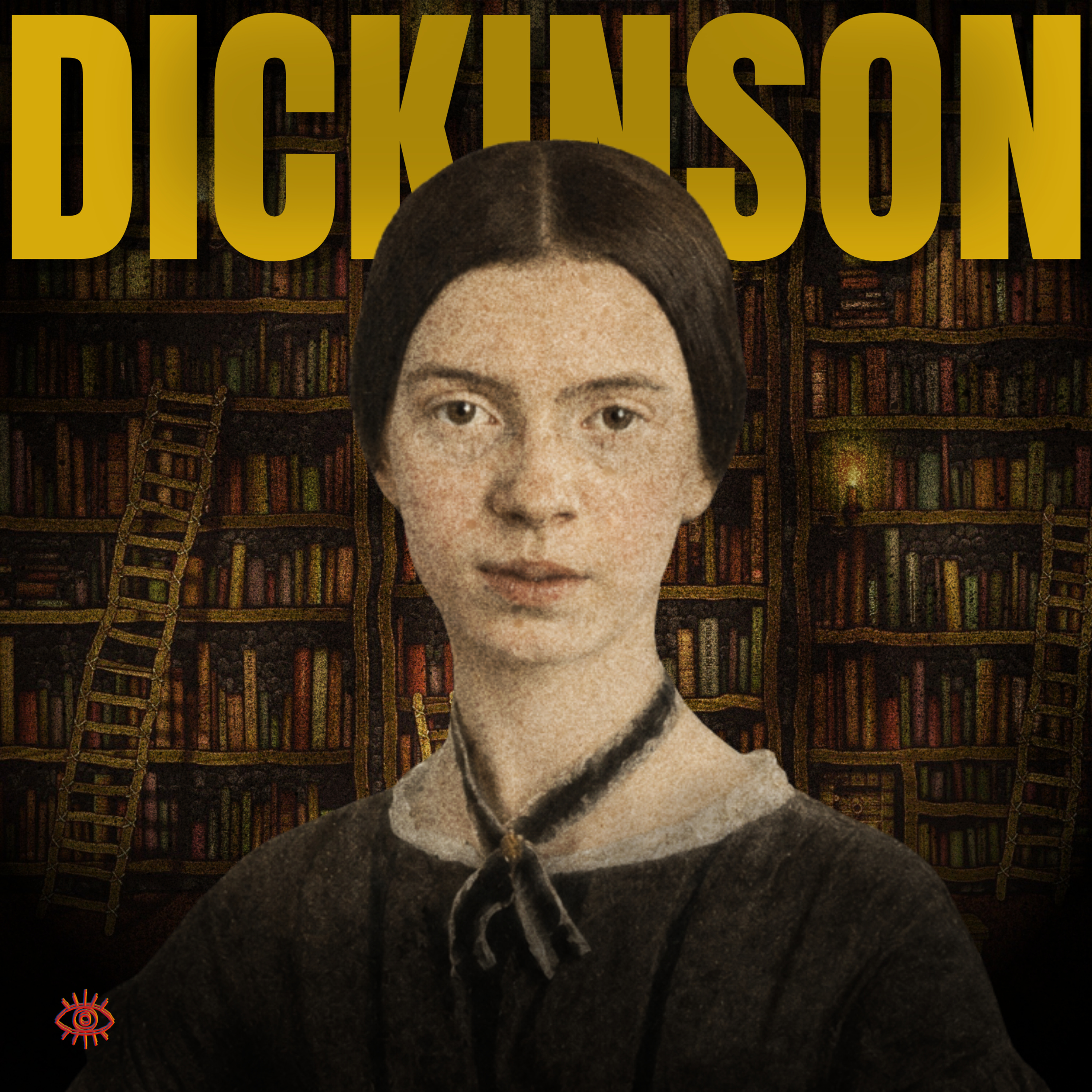 Why the World Called Her Mad | Emily Dickinson Philosophy for Sleep | She died unknown, leaving eighteen hundred poems in a locked box. This is the mind that hid them.In May of 1886, a woman almost nobody knew died in a brick house in Amherst, Massachusetts, and her sister found a locked box holding the largest secret in American literature.This episode begins inside that discovery and follows the whole life that produced it, the girl who would not stand for Christ at Mount Holyoke, the white-dressed woman who chose a locked door as a vocation, the letters that built a world she refused to enter, and the astonishing war years when she wrote nearly a poem a day while her eyesight failed.We read the great poems slowly and completely, the carriage ride with Death, the fly at the deathbed, the loaded gun, the wild nights and the great renunciation, the slant of winter light, and we end with the editors, lovers, and rivals who fought for decades over her manuscripts, and with the question of why every age remakes her and none has finished with her.Please listen only in safe, restful contexts.SUPPORT THE SHOWVote on what comes next: https://www.sleepyphilosophyradio.com/voteBecoming a member keeps these episodes coming and unlocks the members only library of exclusive book summary episodes, a growing shelf of great books read closely and explained in plain language.Subscribe: https://creators.spotify.com/pod/profile/sleepyphilo/subscribe(0:00:00) The Locked Box(0:12:50) The Soul Selects Her Own Society(0:19:21) A Letter Always Feels Like Immortality(0:28:49) Dear Mr. Higginson(0:40:20) Some Keep the Sabbath(0:48:33) The War Years(0:57:46) Publication Is the Auction(1:04:56) The Books She Sewed by Hand(1:13:55) Hymn Meter and the Dash(1:21:49) The Carriage Ride(1:33:45) The Fly in the Room(1:42:07) After Great Pain(1:52:36) Across the Hedge(2:01:49) The Master Letters(2:09:21) Wild Nights(2:15:50) I Cannot Live With You(2:25:50) A Loaded Gun(2:38:18) My Business Is Circumference(2:48:39) A Bird Came Down the Walk(2:57:22) A Certain Slant of Light(3:04:16) The Last Decade(3:13:00) The Editors' War(3:22:47) Why She LastsSleepy Philosophy Radio makes longform, carefully researched philosophy written as a serious essay and paced for rest.All research and writing is done personally. Music by Kevin MacLeod (incompetech.com), licensed under Creative Commons: By Attribution 4.0 License. | — | |
| 6/19/26 | 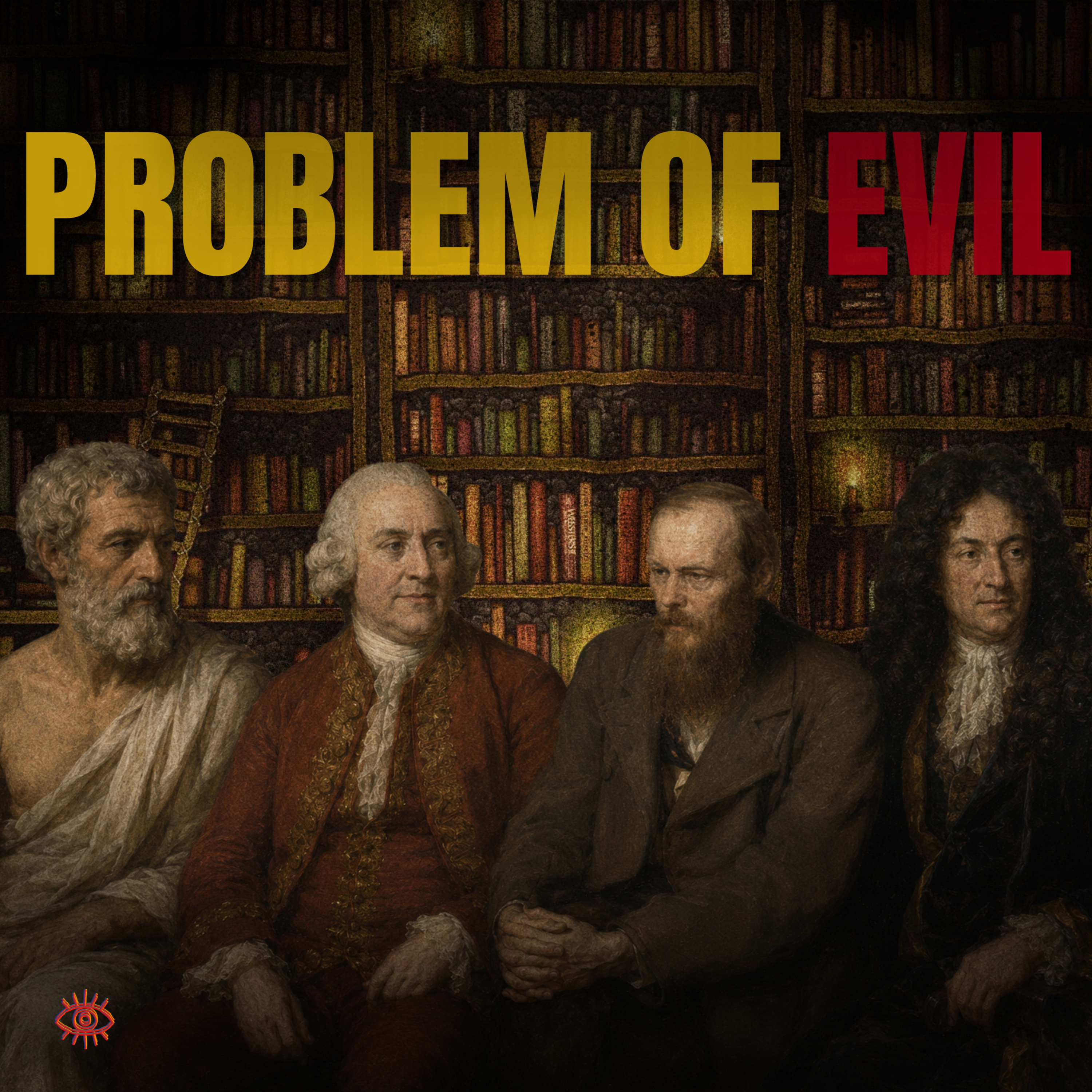 The Problem of Evil: Why God Allows Suffering | An innocent man, a burned fawn, and the hardest question ever asked of God.This episode follows the problem of evil from its oldest telling to its newest defenses. It begins with a man who loses everything in a single afternoon and refuses every easy explanation, then traces the great answers, evil as absence, the best of all possible worlds, and the earthquake and the novel that broke optimism's public standing.From there the argument sharpens into the twentieth century, a charge of outright contradiction, the celebrated defense that answered it, a theodicy of growing souls, and a dying fawn that changed the question from proof to evidence.The second half belongs to skeptical theism, the claim that human minds cannot survey the reasons a God might have, and to the objections that press it, moral paralysis, spreading doubt, horrendous evils, animal pain, and divine silence. The episode ends where the argument now stands, between a rock and a rope. Serious philosophy, told slowly and clearly, for listeners who want real ideas as they drift off.Please listen only in safe, restful contexts.SUPPORT THE SHOWVote on what comes next: https://www.sleepyphilosophyradio.com/voteBecoming a member keeps these episodes coming and unlocks the members only library of exclusive book summary episodes, a growing shelf of great books read closely and explained in plain language.Subscribe: https://creators.spotify.com/pod/profile/sleepyphilo/subscribe (0:00:00) The Man on the Ash Heap (0:13:21) The Riddle (0:19:35) Evil as Absence (0:29:38) The Best of All Possible Worlds (0:41:30) The Morning Lisbon Fell (0:47:30) The Posthumous Bombshell (0:59:38) Returning the Ticket (1:09:32) After Auschwitz (1:15:50) Three Propositions (1:24:38) The Free Will Defense (1:38:34) The Vale of Soul-Making (1:48:13) The Fawn in the Forest (2:00:13) The Hypothesis of Indifference (2:06:36) The Parent and the Child (2:19:14) The Limits of Sight (2:28:21) The Moral Cost (2:39:46) The Skeptical Spiral (2:46:17) Horrendous Evils (2:57:45) Wandering in Darkness (3:06:50) Against Theodicy (3:13:13) Nature Red in Tooth and Claw (3:22:02) The Hidden God (3:28:57) The Rock and the RopeSleepy Philosophy Radio makes longform, carefully researched philosophy written as a serious essay and paced for rest.All research and writing is done personally. Music by Kevin MacLeod (incompetech.com), licensed under Creative Commons: By Attribution 4.0 License.Q7WnROfxZKmRe4Uk2xv7 | — | |
| 6/14/26 | 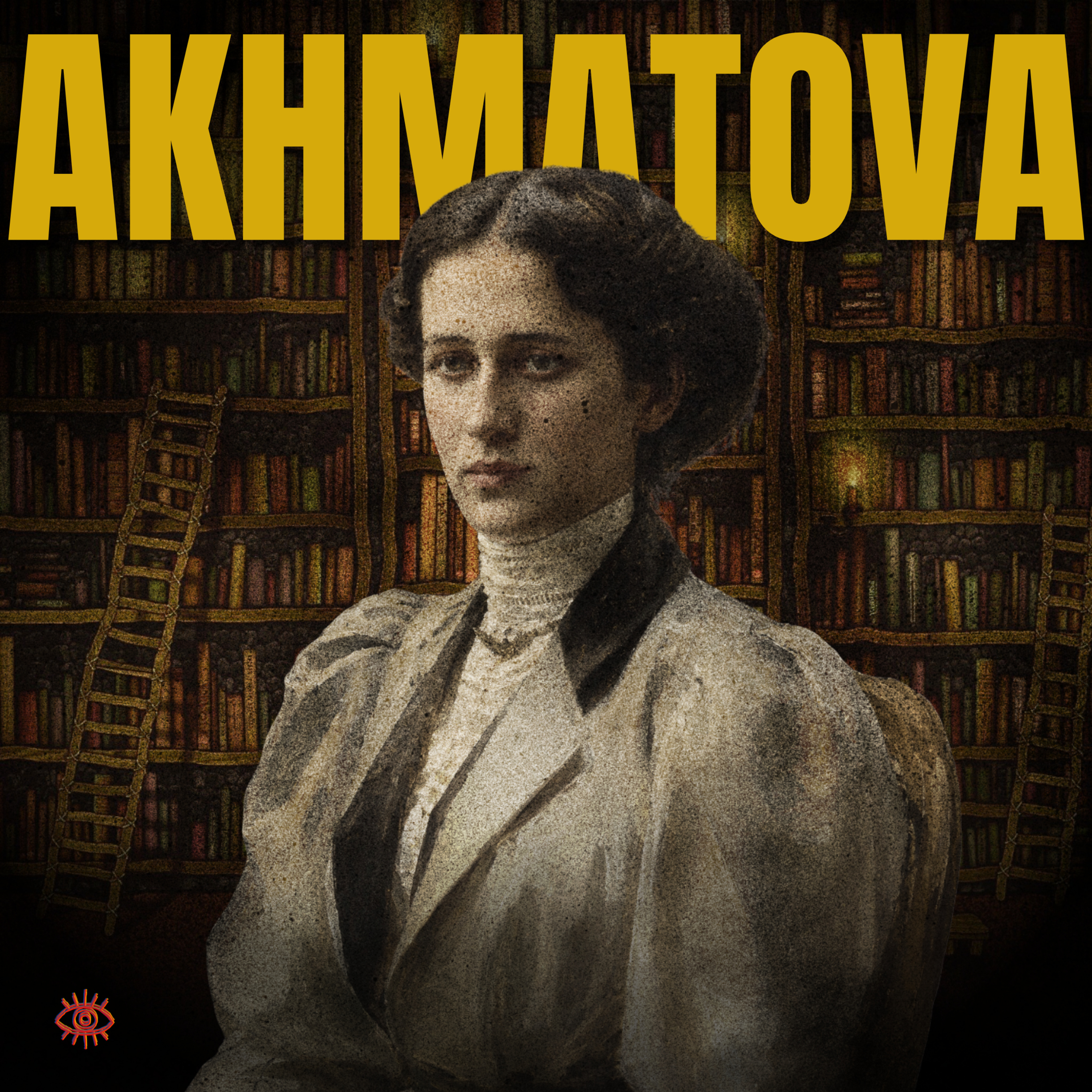 Akhmatova: The Poet Who Outlived the State | She answered terror with a poem too dangerous to write down, and the poem outlived the state that banned it.This episode follows Anna Akhmatova from a childhood in Pushkin's town outside Petersburg, through the cellar cabarets where a new Russian poetry was made, to the love lyrics that made her the most famous woman in Russian literature before she was thirty.Then the century turns. A husband is executed, a son is taken, and an unofficial ban erases her name from print for fifteen years. We trace how a banned poet composed her greatest work without ever writing it down, how a cycle of short poems became the memorial for a generation of the disappeared, and what it means to treat memory itself as a form of resistance.The episode ends among honors that arrived forty years late, a difficult masterpiece three decades in the making, and a bronze figure standing by a river, looking at a prison. Serious philosophy and serious history, told slowly and clearly, for listeners who want real ideas as they drift off.Please listen only in safe, restful contexts.SUPPORT THE SHOWVote on what comes next: https://www.sleepyphilosophyradio.com/voteBecoming a member keeps these episodes coming and unlocks the members only library of exclusive book summary episodes, a growing shelf of great books read closely and explained in plain language.Subscribe: https://creators.spotify.com/pod/profile/sleepyphilo/subscribe(0:00:00) The Woman in the Queue(0:12:50) Pushkin's Town(0:18:51) The Unknown Italian(0:26:52) The Cellar of the Stray Dog(0:37:59) The Glove on the Wrong Hand(0:46:52) Anna of All the Russias(0:52:48) White Flock(0:59:58) The Voice She Refused(1:06:19) August Nineteen Twenty-One(1:16:59) The Unwritten Decade(1:24:58) Fountain House(1:31:14) The Mandelstams(1:40:45) Three Hundredth in Line(1:51:16) Hands, Matches, an Ashtray(1:59:57) Requiem(2:13:12) The Word as Witness(2:19:48) Courage(2:30:38) The Guest from the Future(2:38:41) Half Nun, Half Harlot(2:50:10) The Masquerade(2:59:27) The Box with the Triple Bottom(3:06:07) The Booth at Komarovo(3:15:10) The Monument by the PrisonSleepy Philosophy Radio makes longform, carefully researched philosophy written as a serious essay and paced for rest.All research and writing is done personally. Music by Kevin MacLeod (incompetech.com), licensed under Creative Commons: By Attribution 4.0 License. | — | |
| 6/11/26 | 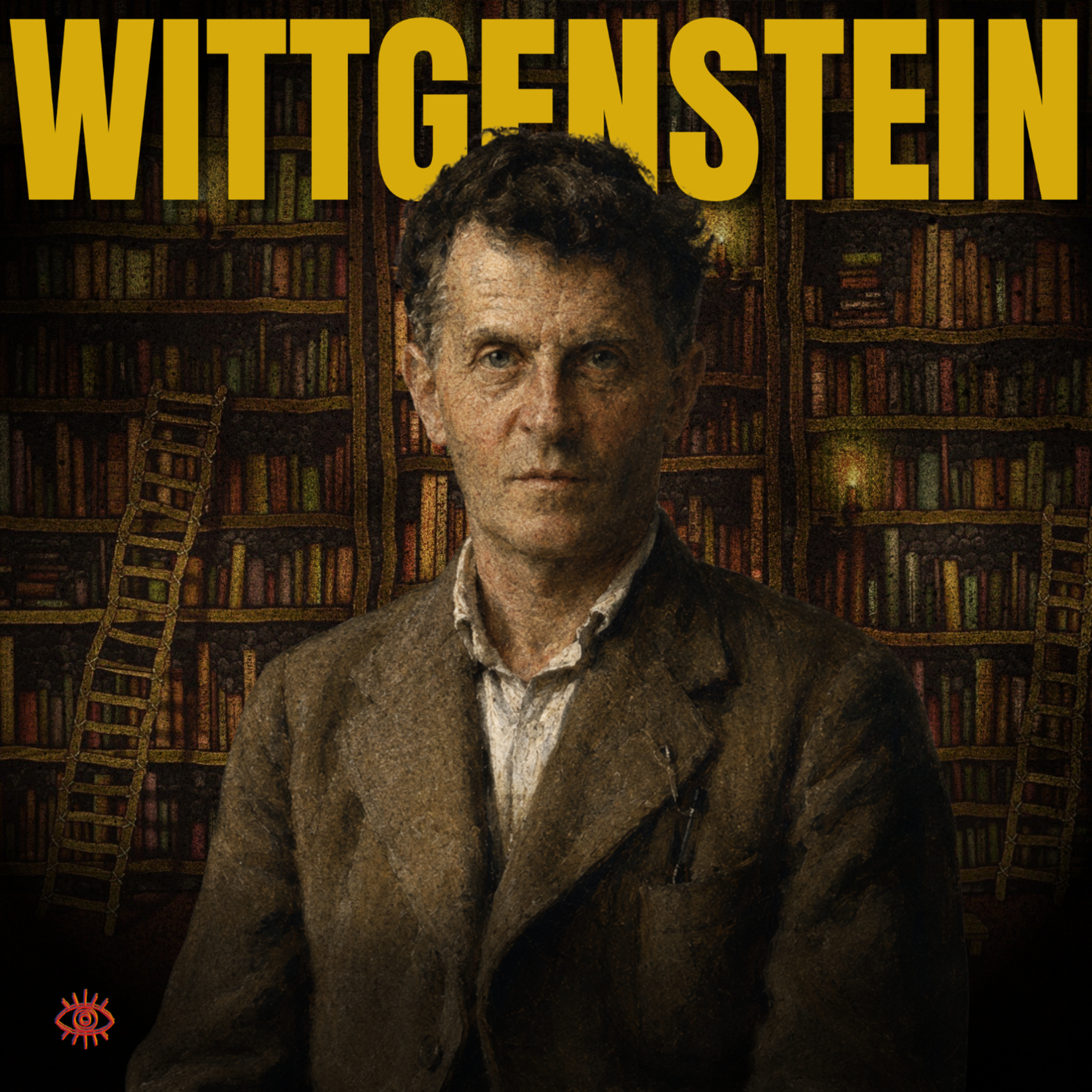 Wittgenstein, the Man Who Ended Philosophy Twice | The richest heir in Vienna gave everything away and kept only the hardest questions ever asked about language.Ludwig Wittgenstein was born into one of the wealthiest families in Europe and died telling his friends he had lived wonderfully, though almost nothing in between looks like happiness.This episode follows the whole arc: the palace in Vienna and the family tragedies, the flight from engineering into logic, the masterpiece written in the trenches of the First World War, and the lost decade he spent teaching village children after declaring philosophy finished.Then the return, the quiet unraveling of his own system, the language games and the forms of life, the beetle in the box, the duck and the rabbit, and the riverbed of certainty he was still mapping two days before the end.Along the way come Russell and Frege, the Vienna Circle's great misreading, Turing arguing about falling bridges, a disputed fireplace poker, and the deathbed sentence that frames it all. Serious philosophy, told slowly and clearly, for listeners who want real ideas as they drift off.Please listen only in safe, restful contexts.SUPPORT THE SHOWVote on what comes next: https://www.sleepyphilosophyradio.com/voteBecoming a member keeps these episodes coming and unlocks the members only library of exclusive book summary episodes, a growing shelf of great books read closely and explained in plain language.Subscribe: https://creators.spotify.com/pod/profile/sleepyphilo/subscribe(0:00:00) A Wonderful Life(0:16:00) The Paradox That Broke Logic(0:23:00) The Book in the Rucksack(0:33:00) A Picture of the World(0:46:00) What Cannot Be Said(0:57:00) The End of Philosophy(1:03:00) The Lost Decade(1:12:00) The Great Misreading(1:19:00) The Return(1:32:00) Philosophy as Therapy(1:41:00) Language Games(1:55:00) Following the Rule(2:05:00) The Beetle in the Box(2:18:00) The Duck and the Rabbit(2:25:00) The Inner and the Outer(2:35:00) The Ceremonial Animal(2:42:00) Inventing Mathematics(2:52:00) The Riverbed(3:05:00) The Walls of the Cage(3:14:00) The Poker and the Confession(3:22:00) The Album(3:30:00) Light in the DarknessSleepy Philosophy Radio makes longform, carefully researched philosophy written as a serious essay and paced for rest.All research and writing is done personally. Music by Kevin MacLeod (incompetech.com), licensed under Creative Commons: By Attribution 4.0 License. | — | |
| 3/18/26 |  On Sartre, Nothingness, and the Life You Pretend to Live | Philosophy for Sleep | Vote on what comes next: https://www.slphilosophyradio.com/voteYou are condemned to be free. Fall asleep to the complete philosophy of Jean-Paul Sartre.There is no human nature to fall back on, no God-given essence waiting to unfold, no script written in advance. You exist first, and only then do you become what you make of yourself. If that thought fills you with dread, you are beginning to understand Jean-Paul Sartre.This extended episode traces the full arc of Sartre’s thought, from his early encounter with phenomenology in prewar Paris, through the monumental arguments of Being and Nothingness, to his later engagement with Marxism and political commitment. Along the way, we examine his key concepts in careful detail: the distinction between being-in-itself and being-for-itself, the experience of radical freedom, the temptation of bad faith, and the difficult project of authentic existence.Sartre refused the Nobel Prize, broke with his closest friends over political conviction, and never stopped insisting that we are responsible for everything we become. This episode takes his challenge seriously.Please listen only in safe, restful contexts.(0:00:00) Paris, War, and the Making of an Existentialist(0:21:39) Phenomenology and the Discovery of Consciousness(0:45:22) Being and Nothingness(1:07:29) Existence Precedes Essence(1:28:22) Bad Faith and the Flight from Freedom(1:49:00) Authenticity and the Acceptance of Freedom(2:10:54) The Other and Intersubjectivity(2:31:44) Nausea, Contingency, and the Absurd(2:53:15) Engagement, Politics, and Existential Marxism(3:15:44) Legacy and the Existentialist MovementSuggested Reading:Existentialism Is a Humanism by Sartre: https://amzn.to/40fzTKbBeing and Nothingness by Sartre (Richmond translation): https://amzn.to/47iYPUMNo Exit and Three Other Plays by Sartre: https://amzn.to/47yW6XoAt the Existentialist Cafe by Sarah Bakewell: https://amzn.to/4uhwhoDSartre: A Guide for the Perplexed by Gary Cox: https://amzn.to/3OO09c9Camus and Sartre by Ronald Aronson: https://amzn.to/4buTFHIThese are affiliate links. Purchasing through them helps support the show at no extra cost to you.All research and writing is done personally. Subscribe to Sleepy Philosophy Radio for more longform philosophy. | — | |
| 3/13/26 |  Zoroastrianism | The Religion That Invented Good and Evil | Vote on what comes next: https://www.slphilosophyradio.com/voteWhere did the idea of good and evil actually come from?Before Christianity, before Judaism, before almost any tradition we can name, a priest on the ancient Iranian steppe looked at the world and saw a moral structure written into reality itself. His name was Zarathustra, and his vision became one of the most influential religious traditions most people have never heard of.This episode traces the full arc of Zoroastrian thought, from the passionate hymns of the Gathas through the cosmic dualism of Ahura Mazda and Angra Mainyu, the revolutionary ethics of free will and the goodness of the material world, the astonishing influence this tradition exercised on Judaism, Christianity, and Islam, and the living Zoroastrian communities that carry this ancient fire into the present.(0:00:00) Before Good and Evil Had Names(0:37:50) The Architecture of the Cosmos(1:16:19) The Choice That Makes the World(1:53:45) The Longest Shadow(2:32:22) Fire That Does Not Go OutSuggested Reading:Zoroastrians: Their Religious Beliefs and Practices by Mary Boyce: https://amzn.to/4ugB75AZoroastrianism: An Introduction by Jenny Rose: https://amzn.to/3Pm2CKQThe Spirit of Zoroastrianism edited by Prods Oktor Skjaervo: https://amzn.to/3OWvIAmThus Spoke Zarathustra by Friedrich Nietzsche: https://amzn.to/3OM97GOFollow Sleepy Philosophy Radio for more longform philosophy.Support the channel: https://creators.spotify.com/pod/profile/sleepyphilo/subscribe | — |
Showing 6 of 6
Sponsor Intelligence
Sign in to see which brands sponsor this podcast, their ad offers, and promo codes.
Chart Positions
9 placements across 9 markets.
Chart Positions
9 placements across 9 markets.