Social Currency with Sammi Cohen
On Social Currency, Sammi Cohen unpacks the stories that are shaping business, culture and the intersection of the two. From boardrooms to Instagram trends, Sammi speaks with business leaders to connect the dots between ...
Insights from recent episode analysis
On the show
- Suzy Welch1 ep
- Jay Luchs1 ep
- Shreya Murthy1 ep
Also: Seth Goldman, Nayeema Raza, Reid Hoffman, Julie Smolyansky, Steven Schwartz, Rebecca Hessel Cohen, Eugene Remm, Rick Caruso, Harley Finkelstein, Todd Kahn, Matilda Djerf, Jennifer Wong, Laney Crowell, Haley Sacks, Jamie Siminoff, Peter Semple, Gary Vaynerchuk
Audience Interest
Podcast Focus
Publishing Consistency
Insights are generated by CastFox AI using publicly available data, episode content, and proprietary models.
Most discussed topics
Brands & references
Total monthly reach
Based on the show's feed history.
Built from
By chart position
- 🇵🇭PH · Business#4711K to 140K
- Per-Episode Audience
Est. listeners per new episode within ~30 days
11K to 140K🎙 Weekly cadence·120 episodes·Last published 1w ago - Monthly Reach
Unique listeners across all episodes (30 days)
23K to 280K🇺🇸71%🇵🇭29% - Active Followers
Loyal subscribers who consistently listen
13K to 154K
Market Insights
Platform Distribution
Reach across major podcast platforms, updated hourly
Total Followers
—
Total Plays
—
Total Reviews
—
* Data sourced directly from platform APIs and aggregated hourly across all major podcast directories.
| Date | Episode | Topics | Guests | Brands | Places | Keywords | Sponsor | Length | |
|---|---|---|---|---|---|---|---|---|---|
| 10/13/26 |  Alpha School: Two-Hour Learning, the $150K Founders School and the Future of AI Education | What if kids could finish a full day of academics in just two hours? That’s the promise behind Alpha School, the AI-powered private school claiming its students learn 2.6 times faster than their peers and graduate with an average SAT score above 1470. Today, Sammi takes you inside the Alpha School story. It began in 2014 as Emergent Academy in Austin, founded by MacKenzie Price and Brian Holtz, and today it is backed by billionaire Trilogy founder Joe Liemandt. Sammi breaks down how the model works, from adaptive learning software and $100,000-a-year “guides” to afternoons spent on public speaking, entrepreneurship and life skills. She also looks at Founders School, Alpha’s $150,000-a-year high school that promises students will build a business generating $1 million in profit by graduation or get their tuition refunded. Then, Sammi digs into the criticism: regulatory pushback in New York and Pennsylvania, concerns about screen-based instruction, extensive student monitoring, equity and access, and the lack of independent research behind Alpha’s headline numbers. So is Alpha School the future of education, or a high-priced experiment that’s still waiting on proof? Follow Sammi Cohen on Instagram Subscribe to the Social Currency newsletter Here’s what Sammi covers today: 00:00 Alpha School’s Bold Promise 02:47 The Origin Story of Alpha School 03:32 The Pitch Behind Two-Hour Learning 04:15 How Alpha School Actually Works 04:36 Guides vs. Teachers and $100K Salaries 05:03 Inside a Typical Alpha School Day 05:51 Does It Actually Work? Alpha’s Test Score Claims 06:36 The Missing Independent Evidence 07:30 Why Parents Are Drawn to Alpha 08:16 Paying Up to $75,000 a Year 08:53 What Alpha Parents Told Sammi 09:14 Founders School and the $1 Million Business Guarantee 11:51 Inside the Founders School Day 12:22 The $150,000 Tuition and Refund Fine Print 13:08 What Founders School Reveals 13:33 The Five Big Criticisms 13:43 Regulatory Friction 14:33 The Screen-Based Learning Debate 15:16 Surveillance and Student Privacy 15:46 Equity and Access 16:35 The Question of Proof 16:55 What Alpha Is Really Selling 17:23 The Big Takeaway 17:58 The Risk of Measuring Everything 18:24 Can Education Be Optimized? 19:06 How to Show Social Currency Some Love Learn more about your ad choices. Visit megaphone.fm/adchoices | 20m 56s | ||||||
| 10/6/26 |  Natalie Holloway (Bala) on Bootstrapping, Shark Tank and Dupe Culture | Bala started with $5,000, a sketch and a yoga class that wasn't hard enough. Today, the brand behind the bangles on every workout influencer's wrists is growing 50% year over year with just 12 full-time employees. This week, Sammi sits down with Bala co-founder and CEO Natalie Holloway, author of Bootstrap Empire, to unpack how she and her husband Max went from burnt-out ad agency employees at 72andSunny to building one of fitness's most recognizable brands. Natalie shares the Kickstarter number that would have made her walk away, why she walked into Shark Tank asking for $400K for 10% and walked out with $900K for 30%, and what happened when the episode aired just two weeks before the world shut down. Then, Natalie opens up about the post-COVID bust that forced Bala to lay off nearly its entire team, the spending mistakes she'd never repeat, and why she chose small business loans over venture capital to keep control of the company. Later, she breaks down the reality of dupe culture, from navigating patents across countries to confronting retailers who sell knockoffs next to Bala, and explains why the brand created Move by Bala for its upcoming Walmart launch. Plus, Natalie shares how Bala plans to become the "female Rogue," the repeat purchase challenge of selling products people keep for years, why she walked away from a New York City fitness studio the night before signing the lease, and how she and Max keep work and marriage separate. Follow Sammi Cohen on Instagram Subscribe to the Social Currency newsletter Check out Natalie's book Bootstrap Empire Here's What Sammi Covers with Natalie: 00:00 Natalie Holloway's Social Currency 05:45 How Advertising Prepared Natalie to Build a Brand 07:05 Why You Can't Be Married to an Idea 08:05 The Origin Story of Bala Bangles 11:35 From Account Person to Product Designer 13:10 Launching Bala With $5,000 14:20 The Kickstarter Number That Would Have Made Her Quit 15:40 Climbing "Cringe Mountain" 19:55 Inside Bala's Shark Tank Deal 21:55 What Happens After a Shark Tank Deal Closes 22:20 Airing Two Weeks Before COVID 23:55 The Post-COVID Bust and Laying Off the Team 26:10 What Natalie Would Have Done Differently 29:10 Why Bala Chose Loans Over Venture Capital 32:00 Fighting Dupes and Patent Infringement 34:15 When Your Retailer Sells Your Dupe 37:10 Do Dupes Actually Make Bala Bigger? 37:55 Move by Bala and the Walmart Launch 39:00 Growing 50% a Year With 12 Employees 40:15 Building the C-Suite 41:00 Bala on TikTok Shop 42:40 What Lululemon Is Getting Wrong 44:15 Becoming the Female Rogue 46:10 Solving the Repeat Purchase Problem 48:00 Why Bala Walked Away From a NYC Studio 50:10 Lightning Round 51:20 Natalie's 30-Minute Meeting Rule 52:40 Social Currency Corner: AI in Marketing 54:50 Listener Question: Running a Business With Your Spouse Learn more about your ad choices. Visit megaphone.fm/adchoices | 58m 45s | ||||||
| 9/29/26 |  Peloton: First Profit, the Spotify Deal and Why the Stock Still Fell | For the first time in its history as a public company, Peloton turned a profit. After years of billion-dollar losses, the fitness brand posted $63 million in net income this fiscal year. Just three years ago, it was a punchline. Today, Sammi unpacks how Peloton went from pandemic darling to cautionary tale and back again. She revisits the crash that wiped out $40 billion in market value, founder John Foley's exit, and the Sex and the City reboot that turned a Peloton bike into a plot device. Then, she breaks down the turnaround strategy led by CEO Peter Stern, the former Apple executive who built his career on subscriptions, not hardware. Sammi walks through the bets that got Peloton back in the black: aggressive price increases and cost cuts, a viral ad campaign starring Heated Rivalry's Hudson Williams, a global partnership with Spotify, and a new push into commercial gyms. Plus, she explains why the stock dropped more than 11% on the day Peloton announced its historic profit, and what that says about whether Peloton is really back. Follow Sammi Cohen on Instagram Subscribe to the Social Currency newsletter Here's What Sammi Covers Today: 00:00 Peloton's First Profitable Year 01:50 Partner Message - Mercury 02:50 From $50 Billion to Punchline 03:45 John Foley's Exit and the 87% Wipeout 04:15 The Pandemic Bubble Cautionary Tale 04:55 Enter Peter Stern, Peloton's Apple Hire 05:45 The Four-Pillar Turnaround Plan 06:15 Price Hikes and Cost Cuts 07:30 The Heated Rivalry Ad That Went Viral 08:15 The Spotify Partnership 08:58 Peloton's Commercial Gym Bet 09:55 The $63 Million Turnaround 10:25 Partner Message -Mercury 12:45 Why the Stock Fell Anyway 13:15 A Shrinking Subscriber Base 14:40 How to Show Social Currency Some Love Learn more about your ad choices. Visit megaphone.fm/adchoices | 15m 44s | ||||||
| 9/22/26 | 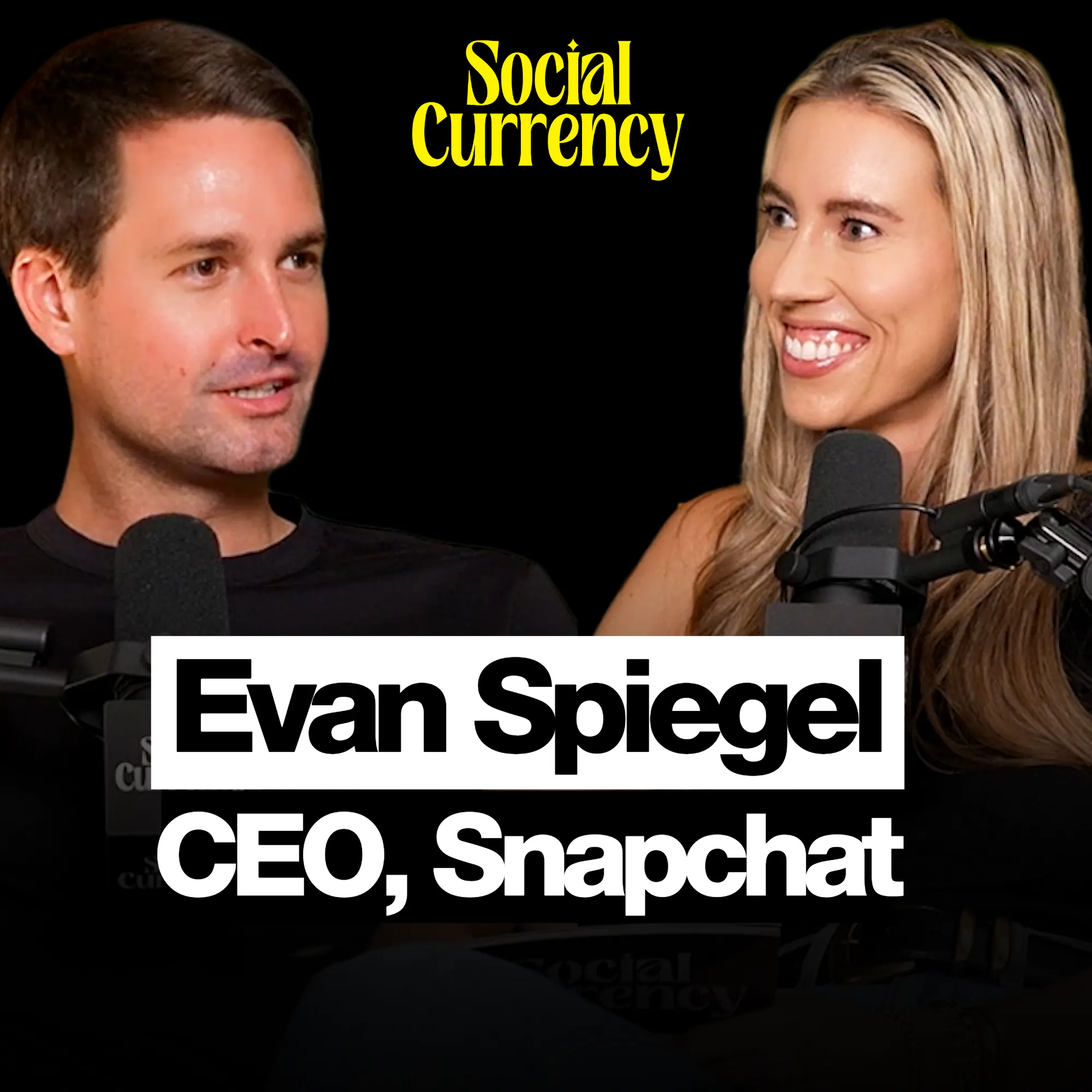 Evan Spiegel (Snap) on AR Glasses, Getting Copied by Big Tech and the Social Media Age-Gating Debate | Nearly a billion people open Snapchat every month, and almost half a billion use it every single day. Fifteen years after Evan Spiegel and his co-founders launched the app, formerly known as Peekaboo, out of a Stanford dorm room, Snap is betting its next decade on something you wear on your face. This week, Sammi sits down with Snap co-founder and CEO Evan Spiegel to talk through the evolution of the company, how he thinks about being one of the most copied products in social media, and Specs, the $2,195 AR glasses more than a decade in the making. He explains why he sees the copying as a compliment to great design, why hardware is a much harder bet for competitors to follow than software, and what convinced him a decade ago that computing needed to move off screens and into the world. Evan also breaks down the viral meme that introduced Specs to a mainstream audience, how the company thinks about privacy on a device built to record, and why Spotlight, Snap's video feed, has become one of its fastest growing products by rewarding authenticity over AI generated content. He shares his prediction for what Snap looks like in 2036 and his take on the ongoing debate over minimum ages for kids on social media. Toward the end, Evan gets personal, talking about parenting four kids in a world full of screens, what his wife Miranda Kerr has taught him about skincare, and the story behind his family's donation to an organization that relieves medical debt. Follow Sammi Cohen on Instagram Subscribe to the Social Currency newsletter Here's What Sammi Covers with Evan: 00:00 Evan Spiegel's Social Currency 03:42 How Snapchat Started as "Peekaboo" 05:57 The Insight That Turned It Into a Messaging App 08:47 Being Social Media's Most Copied Product 11:06 What Evan Still Signs Off On at Snap 12:32 The Decade-Long Bet on AR Glasses 16:05 The Timeline for Mass Adoption of Specs 17:05 Evan's Live Reaction to Sammi Trying Specs 20:47 Why Specs Are Priced Like a Computer 22:29 The Viral Meme That Introduced Specs to the World 23:58 How Specs Are Designed Around Privacy 27:35 Why Spotlight Is One of Snap's Fastest-Growing Products 33:00 Evan's Prediction for Snap in 2036 37:42 Evan's Take on the Social Media Age-Gating Debate 41:22 Parenting Four Kids in a World Full of Screens 41:29 What Miranda Kerr Taught Him About Skincare 43:31 The Story Behind the Undo Medical Debt Donation 46:03 Lightning Round 49:37 Listener Question: Staying Motivated Building Hardware Learn more about your ad choices. Visit megaphone.fm/adchoices | 52m 55s | ||||||
| 9/15/26 | Jim McKelvey (Square) on Beating Amazon, The Innovation Stack and Fixing FDA Drug Trials | How does a scrappy startup beat Amazon when Amazon copies your product, undercuts your price and slaps its own name on it? According to Square co-founder Jim McKelvey, you don't. Except, once in a while, someone does. This week Sammi revisits one of her favorite conversations ever recorded for Social Currency: her sit-down with Jim McKelvey, the artist-turned-entrepreneur who co-founded Square (now Block) with Jack Dorsey. Jim opens with the story of how he once stripped down in a trade association's office just to get a meeting, and explains why getting someone's attention is always the real first step in any pitch. He breaks down why he intentionally designed Square's original card reader to work poorly, and how that "flaw" turned millions of small business owners into free advertisers for the brand. Then, Jim tells the almost unbelievable story of how Square survived Amazon's attempt to copy and kill its business with Amazon Register, why he studied history to understand how rare that survival really was, and how a conversation with Southwest's Herb Kelleher led him to write his book, The Innovation Stack. Jim also opens up about his years as an independent director of the Federal Reserve Bank of St. Louis, what he learned living through zero interest rates, the pandemic and the Silicon Valley Bank collapse, and how the role reshaped his politics. Plus, he explains why his media venture Invisibly failed to save journalism despite cracking the monetization problem, and details his newest venture, Fast Trials, an attempt to slash the cost of FDA drug trials so more life-saving drugs can make it to market. Follow Sammi Cohen on Instagram Subscribe to the Social Currency newsletter Read Jim McKelvey's blog and check out his book, The Innovation Stack Here's What Sammi Covers with Jim: 00:00 Jim McKelvey's Social Currency 02:03 Why Sammi Is Revisiting This Episode 05:09 The Striptease That Landed a Six-Figure Deal 08:00 Why Getting Attention Comes Before Any Pitch 11:01 Why the Square Reader Was Designed to Not Work Well 14:23 Respecting Your Audience's Attention 17:56 Why Jim Doesn't Use Social Media 19:00 The Power of the Pause 20:22 The Real Origin Story of Square 24:32 How Square Survived Amazon's Attempt to Kill It 28:04 The Commandment From Herb Kelleher That Became a Book 32:11 Why the Rules of Innovation Are Different 36:27 The Hardest Part of Doing Something New 37:28 Serving as an Independent Director of the Federal Reserve 40:22 What the Fed Taught Jim About Political Neutrality 42:19 The Allergic Response to Ideas That Don't Fit 43:22 Why Invisibly Failed to Save Journalism 47:04 The Monetization Model That Actually Worked 49:26 Jim's New Venture: Fast Trials 54:31 Advice for Building in Regulated Industries 58:08 Jim's Don't-Do List 59:48 Social Currency Corner: Tipping Culture 01:02:20 A Listener Question on the Future of Fintech Learn more about your ad choices. Visit megaphone.fm/adchoices | 1h 07m 40s | ||||||
| 9/9/26 | ice cream lawsuittrade dress+4 | — | Van LeeuwenRebel Creamery+2 | — | ice cream lawsuitVan Leeuwen+7 | Mercury | 14m 15s | ||
| 9/9/26 | live streamingcommunity+3 | Dan Clancy | TwitchNASA+2 | — | Twitchlive streaming+6 | — | 1h 09m 02s | ||
| 8/25/26 | restaurant turnaroundmarketing strategy+3 | — | Triple DipperNashville Hot Mozzarella+5 | Maggiano's Little Italy | Chili'sKevin Hochman+4 | — | 16m 43s | ||
| 8/18/26 | AI commercereal estate+4 | Ankur Jain | BiltGoogle+1 | — | BiltAI commerce+4 | — | 55m 56s | ||
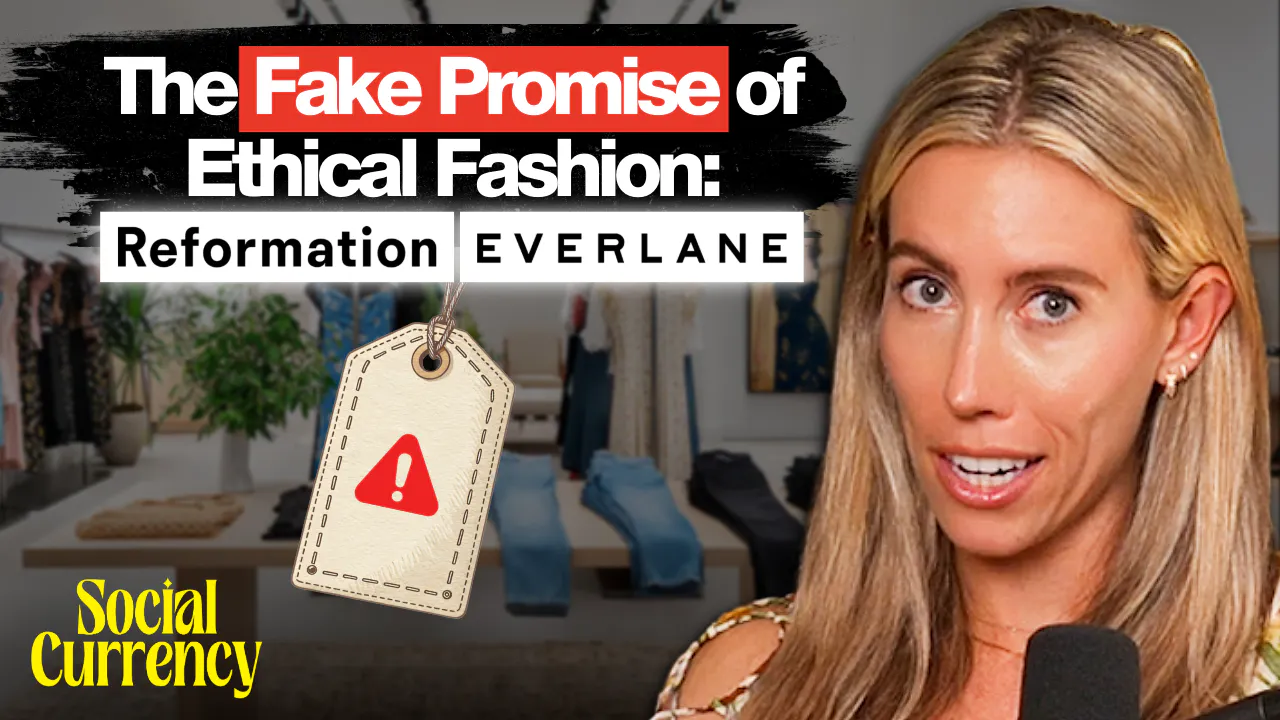
| 8/11/26 | ethical fashionbusiness+4 | — | EverlaneReformation+2 | — | EverlaneReformation+7 | BiltCODE | 15m 17s | ||
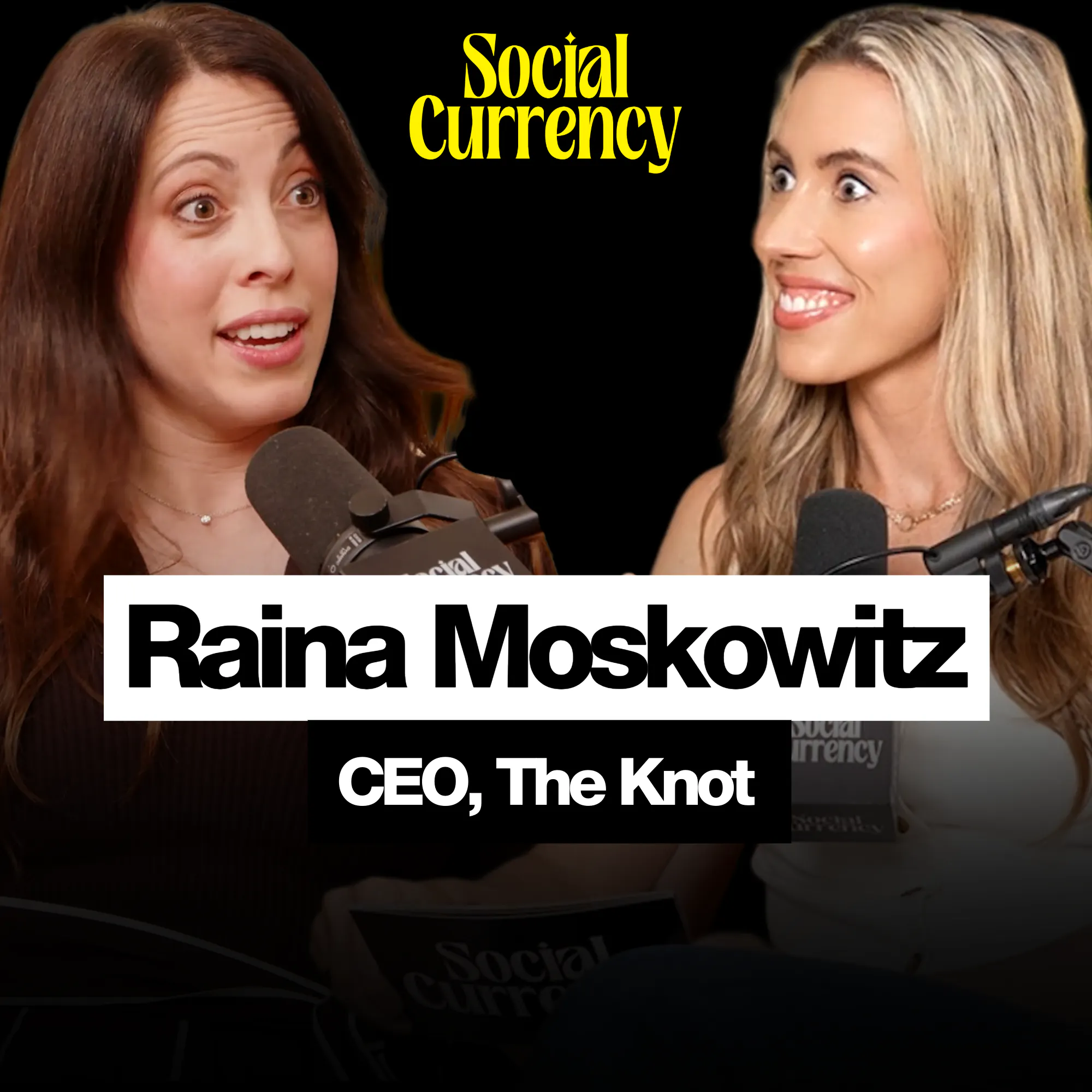
| 8/4/26 | wedding industrybusiness resilience+3 | Raina Moskowitz | ChatGPTThe Knot+3 | U.S. | wedding economyThe Knot+5 | — | 59m 46s | ||
| 7/28/26 | brand buildingmarketing strategies+4 | Kory Marchisotto | e.l.f. BeautyRhode | Cannes Lions FestivalTwitch+1 | e.l.f. BeautyKory Marchisotto+6 | — | 1h 05m 51s | ||
| 7/21/26 | career progressionretail strategy+3 | Jennifer Wong | Aritzia | — | AritziaJennifer Wong+5 | — | 52m 45s | ||
| 7/14/26 | clean beautyfundraising+3 | Laney Crowell | Saie BeautySephora+1 | — | Saie Beautyfundraising+3 | — | 1h 00m 29s | ||
| 7/7/26 | money psychologyfinancial education+4 | Haley Sacks | Mrs. Dow JonesSocial Currency+1 | — | money psychologywealth hacks+5 | — | 1h 06m 11s | ||
| 6/30/26 | entrepreneurshipbusiness challenges+4 | Jamie Siminoff | RingAmazon+1 | — | RingAmazon acquisition+5 | MercuryCODE | 1h 07m 32s | ||
| 6/23/26 | Gen Zfashion resale+5 | Peter Semple | DepopeBay+2 | — | DepopGen Z+7 | MercuryCODE | 1h 10m 38s | ||
| 6/16/26 | social mediaAI+5 | Gary Vaynerchuk | VaynerXVeeFriends | — | digital gold rushinterest media+5 | MercuryCODE | 57m 43s | ||
| 6/9/26 | creator-led brandsentrepreneurship+4 | Matilda Djerf | Djerf Avenue | — | Djerf AvenueMatilda Djerf+5 | MercuryCODE | 1h 06m 18s | ||
| 6/2/26 | restaurant economicshospitality industry+4 | Eugene Remm | CATCH Hospitality GroupCATCH+3 | — | hospitalityrestaurant+7 | — | 51m 39s | ||
| 5/26/26 | entrepreneurshipreal estate+4 | Rick Caruso | DisneyPalisades Village+2 | Los AngelesCalifornia+2 | Rick Carusoentrepreneurship+7 | — | 1h 02m 26s | ||
| 5/19/26 | AI Shopping AgentsMerit-Based Commerce+3 | Harley Finkelstein | Shopify | — | AIe-commerce+5 | MercuryCODE | 1h 08m 59s | ||
| 5/12/26 | brand turnaroundGen Z marketing+4 | Todd Kahn | TabbyBrooklyn+1 | North America | CoachTodd Kahn+6 | — | 58m 48s | ||
| 5/5/26 | fashion brandentrepreneurship+4 | Rebecca Hessel Cohen | LoveShackFancyCosmopolitan+2 | — | LoveShackFancyfashion business+5 | MercuryCODE | 1h 09m 49s | ||
| 4/28/26 | future of workentrepreneurship+3 | Steven Schwartz | WhopPeter Thiel | — | Whopunicorn+5 | — | 56m 20s | ||
| 4/21/26 | career developmentdecision making+3 | Suzy Welch | New York University Stern School of BusinessHarvard Business Review | — | getting fired10/10/10 method+3 | Values BridgeSOCIALCURRENCY | 1h 00m 32s | ||
| 4/14/26 | real estateretail strategy+4 | Jay Luchs | NewmarkErewhon+1 | Los AngelesRodeo Drive+1 | real estateretail+5 | — | 51m 02s | ||
| 4/7/26 | Gen Zsocial apps+4 | Shreya Murthy | PartifulApple+1 | — | PartifulGen Z+6 | — | 1h 02m 46s | ||
| 4/3/26 | beverage industryentrepreneurship+3 | Seth Goldman | Coca-ColaHonest Tea+2 | — | Honest TeaCoca-Cola+6 | — | 45m 03s | ||
| 3/31/26 | podcastingmedia landscape+4 | Nayeema Raza | The New York TimesSmart Girl Dumb Questions | — | podcast launchmedia shift+4 | — | 1h 15m 13s | ||
| 3/27/26 | career risksleaving corporate+4 | — | TikTokJuicero | USC | career riskscorporate+5 | — | 16m 51s | ||
| 3/24/26 | artificial intelligencecareer development+3 | Reid Hoffman | SuperagencyLinkedIn+1 | — | AIhumanity elevator+3 | — | 31m 25s | ||
| 3/20/26 | e.l.f. Beautymarketing strategies+3 | — | e.l.f. BeautyTikTok+1 | — | e.l.f. BeautyTarang Amin+3 | — | 12m 36s | ||
| 3/17/26 | leadershipfood industry+4 | Julie Smolyansky | kefirGLP-1s+2 | — | kefirleadership+5 | — | 59m 49s | ||
| 3/13/26 | successful female foundersfounder habits+4 | — | Tower 28Kojo+4 | — | female foundersentrepreneurial habits+5 | — | 14m 35s | ||




Showing 35 of 120
Pitch Fit is a Pro feature
See how bookable this show is for guests, which brands already advertise, the per-episode ad value, and the best-fit guest and sponsor profile. The numbers are blurred on the free plan.
How readily this show books outside guests like you.
How proven this show is for host-read sponsorships.
For Guests
ProFor Advertisers
ProUpgrade to Pro to unlock guest cadence, sponsor categories, fit scores, and per-episode ad value for this show.
Similar Audience Demographics
Podcasts that attract a similar listener profile