

Insights from recent episode analysis
Audience Interest
Podcast Focus
Publishing Consistency
Platform Reach
Insights are generated by CastFox AI using publicly available data, episode content, and proprietary models.
Total monthly reach
Estimated from 2 chart positions in 2 markets.
By chart position
- 🇳🇱NL · Natural Sciences#1991K to 10K
- 🇨🇭CH · Natural Sciences#151500 to 3K
- Per-Episode Audience
Est. listeners per new episode within ~30 days
1.1K to 9.1K🎙 Weekly cadence·150 episodes·Last published 10mo ago - Monthly Reach
Unique listeners across all episodes (30 days)
1.5K to 13K🇳🇱77%🇨🇭23% - Active Followers
Loyal subscribers who consistently listen
450 to 3.9K
Market Insights
Platform Distribution
Reach across major podcast platforms, updated hourly
Total Followers
—
Total Plays
—
Total Reviews
—
* Data sourced directly from platform APIs and aggregated hourly across all major podcast directories.
On the show
Recent episodes
Advancing Regenerative Practices in Ukraine
Aug 11, 2025
Unknown duration
Precision Agriculture For Soil Health In Argentina
Jul 30, 2025
Unknown duration
The Pursuit of Regenerative Potatoes in Canada
Jul 15, 2025
Unknown duration
Preventing Erosion and Boosting Fertility in China
Jul 3, 2025
Unknown duration
Soil Health and Biodiversity on a Costa Rican Coffee Farm
Jun 17, 2025
Unknown duration
Social Links & Contact
Official channels & resources
Official Website
Login
RSS Feed
Login
| Date | Episode | Description | Length | ||||||
|---|---|---|---|---|---|---|---|---|---|
| 8/11/25 |  Advancing Regenerative Practices in Ukraine | Fertile soil is something Ukraine has always been known for. But wind and water erosion are causing a soil loss of approximately 15 tons per hectare every year. Today we’re joined by Oleksandr, a farmer in the Kiev Region of Ukraine, and Syngenta’s Valeriy Dubrovin to discuss how farmers are advancing regenerative practices even in this current challenging time for the country. “ In the Ukraine, with the (most fertile) soils in the world, this topic should be number one in agriculture to keep our soil health to give these soils for (future) generations.” - Valeriy Dubrovin This is a fascinating discussion about how they’re using practices and technology to improve soil health. Oleksandr farms about three thousand hectares in the Kiev region of Ukraine. He grows sunflower, corn, barley, wheat, beans, sugarbeet and quite a bit of livestock on his operation. He’s been farming since 1995 and has implemented reduced tillage practices and incorporated manure on his operation to try to fight erosion and improve his soil health. And also joining us is Valeriy Dubrovin. Valeriy is the soil health and carbon farming manager at Syngenta located in Ukraine. He’s been with the company 11 years now and his role is to improve services and perform training for farmers like Oleksandr on soil health. And one really cool program he’s working on uses INTERRA© Scan Technology. Valeriy and Oleksandr also speak candidly about what’s happening in Ukraine today and what it has been like to try to farm and build healthier soils during such a challenging time for the country. They join us via an interpreter, Kseniia. This Week on Soil Sense: Meet Oleksandr, a large-scale farmer in UkraineDiscover some of the soil health challenges in the Ukraine, and what farmers are doing to deal with thoseHear how tools like INTERRA© Scan Technology are helping farmers improve soil healthUnderstand how farmers and their advisors are continuing to operate their farms and build their soil health during extremely difficult times for the countryListen to the full season here: https://www.syngenta.com/agriculture/sustainable-agriculture/soil-health/soil-sense-podcast This season of the Soil Sense podcast is brought to you by Syngenta. If you are interested in what soil health looks like in practice and on the farm, please subscribe and follow this show on your favorite podcast app, and leave us a rating and review while you’re there!The Soil Sense podcast is for those that believe building healthier soils is not just a prescription, but rather a pursuit. On this show, we unpack the way farmers collaborate to build healthier soils and adapt systems to work on their farm for both sustainability and profitability. | — | ||||||
| 7/30/25 |  Precision Agriculture For Soil Health In Argentina | Soil health on a large scale, can really be enhanced through data and digital tools. It’s pretty incredible to hear how that is being applied to farms like the one you’re going to hear from today in Argentina. Today we’re joined by Kevin, a large farmer in Argentina, as well as Syngenta’s Catriel Pedermera and Bill Suess, to talk about leveraging technology to build healthier soils at scale. We know soil compaction is an issue, so being able to diagnose it more precisely helps us to make the decision: okay, here we need to intervene with some vertical work maybe, and we thought this one was very compacted, but the data shows it's not that compacted. A lot of this is saving time. And also there are problems we know we have that we can work on and, save time and a lot of money like in variable rate, be more efficient in the solution, and in the resources applied to the solutions of those problems.” - Kevin, Argentine farmerKevin farms soybeans, corn, some cotton and some peanuts west of the Buenos Aires province. He’s the fourth generation in the family-owned business that has been there for over 100 years. He talks about the transition the family has made from a cattle farm to 100% no-till crop farm. Kevin also works closely with Catriel, an agronomist with Syngenta in Argentina who also joins us on today’s episode. Both Kevin and Catriel are well-versed in collecting soil data and implementing precision agriculture to make the farm more productive and build soil health over time. Also on the show today is Bill Suess, digital product manager with Syngenta Group who has an extensive background in farm management and precision ag. He works as part of a small team that is intensely mapping soils to find agronomic solutions for growers around the world. This Week on Soil Sense: Meet Kevin, a large-scale farmer in ArgentinaDiscover some of the soil health challenges in Argentina, and what farmers are doing to deal with thoseHear how Catriel and Bill at Syngenta are working with farmers like Kevin to implement technology to improve soil health and overall profitabilityUnderstand how Kevin is usually precision agriculture technology and other advanced tools on his farmListen to the full season here: https://www.syngenta.com/agriculture/sustainable-agriculture/soil-health/soil-sense-podcast This season of the Soil Sense podcast is brought to you by Syngenta. If you are interested in what soil health looks like in practice and on the farm, please subscribe and follow this show on your favorite podcast app, and leave us a rating and review while you’re there!The Soil Sense podcast is for those that believe building healthier soils is not just a prescription, but rather a pursuit. On this show, we unpack the way farmers collaborate to build healthier soils and adapt systems to work on their farm for both sustainability and profitability. | — | ||||||
| 7/15/25 |  The Pursuit of Regenerative Potatoes in Canada | Farmers and agronomists have a lot on their plate just to produce a profitable crop every year. So what happens when their buyers start requesting they also change practices to move in a more regenerative direction? Today we hear Emily, an agronomist for a large farm in Alberta, Canada, and Syngenta’s Tara McCaughey, about the quest to grow a more regenerative potato.“ It's very different from what we're used to. We have somebody who comes here, sells us a product, we see the results. It's instant ROI. With a lot of these practices, it's gonna cost you extra time and people, but you don't necessarily get that right back, that harvest. This is more of a long game. So trying to justify that when you're convincing people to make a change. I think that's an additional barrier is that you might not see your yield increase year one. And that's just a different mindset shift from what we're used to in ag I think.” - Emily, Agronomist in Alberta, CanadaEmily is an agronomist for a very large farming operation in Alberta, Canada. She’s been doing that for about five years and has an additional 15 years as agronomist, mostly working for a large french fry manufacturer. Emily recently traveled the world as a Nuffield Scholar studying regenerative agriculture practices in potato production systems.Tara has been with Syngenta for a number of years in various capacities, but currently she is the Head of Technology Solutions in Sustainable Ag Function. So her team ensures that technology, including chemistry, biological crop input products, as well as digital ag solution technologies are market-ready and supported once they're in the market with farmer customers.This Week on Soil Sense:Meet Emily, an agronomist in Alberta, and Tara McCaughey, Head of Technology Solutions in Sustainable Ag at Syngenta Canada Discover what’s working when it comes to implementing regenerative farming practices in potato cropping systemsConsider why building soil health is a long term investment instead of a product that can offer clear and instant return on investment (ROI)Listen to how agronomists like Emily work with other stakeholders to find prudent ways to implement changesThe Soil Sense podcast is for those that believe building healthier soils is not just a prescription, but rather a pursuit. On this show, we unpack the way farmers collaborate to build healthier soils and adapt systems to work on their farm for both sustainability and profitability.Listen to the full season here: https://www.syngenta.com/agriculture/sustainable-agriculture/soil-health/soil-sense-podcast Thank you to Syngenta for sponsoring this season of the Soil Sense podcast. If you are interested in what soil health looks like in practice and on the farm, please subscribe and follow this show on your favorite podcast app, and leave us a rating and review while you’re there! | — | ||||||
| 7/3/25 |  Preventing Erosion and Boosting Fertility in China | In order for soil health to go from words and ideas to actions and outcomes, there needs to be support at the farm level - whether that’s a corn farmer in the U.S. or a peanut farmer in rural Northeast China. Today we talk to two farmers in China who are embracing new ideas for their farms, improving their soil, and helping their communities to see the value in building healthier soils. ” I do believe that soil health is an issue for the whole mankind, for the whole world. And thus when I came back home, I wanted to share with, my community about how we can handle the land and also soil better so that our after generations would also be able to enjoy these healthier soil.” - Xingjia, Chinese Peanut FarmerToday we hear from two farmers, Chi and Xingjia, who farm in the Liaoning Province of northeast China. These two say they have had some big challenges with soil in their area, including erosion and lack of fertility. Xingjia and Chi got involved in a Syngenta program called Hope Soil Health, which provides training that they say they’ve been able to implement on their farms. Fang Yao of Syngenta also joins the podcast to share more about that Hope program. All of today’s guests provided their answers through an interpreter. This Week on Soil Sense:Meet farmers Xingjia and Chi, as well as Syngenta’s Fang YaoUnderstand some of the challenges and solutions farmers are working with in rural northeast ChinaDiscover the Hope Soil Health program and how it’s providing training for farmersExplore the impact of innovative farmers and well-researched trainingThe Soil Sense podcast is for those that believe building healthier soils is not just a prescription, but rather a pursuit. On this show, we unpack the way farmers collaborate to build healthier soils and adapt systems to work on their farm for both sustainability and profitability.Listen to the full season here: https://www.syngenta.com/agriculture/sustainable-agriculture/soil-health/soil-sense-podcast Thank you to Syngenta for sponsoring this season of the Soil Sense podcast. If you are interested in what soil health looks like in practice and on the farm, please subscribe and follow this show on your favorite podcast app, and leave us a rating and review while you’re there! | — | ||||||
| 6/17/25 |  Soil Health and Biodiversity on a Costa Rican Coffee Farm | Costa Rica is home to an incredible amount of natural biodiversity. But it’s also an ideal spot to grow some of the world’s favorite crops, like coffee. How can farmers conserve biodiversity while still meeting global demand for coffee?Today we hear Mariano, an agronomist and coffee producer from Costa Rica, and Javier Peris from Syngenta, about the dynamic relationship between agriculture and biodiversity. ”When you plant a coffee, you spend. 20, 25, 30 years or more with the coffee plant. So that allows you to be part of the ecosystem for all those years. So it's easy to think (in terms of) long term, relationships with the local ecosystems. For example, conservation soil techniques is one of the things that we are doing, and maybe is the main technique or strategy to increase biodiversity and resilience in the local ecosystem that you are producing coffee.” - Mariano, Costa Rican Coffee FarmerMariano is an agronomist whose family has grown coffee in Costa Rica for almost a hundred years. In the past decade, they’ve really focused on transitioning to more regenerative practices. He explains how they’ve moved from conventional coffee farming methods to more ecologically-conscious solutions, and what this means for his business and his soil health. Alongside Mariano, you’ll hear from Javier Peris, a biologist at Syngenta. Javier has worked with Syngenta for the past ten years, mostly in research and development, but he has recently transition to a new role in sustainability where he is a nature specialist. He describes Syngenta’s “Living Grow” program which promotes biodiversity and soil health in agricultural ecosystems while maintaining agricultural productivity. This Week on Soil Sense:Meet Mariano and Javier Peris and learn about how coffee farms can embrace regenerative practicesDiscover the Living Grow program in Costa Rica and the collaboration taking place to help farmers boost productivity while conserving biodiversityExplore why Javier calls Mariano’s farm “like another world” Understand the connection between soil health and overall biodiversityThe Soil Sense podcast is for those that believe building healthier soils is not just a prescription, but rather a pursuit. On this show, we unpack the way farmers collaborate to build healthier soils and adapt systems to work on their farm for both sustainability and profitability.Thank you to Syngenta for sponsoring this season of the Soil Sense podcast. If you are interested in what soil health looks like in practice and on the farm, please subscribe and follow this show on your favorite podcast app, and leave us a rating and review while you’re there! | — | ||||||
| 6/3/25 | 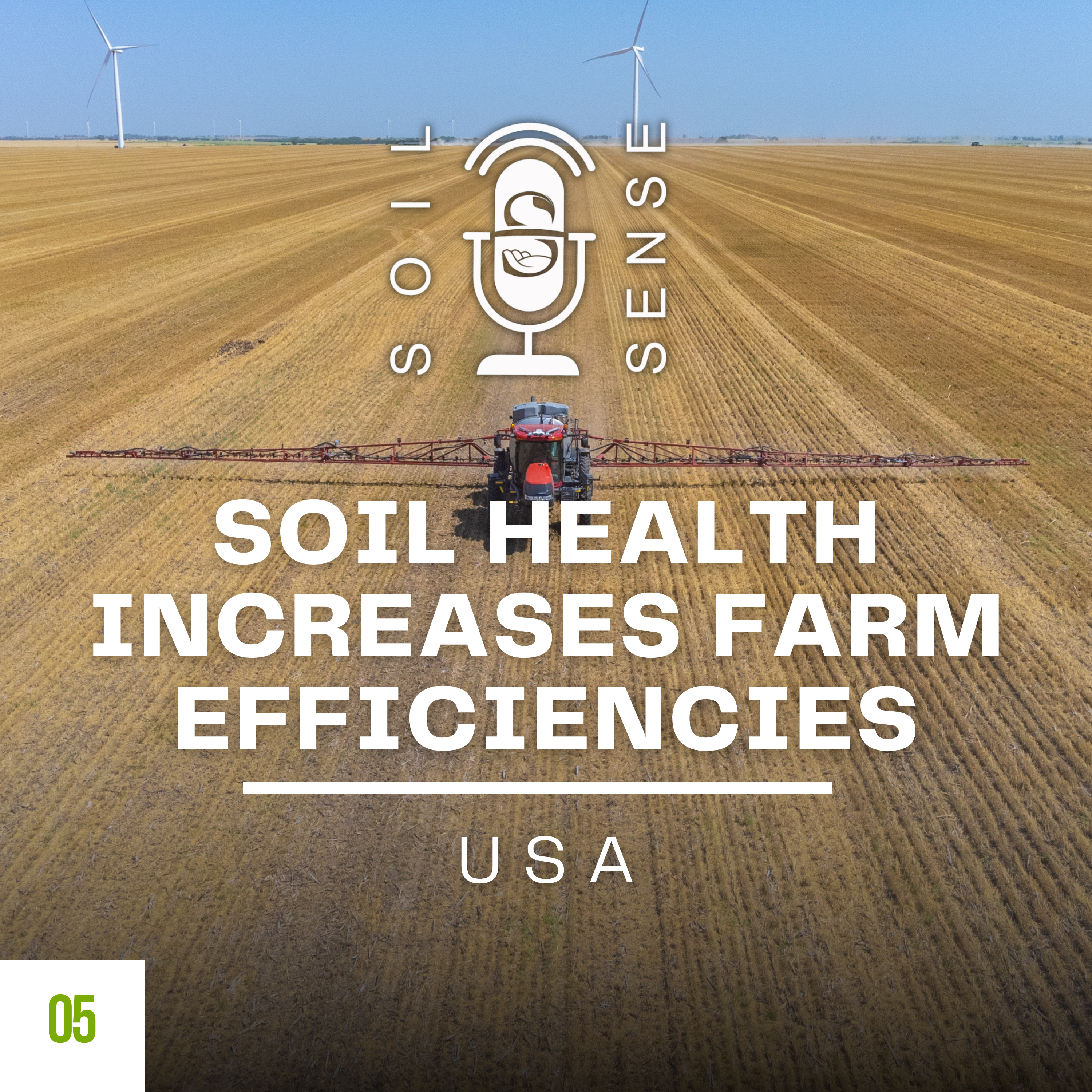 Soil Health Increases Farm Efficiencies in the USA | Oftentimes soil health practices may be thought of as “one more thing” to incorporate on the farm. But in this episode, producer Matt tells us that it would be very difficult for him to farm as much land as he does without soil health practices in play.In fact, soil health practices are what allowed his farm to grow significantly over his career which started in 1988 on just 400 acres. Matt farms with his wife and three sons in northern Oklahoma and southern Kansas in the United States. They grow corn, wheat, soybean and cotton on over 20,000 acres and have a black angus cow herd. They utilize soil health practices like no-till, cover crops and terracing to manage their system in their hot and dry climate. We are also joined by Craig Abell who serves as Syngenta’s national executive grower agronomist. Craig has been with Syngenta for 33 years and works with large growers who often farm in multiple states in the US. “ A lot of our growth has been with either families that have wanted to invest in land, institutional investors, or farm management companies. And they came to us because we’re no-till. They will not let other people operate their land unless they are no-till regenerative and taking care of the soil and improving it.” - MattAs farmers look to improve their operations, many are turning to soil health practices. Craig shares that tools like cropwise imagery and cropwise financials allow producers to monitor successful practices to further understand the impact they are having on yield outcome.This Week on Soil Sense:Meet Matt, a producer working over 20,000 acres in northern Oklahoma and southern Kansas, and Craig Abell who serves as Syngenta’s national executive grower agronomistExplore how economics drove Matt to incorporate soil health practices into his operation and the many benefits he has experienced through their useDiscover the analytics being used to precisely calibrate rates of seeding and inputs for the best yield outcomes across large operations | — | ||||||
| 5/20/25 | 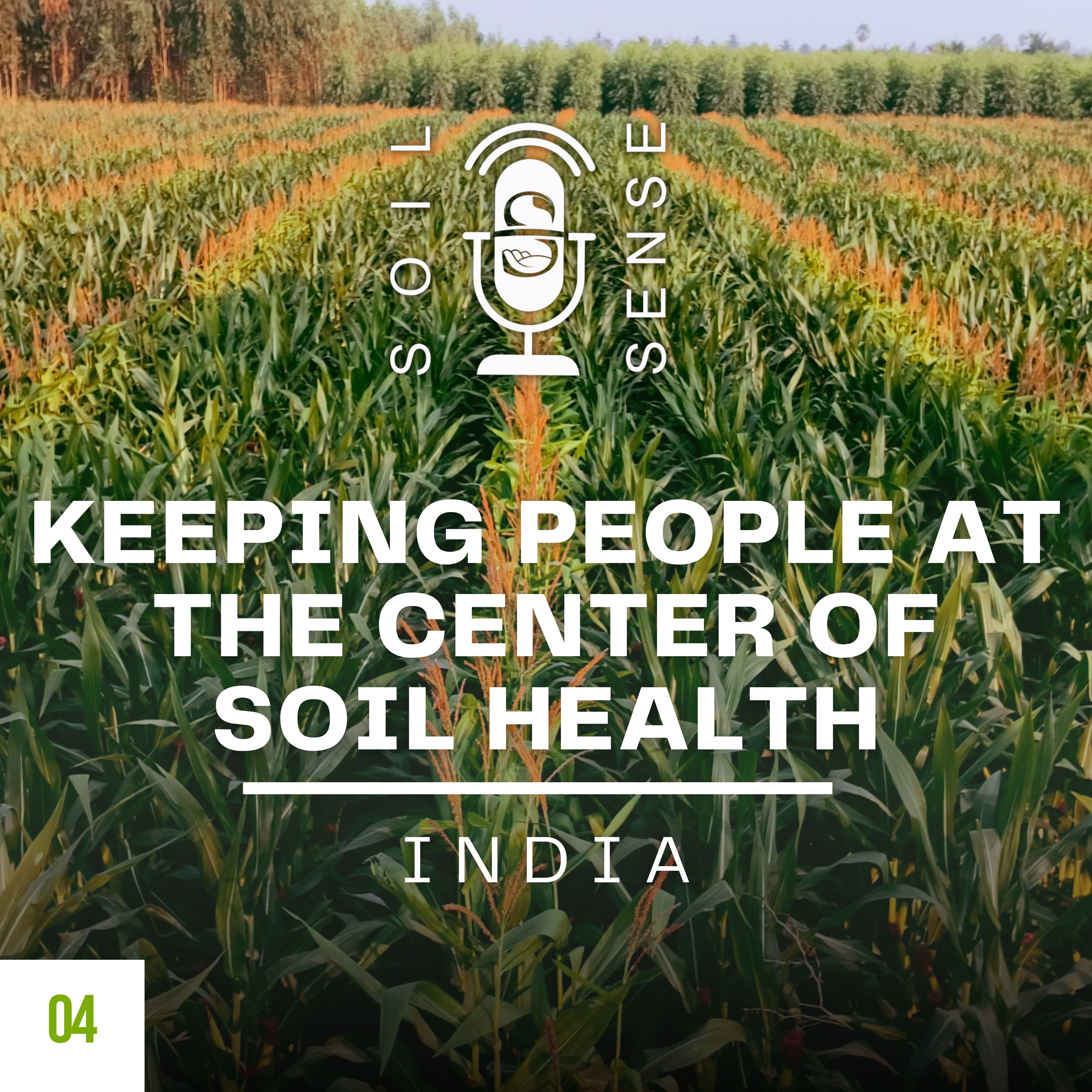 Keeping People at the Center of Soil Health in India | Despite a lot of exciting momentum behind regenerative agriculture, it remains necessary that that enthusiasm reaches farmers and leads to real outcomes. But how does that information get shared in a county like India with several million farmers? In this episode we are joined by Subhadra Gupta, the regional field sustainability lead for the Asia Pacific region based in India, and Gaynor Pais, the executive director for International Resources for Fairer Trade (IRFT). We talk about how the soil health conversation is only valuable if a farmer sees how it can fit into their own unique operation. This is a big enough challenge in a place like the United States with major established infrastructure and lines of communication, but imagine building farmer networks in a place like India that has several million smallholder farms that are spread throughout the entire country. “ The kind of engagement and the kind of partnership and the kind of trust that we have been able to build, and we are still building with our farmers when it comes to enhancing soil as a primary and a very, very significant aspect of smart agriculture practices. I think we are very much on the right track. Every year we can see slowly, and I think this is a journey.” - Subhadra GuptaTogether Gupta and Gaynor discuss the very important topic of farmer outreach and engagement when it comes to sharing information about soil health practices. It's critical in conversations about the science and economics of these soil health practices, that we don’t forget the human component in adopting and implementing them.This Week on Soil Sense:Meet Subhadra Gupta, the regional field sustainability lead for the Asia Pacific region based in India, and Gaynor Pais, the executive director for International Resources for Fairer Trade (IRFT)Discover the value and strategy in creating farmer engagement with new soil health practices in IndiaLearn about the cultural challenges and the social impact soil health practices can have on the Indian agricultural producersExplore the collaboration between Syngenta and IRFT to provide training on regenerative practices and create more equitable supply chains | — | ||||||
| 5/5/25 |  Collaborating on Biodiversity and Technology in Germany | For a long time, Europe has had very high standards for environmental sustainability and is really concerned about biodiversity. So how does a multi-generational family farm accommodate these interests while still running a profitable and sustainable farm business? We're joined today by a farmer from Germany, Hans Heinrich. And Syngenta's Sebastian Funk to talk about cross-generational farming and trying new ideas across a large operation. ”We often try something and sometimes it works and sometimes it does not. That's normal. But this idea of rebuilding the soil, I guess that's the most important thing we can do for this generation and for the next generation. “ - Hans Heinrich Hans Heinrich Farms with his wife and his son in eastern Germany. He and his son are constantly dreaming up new ideas and approaches for the farm, and bringing in new equipment from across Europe to implement practices like strip till. They grow corn and potatoes as their main crops with some small grains in rotation on occasion as well.Joining Hans Heinrich is Syngenta's sustainable farm manager for Germany, Sebastian Funk. He grew up on a family farm and is now based in Frankfurt. He works alongside dozens of farmers across the region on sustainable practices, biodiversity research and implementation of digital tools.This Week on Soil Sense:Meet Hans Heinrich and Sebastian Funk and learn more about agricultural soils and systems in this region of GermanyDiscover the collaboration that takes place between farmers like Hans Heinrich and his family and partners like SyngentaUnderstand the importance of biodiversity research and what is being discovered about biodiversity on farms in GermanyExplore some of the digital tools used in farming and soil healthThe Soil Sense podcast is for those that believe building healthier soils is not just a prescription, but rather a pursuit. On this show, we unpack the way farmers collaborate to build healthier soils and adapt systems to work on their farm for both sustainability and profitability.Thank you to Syngenta for sponsoring this season of the Soil Sense podcast. If you are interested in what soil health looks like in practice and on the farm, please subscribe and follow this show on your favorite podcast app, and leave us a rating and review while you’re there! | — | ||||||
| 4/22/25 |  Building Soil Health in Degraded Soils | In this episode of Soil Sense, co-hosts Tim Hammerich and Dr. Abbey Wick explore how Brazilian farmers, like Cézar, and Syngenta's Grazielle Parenti, are innovating soil health practices in tropical environments. The discussion focuses on Brazil's potential to double agricultural production without deforestation through initiatives like the Reverte Project. Parenti talks about Syngenta's collaboration with farmers to restore degraded pasture lands into productive farmland. Cézar details his experiences and methods in advancing soil health on his expansive farm, emphasizing the critical role of technology and sustainable practices. Together, they highlight the synergistic efforts in Brazil to boost soil health, create economic benefits, and sustain agricultural productivity.00:00 Introduction to Brazil's Agricultural Potential01:20 Meet the Hosts and Guests01:54 Cézar’s Farming Journey03:30 Soil Health Practices in Brazil06:02 Challenges and Innovations in Tropical Agriculture16:00 The Reverte Project: Transforming Degraded Lands23:13 Technology's Role in Soil Health31:13 Future of Brazilian Agriculture38:33 Conclusion and Takeaways | — | ||||||
| 4/7/25 |  The Art of the Possible With Jeff Rowe and Matt Wallenstein | Introducing: season eight of Soil Sense! Co-hosts Tim Hammerich and Dr. Abbey Wick are excited to bring another season to the show, this time sponsored by Syngenta. Season eight explores soil health at scale, featuring farmers from all around the world. Science and innovation have unlocked incredible gains in agricultural productivity and sustainability over the years. But there's still so much potential out there, especially if we're able to leverage a better understanding of soil science. We're joined today by Syngenta CEO, Jeff Rowe, and chief soil scientist, Dr. Matt Wallenstein. They challenge us consider the art of the possible when it comes to the future of soil health.“ For most farmers, a lot of farmers in the world, the land is their most important investment. And in some ways, historically, it's been what we understood the least.” - Jeff Rowe Jeff Rowe is the CEO of Syngenta group based in Basel, Switzerland. But the other hat he wears is that of a family farmer. These two vantage points, as an agribusiness CEO and a farmer, make him an excellent guest to kick off this season. “ Because we hadn't given as much attention to the soil, that now represents the biggest opportunity we have to increase productivity and sustainability in the next decade.” Matt Wallenstein, Ph.D.Dr. Matt Wallenstein joined Syngenta with a background in research at Colorado State, and as an entrepreneur. He launched a startup to commercialize some of this research. He was recruited by Jeff to lead the company's soil health efforts. Jeff and Matt discuss the potential for soil health to advance agricultural productivity and sustainability.This Week on Soil Sense:Meet farmer and Syngenta CEO Jeff Rowe and chief soil scientist Dr. Matt WallensteinExplore how scientific advancements in soil science can lead to opportunities for farmersConsider the importance of resilient soil, the balance of traditional and modern farming methods, and Syngenta's commitment to supporting soil health globallyThank you to Syngenta for sponsoring this season of the Soil Sense podcast. If you are interested in what soil health looks like in practice and on the farm, please subscribe and follow this show on your favorite podcast app, and leave us a rating and review while you’re there! | — | ||||||
Want analysis for the episodes below?Free for Pro Submit a request, we'll have your selected episodes analyzed within an hour. Free, at no cost to you, for Pro users. | |||||||||
| 9/29/23 |  Building Soil Health for Soil Function | In this episode we wrap up season seven of the soil sense podcast with a well known and well respected farmer and long-time soil conservationist, Barry Fisher. Barry recently retired from his career at the USDA, where he most recently worked in the soil health division. In that capacity he met and spoke with farmers about soil health throughout the central part of the US. Since retirement, Barry manages his family farm in Greencastle, Indiana and has a consulting business where he does training and soil health education for organizations through Fisher Soil Health LLC. Barry discusses soil health principles, important considerations for transition to regenerative practices, and the essential role of a knowledgeable advisor. “If you really think about it, our current crops are only feeding the biology June, July, a little bit of May, and maybe a little bit of August. That's a very small percent of the total year… We did a lot of talking about no till as far as protecting erosion, but when we added cover crops to it, that was a game changer in that now the cover crop immediately fed more biology longer. That biology immediately started providing aggregate stability which absolutely helps the surface infiltration of soil, the aeration of soil. You know you start getting better structure to the surface of the soil and that can happen in as little as one season when we add cover crops.” - Barry Fisher One visual Barry has used to help demonstrate soil health to producers is what he has called the “fence row effect.” Previous fence rows can illustrate the value and yield potential when incorporating the four principles of soil health. There is a reduction in disturbance, added diversity of plant life, maintained living roots in the soil and because of that the soil is kept covered. These four principles can allow producers to see a bump in yield in these areas. Barry goes on to explain how to generalize some of those principles on an operation-wide basis. “Generally there's some farmer in the front row that says, “Okay Fisher, that's great, but, my landlord wants me to farm the whole farm, not just the old fence rows.”... I can show those aerial photos where management on one farm had the four principles kind of in place and the management on the farm right next to it did not. And the aerial photo is very telling that yes, we can manage beyond the fence row. We can get that fence row effect across the entire farm.” - Barry Fisher This Week on Soil Sense: Meet Barry Fisher a current Indiana farmer and retired USDA soil conservationist Explore what Barry calls the “fence row effect” and how that can be applied to demonstrating the four principles of soil health Discover Barry’s recommendations in transitioning tillage and cover crop practices Thank you to the Soy Checkoff for sponsoring this Farmers for Soil Health series of the Soil Sense podcast. This show is produced by Dr. Abbey Wick, Dr. Olivia Caillouet, and Tim Hammerich, with support from the United Soybean Board, the University of Missouri Center for Regenerative Agriculture and the Soil Health Institute. If you are interested in what soil health looks like in practice and on the farm, please subscribe and follow this show on your favorite podcast app, and leave us a rating and review while you’re there. Check out the Farmers for Soil Health website at FarmersForSoilHealth.com. | — | ||||||
| 9/29/23 |  Farmer-to-Farmer Soil Health Education with Mike Lewis | Throughout this series, we have featured a lot of large scale commercial farming operations, but soil health is just as important to farms that operate on smaller acreages as well. Mike Lewis is a farmer, military veteran, and the senior manager for the National Center for Appropriate Technologies. Mike farms in southeastern Kentucky on a small farm in the western foothills of the Appalachian Mountains. His farm consists of 126 acres, 12 of which he uses to grow fresh market vegetables and the other 114 is a forest-based pasture system where he raises cattle, pastured pork and pastured poultry. “For me, soil health is the most critical thing to the success of our operation… One of Wendell Berry's quotes is, “What I stand for is what I stand on.” And I think that soil is what we all stand on. And it's the foundation for all life and sustenance on this planet. So there's nothing more important than healthy soils.” - Mike Lewis As the senior manager in the sustainable agriculture and rural communities division of NCAT Mike focuses on building resilient communities and supporting farmers in sustainable production systems. The Armed to Farm and Soil For Water programs are two of the many programs he contributes to. Mike also opens up his own family farm to other producers to demonstrate some of the soil health principles he has incorporated on his operation. “I think that one of the things that we're really focused on is being able to have a place where we can show other producers other alternatives to production, right? We open our farm up three or four times a year for other producers to come on and look at our hog production system and to learn how we've reduced our feed inputs by timing of our farrowing and our pasture management skills.” - Mike Lewis This Week on Soil Sense: Meet Mike Lewis, a Kentucky farmer, military veteran, and the senior manager for the National Center for Appropriate Technologies Discover Mike’s journey from the farm to the military and back to the farm to raise his family Explore the Armed to Farm and Soil For Water programs and the opportunities they offer producers Thank you to the Soy Checkoff for sponsoring this Farmers for Soil Health series of the Soil Sense podcast. This show is produced by Dr. Abbey Wick, Dr. Olivia Caillouet, and Tim Hammerich, with support from the United Soybean Board, the University of Missouri Center for Regenerative Agriculture and the Soil Health Institute. If you are interested in what soil health looks like in practice and on the farm, please subscribe and follow this show on your favorite podcast app, and leave us a rating and review while you’re there. Check out the Farmers for Soil Health website at FarmersForSoilHealth.com. | — | ||||||
| 9/29/23 |  Theory vs Practice in Soil Health with Frank Rademacher | Eisenhower famously said “Farming looks mighty easy when your plow is a pencil and you're a thousand miles from the corn field.” That resonates with a lot of farmers who know the theory of farming doesn’t always directly translate to the practice. Farmer and agronomist Frank Rademacher joins us to talk about what’s working on his farm in East Central Illinois, and the work he does as a conservation agronomist with The Nature Conservancy. Frank discusses the theory vs the practice when it comes to soil health, what has worked and what hasn’t worked on his farm, how they’ve arrived at some of their current practices, and a little bit on Frank’s work with retailers on behalf of The Nature Conservancy. “What we kind of found is we were doing diverse mixes, kind of buying into some of that messaging that diverse mixes are always best. And again, I think that's kind of where the theory versus in practice discussion happens because we would have some harsh winters and no snow cover. And so some of those species would not overwinter. And so, we start off on a bad foot if we're really depending on cover crops and we can't get the consistency. So what we've really tried to build over time is a portfolio of cover crops that perform consistently.” - Frank Rademacher Frank found a passion for agronomy while in college, and started helping his father implement some conservation practices on their farm. Over the past 10 years, Frank and his father have gone 100% no-till and insecticide-free on their 600 acre farm. They’ve also ramped up their cover crop program which includes using a roller-crimper and high biomass cover crops. Frank also works as a conservation agronomist with The Nature Conservancy, where part of his focus is working with ag retailers and other farmer advisors to add conservation advice to their business models. “I understand what some of the environmental goals that Illinois has set out are and I also understand that some of these things are difficult to do at the farm level. And so, how do we scale conservation? That's a lot of what we look at now is not only shaping that cover crop mix to be a little bit more flexible, depending on spring weather, but also just understanding the operation as a whole.” - Frank Rademacher This Week on Soil Sense: Meet Illinois farmer and conservation agronomist Frank Rademacher Explore the balance Frank is finding between operational success and incorporating conservation practices Thank you to the Soy Checkoff for sponsoring this Farmers for Soil Health series of the Soil Sense podcast. This show is produced by Dr. Abbey Wick, Dr. Olivia Caillouet, and Tim Hammerich, with support from the United Soybean Board, the University of Missouri Center for Regenerative Agriculture and the Soil Health Institute. If you are interested in what soil health looks like in practice and on the farm, please subscribe and follow this show on your favorite podcast app, and leave us a rating and review while you’re there. Check out the Farmers for Soil Health website at FarmersForSoilHealth.com. | — | ||||||
| 9/29/23 |  The Swine to Soil Connection with Jamie Burr | When you think about soil health, you might picture a soybean field or a corn field. It may not be immediately apparent how many other industries rely on soil health, like pork. National Pork Board Chief Sustainability Officer Jamie Burr joins us to share about the importance of soil health, conservation, and sustainability to the pork industry. He’s been in this particular role for about six months, but has spent most of his life in the pork industry. “The reason that the pork board is so involved in that is if you look at all of our footprints, whether it be carbon, land or water, a vast majority of our footprint has to do with making feed. So those crops are as much as 60 to 70 percent of each one of those footprints.” - Jamie Burr Prior to the pork board, Jamie spent almost 24 years at Tyson Foods in various environmental and sustainability roles, most of which were on the live production side in both pork and poultry. Jamie shares how he defines sustainability, why the pork board prioritizes soil health for people, planet and pork, how the industry is striving forward in key areas of sustainability and conservation, and how they’re leveraging data to tell that story to consumers. “The goal that we have as a pork industry is a 40 percent reduction in carbon emissions by 2030. And that's the farm gate emissions. So that would be from the time the grain is grown til the pigs leave the farm gate…So we have stood up a platform to begin collecting that data so that producers can enter data and then we can start publicly reporting on those metrics from a transparency perspective. Without that data, it's hard to tell a story.” - Jamie Burr This Week on Soil Sense: Meet National Pork Board Chief Sustainability Officer Jamie Burr who shares about the importance of soil health, conservation, and sustainability to the pork industry Explore the sustainability priorities of the Pork Board and the oversight they offer producers Thank you to the Soy Checkoff for sponsoring this Farmers for Soil Health series of the Soil Sense podcast. This show is produced by Dr. Abbey Wick, Dr. Olivia Caillouet, and Tim Hammerich, with support from the United Soybean Board, the University of Missouri Center for Regenerative Agriculture and the Soil Health Institute. If you are interested in what soil health looks like in practice and on the farm, please subscribe and follow this show on your favorite podcast app, and leave us a rating and review while you’re there. Check out the Farmers for Soil Health website at FarmersForSoilHealth.com. | — | ||||||
| 9/29/23 | Diversity in Crops and Business Models with Jay Baxter | There is a lot more information about soil health available today than there was a decade ago, but it’s still up to each individual farmer to figure out what works best for their operation. Delaware farmer Jay Baxter grows soybeans, corn, sweet corn, and lima beans on Baxter Farms. Jay is the fourth generation to do so along with his sister who farms with him as well as some other family stakeholders that include his 93 year old grandmother who is still engaged with the farm. In addition to the crops, they have eight chicken houses. At any one time they have about 225,000 broilers on the farm. That’s enough to keep anyone busy, but Jay and his wife have also started a couple side businesses: a greenhouse company growing contract potted flowers for a wholesale distributor, and a custom cover crop application business. He shares about the cover crops, equipment, biosolids, and poultry manure that are part of his operation. “We're starting to understand what different cover crops do to our soils, and we're starting to understand what different mixes and how different cover crop species mix together, how they interact with one another, and what they can do to benefit us on our farm and our particular soils. And what they can kind of bring to the table and help us to utilize some of our, well, our number one resource, which is our soil.” - Jay Baxter One interesting thing about Jay that is unique is that he has included hairy vetch in his cover crop mix for about 20 years. He has heard all of the concerns others have about hairy vetch, and says for him every year is different, but they’ve learned to manage the cover crop in a way that has been very beneficial to their operation. His unique techniques have paid off in the past specifically with his lima bean practices. “Because they were sitting on top of a mulch, as opposed to sitting on top of bare soil, they had no blemish on them, and therefore were A grade beans, and that's what the processor really wanted. So we immediately became no till and cover crop farming lima bean growers.” - Jay Baxter This Week on Soil Sense: Meet fourth generation Delaware farmer Jay Baxter who shares about his operation including cover crops, a greenhouse company growing potted flowers, a poultry operation and a custom cover crop application business Explore the many facets of Jay’s operation and the trials and successes he has found over the years Discover the regulations of using biosolids and waste water on a farming operations Thank you to the Soy Checkoff for sponsoring this Farmers for Soil Health series of the Soil Sense podcast. This show is produced by Dr. Abbey Wick, Dr. Olivia Caillouet, and Tim Hammerich, with support from the United Soybean Board, the University of Missouri Center for Regenerative Agriculture and the Soil Health Institute. If you are interested in what soil health looks like in practice and on the farm, please subscribe and follow this show on your favorite podcast app, and leave us a rating and review while you’re there. Check out the Farmers for Soil Health website at FarmersForSoilHealth.com. | — | ||||||
| 9/29/23 |  Seven Generations of Stewardship with Susan Watkins | When it comes to sustainability, it’s hard to argue with results. For Virginia farmer Susan Watkins that means seven generations and counting of stewarding highly productive farmland. In this episode we get to talk about that rich history and the soil health building practices that she is implementing on her operation. We talk to Susan about their legacy of caring for the soil, how they transitioned to no-till over 20 years ago, how they incorporated cover crops about 15 years ago, and what she’s looking forward to next. “We farm Five Forks. So Five Forks was pretty instrumental towards the end of the Civil War. And we actually farm on that original land too. The house is still standing. The owners of the house still have the portraits from their ancestors and it has slash marks through the portraits where the soldiers came in and slashed them. So yes, a lot of rich history here.” - Susan Watkins Susan farms in Dinwiddie County along with her husband Maxwell and her son Cody. She grows soybeans, corn and wheat on about 3500 acres. A lot of that ground is rented, but they still farm some of the original land that was granted by the king of England to the Watkins Family, at least seven generations ago. More recently though they have been exploring biological inputs on their operation alongside their no till practices and cover crops. “We're all farmers. We all want to preserve our lands and pass it along to our children if possible. And that's the goal of everyone. But the margins are so slim. We have to be conscious of new technologies, new ideas and adapt to those. We can't stay stuck in one era. We have to keep moving forward.” - Susan Watkins This Week on Soil Sense: Meet seventh generation Virginia farmer Susan Watkins Discover the rich history associated with the Watkins family farm land Explore the crops and practices they are using on their operation to improve soil health and yields including no-till, biological inputs and cover crops Thank you to the Soy Checkoff for sponsoring this Farmers for Soil Health series of the Soil Sense podcast. This show is produced by Dr. Abbey Wick, Dr. Olivia Caillouet, and Tim Hammerich, with support from the United Soybean Board, the University of Missouri Center for Regenerative Agriculture and the Soil Health Institute. If you are interested in what soil health looks like in practice and on the farm, please subscribe and follow this show on your favorite podcast app, and leave us a rating and review while you’re there. Check out the Farmers for Soil Health website at FarmersForSoilHealth.com. | — | ||||||
| 9/29/23 |  Beef and Cover Crops with Ed Lammers | Fine-tuning any system that involves biology and mother nature is going to take time, especially when all of those changes have to happen while also running a business. Nebraska farmer Ed Lammers has spent over 30 years implementing new practices and business models on his farm. He joins the show to talk about cover crops, incorporating livestock, and embracing technology to build healthier soils. In this episode we talk about cover crops, incorporating livestock into the operation, technology, and Ed’s desire to start raising some rye for seed. “I’m trying to improve my soil health in any way I can. Being open to changes is crucial, but the economics to allow you to be open to those experimental challenges or changes are crucial also.” - Ed Lammers Ed has been farming for 35 years and has tried a lot of different practices over that time. In addition to row crops, Ed and his son raise about 200 cow/calf pairs, and market the beef farm-to-table. He said that business has really grown since his son took it over, and they are now able to sell around 40% of their beef through that channel. “The animal nutrients all go back into our soils. It's a big part of our input costs and just being a good sustainable farmer..” - Ed Lammers This Week on Soil Sense: Meet Nebraska farmer Ed Lammers Discover Ed’s journey into cover crops and incorporating livestock onto his operation Thank you to the Soy Checkoff for sponsoring this Farmers for Soil Health series of the Soil Sense podcast. This show is produced by Dr. Abbey Wick, Dr. Olivia Caillouet, and Tim Hammerich, with support from the United Soybean Board, the University of Missouri Center for Regenerative Agriculture and the Soil Health Institute. If you are interested in what soil health looks like in practice and on the farm, please subscribe and follow this show on your favorite podcast app, and leave us a rating and review while you’re there. Check out the Farmers for Soil Health website at FarmersForSoilHealth.com. | — | ||||||
| 9/29/23 |  Building Soil Health as a First Generation Farmer with Ryan Bivens | It’s always neat to hear of farms that have been with a family for generations, but is it still possible for a first generation farmer to get started? Ryan Bivens is proof that it is possible, but that doesn’t mean it’s easy. First generation Kentucky farmer Ryan Bivens talks about his path to getting started in farming, why wheat is his favorite cover crop, and how he manages 88 different landlords in his area of central Kentucky. “Just because somebody says you can't do that.…Try it yourself. Do it on a small basis. You have to figure out what can and cannot work for you. You can't break the bank doing it. If you're gonna screw something up, do it on a small trial. Try it out there. And who's to say, if it works, then next year expand it but you know what's best for your own soils.” - Ryan Bivens Ryan farms soybeans, corn and wheat on about 7600 acres, 1200 of which he owns and the remaining he leases from 88 different landlords. Ryan grew up around agriculture and started farming in FFA. After college his wife took an ag teaching job in the community they now live in so he had to start over. He searched for farmland to rent through an ad in the local newspaper and built from there. Ryan shares how he got his start, his approach to soil health, and a whole lot more. “We can't tell each other how to farm. There is not one right way or wrong way to do it. Everybody has to know their own land, they have to know their soils, and they have to know what works for them. If I don't go out and learn something every day, that's the day I need to hang it up and quit. Because that's the day when you're done as far as I'm concerned.” - Ryan Bivens This Week on Soil Sense: Meet first generation Kentucky farmer Ryan Biven and discover his unique path to farming Discover his business model including both owned and rented land and explore his approach to soil health on that land Explore Ryan’s practices with rotation and his experiences with cover crops Thank you to the Soy Checkoff for sponsoring this Farmers for Soil Health series of the Soil Sense podcast. This show is produced by Dr. Abbey Wick, Dr. Olivia Caillouet, and Tim Hammerich, with support from the United Soybean Board, the University of Missouri Center for Regenerative Agriculture and the Soil Health Institute. If you are interested in what soil health looks like in practice and on the farm, please subscribe and follow this show on your favorite podcast app, and leave us a rating and review while you’re there. Check out the Farmers for Soil Health website at FarmersForSoilHealth.com. | — | ||||||
| 9/28/23 |  Learning and Sharing About Soil Health With Jennifer Simmelink | Sometimes in agriculture we are so consumed by work that needs to happen on the farm that we don’t get much of a chance to share what we’re doing or visit others to see what’s working for them. Kansas Soil Health Alliance Coordinator Jennifer Simmelink is helping to make this communication happen more frequently. Jennifer grew up surrounded by agriculture in York, Nebraska. Although she didn’t grow up on a farm, she studied Biological and Agricultural Engineering at Kansas State University. It was there that she met her now husband, which led her to settling down on his family’s farm in North Central, Kansas. We asked Jennifer to wear both hats today as a farmer and the coordinator of the alliance to share her journey to spreading soil health awareness. “We talk about the impact that water and wind erosion and things can have on your communities. Whether it's cleaning out ditches or cleaning out contaminants in drinking water. To go out and be able to be a part of that and to help meet others where they're at to take their step forward. It's a complex process.” - Jennifer Simmelink The Kansas Soil Health Alliance is a 501c3 organization that is producer led with the mission of improving and protecting Kansas soils through farmer and rancher led education. Jennifer spends a lot of her time traveling throughout the state coordinating field days and working alongside farmers and other organizations to provide educational opportunities for both current and future farmer generations. “I think that's what we all want to do is we want to give the next generation better than what we had. Not easier. We're not trying to pave things down, but can we give them a good start? We want to improve on things. So you can tell them this is for you. This is why it should matter to you.” - Jennifer Simmelink This Week on Soil Sense: Meet Kansas Soil Health Alliance Coordinator Jennifer Simmelink and learn about her job spreading soil health awareness through producer led events and education Discover the many efforts of the Kansas Soil Health Alliance and the programs and events they have going on Thank you to the Soy Checkoff for sponsoring this Farmers for Soil Health series of the Soil Sense podcast. This show is produced by Dr. Abbey Wick, Dr. Olivia Caillouet, and Tim Hammerich, with support from the United Soybean Board, the University of Missouri Center for Regenerative Agriculture and the Soil Health Institute. If you are interested in what soil health looks like in practice and on the farm, please subscribe and follow this show on your favorite podcast app, and leave us a rating and review while you’re there. Check out the Farmers for Soil Health website at FarmersForSoilHealth.com. | — | ||||||
| 9/28/23 |  Bio Strip-Till with Donn Branton | One of the valuable aspects of this series is that it has given us a chance to talk to farmers at all different stages of their soil health journey. It’s particularly inspiring to talk to someone who has been at this a long time and is really seeing the benefits of some of these practices. New York farmer Donn Branton discusses how decades of experimenting and learning has led him to develop his system of growing no-till non-GMO corn and soybeans with practices like cover crops and bio strip-till in Western New York. “The water infiltration, the earthworm activity, those are the biggest things. Drove around with one of the soil water technicians one winter day and I said, you see that brown snowbank there? Yeah. Drive up the road a little further next to our field. What color is that one? It's white. What's going on? I said, it's wind erosion. You know, some things like that are so obvious when you're keen to it.” - Donn Branton Don has a really interesting story that led him into farming on his own in 1979. Since that time he’s often been ahead of the curve with everything from reducing tillage to adding cover crops to embracing variable rate technology to planting corn into biostrips. “One of the biggest things when we first started doing reduced till, heavy rainfall come through. Neighbors would have standing water, we wouldn't. Okay, what's going on? Well, we got water infiltration and had earthworm middens.” - Donn Branton This Week on Soil Sense: Meet New York farmer Donn Branton and discover his long term efforts towards soil health on his operation Explore Donn’s different soil health practices, the many benefits he’s observed and the additional revenue he’s enjoyed Thank you to the Soy Checkoff for sponsoring this Farmers for Soil Health series of the Soil Sense podcast. This show is produced by Dr. Abbey Wick, Dr. Olivia Caillouet, and Tim Hammerich, with support from the United Soybean Board, the University of Missouri Center for Regenerative Agriculture and the Soil Health Institute. If you are interested in what soil health looks like in practice and on the farm, please subscribe and follow this show on your favorite podcast app, and leave us a rating and review while you’re there. Check out the Farmers for Soil Health website at FarmersForSoilHealth.com. | — | ||||||
| 9/27/23 |  Advancements in Ag Research, Technology and Outreach with John Butler | Advancements in ag research and technology not only help farmers produce more with less, but also have had a big impact on their ability to build healthier soils. John Butler is the CEO of Agricenter International and a 5th generation farmer from Northwestern Tennessee. Before joining Agricenter International about seven years ago, he worked on his family farm for about 25 years and had a career with Cargill where he worked across multiple geographies in North America. He shares his unique perspective as someone who has worked in agribusiness, operated a more traditional farm, and now is running an urban farm and research hub. He shares his take on soil health, how they adapt principles to their local context of the Mississippi Delta Region, the impact of their research and education efforts, and new technologies as well. “I can't farm the way I farm today if I had the same tools I had in the 80’s. What's allowing me this flexibility is the chemistries that we have, the fertilizers that we have, and the equipment that we have. On our AgriCenter research plot last year, we flew fungicide with the drone over our corn crop. I mean, I don't know if I would have said that five years ago. I don't know if I would even have known to have said that five years ago. So it's a pretty cool space. We're evolving significantly.” - John Butler Agricenter International was founded in 1979 as a joint effort between Shelby County and the state of Tennessee which set aside 1,000 acres to operate an urban farm. Today, the nonprofit organization is an education, agribusiness, research and agricultural hub of the Mid-South. They have over 1.5 million visitors annually, and partner with around 80 companies every year to conduct research that includes over 20,000 replicated plots on around 700 acres of land. The breadth and scale of the organization is impressive enough, but the diversity is also remarkable, including row crops, specialty crops, tree crops, and a wide range of new products and growing practices. “Our mission is to advance the knowledge and understanding of agriculture. And so we do that through a lot of different lenses and some of it's very, very intentional. And some of it is not so intentional… We have a commercial kitchen. We have canning classes through extension. Everything you can think of from A to Z. And so, because we have so many resources here on campus, we have about 40 companies that are located here…. It's really an opportunity for both consumers and producers to connect.” - John Butler This Week on Soil Sense: Meet John Butler, the CEO of Agricenter International and a 5th generation farmer from Northwestern Tennessee. Discover the opportunities Agricenter International offers the agricultural industry and visitors alike to experience and learn Thank you to the Soy Checkoff for sponsoring this Farmers for Soil Health series of the Soil Sense podcast. This show is produced by Dr. Abbey Wick, Dr. Olivia Caillouet, and Tim Hammerich, with support from the United Soybean Board, the University of Missouri Center for Regenerative Agriculture and the Soil Health Institute. If you are interested in what soil health looks like in practice and on the farm, please subscribe and follow this show on your favorite podcast app, and leave us a rating and review while you’re there. Check out the Farmers for Soil Health website at FarmersForSoilHealth.com. | — | ||||||
| 9/26/23 |  Water and Soil Conservation with Ryan Britt | Fifth generation farmer Ryan Britt talks about the practices he’s combined over the years and the results he’s seeing in North Central Missouri. Ryan has been a full time farmer of soybeans, corn and wheat alongside his father ever since returning after college about 23 years ago. Ryan shares the journey he and his father have been on to transition their farm to no-till, add more cover crops, plant green, and incorporate livestock into their row crop operations. We also talk about various incentive programs that Ryan has been able to take advantage of, and how their soil health practices set them up for the drought conditions they’re currently experiencing. “Between the no till practices, the cover crop, and the terraces, we've actually greatly minimized some of our nutrient runoff concerns and our erosion concerns. So you kind of have to keep stacking all those things together. It's not one particular practice that makes a significant change, it's the whole system. We've seen that through the course of time, through stacking all those together, we're actually seeing some improvement in some of our land.” - Ryan Britt Ryan has become very involved in volunteer leadership positions, including his current role as an Executive Board Member for the National Association of Conservation Districts where he represents the north central region. He’s also the immediate past president of the Missouri Association of Soil and Water Conservation Districts and a former Randolph County Farm Bureau President, among other service positions. He says these roles have exposed him to how other farms operate and given him countless lessons that he’s been able to bring back to his farm for conservation, efficiency, and profitability. “My father and my grandfather always encouraged me to try to improve things, to try to leave it better than you found it… As I got to seeing the different things that actually had lasting impacts, conservation and specifically soil and water programs are one of those things that I felt was a great investment and I feel like we're able to continue. And it's something that I feel like my kids will be able to be proud of or at least get some of the benefits from.” - Ryan Britt This Week on Soil Sense: Meet Fifth generation farmer Ryan Britt who shares the soil health practices he’s combined on his operation and the results he’s seeing in North Central Missouri. Discover Ryan’s journey to soil health and the organizations he participates in to promote its practices Explore Ryan’s recommendations for introducing soil health practices to any operation Thank you to the Soy Checkoff for sponsoring this Farmers for Soil Health series of the Soil Sense podcast. This show is produced by Dr. Abbey Wick, Dr. Olivia Caillouet, and Tim Hammerich, with support from the United Soybean Board, the University of Missouri Center for Regenerative Agriculture and the Soil Health Institute. If you are interested in what soil health looks like in practice and on the farm, please subscribe and follow this show on your favorite podcast app, and leave us a rating and review while you’re there. Check out the Farmers for Soil Health website at FarmersForSoilHealth.com. | — | ||||||
| 9/22/23 |  Experimenting with Cover Crops with Joe Rothermel | Farmer Joe Rothermel joins the show to talk about cover crops, strip tillage, and experiments he’s trying on his farm in East Central Illinois. Joe is the fifth generation to operate his farm and he is someone who loves new ideas and approaches and is always experimenting with new ways to improve his farm. He is motivated to find ways to lower his inputs while maintaining profitable yields. “I have an air seeder where I can plant twin rows in between the bean rows. So then we went in and planted various clover mixes. So, what I'm going to try and do is modify the platform so it pushes down the cover crops in between the bean rows so we can cut the beans and leave the cover crop. We're just trying to have our cake and eat it too. That's basically what we're trying to do. I don't know if this is going to work. It all depends on the weather, just like anything else in farming, but... if we could get 30 bushel beans and 75 pounds of nitrogen I think that'd be kind of cool.” - Joe Rothermel Joe originally thought he wanted to be a crop duster. He ultimately decided he didn’t quite have the right personality for it, but it led him into a career in the aerospace industry. In the mid 1990’s he came back to the family farm and took over which is where he has been ever since. At that time his father had been incorporating no-till practices for years and in his retirement he continued to encourage Joe to pursue soil health with cover crops. Despite some early mistakes, Joe continued these efforts and has found some real success. “My goal has always been to try and minimize inputs, chemicals, fertilizer, and trying to at least maintain yield. I'm not trying to be a corn yield champion or anything like that. I would like to maintain yields and reduce input costs.” - Joe Rothermel This Week on Soil Sense: Meet East Illinois farmer Joe Rothermel and explore his use of cover crops and strip tillage as well as ongoing experiments he is trying on his farm Discover the process Joe took to incorporate cover crops into his operation and the different techniques he is attempting Thank you to the Soy Checkoff for sponsoring this Farmers for Soil Health series of the Soil Sense podcast. This show is produced by Dr. Abbey Wick, Dr. Olivia Caillouet, and Tim Hammerich, with support from the United Soybean Board, the University of Missouri Center for Regenerative Agriculture and the Soil Health Institute. If you are interested in what soil health looks like in practice and on the farm, please subscribe and follow this show on your favorite podcast app, and leave us a rating and review while you’re there. Check out the Farmers for Soil Health website at FarmersForSoilHealth.com. | — | ||||||
| 9/21/23 |  All Soil Health Is Local with Garrett Marsh | There are a lot of similarities amongst farmers, but there is no denying the fact that every farm is different. Never is that more apparent than when you learn about a farming operation in a different part of the country than where you’re from. Louisiana farmer Garrett Marsh shares about some of his early experiences with cover crops, why he switched from flooding to row rice and how that fits into his rotation. Garrett shares about how his lifelong interest in soil eventually led him to cover crops. “It's worked out really well so far. Like I said, it's cut down on erosion. I hadn't had a whole super lot of weed pressure. So far, it's been working good. I'm kind of wanting to get into some of the other cover crops that cost a little more. Just for the fact of, I want to try to do a little experimenting with the nitrogen savings on it.” - Garrett Marsh Garrett and his wife farm near Tallulah, Louisiana which is just across the Mississippi River from Vicksburg, MS. His grandfather started out sharecropping in the area, so he is now the third generation of his family to farm that land. They farm around 1700 acres of soybeans, corn, rice, wheat, and cotton. Garrett offers advice to producers considering incorporating soil health practices into their operations. “Rather than jumping off into it head first and planting every acre you got in it, you know, I would suggest just kind of starting off slow, a couple of fields and experimenting with them. See how you like it. Cause I mean, it's different for everybody. It really is, you know your neighbor is going to do something different than what you are and you just got to find the little niche that's right for you and there's no doubt that it's going to.” Garrett Marsh This Week on Soil Sense: Meet Louisiana farmer Garrett Marsh and discover his journey into cover crops Discover the many similarities and differences in farming in different parts of the country Thank you to the Soy Checkoff for sponsoring this Farmers for Soil Health series of the Soil Sense podcast. This show is produced by Dr. Abbey Wick, Dr. Olivia Caillouet, and Tim Hammerich, with support from the United Soybean Board, the University of Missouri Center for Regenerative Agriculture and the Soil Health Institute.If you are interested in what soil health looks like in practice and on the farm, please subscribe and follow this show on your favorite podcast app, and leave us a rating and review while you’re there. Check out the Farmers for Soil Health website at FarmersForSoilHealth.com. | — | ||||||
| 9/20/23 |  Conservation For Both Ecology and Farm Economics with Laurie Isley | We love to talk about soil conservation practices on this show, but it’s always important to frame it in a realistic context that acknowledges farms are businesses. This means that the right thing for the soil has to also be the right thing for the farm’s profitability. Michigan farmer Laurie Isley shares how she’s embraced new practices at Sunrise Farms, from strip tillage to precision technology to biologicals and beyond on today’s episode of Soil Sense. “We've also found that we continue to be profitable in the same way that we were before using these other practices. And that's really the point we try and get across to the farmers we talk to. Profitability is not this one and conservation this one. They can be very close together. It's not like they're two ends of a spectrum. Some of it isn't that I'm getting a greater yield. It's just, I have fewer costs related to the tillage that I was doing prior to that.” - Laurie Isley Laurie is one of the owners of Sunrise Farms in Southeastern Michigan along with her husband, Jim and their son Jacob. The family farm grows about 1100 acres of corn and soybeans and implements a lot of different conservation practices including strip tillage, cover crops which they have flown on, filter strips, soil tests, and precision ag practices. Laurie, who also spent decades teaching agriscience at the high school level, now also contributes to the industry as part of the Michigan Soybean Committee and the United Soybean Board, where she is the chair of the Communication and Education Committee. “It requires people that are open to seeking more information. So I guess my major message to them is don't settle. Be willing to look for what are new opportunities that I can use on my farm that will help me to be more profitable, but also help to ensure that the soil that I leave behind for the generations to come is as good as it possibly can be and still viable for other generations to continue farming in this area.” Laurie Isley This Week on Soil Sense: Meet Michigan farmer Laurie Isley as she shares how she’s embraced new practices at Sunrise Farms Explore the introduction and use of cover crops on her operation and the efforts she’s making to share her experiences with other producers Discover Laurie’s journey from agriscience teacher to the Michigan Soybean Board and United Soybean Board Thank you to the Soy Checkoff for sponsoring this Farmers for Soil Health series of the Soil Sense podcast. This show is produced by Dr. Abbey Wick, Dr. Olivia Caillouet, and Tim Hammerich, with support from the United Soybean Board, the University of Missouri Center for Regenerative Agriculture and the Soil Health Institute. If you are interested in what soil health looks like in practice and on the farm, please subscribe and follow this show on your favorite podcast app, and leave us a rating and review while you’re there. Check out the Farmers for Soil Health website at FarmersForSoilHealth.com. | — | ||||||
Showing 25 of 150
Sponsor Intelligence
Sign in to see which brands sponsor this podcast, their ad offers, and promo codes.
Chart Positions
2 placements across 2 markets.
Chart Positions
2 placements across 2 markets.