
Insights from recent episode analysis
Audience Interest
Podcast Focus
Publishing Consistency
Platform Reach
Insights are generated by CastFox AI using publicly available data, episode content, and proprietary models.
Total monthly reach
Estimated from 9 chart positions in 9 markets.
By chart position
- 🇺🇸US · Earth Sciences#7030K to 100K
- 🇬🇧GB · Earth Sciences#10030K to 100K
- 🇨🇦CA · Earth Sciences#1115K to 30K
- 🇦🇺AU · Earth Sciences#1325K to 30K
- 🇫🇷FR · Earth Sciences#8210K to 30K
- Per-Episode Audience
Est. listeners per new episode within ~30 days
34K to 117K🎙 Daily cadence·19 episodes·Last published 3w ago - Monthly Reach
Unique listeners across all episodes (30 days)
113K to 390K🇺🇸26%🇬🇧26%🇨🇦8%+6 more - Active Followers
Loyal subscribers who consistently listen
45K to 156K
Market Insights
Platform Distribution
Reach across major podcast platforms, updated hourly
Total Followers
—
Total Plays
—
Total Reviews
—
* Data sourced directly from platform APIs and aggregated hourly across all major podcast directories.
On the show
Recent episodes
Why Soil Stops Working (And How Fungi Bring It Back) | Dan Grotsky, Groundwork BioAg
Jun 2, 2026
Unknown duration
Beyond the No-Till Drill: A Blueprint for Living Soil with Jay Fuhrer
May 8, 2026
Unknown duration
The Rhizophagy Revolution: Why Plant Roots are Microbial Farmers with Dr. James White
May 1, 2026
Unknown duration
Jeff Lowenfels | Rhizophagy, Microplastics, and the Biological Revolution
Apr 24, 2026
Unknown duration
Beyond NPK |The Soil Architect's Blueprint for Doubling Yields with Neal Kinsey
Apr 17, 2026
Unknown duration
Social Links & Contact
Official channels & resources
Official Website
Login
RSS Feed
Login
| Date | Episode | Description | Length | ||||||
|---|---|---|---|---|---|---|---|---|---|
| 6/2/26 | 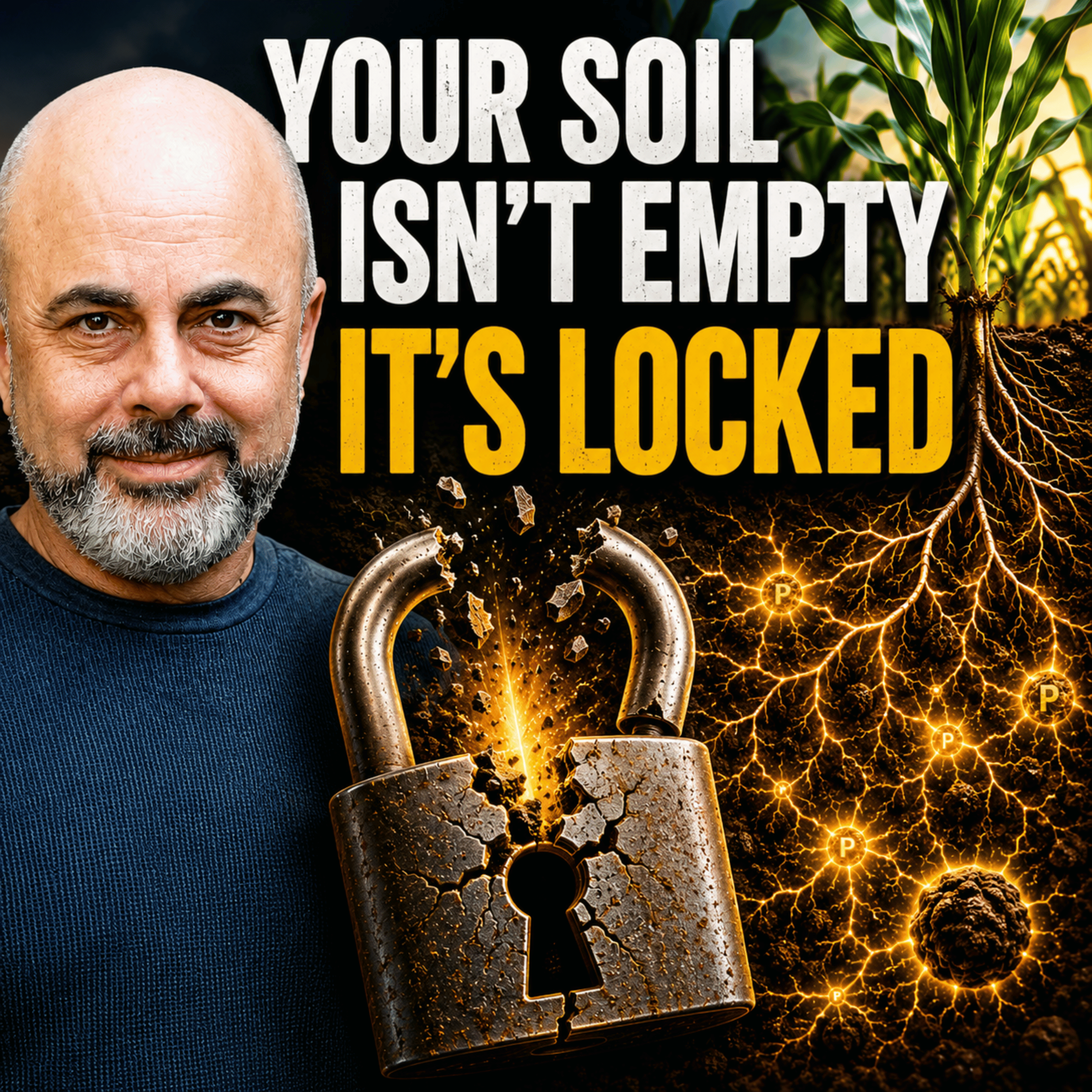 Why Soil Stops Working (And How Fungi Bring It Back) | Dan Grotsky, Groundwork BioAg | What if the biggest limitation in agriculture isn't fertilizer...What if it's a function?In this episode of Soil Talks™ Podcast, Brandon Kail sits down with Dan Grotsky, Co-Founder and Chief Growth Officer of Groundwork BioAg, to explore the underground biological networks that drive nutrient cycling, carbon sequestration, crop resilience, and long-term soil function.For decades, agriculture was told that mycorrhizal fungi were too expensive, too fragile, and impossible to scale across broad-acre row crops.Groundwork BioAg proved otherwise.Inside this conversation:✅ Why soils stop working even when nutrients are present✅ How mycorrhizal fungi unlock legacy phosphorus✅ The hidden biological network beneath every crop✅ Why soil biology drives drought resilience✅ How fungi become the primary pathway for carbon sequestration✅ The science behind soil carbon payments and carbon markets✅ What the future of regenerative and biological agriculture looks likeIf agriculture is going to produce more food with fewer inputs, the answer won't come from adding more products.It will come from restoring biological function. Measure Your Soil Biology:Ultimate Soil Health Bundle - Advanced Testing + Consultation + Course Learn More About Biological... Beyond Organic®:The Biological...Beyond Organic® Fundamentals Course🎙 Subscribe for more Soil Talks™ Podcast episodes. | — | ||||||
| 5/8/26 | 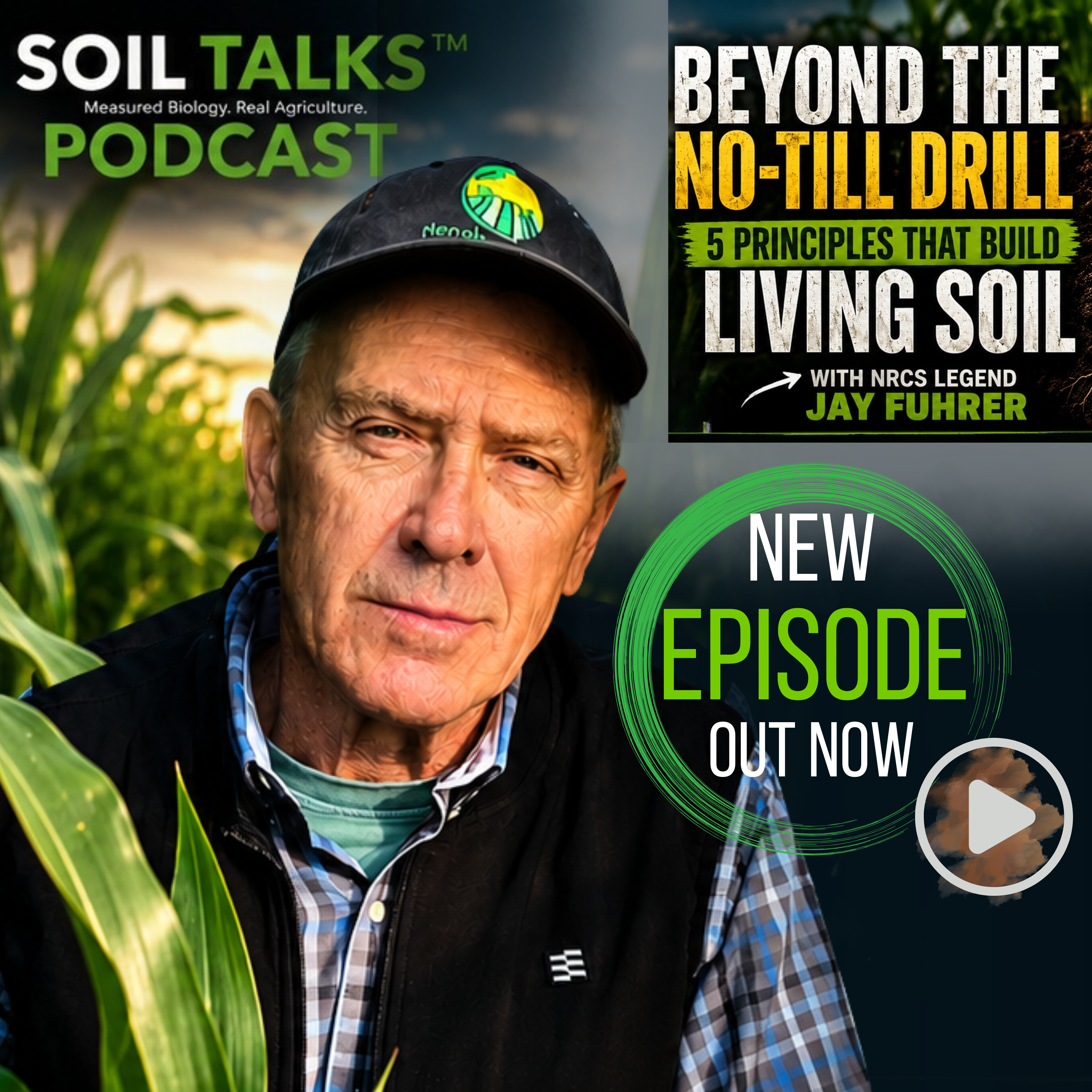 Beyond the No-Till Drill: A Blueprint for Living Soil with Jay Fuhrer | No-till is a great start, but it isn't the whole solution. In this episode of Soil Talks, we sit down with regenerative pioneer Jay Fuhrer to discuss the transition from traditional conservation to a biological systems approach. With over 40 years of experience at the NRCS and legendary work at Minokin Farm, Jay breaks down why carbon is the universal currency of a successful farm and how to move beyond simple extraction toward true stewardship of living soil.In this episode, we cover:Why carbon-deficient soil is a global resource concern.The "Step on a Staircase" analogy: Moving from conservation tillage to biological systems.The 5 Principles of Soil Health: How Jay developed the descriptions and why they must work together.Soil Armor (Principle #1): Why bare soil is a "failed state" and how it prevents hydration.The three types of disturbance: Physical, Chemical, and Biological.Explore Minokin FarmLearn the 5 Principles of Soil HealthRocky Mountain BioAg – Biological InoculantsSubscribe to the Soil Talks™ Podcast #SoilTalks #RegenerativeAgriculture #SoilHealth #NoTill #JayFuhrer #MinokinFarm #CarbonStewardship #SoilMicrobiology #BeyondOrganic #SustainableFarming #CoverCrops | — | ||||||
| 5/1/26 | 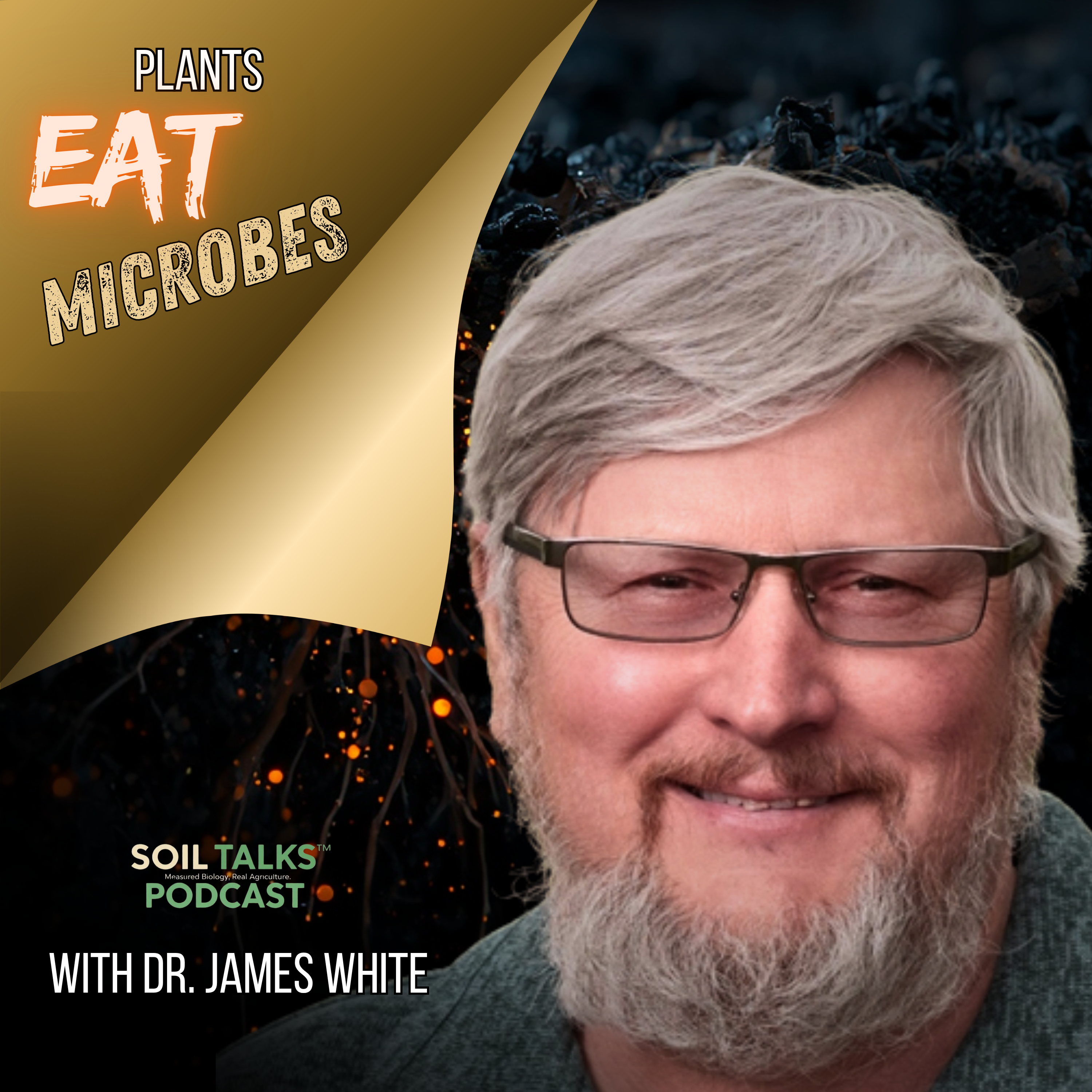 The Rhizophagy Revolution: Why Plant Roots are Microbial Farmers with Dr. James White | What if everything we knew about nutrient uptake was only half the story? In this episode of Soil Talks™, we dive deep into the Rhizophagy Cycle with world-renowned expert Dr. James White. We move beyond the "straw" model of plant roots and explore how plants actually "farm" microbes, attracting, absorbing, and even stripping the cell walls of bacteria to extract vital nutrients like manganese and nitrogen.Dr. White explains the "addictive" nature of conventional chemical inputs and how they blind plants to their natural internal partners. From the secret ecology of seed-borne endophytes to the direct link between soil health and human nutrition, this episode is a masterclass in the "Biological... Beyond Organic®" methodology.Chapter Markers(01:24) Roots as "hunters and farmers" vs. "straws"(02:56) Defining the Rhizophagy Cycle(06:03) Why rhizophagy is the key to reducing synthetic inputs(12:11) How microbes enter root cells: The entry hypothesis(15:40) The "Stripping Process": Using reactive oxygen to extract nutrients(19:41) Ejecting microbes: How plants manage soil "cattle"(21:00) Endophytes: The interior design of plant health(27:42) How plants vector microbes to the next generation via seeds(32:46) The "Addiction" of conventional NPK and fungicides(41:39) Can we use biology as a selective herbicide?(46:00) Soil testing: Why microbial biomass equals cycle successKey TakeawaysActive Symbiosis: Plants are not passive absorbers; they actively manage a complex internal ecology to ensure survival and nutrient efficiency.Seed Integrity: Modern seed processing often removes the very microbes a seedling needs to survive and resist pathogens.Nutrient Density: A diverse soil microbiome directly increases the production of health compounds like phenolics in crops.#SoilTalks #RhizophagyCycle #RegenerativeAg #SoilMicrobiome #DrJamesWhite #BeyondOrganic #SoilHealth #PlantPhysiology | — | ||||||
| 4/24/26 | 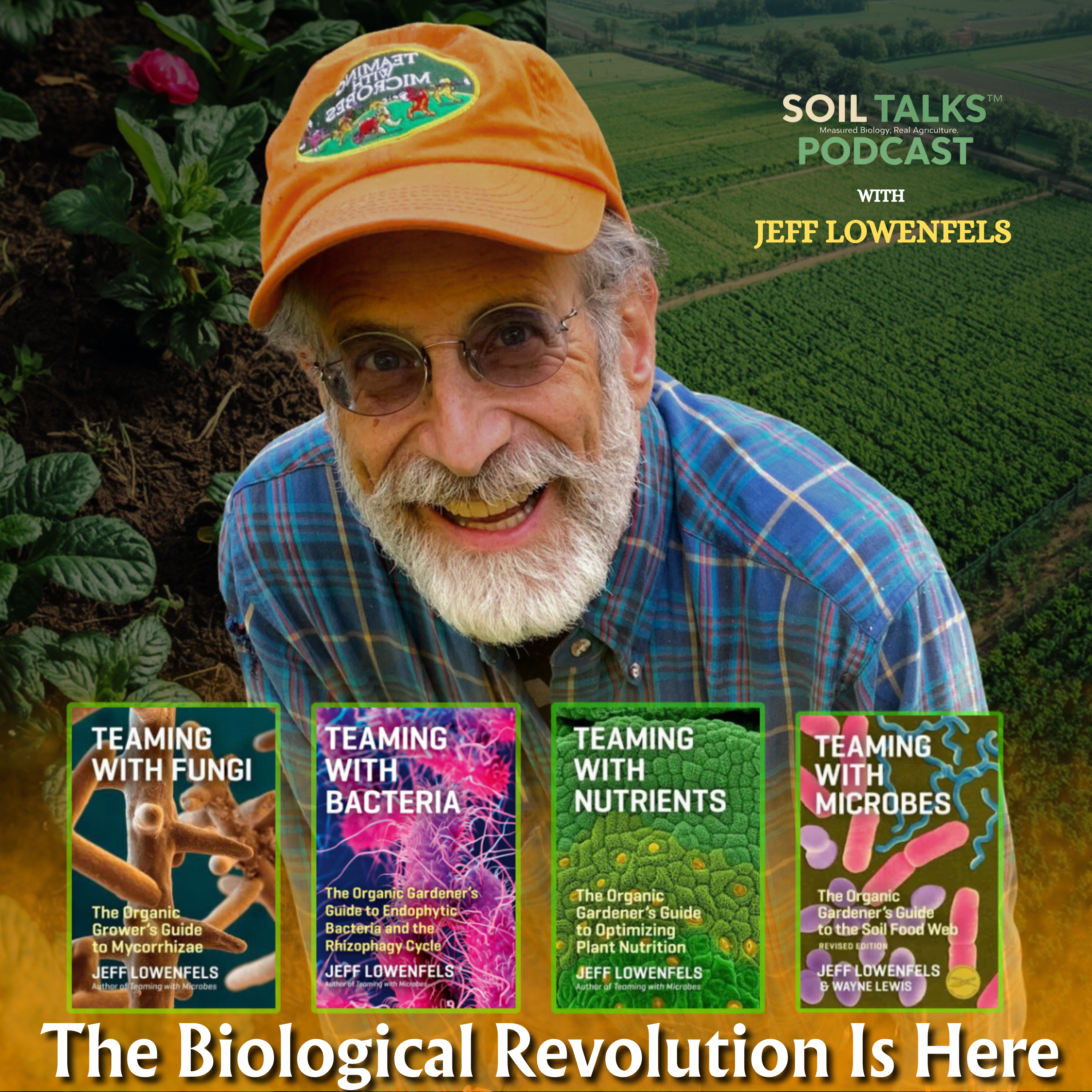 Jeff Lowenfels | Rhizophagy, Microplastics, and the Biological Revolution | In this episode of Soil Talks™, we sit down with the "Lord of the Roots" himself, Jeff Lowenfels. As the author of the legendary Teaming with Microbes series, Jeff has spent decades moving the needle from chemical dependency to biological stewardship.We dive deep into the "Poop Loop," the new frontier of the Rhizophagy cycle, and why modern agriculture must transition toward a regenerative, system-based approach to survive.Key topics discussed:The "Lightbulb Moment": Jeff shares the story of the Anchorage truck driver and the peat sample that changed his focus forever.Rhizophagy Explained: How plants literally "eat" bacteria to forage for nutrients.The Microplastic Crisis: The hidden dangers of plastic in farming and its link to human health.Fungal to Bacterial Ratios: How to use the microBIOMETER® to stop "guessing and stressing".The Evolution of the Soil Food Web: Why "Beyond Organic" is the necessary next step for large-scale agriculture.Links:Explore Rocky Mountain BioAg®Teaming with Microbes SeriesSoil Talks™ Podcast on YouTube Technical Inquiries: Consultation Info#SoilTalks #JeffLowenfels #RegenerativeAg #SoilFoodWeb #Rhizophagy #Microbiology #TeamingWithMicrobes #SoilHealth | — | ||||||
| 4/17/26 |  Beyond NPK |The Soil Architect's Blueprint for Doubling Yields with Neal Kinsey | In this episode, we dive deep into the "Blueprint of the Earth" with the soil architect himself, Neal Kinsey. Neal shares over 50 years of wisdom inherited directly from Dr. William Albrecht, challenging the modern "NPK-only" mindset that leaves growers with declining yields and unbalanced soil. We explore why standard soil tests often fail by stopping at pH, the critical role of calcium as the "doorman" for all other nutrients, and how balancing base saturations can transform even "dead" or sandy ground into highly productive land. Whether you are dealing with heavy clay gumbo or light sands, Neil explains how to prioritize feeding the soil so the soil can feed the plant.Key Discussion PointsThe Albrecht Legacy: Neal’s journey from a Missouri graduate student to a world-renowned consultant mentored by Dr. William Albrecht.Why pH is a Trap: Discover why a "perfect" 6.5 pH can still hide severe nutrient deficiencies that bottleneck your harvest.Calcium is King: Understanding the element that dictates soil structure, porosity, and the uptake of every other nutrient.ROI Over Inputs: Real-world stories of farmers doubling their whole-farm yields by switching from a "shotgun approach" to "rifle-like" soil balancing.The Physics of Fertility: How soil chemistry controls the air and water balance (porosity) required for biological life to thrive.#SoilTalks #NealKinsey #RegenerativeAg #SoilHealth #BeyondNPK #AlbrechtMethod #SoilTesting #BaseSaturation #AgriculturalYield #SustainableFarming #SoilBiology #AgronomyKinsey Agricultural Services: KinseyAg.comLearn More about Soil Balancing: The Biological...Beyond Organic® Fundamentals CourseFollow Soil Talks™ Podcast | — | ||||||
| 4/10/26 |  Unlocking the Soil Vault: Beyond NPK with Matt Slaughter | Is your soil a locked vault? Most farmers are sitting on a fortune of nutrients they can't actually use.In this episode of Soil Talks, we’re joined by Matt Slaughter, owner of Earthfort, to dismantle the biggest myths in modern agriculture. Matt reveals why your crops might be starving even if your chemical tests show "plenty of nutrients," and why shifting from a chemical-first to a biological-first mindset is the final frontier of farming.We go deep into the "Ground Truth" of soil microbiology, moving past the NPK treadmill to look at the living systems that actually drive profitability.In this episode, we discuss:The "Vault" Metaphor: Why chemistry is only the lock, and biology is the combination.The Death of the "Dead Soil" Myth: Why most soil isn't dead—it's just dangerously out of balance.The Economics of Transition: How one dairy farm increased milk fat and saved the operation by focusing on soil health.Wimp Pathogens: Why disease-causing organisms are actually "wimps" in a healthy, diverse system.Protein vs. Salt: Why your nitrogen source (Urea vs. Fish/Soy) changes everything for your microbes.Connect with Matt Slaughter:Website: Earthfort.comEmail: matt@earthfort.comConnect with Soil Talks:Subscribe on YouTube: @RockyMountainBioAgFollow on Apple & Spotify: Newsletter: Biological... Beyond Organic® NewsletterIf you found value in this episode, please leave us a 5-star review and share it with a fellow producer. Let’s bring the truth back to the soil. | — | ||||||
| 4/3/26 | 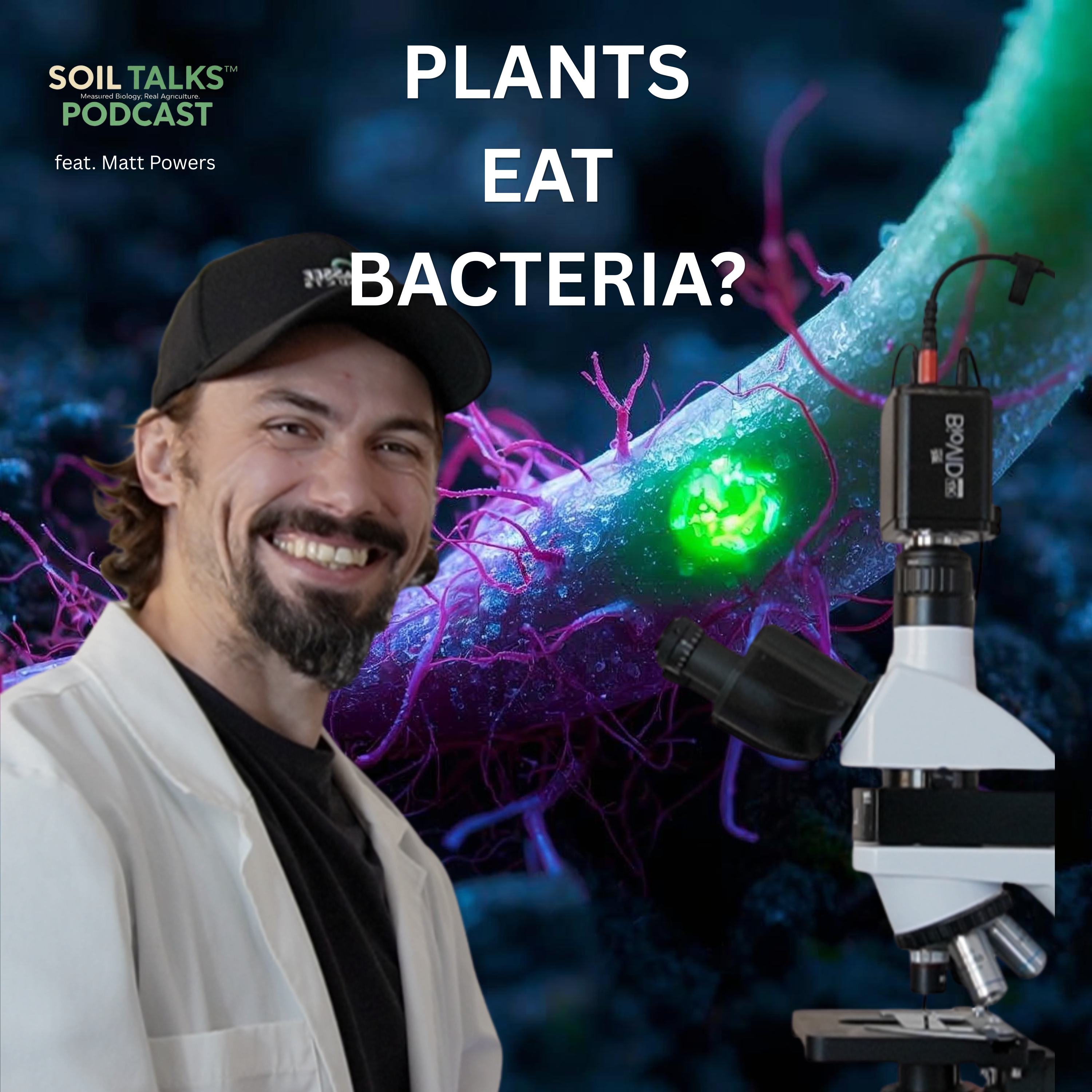 Matt Powers: The Rhizophagy Cycle & Why Plants Eat Bacteria | What if everything we knew about how plants "eat" was only half the story? In this episode of Soil Talks, we are joined by world-renowned permaculture educator Matt Powers to discuss the revolutionary Rhizophagy Cycle.Matt breaks down the "Soil Food Web 2.0," explaining the microscopic process where plants literally consume bacteria to trigger root growth and nutrient uptake. We move beyond basic sustainability into the high-level science of DNA testing, advanced microscopy, and why "sustainable" is no longer the goal regeneration is.Key Topics in this Episode:The Rhizophagy Cycle: The "Aha" moment of how plants actually digest microbes.Soil Food Web 2.0: Moving past the basics into DNA and functional biology.Microscopy for Farmers: How to use the lens to spot pathogens like Fusarium before they strike.The Glyphosate Legacy: Real talk on how long chemicals last in your soil and how to heal the land.Education for the Future: Why K-12 students are the key to the regenerative movement.Whether you are a backyard gardener or a large-scale farmer, this conversation provides the scientific "common sense" needed to restore your land and grow the healthiest food possible.00:00 – Introduction: Moving Beyond Sustainable to Regenerative 04:15 – Matt Powers’ "Aha Moment": From Music and Teaching to Soil 08:30 – Redefining Permaculture: Future Care and Independence 13:10 – Why We Must Teach Regenerative Science to K-12 Students17:45 – The Rhizophagy Cycle: How Plants Consume Microbes 21:30 – Lessons from Dr. Elaine Ingham & Dr. James White 26:40 – Microscopy for Beginners: Identifying Soil Structure and Life 32:15 – The Truth About Glyphosate and Soil Residues 38:50 – DNA Testing vs. Microscopy: Choosing the Right Tools 45:10 – Building a Global Regenerative Community#MattPowers #RegenerativeSoil #SoilFoodWeb #Permaculture #Rhizophagy #SoilMicroscopy #CitizenScience #HealthySoil #RegenerativeAgriculture #MicrobiologyLinks Visit Rocky Mountain BioAg: https://www.rockymountainbioag.comLearn with Matt Powers: https://www.regenerativesoilscience.comGet the Book "Regenerative Soil": at Acres USASubscribe to our YouTube Channel: @RockyMountainBioAg | — | ||||||
| 3/27/26 |  Your Soil Test is Already Outdated. (Here’s Why) | Laura Decker | Stop waiting weeks for lab results while your crop’s window of opportunity closes.Most soil recommendations are based on samples that are days or even weeks old. But soil isn’t a static chemistry set; it’s a living biological engine. In this episode of Soil Talks™ Podcast, we sit down with Laura Decker, CEO of Prolific Earth Sciences, to reveal why traditional soil testing often misses the mark and how the Microbiometer® is giving growers real-time data to slash input costs and boost resilience.At Rocky Mountain BioAg®, we believe in a Biological… Beyond Organic® approach. If you aren't measuring your microbial biomass in the field, you aren't seeing the full picture of your farm's potential.Learn more & Get Started: ▶ Get the Microbiometer here: https://www.rockymountainbioag.com ▶ Explore Biological Solutions: ▶ Join the Community: #SoilTalksTIMESTAMPS: The "Retention Engine"00:00 The "Mail Truck" Problem: Why your samples die in transit.02:15 Meet Laura Decker: From Immunology to the Soil Revolution.07:42 Why NPK-only farming is an "Economic Trap."13:40 The "Drug Addict" Analogy: Transitioning off conventional inputs.17:18 How to pronounce "Microbiometer" (and why it matters).20:13 The Science of "Sticky" Soil: What Glomalin tells you about profit.24:51 Why your Agronomist might be missing the biological "Missing Link."31:27 The 104°F Death Zone: The truth about lab sample handling.46:05 Data vs. Understanding: How to read your soil’s heartbeat.#SoilHealth #RegenerativeAgriculture #AgTech #Microbiometer #RockyMountainBioAg #SoilTalks #FarmerProfit #SoilBiology #SustainableAg | — | ||||||
| 3/20/26 |  Your Crops Aren’t Sick, They’re Dependent | John Kempf | For decades, agriculture has been built on a simple idea:If something goes wrong… apply more inputs.More fertilizer.More chemicals.More control.But what if that entire model is flawed?In this episode of Soil Talks™, John Kempf breaks down a radically different way to think about crop health, soil biology, and system function.We dig into:• Why pests may not be attacking your crops but reporting a deeper issue• How soluble fertilizers can create long-term dependency• The hidden relationship between plant immunity and soil microbiology• Why modern agriculture succeeds in yield but fails in resilience• And how some growers are producing healthier crops with fewer inputsThis isn’t about organic vs conventional.It’s about understanding how biological systems actually function.Because the real question isn’t:“How do we fix sick crops?”It’s:“Why are they getting sick in the first place?”—🎧 Listen on Spotify, Apple Podcasts, or wherever you get your podcasts📺 Watch the full episode on YouTube: [INSERT YOUTUBE LINK]—Connect with John Kempf:Website: https://johnkempf.comPodcast: Regenerative Agriculture Podcast—Follow Soil Talks™:YouTube: @RockyMountainBioAgLinkedIn: Rocky Mountain BioAg®Website: Rocky Mountain BioAg®—If this episode challenged how you think about agriculture, share it with someone who needs to hear it.#SoilHealth #RegenerativeAgriculture #SoilBiology #Farming #Agronomy #PlantHealth #Podcast | — | ||||||
| 3/13/26 |  What Soil Tests Miss: The Biology Driving Real Soil Fertility | Dr. Lance Gunderson | If soil is the engine of agriculture, how do we measure its performance?For decades, agriculture has treated soil like a chemistry set.Measure nitrogen. Adjust phosphorus. Balance potassium.But soil is not a sterile laboratory.It is a living biological engine.In this episode of Soil Talks™ Podcast, Brandon Kail sits down with Dr. Lance Gunderson, president of Regen Ag Lab and one of the most experienced soil microbiology interpreters in agriculture today.With over 100,000 soil samples analyzed, Lance explains why traditional soil tests often miss the most important part of soil function: biology.We break down:• Why the soil microbiome controls nutrient availability• The limits of conventional salt extraction soil tests• How the Haney Test measures biological soil function• Why fungal:bacterial ratios influence carbon storage and drought resilience• The hidden role of protozoa and microbial grazing in nitrogen release• The difference between PLFA testing and DNA sequencing• How growers can reduce fertilizer dependency through biological nutrient cyclingIf soil is the engine of agriculture, this episode shows how to finally look under the hood.Because soil health isn't just chemistry.It's biology, structure, water, and time working together.🎧 Share, Like & Subscribe to the Soil Talks™ Podcast Hosted by Rocky Mountain BioAg®Contact Dr. Gunderson at https://regenaglab.comLearn more with The Biological...Beyond Organic® Fundamentals Course#soilhealth #soilbiology #soilmicrobiome #soiltesting#haney test #regenerative agriculture #soilfertility#microbialnutrientcycling #plfasoiltesting #soilmicrobiology | — | ||||||
Want analysis for the episodes below?Free for Pro Submit a request, we'll have your selected episodes analyzed within an hour. Free, at no cost to you, for Pro users. | |||||||||
| 3/6/26 |  Why Modern Agriculture Keeps Failing the Soil | Jon Stika on Soil Biology | For decades, agriculture has treated soil like a chemical system.Add fertilizer to correct deficiencies. Increase yield.But what if the real problem isn’t nutrients, it’s biology?In this episode of Soil Talks Podcast, Brandon Kail sits down with Jon Stika, author of A Soil Owner’s Manual and a former NRCS agronomist with over 30 years of experience studying soil health and regenerative agriculture systems.Together, they unpack one of the most important shifts happening in modern farming:Soil is not a chemical system.Soil is a biological system.John explains why the Green Revolution pushed agriculture toward fertilizer dependency, how soil aggregates create habitat for billions of organisms, and why rebuilding soil biology may be the most profitable path forward for farmers.Inside this conversation:• Why modern agriculture became dependent on fertilizer• The hidden soil biology beneath every field• Why soil tests were built for degraded systems• How soil aggregates control water infiltration and nutrient cycling• Why yield per acre can be a misleading metric• The transition period when moving toward regenerative agriculture• How soil health affects nutrient density in foodIf agriculture is going to remain profitable and resilient, the conversation must move beyond inputs and toward restoring the biological systems that make soil function.Listen to understand why many farmers are shifting from a chemistry-first model to a biology-first approach.Guest:Jon Stika – Author of A Soil Owner’s Manual and former NRCS agronomistConnect with Jon StikaEmail: physicus1@gmail.comSubscribe to Soil Talks™ PodcastYouTubeSpotifyApple PodcastsAmazon Music#SoilHealth #RegenerativeAgriculture #SoilBiology#SustainableFarming #CarbonFarming #AgriculturePodcast#SoilTalks | — | ||||||
| 2/27/26 | 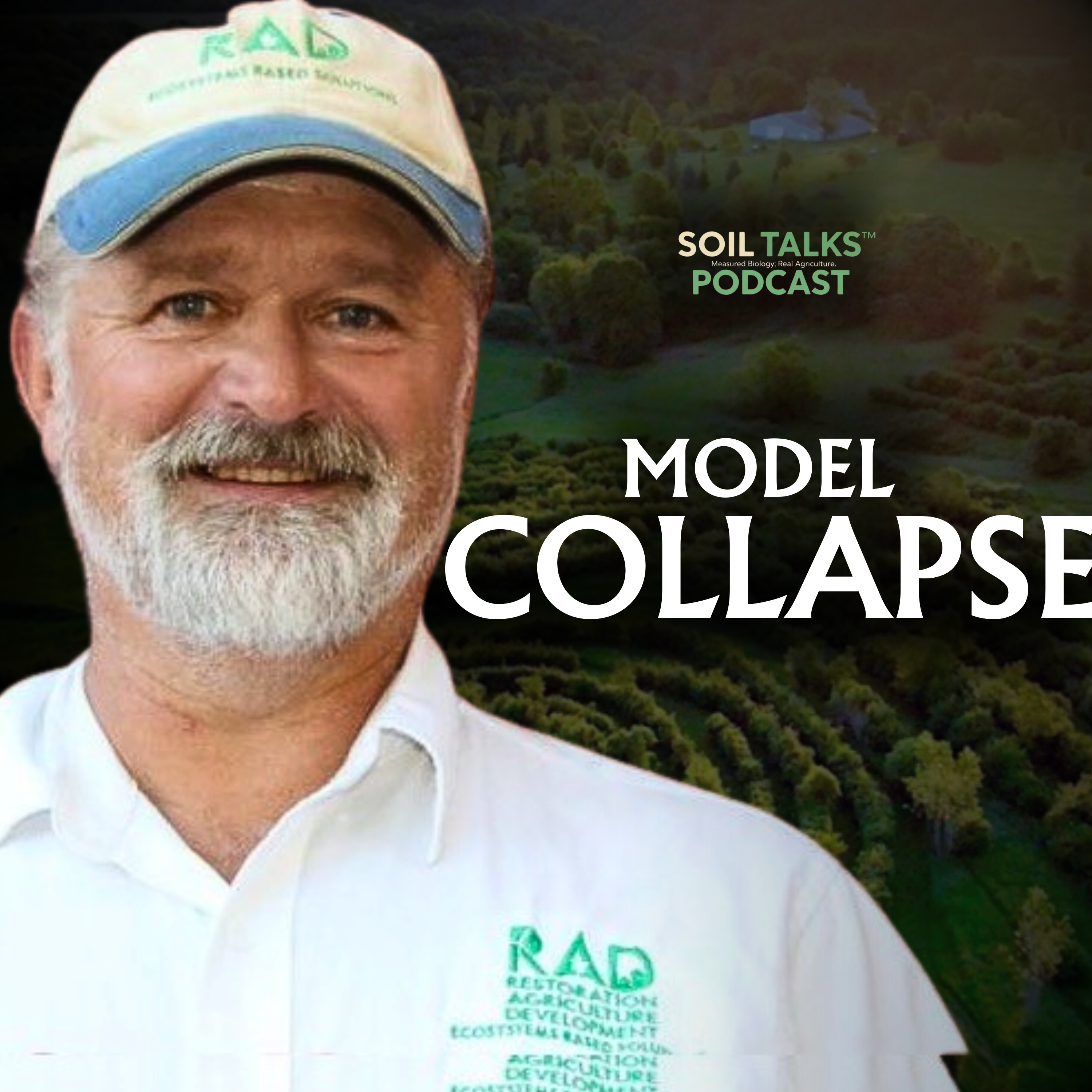 Is Modern Agriculture in Model Collapse? | Mark Shepard | Modern agriculture isn’t just under pressure; it may be experiencing model collapse.In this episode of the Soil Talks™ Podcast, Mark Shepard, author of Restoration Agriculture and Water for Any Farm, explains why today’s agricultural research and production systems may be built on a flawed foundation.From monocultures and annual disturbance to hydrology, agroforestry, and perennial systems, Mark breaks down:• Why annual monocropping disrupts ecological function• How “model collapse” happens in agricultural research• The economic math behind restoration agriculture• Why yield is not the same as profit• How to transition land without going bankrupt• What the Midwest could look like in 100 yearsThis is not theory.This is field-tested restoration agriculture at scale.📘 Mark Shepard’s Books (Available at Acres USA):Restoration Agriculture👉 https://www.acresusa.com/products/restoration-agricultureWater for Any Farm👉 https://www.acresusa.com/products/water-for-any-farmLearn more about Mark’s work:Restoration Agriculture Development (RAD)👉 https://restorationag.comForest Agriculture Nursery👉 https://forestag.comIf you believe agriculture can be both profitable and ecologically restorative, subscribe and join the conversation.#ModelCollapse #RegenerativeAgriculture #RestorationAgriculture #Agroforestry #SoilHealth #Permaculture #Farming | — | ||||||
| 2/20/26 | 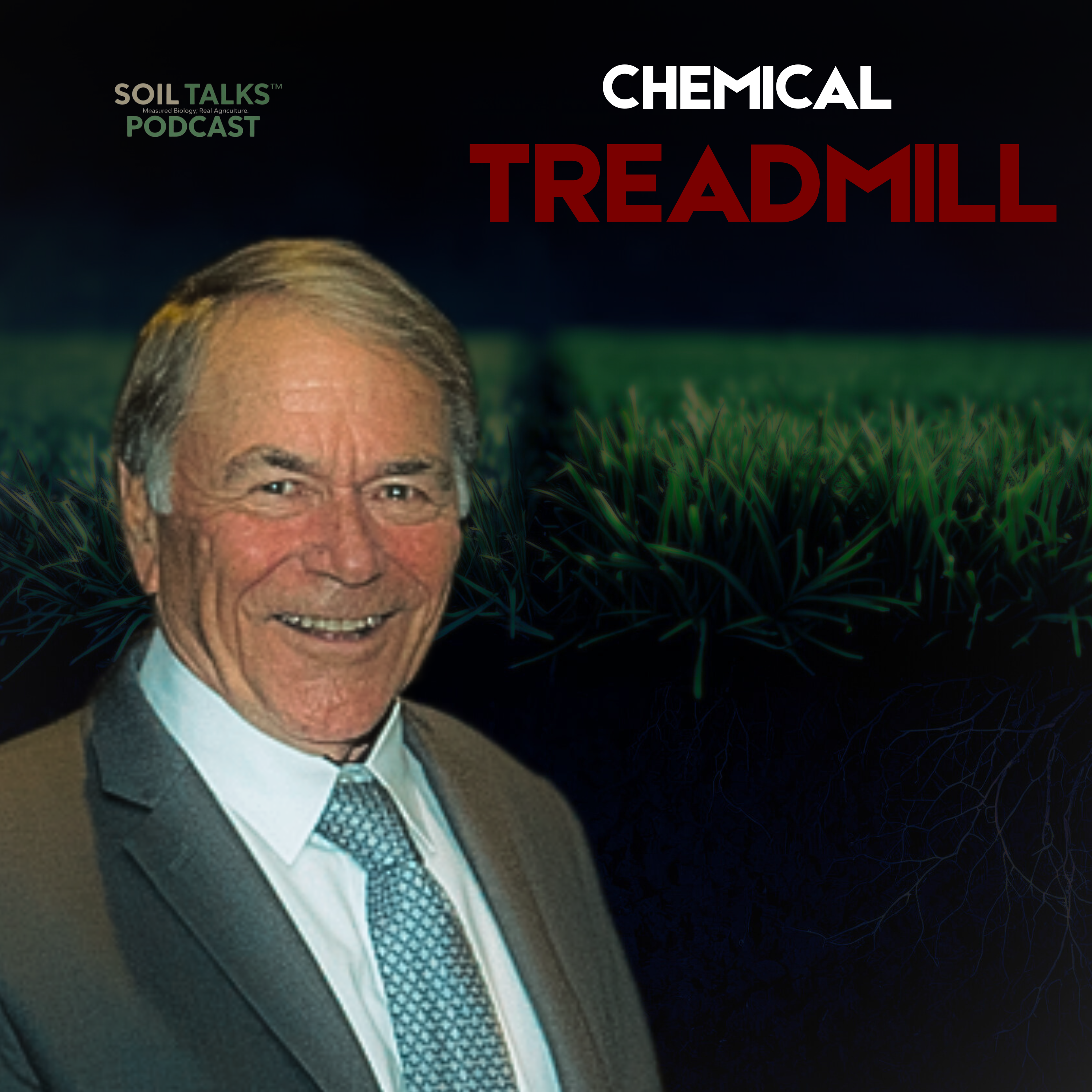 Chip Osborne: The Chemical Treadmill | Organic Turf vs Synthetic | Soil Biology, PFAS & Beyond NPK | For decades, turf and landscape management has relied on synthetic fertilizers and chemical pesticides. But is that system sustainable?In this episode of Soil Talks™, Chip Osborne, founder of Osborne Organics and a national leader in organic land management, explains the “chemical treadmill” and why feeding the soil, not the plant, is the future of resilient turf systems.We discuss soil biology testing, compaction and gas exchange, organic vs synthetic nitrogen, PFAS regulation, climate resilience, and why NPK-only agronomy often fails long-term performance goals.Whether you manage sports fields, municipalities, farms, or private landscapes, this conversation explores how soil health, microbial activity, and cultural practices drive profitability and sustainability.If you want measurable biology, real agriculture, and long-term system design this episode is for you.Partner plug:Get your soil tested and understand what’s happening beneath your feet at www.mysoildna.comContact Chip at www.osborneorganics.com#SoilHealth #OrganicTurf #SoilBiology#RegenerativeAgriculture #TurfManagement#LandManagement #BeyondNPK#SustainableLandscaping #GroundsManagement#SoilTesting #mysoildna | — | ||||||
| 2/13/26 | 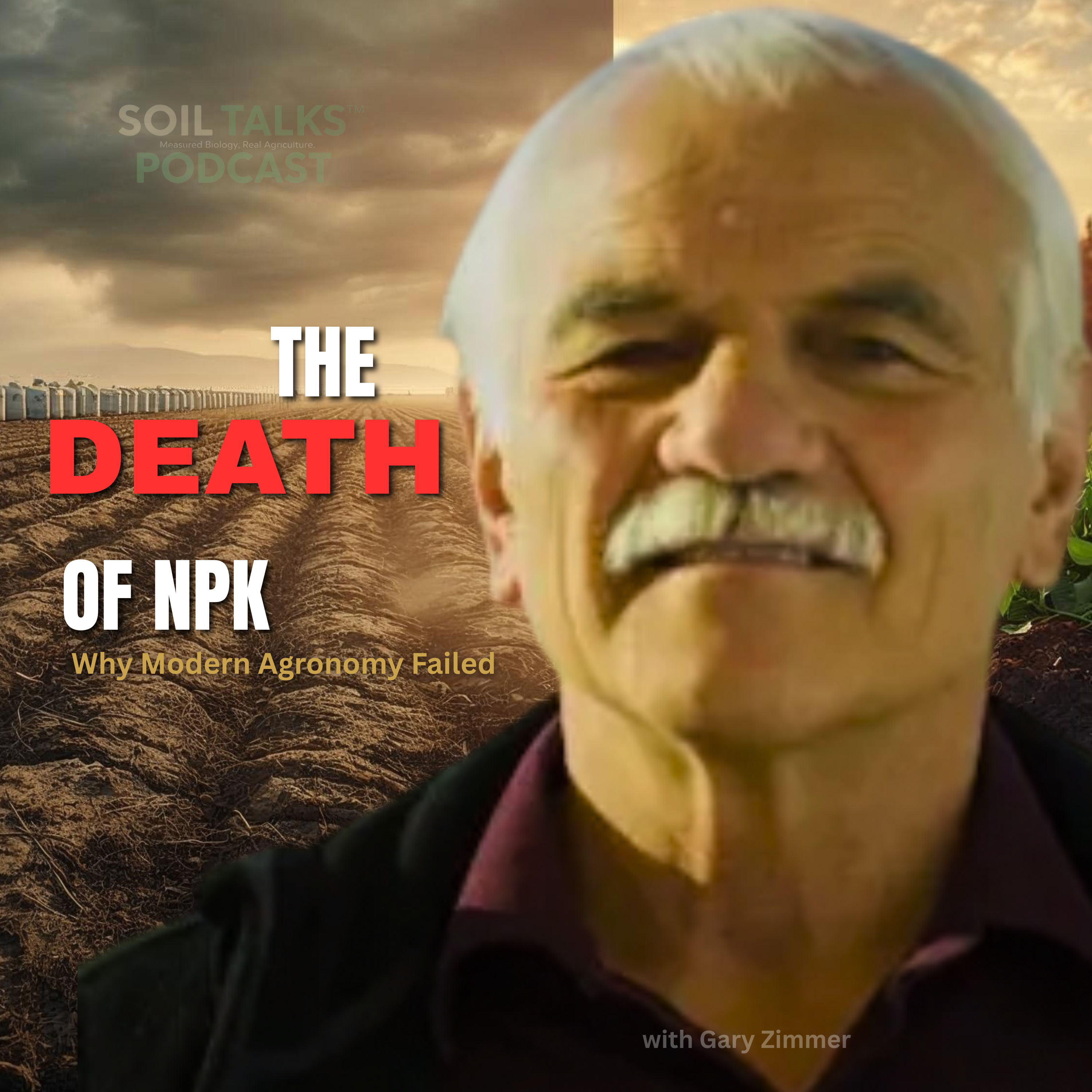 The Death of NPK: Why Lazy Soils and Broken Yields Start with Modern Agronomy | Every farmer knows the frustration following the book, applying the right NPK, investing in chemistry, only to watch soil resilience disappear.In this powerful episode of Soil Talks™, RMBA Founder Mark sits down with Gary Zimmer, the godfather of biological farming, to expose the broken mindset of modern agronomy and chart the path forward for the next agricultural revolution. Topics Covered:Why “perfect lab numbers” still lead to dead soilThe six foundational rules of biological farmingHow calcium drives the entire mineral and biological systemThe link between dairy cow digestion and soil biologyWhy regenerative and organic aren’t enough and “biological” is the futureHow farmers can earn the right to cut inputs, pesticides, and nitrogen⚡ Key Quote:“Soil isn’t a factory. It’s a massive living digestive system and we’ve been feeding it like it’s dead.”🎯 Who It’s For:Farmers ready to move beyond NPK, consultants rethinking soil health, and anyone tired of the chemical treadmill.🔗 Watch the full episode on YouTube:👉 Rocky Mountain BioAg® Soil Talks™ Channel🧠 Join the Movement:Subscribe to the Biological…Beyond Organic® Newsletter on LinkedInEnroll in the Soil Fundamentals CourseFollow @RockyMountainBioAg on all major platforms#SoilTalks #BiologicalFarming #RegenerativeAgriculture #SoilHealth #GaryZimmer #RockyMountainBioAg #BeyondOrganic | — | ||||||
| 2/6/26 | 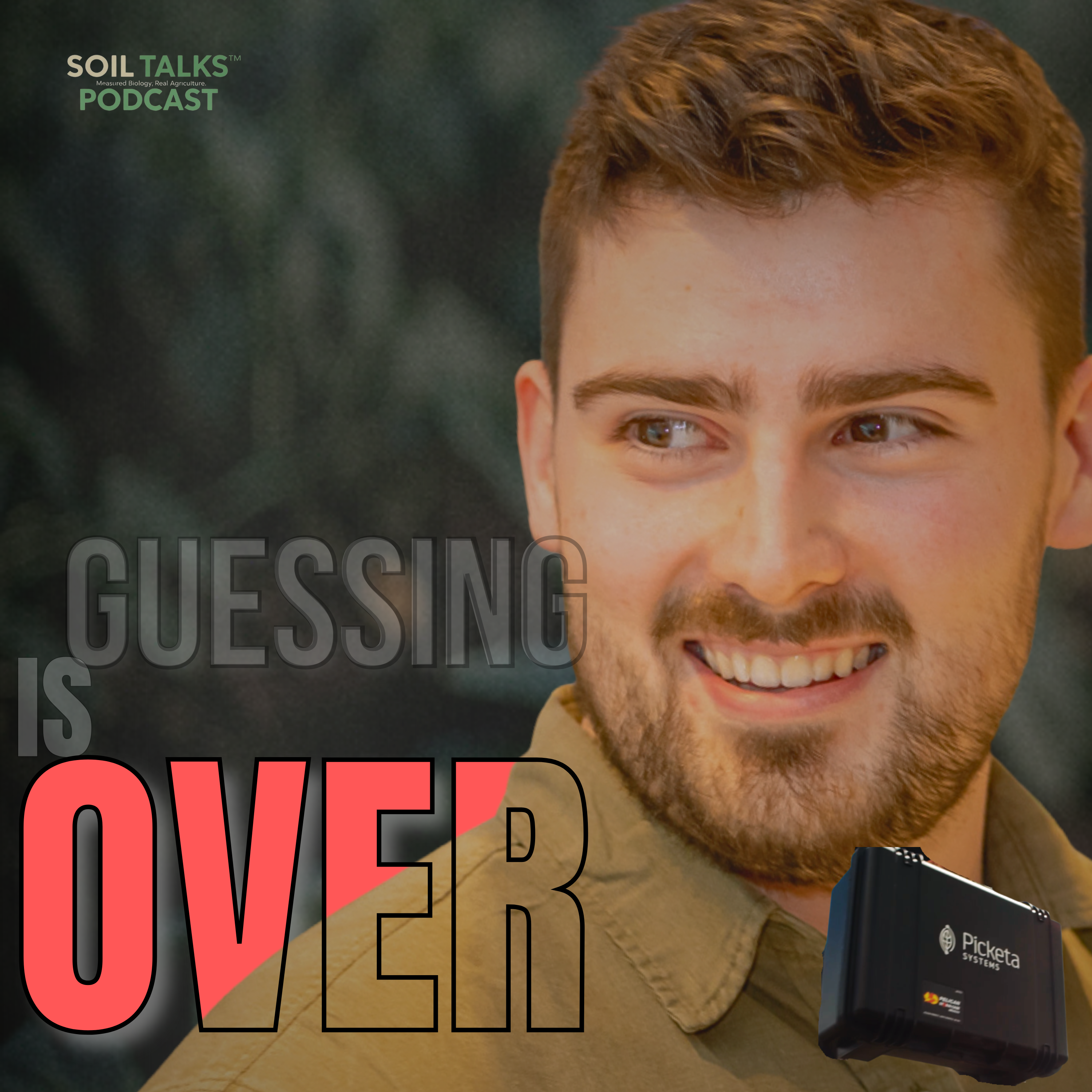 Guessing Is Over: Real-Time Plant ‘Lie Detector’ With Picketa Systems CEO Xavier Hebert-Couturier | For decades, farmers and agronomists have been forced to guess what’s happening inside the crop or wait days to weeks for tissue results that can change before the lab report even arrives.In this episode of Soil Talks™, Brandon sits down with Xavier Hebert-Couturier, CEO & Founder of Picketa Systems, the team behind a handheld tool that uses light + AI to reveal what the human eye can’t: real-time nutrient status inside the leaf.We unpack how the Picketa “Lens” is closing the gap between scouting and action turning every field visit into a tissue test in about a minute and why this matters for:Faster, better decisions in-season (no more waiting on labs)Reducing wasted fertilizer and improving nutrient efficiencyHelping agronomists move from “diagnosing” to building a real planSupporting more precise, measurable transitions toward regenerative & biological systemsA future where sensing + application get tighter… all the way to automationXavier also shares how Picketa scaled from a university capstone project to a venture-backed ag tech company, why most ag tech fails, and what it will take to build the most reliable plant nutrition sensing system on earth.Learn more about Picketa Systems:Website: www.picketa.comEmail: info@picketa.comIf you got value from this conversation, please leave a 5-star review on Spotify or Apple Podcasts it helps us bring on more CEOs and innovators shaping the future of agriculture. | — | ||||||
| 1/30/26 |  The Green Philosophy: Why Lawns Fail Without Soil Biology | For decades, lawn care has been built on schedules, products, and chemical fixes, yet lawns continue to decline, thin out, struggle with disease, and require more inputs every year.Why?Most lawn programs ignore the most important part of the system: soil biology.In this episode of the Soil Talks™ Podcast, we sit down with Rob Gaunt, Plant Pathologist and ISA Arborist, to break down The Green Philosophy a soil-first approach to lawn and landscape care that moves beyond chemicals, beyond guesswork, and into biological function.This conversation challenges the traditional lawn care model and explains why fertilizers and chemicals often fail long-term when biology is missing from the system.In this episode, we explore:• Why lawns fail even when “everything is done right”• How chemical programs mask problems instead of fixing them• What living soil actually means in turf systems• The role of microbes, fungi, and roots in long-term lawn health• Why biology, not products, drives resilience• How a soil-first approach changes the way we manage turfRather than focusing on quick fixes, this discussion looks at lawns as biological systems, not chemical equations. When soil biology is ignored, inputs increase and results decline. When biology is restored, systems stabilize and begin to regenerate.Whether you’re a homeowner frustrated with recurring lawn problems, a lawn care professional looking for better outcomes, or someone managing turf at scale, this episode provides a foundational framework for understanding why lawns fail and what actually fixes them.Soil Talks™ Podcast is where we break down soil biology, plant health, and regenerative systems one conversation at a time.📞 Have questions about your lawn or soil system?Our team is happy to help: 1-877-874-2334 | — | ||||||
| 1/23/26 |  Biology Feeds Everything | Why Soil Function Determines Profitability | Some farms are sitting on thousands of pounds of nutrients, and their crops are still starving. Why?Because the missing link isn’t fertilizer. Its function.In this episode of Soil Talks™ Podcast, Brandon Kail sits down with Tom Vander Heiden, GM of Ag at ST Biologicals, bringing 43+ years in agriculture and 15+ years in soil microbiology, to break down what most soil conversations never address:• Why standard soil tests miss the living system• The biology gap when nutrients exist but plants can’t access them• Why carbon, water, and oxygen drive everything downstream• How manure diversity was regenerative long before the term existed• Why soil health can’t be fixed at 60 mph only with a shovelOne line from this episode says it all:“The greatest limiting factor of yield… is the farmer’s shadow.”This isn’t theory.It’s field-tested biology, economics, and decision-making explained for growers who care about profitability, resilience, and legacy.🎧 Listen now and rethink how soil actually feeds crops. | — | ||||||
| 1/16/26 |  NPK Was Never the Engine: Why Soil Biology Determines Yield, Resilience, and ROI | Most agricultural systems weren’t designed to fail. They were designed around inputs instead of engines.For decades, fertility conversations have centered on NPK.But yield plateaus, rising input costs, drought stress, and disease pressure all point to the same reality:NPK was never the engine. Biology was.In this episode of Soil Talks™ Podcast, we sit down with the team from Purple Cow Organics / BioActive Ag to unpack what actually drives soil performance at scale without slogans, shortcuts, or ideology.We break down:Why NPK alone cannot create resilience, even when “balanced”The difference between inputs and functional soil systemsWhy limited-species biology fails under real-world stressHow microbial diversity and functional redundancy stabilize yieldsWhat growers actually see in Year 1 and what takes timeHow biology improves nutrient efficiency, drought tolerance, and long-term ROIThis conversation isn’t anti-fertility.It’s systems-first.If you grow crops, manage land, advise growers, or make agronomic decisions this episode will change how you think about soil, inputs, and profit.🎧 Watch or listen now on Soil Talks™YouTube • Spotify • Apple Podcasts | — | ||||||
| 1/9/26 |  The Farm Debt Trap: Why Regenerative Ag Must Pencil Out | Regenerative agriculture only works when the economics are in place.In this episode of Soil Talks™ Podcast, we sit down with Taylor Henry, CEO of Acres U.S.A., to discuss the aspect of regenerative farming that many people tend to overlook: finances, debt, and decision-making.Taylor shares his unconventional journey from law enforcement into agriculture and breaks down why regenerative systems often fail, not because the biology is wrong, but because the economic model is misunderstood.This conversation goes beyond soil health theory into:Why debt itself isn’t the enemy but unmanaged systems areThe biggest misconceptions holding regenerative farmers backHow technology should support farming decisions, not replace fundamentalsWhy long-term thinking separates profitable farms from struggling onesHow consumer expectations are shifting and what that means for producersWhy financial literacy may be the most important skill for the next generation of farmersIf regenerative agriculture is going to scale, it must be measured, economically viable, and decision-driven. This episode explains what that really means.🎧 Listen on Spotify & Apple Podcasts📺 Watch the full episode on YouTube📚 Learn more about Acres U.S.A. and agricultural education | — | ||||||
| 1/2/26 |  Biology Wasn’t Optional: How Betteravia Farms Reduced Nitrogen | In this episode of the Soil Talks™ Podcast, we sit down with Josue Diaz (Betteravia Farms / BoniPak Produce) and Dr. Christopher Height to unpack what actually happens when a large-scale operation transitions from conventional inputs to biological systems, under real-world pressure.This isn’t a conversation about ideology.And it’s not “biology vs fertilizer.”It’s a conversation about constraints.• Increasing regulatory pressure on nitrogen• Water scarcity and efficiency• Input volatility• Yield protection under stress• And the reality that soil health decisions now have to pencil out fastWhat stood out most in this discussion wasn’t belief.It was measurement.When biology is measured, not assumed:Active carbon becomes visibleNitrogen use efficiency improvesWater-holding capacity changesInput dependency declinesAnd resilience shows up sooner than most expectBetteravia Farms’ experience shows that biology doesn’t replace agronomy it changes how decisions are made.This episode is for:• Farm operators managing scale• Consultants working inside real constraints• Ag leaders navigating regulation, water, and margin pressureIf you’re asking:“How do we keep producing at scale when the rules of the game have changed?”This conversation is required listening. | — | ||||||
| 12/26/25 |  Soil Talks™ Podcast: How to Build Crop Resilience (N-Efficiency, Silica, Real-World Bio) | Can biology really pay? Dr. Curt Livesay (Alchemy BioScience, Dynamite Ag) breaks down the data behind crop stress mitigation with silica, nitrogen efficiency, and post-harvest nutrient removal testing. We dig into nutritional density trends, ROI, manure’s real value, and how to separate useful biologicals from marketing—using independent testing and fieldproof.Subscribe for more Soil Talks™: https://youtube.com/@RockyMountainBioAg?sub_confirmation=1Full playlist: https://www.youtube.com/playlist?list=PLEVD04wz0u2J9qqu3L0zcZ9V8_YVzpr81What you’ll learn• Why silica matters for stress resilience (heat/drought/salt)• N use efficiency: timing, placement, and common leaks• Post-harvest nutrient removal testing to plan fertility• Nutritional density: what’s changing and why• Biologicals: independent testing, real-world criteria, ROI• Manure as a systems tool (and what it really covers)• Commercializing peer-reviewed science without the hypeChapters00:00 Intro02:41 Stress mitigation & silica05:34 Nitrogen efficiency (rate/timing/placement)08:34 Soil testing & nutrient management nuance11:16 Post-harvest removal testing (grain analysis)24:23 Nutritional density & plant growth29:08 Biological tools & independent testing34:23 ROI testing farmers can run42:24 Commercializing science → field tools47:07 Profitability first, ethics & claims51:53 Challenging conventional practices57:56 Agronomy myths to retire1:03:11 Future: biology-first, site-specificLinks mentioned• Alchemy BioScience / PiKSi Dust® (guest’s company)• Reach out To Dr. Curt www.dynamiteag.com• Rocky Mountain BioAg® resources & BBO™ courseCTA👍 Like the episode if it helped📝 Comment your biggest agronomy myth to test next season🔔 Subscribe & turn on notifications for new Soil Talks™ Podcasts#SoilTalks #SoilHealth #RegenerativeAgriculture #Agronomy #NitrogenEfficiency #Silica #Biologicals #SoilMicrobiome #SustainableFarming #FarmProfitability | — | ||||||
| 12/22/25 |  PhycoTerra's Microalgae vs Traditional Amendments: The Results Are Clear | Microalgae, Microbes & Measurable Gains with Cassidy Million, VP Ag Sciences @ PhycoTerra®What this episode delivers: a clear, field-ready look at how photosynthetically-derived microalgae feed native microbes, improve aggregation, and lift yield without overhauling your program. We separate myth from mechanism, show where microalgae fit in the regen stack, and outline how to verify results fast.Guest: Cassidy Million, M.S. (Plant Pathology), VP of Ag Sciences at PhycoTerra®. Cassidy translates peer-reviewed biology into practical agronomy: microbial activation, carbon flow, water handling, and ROI.Key takeawaysActivation, not replacement: why feeding the existing microbiome outperforms sugar spikes.Structure gains you can see: aggregate stability, infiltration, and residue handling improve when biology is fed.Proof over promise: simple before/after checks (cup test, slake, root windows) + optional biomass/F:B tracking.Adoption playbook: when to apply, how to pair with covers & moisture, and how to avoid “boom → bust” programs.Chapters00:00 Welcome & today’s outcomes02:05 PhycoTerra® in one sentence (what it is / what it isn’t)04:10 Cassidy’s path: plant pathology → soil function05:35 Why microalgae feed the right microbes (diverse carbon, not just sugar)08:30 Native microbe activation vs. “bugs in a jug”10:20 Where it fits vs. composts, humics, and traditional amendments12:30 Carbon flow → aggregation, infiltration, root access15:10 Microbial diversity & stress tolerance (heat, salts, drought)17:15 Field results & persistence beyond 30–60 days20:45 Water retention, rooting pattern, and crop response30:20 Adoption traps: impatience, no habitat, no measurement32:00 What’s next for microalgae in regen programs39:30 Final playbook: how to trial, track, and scaleLinks• PhycoTerra®: https://phycoterra.com/• Rocky Mountain BioAg® (host): https://www.rockymountainbioag.com• Subscribe on YouTube Soil Talks™ PodcastTry this on your acresPrep habitat: moist, aerated, living roots.Feed biology (microalgae) → avoid sugar spikes.Measure: cup test + slake + root photo (before, then 7–10 days after).If two signals improve twice, scale to more acres.Powered by: Rocky Mountain BioAg®, Biological…Beyond Organic®#SoilTalks #RegenerativeAgriculture #SoilHealth #Microalgae #PhycoTerra #SoilBiology #Agronomy #RegenAg #WaterInfiltration #SoilStructureDisclosure: This episode discusses third-party products in the context of biological soil function and field measurement. | — | ||||||
| 12/19/25 |  Soil Talks™ Podcast with Joel Leman GM of Ballantine Farms , CO | What does it actually look like to take a conventional, hay-focused operation and turn it into a resilient, biology-led system in one season? In this episode, Brandon sits down with Joel Leman, GM of Ballantine Farms (Durango, Colorado), to unpack the full transition: rotational/mob grazing in arid conditions, using goats to knock out thistle without herbicides, deploying virtual fencing (GPS collars) to increase stock density, and partnering with RMBA to add biology only when habitat is ready. | — | ||||||
Showing 23 of 23
Pitch Fit is a Pro feature
See how bookable this show is for guests, which brands already advertise, the per-episode ad value, and the best-fit guest and sponsor profile. The numbers are blurred on the free plan.
How readily this show books outside guests like you.
How proven this show is for host-read sponsorships.
For Guests
ProFor Advertisers
ProUpgrade to Pro to unlock guest cadence, sponsor categories, fit scores, and per-episode ad value for this show.
Chart Positions
9 placements across 9 markets.
Chart Positions
9 placements across 9 markets.