
Insights from recent episode analysis
Audience Interest
Podcast Focus
Publishing Consistency
Platform Reach
Insights are generated by CastFox AI using publicly available data, episode content, and proprietary models.
Most discussed topics
Brands & references
Total monthly reach
Estimated from 10 chart positions in 10 markets.
By chart position
- 🇺🇸US · Islam#8230K to 100K
- 🇨🇦CA · Islam#1305K to 30K
- 🇦🇺AU · Islam#1885K to 30K
- 🇯🇵JP · Islam#1671K to 10K
- 🇵🇱PL · Islam#2710K to 30K
- Per-Episode Audience
Est. listeners per new episode within ~30 days
33K to 125K🎙 Weekly cadence·94 episodes·Last published 5d ago - Monthly Reach
Unique listeners across all episodes (30 days)
66K to 249K🇺🇸40%🇨🇦12%🇦🇺12%+7 more - Active Followers
Loyal subscribers who consistently listen
20K to 75K
Market Insights
Platform Distribution
Reach across major podcast platforms, updated hourly
Total Followers
—
Total Plays
—
Total Reviews
—
* Data sourced directly from platform APIs and aggregated hourly across all major podcast directories.
On the show
From 11 epsHost
Recent guests
Recent episodes
94 | The Divine Wisdom in Hardships and Challenges
Jun 19, 2026
Unknown duration
93 | Dr. Joe Dispenza on Heart Coherence
Jun 10, 2026
92 | Amin Abdullah’s Prayer Was Answered
Jun 1, 2026
14m 23s
91 | How We Create Our Own Enemies
May 6, 2026
27m 41s
90 | On the Defeat of Donald Trump
Apr 30, 2026
8m 26s
Social Links & Contact
Official channels & resources
Official Website
Login
RSS Feed
Login
| Date | Episode | Topics | Guests | Brands | Places | Keywords | Sponsor | Length | |
|---|---|---|---|---|---|---|---|---|---|
| 6/19/26 |  94 | The Divine Wisdom in Hardships and Challenges | One of the greatest misconceptions of modern life is the belief that life should be easy. We are constantly sold the idea that happiness is found in comfort, convenience, and the avoidance of difficulty. Yet the reality is that hardship, struggle, and challenge are woven into the very fabric of human existence. The sooner we accept this truth, the sooner we can stop resisting life and begin growing through it. Every challenge we face serves a purpose. Whether our struggles are related to faith, relationships, health, finances, family, or personal growth, they are not random obstacles standing in the way of our success. Rather, they are part of a divine curriculum designed specifically for us. They exist to awaken latent capacities within the heart and soul, to strengthen our character, and to help us become who we were created to be. In this sense, our greatest difficulties often contain the keys to our greatest growth. It is through struggle that we discover ourselves. Human beings do not uncover their true strength in comfort and complacency. We discover who we are in the midst of life’s battles. The Qur’an reminds us that we may dislike something that is good for us and love something that is harmful to us [Holy Qur’an, 2:216]. What we instinctively seek to avoid may in fact be the very thing that leads to our transformation, while the comfort we desire can sometimes become a barrier to our development. Fighting has been prescribed for you, though it is disliked by you. But perhaps you dislike a thing and it is good for you, and perhaps you love a thing and it is bad for you. Allah knows, while you do not know. Surah al-Baqarah, 2:216 This reality points to the importance of awakening the warrior within. The way of the warrior is not about aggression or domination, but about courage, resilience, discipline, and the willingness to confront life’s challenges with wisdom and faith. The greatest struggle is the struggle against the lower self, the ongoing effort to align our hearts, intentions, and actions with truth. This inner battle requires strength, but also intelligence, strategy, patience, and trust in God. Every hardship also presents an opportunity to cultivate and embody the divine attributes that are the key to human evolution and knowing our Lord. A difficult circumstance may be calling us to develop patience, resilience, forgiveness, compassion, wisdom, strength, or forbearance. In learning to respond to life’s challenges in the right way, we come to know our Lord more deeply through the qualities He has revealed and invited us to reflect. The path of spiritual growth requires both surrender and strength, softness and firmness, receptivity and resolve. By embracing rather than resisting our challenges, we transform hardship into a pathway of awakening, self-discovery, and nearness to Allah Almighty. What appears to be an obstacle may, in reality, be a doorway to the very life we were meant to live. Additional Resources The following resources will help you cultivate the strength, resilience, discipline, fortitude, and faith required to awaken the warrior within, overcome life’s challenges, fulfill your divine purpose, and experience greater health, happiness, harmony, and success in both this life and the life to come. Alita: In Battle You Will Find Yourself Introduction to the Way of the Warrior Eternal Warrior Way Program | — | ||||||
| 6/10/26 |  93 | Dr. Joe Dispenza on Heart Coherence | One of the most fascinating developments in recent years has been the growing convergence between modern science and classical spiritual wisdom. Researchers, neuroscientists, and experts in human performance are increasingly discovering what the world’s great spiritual traditions have taught for centuries: the human heart plays a far greater role in our lives than merely pumping blood throughout the body. The heart is intimately connected to our health, our emotional well-being, our intuition, our relationships, and even our ability to realize our highest human potential. In his book Becoming Supernatural, Dr. Joe Dispenza explores the concept of “heart intelligence” and what he calls “heart coherence”—a state in which the heart, mind, emotions, and body come into alignment. Through years of research and observation, he points to the remarkable effects that elevated emotional states such as gratitude, compassion, appreciation, love, and joy can have on the human being. These states not only improve emotional well-being but appear to influence physical health, stress levels, gene expression, and overall quality of life. For students of Islamic spirituality, however, these discoveries are not new. The centrality of the heart has always occupied a foundational place within the teachings of Islam. The Qur’an repeatedly draws attention to the state of the heart, and Allah Most High informs us that on the Day of Judgment nothing will benefit a person except one who comes with a sound heart (qalb salim). The Prophet Muhammad ﷺ likewise taught that within the human being is a piece of flesh which, if sound, causes the entire being to be sound, and if corrupted, causes the entire being to be corrupted. That piece of flesh, he said, is the heart. Islam teaches that the heart is far more than a physical organ. It is the seat of faith, certainty, perception, and direct knowledge of God. While the mind thinks, analyzes, and reasons, it is the heart that truly knows. It is through the heart that human beings connect to their Creator, receive guidance, experience tranquility, and awaken to their deeper purpose. The heart serves as the bridge between the material and spiritual dimensions of existence, connecting us to realities that lie beyond the reach of the intellect alone. This understanding has profound implications for both personal transformation and human health. Modern society is characterized by unprecedented levels of stress, anxiety, distraction, and disconnection. Not coincidentally, heart disease remains one of the leading causes of death worldwide, while emotional and psychological suffering continue to rise. The human heart is not only struggling physically; it is struggling spiritually. We have become disconnected from the very source of meaning, purpose, and inner equilibrium. True faith and religion offer a powerful remedy. Through remembrance of God (dhikr), prayer, contemplation, gratitude, service, and sincere devotion, the heart gradually returns to a state of coherence, balance, and wholeness. As the heart becomes purified, elevated qualities such as compassion, patience, contentment, forgiveness, and love begin to emerge naturally. This inner transformation influences every dimension of life, including physical health, emotional well-being, relationships, decision-making, and one’s ability to navigate life’s challenges. Human potential is not simply about achieving external success or accomplishing goals. Rather, it is about awakening to who and what we truly are. It is about realizing our role as vicegerents of God upon the earth and aligning ourselves with the divine purpose for which we were created. When the heart awakens, the human being awakens. When the heart heals, the human being heals. And when the heart becomes connected to its Lord, possibilities emerge that far exceed what we once thought possible. Additional Resources The following resources will support you in deepening your knowledge, understanding, and practice as you awaken the latent potential of the heart and cultivate the healed, whole, and sound state of being that is the key to lasting peace, spiritual growth, health, wellbeing, and success. Primer on Islamic Meditation Islamic Meditation Program Awakenings Academy | — | ||||||
| 6/1/26 |  92 | Amin Abdullah’s Prayer Was Answered✨ | tragedysacrifice+4 | — | Islamic Center of San Diego | — | Amin AbdullahIslamic Center of San Diego+5 | — | 14m 23s | |
| 5/6/26 |  91 | How We Create Our Own Enemies✨ | egoself-improvement+4 | — | Holy Qur’an | — | egonafs+6 | — | 27m 41s | |
| 4/30/26 |  90 | On the Defeat of Donald Trump✨ | political conflictleadership+4 | — | — | United StatesIran | Donald TrumpUnited States+5 | — | 8m 26s | |
| 2/11/26 |  89 | How to Ruin Your Afterlife✨ | backbitingIslam+4 | — | Musnad AhmadSurah al-Ḥujurāt | — | backbitingslander+5 | — | 31m 39s | |
| 1/28/26 |  88 | How Exercise Heals the Body, Mind, and Spirit✨ | physical healthIslam+5 | — | Allah Almighty | — | exercisehealth+6 | — | 17m 05s | |
| 12/29/25 |  87 | Virtues of the Sacred Month of Rajab✨ | Rajabspiritual progression+4 | — | — | — | Rajabspirituality+5 | — | 27m 18s | |
| 12/21/25 |  86 | How the Present Moment is the Key to Healing✨ | healingpresent moment+3 | — | Divine Will | — | healingpresent moment+3 | — | 25m 31s | |
| 12/17/25 |  85 | Gratitude Is the Foundation of Faith✨ | gratitudefaith+3 | — | — | — | gratitudefaith+3 | — | 10m 17s | |
Want analysis for the episodes below?Free for Pro Submit a request, we'll have your selected episodes analyzed within an hour. Free, at no cost to you, for Pro users. | |||||||||
| 12/11/25 |  84 | Awakening the Heart and the Truth About Islam✨ | spiritual awakeningIslam+4 | — | — | — | awakeningconsciousness+8 | — | 17m 46s | |
| 12/5/25 |  83 | Pain is Inevitable But Suffering is a Choice✨ | painsuffering+5 | — | Qur’an | — | painsuffering+8 | — | 16m 43s | |
| 10/25/25 |  82 | Sacred Manifestation with Fatimah Linda Howard✨ | spiritual transformationIslamic teachings+4 | Fatimah Linda Howard | From Vision to Divine Provision | — | manifestationIslamic meditation+6 | — | 55m 17s | |
| 10/20/25 |  81 | How Spiritual Minimalism Saves Us from Drowning in Dunya | Drawing from the wisdom of Sultan al-Awliya Shaykh Muhammad Nazim Adil al-Haqqani (qs), I reflect in this episode on a brief but deeply impactful teaching about our relationship with the world. We explore the contrast between two oceans: the ocean of light and spirit that flows from the Divine Presence, and the ocean of dunya, the material world, which veils us from essential reality. The ego craves the material, the temporary, the apparent—but the soul longs for something subtler, more lasting: truth, light, and connection with Allah Almighty. The Shaykh reminds us that our over-attachment to the world is the root of much of our suffering. The modern pursuit of endless consumption and accumulation leads to spiritual sickness, yet it never satisfies. It’s like drinking from the ocean—salt water that only makes us thirstier. One of the key metaphors here is: “When a man is thirsty, he imagines he drinks all the rivers and springs, yet one glass is enough.” This one line encapsulates the heart of spiritual minimalism. Through this lens, we revisit the prophetic path of asceticism—taking only what is necessary, living simply, and remaining unattached to the material world while using it in service to truth and eternity. I also reflect on how even good things like home, family, and wealth only benefit us spiritually when approached with the right intention and non-attachment. It’s not about rejecting the world, but about ensuring it doesn’t root itself in our hearts. | — | ||||||
| 10/20/25 |  80 | Successful are They Who Purify Themselves | Over and over again, life brings me back to one central truth: the importance of the inward dimension of faith. While so much of our energy goes into the external aspects of religion—rituals, lectures, and outward practices—none of it has lasting value if we ignore the internal work. As Allah says in the Qur’an, “Successful are they who purify themselves.” This isn’t just spiritual poetry—it’s the foundation of a life aligned with faith. As a faith-based life coach, I work with seekers who are trying to live a holistic, integrated path, blending their spiritual and practical lives. The heart of that path is the purification of the self. While you may experience short term success in the material world while still being trapped by ego, pride, fear, or selfishness, true success and in what matters most requires refinement of character, humility, and surrender. We live in a world that celebrates the ego. Even religion can be co-opted by it. But real transformation begins when we begin to notice how our lower self shows up in daily life. A powerful practice I recommend is nightly reflection, or muhassiba: take just a few minutes to identify one moment in your day when your ego led the way. Then make tawbah (repentance), and visualize responding differently next time. This simple practice rewires the heart and mind toward presence, humility, and conscious action. True ascension isn’t about rising above—it’s about lowering ourselves in sincere prostration. It’s in submitting to Allah’s will in each moment that we begin to change. Radical acceptance of Allah’s decree, especially when it’s hard, is the beginning of freedom from the self. Only through surrender does transformation happen. If you’re ready to take this work deeper, I invite you to join us in Awakening’s Academy and the Islamic Meditation Program, where we practice the real, experiential remembrance of Allah Almighty and cultivate a state of surrendered presence. May we be among those who purify ourselves and succeed, by Allah’s mercy. Ameen. | — | ||||||
| 10/13/25 |  79 | Manifestation and the Power of Surrender | In this episode, I respond to a thoughtful question from a listener on the concept of “manifestation” and its compatibility with Islamic belief—especially the doctrine of Tawheed, the oneness of Allah. The question gets to the heart of a common dilemma: how do we reconcile the popular idea of manifestation, often tied to the “law of attraction,” with faith that places creative power solely in the hands of the Divine? I break down why the fear of shirk—associating partners with Allah—often arises in this context, and how, through proper understanding, that fear can be alleviated. Islam doesn’t deny human agency or the idea that our internal states shape our external reality. In fact, the Qur’an confirms that Allah will not change our conditions until we change what is within ourselves. This isn’t co-creation in the New Age sense but rather the process of choosing, through our thoughts, intentions, and states, among the infinite possibilities that Allah has already created. We also explore how our beliefs must move from the tongue to the heart—from Islam to Iman—and how life reflects not just what we think we believe, but what we truly hold within. Manifestation, then, becomes less about acquiring worldly pleasure and more about aligning ourselves spiritually to receive what Allah Almighty has already willed for us. I emphasize the importance of cultivating inner peace and surrender through spiritual practice, including meditation, to create a state receptive to divine mercy and provision. True manifestation is rooted in becoming deeply Muslim—in character and state—not just in name. When we surrender fully, we are best positioned to receive the best possible outcomes, not by our own power, but by Allah’s infinite divine grace. 00:00 | Introduction to Soul of Islam RadioOpening reflections and a listener question on manifestation in Islam. 00:50 | The Question on Manifestation and TawheedA listener asks how to reconcile manifestation with Islamic monotheism. 03:12 | Defining Shirk and Co-CreationExploring where manifestation could cross into shirk and how to avoid it. 03:59 | The Dunya Focus of ManifestationManifestation is often limited to worldly gain—Islamic perspective broadens it. 04:34 | Responsibility, Effort, and Divine WillBalancing our agency with Allah’s will and the importance of personal effort. 06:03 | The Universe as a Mirror of BeliefHow our external reality reflects our internal state and belief. 06:54 | Islam vs Iman and the Role of FaithThe distinction between spoken belief and deep, heartfelt conviction. 08:30 | Infinite Possibilities in Divine KnowledgeWe choose from among infinite realities already known to Allah. 10:08 | Surrender as the Path to Divine GiftsTrue manifestation happens through spiritual surrender and presence. 11:46 | Fear of Shirk and Clarifying Our RoleChoosing is not creating—reaffirming Allah’s role as sole creator. 12:39 | Life as a Test and the Power of SurrenderTrials deepen surrender; everything good is from Allah’s mercy. 13:25 | Closing Reflections and Du’aEncouragement for deeper learning and a concluding prayer for guidance. | — | ||||||
| 10/12/25 |  78 | Saved By the Light—The Remarkable Near Death Experience of Dannion Brinkley | I came across the book Saved by the Light by Dannion Brinkley years ago, and it left a lasting impression on me. In this episode, I reflect on the profound lessons from his near-death experience (NDE), where after being struck by lightning, he underwent a deeply detailed life review. What makes this account so remarkable is how closely it aligns with spiritual principles we know through Islam—especially the notion of accountability after death, the weight of our intentions, and the unseen consequences of our actions. In this episode, I share a few brief excerpts from the book and explore themes like respect for parents, the moral impact of harming others, the ripple effect of our behavior, and how even seemingly small actions carry immense spiritual weight. One of the most sobering parts is how Dannion relived the pain he caused others—from animals to entire communities impacted by his involvement in war and arms trading. His life review serves as a mirror, reminding us of the responsibility we hold not just for our actions, but for their impact on others and even the Earth itself. Through this lens, we are reminded of how faith calls us to repentance, reflection, and righteousness. The Prophet ﷺ said that even an atom’s worth of good or evil will be accounted for. Dannion Brinkley’s story becomes for believers a blessing—not only for his transformation, but as a wake-up call for us. May Allah Almighty guide us to be better, to cause less harm, and to live lives of and in the light. Ameen. 00:00 | Introduction to Saved by the LightI introduce the book and its relevance to both spiritual seekers and believers. 00:52 | What Is a Near-Death Experience (NDE)?An overview of clinical death and the common features of NDEs. 01:46 | Struck by Lightning: Dannion Brinkley’s NDEDetails of Brinkley’s dramatic death and revival after being hit by lightning. 02:30 | Life Review Begins: Facing the SelfBrinkley confronts the harsh truth of his past behaviors and selfishness. 04:12 | Feeling the Pain of OthersDuring his life review, he experiences the emotions of those he hurt. 05:40 | The Weight of Hurting ParentsReflections on parental respect and the deep pain caused by disobedience. 08:07 | Kindness to Animals MattersBrinkley relives a moment of cruelty to his dog and learns its spiritual cost. 10:58 | Karma, the Earth, and IntentionEvery action has consequences—even toward animals and the planet. 12:27 | The Cost of Killing and WarBrinkley relives deaths from his military service and their far-reaching impact. 14:49 | The Horror of Collateral DamageA hotel bombing reveals the devastating consequences of collective guilt. 18:06 | The Business of WarWeapons transfers and the military-industrial complex are shown in stark moral light. 22:20 | “Who You Are Is the Difference God Makes”A powerful spiritual message from the being of light. 23:50 | The Meaning of True TransformationUnderstanding that Allah’s light in our hearts makes us who we are. 25:32 | Reflection and the Path to PurityEvil creates spiritual density, and only reflection and repentance can lighten the soul. 27:48 | The Power of Self-AwarenessTrue piety is not external—it’s in recognizing our own flaws and striving to change. 28:38 | The Small Things That Matter MostLove, kindness, and sincerity in everyday actions are what truly count. 30:10 | Final Thoughts and InvitationI share closing reflections and invite listeners to learn more about this profound book. | — | ||||||
| 10/11/25 |  77 | Why Healing Begins With the Heart and Not the Head | I’ve been reflecting on a powerful book I recently started reading—Dajjal: The Antichrist by Ahmed Thompson. Though written decades ago, its insights feel incredibly timely. In this short episode, I share some key passages and offer reflections on the growing influence of the Dajjalic, materialist system—what the author calls a system disconnected from spirit and anchored in illusion. One theme that stood out to me is Thompson’s critique of modern psychiatry. He argues that the dominant, secular approach focuses too much on the mind—on intellect and surface symptoms—while ignoring the true seat of healing: the heart. From an Islamic perspective, healing starts at the spiritual level, and the Prophet ﷺ consistently made dua for the heart, not the intellect. Thompson invites us to return to a heart-centered approach, where stillness, remembrance of God, and spiritual purification are the foundation for real wellness. We also touched on the illusion of the self—how modern psychology often reinforces the ego, while the traditional path aims to transcend it. True healing, in this view, comes not from treating symptoms with more imbalance, but from dismantling the false self and reconnecting with the Divine. This requires purification of the heart, remembrance of Allah, and companionship with people of spirit. Ultimately, the Prophet’s ﷺ way is presented not only as a moral guide but as a path to deep psychological and spiritual sanity. I hope this episode serves as a gentle reminder that the forms of religion must always be in service of the spirit. 00:00 | Introduction to the BookIntroducing Dajjal: The Antichrist by Ahmed Thompson and its relevance today. 00:53 | System of the AntichristExploring the emergence of a materialist, Dajjalic system warned about in prophetic traditions. 02:28 | Critique of Modern PsychiatryDiscussing how the modern medical model neglects the heart and focuses solely on the mind. 04:09 | Heart-Centered HealingThompson emphasizes spiritual healing through remembrance and the Quran. 05:52 | The Illusory Self and EgoAddressing the false self in modern psychology and the Islamic path of transcending the ego. 08:32 | Purification Through DhikrDescribing the role of dhikr in purifying the heart and returning to the essence of Islam. 10:20 | Beyond Conditioned ThinkingTrue knowledge comes when the mind is still and unshackled from societal programming. 11:20 | Following the Prophetic WayThe Prophet’s ﷺ life as a model for inner peace and deep sanity. 13:04 | The Spirit Over the FormConcluding with the importance of cultivating spirituality over mere religious form. | — | ||||||
| 10/10/25 |  76 | The Power of Presence in Worship | I recently had the immense blessing of performing Umrah in the sacred city of Mecca. Seeing the Kaaba again was deeply moving—a spiritual vortex unlike anything else. It’s more than just a ritual; it’s a moment that demands presence. I chose not to take photos or videos during my experience so I could be fully in the moment, and I truly believe that presence is what made the experience transformative. So many of us approach acts of worship as checklists—recite this, do that—and in doing so, we sometimes lose the heart of what we’re meant to experience. Even if we don’t know every supplication or every step by heart, what matters most is sincerity, rootedness, and presence. Worship should flow from the heart, not just the mind. While being there, I couldn’t help but reflect on the state of the Ummah. Spiritually, we still hold faith, but the depth, excellence, and presence we once embodied as a people have faded. I was reminded of the prophetic warning that we would become like foam on the sea—numerous but lacking substance. The early Muslims achieved so much with little wealth because they had immense faith. Today, we have wealth but are spiritually impoverished. This journey reminded me that real strength lies in faith, not in material power. Asceticism, humility, and sincere devotion are what give us power in the sight of Allah. We need to return to these roots—not just as individuals but as a community—by seeking sincere companionship, cultivating character, and reclaiming the prophetic path of excellence. May Allah guide us back to truth, to beauty, and to our higher purpose. 00:00 | Arrival in MeccaReflections on the spiritual weight of seeing the Kaaba and performing Umrah. 00:47 | History of the KaabaA reminder of the Kaaba’s deep roots—from Adam to Ibrahim to the Prophet Muhammad ﷺ. 01:36 | The Importance of PresenceWhy avoiding phones and cameras can deepen the spiritual experience. 02:26 | Worship Beyond ChecklistsEncouragement to approach worship from the heart rather than through rote actions. 04:06 | The Role of the KaabaRe-centering life around divine purpose and the symbolism of the Kaaba. 05:00 | Traveling for AllahThe value of spiritual travel and prioritizing journeys that nurture the soul. 06:31 | The Condition of the UmmahObservations on the current state of Muslim nations and the need for inner development. 08:06 | Form vs. SubstanceA call to return to sincere faith and spiritual excellence beyond superficial forms. 09:43 | Legacy of the Islamic WorldHistorical insights into the excellence once embodied by Muslim civilizations. 10:43 | Returning to ExcellenceHow true revival begins with spiritual mentoring and noble character. 11:26 | Signs of DisconnectEveryday observations, from worship etiquette to health habits, as reflections of our condition. 12:47 | True Source of PowerWhy material wealth alone won’t bring strength to the Ummah—faith and sincerity are key. 13:31 | Desert Power & FaithA final reminder of the power found in simplicity, faith, and truthfulness. | — | ||||||
| 10/8/25 |  75 | How to Ruin Your Life | The message in this episode might sound counterintuitive at first—but it’s one of the most important reminders I can share. Rather than another guide on how to improve your life, I wanted to explore the opposite: how to ruin it. And the answer is both painfully simple and tragically common—ingratitude. We often chase blessings, pray for success, and work hard to get what we want. Yet once it comes, we forget the Source and we take for granted our fortune. We stop seeing the grace that surrounds us and begin to focus on what’s missing. Ingratitude isn’t just a bad habit; it’s a path to loss. The moment we open the door to complaint and criticism, we invite negativity, and it begins to expand. We lose sight of the blessings, however abundant, because the ego by nature craves what’s absent rather than appreciating what’s present. This world is not paradise. It is a place of tests and purification. Yet through gratitude, we align ourselves with faith and with the will of Allah Almighty. As the Qur’an promises: “If you are grateful, I will increase you.” The inverse is just as true—ungratefulness leads to loss. This isn’t just about attitude; it’s about spiritual reality. Gratitude is faith in action. It’s how we choose paradise over suffering, peace over conflict. And if we truly want better results—not just materially, but spiritually—this is where it starts. Choose to be grateful. Choose to see. Choose to rise. 00:00 | Why Gratitude MattersI introduce the topic by flipping the usual approach—focusing on how to ruin your life, not just how to improve it. 00:52 | The Fastest Path to FailureI explain how ingratitude is the quickest way to lose the blessings we’ve been given. 02:29 | The Ego’s Role in IngratitudeDiscussion on how the ego blinds us to the good in our lives and turns our focus toward lack. 03:55 | Faith Is Built on GratitudeA reminder that gratitude is foundational to faith, and ungratefulness leads to spiritual decline. 05:36 | The Danger of ComplainingOnce we begin to complain, we set off a chain reaction that darkens our perspective and invites more negativity. 06:23 | What You Focus On ExpandsI share how our brain reinforces what we choose to focus on, creating and attracting more of it in our experience. 07:08 | Gratitude as a Spiritual StrategyChoosing to be grateful is a conscious spiritual act that leads to peace, abundance, and divine favor. 08:03 | Complaining Is Resisting God’s WillWhen we complain, we are unknowingly opposing what Allah has ordained for us. 08:55 | Gratitude vs. Ingratitude: The OutcomesClear contrast between the life paths that gratitude and ingratitude lead us toward—paradise or hell. 09:54 | Faith-Based Coaching for Deeper GrowthI introduce my approach to spiritual coaching, rooted in healing and faith rather than surface-level fixes. 10:34 | Final Summary and PrayerA closing reflection and reminder: choose gratitude now so you don’t have to learn through loss. | — | ||||||
| 8/21/25 |  74 | How to Make Real Spiritual Progress | After just returning from a transformative journey that took me from Afghanistan to Istanbul and then back home to Southern California, I wanted to share some reflections on what real spiritual progress looks like. My time in Istanbul coincided with the 10th of Muharram, Yawm al-Ashura—a blessed and significant day—and gave me the opportunity to visit the resting place of Grandshaykh Sultan Shaykh Nazim (qs). That short stay reminded me of the true purpose of travel—not just leisure, but seeking knowledge, truth, and illuminating companionship. In our tradition, we are reminded not only to believe but to “be with the truthful ones.” This companionship isn’t passive—it’s immersive. Spending time with a real shaykh (guide, mentor, leader or coach) is like being in a spiritual boot camp. The focus is on action, not words. True guidance doesn’t just fill the head with knowledge but ignites transformation in the heart. It’s prayer, dhikr, night vigils, and presence. It’s learning not by listening, but by witnessing and doing. So much of modern religious life has become intellectualized, centered on academic learning. But the prophetic way is based on companionship—being in the presence of those who live the reality of faith. Even a few days with a genuine spiritual guide can awaken something lasting within us, something that carries forward long after we part ways. While online content and recordings can inspire, nothing compares to the full presence of a living wali of Allah. This is how our religion has been preserved: through unbroken chains of living transmission. If we want to draw closer to the Divine, we must seek out these people, these doorways, and be in their company. It may not always be convenient, but if the intention is sincere and we begin to move, Allah will guide our steps. Transformation happens in motion. May we all be granted the ability to walk that path. Ameen. Chapters 00:00 | Returning HomeI reflect on arriving back in Southern California and preparing to share more content from recent travels. 01:17 | Istanbul and Yawm al-AshuraA brief stay in Istanbul aligned with the sacred 10th of Muharram, a powerful spiritual moment. 02:14 | Purposeful TravelTravel should serve spiritual growth, not just leisure, by connecting us to truth and sincere people. 03:04 | The Role of a ShaykhA real Shaykh is a living model of faith who guides through example more than words. 04:32 | Spiritual Boot CampBeing with a Shaykh involves deep spiritual practice and transformation beyond lectures. 05:26 | Facing the Divine InwardlyTrue orientation to Allah involves inward calibration of the heart, not just outward forms. 06:18 | Companionship and TransmissionTransformation comes from being with hearts aligned with the Divine, passed down through living transmission. 07:08 | The Power of PresenceNothing replaces the full presence of a wali; even brief time spent with one changes us permanently. 08:45 | Seek and Be GuidedEncouragement to seek out true spiritual guides; guidance unfolds when we move with sincere intention. | — | ||||||
| 6/18/25 |  73 | Why Muslims Must Not Fear | Fear is the root of nearly all suffering—conflict, war, greed, tyranny, and oppression. In this episode, I explore how fear operates both personally and collectively, veiling us from clarity and peace, and how it binds us to a life governed by survival rather than purpose. The world seems increasingly unstable, yet true safety and peace were never meant to be found in it. The illusion of control has led humanity to its current crisis of faith. But there is another path. Faith, or iman, offers a way through the chaos. When we deepen our connection to the Divine—through prayer, meditation, dhikr, and sincere worship—we begin to transcend fear. This episode calls for a return to the core essence of Islam: peace, belief, and spiritual excellence. I discuss how faith liberates us from the tyranny of anxiety and how detaching from dunya (the material world) fosters true strength and stability. We must remember our purpose and destination. Death, often feared most, is not an end but a passage. I share reflections on embracing mortality with peace, cultivating the heart of a spiritual warrior, and anchoring ourselves in remembrance and trust in Allah. Practical resources like the Islamic Meditation Program, Eternal Warrior Way, and Awakenings Academy can help build this foundation. Ultimately, we are invited to turn inward, affirm our belief, and choose light over fear. Now is the time to strengthen faith, reclaim peace, and walk the path of spiritual excellence. Chapters 00:00 | The Roots of FearFear is the ancient enemy of humanity, fueling conflict, greed, and oppression. 00:53 | Fear as a Veil Over ConsciousnessFear clouds higher thought and traps us in survival mode. 01:52 | Control is an IllusionTrue safety was never in our hands, and faith is the only real foundation. 02:46 | Islam as Peace and FaithTrue Islam is rooted in belief and spiritual excellence, not just outward forms. 03:44 | God as the Source of PeaceOnly by turning to Allah can we access unshakable peace and stability. 04:40 | Faith or Fear: A Collective ChoiceThe world reflects our collective disbelief, but we can choose differently. 05:37 | The Final Test of HumanityEverything now comes down to belief vs. unbelief on the global stage. 06:25 | The Last Stage of EgoWhat we see is the ego’s final manifestation; it’s time to tune out and tune in. 07:30 | Worship and Meditation as RemediesTurning inward through worship and meditation helps us transcend fear. 08:25 | Faith in PracticeUsing affirmations and spiritual practices to reaffirm belief in divine control. 09:19 | Cultivating Strength Through FaithSpiritual and physical strength flow from divine connection and reliance. 10:22 | Making Peace with DeathEmbracing mortality frees us to live fully and with purpose. 11:17 | The Illusion of Fulfillment in the WorldNo worldly pursuit can provide lasting happiness or contentment. 13:00 | Worship as Life’s PurposeWe were created for worship, both outward and inward, with sincere hearts. 13:49 | Recommended ResourcesStructured paths to spiritual development through programs and community. 15:28 | Final Reflections and PrayerA heartfelt closing prayer for guidance, unity, and the triumph of faith. | — | ||||||
| 5/16/25 |  72 | Why Muslims Must Learn to Meditate | Meditation is often overlooked within the Muslim community, yet it’s foundational to truly living and embodying the faith. In this episode, I explore the essential role of meditation in Islam—not as a borrowed practice from other traditions, but as a core, intrinsic expression of surrender, which is the very meaning of Islam. I explain how meditation helps Muslims internalize surrender not just outwardly through ritual, but inwardly through presence, stillness, and peace. I also share insights from my journey and training with spiritual masters who emphasized the inward dimension of Islam, highlighting how outer practice without inner presence leads to a lifeless faith. We often learn only the form of religion, forgetting its spirit—yet the form exists to express the soul. Meditation reconnects us with this inner essence, teaching us to surrender in the present moment and free ourselves from fear and grief by aligning with divine will. True Islam means submitting wholly—to the outer disciplines and the inner experience of God’s presence. Meditation makes this real. It’s the practice of learning to let go, of training the mind to be still, of allowing the heart to open to divine love. Through this, we begin to embody the Shahada—not just in words but in being. I also introduce a new and free Primer on Islamic Meditation masterclass, which offers practical steps to begin this transformative practice. It’s time we return to the heart of Islam: complete, conscious surrender. Chapters 00:00 | Why Meditation Is Often Misunderstood in IslamMeditation is rarely associated with Islam, yet it’s deeply foundational to it. 01:03 | My Journey Into Islamic SpiritualityI share my background and the origins of the Islamic Meditation Program. 02:35 | Defining Islam as SurrenderIslam means surrender, both outwardly and inwardly—a truth taught by all prophets. 06:13 | The Inner and Outer Dimensions of ReligionIslam must be practiced with both form and spirit; without spirituality, it is lifeless. 08:00 | Inward Surrender as True SubmissionReal faith means surrendering the heart and mind to God’s will in the present moment. 10:13 | What Meditation Really IsMeditation is inward surrender—a practice of presence, trust, and freedom. 12:33 | The Friends of God and the Power of PresenceTrue surrender brings peace and removes fear and grief, as described in the Qur’an. 14:24 | Oneness, Strength, and Spiritual AnchoringMeditation allows for divine connection, spiritual power, and real independence. 15:18 | Final Reflections and Free Meditation ResourceI invite listeners to a free masterclass on Islamic meditation to help integrate this vital practice. | — | ||||||
| 5/12/25 |  71 | Meditation and Mental Health with Dr. Munir Bauer | In this deeply enriching episode of Soul of Islam Radio, I sit down with Dr. Munir Bauer, a hypnotherapist and clinical psychology PhD candidate who has spent over a decade exploring the intersection of mental health and spirituality. Our conversation begins with his personal journey of discovering Islamic meditation, a path that started with curiosity and skepticism, and led to profound transformation—not only in his life but in the lives of many clients he’s worked with. Dr. Munir shares how his early academic exposure to Eastern meditation practices prompted him to question why Islamic traditions weren’t included in the conversation. That search led him to the Islamic Program, which he practiced consistently for 40 days and found life-changing. Over time, he integrated these practices into his clinical work, observing tangible improvements in his clients’ well-being, focus, and emotional resilience. We dive into the significance of surrender, the neuroscience behind meditative and hypnotic brain states, and how these practices can help transcend the limitations of the mind and ego. Dr. Munir discusses how Islamic meditation fosters heart-based consciousness and helps both practitioners and clinicians maintain their own mental health, especially in emotionally taxing environments like psychiatric hospitals. We also explore the common human experience of suffering and how spiritual frameworks can offer healing and resilience. Dr. Munir offers insights into brainwave patterns—beta, alpha, theta, and delta—and explains how meditation operates within the theta state to facilitate deep healing and change. He shares results from our own session together, using biofeedback tools to monitor states of peace and emotional coherence during meditation and dhikr. This conversation affirms the transformative power of meditative practice within an Islamic context—not just as a therapeutic tool but as a spiritual path back to wholeness, peace, and connection with the Divine. Whether you’re new to meditation or a long-time practitioner, this episode offers a compelling case for making it a regular part of your life. Chapters 00:00 | Meeting Dr. Munir BauerI introduce Dr. Munir and we explore his background in hypnotherapy and clinical psychology. 05:13 | Islamic Roots of MeditationWe reflect on the overlooked tradition of meditative practice within early Islamic scholarship. 08:57 | Meditation as Surrender and SustenanceDr. Munir describes meditation as surrender to God and a means of emotional renewal in clinical work. 15:39 | Mental Health and Ego TranscendenceWe discuss how dysfunction is often rooted in the mind and how meditation facilitates heart-based consciousness. 20:11 | Trauma, Stories, and the MindWe explore how suffering stems from our inner narratives and how Islam helps contextualize pain. 23:25 | Intelligence, Rationalization, and ResistanceDr. Munir shares clinical observations about the challenge of working with highly intellectual clients. 28:49 | Hypnosis, Brainwaves, and Healing StatesA deep dive into the science of meditation, theta states, and how Dr. Munir uses hypnosis in therapy. 34:09 | Real-Time Biofeedback ExperimentI share my experience being monitored during meditation, with remarkable physiological data. 40:36 | Personal Healing JourneyI reflect on my anxious childhood and how meditation became a path to inner peace. 44:21 | Growth Through HardshipWe examine how trauma, when approached spiritually, can become a catalyst for growth and transformation. 51:48 | The Healing Journey as a Path to GodWe conclude by emphasizing the centrality of healing in strengthening our connection to the Divine. | — | ||||||
| 4/20/25 | 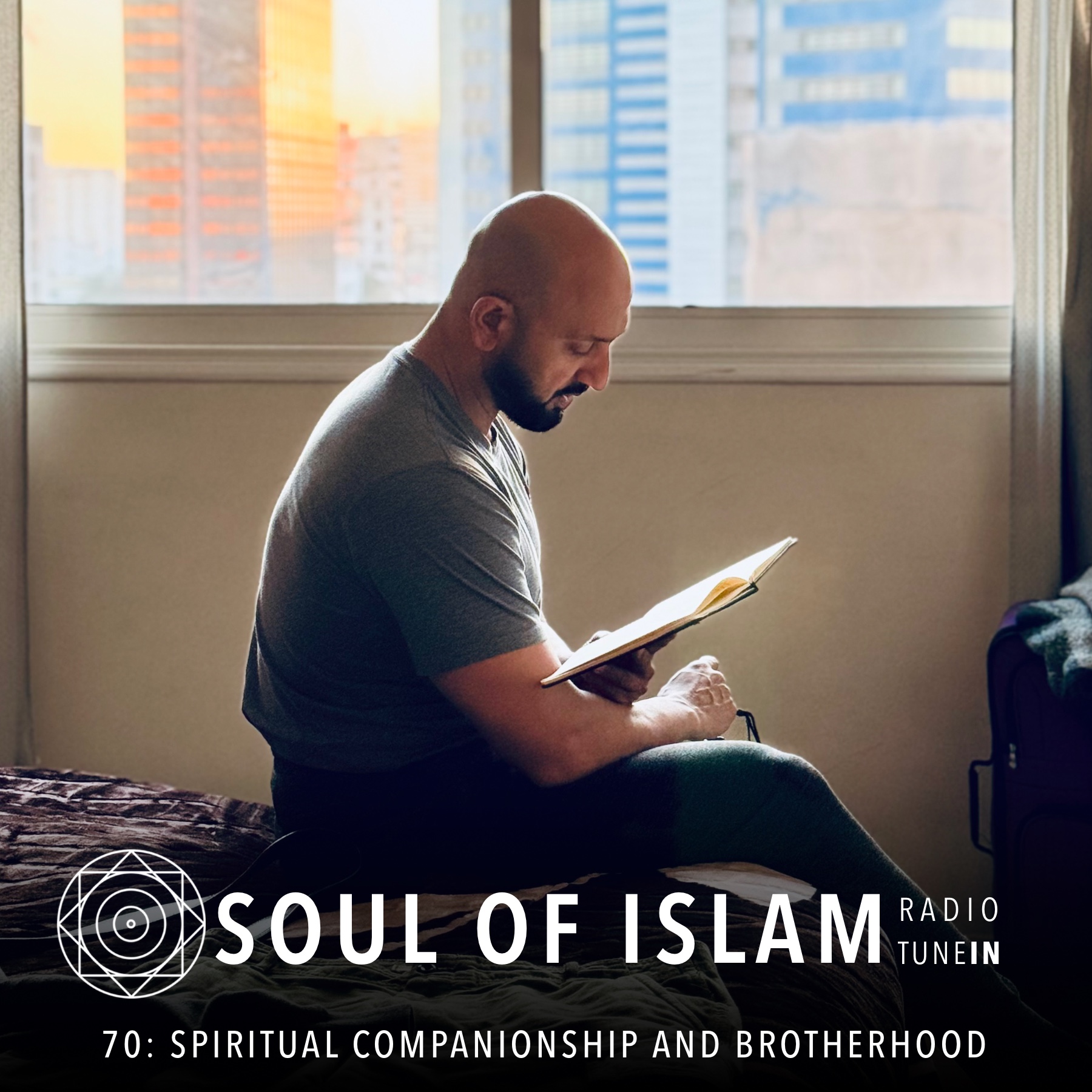 70 | Spiritual Companionship and the Power of Brotherhood with Jamil Popatia | Over the years, I’ve had the blessing of keeping company with my dear friend and brother Jamil Popatia, and our most recent trip to Morocco, became the foundation for this deeply personal and necessary conversation on spiritual brotherhood. What began as a travel experience unfolded into a profound reminder of the power of companionship, the blessings of shared intentions, and the sacredness found in the ordinary moments of daily life—walking, eating, praying, and simply being present with one another. In this episode, we reflect on what it means to travel with the intention of deepening brotherhood and how environments rooted in faith amplify this purpose. From the simplicity of communal prayer to navigating cultural nuances and even humorous hardships, our shared experiences underscored that true connection doesn’t require perfection—only presence and sincerity. We also explore how spiritual companionship isn’t limited to the living. Visiting the tombs of revered spiritual masters like Imam Jazuli (ra) and Shaykh Ahmad Tijani (qs) reminded us that brotherhood can extend through time, connecting hearts beyond the veil of the physical world. We speak about the dangers of isolation, especially for men, and how prioritizing regular, intentional gatherings—whether close to home or across the globe—can uplift and fortify us. This is a call to remember that we are not meant to carry life alone. May we all find strength in good company and the courage to seek it. About Jamil Popatia Jamil Popatia is a certified NVC (Non-Violent Communication) coach, trainer and counselor. You can learn more about him at his website, Dignified Dialogue. Chapters 00:00 | Introducing Brotherhood and the Morocco JourneyWe begin with reflections on our recent trip and the deeper intention of brotherhood. 02:18 | Traveling to Strengthen BondsJamil shares how shared travel experiences forge intimate and lasting connections. 05:04 | Faith, Environments, and Cultural ContrastsDiscussing the spiritual richness of Morocco despite everyday hardships. 10:24 | The Unifying Force of FaithWe explore how Islam transcends barriers, fostering instant brotherhood worldwide. 14:35 | Companionship with the Living and the DepartedHonoring saints and seeking their barakah brings another dimension to brotherhood. 19:10 | Relaxation as a Manifestation of FaithSurrendering to God’s will and finding peace even amid chaos. 24:32 | Prioritizing Brotherhood IntentionallyWhy we must make space in our lives for consistent male companionship. 30:15 | Brotherhood as a Space for HealingBeing vulnerable and sharing burdens strengthens relationships and emotional well-being. 37:40 | Shared Struggles Become Laughter in Good CompanyTravel anecdotes show how hardships are softened when shared with a brother. 44:25 | The Power of Presence in Traditional SocietiesReflections on the awareness, generosity, and social intelligence witnessed abroad. 46:08 | The Danger of Isolation and the Gift of ConnectionWe emphasize the psychological and spiritual need for community. 51:43 | A Vision for the Future of Brotherhood GatheringsPlanting seeds for future retreats and shared intentions for ongoing connection. 55:46 | Rebalancing Life with Intentional FraternityWhy healthy male bonding strengthens families and our spiritual states. 58:02 | Returning to Spontaneous ConnectionA heartfelt call to revive the spirit of unplanned visits and meaningful connection. | — | ||||||
Showing 25 of 96
Sponsor Intelligence
Sign in to see which brands sponsor this podcast, their ad offers, and promo codes.
Chart Positions
10 placements across 10 markets.
Chart Positions
10 placements across 10 markets.