

Insights from recent episode analysis
Audience Interest
Podcast Focus
Publishing Consistency
Platform Reach
Insights are generated by CastFox AI using publicly available data, episode content, and proprietary models.
Total monthly reach
Estimated from 1 chart position in 1 market.
By chart position
- 🇨🇦CA · Spirituality#7430K to 100K
- Per-Episode Audience
Est. listeners per new episode within ~30 days
15K to 50K🎙 ~2x weekly·8 episodes·Last published 2d ago - Monthly Reach
Unique listeners across all episodes (30 days)
30K to 100K🇨🇦100% - Active Followers
Loyal subscribers who consistently listen
12K to 40K
Market Insights
Platform Distribution
Reach across major podcast platforms, updated hourly
Total Followers
—
Total Plays
—
Total Reviews
—
* Data sourced directly from platform APIs and aggregated hourly across all major podcast directories.
On the show
Recent episodes
MAID, Mental Health & Why We Need More Than a Permanent Exit
Jun 23, 2026
Unknown duration
Stop Snorting People: The Real Reason You Keep Repeating the Same Patterns
Jun 16, 2026
Unknown duration
Nothing Happens in God’s World By Mistake: Grief, Money Fear & the Decision to Be Kind
Jun 9, 2026
Unknown duration
You Can't Heal Where You Got Sick
May 26, 2026
Unknown duration
You're Not Depressed, You're Self-Obsessed
May 19, 2026
Unknown duration
Social Links & Contact
Official channels & resources
Official Website
Login
RSS Feed
Login
| Date | Episode | Description | Length | ||||||
|---|---|---|---|---|---|---|---|---|---|
| 6/23/26 |  MAID, Mental Health & Why We Need More Than a Permanent Exit | What does it mean when a system designed to help people in crisis starts offering them a permanent exit instead?In this episode, Jessica and Nikki take on one of Canada's most contested policy debates — Medical Assistance in Dying (MAID) — through the lens of recovery, spirituality, and radical honesty. They aren't here to tell you what to think. They're here to have the conversation out loud that most people are only having in their heads.They dig into how MAID expanded from terminal illness to include non-terminal conditions where "suffering is intolerable" — and what that language means for people in active addiction, mental health crises, or simply in the middle of a very bad year. They share personal stories, answer real audience questions, and wrestle with a central truth from their recovery work: you cannot give informed consent to a permanent decision from inside a temporary crisis.They also talk about what actually fills the God-shaped hole — not a government program, not substances, not validation — but spiritual training, radical honesty, community, and the willingness to stay long enough to find out what's on the other side of the pain.In this episode:The history of MAID in Canada and how it expanded through Bill C-7Why the 12-step community sees addiction as an "intolerable condition" — and what that means in a MAID contextWhat happened when Veterans Affairs Canada directed veterans to MAID instead of treatmentThe $149M question: who financially benefits from this program's expansion?An audience question from an anonymous detox worker whose facility was approached by government officials asking for MAID referralsA parent's question after their 12-year-old came home from school having been told about assisted dyingThe case of a 26-year-old who received MAID in BC — and what his family wants people to knowWhy spirit comes first — then mind, then bodyRecovery isn't for people who want it. It's for people who do the work. This episode is part of that work.Content note: This episode includes frank discussion of Medical Assistance in Dying, suicidal ideation, addiction, and personal trauma. If you or someone you know is in crisis, please reach out to Crisis Services Canada: 1-833-456-4566 or text 45645. | — | ||||||
| 6/16/26 | Stop Snorting People: The Real Reason You Keep Repeating the Same Patterns | What's really happening when we get sober and immediately sprint into a relationship, a shopping habit, an obsession with our kids, or a new financial fixation? Jessica and Nikki get into it — raw, honest, and funny — in this episode of Fill Me Up.They break down the substitution cycle: the way addiction doesn't disappear when we put down our substance of choice, it just shapeshifts. People. Money. Food. Anger. Victimhood. If you've ever found yourself asking "why does this keep happening to me?" — this episode is going to hit.Topics this week:The mental blind spot that lets us walk into dangerous situations while our dogs won't even cross the streetWhat "snorting people" actually looks like — and whether you've been doing itGay time, recovery time, and why two addicts moving in together in a week is a cliché for a reasonThe difference between the establishing phase and the maintenance phase of recovery — and why you genuinely cannot do both at onceSexual manipulation aging into emotional manipulation — and how to catch yourselfPatience as a practice, not a personality traitWhy "just get a new dog" is the same as "just meet someone new" — and why it completely misses the pointSurrounding yourself with higher-consciousness people vs. cosigning each other's old behaviorManaging, mothering, martyrdom, and manipulation — the four M's nobody wants to admit they're doingChoosing radical thinking when self-pity moves inThe Stoics, soul school, and what it actually means to be a good human todayThis is the episode for anyone who's ever wondered why getting sober felt like it was supposed to fix everything — and then didn't. The solution isn't a new person. It isn't more money. It's the work in between.Fill Me Up is hosted by Jessica and Nikki — two women in recovery who don't sugarcoat anything and don't apologize for it. | — | ||||||
| 6/9/26 | Nothing Happens in God’s World By Mistake: Grief, Money Fear & the Decision to Be Kind | After three weeks away, Nikki comes home to grief — both family dogs have passed — and finds, even in that, the recovery principle she keeps returning to: nothing happens in this world by mistake. From there, she and Jessica get into the work that's actually changed their lives — that we're making decisions all day long, and the most powerful one is choosing to be kind, patient and of service whether or not anyone else changes first.They talk about the "fear frequency" around money in 2026, why chasing a number can repel the very thing you want, and how getting honest about your story — not a certificate or a title — is what lets you help someone else. Jessica shares how being blocked from God looked, for her, like being blocked from responsibility and service; Nikki shares how losing her job during Covid brought her to her knees and, eventually, to freedom.Recorded with their littlest co-host, Dodo.Content warning: This episode includes candid references to past suicidal thoughts and to mental and physical health experiences. It is one couple's personal recovery experience and is not medical, psychological, or financial advice. If you're struggling, please reach out to a licensed professional or a crisis line (resources below).Topics: grief & recovery · decision-making as spiritual practice · radical acceptance · service · money & fear · "your past is your greatest asset" · 12-step community language | — | ||||||
| 5/26/26 |  You Can't Heal Where You Got Sick | Can you go back to the same places, people, and patterns — and actually get better? Jessica and Nikki break down one of recovery's most misunderstood ideas: the "immersion therapy" myth. They get real about what a genuine change in belief system looks like, why environment matters more than willpower, and how this applies to everyone — not just people in the rooms.They also dig into:The six Big Book principles for repairing relationships with family members you've hurtWhy God never actually says no (and what the three real answers are)Intergenerational healing and soul contractsPatience as a recovery tool — and why it's so hard to hearThe idea that we've all "been here before" — and what that means for childhood trauma"Don't love me today — because I'm ascending every single second." — Nikki | — | ||||||
| 5/19/26 |  You're Not Depressed, You're Self-Obsessed | Two tomatoes for ten bucks, a $35 sandwich, and a guy at the gym who can't stop saying "you made it" — Nikki and Jessica start with the small talk that makes their skin crawl and end up somewhere much bigger.This week: the DM that went sideways, the funeral where "hi how are you?" came out on autopilot, the boss who got a one-hour fireside chat about how Nikki actually was, and the Starbucks bathroom story that may or may not have involved a person who didn't exist.The thesis, courtesy of Nikki: you're not depressed, you're self-obsessed. And the way out isn't pills or another therapist circle-jerking your problems — it's radical acceptance, showing up for other people, and finding one good thing in every person you meet (especially the ones you can't stand).Also discussed: NPCs, why "lol" from a man is a red flag, mood as a daily decision, and how to actually wake somebody up without being a dick about it. | — | ||||||
| 5/12/26 | The Lies That Keep You Sick: Doctor Knows Best, Go to School & Social Media Myths | What if the biggest obstacles in your recovery — or your life — weren't your past, your diagnosis, or your circumstances… but the stories you were handed as truth?In Episode 15, Jess and Nikki go deep on the lies that keep people stuck, sick, and small. They're not holding back.In this episode:"Your doctor always knows best" — They challenge the blind trust most of us were raised with around medical authority, including how pharmaceutical incentives shape the advice you receive, why more people are firing their doctors, and what it actually means to advocate for yourself and your family's health."Go to school, get a degree, get a job" — Both hosts share their wildly non-linear paths — alternative school, multiple licenses never used, the strip club, real estate — and make the case that your lived experience is the credential that actually matters. Sound familiar, recovery community?"Everyone else is living their best life" — The social media comparison trap. Why the highlight reel is a lie, what the Britney Spears moment taught an entire generation about public image vs. private pain, and a simple mindset shift to stop measuring your insides against everyone else's outsides.They close with a powerful exercise: what if you threw all your problems in a pile with everyone else's — would you really swap?This one is raw, funny, and deeply honest. As always. | — | ||||||
| 5/5/26 | You're Not a People Pleaser — You're a Liar | We're calling it: people-pleasing isn't a personality trait. It's dishonesty.In this episode, Nikki and Jess take one of the most trending conversations on social media — people-pleasing — and flip it completely on its head. Forget the soft reframes. If you're suppressing your truth to avoid conflict, you're lying. And the person you're hurting most? You.They dig into why people-pleasing never actually pleases anyone, what it really means to give someone authority to speak into your life (and why random people don't get that access), and how not doing the inner work now will catch up to you in your relationships later.This episode is raw, honest, and exactly the kind of conversation you didn't know you needed. Words matter. Honesty heals. And your people-pleasing? It's costing everyone — especially you.Soul School is back and she has no filter.Nicki and Jess unpack one of the most misused terms in self-development: people-pleasing. Their take? Stop softening it. People-pleasing is a form of radical dishonesty — and until you call it what it is, you can't change it.What They CoverWhy "people pleaser" is a comforting label that lets you avoid the real word: liarThe difference between avoiding confrontation and being honestHow to know who has actually earned the right to speak truth into your lifeSetting limits on how and when people can access you — and why that's an act of loveThe connection between not doing your inner work and people-pleasing in relationshipsWhy staying silent to "protect" someone is often just self-protection in disguiseThe Burning Bed and what Farrah Fawcett's character teaches us about what happens when people-pleasing builds upTaking full accountability for your life — not 50%, not your "part" — all of itNotable Quotes from This Episode"People pleasers — give me the phone numbers of the last five people you pleased.""People pleasing is dishonesty. You're a fucking liar. Why don't you speak your truth?""I want to avoid confrontation. I want people to like me. I can't stand being uncomfortable. Just say what it is.""You are the maker of your life."Mentioned in This EpisodeThe Burning Bed (1984, Farrah Fawcett)Spiritual bypassing (referenced from previous episode) | — | ||||||
| 4/28/26 | Spiritual Bypassing: Why Crystals Won't Save You | Are you actually healing — or are you just keeping yourself busy enough to avoid feeling it?In this episode, we get into spiritual bypassing: the sneaky ways we use crystals, shadow work, self-help books, Eat Pray Love trips, and endless "inner child" content to feel like we're doing the work — without ever actually sitting still long enough to let it happen.We talk about toxic over-productivity, the restlessness that drives it, and why the most spiritually advanced thing you can do might just be... nothing. We also tell the Alan Watts Chinese Farmer parable — and by the end of it, you'll understand why "I don't know" might be the most honest and freeing answer you've ever given yourself.Topics covered:Why being sober isn't the same as being healedWhat shadow work and inner child work actually mean (and when they become avoidance)People addiction and why it's one of the hardest to talk aboutThe silent work behind real peace — and how it looks different than the content versionThe Chinese Farmer parable and surrendering outcomes to God | — | ||||||
| 4/21/26 | The Truth About Resentment, Sleep & Spiritual Growth | What if the pain you keep feeling… isn’t happening to you — but being replayed by you?In this episode of Soul School, we break down what resentment really is, why so many people stay stuck in the same emotional loops, and how spiritual growth actually happens in real life — not just in theory.We talk about:Why “resentment” isn’t just anger — it’s re-feeling old painHow holding things in keeps you stuck in the same cycleThe discipline required to grow (even when you don’t feel like it)Questioning the beliefs you’ve always accepted as truthWhy connection to something greater doesn’t require going through anyone elseLetting go of control, opinions, and the need to “play God”This isn’t about being perfect.It’s about becoming aware enough to stop repeating what’s not working.If you’ve ever felt stuck, restless, or like something deeper is missing — this episode is for you.🎧 New episodes weekly — follow to stay connected. | — | ||||||
| 4/14/26 | Untreated Alcoholism: When the Substance Is Gone but the Sickness Isn’t | You can put the bottle down and still be living in chaos.In this episode, we get into the reality of untreated alcoholism — what it looks like when the substance is gone, but the thinking, resentment, control, projection, dishonesty, and emotional volatility are still running the show.We talk about the difference between being physically sober and actually recovering, why some people stay stuck in misery without alcohol, and how untreated patterns show up through anger, judgment, blame, fear, unrealistic expectations, and speaking for everyone except yourself.We also get into:why “everyone thinks this about you” is usually dishonestyhow speaking in I statements can change your relationshipswhy holding things in and collecting “data” leads to explosions laterhow spiritual growth is not perfectionwhy recovery is a lifestyle, not a quick fixhow resentment and offense can drag you right back into relapse thinkingThis episode is for anyone who has ever thought:“I’m sober… so why do I still feel so off?”If that’s you, this conversation will hit. | — | ||||||
Want analysis for the episodes below?Free for Pro Submit a request, we'll have your selected episodes analyzed within an hour. Free, at no cost to you, for Pro users. | |||||||||
| 4/6/26 |  I Would Have Taken MAID — Here’s Why I’m Glad I Didn’t | If you had been offered a medically assisted death at your lowest point — would you have taken it?We would have. Without hesitation.In this episode of Soul School, Jessica and Nikki get brutally honest about their darkest moments — the kind of pain that makes you want to permanently exit a temporary situation. We talk about what MAID actually is, how Canada became one of the leading countries in assisted dying, and why the eligibility criteria sounds a lot like every addict and alcoholic we’ve ever known.We also talk about what saved us. Not medication. Not a doctor. Not a government program.A psychic change. A spiritual awakening. A reason to live.Nikki shares the heartbreaking story of losing her grandfather to suicide after a lifetime of alcoholism and antidepressants. Jessica shares how she walked away from a pharmacy prescription list that would shock you — without even trying — after finding God.This is the conversation the medical system is not having. The spiritual solution exists. It works. And it’s available to everyone.If you are in the darkness right now — please listen to this episode before you make any permanent decisions. This too shall pass.Soul School. No religion. No labels. No judgment. Just the truth.Medical Assistance in Dying (MAID) has become one of the most debated topics in Canada.In this episode, we have a raw conversation about MAID, suicide, recovery, addiction, and the spiritual transformation that can happen when someone chooses life instead of despair.Many people struggling with addiction, depression, or emotional pain have moments where they believe the only escape is death. But recovery communities often talk about something different: a psychic change — a transformation in thinking and belief that creates hope where there once was none.We talk about:• MAID and the growing debate in Canada• why people can feel suicidal during addiction and mental health crises• the difference between temporary pain and permanent decisions• how recovery programs and spiritual growth can change someone's outlook• why purpose and helping others can transform a lifeThis episode is an honest, sometimes emotional conversation about suffering, hope, and the idea that sometimes the darkest moment of someone's life can eventually become the thing that allows them to help others.If you or someone you know has struggled with suicidal thoughts, addiction, or hopelessness, this conversation may resonate with you. | — | ||||||
| 3/29/26 |  Nothing Is Permanent: Recovery, Relationships, and Radical Acceptance | What if your addiction isn’t just to substances — but to the story, the phone, the chaos, or the need to be chosen?In this episode, we dive into the psychology and spirituality behind obsession. We talk about:phone addiction and Pavlov-style conditioningobsession with people texting backaddiction to chaos and emotional narrativeswhy nothing in life is permanentpracticing what we already know instead of chasing more informationrecovery, acceptance, and the next right actionoutgrowing people, relationships, and old timelinesThis conversation is honest, funny, spiritual, and deeply relatable for anyone navigating recovery, emotional sobriety, or personal growth.If you’ve ever felt consumed by your thoughts, attached to an outcome, or trapped in your own mind, this one is for you. | — | ||||||
| 3/22/26 | 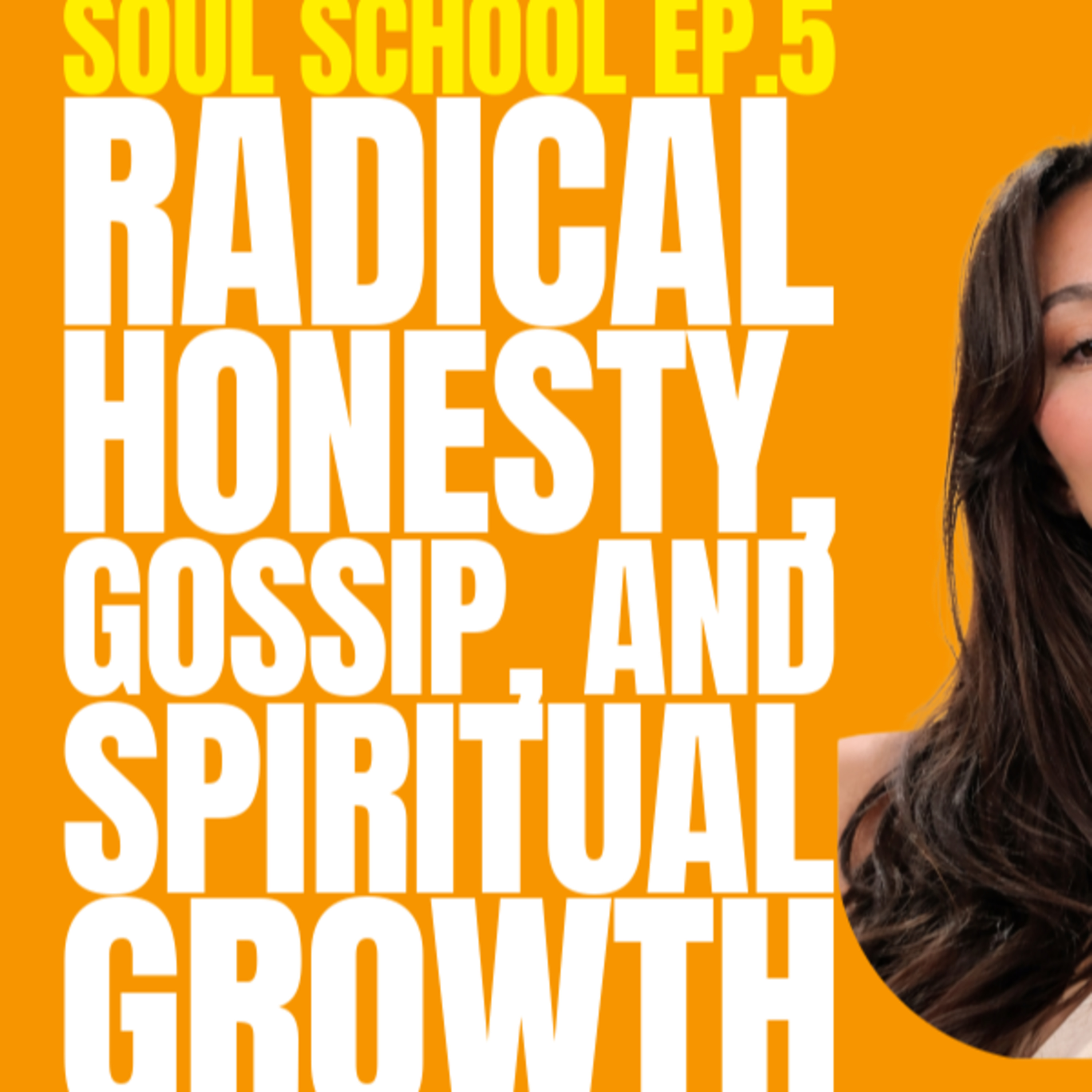 Radical Honesty, Gossip, and Spiritual Growth | How honest are we really with ourselves and others?In this episode of Soul School, we dive into a real and raw conversation about gossip, accountability, radical honesty, and spiritual growth.Friendships, relationships, and personal growth can get messy. Sometimes we say things we shouldn't. Sometimes we gossip. Sometimes we hurt people with our words without even realizing it.But what happens when we take responsibility and start practicing radical honesty and awareness?In this episode we discuss:• The impact our words and gossip can have on others• Why radical honesty is necessary for personal growth• The importance of self-awareness and accountability• How spiritual practice helps guide our behavior• Why people see the world through different perceptions and experiences• The importance of patience, service, and staying presentAt the end of the day, growth isn't about being perfect — it's about learning, correcting ourselves, and continuing the work. | — | ||||||
| 3/15/26 | Discernment: Choosing the Right People in Your Life | In this conversation, the hosts explore one of the most overlooked parts of recovery and personal growth:Who you give your time and energy to.They discuss how many people spend years people-pleasing, tolerating low-energy relationships, and saying yes to things that drain them.The episode dives into:• the importance of protecting your time• how energy and environment influence your mindset• why people pleasing is often dishonesty• learning how to say no without guilt• discernment and spiritual clarity• why you can’t expect one person to be everything• focusing on your own community instead of global distractions• trusting the process instead of obsessing over outcomesThe conversation highlights a powerful truth:You can get more money, more friends, even a new house — but you can never get more time.Choosing where you spend it will determine the quality of your life. | — | ||||||
| 3/6/26 | What Are You Worshiping? Addiction, Body Dysmorphia & Spiritual Awakening | In this deep and honest conversation, Anthony and his guests explore how addiction doesn’t always disappear — it often changes form.After substances are removed, new obsessions can appear: body dysmorphia, validation seeking, relationships, surgery addiction, food, or self-image. The episode dives into how self-obsession blocks spiritual growth and why many people in recovery struggle with new compulsions.They discuss:• body dysmorphia in recovery• addiction transfer and behavioral addictions• self-obsession and guilt• radical acceptance of the body• discipline vs shortcuts in health• patience and impulsivity• choosing what you “worship” in life• how spiritual awakening changes thinkingThe conversation ultimately explores a powerful idea:If you don’t choose what you serve in life, something will choose for you.Recovery becomes about removing the things that block connection to purpose, peace, and spiritual growth. | — | ||||||
| 2/23/26 | Spiritual Reprogramming: Deconditioning the Mind & Awakening the Soul | What if the way you think, react, love, and suffer isn’t actually you — but the result of conditioning you never chose?In this episode of Soul School, we explore spiritual reprogramming, soul awareness, and how unconscious conditioning shapes our thoughts, behaviors, relationships, and sense of self.We talk about:How family, culture, media, religion, and fear program the soulWhy old programming eventually stops workingThe difference between thinking, acting, and beingSpiritual practice as daily repetition, not perfectionReprogramming patience, awareness, and responsibilityWhy no one is coming to save you — and why that’s empoweringThis conversation is for anyone who feels stuck, restless, disconnected, or aware that something deeper needs to change.If your current programming isn’t working for you anymore — this episode is your invitation to rewrite it. | — | ||||||
| 2/15/26 | How We Lost Our Souls — and How to Get Them Back | Welcome to Soul School, a podcast about surviving Earth School while reclaiming your soul in a world that feels increasingly disconnected, chaotic, and overwhelming.In this first episode, Nikki and Jessica share why they earned a seat on this couch — not through credentials or titles, but through lived experience, addiction, recovery, spiritual bankruptcy, and deep inner transformation.This episode explores:How we become programmed by culture, trauma, addiction, and fearWhy success, money, relationships, and substances never filled the emptinessWhat spiritual bankruptcy actually feels likeThe difference between self-help and soul healingWhy responsibility for emotions matters more than external successHow service, honesty, and spiritual practice create real freedomThis conversation is raw, funny, uncomfortable, and deeply human — offering tools, perspective, and hope for anyone who feels exhausted by life, disconnected from themselves, or aware that something deeper needs attention.Soul School isn’t about perfection.It’s about practice, responsibility, and learning how to live. | — | ||||||
Showing 17 of 17
Pitch Fit is a Pro feature
See how bookable this show is for guests, which brands already advertise, the per-episode ad value, and the best-fit guest and sponsor profile. The numbers are blurred on the free plan.
How readily this show books outside guests like you.
How proven this show is for host-read sponsorships.
For Guests
ProFor Advertisers
ProUpgrade to Pro to unlock guest cadence, sponsor categories, fit scores, and per-episode ad value for this show.
Chart Positions
1 placement across 1 market.
Chart Positions
1 placement across 1 market.