

Insights from recent episode analysis
Audience Interest
Podcast Focus
Publishing Consistency
Platform Reach
Insights are generated by CastFox AI using publicly available data, episode content, and proprietary models.
Most discussed topics
Brands & references
Total monthly reach
Estimated from 3 chart positions in 3 markets.
By chart position
- 🇮🇳IN · Design#8610K to 30K
- 🇨🇿CZ · Design#723K to 10K
- 🇳🇴NO · Design#833K to 10K
- Per-Episode Audience
Est. listeners per new episode within ~30 days
8K to 25K🎙 Weekly cadence·247 episodes·Last published 3d ago - Monthly Reach
Unique listeners across all episodes (30 days)
16K to 50K🇮🇳60%🇨🇿20%🇳🇴20% - Active Followers
Loyal subscribers who consistently listen
4.8K to 15K
Market Insights
Platform Distribution
Reach across major podcast platforms, updated hourly
Total Followers
—
Total Plays
—
Total Reviews
—
* Data sourced directly from platform APIs and aggregated hourly across all major podcast directories.
On the show
From 10 epsHost
Recent guests
Recent episodes
212. Architect vs. Designer vs. Drafter
Jul 8, 2026
Unknown duration
211. State of Architecture with Andrew Goodwin
Jun 24, 2026
Unknown duration
210. The Hidden Costs No One Talks About
Jun 17, 2026
Unknown duration
209. Building Communities that Combat Loneliness with Colby Cox
Jun 10, 2026
Unknown duration
208. Why Your Budget Is Probably Wrong
Jun 3, 2026
Unknown duration
Social Links & Contact
Official channels & resources
Official Website
Login
RSS Feed
Login
| Date | Episode | Topics | Guests | Brands | Places | Keywords | Sponsor | Length | |
|---|---|---|---|---|---|---|---|---|---|
| 7/8/26 | 212. Architect vs. Designer vs. Drafter | In this episode of SPACES, Dimitrius breaks down the important differences between architects, designers, and drafters — and why choosing the right type of help early can have a major impact on your budget, permitting, construction process, and overall project success.While each role can bring value, they are not interchangeable. The key question is not simply, “Who can draw this?”The better question is: What does this project actually require?In this episode:The difference between architects, designers, and draftersWhere designers can add significant valueWhat drafters typically provideWhy removing a wall can trigger structural, electrical, permitting, and budget considerationsHow project complexity should determine your teamWhy the cheapest path upfront is not always the least expensive path overallWhat questions to ask before hiring someone to prepare drawingsOnce you understand the scope, risks, systems, and approvals involved, it becomes much easier to assemble the right team.As discussed:Before You Build Guidebook DownloadLYNESIf you enjoy our content, you can check out similar content from our fellow creators at Gābl Media.Spaces Podcast Spaces Podcast websiteLYNES // Gābl MediaAll rights reserved | — | ||||||
| 6/24/26 | 211. State of Architecture with Andrew Goodwin | In this episode of SPACES, Dimitrius speaks with Andrew Goodwin, AIA, founder of AGD, about the evolving role of the architect in a profession being reshaped by technology, entrepreneurship, education, and social responsibility.Andrew shares how his career has moved between traditional practice, public interest design, teaching, publishing, nonprofit work, and firm leadership—and why he believes architects can no longer rely on outdated definitions of the profession. Instead of returning to the old idea of the “master builder,” Andrew makes the case for the architect as a master entrepreneur, advocate, communicator, educator, and citizen leader.The conversation explores how liability narrowed the role of architects, how design-build and integrated delivery may be shifting it again, and how AI is forcing schools and firms to rethink what future architects actually need to learn. Andrew also discusses building AGD around purpose, innovation, remote flexibility, community engagement, and a commitment to doing good first.It’s a conversation about architecture as a practice, but also as a platform—for storytelling, leadership, service, advocacy, and impact.In this episode:Why the architect’s role needs to expand beyond traditional servicesHow AI may reshape architectural education and early-career practiceWhat students should understand about entrepreneurship and businessHow storytelling and communication help clients understand designWhy purpose, innovation, and social impact are central to AGD’s workHow architects can define their own path instead of inheriting an outdated oneAs discussed:AGD Architecture + DesignDisrupted: The Architecture ProfessionMetamorphosis of the Future ArchitectIf you enjoy our content, you can check out similar content from our fellow creators at Gābl Media.Spaces Podcast Spaces Podcast websiteLYNES // Gābl MediaAll rights reservedMentioned in this episode:NCARB PodcastGabl CESTo Build is Human | — | ||||||
| 6/17/26 | 210. The Hidden Costs No One Talks About | In this episode of SPACES, Dimitrius examines one of the most overlooked parts of any construction project: soft costs. He highlights what the total project budget should include and explores why soft costs are not “extras” — they are the services and approvals that make a project buildable, coordinated, and legally permitted. For owners, understanding these costs early can help prevent financial stress, delays, and costly surprises later.In this episode:Why construction cost is only one part of your total project budgetWhat soft costs are and why they matterWhy architecture is more than “drawing plans”When engineering becomes necessaryWhy permits and plan check fees vary so widelyHow Title 24 energy compliance affects California projectsWhen surveys, soils reports, and specialty consultants may be requiredWhy contingency should be included and tracked separatelyHow better planning reduces risk before construction beginsIf your budget only includes construction, it is not your real project budget. A realistic project budget should account for construction, soft costs, and contingency.Before You Build Guidebook DownloadLYNESIf you enjoy our content, you can check out similar content from our fellow creators at Gābl Media.Spaces Podcast Spaces Podcast websiteLYNES // Gābl MediaAll rights reserved | — | ||||||
| 6/10/26 | 209. Building Communities that Combat Loneliness with Colby Cox | In this episode of SPACES, Dimitrius sits down with Colby Cox, founder and CEO of Convergence Communities, to explore how the built environment can either isolate us or help bring us back together.Colby has spent more than two decades developing mixed-use, master-planned communities rooted in human connection, wellbeing, and intentional living. For him, development is not just about what pencils out on a pro forma. It is about legacy: how a place feels 50 or 100 years from now, how it supports the people who live there, and whether it helps create a true sense of belonging.Through projects like The Granary in Milton, Delaware, Colby is challenging the conventional suburban model by rethinking porches, lot sizes, shared green space, public amenities, programming, and community gathering places. His goal is not simply to build houses, but to create places that gently pull people out of isolation and into relationship with their neighbors, their town, nature, and themselves.The conversation explores why many modern neighborhoods fail to foster connection, how fear and liability often shape development decisions, and why the return on investment in real estate should include more than dollars and cents. Colby also shares how his team is experimenting with ideas like a brewery incubator, meditation gardens, shared living models, and community-serving amenities designed to invite the surrounding town in—not wall residents off from it.This is a conversation about development, loneliness, legacy, and the role of design in rebuilding social connection.As discussed:The GranaryConvergence CommunitiesBuilt to Divide Podcast SeriesLYNESIf you enjoy our content, you can check out similar content from our fellow creators at Gābl Media.Spaces Podcast Spaces Podcast websiteLYNES // Gābl MediaAll rights reservedMentioned in this episode:To Build is HumanNCARB PodcastGabl CES | — | ||||||
| 6/3/26 | 208. Why Your Budget Is Probably Wrong | In this episode of SPACES, Dimitrius explores why most project budgets are inaccurate and how to create realistic estimates for construction projects, especially in Southern California. He emphasizes the importance of scope clarity, understanding cost layers, and early planning to avoid costly mistakes.He breaks down:Why most project budgets are inaccurateThe importance of scope clarity in budgetingUnderstanding the layers of construction costsThe role of soft costs and contingencyHow to define your project scope effectivelyIf you’re planning a kitchen remodel, addition, ADU, or small commercial tenant improvement in Southern California, this episode provides foundational insight to help you develop your project budget.Before You Build Guidebook DownloadLYNESIf you enjoy our content, you can check out similar content from our fellow creators at Gābl Media.Spaces Podcast Spaces Podcast websiteLYNES // Gābl MediaAll rights reserved | — | ||||||
| 5/27/26 | 207. Office to Housing Conversion with Michael Bohn | In this episode of SPACES, Dimitrius speaks with Michael Bohn, AIA, Partner at Studio One Eleven, about the growing opportunity to convert underused office buildings into housing. As office vacancy rates remain elevated in many cities and communities continue to face severe housing shortages, adaptive reuse offers a powerful path forward—one that can reduce waste, lower embodied carbon, preserve community character, and bring new life to struggling urban districts.Michael brings more than 35 years of architectural experience and leads Studio One Eleven’s affordable, modular, and adaptive reuse work. His projects span transit-oriented development, urban infill, mixed-use communities, and office-to-housing conversions across Southern California.Together, Dimitrius and Michael discuss why office-to-housing conversion is about more than filling empty buildings. They explore the practical challenges of changing a building’s use, including floor plate depth, natural light, plumbing, structural upgrades, leases, façades, mechanical systems, and construction surprises. Michael also explains why adaptive reuse ordinances are essential for cities that want to make these projects viable.Studio One ElevenLYNESIf you enjoy our content, you can check out similar content from our fellow creators at Gābl Media.Spaces Podcast Spaces Podcast websiteLYNES // Gābl MediaAll rights reservedMentioned in this episode:NCARB PodcastGabl CESTo Build is Human | — | ||||||
| 5/20/26 | 206. Understanding Project Scope | In this episode of SPACES, Dimitrius highlights how one of the biggest mistakes owners make happens before they hire a contractor, define a budget, or submit plans: they don’t fully understand what kind of project they’re actually taking on. And that misunderstanding can dramatically impact cost, timeline, permitting, engineering, and overall project complexity.He breaks down the critical differences between:RenovationsRemodelsAdditionsADUsRebuilds…and explains why these categories are not interchangeable.Drawing from more than 20 years of experience, Dimitrius walks through the hidden structural, seismic, permitting, and systems implications that owners often overlook—especially when projects move beyond cosmetic updates into layout changes, structural modifications, or additions.If you’re planning a kitchen remodel, addition, ADU, or small commercial tenant improvement in Southern California, this episode provides foundational clarity before you begin spending money or hiring a team.Before You Build Guidebook DownloadLYNESIf you enjoy our content, you can check out similar content from our fellow creators at Gābl Media.Spaces Podcast Spaces Podcast websiteLYNES // Gābl MediaAll rights reservedMentioned in this episode:Gabl CESNCARB PodcastTo Build is Human | — | ||||||
| 5/13/26 | 205. The Critical Role of Daylight with Joe Menchefski | In this episode of SPACES, Joe Menchefski shares his journey from chemical engineering to sustainable design and highlights the importance of daylighting in architecture.He discusses the challenges of glare and thermal discomfort in buildings, and explains innovative solutions like diffused glazing that enhances natural light while minimizing discomfort.Joe identifies the health implications of natural versus artificial light, the importance of design considerations, and the future trends in daylighting and sustainability. He also touches on the Better Buildings for Humans podcast, where he explores the trade-offs in building design and the importance of connecting with the natural world.Better Buildings for Humans podcastAdvanced Glazings Ltd.LYNESIf you enjoy our content, you can check out similar content from our fellow creators at Gābl Media.Spaces Podcast Spaces Podcast websiteLYNES // Gābl MediaAll rights reservedMentioned in this episode:NCARB PodcastGabl CESTo Build is Human | — | ||||||
| 5/6/26 | 204. Why California Housing is So Expensive, What 2026 Governor Candidates Got Wrong (and Right) | In this episode, Dimitrius breaks down why California housing costs are so high, exploring systemic drivers beyond just impact fees, contractor fees, and material prices.He reflects of the 2026 California Governor candidates housing platforms, dives into policy and structural factors influencing housing costs, and shares insights from his new guidebook, Before You Build, offering valuable guidance for homeowners and builders alike.Before You Build Guidebook DownloadBuilt to Divide Podcast SeriesLYNESIf you enjoy our content, you can check out similar content from our fellow creators at Gābl Media.Spaces Podcast Spaces Podcast websiteLYNES // Gābl MediaAll rights reservedMentioned in this episode:NCARB PodcastGabl CESTo Build is Human | — | ||||||
| 4/29/26 | 203. Off-Grid, the Hot Rod of Buildings, with David Sellers | This episode of SPACES features David Sellers, Principal Architect and co-founder of Hawaii Off-Grid, a pioneering firm committed to designing only net-zero new buildings.David shares his journey from Texas to Hawaii, detailing the experiences that shaped his commitment to sustainable architecture.He discusses the evolution of off-grid architecture, the importance of net-zero buildings, and the innovative materials and technologies that are transforming the industry. Sellers emphasizes the need for adaptability in design to address climate change and the significance of financial incentives in promoting sustainable practices.He also highlights the role of community collaboration in achieving these goals and expresses his excitement for the future of architecture.Hawaii Off GridSurf Block MauiLYNESIf you enjoy our content, you can check out similar content from our fellow creators at Gābl Media.Spaces Podcast Spaces Podcast websiteLYNES // Gābl MediaAll rights reservedMentioned in this episode:NCARB PodcastGabl CES | — | ||||||
Want analysis for the episodes below?Free for Pro Submit a request, we'll have your selected episodes analyzed within an hour. Free, at no cost to you, for Pro users. | |||||||||
| 4/22/26 | 202. Most Problems Start Before Construction✨ | constructionproject management+3 | — | SPACESGābl Media+1 | — | scopebudget+2 | — | 10m 28s | |
| 4/15/26 | 201. Revolutionizing Lease Arbitrage with Alex Passler✨ | office designshared spaces+3 | Alex Passler | VallistSPACES+6 | Asia | Vallistcommunity-oriented environments+3 | — | 27m 07s | |
| 2/18/26 | 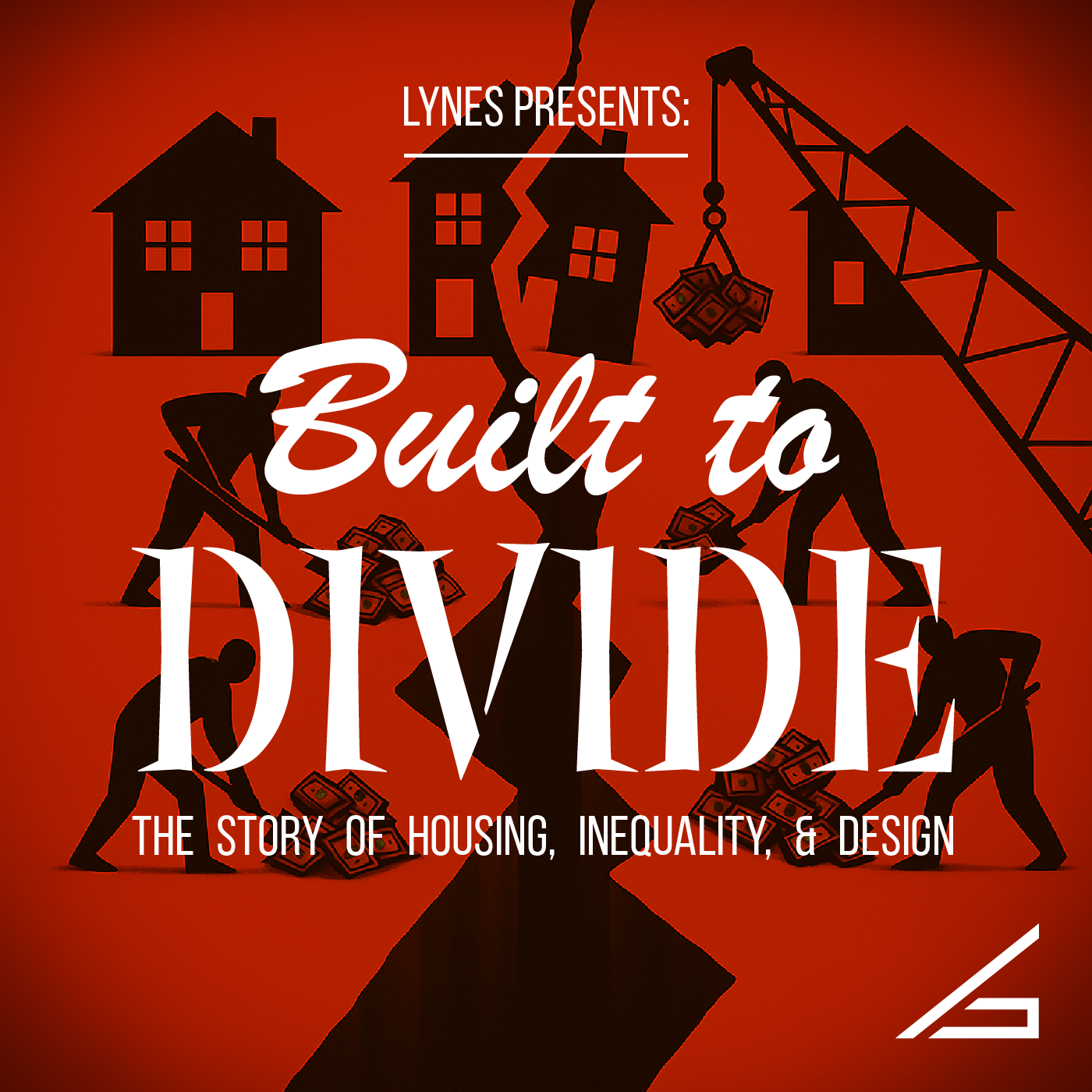 12: We're Not Done - LYNES Presents: Built to Divide✨ | housing crisiswealth extraction+4 | — | Gābl MediaWe're Not Done+1 | America | housingaffordability+3 | — | 49m 58s | |
| 2/11/26 | 11: The Tea Leaves of Feudalism 2.0 - LYNES Presents: Built to Divide✨ | feudalismdemocracy+4 | — | LYNESGābl Media+2 | AmericaSilicon Valley | Project 2025Religious Right+4 | — | 1h 32m 15s | |
| 2/4/26 | 10: Divide & Conquer - LYNES Presents: Built to Divide✨ | crisisopportunity+4 | — | Gābl MediaDivide & Conquer+4 | California | redliningalgorithmic pricing+4 | — | 1h 28m 47s | |
| 1/28/26 | 09: Under Pressure - LYNES Presents: Built to Divide✨ | NIMBY politicsProposition 13+7 | — | Gābl MediaBuilt to Divide | California | Thorstein Veblenleisure class theory+5 | — | 47m 45s | |
| 1/21/26 | 08: From Ownership to Access - LYNES Presents: Built to Divide✨ | housingsubscription economy+4 | — | SaaSstreaming services+8 | — | BlackRockAladdin risk platform+3 | — | 1h 07m 01s | |
| 1/14/26 | 07: Eat the Middle Class - LYNES Presents: Built to Divide✨ | TARP bailouthousing market+4 | — | AirbnbBlackstone+3 | WashingtonU.S. | middle classfinancial crisis+3 | — | 1h 05m 39s | |
| 12/24/25 | 06: The Fog of Identity - LYNES Presents: Built to Divide✨ | social identity theoryhousing crisis+4 | — | mortgage-backed securitiesCDOs+5 | — | 1970 psychology experiment2008 housing crash+3 | — | 1h 07m 45s | |
| 12/17/25 | 05: Shock & Awe - LYNES Presents: Built to Divide✨ | Nixon Shockfiat money+3 | — | Section 8 vouchersmortgage interest deduction+4 | U.S.America+1 | Bretton Woodsstagflation+3 | — | 1h 08m 08s | |
| 12/10/25 | 04: The Pivot - LYNES Presents: Built to Divide | In the summer heat of Birmingham, children faced police dogs and fire hoses. On a bus in Montgomery, a 15-year-old refused to stand. From Claudette Colvin to Rosa Parks, from Greensboro counters to the March on Washington—the Civil Rights Movement shook America awake. Yet, even as laws changed, maps and mortgages quietly redrew the lines of belonging.In this episode of Built to Divide, Dimitrius Lynch tracks what happened after the marches. The Civil Rights Act outlawed discrimination, but zoning boards found new tools to enforce it. Highways tore through Black neighborhoods in San Francisco and Detroit. Urban renewal became “Negro removal.” Birmingham forced the country to look. Kennedy named it a moral crisis. Johnson created HUD, appointing Robert C. Weaver, the first Black cabinet secretary. Then came the pivot—Section 235, 236, vouchers, block grants, Pruitt-Igoe, Moses vs. Jacobs, Nixon’s New Federalism, and a shift from building homes to subsidizing rent.This is the story of how a movement won rights—but lost ground in planning rooms, mortgage offices, and zoning maps. How public housing gave way to vouchers. How the market replaced the public builder. And how America traded homes as social infrastructure for housing as financial asset.If you want to understand why affordability collapsed, why public housing withered, why vouchers fall short, and how modern inequality took shape—Episode 4 shows the pivot point.Episode Extras - Photos, videos, sources and links to additional content found during research.Episode Credits:Production in collaboration with Gābl MediaWritten & Executive Produced by Dimitrius LynchAudio Engineering and Sound Design by Jeff Alvarez | — | ||||||
| 12/3/25 | 03: The Great Reset - LYNES Presents: Built to Divide | What happens when the machinery of war is turned loose on the home front? In this episode of Built to Divide, host Dimitrius Lynch traces how the end of World War II, the GI Bill, and federal housing policy combined to build the largest middle-class expansion in U.S. history—while quietly deepening racial and economic division.Beginning with the surrender in Tokyo Bay and the massive demobilization of Operation Magic Carpet, Lynch follows millions of returning veterans back to a country racing to answer a simple question: Where will they all live? The answer reshaped the nation. FHA and VA loans, the rise of Fannie Mae, and the secondary mortgage market drove homeownership from 43% to nearly 62% by 1960, cementing the single-family house as the centerpiece of the American Dream.But this “great reset” came with a price. Lynch unpacks how zoning laws, redlining, racial covenants, and underwriting standards drew hard lines around who could belong in postwar suburbia. He contrasts the inclusive vision of Case Study Houses and Eichler Homes with the mass-produced segregation of Levittown, where black families were explicitly barred and violence met the first to cross the color line.From John Dean’s warning about homeownership “booby traps” to the weaponization of media by business elites like Henry Regnery, this episode reveals how corporate interests used patriotism, racial fear, and Cold War anxiety to roll back New Deal gains and reframe government as the enemy. Along the way, Lynch explores how Fannie Mae’s privatization, the birth of American Express credit cards, and the cultural glorification of the nuclear family turned housing into a speculative asset, a consumption engine, and a source of isolation.We end in Roseto, Pennsylvania, where a community’s disappearing social bonds literally changed its heart attack rates—proof that how we house ourselves shapes how we live, connect, and survive.If you want to understand how postwar housing policy, suburbanization, zoning, media, and finance fused into a system that still determines who gets stability and who gets left behind, this episode shows how the board was reset—and who it was reset for.Episode Extras - Photos, videos, sources and links to additional content found during research. Episode Credits:Production in collaboration with Gābl MediaWritten & Executive Produced by Dimitrius LynchAudio Engineering and Sound Design by Jeff Alvarez | — | ||||||
| 11/26/25 | 02: Territorial Imperative - LYNES Presents: Built to Divide | At the dawn of the 20th century, American finance looked modern—telegraphs, syndicates, Wall Street empires—but it had no brakes. In this episode of Built to Divide, host Dimitrius Lynch follows the chain reaction from the Panic of 1907 to the creation of the Federal Reserve, revealing how crises, central banking, and policy choices concentrated power at the top and quietly reshaped who gets to own a home in America.We move from J.P. Morgan locking bankers in his library to stabilize markets, to the secret Jekyll Island meeting that birthed the blueprint for the Fed, to a global financial order built on austerity, gold, and central banks. Lynch unpacks how this shift—from robber barons to central bankers—centralized control over money and credit, setting the stage for a financial system that could either stabilize the economy or supercharge inequality.In parallel, the episode traces a second, brutal story: the clash between slave labor and wage labor, the Civil War, broken promises like Special Field Orders No. 15, Reconstruction, the 13th and 14th Amendments, and the massive land giveaways of the Homestead and Railway Acts that seeded a two-track wealth system. That system was later hardened by Black Codes, Jim Crow, and the rise of the National Association of Realtors, whose restrictive covenants and ethics codes turned racism and class exclusion into standard practice.As Lynch connects the Roaring Twenties, the Great Depression, Hoover’s homeownership gospel, and New Deal housing programs—HOLC, FHA, Fannie Mae—listeners see how federal support for mortgages expanded opportunity for some while redlining, racial covenants, and “good neighborhood” ideology locked others out. Housing was transformed into a mass wealth engine built on division.This episode is a deep dive into how central banking, war finance, slavery, segregation, real estate professionalization, and federal housing policy fused into a system where housing isn’t just shelter or asset—it’s a sorting mechanism. If you want to understand why today’s housing market feels rigged, this chapter shows how the rig was built.Episode Extras - Photos, videos, sources and links to additional content found during research. Episode Credits:Production in collaboration with Gābl MediaWritten & Executive Produced by Dimitrius LynchAudio Engineering and Sound Design by Jeff Alvarez | — | ||||||
| 11/26/25 | 01: Proxemics & Personal Space - LYNES Presents: Built to Divide | Why does housing in America feel so unattainable—and why does it seem designed that way? In this sweeping opening chapter of Built to Divide, host Dimitrius Lynch traces the origins of today’s housing affordability crisis back more than 100,000 years, revealing how our primal instincts around territory, ownership, and status have been shaped—and exploited—over millennia.From the campfire rituals of early humans to feudal Europe’s enclosures, from the rise of divine kingship to the first mortgage systems, and from the U.S. labor movement to the FHA’s propaganda-style push for suburban homeownership, this episode exposes how housing evolved from a shared human necessity to a powerful engine of inequality.Lynch weaves anthropology, architecture, public health data, urban history, and political economy into a gripping narrative that shows how today’s housing insecurity, record-high rents, soaring home prices, and widening inequality were not an accident. They were engineered—over centuries—through policies, incentives, and cultural stories built to divide us.Listeners will learn how the built environment reflects our deepest psychological wiring, how financialization transformed shelter into a commodity, how zoning and mortgages reshaped American life, and why housing policy is inseparable from health, safety, democracy, and collective well-being.This cinematic episode sets the foundation for the entire series, revealing a simple but radical truth: the world we live in was designed—and can be redesigned.Episode Extras - Photos, videos, sources and links to additional content found during research. Episode Credits:Production in collaboration with Gābl MediaWritten & Executive Produced by Dimitrius LynchAudio Engineering and Sound Design by Jeff Alvarez | — | ||||||
| 11/19/25 | Introducing Built to Divide - LYNES Presents: Built to Divide | Built to Divide is a cinematic audio documentary that unearths how America’s homes became the front lines of inequality. From land giveaways to red lines, gated communities to algorithmic rent hikes—each episode reveals the forces that shaped not only where we live, but who gets to belong.Guided by host Dimitrius Lynch Jr., an award-winning architect with a storyteller’s eye for systems and design, this series traces how policy, psychology, and profit converged to build division into the very architecture of everyday life. Through vivid historical narratives, archival sound, and modern parallels, Built to Divide exposes how the dream of homeownership became both symbol and weapon—binding generations to debt, geography, and identity.Across twelve episodes, listeners journey from the dawn of land speculation to today’s algorithmic landlords, uncovering how the built environment reflects our deepest social divides—and what it will take to design something better. | — | ||||||
Showing 25 of 259
Pitch Fit is a Pro feature
See how bookable this show is for guests, which brands already advertise, the per-episode ad value, and the best-fit guest and sponsor profile. The numbers are blurred on the free plan.
How readily this show books outside guests like you.
How proven this show is for host-read sponsorships.
For Guests
ProFor Advertisers
ProUpgrade to Pro to unlock guest cadence, sponsor categories, fit scores, and per-episode ad value for this show.
Chart history for Spaces Podcast
Peaked at #72 in CZ, currently #72 in CZ.
| Market | Genre | Peak | Current | Trend |
|---|---|---|---|---|
| CZ | — | #72 | #72 | — |
| Norway | — | #83 | #83 | — |
| India | — | #86 | #86 | — |
Chart Positions
3 placements across 3 markets.
Chart Positions
3 placements across 3 markets.