Starts With A Bang #129 - Triton and the outer solar system
About this episode
The episode explores the outer solar system, focusing on Triton and the lack of dedicated missions to study Uranus and Neptune.
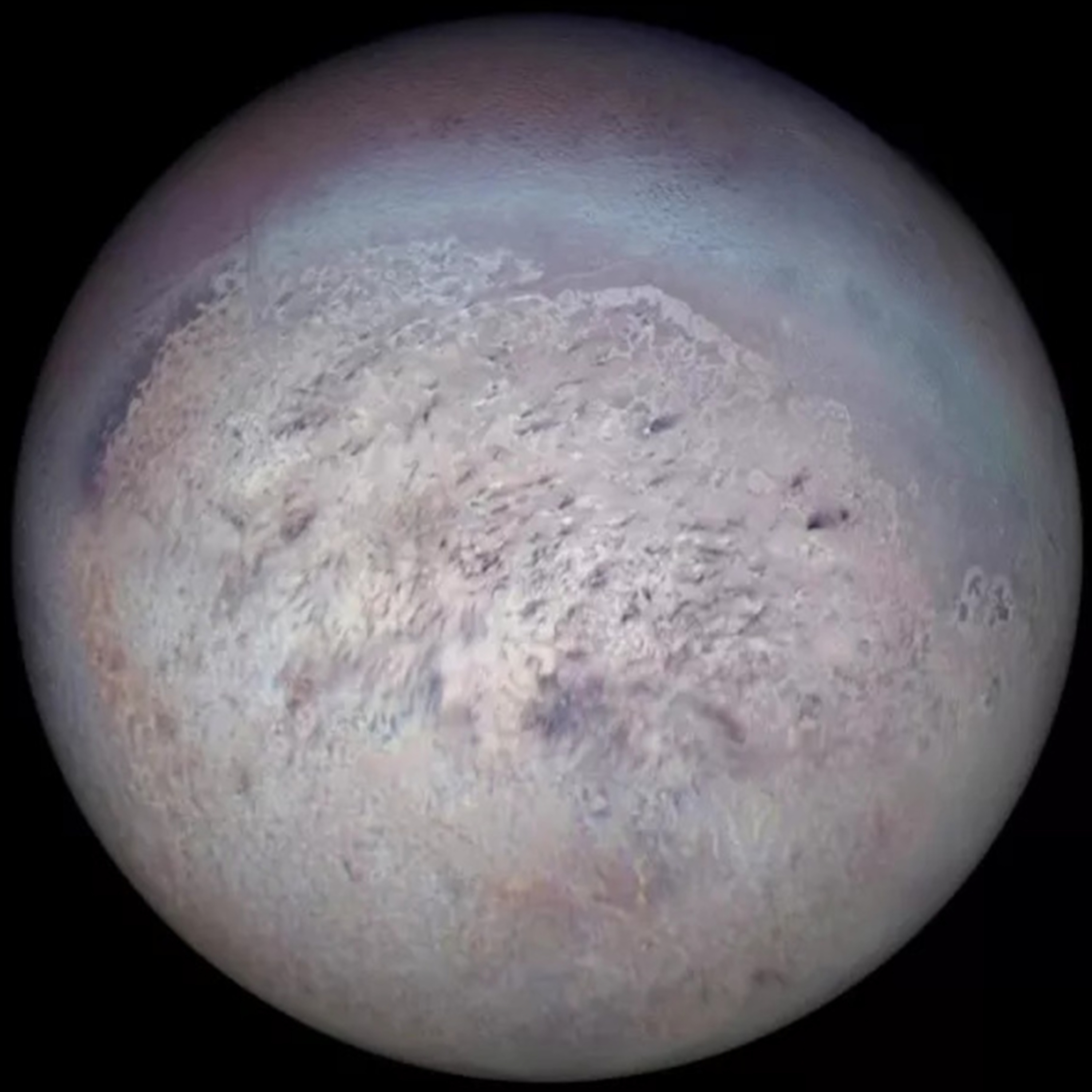
We often think about the Solar System as being our own cosmic backyard, and in many ways, it is: these are the closest objects to us in all the Universe, and our only opportunity to study lunar and planetary systems in situ. However, when it comes to the objects beyond Saturn, including the Uranian and Neptunian systems, as well as everything that lies in the Kuiper belt and beyond, the only probes we've ever sent their way are Voyager 2, which flew by Uranus and Neptune in the late 1980s, and New Horizons, which flew past Pluto in 2015. That means, unlike Jupiter and Saturn, we've never had a dedicated orbiter, lander, or atmospheric probe around the outermost planets or lunar systems even in our own backyard. Moreover, there are no such planned missions that are funded and slated to fly, which is really too bad, as there's so much to learn about these planets and worlds that are so well-represented in exoplanet analogues all across the galaxy and Universe. In particular, one moon stands out as the largest body with a solid surface: Triton, the 7th largest moon in the Solar System and which represents more than 98% of the mass of all the moons that orbit Neptune. Here to guide…
People in this episode
Host: Ethan Siegel
Guest: Lana Tilke
Topics covered
- outer solar system
- Triton
- planetary science
- space exploration
- Uranian and Neptunian systems
- Kuiper belt
Mentioned in this episode
Books & works: Starts With A Bang
Places: Uranus, Neptune, Pluto, Saturn, Kuiper belt, Solar System, Voyager 2, New Horizons, galaxy, Universe
Explore listener stats, chart rankings, contacts and more on the Starts With A Bang podcast podcast page.