
Insights from recent episode analysis
Audience Interest
Podcast Focus
Publishing Consistency
Platform Reach
Insights are generated by CastFox AI using publicly available data, episode content, and proprietary models.
Most discussed topics
Brands & references
Est. Listeners
Insufficient chart data. Estimates will improve as the show charts.
- Per-Episode Audience
Est. listeners per new episode within ~30 days
N/A🎙 ~2x weekly·143 episodes·Last published 2mo ago - Monthly Reach
Unique listeners across all episodes (30 days)
N/A - Active Followers
Loyal subscribers who consistently listen
N/A
Market Insights
Platform Distribution
Reach across major podcast platforms, updated hourly
Total Followers
—
Total Plays
—
Total Reviews
—
* Data sourced directly from platform APIs and aggregated hourly across all major podcast directories.
On the show
From 10 epsHosts
Recent guests
Recent episodes
SURPRISE! Where Are We Going Next?
Apr 7, 2026
8m 19s
"Stop Parenting & Start Coaching?" What in the World Does That Mean?!
Mar 31, 2026
12m 43s
Blueprint to Bluechip: A Conversation with Erin Sarles & Thomas Roe
Mar 24, 2026
47m 09s
Steve's Big Confession!
Mar 17, 2026
18m 48s
PARENTS: How Much is TOO Much?
Mar 10, 2026
16m 06s
Social Links & Contact
Official channels & resources
Official Website
Login
RSS Feed
Login
| Date | Episode | Topics | Guests | Brands | Places | Keywords | Sponsor | Length | |
|---|---|---|---|---|---|---|---|---|---|
| 4/7/26 |  SURPRISE! Where Are We Going Next?✨ | parentingcoaching+3 | — | — | — | teen athletesparenting+3 | — | 8m 19s | |
| 3/31/26 |  "Stop Parenting & Start Coaching?" What in the World Does That Mean?!✨ | parentingcoaching+3 | — | The STOP PARENTING & START COACHING Podcast | — | parentingcoaching+5 | — | 12m 43s | |
| 3/24/26 |  Blueprint to Bluechip: A Conversation with Erin Sarles & Thomas Roe✨ | youth sportscharacter development+3 | Erin SarlesThomas Roe | Blueprint to BluechipTRoe Fitness-Sports Rehab & Recovery | — | youth sportscharacter crisis+3 | — | 47m 09s | |
| 3/17/26 |  Steve's Big Confession!✨ | coachingparenting+4 | Steve | — | — | coachingparenting+5 | — | 18m 48s | |
| 3/10/26 | 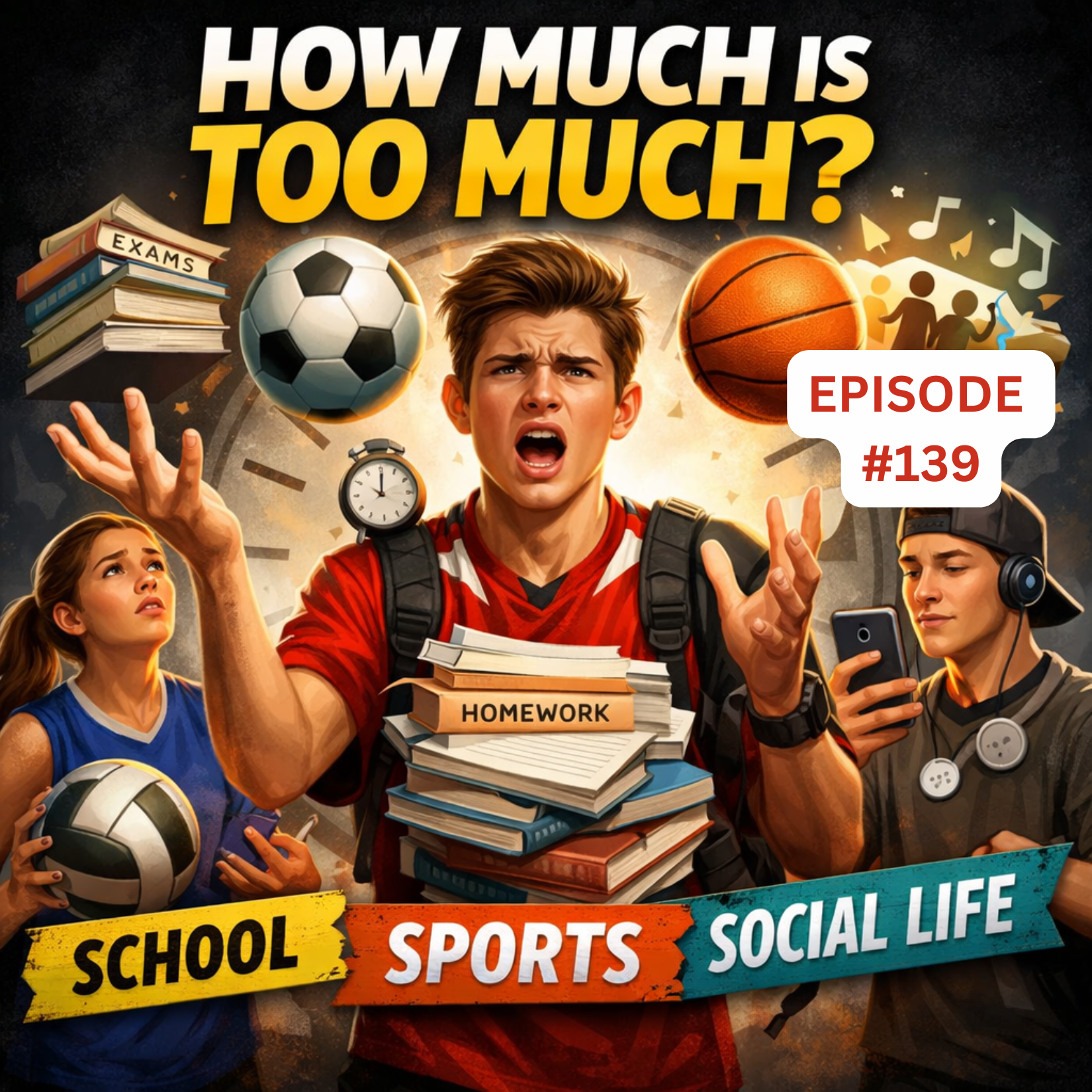 PARENTS: How Much is TOO Much?✨ | teen pressurecommunication+3 | — | — | — | teen athletesparenting+5 | — | 16m 06s | |
| 3/3/26 |  ROB GEERTSEN: His Son's High School Transfer Story✨ | high school transferparenting+3 | Rob Geertsen | Canyons District | — | school transferparenting advice+3 | — | 1h 00m 11s | |
| 2/24/26 |  PARENTS: Are You Sleeping on This?!✨ | sleep systemmutual agreements+4 | — | — | — | sleepparenting+5 | — | 24m 53s | |
| 2/17/26 |  PARENTS: Are They Getting Enough?!✨ | teen sleepmental health+4 | — | Most Valuable Parents | — | teen sleepmental health+4 | — | 22m 40s | |
| 2/10/26 |  Are You in the Market for Relationship Insurance?✨ | parentingcoaching+3 | — | — | — | relationship insuranceneutrality+3 | — | 17m 52s | |
| 2/3/26 | 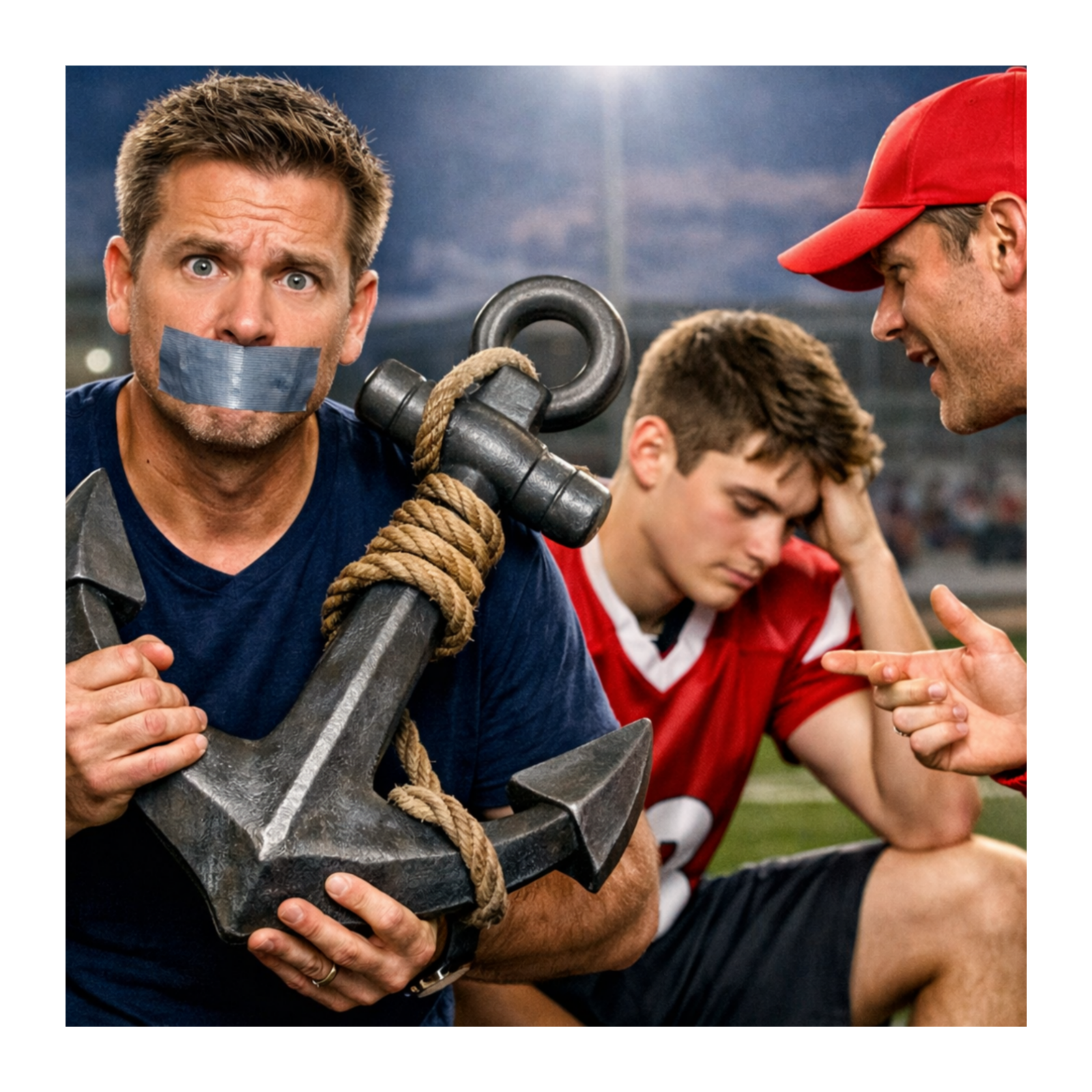 Duct Tape, Yeah-Buts, & Anchors!!✨ | parentingteen communication+4 | — | — | — | playing timeemotional recovery+5 | — | 21m 21s | |
Want analysis for the episodes below?Free for Pro Submit a request, we'll have your selected episodes analyzed within an hour. Free, at no cost to you, for Pro users. | |||||||||
| 1/27/26 |  Are You a "Mild Manager" or "Perturbed Prosecutor?!" | Newsflash! Life isn’t fair. Yep, we all know it! And high school sports and competition are no exception. "It's not fair!" -- the common refrain heard among parents and players and yes, even coaches! And guess what? You are probably right when you're screaming "that is NOT fair!"But your teen athlete or performer doesn’t needs a parent who coaches them into Blaming, Complaining, Defending and Explaining. This perpetuates a victim mindset! In this episode, we coach you through the two things you can always control: your perspective and your response. We’ll unpack why complaining feels productive (but usually backfires), how to keep connection strong when emotions run hot, and how to lead like a calm, mild manager instead of an angry, perturbed prosecutor. If you want your teen athlete to build resilience and confidence under pressure, this starts with how you handle “it's not fair!!”The Timestamps00:00 The Fairness Addiction03:14 Playing Time and Parental Perspectives05:59 The Poison of Complaining08:45 Understanding Coaches' Decisions11:34 Perspective and Emotional Discipline13:30 Important Questions for Parents16:02 The Prosecutor vs. Manager Mindset18:59 Modeling Behavior for TeensTakeawaysFairness can become an addiction that affects our mindset.Complaining about unfairness can lead to negative outcomes.Life is inherently unfair, and we must learn to accept that.Parents should focus on what they can control in sports.Understanding the coach's perspective can help mitigate feelings of unfairness.Modeling emotional discipline is crucial for parents.Questions can help parents gain perspective on their child's situation.It's important to avoid labeling coaches negatively without understanding their decisions.Parents should strive to be managers rather than prosecutors in sports situations.Maintaining a positive outlook can benefit both parents and athletes.Hey there Most Valuable Parents! We are creating a world-class podcast for parents of teen athletes and performers on YouTube. We can also be found on the other usual places you get your podcasts like Apple Podcasts and Spotify.New episodes drop every MONDAY.We would be most grateful if you would SUBSCRIBE to our YouTube channel where our unique show for parents of teen athletes and performers resides. The name of our podcast is the same name as our YouTube channel: The STOP PARENTING & START COACHING Podcast!We're also posting valuable content on LinkedIn. Please follow us and connect with us: LinkedIn Steve GalleyAnd, there’s more–there always isn't there?! If you’ve read this far you probably are totally nerdy and giddy about helping teen athletes and performers to excel. Click here to pick up our 100% -Nate & Steve | 27m 13s | ||||||
| 1/19/26 |  Should I Just Do Nothing?! | Here’s the hard truth: the moment your teen feels evaluated, the conversation gets worse—and so does your influence. In this episode, we help you build emotional safety without lowering standards, and teach you how to stay calm when your teen isn’t. You’ll get simple, real-life ways to respond when things get tense--when you start feeling "judgy"--plus actionable steps you can use today to reduce conflict, strengthen connection, and support your teen athlete’s mindset the smart way.Hang in there because we're going to drop The 5 Second Lane Test, a simple tool you'll want to have in your Parental Toolkit when you are about ready to make a communication error. This tool is dynamite and will help you blow up the old you and allow you to parent from a neutral position!! Let's goooooooooooo!The Timestamps00:00 Navigating Parenting Challenges02:58 The Role of Non-Parental Coaches05:51 Building a Safe Home Base08:33 Understanding Emotional Regulation11:29 The Importance of Neutrality14:04 Action Steps for Parents16:29 The Five Second Lane TestHey there Most Valuable Parents! We are creating a world-class podcast for parents of teen athletes and performers on YouTube. We can also be found on the other usual places you get your podcasts like Apple Podcasts and Spotify.New episodes drop every MONDAY.We would be most grateful if you would SUBSCRIBE to our YouTube channel where our unique show for parents of teen athletes and performers resides. The name of our podcast is the same name as our YouTube channel: The STOP PARENTING & START COACHING Podcast!We're also posting valuable content on LinkedIn. Please follow us and connect with us: LinkedIn Steve GalleyAnd, there’s more–there always isn't there?! If you’ve read this far you probably are totally nerdy and giddy about helping teen athletes and performers to excel. Click here to pick up our 100%-Nate & Steve | 24m 34s | ||||||
| 1/12/26 | 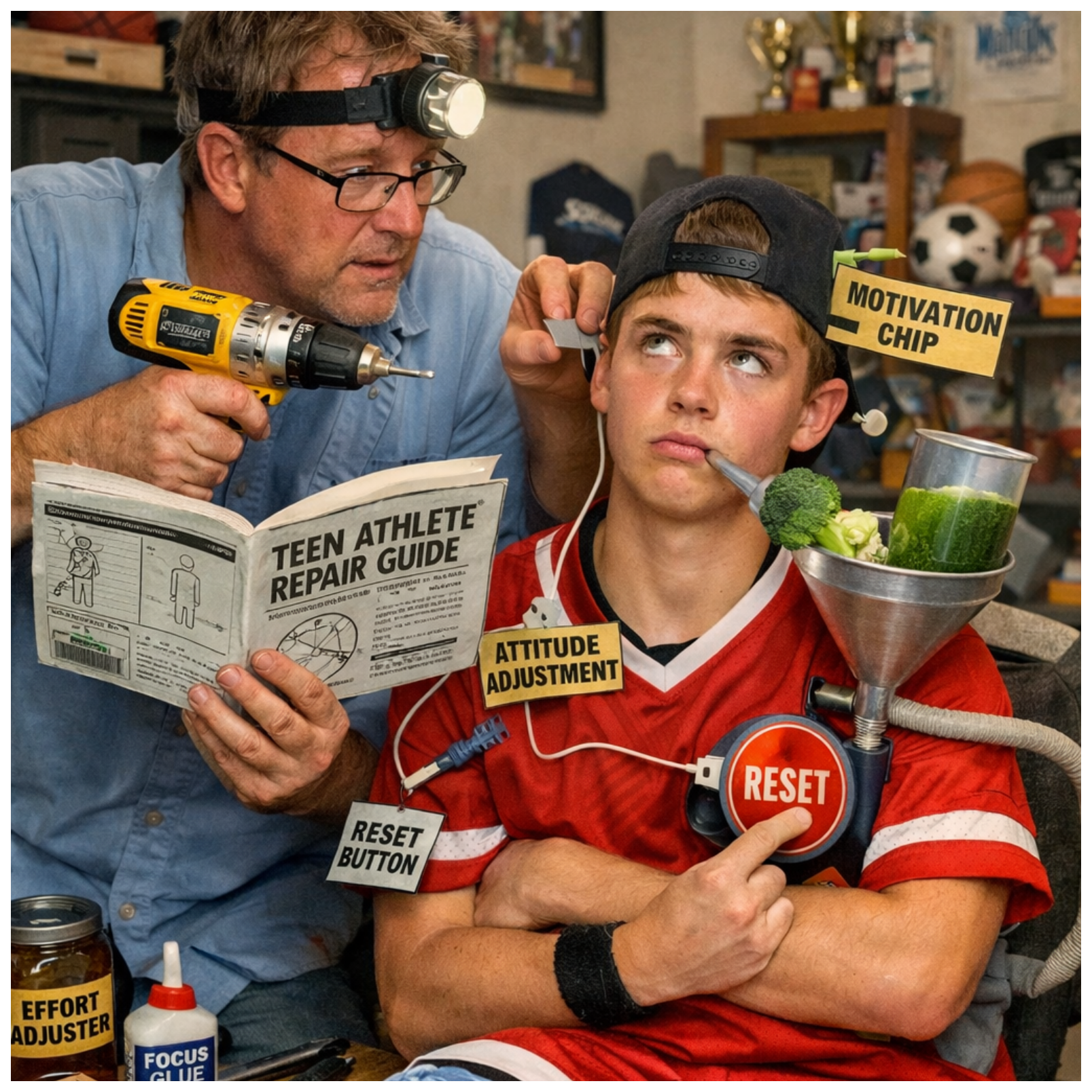 PARENTS: Are You "The Fixer?" | Here’s the hard truth: your teen athlete/performer might be hiding struggles because they don’t want your common reaction. You tend to activate full-blown Fixer Mode! This doesn't make you a "bad parent" but there is a better way to approach this situation and the opportunity for growth and improved connection is waiting for you.In our bantering and discussion in this episode we call out the mistake we ALL make as parents because we love our offspring so much! We want to FIX their problems for them when sometimes they just want and need us to listen in a way that creates some safety and space to get something off their chest. Asking questions that allow them to be open and honest sets you up to coach your teen athlete/performer into creating their own solutions and building confidence. All without turning every moment into a lecture or a fix it session.Let's gooooooooooo Most Valuable Parents!The Timestamps00:00 Understanding Teen Struggles02:33 The Role of Parents as Fixers05:30 Listening vs. Fixing: The Emotional Safety08:13 Effective Communication Strategies10:57 The Detective Approach to Parenting14:00 Supporting Teen Growth and IndependenceTakeaways-Teens may hide struggles to avoid parental "fixing."-Parents often jump into problem-solving mode too quickly.-Emotional safety is crucial for open communication.-Listening is more important than providing immediate solutions.-The "curse of knowledge" can hinder effective parenting.-Asking questions can empower teens to find their own solutions.-Parents should adopt a "detective" approach to understand situations better.-Fixing problems can sometimes damage the parent-teen connection.Hey there Most Valuable Parents! We are creating a world-class podcast for parents of teen athletes and performers on YouTube. We can also be found on the other usual places you get your podcasts like Apple Podcasts and Spotify.New episodes drop every MONDAY.We would be most grateful if you would SUBSCRIBE to our YouTube channel where our unique show for parents of teen athletes and performers resides. The name of our podcast is the same name as our YouTube channel: The STOP PARENTING & START COACHING Podcast!We're also posting valuable content on LinkedIn. Please follow us and connect with us: LinkedIn Steve GalleyAnd, there’s more–there always isn't there?! If you’ve read this far you probably are totally nerdy and giddy about helping teen athletes and performers to excel. Click here to pick up our 100%-Nate & Steve | 18m 30s | ||||||
| 1/5/26 |  Are You Making this Same Mistake Other Parents are Making?! | Wanna know how to pause, find the “why” behind your reaction, and respond like a calm, high-performance coach—not a panicked or crazed bleacher creature?! Stick with us in this episode because we have some burning questions for you along with a few simple preemptive strikes you can launch before the next competition, plus some communication moves that protect connection with your high achieving teen athlete or performer, especially when emotions run red hot!The Timestamps00:00 The Common Parental Mistake03:18 Understanding Emotional Reactions05:17 The Impact of Highly Emotional Reactions on Relationships08:00 Navigating a Coach's Substitutions and Your Teen's Mistakes10:22 The Importance of a Big Picture Perspective12:33 Preemptive Strike Strategies for Parents Before the CompetitionTakeaways-Reactions can create blind spots that hinder understanding.-Parents often react without realizing the impact on their children.-Emotional attachment can drive irrational responses.-It's crucial to pause and reflect on a proper response vs. a knee jerk reaction.-Understanding the 'why' behind reactions can prevent misunderstandings.-Parents should focus on what truly matters in competitive situations.-Preemptive strike strategies can help manage emotional responses.-Communication is key to maintaining healthy relationships with teens.-Parents should strive to be aware of their emotional triggers.Hey there Most Valuable Parents! We are creating a world-class podcast for parents of teen athletes and performers on YouTube. We can also be found on the other usual places you get your podcasts like Apple Podcasts and Spotify.New episodes drop every MONDAY.We would be most grateful if you would SUBSCRIBE to our YouTube channel where our unique show for parents of teen athletes and performers resides. The name of our podcast is the same name as our YouTube channel: The STOP PARENTING & START COACHING Podcast!We're also posting valuable content on LinkedIn. Please follow us and connect with us: LinkedIn Steve GalleyAnd, there’s more–there always isn't there?! If you’ve read this far you probably are totally nerdy and giddy about helping teen athletes and performers to excel. Click here to pick up our 100%-Nate & Steve | 17m 17s | ||||||
| 12/29/25 |  You Think You Know--BLIND SPOTS!! | If you’ve ever thought, “Why isn’t what worked in business working at home?” you’re not alone. Today we unpack how successful parents can accidentally bring the wrong playbook into parenting their high achieving teen athletes and performers. You’ll leave with simple, introspective coaching questions that expose blind spots and rebuild trust with your teen athlete or performer.The Timestamps00:00 Exploring Imperfection and Safety in Parenting03:11 Understanding Blind Spots in Parenting05:29 The Complexity of Parenting and Teen Relationships07:02 Assumptions and Their Impact on Parenting09:51 Navigating Different Parenting Styles11:43 Questions for Reflection and Growth in ParentingTakeaways-Teens have a high awareness of their flaws.-Creating a safe space for imperfection is crucial.-Blind spots in parenting can lead to misunderstandings.-Understanding a teen's perspective is essential.-Assumptions can negatively impact parent-teen relationships.-Communication should focus on feelings, not just facts.-Self-awareness is key in parenting.-Parents should reflect on their motivations for corrections.-The complexity of human relations makes parenting challenging.-Identifying blind spots can improve relationships with teens.Hey there Most Valuable Parents! We are creating a world-class podcast for parents of teen athletes and performers on YouTube. We can also be found on the other usual places you get your podcasts like Apple Podcasts and Spotify.New episodes drop every MONDAY.We would be most grateful if you would SUBSCRIBE to our YouTube channel where our unique show for parents of teen athletes and performers resides. The name of our podcast is the same name as our YouTube channel: The STOP PARENTING & START COACHING Podcast!We're also posting valuable content on LinkedIn. Please follow us and connect with us: LinkedIn Steve GalleyAnd, there’s more–there always isn't there?! If you’ve read this far you probably are totally nerdy and giddy about helping teen athletes and performers to excel. Click here to pick up our 100%-Nate & Steve | 16m 05s | ||||||
| 12/22/25 |  PARENTS: Can SPECIALIZATION Be a GOOD Thing?! (Part 4 of 4) | PARENTS: In Part 4 of 4 of our "specialization series" we tackle the hard questions and attempt to get you thinking about your thinking on WHEN is the time right, if it's right!Exclusive grind with no guardrails? Mmmm, not the way to go. BUT, and this is a big BUT...specialization isn’t automatically “bad”—it can protect joy when the timing is right and the environment is supportive. We give you clear criteria to decide: Is your teen choosing this with energy? Do they have clarity and support? And just as important—do they have an identity beyond being “the athlete”? This is parenting teen athletes with a coaching mindset: connection first, performance follows.The Timestamps00:00 The Debate on Specialization in Sports03:13 When Specialization Becomes Harmful06:09 Criteria for Healthy Specialization08:49 The Importance of Timing and Support11:40 Identifying the Red Flags13:47 Final Thoughts on SpecializationTakeaways-Specialization can protect joy but can also be harmful.-Timing is crucial; specialization should be later in teens.-Joy in sports is essential for healthy development.-Parents should focus on their child's happiness, not just rankings.-Overuse injuries and burnout are risks of early specialization.-A supportive environment can mitigate the pressures of specialization.-Athletes should have multiple identities beyond just being a player.-Criteria for specialization include joy, clarity, and support.-The focus should be on the child's experience.Hey there Most Valuable Parents! We are creating a world-class podcast for parents of teen athletes and performers on YouTube. We can also be found on the other usual places you get your podcasts like Apple Podcasts and Spotify.New episodes drop every MONDAY.We would be most grateful if you would SUBSCRIBE to our YouTube channel where our unique show for parents of teen athletes and performers resides. The name of our podcast is the same name as our YouTube channel: The STOP PARENTING & START COACHING Podcast!We're also posting valuable content on LinkedIn. Please follow us and connect with us: LinkedIn Steve Galley-Nate & Steve | 21m 13s | ||||||
| 12/15/25 |  PARENTS: Take Your Teen's STRENGTHS SNAPSHOT! (Part 3 of 4) | NOTE: This is Part 3 of 4 in a series on Specialization! You want your teen to succeed—and love the journey while they do it. In this episode, we uncover the secrets behind self-driven performance, fewer injuries, and the joy of playing sports for fun. It all starts with seeing your teen in a whole new way: through the lens of strengths. We’re talking about how to spot your teen’s real strengths, what to do with them, and why the “Strengths Snapshot” tool could change the game for both of you.The Timestamps!00:00 Identifying Teen Strengths03:00 The Strengths Snapshot Tool05:49 Durability and Health in Sports08:15 Self-Initiation vs. Parental Push11:11 Secondary Sports and Holistic Development13:50 Guardrails for Youth Sports16:39 Long-Term Development and Enjoyment19:00 Rec Ball vs. Competitive Sports21:45 Conclusion and Future TopicsTakeaways-Identifying strengths is crucial for teen development.-Clarity in understanding strengths leads to better outcomes.-The Strengths Snapshot tool helps assess teen capabilities.-Durability in sports is linked to fewer injuries and better performance.-Self-initiation in practice is more valuable than forced participation.-Parents should observe their teens' self-driven activities.-Balance organized sports with free play for holistic development.-Rec ball can be a valuable outlet for enjoyment and skill development.-Avoid over-specialization to prevent burnout and injuries.-Engaging in multiple sports can enhance overall athletic performance.Hey there Most Valuable Parents! We are creating a world-class podcast for parents of teen athletes and performers on YouTube. We can also be found on the other usual places you get your podcasts like Apple Podcasts and Spotify.New episodes drop every MONDAY.We would be most grateful if you would SUBSCRIBE to our YouTube channel where our unique show for parents of teen athletes and performers resides. The name of our podcast is the same name as our YouTube channel: The STOP PARENTING & START COACHING Podcast!We're also posting valuable content on LinkedIn. Please follow us and connect with us: LinkedIn Steve Galley-Nate & Steve | 25m 30s | ||||||
| 12/8/25 |  3 Super Dangerous Sport Specialization Myths Parents Believe! Part 2 of 4) | If you’re like most driven parents of teen athletes, you’ve been told you’ll “miss the boat” if your kid doesn’t specialize early, that early success proves their long-term trajectory, and that more hours always mean more results. In this episode, we unpack and debunk those dangerous myths, show you what college coaches actually look for, and explain why multi-sport focused experience and unstructured play often beat year-round exclusive grind. You’ll walk away with a clearer, saner game plan to protect your teen’s body, joy, and long-term performance. Let's goooooooooooooooooo!NOTE: This is Part 2 of 4 in a series on Specialization!The Timestamps!00:00 Debunking Specialization Myths in Youth Sports09:52 Understanding Early Success vs. Long-Term Trajectory15:02 The Value of Varied Experiences in Youth Sports16:00 Debunking the Myth of More Hours Equals More Success18:24 Understanding Organized Sports and Risk Management19:07 The Reality of College Coaches' Preferences20:51 The Importance of Unstructured Play21:51 Recognizing Warning Signs in Young Athletes24:43 Clarity as the Key to Athletic CommitmentTakeaways-Specialization myths can put teens at risk.-Early specialization leads to higher injury rates.-Multi-sport participation promotes long-term physical and mental health.-Parents often mistake early success for long term trajectory.-College coaches prefer well-rounded athletes, not just specialists.-More practice hours do not guarantee success.-Kids need unstructured playtime for healthy development.-Monitoring mood changes in athletes is crucial.-Clarity of purpose in a given activity is king!The Research:Sports-Specialized Intensive Training and the Risk of Injury in Young AthletesJayanthi NA et al. Am J Sports Med. 2015.Overuse Injuries and Burnout in Youth Sports: A Position Statement from the American Medical Society for Sports MedicineDiFiori JP et al. Clin J Sport Med. 2014.Associations of Early Sport Specialization and High Training Volume With Injury Rates in NCAA Division I AthletesAhlquist S et al. Orthop J Sports Med. 2020.Early Sport Specialization Is Not a Prerequisite for Elite Success (AOSSM Consensus)LaPrade RF et al. Orthop J Sports Med. 2016.Hey there Most Valuable Parents! We are creating a world-class podcast for parents of teen athletes and performers on YouTube. We can also be found on the other usual places you get your podcasts like Apple Podcasts and Spotify.New episodes drop every MONDAY.We would be most grateful if you would SUBSCRIBE to our YouTube channel where our unique show for parents of teen athletes and performers resides: The STOP PARENTING & START COACHING Podcast!We're also posting valuable content on LinkedIn. Please follow us and connect with us: LinkedIn Steve Galley-Nate & Steve | 28m 35s | ||||||
| 12/2/25 |  Should Your Teen Athlete Specialize or Sample? (Part 1 of 4) | If you’re like most high-achieving parents, you’ve probably heard, “If your teen doesn’t choose one sport now, they’ll fall behind.” In this episode, we slow that conversation way down and begin a walk through what specialization actually is, where it helps and where it hurts.We know this is a big deal and you're right in the thick of it. The clock is ticking on your teen's formative years. We get it--we've been there and know what you're experiencing. And we're going to address all angles of the specialization debate in a 4 part series. By the end, you’ll possess more clarity on what’s right for your son or daughter regardless of what everyone else on and off the court, field or stage is doing! Let's get started. Should your teen specialize or sample?!The Timestamps!00:00 The Specialization Discussion (& sometime debate) Begins02:10 Defining Specialization in Youth Sports04:20 Cautionary Tales: The Risks of Over-Specialization07:12 The Pressure of Performance: Parental Expectations09:59 Focus vs. Exclusive Grind12:51 Individual Sports & Specialization15:26 The Impact of Burnout on Young Athletes18:36 Awareness and the System: Navigating Youth Sports21:27 The Importance of Recreational Sports24:20 Finding Balance: Exposure vs. Development27:15 Concluding Thoughts: The Path Forward for ParentsTakeaways-Specialization in youth sports is a nuanced topic.-Many parents may not openly admit they are pushing specialization.-Over-specialization can lead to burnout and loss of joy.-Parental expectations can create pressure on young athletes.-It's important to define what specialization means.-Rec sports provide a less stressful environment for kids.-Burnout is a significant risk for young athletes.-Self-awareness and awareness of the system is crucial for parents.-Exposure to various sports can benefit long-term development.-Finding balance between focus and variety is essential.Hey there Most Valuable Parents! We are creating a world-class podcast for parents of teen athletes and performers on YouTube. We can also be found on the other usual places you get your podcasts like Apple Podcasts and Spotify.New episodes drop every MONDAY.We would be most grateful if you would SUBSCRIBE to our YouTube channel where our unique show for parents of teen athletes and performers resides. The name of our podcast is the same name as our YouTube channel: The STOP PARENTING & START COACHING Podcast!We're also posting valuable content on LinkedIn. Please follow us and connect with us: LinkedIn Steve GalleyAnd, there’s more–there always isn't there?! If you’ve read this far you probably are totally nerdy and giddy about helping teen athletes and performers to excel. Click here to pick up our 100% Free Thinking Tool: The Question Only Conversation. Give it a whirl today and watch your relationship with your teen athlete or performer trend upward!-Nate & Steve | 29m 44s | ||||||
| 11/25/25 |  Is the (High Performance) Machine Raging Against You? | Ever felt trapped in the "machine" of high performance?! Is that machine raging against you?! Today we explore the complexities of high performance in family dynamics, particularly in the context of youth sports with our ambitious, high achieving teen athletes and performers. We will discuss the risk that is present with ambition but also why you as parents should not necessarily run away from it. Communication and agreements will help you mitigate the risk--they are two critical components to help you avoid the traps in the high performance "machine." Through metaphors of ocean waves and lifeguarding, we will illustrate the need for proactive parenting and the value of regular check-ins to navigate the challenges of highly competitive environments. Let's gooooooooooooooo!The Timestamps!00:00 Raging Against the Machine: High Performance and Family Dynamics03:25 Navigating the Waves: Understanding High Performance Expectations05:56 The Silent Tension: Communication Gaps in Parenting09:00 Preparing for the Unexpected: Conversations with Teens11:45 Lifeguard Parenting: Being Proactive in High Performance SituationsTakeaways-High performance creates pressure and expectations.-Parents often unintentionally place their teen athletes in challenging situations.-Communication gaps can lead to silent tensions in relationships.-It's important to prepare teens for potential risks in high performance.-Regular check-ins can help parents understand their teens' pressures.-Expectations should be replaced with agreements for better understanding.-Understanding the risks and underlying dynamics of high performance environments is crucial for effective parenting.-Parents can act as lifeguards, helping their teen athletes navigate challenges.-Being proactive can prevent kids from getting overwhelmed.Hey there Most Valuable Parents! We are creating a world-class podcast for parents of teen athletes and performers on YouTube. We can also be found on the other usual places you get your podcasts like Apple Podcasts and Spotify.New episodes drop every MONDAY.We would be most grateful if you would SUBSCRIBE to our YouTube channel where our unique show for parents of teen athletes and performers resides. The name of our podcast is the same name as our YouTube channel: The STOP PARENTING & START COACHING Podcast!We're also posting valuable content on LinkedIn. Please follow us and connect with us: LinkedIn Steve GalleyAnd, there’s more–there always isn't there?! If you’ve read this far you probably are totally nerdy and giddy about helping teen athletes and performers to excel. Click here to pick up our 100% Free Thinking Tool: The Question Only Conversation. Give it a whirl today and watch your relationship with your teen athlete or performer trend upward!-Nate & Steve | 18m 52s | ||||||
| 11/17/25 |  Dr. Andrea D. Mata, PhD is Back for Part 2! | NOTE: This is Part 2 of our conversation with Andrea. Check out Episode 121 for Part 1! In this episode with Dr. Andrea Mata we knock out gentle parenting and expose it's major flaws while exploring and defining how to parent well in this Gen Z world. Andrea ("Dr. Dre") spells out the simple ways we can authoritatively parent and lead better.If you are the ambitious parent of a go-getter teen athlete or performer, this episode is custom built for you. We hope you enjoy it--let us know what you think by commenting or sending us feedback at createtransformbecome@gmail.com. THANKS!All the links and places to find and connect with Dr. Andrea Mata are listed after the show notes below!The Timestamps!00:00 Intro -- This is Part 2--listen to EP 121 for Part 102:31 Emotional Regulation Strategies for Teens12:20 The Debate on Gentle Parenting18:45 Balancing Authority and Connection in Parenting21:41 Common Pitfalls in Parent-Teen Connections26:08 Embracing Natural Consequences in Parenting27:26 The Impact of 'Be Careful' on Child Development29:37 Understanding Obsessive Compulsive Disorder in Teens31:47 The Importance of Allowing Struggles for Growth32:39 Connecting with Dr. Andrea Mata: Resources and Social Media34:38 Thriving with the Stars--Charity/Dance Experience!37:18 Ohio State Football & Michigan '24: A Diehard Fan's Perspective43:52 Encouragement for Overwhelmed ParentsTakeaways-Emotional regulation is essential.-Emotional regulation skills is best taught during calm.-Modeling behavior beats lecturing.-Gentle parenting is not the way.-Setting high expectations is the way!-Listening beats lecturing!-Natural consequences are critical.-"Be careful" can hinder children's ability to assess risks.-Parents can always develop new skills to improve their parenting.Andrea's TedX Talk--From Murder to Mission: How I Found My Life's CallingAndrea's LinkedInAndrea's YouTube ChannelAndrea on the Tamron Hall ShowThe No. 2 Parenting Book: Practical Tips for the Pooped Out ParentHey there Most Valuable Parents! We are creating a world-class podcast for parents of teen athletes and performers on YouTube. New episodes drop every MONDAY.Please SUBSCRIBE to our YouTube channel: The STOP PARENTING & START COACHING Podcast!We're also posting valuable content on LinkedIn. Please follow us and connect with us: LinkedIn Steve Galley-Nate & Steve | 45m 52s | ||||||
| 11/11/25 |  "MY BAD" is NOT GOOD--There's a Better Way! | "Our bad!" We should've recorded this episode years ago! All kidding aside, "my bad" stinks and we'll tell you why in today's episode where we explore the concept of apologies! Particularly focusing on the phrase "my bad" and its implications. We'll discuss the sincerity behind admitting fault and "apologizing," the importance of genuine change, and introduce "The Repair Loop" as a tool for better, more effective apologies. And it will all come down to the role of parents in modeling sincere apologies for their teens and the need for actionable change following an acknowledgment of mistakes.The Timestamps!00:00 The Meaning of Apologies03:13 The Impact of Language on Apologies06:18 The Psychology Behind 'My Bad'09:18 The Repair Loop: A Tool for Genuine Change12:08 Modeling Behavior for Your Teens13:14 Real-World Examples of Apologies in Action15:20 Focusing on Your Standards and Values17:52 Creating Meaningful ChangeTakeaways-Apologies can often be insincere and merely lip service.-The phrase 'my bad' is a weak apology.-Sincerity in apologies is crucial for genuine change.-The Repair Loop consists of acknowledging, analyzing, and acting to repair mistakes.-Modeling proper apology behavior is important for parents.-Teens often mimic their parents' apology styles.-Concrete actions following an apology validate the sincerity of the statement.-Understanding the underlying values can enhance the effectiveness of apologies.Hey there Most Valuable Parents! We are creating a world-class podcast for parents of teen athletes and performers on YouTube. We can also be found on the other usual places you get your podcasts like Apple Podcasts and Spotify.New episodes drop every MONDAY.We would be most grateful if you would SUBSCRIBE to our YouTube channel where our unique show for parents of teen athletes and performers resides. The name of our podcast is the same name as our YouTube channel: The STOP PARENTING & START COACHING Podcast!We're also posting valuable content on LinkedIn. Please follow us and connect with us: LinkedIn Steve GalleyAnd, there’s more–there always isn't there?! If you’ve read this far you probably are totally nerdy and giddy about helping teen athletes and performers to excel. Click here to pick up our 100% Free Thinking Tool: The Question Only Conversation. Give it a whirl today and watch your relationship with your teen athlete or performer trend upward!-Nate & Steve | 21m 36s | ||||||
| 11/4/25 |  PARENTS--Dr. Dre is in the House! (Part 1 of 2) | NOTE: This is Part 1 of 2 with Andrea.What does it take to break cycles, beat the odds, and build something better—for yourself and your family? In this episode, we sit down with "Dr. Dre" a.k.a. Andrea D. Mata, PhD—clinical psychologist, founder of BrightSpot Families, and unapologetic straight shooter. And should I mention, funny as all get out! From growing up in a gang-ridden neighborhood on Chicago’s south side to reshaping how families fight anxiety, Dr. Dre shares the raw truth about resilience, parenting, and mental health. Get ready for no-filter wisdom! Dr. Dre is in the house!The Timestamps!00:00 Introduction to Dr. Andrea Mata and Her Mission02:06 Dr. Mata's Journey and Background04:01 The Impact of Dr. Mata's TED Talk05:17 The Unique Approach of Dr. Mata's Book07:52 Transitioning to Sports Psychology09:54 The Importance of Composure Training12:52 Emotional Regulation in Sports18:38 Managing Parental Behavior at Games21:26 Modeling Emotional Regulation for Teens25:42 Navigating the Conversation FlowLOOK FOR PART 2 with Dr. Andrea Mata, Ph.D coming soon within the next few weeks! In the meantime if you're looking for more from Dr. Dre here is where you may find her (and if you really want the Coop the Poop bookmark, connect with Andrea on LinkedIn and order the book directly from her--you can also get the book minus the bookmark on Amazon ("The No. 2 Parenting Book: Practical Tips for the Pooped Out Parent":https://andreadmata.com/https://www.brightspotfamilies.com/https://www.youtube.com/@drdrematahttps://www.linkedin.com/in/andrea-mata-ph-d-278765225/Hey there Most Valuable Parents! We are creating a world-class podcast for parents of teen athletes and performers on YouTube. We can also be found on the other usual places you get your podcasts like Apple Podcasts and Spotify.New episodes drop every MONDAY.We would be most grateful if you would SUBSCRIBE to our YouTube channel where our unique show for parents of teen athletes and performers resides. The name of our podcast is the same name as our YouTube channel: The STOP PARENTING & START COACHING Podcast!We're also posting valuable content on LinkedIn. Please follow us and connect with us: LinkedIn Steve GalleyAnd, there’s more–there always isn't there?! If you’ve read this far you probably are totally nerdy and giddy about helping teen athletes and performers to excel. Click here to pick up our 100% Free Thinking Tool: The Question Only Conversation. Give it a whirl today and watch your relationship with your teen athlete or performer trend upward!-Nate & Steve | 30m 44s | ||||||
| 10/27/25 |  PARENTS -- Take Them Down a Notch? Let's NOT! | If you’ve ever said, “My teen needs to be taken down a notch,” this episode is your wake-up call. We break down why that mindset crushes confidence and how a coaching approach actually develops humility, strength, and real independence. You’ll learn how to use love, challenge, and questions—not control or shame—to raise high-performing, emotionally healthy teens.In this episode, we dive into how humiliation, even when subtle, can derail your teen’s confidence and passion. Instead, we offer some powerful questions to guide your teen’s growth through thoughtful challenges, encouragement, and conversations that fuel both their character and their performance (even if they're a bit defiant!).The Timestamps!00:00 Introduction to Parenting Philosophy02:15 The Concept of Taking Down a Notch04:48 The Emotional Cost of Humiliation07:40 Challenging Overconfidence in Teens10:18 Healthy Alternatives to Humiliation12:49 Encouraging Growth and Confidence15:14 Conclusion and Call to ActionTakeaways-Taking your teen down a notch can be harmful.-Humiliation has staggering emotional costs for kids.-Parents should foster confidence in their children.-Redirecting defiance is more effective than punishment.-Asking questions can help teens reflect on their behavior.-Love is a stronger motivator than fear.-Modeling humility is essential for parents.-Encouraging service can teach gratitude and humility.Hey there Most Valuable Parents! We are creating a world-class podcast for parents of teen athletes and performers on YouTube. We can also be found on the other usual places you get your podcasts like Apple Podcasts and Spotify.New episodes drop every MONDAY.We would be most grateful if you would SUBSCRIBE to our YouTube channel where our unique show for parents of teen athletes and performers resides. The name of our podcast is the same name as our YouTube channel: The STOP PARENTING & START COACHING Podcast!We're also posting valuable content on LinkedIn. Please follow us and connect with us: LinkedIn Steve GalleyAnd, there’s more–there always isn't there?! If you’ve read this far you probably are totally nerdy and giddy about helping teen athletes and performers to excel. Click here to pick up our 100% Free Thinking Tool: The Question Only Conversation. Give it a whirl today and watch your relationship with your teen athlete or performer trend upward!-Nate & Steve | 18m 00s | ||||||
| 10/21/25 |  PARENTS--Is Your Family a Playoff Team? | Think your teen’s success starts with better training or coaching? Think again. It starts at home. The strongest teen athletes and performers come from families that operate like teams, playoff teams centered around clear communication, shared accountability, and mutual respect. Today we explore practical ways to build that kind of culture: from a united front to weekly huddles and making repairs in front of our teen athletes and performers. Because if your family functions like a playoff team, your teen will thrive wherever they play.The Timestamps!00:00 Family as a Playoff Team03:25 Contradiction Audit in Family Dynamics06:16 Modeling Teamwork in Parenting08:57 Non-Negotiables for Effective Parenting12:05 Implementing Family Huddles and DebriefsTakeaways-Approaching family dynamics like a playoff team can enhance overall well-being.-Parents must model positive behavior for their children.-A "contradiction audit" can reveal harmful family dynamics.-Team sports serve as a foundation for life skills.-Parents should focus on controllables in their teen's sports.-Weekly family huddles can strengthen teamwork.-Modeling reconciliation teaches children valuable lessons.Leading discussions without blame or victimhood is a must!Hey there Most Valuable Parents! We are creating a world-class podcast for parents of teen athletes and performers on YouTube. We can also be found on the other usual places you get your podcasts like Apple Podcasts and Spotify.New episodes drop every MONDAY.We would be most grateful if you would SUBSCRIBE to our YouTube channel where our unique show for parents of teen athletes and performers resides. The name of our podcast is the same name as our YouTube channel: The STOP PARENTING & START COACHING Podcast!We're also posting valuable content on LinkedIn. Please follow us and connect with us: LinkedIn Steve GalleyAnd, there’s more–there always isn't there?! If you’ve read this far you probably are totally nerdy and giddy about helping teen athletes and performers to excel. Click here to pick up our 100% Free Thinking Tool: The Question Only Conversation. Give it a whirl today and watch your relationship with your teen athlete or performer trend upward!-Nate & Steve | 18m 36s | ||||||
Showing 25 of 143
Pitch Fit is a Pro feature
See how bookable this show is for guests, which brands already advertise, the per-episode ad value, and the best-fit guest and sponsor profile. The numbers are blurred on the free plan.
How readily this show books outside guests like you.
How proven this show is for host-read sponsorships.
For Guests
ProFor Advertisers
ProUpgrade to Pro to unlock guest cadence, sponsor categories, fit scores, and per-episode ad value for this show.