

Insights from recent episode analysis
Audience Interest
Podcast Focus
Publishing Consistency
Platform Reach
Insights are generated by CastFox AI using publicly available data, episode content, and proprietary models.
Most discussed topics
Brands & references
Total monthly reach
Estimated from 1 chart position in 1 market.
By chart position
- 🇺🇸US · Management#1435K to 30K
- Per-Episode Audience
Est. listeners per new episode within ~30 days
2.5K to 15K🎙 ~2x weekly·104 episodes·Last published 1w ago - Monthly Reach
Unique listeners across all episodes (30 days)
5K to 30K🇺🇸100% - Active Followers
Loyal subscribers who consistently listen
2K to 12K
Market Insights
Platform Distribution
Reach across major podcast platforms, updated hourly
Total Followers
—
Total Plays
—
Total Reviews
—
* Data sourced directly from platform APIs and aggregated hourly across all major podcast directories.
On the show
From 17 epsHosts
Recent guests
Recent episodes
STRAT | 17 JUN 26 | Ukraine Momentum Shifts Amid Emerging Policy Reset
Jun 18, 2026
Unknown duration
STRAT | 14 JUNE 2026 | Testing a Fragile Path Toward Stability
Jun 14, 2026
Unknown duration
STRAT | 07 JUN 26 | Iran’s Missile Gamble Signals Growing Desperation
Jun 8, 2026
20m 30s
STRAT | 04 JUNE 2026 | Lebanon’s High-Stakes Battle Against Hezbollah
Jun 4, 2026
21m 50s
STRAT | 28 MAY 2026 | America’s Cartel Crackdown Reshapes Hemisphere
May 28, 2026
27m 00s
Social Links & Contact
Official channels & resources
Official Website
Login
RSS Feed
Login
| Date | Episode | Topics | Guests | Brands | Places | Keywords | Sponsor | Length | |
|---|---|---|---|---|---|---|---|---|---|
| 6/18/26 | 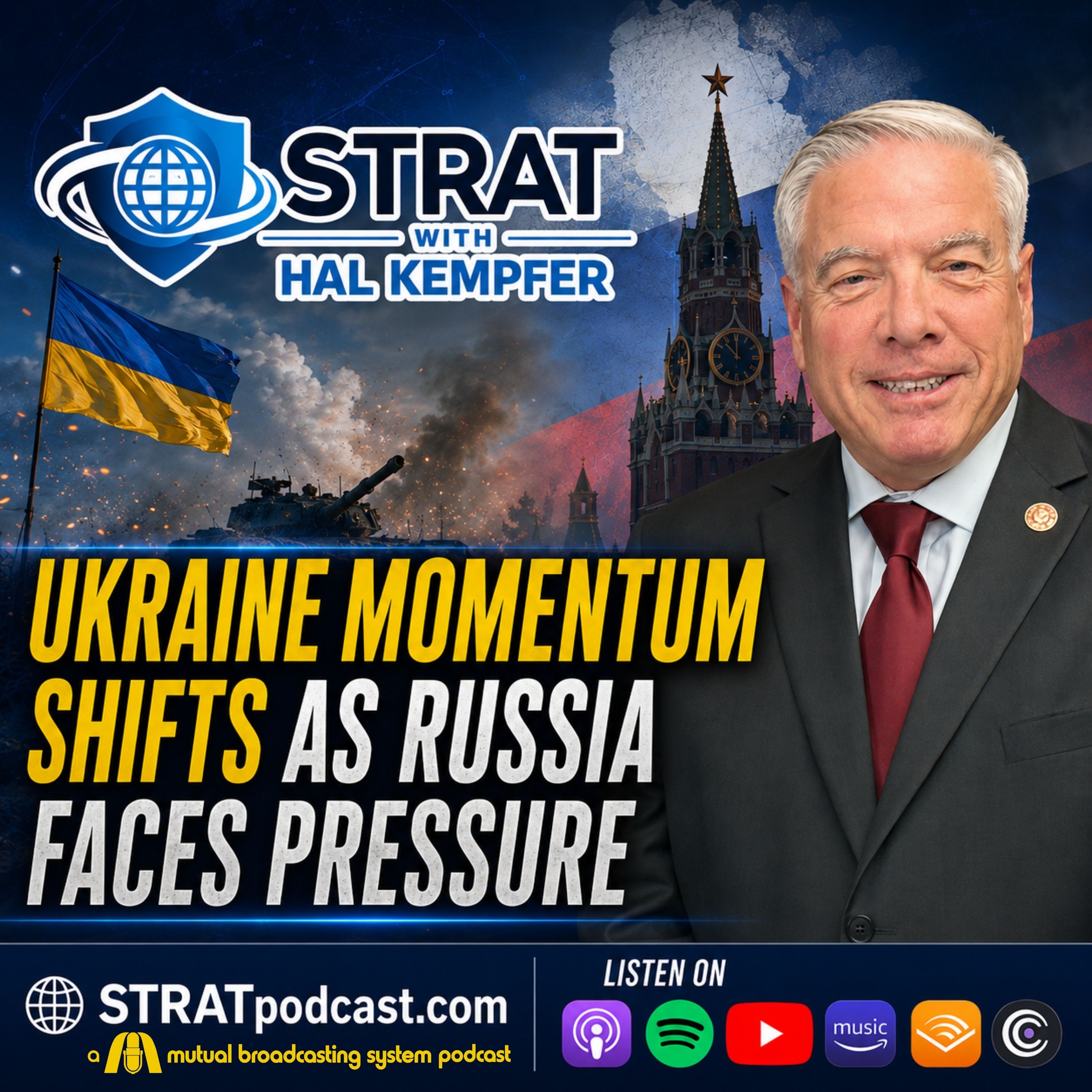 STRAT | 17 JUN 26 | Ukraine Momentum Shifts Amid Emerging Policy Reset | On this episode of STRAT, retired Marine intelligence officer Hal Kempfer examines emerging signs of a potential shift in U.S. policy toward the Russia-Ukraine war following developments at the G7 summit. He analyzes battlefield trends, Ukrainian deep-strike operations, Russian territorial setbacks, and the growing impact of drone warfare on modern conflict. The discussion explores reports of increasing pressure on Russia’s military logistics, infrastructure, and political leadership, while highlighting concerns among Russian elites about the long-term sustainability of the war. Kempfer also reviews recent diplomatic activity involving President Trump, President Zelensky, and European leaders, assessing whether Washington may be moving toward stronger support for Ukraine. Additionally, he considers how the recent Iran conflict, sanctions policy, and broader geopolitical dynamics involving China, Europe, and NATO could influence future U.S. strategic decisions. This episode offers a detailed strategic risk assessment of one of the world’s most consequential conflicts.Takeaways:Evidence suggests Russia has lost battlefield momentumUkraine’s deep-strike drone campaign is increasingly targeting critical Russian infrastructure.Russian territorial gains have stalled, while some areas show measurable losses.Drone warfare accounts for the majority of battlefield casualties.Russian logistics networks are facing growing disruption from Ukrainian attacks.Reports indicate rising frustration among Russian political and business elites.G7 discussions may signal a shift toward more US support for Ukraine.Broader geopolitical considerations involving Iran, China, and Europe are influencing U.S. strategic calculations#STRATPodcast #HalKempfer #MutualBroadcastingSystem #StrategicRiskAnalysis #UkraineWar #RussiaUkraineConflict #Geopolitics #NationalSecurity #MilitaryAnalysis #ForeignPolicy #DroneWarfare #StrategicRisk #GlobalSecurity #UkraineDefense #RussiaEconomy #NATO #G7Summit #InternationalRelations #DefenseStrategy #ConflictAnalysis | — | ||||||
| 6/14/26 | 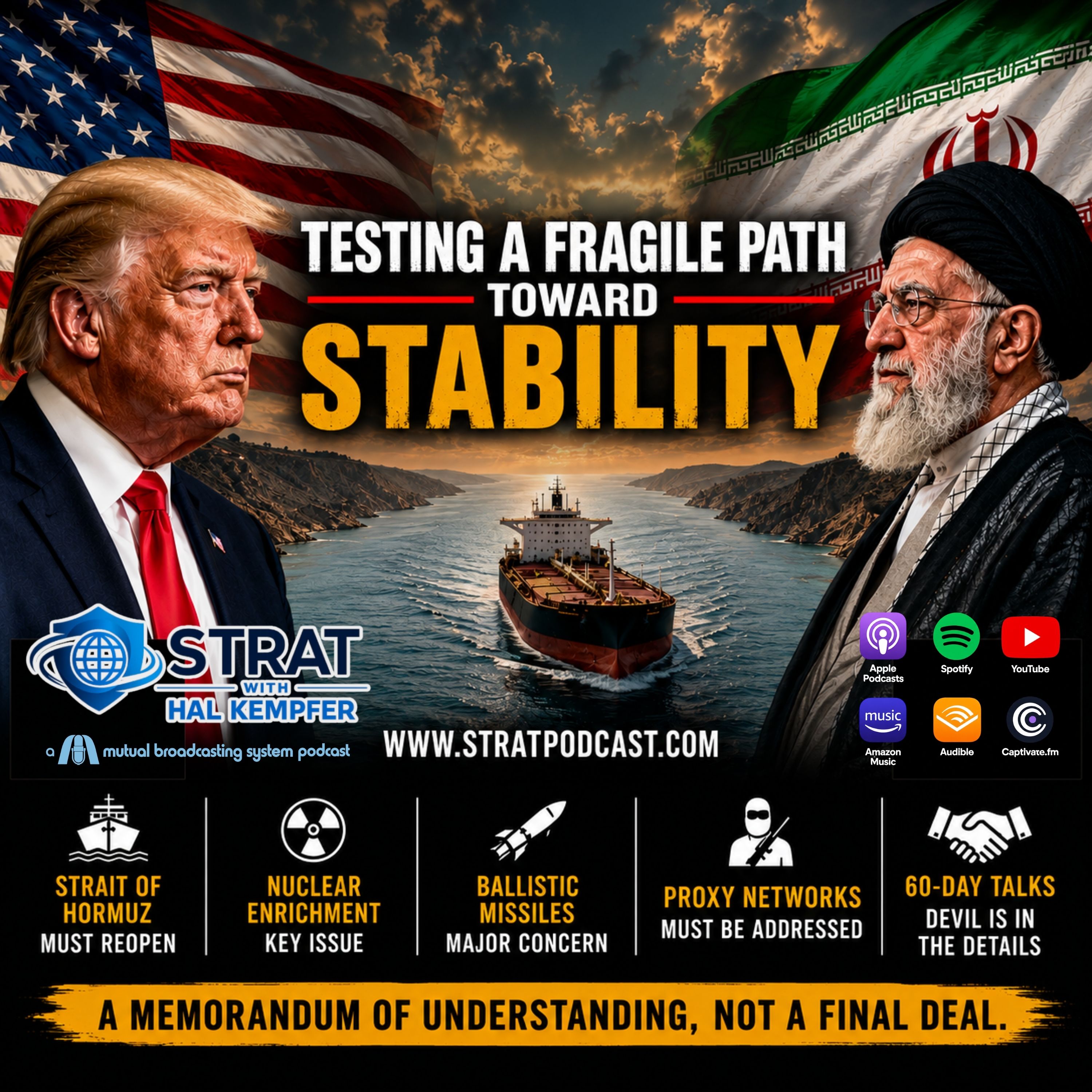 STRAT | 14 JUNE 2026 | Testing a Fragile Path Toward Stability | A reported U.S.–Iran Memorandum of Understanding could become one of the most consequential geopolitical developments in years—but only if both sides follow through. In this episode of STRAT with retired Marine Intelligence Officer Hal Kempfer, the discussion examines what is reportedly included in the proposed framework, why an MOU is not the same as a treaty or peace agreement, and what challenges lie ahead during the expected 60-day negotiation period. Key topics include reopening the Strait of Hormuz, Iran’s nuclear enrichment program, ballistic missile capabilities, international inspections, sanctions relief, and the future of Iran’s regional proxy networks. The episode also explores the strategic concerns of Israel, the role of the Iranian Revolutionary Guard Corps, and the economic pressures facing Tehran. While the agreement could potentially reduce tensions and improve regional stability, significant questions remain about verification, compliance, and enforcement. The ultimate success of any deal, the analysis argues, will depend on actions—not promises.Takeaways:The reported U.S.–Iran MOU is a framework, not a final agreement.Reopening the Strait of Hormuz will be the first major compliance test.Iran’s nuclear enrichment activities remain a central negotiating issue.Verification and inspections are critical due to longstanding trust concerns.Ballistic missile capabilities remain a major security concern for Israel and the West.Iran’s proxy networks across the Middle East are expected to be addressed.Economic pressure and sanctions relief may be driving negotiations.The success of the agreement will depend on implementation and enforcement, not rhetoric.#STRATPodcast #HalKempfer #MutualBroadcastingSystem #StrategicRiskAssessmentTalk #IranDeal #StraitOfHormuz #MiddleEastSecurity #NuclearNegotiations #BallisticMissiles #MaritimeSecurity #GlobalRisk #NationalSecurity #ForeignPolicy #Geopolitics #RegionalStability #IranNuclearProgram #ProxyWarfare #StrategicAnalysis #InternationalRelations #WorldAffairs | — | ||||||
| 6/8/26 | 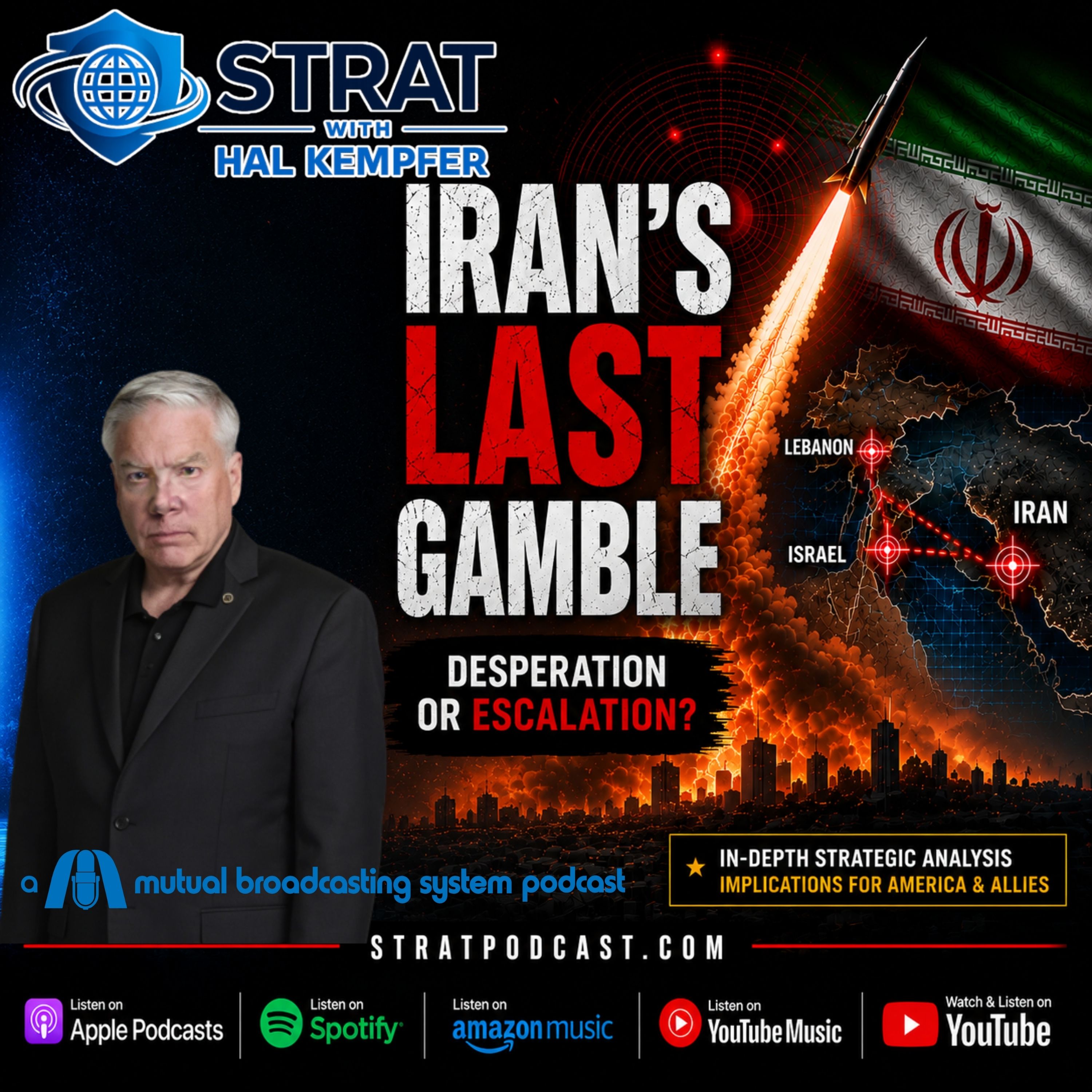 STRAT | 07 JUN 26 | Iran’s Missile Gamble Signals Growing Desperation✨ | Iran's missile capabilitiesGeopolitical tensions+4 | LtCol. Hal Kempfer | Iran’s Revolutionary Guard Corps | IranIsrael+3 | Iranmissile attack+6 | — | 20m 30s | |
| 6/4/26 | 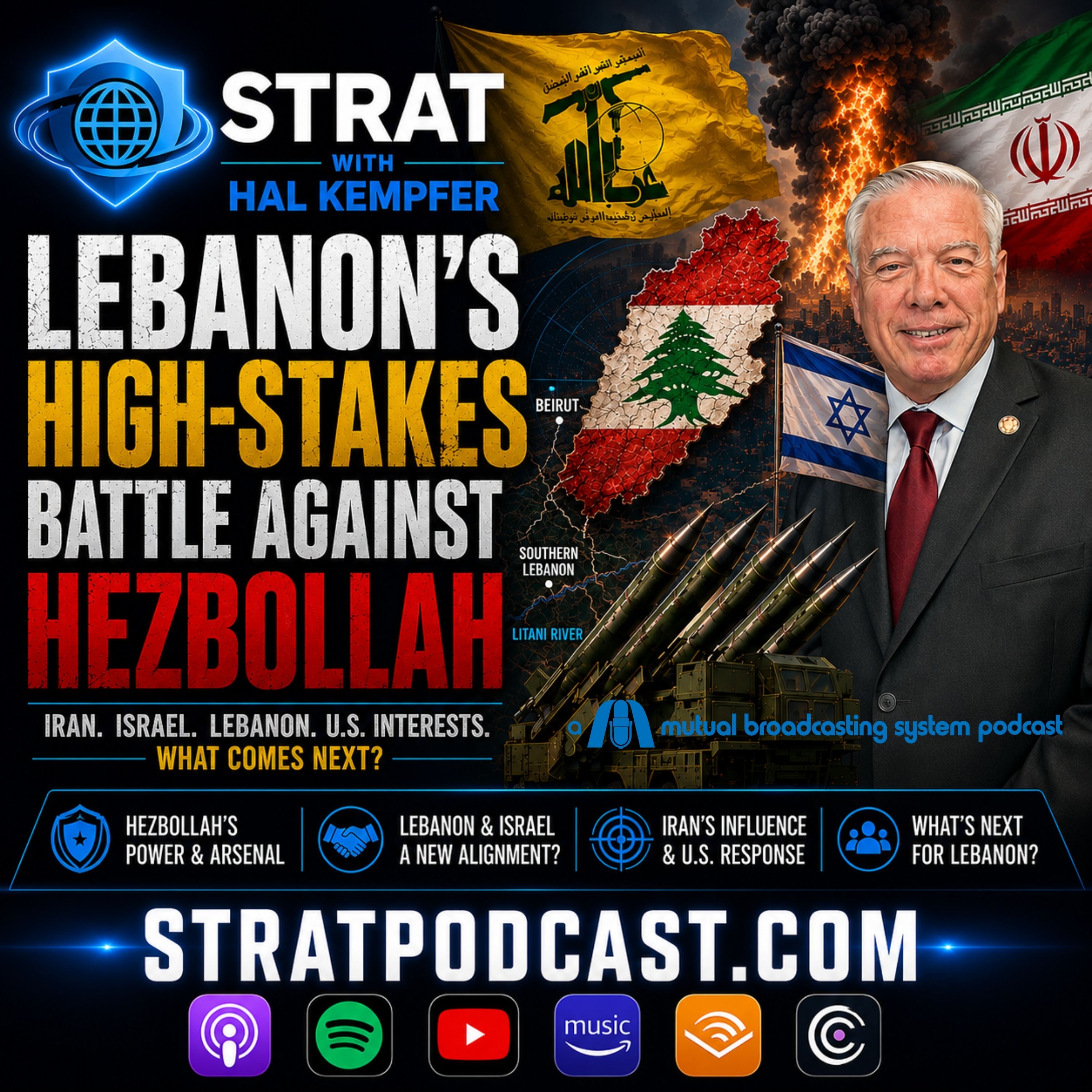 STRAT | 04 JUNE 2026 | Lebanon’s High-Stakes Battle Against Hezbollah✨ | Middle East conflictHezbollah+5 | LtCol. Hal Kempfer | HezbollahIran’s Revolutionary Guard Corps+2 | LebanonMiddle East | HezbollahIran+7 | — | 21m 50s | |
| 5/28/26 |  STRAT | 28 MAY 2026 | America’s Cartel Crackdown Reshapes Hemisphere✨ | U.S. military operationscartel targeting+4 | LtCol. Hal Kempfer | — | United StatesLatin America+6 | U.S. militaryLatin America+7 | — | 27m 00s | |
| 5/24/26 |  STRAT | 23 MAY 26 | Iran Crisis Reaches a Strategic Crossroads✨ | Iran crisisdiplomacy+4 | — | NATO | IranTehran+4 | Irandiplomacy+5 | — | 23m 00s | |
| 5/16/26 | 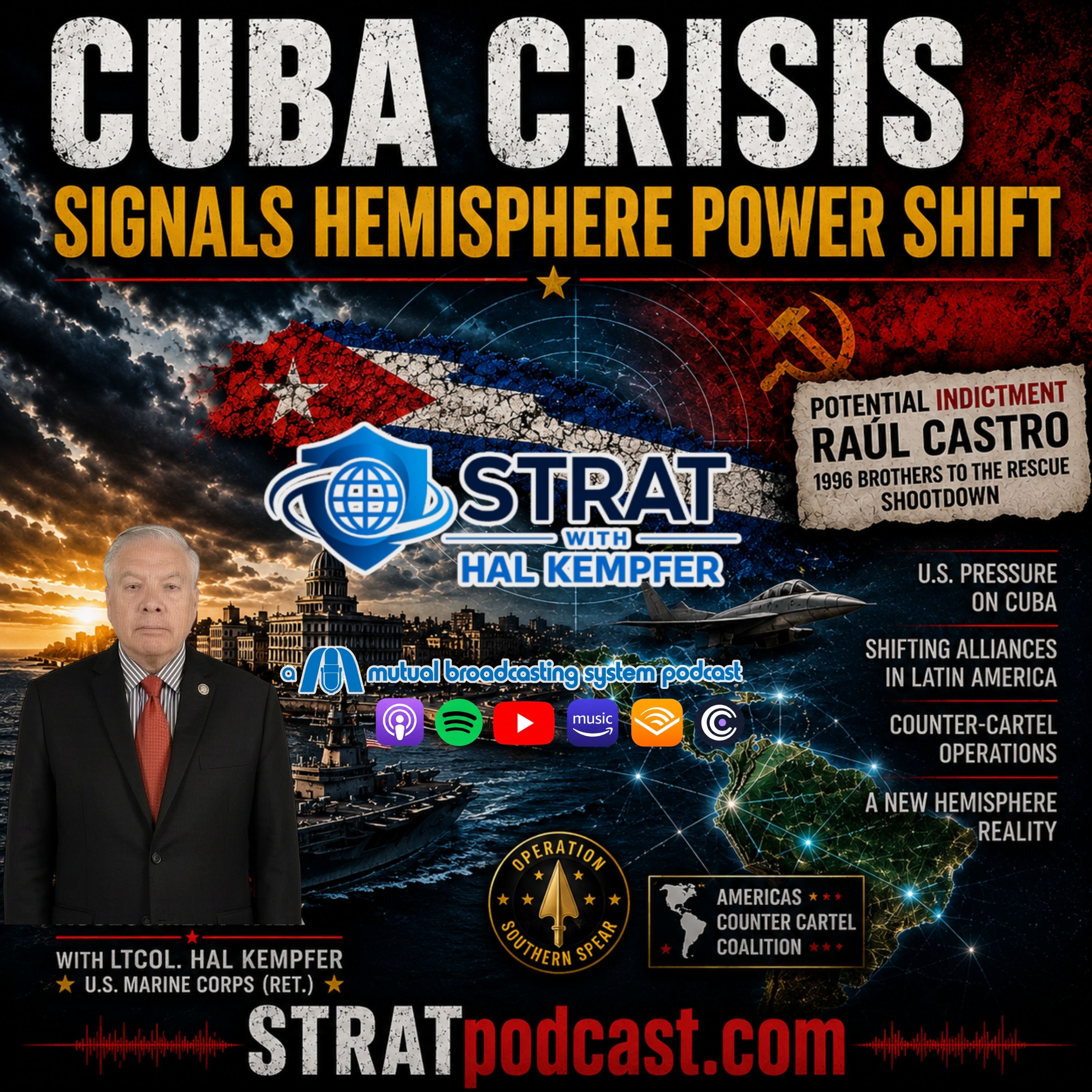 STRAT | 15 MAY 2026 | Cuba Crisis Signals Hemisphere Power Shift✨ | Cuba CrisisGeopolitical Shifts+4 | LtCol. Hal Kempfer | United StatesCuba+1 | BoliviaNicaragua+6 | CubaRaúl Castro+8 | — | 18m 00s | |
| 5/9/26 | 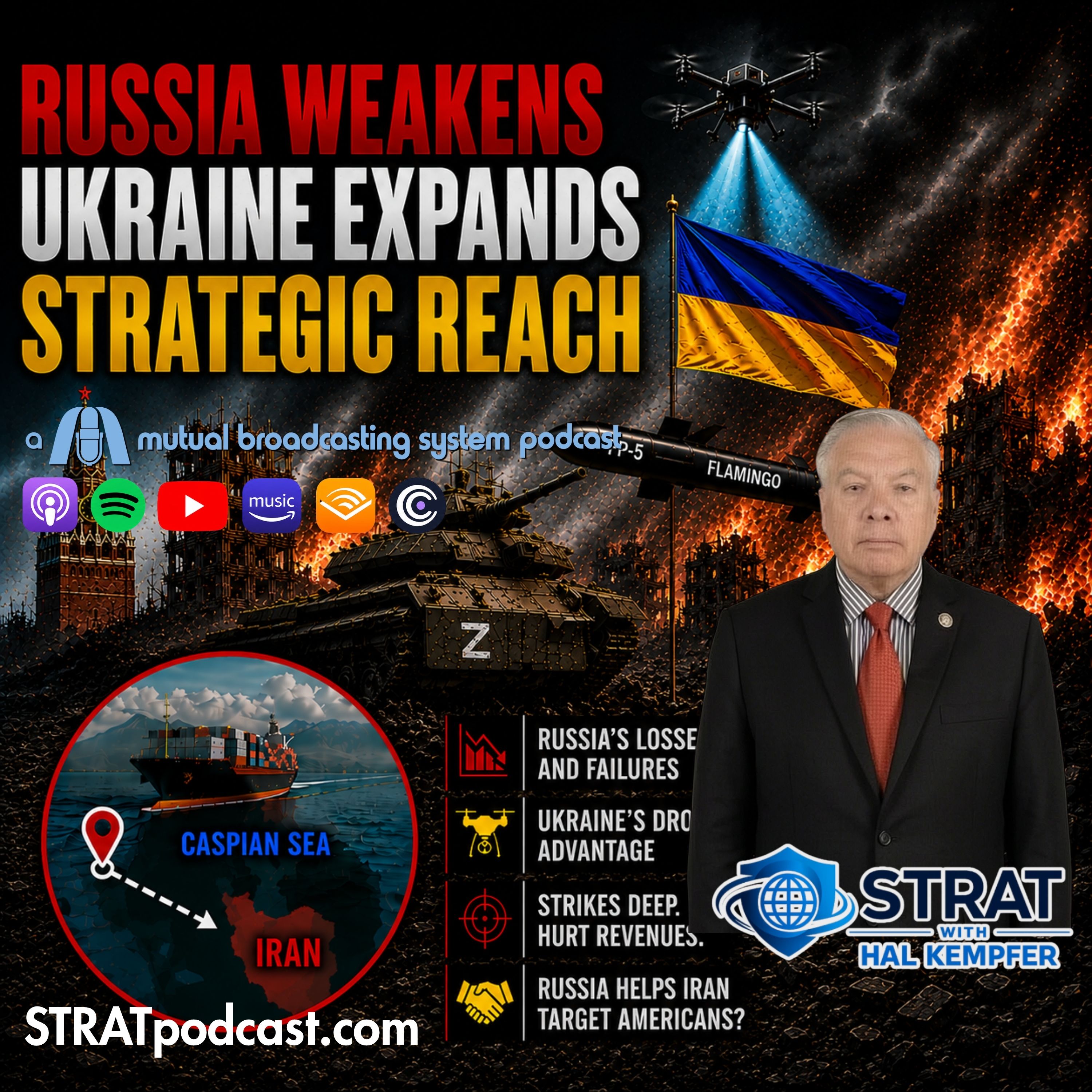 STRAT | 09 MAY 26 | Russia Weakens as Ukraine Expands Strategic Reach✨ | Russia's military positionUkraine's military innovation+4 | Hal Kempfer | RussiaUkraine+1 | Middle East | RussiaUkraine+7 | — | 22m 45s | |
| 5/2/26 |  STRAT | 02 May 2026 | TEHRAN’S TORMENT: Iran Regime Faces Existential Strategic Collapse✨ | Iran's crisiseconomic pressure+4 | — | Islamic Revolutionary Guard Corps | IranStrait of Hormuz+2 | IranIslamic Revolutionary Guard Corps+5 | — | 20m 00s | |
| 4/19/26 |  Russia’s Road to Ruination: Ukraine, Iran and Reality✨ | RussiaUkraine+5 | — | China | RussiaUkraine+1 | RussiaUkraine+6 | — | 24m 00s | |
Want analysis for the episodes below?Free for Pro Submit a request, we'll have your selected episodes analyzed within an hour. Free, at no cost to you, for Pro users. | |||||||||
| 4/10/26 |  STRAT | 10 April 2026 | Ceasefire Ire with Iran✨ | U.S.-Iran relationsmilitary strategy+3 | LtCol. Hal Kempfer | United StatesIran | Strait of HormuzPakistan | ceasefireIran+7 | — | 25m 00s | |
| 4/6/26 |  STRAT | 06 APR 26 | Iran’s Looming Deadline✨ | U.S.-Iran relationsmilitary strategy+4 | Hal Kempfer | — | IranUnited States+1 | IranUnited States+7 | — | 23m 00s | |
| 3/28/26 |  STRAT | 28 MAR 26 | Putting Boots On The Ground In Iran✨ | U.S. military strategyground operations+4 | Hal Kempfer | U.S. Central Command | IranStrait of Hormuz+2 | U.S. forcesMarine Expeditionary Units+7 | — | 23m 00s | |
| 3/23/26 |  Beyond Oil, Global Supply Chain Hits from the Strait of Hormuz Crisis✨ | global supply chainStrait of Hormuz+5 | — | liquefied natural gasfertilizer+2 | Strait of HormuzQatar+1 | Strait of Hormuzglobal supply chain+6 | — | 19m 00s | |
| 3/17/26 |  STRAT | 17 MAR 26 | Getting it Straight on the Strait of Hormuz✨ | Strait of Hormuzgeopolitical tensions+5 | — | — | IranUnited States+3 | Strait of HormuzIran+6 | — | 28m 00s | |
| 3/9/26 |  STRAT | 09 MAR 26 | Re-Wiring the Western Hemisphere✨ | geopolitical developmentsCuba+4 | — | Shield of the AmericasPresident Trump | CubaUnited States+1 | Cubaeconomic crisis+5 | — | 25m 00s | |
| 3/8/26 | 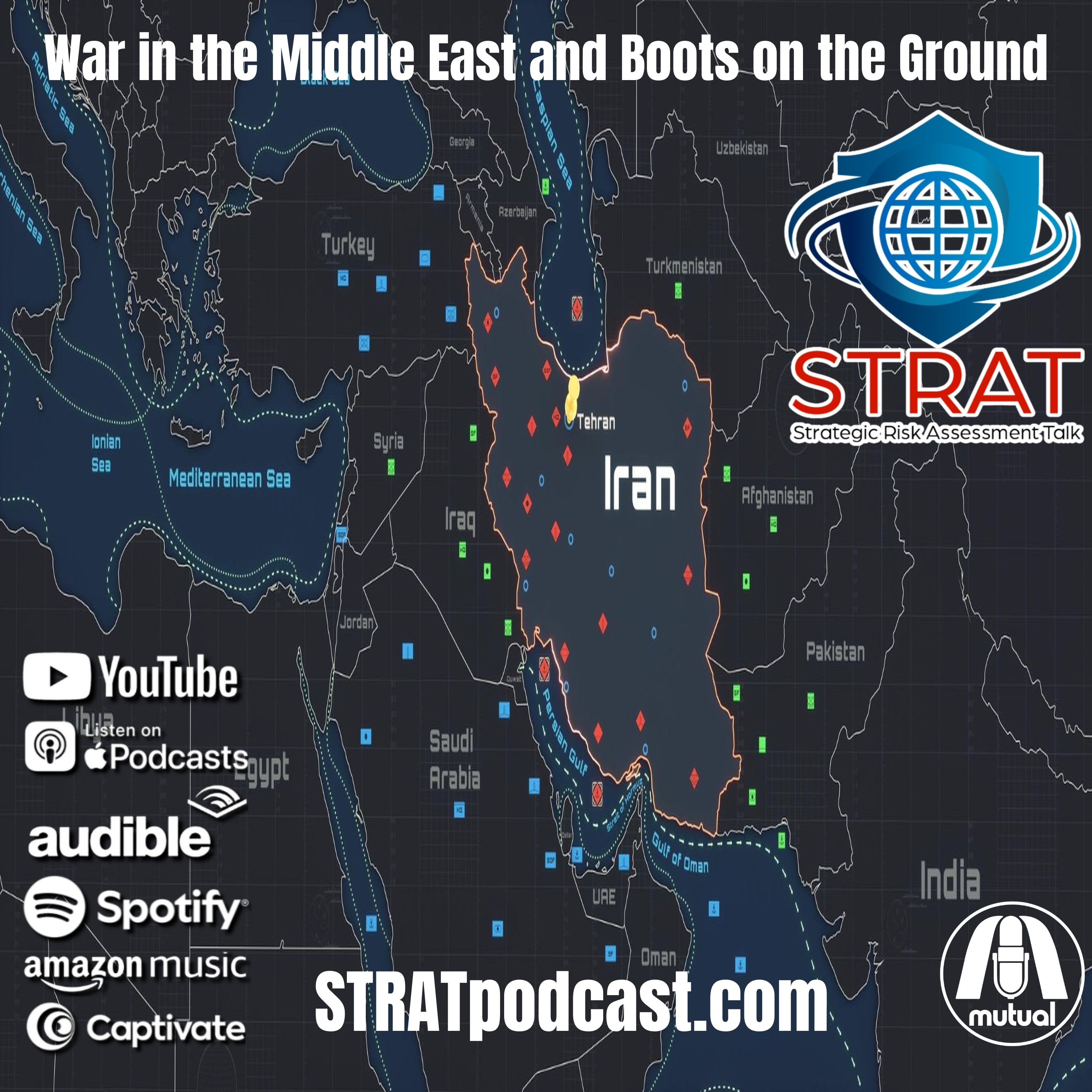 STRAT | 08 March 2026 | War in the Middle East and Boots on the Ground✨ | Middle East conflictIranian retaliation+4 | LtCol. Hal Kempfer | IranHezbollah+2 | Middle EastEurope+1 | IranHezbollah+6 | — | 30m 00s | |
| 2/20/26 |  STRAT | 20 FEB 2026 | STRIKING IRAN 2.0✨ | U.S. military actionIran+4 | — | RussiaChina | IranUnited States+1 | U.S. strikesact of war+5 | — | 28m 00s | |
| 2/12/26 |  STRAT | 12 FEB 26 | How Oil Prices Are Reshaping Global Power Politics✨ | oil pricesgeopolitics+4 | LtCol. Hal Kempfer | BrentWTI+2 | Strait of HormuzCuba+1 | oil marketsRussia's war economy+3 | — | 20m 45s | |
| 2/2/26 | 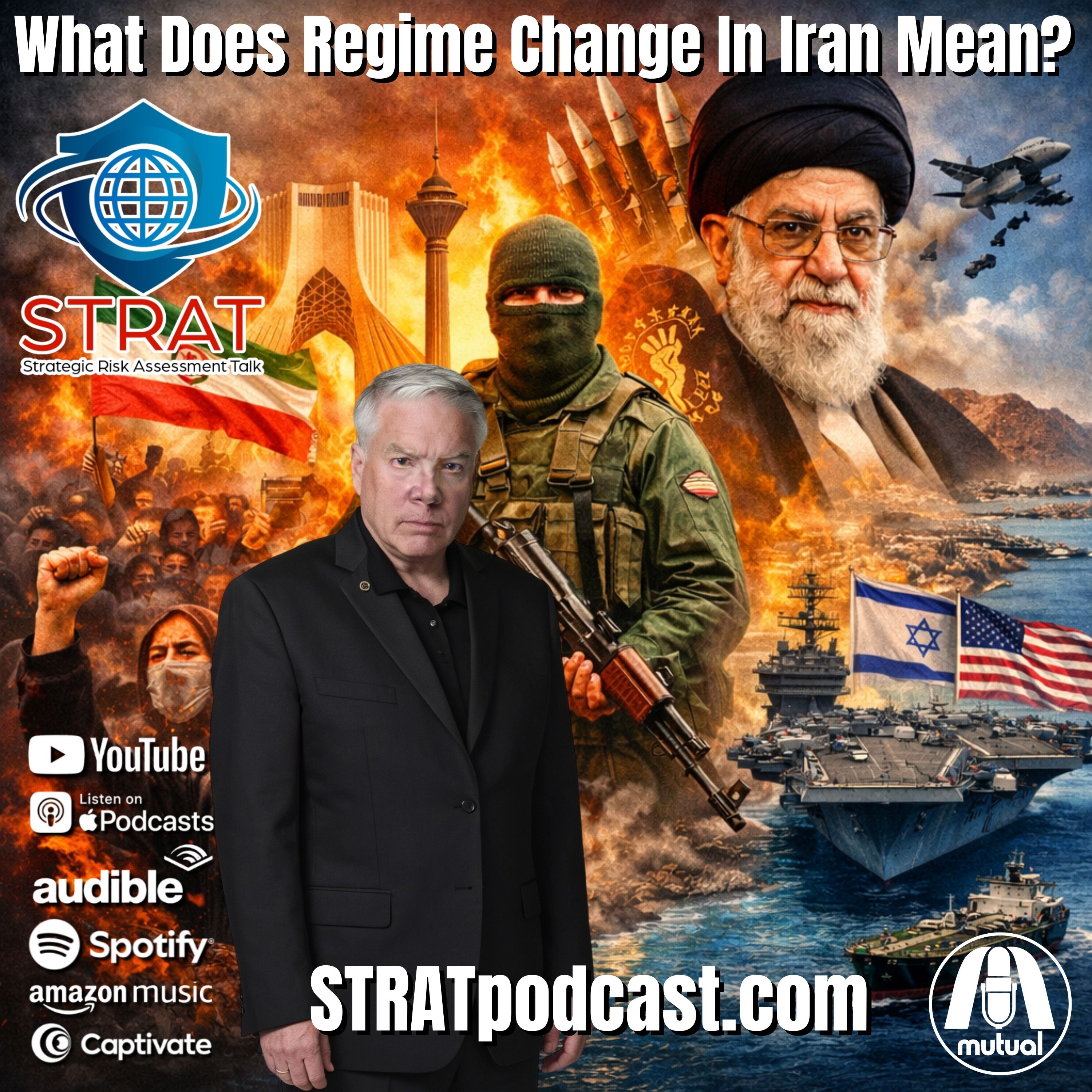 STRAT | 02 FEB 2026 | What Does Regime Change In Iran Mean? | What would regime change in Iran actually look like—and what would it mean for the United States, Europe, and global stability? In this episode of STRAT with Hal Kempfer, we examine why many analysts believe the Islamic Republic is facing its most precarious moment since 1979. From reformist calls for constitutional change and unprecedented criticism in state-controlled media to debates over exiled versus domestic leadership, the cracks are becoming harder to ignore. We explore the rise of the Islamic Revolutionary Guard Corps as a dominant political and economic force, the risks of military escalation, and how foreign intervention could backfire by strengthening regime narratives. The discussion also addresses succession scenarios, the dangers of fragmentation or civil war, and why the Strait of Hormuz remains a critical pressure point for the global economy. Regime change, as this episode makes clear, is rarely clean or predictable—and what follows may be just as consequential as the fall itself.Takeaways:Iran faces its most unstable moment since the 1979 revolutionReformist figures are openly calling for political transitionState-controlled media criticism signals internal regime fracturesNo clear, unified leadership has emerged from the protest movementThe IRGC has evolved into Iran’s most powerful political actorMilitary strikes could unintentionally strengthen regime legitimacyControl of the Strait of Hormuz remains a global economic riskRegime collapse could lead to fragmentation or prolonged civil conflict#STRATPodcast #HalKempfer #MutualBroadcastingSystem #StrategicRiskAnalysis #IranRegimeChange #IranProtests #MiddleEastSecurity #IRGC #GeopoliticalRisk #USForeignPolicy #IsraelIran #GlobalOilMarkets #StraitOfHormuz #PoliticalTransitions #NationalSecurity #IntelligenceAnalysis #AuthoritarianCollapse #RegionalStability #StrategicForecasting #GlobalSecurity | — | ||||||
| 1/26/26 |  STRAT | 26 JAN 26 | Three Fronts of Conflict Shaping America’s Strategic Future | From America’s heartland to the Pacific coast and the Middle East, this episode of STRAT examines three arenas where pressure is building—and consequences may be closer than many realize. Retired Marine Intelligence Officer Hal Kempfer begins in Minnesota, where aggressive federal immigration enforcement, violent street protests, and political resistance raise serious constitutional and legal questions, including the potential invocation of the Insurrection Act. The focus then shifts to California, where alleged large-scale fraud, sanctuary policies, and long-standing legal barriers to administering federal funds could place the state on a path toward fiscal insolvency and a showdown with Washington. Finally, attention turns to Iran, where reports of mass killings of protesters, societal collapse, and the movement of major U.S. naval assets raise the possibility of imminent military action. Together, these cases reveal how domestic unrest, financial integrity, and foreign conflict are increasingly interconnected—and why strategic risk is accelerating across the spectrum.Takeaways:Immigration enforcement is a core federal authority, not a novel policyMinnesota’s resistance mirrors past insurrection-era precedentsFederal agents are trained, but not optimized for mass civil unrestThe Insurrection Act remains a real, actionable optionFraud allegations may drive federal pressure on multiple statesCalifornia’s reliance on federal funding creates strategic vulnerabilityLongstanding legal rulings could jeopardize trillions in federal programsIran’s internal collapse may trigger rapid external military escalation#STRATPodcast #HalKempfer #MutualBroadcastingSystem #StrategicRiskAnalysis #ImmigrationEnforcement #InsurrectionAct #FederalAuthority #CivilUnrest #NationalSecurity #StateDefiance #CaliforniaCrisis #GovernmentFraud #FederalFunding #IranProtests #MiddleEastConflict #USMilitary #ConstitutionalLaw #Geopolitics #StrategicForecast #RiskAssessment | — | ||||||
| 1/19/26 |  STRAT | 19 JAN 26 | Minneapolis, ICE, and a Nation on Edge | Protests and federal operations collide in Minneapolis after a fatal encounter between an ICE agent and a local resident. This episode of STRAT with retired Marine Intelligence Officer Hal Kempfer examines the surge of federal officers, the Minnesota National Guard’s mobilization, and warnings of possible troop deployments. We explore Governor and mayoral responses, crowd tensions, and how state and federal authority can clash in moments of crisis. STRAT’s insight frames the debate around immigration enforcement, public safety, and civil liberties. The show breaks down the Justice Department’s decision not to open a civil rights investigation and the DOJ resignations that followed. Listeners will hear historical comparisons to past uses of the Insurrection Act and what it could mean if invoked again. From law enforcement tactics to constitutional authority, this episode delivers context, analysis, and strategic perspective on one of the volatile stories in America today.Takeaways:Federal ICE operations in Minneapolis sparked large-scale protests.Minnesota National Guard was mobilized but not deployed to streets.Federal troops may be staged if unrest escalates further.Insurrection Act could allow military law enforcement roles.Local leaders criticize federal presence as an “occupying force.”DOJ declined a civil rights probe into a fatal ICE shooting.Multiple federal prosecutors resigned in protest.#STRATPodcast #HalKempfer #MutualBroadcastingSystem #StrategicRiskAnalysis #ICE #Minneapolis #Protests #NationalGuard #InsurrectionAct #Immigration #Federalism #CivilUnrest #LawEnforcement #DOJ #CivilRights #CrowdControl #NationalSecurity #BorderPolicy #FederalTroops #PublicSafety | — | ||||||
| 1/14/26 |  STRAT | 14 Jan 26 | Iran on the Brink: Protests, Power, Global Shockwaves | This STRAT episode examines a rapidly escalating crisis in Iran and why it matters far beyond the Middle East. With protests spreading across more than 100 cities, a collapsing currency, and brutal crackdowns by the regime, Iran appears to be approaching a historic breaking point. The discussion with retired Marine Intelligence Officer Hal Kempfer explores how economic failure, mass arrests, and shocking levels of violence have shattered the long-standing social contract between the Iranian people and their rulers. The episode also looks at how recent military confrontations with Israel exposed major weaknesses inside Iran, fueling public anger and undermining regime legitimacy. Attention then turns to possible U.S. responses, the risks of military action, and the strategic dangers of retaliation across the Persian Gulf. Finally, the conversation explains why a potential regime collapse could reshape global energy markets, weaken Russia and China, and alter the world’s security balance—possibly becoming one of the most consequential geopolitical events of this century.Takeaways:Iran is facing its largest and deadliest protest movement ever.Currency collapse and economic shutdown triggered mass unrest.Israeli strikes exposed regime vulnerability and intelligence failures.The government responded with mass arrests and lethal force.Internet blackouts failed to fully hide the violence.U.S. action could help—or unintentionally strengthen the regime.Iranian retaliation would threaten U.S. and Gulf allies.Regime collapse could reshape global energy and power politics.#STRATPodcast #HalKempfer #MutualBroadcastingSystem #StrategicRiskAnalysis #IranCrisis #MiddleEastConflict #GlobalSecurity #EnergyPolitics #RegimeChange #Geopolitics #ProtestMovement #USForeignPolicy #ChinaEnergy #RussiaOil #PersianGulf #MilitaryStrategy #WorldAffairs #RiskAssessment #InternationalRelations #SecurityStudies | — | ||||||
| 1/6/26 |  STRAT | 06 January 2026 | Night Raid Reshapes Venezuela and Global Power Dynamics | In this episode, retired Marine intelligence officer LtCol. Hal Kempfer analyzes the stunning overnight U.S. operation that led to the capture of Venezuelan president Nicolás Maduro and his wife, Cilia Flores. The mission—months in planning and executed with overwhelming air, cyber, space, and intelligence coordination—has sent shockwaves through Latin America and beyond. Kempfer breaks down what Operation Absolute Resolve reveals about modern U.S. military reach, strategic messaging, and escalation control. He explores the legal and moral implications of regime decapitation, the risks of attempting to “run” Venezuela, and the challenges posed by militias, rival governments, and global power competition. The conversation examines international reactions, the emergence of Delcy Rodríguez as acting president, and what this upheaval could mean for oil markets, refugees, Cuba, and regional stability. Finally, Kempfer assesses where this crisis may lead—and what Washington can realistically achieve next.Takeaways:The Maduro capture showcased integrated U.S. military, cyber, and intelligence powerOperation Absolute Resolve was designed for speed, shock, and strategic surpriseRemoving a regime is far easier than governing a fractured nation afterwardVenezuela’s military and militias pose major stabilization challengesGlobal reactions reveal shifting alliances and realpolitik calculationsOil access and sanctions remain central U.S. leverage pointsLegal justifications matter less than strategic consequencesThe crisis could trigger refugees, civil conflict, or regional escalation #STRATPodcast #HalKempfer #MutualBroadcastingSystem #StrategicRiskAnalysis #VenezuelaCrisis #MaduroCaptured #OperationAbsoluteResolve #USMilitary #Geopolitics #NationalSecurity #LatinAmerica #GlobalStability #EnergySecurity #RegimeChange #ForeignPolicy #IntelligenceAnalysis #TrumpDoctrine #CubaCrisis #StrategicStudies #WorldAffairs | — | ||||||
| 12/30/25 |  STRAT | Ukraine Peace Proposals, Power Politics, and Global Strategic Fallout | In this episode of STRAT, retired Marine Intelligence Officer LtCol. Hal Kempfer breaks down the competing peace proposals aimed at ending the war in Ukraine and explains why each carries major strategic risks. The discussion examines a U.S.-backed 28-point plan that largely accommodates Russian territorial demands, Ukraine’s alternative 20-point framework emphasizing demilitarized zones and reconstruction, and Europe’s growing role as Washington signals limits to its long-term involvement. Beyond the battlefield, the episode explores Russia’s mounting economic strain, its struggle to sustain a war economy, and Ukraine’s increasingly effective deep-strike campaign against Russian infrastructure. The conversation widens to assess ripple effects across Europe and Asia, where allies like Japan and South Korea are rethinking defense self-reliance amid uncertainty over U.S. commitments. Ultimately, the episode asks whether peace is realistic.Takeaways:Proposed peace plans risk legitimizing territorial conquestUkraine rejects any deal surrendering sovereign landDemilitarized zones would require risky international enforcementEurope is accelerating defense independence from the U.S.Russian military faces equipment shortages and manpower strainUkrainian deep strikes are degrading Russia’s war economyGlobal allies are reassessing reliance on U.S. security guarantees#STRATPodcast #HalKempfer #MutualBroadcastingSystem #StrategicRiskAnalysis #UkraineWar #RussiaUkraineConflict #Geopolitics #GlobalSecurity #DefensePolicy #PeaceNegotiations #NATOSecurity #EuropeanDefense #WarEconomy #MilitaryIntelligence #InternationalRelations #AsiaPacificSecurity #StrategicStudies #RiskAssessment #ForeignPolicy #ModernWarfare | — | ||||||
Showing 25 of 114
Pitch Fit is a Pro feature
See how bookable this show is for guests, which brands already advertise, the per-episode ad value, and the best-fit guest and sponsor profile. The numbers are blurred on the free plan.
How readily this show books outside guests like you.
How proven this show is for host-read sponsorships.
For Guests
ProFor Advertisers
ProUpgrade to Pro to unlock guest cadence, sponsor categories, fit scores, and per-episode ad value for this show.
Chart Positions
1 placement across 1 market.
Chart Positions
1 placement across 1 market.