
Insights from recent episode analysis
Audience Interest
Podcast Focus
Publishing Consistency
Platform Reach
Insights are generated by CastFox AI using publicly available data, episode content, and proprietary models.
Total monthly reach
Estimated from 8 chart positions in 8 markets.
By chart position
- 🇬🇧GB · Education for Kids#8830K to 100K
- 🇺🇸US · Education for Kids#9830K to 100K
- 🇰🇷KR · Education for Kids#1201K to 10K
- 🇸🇬SG · Education for Kids#3810K to 30K
- 🇬🇷GR · Education for Kids#563K to 10K
- Per-Episode Audience
Est. listeners per new episode within ~30 days
23K to 80K🎙 Daily cadence·41 episodes·Last published yesterday - Monthly Reach
Unique listeners across all episodes (30 days)
78K to 266K🇬🇧38%🇺🇸38%🇸🇬11%+5 more - Active Followers
Loyal subscribers who consistently listen
31K to 106K
Market Insights
Platform Distribution
Reach across major podcast platforms, updated hourly
Total Followers
—
Total Plays
—
Total Reviews
—
* Data sourced directly from platform APIs and aggregated hourly across all major podcast directories.
On the show
Recent episodes
How Is Ice Cream Made?
Jun 23, 2026
Unknown duration
Why Are Barns Painted Red?
Jun 16, 2026
Unknown duration
Why Do Animals Like Salt Licks?
Jun 9, 2026
Unknown duration
Why Are Strawberries First to the Fruit Party?
Jun 2, 2026
Unknown duration
How Do Tractors Move?
May 26, 2026
Unknown duration
Social Links & Contact
Official channels & resources
Official Website
Login
RSS Feed
Login
| Date | Episode | Description | Length | ||||||
|---|---|---|---|---|---|---|---|---|---|
| 6/23/26 |  How Is Ice Cream Made? | This week on the Super Smart Farm Show, we're talking about everyone's favorite cool, creamy treat: ice cream! Did you know that June is national Dairy Month? It's a time when we celebrate the farmers and animals that provide us with the milk we drink and use to make dairy products like cheese, yogurt, butter and best of all, ice cream! But how exactly does milk from the cow become delicious ice cream? Join host Elmer and Bessie the cow as they talk about what needs to happen for milk to become ice cream. Do you have a question for the Super Smart Farm Show? Drop us a line at supersmart@lancasterfarming.com! For More Lancaster Farming Podcasts Click Here In this episode of the Super Smart Farm Show, Elmer and Bessie the dairy cow celebrate June Dairy Month by exploring how ice cream is made, from fresh milk on the dairy farm to the frozen treat enjoyed by millions of Americans. Young listeners learn the step-by-step ice cream production process, including how milk is mixed with sugar and stabilizers, then pasteurized and homogenized to ensure safety and quality before flavors and mix-ins are added. The episode explains the science behind creamy ice cream, including the role of air, stabilizers, chilling, and ultra-cold freezing temperatures in creating a smooth texture. Along the way, kids discover important dairy industry concepts, learn where products like cheese, yogurt, butter, and ice cream come from, and gain a fun introduction to food science, dairy farming, milk processing, and the journey from cow to cone. | — | ||||||
| 6/16/26 |  Why Are Barns Painted Red? | This week on the Super Smart Farm Show, we're talking about one of the most iconic images in American farming: red barns. Barns come in plenty of colors, but why are so many of them painted red? Does it have to do with the paint? Or do farmers just really like the color? And why red? Why aren't more barns purple or blue? Join host Elmer and Farmer Wendy as they talk about the history of red barns and why they're still so popular today. Do you have a question for the Super Smart Farm Show? Drop us a line at supersmart@lancasterfarming.com! For More Lancaster Farming Podcasts Click Here In this episode of the Super Smart Farm Show, Elmer and Farmer Wendy explore the fascinating history behind America's iconic red barns. Young listeners discover why farmers originally painted barns red, learning how early homemade paint was made from ingredients like milk, linseed oil, lime, and iron oxide, which gave barns their distinctive red color while protecting wood from weather and rot. The episode explains how red paint became the most affordable and practical option for 19th-century farmers, eventually evolving into a lasting symbol of rural life and American agriculture. Along the way, kids learn about barn preservation, farm history, traditional farming practices, and the important role barns play in protecting livestock, crops, and equipment, making this a colorful lesson in agricultural history and farm science. | — | ||||||
| 6/9/26 |  Why Do Animals Like Salt Licks? | This week on the Super Smart Farm Show, we're talking about salt licks. We all love salty snacks like pretzels or potato chips. But do animals enjoy salt licks simply for their tastes? Or are they getting something more from those salt blocks? Join host Elmer and Poppy the pony as they discuss why animals enjoy salt licks and how those same licks help keep animals healthy. Do you have a question for the Super Smart Farm Show? Drop us a line at supersmart@lancasterfarming.com! For More Lancaster Farming Podcasts Click Here In this episode of the Super Smart Farm Show, Elmer and his pony friend Poppy explore the important role of salt licks for farm animals, answering a listener question about why animals love them. Young listeners learn how salt blocks provide essential minerals such as sodium, chloride, calcium, magnesium, and zinc that help support healthy bones, muscles, nerves, hydration, and overall livestock health. The episode explains why horses, ponies, cattle, sheep, goats, and even wild deer seek out salt sources, while also teaching how salt encourages animals to drink more water and stay properly hydrated. Through fun quizzes and farm-based storytelling, the show highlights the connection between animal nutrition, mineral supplements, livestock management, and responsible farming practices, helping kids understand why salt licks are a vital part of caring for healthy farm animals. | — | ||||||
| 6/2/26 |  Why Are Strawberries First to the Fruit Party? | This week on the Super Smart Farm Show, we're ringing in the summer with one of the first fruits of the season: strawberries. It seems like the moment the weather gets warmer, strawberries are here and ready for picking. But how did they manage to ripen weeks, if not months before the rest of the summer fruits? Just how long have they been preparing for strawberry season? The answer may surprise you! Join host Elmer and Ruby the strawberry as they discuss how strawberries manage to be one of the first fresh fruits to ripen in the summer. Do you have a question for the Super Smart Farm Show? Drop us a line at supersmart@lancasterfarming.com! For More Lancaster Farming Podcasts Click Here In this episode of the Super Smart Farm Show, we explore the science behind why strawberries ripen earlier than other fruits, with help from Ruby the Strawberry. The show explains that strawberries are perennial plants, meaning they return year after year instead of being replanted from seed each spring. Listeners learn how strawberry plants store energy in their roots and crowns, allowing them to grow quickly as soon as temperatures warm up. The episode also highlights that strawberries are cool-season crops that thrive in chilly spring weather and can better tolerate cold temperatures than many other fruit plants. Young listeners discover how strawberry plants prepare for spring by forming flower buds during the previous fall, giving them a major head start on fruit production. The show also explores how growing close to the ground helps strawberries benefit from warmer soil temperatures in early spring. Packed with fun quizzes and engaging farm science, the episode offers an educational introduction to strawberry farming, perennial plants, spring fruit production and plant growth cycles. | — | ||||||
| 5/26/26 |  How Do Tractors Move? | This week on the Super Smart Farm Show, we're talking about what it takes to get tractors moving from one end of the field to the other. From gears to crankshafts, pistons to transmissions, there are a lot of words and moving parts keeping those tractors chugging along. But how do they all work together to keep farming machines running? Join host Elmer and farmers Merle and Pearl as they discuss how tractors move. Do you have a question for the Super Smart Farm Show? Drop us a line at supersmart@lancasterfarming.com! For More Lancaster Farming Podcasts Click Here This episode of the Super Smart Farm Show takes young listeners inside the world of farm machinery with a fun, educational breakdown of how tractors work. Elmer visits Pearl and Merle in the repair shop to answer a listener question about how tractors move, using a classic John Deere 4020 diesel tractor as the example. Kids learn how diesel engines power tractors through cylinders, pistons, crankshafts, transmissions, gears, axles, and wheels, while interactive quiz questions keep the episode engaging and easy to follow. The show explains the difference between diesel and gasoline engines, how combustion creates motion, and why tractors use different gears for heavy farm work. Packed with agricultural education, tractor mechanics, STEM learning, and hands-on farming knowledge, this family-friendly podcast episode makes complex farm equipment concepts simple and entertaining for children and curious farm fans alike. | — | ||||||
| 5/19/26 |  How Does Grain Go From Field to Feed? | This week on the Super Smart Farm Show, we're talking about how animal feed gets from the corn and grain fields to the feed troughs. The main ingredients in farm animal feed are grown on farms, but the process of getting the crops from the field to the feed bins is more complicated than you might think. Where does the corn and grain go after it's been harvested? How do farmers know their animals are getting the nutrients they need? Where is all that feed stored before it comes to the farm? Join host Elmer, animal nutritionist Nina and Bessie the cow as they discuss what it takes to keep animals fed and healthy. Do you have a question for the Super Smart Farm Show? Drop us a line at supersmart@lancasterfarming.com! For More Lancaster Farming Podcasts Click Here This episode was made possible with support from TAM Systems in Dillsburg, Pennsylvania. TAM builds complete grain storage and material handling systems for farms big and small across the Mid-Atlantic. Learn more at tamsystems.com. This episode of the Super Smart Farm Show takes young listeners inside the fascinating world of animal nutrition and livestock feed production. Hosted by Elmer, the episode explains how farmers grow crops like corn, soybeans, and wheat that are later transformed into nutritious animal feed at feed mills. Animal nutritionist Nina teaches kids how balanced feed recipes are carefully designed for different farm animals, while Bessie the dairy cow introduces listeners to a dairy cow's "total mixed ration" (TMR) made up of hay, silage, grain, vitamins, and minerals. Along the way, children learn about grain storage in grain bins, the feed milling process, and how animal feed is delivered back to farms to keep livestock healthy and productive. Packed with fun quiz questions, farm facts, and interactive learning, this educational agriculture podcast helps kids understand the journey from crops to feed trough while exploring farming, dairy nutrition, grain handling, and the science behind caring for farm animals. | — | ||||||
| 5/12/26 |  What If Farmers Let the Weeds Win? | This week on the Super Smart Farm Show, we're pulling on our work gloves and getting ready to do battle with one of farmers' biggest enemies: weeds. But what would happen if farmers stopped fighting and let the weeds win? Would weeds totally take over? And how are they so good at growing and multiplying so quickly? Join host Elmer, farmer Clementine and Marvin the marestail weed as they discuss and debate what would happen if we let the weeds take over the fields. Do you have a question for the Super Smart Farm Show? Drop us a line at supersmart@lancasterfarming.com! For More Lancaster Farming Podcasts Click Here In this episode of the Super Smart Farm Show, host Elmer visits Farmer Clementine to learn why weeds are such a major challenge for farmers. Through a conversation with Marvin the talking marestail weed, young listeners discover how weeds compete with crops for sunlight, water, and nutrients in the soil. The episode explains how invasive weeds spread through seeds carried by wind, animals, people, and farm equipment, while also teaching why weed control is essential for healthy harvests, strong flowers, and food production. Packed with agriculture facts, farm science, and engaging dialogue, this episode helps children understand crop competition, farming challenges, weed management, and the importance of protecting farm fields from invasive plants. | — | ||||||
| 5/5/26 |  How Do Farmers Know How Deep to Plant Seeds? | This week on the Super Smart Farm Show, we're sowing seeds of knowledge by asking how do farmers know how deep to plant their seeds. It's time to get seeds in the ground, but hang on a second. What's the right right depth for planting corn? What about carrots? How do farming keep track of it all? Is there a special farm school where they can learn this kind of thing? Join host Elmer and Sammy the scarecrow as they discuss how farmers plant seeds at the right depth. Do you have a question for the Super Smart Farm Show? Drop us a line at supersmart@lancasterfarming.com! For More Lancaster Farming Podcasts Click Here In this episode of the Super Smart Farm Show, host Elmer explores the science of seed planting depth during peak spring planting season, answering a listener question from Juniper about how farmers know how deep to plant seeds. With help from Sammy the Scarecrow, the show explains that seed size, stored energy, and soil type all play critical roles in proper planting depth—larger seeds like corn and beans are planted deeper because they have more energy to reach sunlight, while smaller seeds must stay near the surface. The episode highlights how farmers rely on a combination of agricultural knowledge, experience, seed packet guidelines, and modern tools like planters and seed drills to ensure successful germination and crop growth. It also introduces young listeners to agricultural education, farm technology, and real-world farming practices, reinforcing that correct seed placement is essential for healthy crops and a successful harvest. | — | ||||||
| 4/28/26 |  Why Do Farms Smell Funny in the Spring? | This week on the Super Smart Farm Show, we're taking a big whiff as we try to figure out why farms smell so funny in the spring. Spring is a time for all sorts of scents. Some are pleasant, like the smell of fresh flowers in bloom. But others are a little more pungent … like the smell of a farm while farmers prepare their fields for growing season. By why do farms smell so funky in the spring? Beyond the funk, could there be some good smells on the farm? And what, exactly, is petrichor? Join host Elmer and Farmer Wendy as they uncover the source of all those smells on the farm during the spring. Do you have a question for the Super Smart Farm Show? Drop us a line at supersmart@lancasterfarming.com! For More Lancaster Farming Podcasts Click Here In this episode of the Super Smart Farm Show, host Elmer explores a common seasonal question—why farms smell stronger in the spring—by visiting Farmer Wendy and diving into the science of fertilizer. The episode explains how farmers apply fertilizer, often made from manure, to provide essential plant nutrients like nitrogen, phosphorus, and potassium that support healthy crop growth. Listeners learn why different animal manures produce different odors, how organic fertilizers recycle nutrients into the soil, and why spring is the ideal time for application. The show also introduces the concept of petrichor, the earthy smell after rain caused by soil bacteria, and how rain can intensify farm odors. | — | ||||||
| 4/16/26 |  Are Dandelions Really That Bad? | This week on the Super Smart Farm Show, we're springing into action to find out if dandelions are really that bad or if they just get a bad rap. Dandelions are one of the first signs of spring, but many people see them as annoying weeds that need to be removed from yards, fields and gardens. But why all the hate? Could those little yellow flowers actually provide some benefits? Join host Elmer and Beatrice the bee as they discuss dandelions and why it might be a good ideas to let them grow. Do you have a question for the Super Smart Farm Show? Drop us a line at supersmart@lancasterfarming.com! For More Lancaster Farming Podcasts Click Here In this episode of the Super Smart Farm Show, Elmer explores the surprising benefits of dandelions in lawns and agriculture, reframing the common weed as a valuable part of the ecosystem. With help from Beatrice the Bee, the show explains how dandelions support pollinators like bees and butterflies by providing early spring nectar and pollen, especially in urban and suburban areas with limited flowering plants. Listeners also learn how dandelions benefit wildlife and livestock, serving as food for birds, rabbits, deer and farm animals, while even contributing to nest-building for species like hummingbirds. The episode highlights the plant's role in soil health, explaining how deep taproots bring nutrients to the surface and improve soil aeration, helping surrounding plants grow. It also covers the history of dandelions as a nutritious food source for humans, including uses like dandelion root tea. | — | ||||||
Want analysis for the episodes below?Free for Pro Submit a request, we'll have your selected episodes analyzed within an hour. Free, at no cost to you, for Pro users. | |||||||||
| 4/14/26 |  Why Are There So Many Names for Cows? | This week on the Super Smart Farm Show, we're trotting out to the field to figure out why there are so many different words for cows. What's the difference between a cow and a heifer? What about a steer and a bull? And what exactly is a bovinae? Join host Elmer and Brody the beef steer as they discuss why cattle go by different names and why having those different names are important for farmers. Do you have a question for the Super Smart Farm Show? Drop us a line at supersmart@lancasterfarming.com! For More Lancaster Farming Podcasts Click Here In this episode of the Super Smart Farm Show, Elmer and the "Moo Crew" dive into bovine terminology and cattle vocabulary, helping young listeners understand the differences between common farm animal terms like cow, bull, steer, heifer and calf. With guidance from Brody the steer, the show explains that "bovine" refers to animals like cows, buffalo and yaks, while "cattle" is a general term for the entire group. Listeners learn key distinctions based on age and gender, including that a cow is a female that has given birth, a heifer has not yet had a calf, a bull is a breeding male, and a steer is a non-breeding male. The episode blends fun quizzes with educational insights, reinforcing how proper terminology supports better understanding of livestock management, animal science and agriculture education, making it an engaging resource for kids learning about farm animals and the beef and dairy industries. | — | ||||||
| 4/7/26 |  How Do Farmers Know It's Time to Plant Corn? | This week on the Super Smart Farm Show, we're putting away our winter coats and rolling up our sleeves to figure out how farmers know when it's time to plant corn. If farmers plant corn too early, cold weather will keep it from growing. But if they wait too long, they won't be able to grow as much. So how do farmers know when the time is right to get those seeds in the ground? Join host Elmer and Sawyer the soil scientist as they dig down to the truth about how farmers know when the time is right. Do you have a question for the Super Smart Farm Show? Drop us a line at supersmart@lancasterfarming.com! For More Lancaster Farming Podcasts Click Here This episode of the Super Smart Farm Show explores how farmers grow corn, breaking down the science behind planting crops in a fun, kid-friendly way. The show highlights the critical role of soil conditions in agriculture, explaining that corn planting depends on soil temperature reaching at least 50°F, proper soil moisture levels, and favorable weather patterns. Farmers use tools like soil thermometers, why seeds are planted at specific depths, and how timing — typically in April and May — varies by region. The episode emphasizes the importance of patience, environmental awareness, and smart decision-making in farming, while reinforcing key concepts like preventing seed rot, avoiding frost damage, and maximizing crop yield—making it an engaging educational resource on corn production, spring planting, and modern farming practices. | — | ||||||
| 3/31/26 | 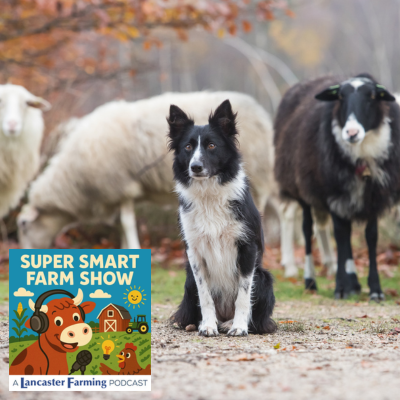 How Do Herding Dogs Work? | This week on the Super Smart Farm Show, we're in done chasing our tails — it's time to figure out how herding dogs work. How do herding dogs know how to move cattle and sheep around? Have they learned how to speak sheep or cow? Is it special training? Or is there something else going on here? Join host Elmer and Ollie the dog as they discuss how dogs help farmers take care of their herds. Do you have a question for the Super Smart Farm Show? Drop us a line at supersmart@lancasterfarming.com! In this episode of the Super Smart Farm Show, Elmer explores the fascinating role of herding dogs on farms, answering the question: How do dogs move entire herds of sheep and cattle? With help from Ollie, a skilled herding dog, listeners learn that successful herding relies on a combination of natural instinct and specialized training, developed over generations in breeds like Border Collies, Australian cattle dogs and Corgis. The episode breaks down how livestock animals use a herd instinct for safety, which allows dogs to guide them by applying gentle pressure, body positioning and movement rather than force. It also highlights how farmers use voice commands and whistle signals to direct dogs, and why calm, controlled herding reduces stress and improves animal health. Young listeners are introduced to concepts like the "herding eye," real-time problem solving and livestock behavior, making this an engaging and educational look at working farm dogs, livestock management and animal behavior in agriculture. | — | ||||||
| 3/24/26 |  How Do Flowers Know When It's Time to Grow? | This week on the Super Smart Farm Show, we're looking for early signs of spring — specifically the arrival of spring flowers like daffodils. There's nothing like seeing the first daffodils, crocuses or aconites popping up to signal that spring has arrived. But how do those flowers know it's time to start growing? Do they have tiny, underground calendars? Or is there something else going on in the soil? Join host Elmer and farmer Clementine as they talk about how these kinds of flowers know when to start growing. Do you have a question for the Super Smart Farm Show? Drop us a line at supersmart@lancasterfarming.com! For More Lancaster Farming Podcasts Click Here In this spring-themed episode of the Super Smart Farm Show, Elmer explores the science behind how flowers like daffodils know when to bloom, diving into the fascinating world of bulb plants and seasonal growth cycles. With help from farmer Clementine, listeners learn that bulbs act as underground storage units packed with energy, allowing flowers to grow at just the right time. The episode explains key concepts like plant dormancy, where bulbs rest throughout winter, and vernalization, the cold-weather process (35–45°F) that resets a bulb's internal clock and triggers spring growth. Young listeners also discover how temperature, sunlight, moisture and soil conditions signal bulbs to sprout, and how stored carbohydrates fuel early growth before leaves appear. The show highlights why proper gardening practices—like planting bulbs in fall and allowing leaves to recharge energy after blooming—are essential for healthy plants, making it an engaging and educational guide to spring flowers, plant biology and beginner gardening science. | — | ||||||
| 3/17/26 |  What's It Like Inside an Egg? | This week on the Super Smart Farm Show, we're talking about eggs. More specifically, we're talking about what happens inside of eggs before chicks are ready to hatch. What's going on inside an unhatched egg? What does it take to make a chick? Once they're formed, are chicks inside of eggs aware of the outside world? And how do they know it's time to hatch? Join host Elmer and Henrietta the chicken as they discuss how chicks hatch from eggs. Do you have a question for the Super Smart Farm Show? Drop us a line at supersmart@lancasterfarming.com! In depth summary: In this episode of the Super Smart Farm Show, host Elmer takes young "egg explorers" inside a chicken farm to learn how chicks hatch from eggs and the science of egg incubation. With help from Henrietta the hen, listeners discover that chicks typically hatch after 21 days of incubation, during which eggs must be kept at 99–101°F with about 50% humidity to support healthy development. The show explains key stages of embryo growth inside a chicken egg, including organ formation during days 1–7, rapid growth during days 8–14, and final development leading up to hatching. Elmer also learns why farmers turn eggs during the first 18 days to prevent chicks from sticking to the shell and how humidity increases to about 70% before hatching. The episode concludes with the moment chicks break through the shell using their beaks and are moved to a brooder with heat lamps (90–95°F), while also clarifying that grocery store eggs cannot hatch because they are not fertilized. | — | ||||||
| 3/10/26 |  Does Daylight Saving Time Really Help Farmers? | This week on the Super Smart Farm Show, it's about time we settled the debate: Does daylight saving time actually help farmers? Why do we set the clock forward an hour in the spring and backward in the fall? Does it really have anything to do with farming? Or, could it be that daylight saving time doesn't really help farmers at all? Join host Elmer and Bessie the cow as they figure out why we insist on messing with the clocks twice a year. Do you have a question for the Super Smart Farm Show? Drop us a line at supersmart@lancasterfarming.com! | — | ||||||
| 3/3/26 |  Why Do Calves Live in Those Little Houses? | This week on the Super Smart Farm Show, it's time to head over to the dairy farm to see why calves are kept in little houses. Have you ever visited or driven by a dairy farm and noticed small houses dotting the landscape? Those are calf hutches and farmers use them to help baby calves grow big, strong and healthy. They also keep calves warm and dry during cold and wet weather and offer them shade during sunny days. Then after a couple months, it's goodbye to the hutches and on to the next step in the calves' lives. Join host Elmer and Bessie the cow as they figure out why calves live in little houses. Do you have a question for the Super Smart Farm Show? Drop us a line at supersmart@lancasterfarming.com! | — | ||||||
| 2/24/26 |  What Do Farms Do With All That Poo? | This week on the Super Smart Farm Show, we're holding our noses and diving into a stinky subject: managing manure on the farm. The truth is, cows, chickens, horses and other farm animals poop and it can pile up quickly if farmers don't take care of the situation. But what do they do with all that manure? They can't flush it away! Instead, farmers use a variety of techniques to manage manure so their farms stay clean and safe for the animals and people living and working on them. And get this, farmers have figured out how to use manure to help them farm! Join host Elmer and farmer Wendy as they talk about how farmers manage all that manure. Do you have a question for the Super Smart Farm Show? Drop us a line at supersmart@lancasterfarming.com! | — | ||||||
| 2/17/26 |  How Smart Are Tractors? | This week on the Super Smart Farm Show, we're getting revved up over the idea that some tractors are like computers on wheels. Tractors have always been one of the most powerful machines you'll find on a farm, but these days tractors have as much brains as they do brawn. Smart technology like GPS, environmental sensors and auto-steer mean these tractors are taking in information and making decisions that lead to better farming. But that doesn't mean farmers get to take the day off! Join host Elmer and farmer Frank as they discuss how farmers work with smart tractors to keep their crops growing strong. Do you have a question for the Super Smart Farm Show? Drop us a line at supersmart@lancasterfarming.com! | — | ||||||
| 2/10/26 |  How Does Snow Help Farmers? | This week on the Super Smart Farm Show, we're taking a break from having snowball fights to talk about how snow helps farmers. When some people see snow, they think about fun things, like snowmen and sledding. Others see snow and think about all the extra work that comes with it, like shoveling. But how do farmers feel about snow? Does it just mean a lot of extra work or could there be some benefits? Could it be that snow is actually good for the farm? Join host Elmer and farmer Clementine as they discuss all the ways snow is good for farms and farmers. | — | ||||||
| 2/3/26 |  What Do Farmers Do During the Winter? | This week on the Super Smart Farm Show, we're hunkering down to escape the cold and snow as we learn what farmers do during the winter. In the wintertime, it's easy to look at farms and think nothing's going on. The crops have all been harvested and the tractors put away. But the truth is, there's always something to do on a farm. So what are farmers doing during the coldest months of the year? Join host Elmer and farmer Merle as they discuss how farmers spend their winters when it's too cold to grow anything. Do you have a question for the Super Smart Farm Show? Drop us a line at supersmart@lancasterfarming.com! | — | ||||||
| 1/27/26 |  How Do Farmers Grow Mushrooms? | This week on the Super Smart Farm Show, we're venturing into the dark to shed some light how farmers grow mushrooms. Most plants and crops need sunlight to grow, but not mushrooms. Mushrooms thrive in the dark, so the farmers who grow them keep them in special buildings where they can control the amount of light. But that's not the only thing that makes growing mushrooms different than growing corn or wheat. Join host Elmer and Millie the mushroom as they discover how mushrooms are grown on farms. Do you have a question for the Super Smart Farm Show? Drop us a line at supersmart@lancasterfarming.com! | — | ||||||
| 1/20/26 |  Why Do Pigs Like to Roll in the Mud? | This week on the Super Smart Farm Show, we're heading out to the pig pen to find out if pigs are really as dirty as they seem. There's no question about it: Pigs love the mud. But why? Is it simply because mud is fun? Or is there more to it than that? Could all that mud actually be helping pigs? Join host Elmer and Piper the pig as they get to the bottom of why pigs love mud. Do you have a question for the Super Smart Farm Show? Drop us a line at supersmart@lancasterfarming.com! | — | ||||||
| 1/13/26 |  Could the Farm in 'Charlotte's Web' Be Real? | This week on the Super Smart Farm Show, we're taking a trip to the library to check out one of our favorite farming books, 'Charlotte's Web,' by E.B. White. Generations of children have loved the story of Wilbur the pig and Charlotte the spider, but just how realistic is the farm portrayed in 'Charlotte's Web?' How did E.B. White know how to write about farm animals? Do pigs really go to county fairs? Join host Elmer and Lucy the librarian as they dive into the world of 'Charlotte's Web' to discover what makes E.B. White's writing so terrific. Do you have a question for the Super Smart Farm Show? Drop us a line at supersmart@lancasterfarming.com! | — | ||||||
| 1/6/26 |  How Do Farm Animals Stay Warm in the Winter? | This week on the Super Smart Farm Show, we're bundling up in our hats and scarves and then heading out to the barn to find out how farm animals stay warm in the winter. Cows don't wear coats and coal stoves aren't safe for the barn. So how do animals stay warm during the winter? It turns out, they're able to stay nice and toasty thanks to some natural defenses against the cold and with help from farmers. Join host Elmer and Brody the steer as they discuss how different animals around the farm are able to keep warm during the coldest months of the year. Do you have a question for the Super Smart Farm Show? Drop us a line at supersmart@lancasterfarming.com! | — | ||||||
Showing 25 of 51
Sponsor Intelligence
Sign in to see which brands sponsor this podcast, their ad offers, and promo codes.
Chart Positions
8 placements across 8 markets.
Chart Positions
8 placements across 8 markets.