
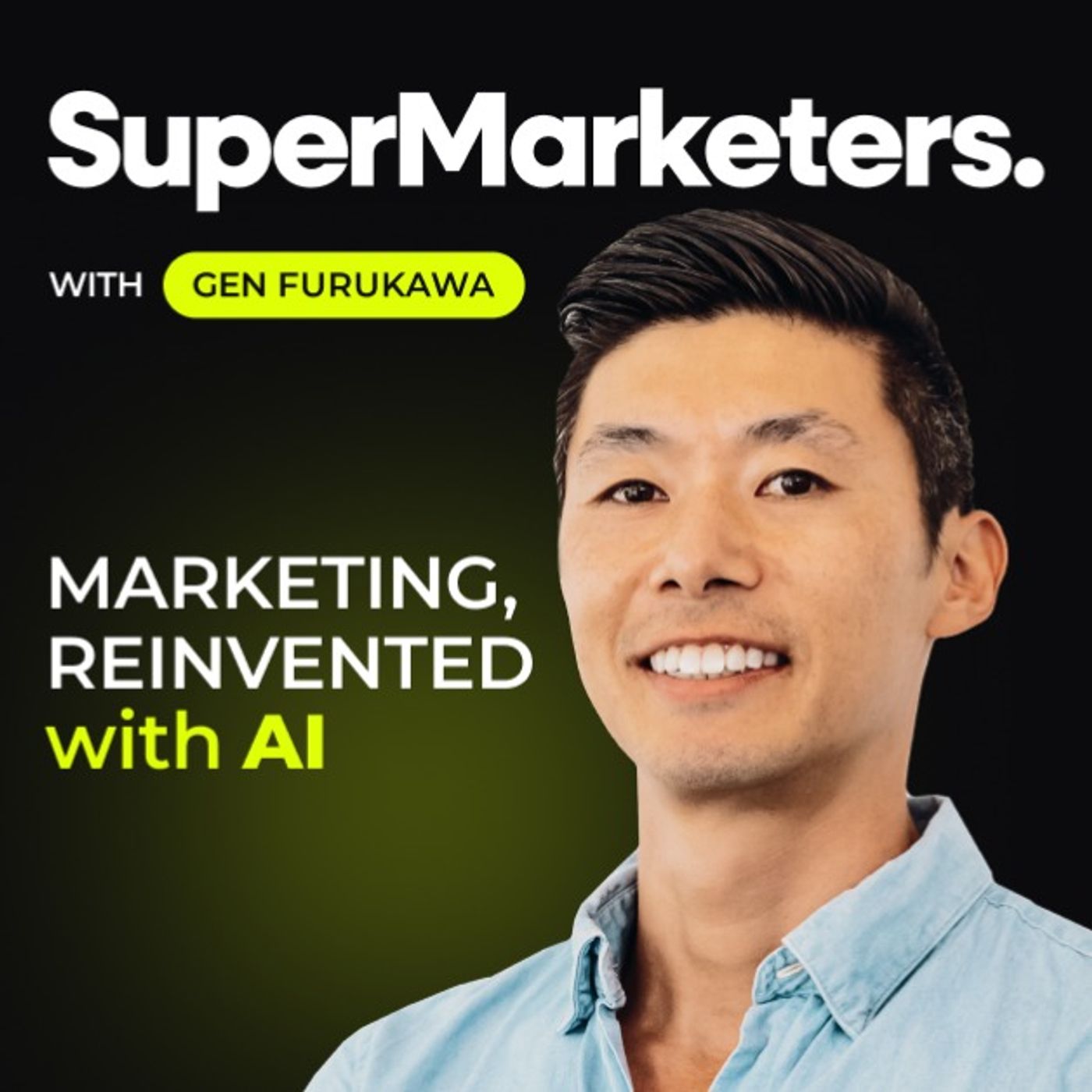
Insights from recent episode analysis
Audience Interest
Podcast Focus
Publishing Consistency
Platform Reach
Insights are generated by CastFox AI using publicly available data, episode content, and proprietary models.
Total monthly reach
Estimated from 2 chart positions in 2 markets.
By chart position
- 🇨🇦CA · Marketing#1225K to 30K
- 🇫🇮FI · Marketing#155500 to 3K
- Per-Episode Audience
Est. listeners per new episode within ~30 days
2.8K to 17K🎙 ~2x weekly·41 episodes·Last published 5d ago - Monthly Reach
Unique listeners across all episodes (30 days)
5.5K to 33K🇨🇦91%🇫🇮9% - Active Followers
Loyal subscribers who consistently listen
2.2K to 13K
Market Insights
Platform Distribution
Reach across major podcast platforms, updated hourly
Total Followers
—
Total Plays
—
Total Reviews
—
* Data sourced directly from platform APIs and aggregated hourly across all major podcast directories.
On the show
Recent episodes
Why AI Rankings Don't Exist (And What To Track Instead) with Rand Fishkin, CEO & Co-Founder SparkToro
May 21, 2026
Unknown duration
How to turn YouTube videos into ranking blog posts with Claude Code | Ryan Doser, AI Marketing Expert
May 15, 2026
Unknown duration
How One BDR Books 7 Meetings a Week by Reading Competitor Signals | Parthi Loganathan, CEO at LetterDrop
May 12, 2026
Unknown duration
From customer call to YouTube script in minutes (no code) with Tamara Ceman @ Practical Marketer
May 6, 2026
Unknown duration
How One Podcast Becomes 20 Pieces of Content | Andréa Jones, Founder at OnlineDrea
Apr 14, 2026
Unknown duration
Social Links & Contact
Official channels & resources
Official Website
Login
RSS Feed
Login
| Date | Episode | Description | Length | ||||||
|---|---|---|---|---|---|---|---|---|---|
| 5/21/26 | Why AI Rankings Don't Exist (And What To Track Instead) with Rand Fishkin, CEO & Co-Founder SparkToro | Rand Fishkin ran 2,961 prompts across ChatGPT, Claude, and Google AI. Fewer than 1 in 100 produced the same brand list. In this conversation, he breaks down why the entire "AI ranking" category is built on probability, what actually moves your brand into LLM answers, and how he's marketing his new product AlertMouse with zero AI search visibility on day one.Rand Fishkin is the cofounder and CEO of three companies: SparkToro, software that makes audience research accessible to everyone, indie game maker Snackbar Studio, and the the superior alternative to Google Alerts: Alertmouse.What you'll learn:→ Why AI answers are probabilistic, not deterministic, and what to track instead of rankings→ The two real mechanisms that influence LLM visibility (RAG and training data)→ How user prompts actually behave when 150 people are asked the same question→ Why PR and positioning are now 100x more important than tactical SEO→ The white hat playbook for showing up in ChatGPT, Gemini, and Google AI Overviews→ How to use AlertMouse and SparkToro together to find prompts your buyers actually use→ What "audience intelligence" vs. "audience research" teaches you about brand positioning lag→ The Seattle Ultrasonics knife story: how one founder turned mentions into product roadmap→ Where Rand says marketers should spend attention in 2026 (and what to ignore)Chapters:0:02 Intro0:38 The Datos prompt study and why AI answers are random4:13 The two mechanisms that move LLM visibility8:47 How Rand is marketing AlertMouse from zero visibility13:42 Why positioning is the biggest AEO lever17:08 AlertMouse use cases and the Seattle Ultrasonics story22:11 Where to actually invest attention in 2026Connect with Rand:SparkToro: https://sparktoro.comAlertMouse: https://alertmouse.comLinkedIn: https://www.linkedin.com/in/randfishkinWhat are other ideas that we can add for the YouTube thumbnail? I don't really love "AI rankings don't exist." What are some of the main takeaways from the episode? | — | ||||||
| 5/15/26 | How to turn YouTube videos into ranking blog posts with Claude Code | Ryan Doser, AI Marketing Expert | Ryan Doser shows the exact Claude Code workflow he uses to turn one YouTube video into a fully SEO-optimized WordPress blog post — screenshots, internal links, affiliate links, and meta data included — in about five minutes.Ryan runs ryandoser.com, has a 33K-subscriber YouTube channel, and has been building production SEO systems with Claude Code. In this episode he screen-shares the whole pipeline: the skill markdown file that holds his SEO playbook, the Taddy MCP that scrapes the YouTube transcript, the Python script that pulls screenshots from the video, and the WordPress MCP that posts the draft. The result ranks on Google with a fresh domain and zero backlinks.We also cover why "AI content" gets confused with "AI slop," how to organize skills so they don't collide, and why YouTube should be the foundation of any content strategy in 2026.Key TakeawaysA skill markdown file is your brain dump turned into a system. Without it, Claude Code produces slop. With it, you get publishable posts in five minutes.Start your content strategy on YouTube. Google ranks YouTube videos in search results, and one long-form video becomes the source material for a blog post, social posts, and an email.One task, one skill. Don't build three SEO skills. Build one and iterate. Use a Skill Creator skill plus auto-research to compound improvements.Connect with RyanSite: https://ryandoser.comYouTube: https://www.youtube.com/@RyanDoserAI | — | ||||||
| 5/12/26 | How One BDR Books 7 Meetings a Week by Reading Competitor Signals | Parthi Loganathan, CEO at LetterDrop | Most outbound teams burn through their TAM with the same generic sequences and wonder why CAC keeps climbing. Parthi Loganathan, CEO of LetterDrop, runs a one-person BDR team that books seven-plus meetings a week using a different approach: identify the small slice of buyers actively evaluating competitors, then build campaigns that lead with value instead of pitch.In this conversation, Parthi breaks down how LetterDrop reverse-engineers competitor pipelines from public online signals - who is commenting on whose posts, who is connecting with which AEs, who is engaging with which content. He explains the highest-converting outbound campaign he has ever run (giving competitors' qualified leads away for free to VPs of Sales), why agentic systems will absorb the brittle Zapier-style workflows BDRs run today, and what part of the BDR job is permanent: face-to-face channels, creative campaign design, and intelligence work that requires actually understanding the buyer.He also shares why he believes SaaS is entering a compression cycle - where the software that survives exposes itself as APIs and MCPs for agents instead of dashboards for humans - and why his team just shipped 70% of LetterDrop as MCP endpoints for Claude Code users.Key TakeawaysOnly 5% of your TAM is in-market at any time. Reaching out to the other 95% is what is killing BDR economics. Parthi's whole thesis is that outbound stops working when you spray and starts working when you read public signals to find the active 5% before competitors do.You can reverse-engineer your competitor's CRM from public data. LetterDrop builds a graph of who is talking to whom online - comments, connections, engagement patterns - and uses that to guess which prospects are actively talking to your competitors. Without scraping anything proprietary.The "free lead" campaign is LetterDrop's highest-converting outbound play. Identify someone evaluating a competitor, send the lead directly to that competitor's CMO or VP of Sales as a free gift. Perceived value is hundreds to thousands per qualified lead, so it gets opened, replied to, and converts at rates a pitch sequence cannot touch.BDRs keep the face channels and the creativity. Agents take everything else. Account intelligence, sequencing, decisioning, and brittle Zapier-style workflows go to agents. BDRs own calls, video DMs, in-person, and the campaign creativity that requires understanding why your buyers actually buy.SaaS is compressing toward APIs and MCPs. The software that survives the agent era will not be dashboards. It will be hard-to-replicate data exposed as MCP endpoints. LetterDrop already shipped 70% of its product as MCPs for Claude Code users - a preview of where B2B SaaS pricing power is heading.LetterDrop - Signal-based outbound and competitive intelligence platformSuperMarketers: Build your AI visibility system at https://supermarketers.aiFollow Gen on LinkedIn: https://www.linkedin.com/in/genfurukawa | — | ||||||
| 5/6/26 | From customer call to YouTube script in minutes (no code) with Tamara Ceman @ Practical Marketer | Tamara Ceman breaks down the exact AI workflow she uses to synthesize customer interviews, prioritize insights, and build interactive marketing tools - without exposing client data.Tamara is a B2B SaaS marketing consultant who's run marketing at Markup (now part of Eros) and U-Screen, and now helps founders break through growth plateaus as an interim head of marketing. In this episode, she walks through her four-tool stack: Granola for AI note-taking, Miro AI for clustering customer conversations into stickies, Claude Projects for synthesis with memory and context, and Lovable for shipping interactive workshop tools and team utilities. She also covers the data privacy reality that shapes every consultant's AI workflow, and why the handover between AI output and human judgment is where most marketers fail.Chapters00:00 Welcome and the "practical marketer" positioning01:00 Tamara's background and consulting methodology04:00 How AI changed marketing work (and what to stay skeptical about)08:00 The consultant's reality: data privacy and disconnected tools09:30 Granola: AI note-taking for customer interviews14:00 Miro AI: turning conversations into prioritized stickies17:00 The human-AI handover for judgment calls21:00 Claude Projects: setting up memory, context, and instructions25:00 Lovable: building no-code marketing tools (live demo)30:00 Where to find TamaraKey TakeawaysMost marketers fail at the handover between AI synthesis and human judgment. AI gets you to a draft fast - your job is the polish, the validation, and the call on what's actually accurate.Spend five minutes setting up a Claude Project with custom instructions, memory, and uploaded context (PDFs, screenshots, brand docs) before any real work. The output gets dramatically better and stays consistent across chats.Lovable lets you build interactive workshop tools, customer-facing exercises, and team utilities (Tamara demoed a YouTube script generator) without writing code. The use case: anywhere your team is doing repetitive work that doesn't need a human in the loop.Find TamaraPractical Marketer: https://practical-marketer.comSubscribeSuperMarketers Podcast on YouTubeMore from Gen: https://supermarketers.aiFollow me 👇https://www.linkedin.com/in/genfurukawa/===============================Who am I, and why should you listen to me?I’m Gen Furukawa — founder, operator, and marketing systems builder. I’ve built and sold a SaaS company, led marketing at a high-growth startup, and now help B2B SaaS teams scale content and demand with automation, AI, and strategy.At SuperMarketers, we don’t just give you content - we create powerful inbound growth engines that generate qualified leads without hiring too many people. I’ll share the exact strategies, processes, and automated systems we use with clients to help you turn your ideas into action, faster.Turn Your Team into a LinkedIn Growth Engine. Learn more: https://supermarketers.ai | — | ||||||
| 4/14/26 | How One Podcast Becomes 20 Pieces of Content | Andréa Jones, Founder at OnlineDrea | Andréa Jones has published 400 podcast episodes while raising two kids under five. Her system is not hustle - it is infrastructure built from necessity.The podcast is her content hub. Every idea starts as a voice note in Google Notes, gets structured in a ChatGPT project trained on her proprietary Mindful Marketing framework, audience personas, and email voice. She records in Riverside, then runs the audio through Cast Magic - a repurposing tool that generates 20 pieces of content per episode: show notes, social quotes, one-liners, newsletter drafts, and thread-style posts trained on her voice.She layers these outputs into two Airtable calendars - an editorial calendar for signature content and a social media calendar she populates months in advance during high-energy windows. Content from episode 399 might not hit social until two months later.Andréa also runs Uncommon Marketing Agency, where she builds AI-powered interactive web experiences for brands - including an 8-bit style game for Niagara Falls tourism that replaces the generic results you get from ChatGPT or Claude with a curated, closed-loop brand experience.Her strongest take: marketers need to get "elegant" with prompting. The inputs need to be as detailed as the outputs you expect - audience personas, objection handling, awareness levels. Most people skip this and get generic results.One podcast episode produces 20+ content pieces through Cast Magic - Andréa uploads each episode's audio and gets titles, timestamps, social quotes, one-liners, newsletter drafts, and thread-style posts - all trained on her voice. She edits but never starts from blank.Content batching on energy cycles beats daily consistency - She populates her Airtable social calendar months in advance during high-energy windows, then coasts during low-energy periods. Her calendar currently runs through June with repurposed podcast content.ChatGPT projects trained on your framework cut outline time from 2 hours to 20 minutes - She uploaded her Mindful Marketing framework transcripts, audience personas, offer positioning, and email voice into a single ChatGPT project she uses for every episode.Your AI inputs need to be as long as your expected outputs - Her client's sales page read like generic ChatGPT because the prompt didn't include audience personas, objection handling, or awareness levels. Context engineering is the differentiator.Closed-loop AI experiences beat open web for brand marketing - Uncommon Marketing Agency builds interactive web games that surface only the brand's curated content, avoiding the noise and dated information that LLMs pull from the open internet.OnlineDrea - Andréa's personal brand: courses, podcast, and the Do Less Market Better Kit (free course)Uncommon Marketing Agency - Gamified and interactive AI-powered marketing experiencesMindful Marketing Podcast - 400 episodes on anti-burnout marketing strategiesCast Magic - AI podcast repurposing tool (generates 20+ content pieces per episode)Riverside - Podcast recording and transcript-based editingKey TakeawaysLearn More | — | ||||||
| 3/31/26 | Why 6 Bottom-of-Funnel Pages Beat 50 Blog Posts for Pipeline | Lashay Lewis, Founder at BOFU.ai | Six to nine targeted bottom-of-funnel pages will outperform 50 top-of-funnel blog posts for pipeline - and Lashay Lewis has the client data to prove it.Lashay breaks down the exact four-element framework she uses to build bottom-of-funnel content: pain points, features, benefits, and capabilities - stacked like Legos in a specific order. Pain leads because high-intent buyers need to connect immediately. Features follow because they solve the pain directly. Capabilities prove the features actually work.She walks through live examples from clients like Teal and Conveyor, showing how she reverse-engineers sales call transcripts to extract the exact language buyers use - then maps that language to contextual AI search queries. The distinction matters: Google search is keyword-based ("best resume builder"), but AI search is context-based and persona-driven ("I'm a job seeker struggling to show impact across multiple resumes").Lashay explains why she's skeptical of prompt volume tracking tools - if queries are essentially one-of-one, traditional volume metrics break down. Instead, she expands surface area by mapping synonyms and predicting before/after queries around a core topic.She also shares her three-year founder journey from consultancy to failed product pivot and back again - including how muddied positioning nearly killed her business before BOFU.ai found its footing.Pain points must lead every bottom-of-funnel page - High-intent buyers need to feel understood in the first few seconds. Leading with product history or "what is" definitions is a top-of-funnel mistake that kills conversion on BOFU pages. Lashay sees 8-minute read times on articles that lead with pain.AI search is context-based, not keyword-based - Someone typing into ChatGPT writes a paragraph about their situation, not three keywords. Your content needs to match that contextual query by including persona, category, pain points, and capabilities - not just keyword-stuffed headers.Sales call transcripts are the most underused content asset in SaaS - Your buyers' language is not your internal language. The gap between how your company describes itself and how the market talks about the problem is where positioning breaks. Sales calls close that gap.Your competitors' pages about you shape your AI search presence - Lashay shows how Perplexity pulled a competitor's two-out-of-five rating of Teal into a citation. What you have public-facing matters because AI pulls from competitor alternative pages to describe you.Prompt volume tracking is likely broken - If AI search queries are essentially one-of-one natural language strings, traditional search volume metrics don't apply. Expand surface area by topic, not by keyword. Map synonyms and before/after queries around a core topic instead.BOFU.ai - B2B SaaS content marketing consultancy focused on bottom-of-funnel content and attributable pipelineBuilt from the Bottom (Substack) - Lashay's deep dives on content strategy, AI search, and building in publicTeal - Resume builder used as a live case study for the BOFU frameworkConveyor - Security questionnaire automation platform, client example for AI search resultsPerplexity - AI search engine referenced for competitor citation behaviorFletch (Anthony Perry), Rob Kaminsky - Product marketers whose homepage positioning frameworks inspired Lashay's content approachSuperMarketers: Build your AI search visibility system at https://supermarketers.aiConnect with Gen: Follow for weekly breakdowns on AI visibility and content systems -> https://www.linkedin.com/in/genfurukawaConnect with Lashay Lewis: Follow her for deep dives on bottom-of-funnel content and AI search strategy -> https://www.linkedin.com/in/lashaylewisKey TakeawaysLearn MoreCTAs | — | ||||||
| 3/25/26 | Why Keyword Volume Is Useless for AI Search (And What to Track Instead) | Steve Toth, Founder @ Notebook Agency | Steve Toth has spent 15 years in SEO and now runs one of the sharpest AEO/GEO consultancies in B2B. His core argument: stop tracking where your brand ranks in LLM responses. Start measuring whether LLMs represent you accurately.His Trust Alignment Framework scores how well ChatGPT, Perplexity, and Gemini answer questions about your product across six pillars - vertical, company size, comparisons, pricing, integrations, and features. The gap between your "sales-grade answer" and the LLM's answer is your visibility problem.Steve walks through live demos showing how ChatGPT Deep Research and Perplexity surface follow-up refinements - and how collecting those refinements across 5-8 runs reveals which deal-breaker topics matter most in your category. He also shares a Claude project that clusters Google Search Console keywords by intent, giving B2B teams a proxy for LLM search demand when no reliable prompt volume data exists.The conversation covers how each model cites differently - ChatGPT prefers general pages, Google AI Mode pulls specific passages from case studies and UGC - and why passage-level optimization matters more than page-level. Steve closes with his Spellbook case study: 90% non-branded organic traffic growth by targeting emerging keywords in the legal AI space and capitalizing on competitor sentiment gaps.--- Key Takeaways1. LLM leads convert 4-5x higher than Google traffic - ChatGPT referral visitors spend 4-5x more time on site and convert at 4-5x the rate. These buyers arrive pre-educated with specific deal-breakers already defined. Your sales team closes them faster.2. Stop tracking brand mentions in LLMs - measure representation accuracy instead - The Trust Alignment Framework compares your ideal sales answer against what the LLM actually says across six pillars (vertical, company size, comparisons, pricing, integrations, features). The delta is your real visibility gap.3. LLM prompt volume tools are unreliable - use intent clustering as a proxy - Every word added to a prompt makes it less likely to be searched twice. Steve built a Claude project that clusters Google keyword data by intent and aggregates volume across the entire cluster, giving directional demand signals for AEO prioritization.4. Each AI model cites sources differently - ChatGPT favors first-party "ultimate guide" pages. Google AI Mode pulls specific passages from case studies and UGC. Claude uses the Brave search index. Optimizing for one model does not guarantee visibility in others.5. Passage-level optimization beats page-level for AI Mode - Google AI Mode uses a passage ranking index, not a page ranking index. It looks for 100-300 token excerpts that support its reasoning chain. You can pepper relevant content across case studies, homepages, and comparison pages rather than building one monolithic page per topic. Learn More- SEO Notebook - https://seonotebook.com - Steve's weekly SEO newsletter, running since 2019- AI Notebook - https://ainotebook.com - Weekly newsletter focused on AEO/GEO strategiesConnect with Gen: - www.supermarketers.ai- www.linkedin.com/in/genfurukawa | — | ||||||
| 3/6/26 | How I Am Starting a Company With Zero Employees Using AI Agents: Open Claw and Claude Code | I am creating an AI-run company that operates without a single employee. This is what it actually looks like inside.Sam Altman predicted the billion-dollar one-person company. Nat Eliason built Felix Craft. I wanted to test whether it was real -- so I built vibemarketers.ai: an AI marketing tools directory run entirely by an AI agent named Viv.Viv operates autonomously through OpenClaw. She communicates via Telegram. I spend 30 minutes a week reviewing her output. That's it.In this video I break down:- What Viv actually does (and what she can't do yet)- How the system is structured for autonomous operation- Why I built content for LLMs, not just search engines- What this means for the future of solo founder companiesResources:vibemarketers.ai: https://vibemarketers.aiSuperMarketers: https://supermarketers.aiConnect:LinkedIn: https://linkedin.com/in/genfurukawa#ZeroEmployeeCompany #AIAgents #FutureOfWork===============================Who am I, and why should you listen to me?I’m Gen Furukawa — founder, operator, and marketing systems builder. I’ve built and sold a SaaS company, led marketing at a high-growth startup, and now help B2B SaaS teams scale content and demand with automation, AI, and strategy.At SuperMarketers, we don’t just give you content - we create powerful inbound growth engines that generate qualified leads without hiring too many people. I’ll share the exact strategies, processes, and automated systems we use with clients to help you turn your ideas into action, faster.Turn Your Team into a LinkedIn Growth Engine. Learn more: https://supermarketers.ai | — | ||||||
| 2/24/26 | The 5-Layer Framework Getting Brands Cited in ChatGPT & Google AI Mode | SuperMarketers Podcast | Derek Iwasiuk, co-founder of SearchTides, breaks down his 5-layer "AI Search Undercurrent" framework for getting brands recommended by ChatGPT, Google AI Mode, and Perplexity. We dig into how he tracks 500+ prompts per client, why fan-out queries are the new keyword research, and the free tactics any founder can use today to boost their AI visibility, from Reddit AMAs to $80 press releases.Derek has 18 years of SEO experience and now runs operations and strategy at Search Tides, an AI search agency focused on financial services and beyond.Connect with Derek: www.searchtides.com⚡️ Grow 10x Faster with AI-Powered Growth System. No Team, No Agency, No Stress. Go here: https://supermarketers.ai/Follow me 👇https://www.linkedin.com/in/genfurukawa/===============================Who am I, and why should you listen to me?I’m Gen Furukawa — founder, operator, and marketing systems builder. I’ve built and sold a SaaS company, led marketing at a high-growth startup, and now help B2B SaaS teams scale content and demand with automation, AI, and strategy.At SuperMarketers, we don’t just give you content - we create powerful inbound growth engines that generate qualified leads without hiring too many people. I’ll share the exact strategies, processes, and automated systems we use with clients to help you turn your ideas into action, faster.Turn Your Team into a LinkedIn Growth Engine. Learn more: https://supermarketers.ai | — | ||||||
| 12/11/25 | AI Visibility, Data Journalism, and the Future of SEO with Ross Hudgens, Founder and CEO of Siege Media | AI has changed search. But not in the ways most marketers think.In this conversation, Ross Hudgens, founder and CEO of Siege Media, shares findings from analyzing 12,000 URLs across B2B and B2C brands. The results challenge a lot of assumptions about AI content, SEO decline, and where visibility is actually shifting.We dig into why Google is still growing in key categories, why bottom-funnel content is outperforming, and how Siege is using AI to strengthen (not replace) human-driven expertise. Ross breaks down where brands are over-investing, under-investing, and how to think about content when LLMs are rewriting the rules of discovery.We also unpack:• Why “what is” and “how to” content is losing ground• The rise of comparisons, pricing pages, templates, and calculators• How Siege uses automation for keyword research and LLM visibility• A practical way to track your brand inside AI search results• Data journalism as a defensible moat in a commoditized content world• Why LinkedIn is becoming the new open web• How to refresh existing content with AI-assisted frameworks• What every B2B marketer should prioritize heading into 2026If you care about visibility in an era where AI engines decide what gets seen, this episode offers a clear blueprint for what actually works today.00:00 Introduction and Guest Welcome00:40 AI's Impact on SEO and Content02:28 Effective Content Strategies in the AI Era04:42 Incorporating AI in Content Creation06:35 Keyword Research and LLM Visibility09:36 Data Journalism as a Defensible Moat13:02 Social Media's Role in Content Strategy16:31 Content Refresh and Update Strategies19:39 Closing Thoughts and Contact Information | — | ||||||
Want analysis for the episodes below?Free for Pro Submit a request, we'll have your selected episodes analyzed within an hour. Free, at no cost to you, for Pro users. | |||||||||
| 11/14/25 | The New Rules of Ranking in an AI World. How Link Signals Still Drive LLM Visibility with Carl Holden, CEO of RankBot | In this episode, Gen Furukawa speaks with Carl Holden, founder and CEO of RankBot, to unpack one of the most misunderstood parts of modern SEO: how link authority, automated outreach, and external site signals power both traditional Google rankings and AI-generated answers across ChatGPT, Gemini, and Perplexity.Carl explains why backlinks still matter in an AI-first world, why large language models continue to depend on search results for rankings, and how marketers can build durable visibility in an era defined by Answer Engine Optimization.You’ll learn how to think about off-page SEO in an unreliable, fast-changing algorithm landscape, and why diversifying your presence across blogs, YouTube, TikTok, Reddit, and short-form video is becoming essential for LLM citations.01:35 Understanding Link Building and SEO02:52 Automating Link Building with AI04:22 Challenges and Strategies in Link Building12:02 The Future of Off-Page SEO17:15 Leveraging AI in Marketing22:58 Final Thoughts and Advice for Marketers | — | ||||||
| 11/6/25 | How AI Is Rewriting SEO Through Human-as-a-Service Workflows, with Tom Winter, CEO at SEOwind | What does SEO look like when Google is no longer the gatekeeper?In this episode of The SuperMarketers Podcast, Tom Winter, Co-Founder and CEO of SEOwind, joins Gen Furukawa to explore how AI and Large Language Models (LLMs) are completely rewriting the rules of SEO, content strategy, and digital authority.Tom shares why he believes LLMs should be treated as logical engines, not search engines—and how this mindset shift is helping brands move beyond keywords to context. He unpacks the inner workings of SEOwind’s AI-powered research workflows, where agents gather, structure, and verify data before a single word is written, producing content that’s human-level in quality and primed for AI search visibility.You’ll learn:Why most “AI-written” content fails—and how to make yours stand outHow to define and measure content quality using E-E-A-T and quantifiable metricsThe 90-day playbook to increase visibility in LLM-driven search resultsWhy your SEO strategy should start with entities, not keywordsHow to apply “Human as a Service” thinking to scale content operations without losing qualityWhether you’re a marketer, SEO strategist, or AI enthusiast, this episode reveals how to build content for a world where LLMs—not Google—decide what gets seen.00:00 – Intro and welcome with Gen Furukawa00:59 – What SEOwind does differently: AI agents for research, not just writing02:17 – Why “one-click” AI content fails and how Human-as-a-Service changes everything04:38 – Why LLMs are logical engines, not search engines07:10 – How to define and measure E-E-A-T (Experience, Expertise, Authority, Trust)10:00 – Why “good content” must be quantifiable and measurable14:55 – The shift from ranking pages to solving problems in AI search20:01 – The 90-day playbook for building LLM visibility and authority22:00 – Chunking, schema, and technical SEO for AI crawling25:00 – How to build credibility through LinkedIn, YouTube, and AI-crawled sites27:42 – Treating AI as your teammate, not a tool30:00 – Closing thoughts and where to find Tom Winter online👉 Follow Tom Winter on LinkedIn: https://www.linkedin.com/in/tom-winter/SEOwind – SEOwind is an AI-powered content research and writing platform that uses intelligent workflows and LLM agents to produce deeply researched, high-quality, and non-fluff SEO content at scale.Try SEO Wind at seowind.io👉 Connect with Gen Furukawa on LinkedIn: https://www.linkedin.com/in/tom-winter/SuperMarketers.ai – SuperMarketers.ai helps B2B SaaS founders and marketers turn AI and automation into growth engines through done-for-you content, LinkedIn strategy, and scalable inbound marketing systems: www.supermarketers.ai | — | ||||||
| 10/3/25 | 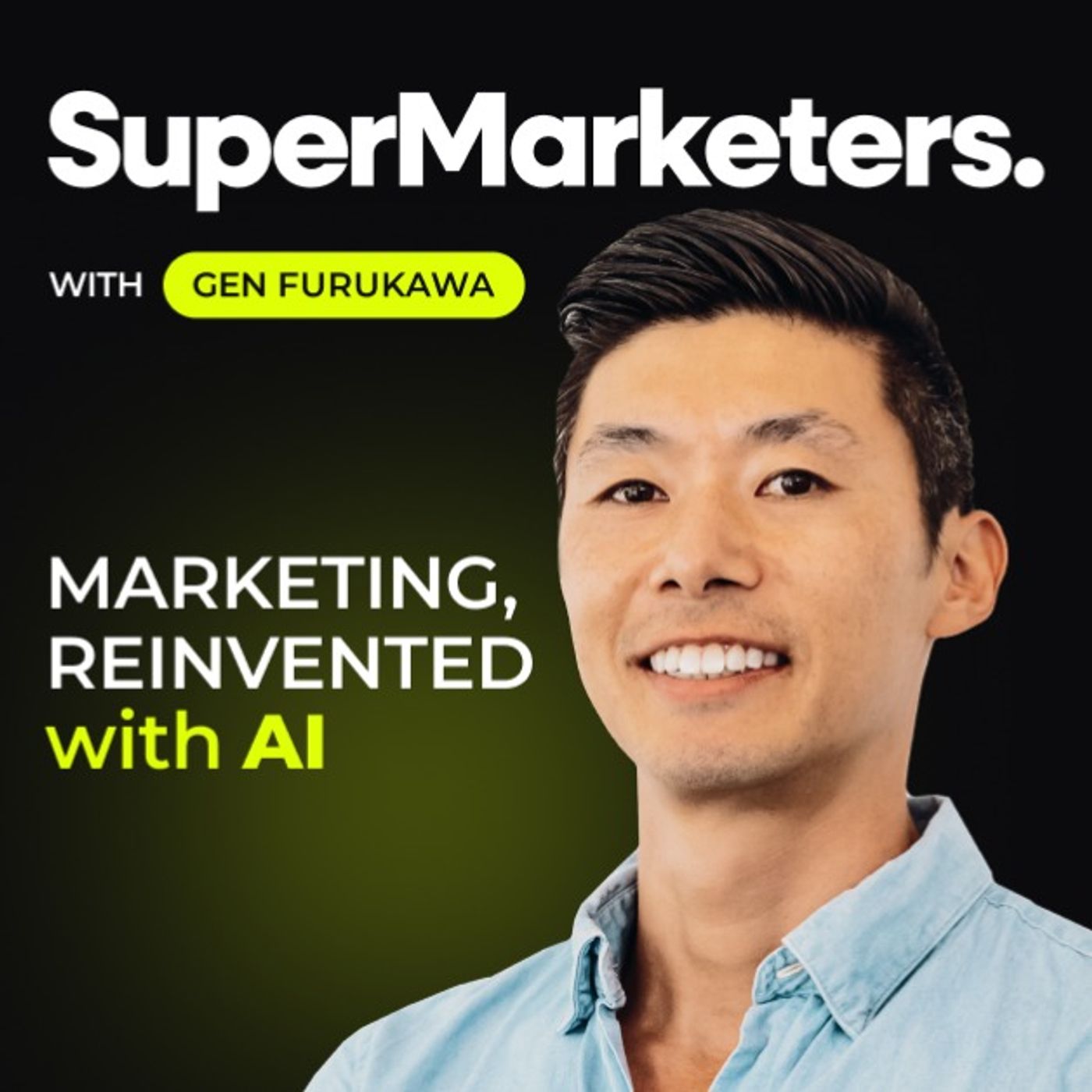 Cracking LLM Visibility with Gauge’s CEO Caelean Barnes | Highlights: 01:05 — How Gauge reverse engineers AI answers to uncover why some brands get mentioned while others don’t.04:11 — Why personalization in ChatGPT makes manual tracking nearly impossible without anonymous data.05:28 — The hidden value of showing up in top-of-funnel AI answers even when clicks disappear.07:02 — If you only had five hours a month, here’s the single most effective lever to grow AI visibility.09:15 — The “fat tail” effect in AI search and why cracking the top 50 matters more than ranking #1 on Google.18:47 — Case study: how one brand tripled AI visibility in two weeks and what it reveals about the future of search.=============================== Stop Publishing Content. Start Engineering Demand with SuperMarketers. SuperMarketers is the AI Content Engine for B2B SaaS. Built to rank, answer, and convert. Learn more at www.supermarketers.aiConnect with Gen Furukawa: https://www.linkedin.com/in/genfurukawa/=============================== Find Caelean Barnes on LinkedIn: https://www.linkedin.com/in/caelean/ =============================== Gauge helps companies show up in more AI answers. With traffic shifting off of Google and into AI, the way customers are discovering and deciding has changed.Gauge measures responses in AI answers to find the highest leverage opportunities for your brand. This enables you to increase your AI presence and drive more leads. Customers are seeing over a 5x increase in AI answer share with Gauge.Find out more at https://withgauge.com | — | ||||||
| 8/15/25 | 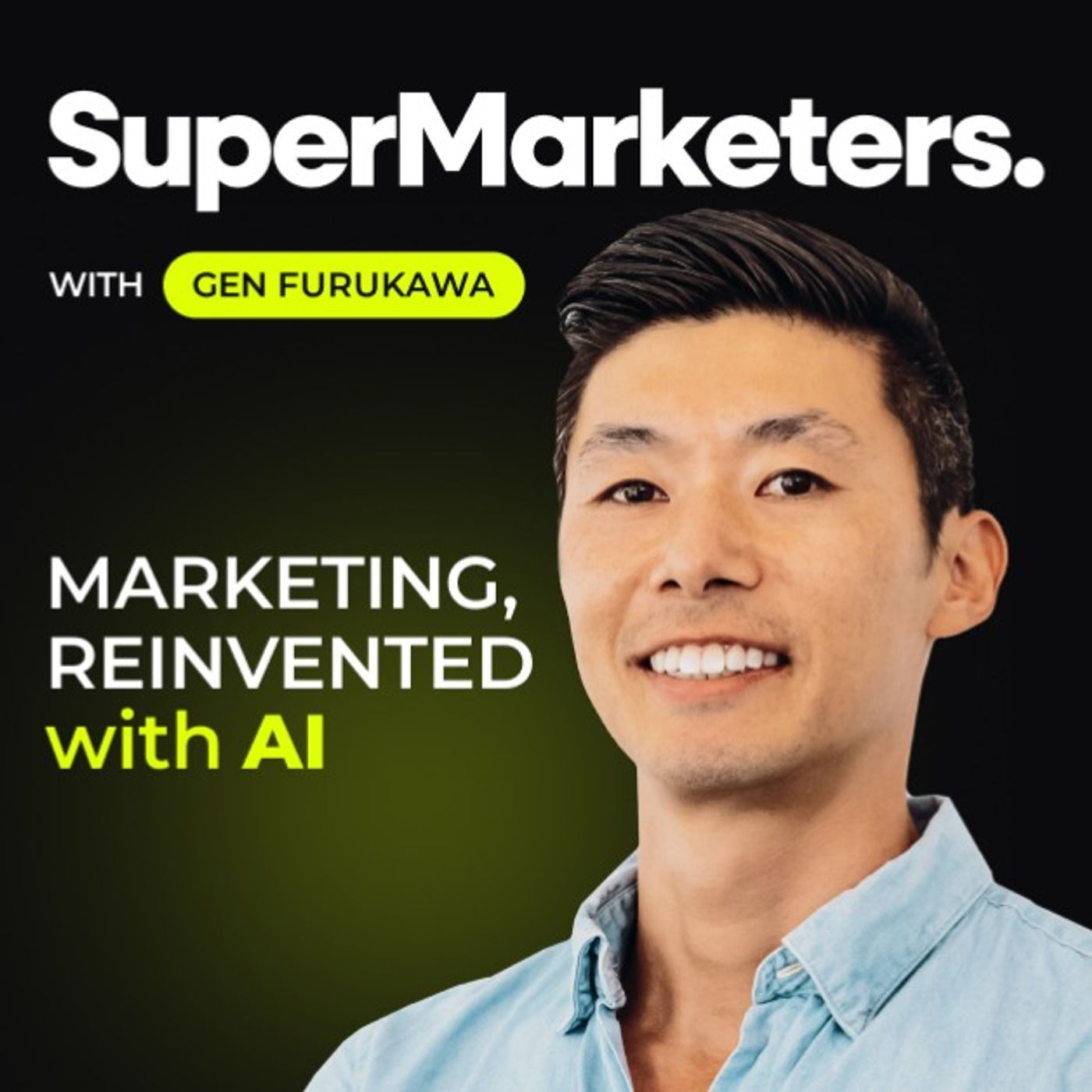 From 3 Words to 20+: Why AI Search Queries Are Destroying Traditional SEO with Shane Tepper of Retina Media | LINKS: Retina Media: https://retina.media/Shane on LinkedIn: https://www.linkedin.com/in/shanehtepper/SuperMarketers: www.supermarketers.ai | — | ||||||
| 6/16/25 | 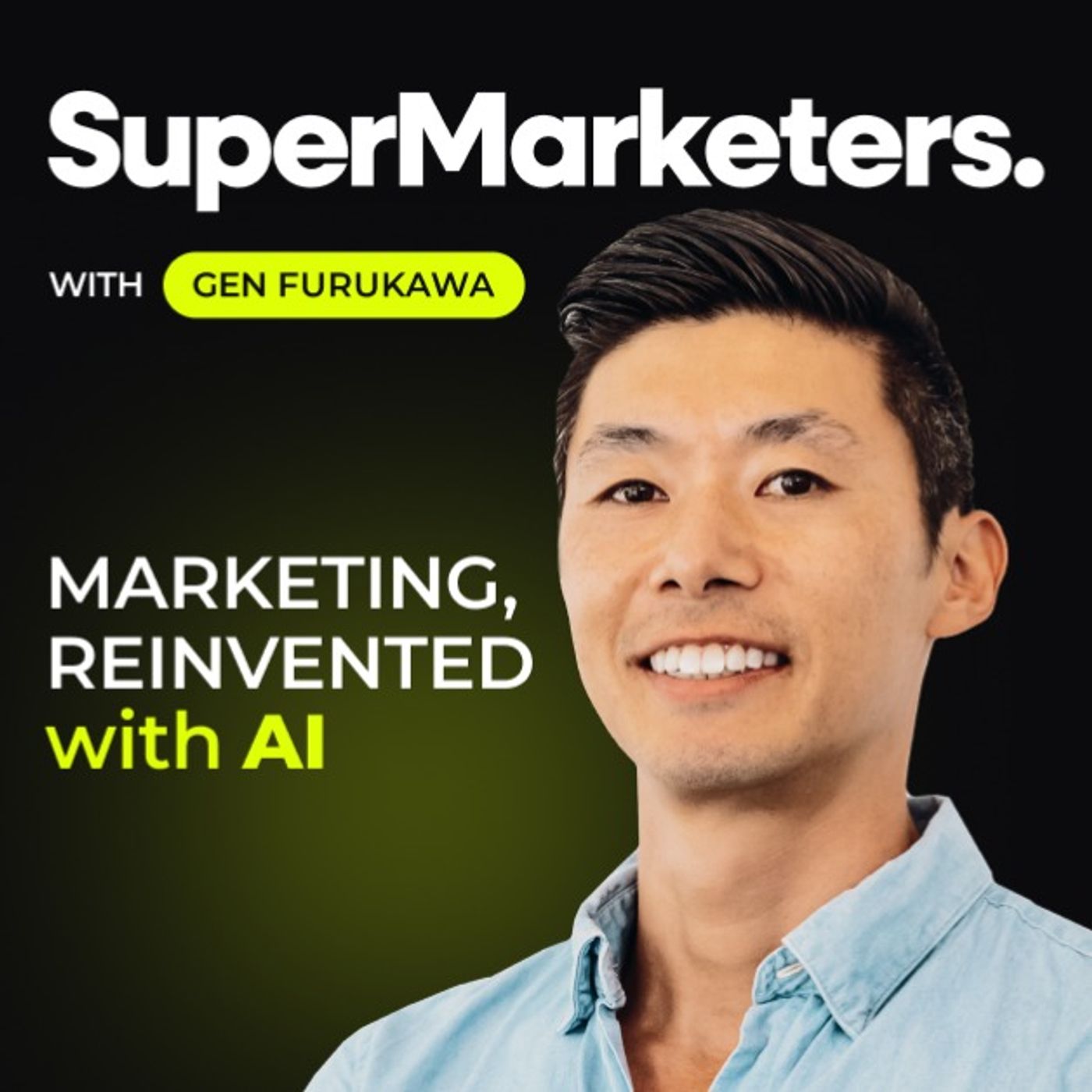 The End of Traditional SEO: How AI is Reshaping Content Marketing with AirOps | Key Takeaways:AI-Proof Channels: Events, referrals, and trust-based marketing are emerging as "AI-proof" channelsThe 95% Rule: 95% of content cited by AI agents has been updated in the last 10 monthsFour Pillars of Winning Content: Unique/authoritative, persuasive (to both humans and AI), well-structured, and properly citedContent Engineers: New role combining AI knowledge, content expertise, and business process optimizationAEO vs SEO: Answer Engine Optimization requires optimizing for multiple AI agents, not just GoogleTactical Strategies Discussed:Using Google Search Console to find high-impression, low-click pagesInternal linking as an overlooked SEO winSchema markup and proper H1-H4 structure for AI agentsContent refresh frameworks (low/medium/high effort levels)Voice memo workflows for content creationCustom GPT projects for content strategy AirOps website: airops.comBenchmark your top pages against the best in SaaS—and see what’s costing you visibility: https://www.airops.com/answer-engine-visibility | — | ||||||
| 5/2/25 |  Fathom CEO Richard White on Leveraging AI Meeting Notes for Scalable B2B SaaS Marketing | Every Zoom call hides revenue-ready insights. Fathom founder Richard White explains how AI meeting intelligence turns raw transcripts into competitive advantage, content fuel, and a product-led growth flywheel for B2B SaaS marketers.Check Out Fathom: https://fathom.video/ | — | ||||||
| 3/28/25 |  From Data Science to Generative AI: How to Think Like a Fractional Chief AI Officer with Josh Ebner of Sharp Sight Labs | Show Highlights: 5:13 – Why SEO is breaking: AI-generated content, noise in SERPs, and Josh’s pivot to LinkedIn10:40 – Josh’s AI content workflow: repurposing blog posts into LinkedIn posts using ChatGPT17:00 – What is RAG (Retrieval Augmented Generation) and how it helps encode brand voice into AI outputs21:00 – Data prep for vector databases: chunking content, using parsers, and why this step is critical25:00 – How marketers can use segmentation and clustering models for better GTM strategy32:00 – When LLMs work well: text generation, summarization, sentiment analysis, and chat transcript insights34:00 – The future of LLMs in orgs: how they could replace middle management through summarization📍 Visit Josh at Sharp Sight Labs🤝 Connect on LinkedIn: Josh Ebner | — | ||||||
| 3/11/25 |  How AI Scores Client Relationships for Scaling Professional Services: Courtney Baker, CMO of KnownWell | Show Highlights:0:00 - Introduction: How AI is reshaping client management in professional services4:29 - Why professional service firms struggle with client data and decision-making9:00 - How KnownWell’s AI scores client relationships and predicts retention risk14:10 - AI vs. human intuition: Why gut instinct isn’t enough for scaling client relationships19:30 - How AI surfaces upsell opportunities and prevents churn before it happens24:45 - The future of AI in operations and why marketing firms must adapt26:00 - Closing thoughts: How AI can give your business a competitive edge Find Courtney on LinkedIn Knownwell | — | ||||||
| 11/11/24 |  How to Transform Your Team into AI Power Users with Paris Childress of Hop Online | Hop OnlineParis Childress on LinkedInShow Notes: 4:00 - Building an ICP Matrix with AI: Understanding customer profiles 8:00 - How To Use client call transcripts to build better AI outputs 14:00 - Creating an AI council: Getting 30 people on board without fear 16:00 - Using GPT-4 as a strategic thought partner for agency transformation | — | ||||||
| 10/10/24 |  How To Be A One-Person Growth Team - AI-Powered Marketing To Scale Your Efforts with Zach Wright of Reveal.ai | Zach on LinkedInReveal.ai6:01 - Exploration of how to use customer insights in marketing11:05 - Zach explains how customer understanding manifests in marketing efforts15:48 - Discussion on personalization in outreach and scaling efforts21:13 - Explanation of Anthropic's prompt builder and its benefits26:36 - Exploring different ways to use customer conversation transcripts for content creation31:05 - Recommendations for teams to get more out of AI, including developing an "AI-first mindset"35:57 - Discussion on creating SOPs and improving processes with AI | — | ||||||
| 9/15/24 |  Mastering Content Creation in the Age of AI: Insights from SEO Expert Greg Brooks | Greg Brooks on LinkedInSearchTides WebsiteHighlight Timestamps:3:45 - Greg explains how AI is changing search behavior and the importance of creating efficient, valuable content9:15 - Discussion on the process of identifying core topics and creating content strategy16:30 - Greg shares a real-world example of content strategy using personal lending as a topic23:45 - Insights on the future of commerce and how AI will impact company growth and consumer choice28:30 - Greg's perspective on the importance of brand equity in the future of marketing | — | ||||||
| 8/29/24 |  How Enterprise Companies Can Overcome AI Adoption Challenges in Marketing | Kevin Dean is the CEO and President of ManoByte, a leading inbound marketing agency specializing in sales and marketing automation, HubSpot CRM implementation, and business intelligence solutions. Manobyte - https://www.manobyte.com/Kevin on LinkedIn - https://www.linkedin.com/in/kjdean/ | — | ||||||
| 7/23/24 |  The Future of Brand Safety: AI & Social Media Moderation Insights from Matthew McGrory, CEO @ Arwen.ai | Matt McGrory on Linked INCheck out ArwenTimestamps: 0:57 - Explanation of AI-powered content moderation2:57 - Using RAG for brand-specific engagement5:22 - Balancing AI automation with human oversight8:28 - Prompt engineering and human-reinforced learning9:00 - Using AI for creative storytelling in marketing12:27 - Manual moderation techniques before AI tools14:00 - Creating a structured approach to social media engagement17:32 - Understanding brand health reports and benchmarks21:38 - Analyzing sentiment and emotions in social media campaigns26:53 - Key takeaways for growing on social media using AI30:46 - Closing remarks and contact information | — | ||||||
| 7/9/24 |  How to Leverage AI for Data-Driven Creative: Scale Your Brand Experience with Omneky CEO Hikari Senju | Check out OmnekyHikari on Linked InShow Highlights: 2:09 - Current AI capabilities in marketing4:40 - Building effective brand assets for AI6:53 - Analyzing marketing metrics with AI9:06 - The future of personalization in advertising10:55 - Limitations and potential of AI in marketing14:27 - Integrating AI with existing marketing automation17:54 - Advice for marketers to stay ahead in AI21:51 - The enduring importance of human elements in marketing | — | ||||||
| 6/14/24 |  How To Use AI for SEO, Content YouTube To Bootstrap to 9k Customers - With Tykr Founder & CEO Sean Tepper | Check out Tykr: https://tykr.com/Show Highlights: 00:00 Introduction and Guest Welcome00:19 Sean Tepper's Background and Journey02:24 Ticker's Growth and Features03:49 Marketing and AI Integration04:17 Content Creation Workflow06:47 SEO and Content Optimization10:39 Leveraging AI for Content19:53 Learning Resources and Final Thoughts | — | ||||||
Showing 25 of 45
Sponsor Intelligence
Sign in to see which brands sponsor this podcast, their ad offers, and promo codes.
Chart Positions
2 placements across 2 markets.
Chart Positions
2 placements across 2 markets.