

Insights from recent episode analysis
Audience Interest
Podcast Focus
Publishing Consistency
Platform Reach
Insights are generated by CastFox AI using publicly available data, episode content, and proprietary models.
Total monthly reach
Estimated from 10 chart positions in 10 markets.
By chart position
- 🇨🇦CA · Social Sciences#7730K to 100K
- 🇺🇸US · Social Sciences#1995K to 30K
- 🇧🇷BR · Social Sciences#2130K to 100K
- 🇪🇸ES · Social Sciences#6210K to 30K
- 🇫🇷FR · Social Sciences#7210K to 30K
- Per-Episode Audience
Est. listeners per new episode within ~30 days
59K to 212K🎙 Weekly cadence·48 episodes·Last published 2w ago - Monthly Reach
Unique listeners across all episodes (30 days)
119K to 423K🇨🇦24%🇧🇷24%🇨🇴24%+7 more - Active Followers
Loyal subscribers who consistently listen
36K to 127K
Market Insights
Platform Distribution
Reach across major podcast platforms, updated hourly
Total Followers
—
Total Plays
—
Total Reviews
—
* Data sourced directly from platform APIs and aggregated hourly across all major podcast directories.
On the show
Recent episodes
Milícia-created Enclaves and Urbanization in Rio de Janeiro with Priscila Coli Rocha
Apr 30, 2026
Unknown duration
La Vivienda, el Decrecimiento y el Derecho a la Ciudad en Barcelona con Claudia Delso Carreira y David Bravo
Mar 6, 2026
Unknown duration
La Ciudad que Cuida: Manzanas y el Sistema del Cuidado en Bogotá
Feb 12, 2026
Unknown duration
¿Qué está pasando en Venezuela? Un análisis desde la izqueirda Venezolana
Jan 30, 2026
Unknown duration
Democracy on the Ground in Venezuela with Gabriel Hetland
Dec 22, 2025
Unknown duration
Social Links & Contact
Official channels & resources
Official Website
Login
RSS Feed
Login
| Date | Episode | Description | Length | ||||||
|---|---|---|---|---|---|---|---|---|---|
| 4/30/26 |  Milícia-created Enclaves and Urbanization in Rio de Janeiro with Priscila Coli Rocha | In today’s episode, we look at the the criminal actorsshaping urban enclaves in Rio. I wanted to provide a little backstory, because this actually connects to work and research I was deeply involved with before starting my PhD. As part of the bureaucratic deployment resulting from the 2016 peace agreements signed between the armed revolutionary forces of Colombia (FARC) and the Santos government in Colombia, I was lucky enough to live in the amazon region of Caquetá on and off for several years. As I worked with coca-growers there in the Caguán region, I was researching the process of urbanization of the main city in the Colombian Amazon, Florencia after the coca boom of the 1970s, and I found that many of the newly created guerrillas of the period, including the FARC and the M-19, had included city-making in their political repertories and helped found one of the biggest informal neighborhoods of the city. A little later, I also researched the construction of hundreds of miles of road network by collaborations between the FARC, the local government, and coca communities in this same region. I mention these because I think there is a risk ofthinking that criminal governance – and all its variants – are extra-ordinary and for that reason marginal phenomena. Like this is something that happens at the geographic and political margins of our cities and our countries, and that, while interesting, it ultimately is not that central to the praxis of urban planning, partly because it happens outside of the state. I think this is wrong on both fronts. First of all, theseare not minor issues - a recent cross-national study of 18 Latin American countries found that almost 15% of respondents lived under some form of criminal governance; which adds up to between 70 and 100 million people. Second, this is not something that happens “outside” thestate, but in relationship to it in ways that overlap, conflict, and relate in specific situated ways. My work with the Amazon cities and road networks showed me not only that the border between legal and illegal can be very porous, but ultimately that the process of state-formation can be intimately enmeshed with the governance of these armed actors. Furthermore, “Planning” is not something only done withinCity government offices; or that the forms of territory-making outside of those offices lacks a logic or coherence. Instead, we need to seriously reckon with the fact thatin our Latin American cities, criminal organizations – as well as amultiplicity of other actors which also include the residents themselves – are all part what goes into making our cities; and that only by acknowledging this reality can we begin to think about what we should do about it. And in that context, I bring you Priscila Coli Rocha’s brilliant ethnography, titled Making the City, Making a Constituency:Milícias-created Enclaves and Urbanization in the Peripheries of Rio de Janeiro, Brazil. Priscilla undertook years of field work in Rio’s peripheries, where criminal governance of different actors, including the Milícias, has been an important phenomenon for decades now. Among her contributions, Priscilla argues that there is a typology of milícia which not only governs parts of the city, but with distinct origins and ways of operation that include the active production of enclaves in the city. Priscila Coli holds a PhD in City and Regional Planning from theUniversity of California, Berkeley. She is currently an Assistant Professor at PUC-Rio and the Federal University of Rio de Janeiro, and her research focuses on the role of criminal organizations in urbanization processes in the Global South. | — | ||||||
| 3/6/26 |  La Vivienda, el Decrecimiento y el Derecho a la Ciudad en Barcelona con Claudia Delso Carreira y David Bravo | Si escuchas este episodio en Marzo del 2026, es muy possibleque en estos momentos, se esté terminando la construcción de un edificio en Barcelona muy diferente a los otros. Se llama Wikihousing, y es, como dice su página, una solución alternativa de acceso de vivienda pública. Para empezar, tanto su diseño como su construcción ha sido participativo. Es a la vez, asequible para jóvenes de la ciudad , y sostenible en sus materiales, pero a la vez eficiente en su construcción, que se ha hecho de manera prefabricada y se está montandoaproximadamente 1 piso cada diez días. Para serles sincera, no era de lo que esperaba hablar en unepisodio sobre el Decrecimiento y la Vivienda. Cuando mi cohost, Sonia Torres, me propuso el tema de decrecimiento para el podcast, me intrigó, en parte porque despertó mi trauma de cuando vivía en Berkeley. Ahí, hay una crisis de vivienda gigante, en parte porque los Californianos ricos – quienes llamabamos NIMBYs, o los “no en mi patio tresero”, bloqueban todo esfuerzo de construir viviendas nuevas. El resultado eran ciudades, a mi parecer, que se morían por dentro porque sus clases trabajadoras ya no podían vivir ahí. Entonces, a pesar de que pienso mucho sobre como descarbonizar la Economía y sobre todo la Vivienda, me preocupaba que el discurso del decrecimiento ante la vivienda no tomara seriamente en cuenta la necesidad de alojar nuevos habitantes urbanos. En esta conversación me encontré algo muy diferente: encontréa WikiHousing y a la Concejalía de Participación eInnovación Democrática en A Coruña y una visión creativa yesperanzadora de un futuro que responde a los fracasos del presente. Y esto fue gracias a nuestros maravillosos invitados, Claudia Delso Carreira y David Bravo. Claudia es invesitgadora y técnicade proyectos en el Instiuto de Investivación Urbana de Barcelona, pero también entre 2015 y 2022 fue concejala en el Ayuntamiento de A Coruña con la plataforma municipalista Marea Atlántica, diputada y Concejala de Participación e Innovación Democrática. Por su lado, David Bravo es Arquitecto, miembro fundador de la consultora Urban Front y del equipo interdisciplinar responsable de la estrategia ATRI.city, que crea sistemas de vivienda asequible contra la gentrificación. Es en el marco de esta estrategia, que trabaja en la iniciativa WikiHousing. Además, Entre 2015 y 2019, fue asesor de la alcaldesa de Barcelona como responsable de la estrategia municipal contra la gentrificación. Como academica empedernida, mi aproximación al decrecimiento solo habia sido desde lo teórico – fue tan alentador y emocionante ver cómo esta idea se interpreta y pone en práctica desde la escala del edificio, hasta el municipio, para demostrar que un futuro diferente es possible. | — | ||||||
| 2/12/26 |  La Ciudad que Cuida: Manzanas y el Sistema del Cuidado en Bogotá | En el sur de Bogotá, en la localidad de Ciudad Bolivar, hayun sitio mágico. Se llega por medio de un telesferico llamado TransmiCable, y se aloja en la base de una de sus estaciones. Al entrar, puedes dejar tus hijos – los que te pasas en lacasa sola cuidando – en la guardería, antes de entrar a clases para adultos para terminar tu bachillerato. Para quienes lograron terminar sus estudios, pueden tomar clases técnicas de capacitación para conseguir empleo, recibir apoyo jurídico o psicosocial. Si eres vítima de violencias, acá encontrarasayuda. O simplemente puedes parchar un rato mientras lavas la ropa de tu familia en una de las lavanderías gratis.Lo se, porque he estado ahí, en una de las llamadas Manzanasdel Cuidado de Bogotá. Me sentí transportada a un mundo donde el cuidado - o para decirlo en terminos marxistas-feministas, la reproducción social – por fin ha empezado a recibir el reconocimiento que se merece. En Bogotá, las mujeres dedican en promedio 6 horas y 43 minutos diarios al trabajo de cuidad no pago; en este lugar, se busca apoyarlas en ese cuidado, y devolverles un poco de ese tiempo. Aunque no dudo que tengan sus imperfecciones, sinceramente sentí ahí que era una ventanita a la utopía. No se ve como una revolución dramática y extravagante – se ve como un lugar donde se reconoce y apoya la dignidad de lo cotidiano. Hoy vamos a hablar de estas Manzanas del Cuidado y delSistema del que forman parte. Para ello, entrevisto a dos profesoras quienes han estado liderando un proyecto que mira la historia y actual implementación del Sistema, como verán. María José (o Majo) Alvarez es profesora Titular deSociología en la Unviersidad de los Andes. Combina métodos cuantitativos y cualitativos para entender la desigualdad social, y las políticas que la pueden disminuir. Es autora del libro Política en los Margenes, sobre la historia de la ciudad informal en Montevideo, y Costly Opportunities, sobre la movilidad social en sociedades segregadas. Friederike Fleischer es profesora asociada de Antropología,también en los Andes. Su trabajo en antropología urbana en China y Colombia se enfoca en procesos de estratificación socioeconómica y especial y sus libros publicados incluyen «Suburban Beijing», «Soup, Love, and a ‘Helping Hand’: Social Support in Guangzhou, China» (Berghahn, 2018). | — | ||||||
| 1/30/26 |  ¿Qué está pasando en Venezuela? Un análisis desde la izqueirda Venezolana | El 3 de enero, el mundo presenció una invasión estadounidense a Venezuela y la captura y secuestro de su presidente, Nicolás Maduro. Yo estaba primero en Colombia, donde mi familia asistió manifestaciones defendiendo la soberanía latinoamericana mientras nuestro presidente, Gustavo Petro, se peleaba con Trump. Poco después volví a Nueva York, donde mis colegas gringos intentaban procesar lo que implicaba que la nueva política internacional implicaba la evocación de la llamda Donroe Doctrine – la reinterpretación a lo trump del imperialismo estadounidense del siglo 19, y la traición definitiva del derecho internacional. Como mucha gente tratando desesperadamente de entender esta situación sin precedentes, leí artículos, escuché podcasts, fui a eventos. Un muy buen amigo Venezolano, Alejandro Coriat, me hizo caer en cuenta que, aunque el enfoque anti-imperialista era necesario, se quedaba corto para dar cuenta de la complejidad que se enfrentaban los mismos venezolanos en este momento, y además se concentraba en cierto sentido, en los Estados Unidos, de nuevo.Faltaba el análisis desde Venezuela - de la historia del rentismo petrolero , del legado del Chavismo, de la violencia del gobierno de Maduro y de sus propios fracasos y contradicciones. Me faltaba oir las voces desde la oposición de izquierda, y de las complejas emociones al ver a Maduro - quien los había reprimido, encarcelado, o forzado al exilio - capturado, mientras su gobierno seguía casi igual Afortunadamente, Alejandro y muchos colegas venezolanos de izquierdas llevan años pensando en esto bajo el grupo Venezuelan Worker Solidarity. Este es un grupo de venezolanos socialistas en la diáspora, unidos por su solidaridad incondicional hacia los trabajadores de su país. Su enfoque se centra en amplificar las voces desde abajo y apoyar la lucha de los trabajadores contra la opresión y la explotación.Con este fin, organizaron un webinar el 23 de enero, que convertimos en el episodio de hoy. PanelistasYoletty Bracho es una investigadora venezolana en ciencias políticas que actualmente imparte clases en la Universidad de Aviñón, en el sur de Francia, y estudia la gobernanza autoritaria y la movilización popular en Venezuela.Antulio Rosales es un investigador venezolano en economía política que imparte clases en la Universidad de York, en Toronto, Canadá.Venus Faddoul es una abogada venezolana y defensora de los derechos de las mujeres, fundadora de 100 % Estrógeno, actualmente asilada en Madrid, España.Omar Vázquez Heredia, que se une a nosotros desde Caracas, es investigador en economía política, dramaturgo y activista socialista independiente.Nuestro moderador será Simón Rodríguez, socialista y periodista venezolano, además de editor de Venezuelanvoices.org. | — | ||||||
| 12/22/25 | 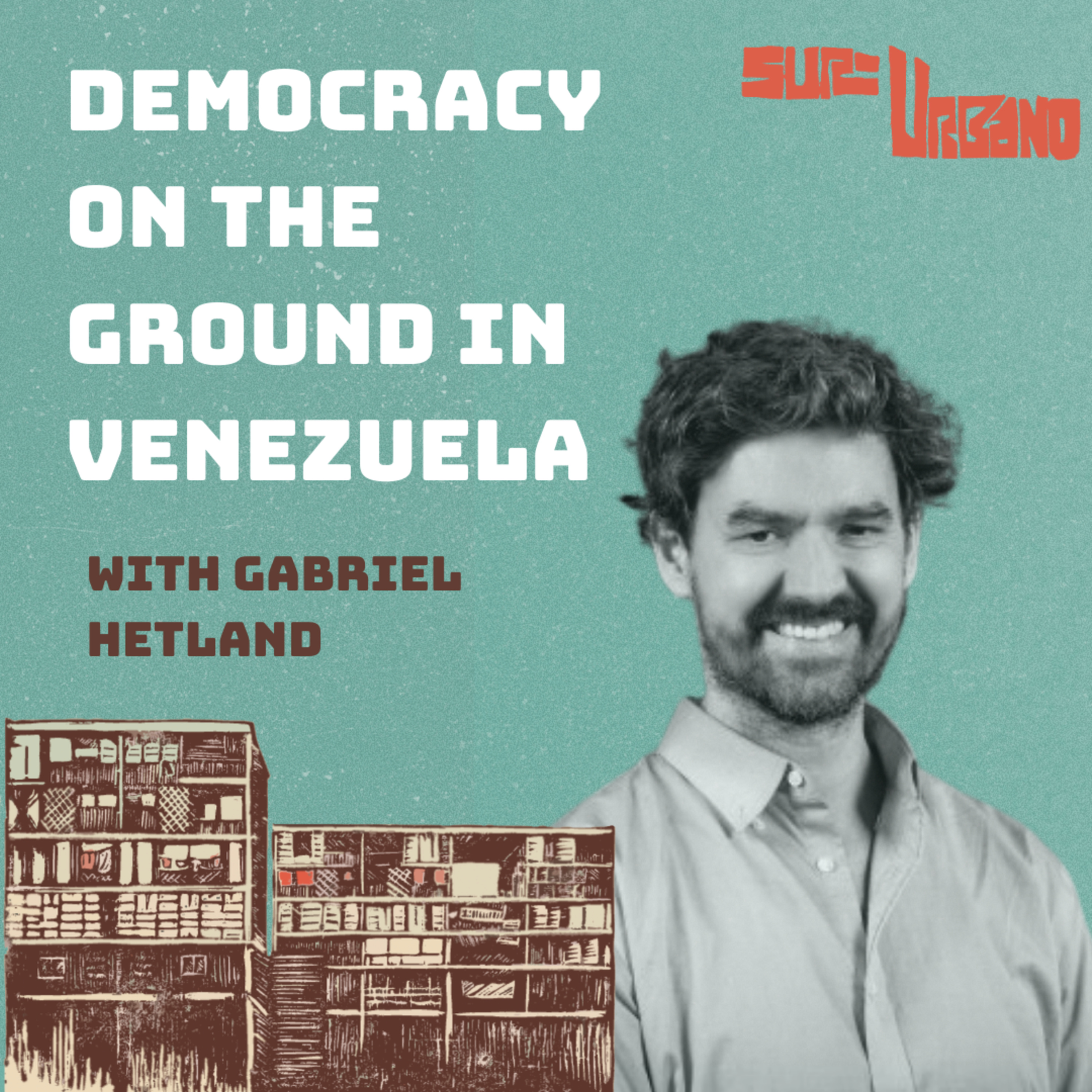 Democracy on the Ground in Venezuela with Gabriel Hetland | Even within the already brutal record of the Trump administration, the escalating threats of military intervention and extrajudicial killings of civilians in Venezuela stand out as a disturbing return to the most repressive eras of U.S. imperialism. As of this recording, 99 civilians have been assassinated, while the United States has begun amassing thousands of troops and warships in the Caribbean and has ordered a blockade of Venezuela’s oil industry. Earlier this month, Trump released a new National Security Strategy announcing a so-called “Trump Corollary,” which asserts a U.S. right to revive the Monroe Doctrine in order to “restore American preeminence in the Western Hemisphere and protect our homeland and access to key geographies throughout the region.” This military imperialism, and the continued perpetuation of war crimes, must clearly be rejected unequivocally. And at the same time, I side with my Venezuelan friends and comrades in recognizing that the fact that Maduro appears to be the target of an US intervention does not erase the profound violence that his regime has waged upon Venezuelans. This violence has been used not only against Opposition activists, who have been murdered, tortured or imprisoned in the dozens over the last 10 years, but also against the labor movement whose rights to collective bargaining and striking have effectively been abolished. It has also been used against indigenous activists resisting extractivist projects in Perijá and the Gran Sabana, and youth in the barrios executed by police in the hundreds. Our episode today speaks about a different political moment: when, around fifteen years ago, Venezuela was the site of an incredible experiment in participatory democracy, simultaneously pushed from above and from below, that generated such a strong consensus that even sectors of the Opposition were drawn into participating.I interview Gabriel Hetland, associate professor of Latin American Studies and Sociology at SUNY Albany, who explores the conditions for leftist hegemony in his book Democracy on the Ground: Local Politics in Latin America’s Left Turn. While the book is a comparison between Venezuela and Bolivia, we primarily focus on Venezuela, observing participatory reform in cities governed by the Left and Right. The Venezuelan city ruled by the left, Torres, was lauded as “the most democratic city in the world”, dedicating its entire investment budget to a radical and inspiring participatory budgeting effort. But surprisingly, Sucre – a city ruled by the right opposition – also undertook a similar participatory reform, leading Gabriel to argue that for a while, Venezuela’s Bolivarian Revolution – led by Hugo Chavez – managed to consolidate hegemony: when the ruling political force forces its opponents to play the game of politics on its terrain, in this case, the terrain of popular power. Just this week, the far-right won Chile’s presidential elections, joining Argentina’s Milei, and similar right-wing shifts in Ecuador and Bolivia, joining the rise of the right in the United States and Europe. In a moment of an appearing right-wing hegemony, it is more important than ever to insist upon the conditions not only for leftist resistance, but also the construction of alternative hegemonies. Gabriel’s clear-eyed analysis, which draws from Gramscian theory but also a very rich ethnographic field work of over two years, shows the potential as well as the contradictions in populist politics, and has lessons for building democracy on the ground in this moment in which it is so sorely needed. Gabriel Hetland is associate professor of Latin American Studies and Sociology at SUNY Albany. He has written extensively about politics and social movements in Latin America and the US for scholarly and popular outlets including The Washington Post, The Guardian, The Nation, Jacobin, and elsewhere. | — | ||||||
| 12/8/25 | 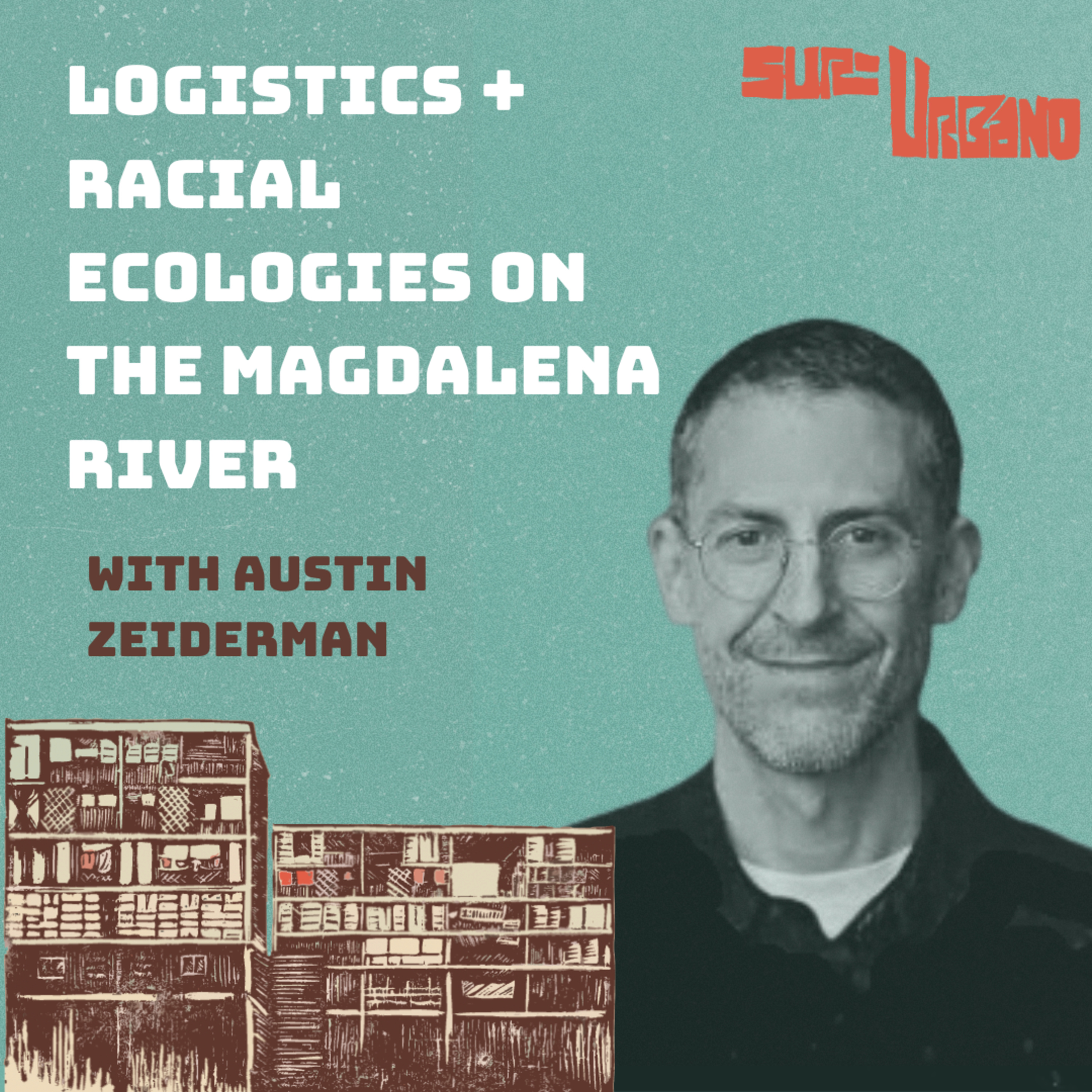 Logistics and Racial Ecologies on the Magdalena River with Austin Zeiderman | The Magdalena River has been the central artery of Colombia's history: it was the path of colonization as well as of commercial circulation linking the coast to the interior. But it was also the site and product of racialized violence from slavery to the Colombian armed conflict in the 20th century, when parts of the Magdalena became almost synonymous with paramilitary violence and the river itself was declared a victim of the armed conflict. The paramilitaries demobilized in 2005 and then peace was signed with the FARC guerrillas in 2016; shortly after,a state-backed megaproject was announced that would transform the waterway into a logistics corridor, linking the logics of security and circulation with those of pacification. Our guest today, Austin Zeiderman, is the author of Artery: Racial Ecologies on Colombia’s Magdalena River. While Zeiderman may have originally set out to study a logistics corridor, what he found was an even richer study about the historical and contemporary co-production of race, capital and space along the country’s central fluvial artery. An anthropologist and geographer, Zeiderman applies an ethnographer’s approach to the situated practices both ofpower and resistance. He takes us close to the companies managing the logistics sector, their actuarial logics of security and risk, and imperatives of circulation. At the same time, Austin details the life inside a tow-boat, the way gender, race and labor have historically interacted from the old bogas boats to the present day, and the way tacit knowledge resists the fungibility of racialized labor even today. We are a podcast about cities, and precisely for this reason, I wanted to highlight the invisible labor that circulates goods and fuels in and out of our urban hubs, which more often than not, have turned their backs on their nearest ports. Books like Austin’s – which center the long lives of logistics and their embeddedness in what Austin calls “geo-racial regimes” – are indispensable for understanding the broader forces which shape Latin American cities. Austin Zeiderman is Professor of Geography in the Department of Geography and Environment at the London School of Economics. He is an interdisciplinary scholar who specializes in the social and political dimensions of urbanization and the environment in Latin America, and holds a PhD in Anthropology from Stanford University.My cohost is Robinson Markus. Robbie is a PhD student in urban planning at UCLA, has a masters in Sociology from LSE, and studies the intersections between housing and climate change in Latin America. Keep in mind that Robbie's audio had some difficulties, so we don't hear as much from him as we should have! | — | ||||||
| 11/25/25 | 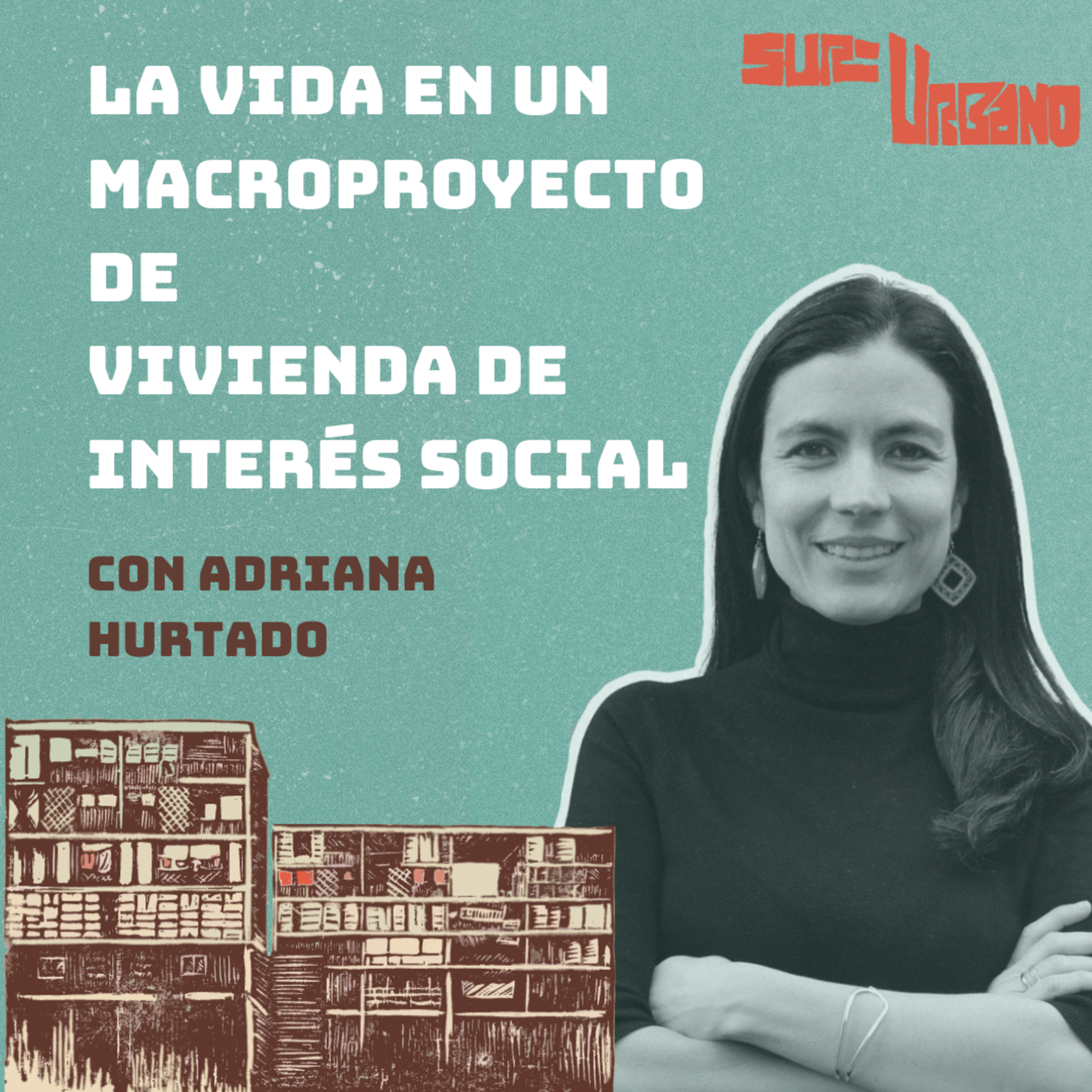 Habitando Ciudad Verde: La vida en un Macroproyecto de Vivienda de Interés Social con Adriana Hurtado | En América Latina heredamos el impulso de hacer ciudades “desde cero”: desde la damera colonial a Brasilia, cada época y lugar, interpreta este impulso de borrón y cuenta nueva a su propia manera. En el siglo XXI, en la capital de Colombia, ese sueño tomó forma en Ciudad Verde, una ciudadela de 49.500 viviendas construida en Soacha, al sur de Bogotá. Concebida como parte de la política de vivienda llamada "macroproyectos de vivienda de interés social" a nivel nacional, el proyecto reunió distintos tipos de vivienda —100 % subsidiada, VIP, VIS y algunas de rangos más altos— para hogares entre uno y más de cuatro salarios mínimos.Fue desarrollada por una constructora privada en suelo barato de periferia, y sus apartamentos fueron vendidos rápidamente gracias a subsidios de vivienda. Su visión de la unión entre el estado y las inmobiliarias prometía, como toda buena nueva ciudad, un nuevo imaginario: el de una nueva clase media.Pero que pasa después cuando se materializa esa nueva vivienda periférica con reglas de propiedad horizontal y largos viajes al trabajo y colegio? Y cómo podemos, a partir de entender cotidianidad, evaluar el impacto de esta política de vivienda? De eso trata el artículo "Habitando Ciudad Verde: Experiencias de los residentes de un macroproyecto de vivienda de interés social (Soacha, Colombia)" de Adriana Hurtado Tarazona y nuestro episodio de Sur-Urbano. A partir de su investigación etnográfica, Adrian explora las cotidianidades de Ciudad Verde: las relaciones entre vecinos, la misma decoración de los apartamentos, la vivienda para el uso y la inversión, y la navegación de la vida colectiva e individual.Adriana Hurtado Tarazona, profesora asociada y ✨ directora 💫 del Centro Interdisciplinario de Estudios sobre Desarrollo (Cider) - Uniandes. Adriana, con una maestría en planeación y un doctorado en antropología, combina ambas miradas para estudiar vivienda social, renovación urbana, infraestructuras cotidianas y del cuidado, entre muchos otros temas.Me acompañó com cohost Ana María Pérez. Ana María es politóloga, profesional en lenguajes y estudios socioculturales, magíster en City Planning del MIT, ha trabajado con Amarilo recomendando acciones para el futuro de Ciudad Verde —precisamente— y actualmente trabaja con la Secretaría del Hábitat de Bogotá. | — | ||||||
| 11/10/25 | 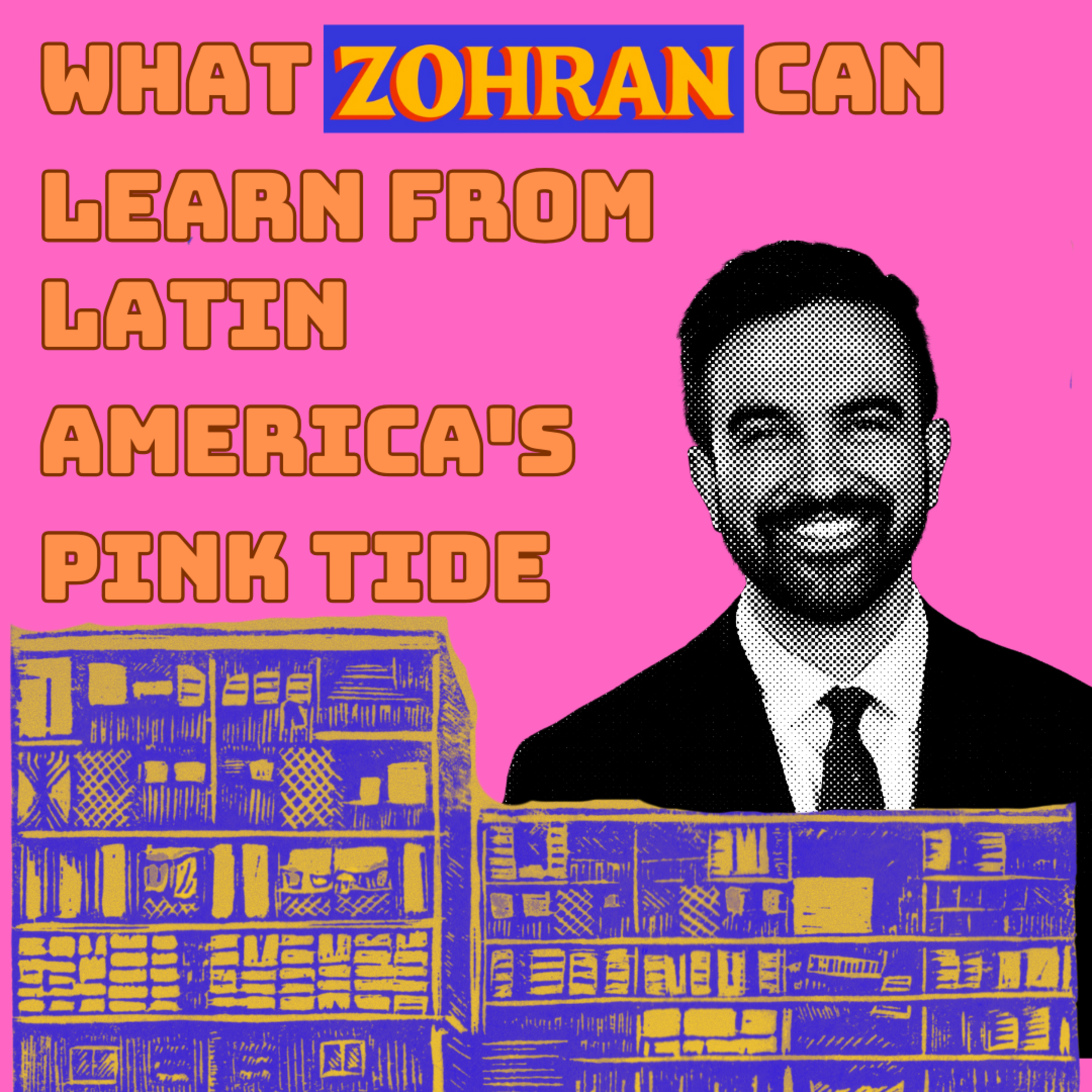 What Zohran can learn from Latin America's Pink Tide | I recorded the intro to this episode on the first morning after we learned that, with about 50% of the vote and the highest turnout in recent history, Zohran Mamdani – a migrant, Muslim, and democratic socialist – is going to be New York City’s next mayor. And he was elected on a platform that centered working class people’s everyday struggles, and presented them with a vision of this city in which everyone has a right to be here, and that we need to fight for the conditions – of childcare, housing, transport – that make that possible. But we know, getting Zohran elected is only the beginning. Andwhile New York City has had progressive mayors in the past, in other ways we are facing a uniquely new context: one defined by an exceptionally openly socialist mayor, facing an exceptionally hostile and authoritarian federal government. And given the historic marginalization in the United States of the left, it turns out Latin American cities actually have a lot to teach New York City and the future Mamdani administration. At least this was the motivation behind an event recently organized at NYU titled “What New York's Next Mayor Can Learn From Latin America's Pink Tide”, which happened some days before the election. I know I am biased, btu this is genuinely one of the most genuinely informativeand thought-provoking events I’ve been to in a long time, demonstrating so clearly just how rich the experience of the contemporary left has been in Mexico, Brazil, Venezuela and Ecuador, and how much wisdom is to be derivedfrom its successes and failures. The event featured Edwin Ackerman, professorat Syracuse University, followed by Gianpaolo Biocchi, Professor and founding director of the Urban Democracy Lab at NYU. Next was Gabriel Hetland, sociology professor at SUNY and who we hope to feature in Sur Urbano for a full episode soon, and finally, Thea RioFrancos, professor of PoliticalScience at Providence College. | — | ||||||
| 4/21/25 | 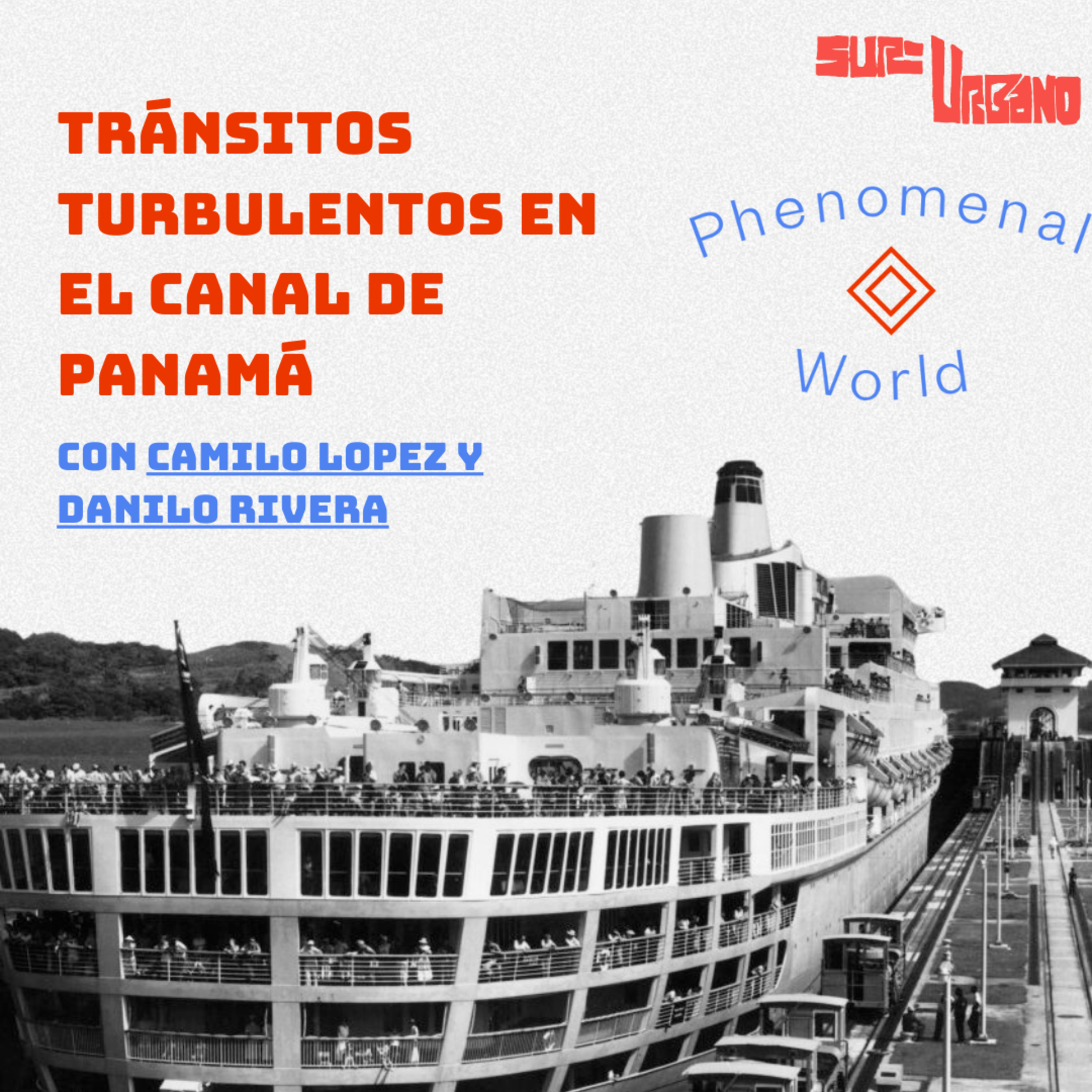 Tránsitos Turbulentos en el Canal de Panamá con Camilo López y Danilo Rivera | En su discurso de investidura, el presidente de los Estados Unidos Donald Trump declaró: “China está operando el Canal de Panamá. No se lo dimos a China, se lo dimos a Panamá, y lo vamos a recuperar”. Desde entonces, ha repetido que va a “recuperar” el canal, así demostrando que su mantra de Make America Great Again requiere resucitar el imaginario de la época dorada del expansionismo gringo, cuando Panama - y tantas otras partes del mundo - eran enclaves neocoloniales.En este contexto, nos pareció importante discutir la verdadera historia del canal de Panamá en el marco del modelo de desarrollo de este país, y por supuesto, sus ciudades. Y para ello, nos juntamos con Phenomenal World para discutir el artículo: "Tránsitos turbulentos: El Canal de Panamá bajo mando nacional" de Camilo Lopez y Danilo Rivera. Lo pueden consultar aquí: https://www.phenomenalworld.org/es/analisis/transitos-turbulentos/Por si no los conocen ya: Phenomenal World es una publicación enfocada en economía política que publica en español, ingles y portugués artículos rigurosos sobre la economía, ciencias políticas, historia, finanzas y política pública.Para mi fue muy importante entender cómo los hilos del imperialismo han estado tejidos desde el principio de la historia de Panamá, y a su vez, de cómo las restricciones a la soberanía panameña aumentaron su dependencia sobre el capital financiero y la especulación inmobiliaria. Hay una extraña conexión entre el hecho de que la mitad de los pagos iniciales para el canal se hicieron en inversiones de JP morgan en finca raíz en Nueva york, y ahora, es precisamente un promotor inmobiliario Neoyorquino el que busca quitarle el canal a las y los panameños.Nuestros invitados Camilo y Danilo tienen un conocimiento enciclopédico de esta historia que les permite hacer una lectura crítica del presente. Camilo López es investigador en políticas públicas e historia panameña. Danilo Rivera es investigador de políticas sociales y macroeconómicas panameñas. Como siempre, encontrarán su artículo en nuestras notas del episodio. | — | ||||||
| 4/3/25 |  Pollution, Slow Harms and Citizen Action with Veronica Herrera | Toxic pollution kills 12.6 million people every year—nearlyone-quarter of all global deaths – and 92% of these deaths occur in middle or low-income countries. Yet despite its deadliness, environmental harms are oftena slow-moving and long-standing problem, which can be difficult to detect and thus “invisible” in some ways which result in inaction and complacency. So what can be done? In her book “Slow Harms and Citizen Action: Environmental Degradation and Policy Change in Latin American Cities”, Professor Veronica Herrera asks: When and how do people mobilize around slow harms? By examining the cases of Buenos Aires, Bogotá and Lima, the book looks at how citizen movements can push the state to implement environmental rights protections, and how ideas about pollution as a policy problem become institutionalized. This episode was hosted by Sebastián Solarte. Sebastián is a PhD Candidate at the UCLA Institute of the Environment and Sustainability. In his research, he uses a political ecology lens to study grassroots movements aiming to overcome energy poverty in rural Colombia. Beyond his work, he is passionate about exploring places with his bicycle and finding new food spots.Veronica Herrera, our guest, is an Associate Professor ofUrban Planning and Political Science in the Luskin School of Public Affairs at the University of California, Los Angeles. I study the political economy of development and environmental politics and policy, with a focus on cities, civil society, and Latin America. | — | ||||||
Want analysis for the episodes below?Free for Pro Submit a request, we'll have your selected episodes analyzed within an hour. Free, at no cost to you, for Pro users. | |||||||||
| 3/20/25 |  Vivas nos Queremos: La Lucha por la Ciudad Feminista en Ecuador con Liz Zhingri | Un día de Septiembre del 2020, en uno de los puentes del centro histórico colonial de Cuenca, en Ecuador, apareció un graffiti escrito. Leía: Nosotras parimos, nosotras decidimos, en respuesta al veto presidencial al Codigo de Salud, que habíabuscado despenalizar el aborto en todas sus causales. El gobierno local denunció lo que llamó un acto de vandalism, y lo blanquéo, borrando el mensaje. Unos meses después hubo un aumento de femicidos en Ecuador, y 6 mujeres fueron asesinadas en un poco tiempo, la mitad en Cuenca. De nuevo apareció un mensaje en el Puente: Quieren que dejemos de rayar sus muros? FACIL: DEJEN DE MATARNOS Y así se dió una lucha feminista por la reapropiación del espacio público y en contra de la violencia hacia las mujeres. Se logró que se instalara una placa en el Puente; posteriormente fue vandalizada, y las lideresas de estos movimientos amenazadas; hubieron movilizaciones y repression, manoseo politico y logros profundos. La lucha por el “Puente Vivas nos Queremos” da pie para reflexionar sobre la relación entre el género y la ciudad, las huellas coloniales de muchas de nuestrasciudades, y el espacio público como objeto de luchas políticas y memoria colectiva. Para inspirarnos con su lucha y compartir aprendizajes, en este episodio hablamos con dos de las participantes del moviemiento Puente Vivias Nos Queremos. Una es nuestracohost, Domenica Valverde, estudiante de maestría en inovación, Desarrollo Humano y Sostenibilidad en la Universidad de Ginebra. Juntas entrevistamos aLiz Zhingri, activista y comunicadora feminista de Cuenca. El coraje, compromiso y solidaridad de Liz y Domenica fueron el antídoto perfecto para estos tiempos difíciles, y me inspiraron profundamente – espero que sientan lo mismo. | — | ||||||
| 3/6/25 | RERUN: What makes cities more or less unequal? With Ben Bradlow | The question of inequality haunts the global north and south as economic, racial and other forms of inequality appear to grow deeper and to more devastating effects. But although this is a global problem, it is not an inevitable or homogeneous one, and local actors can have a role in responding to this dynamic. That is why in today’s episode we ask: ‘Why are some cities more equal than others?”. To answer this question, Flavia Leite and Isabel Peñaranda talk to Ben Bradlow, an associate research scholar and lecturer at Princeton. Through a south-south comparison of Sao Paulo and Johanseburg, Ben argues that some cities are better at reducing inequality than others because of their degree of embeddedness and cohesion.Bradlow's book, Urban Power (forthcoming with Princeton University Press) asks “Why are some cities more effective than others at reducing inequality?” To answer this question, he compares the divergent politics of distributing urban public goods — housing, sanitation, and transportation — in two mega-cities after transitions to democracy: Johannesburg, South Africa, and São Paulo, Brazil. Because the book isn’t out yet, we based our interview on two papers: a 2022 paper in Theory and Society – Embeddedness and cohesion: regimes of urban public goods distribution – and a 2021 paper in City & Community –Weapons of the Strong: Elite Resistance and the Neo-Apartheid CityBen Bradlow is an Associate Research Scholar in the Department of Sociology at Princeton University and a Lecturer in Princeton’s School of Public and International Affairs. He is trained as both a sociologist and city planner, and holds a PhD in Sociology from Brown University (2020), and a Masters in City Planning from MIT (2013).Flavia Leite is a PhD student in City & Regional Planning at UC Berkeley. Her research interest revolves around the relationship between formal and informal housing markets, with a specific focus on housing financialization, access to credit, and housing policy in Latin America. | — | ||||||
| 2/19/25 |  Sur-Urbano on DeBÍ TiRAR MáS FOToS de Bad Bunny | Este es un episodio atípico, y un poquito improvisado. Enél, entrevisto a tres puertoriqueños – Juan Arroyo, Coral Murphy y Ashely Ortiz, quienes son periodistas de música y estudiantes de doctorado en temas afines – para que nos ayuden a entender el album en su contexto. Descubríademás que Sebastián Duque, mi editor y colaborador esencial en este podcast, es un erudito del reggaeton, entonces también lo invite a participar. Juntos analizamos algunas de nuestras canciones favoritas desde la perspectiva musical, política y territorial. Vamos perfilando la crisis existencial en la que se encuentra Puerto Rico, afligido por la herencia del colonialismo y en unaentrecrucijada entre convertirse un estado más de los Estados Unidos, o un movimiento cada más poderoso que busca la independencia. Es, como ha dicho Bad Bunny, su album más Puertoriqueño, pero también más universal. Lo que ha presenciado Sebastián en Cartagena, o yo en Washingon Heights en Nueva York, o los Puerto Riqueños en su isla, es un proceso de despojo de su derecho a la ciudad, a su territorio. Y realmente en este momento, cuantos no sentimos – estemosen Estados Unidos, América Latina, o demás –que los intereses de Sillicon Valley y el gran capital no nos está convertiendo, en cierto sentido, en extraños en nuestra propia tierra? Que el mundo se está forjando para interesas incompatibles con el bienestar de nuestras comunidades? Arrancamos con una conversación con Juan Arroyo, periodista de medios y sobre todo de música que ha escrito para publicaciones como Rolling Stone, Pitchfork y demás.Me acompaña como cohost y partícipe Coral Murphy,colega de doctorado de UC Berkelye, y también periodista para medios como el Guardian y the New York times. Segundo acto, con Sebastián Duque, Cartagenero exiliado aBogotá y editor del podcast. Para finalizar, hablo con Ashley Ortiz Chico, estudiante de Doctorado en Estudios Latinoamericanos en la Universidad de Tulane quien trabaja temas de justicia Ambiental y decolonialidad en Puerto Rico. El trabajo de Ashley centrael trabajo de organizaciones comunitarias que combinan la proteccion de la memoria historica y y cultural con la proteccion ecológica. | — | ||||||
| 1/29/25 |  Latinos for Trump and the Multi-Racial Right with Daniel Martinez HoSang | Since his inauguration just over a week ago, President Donald Trump has signed 8 executive orders and taken over 21 actions linked to immigration, evoking the notion of an “invasion” to justify a harsh military approach and promising “mass deportations”. Three days ago, his administration’s decision to use military airplanes to deport migrants – often handcuffed and treated like criminals – set off a diplomatic crisis with Colombia. Our president Gustavo Petro refused to accept two military flights with deported Colombians; Trump’s response was a disproportionate and vindictive weaponization of tariffs, which he threatened to raise 50%, and a repeal of all government official visas. Even though Petro ultimately accepted the fights, the fallout continues. Colombia was made an example of, to send the message that anyone that responds to Trump with anything other than complete submission – both inside and outside the US - will be aggressively punished. And yet in perhaps the most racist and overtly imperialist expression of the Republican party, Trump won with a significant increase of the Latino vote. The inspiration for this episode of Sur-Urbano was the shift towards the right in predominantly latino cities in the US. Miami-Dade county, which is 70% latino, swung republican for the first time since 1988. In counties all over the US-Mexico border - which tend to be majority or have large latino populations - the Trump vote grew by 10 to 25%, even in cases where Trump lost. This even happened in blue states and cities; in California, the largely latino Central Valley supported trump, and even in Queens and the Bronx in New York, the Trump vote increased by around 20%. It is more important than ever to understand the unique power of the multi-racial right. And for this, I joined forces with cohost and political theorist Will Callinson to interview Prof. Daniel HoSang, professor of American studies at Yale University. Daniel is an interdisciplinary scholar of racial formation and racism in politics, and coeditor of a forthcoming book titled The Politics of the Multiracial Right. I learned so much from this conversation, and am convinced that any hope of resistance must stem from a reckoning within the left, which includes better understanding of what drives voters – particularly the working class and of color – to the right. Will Callison (williamcallison.bsky.social) is a political theorist and a Lecturer in Social Studies at Harvard University. | — | ||||||
| 1/14/25 |  Ciclovía y el Derecho a la Ciudad Móvil con Paola Castañeda | Todos los domingos en Bogotá, algo medio mágico pasa. Las calles que durante la semana se la pasan atestadas de carros – esas que uno como peatón se arriesga la vida cruzando – de repente se convierten en paraísos ciclistas. Niños, viejitos, señoras en spandex, adolescentes en manadas, todos se toman las calles en ciclas, patines, aeróbicos y más. Este fenómeno – que llamamos la Ciclovía – hace poco cumplió 50 años. En este episodio inaugural de nuestra sexta temporada, hablamos con Paola Castañeda, Profesora Asistente en el departamento de Historia y Geografía de la Universidad de los Andes, y ciclista apsionada.. En este episodio, hablamos sobre su trabajo sobre el activismo de ciclismo y el derecho a la ciudad móvil, la historia y futuro de la ciclovía, y cómo el género cruza la movilidad en diversas maneras. Discutimos los siguientes textos: From the Right to Mobility to the Right to the Mobile City: Playfulness and Mobilities in Bogotá's Cycling Activism. https://onlinelibrary.wiley.com/doi/abs/10.1111/anti.12581 Gender and mobility: engaging women’s mobile lives. https://www.researchgate.net/publication/384962658_Gender_and_mobility_engaging_womens_mobile_lives 10 motivos para celebrar medio siglo de la Ciclovía. https://www.lasillavacia.com/red-de-expertos/red-cachaca/10-motivos-para-celebrar-medio-siglo-de-la-ciclovia/ | — | ||||||
| 12/17/24 | Social Housing in Brazil: State and Developers at Work | In the early 2000s, a new market emerged in Brazil: the market for large-scale social housing. Through the Minha Casa Minha Vida (MCMV) program, the Brazilian state promoted and financed large-scale housing for low-income families for the first time. This was only possible by aligning the incentives of state and private actors. In a 2019 article entitled 'An unprecedented alignment: state, finance, construction and housing production in Brazil since the 2000s', Professor Lucia Shimbo describes this process, and in this episode she tells us more about it. We discuss Brazil in the early 2000s, the changes in real estate dynamics, and the positive and negative consequences of the emergence of this new market for low-income homeownership in the country. | — | ||||||
| 12/4/24 |  Ciudad de México: ¿Para la gente, o para el mercado? con Prof. Victor Delgadillo | ¡Feliz diciembre! En el último año, nos escucharon casi 9,000 veces, y se sumaron casi 700 seguidores más en Spotify. Por eso, quería compartirles un episodio de temporadas pasadas que estuvo entre los episodios más escuchados: la entrevista que Santiago Echarri y yo le hicimos al Profesor Victor Delgadillo, professor de la UNAM e intelectual público que defiende el derecho a la ciudad. Hablamos de dos artículos el primero titulado: "Ciudad de México: Quince Años de Desarrollo Urbano Intensivo: La Gentrificación Percibida" y el segundo escrito para El País para un público más amplio que se titula "Ciudad de México: ¿Para la gente o para el mercado?". Discutimos temas que siguen siendo muy pertinentes: la gentrificación en Ciudad de México, las políticas de Desarrollo urbano y la creación de lo que el Prof. denomina un “casino inmobiliario”. Quería compartirles este episodio de nuevo porque siento que el Profesor Delgadillo combina una pasión y lucha por la defensa del derecho ala ciudad con un conocimiento enciclopédico de su historia. En este sentido, creo que es un modelo a seguir para quienes estudiamos y luchamos por las ciudades latinaomericanas más justas e incluyentes. Victor Delgadillo es Profesor investigador de la Universidad Autónoma de la Ciudad de México. Doctor en Urbanismo de la UNAM, y sus líneas de investigación incluyen: Centros Históricos Latinoamericanos, Gentrificación; Derecho a la Ciudad y más. Santiago Echarri es Arquitecto por la UNAM, y actualmente está estudiando una maestría en urbanismo en la ETSAB. Estudia financiarización de la ciudad, los procesos de segregación urbana y las posibilidades estéticas del paisaje construido y tiene su propia práctica de arquitectura | — | ||||||
| 11/19/24 |  What Do We Owe Each Other? Operationalizing Social Protections with Gautam Bhan | "A global pandemic has brought renewed attention to an old question: what do we owe each other? " The crisis of the COVID-19 brought this question to a head, and with it, calls for rethinking a “new social contract” that would outlast the emergency measures, a social contract rooted in mutual aid, yes, but also a stronger, more active, welfare state. It also made painfully urgent to consider the process by which these measures were operationalized; that is, by which the intentions of the state to reach the most marginalized groups of urban residents were put into practice, given that these resdents and workers were also the least visible, often informal, and therefore illegible to the state. Gautam Bhan's article "Operationalising Social Protection: Reflections from Urban India" addresses this very question. Drawing from empirical cases at the Indian Institute for Human Settlements, Bhan explores how the social contract plays out through social protection systems, arguing that how we deliver both existing and new entitlements is as important as deciding what entitlements urban residents should be entitled to. We discuss four challenges: (a) residence as an operational barrier; (b) workplaces (thru informal worker orgs) as sites of delivery; (c) working w worker orgs as delivery infrastructures; and (d) building systems of recognition and registration of informal workers. Bhan also points out how the different trajectories of Brazil and India changed inequality, finding that the ecosystem of social protections (in education, housing, cash transfers and the right to the city) backed by social movements rose the conditions for the bottom 30% of Brazilians. For Bhan, “operational knowledge is essential to imagine what Simone and Pieterse (2017) describe as ‘grounded and speculative alternatives’” - and in this text, he reveals operationalization to be a profound reflection on putting solidarity in action. Gautam Bhan is an urbanist whose work focuses on urban poverty, inequality, social protection and housing. He is currently Associate Dean of the School of Human Development, at the Indian Institute for Human Settlements School, and the Senior Lead in Academics and Researhc at this same institution. He holds a PhD in urban studies and planning from the University of California, Berkeley. Pranav Kuttaiah is a researcher and writer from Bengaluru, India currently pursuing a PhD in City and Regional Planning (with designated emphases in Political Economy and Science and Technology Studies) at UC Berkeley. | — | ||||||
| 10/14/24 | Surviving a lo Bori con Rafael Pabón Ortega | Esto es un desafío al orden establecido, una invitación a transgredir, a romper el cerco. Son historias ordinarias y cotidianas, de amores y desamores, del prójimo y del próximo, de muertos y vivos, de locos y cuerdos, de desacuerdos, de un país en cantos y del desencanto, de las visitas al baño y de la oveja negra que perdió el rebaño, del macharrán y del sacristán, del bien y el mal, de los excesos, y del poco seso, de mis desvelos y de un poco de eso. Hoy en Sur-Urbano, tenemos un episodio un poco diferente. Entrevistamos al cronista puertoriqueño Rafaél Pabón, quien acaba de lanzar un nuevo libro lamado “Surviving a lo Bori”. Como las crónicas del libro, en este episodio hablamos de todo un poquito: de la historia familiar de Rafael en San Juan, de las nostalgias de un boricua en Nueva York, de la música, política y por supuesto, de los mundos urbanos que nos inspiran. | — | ||||||
| 9/5/24 | Cuando la Planeación se Reduce a Contratos con Samuel Nossa Agüero | En el episodio de hoy, hablamos de lo que pasa cuando la planeación se reduce a contratos, el título de un artículo escrito por mi buen amigo, Samuel Nossa Agüero. Hablo con Samuel sobre su estudio etnográfico de Ciudad Bolívar, en Bogotá, donde ejerció como asesor de planeación en la alcaldía local. Samuel fue testigo y partícipe de la manera en la cual la planeación se ha ido reduciendo a la formulación y ejecución de contratos por operadores privados. Nos habla de cómo llegamos a esto, por qué presenta tantos problemas, y qué podemos hacer para superar este parálisis tan terrible en el que estamos. Samuel Aguero tiene un Phd en desarrollo Local del CIDER, de la Universidad de los Andes. Su tesis conecta los estudios sociolegales con los debates de la planeación con una investigación en Ciudad Bolívar, Bogotá. Además de trabajar en la alcaldía local, ha sido activista defensor del derecho a la Ciudad. | — | ||||||
| 5/16/24 | Outlaw Capital and Contraband Urbanism with Jennifer Tucker | One of the central nodes of capitalist circulation in Latin America is a city you may have never heard of. It is also, by some accounts, the largest illicit economy in the hemisphere – raising the question of how central transgression is to the circulation and globalization of capitalism. The city in question is Ciudad del Este, a Paraguayan city at the border with Brazil and it is the subject of Jennifer Tucker's new book "Outlaw Capital, Everyday Illegalities and the Making of Uneven Development". Tucker explores the city's history, beginning with her connection to Paraguay as a Peace Corps volunteer, and delves into the complexities of street vending, the intertwining of legal and illegal economic activities, and the racialized and class-based disparities within these practices. She weaves personal stories of street vendors with the spatial and economic transformation of Ciudad del Este through malls and informal trade, and the state's role in shaping and sustaining these practices. The episode critically examines how contraband and informal economies are legitimized and contested, offering insights into broader themes of globalization, urban development, and social justice. 00:00 Introduction to Sur Urbano and Guest Jennifer Tucker 00:15 Exploring Street Vendor Life in Ciudad del Este 02:12 Unveiling 'Outlaw Capital': The Book on Ciudad del Este 02:34 Jennifer Tucker's Connection to Paraguay and Research Journey 03:53 The Dynamics of Ciudad del Este's Border Economy 08:18 Theoretical Insights: Outlaw Capital and Accumulation of Transgression 29:29 Contraband Urbanism and the Struggle for Space 44:25 Methodology and Ethnographic Challenges 48:15 Recent Changes and Ongoing Struggles in Ciudad del Este 51:50 Concluding Thoughts on Outlaw Economics and Urban Futures | — | ||||||
| 4/15/24 | Rent-Seeking Landscapes and Landscapes for Life with Raquel Rolnik | Welcome to Sur-Urbano! Our guest today, Raquel Rolnik, may be known to many of you for her critical scholarship and prominent defense of the right to house and the city: Raquel Rolnick. Based out of Sao Paulo, Raquel is professor at the Architecture and Urbanism Department at the University of São Paulo. She has held various government positions including Director of the Planning Department of São Paulo and National Secretary for Urban Programs of the Brazilian Ministry of Cities, and between 2008 and 2014, she was the UN Special Rapporteur on adequate housing. On this episode, we discussed one of her papers which we translated to rent-seeking landscapes, and landscapes for life: https://periodicos.ufmg.br/index.php/indisciplinar/article/view/32741 She described how new financial instruments and technologies have transformed the way we produce or relate to housing. We discussed her views about land value capture instruments And she ended by talking about how creativity, and resistance, rather than planning, can create new possibilities and change reality | — | ||||||
| 3/27/24 |  La Nueva Informalidad en Chile: Campamentos, Migrantes y la Lucha por la Vivienda con Miguel Pérez | En 2022 la convención constituyente de Chile presentó la propuesta para una nueva constitución que declaraba, entre otras cosas, el derecho a la vivienda digna y adecuada, al amparo del Estado. Esto iba en contra de décadas de lo que se conoce como el modelo Chileno de vivienda, que fue creado durante la dictadura militar de Pinochet, y fue el primer programa del mundo en subsidiar la demanda para comprar viviendas. Para muchos, es el neoliberalismo encarnado, porque está basado en la idea de que el paper del estado es solo como facilitador para que el mercado responda a las necesidades habitacionales del país. A pesar de ello, el modelo ha sido celebrado como un éxito - redujo los asentamiento informales, permitió a miles de personas acceder a la casa propia y finalmente, transformó la ciudad de Santiago. Y por eso, ha sido exportado y replicado por todo el mundo. Pero, como veremos hoy, este modelo tiene sus límites. Junto con Catalina Vásquez-Marchant, entrevistamos al antropólogo Miguel Pérez, quien estudia cómo se ha ido profundizando la crisis de vivienda en Santiago desde la perspectiva de las personas migrantes. Leímos su artículo de NACLA, “A Home for All in Chile’s New Housing Occupations". Miguel argumenta que la experiencia de los y las migrantes muestra los problemas estructurales del tal modelo chileno, pero que también abre oportunidades para nuevas soluciones y formas de ciudadanía en Chile. Miguel Pérez es Director de la Escuela de Antropología en la Universidad Diego Portales. Es también Doctor en Antropología Social por la Universidad de California, Berkeley. Catalina Vásquez-Marchant es licenciada y maestra en Historia por la Pontificia Universidad Católica de Chile. Actualmente es estudiante doctoral en University of Connecticut. Su investigación se enfoca en las dinámicas de urbanización en Santiago, Chile durante los años 1970s, 80s y 90s, con énfasis en la vivienda social, los cursos de agua urbanos y las relaciones socio ambientales entre el agua y la ciudad. Este es nuestro segundo episodio hecho en colaboración con NACLA, el North American Congress on Latin America. NACLA fue fundada en 1966 para examinar y criticar el imperialismo estadounidense y su intervención política, económica y militar en el hemisferio occidental. Es una poderosa fuente de investigación y análisis sobre América Latina. | — | ||||||
| 3/12/24 | The Amazon's Forgotten Cities with Adrián Lerner Patrón | When we think of the Amazon region, I think its fair to say that most of us think of the vast expanses of virgin rainforests, crossed by the largest river who gives the area its name. We don’t usually think of cities. And yet, Amazonia is home to 40 million people, 80% of which live in cities. IN other words, from the perspective of the human population, Amazonia is urban. To discuss this, I talk to Adrián Lerner Patrón about two articles. The first, published in NACLA, is titled “The Amazon’s Forgotten Cities’, and the second titled “The Ruins of a Steel Mill: Planetary Urbanization in the Brazilian Amazon”, linked in the show notes. We talk about the history of urbanization in Amazonia, focusing on Iquitos in Peru and Manaos in Brazil, including the particularities of cities formed in extractive frontiers, the militarized logic to secure them, and the rise and fall of developmentalist hubris. We delve into the histoyr of the SIDERAMA (Companhia Siderúrgica da Amazônia Sociedade Anônima) steel mill - created in 1961 and liquidated in 1997 - through the lens of planetary urbanization. Overall, Adrián invites us to think about what is unique about Amazonia cities, but also to understand the global reach of urbanization during the 2nd half of the twentieth century and the need to rethink the role of Amazonia during the Anthropocene. Adrián Lerner Patrón is a Philomathia Fellow in the Consortium for the Global South at the University of Cambridge, with a focus on “Ecologies in Place,” and a lecturer and research associate in Global History at the Free University of Berlin. I also want to add that this episode is our first in collaboration with NACLA - the North American Congress on Latin America. (NACLA) is an independent, nonprofit organization founded in 1966 to examine and critique U.S. imperialism and political, economic, and military intervention in the Western hemisphere. You can find the two articles here: "The Amazon's Forgotten Cities" in NACLA "The Ruins of a Steel Mill: Planetary Urbanization in the Brazilian Amazon” in the Journal of Urban History | — | ||||||
| 2/22/24 | Stolen Cars: A Journey Through São Paulo's Urban Conflict with Gabriel Feltran | This episode is about stolen cars, the relationships between illegal and legal markets, and public security in Brazil. We talk to Prof. Gabriel Feltran from Sciences Po about his new book Stolen Cars: A Journey Through São Paulo's Urban Conflict. Stolen Cars is an ethnography of urban inequalities and violence in São Paulo, told by Gabriel and ten other contributors. Through the journey of 5 stolen cars in the city, they tell us how stories of everyday life in São Paulo are intertwined with global capitalism, they discuss which social actors are involved in the journey of a stolen car, and how the theft of a car is associated not only with violence, but also with socioeconomic, racial, gender, and spatial inequalities. Gabriel is an urban ethnographer and Director of Research at CNRS (National Scientific Research Centre – France) and a full Professor of Sociology at Sciences Po. Currently, researches criminal groups and illegal markets in Brazil, based on previous work on everyday social/political dynamics in urban outskirts, focusing on collective action, marginalized groups and "the criminal world" in São Paulo. Marcos Campos is an urban ethnographer and a postdoctoral researcher in the International Postdoctoral Program at the Brazilian Center for Analysis and Planning (Cebrap). He is also a researcher affiliated with the CASA Group and MTTM. Marcos holds a Ph.D. in sociology from the State University of Rio de Janeiro. Book: https://www.wiley.com/en-us/Stolen+Cars%3A+A+Journey+Through+S%26atilde%3Bo+Paulo%27s+Urban+Conflict-p-9781119686163 CEBRAP article by Feltran (mentioned during the episode): https://novosestudos.com.br/formas-elementares-da-vida-politica-sobre-o-movimento-totalitario-no-brasil-2013/#gsc.tab=0 | — | ||||||
Showing 25 of 50
Sponsor Intelligence
Sign in to see which brands sponsor this podcast, their ad offers, and promo codes.
Chart Positions
12 placements across 10 markets.
Chart Positions
12 placements across 10 markets.