
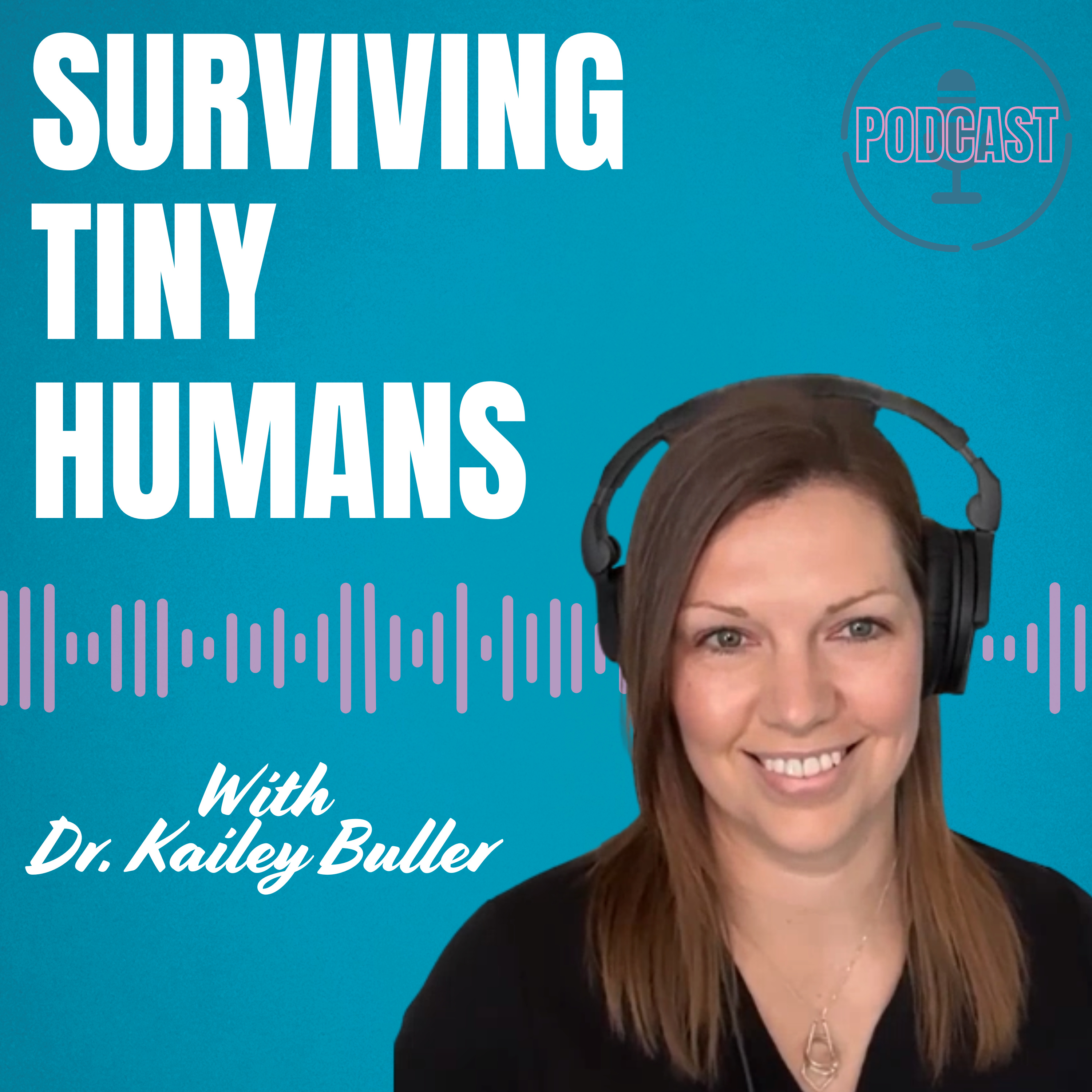
Surviving Tiny Humans: 10 Minute Triage for Newborns & New Parents
by Dr. Kailey Buller
Is this your podcast?Insights from recent episode analysis
Audience Interest
Podcast Focus
Publishing Consistency
Platform Reach
Insights are generated by CastFox AI using publicly available data, episode content, and proprietary models.
Most discussed topics
Brands & references
Total monthly reach
Estimated from 6 chart positions in 6 markets.
By chart position
- 🇩🇪DE · Parenting#1045K to 30K
- 🇮🇩ID · Parenting#853K to 10K
- 🇳🇬NG · Parenting#933K to 10K
- 🇵🇹PT · Parenting#125500 to 3K
- 🇮🇱IL · Parenting#173500 to 3K
- Per-Episode Audience
Est. listeners per new episode within ~30 days
6.3K to 30K🎙 ~2x weekly·19 episodes·Last published 3w ago - Monthly Reach
Unique listeners across all episodes (30 days)
13K to 59K🇩🇪51%🇮🇩17%🇳🇬17%+3 more - Active Followers
Loyal subscribers who consistently listen
5K to 24K
Market Insights
Platform Distribution
Reach across major podcast platforms, updated hourly
Total Followers
—
Total Plays
—
Total Reviews
—
* Data sourced directly from platform APIs and aggregated hourly across all major podcast directories.
On the show
From 10 epsHost
Recent guests
Recent episodes
Ep. 25 - When Should You Worry About Baby's Fever?
May 31, 2026
12m 23s
Ep. 24 - Meeting Your Own Expectations in Motherhood
May 24, 2026
12m 19s
Ep. 23 - Quick Wins for Life With a Newborn (with Jessica Lewis)
May 17, 2026
10m 34s
Ep. 22 - Infertility: How to Boost Your Chances & What Happens Next
May 10, 2026
11m 54s
Ep. 21 - Life With A Newborn Part 3: The First 30 Days
May 3, 2026
11m 33s
Social Links & Contact
Official channels & resources
Official Website
Login
RSS Feed
Login
| Date | Episode | Topics | Guests | Brands | Places | Keywords | Sponsor | Length | |
|---|---|---|---|---|---|---|---|---|---|
| 5/31/26 | Ep. 25 - When Should You Worry About Baby's Fever?✨ | baby feverparenting advice+4 | — | Acetaminophenibuprofen | — | baby feverparenting+6 | — | 12m 23s | |
| 5/24/26 | Ep. 24 - Meeting Your Own Expectations in Motherhood✨ | motherhoodADHD+4 | Jessica Lewis | — | — | sleep deprivationADHD+5 | — | 12m 19s | |
| 5/17/26 | Ep. 23 - Quick Wins for Life With a Newborn (with Jessica Lewis)✨ | newborn careADHD+3 | Jessica Lewis | Quick Wins for ADHD Momstheadhdmom.com | — | newbornADHD+5 | — | 10m 34s | |
| 5/10/26 | Ep. 22 - Infertility: How to Boost Your Chances & What Happens Next✨ | infertilityparenthood+5 | — | — | — | infertilityIVF+6 | — | 11m 54s | |
| 5/3/26 | Ep. 21 - Life With A Newborn Part 3: The First 30 Days✨ | newborn carefourth trimester+4 | — | Surviving Tiny Humans | the fourth trimester | newbornparenting+5 | — | 11m 33s | |
| 4/27/26 | EP. 20 - Baby Butts: Diaper Rash (and Eczema) and How to Manage at Home✨ | diaper rasheczema+3 | — | Surviving Tiny Humans | — | diaper rasheczema+3 | — | 8m 00s | |
| 4/19/26 | EP. 19 - All About Diapers: Baby Poops, Blood & More!✨ | diapersbaby poops+4 | — | Surviving Tiny Humans, The Book | — | diapersbaby poops+5 | — | 11m 38s | |
| 4/12/26 | Ep. 18 - Life With a Newborn, Part 2: The First 2 Weeks✨ | newborn carefirst two weeks+4 | — | Safe Sleep Without ShameThe Nightshift Playbook+1 | — | newbornparenting+7 | — | 11m 06s | |
| 4/5/26 | Ep 17 - Newborn Sleep Myth #7: They'll Grow Out Of It✨ | newborn sleepsleep myths+3 | — | Surviving Tiny Humans | — | newborn sleepsleep skills+3 | — | 10m 55s | |
| 3/29/26 | Ep. 16 - Life With Newborn, Part 1: The First 24 Hours✨ | newborn carefirst 24 hours+3 | — | Surviving Tiny Humans: The Messy Truth About Parenthood and Your Guide to Baby's First Year | — | newbornbirth+5 | — | 11m 42s | |
Want analysis for the episodes below?Free for Pro Submit a request, we'll have your selected episodes analyzed within an hour. Free, at no cost to you, for Pro users. | |||||||||
| 3/22/26 | Ep. 15 - Newborn Sleep Myth #6: Sleep Training Will Ruin Connection | 🔗 Free download: 7 Sleep Training Lies guide https://www.vitalswithdrbuller.com/sleep7We’re on Lie #6 of the 7 Sleep Training Lies series — and this one hits differently.The earlier lies were about fear of damage. This one is more personal: what if I lose the moments I actually love? The contact nap. The nurse-to-sleep snuggle. The one quiet part of the day where it’s just the two of you.In this episode I’m breaking down why sleep teaching doesn’t take connection away — it takes obligation away. There’s a big difference between choosing a contact nap because you want it, and holding your baby because there’s simply no other option.I also want to talk about something nobody really addresses: the difference between a baby who stops crying at night because they’ve learned to self-soothe, and a baby who stops crying because they’ve given up. Those are not the same thing — and knowing the difference matters.And at the end, I’m sharing two real moments from my own life where I threw the sleep plan out the window — and exactly what I did to get back on track without starting from scratch.In this episode: ∙ Why sleep teaching adds a skill without taking anything away ∙ Contact naps — when they’re a joy vs. when they’re a trap ∙ The shutdown response vs. genuine self-soothing ∙ Why your bedtime routine is actually your reset button ∙ The two things I did after travel and illness to get back on track fast🔗 Free download: 7 Sleep Training Lies guide | — | ||||||
| 3/15/26 | Ep. 14 - Formula 411: Brands, Bottles, and Everything Else | Nobody really teaches you about formula. You get a crash course in breastfeeding and then if formula enters the picture — whether it’s day two while you’re waiting for your milk, or month two because breastfeeding just isn’t working — you’re standing in the grocery store staring at a wall of cans with absolutely no idea what you’re looking at.So let’s fix that.In this episode, I break down everything you actually need to know about formula: which one to choose (spoiler: almost any of them are fine) what the different types of preparation mean and when they matterhow to store it safelyhow to clean bottles without losing your mindand how to know when it’s time to size up the nipple.And at the end, we’re talking about paced feeding — a simple bottle feeding technique that reduces gas, cuts down on spit up, and helps your baby start to learn their own hunger and fullness cues. You can use it with formula or expressed breast milk.No shame. No pressure. Just the information you needed someone to give you a long time ago.Grab a copy of Surviving Tiny Humans to get all of this (and way more!) to help you survive that first year with your baby. You can find it here: https://a.co/d/06q6EWNGOr check out the Formula Flowchart Quick Tool linked below — it walks you through choosing the right formula for your baby in about 30 seconds.https://www.vitalswithdrbuller.com/formula-flowchart | — | ||||||
| 3/8/26 | Ep. 13 - Latch, Supply, and Weight Loss: Your Breastfeeding 101 | Breastfeeding can be beautiful, frustrating, painful, confusing, time-consuming—or all of the above in the same 24 hours.In this episode, we walk through the basics of breastfeeding in a practical, no-shame way, covering: • what a good latch actually looks like • why a shallow latch is painful and often ineffective • how to know if baby is getting enough milk • when sleepy feeding, short feeds, or weight concerns might matter • what to do if you’re worried about low supply • breastfeeding more often vs pumping vs power pumping • galactagogues, supplements, and when to ask about medication • what to know about mastitis and common troubleshooting • whether breastfeeding really helps with postpartum weight lossThis episode is designed to help you understand the mechanics of breastfeeding without spiralling over every feed, every ounce, or every wet diaper.Free guide here: https://www.vitalswithdrbuller.com/low-milk-supply-read-this-before-you-panicKey takeaway:A painful latch is not something you just have to push through.Low supply has solutions worth trying.And breastfeeding does not have to be all intuition and guesswork.We also talk honestly about the reality that breastfeeding and weight loss are not nearly as predictable as people claim—and why your worth has absolutely nothing to do with what your body looks like postpartum.If you want an easy-reference tool for supply concerns, check out the free breastmilk supply guide here: https://www.vitalswithdrbuller.com/low-milk-supply-read-this-before-you-panicFollow the show so you don’t miss the next triage!Supplements: - leafy greens, oats, barley, and nuts - Fenugreek and Blessed Thistle - potentially beer (some non alcoholic options include Guiness 0.0, Erdinger Alkoholfrei and Bravus Oatmeal Dark) | — | ||||||
| 3/1/26 | Ep. 12 - Newborn Sleep Myth #5: Can sleep training ruin breastfeeding? | If you’re breastfeeding and even considering sleep training, this fear can feel overwhelming:What if sleep training harms my milk supply?What if my baby stops nursing?What if I ruin something that was already hard enough?In this episode of Surviving Tiny Humans, Dr. Kailey Buller carefully separates fact from fear.She breaks down:The difference between sleep training and night weaning (they are not the same thing)How you can teach sleep skills without removing feedsWhat healthy sleep fundamentals look like at different stages of developmentHow supply is established—and when longer stretches overnight are safeWhy reducing unnecessary overnight feeds doesn’t mean harming breastfeedingWhat changes once baby is established on solidsWe also talk about how chronic sleep deprivation affects stress—and how better sleep can improve your breastfeeding relationship.And at the end, Dr. Buller shares a fascinating fact about breastfeeding moms and overnight wake-ups that explains why this fear feels so intense in the first place.Key takeaway:Sleep training does not automatically mean fewer feeds.Night weaning is a separate decision.And once breastfeeding is established, healthy sleep and breastfeeding can absolutely coexist.You don’t have to choose between your baby’s sleep and your breastfeeding journey.If this episode helped, you’ll find a more comprehensive sleep roadmap linked below—so you can decide what works for your baby, your body, and your sanity.And be sure to follow the show so you don’t miss the next triage! | — | ||||||
| 2/22/26 | Ep. 11 - Bleeding, Bladder & Bowels: Adult Diapers & Other Postpartum Truths | Postpartum recovery is messy.And before we talk about anything else, let’s normalize something important:adult diapers are elite-level postpartum gear.In this episode of Surviving Tiny Humans: 10-Minute Triage for Postpartum and Newborn Care, Dr. Kailey Buller—ER and Labour & Delivery physician, mom of two, and author of Surviving Tiny Humans—walks you through what actually matters in those first weeks after birth.We’re talking about the real basics of recovery:What normal postpartum bleeding looks like—and when to seek careHow long bleeding should last (and when it’s no longer “normal”)Passing clots: what’s expected vs. what’s concerningUrinary leakage: common but not something you have to live withWhen to involve pelvic floor physiotherapyHow to survive your first postpartum bowel movementAnd at the end, Dr. Buller shares her top 3 postpartum recovery hacks—simple, practical changes that make those early weeks significantly easier (including a surprisingly effective bed-sheet trick).Key takeaway:Recovery is not glamorous.It is physical, hormonal, uncomfortable—and completely normal.You are not failing if it feels messy. It is messy.If this episode helped, check out Surviving Tiny Humans. It's jam PACKED with tips from friends and colleagues to help make the first year postpartum just a liiiiittle bit easier. 12 months. 12 topics. Zero judgement. https://a.co/d/0dS2OSOo | — | ||||||
| 2/15/26 | Ep. 10 - Newborn Sleep Myth #4: Sleep Training means "Cry It Out" | When parents hear “sleep training,” many immediately think one thing: cry it out.But are sleep training and "cry it out" really the same thing?In this episode of the Surviving Tiny Humans podcast, Dr. Kailey Buller breaks down one of the most common misunderstandings in baby sleep.We unpack:Why sleep training became synonymous with cry-it-out in the first placeThe difference between extinction, modified extinction (Ferber), and total extinctionWhy night weaning and sleep training are not the same thingParent-present methods like pick-up/put-down, the sleep ladder, and the Sleep Lady ShuffleWhy some crying is often part of learning—but that doesn’t mean neglectHow temperament and family capacity matter more than internet opinionsThis episode also introduces a flexible, customizable approach Dr. Buller calls the “Block Method”—a simple, developmentally appropriate system that allows you to choose: how long you might expect baby to go between feeds how much reassurance you provide and how much independence you’re ready forBecause sleep training isn’t one rigid method. It’s a spectrum of tools—and some families truly need those tools.Key takeaway:Sleep training is optional.Cry-it-out is one method—not the definition.And you’re allowed to choose the approach that protects both your baby’s sleep and your sanity.If this episode helped, take a look at the Sleep Quick Tools linked here: https://www.vitalswithdrbuller.com/sleep-quicktoolsThese are easy-to-implement supports that can helpdecipher night wakings navigate sleep regressionscreate a sustainable (and fair) overnight planOr, for more guidance on what to know and how to start supporting sleep, download the free “7 Lies You’ve Been Sold About Sleep Training” guide:https://www.vitalswithdrbuller.com/sleep7And, as always, be sure to follow so you don't miss the next episode! | — | ||||||
| 2/8/26 | Ep. 9 - Colic vs. "Normal" Crying -- What's Going On & What To Try | Newborn crying can feel endless — and when you’re sleep-deprived, it’s hard to know what’s normal and what might be something more.In this episode of Surviving Tiny Humans, Dr. Kailey Buller breaks down the difference between typical newborn crying (yes, it can be hours a day) and colic, using the classic “rule of threes” — and explains why colic isn’t really a diagnosis so much as a description of how much crying is happening.We’ll walk through the most common reasons babies cry excessively, including:an overstimulated nervous system (and how to use the 7 S’s to soothe)reflux (what to look for, and how to troubleshoot)an immature GI system (and simple ways to help)You’ll also learn one of the most practical, low-risk things to try if your baby is colicky or fussy, like reducing cow’s milk protein (not lactose) in your diet or choosing the right type of hydrolyzed formula.And at the end, Dr. Buller shares one of the only supplements with solid evidence for helping colic .If you’re in the trenches with a baby who won’t settle, this episode will help you feel less helpless and more clear on what’s worth trying next.If you want an even deeper breakdown, Surviving Tiny Humans covers colic and troubleshooting in more detail: https://a.co/d/0hNEhhnHResources mentioned: the 7 S’s, cow’s milk protein vs lactose, and the probiotic Lactobacillus Reuteri -- strain DSM 17938.And don't forget to follow the show so you don’t miss the next triage! | — | ||||||
| 2/1/26 | Ep. 8 - Newborn Sleep Myth #3: Can Sleep Training Ruin Attachment? | Does sleep training harm your baby’s attachment… or their brain?If you’ve ever heard “crying raises cortisol, cortisol is the stress hormone, so sleep training is harmful” and felt completely uneasy about the idea of prioritizing sleep — this episode is for you.In this 10-Minute Triage, Dr. Kailey Buller slows the fear down and breaks it apart with calm, evidence-based clarity. We’ll cover what secure attachment actually is (and what it isn’t), why cortisol gets misunderstood online, and what high-quality research shows about sleep training and long-term outcomes — including when there’s some crying involved.You’ll also hear what is associated with harm (hint: chronic stress, severe sleep deprivation, and untreated parental distress matter), why short stress isn’t the same as trauma, and when sleep training might not be the right move right now.If you’ve been stuck in the exhausted-anxious loop, afraid to make any change in case you “do damage,” consider this your permission to be precise — not dramatic.Grab the “7 Sleep Training Lies” guide linked here: https://www.vitalswithdrbuller.com/sleep7Next up: Sleep training doesn’t have to mean cry-it-out — we’ll talk options and how to choose a method that fits your baby and your nervous system. | — | ||||||
| 1/25/26 | Ep. 7 - Sex After Babies: Pleasure, Not Pressure | Sex and intimacy after having a baby can feel… different. Your body has changed. Your hormones are shifting (especially if you’re breastfeeding). You’re exhausted. Your nervous system is stuck in care-mode. And somehow you’re supposed to just “get back to normal” at six weeks? Nope.In this episode, we talk about what’s actually happening postpartum that affects desire and comfort, why there’s no timeline you’re meant to follow, and how pressure—whether it comes from a partner, society, or yourself—often makes everything worse.We’ll also reframe what intimacy can look like right now (hint: it does not have to mean sex), how to tell when you might be ready to try physical intimacy again, and why pain is information—not something you should push through.Plus: a direct note for partners—because one of the biggest libido killers after baby isn’t hormones… it’s mental load. Support isn’t “extra.” It’s the foundation.If intimacy feels awkward, off your radar, or just not worth the effort right now—this episode is your permission slip to slow down.Bottom line: Intimacy after baby should be guided by pleasure, not pressure. There is no deadline.Free resources for postpartum recovery and reconnecting are linked here: https://www.vitalswithdrbuller.com/sexIf this helped, follow the show so you don’t miss the next triage. | — | ||||||
| 1/18/26 | Ep. 6 - Newborn Sleep Myth #2: Can You Sleep Train Before 1 Year? -- Or Should You Wait? | One of the most common pieces of sleep advice parents hear is this:“You shouldn’t sleep train before one year old.”But is that actually true—and could waiting sometimes make things harder?In this episode of Surviving Tiny Humans: 10-Minute Triage for Your Baby, Body, and Mind, Dr. Kailey Buller breaks down where this belief comes from, why it persists, and what the evidence actually says.We talk about:Why sleep skills are regulation skills, not advanced cognitive tasksHow babies begin learning sleep fundamentals from the very beginningWhat can happen when parents delay all sleep teaching out of fear or guiltWhy gentle, age-appropriate sleep teaching is often easier earlier, not laterWhat sleep teaching does (and does not) look like in young babiesHow sleep needs—and appropriate strategies—change from newborns to 4–5 months and beyondThis episode walks through practical, developmentally appropriate approaches by age and explains how consistency, environment, routines, and small pauses can support healthier sleep without harming attachment or connection.Dr. Buller also shares her own experience navigating severe sleep deprivation—and why, for some families, structured sleep training can be safer and healthier than the alternative.Key takeaway:Sleep skills don’t suddenly become “safe” at one year old.There are ways to support healthy sleep—gently and responsively—much earlier than that.And sleep training is optional, but sleep deprivation doesn’t have to be the cost of avoiding guilt.Download the free “7 Lies You’ve Been Sold About Sleep Training” guide linked here: https://www.vitalswithdrbuller.com/sleep7And follow the show so you don’t miss upcoming episodes breaking down sleep methods, night feeding, and how to protect connection while teaching sleep. | — | ||||||
| 1/12/26 | Ep. 5 - Co-Sleeping Triage: A Reality Check | Should you—or should you not—co-sleep with your baby?Most parents have heard the warnings: don’t do it, it’s dangerous, never even consider it. But real life doesn’t always match the ideal—and avoiding the conversation entirely can actually make things riskier.In this episode of Surviving Tiny Humans: 10-Minute Triage for Your Baby, Body, and Mind, Dr. Kailey Buller—physician, mom of two, and author of Surviving Tiny Humans—breaks down what really matters when it comes to co-sleeping, without shame or scare tactics.We cover:How common co-sleeping actually is (even when no one admits it)Why “accidental” sleep on couches or chairs can be higher risk than planned co-sleepingWhat safe sleep truly means—and how co-sleeping fits into the bigger picturePractical harm-reduction steps if co-sleeping is happeningHow to make safer choices in imperfect, exhausted, real-world situationsThis episode isn’t about telling you what you should do—it’s about helping you make informed decisions and avoid riskier setups when reality hits at 3 a.m.Key takeaway:Ideal sleep is great when it’s possible.But when it’s not, the safest available option matters more than guilt or shame.Because safe sleep isn’t one rigid rule—it’s thoughtful triage.If this helped, follow the show so you don’t miss upcoming episodes on setting up realistic sleep environments and navigating early-parent exhaustion! | — | ||||||
| 1/5/26 | Ep. 4 - Breastmilk vs. Formula -- What Actually Matters | Is breastmilk really better than formula?And if it is… why does this question feel so loaded?In this episode of Surviving Tiny Humans: 10-Minute Triage for Your Baby, Body, and Mind, Dr. Kailey Buller—physician, mom of two, and author of Surviving Tiny Humans—breaks down the medical reality, the emotional weight, and the systemic pressures behind infant feeding decisions.We talk honestly about:The actual medical differences between breastmilk and formulaWhy, for most healthy babies, those differences are smaller than you’ve been led to believeThe most common barriers to breastfeeding—and why they’re usually systems failures, not personal onesWhy “fed is best” often gets said… but not truly supportedThe benefits and trade-offs of both breastmilk and formulaWhy feeding doesn’t have to be all-or-nothing (hello, combo feeding and expressed breast milk)This episode also tackles the myth that not breastfeeding is a personal failure—and why praising breastmilk without supporting women (paid leave, access to lactation care, partner support, realistic workplaces) misses the entire point.Key takeaway:Feeding your baby is not a morality contest.You don’t owe anyone an explanation.Your job is to nourish your baby and protect your family system.Whether you breastfeed, formula feed, pump, combo feed, or change plans along the way—you are doing your job.If this episode helped, hit subscribe and join me for the next dose of sanity. | — | ||||||
| 1/5/26 | Ep. 3 - Newborn Sleep Myth #1: You Should Never Let Your Baby Cry | Few parenting beliefs are as emotionally loaded as this one:You should never let your baby cry.For many parents, this single idea creates exhaustion, anxiety, and deep guilt—along with the fear that one wrong decision could cause permanent harm. In this episode of Surviving Tiny Humans: 10-Minute Triage for Your Baby, Body, and Mind, Dr. Kailey Buller—physician, mom of two, and author of Surviving Tiny Humans—slows this myth down and triages it properly.We unpack where this belief comes from, what the evidence actually says, and—most importantly—how to tell the difference between responsive waiting and neglect (because they are not the same).In this episode, you’ll learn: • Why crying is communication—not automatically harm • The difference between protest, frustration, and true distress • What research says about crying, cortisol, attachment, and brain development • Why responding doesn’t always mean intervening immediately • How pausing—when done safely—can actually help babies learn sleep skills • Why your own nervous system, tolerance, and values matter tooWe also talk honestly about the emotional side of this: listening to your baby cry can feel unbearable, even when something is safe. And no parenting approach should force you to choose between guilt and exhaustion.Key takeaway:Crying alone is not necessarily harmful.But fear, shame, and chronic exhaustion absolutely are.If this episode helped, download the free “7 Sleep Training Lies” guide for a simple, reassuring breakdown of this myth and the others. You can find it here: https://www.vitalswithdrbuller.com/sleep7And follow the show so you don’t miss the next triage -- where we switch gears for a minute to talk about that age old question: is breastmilk superior to formula? | — | ||||||
| 1/5/26 | Ep. 2 - Should You Sleep Train Your Baby -- Or Is It Harmful? | Few parenting topics carry as much confusion, fear, and guilt as sleep training. Is it cruel? Does it harm attachment? Should you avoid it completely—or is avoiding sleep help actually making things worse?In this episode of Surviving Tiny Humans: 10-Minute Triage for Your Baby, Body, and Mind, Dr. Kailey Buller—physician, mom of two, and author of Surviving Tiny Humans—kicks off a new mini-series called “7 Myths”, starting with the myths that keep parents stuck and exhausted when it comes to baby sleep.We reframe “sleep training” as sleep teaching—a skill that can be taught in many developmentally appropriate, responsive, and loving ways—and break down what the evidence actually says.In this episode, you’ll learn:Why sleep training isn’t automatically harmful or cruelWhat research says about attachment, brain development, and cryingWhy chronic sleep deprivation matters more than most parents are toldThe difference between responsive waiting and neglectWhy there’s no single “right” method—and how to find what fits your familyYou’ll also hear a practical, no-pressure starting point for what to do tonight—without becoming a sleep expert or making drastic changes.Key takeaway:Sleep is not a luxury. It’s a biological need—for babies and parents.And there is no prize for suffering.Download the free companion guide “7 Lies You’ve Been Sold About Sleep Training” here: https://www.vitalswithdrbuller.com/sleep7And subscribe so you don’t miss the next episode—where we dive deeper into the myth that trips parents up the most. | — | ||||||
| 1/5/26 | Ep. 1 - Emergency ABCs: Do I need the ER? Or can I stay home? | When your baby seems off, it’s hard to know whether you’re dealing with a true emergency… or something that feels scary but can safely wait. This episode is about helping you make that call with clarity and confidence.In this 10-minute triage, Dr. Kailey Buller—physician, mom of two, and author of Surviving Tiny Humans—walks you through the same simple framework used by paramedics and emergency departments every day: The Primary Survey, or Emergency ABCs.You’ll learn:How to recognize dangerous breathing vs normal baby noisesWhat “circulation” means at home (hydration and colour)When behaviour changes really matter—and when to trust your gutWhy inconsolable crying is always a valid reason to seek careThe key fever situations that should never be ignoredMost importantly, you’ll leave with a grounding checklist to ask yourself in stressful moments:Are they breathing normally, having wet diapers, and alert and consolable?If yes—you likely have time to think.If no—you go to the ER.If you would like my free, no-thinking-required ABC flowchart you can download it here: https://www.vitalswithdrbuller.com/infant-er-flowchartBecause being cautious isn’t overreacting—and you’re never wasting anyone’s time by keeping your baby safe.Subscribe so you don’t miss the next triage. | — | ||||||
Showing 25 of 26
Pitch Fit is a Pro feature
See how bookable this show is for guests, which brands already advertise, the per-episode ad value, and the best-fit guest and sponsor profile. The numbers are blurred on the free plan.
How readily this show books outside guests like you.
How proven this show is for host-read sponsorships.
For Guests
ProFor Advertisers
ProUpgrade to Pro to unlock guest cadence, sponsor categories, fit scores, and per-episode ad value for this show.
Chart Positions
6 placements across 6 markets.
Chart Positions
6 placements across 6 markets.