
Insights from recent episode analysis
Audience Interest
Podcast Focus
Publishing Consistency
Platform Reach
Insights are generated by CastFox AI using publicly available data, episode content, and proprietary models.
Est. Listeners
Based on iTunes & Spotify (publisher stats).
- Per-Episode Audience
Est. listeners per new episode within ~30 days
1 - 1,000 - Monthly Reach
Unique listeners across all episodes (30 days)
1 - 5,000 - Active Followers
Loyal subscribers who consistently listen
1 - 500
Market Insights
Platform Distribution
Reach across major podcast platforms, updated hourly
Total Followers
—
Total Plays
—
Total Reviews
—
* Data sourced directly from platform APIs and aggregated hourly across all major podcast directories.
On the show
Recent episodes
Educator & Parent conversations
Apr 14, 2026
Unknown duration
Not 'Just Playing'
Mar 13, 2026
Unknown duration
From Babble to Words
Feb 11, 2026
Unknown duration
Let's Chat Routines
Jan 29, 2026
Unknown duration
Reflections & Learnings of 2025
Dec 17, 2025
Unknown duration
Social Links & Contact
Official channels & resources
Official Website
Login
RSS Feed
Login
| Date | Episode | Description | Length | ||||||
|---|---|---|---|---|---|---|---|---|---|
| 4/14/26 | 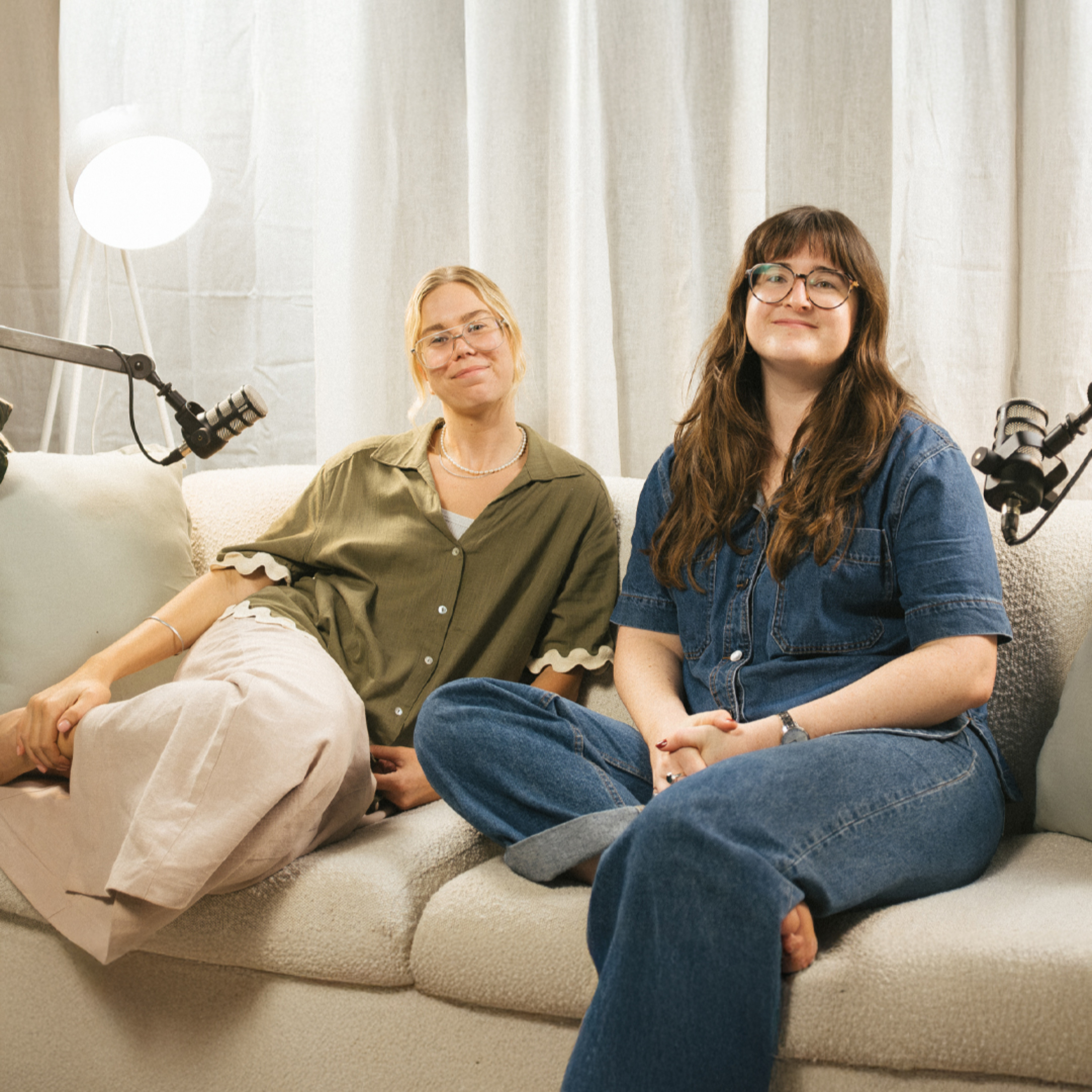 Educator & Parent conversations | This episode explores how educators can confidently identify concerns, gather meaningful observations, and communicate these with families in a supportive and collaborative way.It begins by acknowledging that educators often feel unheard, while also recognising the deep understanding they have of children through daily interactions.The discussion highlights the importance of:Consistent observations across environments and activitiesFocusing on functional impacts (e.g., frustration, participation, social interaction)Tracking observations over time rather than comparing childrenUsing developmental milestones as a guide, not a measuring stickThe episode then unpacks how to approach conversations with parents, including:Starting with open-ended questions to invite collaborationClearly explaining what you’re seeing and how it impacts the child day-to-dayGiving real, specific examples across areas like speech, understanding, and sensory needsFinally, it provides guidance on next steps✨ Overall, the episode focuses on building trust, sharing insights clearly, and supporting families to access the right help early—without overwhelm or judgement. | — | ||||||
| 3/13/26 | Not 'Just Playing' | Ever wondered what actually happens in a play-based speech therapy session? From the outside it can sometimes look like we’re “just playing” but play is far more powerful than it appears.In this episode, we myth-bust the common perception that therapy should look serious, structured, or separate from play. The truth is that in effective speech pathology sessions, therapy and play are often completely intertwined. We explore the key characteristics that make play a powerful learning experience: joyful, meaningful, actively engaging, iterative, and socially interactive. We also talk about the difference between adult-led play and child-led play, and why both have an important place in therapy. If you’ve ever wondered why your child’s therapy session looks like play, or questioned whether “just playing” can really make a difference, this episode will help you understand why play is one of the most powerful tools we have for supporting children’s learning and development.Links:Learning through play: a review of the evidence.https://cms.learningthroughplay.com/media/wmtlmbe0/learning-through-play_web.pdf | — | ||||||
| 2/11/26 | From Babble to Words | In this episode of Talking Together, we’re diving into speech and language development for babies under 12 months. We touch on what’s typical, what to watch for, and how to support your bub’s communication in everyday life.We cover what you can actually do to help: how to talk to your baby, why imitation and repetition matter, simple ways to build turn-taking, and how to make play and book reading powerful for early language.Finally, we chat about using Australian Key Word Sign and discuss when to seek support, including why hearing checks matter, why “wait and see” isn’t always helpful, and where to find trusted milestone checklists and resources.Links:Raising Children Network Baby Development and Developmental Milestones: https://raisingchildren.net.au/guides/first-1000-days/development/baby-developmentSpeech Pathology Australia Communication Milestones: https://www.speechpathologyaustralia.org.au/Public/Public/Comm-swallow/Speech-development/At-12-months.aspx | — | ||||||
| 1/29/26 | Let's Chat Routines | Welcome back to the first 2026 episode of Talking Together! This episode, Hermione and George chat simple, real-life routines that foster connection between children and the adults in their world. Drawing on ideas shared by parents, educators, and other allied health professionals, we explore how everyday moments like sitting at the dinner table, sharing highs and lows and family rituals can build language, support problem-solving and make connection thrive. Links:Klemfuss JZ, Peplak J. The influence of parent conversation goal and structure on children's event reports. Cogn Dev. 2023 Apr-Jun;66:101333. doi: 10.1016/j.cogdev.2023.101333. Epub 2023 Apr 25. PMID: 39238806; PMCID: PMC11377029.https://pmc.ncbi.nlm.nih.gov/articles/PMC11377029/#S24 | — | ||||||
| 12/17/25 | Reflections & Learnings of 2025 | Note: This episode has some blurry video content and the video will cut out about 20 minutes in. This episode wraps up some reflections and learnings from 2025. We chat about mindset shifts, what kids have taught us and what we have changed in our practice over the year | — | ||||||
| 11/19/25 | Sounds Before Letters: Teach these skills for reading success | In this week’s Talking Together, Hermione and Georgia unpack the foundation of reading: phonological awareness (PA)—all the sound play that comes before letter–sound correspondence. You’ll get simple ways to practise PA in everyday routines (no worksheets, no apps), plus a quick chat about the rise in sensory needs and why more outdoorsy, heavy-work play still matters.What You'll Learn:PA: what it is and why it sits under early reading and spelling.The core skills (in order): rhyming → alliteration → syllables → first/last/middle sounds → sorting sounds → segmenting → blending.How to model it naturally: book time, car time, line-up games, “sound hunts”, name play.Teacher/parent traps to avoid: don’t lean on letters too soon; skip tricky clusters for sound sorts (e.g., tr- in “tree”).When progress stalls: meet kids where they’re at, shrink the step, then level up.Sensory link: why less outdoor play can show up as attention/“rough play”—and what to add back in.Show notes:Grattan Institute: Australia’s reading fail — https://grattan.edu.au/news/australias-reading-fail/Nkurunziza, Sheila. (2024). The Role of Phonological Awareness in Early Reading Development. European Journal of Linguistics, 3, 15–26. https://www.researchgate.net/publication/382213485_The_Role_of_Phonological_Awareness_in_Early_Reading_Development | — | ||||||
| 11/11/25 | Paradigm Shift: Rethinking “Behaviour” with Dr Ross Greene’s CPS Model | We recap Dr Ross Greene’s Collaborative & Proactive Solutions (CPS) model and share five mindset shifts to reduce meltdowns by solving the real problem: unmet expectations + lagging skills.You’ll learn:How to spot “frustration responses” (and why labels backfire)When calm corners help—and when they’re just lateHow to build problem-solving skills through collaborationWhy fair ≠ equal (and how to explain that to kids)New episodes weekly—subscribe and share with an educator or parent who needs this <3Lives in the balancehttps://livesinthebalance.org/ | — | ||||||
| 11/3/25 | Speech Milestones & Easy Practice | This week we’re talking speech sounds. We chat about what’s typical for two year olds up to six year olds, what might need support and simple strategies you can start today. We unpack articulators (lips, tongue, teeth, jaw), voiced vs voiceless pairs (s/z, f/v), and why coarticulation makes “water” sound like “warda.” You’ll get practical modelling tips, playful practice ideas (in the car, at the park, during books), and when to consider seeing a speech pathologist. Links:Age of acquisition chart (https://cdn.csu.edu.au/__data/assets/pdf_file/0003/3330309/world-treehouse-chart.pdf) | — | ||||||
| 10/28/25 | Helping Kids (and Parents) Feel Ready to Start School | It’s our Halloween episode…but after the costumes and dad-jokes, we dive into something all parents ask us about: starting school. If your little one is transitioning to Prep/Kindergarten, this chat is your gentle, practical guide. We cover independence (bags, lunchboxes, self-care), resilience (handling big feelings, problem-solving, asking for help), and why phonological awareness (rhyming, syllable claps, sound hunts) is the pre-literacy superpower. You’ll get easy, everyday ways to model routines, use visual schedules and “think aloud”, plus books and free resources to make the transition feel familiar, not frightening. Listen now, share with a friend, and check the show notes for our school-starter resource list.In this episodeIndependence before Day 1: bags, lunchboxes, toilets, buttons, shoes (velcro vs laces), and morning routines.Resilience in real life: modelling “big feelings,” normalising nerves, and praising effort over outcome.Problem-solving you can model today: “I wonder…” statements, collaborative choices, and turning routine changes into learning.Phonological awareness made fun: rhyming games, syllable claps, I-Spy by sounds, sound sorts, scavenger hunts, and Lego.Social stories, transition visits, and making the new feel known.The inclusive shift: “Is my child ready for school?” → “Is school ready for my child?”LinksNSW Department of Education: https://education.nsw.gov.au/schooling/parents-and-carers/going-to-school/getting-ready-for-school/starting-primary-schoolQLD Department of Education: https://www.qld.gov.au/education/earlychildhood/prep/preparingABC Kids Early Education (Bluey episode resources): https://www.abc.net.au/abckids/early-education/bluey-early-education-resources/starting-school | — | ||||||
| 10/21/25 | Raising Inclusive and Empathetic Kids | In the final episode of our Neurodiversity series, we share simple, real-life ways to raise inclusive kids—at home, in kindy, and everywhere in between. From modelling language and emotions to “I wonder…” prompts, books, and AAC-friendly tips, this is your practical guide to turning curiosity into compassion.This week, we answer a big parent/educator ask: How do I help children accept, include, and support neurodivergent peers—without making it awkward or performative?We cover:Modelling inclusion in everyday life (and thinking aloud as you do)Teaching empathy: naming feelings in faces and bodiesTalking about differences & similarities (sensory needs, routines, play)Normalising multiple communication modes (speech, AAC, sign, bodies)Using “I wonder…” statements to invite—not force—social connectionTurning “disruptions” into teachable moments in the classroomSimple ways kids can be a good friend (persistence, shared ideas, play alongside)Book reading: starting with stories when you don’t know where to start💡 Parent/educator takeaway: Inclusion is mostly modelling + language. Narrate what you notice, invite kids to wonder, and celebrate both differences and overlaps. | — | ||||||
Want analysis for the episodes below?Free for Pro Submit a request, we'll have your selected episodes analyzed within an hour. Free, at no cost to you, for Pro users. | |||||||||
| 10/13/25 | Echolalia & Gestalt Language: A Different Way of Learning to Talk | In Episode 2 of our Neurodiversity-Affirming Care series, we explore one of the most misunderstood parts of language development: Echolalia and Gestalt Language Processing (GLP).You’ll learn:What Echolalia really is — and why it’s more than just repeatingHow some children learn language in chunks (gestalts) rather than word by wordWhy scripted language from TV shows, books, or songs can be meaningful communicationThe stages of Gestalt Language ProcessingPractical strategies to support Gestalt Language Processors at home and in the classroomWhy phrases like “say thank you” might not help — and what to do insteadWhether you're a parent, educator, or support worker, this episode offers real-world insights and affirming practices to connect with kids who communicate differently. | — | ||||||
| 10/6/25 | Neurodiversity-Affirming Practise: What Parents & Educators Need to Know | Content warning: Episode includes discussion of mental health, anxiety and mention of self-harm. In this powerful and emotional episode of Talking Together, Hermione and George dive deep into neurodiversity-affirming practise, a significant shift happening not only in speech pathology, but wider healthcare, education and our community.They cover:What "neurodiversity-affirming practise" actually meansWhy old therapy models (like ABA) can be harmfulThe dangers of masking and its mental health impactWhat parents should look for in a therapistHow schools need to evolve How language and identity matter deeply to neurodivergent kidsWith powerful personal stories, honest reflection, and up-to-date research, this episode is a must-listen for anyone supporting neurodivergent children.Plus: A crash course on terms like “neurokin”, “ADHDer”, “identity-first language”, and the “double empathy problem”.Whether you're a parent, teacher, therapist, or just someone trying to understand — this is the episode that will change how you see neurodiversity forever.References and Links:1. Crompton CJ, Ropar D, Evans-Williams CV, Flynn EG, Fletcher-Watson S. Autistic peer-to-peer information transfer is highly effective. Autism. 2020 Oct;24(7):1704-1712. doi: 10.1177/1362361320919286. Epub 2020 May 20. PMID: 32431157; PMCID: PMC7545656.2. Crompton, C.J., Foster, S.J., Wilks, C.E.H. et al. Information transfer within and between autistic and non-autistic people. Nat Hum Behav 9, 1488–1500 (2025). https://doi.org/10.1038/s41562-025-02163-z3. Diagnosis of common health conditions among autistic adults in the UK: evidence from a matched cohort studyO'Nions, Elizabeth et al.The Lancet Regional Health – Europe, Volume 41, 100907. https://www.thelancet.com/journals/lanepe/article/PIIS2666-7762(24)00073-5/fulltext4. Chazin KT, Ledford JR, Wilson-Moses JM, Rajaraman A, Juárez AP. Centering Autistic Perspectives: Social Acceptability of Goals, Learning Contexts, and Procedures for Young Autistic Children. J Autism Dev Disord. 2025 Mar;55(3):812-831. doi: 10.1007/s10803-024-06242-4. Epub 2024 Feb 17. PMID: 38367102. | — | ||||||
| 9/29/25 | Growth Mindset: How to Help Kids Build Resilience & Confidence | In this episode of Talking Together, we dive into the power of growth mindset and why it’s the secret to helping kids (and adults) tackle challenges with confidence.Discover the difference between a fixed and growth mindset, and how a simple word like “yet” can completely transform a child’s mindset.In this conversation, we cover:• What a growth mindset really means• The link between growth mindset, resilience, and neuroplasticity• How to shift kids from fearing failure to embracing challenges• Practical ways to encourage effort over outcome• How this approach supports children with speech and language difficultiesIf you’ve ever heard a child say “I can’t do it”, this episode will show you how to turn that into “I can’t do it…YET.” | — | ||||||
| 9/25/25 | Speech Pathology Myths Every Parent Needs to Hear | From bilingualism “causing delays” to whether AAC stops kids from talking, in this episode, we’re busting the biggest myths in speech pathology. We reveal surprising statistics about early intervention, school readiness, and what really matters when it comes to speech intelligibility. If you’re a parent, educator, or just curious about child development, this chat will change the way you think about these speech and language topics. | — | ||||||
| 9/11/25 | Childcare Data Reveals How Kids Are Tracking | In this episode, we dive deep into the latest Australian Early Developmental Census data. With only 52.9% of children developmentally on track by prep, we explore what’s going wrong in early childhood education, the pressure on kindy educators, and why so many kids are entering school unprepared.We also share real-world stories from speech therapy sessions, discuss brain development before age 5, and reveal how overwhelmed educators are doing their best in survival mode. Plus, we introduce practical solutions and resources to help kids thrive before they hit the classroom.Australian Early Developmental Census: https://www.aedc.gov.au/data-hub/public-data/2024-aedc-results | — | ||||||
| 9/4/25 | Using Questions to Support Language Development | In this episode, we dive into what questions to ask your child that matches their language skills and supports their language development. Discover easy and practical strategies used by speech pathologists to encourage engagement, build understanding and develop a child’s communication. Whether you’re a parent or an educator, these tips can transform the way you connect with your child in book reading and play. | — | ||||||
| 8/28/25 | The ONE THING Teachers Want You To Prioritise Before School | In this episode of Talking Together, we welcome a very special guest - George’s mum and experienced teacher, Jo! With over 30 years of teaching experience, Jo shares her passion for reading and reveals why it’s the single most powerful thing parents can do to set their kids up for success in school and life.From boosting vocabulary and comprehension to developing empathy and emotional intelligence, Jo explains how even 15 minutes of reading a day can transform a child’s brain and future. Plus, we discuss:• The 30-million-word gap and why it matters• How shared reading builds lifelong social and critical thinking skills• The surprising connection between book reading and empathy• How to spark kids’ love for reading without forcing it• Why screen time is stealing more than just attention spansWhether you’re a parent, educator, or simply want to understand how to help kids thrive, this episode is packed with practical advice and classroom insights.*Note: Unfortunately we had a technical error with Hermione's camera towards the end of the episode. | — | ||||||
| 8/20/25 | Supporting Smooth Transitions | Ever struggled to get your child to leave the park, pack up a toy, or adjust to a new routine without big emotions or meltdowns?In this episode of Talking Together, we unpack why transitions can be tough for kids and share strategies to make them easier.Learn how to:• Avoid common mistakes (bribes, countdown pressure, and more)• Use visuals, songs, and sensory input to prepare for change• Co-regulate during big feelings• Create safe, predictable routines while still teaching flexibilityWhether it’s moving between activities, leaving daycare, or starting school, these practical tools will help you and your child feel regulated and more connected through every transition. | — | ||||||
| 8/20/25 | Why Visuals Are Our Holy Grail! | Experiencing challenges with transitions, routines, or supporting big emotions at home or in kindy?In this episode of Talking Together, we dive into why visuals are a game-changer for kids’ understanding, behaviour, and communication.👀 You’ll learn:• The different types of visuals (cards, real-life photos, AAC, social stories, schedules)• Why visuals don’t hinder speech and language—they boost it• How to create fun, personalised visual schedules and social stories• Practical ways to use visuals for independence, choice, and emotional regulation🧩 Whether you’re a parent or educator, this episode will show you how to use visuals to prepare, support, and empower your child every day. | — | ||||||
| 8/20/25 | Unpacking Speech Pathology Assessment | In this episode of Talking Together, we’re pulling back the curtain on speech assessments. From pre-assessment prep, what actually happens during the session and to what comes after, we guide you through every step of the process. Whether your child is in daycare or gearing up for school, this chat will help you feel prepared, confident, and ready to support your child through their first assessment. | — | ||||||
| 8/20/25 | Building Language, No Toys Needed! | Want to help your toddler increase their communication without buying new toys?In this episode of Talking Together, we share practical, evidence-based strategies for parents and educators to boost language skills during everyday routines.Perfect for ages 2 to 4 years, you’ll learn:• How to model language (and why it works better than asking questions)• The first 50 words and what “counts” as a word• Simple bath time, sheet games, and kitchen activities for building vocabulary• The secret to word combinations and why verbs are EVERYTHING• Fun verbal routines and songs that make language learning effortlessNo flashcards. Just fun, connection, and natural language development. | — | ||||||
| 8/20/25 | Meet Your Speechies: Our Journey, Passion, and Defining Speech vs Language | Welcome to the first-ever episode of Talking Together !Meet your hosts, Hermione and George - two paediatric speech pathologists on a mission to educate and empower parents and childcare educators.In this episode you'll hear about:• Our journey to becoming speechies • How we discovered our passion for helping kids communicate• The difference between speech and language (and why most people mix them up)• What you can expect from future episodesGot a question or topic you’d love covered? Submit it via Instagram (@houseofspeech_).From our couch to yours, let’s bridge the gap in child communication support. | — | ||||||
Showing 22 of 22
Sponsor Intelligence
Sign in to see which brands sponsor this podcast, their ad offers, and promo codes.
Chart Positions
1 placement across 1 market.
Chart Positions
1 placement across 1 market.