

Insights from recent episode analysis
Audience Interest
Podcast Focus
Publishing Consistency
Platform Reach
Insights are generated by CastFox AI using publicly available data, episode content, and proprietary models.
Most discussed topics
Brands & references
Est. Listeners
Insufficient chart data. Estimates will improve as the show charts.
- Per-Episode Audience
Est. listeners per new episode within ~30 days
N/A🎙 Weekly cadence·104 episodes·Last published 6mo ago - Monthly Reach
Unique listeners across all episodes (30 days)
N/A - Active Followers
Loyal subscribers who consistently listen
N/A
Market Insights
Platform Distribution
Reach across major podcast platforms, updated hourly
Total Followers
—
Total Plays
—
Total Reviews
—
* Data sourced directly from platform APIs and aggregated hourly across all major podcast directories.
On the show
From 1 epsHost
Recent guests
Recent episodes
TTPod 5.4: "Journey of a Candidate Town Planner" - In Conversation with Tunisia Cassim
Dec 17, 2025
1h 06m 33s
TTPod 5.3: "The Other Side of the Tracks" In Conversation with Transnet Executive - Yolisa Kani
Nov 14, 2025
Unknown duration
TTPod 4.7: "Lines, Wines and Tears!" - the ups and downs of Johannesburg's post-2000 Metro Planning Policy
Oct 27, 2024
Unknown duration
TTPod 4.6: iGoli's Post-2000 Metro Planning Generations and Perspectives - Intro Episode
Oct 7, 2024
Unknown duration
TTPod 2.4: "Free-wheeling" – Reshaping places and equity through our streets and spaces: A Conversation with Open Streets MD: Kirsten Wilkins
May 30, 2022
Unknown duration
Social Links & Contact
Official channels & resources
Official Website
Login
RSS Feed
Login
| Date | Episode | Topics | Guests | Brands | Places | Keywords | Sponsor | Length | |
|---|---|---|---|---|---|---|---|---|---|
| 12/17/25 | 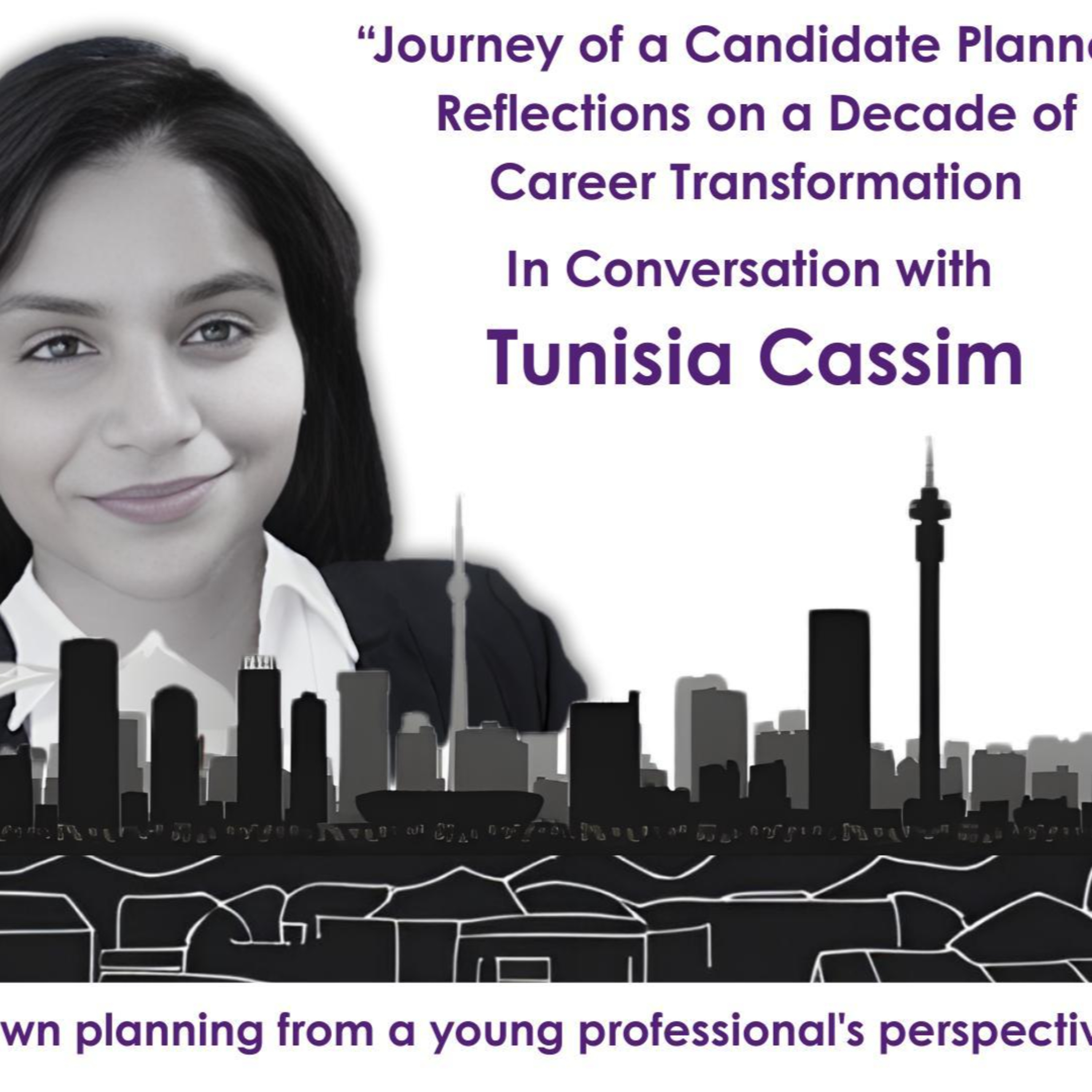 TTPod 5.4: "Journey of a Candidate Town Planner" - In Conversation with Tunisia Cassim✨ | urban planningresilience+4 | Tunisia Cassim | South African Council for PlannersJourney of a Candidate Town Planner | Tshwane | town plannerresilience+5 | — | 1h 06m 33s | |
| 11/14/25 | 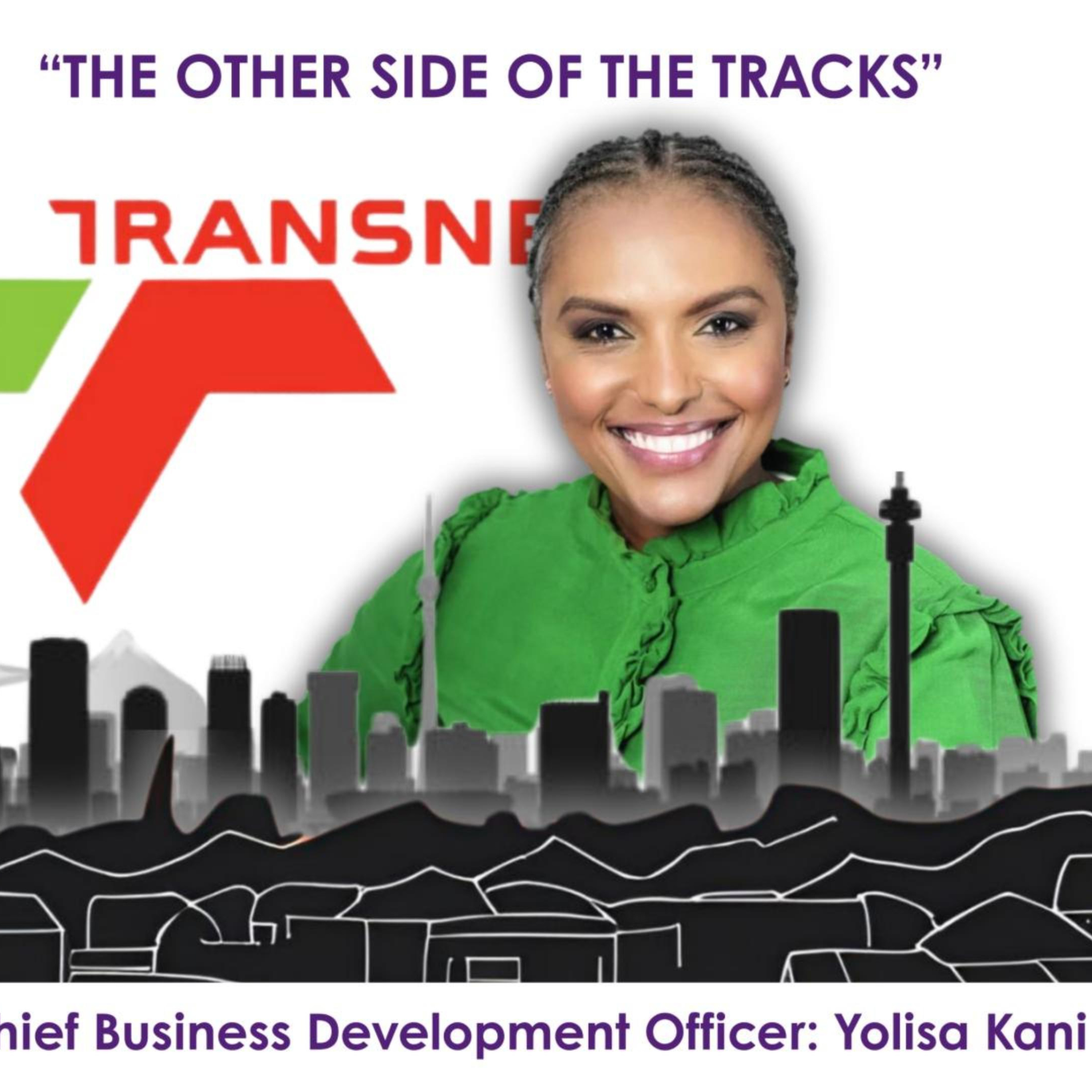 TTPod 5.3: "The Other Side of the Tracks" In Conversation with Transnet Executive - Yolisa Kani | In this TTPod episode we’re catching up with someone who’s become a real friend of the podcast and a standout leader in South Africa’s public sector: Yolisa Kani. She’s back with me in Cape Town, bringing her trademark energy and a wealth of experience from both government and the private sector. If you’ve followed Yolisa’s journey, you’ll know she’s spent decades at the forefront of transformation—blending policy, stakeholder negotiation, and commercial leadership to drive real change in how people and goods move across the country. After a four-year stint leading public policy for Uber in Southern Africa she re-entered the public sector, taking on the pivotal role of Chief Business Development Officer at Transnet. In this episode she reflects on: * The launch of LeaseCo, which aims to mobilize rolling stock, invite third-party operators, and free up strategic assets for broader development. * The cultural and leadership shifts happening within Transnet—and what that means for customers, cities, and the economy over the next 12 to 36 months. * Practical steps being taken to turn surplus Transnet property into real urban opportunities, and how the company is responding to calls for more flexible, mixed-use developments near transport nodes. We conclude with Yolisa’s candid reflections on the challenges ahead, the importance of collaboration between public and private sectors, and the milestones set for the coming year—including the ambitious targets for LeaseCo and the broader reforms designed to get more freight off the roads and onto rail. So, settle in for a conversation that’s as insightful as it is inspiring. As always, we hope you enjoy the episode. Recorded 20th October 2025 | — | ||||||
| 10/27/24 |  TTPod 4.7: "Lines, Wines and Tears!" - the ups and downs of Johannesburg's post-2000 Metro Planning Policy | We follow up from our introductory episode with a second podcast episode featuring the planners who have worked as the head of the City of Johannesburg's Metro Planning unit 2000: Johan Olivier, Pete Ahmad, Nkateko Shipalana, Thandeka Mlaza-Lloyd and Minenhle Maphumulo. These guests represent a straight line of succession from the inception of the metro in 2000. Their availability and willingness to share their experiences presents a unique opportunity to go deep into the themes and aspects of metro scale planning. In this episode we consider some of the processes and plans that have become fundamentals of Johannesburg’s post-2000 planning frameworks and the rationale at that metropolitan scale. We reflect on some of the matters and metrics that kept us up at night and touch on the tricky tightrope officials walk: trying, on the one hand to balance political imperatives and needs with sound planning norms and overarching regulatory requirements on the other. There are stories of hope and disappointment and many lessons to reflect on. It's another engaging conversation and will be of interest to built environment professionals, young and old. Regrettably, Dylan Weakley was unable to join us for this episode but we are looking forward to him rejoining the fold in the next conversation where we hope to deal with matters of spatial targeting, prioritisation and aligning the spatial plans to budgets. Recorded 15th October 2024 | — | ||||||
| 10/7/24 |  TTPod 4.6: iGoli's Post-2000 Metro Planning Generations and Perspectives - Intro Episode | After a period of downtime on the TTPod recording front, we return with this first episode of a miniseries contemplating the metropolitan scale planning challenges and approaches adopted in the City of Johannesburg since 2000. This first introductory episode acts as an introductory episode, introducing six of us: professional planners who have held the title of Assistant Director: Metroplitan Planning since the City was constituted in 2000. Colleagues Johan Olivier, Peter Ahmad, Nkateko Shiplana, Dylan Weakley, Minenhle Maphumulo and Thandeka Mlaza-Lloyd each take a turn in introducing themselves and reflect on dominant themes and challenges they faced over two and half decades of metro planning. It was a really special recording, and I'm looking forward to unpacking some of the key themes and issues with colleagues in future episodes. For now, enjoy the stories and handovers that, in some small way, have contributed to the thinking and progress made in the City's metropolitan landscape since 2000. Recorded 1st October 2024 | — | ||||||
| 5/30/22 |  TTPod 2.4: "Free-wheeling" – Reshaping places and equity through our streets and spaces: A Conversation with Open Streets MD: Kirsten Wilkins | I’ve been wanting to speak with Open Streets (https://openstreets.org.za/) even prior to this podcast launching in mid-2019. Most listening to this podcast would have some idea of the Open Streets initiative but let me not assume that IS the case: Open Streets is a citizen-driven collective, working towards improving the equitable design and use of public space and streets for all users. It was founded in 2012 by a group of volunteers committed to a more equitable, integrated, safer and vibrant Cape Town. The very premise of spatial transformation and equity of enhancing spaces and linking places is entrenched in their efforts. Even during the Covid period the OS team was looking for avenues and approaches to embrace community mobilisation and the activation of streets and public spaces – frequently with the ambition of a temporary a car-free day and activities. Nyanga, Mitchells Plain, the CBD, are a handful of the initiatives OS have driven in addition to advocacy routes in Bike2Work and other non-motorized transport initiatives. Today I am delighted and privileged to discuss the work and achievements of Open Streets to date with Managing Director of the organisation, Kirsten Wilkins. An experienced Urban Designer by trade Kirsten epitomises the values and credo of the organisation. You can only be caught up in the passion she has for cycling, spatial and mobility justice and making safer spaces for people to feel they belong. As we approach World Bicycle Day on June 3rd, I wanted to finally add the Open Streets story to the TTPod archive, and I’m delighted that we’ve been able to get this episode recorded and story told. As always, I hope you enjoy the episode. This episode is for you Marco Gerretto… Recorded Monday 23rd May | — | ||||||
| 4/19/22 |  TTPod 2.2 - "It’s all Academic": Reflections on City Transformation and Knowledge Exchange in 2022 with Dr S. Verdis & Dr P. Rode | If you’ve listened to the first couple of productions in Series 2 you’ll know this period of 2022 has been very much a period of personal transformation for me. Just over a month prior to leaving the public service I concluded studies with the London School of Economics in February. I had chosen the Executive Masters In Cities (https://www.lse.ac.uk/cities/education/emc), as much for the content as the ringing endorsements from South Africa’s who had studies in the first few years of the course’s inception. You’ll already heard from a couple if you are a regular listener. It was arguably the biggest career interruption since starting work in 1996. It challenged conventions and my own limitations whilst also reinforcing some of the positives we as South Africa have to offer. For all of our challenges and frustrations, we still have some of the most progressive thinking and personalities pushing the decision makers and it’s important we don’t forget that. I was constantly reminded of that as we shared experiences from fellow course participants from around the globe: from Ulaanbaatar, Mongolia, Kyiv in the Ukraine, Chicago and LA in the States, Sydney, Australia and Rio de Janeiro, Brazil – these were just some of the home bases for my fellow students. Like countless students around the globe, we had COVID – or at least, the fallout from COVID - and all of its challenges, as a constant companion throughout our studies. The idea of travelling back and forth to the UK five times was always going to be a financial stretch but COVID and the global travel bans made sure the medium for learning and tuition was online. COVID also informed some of the course content and certainly shaped the rhythm and conversations we had between the diverse participants. Was this the end of Cities as we knew them? What were the implications for socio-economic, spatial and transport planning? And, just how responsive and adaptive were city governance models across the world to this latest disruption on an epic scale? What could COVID "do" to accelerate the climate change behaviours and responses? You’ve heard a number of these debates on the podcast: it was another thing to look at these issues through an academic lens. I wanted to sign-off my studies with an appreciative nod to the course leadership – Dr Savvas Verdis and Dr Philipp Rode who co-direct the course. I wanted as much to give them the opportunity to reflect on the course – why a course on cities, the adaption of content and their own stories – as much as to give me closure on this personal learning and transformation journey. I hope you enjoy the episode and find your own inspiration for your own next chapter :-) Recorded April 1st, 2022 | — | ||||||
| 4/14/22 |  TTPod Bulletin - UKESA & TTPod Partnership - Urban Knowledge Exchange South Africa - with Dr Mark Napier | Dr Mark Napier is currently Principal Researcher with CSIR and project lead for the design and management of the “Urban Knowledge Exchange Southern Africa” - an online knowledge-sharing platform https://www.ukesa.info/. Mark has a strong background in land and housing issues and prior to joining the CSIR, was director of the Urban Land Markets (ULM) Programme Southern Africa, between 2006 - 2013. The ULM team established some of the foundational research and analysis in land markets and human settlements in that period. In this bulletin we discuss UKESA and the support it is rendering to the TTPod in establishing a stable web-based platform and archive of material - searchable by key topics and guest names etc. Find the links via https://www.ukesa.info/partners/view/talking-transformation-podcast The purpose of the bulletin is to share with listeners the UKESA platform: what it is and where to find it and the value of the material it. We hope it is of interest and value to our listeners. Recorded April 5th 2022 | — | ||||||
| 3/31/22 |  TTPod 2.1 Contemporary Urbanism – Relevance, Opportunities, Challenges - Guests: Jodi Allemeier & Roland Postma | Joining the TTPod for this first episode of Series 2 are two leading young urbanists who are shaping the way many of us think and respond to the built environment. Jodi Allemeier is no stranger to the podcast and operates as an independent professional and thought leader in the country. Her UrbanJodi blog remains a must follow for those who enjoy continuing the debate (find it at www.jodi.city). Roland Postma has recently concluded his studies and is a leading and articulate voice in the Young Urbanists (@young-urbanists) who have been generating increasing online content and debate for young professionals via YouTube and webinars. The conversation touches on our own personal transitional stories and our observations of recent events and opportunities in the future: emerging from COVID-19; new opportunities and familiar challenges facing new Mayors and councils; and what it “means” to think progressively about cities and community building in 2022. As always, we hope you enjoy the content and welcome feedback via: twitter: @talkingtransfo1; or email: talkingtransformation101@gmail.com Recorded 24th March 2022 | — | ||||||
| 3/27/22 |  Revisiting Series 1 and Looking Ahead to ”New Beginnings” | TTPod Series 2: Bulletin #1 Revisiting Series 1 and Looking Ahead to ”New Beginnings” With: Catherine Stone and Pete Ahmad In this introductory bulletin to Series 2 of the TTPod, Cathy Stone assists podcast founder Pete Ahmad reflect on the: • genesis of the podcast; • value of partnerships and community; • reasons behind the ‘break in transmission’ and the second series; and • transformation conversations we can anticipate and what else is coming in Series 2. It’s an engaging “reset” conversation and we hope it will reinspire you for what is to come or to inspire you to join our growing community of listeners. The next chapter of the TTPod journey promises to develop further the themes and conversations adding to the significant archive of interview material available via your preferred podcast app / website. As always, we hope you enjoy the content and welcome feedback via: twitter @talkingtransfo1; or talkingtransformation101@gmail.com Recorded 26th March 2022 | — | ||||||
| 8/29/21 |  Episode 37: Fields of Dreams (or just 'plain dreaming') - Release of state-owned land for public housing | Today's Talking Transformation Podcast tackles the issue of state-owned land and its importance in supporting spatial transformation and city-building, in particular, for affordablehousing programmes. It comes at a time when Illegal land occupations and the quantum of informal settlements in many of the towns and cities continues to increase as tangible indicators of urbanisation. Legislative reforms considering land expropriation without compensation are unfolding at the same time when the state is accused of paralysis and inertia in releasing well-located land it owns for the purposes of affordable housing and social amenities. Many advocacy groups are critical in their assessment that spheres of government are unable to release state land for public benefit and much-needed housing programmes to address urbanisation and substantial housing backlogs. In June this year the Development Action Group (DAG), along with Ndifuna Ukwazi (NU), SASDI alliance, the Legal Resources Centre, the Community Organisation Resource Centre (CORC) and UCT’s Professor Vanessa Watson held a virtual public meeting to discuss the merits of releasing three state-owned land parcels in Cape Town, namely: Wingfield, Ysterplaat and Youngsfield. These advocacy groups suggest these well-located land parcels could house in excess of 120,000 Capetonians and 40,000 homes. This episode revisits the propositions made at that meeting and we hear from three of the participants: Adi Kumar from (DAG), Chadernnay Glenn (CORC) and Michael Clark (NU). The public sectors voice is missing from this episode and, as you’ll hear, it’s something we aim to address in the coming weeks and months. In the meantime, enjoy the episode and thoughts from passionate representations from the NGO sector. Recorded Tuesday 17th August 2021. | — | ||||||
Want analysis for the episodes below?Free for Pro Submit a request, we'll have your selected episodes analyzed within an hour. Free, at no cost to you, for Pro users. | |||||||||
| 7/10/21 |  Episode 36 - Part 2: Inclusionary Housing: What's the Deal? What's Been Done? and What's Being Done? | Following on from our introductory episode this second and final part (for now!) considers: What is it that Province is advocating for the Inclusionary Housing policy – isn’t it just another method of taxation? What are the negotiable variables and thresholds that have been used in Joburg? Why do the NGOs suggest that micro-units aren’t helpful in the Inclusionary Housing debate? How has the language and skill sets of contemporary planners been challenged by the Inclusionary Housing negotiations on policy and applications? What have been the unintended and unresolved aspects from the Joburg experience? How have the tribunals who adjudicate on applications responded? What the response to the Provincial policy been so far? What does the research in SA since 2007 tell us? Our guests are Eric Raboshakga, City of Johannesburg, Dylan Weakley Senior Specialist: Strategic Urban Planner, City of Johannesburg; Lorraine Nzimande: Masters Graduate University of Witwatersrand and former CoJ; Robyn Park-Ross, researcher, Ndifuna Ukwazi; Willard Matiashe Lead Researcher, Development Action Group; and Catherine Stone Director Spatial Planning (Western Cape Provincial Government. There’s still an opportunity to respond to the Provincial policy via: https://www.westerncape.gov.za/eadp/news/western-cape-inclusionary-housing-policy-framework-open-comment Learn more about Ndifuna Ukwazi’s perspective and position: https://jumpshare.com/v/tid8aqhyeIQ4uNnSGS7S Recorded 30th June 2021 | — | ||||||
| 7/3/21 | 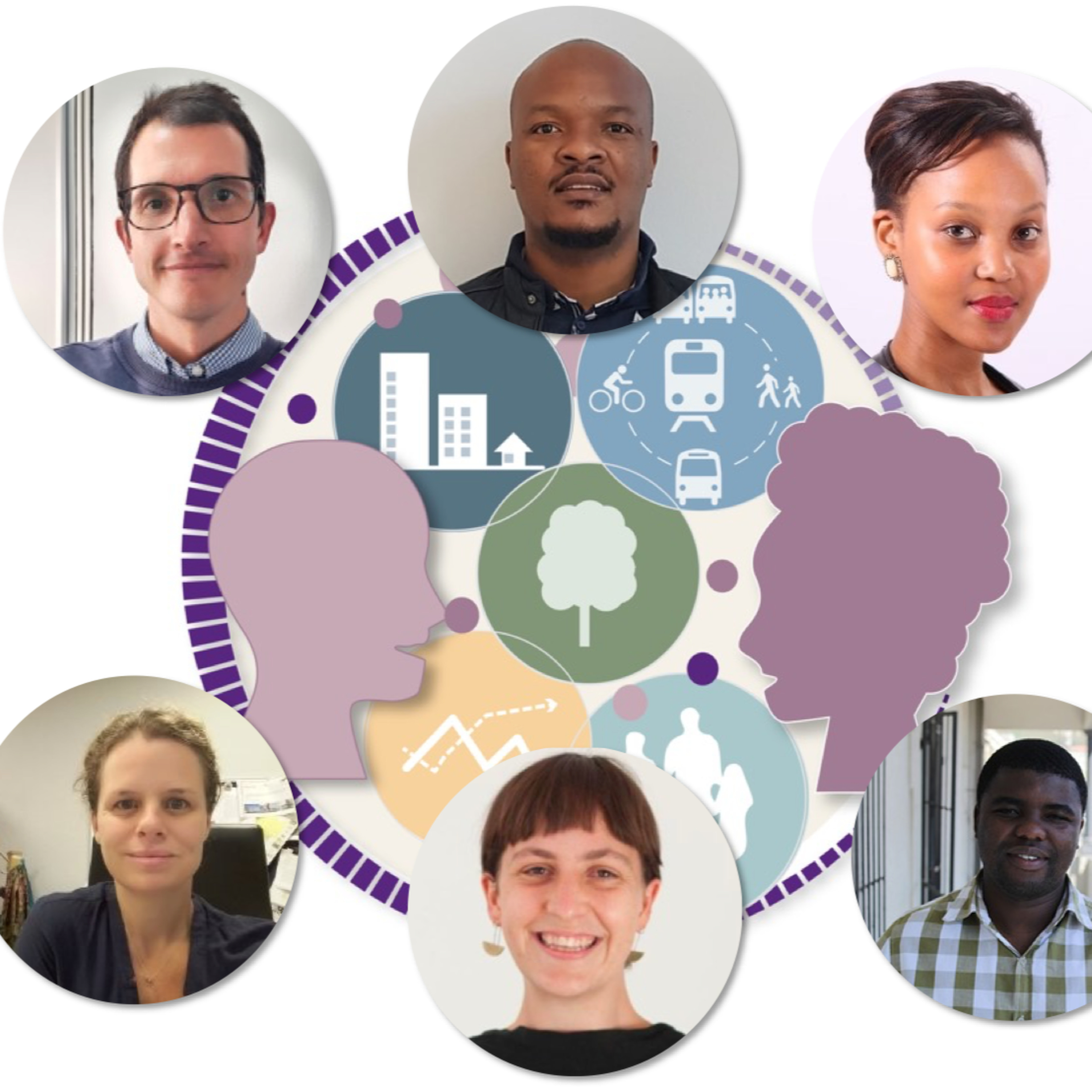 Episode 36 - Part 1: Inclusionary Housing: What's the Deal? What's Been Done? and What's Being Done? | Our guests on this first of a multi-part episode looking at the vexed issue of Inclusionary Housing in South African cities are Eric Raboshakga, City of Johannesburg, Dylan Weakley Senior Specialist: Strategic Urban Planner, City of Johannesburg; Lorraine Nzimande: Masters Graduate University of Witwatersrand and former CoJ; Robyn Park-Ross, researcher, Ndifuna Ukwazi; Willard Matiashe Lead Researcher, Development Action Group; and Catherine Stone Director Spatial Planning (Western Cape Provincial Government. In this first episode each participant sets the scene - What is it? Why is it important? And, what have been some of the challenges for City of Johannesburg in implementing their policy, adopted by CoJ Council in 2019? Consider the perspectives of City and Provincial officials, advocacy groups and academia at a time when the public sector and development community are grappling with the complexity and governance aspects of a policy framework that is implementable, effective and meets the ambitions of the Spatial Planning and Land Use Management Act. We also learn about how Inclusionary Housing "fits" within Land Value Capture (LVC) theory and practice. The epsiode comes at a time when the Western Cape Provincial Government has published a Policy Framework for Inclusionary Housing for public comment. This episode sets the tone for an informed response to that document - find it available via the web @ https://www.westerncape.gov.za/eadp/news/western-cape-inclusionary-housing-policy-framework-open-comment Part 2 to follow! Recorded 30th June 2021 | — | ||||||
| 5/30/21 |  NZCB Deep-Dive Series Finale Live Webinar Recording | We close our "deep-dive" series on the Roadmap to Net Zero Carbon Buildings Programme with this edited recording of our live webinar hosted in association with Sustainable Energy Africa and C40 Cities. It was a special way to conclude with a global audience with guests from around the South African cities and guests from afar afield as Nairobi and London. You'll hear from experts in the advocacy field; public sector professionals who are making the difference in the metros who have signed up to the C40 Cities NZC Buildings programme; academics and the private sector. There's plenty to consider and reflect on, whether you are coming to this topic new or have followed our process over the last four months as we've built the series. We'll be sure to check in with our partners in the months to come and this is sure to be a recurring theme in our discussions on transformation: of cities; of habits and of climate outcomes. Enjoy the episode and do check out the preceding episodes if this episode inspires: Episode 1: Foundations and Aspirations - https://lnkd.in/dnQJUNM Episode 2: Governance & Leadership - https://lnkd.in/gns7YtY Episode 3: Market scale transformation - https://lnkd.in/ghGGsxb Episode 4: Leaving no one behind – NZCB & informality - https://lnkd.in/dNJwY7N Twitter: @TalkingTransfo1 @SEA_UrbanEnergy https://smartbuildings.org.za/ Email: talkingtransformation101@gmail.com Recorded 27th May 2021 | — | ||||||
| 5/9/21 |  NZCB - Deep-Dive Series Episode 4 (of 4): #Leave_no_one_behind - The Net Zero Carbon Building Programme & Informality | Listeners to the Talking Transformation Podcast would recognise the severe urban housing backlog in South Africa and that informal settlements are frequently dictating growth patterns of our cities. Within informal settlements, “shacks,” are generally built poorly out of tin and other materials. There is often limited sanitation, plumbing and electricity. So, what is the relevance of the NZCB programme to these communities and others within the lower-end of the property market? Most importantly, how can the custodians and champions of the programme ensure that net zero carbon building includes and embraces informality and low income households? In this concluding session of our deep-dive session, we consider: the context of a severe housing backlog, will NZC retard low-income housing development through the burden of having to meet additional requirements? is NZC a luxury we can’t really afford? what are the opportunities that may arise from savings for the household? what are the opportunities to use alternative and more economic building materials? can Government’s state sponsored housing programme provide the impetus to lead the NZC market – particularly important during a recession. To assist us with answering these questions, we are joined by, Liana Strydom – City of Johannesburg; David Gardner - Inhlabathi Investments; and Marc Sherratt - MSSA Recorded, May 4th 2021 Social Media Marketing Twitter: @SEA_UrbanEnergy Twitter: @c40cities LinkedIn: Sustainable Energy Africa LinkedIn: C40 Cities Other platforms Newsletter: SEA Urban News – distributed quarterly Website: www.cityenergy.org.za, www.sustainable.org.za, | — | ||||||
| 5/3/21 |  Episode 35: Mr Cape Town - Andrew Boraine, Reflects on Urban Governance and Leadership | In this latest episode of the Talking Transformation Podcast, I’ve nicknamed our guest “Mr Cape Town”. However, that’s only half the truth: Andrew Boraine is a globally respected thought leader and expert in urban and economic development. His influence extends well beyond the Western Cape and is deep into four decades of service and involvement in the political and administrative spheres of South Africa. His own self-penned LinkedIn profile describes him as a student leader, activist, advisor, negotiator, government planner, city manager, chief executive, facilitator, partnership specialist, designer, communicator, writer and photographer. I knew about most of the above but not the photography! Serving under the first Mandela-led National government, Andrew was actively involved in drafting the chapter of the Constitution that resolved the powers and competitiveness of local government. He reflects on the inspirations and mentors who shaped his formative years via student politics and civic organisations. I wanted to tap Andrew for his thoughts on his journey; the state of play of leadership in contemporary government and within our communities; and what is inspiring him after 45 years of effort and lessons learnt. This a rewarding interview, rich in insight and wisdom and I’m indebted to Andrew for the time and memories he so willingly shared. Recorded 28th April 2021 | — | ||||||
| 4/10/21 |  NZCB - Deep-Dive Series Episode 3 (of 4): Supporting market scale transformation in the building sector | In this 3rd episode of our Deep Dive Series on Net Zero Carbon Buildings, hear from four leading experts on the transition efforts of the built environment sector. The Talking Transformation Podcast is delighted to host colleagues from both the private and public sector: Lesley Sibanda and Mary Haw (City of Cape Town), Chilu Lombe (Solid Green) and Megan Sager (Sustainable Solutions). They reflect on a series of themes including: Can the private sector handle the transition and to date, what has the response been? The sectors, companies and land uses - who is leading / who is following? As regulation and communication techniques improve, how will owners and tenants of budlings adapt their choices and behaviour? The role and importance of data informing choice, policy and targets; and What are the collaborations between the public and private sector that are supporting shifts in behaviour and tactics? It's a welcome third conversation building on the demands and the challenges being placed on the industry but also reflecting strongly on the opportunities that exist and the critical mass of effort which is help shape that change. Recorded: 6th April 2021 | — | ||||||
| 3/8/21 |  Episode 34: Densifying the City - Global Cases and Johannesburg | Another episode – another book review and another chance to revisit Johannesburg! I’m delighted to welcome the editorial team for the book - Densifying the City - Global Cases and Johannesburg - on this episode: Alexandra Appelbaum, Alison Todes, Margot Rubin and Philip Harrison. For regular listeners, you’d know that Phil was our very first guest way back in July 2019 and that Margot has been a guest on another episode that dealt with backyard rentals, the last episode before the national lockdown if my memory serves me well. A new publication has tackled the complexities of the processes and policies of density. The book draws on experience and inputs from a host of leading academics and practitioners and considers 25 inputs from some of the South Africa’s leading academic minds. Densifying the City – Global Cases and Johannesburg does what it says on the cover…It takes the reader on a series of case studies as diverse as Istanbul (Turkey), Sydney (Australia) and the poster child for TOD- Curitiba (Brazil). There’s plenty to digest- globally and locally: density in both its formal and informal forms, the drivers of density and the evolution of policy and urban management approaches. Closer to home and through Johannesburg as the primary case study, the book considers the forms in which density takes via different spaces, processes and participants. The ambition and realisation of density through Transit Oriented Development adds a third dimension to the conversation. We considered the issue of Johannesburg’s Corridors of Freedom in our second episode and this conversation gives us an opportunity to update the perspectives and thoughts on this issue. It promises to be a rich conversation with colleagues at the pinnacle of their game. Recorded March 6th 2021 | — | ||||||
| 3/4/21 |  NZCB - Deep-Dive Series Episode 2 (of 4): Governance & Leadership – Just how ready are cities to make the shift? | Listen in to this second deep-dive TTPod Episode and hear from five of South Africa’ leading authorities on SA’s transition to energy efficient cities and decide for yourself: Are Cities ready to implement NZC-Buildings and the C40 South African New Buildings Programme? Do cities have the mandate (powers and function) to drive such an ambitious programme? How are the plans and regulations aligning – between corporate and environmental planning and between the spheres of government? Who is responsible for what – Constitution vs By-laws v National Building Regulations (NBR) Who leads and who follows? What adaption is needed for building officials’ skills and competencies to support and facilitate the private sector and to drive professional adaption in the built environment? Why is it important that cities adapt and take the lead? How do we shift from strategy to action and implementation? Who else needs to make that shift? How can we build in speed and efficiency in the administration to incentivise the shifts? With thanks to co-guests Hlengiwe Radebe and Megan Euston-Brown from Sustainable Energy Africa and C40 Cities Talking Transformation Podcast available on: Anchor: https://anchor.fm/talking-transformation-po Spotify: https://open.spotify.com/show/1OKG8dGAIVCsAmPBilmSsV Apple: https://podcasts.apple.com/za/podcast/talking-transformation/id1472458399 Social Media Marketing Twitter: @SEA_UrbanEnergy Twitter: @c40cities LinkedIn: Sustainable Energy Africa LinkedIn: C40 Cities Other platforms Newsletter: SEA Urban News – distributed quarterly Website: www.cityenergy.org.za, www.sustainable.org.za, | — | ||||||
| 2/19/21 |  NZCB Deep-Dive Series Episode 1 (of 4): Foundations and Aspirations - Roadmap to Net Zero Carbon Buildings by 2030 | In 2018, as part of the C40 Cities Climate Change Leadership Group (C40), four South African Metros—Johannesburg, Cape Town, eThekwini, and Tshwane—signed the Global Net Zero Carbon Buildings Declaration. As signatories to this commitment, these cities are working towards look to achieve sustainable buildings, powered by renewable energy for new buildings by 2030 and existing ones by 2050. Not only does this declaration align with the imperative of the Paris Agreement to limit the global temperature rise to 1.5°C, but also follows South Africa’s national strategy, and the post-COVID recovery approach of ‘building back better.’ Partnering with C40 South Africa Building Programme, the cities are supported in developing and implementing transformational building energy-efficient policies and by-laws. The approach is rooted in South Africa’s existing national and national climate change commitments and as such, complements existing policies. Although the programme’s focus is primarily on the point of construction, it is mindful of the broader spatial, resource, social, and economic context. In Episode 1 of the Roadmap to Net Zero Carbon Buildings (NZCB) by 2030 series, four passionate city officials join us to discuss how they are rising to the Net Zero-Carbon challenge: Discover the C40 South African New Buildings Programme within the context of City climate responses. Understand what is meant by net zero-carbon for cities, and how does this fit with the national regulatory environment? Learn about an ambitious, pioneering new direction and challenge for South African cities, Share the knowledge and challenge - what do the cities have to do to move from their current status quo to net zero carbon buildings? Guests: Liana Strydom – City of Johannesburg, Kedibone Modiselle– City of Tshwane, Lesley Sibanda – City of Cape Town and Nondumiso Mthembu – eThekwini Municipality Co-guests: Hlengiwe Radebe and Megan Euston-Brown from Sustainable Energy Africa Talking Transformation Podcast Team: Amaal Salie and Pete Ahmad With thanks to C40 Cities. Twitter: @TalkingTransfo1 and @SEA_UrbanEnergy Email: talkingtransformation101@gmail.com Recorded February 16th 2021 | — | ||||||
| 2/5/21 |  TTPod Bulletin - Countdown to Zero! Introducing TTPod Roadmap to Net Zero Carbon Buildings Series | Our first bulletin of 2021 kick-starts a forthcoming five-part series where we explore the South African New Buildings Programme. Our experts, Hlengiwe Radebe and Megan Euston-Brown from Sustainable Energy Africa (SEA) introduce us to the topic and walk us through what listeners can expect in the upcoming discussions over the next few months. We learn about the need for the series, the ambition of the programme and what themes we will be covering. Listeners can also consider registering for a concluding online, live-event that will conclude the programme. More on that to follow. Join us over the coming weeks to explore: - what IS net zero carbon and what have buildings, green or otherwise got to do with it? - the cities and partners in involved in the programme; - the extent of the challenge and what a net zero carbon pathway might look like; - Can Cities ‘go beyond’ national government building regulations? - The market response to more stringent efficiency requirements; - Why it is so critical that we find a way to meet the commitments? The series will tackle the challenging questions of the moment: - Can Cities lead on ambitious climate action without compromising national interests and the recovery efforts from a technical recession and the COVID-19 pandemic? - Do Cities have the capacity to deliver the programme? - Can this find traction given economic recession and a backlog in low-income housing delivery; - How does this relate to the hard reality of growing informality? We hope you will join us on this road in the coming months! Recorded 3rd February 2021 | — | ||||||
| 1/29/21 |  Episode 33: Protect, Contain, Disrupt! The foundations and future of the township economy | In this TTPod episode we consider the Township economy: the people, the spaces and the practices that are shaping the fortunes many of our communities in South Africa. Our conversation invites the three authors of the book Township Economy: People, Spaces and Practices: Andrew Charman, Thireshen Govender and Leif Petersen to talk about the transformative potential of the informal economy and the power relations and adaptive strategies that allow micro-enterprises to thrive or falter. Having bought the book and been intrigued by the case studies and spatial data they’ve incorporated, I wanted to ask them more about the inspiration for their book, the research methods and their findings. What are the opportunities, the trends and the risks faced by those who are reliant on the informal sector for their livelihood? What is it we should be doing better and how best to facilitate and unlock the growth and potential of micro-enterprises? Looking at 9 South African case studies and one in Namibia they consider diverse themes and explain the practices and people shaping them in our communities. Their thoughts will appeal to any practitioner or academic who is looking at issues associated with socio-economic development, anthropology, and use and urban design and entrepreneur behaviour in South Africa. There’s something for everyone in this episode. At a time when a national lockdown has disrupted fundamentally both the formal and informal economies the content and recommendations made by Andrew, Thirshen and Leif are vital resources for us to consider. | — | ||||||
| 1/23/21 |  Episode 32: Blue Moon Rising – the Blue Moonlight Constitutional Court Judgement a Decade On - Guest: Zunaid Khan | In our first Talking Transformation Podcast of 2021, we pick up where we left off last year, with a conversation with another former colleague from the City of Johannesburg and reflections on a particular moment in time that has shaped the legal fortunes of municipalities in dealing with temporary accommodation for evictees. Our guest Zunaid Khan - Chief Director at the Department of Planning, Monitoring and Evaluation – Office of the Presidency - revisits 2011 and the landmark Blue Moonlight housing case. This Constitutional Court ruling provided that the state is liable to provide alternate – temporary - accommodation to unlawful occupiers who may be rendered homeless due to an eviction from private property. The case also indicated that a private owner’s right to property may be limited by the right to housing of unlawful occupiers. Zunaid was on the frontline of the City’s response and legal case and I asked him to reflect on not only the merits and details of the case and what the ruling meant but also the reality and pressure of being a civil servant in the legal firing-line. He recently spent almost a year acting as Deputy Director General and has a distinguished career spanning almost two decades. He has worked within the private sector and served with local and National government. Presently, he is the Chief Director of Spatial Planning at Department of Planning, Monitoring and Evaluation within the Office of the President’s Department of the Monitoring and Evaluation. We also take a quick look at the spatial planning horizon for 2021 – what are his hopes and fears – beyond the pandemic, beyond the economic challenges we face. What can we hope for from national and where should we be looking… | — | ||||||
| 12/16/20 |  Episode 31: Agonism and Strife in Johannesburg - Dr Li Pernegger Author "The Agonistic City" | Last month saw the publication of a new book that looks at the challenges and conflicts that have accompanied Johannesburg’s post-democratic growth and development. The book, titled “The Agonistic City? State-society Strife in Johannesburg” questions the realities and potential of the state's agonistic practices in response to service delivery issues as diverse and complex as the water conflict in Orange Farm, informal trading in the Joburg CBD, and the billing crisis. Each of these examples has challenged the city to respond to these many grievances lodged by its citizens across the spectrum of communities: from the privileged, to the marginalised. Author, Dr. Li Pernegger is ideally placed to reflect on these issues having spent almost 15 years working within the City of Johannesburg administration between 1989 and 2006: a period of massive change in South Africa and the municipalities of the pre- and post democratic dispensation. She has observed some of these issues first-hand and as they happened. Through her doctoral research, her past roles working with municipalities for local and national governments in SA and the UK, and her current role, as advisor to National Treasury’s Government Technical Advisory Centre (GTAC) she has considered these events within the academic environment and with the benefit of hindsight as a practitioner. As a former colleague of Li, I am really looking forward to understanding her main conclusions and what the lessons for other cities and municipal administrations could be. I was delighted when she accepted the invitation to join us on the TTPod to reflect on the journey and to give a preview of what you can look forward to from the book. It was great to chat to Li and revisit a city I still think of as home. Recorded December 16th 2020 | — | ||||||
| 11/27/20 |  Episode 30: Micro-finance and city building: the future for Africa’s housing market? | Adding to the rich content of housing conversations – in particular Episodes 14, 22 and 27 – in today’s episode we take a closer look at the private finance models available to micro-developers; what progress has been made and what ambitions this emerging sector has. Currently making a dent in the housing market in Cape Town, Bitprop finance’s mission is to create assets and income streams for underdeveloped markets by upscaling of backyard rental properties. Innovative thinking, technology and securing title deeds are also key approaches they employ to make a dent into the 65 Million housing units required across Africa at a cost of $10 trillion. The approach is not limited to credit only and applies economic and spatial transformation and urban management fundamentals: Securing ownership, homeowner education, rental management capacity building and building and enhancing neighbourhoods. What’s exciting is the potential reach of the programme; the diversity in investment sources; and the monthly income and returns for the lending homeowners. Is this the basis for an upscaled human settlement approach? What can be done to support the efforts and does the public sector have a role in resourcing further? To help us understand the potential and approach, today, we hear from Claire du Trevou Architectural Project Manager at Bitprop. An architect by trade, she is a graduate of the University of Pretoria and is about to celebrate her second full year working within the Bitprop team. Where I get confused by the UKs Britpop movement of the 90’s characterised by Oasis and Blur and the Bitprop finance movement characterised by spatial and economic transformation – the fault is entirely ours. | — | ||||||
| 10/29/20 |  Episode 29: #Legacy? 2010 World Cup – Assessing Transformation a Decade On | Just over ten years ago, the final whistle blew on the highly anticipated FIFA 2010 World Cup held here in South Africa. Expectations were high and the question remained before that kick off: could SA deliver. Deliver it did, staging a remarkable global event which bought SA goodwill and recognition for the event and the manner in which it was held. Crime fell, footballing tourists flocked to the stadiums and investment in fan parks and playing areas around the world suggested a new era of nation building on the back of other successful sporting ventures like the 1995 World Cup Rugby victory. Sport and infrastructure were seen as powerful catalysts for transformation and economic growth. Having spurned the country in 2006 in favour of hosts Germany, it was surely inconceivable that Nelson Mandela would be dismissed twice. South Africa broke the bank to host the event. Both financially and in playing its ‘Madiba Magic’ trump card there was a sense of inevitability that the tournament would finally be hosted in Africa. But at what cost? And was it worth it? SA invested billions of rands in new build projects: upgrades of airports and stadiums; in public spaces and public transport systems – some of which have operated successfully and other that have yet to operate since the event. It was a massive gamble diverting public funds that critics argued – with some justification – could have been better spent on housing, infrastructure and public services. The debate raged before, during and after the event. In this episode of the TTPod, we explore the legacy of FIFA 2010. We try and consider in an objective way the means of assessing this legacy. To help us, we are joined by eminent historian, and best-selling author of Empire, War and Cricket in South Africa, Dr. Dean Allen. An Englishman who has made his home South Africa, Dean was part of the assessment team employed by the City of Cape Town in 2010 to survey different perspectives from some of the tournament’s leading figures. He has taken an ongoing interest in the assessment of the legacy as a historian, author and public speaker. We are delighted that he accepted an invitation to join us on the TTPod and discuss his perspective and findings. His views on transformation through the ages are compelling and thought-provoking. Recorded 29 and 29th October | — | ||||||
Showing 25 of 70
Pitch Fit is a Pro feature
See how bookable this show is for guests, which brands already advertise, the per-episode ad value, and the best-fit guest and sponsor profile. The numbers are blurred on the free plan.
How readily this show books outside guests like you.
How proven this show is for host-read sponsorships.
For Guests
ProFor Advertisers
ProUpgrade to Pro to unlock guest cadence, sponsor categories, fit scores, and per-episode ad value for this show.