Insights from recent episode analysis
Audience Interest
Podcast Focus
Publishing Consistency
Platform Reach
Insights are generated by CastFox AI using publicly available data, episode content, and proprietary models.
Most discussed topics
Brands & references
Est. Listeners
Insufficient chart data. Estimates will improve as the show charts.
- Per-Episode Audience
Est. listeners per new episode within ~30 days
N/A🎙 ~2x weekly·133 episodes·Last published 1w ago - Monthly Reach
Unique listeners across all episodes (30 days)
N/A - Active Followers
Loyal subscribers who consistently listen
N/A
Market Insights
Platform Distribution
Reach across major podcast platforms, updated hourly
Total Followers
—
Total Plays
—
Total Reviews
—
* Data sourced directly from platform APIs and aggregated hourly across all major podcast directories.
On the show
From 14 epsHost
Recent guests
No guests detected in recent episodes.
Recent episodes
Zen is not an intellectual exercise. Delivered Jun 20, 1986
Jun 12, 2026
49m 39s
Emptiness is not nothingness. Jul 14, 1986
May 16, 2026
1h 00m 55s
How to enter a gateless gate. Delivered July 6, 1986
May 9, 2026
55m 43s
The Basic Teachings of Zen Meditation. Presented on June 29, 1986
May 2, 2026
56m 32s
Accumulating knowledge versus attaining true wisdom. June 22, 1986
Apr 11, 2026
1h 00m 38s
Social Links & Contact
Official channels & resources
Official Website
Login
RSS Feed
Login
| Date | Episode | Topics | Guests | Brands | Places | Keywords | Sponsor | Length | |
|---|---|---|---|---|---|---|---|---|---|
| 6/12/26 | ![]() Zen is not an intellectual exercise. Delivered Jun 20, 1986✨ | Zenhuman desire+4 | — | — | — | Zenhuman desire+5 | — | 49m 39s | |
| 5/16/26 | ![]() Emptiness is not nothingness. Jul 14, 1986✨ | emptinessZen Buddhism+4 | — | Prajñāpāramitā | — | emptinessZen+6 | — | 1h 00m 55s | |
| 5/9/26 | ![]() How to enter a gateless gate. Delivered July 6, 1986✨ | Zenspirituality+4 | — | Bible | — | gateless gateZen mind+5 | — | 55m 43s | |
| 5/2/26 | ![]() The Basic Teachings of Zen Meditation. Presented on June 29, 1986✨ | Zen meditationspiritual growth+3 | — | SotoRinzai+1 | — | Zenmeditation+5 | — | 56m 32s | |
| 4/11/26 | ![]() Accumulating knowledge versus attaining true wisdom. June 22, 1986✨ | knowledgewisdom+4 | — | — | — | wisdomknowledge+5 | — | 1h 00m 38s | |
| 4/1/26 | ![]() The Lesson of True Listening. June 15, 1986✨ | true listeningZen practice+4 | — | — | — | true listeningZen+5 | — | 57m 30s | |
| 3/12/26 | ![]() An exploration of the subject of death. Delivered Jun 8, 1986✨ | deathzen+3 | — | — | — | deathzen koan+3 | — | 59m 40s | |
| 2/28/26 | ![]() Does an enlightened Zen master live a saintly, extraordinary life? Delivered Jun 1, 1986✨ | Zen philosophyenlightenment+4 | — | — | — | Zen masterBuddhism+4 | — | 56m 57s | |
| 2/6/26 | ![]() Give gifts with no notion of reward or praise. Like moving something from one hand to the other. Mar 9, 1986✨ | Buddhismspiritual giving+3 | — | Diamond Sutra | — | gift givingBodhisattva+7 | — | 51m 50s | |
| 1/16/26 | ![]() Learning to live less from the mind and more from the hara. Oct 14, 1981✨ | mindfulnessintegration+3 | — | — | — | unityinternal division+5 | — | 58m 20s | |
Want analysis for the episodes below?Free for Pro Submit a request, we'll have your selected episodes analyzed within an hour. Free, at no cost to you, for Pro users. | |||||||||
| 12/29/25 | ![]() Allowing Purusha to extricate itself from the mindless play of Prakrit. Sept 27, 1987✨ | spiritual observationSamkhya Yoga+5 | — | Samkhya Yoga | — | PurushaPrakrit+5 | — | 58m 31s | |
| 12/14/25 | ![]() Plato, art and spiritual growth. Sep 5, 1987✨ | freedomspiritual growth+4 | — | DhammapadaAllegory of the Cave | — | freedomego+6 | — | 1h 00m 40s | |
| 12/8/25 | ![]() The Middle Way—between the world of appearance and the inner world of consciousness. Aug 29, 1987✨ | spiritual successvigilance+4 | — | Dhammapada | — | Middle Wayvigilance+6 | — | 1h 01m 25s | |
| 11/29/25 | ![]() How do you go in? Simply stop going out. Aug 2, 1987✨ | Zen Buddhisminwardness+4 | — | Dhammapada | — | Dhammapadatruth+5 | — | 59m 56s | |
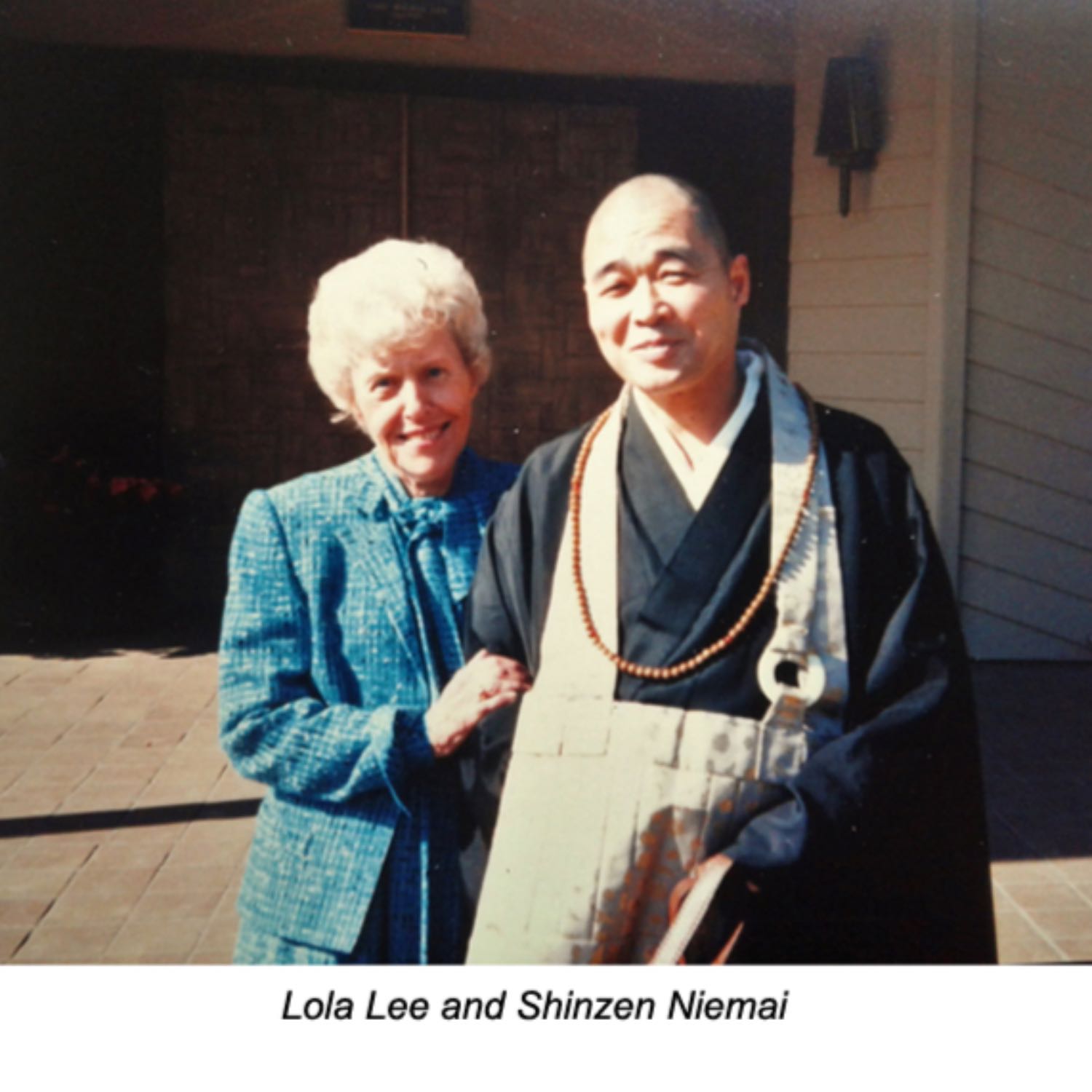
| 11/23/25 | ![]() The meanings of various Buddhist terms, practices & traditions. July 26, 1987 | Zen Roshi, Lola McDowell Lee, explores the meaning of the Dhammapada -Twin Verses.She discusses the importance of thought and self-mastery in shaping one's experience. We are what we think. All that we are arises with our thoughts. With our thoughts we make the world.An impure, conditioned mind leads to suffering, while a pure, unconditioned mind leads to unshakable happiness. We have, over and over, a choice of conduct: the easy path of catering to personal ego desires, or the difficult path of conscious transformation.The negative path is effortless and offers temporary satisfaction. The positive path requires a great deal of effort and an active choice to go against one's conditioned nature.For instance those who showed up this morning for Lola’s talk. It would’ve been easier, she says, to sleep in and relax. Their attendance was a choice to take the more difficult path toward awakening.What is vital versus what is trivial? Using the metaphor of a poorly thatched roof, she warns that passion will seep through an untrained mind, while a well-trained mind remains impervious.Lola examines the various Buddhist traditions that emerged after the Buddha's death. She describes the division into the Hinayana (Small Vehicle) and the Mahayana (Great Vehicle).The practical method for self-transformation is Vipassana—the effortless effort meditation. This technique involves simply sitting and observing what rises in the mind and body without judgment. To enter this state, one must "stay out of the picture" of mental activity, serving purely as the witness.The central goal of Buddhism is the enlightenment experience (Bodhi), which means "to wake, to become aware of." This awakening is a shift from a life of relativity and conditioning to an unconditioned life defined by non-attachment, non-discrimination, and non-ego.Enlightenment is a personal experience. Value your own experiences and exert yourself. From the sutras: "By oneself is one purified."The story of Gautama's path to becoming the Buddha.The meanings of the term Dhamma (or Dharma), which is linked to Pada (the path). Dhamma means: Ultimate Reality. Pada is the path to this ultimate truth.We need to drop conceptual thinking. Like a seed: the outer seed rots away to leave the essence from which the entire tree grows, The ego and thoughts must disintegrate to reveal the truth within.Ultimately, the goal is to find the "space before the thought." Or the state of "no mind." July 26, 1987 | 59m 57s | ||||||
| 11/14/25 | ![]() Dogen: “Not knowing is most intimate.” July 5, 1987 | Zen Roshi, Lola McDowell Lee, explains the story of Dogen Zenji, the founder of the Soto Zen school in Japan. One master says, “Not knowing is most intimate.”Dogen’s question: if we are already Buddha nature — if enlightenment is our essence — then why do we need to seek it?When Dogen returned to Japan, he founded the Soto school and taught Shikantaza — just sitting. This practice, Lola explains, is single-minded meditation without striving or grasping — simply allowing truth to reveal itself.Meditation, explains Lola, is about resting in awareness, with nothing held back. The nature of mind. It’s both the source of our bondage and the key to our liberation. We must move beyond the “content” of the mind — our thoughts, dreams, and desires — to see mind itself, the clear space in which everything appears.No-mind is not the absence of awareness but awareness without clutter. It is the crystal-clear state when the activity of thinking subsides.We need to observe carefully: subject and object, thinker and thought, self and world. As one sees how all phenomena are like dreams, the sense of self begins to dissolve. Awakening brings clarity and wonder — colors seem brighter, the world more alive, even rocks appear to breathe.Lola warns that the ego can cling to enlightenment experiences. The final task, she says, is to “let go of the remedy” — to release attachment to spiritual methods once they’ve served their purpose. Like the five men carrying a boat instead of realizing they’ve already crossed the river. The teachings from Rinzai Zen are about the four positions in the relationship between ego and True Self, host and guest, questioner and answerer.Enlightenment isn’t somewhere else to reach. It’s here, now, in the clear seeing that truth is.July 5, 1987 | 1h 00m 09s | ||||||
| 11/2/25 | ![]() How you form your ego—and can ultimately overcome it. Jun 28, 1987 | Zen Roshi, Lola McDowell Lee, tells a parable about a powerful Chinese prime minister, who was a devoted Zen student. When the minister asked his master, "how does Zen explain egotism?" the master insulted him, calling him a "numbskull". As the minister's face filled with anger and hurt feelings, the master smiled and said, "Your Excellency, this is ego".Lola explains that this ego is our very basic problem. Paradoxically, we need It presents we need the ego to function in the world, yet it is also our biggest stumbling block to discovering our true identity.Most people, she says, are so caught up in this pseudo self that they don't even know how to begin looking for the True Self. She explains that the rules of Zen practice, such as the sesshin, are designed to force practitioners to observe oneself and one’s reactions.Lola explains how the formation of the ego begins in infancy. A child, Lola says, is born like a tabula rasa or "clean slate." Everything—food, love, comfort—comes from out there. The sense of me is formed later, in contrast to “other". This "me" is a "reflected awareness". It is a reflective center built entirely from the opinions of others, starting with the mother. If the mother smiles and appreciates the child, the child feels valuable, and this positive reflection builds the ego . Conversely, if the mother ignores the child, the child feels worthless and rejected, which builds an "ill ego."This ego is necessary. The True Self can only be known by passing through this ego. The path is to first know "other," then "me" (the reflection), and finally to see that reflection as the illusion it is.As the child becomes an adult, the search for the true self begins, but it's often misguided. People look to religion, but with nearly 400 sects, they usually just pick one that reinforces what one already thinks—which reinforces the ego.The great religious traditions all aim to show one, universal truth shared by great figures like Buddha and Jesus. The smaller sects tend to get lost in trappings.This societal atmosphere we develop in helps form the ego. Lola explains there are two centers in each of us. The first is the acquired center, given to us by society and shaped by others. This is not direct experience. The second is the true center, which we are born with and is given by existence; this is direct experience . To glimpse the true center, the ego must be overcome.Lola discusses a concept of "masks of the universe” from physicist Edward Harrison. Including, historically, the magic era, the mythic era, etc. (While this is after Lola’s time, it reminds me of a more primitive structure that scholar Ken Wilber later provides us more comprehensively).Most of us are trapped in our own minds, which are full of intellectual nonsense and sentiments that make us miserable.One way out, Lola concludes, is the Zen path, which requires persistent observation: one must really observe" oneself in action to see the source of one’s misery. Second is re-evaluating our values.The goal is to reach a state of "just so." With values that are free from ego.The parable about the Zen master Joshu and a stone bridge.Jun 28, 1987 | 57m 05s | ||||||
| 10/20/25 | ![]() Zen and Socrates. Jun 21, 1987 | Zen Roshi, Lola McDowell Lee, argues that most people waste their lives playing superficial games and are deceived by their own minds. They fail to engage in the urgent, life and death work of knowing themselves. The pursuit of money, power, prestige, and reputation are hollow endeavors, like waves on an ocean.Lola draws parallels between Zen practice and the Socratic method. Many of us meditate for a short period only to ignore one’s inner awareness for the other 23 hours of the day.Lola describes Greek philosopher Socrates as a figure who masterfully employed a method of inquiry similar to that of Zen. Socratic questioning, like the Koan, was a tool to penetrate the world of appearances and challenge ingrained opinions. This method, like Zen, is not about adding new beliefs but about drawing out the truth that is already within.Central to both the Socrates and Zen is in admitting ignorance. Plato depicted Socrates as a man whose wisdom lay in recognizing his own ignorance. Lola parallels this with the Zen master Bodhidharma, who, when asked by an emperor who he was, famously replied, "I don't know". This "unknowing" is a powerful spiritual state that moves beyond concepts, opening a space for true, transformative knowing to emerge.Ideas by themselves, even great spiritual ideas, do not raise the level of a human life. Without action by us, ideas have no real transforming power.Jun 21, 1987 | 58m 34s | ||||||
| 10/14/25 | ![]() Instructions for Koan study. And true understanding & non-discrimination. May 31, 1987 | Zen Roshi, Lola McDowell Lee, recounts the story of master Joshu who offers cups of tea to the various monks, illustrating the idea of how distinction keeps us from seeing the world as it is. When he offers the same tea to newcomers and long-time members alike, the manager asks why. And Joshu has a shouting response. Why?Our scientific world breaks the world into bits, opreating within a framework of complexity and duality because seeing the simplicity of the whole is so difficult for us to grasp.Zen teaches us the value of non-discrimination—the art of seeing things as they are, without interpreting or naming. Lola illustrates this with a personal anecdote about a wedding party where she presided—and the which they hoped would symbolize the couple’s eternal love. But the candle kept blowing out.A tool for achieving this mental shift is the koan, and how it is not an intellectual puzzle to be solved. Rather, it is a device intended to exhaust the rational mind. The student should approach a koan" employing great faith, great resolution, and a great spirit of inquiry.”The weakness of this duality-approach becomes clear when we look at many try to understand the notion of God. In doing so, many religions create the Devil to complement the notion of God.The importance of awareness and alertness, and the meaning of the Japanese Tea Ceremony.We must pass through the obstacle of our own discriminating minds to walk freely in the universe.May 31, 1987 | 53m 10s | ||||||
| 10/8/25 | ![]() The limitations of human knowledge. May 17, 1987 | Zen Roshi, Lola McDowell Lee, discusses human knowledge an its limitations. Typical knowledge is the result of fragmented perception. Our knowledge is narrow, limited to appearances and governed by desire, habit, and subconscious impulses.The relationship of Surya (divine light) and Agni (divine force). Agni symbolizes will in consciousness. Together, Surya (knowing) and Agni (will) form a unity. Knowledge and Will are not separate. They are two aspects of the same foundation of reality.The Upanishads say that sin is not moral condemnation but that which causes a deviation from the straight path. Even elegant, dazzling thoughts can be a deviation, like a pebble blocking the sun. Each of us has our blind spots.Jesus said, “The crooked shall be made straight.” The ideal is to find the direct way, the single eye that fills the whole house with light.May 17, 1987 | 1h 03m 13s | ||||||
| 9/26/25 | ![]() In the struggle between opposites is the Truth. Mar 6, 1987 | Zen Roshi, Lola McDowell Lee, draws on Buddhist and Hindu traditions (including the Mahabharata, Ramayana and Bhagavad Gita) to explain the human condition.Struggles and opposition are partners in our growth. Manjushri (wisdom) is not found in shrines, but is alive within each person.Lola recounts a tale of a monk and the village courtesan.She talks about how struggle is necessary for growth; it develops character. Friend and foe, like rose and thorn, are inseparable opposites. The human tendency is to focus on one side and ignore the other. True vision includes both opposites—and finding a center in the balance of them.Lola discusses whether she thinks someone can be wealthy and still find enlightenment.The true self is both presence and emptiness. The mystery of the self is real and should be made actual. Three spokes unite in one nave, and on that which is non-existent, the nave, depends the wheel's utility.Clay is molded into a vessel, and on that which is non on its hollowness, depends the vessel's utility.By cutting out doors and windows, we build a house. and on that which is nonexistent, on the empty space within, depends the house's utility.Therefore, existence renders actual, but nonexistence renders useful.Mar 6, 1987 | 59m 56s | ||||||
| 9/11/25 | ![]() Where is God? Feb 28, 1987 | Note: Generally, this talk is more lighthearted than most that Lola gives. It’s nice to see that side of her personality.Lola begins with a comical tale about a man and a priest he asks for advice.Zen Roshi, Lola McDowell Lee, discusses Lao Tzu concept of how the hole in the wheel’s knave makes its utility. How the emptiness of a vessel creates its utility.Lola asks, “Who would you rather be: a victim or a perpetrator?”It is in the world of the Relative that we can discover the Absolute.How freedom relates to relativity. Some people don’t want freedom. They’d rather follow directions.The world is like a schoolroom where the teacher is absent. It is chaotic. Where is God?She tells the story of Swami Vivekananda, who, during his first visit to the United States in 1893, was shunned for his skin color. Eventually his speech at the Parliament of the World's Religions in Chicago brought him recognition in the US. Lola explains how many spiritual seekers seek after miracles. But the world is full of miracles. A seed dies and falls into the ground and a tree grows from it. Grass grows. Look at man? He’s a miracle. The world is a manifestation of God.Feb 28, 1987 | 1h 01m 06s | ||||||
| 8/31/25 | ![]() Mystica Theologica, the Sutras of Patanjali and the Book of Genesis. Jan 31, 1987 | Zen Roshi, Lola McDowell Lee, discusses various texts about the notion of God — from the biblical book of Genesis to Mystica Theologica to the sutras of Patanjali.Dionysus was a disciple of St. Paul and one-time mayor of Athens.We eat from the Tree of Knowledge of Good and Evil… but we must return to the Tree of Life.Buddhism did not identify God. Or a self. So for a Buddhist, what is there? Perhaps a Buddhist might say there is a Power greater than himself.Why did God create the world as it is? How do you answer the question, “Why do you love the person you love?”The wisdom of Patanjali, the author of many Sanskrit works including the Yoga Sutras. Yoga is the restraining from taking the many forms. Like a sculptor who removes parts of the stone to find the creation within.We have blind spots in our seeing, and in our hearing. We also have blind spots in our thinking… caused by the many patterns we identify with. Like a sculptor, we must learn to identify these patterns to find what remains within us.Darwin traveled the world in a big ship… and he came upon islanders who could not see his boat. It was too big. If these islanders could not see a boat because it was too big, then how do we expect to see God?That is why we meditate. To enter an area beyond our patterns, beyond our knowledge—to experience a kind of not knowing. We must give up our thoughts and identifications to experience this not-seeing. Then we can see the Truth of what we are.Lola discusses the creation of the world in the biblical chapter of Genesis. What is the Light at the beginning? And what is the Light again on the fourth day?Genesis 1:1-4 (King James version) - “In the beginning God created the heaven and the earth. And the earth was without form, and void; and darkness was upon the face of the deep. And the Spirit of God moved upon the face of the waters. And God said, Let there be light: and there was light. And God saw the light, that it was good: and God divided the light from the darkness.”How this relate to Aurobindo’s poem, Savitri, that begins “"It was the hour before the Gods awake.”The tale of a man of Athos who spoke to an apricot tree and it blossomed.Jan 31, 1987 | 58m 07s | ||||||
| 8/24/25 | ![]() How do you answer: “Does God exist?” Sep 20, 1987 | Zen Roshi, Lola McDowell Lee, (who is also an ordained Christian minister) explores issues that are common to both Christian and Eastern thought to illustrate the difference between theology/philosophy and religious practice.She explains that it is easier to join a religious group and hang around it than it is to truly struggle with oneself. There are many who participate in religions just so they can tell themselves they are doing their religious duty. They learn a religious system or structure and think they have learned some truth. Not so.Simply wishing will not change you. It requires effort. We must work to be sufficiently free of delusion—which makes us more pliable and receptive continue learning.We live like a child in our father’s house—with little probing. We live under great, powerful laws of God’s will… but have we ever seen or truly understood these laws?When is the last time you were in awe of nature? The word “awful” used to mean being in awe. Now we think of it as something bad, to be feared. Feeling awe — of this mysterious thing we call life—to some it is joyful. To some it creates fear. It can be your rock, your faith.Philosophy rises from wonder. True religion arrives from awe.Lola recounts the tale of the general who visits a teacher. His question for the teacher: What is it we use every day and don’t know? The teacher served him muffins and tea. Try to stay in this awe—don’t rationalize it away. Jut remain in awe.Jesus said, ““If anyone desires to come after Me, let him deny himself, and take up his cross, and follow Me.” (King James, Matthew 16:24).This is conversion. Lola tells a metaphorical story of God and an Old Man. God says to him that he receives nothing but endless requests for favors and things, so he wants to hide. He asks an old man, where can he hide? The old man tells him the perfect place to hide—is inside of man. Then those that seek him will only be able to succeed after a sincere investigation within themselves.If someone asks you if God exists, what is your answer? Do most who say they are believers know it for a fact that He exists? Do atheists know for a fact He doesn’t? So what is one’s answer to be? It depends.Lola tells a tale about a woman in India who clutched her baby during a flood and is saved from the flood. Sep 20, 1987 | 59m 35s | ||||||
| 8/10/25 | ![]() A detailed introductory talk about the Bauls — a religious sect of India—and the mystery of consciousness. Sep 13, 1987 | Note: Unfortunately these talks about the Bauls were posted out of order. But the sound quality is much better on this one, which is also the most detailed in its explanation of who the Bauls were. And this talk develops into a wonderful, rich discussion of consciousness.Lola says that not many people have heard of the Bauls because they had no organization or dogma or scripture. They were freewheeling practitioners who loved dance, music and poetry—and looked within.Zen Roshi, Lola McDowell Lee, explains how the Indian Bauls were a group of Hindus also were joined by a sect of Sufis when the Muslims invaded India.The Bauls did not use the term “God.” They focused mainly on the “essential man within you.”Baul literally means “affected by the winds.”The doctrine of Shakti and the follower, or Shakta.Shakti refers to the divine feminine cosmic energy and creative power that underlies all existence. It's the active principle of the Godhead, responsible for creating, sustaining, and dissolving the universe.Shaktas, or believers in Shakti, felt that the ultimate divine being is best understood and worshipped as the feminine principle, and manifests in countless forms as different goddesses.Lola recounts the story of Krishna’s origins, per the Bhagavad Gita.Bhakti Yoga, the practice of devotion thru submission to find the secret knowledge.Lola explains that Being and Awareness is like love. Love can only be known by loving. It can’t be described or taught, it needs to be experienced.She extends the metaphor to swimming. You can’t be taught how to swim outside the water. But if you go into the water and can’t swim, you fear you’ll drown. So it seems like an impossible, paradoxical situation. Spiritual practice carries with it a similar paradox.Lola discusses Ramana Maharshi.She talks about how, when we sit in silence, one puts a downward pressure into that which is within us. Eventually that pressure releases something inside that allows one to become “a man of the heart.” The pressure allows the Being to overcome the Ego.What is consciousness? That is, Lola says, the primary question of all religion. The search, in consciousness, to grow in consciousness. Through observation and alertness… of all the activity within and without—we can stir a moment of clarity, of insight. In that flash of perception consciousness sees, and knows instantly what comes from within and what comes from without. Sep 13, 1987 | 59m 31s | ||||||
Showing 25 of 137
Pitch Fit is a Pro feature
See how bookable this show is for guests, which brands already advertise, the per-episode ad value, and the best-fit guest and sponsor profile. The numbers are blurred on the free plan.
How readily this show books outside guests like you.
How proven this show is for host-read sponsorships.
For Guests
ProFor Advertisers
ProUpgrade to Pro to unlock guest cadence, sponsor categories, fit scores, and per-episode ad value for this show.
