Tech, Innovation & Society - The Creative Process: Technology, AI, Software, Future, Economy, Science, Engineering & Robotics Interviews
by Technology, AI, Software, Future, Economy, Science, Engineering & Robotics Interviews - Creative Process Original Series
Is this your podcast?Insights from recent episode analysis
Audience Interest
Podcast Focus
Publishing Consistency
Platform Reach
Insights are generated by CastFox AI using publicly available data, episode content, and proprietary models.
Most discussed topics
Brands & references
Est. Listeners
Insufficient chart data. Estimates will improve as the show charts.
- Per-Episode Audience
Est. listeners per new episode within ~30 days
N/A🎙 ~2x weekly·300 episodes·Last published 2w ago - Monthly Reach
Unique listeners across all episodes (30 days)
N/A - Active Followers
Loyal subscribers who consistently listen
N/A
Market Insights
Platform Distribution
Reach across major podcast platforms, updated hourly
Total Followers
—
Total Plays
—
Total Reviews
—
* Data sourced directly from platform APIs and aggregated hourly across all major podcast directories.
On the show
From 10 epsHosts
Not detected.
Recent guests
Recent episodes
Building Bridges Between Technology, Nature & Architecture with SALWA & SELMA MIKOU
Jun 10, 2026
Unknown duration
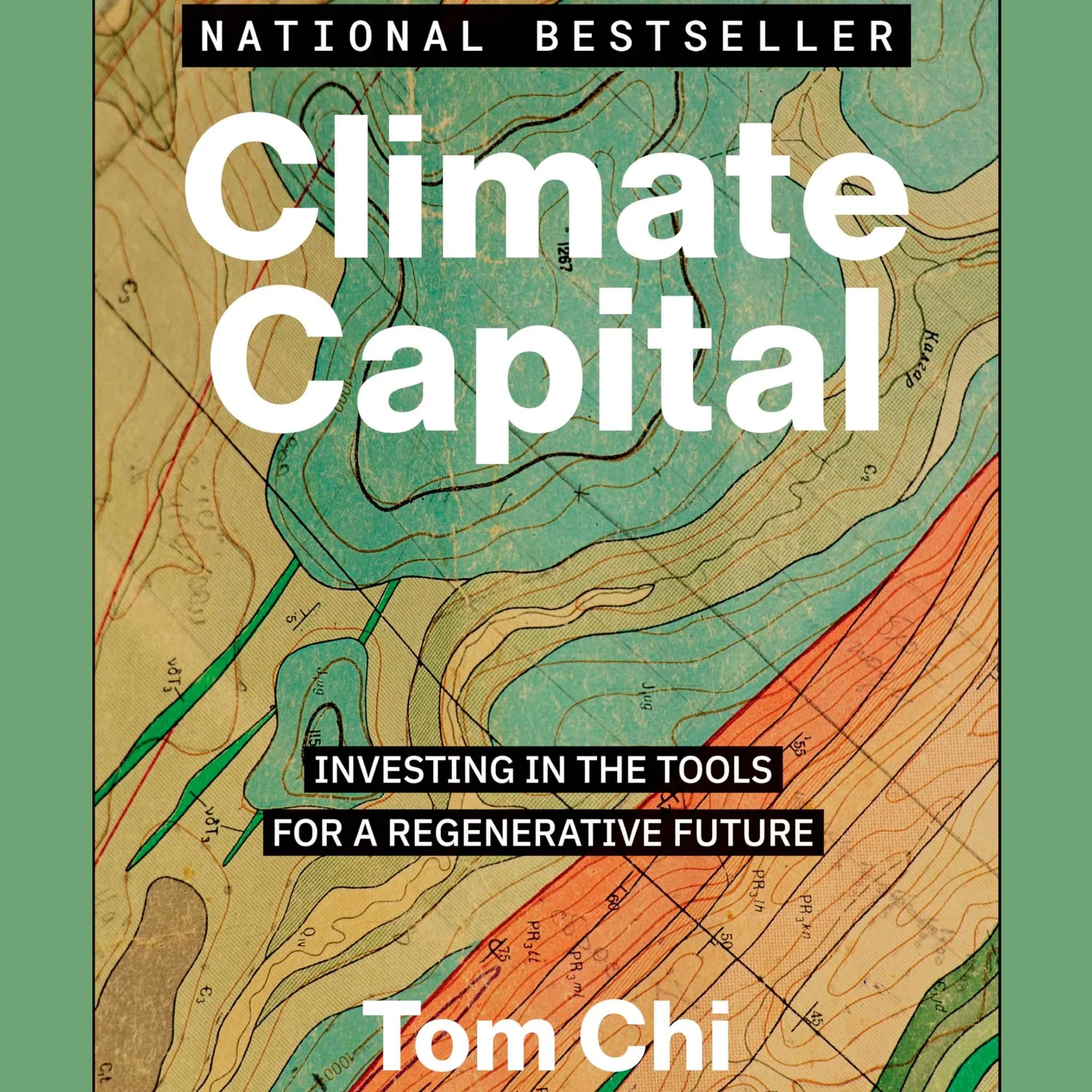
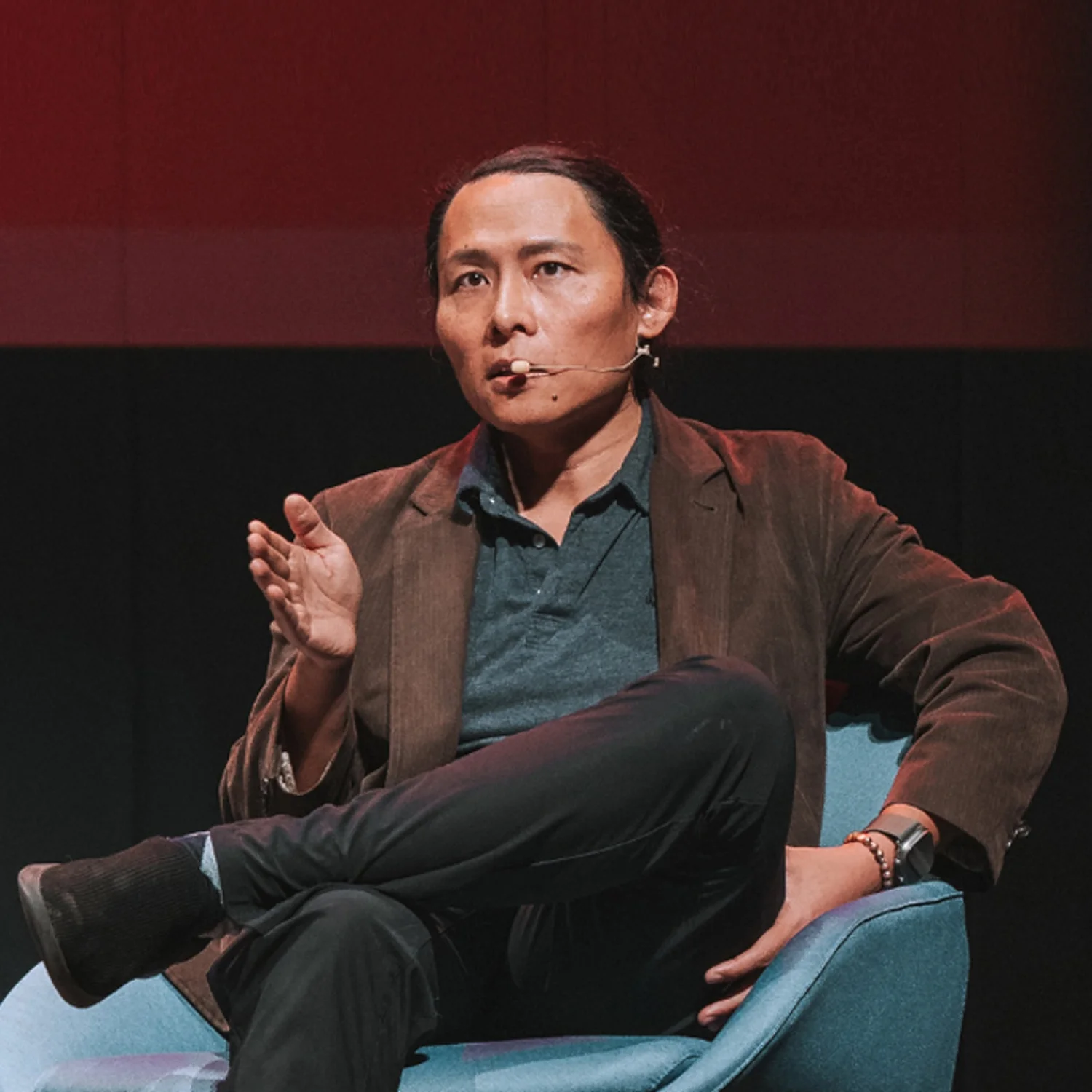
Why Do We Listen to the Talkers More Than the Builders Saving the Planet? - TOM CHI - Highlights
Apr 18, 2026
22m 25s
Climate Capital with TOM CHI - Google X Co-founder, Founding Partner At One Ventures
Apr 18, 2026
1h 27m 27s
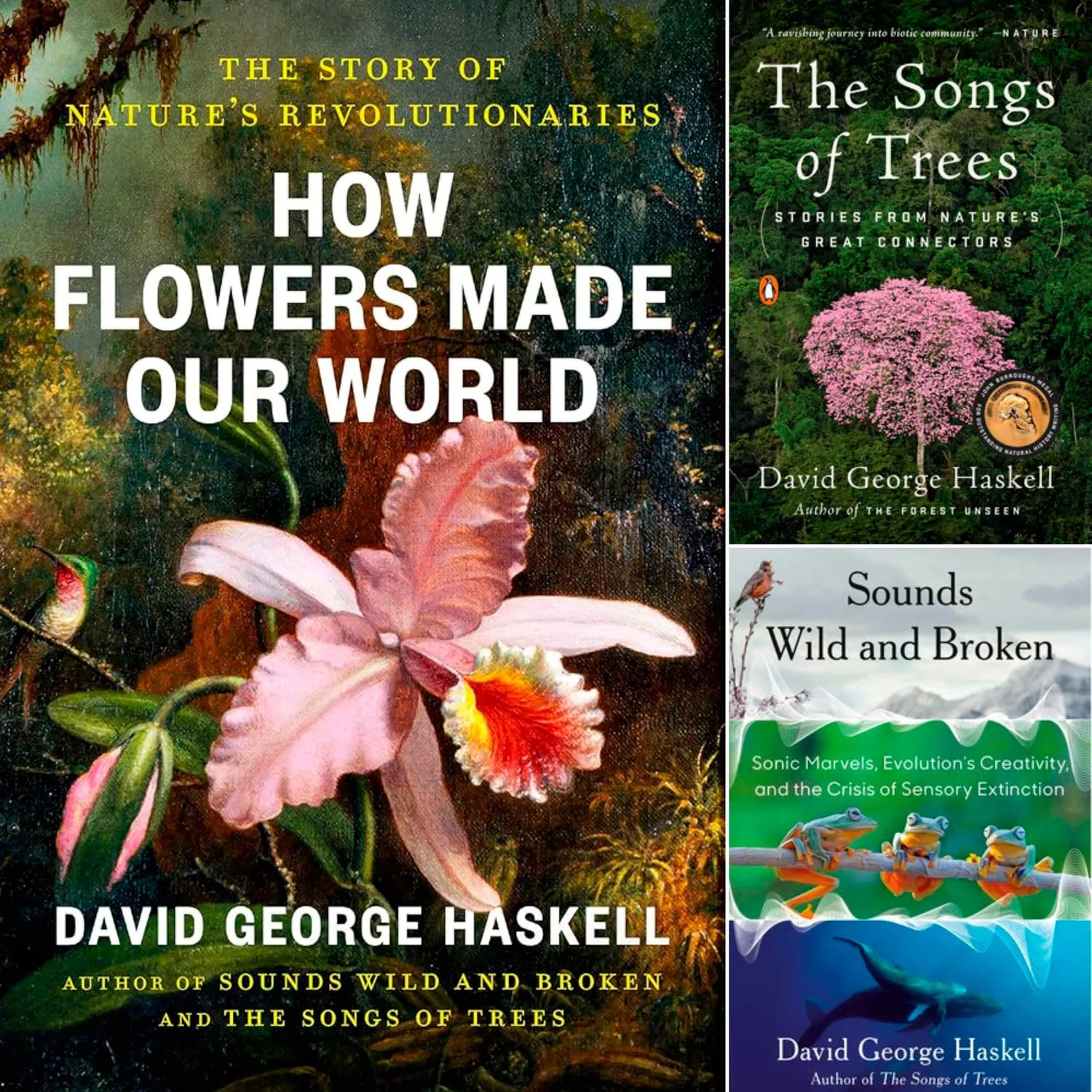
AI, Escaping the Screen & Listening to the Living World: DAVID HASKELL on the Songs of Nature - Highlights
Apr 3, 2026
17m 58s
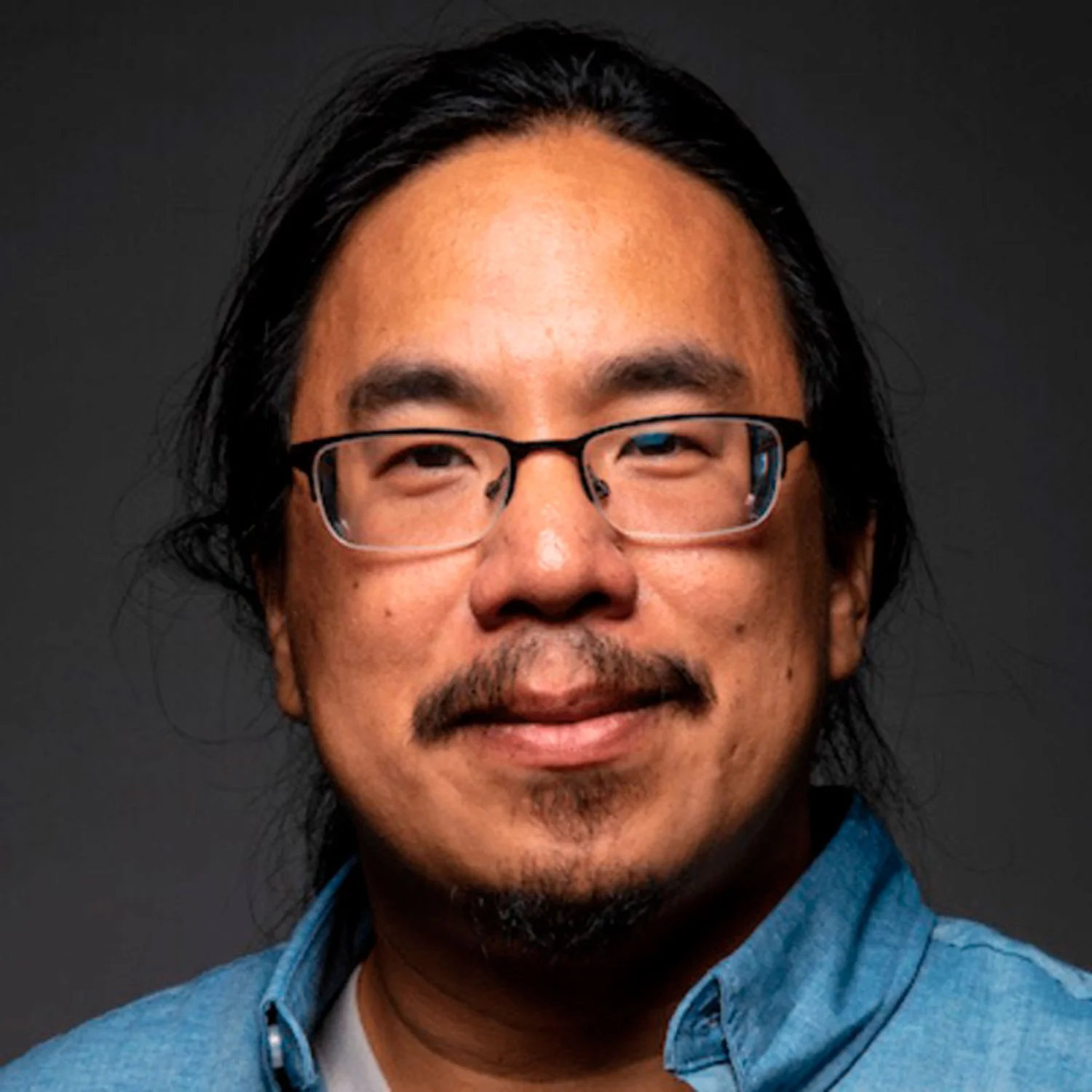
Game Over: Metrics, Big Data & Why We Need to Stop Keeping Score w/ C. THI NGUYEN - Highlights
Mar 13, 2026
Unknown duration
Social Links & Contact
Official channels & resources
Official Website
Login
RSS Feed
Login
Resolving iTunes ID\u2026 if this persists, the podcast may not be indexed on Apple Podcasts.
| Date | Episode | Topics | Guests | Brands | Places | Keywords | Sponsor | Length | |
|---|---|---|---|---|---|---|---|---|---|
| 6/10/26 | ![]() Building Bridges Between Technology, Nature & Architecture with SALWA & SELMA MIKOU | “Architecture should bring a true sensation of wellbeing. We were really lucky to experience that as children, and now as architects, we try to bring all that we learned into our practice.”Salwa and Selma Mikou are the founders of Paris-based Mikou Architecture. Born in Fez, Morocco and educated in Paris, they have spent the last two decades reimagining the relationship between the built environment and the cultural landscape.After honing their craft under two of the world’s most iconic architects, Jean Nouvel and Renzo Piano, they founded their own studio. For them, architecture is a living interaction with landscape and what they call the Atlas of Resonance, interpreting the hidden layers of a territory, geology, memory, and craft. It is a philosophy that rejects the generic, seeking instead to weave together technological innovation with local materials. Whether it is a mosque in the north of England or a hybrid innovation hub in a former royal manufactory, their work asks a fundamental question: How does space shape the way we think, learn and remember?They were selected by Rem Koolhaas to represent Morocco at the Venice Biennale. Most recently, they were commissioned by Hermès to create a 17,000-square-meter facility that bridges industrial performance with poetic expression. At the heart of their practice is a belief that architecture is not just about building—it’s about shaping relationships: between people, between past and future, between technology and craft.(0:04) The Intuitive Knowledge of Living Art(4:24) The Medina and the Geometry of Childhood(8:18) The Social Spaces of Rooftops(13:46) The Intuitive Knowledge of Living Art(15:31) Contextual Echoes & Traces of the Site(19:18) The Twin Dynamic and Confrontation with 'l'autre'(26:42) The Temples of Water(33:24) The Mosque as Pure Spatiality(38:01) The Crisis Period and Structural Systems(48:24) Building Culture with Yves Saint Laurent & Pierre Bergé(51:38) The Wast ed-dar (وسط الدار) and the Heart of a Building(57:02) Preserving the Human Core of Expression(1:04:29) Urban Acupuncture in the Modern City(1:08:46) The Smells and Sounds of Home(1:10:02) Balance, Nature, and SisterhoodEpisode Websitewww.creativeprocess.info/podInstagram:@creativeprocesspodcast | — | ||||||
| 4/18/26 | ![]() Why Do We Listen to the Talkers More Than the Builders Saving the Planet? - TOM CHI - Highlights✨ | environmental designclimate crisis+3 | Tom Chi | At One VenturesClimate Capital: Investing in the Tools for a Regenerative Future | — | climate crisissustainability+3 | — | 22m 25s | |
| 4/18/26 | ![]() Climate Capital with TOM CHI - Google X Co-founder, Founding Partner At One Ventures✨ | climate changeinvestment+4 | Tom Chi | Google XAt One Ventures+1 | — | climate capitalinvestment+5 | — | 1h 27m 27s | |
| 4/3/26 | ![]() AI, Escaping the Screen & Listening to the Living World: DAVID HASKELL on the Songs of Nature - Highlights✨ | naturebiology+4 | David George Haskell | The Forest UnseenSounds Wild and Broken+2 | Tennesseeforest floor+1 | David Haskellnature+6 | — | 17m 58s | |
| 3/13/26 | ![]() Game Over: Metrics, Big Data & Why We Need to Stop Keeping Score w/ C. THI NGUYEN - Highlights✨ | value capturequantification+4 | C. Thi Nguyen | The Score: How to Stop Playing Somebody Else's Game | — | metricsbig data+5 | — | — | |
| 3/13/26 | ![]() The Score: How to Stop Playing Somebody Else's Game with C. THI NGUYEN✨ | value captureoptimization+3 | C. Thi Nguyen | Games: Agency As ArtThe Score: How to Stop Playing Somebody Else's Game | — | trackingsocial media+3 | — | 1h 12m 03s | |
| 3/3/26 | ![]() Beyond the Plagiarism Machine: Reclaiming Imagination from AI Slurry w/ AL KENNEDY✨ | imaginationAI+4 | AL Kennedy | Spy CopsDay+1 | — | imaginationAI+5 | — | 34m 16s | |
| 2/23/26 | ![]() SIRI HUSTVEDT on Love, Grief, AI, Creativity & the Future of Humanity✨ | grieflove+4 | Siri Hustvedt | — | — | grieflove+5 | — | 1h 37m 49s | |
| 1/25/26 | ![]() Muse Cells & The Future of Health: Why Stars like Chris Hemsworth & Tony Robbins Turn to Regenerative Medicine✨ | regenerative medicineMuse cells+3 | Dr. Adeel Khan | Eterna HealthProfessor Mari Dezawa | — | Muse cellsregenerative medicine+3 | — | 21m 43s | |
| 1/23/26 | ![]() Reimagining Longevity: DR. ADEEL KHAN on Muse Cells & the Future of Regenerative Medicine✨ | regenerative medicineMUSE cell therapy+3 | Dr. Adeel Khan | Eterna Health | — | regenerative medicineMUSE cells+5 | — | 48m 12s | |
Want analysis for the episodes below?Free for Pro Submit a request, we'll have your selected episodes analyzed within an hour. Free, at no cost to you, for Pro users. | |||||||||
| 12/2/25 | ![]() The AI Wager: Betting on Technology’s Future w/ Philosopher & Author SVEN NYHOLM - Highlights✨ | AItechnology+4 | SVEN NYHOLM | — | — | AI wagertechnology+5 | — | 16m 29s | |
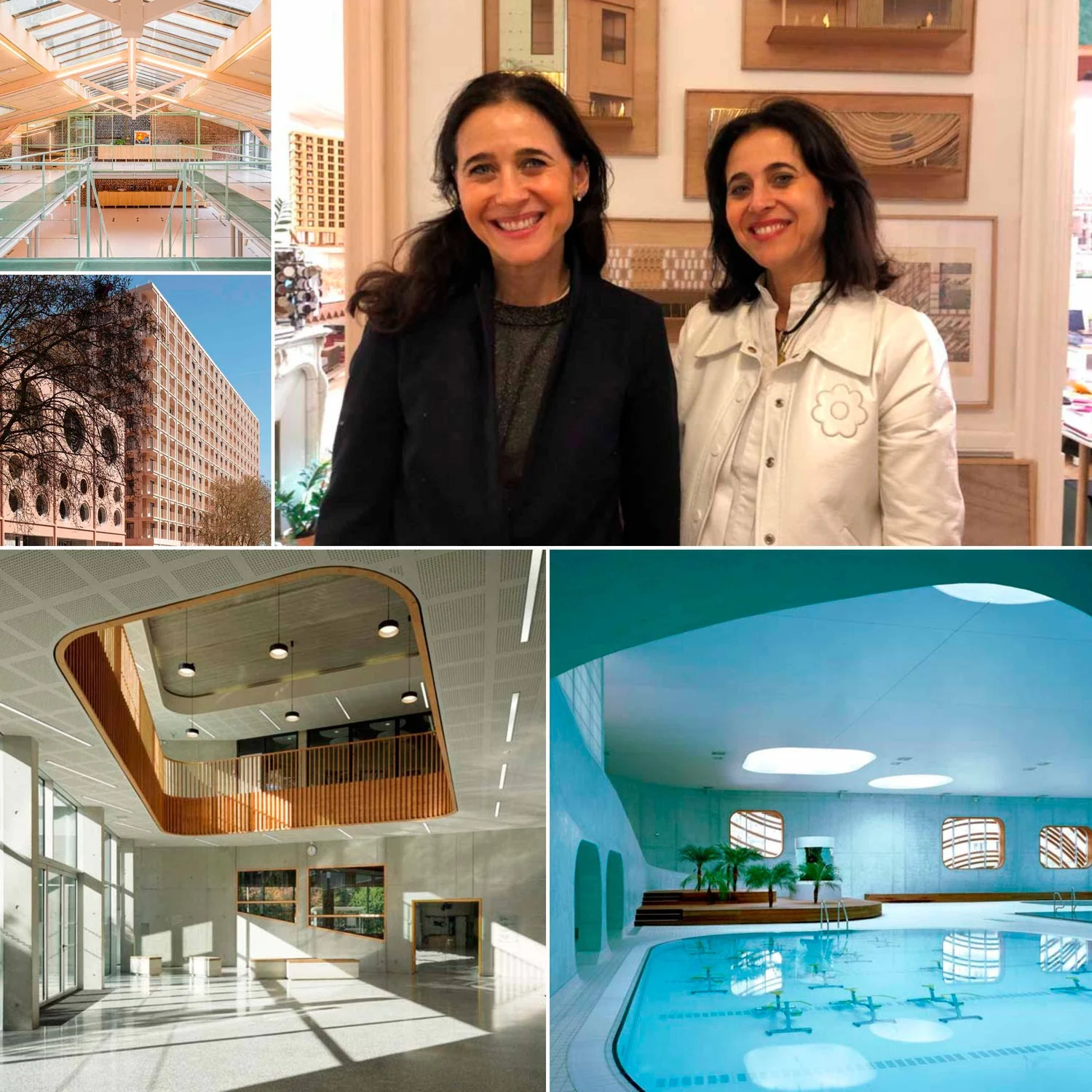
| 11/27/25 | ![]() The Ethics of AI w/ SVEN NYHOLM, Author & Lead Researcher, Munich Centre for Machine Learning | As we move towards 2026, we are in a massive “upgrade moment” that most of us can feel. New pressures, new identities, new expectations on our work, our relationships, and our inner lives. Throughout the year, I've been speaking with professional creatives, climate and tech experts, teachers, neuroscientists, psychologists, and futureists about how AI can be used intelligently and ethically as a partnership to ensure we do not raise a generation that relies on machines to think for them. It’s not that we are being replaced by machines. It’s that we’re being invited to become a new kind of human. Where AI isn’t the headline; human transformation is. And that includes the arts, culture, and the whole of society. Generative AI – the technologies that write our emails, draft our reports, and even create art – have become a fixture of daily life, and the philosophical and moral questions they raise are no longer abstract. They are immediate, personal, and potentially disruptive to the core of what we consider human work.Our guest today, Sven Nyholm, is one of the leading voices helping us navigate this new reality. As the Principal Investigator of AI Ethics at the Munich Center for Machine Learning, and co-editor of the journal Science and Engineering Ethics. He has spent his career dissecting the intimate relationship between humanity and the machine. His body of work systematically breaks down concepts that worry us all: the responsibility gap in autonomous systems, the ethical dimensions of human-robot interaction, and the question of whether ceding intellectual tasks to a machine fundamentally atrophies our own skills. His previous books, like Humans and Robots: Ethics, Agency, and Anthropomorphism, have laid the foundational groundwork for understanding these strange new companions in our lives.His forthcoming book is The Ethics of Artificial Intelligence: A Philosophical Introduction. The book is a rigorous exploration of everything from algorithmic bias and opacity to the long-term existential risks of powerful AI. We’ll talk about what it means when an algorithm can produce perfect language without genuine meaning, why we feel entitled to take credit for an AI’s creation, and what this technological leap might be costing us, personally, as thinking, moral beings.Episode Websitewww.creativeprocess.info/podInstagram:@creativeprocesspodcast | — | ||||||
| 11/9/25 | ![]() HOWARD GORDON & DANIEL PEARLE on THE BEAST IN ME, AI & The Future of Storytelling | “How do you render something interior filmically? How do you communicate the details of the lost child, of the amount of time of the stuck creative process, and even the exterior, or the externalization of the house as a kind of hellish thing that's barely staying together—literally flooding with waste—and that you can't afford? So those are the details that we had to carefully figure out how to weave. But, you know, when you look at the first 10 minutes, it could be a horror movie. From that moment, a lot can happen. But what's important about it is that it sets the table for what does happen.” -Howard GordonToday, we explore the dark psychology of obsession, guilt, and the thin line between predator and victim. Our guests are two of television's most accomplished architects of high-stakes drama and moral ambiguity: Howard Gordon, the showrunner and executive producer whose work defined a generation of thrillers with 24 and the multi-award-winning Homeland; and Daniel Pearle, an executive producer and writer who brings a distinct, penetrating depth from his background as a celebrated playwright and his work on series like Accused and American Crime Story.Episode Websitewww.creativeprocess.info/podInstagram:@creativeprocesspodcast | — | ||||||
| 11/6/25 | ![]() In the Presence of the DALAI LAMA - Doc. Director of WISDOM OF HAPPINESS - Highlights | “I can change my mind. I can reduce anger, hatred. Nothing to do with religion. All religions carry the message of love, loving kindness, and tolerance. With different views, there is a possibility to synthesize new ideas. If majority of the world leaders become female, world become safer. I feel that. Compassion is the key factor. Non-violence, compassion and self-confidence, these are key factors for happy individual, happy community, peaceful world. This century should be century of compassion, century of peace. No more bloodshed. We should develop a big “we,” rather than “we” or “they.” With these wings, you can fly.” -DALAI LAMAFor decades, the Dalai Lama has been a global symbol of peace, compassion, and resilience, a spiritual leader living in exile from his home in Tibet. But how do you capture the essence of his wisdom—the kind that can truly change a life—in a way that feels intimate and personal? My guest today, documentary filmmaker Barbara Miller, has managed to do just that in her new film, Wisdom of Happiness. It’s a beautiful film that feels less like a documentary and more like a private, heart-to-heart conversation, where he invites us into his thoughts and shares practical steps for finding inner peace in a chaotic world. She's dealt with anti-globalization, domestic violence, and the fight for female pleasure in her previous works. We’ll talk about how she shifted from exposing systemic pain to focusing on radical hope and her collaboration with Executive Producer Richard Gere and Manuel Bauer, the Dalai Lama’s personal photographer for the last thirty-five years, who made his cinematography debut with this film. She shares what the Dalai Lama taught her about living in harmony with our body, nature, and the world.Episode Website www.creativeprocess.info/podInstagram:@creativeprocesspodcast | — | ||||||
| 11/6/25 | ![]() WISDOM OF HAPPINESS - Heart-to-Heart w/ DALAI LAMA - Conversation w/ Director Barbara Miller | “ Everybody wants happiness, joyfulness, peaceful world. Our 21st century will not be easy century. Fear, anger, hatred. In our mind we created distinctions. Different nationality, different color, different religion. Strong concept of “we” and “they”. Brothers and sisters of this small planet, we are same human beings. Meanwhile, global warming is a serious problem. Destruction of this planet is actually destruction of yourself. Our common responsibility should be work together, to save our world. We all have this marvelous human brain. The problem is, when negative emotions develop, our whole mind is taken over. So, we must deal with emotions.I can change my mind. I can reduce anger, hatred. Nothing to do with religion. All religions carry the message of love, loving kindness, and tolerance. With different views, there is a possibility to synthesize new ideas. If majority of the world leaders become female, world become safer. I feel that. Compassion is the key factor. Non-violence, compassion and self-confidence, these are key factors for happy individual, happy community, peaceful world. This century should be century of compassion, century of peace. No more bloodshed. We should develop a big “we,” rather than “we” or “they.” With these wings, you can fly.” -DALAI LAMAFor decades, the Dalai Lama has been a global symbol of peace, compassion, and resilience, a spiritual leader living in exile from his home in Tibet. But how do you capture the essence of his wisdom—the kind that can truly change a life—in a way that feels intimate and personal? My guest today, documentary filmmaker Barbara Miller, has managed to do just that in her new film, Wisdom of Happiness. It’s a beautiful film that feels less like a documentary and more like a private, heart-to-heart conversation, where he invites us into his thoughts and shares practical steps for finding inner peace in a chaotic world. She's dealt with anti-globalization, domestic violence, and the fight for female pleasure in her previous works. We’ll talk about how she shifted from exposing systemic pain to focusing on radical hope and her collaboration with Executive Producer Richard Gere and Manuel Bauer, the Dalai Lama’s personal photographer for the last thirty-five years, who made his cinematography debut with this film. She shares what the Dalai Lama taught her about living in harmony with our body, nature, and the world.Episode Website www.creativeprocess.info/podInstagram:@creativeprocesspodcast | — | ||||||
| 10/14/25 | ![]() AI & The Future of Life with RISTO UUK, Head of EU Policy & Research, FUTURE OF LIFE INSTITUTE | “The Future of Life Institute has been working on AI governance-related issues for the last decade. We're already over 10 years old, and our mission is to steer very powerful technology away from large-scale harm and toward very beneficial outcomes. You could think about any kind of extreme risks from AI, all the way to existential or extinction risk, the worst kinds of risks and the benefits. You can think about any kind of large benefits that humans could achieve from technology, all the way through to utopia, right? Utopia is the biggest benefit you can get from technology. Historically, that has meant we have focused on climate change, for example, and the impact of climate change. We have also focused on bio-related risks, pandemics and nuclear security issues. If things go well, we will be able to avoid these really bad downsides in terms of existential risk, extinction risks, mass surveillance, and really disturbing futures. We can avoid that very harmful side of AI or technology, and we can achieve some of the benefits.”Today, we take a closer look at the future of artificial intelligence and the policies that determine its place in our societies. Risto Uuk is Head of EU Policy and Research at the Future of Life Institute in Brussels, and a philosopher and researcher at KU Leuven, where he studies the systemic risks posed by AI. He has worked with the World Economic Forum, the European Commission, and leading thinkers like Stuart Russell and Daniel Susskind. He also runs one of the most widely read newsletters on the EU AI Act. As this technology is transforming economies, politics, and human life itself, we’ll talk about the promises and dangers of AI, how Europe is trying to regulate it, and what it means to build safeguards for a technology that may be more powerful than anything we’ve seen before.Episode Websitewww.creativeprocess.info/podInstagram:@creativeprocesspodcast | — | ||||||
| 9/21/25 | ![]() How to Make an Algorithm in the Microwave with Poet MAYA SALAMEH | “Poetry is like one of the great loves of my life, and I think it's probably the longest relationship I'll ever have. I read a lot of poetry. I also wrote these short stories even when I was pretty young, like in second grade, and the stories kept getting shorter and shorter. My family used to go to Damascus in Syria and Lebanon every summer for three months until 2011, when the Civil War broke out in Syria. In 2015, we made our first return after that gap, and my father and I went to Lebanon for two weeks. It's the first time I felt that I belong. To the extent that was true or not, I'm obviously irrevocably American. I speak broken Arabic. I don't think I could ever live in Lebanon or Syria. But for what it was worth at 15 years old, it was a life-changing trip. I wrote my first official poem on the plane back to San Diego from that trip, and I feel that was a formative moment for me. I felt that I had a story to tell and wanted to put it to paper in the form of poetry.”In this episode of the Speaking Out of Place podcast, Professor David Palumbo-Liutalks with poet Maya Salameh about her poetry collection, How to Make an Algorithm in the Microwave, which won the prestigious Etel Adnan Poetry Prize in 2022. The judges remarked, “Maya Salameh’s poetry stood out for its inventiveness in cracking the code of life ‘between system and culture'…The turns and swerves the poems make are astonishing; the expectations they upend are remarkable… It’s a testament to the aesthetic boundaries and intellectual revolt poets of Arab heritage are pushing, breaking, and reinventing.” We talk about what led her to both technology and poetry, language and story-telling, and the challenges and joys of representing life in the diaspora. In a time of war and genocide, Salameh’s poetry shows how patterns of life and reproduction and desire persist. In her readings and discussions of three poems, we find a new lexicon and a new grammar.Maya Salameh is the author of MERMAID THEORY (Haymarket Books, 2026), HOW TO MAKE AN ALGORITHM IN THE MICROWAVE (University of Arkansas Press, 2022), winner of the Etel Adnan Poetry Prize, and the chapbook rooh (Paper Nautilus Press, 2020). She has received fellowships from the National Endowment for the Arts, Sewanee Writers’ Conference, Bread Loaf Environmental Writers’ Conference, and the President’s Committee for the Arts and Humanities, and served as a National Student Poet, America’s highest honor for youth poets. Her work has appeared in The Offing, Poetry, Gulf Coast, The Rumpus, AGNI, Mizna, and the LA Times, among others. @mayaslmhhttps://speakingoutofplace.comBluesky @palumboliu.bsky.socialInstagram @speaking_out_of_place | — | ||||||
| 9/21/25 | ![]() Art is a Fundamental Element of Life - Gallerist HANNAH BARRY on a Life in Art | “There's something fundamental about the value of art and culture. Not just being integrated for vocational reasons, but because the experience of art and having a cultural element in one's life brings enjoyment, learning, relief, or any of the many experiences and feelings that art provides. I think this is quite fundamental as an element of life. Creativity is key in any career and also in personal life, especially in terms of problem-solving, relationships, kindness, compassion, and empathy. The arts, creativity, and the cultural world at large are not just nice to have; they are essential. Their value is fundamental, although sometimes it's extremely difficult to define. To see the arts lost from the developmental moments in one's life is tragic. Developmental moments in life come at all points in the arc of one's existence. To see that taken or diminished is unfortunate. Everyone involved in working with artists, artists themselves, or those who are creative knows this and believes in it.”Today, we have with us a figure from the heart of the London art scene, Hannah Barry. At a moment when the art world often feels centered on global mega-galleries, Hannah has cultivated something truly unique in Peckham. With her gallery and the ambitious non-profit, Bold Tendencies, she has created a vibrant platform for a new generation of artists, taking risks and championing experimentation. She has been pivotal in shaping careers and bringing ambitious projects to life. We'll talk to her about the mission behind her work, her journey as a gallerist, and her latest exhibitions, including The Garden with the photographer Harley Weir.Episode Websitewww.creativeprocess.info/podInstagram:@creativeprocesspodcast | — | ||||||
| 9/16/25 | ![]() Empire of AI: Dreams & Nightmares in Sam Altman's Open AI with KAREN HAO | “My book is called Empire of AI because I'm trying to articulate this argument and illustrate that these companies operate exactly like empires of old. I highlight four features that essentially encapsulate the three things you read. However, I started talking about it in a different way after writing the book.The four features are: they lay claim to resources that are not their own, which is the centralization of resources; they exploit an extraordinary amount of labor, both in the development of the technology and the fact that they're producing labor-automating technologies that then suppress workers' ability to bargain for better rights; they monopolize knowledge production, which comes when they centralize talent.”In this episode of the Speaking Out of Place podcast, Professor David Palumbo-Liu talks with investigative journalist Karen Hao. She explains that OpenAI is anything but “open”—very early on, it left behind that marketing tag to become increasingly closed and elitist. Her massive study, Empire of AI: Dreams and Nightmares in Sam Altman’s OpenAI had a rather different subtitle in its UK edition: Inside the reckless race of total domination. She fleshes out the overlap between these two points of emphasis. Hao argues that in general, the AI mission “centralizes talent around a grand ambition” and “centralizes capital and other resources while eliminating roadblocks, regulation, and dissent.” All the while, “the mission remains so vague that it can be interpreted and reinterpreted to direct the centralization of talent, capital, resources, however the centralizer wants.” Karen explains that she chose the word “empire” precisely to indicate the colonial nature of AI’s domination: the tremendous damage this enterprise does to the poor, to racial and ethnic minorities, and to the Global South in general in terms of minds, bodies, the environment, natural resources, and any notion of democracy. This is a discussion everyone should be part of.Karen Hao is a bestselling author and award-winning reporter covering the impacts of artificial intelligence on society. She was the first journalist to profile OpenAI and wrote a book, Empire of AI, about the company and its global implications, which became an instant New York Times bestseller. She writes for publications including The Atlantic and leads the Pulitzer Center's AI Spotlight Series, a program that trains thousands of journalists worldwide on how to cover AI. She was formerly a reporter for the Wall Street Journal, covering American and Chinese tech companies, and a senior editor for AI at MIT Technology Review. Her work is regularly taught in universities and cited by governments. She has received numerous accolades for her coverage, including an American Humanist Media Award, an American National Magazine Award for Journalists Under 30, and the TIME100 AI. She received her Bachelor of Science in mechanical engineering from MIT.www.palumbo-liu.comhttps://speakingoutofplace.comBluesky @palumboliu.bsky.socialInstagram @speaking_out_of_place | — | ||||||
| 9/10/25 | ![]() Healing, Connection & Creativity in the Age of AI - ETGAR KERET on Why We Need Stories in Times of Crisis - Highlights | “I feel that when you don't tell your story, it's as if you have a limited existence. We can always have some kind of choice, but I'm saying that the story we choose may be the most crucial choice that we make, because this story will affect all the other choices.”Etgar Keret is one of the most inventive and celebrated short story writers of his generation, a voice that captures the absurdities and profound loneliness of modern life with a deceptive, almost casual wit. His work, translated into dozens of languages, uses fantastical premises—from alien visitations to parallel universes—to illuminate the most human of truths. His new collection, Autocorrect, explores a world grappling with technology, loss, and the aftershocks of a global pandemic and, more recently, war. His awards include the Cannes Film Festival’s Caméra d’Or (2007), the Charles Bronfman Prize (2016), and the prestigious Sapir Prize (2018). Over a hundred short films and several feature films have been based on his stories. Keret teaches creative writing at Ben-Gurion University of the Negev. He now has a weekly newsletter on Substack called Alphabet Soup. He's also the new MFA Director of the Jewish Theological Seminary, where he's pioneering a new approach to storytelling. Joining me today from Tel Aviv is the great Israeli writer and filmmaker Etgar Keret.“When I write my stories, I don't want to solve things in life. I just want to persuade myself that there is a way out. Maybe I am in a cell, maybe I'm trapped. Maybe I won't make it, but if I can imagine a plan for escape, then I'll be less trapped because at least in my mind, there is a way. I think that my parents are survivors. They always talked about this idea of humanity. My parents always said to me, when you look at people, don't look at their political views; that's not important. Look at the way that they look at you. If they see you, if they listen to you, if they can understand your intention, even if it's a failing one, they're your people. And if they can't, it doesn't matter.I think that when I came with my mother and father, they thought there are people, there are human beings, and there are people who want to be human beings but are still struggling. And you go with humanity; you go with the person who can go against his ideology if his heart tells him something.”Episode Websitewww.creativeprocess.info/podInstagram:@creativeprocesspodcast | — | ||||||
| 8/26/25 | ![]() Building a Vital Earth for Everyone with President of Environmental Defense Fund’s EDF Action DAVID KIEVE | “I think my role and where I'm most comfortable is focusing on the economic harms that the choices this administration is making will limit access to affordable, clean energy. Affordable energy overall, and that they will wind up harming the American people. EDF is standing up and fighting the Trump administration in court every single day. We believe, based on the facts and the law, that we have very good cases and expect to see more wins than not. When the government sets aside all of the things they need to do to land appropriately and just say, "We don't care. This is what Donald Trump wants," there is recourse to step in, intervene, and challenge that. They were sloppy the first time he was president. They're even more brazen now.”David Kieve has been on the front lines of some of the most critical environmental debates of our time. Before becoming president of EDF Action, the advocacy and political arm of the Environmental Defense Fund, he was in the White House as the director of public engagement at the Council on Environmental Quality. But his journey to the West Wing started on the campaign trail, where he was tasked with a unique role: convincing a broad coalition of voters that Joe Biden was the candidate to tackle the climate crisis. He is a strategist who understands not just the science of climate change but what it takes to implement those policies. We talk about connecting climate policy to everyday costs and the political will required to confront climate change.Episode Websitewww.creativeprocess.info/podInstagram:@creativeprocesspodcast | — | ||||||
| 8/21/25 | ![]() Hayek’s Bastards: Race, Gold, IQ & the Capitalism of the Far Right with QUINN SLOBODIAN | “The origin was really trying to make sense of that 2016-2017 moment and to ask whether the alt-right was, as we were being told, a return to the 1930s, a kind of awakening of the sleeping beast of white supremacy armed in the streets in the United States. There are many explanations, but I decided to take this kind of curious route in with the distorted readings and reinterpretations of the works of people like Ludwig von Mises and Friedrich Hayek. As a scholar of comparative literature, I wanted to write a revision based on Crack-Up Capitalism.”In this episode of the Speaking Out of Place podcast, Professor David Palumbo-Liu talks with Quinn Slobodian about his new book, Hayek’s Bastards: Race, Gold, IQ, and the Capitalism of the Far Right. He takes a deep dive into the genesis of a weird and powerful merging of two seemingly different groups the Far Right and neoliberals. Slobodian writes, “as repellent as their politics may be these radical thinkers are not barbarians the gates of neoliberalism but the bastard offspring of that line of thought itself.” They talk about how this meshing is driven by a primitive desire to ward off egalitarianism, difference, democracy, and government that services the common good. The wide-ranging talk ends with addressing DOGE, Trump's tariffs, and yes, the Jeffrey Epstein case.Quinn Slobodian is a professor of international history at the Frederick S. Pardee School of Global Studies at Boston University. His books, which have been translated into ten languages, include Globalists: The End of Empire and the Birth of Neoliberalism, Crack-Up Capitalism: Market Radicals and the Dream of a World without Democracy, and Hayek’s Bastards: Race, Gold, IQ and the Capitalism of the Far Right . A Guggenheim Fellow for 2025-6, he has been an associate fellow at Chatham House and held residential fellowships at Harvard University and Free University Berlin. Project Syndicate put him on a list of 30 Forward Thinkers and Prospect UK named him one of the World’s 25 Top Thinkers.https://speakingoutofplace.comBluesky @palumboliu.bsky.socialInstagram @speaking_out_of_place | — | ||||||
| 8/13/25 | ![]() What Do We Do with the One Life We’re Given? - Scientists, Writers, Philosophers & Changemakers Share their Stories | In this time of rapid technological change, how do we hold onto our humanity? How do stories, traditions, and community help us find meaning in loss and face an uncertain future? How can science, art, and spirituality open new pathways to understanding ourselves and the human experience?PAUL SHRIVASTAVA (Co-President of The Club of Rome) discusses the need for a holistic, eco-civilizational future, emphasizing that science, technology, and economics are important but not the whole picture. He urges us to design our own lives and livelihoods to meet diverse ecological futures, and later highlights the importance of embodied, emotional, and spiritual learning as essential to evolving human consciousness in a technologically dominated world.BAYO AKOMOLAFE (Philosopher, Psychologist, Writer & Founder of the Emergence Network) shares a deeply personal story about the loss of his father, describing how it forced him to mature quickly and become the breadwinner for his family. He reflects on the lessons learned from his children, especially his autistic son, who teaches him about grace, possibility, and futurity.MICHEL FORST (Human Rights Advocate & the UN Special Rapporteur on Environmental Defenders) explores how theology and meditation serve as ongoing sources of inspiration, shaping his values and career choices in human rights advocacy.DR. GUY LESCHZINER(Neurologist & Author of The Nocturnal Brain, The Man Who Tasted Words & other books; Consultant Neurologist & Professor at King's College London) analyzes the concept of free will, suggesting that much of what we do is influenced by factors beyond our control. He also discusses the importance of striving to make the world better, the role of sleep and dreams in memory and emotional processing, and the changing nature of mentorship and education.EIREN CAFFALL (Musician & Author of All the Water in the World) highlights the importance of preserving knowledge and human history, imagining how future generations might rebuild society after catastrophe by holding onto stories, traditions, and the hope of repair.DR. FERNANDO GARCÍA-MORENO (Neuroscientist, Ikerbasque Research Associate at the Achucarro Basque Centre for Neuroscience) explains that while our brains have not changed biologically for thousands of years, cultural evolution has accelerated. He emphasizes the unique human roles of generating and transmitting knowledge across generations.NATASHA HAKIMI ZAPATA (Journalist, Author of Another World Is Possible: Lessons for America From Around the Globe) shares her inspiration from the generosity and hope she encounters in others, and describes how connecting with nature—especially bodies of water—reinforces the importance of conservation policies that integrate human communities into ecosystems.IRVIN WEATHERSBY JR. (Author of In Open Contempt) reflects on the influence of his church upbringing and family, especially his grandmother, on his writing and creative expression. He discusses the impact of music, particularly hip hop, and the importance of lyricism and cultural heritage in shaping his literary voice.To hear more from each guest, listen to their full interviews.Episode Websitewww.creativeprocess.info/podInstagram:@creativeprocesspodcast | — | ||||||
| 8/3/25 | ![]() AI, UFOs, Perception & Reality with Artist, Geographer, Author TREVOR PAGLEN - Highlights | “If we look at the entire history of the human experience, if you saw some text or you heard some spoken language, you could 100 percent reliably infer that there was a human who created that. Our experience of having that text or that image generated for us is very akin to the experience of a magic trick, and we sort of pre-subconsciously want to attribute some kind of intelligence to what's going on on the other side.At the core of the work is that sense of curiosity, that sense of joy, that sense of beauty, and that sense of learning. I've been fortunate to have all kinds of strange and interesting experiences, whether that's seeing weird things in the sky over secret military bases in the middle of the Nevada desert, going scuba diving and finding internet cables on the bottom of the ocean, or tracking spy satellites in the sky and being able to predict when they'll appear in a flash against the backdrop of stars. The world around us is extraordinary and embodied, right? It is not on screens, and I’m very privileged to have that be so much a part of my process.”Trevor Paglen is an artist whose work makes the invisible visible, whether he's photographing secret government sites from miles away or revealing the hidden infrastructures of mass surveillance. He's a geographer by training, and he combines investigative journalism with his art practice to explore the hidden power structures of our time, including military technology and artificial intelligence. His work has been exhibited in major museums around the world, and he's also an award-winning author. His exhibitions, like 'The Black Sites' and 'Limit Tele-photography,’ have earned him critical acclaim, including a MacArthur Fellowship. He's recently opened a new exhibition at Pace Gallery in New York called Cardinals (Jun 26–Aug 15) which delves into the intriguing connections between UFO sightings, AI, and the spread of disinformation.Episode Websitewww.creativeprocess.info/podInstagram:@creativeprocesspodcast | — | ||||||
| 8/2/25 | ![]() How AI is Shaping Perception, How Deception is Sculpting Our Reality with Artist TREVOR PAGLEN | “There's a word for this brain rot, right? I think that's very real. There are studies coming out now that are showing that the more and more of our cognitive labor we offload to AI systems, the less creative we become, the less critical we become, and the less of our human faculties for reason we use. There's something sad about that, but there’s also something dangerous about it because that leaves us very open to being manipulated. The surveillance capitalism kind of economy of extracting data from every possible moment of everyday life in order to extract value. The sensor systems that we're surrounded with are not simply passive devices that are recording us; they are increasingly becoming active sculptors of our experience of reality. Playing dirty.If we look at the entire history of the human experience, if you saw some text or you heard some spoken language, you could 100 percent reliably infer that there was a human who created that. Our experience of having that text or that image generated for us is very akin to the experience of a magic trick, and we sort of pre-subconsciously want to attribute some kind of intelligence to what's going on on the other side.I’m trying to think about these other media strategies, whether that's UFO photography, psychological operations, magic, or neuroscience, and take them seriously as contributing factors to the changing visual culture. With the collection at Pace Gallery, (New York, Jun 26–Aug 15) it was really just to put those images together and show them. They’re all photographed on film. A lot of them are photographed on instant film. They’re not images that are made with AI; they're not images that are photoshopped. What I really wanted to get at was thinking about the ways in which what we see in an image is very often what we're predisposed to see. I am playing with these mechanics of perception and proposing that as a way of thinking about images now.At the core of the work is that sense of curiosity, that sense of joy, that sense of beauty, and that sense of learning. I've been fortunate to have all kinds of strange and interesting experiences, whether that's seeing weird things in the sky over secret military bases in the middle of the Nevada desert, going scuba diving and finding internet cables on the bottom of the ocean, or tracking spy satellites in the sky and being able to predict when they'll appear in a flash against the backdrop of stars. The world around us is extraordinary and embodied, right? It is not on screens, and I’m very privileged to have that be so much a part of my process.”Trevor Paglen is an artist whose work makes the invisible visible, whether he's photographing secret government sites from miles away or revealing the hidden infrastructures of mass surveillance. He's a geographer by training, and he combines investigative journalism with his art practice to explore the hidden power structures of our time, including military technology and artificial intelligence. His work has been exhibited in major museums around the world, and he's also an award-winning author. His exhibitions, like 'The Black Sites' and 'Limit Tele-photography,’ have earned him critical acclaim, including a MacArthur Fellowship. He's recently opened a new exhibition at Pace Gallery in New York called Cardinals, which delves into the intriguing connections between UFO sightings, AI, and the spread of disinformation.Episode Websitewww.creativeprocess.info/podInstagram:@creativeprocesspodcast | — | ||||||
Showing 25 of 63
Pitch Fit is a Pro feature
See how bookable this show is for guests, which brands already advertise, the per-episode ad value, and the best-fit guest and sponsor profile. The numbers are blurred on the free plan.
How readily this show books outside guests like you.
How proven this show is for host-read sponsorships.
For Guests
ProFor Advertisers
ProUpgrade to Pro to unlock guest cadence, sponsor categories, fit scores, and per-episode ad value for this show.