How to Evaluate STT for Voice Agents in Production
From Tech Stories Tech Brief By HackerNoon by HackerNoon
May 2, 2026 · 14 min
About this episode
This episode discusses how to evaluate speech-to-text for voice agents using relevant metrics for production performance.
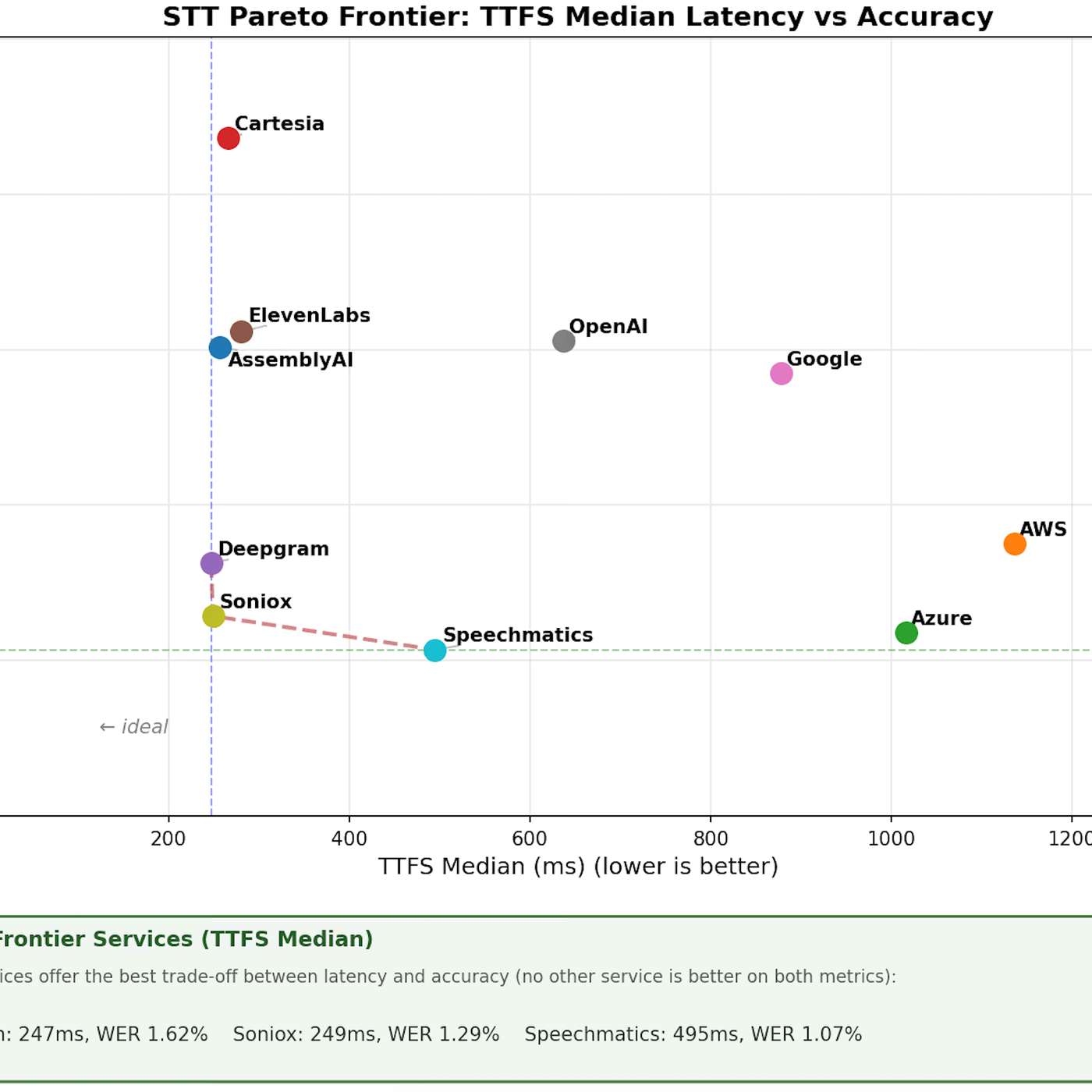
This story was originally published on HackerNoon at: https://hackernoon.com/how-to-evaluate-stt-for-voice-agents-in-production . Most STT benchmarks measure the wrong thing. Here's how to evaluate speech-to-text for voice agents using the metrics that actually drive production performance Check more stories related to tech-stories at: https://hackernoon.com/c/tech-stories . You can also check exclusive content about #ai-voice-agent , #voice-agent-stt , #pipecat , #voice-ai , #conversational-ai , #ai-voice-agent-benchmarking , #stt-evaluation-metrics , #good-company , and more. This story was written by: @speechmatics . Learn more about this writer by checking @speechmatics's about page, and for more stories, please visit hackernoon.com . Voice agent developers are optimising for TTFB — time to first byte — but it's one of the least useful metrics in production. What actually determines how fast and reliable your agent feels is TTFS (time to final segment): the gap between a user finishing speech and a stable transcript landing in your LLM. This piece breaks down the Pipecat benchmark — currently the most credible public eval for STT in voice agents — explains semantic WER and…
Topics covered
- speech-to-text
- voice agents
- production performance
- benchmarking
- accuracy
- latency
Keywords
- STT
- voice agent
- TTFB
- TTFS
- semantic WER
- word error rate
- Pipecat benchmark
- accuracy
- latency
Mentioned in this episode
Organizations: HackerNoon
More episodes of Tech Stories Tech Brief By HackerNoon
- Algorithmic Prompt Refining: Elevating Smaller LLMs with Textual Gradients · June 12, 2026 · 8 min
- The Hardest Part of Building an AI Resume Parser · June 12, 2026 · 9 min
- PdfPig C# Review: A Focused Open-Source PDF Library in 2026 · June 11, 2026 · 18 min
- The Postgres Developer's Guide to Vector Index Tradeoffs · June 11, 2026 · 20 min
- Revealing the Hidden Costs of Codebase Complexity · June 9, 2026 · 12 min
- How MoEngage Achieved Millisecond Personalization with ScyllaDB · June 9, 2026 · 22 min
Explore listener stats, chart rankings, contacts and more on the Tech Stories Tech Brief By HackerNoon podcast page.