

Technically Legal - A Legal Technology and Innovation Podcast
by Percipient - Chad Main
Is this your podcast?Insights from recent episode analysis
Audience Interest
Podcast Focus
Publishing Consistency
Platform Reach
Insights are generated by CastFox AI using publicly available data, episode content, and proprietary models.
Total monthly reach
Estimated from 3 chart positions in 3 markets.
By chart position
- 🇦🇺AU · Technology#1355K to 30K
- 🇸🇬SG · Technology#144500 to 3K
- 🇨🇴CO · Technology#194500 to 3K
- Per-Episode Audience
Est. listeners per new episode within ~30 days
3K to 18K🎙 ~2x weekly·100 episodes·Last published 1w ago - Monthly Reach
Unique listeners across all episodes (30 days)
6K to 36K🇦🇺83%🇸🇬8%🇨🇴8% - Active Followers
Loyal subscribers who consistently listen
2.4K to 14K
Market Insights
Platform Distribution
Reach across major podcast platforms, updated hourly
Total Followers
—
Total Plays
—
Total Reviews
—
* Data sourced directly from platform APIs and aggregated hourly across all major podcast directories.
On the show
Recent episodes
The Rise of the Legal Quants (Jamie Tso & Raymond Sun)
May 14, 2026
Unknown duration
The AI Pilot is Over: Legal's Moment to Move Beyond Experiments and Avoid the Innovator's Dilemma (Sabastian Niles, President & CLO Salesforce)
Apr 30, 2026
Unknown duration
Ayana Dow on Updating Crypto Regulation and Preserving the Freedom to Build (Senior Counsel, Defi Education Fund)
Apr 16, 2026
Unknown duration
Descrybe's Quest to Democratize Legal Research (Kara Peterson & Richard DiBona)
Apr 2, 2026
Unknown duration
The Uberization of UPL? How AI Is Outpacing the Unauthorized Practice of Law (Ken Crutchfield, Bill Henderson, Jim Doppke)
Mar 19, 2026
Unknown duration
Social Links & Contact
Official channels & resources
Official Website
Login
RSS Feed
Login
| Date | Episode | Description | Length | ||||||
|---|---|---|---|---|---|---|---|---|---|
| 5/14/26 |  The Rise of the Legal Quants (Jamie Tso & Raymond Sun) | Jamie Tso and Ray Sun, the founders of LegalQuants, discuss a fundamental shift in the legal profession: the transition from legal engineering to "legal quant" work. The conversation explores how technically fluent lawyers are using vibe coding, frontier AI models, and first-principles thinking to move beyond mere efficiency and toward the complete redesign of legal services. Jamie and Ray share their backgrounds in Big Law and their journeys into building custom legal tech tools. They delve into the origins of the LegalQuants community—an exclusive, invitation-only network of "builders"—and discuss the future of the billable hour in an era where AI can automate routine intellectual labor. Episode Highlights Jamie and Ray's origin stories: From annotating mutual fund prospectuses to early experiments with machine learning and TensorFlow. Ray's background as one of the world's first Legal Engineers and the creation of his Global AI Regulation Tracker. Defining the Legal Quant: How they differ from traditional Legal Engineers by seeking "alpha" and redesigning legal workflows from first principles. The growth of the LegalQuants community: From a small WhatsApp group to a global network of elite lawyer-builders. The "Unicorn Talent" gap: Why the next generation of elite legal work is defined by the operator, not the tool. The death of the friction-based pricing model and the future of value-based billing. Stress-testing Claude and Anthropic's Legal Plugin: Why the "ceiling" of AI utility is set by the lawyer's ability to design custom skills. Things We Talk About in this Episode LegalQuants Substack: legalquants.substack.com – Weekly digests and deep dives into legal AI strategy. Global AI Regulation Tracker: techieray.com – Ray Sun's interactive map of worldwide AI laws and policies. | — | ||||||
| 4/30/26 |  The AI Pilot is Over: Legal's Moment to Move Beyond Experiments and Avoid the Innovator's Dilemma (Sabastian Niles, President & CLO Salesforce) | We welcome back Sabastian Niles, President and Chief Legal Officer at Salesforce, to discuss his recent "Open Letter to Law Firms." As the legal industry hits a critical inflection point, Sabastian argues that the era of "AI theater" and small-scale pilots is over. The conversation dives deep into the Innovator's Dilemma facing law firms, the shift toward agentic AI, and how firms must reimagine their business models to remain competitive. Sabastian highlights that legal professionals are uniquely positioned to lead the charge in trusted AI transformation, provided they embrace transparency, data integration, and shared efficiency gains with their clients. Specifically, he offers four systems law firms and other service providers must establish if they want to succeed in the AI era: System of Engagement: A unified digital interface that replaces fragmented tools with seamless, real-time collaboration between firms and clients. System of Agency: An ethically governed AI framework that scales firm capacity and reimagines service delivery while maintaining strict human oversight and compliance. System of Work: A trusted, enterprise-grade platform that integrates daily professional applications into a cohesive, high-performance workflow. System of Context: A secure "single source of truth" for client data that ensures strategic counsel is grounded in history while protecting attorney-client privilege. Other Things We Talk About in this Episode The End of the Pilot Era: Moving beyond experimentation to integrated, unified AI platforms is no longer optional—it is a prerequisite for competitiveness. The Relationship Challenge: AI should be used to break down internal silos, allowing firms to bring their "tribal knowledge" and collective intelligence to every client engagement. System of Agency: A shift from manual workflows to "agentic" systems where AI agents handle triage, research, and routine queries (e.g., Salesforce's Outside Counsel Support Agent). Value-Based Evolution: Law firms must navigate the friction between the billable hour and AI-driven efficiency by focusing on superior outcomes and shared savings. Trust as Propulsion: In legal services, trust isn't just a guardrail; it's a growth lever. Mastering "Trusted Agentics" ensures human-aligned AI that respects privilege and confidentiality. | — | ||||||
| 4/16/26 |  Ayana Dow on Updating Crypto Regulation and Preserving the Freedom to Build (Senior Counsel, Defi Education Fund) | Ayana Dow, Senior Counsel at the DeFi Education Fund (DEF) shares her unique career trajectory from Big Law and Capitol Hill to the forefront of decentralized finance policy. The discussion centers on the critical need for regulatory clarity in crypto, the distinction between decentralized protocols and centralized entities, and the ongoing efforts to educate lawmakers on blockchain technology. Key takeaways include an analysis of how current market structure bills might shift oversight to the CFTC and the importance of protecting software developers to ensure the continued innovation of DeFi systems. Episode Highlights From Big Law to D.C. Policy: Dow discusses her transition from traditional M&A and regulatory work to policy-focused roles. Experience on the Hill: Insights from Dow's time as a policy fellow for Congressman Jim Clyburn and her internship at the CFTC. The Tennis Connection: How the real-time problem-solving skills learned as a collegiate tennis player apply to navigating shifting SEC guidance. The Crypto "Genesis Block": Why the potential for financial inclusion and "debanking" issues drew Dow to the crypto industry. Mission of the DeFi Education Fund: An overview of DEF's role as a nonpartisan advocacy group focused on sound policy and judicial education. Law Firm vs. In-House Policy: The structural challenges of conducting long-term policy work within the billable hour model of a traditional law firm. Why Focus on Developers?: Understanding why the DeFi Education Fund prioritizes the protection of software developers over specific tokens or protocols. Market Structure & Regulatory Harmonization: A breakdown of recent SEC and CFTC guidance and the future of congressional legislation. The Impact of Chevron Deference: Discussion on how the removal of Chevron deference changes how agencies and judges interpret financial laws. Resources Mentioned DEF's Myth v. Fact Sheet on the BRCA (Link) A DEF blog post on the Promoting Innovation in Blockchain Development Act of 2026 A DEF Letter to the SEC in response to Citadel Securities | — | ||||||
| 4/2/26 |  Descrybe's Quest to Democratize Legal Research (Kara Peterson & Richard DiBona) | Kara Peterson and Richard DiBona, the husband-and-wife co-founding team behind Descrybe, discuss the legal research platform they built designed to "democratize access to the law." The discussion explores the unique dynamics of married cofounders and how they are leveraging Generative AI to disrupt a landscape long dominated by high-cost legacy providers. Richard, a software engineer, and Kara, a marketing expert, share their journey from a personal legal issue to building a platform that processes over 100 billion tokens of legal data. They explain why they chose to build an AI-native system from the ground up rather than simply layering a "wrapper" over existing models—a decision that allows them to offer professional-grade tools at a fraction of the traditional cost. In this episode, they discuss: 🔷 Why legacy legal research platforms have maintained such strong moats—and how AI changes that 🔷 The difference between "wrapper" AI tools and building a system from the ground up 🔷 How their structured, multi-step reasoning process improves accuracy and reduces hallucinations 🔷 What benchmarking against the Bar Exam reveals about legal AI performance 🔷 Where Descrybe is headed as they expand their toolkit | — | ||||||
| 3/19/26 |  The Uberization of UPL? How AI Is Outpacing the Unauthorized Practice of Law (Ken Crutchfield, Bill Henderson, Jim Doppke) | The legal industry is not confronting a single disruption but a redistribution of work, capital, and regulation across a system under stress. The boundaries of Unauthorized Practice of Law (UPL) in the near term may be defined more by what regulators must allow than what they restrict. These are just a couple of conclusions from author and legal business strategist Ken Crutchfield in a recent trilogy of articles he penned about the pressure artificial intelligence is placing on legal service delivery and regulations barring the unauthorized practice of law. In this episode, Ken is joined by Indiana University Mauer School of Law Professor, Bill Hendersonand ethics attorney Jim Doppke to discuss how Generative AI and Large Language Models (LLMs) are disrupting the legal industry. The conversation focuses on the shifting boundaries of UPL regulation and how technology is redistributing legal work from traditional law firms to consumers and Alternative Legal Service Providers (ALSPs). The panel explores the "Uberization" of UPL rules—where technology precedes regulation—and the tension between protecting the public from "bad" AI advice and yet leveraging these tools to bridge the massive Access to Justice gap. Things We Talk About in this Episode The ROI of AI: Significant investment in legal tech is driven by the potential to replace labor with technology, rather than just replacing older software. Defining the Line: Regulators are struggling to distinguish between providing "legal information" (permissible) and "legal advice" (restricted). The "Whole Product" Solution: While AI can generate drafts, it often lacks the "tacit knowledge" and human trust required to navigate the Byzantine court system. Regulatory Shift: Rather than banning LLMs, regulators are increasingly focused on holding individual lawyers accountable for the "wrong" use of technology (e.g., failing to verify AI-generated citations). Allied Legal Professionals (ALPs): Emerging roles, like those being piloted in Indiana, may serve as a human bridge between AI-driven tools and underserved populations. Episode Credits Editing and Production: Grant Blackstock Theme Music: Home Base (Instrumental Version) by TA2MI | — | ||||||
| 3/5/26 |  From Water Pistols to Tanks: Why Data Science is the Gold Standard to Counter Class Action Fraud (Donald Beshada, CEO, Covalynt) | Donald Beshada, former litigator turned legal tech entrepreneur and CEO of Covalynt shares his journey from big-law to the forefront of using data science in litigation. Specifically, to address systemic fraud in class action settlements. The conversation explores the evolution of claims administration—from the traditional "People Magazine" notice era to the current digital landscape dominated by targeted advertising and sophisticated fraud bots. Donald explains how his company uses data science and identity resolution to bring "scientific rigor" to ensure class action settlements reach legitimate claimants while filtering out fraudulent activity. Key Takeaways: The Shift in Fraud: How class action fraud evolved from "couponing" websites to sophisticated, non-US-based bot attacks. Defensible Clarity: Why "gut feelings" about fraud don't hold up in court, and the necessity of providing an evidentiary framework for disqualifying claims. Data Science vs. Traditional Settlement Administration: A look at how the Apple Antitrust case served as an inflection point, proving that old-school matching methods are no longer sufficient for class certification or ascertainability. The Future of Notice: Moving toward a world where data science can connect retail purchases directly to individuals, potentially eliminating the need for expensive, broad-market advertising. | — | ||||||
| 2/19/26 |  Stacking Legal Skills: How Stints at Big Law, Biz Dev and and Legal Ops Paved the Way to the C-Suite for Akshay Verma (COO, SpotDraft) | Akshay Verma, COO of SpotDraft explores his non-linear journey through the legal industry. From his early days as a big-law paralegal to lawyer to a business development role to leading legal operations at tech leaders like Facebook and Coinbase, Akshay shares his unique perspective on why the most successful legal departments prioritize process over technology. The conversation dives deep into the realities of Contract Lifecycle Management (CLM), the evolution of the "agentic" legal tool, and why change management is the biggest hurdle for legal innovation. Akshay also discusses the "underdog mentality" that drew him to the startup world and the future of AI in legal workflows. Key Takeaways: Process First: Technology is not a "magic pill" for broken workflows; centralized repositories and defined approval chains must come first. The Power of BD: Business development skills (evangelism and resilience) are critical for successful legal operations leaders. The "Holy Trifecta" of Legal Tech: Every department needs a CLM, a Spend Management tool (at scale), and an agentic Workflow/Intake tool. AI vs. Lawyering: AI will replace non-legal tasks, not the lawyers themselves, making AI literacy a new standard for the profession. Episode Credits Editing and Production: Grant Blackstock Theme Music: Home Base (Instrumental Version) by TA2MI | — | ||||||
| 2/5/26 |  The Legal Ops Force Multiplier: How Nextdoor GC Sophia Contreras Schwartz Built a Lean Legal Team From Scratch | Sophia Contreras Schwartz, General Counsel at Nextdoor, discusses her unique journey of building a legal department from the ground up. Sophia discusses how her background as a musician and fitness instructor informs her collaborative leadership style and why Nextdoor identifies as "Middle Tech"—a category of companies often overlooked by one-size-fits-all regulations. The conversation explores the strategic value of hiring Legal Operations early, the specific tech stack that keeps a lean team of eight efficient, and why "versatility and curiosity" are the most important traits for in-house counsel today. Key Takeaways: The First Legal Hire: Companies should consider their first GC when they start generating significant revenue or enter highly regulated spaces. "Middle Tech" Challenges: Nextdoor faces unique regulatory hurdles, like age verification laws, which are often designed for "Big Tech" giants but create significant operational burdens for mid-sized platforms. Force Multipliers: Investing in Legal Ops early allows a small team to scale by focusing on process design and vendor management rather than just manual intake. AI as a Strategist: Using tools like GC.AI doesn't just speed up drafting; it helps in-house lawyers ask better questions of their outside counsel by identifying nuances that general AI might miss. Things We Talk About in this Episode Legal Tech Tools: Ironclad, SimpleLegal, GC.AI Organization: Chamber Music America | — | ||||||
| 1/22/26 |  Tokenization of Real World Assets: From Art to Real Estate to Private Equity (Lucas Moskowitz, General Counsel, Robinhood) | Lucas Moskowitz, General Counsel at Robinhood returns to the show to talk tokenization of Real World Assets and the current state of crypto legislation. Lucas updates us on Robinhood's evolving demographics, noting that while the platform remains a hub for first-time investors, the customer base is maturing alongside the platform's product offerings, such as retirement matching and advisory services. Moskowitz also highlights the company's commitment to financial literacy. The core of the conversation shifts to the shifting regulatory landscape regarding cryptocurrency and the potential for legislative clarity under a new administration. Moskowitz breaks down the concept of Tokenization of Real World Assets (RWA), explaining how blockchain technology can democratize access to private markets, art, and real estate. The discussion covers the technical and legal differences between "native" tokens and "wrapper" products, the benefits of 24/7 liquidity, and why the United States risks falling behind global jurisdictions like the EU and Asia if regulatory frameworks do not evolve. Key Takeaways Robinhood's Evolution: The platform now serves 26 million customers. While half are first-time investors, the company is expanding into advisory and retirement products to serve users throughout their financial lifecycles. Crypto Regulation: There is a shift from "regulation by enforcement" toward legislative clarity. Moskowitz discusses the importance of comprehensive market structure bills and stablecoin legislation to provide long-term durability for the industry. Tokenization Mechanics: Tokenization is the digital representation of a real-world asset on a blockchain. This innovation promises to increase liquidity, allow for fractional ownership of high-value assets (like private equity or art), and enable faster settlement times. The "Wrapper" Concept: Moskowitz explains Robinhood's EU offering, where customers trade a tokenized "wrapper" that represents a share of US stock held in custody, distinguishing this from companies issuing native tokens directly on the blockchain. Why Lawyers Should Care: Even those outside of securities law must pay attention to tokenization, as it is poised to impact the documentation and transfer of all real-world assets, including real estate deeds and commercial contracts. Things We Talk About in this Episode Robinhood RWA Policy Paper: Read the policy papers mentioned in the episode regarding Tokenization. Episode Credits Editing and Production: Grant Blackstock Theme Music: Home Base (Instrumental Version) by TA2MI | — | ||||||
| 1/8/26 |  Bridging Law Firm Silos: How Law Firms Can Maximize AI-Driven Cross-Selling (James Barclay, CEO Passle) | In this episode, James Barclay, CEO of Passle, discusses how legal technology is evolving to solve a big challenge in the legal industry: cross-selling. James shares the journey of Passle—from its roots in the early internet gold rush to becoming a leading thought leadership platform for the Am Law 200. The conversation covers Passle's new AI-driven tool, CrossPitch, which helps attorneys overcome the "trust and awareness" barriers that prevent internal collaboration and revenue. James explains that while content marketing is essential for lawyers to showcase expertise, the real value lies in how that expertise is shared internally within a law firm. Research suggests that firms leave at least 10% of their revenue on the table due to ineffective cross-selling. To address this, Passle developed CrossPitch, an AI tool that analyzes attorney bios and firm-wide thought leadership to automate internal networking. Key Takeaways: The Problem of Silos: Large firms often suffer from a lack of awareness; attorneys in different offices or practice groups are often unaware of their colleagues' specific expertise. AI-Powered Matching: Cross Pitch reads a firm's thought leadership and matches it with the bios of attorneys whose clients would benefit from that specific knowledge. Data Visualization: The platform provides a "Cross-Selling Intelligence Map" to help managing partners visualize collaboration and identify "dark spots" where practice groups are not engaging. Episode Credits Editing and Production: Grant Blackstock Theme Music: Home Base (Instrumental Version) by TA2MI | — | ||||||
Want analysis for the episodes below?Free for Pro Submit a request, we'll have your selected episodes analyzed within an hour. Free, at no cost to you, for Pro users. | |||||||||
| 12/30/25 |  Best of 2025: Building a Modern IP Infrastructure and Protecting Creators in the AI Age (Andrea Muttoni - President Story Foundation) | One of the most listened to episodes in 2025 featured a conversation with Andrea Muttoni, President of Story Protocol. The discussion explores how blockchain technology is being used as a foundational infrastructure for intellectual property (IP), aiming to simplify and modernize the process of registration, licensing, and monetization for creators and IP owners. Muttoni details his journey from a bedroom music producer to a product manager at Amazon and eventually to a leader in the blockchain industry, driven by a passion for the intersection of technology and creativity. The conversation delves into the core problems Story Protocol aims to solve, particularly the complexities of copyright, fair use, and attribution in the age of AI-generated content. Muttoni introduces key concepts like the Programmable IP License (PIL), a customizable and on-chain license that makes IP rights more transparent and accessible. He also provides an overview of Poseidon, a new initiative that leverages the Story Protocol to create a marketplace for IP-safe, real-world data needed to train AI models, ensuring that data creators and owners are fairly compensated. Key Takeaways Andrea's Background: From a bedroom hip-hop producer to a product manager at Amazon working on Kindle and Alexa, Muttoni shares his path to the world of crypto and blockchain. What is Story Protocol?: A deep dive into Story Protocol's mission to create an open IP blockchain. It's a way to register, license, and monetize IP in a more liquid and accessible way. The Programmable IP License (PIL): Explanation of how this universal, customizable, and on-chain license simplifies IP transactions and makes it easier for others to legally use a creator's work. Introducing Poseidon: Details on the new platform built on the Story Protocol to address the "data gold rush" for AI. Poseidon allows for the licensing of real-world, IP-cleared data to AI companies, ensuring fair compensation for contributors. Promoting Adoption: Discussion on how Story Protocol uses a web3 incentive model to encourage widespread adoption and create a network effect for its IP infrastructure. Why Story Protocol?: Muttoni explains what makes their platform uniquely suited for IP rights compared to other blockchains, emphasizing that the network was built from the ground up specifically for this use case. Things We Talk About in this Episode Story Protocol: story.foundation Story Protocol IP Portal: portal.story.foundation Poseidon: psdn.ai Story Protocol Developer Docs: docs.story.foundation WIPO Report: A report on intangible assets, mentioned as a key indicator of the value of intellectual property. | — | ||||||
| 12/24/25 |  Best of 2025 - From IP Lawyer to Investor to CEO to Legal Ecosystem Builder (Avaneesh Marwaha, Litera CEO) | Avaneesh Marwaha, the CEO of Litera, visits the show to discuss his journey from IP lawyer to becoming a legal tech CEO and investor. He discusses the motivations behind his career pivot, including his desire to be a decision-maker and his passion for the business side of law. The conversation delves into the evolution of Litera, from its origins as a document-focused migration software company to its current role as a comprehensive legal tech ecosystem. Avaneesh highlights the company's strategic shift from acquiring to building new technologies. He also emphasizes the importance of Litera's strong partnership with Microsoft and the company's focus on enhancing law firms' productivity and client service. Key Takeaways: Pivoting from Law to Business: Avaneesh's move from practicing IP law to an in-house role and eventually becoming a CEO was driven by his desire for a more active role in business decision-making. He saw lawyers as reactive to business decisions, and he wanted to be at the forefront of the action. The Value of a Law Degree in Business: Avaneesh shares his perspective on the value of a law degree for business professionals, highlighting the critical thinking and risk tolerance skills it provides. He notes that the corporate transaction course he took in law school was particularly beneficial, teaching him about corporate governance and fiduciary duties. Litera's Evolution: Avaneesh discusses how Litera has grown through strategic acquisitions and a recent focus on internal development. He explains how the company integrates various tools, like Kira and Foundation, to create a seamless ecosystem for lawyers within their daily workflows, primarily in Outlook and Word. The Impact of Generative AI: The discussion touches on the transformative impact of AI on the legal tech industry. Avaneesh explains how AI has enabled Litera to accelerate its product development and introduce features that proactively assist lawyers with tasks like document comparison and client relationship management. Build vs. Buy Strategy: Avaneesh outlines Litera's shift from a buy-heavy strategy to a more balanced build-and-invest approach. This change is largely due to the increased efficiency and speed of development enabled by AI tools. Future of Legal Tech: Avaneesh shares his vision for the future of Litera, which includes a focus on "maniacal client service" and helping law firms proactively grow their business. He believes that as automation handles routine tasks, lawyers will have more capacity for business development and client-centric work. Things We Talk About Kira Systems - A company acquired by Litera specializing in AI-powered contract analysis. Foundation Software - A business acquired by Litera focused on knowledge management. Doxly - A document formatting and repair tool. | — | ||||||
| 12/18/25 |  Best of 2025 - Benchmarking Legal AI: Measuring the Delta Between Man and Machine (Anna Guo Legalbenchmarks.ai) | In one of the most popular episodes of the year, Legalbenchmarks.ai Founder Anna Guo discusses her organization's research that tests whether artificial intelligence custom-made for legal tasks better than general AI tools. Anna is a former BigLaw lawyer who left the practice to become an entrepreneur and now focuses her energies on quantifying the utility of AI in the legal industry. Anna's initial anecdotal research for colleagues quickly revealed a strong community interest in a systematic approach to evaluating legal AI tools. This led to the creation of Legalbenchmarks.AI, dedicated to finding out where the promise of humans plus AI is truly better than humans alone or AI alone. The core of the research involves measuring the "delta," or the extent to which AI can elevate human performance. To date, Legalbenchmarks.ai conducted two major studies: one on information extraction from legal sources and a second on contract review and redlining. Key Findings from the Studies: Accuracy vs. Qualitative Usefulness: The highest-performing general-purpose AI tools (like Gemini) were often found to be more accurate and consistent. However, the legal-specific AI tools often received higher marks in qualitative usefulness and helpfulness, as they align more closely with existing legal workflows. Methodology: The testing goes beyond simple accuracy. It includes a three-part assessment: Reliability (objective accuracy and legal adequacy), Usability (qualitative metrics like helpfulness and coherence for tasks such as brainstorming), and Platform Workflow Support (integration, citation checks, and other features). Human-AI Performance: In the contract analysis study, AI tools matched or exceeded the human baseline for reliability in producing first drafts. Crucially, the data demonstrated that the common belief that "human plus AI will always outperform AI alone" was false; the top-performing AI tool alone still had a higher accuracy rate than the human-plus-AI combo. Risk Analysis: A significant finding was that legal AI tools were better at flagging material risks, such as compliance or unenforceability issues in high-risk scenarios, that human lawyers missed entirely. This suggests AI can act as a crucial safety net. Strengths Comparison: AI excels at brainstorming, challenging human bias, and performing mass-scale routine tasks (e.g., mass contract review for simple terms). Humans retain a significant edge in ingesting nuanced context and making commercially reasonable decisions that AI's instruction-following can sometimes lack. | — | ||||||
| 12/16/25 |  Best of 2025: The Future of Real Estate is Here (and It's on Blockchain) -Daniel Rollingher (GC Fabrica) | No description provided. | — | ||||||
| 12/11/25 |  Best of 2025: Building and Documenting Better Legal Workflows: Insights from Systemology Author David Jenyns | In the most listened to episode of 2025, author of "Systemology" and business systems expert, David Jenyns, discusses the importance of systemizing business processes, even in the nuanced field of law. Jenyns debunks the myth that legal work is too bespoke to be systemized, explaining how just like any other business, documenting legal workflows unlocks scalability and creativity. He shares his journey from digital SEO agency owner to becoming a systems expert and outlines the seven steps of his Systemology framework. Key Topics: The importance of documenting processes in any business, including legal services. How systemization can create space for creativity in legal work. The Systemology framework and its seven steps: Define, Assign, Extract, Organize, Integrate, Scale, and Optimize. The role of a "systems champion" in implementing a systems culture. Addressing common misconceptions about systemizing legal work. Practical tips for getting started with systemizing processes. Resources Mentioned: Systemology book by David Jenyns System Hub software The E-Myth by Michael Gerber Systemology Podcast (Mentioned interview with Crow Estate Planning firm) Episode Credits Editing and Production: Grant Blackstock Theme Music: Home Base (Instrumental Version) by TA2MI Want to keep up to date about new episodes? Technically Legal Update List. Want to learn more about Percipient (percipient.co)? Follow Chad on Linkedin: Chad Main | LinkedIn Follow the podcast on LinkedIn: Technically Legal | LinkedIn Follow the podcast on Instagram: Technically Legal | Instagram Follow the podcast on X: Technically Legal | X | — | ||||||
| 12/4/25 |  Future-Proofing Legal Ops: AI Literacy, Innovation and Augmentation (Meredith Kildow, President Consilio) | Meredith Kildow, President of Consilio discusses her career path from finance to leading global operations and delivery for one of the largest companies in the legal and eDiscovery space. Meredith shares insights into building a revenue organization from the ground up and the shift to her current role overseeing operations and delivery for a highly acquisitive company. The conversation focuses on the practical, present-day applications of Artificial Intelligence (AI) in the legal industry, examining how it's moving beyond "innovation theater" to drive ROI, efficiency, and cost reduction in corporate legal departments. Key Discussion Points: The Transition: Meredith's journey from finance to operations, tech, and ultimately, a leadership role at Consilio. Revenue Operations vs. Chief Revenue Officer (CRO): Defining the roles and how to build a robust revenue organization, particularly in an acquisitive company. Improving Delivery from a Revenue Background: The importance of client listening and how a revenue-centric mindset can enhance service delivery and collaboration between sales and operations teams. AI in Legal: Clients view AI as both a problem and a solution. Discussion covers where real adoption is happening today (e.g., contract review, eDiscovery review) and the internal pressures on corporate legal departments to show AI efficiency. The AI Skills Gap and Literacy: Addressing the need for AI literacy among legal professionals and how Consilio is adding value through guided expertise, innovation labs, and rapid prototyping. Consilio's AI Offerings: A look at tools like Aurora, ECI (Early Case Intelligence), and specialized AI suites for privilege identification (PrivGen), review, and investigations, emphasizing flexibility and a secure, private cloud environment. | — | ||||||
| 11/20/25 |  Beyond ChatGPT: Why In-House Counsel Need Purpose Built AI (Cecilia Ziniti, CEO - GC AI) | This episode features a conversation with Cecilia Ziniti, Co-Founder and CEO of GC.AI. Cecilia traces her career from early the early days of the internet to founding an AI-driven legal platform for in-house counsel. Cecilia shares her journey, starting as a paralegal at Yahoo in the early 2000s, working on nascent legal issues related to the internet. She discusses her time at Morrison & Foerster and her role at Amazon, where she was an early member of the Alexa team, gaining deep insight into AI's potential before the rise of modern large language models (LLMs). The core discussion centers on the creation of GC AI, a legal AI tool specifically designed for in-house counsel. Cecilia explains why general LLMs like ChatGPT are insufficient for professional legal work—lacking proper citation, context, and security/privilege protections. She highlights the app's features, including enhanced document analysis (RAG implementation), a Word Add-in, and workflow-based playbooks to deliver accurate, client-forward legal analysis. The episode also touches on the current state of legal tech, the growing trend of bringing legal work in-house, and the potential for AI to shift the dynamics of the billable hour. | — | ||||||
| 11/6/25 |  From 'No' to 'Go': How AI Guardrails Drive Trust, Enabling Legal to be a Business Accelerant, Not Blocker (Sabastian Niles, Salesforce President & CLO) | In this episode, Sabastian Niles, President and Chief Legal Officer at Salesforce, takes a deep dive into the intersection of corporate strategy, in-house legal careers, and the transformative power of Agentic AI. Sabastian shares his unique career path from a near two-decade tenure at a prestigious law firm before joining Salesforce. This conversation is essential for anyone interested in the evolving role of the Chief Legal Officer and the practical application of cutting-edge technology in legal operations. Things We Talk About in this Episode The In-House Career Journey: Sabastian's path highlights an early interest in the law and business connection and the role of the lawyer as a trusted advisor looking at the full lifecycle of a client's needs. Advice for Aspiring In-House Counsel: The importance of self-awareness, understanding your "why," and approaching your work with dedication and authenticity. Salesforce Legal as Customer Zero: How the Salesforce legal department uses the company's own technology, including building their outside counsel management platform on Salesforce and using internal AI agents in Slack channels for sales self-service. Understanding Agentic AI & Agentforce: An explanation of AI agents—systems that can reason and take actions on behalf of human direction—and Salesforce's focus on trusted agentics through the Agentforce Command Center. The Power of AI Guardrails: Sabastian explains that trust is an accelerant for innovation, not an obstacle. Guardrails define what an AI agent shouldn't do, ensuring responsible and ethical deployment, particularly around data access and defined roles. Legal Departments as an Accelerant, Not a Blocker: The vision for the optimized global legal department is one that is deeply embedded in product design, mitigating risk, and serving as a super connector across the entire organization. Regulation and Responsible Innovation in Artificial Intelligence: A discussion on the fast pace of tech innovation versus the speed of regulation, and why major tech companies must uphold high standards and embrace risk-based, interoperable approaches to drive responsible AI adoption. | — | ||||||
| 10/23/25 |  Benchmarking Legal AI: Measuring the Delta Between Man and Machine (Anna Guo Legalbenchmarks.ai) | Is artificial intelligence custom-made for legal tasks better than general AI tools like Google Gemini and ChatGPT? That is the topic of this episode featuring Legalbenchmarks.ai Founder Anna Guo. Anna is a former BigLaw lawyer who left the practice to become an entrepreneur and now focuses her energies on quantifying the utility of AI in the legal industry. Anna's initial anecdotal research for colleagues quickly revealed a strong community interest in a systematic approach to evaluating legal AI tools. This led to the creation of Legalbenchmarks.AI, dedicated to finding out where the promise of humans plus AI is truly better than humans alone or AI alone. The core of the research involves measuring the "delta," or the extent to which AI can elevate human performance. To date, Legalbenchmarks.ai conducted two major studies: one on information extraction from legal sources and a second on contract review and redlining. Key Findings from the Studies: Accuracy vs. Qualitative Usefulness: The highest-performing general-purpose AI tools (like Gemini) were often found to be more accurate and consistent. However, the legal-specific AI tools often received higher marks in qualitative usefulness and helpfulness, as they align more closely with existing legal workflows. Methodology: The testing goes beyond simple accuracy. It includes a three-part assessment: Reliability (objective accuracy and legal adequacy), Usability (qualitative metrics like helpfulness and coherence for tasks such as brainstorming), and Platform Workflow Support (integration, citation checks, and other features). Human-AI Performance: In the contract analysis study, AI tools matched or exceeded the human baseline for reliability in producing first drafts. Crucially, the data demonstrated that the common belief that "human plus AI will always outperform AI alone" was false; the top-performing AI tool alone still had a higher accuracy rate than the human-plus-AI combo. Risk Analysis: A significant finding was that legal AI tools were better at flagging material risks, such as compliance or unenforceability issues in high-risk scenarios, that human lawyers missed entirely. This suggests AI can act as a crucial safety net. Strengths Comparison: AI excels at brainstorming, challenging human bias, and performing mass-scale routine tasks (e.g., mass contract review for simple terms). Humans retain a significant edge in ingesting nuanced context and making commercially reasonable decisions that AI's instruction-following can sometimes lack. Discussion Highlights: [0:00] – Introduction and background of Anna Guo and Legal Benchmarks AI. [4:30] – The impetus for starting systematic AI benchmarking. [6:00] – Explaining the concept of measuring the "delta" in performance. [9:00] – Detailed breakdown of the three-part AI assessment methodology. [15:00] – Discussion of the contrasting results: general LLM accuracy vs. legal AI qualitative value. [19:00] – Results on AI performance matching human reliability in contract drafting. [21:00] – Debunking the myth about Human + AI always outperforming AI alone. [23:00] – The finding that legal AI excels at surface material risks that lawyers miss. [27:00] – A SWOT analysis of when to use humans and when to use AI. [30:00] – Future roadmap for Legal Benchmarks AI research. | — | ||||||
| 10/9/25 | 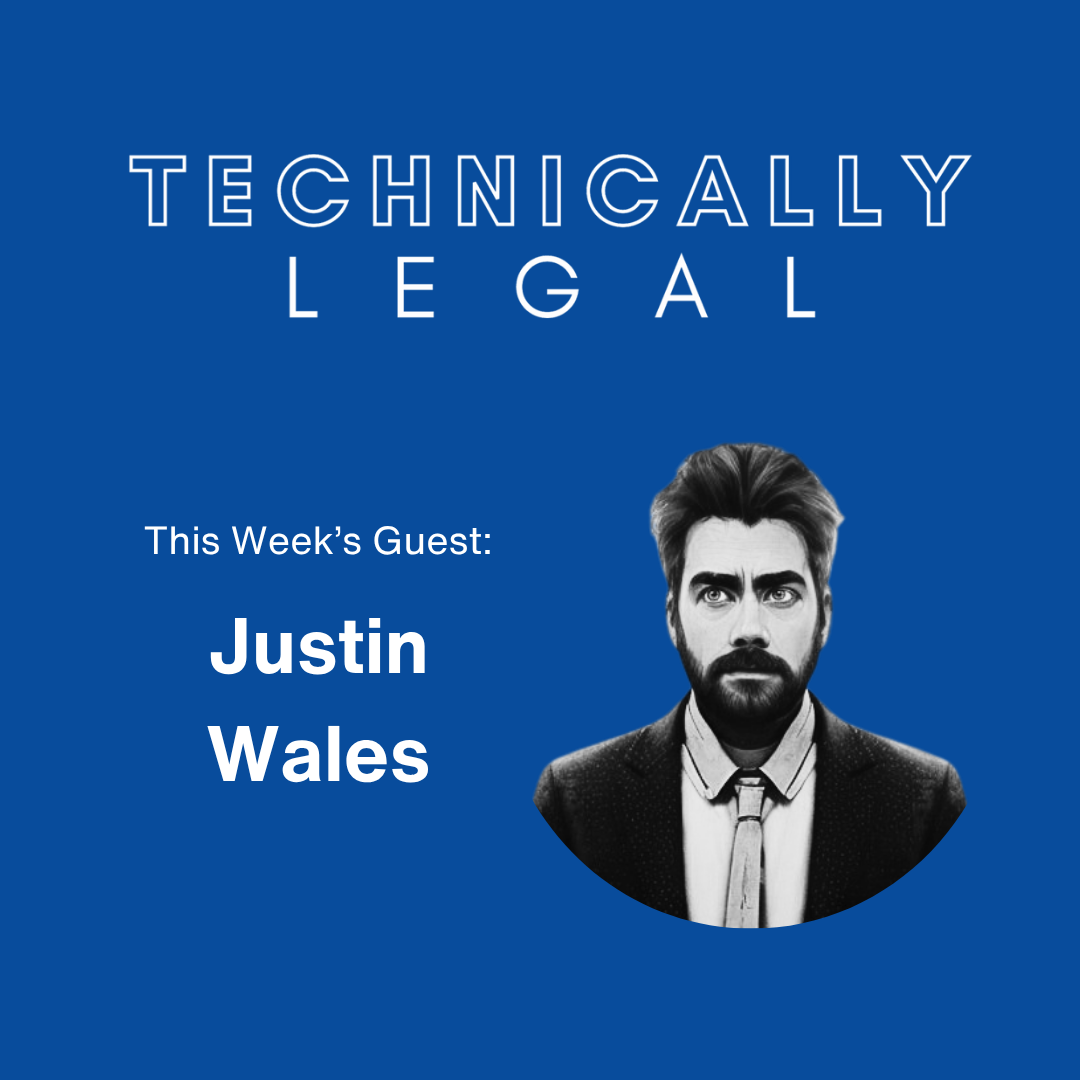 Want to be a Crypto Lawyer? Rule # 1: Use the Technology. Rule #2: Beware of Hyper-Specialization (Justin Wales-Head of Legal, Crypto.com & Author of Crypto Legal Handbook) | Justin Wales, Head of Legal for the Americas at Crypto.com, and author of The Crypto Legal Handbook visits the show to provide his unique perspective on pivoting from a career in Constitutional Law, including work on high-profile appellate cases like the Obergefell gay marriage decision, to becoming a trailblazer in crypto law and blockchain technology. He shares his serendipitous journey stemming from a law school article that launched his legal career and his subsequent deep dive into crypto, sparked by WikiLeaks accepting Bitcoin donations. The discussion covers the evolution of his practice to one of the first successful crypto legal groups at a large law firm. Justin emphasizes the necessity for any lawyer in the space to use the technology and become a generalist to navigate the multi-jurisdictional and rapidly evolving industry. Finally, the conversation touches on the critical distinction between centralized finance (CeFi) and decentralized finance (DeFi), and his outlook that crypto's infrastructure will ultimately serve as the underpinning for future advancements like Artificial Intelligence (AI) and the Internet of Things (IoT). Episode Highlights: * Justin's start in Constitutional Law, beginning with a law school paper on unconscionable cruise ship employment contracts that led to Supreme Court brief writing. * The shift to crypto law: WikiLeaks and Bitcoin's role in it introduced Justin to blockchain technology. * Building a pioneering crypto legal practice at a large firm in the early days (2013-2015). * Why the best in-house lawyers, especially in a cutting-edge field like crypto, need to be generalists, not hyper-specialized. * The inspiration and philosophy behind writing The Crypto Legal Handbook—creating an affordable, regularly updated, and candid resource for students and practitioners. * Advice for aspiring crypto lawyers today: the field is more mature and requires blending traditional financial regulatory expertise with an industry-wide approach. * The fundamental distinction between Centralized Finance (CeFi) and the legally complex, more innovative world of Decentralized Finance (DeFi). * Rule #1 for Crypto Lawyers: Why you must use the technology and the risks of lawyers who are frozen in time with their technical understanding. * High-level overview of US policy efforts to regulate crypto, including the GENIUS Act (Stablecoins) and the Clarity Act (Securities vs. Commodities regulation). * Justin's crystal ball: The long-term view that crypto infrastructure will eventually become an unseen layer beneath the rise of AI agents and IoT. Things We Talk About in this Episode * Book: The Crypto Legal Handbook by Justin Wales * Book: Read Write Own by Chris Dixon * JustinWales.com (for more information on the book and author) | — | ||||||
| 9/25/25 | 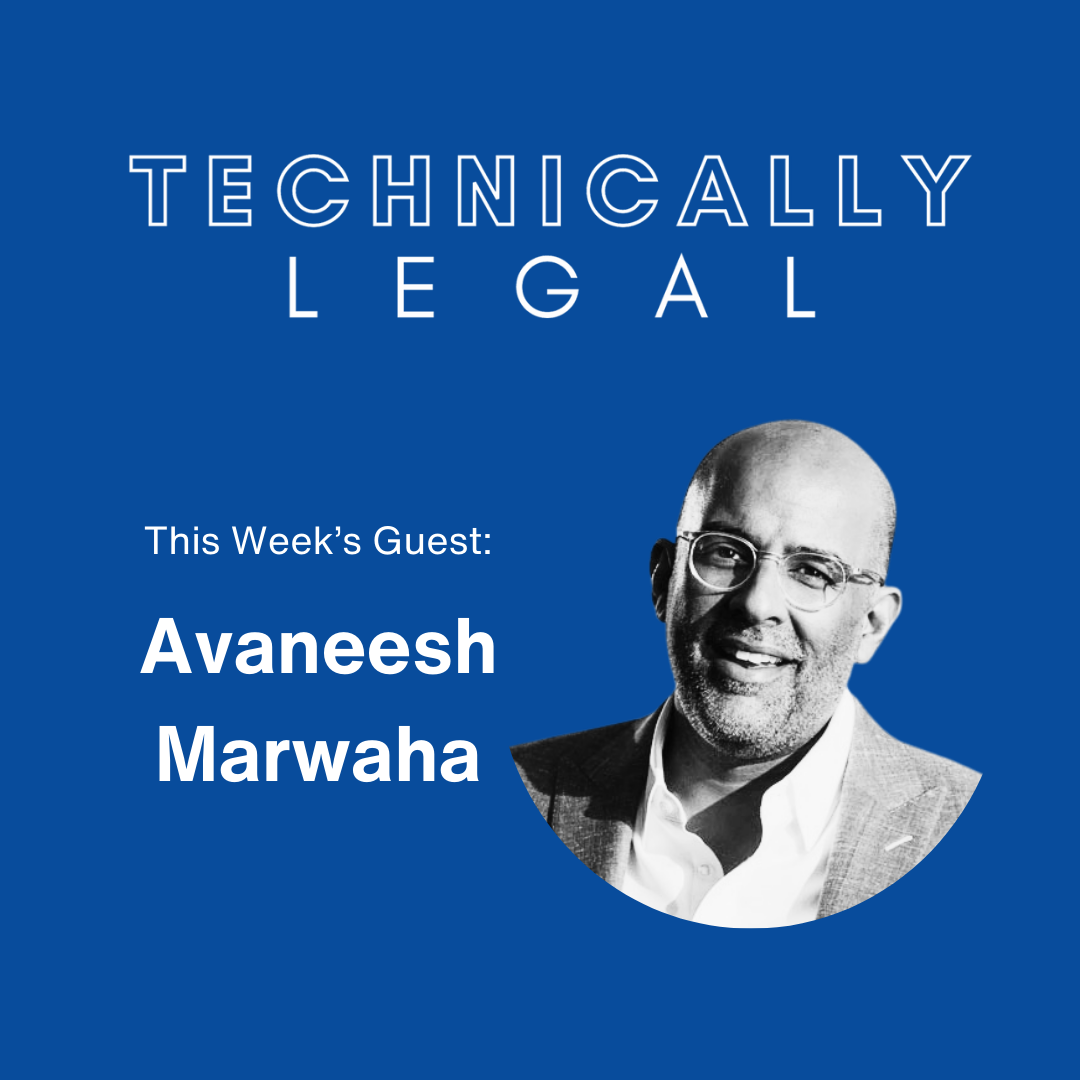 The Business of Law: From IP Lawyer to Investor to CEO to Legal Tech Ecosystem Builder (Avaneesh Marwaha, Litera CEO) | Avaneesh Marwaha, the CEO of Litera, visits the show to discuss his journey from IP lawyer to becoming a legal tech CEO and investor. He discusses the motivations behind his career pivot, including his desire to be a decision-maker and his passion for the business side of law. The conversation delves into the evolution of Litera, from its origins as a document-focused migration software company to its current role as a comprehensive legal tech ecosystem. Avaneesh highlights the company's strategic shift from acquiring to building new technologies. He also emphasizes the importance of Litera's strong partnership with Microsoft and the company's focus on enhancing law firms' productivity and client service. Key Takeaways: Pivoting from Law to Business: Avaneesh's move from practicing IP law to an in-house role and eventually becoming a CEO was driven by his desire for a more active role in business decision-making. He saw lawyers as reactive to business decisions, and he wanted to be at the forefront of the action. The Value of a Law Degree in Business: Avaneesh shares his perspective on the value of a law degree for business professionals, highlighting the critical thinking and risk tolerance skills it provides. He notes that the corporate transaction course he took in law school was particularly beneficial, teaching him about corporate governance and fiduciary duties. Litera's Evolution: Avaneesh discusses how Litera has grown through strategic acquisitions and a recent focus on internal development. He explains how the company integrates various tools, like Kira and Foundation, to create a seamless ecosystem for lawyers within their daily workflows, primarily in Outlook and Word. The Impact of Generative AI: The discussion touches on the transformative impact of AI on the legal tech industry. Avaneesh explains how AI has enabled Litera to accelerate its product development and introduce features that proactively assist lawyers with tasks like document comparison and client relationship management. Build vs. Buy Strategy: Avaneesh outlines Litera's shift from a buy-heavy strategy to a more balanced build-and-invest approach. This change is largely due to the increased efficiency and speed of development enabled by AI tools. Future of Legal Tech: Avaneesh shares his vision for the future of Litera, which includes a focus on "maniacal client service" and helping law firms proactively grow their business. He believes that as automation handles routine tasks, lawyers will have more capacity for business development and client-centric work. Things We Talk About Kira Systems - A company acquired by Litera specializing in AI-powered contract analysis. Foundation Software - A business acquired by Litera focused on knowledge management. Doxly - A document formatting and repair tool. | — | ||||||
| 9/11/25 |  Ben Chiriboga (Nexl) on Legal Tech, Innovation, and the Future of Law | A conversation with Ben Chiriboga, Chief Growth Officer at legal CRM company Nexl and host of the This Legal Life podcast. Ben shares his journey from a litigator to a legal tech innovator. He recounts how an early e-discovery tool using natural language processing completed in six hours what had taken him six months, leading to an epiphany about the power of legal technology. The conversation delves into the legal industry's historical resistance to technology, prioritizing billable hours over efficiency, and how Ben leveraged his legal experience to transition into a new role in tech. Ben discusses the challenges of building a legal tech company and the critical distinction between a general CRM and one designed specifically for law firms. The episode concludes with a thought-provoking discussion on the impact of AI on the legal profession, focusing on what aspects of law are truly "fundamental" and what new roles and jobs AI will create. Key Takeaways The Power of Tech: Legal tech tools can drastically improve efficiency, as demonstrated by an e-discovery tool that performed six months of work in just six hours. Transitioning Careers: A background in law can be a valuable asset in the legal tech sector, but success requires adapting to new skills like sales, marketing, and growth strategy. The "Why" Behind a Legal CRM: General CRMs are built for sales teams with built-in incentive structures, whereas a legal-specific CRM, like Nexle, is designed to passively collect and enrich data without requiring lawyers to manually input information. The Fundamentals of Law: The human element—relationship building, counseling, and strategic advisory—is the core function of a lawyer that AI cannot replicate. The Future of Legal Jobs: AI's true impact will not be in better-drafted motions, but in the creation of new "legal adjacent" roles and business models that merge legal expertise with technology and data. | — | ||||||
| 8/28/25 | 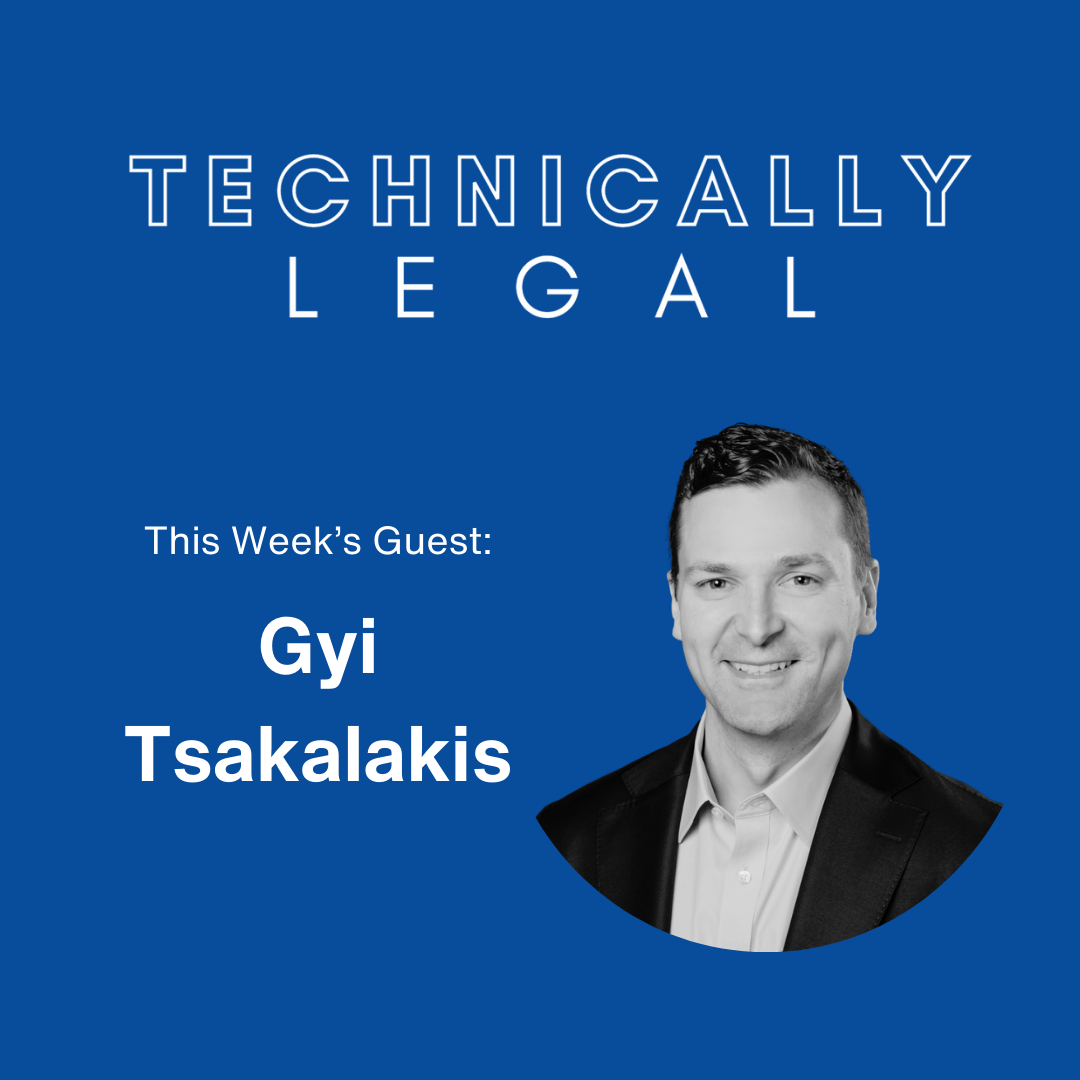 Do What the Bots Cannot: How AI Is Reshaping Legal Marketing, Data Analysis and Biz Dev, But Not the Human Connection (Gyi Tsakalakis, AttorneySync) | We welcome back legal marketing expert Gyi Tsakalakis, President of AttorneySync and host of the Lunch Hour Legal Marketing podcast. Five years after Gyi's first appearance on Technically Legal, he discusses the dramatic shifts in digital marketing for law firms, driven largely by the rise of artificial intelligence. Gyi highlights how AI is changing the landscape for lawyers, from automating back-office functions and data analysis to influencing content creation and search engine optimization (SEO). He explains why law firms must diversify their marketing channels beyond just Google to adapt to the new era of conversational search and AI overviews. Despite these technological advances, Gyi emphasizes that the human connection, including a simple handwritten note, remains the most powerful tool in an attorney's arsenal. He argues that as technology automates the mundane, it forces lawyers to focus on the relationships and empathy that truly differentiate their practice. Key Takeaways: Diversify Marketing Channels: Law firms must move beyond a "one-trick pony" approach with platforms like Google and diversify their client acquisition strategies to include social media, email, and local events. The Problem with Client Intake: Gyi discusses the persistent issue of lawyers not responding to inquiries and how AI can help automate certain parts of the intake process, though the human touch is still crucial for building trust. Do What the Bots Cannot: Attorneys should leverage AI for tasks that can be automated (e.g., scheduling, data analysis) to free up time to focus on complex legal work and building meaningful client relationships. AI for Data Analysis: A powerful, overlooked use case for AI in a law firm is analyzing internal data, such as call transcripts and financial records, to identify blind spots and inform marketing strategies. The Future of SEO and Search: Gyi predicts that search will become more conversational and influenced by AI Overviews and that ad-based models will be integrated into all major AI platforms. | — | ||||||
| 8/14/25 |  Story Protocol: Building a Modern IP Infrastructure and Protecting Creators in the AI Age (Andrea Muttoni - President Story Foundation) | This episode features a conversation with Andrea Muttoni, President of Story Protocol. The discussion explores how blockchain technology is being used as a foundational infrastructure for intellectual property (IP), aiming to simplify and modernize the process of registration, licensing, and monetization for creators and IP owners. Muttoni details his journey from a bedroom music producer to a product manager at Amazon and eventually to a leader in the blockchain industry, driven by a passion for the intersection of technology and creativity. The conversation delves into the core problems Story Protocol aims to solve, particularly the complexities of copyright, fair use, and attribution in the age of AI-generated content. Muttoni introduces key concepts like the Programmable IP License (PIL), a customizable and on-chain license that makes IP rights more transparent and accessible. He also provides an overview of Poseidon, a new initiative that leverages the Story Protocol to create a marketplace for IP-safe, real-world data needed to train AI models, ensuring that data creators and owners are fairly compensated. Key Takeaways Andrea's Background: From a bedroom hip-hop producer to a product manager at Amazon working on Kindle and Alexa, Muttoni shares his path to the world of crypto and blockchain. What is Story Protocol?: A deep dive into Story Protocol's mission to create an open IP blockchain. It's a way to register, license, and monetize IP in a more liquid and accessible way. The Programmable IP License (PIL): Explanation of how this universal, customizable, and on-chain license simplifies IP transactions and makes it easier for others to legally use a creator's work. Introducing Poseidon: Details on the new platform built on the Story Protocol to address the "data gold rush" for AI. Poseidon allows for the licensing of real-world, IP-cleared data to AI companies, ensuring fair compensation for contributors. Promoting Adoption: Discussion on how Story Protocol uses a web3 incentive model to encourage widespread adoption and create a network effect for its IP infrastructure. Why Story Protocol?: Muttoni explains what makes their platform uniquely suited for IP rights compared to other blockchains, emphasizing that the network was built from the ground up specifically for this use case. Things We Talk About in this Episode Story Protocol: story.foundation Story Protocol IP Portal: portal.story.foundation Poseidon: psdn.ai Story Protocol Developer Docs: docs.story.foundation WIPO Report: A report on intangible assets, mentioned as a key indicator of the value of intellectual property. | — | ||||||
| 7/24/25 |  Nelson Rosario on Decentralized AI: An Alternative to Big Tech or a Complimentary Approach? | Crypto lawyer Nelson Rosario returns to the show to discuss the evolving landscape of decentralized AI and his role as General Counsel for the the Advanced AI Society (formerly known as the Decentralized AI Society), an association focused on engineering best practices, advocating for policy, fostering community, and enabling capital formation for decentralized AI startups Nelson discusses the changing definition of decentralization, highlighting its origins in early crypto's focus on resilience and censorship resistance, and its current intersection with artificial intelligence. He explains the core reasons driving decentralized AI efforts: the potential for single service providers to control our access to AI models, computing power, and the data that underlies it all. The conversation explores how decentralized AI aims to offer an alternative to large tech companies like Facebook, Microsoft, and OpenAI, But Nelson also points out the challenges of competing with resource rich organizations and suggests that decentralized AI might complement existing systems by "chopping it up" into distributed components. The discussion also touches upon current players in the decentralized AI space, notably Bitensor and HyperCycle, and highlights the role of decentralized storage solutions like Filecoin and Arweave. Nelson concludes by reflecting on the potentially profound societal impact of AI, likening it to other "tectonic technological revolutions" in human history. Drawing from the "Butlerian Jihad" concept in Frank Herbert's Dune, he cautions against blindly trusting AI and underscores the need for humans to remain intentional in their use of technology to prevent a decline in critical thinking and creativity. Key Takeaways: Decentralization in AI aims to prevent single points of control over models, compute, and data, promoting censorship resistance. Decentralized AI faces challenges in competing with large, centralized tech companies due to their immense resources, but can serve as a complementary set of systems. DePIN (Decentralized Physical Infrastructure) is crucial for the robust existence of decentralized AI applications. Industry associations like the Advanced AI Society play a vital role in setting standards, advocating for policy, building community, and attracting capital for decentralized AI projects. AI represents a transformative technological shift, and intentional human engagement is critical to navigate its societal implications. | — | ||||||
Showing 25 of 100
Sponsor Intelligence
Sign in to see which brands sponsor this podcast, their ad offers, and promo codes.
Chart Positions
3 placements across 3 markets.
Chart Positions
3 placements across 3 markets.