
Insights from recent episode analysis
Audience Interest
Podcast Focus
Publishing Consistency
Platform Reach
Insights are generated by CastFox AI using publicly available data, episode content, and proprietary models.
Est. Listeners
Based on iTunes & Spotify (publisher stats).
- Per-Episode Audience
Est. listeners per new episode within ~30 days
10,001 - 25,000 - Monthly Reach
Unique listeners across all episodes (30 days)
25,001 - 75,000 - Active Followers
Loyal subscribers who consistently listen
15,001 - 40,000
Market Insights
Platform Distribution
Reach across major podcast platforms, updated hourly
Total Followers
—
Total Plays
—
Total Reviews
—
* Data sourced directly from platform APIs and aggregated hourly across all major podcast directories.
On the show
Recent episodes
S5Ep14: Personalisation is just good prediction with CEO James Taylor
May 5, 2026
Unknown duration
S5Ep13: Christmas in April with Pete Markey & Leanne Tomasevic powered by Electric Twin
Apr 27, 2026
Unknown duration
The Singles: The hot hits of April with McDonald’s, KitKat & Bieber
Apr 21, 2026
Unknown duration
S5Ep12: Meet The Young Lions Headed to Cannes
Apr 13, 2026
Unknown duration
S5Ep11: Descript CEO on What Actually Grows A Product.
Mar 31, 2026
Unknown duration
Social Links & Contact
Official channels & resources
Official Website
Login
RSS Feed
Login
| Date | Episode | Description | Length | ||||||
|---|---|---|---|---|---|---|---|---|---|
| 5/5/26 | 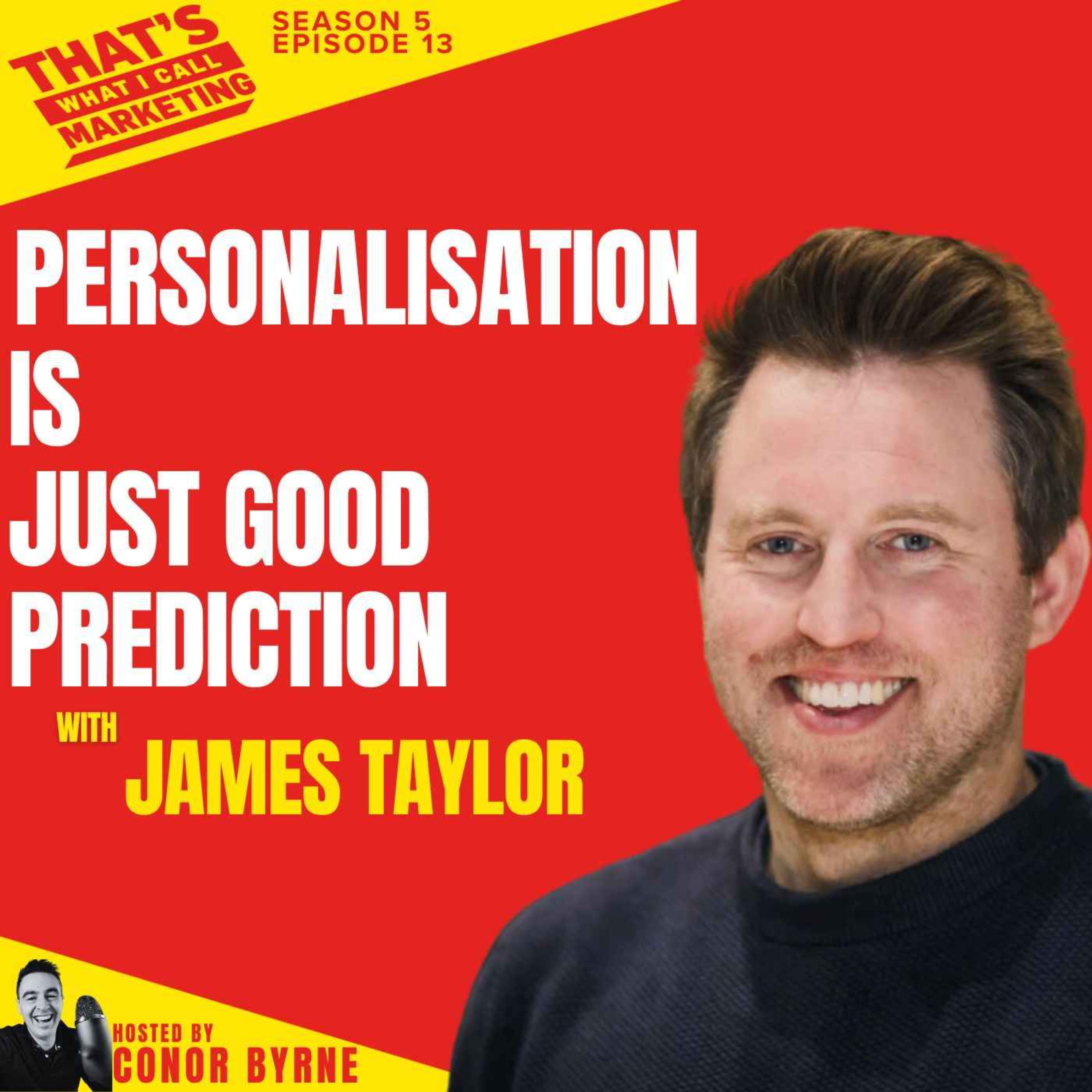 S5Ep14: Personalisation is just good prediction with CEO James Taylor S5Ep14: Personalisation is just good prediction with CEO James Taylor | We talk about personalisation as if it’s about the person. It isn’t. It’s about prediction.”That line sits at the centre of this conversation with James Taylor, CEO & Founder of A Particular Audience and once you hear it properly, it’s difficult to go back to how most marketing teams currently think about relevance. Because for years, personalisation has been framed as something close to one-to-one messaging. The idea that if we just had enough data, we could tailor every experience to the individual. It sounds right. It feels intuitive. And yet, in practice, it has largely disappointed.What James lays out here is a different way of understanding the problem.Not who the customer is — but what they are doing.Not static segments — but real-time signals.Not demographics — but behaviour.Drawing on his experience building AI-driven recommendation systems used by global retailers, he explains how the most effective ecommerce experiences are not built around people, but around patterns. Around the relationships between products, actions, and intent. Around what millions of other customers have done before you, and what that makes likely next. This fundamentally changes how you think about websites, search, media, and even creativity.Along the way, the conversation explores why so many early personalisation efforts failed, how Amazon and Netflix approached the problem differently, and why most retailers are still playing catch-up despite having access to the same underlying data.There’s also a more grounded thread running through it — the reality of AI in practice. Not the version you see in product demos or LinkedIn posts, but the version that still requires constraints, rules, and human oversight. The version that gets things wrong. The version that can be incredibly powerful, but only when properly understood.For marketers, there’s a useful tension here, on one side, the promise of hyper-relevance and automation, on the other, the discipline required to make it actually work.This episode sits right in that space.⏱️ Key Moments:00:00 – Why “you are not your demographic” changes everything02:15 – From investment banking to building AI products08:00 – The real meaning of personalisation (and why it’s been misunderstood)12:30 – Behaviour vs demographics: what actually drives relevance18:00 – Building a recommendation engine from scratch26:00 – Why most retailers still lag behind Amazon30:00 – How AI is changing marketing teams34:00 – The limits of AI (and why rules still matter)36:30 – “Personalisation is just good prediction”What you’ll take from this episode:Why most personalisation strategies fail to deliverHow recommendation systems actually work in ecommerceThe difference between explicit and implicit customer signalsWhy demographics are often a poor proxy for behaviourHow AI should (and shouldn’t) be used in marketing todayWhat marketers need to rethink about relevance and experience designBrought to you by TracksuitTracksuit is the always-on brand tracking platform helping marketers understand brand health, measure impact, and make better decisions over time.👉 https://gotracksuit.comListen / Follow That’s What I Call Marketing:🎧 Spotify: https://open.spotify.com/show/7MXhujDpTzbSRRbyQFgdWp📩 Email: thatwhatswhatIcallmarketing@gmail.comSubscribe for weekly conversations with leading marketers. Hosted on Acast. See acast.com/privacy for more information. | — | ||||||
| 4/27/26 | 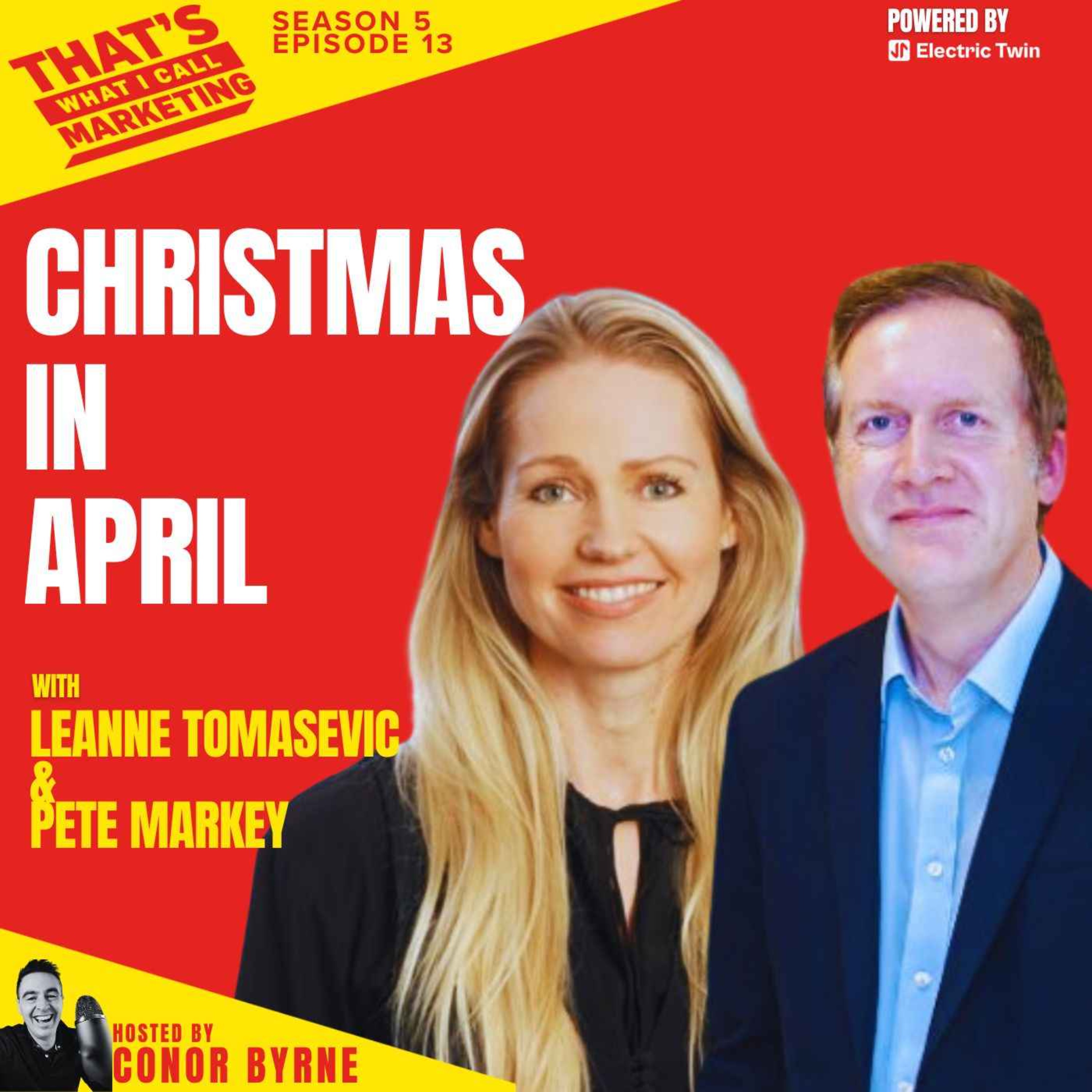 S5Ep13: Christmas in April with Pete Markey & Leanne Tomasevic powered by Electric Twin S5Ep13: Christmas in April with Pete Markey & Leanne Tomasevic powered by Electric Twin | How Brands Should Really Be Planning Christmas CampaignsWhat happens when you start planning Christmas… in April?In this episode of That’s What I Call Marketing, Conor Byrne is joined by Pete Markey (former CMO of Boots, Marketing Week Marketer of the Year) and Leanne Tomasevic (Insights Lead at Electric Twin) to explore how brands should approach Christmas advertising — using real-time synthetic audience insights.Instead of guessing what consumers want, this episode puts Electric Twin’s platform to the test live, revealing how marketers can simulate audience reactions, test ideas, and sharpen creative briefs months before campaigns go live.The result is a grounded, practical look at:What people actually want from Christmas ads in 2026Why emotional storytelling still matters (but needs reframing)The role of celebrities, music, and consistencyHow to balance commercial pressure with authenticityAnd how AI-driven research can speed up better decisionsIf you’re working on a Christmas campaign, brand strategy, or creative development, this is a genuinely useful watch.⏱️ Timestamps00:00 – The reality of planning Christmas in April01:10 – What Electric Twin actually does (synthetic audiences explained)03:00 – Why speed matters in modern marketing decision-making05:30 – Live demo: Understanding the mood of the nation at Christmas08:30 – What consumers really want this year (family, realism, restraint)12:00 – Gifting trends: practicality vs meaningful connection14:30 – The balance between storytelling and selling16:00 – What people want from Christmas ads now18:00 – Should brands use celebrities? (and when it works)21:00 – The role of consistency (Kevin the Carrot, John Lewis, Coca-Cola)24:00 – Realism vs escapism in Christmas creative27:00 – How agencies can use this to build stronger briefs29:00 – The most memorable Christmas ads and why they last32:00 – Should brands reuse ads instead of making new ones?33:00 – Why music is critical to Christmas advertising effectiveness35:30 – Final thoughts: faster insight, better decisions🎯 Key TakeawaysChristmas advertising isn’t about excess — it’s about connection under constraintConsumers want authenticity, not performanceCreative effectiveness improves when insight is iterative, not staticConsistency often beats novelty in building long-term brand memoryAI isn’t replacing research — it’s changing how quickly you can think🔗 Links & ResourcesLearn more about Electric Twin: https://electrictwin.comListen to more episodes: That’s What I Call MarketingPrevious episode with Dr. Ben Warner (Synthetic Research deep dive)🎙️ About the PodcastThat’s What I Call Marketing features conversations with leading marketers, CMOs, and industry thinkers — focused on how marketing actually works in practice.If you’re working on Christmas 2026 right now, get in touch with Electric Twin Hosted on Acast. See acast.com/privacy for more information. | — | ||||||
| 4/21/26 |  The Singles: The hot hits of April with McDonald’s, KitKat & Bieber The Singles: The hot hits of April with McDonald’s, KitKat & Bieber | The Singles is back with a new line-up from Tracksuit, looking at the marketing stories everyone is talking about In this episode joined by Bella & Ed we take a look at the data behind three very different moments McDonald’s shifts the conversation away from product and towards Gen Z employees, at a time when confidence in job opportunities for young people is low. It could easily have drifted into familiar employer-brand territory, but early signals suggest it is doing something more meaningful, with trust moving among younger audiences in a category where that is not easy to shift.KitKat finds itself at the centre of a global story after 12 tonnes of product are stolen, and instead of containing it, turns it into something participatory. Consumers are actively engaging, brands are joining in, and even a “KitKat” crypto coin spikes by 2000%. Most reactive marketing creates attention. Very little of it changes behaviour. This one starts to.Justin Bieber’s Coachella set works in a different way, stripping everything back and building the performance around YouTube. Nearly 6 million people stream it, and it splits opinion in a way that keeps it moving. It takes something familiar and presents it in a way that forces people to reprocess it, which is often where attention sustains rather than fades.Along the way, the conversation gets into why authenticity is showing up differently in production, how nostalgia actually works when brands get it right, and why participation is becoming more valuable than passive reach. 05:00 – McDonald’s: trust, Gen Z and employer brand 10:30 – KitKat: heist, participation and brand response 15:50 – Justin Bieber: YouTube, nostalgia and polarisation 20:30 – Nostalgia in advertising and brand memory 25:00 – Always-on tracking and what the data showsDon't forget to check out the new Entertain or Die report at TracksuitCOMING SOON - TWICM Training course will launch, stay tuned Hosted on Acast. See acast.com/privacy for more information. | — | ||||||
| 4/13/26 | 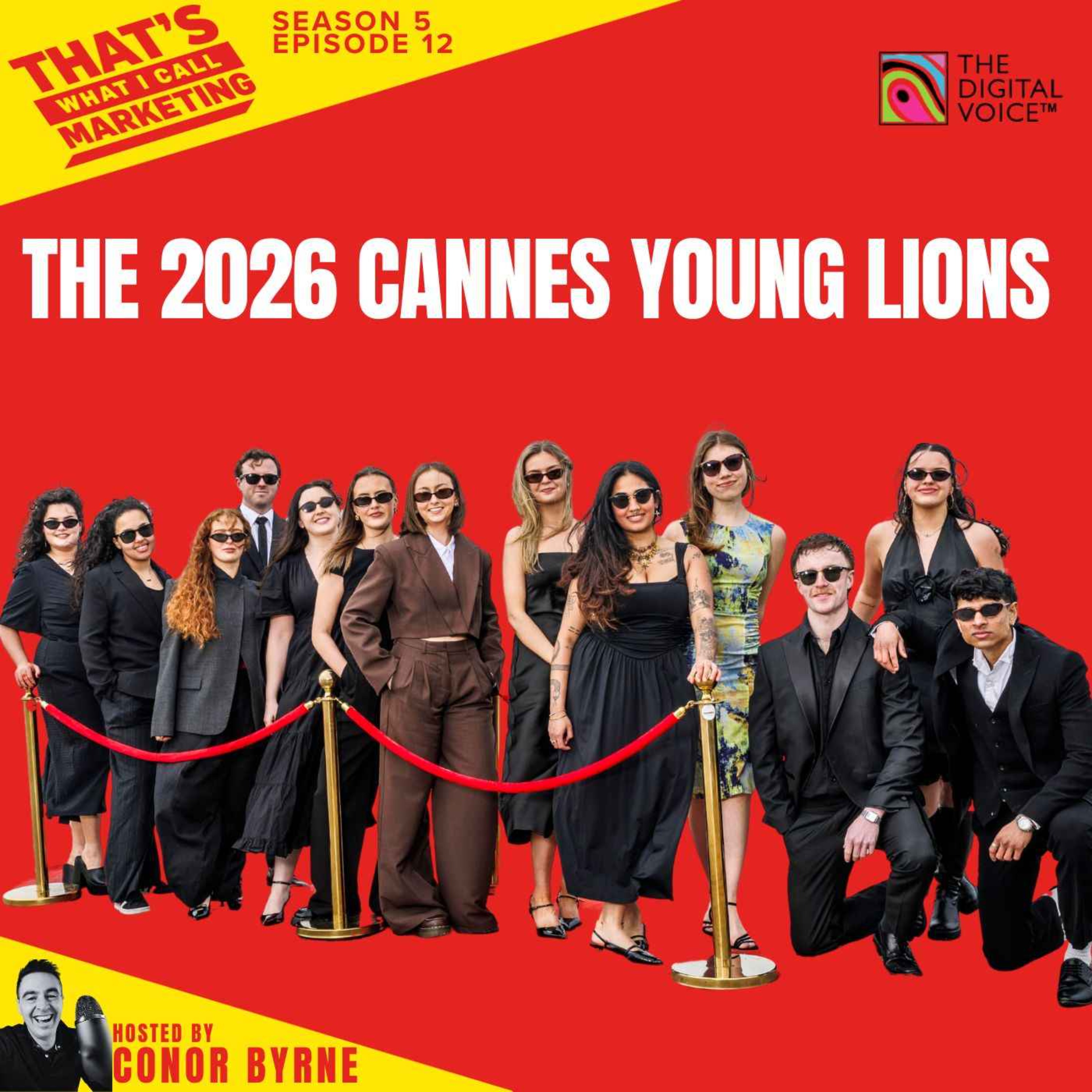 S5Ep12: Meet The Young Lions Headed to Cannes S5Ep12: Meet The Young Lions Headed to Cannes | The first Cannes Sessions episode of That’s What I Call Marketing is here and we kick off the series by interviewing three Irish IAPI Young Lions winner teams heading to Cannes: Darragh Spain and Fardosa Flanagan (Young Marketer, 123.ie/Intact Insurance), Ciara and Niamh (Film, Droga5), and Emily and Rhea (Digital, Omnicom Media). They discuss why they entered, how they tackled the 48-hour brief, research and insight methods, time management, prototyping and AI tools for film, adapting to an older target audience, presentation pressure, reactions to winning, and how they’re preparing for Cannes through past work review, equipment planning, bootcamps, and confidence. The Cannes Sessions are brought to you by The Digital Voice.These interviews shine a spotlight on their exceptional talents and the creative potential that exists within the next generation of marketing leaders, lets support and celebrate these future leaders as they prepare to bring home some medals from one of the most prestigious events in the marketing world.01:05 Young Lions Explained01:40 Meet the Winning Teams02:43 Darragh and Fardosa Intro03:19 Cracking the Brief04:33 Research and Insights06:55 Teamwork Under Pressure08:21 Shortlist to Presentation10:11 Winning the Call11:29 Preparing for Cannes12:55 Niamh and Ciara Win13:35 Film Category Workflow15:45 Agency Advantage16:21 Why Enter Young Lions17:07 Choosing a Category17:22 Learning Film Skills18:06 Upskilling With AI18:52 Planning For Cannes19:35 Storytelling Edge21:07 Why Enter Young Lions22:24 Team Dynamic Under Pressure24:03 Choosing The Digital Route24:51 Cracking The Age Group25:39 Winning Call Reaction26:42 Cannes Prep And MindsetSponsored by The Digital Voice, the amplification agency working with global ad tech and martech brands across press, thought leadership, content, social, events, and creative. Hosted on Acast. See acast.com/privacy for more information. | — | ||||||
| 3/31/26 | 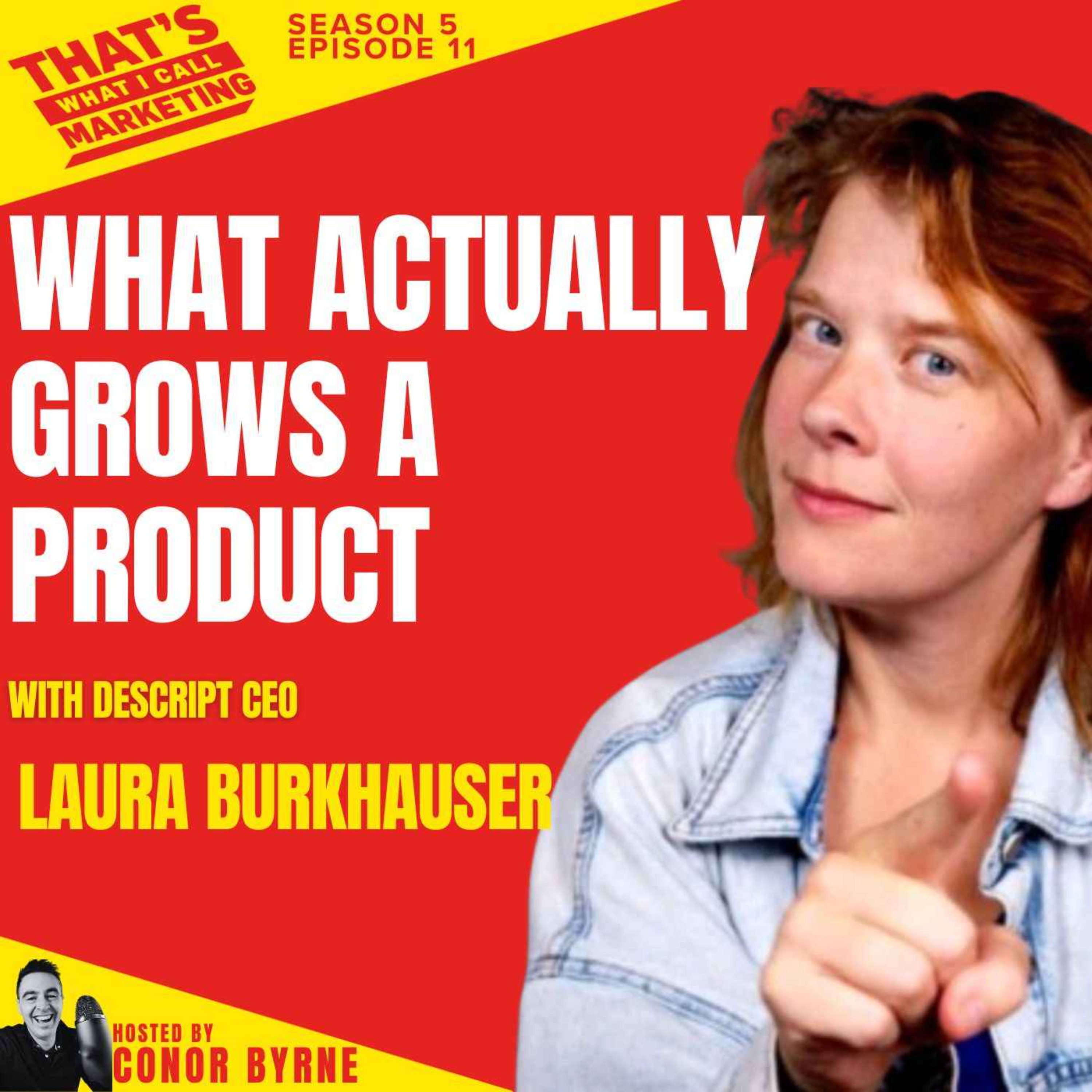 S5Ep11: Descript CEO on What Actually Grows A Product. S5Ep11: Descript CEO on What Actually Grows A Product. | Laura Burkhauser, CEO of Descript, explains the surprising truth about what actually grows a product.Most marketing advice assumes growth comes from better targeting, smarter funnels, or stronger loyalty. Laura sees it differently.In this episode, we get into what actually drives product growth — and why some of the most widely accepted ideas in marketing and SaaS don’t hold up when you look at real behaviour. From why freemium often fails, to why loyalty doesn’t grow your business (but still matters), to what AI will and won’t change — this is a grounded, operator-level view of how products actually scale.If you work in marketing, product, or growth, this will likely challenge a few default assumptions.In this episode, we cover:Growth doesn’t come from loyalty — it comes from penetrationMost freemium models don’t work the way companies think they do“Target audiences” often aren’t real, connected communitiesAI will amplify creativity, not replace itCustomer care is one of the last real competitive advantages02:00 – What Descript actually is and who it’s for04:30 – Product vs product marketing: the career fork that shapes everything07:30 – Why big tech can slow you down (and what startups get right)10:00 – Moving from product leader to CEO — what actually changes13:30 – The freemium myth: why it didn’t work the way they expected15:00 – “Are we dating or not?” — a better model for product growth16:30 – How products actually get discovered (SEO, content, and reality)18:00 – Why most “target audiences” aren’t real communities20:30 – The shift from founder-led to customer-led companies22:00 – What customers are actually good at telling you (and what they’re not)24:30 – Why customer care is a competitive advantage (and why most companies cut it)25:00 – Loyalty isn’t growth — but it might be your moat26:00 – How to actually achieve penetration in a crowded market28:00 – The challenge of building a product for “everyone”30:00 – AI, content, and the future of podcasting — what’s real vs hype33:00 – Why most AI-generated content won’t work34:30 – The “Finding Nemo” moment AI still hasn’t had36:00 – Scaling a company without losing creativity37:00 – Why “intrepid” might be the most important mindset for modern teamsAbout Laura BurkhauserLaura Burkhauser is the CEO of Descript, one of the most widely used platforms for podcasting, video editing, and content creation. She has held senior product leadership roles at companies including Amazon and Twitter, and is known for her product-first approach to growth.Listen / Watch more episodes:https://www.thatswhaticallmarketing.com/Thanks to our partner on this episode the always on brand tracking dashboard TracksuitIf you enjoyed this, subscribe for more conversations with CMOs, founders, and marketing leaders on how growth actually happens. Hosted on Acast. See acast.com/privacy for more information. | — | ||||||
| 3/25/26 | 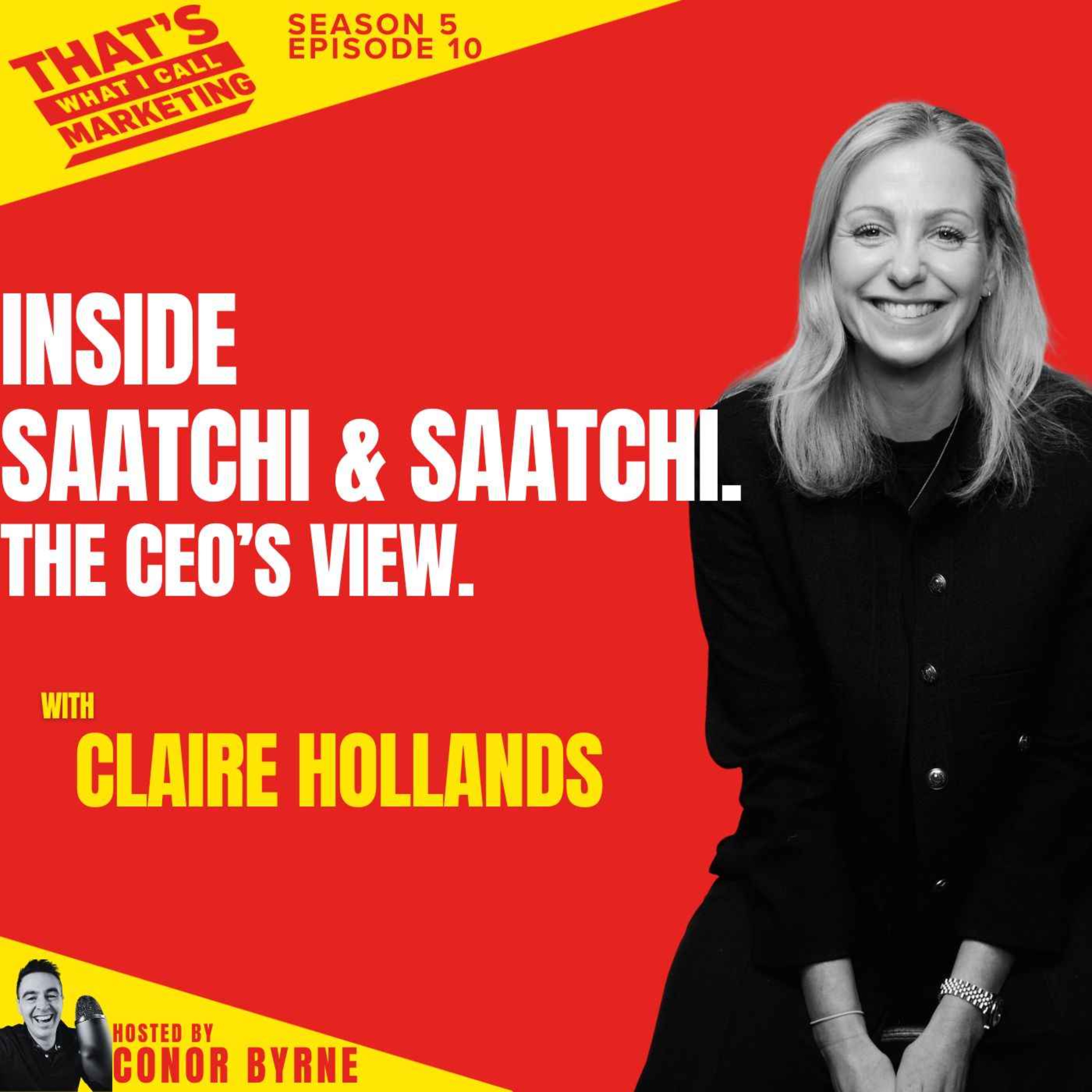 S5 Ep10: Inside Saatchi & Saatchi, with CEO Claire Hollands S5 Ep10: Inside Saatchi & Saatchi, with CEO Claire Hollands | Inside Saatchi & Saatchi. Sit down with the CEO of one of the most iconic agencies in advertising, a name that carries both weight and expectation, to understand how CEO Claire Hollands leads for today.This is a conversation about ambition. Not in the abstract, but in how it shows up in the work, in the culture, and in the relationship between agencies and clients.We get into how Saatchi & Saatchi is positioning itself around growth, why creativity still holds commercial power (even if the industry occasionally forgets it), and how agencies are rethinking their value, from billable hours to business outcomes.There’s also a clear view on where things are shifting: the role of AI, the reality of pitching, and why agencies need to be more deliberate about the clients they choose.Running through all of it is leadership, how you make decisions without perfect information, how you build a culture of high challenge and high support, and how you balance legacy with the need to move forward.What you’ll learn:Why agencies need to reposition themselves around growth, not outputsHow creativity still drives commercial performance and where it gets undervaluedWhat actually builds trust between agencies and clientsWhy most pitch processes are flawed and what better looks likeHow to think about agency value, pricing, and remunerationThe difference between growth brands and transformation brands and why it mattersWhat “high challenge, high support” looks like in practiceHow great leaders make decisions without having all the answersWhat AI is changing in agencies and what it isn’tWhy hiring for attitude and curiosity matters more than experienceTimestamps00:03:00 – Finding your people in the industry00:06:00 – Why account management sits at the centre of the agency00:07:00 – Building trust in client relationships00:12:00 – How decisions are really made at senior level00:15:00 – Culture, values, and collective ambition00:19:00 – High challenge, high support: what it means in practice00:23:00 – Managing pressure across career and family00:25:30 – Where the agency world is heading00:29:30 – The evolving agency model00:32:00 – The role and reality of pitching00:33:30 – What needs to change in pitch processes00:37:30 – Hiring for attitude, not just skill00:39:00 – What excites Claire about what’s nextAbout the podcastThat’s What I Call Marketing is a podcast for marketers who care about how brands grow, how advertising works, and how the industry is evolving through conversations with the people shaping it. Hosted on Acast. See acast.com/privacy for more information. | — | ||||||
| 3/10/26 | 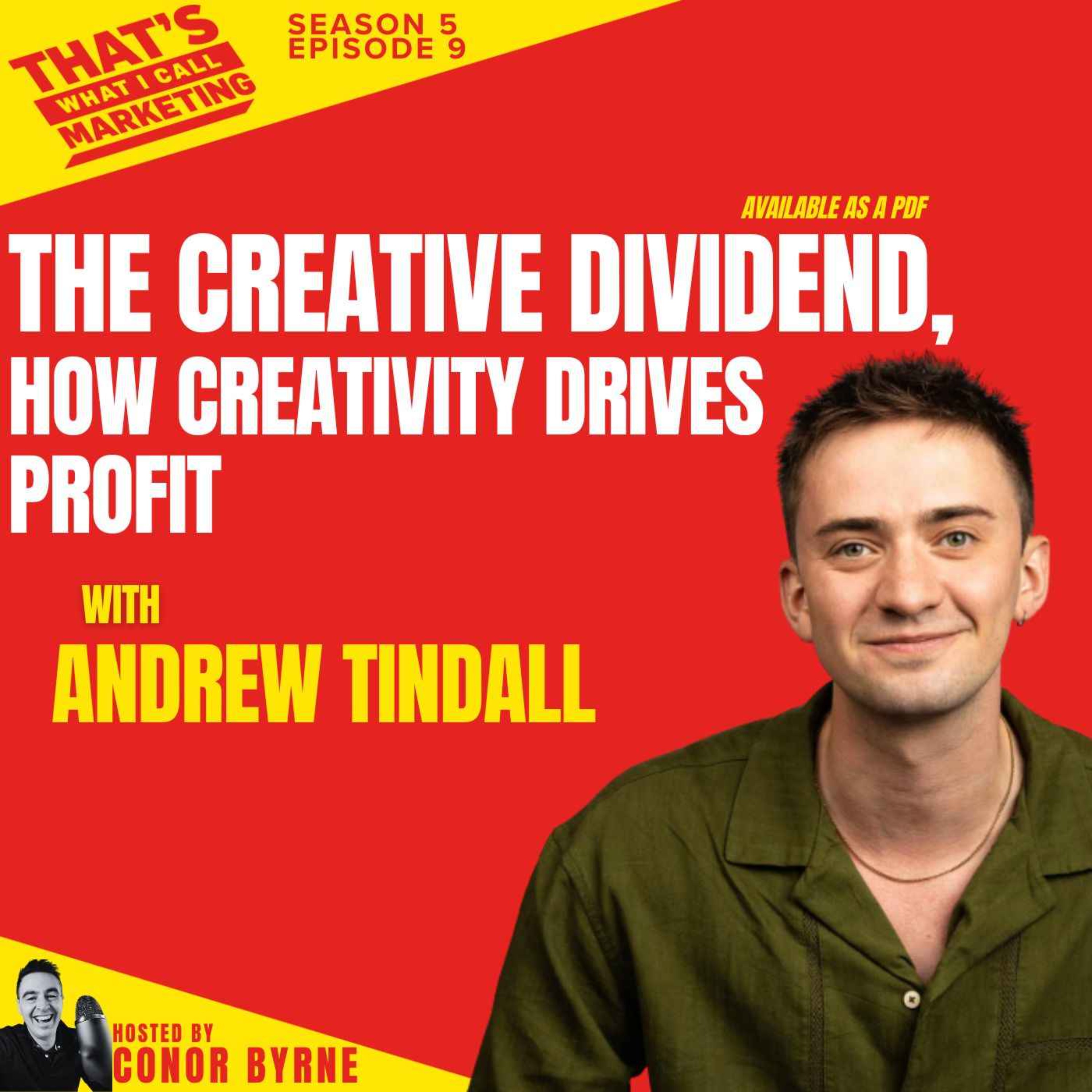 S5 Ep9: Andrew Tindall: The Creative Dividend, How Creativity Drives Profit S5 Ep9: Andrew Tindall: The Creative Dividend, How Creativity Drives Profit | In this episode of That’s What I Call Marketing, Conor Byrne speaks with Andrew Tindall, Chief Growth Officer at System1, about his new publication/pdf The Creative Dividend. Built using global Effie case study data and creative testing from over 250,000 respondents, the research explores a simple but uncomfortable truth: most advertising fails to deliver profitable growth. Andrew explains why creativity has been undervalued in modern marketing, why many campaigns generate revenue but not profit, and why the industry’s biggest problem may actually be a lack of creative confidence. The conversation also explores the relationship between emotion, distinctiveness, media investment, pricing power and brand growth and what marketers should actually do differently. If you care about marketing effectiveness, advertising creativity, and long-term brand growth, this is a fascinating deep dive.Topics Covered• Why only 9% of advertising campaigns report profit growth• The concept of creative confidence• What the Creative Dividend actually means• Why distinctiveness beats differentiation• Why advertising cannot create loyalty• The link between emotion and profit• Why many campaigns are designed to fail• The tension between creative quality and media investmentTimestamps05:00 What The Creative Dividend is trying to solve06:32 Why global Effie data matters for marketing effectiveness07:17 Has creativity been undervalued in advertising?08:59 The crisis of confidence in marketing creativity10:16 Why many organisations see creativity as a risk11:21 The role of the client in protecting great ideas12:17 Why businesses avoid creative risk13:00 The shocking statistic: only 9% of campaigns report profit growth14:17 Are marketers measuring the wrong outcomes?15:21 The importance of pricing power in marketing16:45 How creativity enables brands to charge more19:16 What the “Creative Dividend” actually means21:00 The four drivers of creative effectiveness22:00 Why 83% of campaigns are designed to fail23:06 Why great creative fails without media support24:16 The power of long-term creative platforms26:00 Consistency vs freshness in advertising28:46 What surprised Andrew most in the research29:07 Why distinctiveness matters more than differentiation29:48 Why advertising doesn’t create loyalty30:00 Distinctiveness vs emotion: efficiency vs effectiveness31:41 Why emotional advertising drives profit32:44 Why revenue alone isn’t success in marketing34:00 The debate about gated content in marketing research39:00 AI, marketing knowledge and the future of learningLinks MentionedThe Creative Dividend (download the pdf): https://system1group.com/the-creative-dividendTracksuit https://www.gotracksuit.comThat’s What I Call Marketing Podcast https://www.thatswhatIcallmarketing.comGreen Hat Episode (gated content discussion): https://open.spotify.com/episode/72D5zXtNRzzNgdjYytRQdI?si=r2kbvHU3QqWVh6sM6na7wg OR https://podcasts.apple.com/au/podcast/s3-ep39-the-b2b-power-shift-what-marketers-must-do/id1615415427?i=1000672178838 Hosted on Acast. See acast.com/privacy for more information. | — | ||||||
| 3/3/26 | 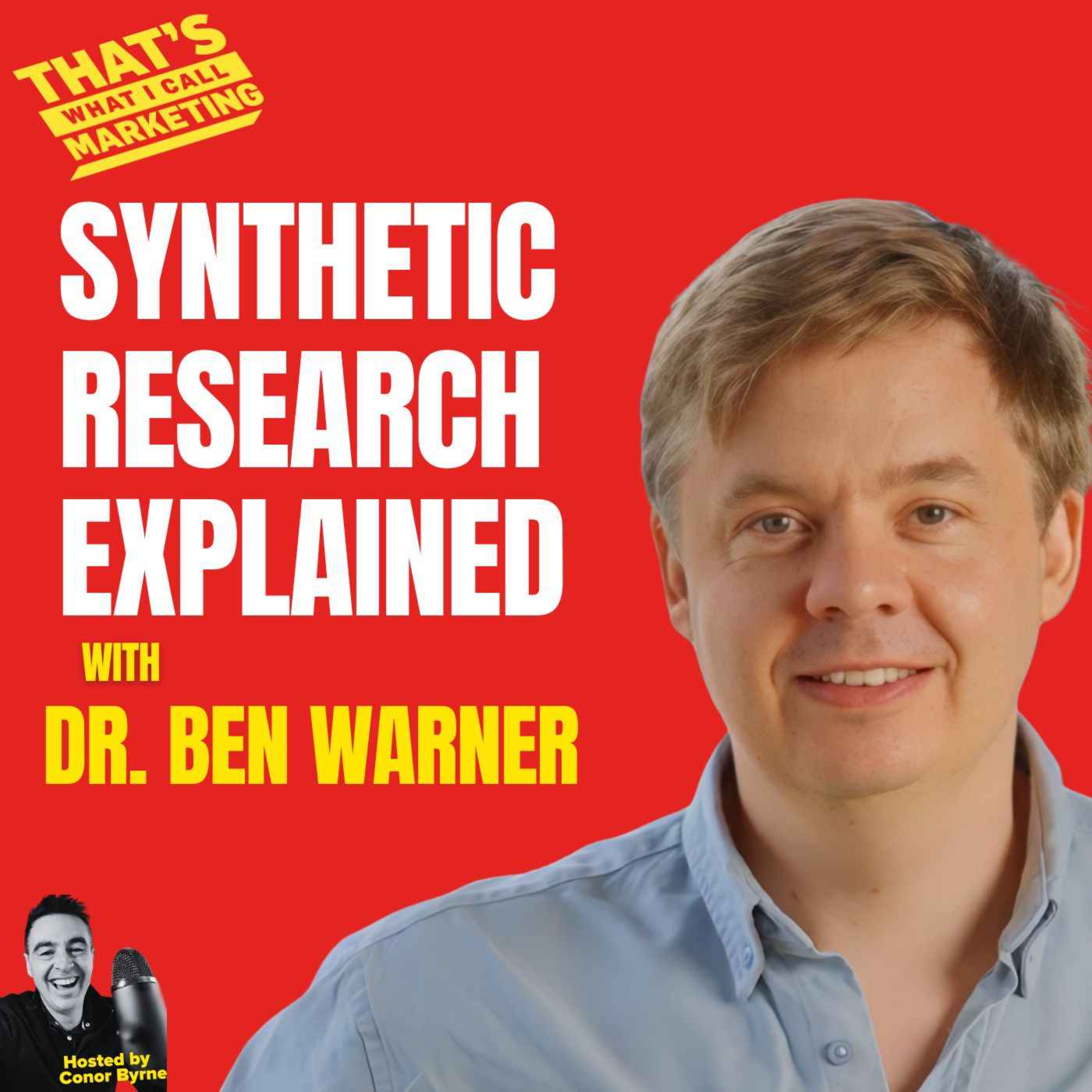 S5 Ep8: Synthetic Research Explained S5 Ep8: Synthetic Research Explained | Synthetic Research Explained, Understanding AI-Powered Audience Testing for MarketersWhat is synthetic research and how accurate is it really?In this episode of That’s What I Call Marketing, Conor Byrne sits down with Dr. Ben Warner, former Chief Data Adviser to the UK Prime Minister and co-founder of Electric Twin, to unpack one of the most talked-about developments in modern market research: synthetic audiences.This is not ChatGPT pretending to be a consumer. Synthetic research uses real-world survey data, behavioural modelling and large language models to create AI-driven audience simulations that allow organisations to test messaging, product ideas and strategy at speed before committing real budgets. If you work in marketing, insight, product, strategy or leadership, this episode will challenge how you think about research, risk and decision-making.⏱️ Timestamps00:00 – Introduction to synthetic research02:00 – From quantum physics to behavioural modelling03:35 – Why human behaviour is harder to predict than we think05:17 – The problem with traditional decision-making tools09:02 – What Electric Twin actually does10:00 – What a “synthetic audience” really means13:59 – Testing creative, messaging and propositions in real time15:06 – Accuracy vs traditional survey research17:00 – Real-world use cases across marketing and product19:02 – The danger of asking the “wrong” question23:06 – Democratising customer insight inside organisations25:00 – Where synthetic research fits (and where it doesn’t)27:00 – Innovation vs risk-averse organisations29:09 – The story behind the name “Electric Twin”In this episode, we cover:How synthetic audiences are built from real-world dataWhy traditional surveys can be slow, expensive and restrictiveHow AI allows teams to iterate research questions instantlyThe difference between testing ideas safely and making bold decisions blindlyWhy trust and validation matter in emerging AI toolsWhere synthetic research complements (not replaces) conventional methodsWhy this mattersEvery organisation says it wants to be “customer-centric”.But insight is often expensive, delayed, siloed or underused.Synthetic research introduces a new tool into the decision-making toolkit — one that allows teams to explore, iterate and pressure-test ideas before they go live.Whether you are a CMO defending budget, a product lead developing a proposition, or a strategy team modelling future scenarios, this conversation explores how AI-driven research could reshape how decisions are made.If you found this useful, share it with a colleague and subscribe for more conversations with marketing leaders shaping the future of the industry.🎧 Listen to more episodes of That’s What I Call Marketing 📌 Connect with Conor Byrne for more marketing insight🔗 Learn more about Electric Twin and synthetic audiences Hosted on Acast. See acast.com/privacy for more information. | — | ||||||
| 2/24/26 |  S5Ep7: What your CFO actually wants to hear from you S5Ep7: What your CFO actually wants to hear from you | What does your CFO actually want to hear from you?In this episode of That’s What I Call Marketing, Conor Byrne sits down with Michael Kaminsky former analytics leader at Harry’s and Founder & CEO of Recast to unpack the real tension between marketing and finance. After Michael’s Harvard Business Review article on the CMO–CFO relationship circulated widely (and resonated strongly with CFOs and CMOs), this conversation goes deep on:Why marketing forecasts keep missingWhy finance doesn’t trust marketing numbersHow to talk about ROI and risk crediblyThe problem with last-click attributionHow to structure experiments properlyWhat “expected value” really means for marketersWhy brand investment must be framed as capital allocationIf you’re a CMO, Marketing Director, Head of Performance or brand leader trying to build a stronger relationship with your CFO — this episode is essential.⏱️ Chapters 01:02 – Michael’s time at Harry’s: analytics, growth & experimentation 05:00 – The early days of podcast advertising & growth bets 06:15 – False precision in marketing measurement 07:23 – Brand tracking, survey data & real signal 08:42 – The Harvard Business Review article 09:07 – Why CMOs and CFOs feel tension 10:13 – Speaking the language of finance 14:21 – Discounted cash flow & thinking in timelines 15:00 – The credibility killer: marketing marketing 15:32 – Why being willing to be wrong builds trust 18:20 – Talking about risk & expected value 22:18 – Incrementality & structured experimentation 25:05 – Recast: forecasting & bridging marketing and finance 28:28 – The forecasting trap: last-touch attribution 30:19 – Compounding learning & agency transparency 32:00 – Final reflections: marketing as growth co-pilot🔎 Topics CoveredCMO CFO relationshipMarketing finance alignmentMarketing ROIForecasting marketing investmentIncrementality in marketingLast click attribution problemsMedia mix modelling (MMM)Brand investment vs short-term performanceCapital allocation in marketingBuilding trust with financeIf you found this valuable:✔️ Share it with a fellow marketer ✔️ Subscribe for more conversations with leading marketing thinkers ✔️ Leave a review — it helps the show reach more senior marketersCheck out Recast here https://getrecast.com/ Hosted on Acast. See acast.com/privacy for more information. | — | ||||||
| 2/17/26 |  S5 Ep6: Marketing Masterclass with Marketing Leader Orla Mitchell S5 Ep6: Marketing Masterclass with Marketing Leader Orla Mitchell | What does it really take to move from brand marketer to global growth leader?In this episode Conor Byrne sits down with Orla Mitchell for a candid, commercially grounded conversation about leadership, long-term brand building and earning marketing’s seat at the growth table.Orla’s career spans senior roles at Nestlé, Kerry Foods, and Mars, where she led global food and confectionery portfolios including the transformation of the gum category and the return of Extra to the #1 position in the US. She later returned to Ireland to join WaterWipes, ultimately becoming CEO and helping scale the brand internationally with sharper strategic focus and disciplined portfolio choices.This episode goes far beyond career highlights. It’s about how marketing thinking matures from creative execution to enterprise-level value creation.3:00 – Winning the Marketing Champion Award & what recognition really means4:40 – From accountancy to marketing: finding the discipline that fit6:00 – Cutting her teeth in FMCG at Nestlé9:50 – Being headhunted to Mars & stepping into bigger challenges13:00 – Dealing with disappointment & knowing when to leave15:20 – Long vs short term thinking before it was fashionable17:30 – Entering Mars: business model transformation over “just advertising”19:15 – Business marketer vs creative marketer21:00 – The Ehrenberg-Bass moment: science over opinion24:30 – Creative effectiveness, star systems & why great ads last27:00 – Test & learn done properly (with action standards)31:30 – Global roles & navigating “we’re different” market objections35:30 – Leading the gum category transformation38:20 – Extra’s growth in the US & penetration focus41:00 – Leaving Mars & the WaterWipes opportunity43:00 – Scaling a challenger brand & making tough market choices46:00 – Marketing as growth co-pilot, not support functionIf you lead brands, sit at an executive table, or aspire to do either, this episode is a masterclass in commercially credible marketing leadership.Thanks to Tracksuit for their support of this episode. Hosted on Acast. See acast.com/privacy for more information. | — | ||||||
Want analysis for the episodes below?Free for Pro Submit a request, we'll have your selected episodes analyzed within an hour. Free, at no cost to you, for Pro users. | |||||||||
| 2/12/26 |  System, Sizzle & Sales Impact of Super Bowl 2026 with CMO Nataly Kelly System, Sizzle & Sales Impact of Super Bowl 2026 with CMO Nataly Kelly | Zappi CMO Nataly Kelly joins to talk about the Sizzle, Systems & Sales Impact of The Super Bowl.The Super Bowl is advertising’s biggest stage. $8 million for 30 seconds. Cultural noise at maximum volume. Celebrities everywhere. Music in almost every ad.But once the spectacle fades, one question remains: which ads actually drove impact?In this episode, we unpack the Zappi Super Bowl 2026 report (check it out here) built from testing every ad live with 20,000 American category buyers and benchmarking them against the top 100 performing TV ads in the US.We explore:– Why emotional response alone isn’t enough – The role of purchase likelihood in predicting sales impact – How celebrities can amplify an ad — or bury the brand – Why distinctive brand assets (Budweiser’s Clydesdales, Nerds’ characters) still matter – The Pepsi polar bear debate and what it says about brand memory – How health brands like Wegovy, Hims & Hers and Ro cut through – Why the best Super Bowl ads are part of a system, not a one-night stuntThis conversation goes beyond ranking ads. It looks at what actually moves the needle — and what marketers without Super Bowl budgets can learn from the world’s most expensive media moment. Zappi’s full report is available at zappi.io here.Chapters2:25 – What Zappi Measures 4:07 – How the Super Bowl Ads Were Tested Live 5:00 – Celebrity Usage: Amplifier or Distraction? 8:54 – Brand Recall vs Entertainment 10:15 – Super Bowl Ads as Part of a System 12:38 – Music, Multi-Screening & Attention 13:54 – Health Brands, Outrage & Cultural Relevance 16:12 – Why Budweiser Still Wins with Distinctive Assets 18:34 – Pepsi, Polar Bears & the Coke Asset Debate 20:41 – System Over Sizzle: Campaign vs One Night 23:40 – The Emotional Power of Lays 24:35 – Nerds, Product Demonstration & Penetration 27:00 – What Marketers Without Super Bowl Budgets Should Learn 31:56 – Are Super Bowl Trends Changing? 36:50 – Favourite Ad 38:00 – Why Sales Impact Still Matters Most Hosted on Acast. See acast.com/privacy for more information. | — | ||||||
| 2/3/26 |  S5 Ep4: The Eye-Watering Cost of Dull Media & Creative with Karen Nelson-Field & Adam Morgan S5 Ep4: The Eye-Watering Cost of Dull Media & Creative with Karen Nelson-Field & Adam Morgan | Most advertising doesn’t fail because it’s wrong. It fails because it’s dull and dull is expensive.In this episode of That’s What I Call Marketing, Conor Byrne sits down with Adam Morgan and Karen Nelson-Field to unpack the real cost of dull creative and dull media using hard evidence from IPA effectiveness data, System1 testing, and large-scale attention measurement.The conversation moves beyond taste or opinion and into economics: why rational, low-emotion advertising can still “work” but only by wasting millions; why some media environments structurally suppress attention; and why optimisation, procurement pressure, and performance thinking have quietly normalised mediocrity.If you work in brand, media, B2B, finance-led marketing, or any category that tells itself it has to be boring, this episode is a wake-up call.What you’ll learnWhy 50% of ads struggle to beat a cow chewing grass on attention and emotionHow dull creative drives up required spend by millions to achieve the same outcomesWhy CPM is often a cost per meaningless thousandHow attention volume predicts ROI, memory, and effectivenessWhy great creative fails when media doesn’t give it a stageHow risk, responsibility, and “sensible” decisions slowly drain impact from workWhere AI may actually help creativity rather than flatten itThis episode draws directly on the “Cost of Dull” research programme and explains what it means for marketers trying to balance effectiveness, efficiency, and real-world constraints. 02:27 – What do we actually mean by “dull” advertising?03:55 – The cow-chewing-grass test and why half of ads lose06:00 – Attention vs emotion: two ways to measure dullness08:00 – The Cannes “Ennui” experiment and burning money as a signal11:10 – What “dull media” really means (and why it’s misunderstood)13:55 – When great creative is wasted by low-attention environments16:20 – Is dull creative ever the better option?17:24 – Trust, facts, and why rational messaging costs more19:00 – Campaigns vs single ads: where attention is really lost20:00 – Why mix matters more than hero-only thinking21:00 – Global differences: creative vs media effects23:00 – Why B2B marketing is structurally duller and the cost of that26:00 – The “dull eclipse”: performance mindset, optimisation, benchmarks28:20 – Procurement, pricing pressure, and creative erosion31:00 – CPM, wastage, and the illusion of efficiency34:20 – AI, challenger brands, and testing creativity at speed37:55 – Risk vs responsibility: how sensible decisions kill ideas41:00 – What marketers can actually do differently43:45 – Final reflections and where the research goes nextAbout the guestsAdam Morgan is co-founder of Eatbigfish and a leading voice on challenger brands, effectiveness, and commercial creativity.Karen Nelson-Field is Professor of Media Science and one of the world’s foremost researchers on attention, media value, and advertising effectiveness.If you’re trying to explain to a CFO, procurement team, or board why “safe” work keeps underperforming, this episode gives you the language and the evidence to do it properly.Content Mentioned in the Episode: Risk & Responsibility https://www.youtube.com/watch?v=MuJx2IJjaFwCost of Dull Media Report https://21467338.fs1.hubspotusercontent-ap1.net/hubfs/21467338/COMPANY%20MATERIALS/Cost%20of%20Dull%20Final.pdfCost of Dull Eat Big Fish https://www.eatbigfish.com/thinking/challengers-and-cost-of-dull Hosted on Acast. See acast.com/privacy for more information. | — | ||||||
| 1/27/26 | 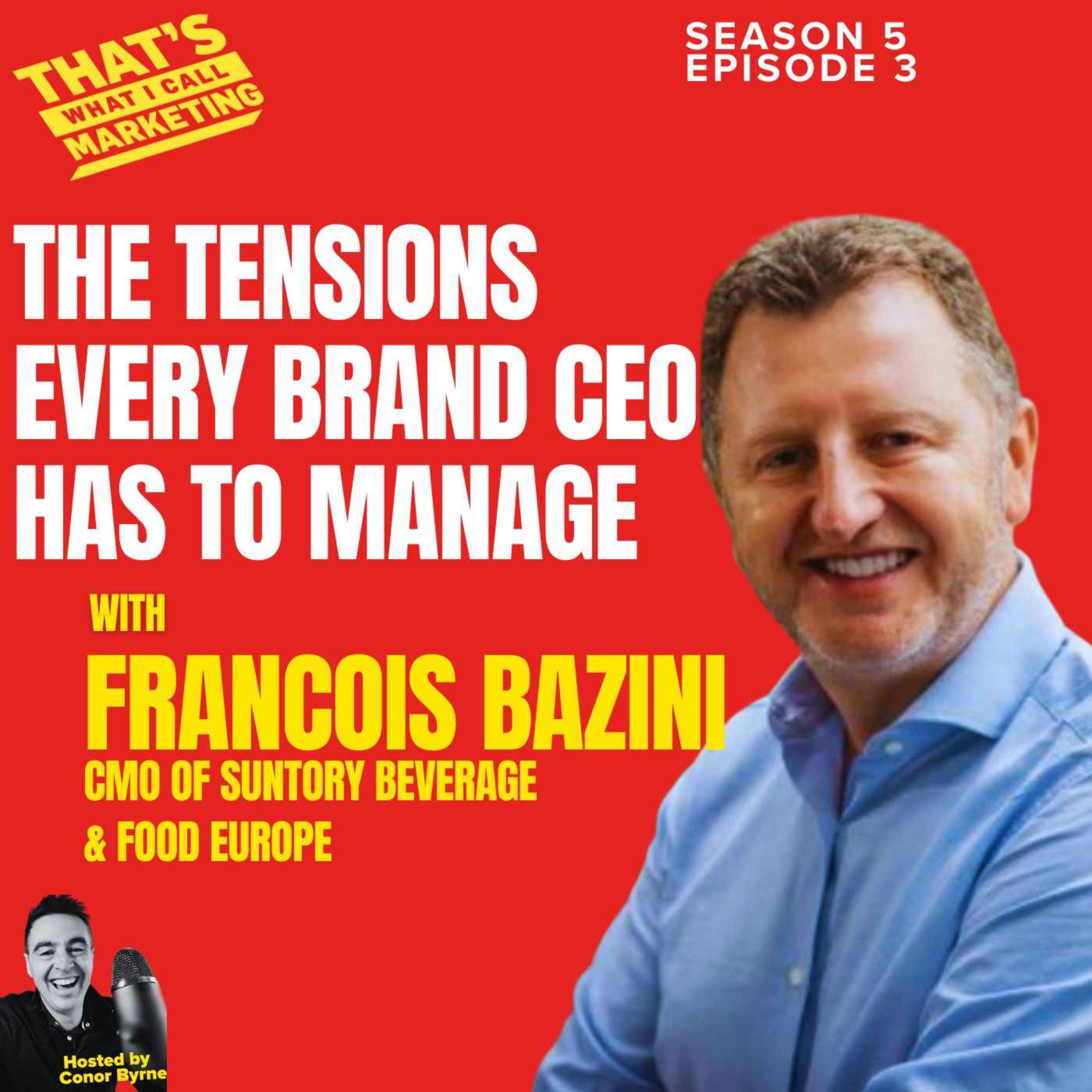 S5 Ep3: The Tensions Every Brand CEO Has to Manage with CMO Francois Bazini S5 Ep3: The Tensions Every Brand CEO Has to Manage with CMO Francois Bazini | François Bazini, CMO of Suntory Beverage & Food Europe is one of the most thoughtful brand CMOs in global FMCGFrançois shares a rare, inside view of what it really means to be a brand steward in organisations like Danone, BCG, PepsiCo and Suntory. From resisting short-term zig-zagging, to building brands that can withstand private label pressure, this conversation goes deep on the realities of modern brand leadership. We explore why marketers must act as brand CEOs, how tension with CFOs can be productive rather than problematic, and why targeting older audiences is one of the most under-exploited growth opportunities in marketing today. François also unpacks the Ribena turnaround, Schweppes’ response to Fever-Tree, and why most advertising testing is misunderstood. This is a wide-ranging, honest discussion about judgment, evidence, culture, and the long game in brand building.Topics include: Brand stewardship vs short-termism, marketing ROI, working with finance, global vs local marketing roles, age targeting myths, private label competition, creative testing, and why some brands endure while others drift.03:25 – Career path: from Danone to consulting and global brand roles04:55 – What BCG teaches marketers about being fact-based07:00 – Brand stewardship and avoiding strategic zig-zagging09:30 – Timeless vs timely brand decisions11:00 – Marketing ROI beyond short-term sales12:30 – Marketers as brand CEOs13:45 – Working with CFOs and productive tension16:00 – Global vs local marketing roles20:00 – Ribena: brand decline and recovery22:30 – Going back to a brand’s peak moment26:00 – The myth of always targeting youth29:00 – Schweppes, Fever-Tree and category disruption31:45 – Targeting over-45s unapologetically34:00 – Media thresholds and focus over fragmentation35:45 – Moving beyond marketing mix modelling38:15 – The limits of advertising testing41:00 – When great ads fail tests but succeed commercially42:20 – Competing with private label43:00 – DAQV: desirability, affordability, quality, visibility Hosted on Acast. See acast.com/privacy for more information. | — | ||||||
| 1/20/26 | 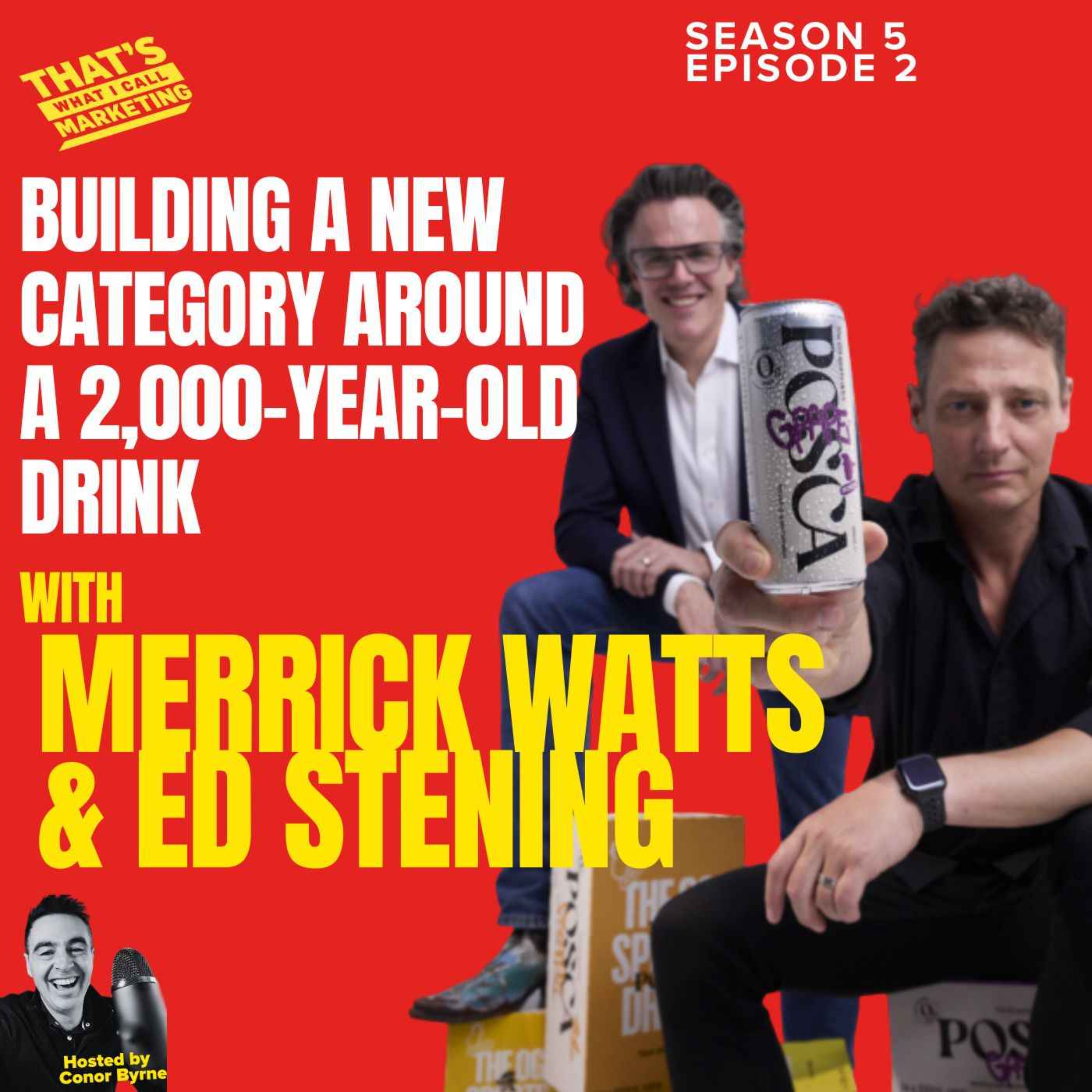 S5 Ep2: Building a New Category Around a 2,000-Year-Old Drink S5 Ep2: Building a New Category Around a 2,000-Year-Old Drink | What happens when a radio comedian, a senior drinks marketer, and a 2,000-year-old Roman hydration recipe collide?In this episode of That’s What I Call Marketing, Conor Byrne sits down with Merrick Watts and Ed Stening, co-founders of Posca Hydrate — a sugar-free, hypertonic hydration drink inspired by ancient Roman Posca.Posca isn’t a nostalgia play. It’s a sugar-free, hypertonic drink inspired by a Roman solution to unsafe water — rebuilt for modern life, modern habits, and modern expectations. That means confronting everything from flavour and formulation to packaging, positioning, and retail resistance.Along the way, Merrick and Ed unpack a set of ideas that matter far beyond drinks:Why liquid still matters more than marketing.Why category creation is harder than brand building.Why refusing “me-too” formats can slow growth — but protect belief.And why brands should aim for humour, not jokes.Merrick explains why jokes age quickly, but a sense of humour travels across audiences, occasions, and time and how that thinking shapes Posca’s tone, creative decisions, and internal culture. It’s not about being funny. It’s about not taking yourself seriously while taking the product seriously.They also discuss building brand in-house rather than outsourcing belief, measuring brand as a startup using Tracksuit, balancing mental and physical availability, and what it really takes to scale a challenger brand globally without losing the story that made it matter in the first place.This is a conversation about founders, flavour, brand discipline, and the uncomfortable decisions that come with doing something genuinely different.3:50 – From radio comedy to drinks founder5:50 – Why the liquid comes first7:50 – The Roman origin of Posca10:50 – Turning history into a brand story14:50 – Ancient wisdom meets modern science16:20 – Building brand from the inside out19:50 – Tone, humour, and taking the product seriously23:50 – Building a category, not fitting one29:50 – Brand vs physical availability32:50 – Measuring34:50 – Global expansion strategy38:50 – The hypertonic breakthrough moment44:50 – Risk and belief Hosted on Acast. See acast.com/privacy for more information. | — | ||||||
| 1/13/26 | 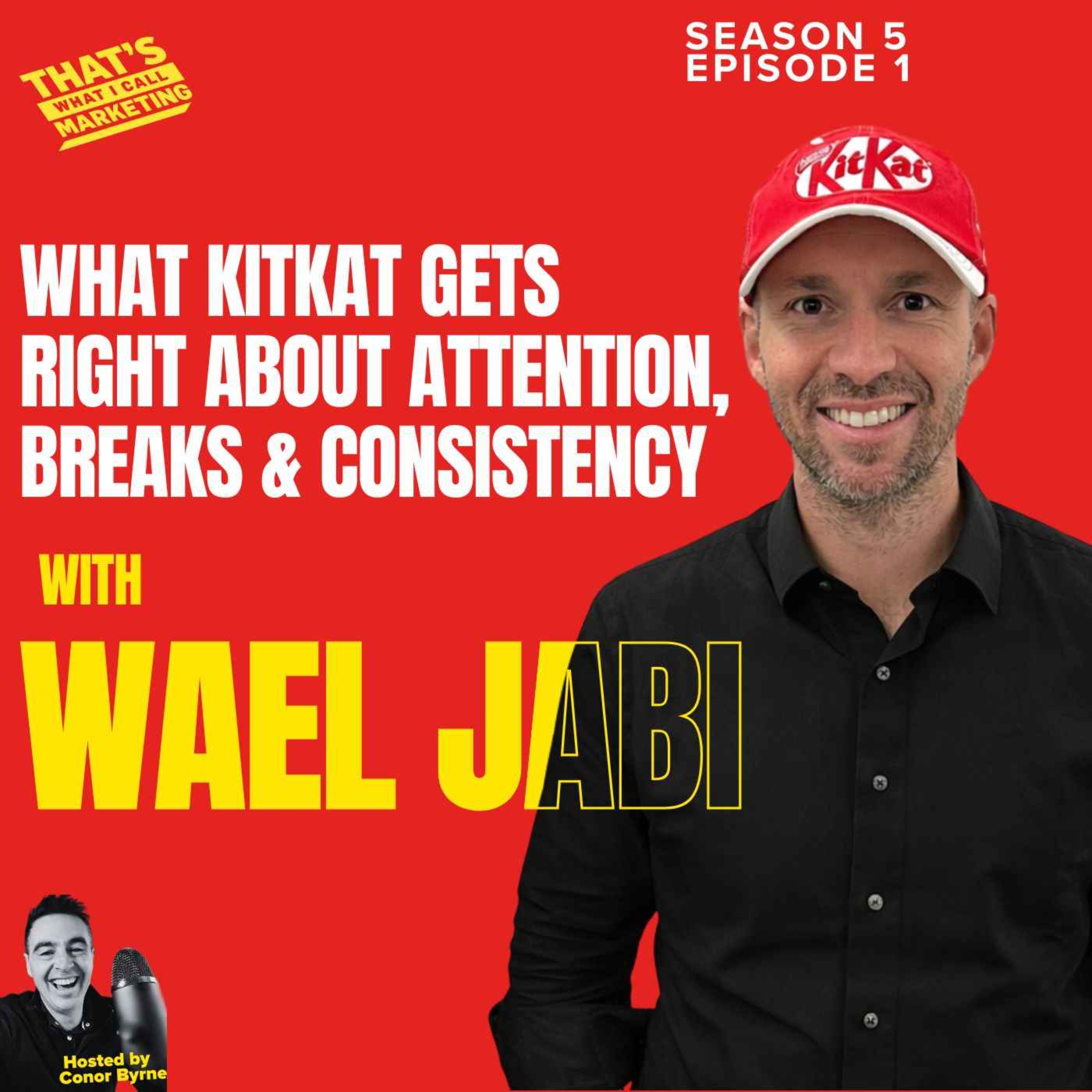 S5 Ep1: What KitKat Gets Right About Attention, Breaks & Consistency with Wael Jabi S5 Ep1: What KitKat Gets Right About Attention, Breaks & Consistency with Wael Jabi | Kit Kats Global Head of Marketing Shares what it really takes to build and protect an iconic global brand?In this season opener for Season 5 of That’s What I Call Marketing, Conor Byrne is joined by Wael Jabi, KitKats Global Head of Marketing at Nestlé, for a deep conversation about brand judgement, consistency, partnerships, and the decisions that quietly shape long-term growth.Wael’s career spans Leo Burnett, Procter & Gamble, and Nestlé, and the discussion moves well beyond surface-level case studies. Together, they explore what KitKat teaches us about resisting reinvention, diagnosing the right marketing problems under pressure, and how major cultural platforms like Formula 1 can be used to express brand meaning rather than dilute it.This is a practical, reflective conversation for CMOs, brand leaders, and senior marketers who care about building brands that last not just chasing short-term performance.Topics covered include:Why most brands don’t need reinvention they need restraintThe marketing failure that taught Wael when price becomes the wrong answerWhat KitKat gets right about consistency and memory structuresHow to think about F1 and major sponsorships without losing brand meaningBrand vs performance decisions under pressureWhy judgement matters more than tactics at senior levels01:55 – Wael’s career path: agency to P&G05:50 – Why advertising isn’t the most important thing09:40 – A pricing decision that went wrong14:20 – Diagnosing the wrong marketing problem18:40 – KitKat and brand consistency23:15 – “Breaks are broken” insight26:50 – Making iconic work at global scale30:20 – Formula 1 and partnerships34:50 – Showing up in your world vs theirs38:20 – Judgement under pressure41:00 – What’s next for KitKatThanks to Tracksuit for their partnership with this episode, check out https://www.gotracksuit.com to find out more about the always on brand tracking platform Hosted on Acast. See acast.com/privacy for more information. | — | ||||||
| 12/17/25 |  The Singles: Don't Look Back In Anger 2025 The Singles: Don't Look Back In Anger 2025 | Don't Look Back In Anger - the episode where we look back at the biggest stories we covered on The Singles and see how those brands have gotten on this year. So What happens after the marketing headlines fade? Let's we revisit some of the biggest brand stories of 2025 — and test them against what actually changed over time. Using always-on brand health data from Tracksuit, Conor Byrne is joined by Dan and Jasper to look back at Tesla, American Eagle, Rhode, and Deliveroo, six to nine months after the noise. Not opinions. Not predictions. Just evidence of where attention turned into demand — and where it didn’t.Across very different categories, a consistent pattern emerges: “The campaign didn’t hurt sales — but the brand is weaker than it was.”In this episode, we explore:Why Tesla still dominates innovation perception but is leaking trust and preference in both the US and UKHow American Eagle’s controversial campaign held short-term revenue while brand fundamentals quietly erodedWhat Rhode’s acquisition by e.l.f. gets right — and the brand risks that come with scaling distributionWhy Deliveroo, post-DoorDash acquisition, faces a preference problem in a category defined by low loyalty and easy switchingThis is a conversation is about thinking about long-term demand, pricing power, and resilience not just quarterly performance. If you care about the gap between being noticed and being chosen, this episode is for you.02:40 – Tesla: innovation without reassurance11:40 – American Eagle: sales hold, brand weakens17:45 – Rhode: scaling without dilution23:05 – Deliveroo: preference in a default-driven category Hosted on Acast. See acast.com/privacy for more information. | — | ||||||
| 12/9/25 | 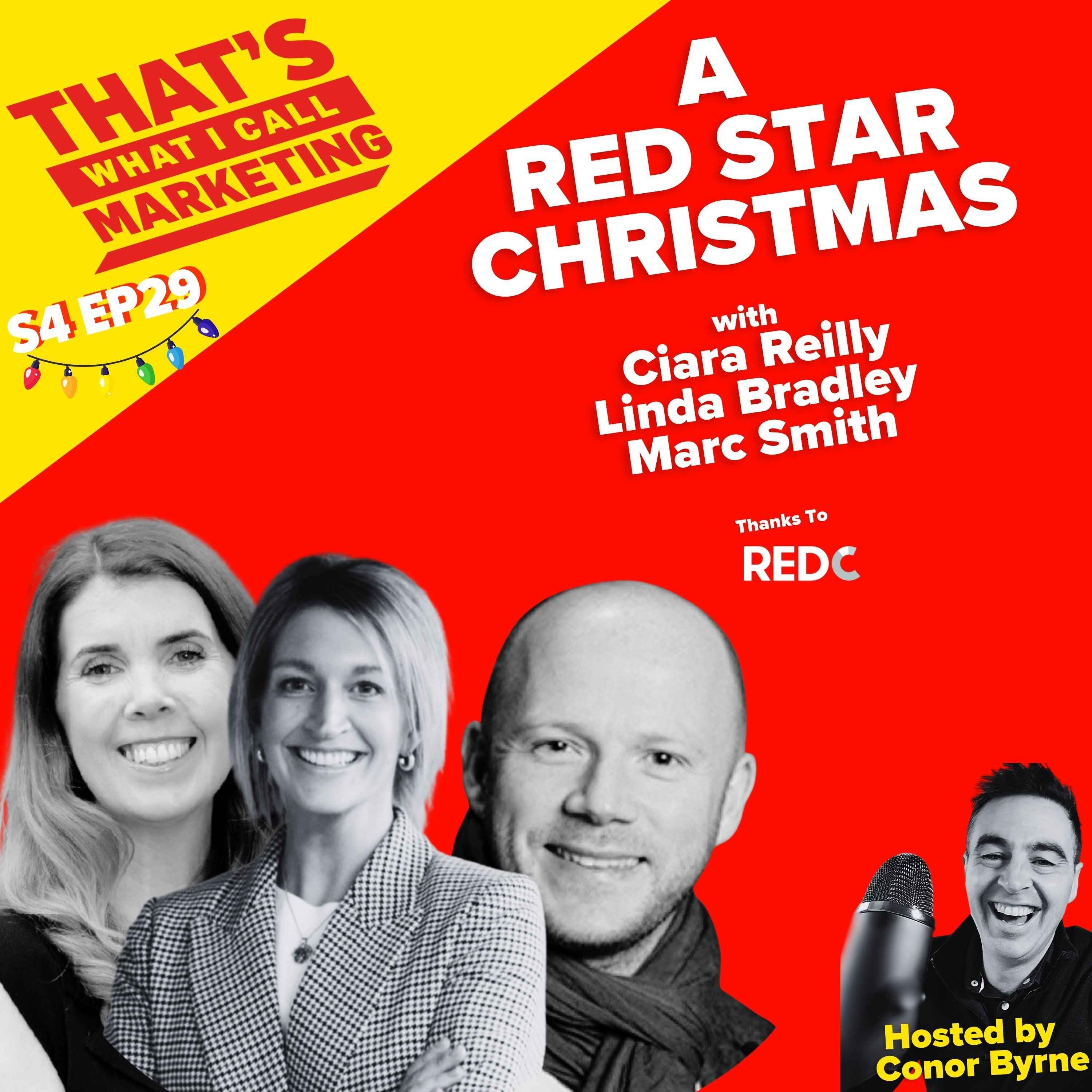 S4 Ep29: A Red Star Christmas 2025 - The Best Christmas Ads of 2025 S4 Ep29: A Red Star Christmas 2025 - The Best Christmas Ads of 2025 | Which Christmas ads did Irish viewers love in 2025? In this special Christmas edition of That’s What I Call Marketing, Conor Byrne is joined by Ciara Reilly from Red C Research, Linda Bradley (Head of Planning, Diageo Ireland), and Marc Smith (Global Director of Insights & Analytics, Mark Anthony Brands) to reveal the Top 20 Christmas Ads in Ireland, as ranked by real consumers on the Red Star testing platform.We analyse the biggest festive campaigns of the season, including:Tesco, SuperValu, Lidl, Spar, Sky Mobile, An Post, Vodafone, Boots, Dunnes Stores, Home Store + More, M&S, Woodie’s, Eason, Aldi, Amazon, and Coca-Cola.Across the episode we explore:• Why some Irish Christmas ads performed far better than expected• The surprising gap between marketer opinion vs consumer reaction• What emotional storytelling gets right and wrong at Christmas• How branding, memory structures and fluent devices shaped the rankings• Why consistency helped brands stand out• The role of humour, reality, nostalgia and AI in this year’s festive campaignsWhether you work in marketing, advertising, strategy, media, or creative, this deep dive into the best Christmas ads of the year reveals what truly resonates with audiences and what doesn’t.🎄 Brands discussed: Tesco, SuperValu, Lidl, Spar, Sky Mobile, An Post, Vodafone, Boots, Dunnes Stores, Woodie’s, Home Store + More, M&S, Eason, Aldi, Amazon, Coca-Cola.📍 CHAPTERS03:03 The lowest ranked ads05:18 John Lewis debate emotional truth vs emotional fit07:41 Functional ads & the problem of “sameness”13:28 Sea Swim: why it keeps winning hearts15:27 Sky Mobile & the Roy Keane effect17:23 National Lottery: a new less fun direction21:25 An Post Tin: Man does the story need a new chapter?23:33 M&S Food: when style overtakes substance26:20 Home Store + More the surprise hit27:56 Coca-Cola Holidays Are Coming (AI version)30:56 Dunnes Stores Shine Bright: the craft that endures32:50 Aldi & Kevin the Carrot: did they need a 3 parter?36:00 Eason: an emotional standout38:56 Amazon: a global festive story returns41:54 Woodie’s crowned #1 in Ireland https://www.youtube.com/shorts/22prv5XcpSM44:50 The panel’s all-time favourite Christmas adsCheck out the Red Star Testing Platform https://redcresearch.com/product/red-star/ Hosted on Acast. See acast.com/privacy for more information. | — | ||||||
| 12/2/25 |  The Singles Ep12: Netflix X Spotify, Monzo taking on Barclays, Rebel X Movember The Singles Ep12: Netflix X Spotify, Monzo taking on Barclays, Rebel X Movember | The episode begins with the new Netflix × Spotify partnership, where Spotify's video podcasts will sit on Netflix from 2026. Conor, Dan and Jasper discuss what this means for streaming, how it challenges YouTube’s dominance in video podcasts, and why Netflix’s broad familiarity.Next, the conversation moves to banking in the UK, where legacy brands like Barclays face pressure from digital challengers including Monzo, Revolut and Wise. Tracksuit data shows Barclays’ awareness remains high at 89%, but consideration and investigation are slipping — especially among 18–34s — as Monzo builds strength through simplicity, transparency and real-time product features. The team unpack why refer-a-friend programmes, user experience, and “is for people like me” perceptions are shifting the category.The third story looks at Movember and Rebel Sport in Australia, exploring how both brands use emotional connection, identity and community to drive engagement. With Rebel’s awareness falling from 79% to 75% and usage also declining, the team discusses why emotional relevance matters, how Rebel’s “Town Without Sport” campaign reframes sport as cultural belonging, and how Movember has evolved into a global identity brand around men’s wellbeing and shared participation through the iconic moustache.The episode closes with a debate about Coca-Cola’s AI-generated Christmas ad, the role of distinctive brand assets, and whether AI is truly “pushing the boundaries of creativity” or simply versioning existing ideas. Conor challenges Coke’s framing, while Dan and Jasper discuss industry reactions, production choices and early System1 results from this year’s work.Whether you're a brand leader, strategist, or marketer working across multiple markets, this month’s Singles offers grounded data, clear examples, and practical discussions shaped by Tracksuit’s real-time brand metrics. Hosted on Acast. See acast.com/privacy for more information. | — | ||||||
| 11/25/25 |  Re-Release - Making the Guinness Christmas Ad Re-Release - Making the Guinness Christmas Ad | First Aired 23rd Dec 2023, this is the never before told story behind the making of the iconic Guinness Christmas Ad. Tom Kinsella, Damian Devaney, Mark Nutley and Pat Hamill who were part of the team client and agency side that made this ad join That's What I Call Marketing to talk about creating what has become one of the greatest Christmas Ads of all time. We discuss the development process, challenges encountered, and the enduring success of the ad after its release. The conversation highlights the power of creativity, the critical role of collaboration between agencies and clients, and the essential element of investing time and effort into crafting an impactful advertisement. Some key moments include04:21 The Creative Process and Challenges25:57 The Role of Music in the Ad32:22 The Risk of Leaving Out the Pint39:26 The Importance of Distinctive Assets48:01 The Impact of the Ad Over Time56:22 The Power of Creativity and InvestmentBut there is a tonne more, the power of music, the emergence of the line at the home of the black stuff, sweating the small stuff, investing in brilliance. So enjoy this episode about a story that has never been told. Special mention to the many others involved in the project:Mal Stevenson-Creative DirectorJohn Kelly-VoiceoverNoel Byrne - Head of productionMargo Tracey- ProducerMark Grehan/ Brendan Coyle – Account DirectorGrainne O’Driscoll-Account ManagerPaddy Gibbons-Sound MixApril Redmond - DiageoRonan Byrne - DiageoNiamh Cribbin - DiageoPaul Kelly - DiageoMark Ody - DiageoMichael Ioakimides - DiageoCharles Coase - Diageo Hosted on Acast. See acast.com/privacy for more information. | — | ||||||
| 11/18/25 |  S4 Ep28: Brand Global, Adapt Local with Katherine Melchior Ray & Nataly Kelly S4 Ep28: Brand Global, Adapt Local with Katherine Melchior Ray & Nataly Kelly | CMO's Katherine Melchior Ray & Nataly Kelly dive deep into the nuances of global marketing . Both are experienced global CMOs and authors of the book 'Brand Global, Adapt Local.' They share their insights on the complexities and rewards of building a brand that balances global consistency with local relevance. From discussing their extensive backgrounds in various industries to examining successful case studies like Kit Kat and Kerry Gold, Katherine and Natalie offer valuable frameworks and strategies for marketers aiming to expand globally. This episode is brought to you by Tracksuit, the affordable brand tracking dashboard covering over 25 countries. Tune in to learn about the challenges and rewards of global marketing, the importance of cultural intelligence, and the role AI might play in the future of marketing. Don't forget to leave a review and share this episode with your marketing community!02:35 Katherine's Global Marketing Experience04:32 Natalys Background and Contribution05:18 The Power of Global Connections08:31 Foundations of Marketing and Branding09:40 Cultural Intelligence and AI Limitations10:31 Localisation and Cultural Nuances15:14 Organisational Attitude and Flexibility16:35 Proximity Bias in Large Economies17:49 Freedom Within a Frame Framework19:04 Kit Kat's Global Strategy20:46 Kerry Gold's Adaptation to US Market22:05 Global Brand Consistency26:33 The Impact of AI on Global Branding28:23 Cultural Nuances in Marketing29:36 Anecdotes and Lessons LearnedBuy the book https://www.amazon.ie/Brand-Global-Adapt-Local-Cultures/dp/1398619825 Hosted on Acast. See acast.com/privacy for more information. | — | ||||||
| 11/11/25 |  S4 Ep27: Imen Zitouni, Intact's CMO on on Building a Brand That Travels S4 Ep27: Imen Zitouni, Intact's CMO on on Building a Brand That Travels | When Imen Zitouni started out, there was no Google. She literally taught Canadian businesses how to use a mouse. Fast forward twenty-five years, and she’s the Chief Marketing Officer at Intact Insurance, leading one of the most ambitious rebrands in the industry from RSA Insurance to Intact and shaping how marketing, data and innovation work together in a company of 30,000 people.In this conversation, Imen joins Conor at Intact House in Dublin to talk about the twists and leaps that built her career. She tells the story of the seven PowerPoint slides that convinced CEO Charles Brindamour to start The Intact Lab, an experiment that began with seven people and now employs over a thousand specialists in data, AI and customer experience.She explains what innovation really looks like inside a business built on managing risk. how you protect teams so they can experiment, why “failing fast” only works if you decide fast, and what it takes to turn ideas into impact.You’ll also hear how she applies the same mindset to marketing and why “Technology gives you speed. Storytelling gives you meaning.” As well as how the global Intact rebrand was “not a marketing project, but a company-wide one.” and why she believes creativity in insurance starts with culture, not slogans.It’s an honest, practical conversation about leadership, experimentation, and brand building from one of Canada’s most respected marketing executives recorded on the day the Intact name officially launched in Ireland, the UK and Europe02:30 – Teaching people how to use a mouse (and falling in love with the internet)04:50 – Lessons from agency life at Cassette06:20 – The late-night call that brought her into insurance08:00 – Finding purpose in a data-driven industry09:45 – “I have an idea”: how The Intact Lab began10:50 – Protecting teams to innovate13:40 – The 30-day rule and rapid prototyping15:10 – “Fail fast” only works with fast decisions17:30 – Moving from Chief Digital Officer to CMO20:10 – Mentorship and learning from Anne Fortin23:00 – “Technology gives you speed. Storytelling gives you meaning.”24:40 – The founders’ story: building values before brand26:40 – Naming Intact and the red brackets27:30 – Rebranding RSA: “not a marketing project — a company-wide one”30:20 – Global consistency vs local freedom33:10 – When “witty” means different things in different markets37:00 – Building a household brand and resilient communities Hosted on Acast. See acast.com/privacy for more information. | — | ||||||
| 11/4/25 |  The Singles takes on OpenAI, Tylenol & Stiller Soda The Singles takes on OpenAI, Tylenol & Stiller Soda | In this episode, we dive deep into the latest marketing trends and campaigns we start by discussing OpenAI's new brand campaign, evaluating its impact and effectiveness. The conversation transitions to the growing competition in the AI space between ChatGPT and Claude, highlighting user adoption and brand health metrics. The trio also explores the recent controversies faced by Tylenol and how brand trust plays a crucial role in weathering PR storms. Lastly, they touch on Ben Stiller's foray into the healthier soda market with Stiller Soda and analyze the potential market dynamics. The episode is packed with insightful data and expert opinions, offering a comprehensive look at current marketing strategies and brand health management.02:30 OpenAI's New Brand Campaign03:23 AI Competitors and Market Penetration08:17 Emotional Advertising and Brand Loyalty13:25 Tylenol's PR Crisis and Brand Trust21:02 Ben Stiller's Entry into the Soft Drink Market29:16 Year-End ReflectionsWith thanks to Tracksuit Hosted on Acast. See acast.com/privacy for more information. | — | ||||||
| 10/28/25 |  S4 Ep26: Mark Ritson on The Biggest Mistakes Marketers Still Make & How to Stop S4 Ep26: Mark Ritson on The Biggest Mistakes Marketers Still Make & How to Stop | What happens when one of the world’s most opinionated marketing professors looks beyond 2025 and starts thinking about the 2030s?In this unfiltered conversation, Mark Ritson joins Conor Byrne on That’s What I Call Marketing for a fast-moving, hilarious, and deeply practical chat about what marketers are getting wrong and what still works.From pricing and profitability to AI and the Mini MBA, Ritson lays out the truths that most brands quietly ignore: 👉 The real reason discounting destroys long-term value. 👉 Why profitability, not revenue, is the measure that matters. 👉 How brand equity lets companies charge 30% more — and why few marketers understand margins. 👉 The coming decade of synthetic data, AI-driven planning, and marketing’s Thirties where the fundamentals still decide who wins.We also dive into Ritson’s columns on Nestlé’s new CEO, brand consolidation, the chaos of AI branding, and his viral takes on Sydney Sweeney’s American Eagle ad. Expect blunt language, sharp analysis, and the kind of clarity only Ritson can deliver.This is Ritson at full throttle cynical, evidence-based, and funny enough to make you forget you’re learning.What You’ll LearnWhy pricing is the forgotten P — and marketers must reclaim it.The psychological and financial damage of endless promotions.What Nestlé’s portfolio clean-up reveals about focus and profit.How the marketing profession lost the plot on creativity and strategy.Why AI won’t kill marketing — it will expose who actually understands it.The truth about the Mini MBA sale to Brave Bison and what’s next in the U.S.⏱️ Episode Chapters 01:20 – Mark Ritson & his return to Dublin 03:00 – Why sold-out events show poor pricing strategy 04:30 – The hidden cost of discounting and brand devaluation 07:00 – How Kellogg’s proves the power of price premium 08:30 – Profitability vs. revenue: what marketers forget 10:20 – Why marketers must be part of pricing decisions 12:30 – Nestlé’s new CEO and the art of brand consolidation 15:00 – The 80/20 rule and why most portfolios are bloated 17:00 – “Kill a brand, keep a customer”: cutting smart 20:00 – Marketing talent and the future of brand management 22:00 – Have we over-hyped creativity? 23:00 – The 4Ps and why product and price still dominate 25:00 – Why marketers stop learning after launch 26:30 – “Strategy is the orgasm of marketing” 28:00 – OpenAI’s ad: a masterclass in bad branding 30:30 – The branding chaos in AI tools 31:50 – The “Thirties” lens: long-term change, not next-year fads 34:00 – What AI really means for marketers 36:00 – Why strong brands will still win in an AI world 38:00 – Synthetic data and the future of perfect marketing plans 40:30 – Sydney Sweeney, American Eagle & System1 scores 43:00 – Non-profits and the four Ps done right 46:00 – The Mini MBA sale & Brave Bison partnership 49:00 – The U.S. expansion plan with Adweek 51:00 – How success proved his own theories right 52:00 – On Ireland, Guinness, and the art of the deal 55:00 – Why Ireland outsmarted everyone in the EU 56:30 – Why Ritson never preps a talk — and why it worksFind out more about Tracksuit Hosted on Acast. See acast.com/privacy for more information. | — | ||||||
| 10/21/25 | 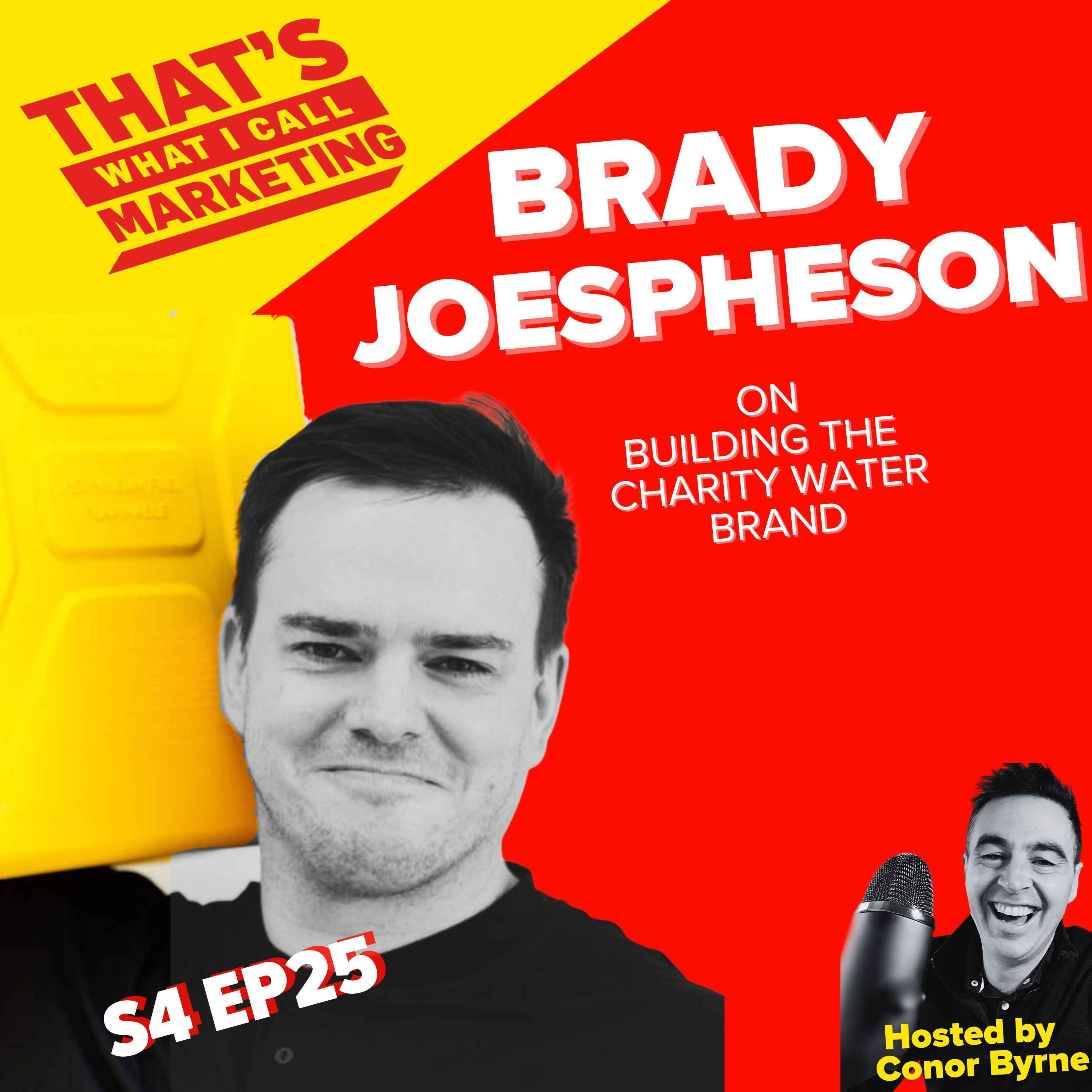 S4 Ep25: Building the Charity Water Brand with Brady Josephson, VP of Brand & Growth S4 Ep25: Building the Charity Water Brand with Brady Josephson, VP of Brand & Growth | What happens when one of the world’s most innovative nonprofits starts thinking like a modern brand?In this episode of That’s What I Call Marketing, Conor Byrne sits down with Brady Josephson, VP of Growth and Brand at Charity: Water, to talk about building a brand that competes for hearts, minds and wallets in the same arena as Nike or Netflix, but without their budgets.They discuss how nonprofits can use brand tracking, future demand thinking, and marketing mix modelling to grow sustainably; how Charity Water turned trust into a growth engine; and why experimentation, intuition, and creativity matter more than ever.In partnership with Tracksuit, the always-on brand tracking platform helping nonprofits measure what matters.🎧 Subscribe for more conversations with marketing leaders: https://www.thatswhatIcallmarketing.com💡 Powered by GoTracksuit.com02:45 Brady’s path from teaching to purpose-driven marketing05:30 The chip-on-the-shoulder moment: “How cute you work in nonprofit”07:10 Solving the salary and perception problem with two bank accounts09:00 The birth of Charity Water’s brand: intuition over focus groups11:00 Proof, storytelling and tech: building Waterproof and donor trust12:45 Rethinking competition — “We’re fighting Nike, not other nonprofits.”15:00 From paid performance to brand tracking with Tracksuit17:10 Future demand vs current demand: lessons from a plateau19:45 Building brand salience when no one’s “in market”21:00 How to run brand building on a limited budget23:00 Experimentation, hypothesis thinking, and the difference between try, pilot, and test27:20 Channel mix: why dominance matters more than diversification31:10 TV, YouTube and MMM — what really drives donor acquisition34:00 Segmentation, salience and Byron Sharp for nonprofits36:00 The nonprofit plateau: learning from data, not instinct37:10 AI, automation and the next frontier of giving38:00 Brand trust and the simplicity of doing one thing brilliantly41:00 Purpose, mastery, and marketing that matters Hosted on Acast. See acast.com/privacy for more information. | — | ||||||
| 10/7/25 | 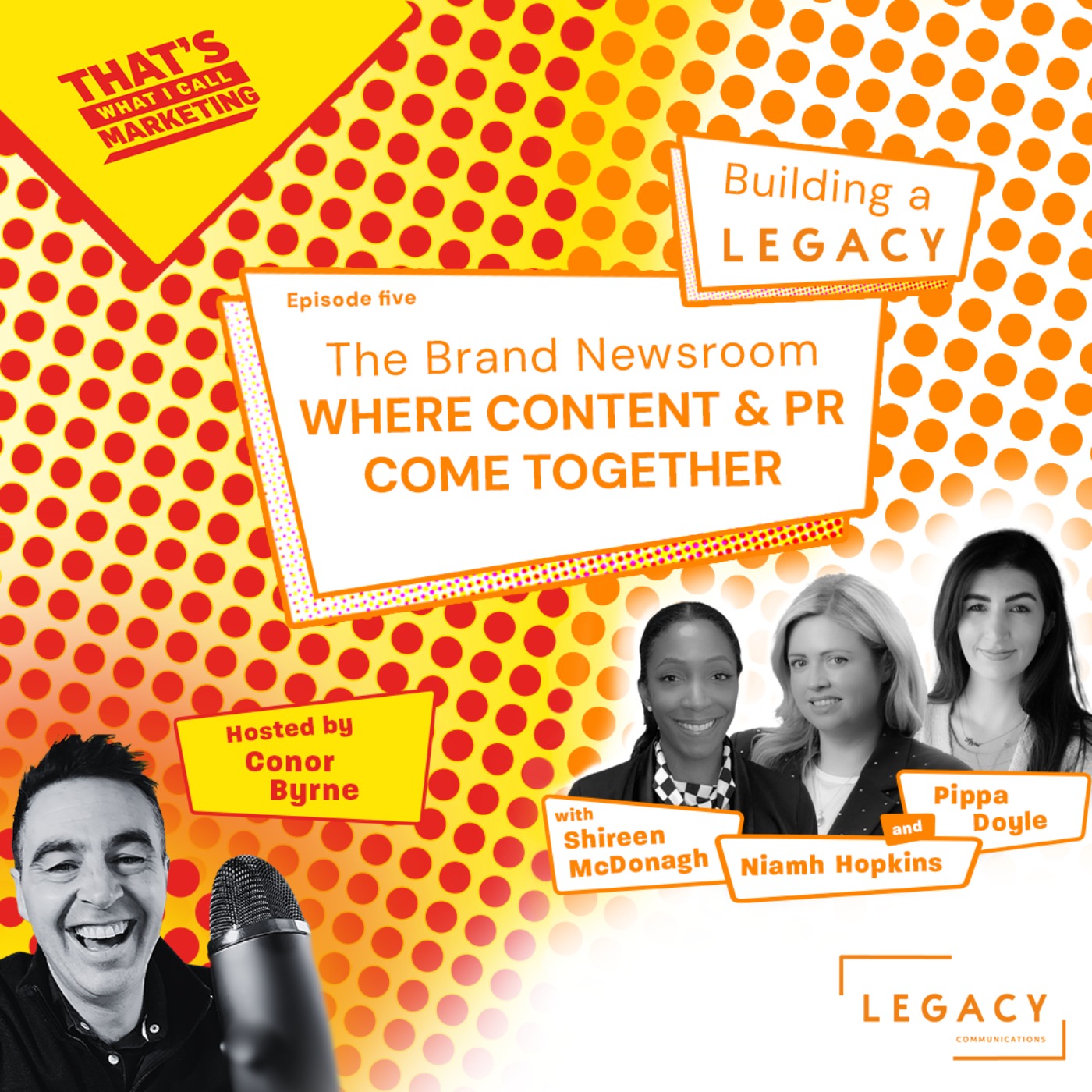 S4 Ep24: The Brand Newsroom: Where Content & PR Come Together. The Building A Legacy Series S4 Ep24: The Brand Newsroom: Where Content & PR Come Together. The Building A Legacy Series | PR isn't dead—it's evolved. And most brands are still playing by the old rulebook.In this episode we sit down with three communications leaders to dissect how modern PR actually works: Pippa Doyle (Global PR at Whoop), Shireen McDonagh (Brand & Content at Legacy Communications), and Niamh Hopkins (Head of Consumer PR at Legacy).This isn't theory. You'll hear the real story of how an agency changed a client's mind with a single email. Why Whoop runs exclusive events instead of chasing scale. How Krispy Kreme owned the news cycle in 24 hours when Leo Varadkar resigned. And why "freedom through structure" unlocks better creative than open-ended briefs.If you're a marketer, brand leader, or agency professional wondering why your PR feels stuck in 2010, this conversation will rewire how you think about communications, content, and building brand fame in a cluttered market.What You'll Learn:Why PR should be renamed "communications" (and what that shift actually means)The briefing framework that gets agencies to do their best workHow to turn one event into months of content across every channelThe truth about influencer numbers vs. engagement (and when each matters)Why budget constraints unlock creativity instead of killing itThe "brand newsroom" model and who should be your editor-in-chiefHow smaller brands can win with agility against bigger competitorsCHAPTERS:00:00 - Introduction: The Evolution of PR02:15 - Why "PR" Needs to Become "Communications"04:25 - Case Study: How One Email Changed a Client's Mind07:00 - What PR Actually Drives: Fame, Awareness & Word of Mouth10:04 - Why Great Campaigns Start With Great Briefs11:16 - The "Freedom Through Structure" Briefing Framework13:14 - Why Budget Can Be a Beautiful Constraint14:27 - Events as Content Machines, Not One-Day Moments18:27 - Measuring Event Success: Beyond Who Showed Up19:45 - Working With Influencers & Creators: Authenticity First23:06 - Does Follower Count Actually Matter?26:45 - Reactive Content Done Right: Aldi's Oasis & Krispy Kreme's Leo Moment28:00 - The Brand Newsroom Model: Operating Like a Publisher29:14 - Speed, Approvals & Team Alignment32:05 - Practical Advice: Setting Up Your Comms Function for Success37:52 - The Editor-in-Chief Role: Who Defends the Idea?with Legacy Communications Hosted on Acast. See acast.com/privacy for more information. | — | ||||||
Showing 25 of 190
Sponsor Intelligence
Sign in to see which brands sponsor this podcast, their ad offers, and promo codes.
Chart Positions
4 placements across 4 markets.
Chart Positions
4 placements across 4 markets.