
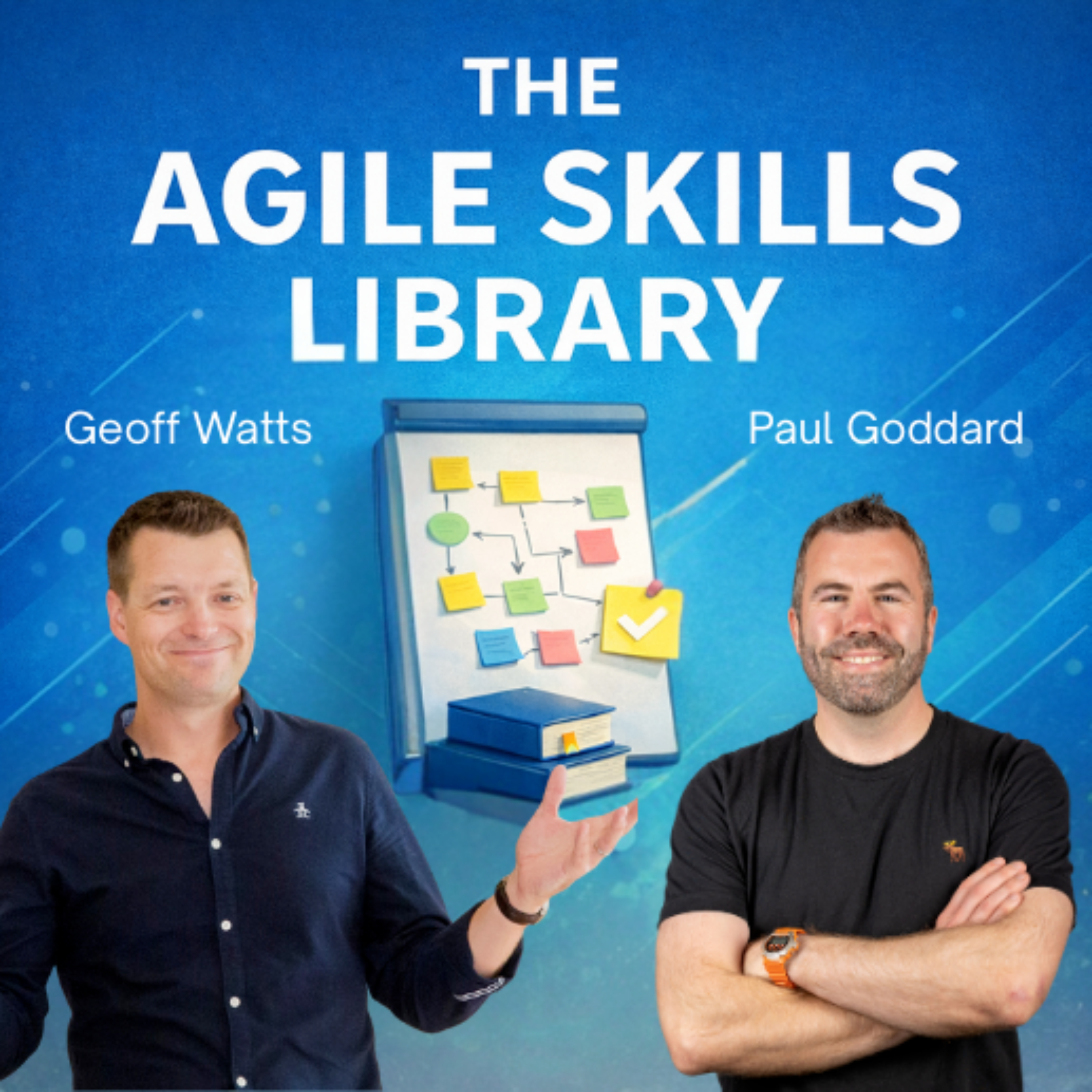
Insights from recent episode analysis
Audience Interest
Podcast Focus
Publishing Consistency
Platform Reach
Insights are generated by CastFox AI using publicly available data, episode content, and proprietary models.
Est. Listeners
Based on iTunes & Spotify (publisher stats).
- Per-Episode Audience
Est. listeners per new episode within ~30 days
1 - 1,000 - Monthly Reach
Unique listeners across all episodes (30 days)
1 - 5,000 - Active Followers
Loyal subscribers who consistently listen
1 - 500
Market Insights
Platform Distribution
Reach across major podcast platforms, updated hourly
Total Followers
—
Total Plays
—
Total Reviews
—
* Data sourced directly from platform APIs and aggregated hourly across all major podcast directories.
On the show
Recent episodes
EP13: Hot Seat Questions: Practicing Powerful Questioning in Agile Coaching
Apr 28, 2026
Unknown duration
EP12: Exploring the 3D Team Dynamics Model
Apr 21, 2026
Unknown duration
EP11: The Coaching Equation for Successful Change
Apr 14, 2026
Unknown duration
EP10: Collaborative Prioritisation with 'Pass the Cards' Technique
Apr 7, 2026
Unknown duration
EP9: The 5-5-5 Technique
Mar 31, 2026
Unknown duration
Social Links & Contact
Official channels & resources
Official Website
Login
RSS Feed
Login
| Date | Episode | Description | Length | ||||||
|---|---|---|---|---|---|---|---|---|---|
| 4/28/26 | EP13: Hot Seat Questions: Practicing Powerful Questioning in Agile Coaching | Geoff and Paul discuss “powerful questioning” in agile coaching and introduce a practice technique called Hot Seat Questions. They note the term “powerful questions” is often overused and shouldn’t be forced, but good questions can help shift thinking and open up new solutions. In the exercise, a group designates a “hot seat” where one person shares a coaching scenario for 30–60 seconds; each listener then asks one question that the hot-seat person does not answer, but instead gives feedback on the question’s impact (e.g., “That question was powerful because…” or “It could have been more powerful if…”). They emphasise psychological safety, letting go of the need to know, avoiding leading or rambling questions, and noticing nonverbal cues. They end with a brief example and mention downloadable guidance and a request for reviews.Downloadable content: www.inspectandadapt.com/podcasts/ep13-hot-seat-questions00:00 Welcome and Catch Up01:06 What Makes Questions Powerful03:57 Hot Seat Questions Overview04:58 How to Run the Exercise07:51 What Powerful Looks Like09:22 Safety and Letting Go11:13 Feedback Structure and Observations12:35 Common Question Traps15:05 Live Hot Seat Demo19:19 Wrap Up and Resources | — | ||||||
| 4/21/26 | EP12: Exploring the 3D Team Dynamics Model | In this episode of the Agile Skills Library, hosts Paul Goddard and Geoff Watts introduce their audience to the 3D Team Dynamics model. They delve into the origin and application of this technique, which helps in assessing and improving team behaviours. The model categorises behaviours into developing, detailing, and disruptive actions, with subcategories for each. The hosts also discuss the concept of a team heat map, which tracks physical movement and airtime distribution within a team. Throughout the episode, they encourage listeners to try out these techniques and provide downloadable content for practical use.Downloadable content:https://www.agilify.co.uk/resources/the-agile-skills-library/ep12-exploring-the-3d-team-dynamics-model/00:00 Introduction and Welcome00:35 Introducing 3D Team Dynamics02:23 Developing Actions in Team Dynamics05:42 Detailing Actions in Team Dynamics08:47 Disruptive Behaviours in Team Dynamics11:56 Using the 3D Team Dynamics Data17:51 Team Heat Map: The Fourth Dimension21:27 Conclusion and Final Thoughts | — | ||||||
| 4/14/26 | EP11: The Coaching Equation for Successful Change | In this episode of the Agile Skills Podcast, hosts Geoff Watts and Paul Goddard introduce a valuable tool they call the 'coaching equation for coaching change.' This equation helps coaches and individuals effectively implement desired changes by balancing benefits, costs, and the probability of success. They discuss the importance of internalising the benefits, acknowledging costs, and strategies to increase the likelihood of success. The episode also includes practical examples and emphasizes the emotional aspects of motivation. A downloadable canvas is provided to help practitioners put the technique into practice.Downloadable Content:www.inspectandadapt.com/podcasts/ep11-the-change-equation00:00 Introduction to the Agile Skills Library00:29 Welcome Back to the Agile Skills Podcast00:39 Introducing the Coaching Equation04:24 Understanding the Benefits of Change09:01 Identifying the Costs of Change13:46 Probability of Success in Change16:01 Increasing Your Chances of Success24:02 Conclusion and Next Steps | — | ||||||
| 4/7/26 | EP10: Collaborative Prioritisation with 'Pass the Cards' Technique | In this episode of Agile Skills Library, hosts Geoff and Paul introduce a collaborative prioritisation technique known as 'Pass the Cards,' also referred to as '35.' Originally mentioned by Jean Tabaka, the method is designed to engage multiple voices in prioritising product backlog items. The hosts provide detailed instructions on facilitating the game with stakeholders, including using different scales and rounds to derive a collective priority list. They also discuss the importance of having a north star or overall goal, managing subjectivity, and leveraging the technique for enhanced collaboration and effective decision-making. Practical tips and potential variations for the exercise are shared, along with advice for agile coaches and trainers.Downloadble content available at:https://www.agilify.co.uk/resources/the-agile-skills-library/ep10-collaborative-prioritisation-with-pass-the-cards-technique/00:00 Introduction and Greetings00:10 Overview of the Technique00:43 Origins and Acknowledgements01:32 Why Use This Technique?02:27 Step-by-Step Method05:24 Facilitation Tips and Common Issues11:22 Scaling and Group Dynamics12:52 Learning Points and Practical Applications16:45 Conclusion and Resources | — | ||||||
| 3/31/26 | EP9: The 5-5-5 Technique | In this episode of the Agile Skills Library, hosts Geoff Watts and Paul Goddard introduce the 5-5-5 technique, a simple yet powerful method to boost confidence and alleviate imposter syndrome among agile practitioners. The technique involves asking five trusted individuals five specific questions that highlight personal strengths, which they then verbalise back to the requester. This personalised feedback aims to help individuals internalise positive traits, creating a balanced self-perception. This method can be used by individuals or teams to cultivate a more confident and effective agile environment.Downloadable Content:www.inspectandadapt.com/podcasts/ep9-555-technique00:00 Introduction to the Agile Skills Library00:17 Introducing the 5-5-5 Technique01:02 Why the 5-5-5 Technique is Essential02:34 How to Implement the 5-5-5 Technique04:42 Questions to Ask in the 5-5-5 Technique06:02 Receiving and Internalising Feedback10:57 Applying the 5-5-5 Technique in Teams12:00 Conclusion and Additional Resources | — | ||||||
| 3/24/26 | EP8: Leveraging Video Reviews to Abstract Thinking | In this episode of the Agile Skills Library, coaches Geoff and Paul discuss the concept of video reviews, a method they’ve used in advanced Scrum Master training for over a decade. Inspired by NBA coach Phil Jackson's unconventional methods, they explain how videos and various other media can provide valuable insights for scrum masters and product owners. They describe the structure they use (What, So What, Now What) to help students digest and apply the content. They also share plans to provide tools and curated video content for listeners to try the exercise themselves, aiming to foster deeper learning and broader connections beyond traditional scrum and agile topics.Downloadble content available at:https://www.agilify.co.uk/resources/the-agile-skills-library/ep8-leveraging-video-reviews-to-abstract-thinking/00:00 Introduction and Welcome00:09 The Concept of Video Reviews01:13 Origins and Inspiration from Phil Jackson03:20 Implementing Video Reviews in Training04:10 Benefits and Outcomes of Video Reviews06:32 Practical Application and Structure13:08 Diverse Content and Storytelling14:01 Conclusion and Resources | — | ||||||
| 3/17/26 | EP7: Exploring Core Values: A Key Exercise for Personal and Team Growth | In this episode of the Agile Skills Library, the hosts introduce the 'core values exercise,' a simple yet impactful technique used in both individual and team coaching sessions to uncover and understand core values. The hosts demonstrate the process using a deck of cards, guiding listeners on how to identify their most important values and explaining the significance of being aware of these values. The exercise is noted for its wide applicability and potential to enhance self-awareness, decision-making, and team dynamics. Helpful resources for listeners to implement this technique themselves are also provided.Downloadable Content:www.inspectandadapt.com/podcasts/ep7-exploring-core-values-a-key-exercise-for-personal-and-team-growth00:00 Introduction to the Core Values Exercise00:44 Why Core Values Matter02:36 The Core Values Exercise: Step-by-Step04:19 Refining Your Core Values06:41 Revealing and Reflecting on Core Values09:28 Applying Core Values in Daily Life15:29 Conclusion and Additional Resources | — | ||||||
| 3/10/26 | EP6: Surviving the Stakeholder Safari: Expedition Mapping for Challenging Conversations | Geoff and Paul discuss Geoff’s new book, "Surviving the Stakeholder Safari," a stakeholder-management approach using “expedition mapping” as an alternative to their earlier “battle mapping” metaphor. The method uses 50 animal archetypes (each an acronym) to describe common workplace behaviors such as the seagull and the lion, stressing empathy and avoiding labeling people as villains. Geoff outlines six steps: set a clear destination, define non-negotiables, identify relevant animals, assess likelihood/impact and triggers (including pack dynamics and balancing stakeholder types), choose strategies/tactics for each archetype, and “pack your backpack” with navigation, evidence, relationship, boundary, and self-management tools. They note the value of storytelling and visual, card-based mapping, and share where to find the book and a downloadable expedition mapping template.Downloadable content here: www.inspectandadapt.com/podcasts/ep6-expedition-mapping01:03 Book Launch Announcement02:07 From Battle to Safari02:54 Animal Archetypes Explained04:26 Expedition Mapping Setup05:54 Six Steps Overview06:41 Step Two Non Negotiables07:43 Step Three Identify Animals09:45 No Labeling Just Empathy11:25 Step Four Risk Assessment12:42 Packs and Stakeholder Dynamics14:44 Step Five Strategy Planning14:58 Tactics for Seagulls16:01 Handling the Lion Now17:04 Pick Tactics per Animal17:22 Pack Your Backpack18:07 Navigation and Evidence Tools19:51 Relationship and Boundary Tools21:24 Self Management Tools23:48 Wrap Up and Resources | — | ||||||
| 3/3/26 | EP5: Enhancing Emotional Intelligence in Agile Teams | In this episode of the Agile Skills Library, hosts Paul and Geoff delve into the critical topic of emotional intelligence. They explore key theories from psychologists, discuss the importance of emotional intelligence in agile environments, and provide practical coaching tips. The episode includes insights from the world of improvisation, Daniel Goleman's five elements of emotional intelligence, and an interactive game to foster emotional awareness and empathy within teams. The hosts also address considerations for neurodiversity and offer a downloadable resource to help facilitate emotional intelligence exercises in teams.Downloadable content available at:https://www.agilify.co.uk/resources/the-agile-skills-library/ep5-enhancing-emotional-intelligence-in-agile-teams/00:00 Welcome to the Agile Skills Library00:29 Introduction to Emotional Intelligence01:25 The Importance of Emotional Intelligence in Agile Teams03:52 Daniel Goldman's Five Elements of Emotional Intelligence06:22 Practical Exercise: Emotions, Emotions, Emotions13:04 Using Emotional Intelligence in Various Settings18:50 Neurodiversity and Emotional Intelligence22:22 Conclusion and Downloadable Content | — | ||||||
| 2/24/26 | EP4: Building Team Communication with User Manuals | In this episode, Geoff and Paul discuss the concept of 'User Manuals' as a technique to enhance team communication and understanding. Inspired by a listener's question from the UK, the hosts detail how team members can create their own user manuals to share their work preferences, stress indicators, and personal traits. They provide various methods for implementing the technique and explain the importance of psychological safety. The episode concludes with an invitation for feedback and sharing of experiences.Downloadable content:https://www.inspectandadapt.com/podcasts/ep4-user-manuals00:00 Welcome and Introduction01:00 Listener Inspiration and Episode Focus01:29 Understanding User Manuals03:54 Creating and Sharing User Manuals09:13 Personal Insights and Preferences15:54 Team Building Techniques21:45 Conclusion and Listener Engagement | — | ||||||
Want analysis for the episodes below?Free for Pro Submit a request, we'll have your selected episodes analyzed within an hour. Free, at no cost to you, for Pro users. | |||||||||
| 2/17/26 | EP3: Receiving Feedback to Empower Self-Managing Teams | In this episode of the Agile Skills Library, hosts Paul Goddard and Geoff Watts delve into the art of receiving feedback, following their previous discussion on giving feedback. They explore the importance of being open to feedback for personal and professional growth, discuss common traps and defensive behaviors, and introduce the SARA model for processing feedback. The hosts also provide practical tips for depersonalising and filtering feedback, and they offer downloadable content with role-playing scenarios to practice giving and receiving feedback effectively.Downloadable content available fromhttps://www.agilify.co.uk/resources/the-agile-skills-library/ep3-receiving-feedback-to-empower-self-managing-teams/00:00 Introduction01:23 Why Receiving Feedback Matters05:40 Common Traps in Receiving Feedback09:25 The SARA Model13:11 Tips for Receiving Feedback19:18 Downloadable Resources & Wrap-up | — | ||||||
| 2/10/26 | EP2: Giving Feedback That Transforms Agile Teams | In this episode of the Agile Skills Library podcast, experienced agile coaches Paul Goddard and Geoff Watts explore the art of giving feedback within teams. They discuss why feedback is vital for empowerment and self-management, highlight common pitfalls, and introduce practical models like Non Violent Communication and AID. Sharing personal stories and actionable tips, they emphasise the importance of timing, environment, and tailoring feedback to individuals. Their informal, insightful conversation inspires agile practitioners to embrace feedback as a regular, constructive practice for team growth and stronger collaboration.Downloadable content available fromhttps://www.agilify.co.uk/resources/the-agile-skills-library/ep2-giving-feedback-that-transforms-agile-teams/Timestamps by PodSqueezeIntroduction to the Podcast (00:00:03)Paul and Geoff introduce themselves, the podcast, and the purpose of sharing agile and leadership techniques.Why Feedback is Important (00:01:06)Discussion on the significance of feedback for team empowerment, agency, and self-management.Cultural and Emotional Barriers to Feedback (00:03:29)Exploring why feedback is uncomfortable, including cultural differences and personal sensitivities.Benefits of Overcoming Feedback Fear (00:05:07)How teams improve after difficult feedback conversations and the positive impact on team dynamics.Frequency and Timing of Feedback (00:06:06)The importance of giving feedback regularly to reduce discomfort and improve effectiveness.Common Feedback Traps (00:06:45)Overview of pitfalls like the praise sandwich, hearsay, long-winded feedback, and sugarcoating.Additional Feedback Traps: Labeling and Extremes (00:10:18)Highlighting the problems with labeling people and using words like "always" and "never."Structured Feedback Models Introduction (00:11:09)Transition to introducing structured models for giving effective feedback.Nonviolent Communication (NVC) Model (00:12:03)Explanation of the NVC model: observation, feeling, need, and request.AID Model for Feedback (00:15:25)Introduction to the AID model: Action, Impact, Desired outcome.The Perfection Game (00:16:31)Description of the Perfection Game feedback method, including scoring and improvement suggestions.General Tips for Giving Feedback (00:18:34)Practical advice for offering, framing, and personalizing feedback.Creating a Safe Feedback Environment (00:20:28)Importance of preparing the recipient and choosing the right timing and setting for feedback.Adapting Feedback Delivery to the Receiver (00:22:29)Tailoring feedback methods to the preferences of the person receiving it.Owning Your Feedback and Overcoming People-Pleasing (00:23:04)Encouragement to own feedback and address people-pleasing tendencies that hinder honest communication.Little and Often: Building Feedback Habits (00:25:04)Advocating for frequent, small feedback moments to normalize the process.Avoiding Annual Feedback Rituals (00:26:10)Critique of infrequent, formal feedback sessions and their ineffectiveness.Episode Wrap-Up and Next Steps (00:26:38)Preview of the next episode on receiving feedback and invitation for listener feedback. | — | ||||||
| 2/3/26 | EP1: SPEED Coaching – Choosing the Right Way to Help | In this first episode of The Agile Skills Library, Geoff Watts and Paul Goddard unpack SPEED coaching — a simple way to choose how to help, not just what to do.If you’ve ever found yourself wondering “Should I give advice here… ask better questions… step back… or change the system instead?” — this episode is for you.SPEED is a simple but surprisingly powerful way to consciously choose how you help, based on the situation, the relationship, and the kind of impact you’re aiming for. It’s not about “doing coaching properly” or sticking rigidly to one style. It’s about judgment.In this episode, we walk through the full SPEED model using a very real Scrum Master scenario, exploring when each approach makes sense, the trade-offs involved, and why faster help often creates dependency — while slower help tends to stick.This episode is primarily aimed at Scrum Masters, Agile Coaches, and team coaches, but the ideas apply just as well if you’re a leader, a manager, or even thinking through your own decisions.You’ll also find a free downloadable SPEED coaching template from the link below to help you use the model with a team, a colleague, or yourself.https://www.inspectandadapt.com/podcasts/ep1-speed-coachingTimestampsIntroduction to the Podcast and Series (00:00:03)Geoff and Paul introduce themselves, the podcast, and the Agile Skills Library series.Purpose and Audience of SPEED Coaching (00:00:46)Explanation of the SPEED Coaching technique, its intended audience, and why it’s important.Coaching Myths and Directive vs. Non-Directive Styles (00:03:04)Discussion of common coaching myths, especially about Socratic questioning and directive vs. non-directive coaching.Overview of the SPEED Model (00:04:30)Introduction to the SPEED acronym, its temporal aspect, and the impact of different coaching stances.Scenario Setup: Retrospectives Not Leading to Action (00:07:03)A practical scenario is introduced: a team not implementing retrospective improvements.S: Suggestions (00:08:14)Explaining the “Suggestions” stance—giving direct ideas or advice to the team.P: Proof (00:12:19)Explaining the “Proof” stance—providing data, evidence, or encouraging experiments to inform decisions.E: Enablers (00:16:38)Explaining the “Enablers” stance—helping the team by removing impediments or providing tools/templates.E: Environment (00:20:28)Explaining the “Environment” stance—changing systemic or environmental factors to influence team behavior.D: Drivers (00:23:53)Explaining the “Drivers” stance—exploring core values, motivations, and personal/team drivers for deeper change.Recap and Application Tips (00:26:15)Summary of the SPEED model, emphasising conscious choice and that no stance is inherently good or bad.Template and Listener Engagement (00:28:10)Announcement of a downloadable SPEED Coaching template and invitation for listener feedback.Series Continuation and Call for Input (00:28:44)Encouragement for listeners to suggest future topics and help shape the podcast’s direction.Closing Remarks (00:29:49)Thanking listeners, encouraging use of the technique, and signing off. | — | ||||||
| 1/29/26 | The Agile Skills Library | Geoff Watts and Paul Goddard announce the launch of their new podcast, The Agile Skills Library. Each episode, no longer than 30 minutes, will cover a specific Agile technique they've learned through years of coaching and teaching. Episodes will include free downloadable templates to help listeners implement the techniques. Stay tuned for more information and be sure to subscribe to get the latest episodes as soon as they are released. | — | ||||||
Showing 14 of 14
Sponsor Intelligence
Sign in to see which brands sponsor this podcast, their ad offers, and promo codes.
Chart Positions
1 placement across 1 market.
Chart Positions
1 placement across 1 market.