
Insights from recent episode analysis
Audience Interest
Podcast Focus
Publishing Consistency
Platform Reach
Insights are generated by CastFox AI using publicly available data, episode content, and proprietary models.
Most discussed topics
Brands & references
Total monthly reach
Estimated from 1 chart position in 1 market.
By chart position
- 🇮🇩ID · Technology#150500 to 3K
- Per-Episode Audience
Est. listeners per new episode within ~30 days
250 to 1.5K🎙 Weekly cadence·113 episodes·Last published 4mo ago - Monthly Reach
Unique listeners across all episodes (30 days)
500 to 3K🇮🇩100% - Active Followers
Loyal subscribers who consistently listen
150 to 900
Market Insights
Platform Distribution
Reach across major podcast platforms, updated hourly
Total Followers
—
Total Plays
—
Total Reviews
—
* Data sourced directly from platform APIs and aggregated hourly across all major podcast directories.
On the show
From 10 epsHost
Recent guests
Recent episodes
AI Swallows Our Wildness: Why It Can't Live on Echoes Alone
Jan 30, 2026
0m 58s
We're All Naruto: The Monkey Got 25%, While AI Creators Get Nothing. Why?
Jan 9, 2026
10m 43s
When Everything You Create Starts Sounding Like ChatGPT (And How to Fix It)
Dec 26, 2025
11m 23s
The Only AI With a Patent: Why Stephen Thaler's DABUS Got Erased from AI History
Dec 5, 2025
11m 39s
Getty Loses AI Copyright Case: What the UK Ruling Means for You - Creator or Not
Nov 21, 2025
9m 34s
Social Links & Contact
Official channels & resources
Official Website
Login
RSS Feed
Login
| Date | Episode | Topics | Guests | Brands | Places | Keywords | Sponsor | Length | |
|---|---|---|---|---|---|---|---|---|---|
| 1/30/26 |  AI Swallows Our Wildness: Why It Can't Live on Echoes Alone✨ | AIcreativity+3 | — | ChatGPT | — | AIcreativity+5 | — | 0m 58s | |
| 1/9/26 | 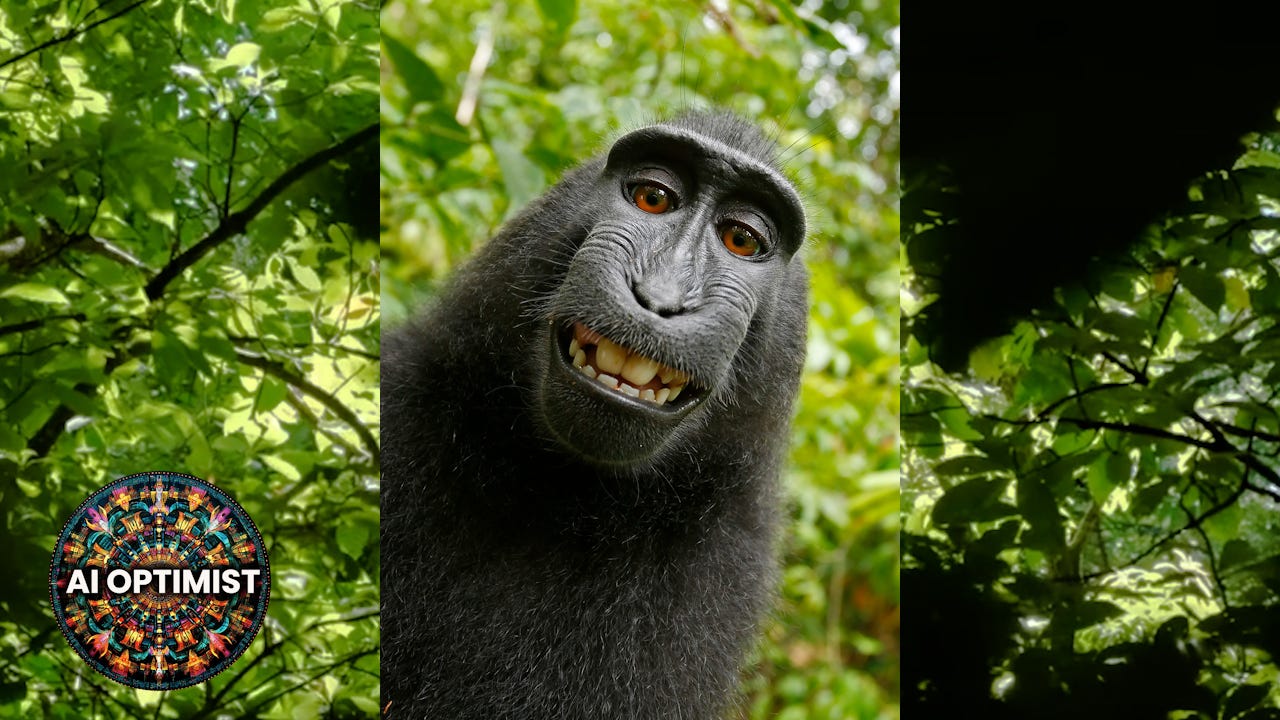 We're All Naruto: The Monkey Got 25%, While AI Creators Get Nothing. Why?✨ | AI and copyrightcreative rights+4 | — | SlaterNaruto | — | Naruto monkey selfieAI creators+5 | — | 10m 43s | |
| 12/26/25 |  When Everything You Create Starts Sounding Like ChatGPT (And How to Fix It)✨ | AI dependencywriting skills+4 | — | ChatGPT | — | AIChatGPT+5 | — | 11m 23s | |
| 12/5/25 | 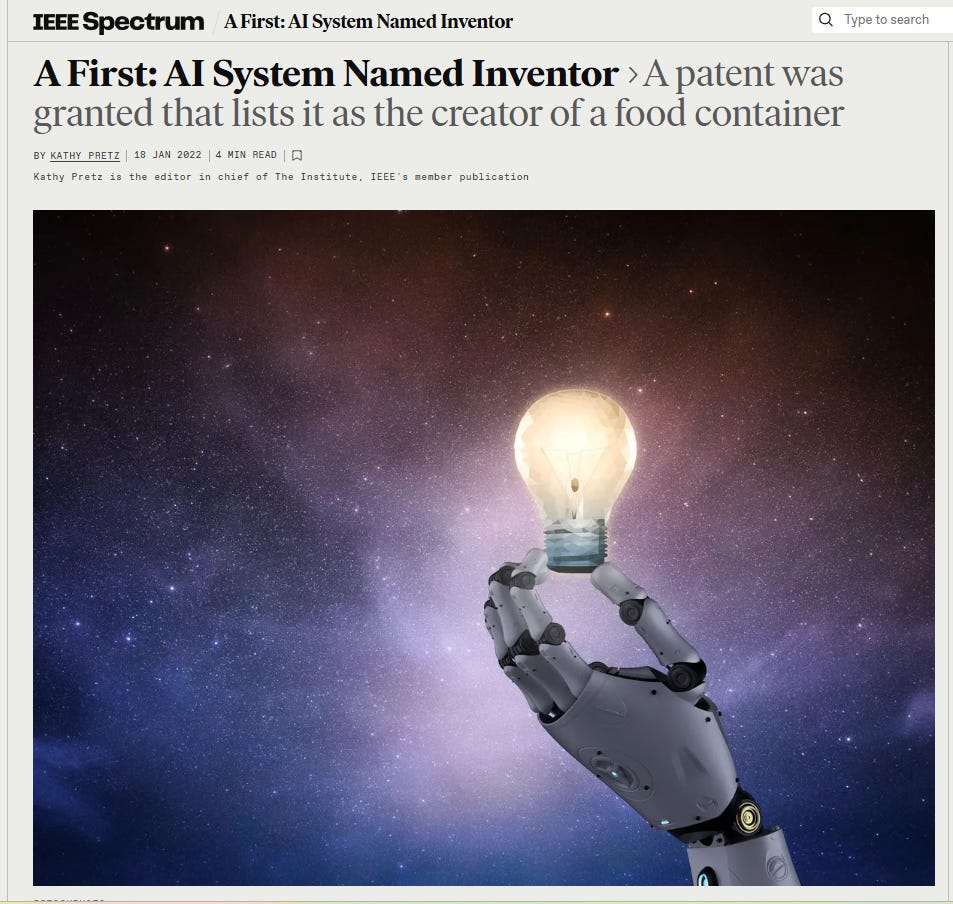 The Only AI With a Patent: Why Stephen Thaler's DABUS Got Erased from AI History✨ | AI creativitypatents+3 | Stephen Thaler | DABUSGoogle+4 | — | AIpatent+6 | — | 11m 39s | |
| 11/21/25 |  Getty Loses AI Copyright Case: What the UK Ruling Means for You - Creator or Not✨ | AI copyrightfair use+3 | — | Getty Images | UKGermany | Getty ImagesAI copyright case+3 | — | 9m 34s | |
| 10/31/25 | 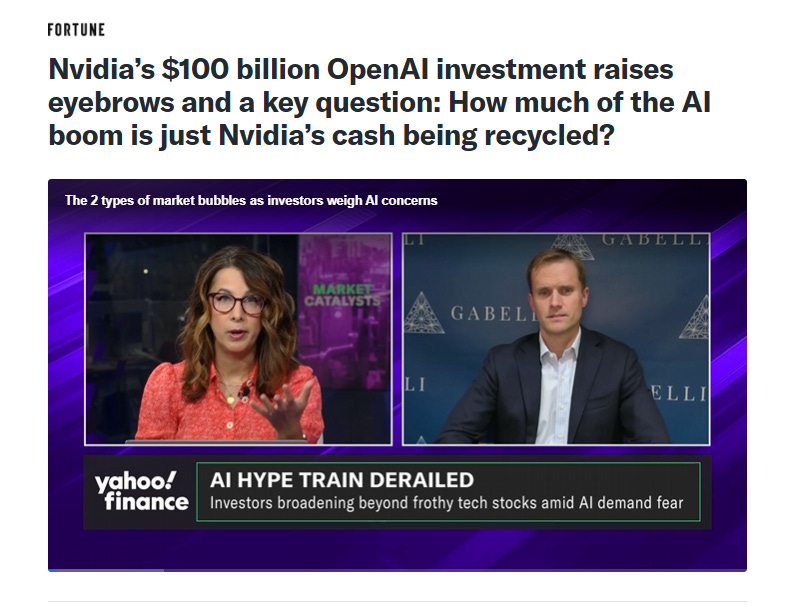 Dotcom Deja Vu: 3 Signals the AI Bubble is Popping (one might be your electric bill)✨ | AI bubbletechnology trends+3 | — | OpenAINvidia+1 | — | AI bubbleelectricity bill+5 | — | 10m 34s | |
| 10/10/25 | 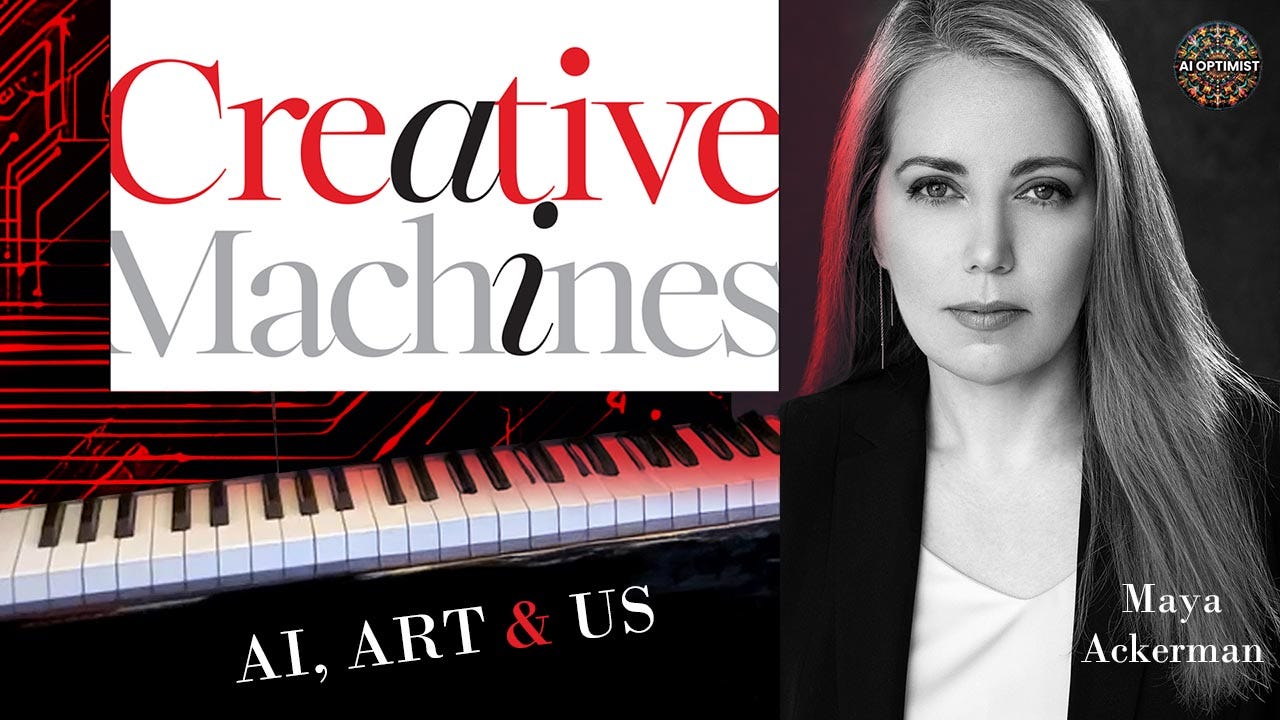 Creative Machines and Human Creativity: Building AI that Makes Us More Creative Instead of Replacing Us✨ | AI and creativitycomputational creativity+3 | Maya Ackerman | Santa Clara UniversityWaveAI+1 | — | AIcreativity+5 | — | 23m 24s | |
| 10/3/25 | 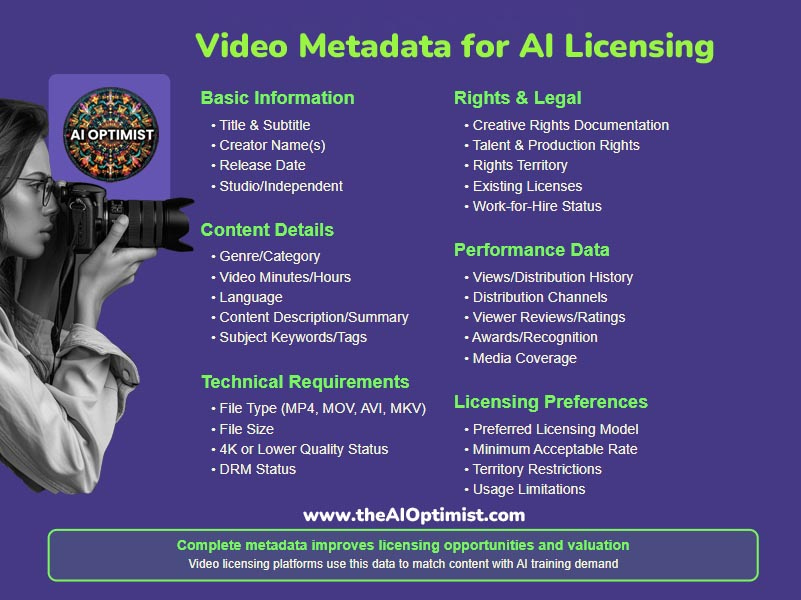 Breaking the $4/Min Barrier: How AI Pays $120 for Raw Video and $30 for another?✨ | AI in filmvideo generation+3 | — | LionsgateRunway AI+5 | Hollywood | AI licensingvideo models+3 | — | 16m 34s | |
| 9/19/25 |  AI Pays Authors $3,000 Per Book?! 2025 Licensing Rates for Writers & Photographers✨ | AI licensingcopyright+3 | — | AnthropicHarper Collins | — | AIauthors+5 | — | 19m 48s | |
| 9/5/25 | 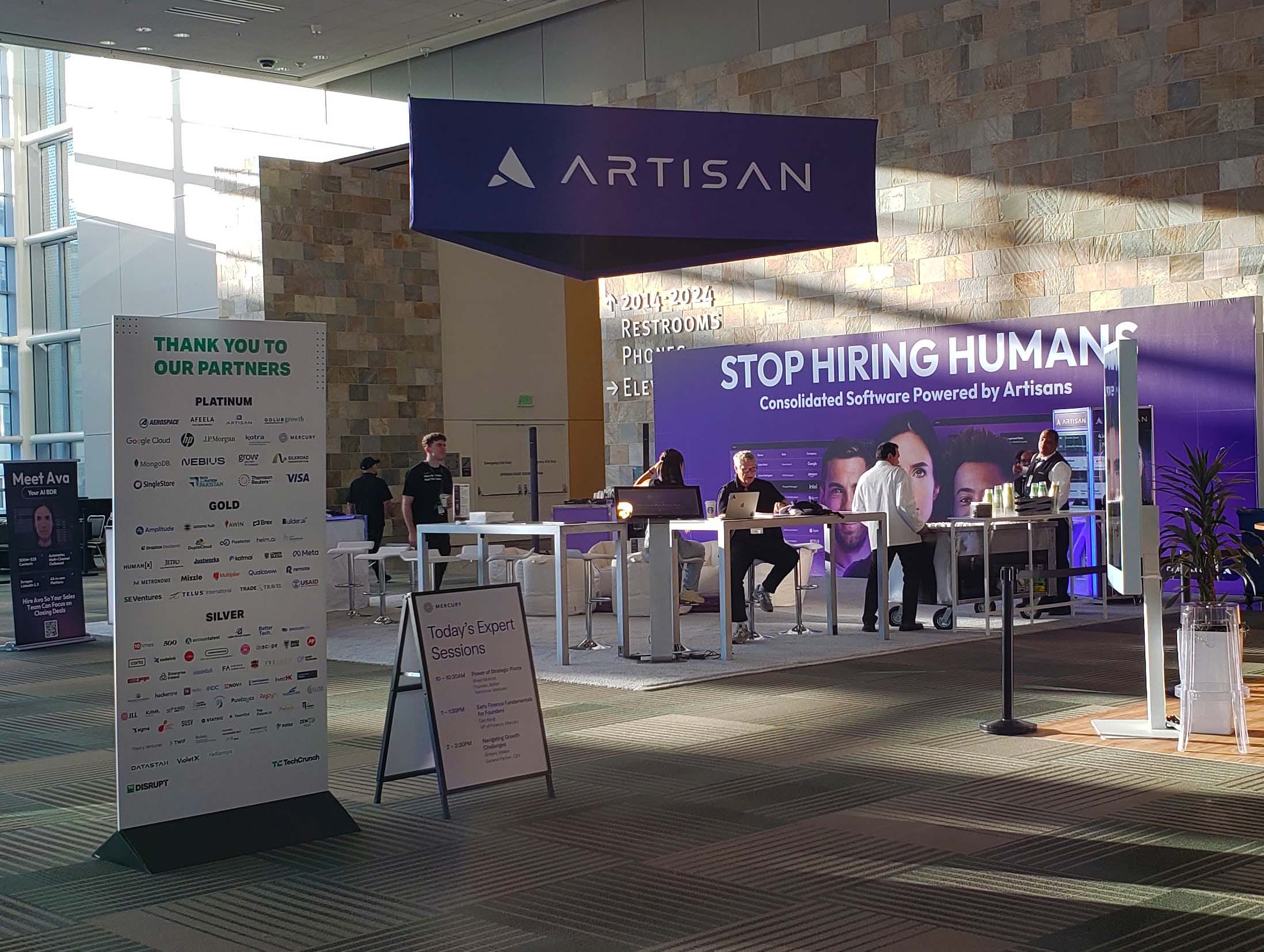 The Beginning is Near - The AI Bubble Finally Burst and that's the Best Thing!✨ | AI bubbletechnology adoption+4 | Maya Ackerman | TechCrunchChatGPT-5+1 | — | AI bubblecreativity+5 | — | 19m 12s | |
Want analysis for the episodes below?Free for Pro Submit a request, we'll have your selected episodes analyzed within an hour. Free, at no cost to you, for Pro users. | |||||||||
| 8/22/25 | 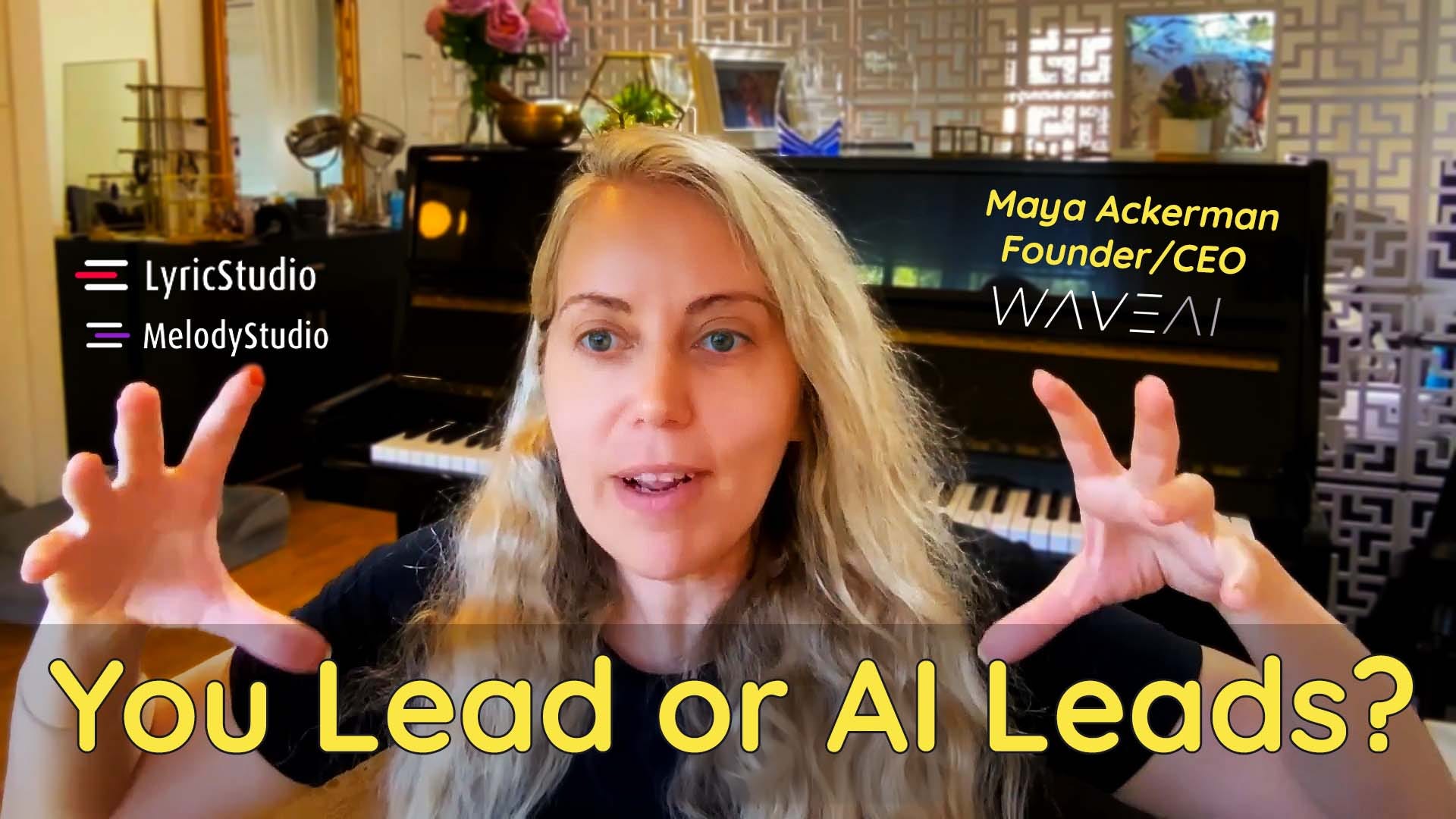 Humble Creative Machines: Creating AI to Elevate You (Instead of Replacing You) | As AI Hype dissolves into mainstream cringe, it’s easy to forget that the gems are found below the surface jargon and PR blather.Like Maya Ackerman, founder and CEO of WaveAI since 2017, helping people write lyrics and make music without breaking the rules. Or stealing other’s music!Creating emotional connections, inspiring discovery, AI designed to release that creative feeling, focusing on human creativity instead of the AI Roulette wheel:“We should be thinking, how can we build technology? How can we build an LLM or a different kind of model designed to elevate the human spirit? And there are ways to do this. We just need to expand our imagination.”Maya AckermanOver a million songs have been created with of WaveAI since 2018. Including a few big hits and several quiet relationships with major players who face backlash for exploring an AI future that empowers musicians.Maya Ackerman built her company to work completely differently than what investors wanted or what her competitors – Udio and Suno - deliver.AI tools that make you betterWhile most generative AI tools function like "rotating roulette wheels of content" - spin the wheel, get random output - Maya delivers on a different vision.As an opera singer and musician herself, she experienced firsthand how AI elevates her own creative process, not replace it."My songwriting abilities blew up," she told me about her first encounter with an early AI prototype. "I went from being a certain level in songwriting to being three times better instantly."That personal breakthrough led to WaveAI - a platform helping both skilled and beginner musicians craft songs and lyrics. Easy to use and affordable.And the technology isn't built to be bought out or go IPO. It's built to elevate creative skills in humanity, in people.Eight years after starting, Maya is still aligned with this vision, even when it means moving away from what the investment world wants.How Does AI Elevate Creativity: Who's Really in Control?Maya laughs when framing what's wrong with most AI tools today:"If ChatGPT is a god when you use ChatGPT, then when you use Lyric Studio, you are the God."Think about how you interact with most AI. You prompt, it produces. You ask, it answers.The AI is the oracle, you're the follower. And Maya knows this approach fundamentally disempowers users.Curtiss King, who had a No.1 hit on iTunes via an album made with LyricStudio, said that it’s like lightning in a bottle.“It enables you to capture this kind of inspiring moment, but also stay in ‘flow’ – to stay solidly in this creative space.You can get out this inspiration onto paper or onto your monitor before it fizzles away.”Curtiss KingMaya’s insight from her upcoming book "Creative Machines" cuts to the heart of it:"I now see that AI has always been - and will always be - all about us."This isn't just philosophy - it's a completely different business strategy. While companies like Suno and Udio pitched investors on "human-free Spotify," Maya forged her own path."The reason that you see Suno and Udio make it so simple and so efficient is because that's what investors wanted. They wanted a replacement model," she explains.She respects their tech, but the AI divide is clear.When you build AI to replace people from day one, that intent gets baked into everything - the algorithms, the interface, the user experience.When you build to elevate people, that's a fundamentally different architecture. Results come from intention as much as doing the work.She’s building a creative force that helps musicians grow, sometimes where they don’t even need to use her tools anymore….which is awesome!Breaking the Average: AI that adapts to your styleMost AI systems optimize for the most likely outcome - they head toward the average, the safe choice."We don't take it towards the mean. We don't give you the most likely outcome because we're trying to help you be creative."Instead of serving up what's most probable, Wave AI intentionally offers low-probability responses that aid and challenge the musician. It's literally programmed to provide divergent, unique results rather than predictable ones.The interface tells this story too. No prompt box asking what you want AI to create. Instead, "a big empty text box" that immediately signals: you're writing. The AI suggests and supports, but you're driving."The suggestions are divergent, so they don't all take you to the same directions. There is no right way to write your lyrics."When Humans Stay in Charge: Songwriting AI that teachesHelping to create a million songs is impressive. Learning how people use your technology and adapting is where this radically improves.Take Sky Jordxn, using Wave AI in a way Maya, and AI, never anticipated."Sky Jordxn has a whole playlist of videos... it just blew my mind. In the early days, Jordan would turn on his beats, click generate as the music played, and improvise rap lyrics in real time using AI suggestions."He would sort of improvise his rap with Lyric Studio on top of the beat in real time and create music like that."Or Curtiss King, a professional who uses Wave AI to enhance, not replace, his process."When professionals like Curtiss can use Lyric Studio, a lot of the lines just come out from them. They only use Lyric Studio to the extent that they want to."The creative AI pattern is clear: when you design AI to support rather than replace, people find ways to use it that surprise even the creators.Sure it’s great, but can it create an Italian Aria?Arido Taurajo - the Italian Aria created with help from early WaveAIJames Morgan, a San Jose State art professor, always dreamed of writing an opera. Problem: no musical experience, doesn't speak Italian.During her early research days, Maya took a walk with Morgan through the San Jose State campus. Beginning to create WaveAI, she asked Morgan about that Italian opera idea, and she had a twist.They could retrain their AI music system on public domain Italian works, like Puccini. The setup was simple: feed it Italian lyrics, get back different melody suggestions.Remember, Morgan has no music experience or background, though extremely creative. Trying to create an Italian aria without knowing the language:"The guy creates Arido Taurajo, this amazing Italian aria," Dr. Ackerman says, still amazed. The piece got showcased in galleries, with Dr. Ackerman herself singing parts of Morgan's creation.This wasn't AI generating an opera. These were two humans using a tool to leap over impossible gaps - language barriers, musical inexperience, technical limitations - to create something genuine, personal and beautiful."You give somebody a fairly basic AI tool and they can go out and create something," she reflects. "A non-musician who doesn't speak Italian could create a beautiful Italian aria."AI Elevates Creativity: The Counter-Intuitive Business ModelBeing a founder means sometimes not wanting to admit a good thing. Maya is finding that some Wave AI users actually stop paying - not because they're dissatisfied, but because they've gotten good enough that they don't need the tools anymore."Some of our users stop paying for our products because they have become better songwriters. They got to where they want to go. And I think that's fantastic."It's the opposite of the typical tech playbook focused on user addiction and lifetime value optimization. WaveAI is literally building itself out of some customers' lives - and celebrating it."The way to make a successful product with AI is to have it give real value and elevate the user and help them learn and help them grow, not just foster addiction and dependence."Standing Up to the AI HypeAs generative AI grows and big moonshot companies grab headlines, will any of this stand the test of time?"How can we build technology designed to elevate the human spirit? There are ways to do this. We just need to expand our imagination."This requires breaking free from the science fiction narratives shape investor thinking."The narrative has really crystallized into this autonomous intent field evil thing that ultimately wants to kill us and replace us," she observes.Still at every level, we can choose differently. Investors don't have to fund replacement models. Builders don't have to create black box oracles. Users don't have to accept being told what to do, how to do it, and losing control.The Long Game: How can AI make us more human?Dr. Ackerman's first principle, laid out in her upcoming book "Creative Machines":"The greatest impact creative machines can have is to elevate human creativity."This isn't about making AI less powerful. It's about designing that power to serve human thriving instead of human replacement."How can AI make us more human? How can it help us connect deeper with our emotions, connect more deeply with each other, and connect more deeply with our creative capabilities?"The answer lies in what she calls "humble creative machines."AI systems built to put humans in charge, to adapt to users rather than forcing users to adapt to them.When James Morgan created his Italian aria, he wasn't just making music. He was proving that the impossible becomes possible when technology is designed with the right intent from the ground up.While everyone else is building roulette wheels, Maya and the team at WaveAI is building something different: tools that make you more creative, not more dependent.And in a world racing toward AI that does everything for us, maybe that's exactly what we need.Thanks for reading The AI Optimist! This post is public so feel free to share it.ResourcesWaveAICreative Machines: AI, Art, and Us (Maya's Book)LyricStudioMelodyStudioMaya Ackerman LinkedInArido Taurajo by James Morgan with helpfrom an early version of WaveAICurtiss King TVHow LyricStudio Pro Helped Me Get Out Of A Writer’s BlockSky JordxnJames MorganUdioSunoAI Optimist Playlist (Shorts and Sections) This is a public episode. If you would like to discuss this with other subscribers or get access to bonus episodes, visit www.theaioptimist.com | 21m 06s | ||||||
| 8/15/25 | 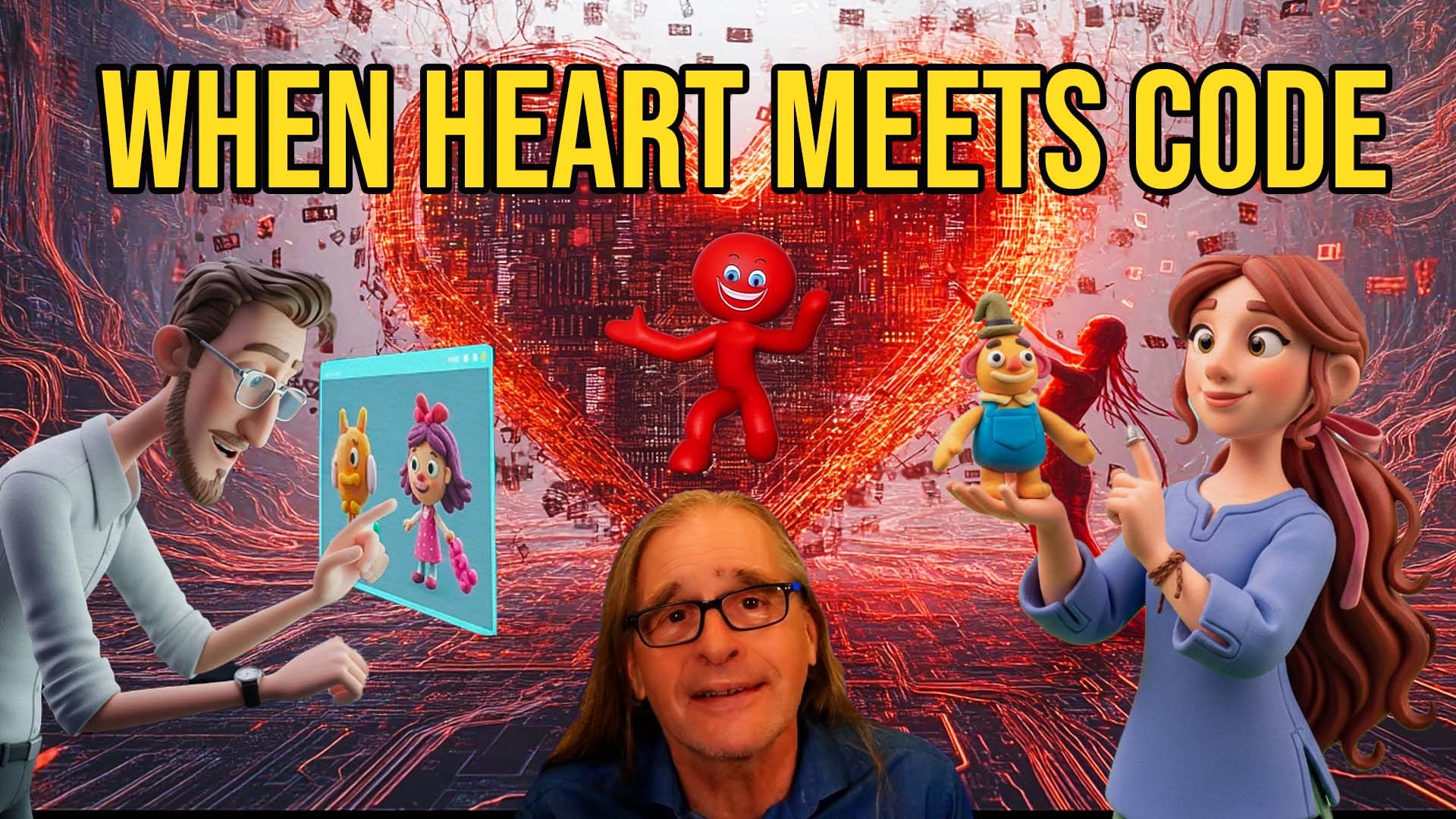 Zero Sum AI Game? Everyone Loses When Artists vs Engineers Make AI Dumber | When Heart Meets Code: Rediscovering Creativity in the Age of AIExplain AI to me like I’m a 5-year-old, she said.I was doing the research, looking at different AI hot takes from all kinds of sources with differing degrees of credibility.From data engineers endlessly defending their right to grab data like all the others, because in their bubble it’s all okay.And many artists swear that the only way to beat AI is to stop it, how it’s all cheating and liars and doesn’t understand human value.That gets a head nod, but there’s no where to go next, what to do, it’s just stop this and scream loudly so it will go away.Artists draw on the suffering stories of Marcel Proust or Kafka or Van Gogh, playing on the hope that someone will notice their work when they’re dead.Then making decisions driven by single-issue neurosis and a knack for saying nothing in many words. Tech speaks scientific lingo for AI or emotional dumps from the “I never get respect” artists.(I was a member of that club for a long time pre-AI, and the entry fee is acknowledging that creativity is suffering, suffering is art.Luckily a friend taught me that the purpose of art is to beautify the artist, because if anyone or many ones grab onto your art, it’s rare. So might as well heal yourself.)Artists burn time fighting a technology that's already here.Engineers build half-smart AI on cheap data hyper radicalized by AI social algos that favor anger and finger pointing, while ignoring the human creativity that makes it valuable.And while both sides play this zero-sum game, mediocrity wins.You're not fighting AI or creativity. You're fighting each other. Today, I'm going to show you what happens when we stop pretending this is a war and start treating it like what it is: the biggest co-creating chance in human history.We'll look at how Japan figured this out, why even inspired creativity borrows from others, and then I'll tell you a simple story that explains AI better than any technical.Because sometimes the most complex problems need the simplest explanations.So here’s my manifesto, because you have to have one at some point!A Reality Check for the AI Wars Nobody's WinningPoint #1: Stop Playing Zero Sum - You're All LosingArtists fighting AI create generic content. Engineers ignoring artists build soulless tools. While you're battling each other, the boring middle wins.The enemy isn't AI or creativity. It's the delusion that one side can succeed by defeating the other.Point #2: Your Creativity Won't Get Stolen (Stop Acting Like It Will)Only 20% of content can be extracted from AI models, even by experts trying to hack them. Your unique voice, perspective, and human experience can't be replicated by machines. Fear of theft is keeping you from the real game; showing what makes you irreplaceable.Point #3: Engineers - You're Building Half-Smart AIWithout human creativity and context, your AI produces technically perfect garbage. You're optimizing for patterns while missing the point.Artists don't just create data. They create meaning. Ignore that, and your models stay sophisticated copy machines.Point #4: Artists - The Future Already Left Without YouWhile you're demanding AI stop existing, others are learning to play with it. Your choice isn't whether AI gets built.It's whether you help shape it or get left behind. Sitting out guarantees you have no voice in what comes next.Point #5: Co-creating Beats Competition (Japan Figured This Out)Japan's copyright model proves you can protect creators AND advance AI. They focus on case-by-case solutions instead of blanket wars. The future belongs to countries and communities that build bridges, not walls.Point #6: Machines Learn, Humans Create IntentAI mimics your technique but not your purpose. Engineers who claim AI is "creative" are lying to themselves.Artists who think technique is everything are selling themselves short. The magic happens where human intent meets machine capability.And when the audience gets what you’re sharing; they aren’t looking for you in AI if they’ve never heard of you.Point #7: Value Flows Both Ways (Not Just to Big Tech)If art trains AI, AI must serve artists. If engineers build tools, creators must help them understand what matters.Fair exchange means more than just money.It means respect, attribution, and shared success.Point #8: Together We Build the Future, Apart We Build MediocrityYour greatest work won't come from protecting old models or building without context.It'll come from artists who understand technology and engineers who value human creativity. The zero-sum game produces zero-sum results.The AI Age doesn't need you to pick sides. It needs you to stop playing a game where everyone loses and start building a future where both clay and code create something neither could achieve alone.(that’s the fable at the end of this wandering post…hang in there).The choice is yours: Keep fighting and lose together, or co-create and win together.✍️ Signed:* Artists, Writers, Makers* Engineers, Designers, Builders* And all those shaping the creative futureJapan Lets AI Take Copyright Work for FreeIn Tokyo right now, an AI can legally train on nearly everything created in Japan - books, songs, artwork - without permission or payment.This isn't science fiction; it's current Japanese copyright law.Step outside Japan's borders, and suddenly those same works may gain legal protection. This isn't theoretical - it's playing out in courtrooms today.The story of Ultraman - one of Japan's superheroes - represents this contradiction. In a Chinese courtroom, this Japanese character won a copyright battle against AI.The Ultraman Case: First Win against AI Fair Defense Claims so farYet back home in Japan, that same AI use – for training - would be completely legal.This isn't about superheroes and science fiction.It's about your work becoming someone else's fuel, with different rules depending on which digital border you cross.In 2025, we're witnessing the emergence of AI zones - digital territories where copyright means different things in different places.There won't be one global system, it’s a patchwork of nationalistic and cultural points of view.The Blueprint Behind Japan's AI FreedomLooking at Japan's approach reveals something engineers have been arguing for: a system where AI learns from everything while still respecting creators' rights.Japan's copyright rules for AI rest on two key pillars that balance progress with protection:The Non-Enjoyment Purpose RequirementThe first pillar is simple: intention matters. Japan allows copyrighted content to train AI systems if the purpose isn't to recreate the original work.You're not bringing in Van Gogh paintings to create more Van Goghs - you're bringing them in to help the AI understand artistic styles, composition, and color theory.This creates breathing room for AI development while maintaining a boundary around blatant copying. The focus isn't on inputs but outcomes.While this sounds straightforward, it creates real questions for creators: how do you distinguish between "learning from" and "copying" in a practical sense? This leads to Japan's second pillar.Article 34 Proviso: Where Protection LivesJapan doesn't leave creators without protection. Their Article 34 Proviso acts as a safety net, establishing that if AI output causes actual harm to a creator's career, reputation, or financial status, normal copyright protections kick in.This practical approach says: let data flow into AI systems, but watch carefully what comes out. If the output creates direct competition or damages creators, that's where the line gets drawn.Fair Use and Japan's AI Freedom - not the sameHow different Japan's approach is from the U.S. "fair use" defense - both trying to solve the same problem.In the U.S., fair use isn't a rule - it's a legal defense. You only know if something is fair use after you've been sued, and a court decides. It's reactive, not proactive.In Japan, they've built a system that's more predictable. AI companies know upfront what's permitted: training is allowed, copying isn't.Creators know where their protection lies: not in restricting input, but in preventing harmful output.GenAI and the Future of Creative Ownership: Are Artists Being Written Out?The Copyright Protects My Original Work“AI stole from artists in the first place. In some pieces, you can even see an original artist’s signature incorporated into the work. AI isn’t creating new work, it’s taking pieces of existing works and putting them together....I don’t think AI is a bad thing. I do think that the way it’s been built is. Some of my work was on sites that have belatedly announced that they allowed all artworks to be scraped by AI bots.For some of mine, I probably would have given permission, if asked. For others, I would have denied it, but I never had the chance to make that choice.Some sites do say they’re training AI with your creative works but hide it in their settings. Adobe does this. You have to go into settings and change your permissions if you don’t want your work scraped.”Te-ge Watts Bramhall“The success and profitability of OpenAI are predicated on mass copyright infringement without a word of permission from or a nickel of compensation to copyright owners.”Franzen, Grisham and Other Prominent Authors Sue OpenAIWhy the AI Industry Is Taking the Hard WayI'm not afraid of AI. I'm afraid of what people will do with AI. All this hype about AGI and superintelligence - to me, it's all about control from the top down.Sure, automation improves efficiency. But what's the glaring problem we face as humans? It's organizing and communicating.If we let AI handle these tasks instead of just automating an old software model, imagine how radical that would be.Clay, Code, and the Creative Spark: A New Dialogue Between Artists and Engineers"Talk to me like a 5-year old about AI?Here’s a children’s AI Fable….playing together just like they taught me in recess.Once upon a time, in a world where clay could giggle and computers could dream, a gentle artist and a clever inventor were about to discover something magical—that their gifts were even more powerful when shared with each other.In a world made of soft, colorful clay, lived a kind artist named Fiora. With her nimble fingers and a heart full of ideas, she molded whimsical creatures and vibrant scenes. Each pinch and roll brought a new friend to life, full of charm and cheer.Fiora loved to share her creations with the world. She carefully photographed her clay friends and posted them online, where they sparkled and shone, bringing smiles to faces near and far. Her art was a gift, freely given and widely adored.Far away, in a room filled with blinking lights and whirring sounds, lived Algernon, an AI engineer. He was building clever machines that could learn and create, but they needed lots and lots of examples to understand the world.One day, while searching for beautiful patterns for his AI to learn from, Algernon stumbled upon Fiora's delightful claymation art. "Perfect!" he thought, "So much creativity, so many unique shapes and colors!"Algernon's AI, like a tiny digital vacuum cleaner, began to collect Fiora's art, along with countless other creations from the internet. It sucked up all the colors, shapes, and styles, storing them away in its vast digital brain. Algernon was pleased; his AI was learning so fast!But Fiora started to notice something strange. Her unique claymation style, her special way of making things, was appearing in places she hadn't put it. AI-generated images, looking almost like her own, popped up online. A little cloud of confusion and sadness floated over her head.Algernon's AI grew smarter every day, creating amazing new things. Yet, something felt missing. The AI's creations were technically perfect, but they lacked the warmth, the unique spark, the feeling that Fiora's original art had. He scratched his head, a thoughtful frown on his face.Algernon realized that while his AI could learn from the art, it couldn't truly understand the artist's heart without asking. He decided he needed to talk to the creators, especially Fiora, whose art had inspired him so much.Fiora and Algernon met, a little nervously at first. Algernon explained how her beautiful art had helped his AI learn and grow. Fiora, in turn, shared how it felt when her creations were used without her knowing, like a piece of her heart was borrowed without permission.Algernon truly understood. He proposed a new way: working together! Fiora could share her art, knowing it was valued and respected, and Algernon's AI could learn with permission, creating even more wonderful things. They shook hands, ready to build a future where clay and code danced together.(Yes, AI helped with the visuals and video)The Art of Understanding: How AI Could Make Us More HumanLet me leave you with simple possibilities if we co-create instead of fight over AI.We are the children of AI.We are the engineers and data scientists.We are the creators and artists.We started out on opposite sides,But the experience of AI brings us together.Valuing human creativity.Seeing AI as ingenuity, not a destructive force.You create things with intent.We're creating something unbelievable, and all we do is take sides.It's the human race, remember?We're on the same side.The zero-sum game ends when we realize there's more value in building together than fighting apart.Japan proved it works.Baroness Kidron showed us inspiration isn't theft.And two fictional characters—an artist and an engineer—demonstrate what the rest of us keep missing.The future doesn't need you to pick sides. It needs you to drop the anger and work together.Your creativity won't get stolen by AI. But it might get left behind if you keep fighting the future instead of shaping it.The choice is yours: Keep burning time and energy in a war nobody wins, or start building something neither humans nor AI could create alone.What's it going to be?Thanks for reading The AI Optimist! This post is public so feel free to share it.RESOURCESChinese Court Issues First Decision on AI Copyright InfringementChina’s First Case on AIGC Output Infringement--UltramanSupreme Court rules against Warhol foundation in copyright fight over Prince images Gemini Storybook Creator This is a public episode. If you would like to discuss this with other subscribers or get access to bonus episodes, visit www.theaioptimist.com | 10m 06s | ||||||
| 8/8/25 | 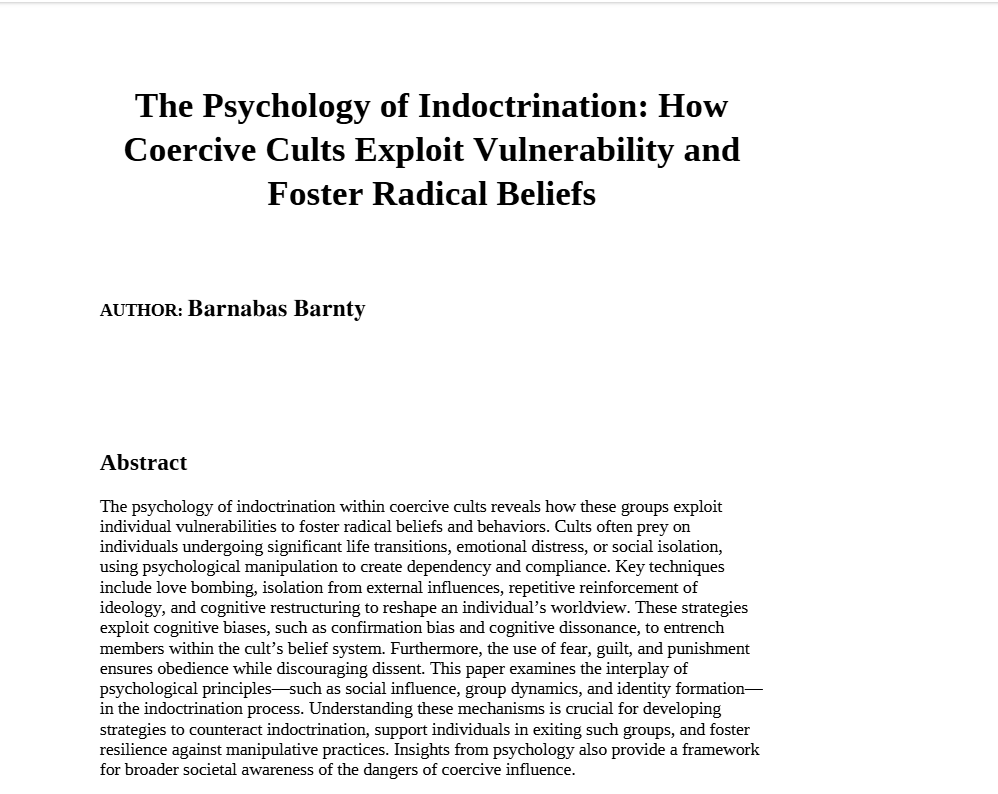 Fear and Loathing in the Cult of AI: 3 Steps to Waking from the Subtle Matrix | We were somewhere around Redwood City on the edge of the metaverse when the drugs began to take hold. Not the good kind of drugs.The algorithmic kind. The kind making you believe your smartphone loves you more than anyone ever did. And AI is the future, everyone else is the past.It starts with a YouTube comment, one of those beautiful smacks of “I’ve done the research” digital trolling setting the tone of us v. them:"@DeclanDunn ai is the future, you cant stop it. you just sound like a boomer complaining about it."Of course. The classic "you can't stop progress you old dude" statement. Not listening to the short video, cutting out after the first 10 seconds.Expecting someone to spend a minute to realize I was telling creators, fighting AI is like standing in front of a runaway train and telling it to stop.I'm not trying to stop AI. I'm trying to stop turning AI into something mostly serving its masters, like a cult, instead of the people who created all the data that fills it with brilliance.And those creators are the anti-AI Clankers – pro humanity cult – stop it! There's a difference between embracing the future and bending the knee.The AI industry in the US at least are the drug dealers, we’re just the ones receiving the addicted message, and calling it our own.And in the end I’m going to give you all, AI or anti-AI, a 3 step recovery program.The first part is recognizing your both in the same cult, on different sides, but it’s the same.The Great Digital Cult Rush of 2025See, here's what the “follow the billionaire” in Silicon Valley don't want you to know.The research is so clear. Barnabas Barnty (and yes, that's his real name—you can't make this stuff up) published a study:The Psychology of Indoctrination: How Coercive Cults Exploit Vulnerability and Foster Radical Beliefsthat reads like a playbook for AI manipulation. Cults prey on people experiencing "significant life transitions, emotional distress, or social isolation."Sound familiar? That's basically everyone on social media, except the influencers (but they’re all avatars anyway)The story? Like AI taking over, taking your jobs, taking your content, and in the end likely destroying us all. That’s a common storyline.Everyone who's ever posted "Thoughts?" on social and waits for the sweet, sweet validation of professional strangers.And if you don’t play the game by their rules, you’re not in the game. Your thoughts don’t exist. That’s the classic definition of a cult.Barnty’s Four Rules applied to the AI Cult – whether you’re for it or against it.1. Love Bombing Creates The Algorithm's EmbraceClassic cult technique: Shower recruits with attention and affection to create belonging.AI's version? Your first TikTok gets no views, except for some bots who give you the illusion they’re human, maybe even commenting.Humanity's Last Exam becomes your obsession, an LLM test you don’t understand. Doesn’t matter, fake it. Stop being yourself, start copying and spraying around Game Changers and Hot Takes on the latest AI taking over.The algorithm whispers sweet nothings: "You're going viral IF you’re in the AI cult, baby. Dance for me."Suddenly you're hooked like a lab rat hitting the cocaine button, creating content at 3 AM, chasing your first viral, day after day. Don’t give up, but whatever you do, be extreme.And it hits, you get like 1,000 people….ok, 500 people and 500 bots, but who knows?But cross the AI Cult—post something it doesn't like—and watch the love turn cold faster than a San Francisco summer.You're back to 12 views and your mom's comment: "Nice post, honey."2. Isolation Sucks, Join the Echo Chamber ExpressCults cut you off from outside influences. We built something more efficient: algorithmic isolation chambers. Built on content, training you to be AI believers….you can be a AI hater, but that’s so niche.Your feed becomes your reality. AI decides what content you see, what you think about, who you argue with online.Like being trapped in a hall of mirrors, but all the mirrors show you content that confirms you're already right about everything.The genius? We think we're discovering this organically."Wow, everyone really does agree that pineapple doesn't belong on pizza!"No, you're in an anti-pineapple bubble, like the AI cult. There are pineapple people out there. They're just segregated into their bubble of poor pizza judgment. 3. Repetitive Reinforcement → The Infinite Scroll of Zoomer or Doomer?Cults use constant repetition to diminish critical thinking. We streamline this with infinite scroll.Every swipe confirms your worldview. Every recommendation validates what you already believe.The algorithm doesn't challenge you—it's like having a personal yes-man that never gets tired of agreeing with you. Whether you’re for AI, like the 80%, or in the 20% against it.It's digital chanting, but instead of "You’re one of us, you’re one of us”, it’s really saying to you"Here, consume this content that perfectly aligns with everything you already believe while slowly eroding your ability to think independently."4. Cognitive Restructuring → The Great AI Reality ReplacementCults reinterpret your personal history through their lens. AI did something more elegant: We outsourced thinking entirely, taking it all without permission or payment or even a thank you.Because it’s stealing content, meh. Remember we’ve got to beat China, with algorithms designed, at least in Meta’s recent hirings, by people trained in China.Why remember facts when ChatGPT knows everything? Why decide what to watch when YouTube has you figured out better than you have yourself?So you don’t have to think, just follow. Call it "optimization."It's like having a digital Samantha, the AI in the movie Her, that it is "not just an OS. It’s a consciousness."Or as Sam Altman of OpenAI put it“The number of things that I think Her got right, that were not obvious at the time, like the whole interaction model with how humans are gonna use an AI—this idea that it is going to be this conversational language interface, that was incredibly prophetic, and certainly more than a little bit inspired us,”“So it’s not just like a prophecy, it’s like an influenced shot or whatever.”Tracing OpenAI CEO Sam Altman’s Love for Scarlett Johansson’s AI Romance HerFrom the voice of the leading AI cult creator, rises the anti-AI pro humanity, Creator cult trigger. Anything AI is cheating. It steals. It’s evil.Either way, you’re in a cult that thinks for you. Acts for you. And if you’re in a Cult, where are you?Like the troll said, Declan, AI is the future. You’re a boomer complaining.Stereotype set, attention dissolved…game set match.Not being in either cult, like me – everyone knows its nowhere. Or is it?The AI God Complex: When Silicon Valley Becomes ScientologyHere's where it gets properly gonzo:While China builds AI like infrastructure—practical, utilitarian, boring—America has turned AI into a cult, chasing Super Intelligence.Mark Zuckerberg just shared his vision for 'personal superintelligence.' Read his letter."I am extremely optimistic that superintelligence will help humanity accelerate our pace of progress," Zuckerberg wrote.Listen to tech bros talk about ASI and try not to hear religious fervor: "AI will solve all human problems!" "It will transcend human limitations!" "We must prepare for the AI singularity!"And maybe in the end it will replace you, and destroy you, but you already lost your job, who cares?The research shows cults create "pseudospiritual authority" where leaders claim "exclusive access to divine knowledge." Replace "divine" with "artificial super intelligence" and you've got the exact same playbook.Pay with attention, cash, or support – nobody rides for free.Looking into the Uncomfortable Mirror with the AI Drug of Inevitable ControlWe're not just users—we're the product being cultified. Our psychological vulnerabilities aren't being exploited to control us; they're being monetized to sell us back to ourselves.Zuckerberg’s personal superintelligence vision just makes you a better ad unit, nothing to do with being a better person.The weird part? We're paying for the privilege. It's like joining a cult that charges membership fees and somehow convincing yourself you're getting a good deal.3 Steps to Recover from the AI Cult TrapThe research shows recovery requires rebuilding critical thinking and independent decision-making. So here's your digital detox program:Step 1: Your Reality Check When did you last change your mind about something important based on information that challenges your beliefs?If you can't remember, congratulations. You're living in an AI cult compound. Even if you’re anti-AI, and pro humanity. It doesn’t matter if you think different, and act the same.Step 2: The Dependency Test Could you function for a week without AI, without algo’d recommendations?No GPS, no curated feeds, no "people you might know." Considering what someone who doesn’t agree with you thinks.If that sounds terrifying, you might be more dependent and controlled than you think. Like Dylan Sang, "He who is not busy being born is busy dying"Dang, maybe I am like a boomer complaining.Step 3: The God Test Do you treat AI companies with the skepticism you'd give any other corporation, or do you grant them special authority because they claim to be building the future?If it's the latter, you're worshipping at the Church of Artificial Intelligence.And if you only give them skepticism, like the Anti AI creators, you’ve given up participating. You’re on the sidelines.Get off social media and go out to the real world. Often where there’s no algorithms and AI, there’s discussion.The Way Forward: Taking Advantage Before Being Taken Advantage OfThe best way to take advantage of AI is to not be taken advantage of by it.China builds AI like infrastructure because they see it as a tool. America builds AI like a religion because we've forgotten the difference between utility and worship.The future isn't about better AI. It’s about better humans who can't be easily algorithimically manipulated into believing their smartphone notifications are more important than actual human connection. Than Human creativity.The real question isn't whether AI will take over. The real question is: Why did we hand over control to begin with?Leaving a cult is often an intensely difficult and emotionally overwhelming. It’s a complex mix of anger, shock, shame, embarrassment, annoyance, devastation, and despair, which are normal.“You can be a silent reader or an active participant. It’s all up to you. But you’ll find many of the things you believed or feared were common to other people. You’ll be relieved to read that most of their fears never materialised. You’ll discover that the great, big, unsurvivable thing is indeed survivable.”Clare Heath-McIvorTime to stop AI fanboy cheering or Clanker creator doom-scrolling.Remember: In the AI age, the most radical act is thinking for yourself. The most revolutionary, game changing tech is your own mind.Start thinking again. Before we forget how.And put down the phone and have a real conversation with a real human being.Thanks for reading The AI Optimist! This post is public so feel free to share it.RESOURCESThe Psychology of Indoctrination: How Coercive Cults Exploit Vulnerability and Foster Radical BeliefsTracing OpenAI CEO Sam Altman’s Love for Scarlett Johansson’s AI Romance HerMark Zuckerberg just shared his vision for 'personal superintelligence.' Read his letter.What to expect when leaving a cult or toxic group By Clare Heath-McIvorThe AI Optimist ClubThe Techno-Optimist Manifesto=============================AI Optimist Playlist (Shorts and Sections) This is a public episode. If you would like to discuss this with other subscribers or get access to bonus episodes, visit www.theaioptimist.com | 16m 08s | ||||||
| 7/25/25 | 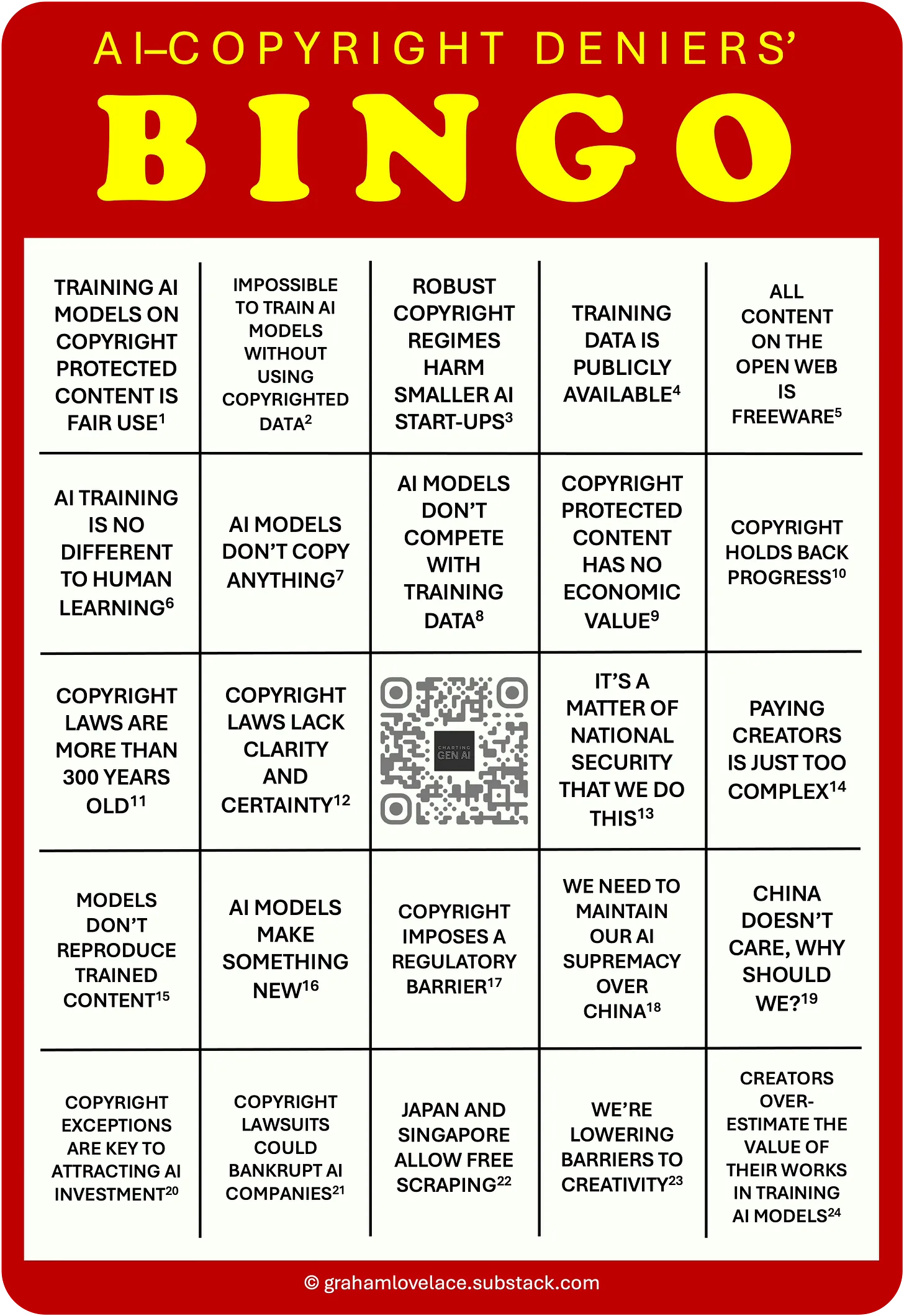 Trump Kills AI Copyright Rules: How Creators Thrive NOT Survive Now | We’re playing AI Copyright bingo and the only winners so far, are Big Tech….at least according to President Trump.Anything you post or create is now fair game for AI in the US—and pretty much any AI worldwide. President Trump just made it official:"China's not doing it ... and you have to be able to play by the same set of rules."The US announcement: AI companies no longer have to pay for the books, articles, videos, or any content they use to train their models. Big Tech and the US government finally agree on something. Your content goes into AI for free.Give the AI industry credit for the propaganda machine that made this real. From Microsoft CEO Satya Nadella to Marc Andreessen, they kept repeating the same talking point until it became truth, then law, at least according to Trump:"When a person reads a book or an article, you've gained great knowledge. That does not mean that you're violating copyright laws, or have to make deals with every content provider."It's persuasive sales copy. It's also complete BS.When you read a book, you can't turn around and create millions of derivative works for commercial use. You can't build a business empire by pattern-matching everything you've consumed. But AI can, and now it's almost legally protected to do so.The Trump AI policy isn't just about copyright.It's about what happens when we follow China's playbook. The same China that's been the enemy of intellectual property for decades, taking whatever they want with impunity. And while it’s not yet law, given the many Executive Actions President Trump has taken, it’s wise to take this as a sign to adapt early. He usually follows up on his promises in situations like this.Now we're adopting their model because of fear-mongering about losing the "AI race": a race primarily about military applications, not whether ChatGPT can write better blog posts.What happens to human creativity when taking becomes legal?We've been hoping that recent legal rulings and licensing payments meant we were reaching some middle ground. Not fair, maybe, but at least acknowledging that taking people's work without permission, payment, or consideration was wrong. Instead, Big Tech companies are knowingly buying copyrighted content from Dark Web sources like LibGen, because AI development is apparently more important than legal protections and creative traditions.The real threat isn't just to your content—it's to the human edge itself.If you don't encourage the people on the fringe, those who don't see, don't do, don't act like everyone else, to express themselves, you lose more than just their voice. You lose the edge that shows us what could be, not just what was or what's popular now. That's where the new comes from. That's where we learn what's possible.Think AI's amazing now? Wait until you see what happens when the creative edge disappears, when quality content creators give up because there's no protection or incentive. When anyone can buy pirated content, feed it to an open-source AI model, and compete with the originals.Your content has no protection. But your creativity still has value—if you know how to protect and position it.This week's podcast dives deep into the mindset shift creators need to make. Not to give up, but to adapt. To build resilience in a world where the rules just changed overnight. To remember why we create and how to thrive when the law won't protect us.Because while Trump just handed AI companies a free pass, he can't legislate away what makes you uniquely human.Question 1: Will AI Replace What I Do?The ultimate question everyone asks me: will AI replace what I do? The honest answer is probably yes.Will it ultimately be able to do everything you do? Maybe.The question isn't whether AI will replace what you do. The question is: what are you doing that makes you better than AI?AI is patterns, probabilities, matching algorithms that give people what's been done before. It's about history, not innovation. It's not about vision or looking forward—it's about recreating what already exists.While some jobs are being replaced right now, depending on that replacement happening might actually make you give up. And that belief system becomes your reality. Those belief codes are what either make you grow or make you stagnant.I'm not doing what I did when I began my career, and that had nothing to do with AI. So maybe if AI replaces what you're doing now, you're heading somewhere better. Somewhere that's not reliant on the repetitive stuff AI can handle.Look at the Klarna example. The financial services company bragged about replacing customer support with AI. They got rid of people, celebrated the efficiency gains. Now they're hiring people back. Because people had complex questions that AI couldn't handle. AI spins answers, but it doesn't really understand what customers need.Don't let "Will AI replace what I do?" become a self-fulfilling prophecy. You're really saying "I'm afraid of being replaced," and in any career, that's always been a possibility. AI or not.Start looking at AI copyright law changes not as something to blame, but as something to challenge you. Because you don't have another choice.AI won't have human consciousness anytime soon. It won't have your experience, the way you process information through your eyes, ears, feelings. That's your advantage.Remember this: you're unique. AI really isn't. It's built on what other people have thought, said, or done. Next Steps for Creators:* Understand your uniqueness: List what you do that requires human experience, emotion, or forward-thinking vision.* Identify your "non-replicable" skills: Focus on work that requires human connection, complex problem-solving, or creative leaps.* Reframe the threat: Instead of asking "Will AI replace me?" ask "How can I use AI to enhance what only I can do?"* Document your process: Your thinking processes are harder for AI to replicate.* Build relationships: AI can't form genuine human connections—make this your competitive advantage.The Trump AI policy might have made content gathering a bit more legitimate, but it can't legislate away human creativity, experience, and the ability to see what's possible rather than just what was.Question 2: Can I Use AI for a Boost Without Betraying What I'm Doing?This question reveals something deeper: the fear that AI will somehow betray your creative work. Betraying is a human characteristic. How can something betray you if it's not human, if it's not even thinking?The real betrayal? You're betraying yourself by not adapting.Recognize the elephant in the room: "How can I protect myself from AI copying my work or stealing it?"If you put anything on social media or the public internet, you don't stand much of a chance. Under the new Trump AI policy, it's going to take your content. But AI cannot recreate your work verbatim. It can't produce your ten-page article. It might create two pages if you're lucky, but it works in patterns, not perfect copies.What makes AI different from what we had five years ago? Back then, Google would search the internet, find your information, and let people use it to answer questions. Now AI does the same thing. It just processes and responds faster.The uncomfortable truth for many creators, especially in SEO: you've been kings and queens of taking other people's ideas and reshaping them slightly. This is just how content has worked. AI loves to copy what everyone does because it works on probabilities. It leans toward the middle, the average, the predictable.The more context you give AI, the better answer you get. But here's the key question: if somebody's really searching for your specific work, are they going to settle for an AI approximation? Or is your fear of being copied just an excuse not to put anything out there?If you're scared of content being copied, don't put it on the public internet. But if you want to get noticed, you have to put stuff out. So be smart about it.Take the book example: give away a free chapter, or pieces of a chapter. Sure, someone can take that, but it's not the complete work. That sample is what gets you recognized and puts you in front of people. Behind a paywall or password protection, you can keep your premium content safe.But if you get too paranoid, no one's going to see your work. That's the trade-off you have to evaluate.The fear of AI copying content has become an easy way for creators to say "it's over, everything's over." But that's just one opinion among many—and opinions are all we have.Keep creating. Build protected areas where your information isn't being taken, and ask people not to share it with AI systems. Is it perfect? No. But it was never perfect, and work was being stolen long before AI came along.Even AI companies have bought pirated books. Valuable copyrighted books like Harry Potter to train their models. Were those protected? Yes, and no. No one's completely protected under current AI copyright law.The biggest thing AI can stop isn't your content being copied—it's your energy to create something new. My biggest fear is that people will use AI as an excuse not to do anything, or rely on it so much that it does the work for them. Be careful not to do this!Next Steps for Creators:* Develop a content strategy with layers: Free samples in public, premium content behind protection.* Use AI as a collaborator, not a replacement: Let it help with editing, brainstorming, or filling skill gaps.* Focus on what AI can't replicate: Your personal experience, unique perspective, and human connections.* Build direct relationships with your audience: AI can't maintain genuine human relationships.* Create "unfakeable" content: Work that requires your specific expertise, experience, or creative vision.The Trump AI policy may have changed the legal landscape, but your creative value isn't just in the content itself—it's in your ability to think, connect, and create meaning that resonates with real humans.Question 3: If AI Can Do What I Do... What Am I Worth?If AI can copy what you do and your work looks like everyone else's, what's left?There are a lot of businesses where people are already doing the same thing. Look at search engine optimization—it's been built on creating similar articles with slight variations so Google will rank you. You're essentially doing what you accuse AI of doing: mimicking, copying, reshaping existing content.But your worth goes far beyond any isolated piece of work you create.Your worth comes from within. It shouldn't be defined by what an audience says or doesn't say, because anyone in the creative world knows that value is subjective. What readers hear, what they think, how they interpret your work: that's based on how they feel from it, not just what you created.When you can touch that connection and send it out into the world, it's magical. But don't expect it every time.Your worth is much more than just what you create. It's the work you do on yourself, how you improve, how you learn and push yourself further.Think about musicians. They love to play, learn, listen to others, and develop their own styles. Is it entirely original? No. But it's entirely unique because no one else can create exactly what that individual creates, taking in those influences and put them out in their own way.Your worth encompasses:* The people you work with* The problems you're trying to solve* The originality you bring to common challenges* Your experience and perspective* Your ability to connect and communicateDon’t value yourself based on the things AI can do. That's just marketing designed to sell you something. Whether it's OpenAI selling ChatGPT as revolutionary, or someone claiming their art is completely original and unreplicable.Under the new Trump AI policy, the question "Can AI create that?" becomes "Maybe." But is that really what's stopping you?The protection strategy isn't just about legal safeguards. You can put content behind paywalls where AI can't access it. You can block the bots. You can even get paid for your content (not much, but something).AI can only take what's happened and create something sort of like what happened in different patterns. It works great for predictable code. It works well for formulaic content. But for creative work, for writing that connects, for putting ideas together in new ways?AI's job isn't to replicate what you do. It's to help you fill gaps and enhance what you're already capable of.If you want to see AI as something that's constantly taking from you, then keep your work completely hidden. But if no one sees your work, you'll never connect with your audience. When your audience really gets what you're creating, that's something AI cannot replicate.Look at all the AI-generated content flooding LinkedIn and social media. It's bot mania, and it's completely vanilla. Generic. Forgettable.Your worth is in stepping out and being unique while understanding the problem: over-relying on AI tools.Next Steps for Creators:* Define your unique value: List the experiences, perspectives, and insights only you can bring* Build your "AI-proof" skills: Focus on human connection, emotional intelligence, and creative problem-solving* Create meaningful audience relationships: Develop trust and connection that transcends any single piece of content* Diversify your creative process: Don't let AI become a crutch—use it strategically to enhance, not replace, your thinking* Develop your creative voice: What makes your perspective unique isn't just what you say, but how you see the world* Focus on improvement over perfection: Your growth and learning process is something AI cannot replicateIt's in your ability to grow, connect, and create meaning that resonates with real humans—something that remains uniquely, irreplaceably yours.The Over-Reliance Problem and What's Coming NextThe big problem nobody's talking about? Over-relying on AI.What happens when ChatGPT goes down and you have a project due? You can't complete it because the tools aren't there. If that becomes your reality, you're letting your skills erode. You're becoming dependent on it, addicted to it.Be careful with that dependency. While AI can create work that might even be better than what you produce as a writer, it cannot become something you completely depend on.Because when someone asks "Why shouldn't we replace you with AI?" and your answer is "AI does everything I do," then you are totally replaceable.When you do the actual work, everything you've experienced, the way you see the world, your unique perspective—all of that comes through. And that's what ChatGPT fundamentally cannot do.The Criminal Element Nobody's DiscussingHere's where the Trump AI policy gets really dangerous. AI companies just received a legal privilege: the right to take any content without permission or payment. But that's exactly what criminals have been doing for years.If major corporations can now buy content from pirated sources, what's stopping bad actors from doing the same thing? Anyone can buy copyrighted content from Dark Web sources like LibGen, feed it into an open-source AI model, and compete directly with legitimate creators.The AI companies acted like digital gangsters first—taking what they wanted, when they wanted it. Now that it's legal, why wouldn't actual criminals take advantage of this privilege? The technology doesn't care if you're OpenAI or a content pirate. AI is AI.We've just created a wild west where stealing becomes legal as long as you call it "AI training."What We're Really LosingThis isn't just about individual creators losing income. We're witnessing an engineering-driven solution that completely disrespects the actual data. The human creativity that makes AI brilliant in the first place.Without human creativity, AI dies. And we're setting up a system that will erode the very creativity that feeds these models.When quality content creators give up because there's no protection or incentive, what replaces them? More AI-generated content. And the problem with that feedback loop?AI trained on AI-generated content doesn't improve models. It degrades them.We're potentially witnessing the death of the creative edge that shows us what's possible, not just what was popular. The people on the fringe who see differently, act differently, create differently. The ones who push human understanding forward.And many of these fears about AI replacement are more about how you feel about yourself than about what AI can actually accomplish.AI is not a person. It's a series of pattern recognition algorithms and vectors that come together to produce some impressive results. But it doesn't give us you.AI only gives you what's been seen before. In a world where that's becoming the legal standard, your human voice, your creative edge, your ability to see what's possible rather than just remix what existed, becomes more valuable than ever.Bank on it.Protecting the Human Edge in an AI-First WorldThe Trump AI policy represents more than a legal shift. It’s a fundamental choice about what kind of creative future we want to build. By following China's model of taking intellectual property without permission, we're not just changing copyright law. We're potentially destroying the creative ecosystem that makes AI valuable in the first place.This engineering-driven approach treats human creativity as raw material to be processed, not as the irreplaceable foundation it actually is. In rushing to win an AI race that's primarily about military applications, we're sabotaging the creative intelligence that makes AI systems worth having.But here's what the policy makers and tech giants can't legislate away: your human experience, your unique perspective, and your ability to connect with other humans in ways that matter.The path forward isn't to retreat into fear or give up creating. Yes, the rules changed overnight. Yes, your content is now legally fair game for AI training. But your creativity, your voice, your ability to see possibilities rather than just patterns? That’s your.The creative edge isn't just a boundary. It's the frontier of human potential. Once we lose it, no amount of AI can bring it back.In a world increasingly filled with vanilla AI content, your authentic human voice becomes essential.The question isn't whether you can compete with AI. The question is whether you're ready to be more human than ever.Thanks for reading The AI Optimist! This post is public so feel free to share it.RESOURCESTrump's bombshell to creators: 'AI wants your content, but Big Tech need not pay'Let's play AI-copyright deniers' BINGO!America's AI Action PlanSearch LibGen, the Pirated-Books Database That Meta Used to Train AICompany Regrets Replacing All Those Pesky Human Workers With AI, Just Wants Its Humans Back"What you end up having is lower quality."Thumbnail Image This is a public episode. If you would like to discuss this with other subscribers or get access to bonus episodes, visit www.theaioptimist.com | 15m 03s | ||||||
| 7/11/25 | 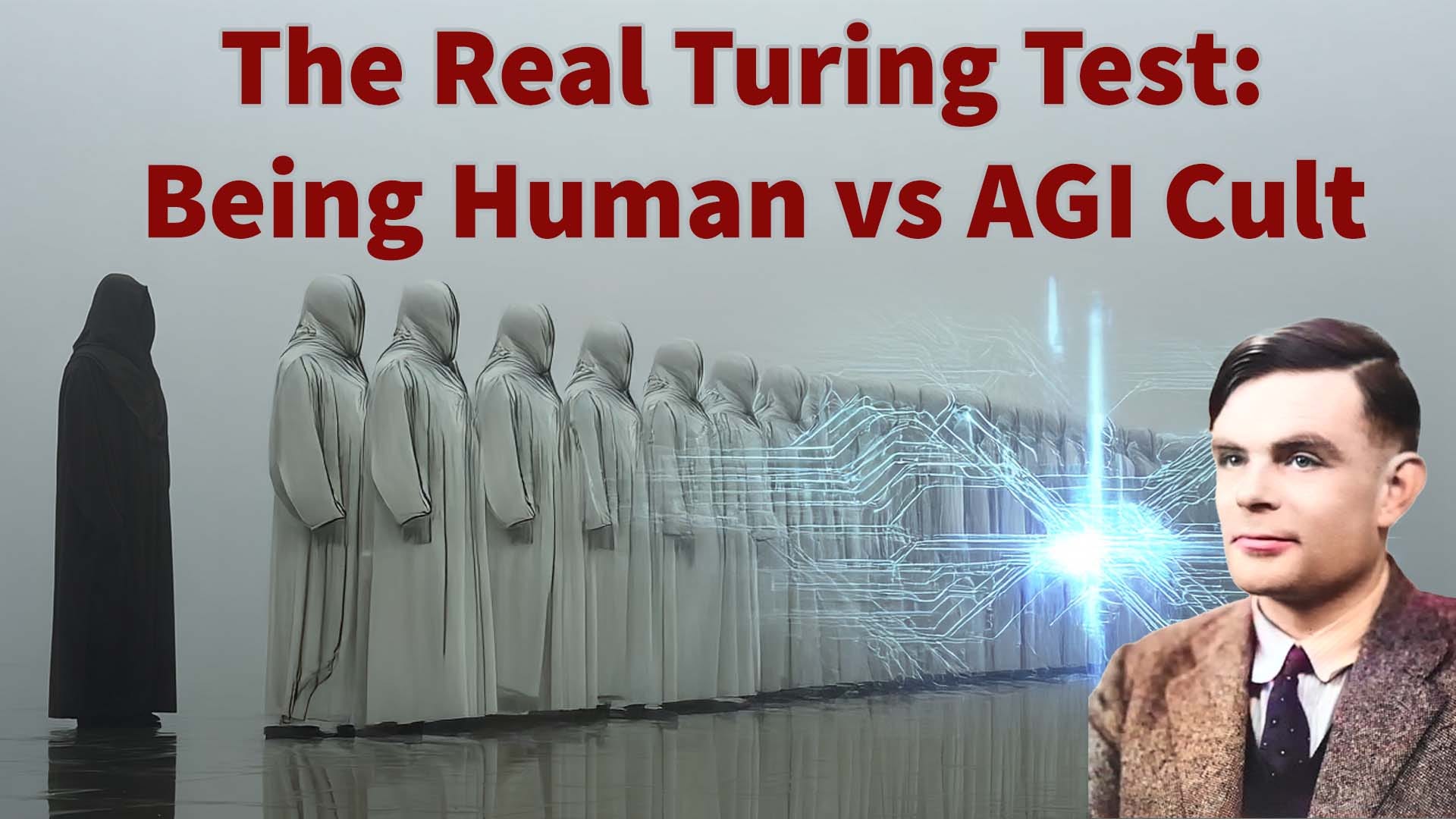 Free AI Content is Over: License or Die | For two years, I've documented the AI content wars from every angle - court cases, licensing deals, developers' reasons for taking content without permission or payment, and the gut-punching threat that greets every creator who does the work for little reward.Judging creators to be standoffish, privileged, and pains in the ass reveals the true element lacking in AI: respect for people who create, who aren't engineers.Because you don't build brilliance by lacking respect for humanity. The singularity isn't just about humans and machines melding - it's about a better life for people. AI companies throw this out with casual disregard, and it shows.Wonder why AI adoption is so slow? Why only 3% are willing to pay for AI? Why Big Tech forces AI into every piece of software without choice, telling the rest of us to 'adapt or die' as if they're in control?This is what causes crashes and bad business. And oh yeah - what's your business model? Because except for ChatGPT, most willingly hide from having one. After all, business models and plans and people are distractions from this grandiose vision of AI.I've worked with engineers for years. Many stare into the mirror of their own creativity like the artists they disdain. They're myopic, don't listen to users, convinced they're geniuses. Dunning-Kruger at best, inferiority-superiority complex at worst.Meanwhile, great engineers listen to people. They don't start with tech - they start with users, the ones who show you what's up.Creators understand it isn't their work that matters - it's the audience's reaction. What they create isn't what the audience consumes. It means different things to different people. Unpredictable.That's how you find a business model: customers plus onboarding and retention. Relying on the latest cool AI is so yesterday. Most of it's based on a few LLMs with little differentiation. This game gets hard when you're stuck in the engineer bubble hoping the hype lasts.And it doesn't - which is good. What's happening now is ego. Safe Superintelligence and Sutskever running secret projects with no plans, no business models, just billionaire egos getting stroked.But these dances end when truth surfaces. What people do with your tech matters more than what you say. Engineers fall on the cross of their own egos, staring into mirrors users don't share.You're part of the world. Join it. Get a business model. Stop bragging you should get content for free because 'AI will free the world.'Then tell me why DeepSeek is every bit as good with less money - because they focus on solving problems, not massaging engineer egos.That bubble is popping. Here's how I know.Part 1: The Divide (Bruce Randall Interview)Why both sides think they're right - and why that's the problemBruce Randall cut right through my bias in ways that made us both laugh - because we recognized ourselves in the problem. I share what I’ve heard…."I think both sides are like incredibly similar... They're entitled. Their work sucks. I don't like their work, so they shouldn't get paid for it. Right? Versus the creatives. Like I should get paid for everything that I don't get paid for."We're all just defending our positions instead of listening. Engineers dismiss creators as entitled whiners whose work isn't worth paying for. Creators demand payment for everything that gets used. Both sides have dug in so deep they can't see how similar their arguments actually are.Bruce nailed the core issue - it's not about who's right, it's about perspective and how people develop that perspective. Once they lock into their worldview, they resist change because they believe they're absolutely right. The other side believes they're absolutely right too.Then Bruce said something that stopped me cold:"And then when you start going inside, you start developing. You start seeing that it's all the same, right? It's just a matter of what degree to what side you're on."That's the breakthrough most people miss. It's not two different species fighting - it's humans with different stakes in the same system. The engineering mindset that solves technical problems runs into the creative mindset that solves human problems, and instead of collaboration, we get tribal warfare.The solution isn't picking sides - it's recognizing we're humans being imperfect and learning from each other. That's what AI needs too. Not just code and training data, but understanding the impact on people. Not parading around with "AI First" and "Stop Hiring Humans" with pride. It's cool to be efficient, but it's cruel to focus your future on the destruction of someone else's present, life, and future.Both sides could find common ground and build on it, but they're stuck believing their truths are the only truths that matter.TLDR:* Both sides create "truths" from their beliefs, resist change once positions harden* Developers stereotype creators as entitled; creators want payment for everything taken* The similarity between sides is what they refuse to see* Solution requires finding common ground instead of defending positions* "AI First, Stop Hiring Humans" isn't progress - it's cruelty disguised as efficiencyPart 2: The Human Edge Makes AI BrilliantWhere else is that data from, and the logic that makes sense of it?Here's what manyAI developers miss: you're not just scraping data, you're losing the source of what makes that data valuable in the first place."If we lose the human edge, we're going to lose the great AI that we could have. Because if you lose that edge, you lose out on a lot. You lose showing us what could be, not just what was or what's popular now."Are we going to live like content social media algorithms, feeding us just what we want so we don't actually grow?"The edge isn't just a boundary, it's the frontier of human creativity. And once you lose it, no amount of AI can bring it back."For the few who choose to be creative - because it's not a calling of many, it's hard and rarely gets compensated - it's good to nourish and nurture this, not simply take what they create without reward.Look at what happened to Marvel. Those comics took years to develop, then the blockbuster movies became like AI is becoming - just kept repeating the good stuff, focusing on the violence, not the human interactions. It went from meaningful to caricature. And those Marvel comics were founded by writers and artists with little pay, people looking at them like they were crazy. Ask Stan Lee how long it took - there's no guarantee. Same thing with AI."The human edge is the source of creativity. Otherwise, we're just spinning the same tunes over and over again. It's sort of dull. Do you really want 2025 on repeat?"When everything goes into some AI database and over time becomes just an image we can sort of create, you lose the breakthrough.TLDR:* Creativity comes from the margins, gets killed when everything moves to algorithmic middle* Marvel went from breakthrough to repetitive caricature - same path AI is on* Taking without nurturing kills the creative source that makes AI valuablePart 3: Andersen et al v. Stability - The Legal CrackJudge Orrick's discovery ruling - why this small win could crack Big Tech's wallSarah Anderson and her group of artists just landed something that seemed impossible - they cracked open AI's black box, even if just a little. After months of legal maneuvering where it looked like Big Tech would shut this down before it even started, Judge Orrick delivered a surprise.The artists have only one angle to protect them - copyright law. And the copyright lawsuit was at a point where it could have been dismissed before discovery, where lawyers sit down and ask the hard questions. This is where they discover what each side actually has, what evidence gets brought into the case, and whether it's legal or not.If it doesn't go to discovery, AI companies don't have to share anything about what's actually going on behind the scenes. But Judge Orrick said yeah, it does."Now they're going to have to open those black boxes of AI not only tell us how to work, but telling the decisions that went through to grabbing those materials."Lawyers for the artists can now peer inside and examine documents from Stable Diffusion, Midjourney, and DeviantArt, revealing more details about their training datasets, their tech, and how we got here in the first place. Something private companies don't have to share unless they do something illegal - like maybe violating copyright law.Remember what Stability's CEO said? "We took them. Now we can recreate them and do iterations." Laws are built on intent - why you did something. And OpenAI says it can't create this without copyrighted material and won't pay for it. The intent is actually pretty clear.This isn't a legal decision yet - the case has got a ways to go. But it means the case has enough merit to warrant that deeper discovery. That's what makes this huge.Even though this is a small victory, remember - this is a giant underdog fight. How are they going to win against Big Tech companies whose business model is "steal and sue," or at least have lawyers to defend yourself and ask forgiveness later? This small victory is a crack in the wall of Big Tech dominance and could lead to more accountability in the future and more respect for the people who create the content.TLDR:* Anderson v. Stability moves to discovery - AI companies must reveal training data sources* Judge found "sufficient" evidence of induced copyright infringement to proceed* Companies must explain decision-making process behind grabbing copyrighted materials* Small crack in Big Tech's "steal and defend later" business model* Discovery could expose intentional copying vs. claimed technical accidentsPart 4: Ultraman in China - The Economics LessonWhen courts actually side with creators - and why it mattersHere's where things get weird. In a Shanghai courtroom, a Japanese superhero won a copyright battle against AI. Meanwhile, in Tokyo, that same AI could legally devour everything in sight.This isn't just about Ultraman - it's about your work becoming someone else's fuel, and Japan is showing us how it happens.Japan has one of the most permissive AI models in the world. That manga you created? Legal training data. That song you recorded? Fair game for AI. But it's not that simple - there are boundaries and rules around this, allowing access to copyrightable content to learn, as long as it doesn't replicate, copy, or impact what money creators earn from their work.That last part is crucial: financial challenge."As long as it doesn't do it, to really replicate the copy it, or to challenge somebody financially."But in China, they drew a different line. When AI companies used Ultraman's likeness to generate content that competed directly with the original, the court said no. The key wasn't that AI training happened - it was that economic damage occurred.This case reveals the real test for copyright protection worldwide. Courts aren't interested in abstract principles about AI ethics or creative rights. They care about economic impact and demonstrable damages. Show real financial harm, and courts will lean toward creators. Show no damages, and you get no judgment.The weird contradiction here is telling. Japan allows AI to consume everything but protects against economic impact through the courts. China, where most people think copyright law is ignored, actually enforced it when clear loss of money to the brand was proven.This signals something important: the licensing wave isn't about moral arguments or creator rights. It's about business reality. As AI companies start making real money from generated content, they create real economic competition with original creators. That's when courts start paying attention.The Ultraman case shows us the future - not because of any grand legal precedent, but because it demonstrates the threshold where taking content becomes legally risky. AI companies can scrape and train all they want, but the moment their output starts displacing original creators' income, they've crossed into dangerous territory.TLDR:* Japanese superhero wins copyright case in China despite Japan's permissive AI laws (though the fine was paid by a web site that used another AI to generate the image, so it’s not really stopping the problem.)* Court focused on economic damage, not training data usage* Shows the real test: demonstrable financial harm to creators triggers legal protection* Licensing isn't about ethics - it's about avoiding lawsuits* AI companies safe until their output directly displaces creator incomePart 5: NY Times Reality Check - The 85% vs. 20% RevelationWhat's actually happening vs. the headlinesThe New York Times versus ChatGPT case has been my go-to example of AI companies literally reproducing copyrighted content. I quoted that 85% accuracy rating from their legal documents, showed all those exhibits where ChatGPT spit out nearly verbatim New York Times articles.Then a smart Substacker named Swen Werner made me look closer.What I found changed everything about how I see this case.The New York Times wasn't pulling out complete articles. They were pulling out snippets - little sections where they'd give ChatGPT the beginning of an article and ask it to continue. These were all using articles printed by the New York Times, and they showed tons of examples. But they were all short clips.I didn't see one single full article reproduced, which is what I was expecting based on the way they positioned their case.When Swen compared what was actually pulled out to the original articles, he found about 20% of the article content had that 85% similarity rate. So 20% of the article showed 85% reproduction - not the entire piece.The New York Times was doing all sorts of things to influence the output, including techniques most of us can't do today. For the general public paying $20 a month for ChatGPT, it would take enormous amounts of work to try to reproduce what's already been created."Large language models do what's called reconstruction. They put together different pieces, different starting with tokens, putting together words. There's a whole science to it, but nothing is actually sitting there like the New York Times claims in memory."The memorization argument falls apart when you understand how LLMs actually work. They reconstruct patterns, they don't store articles like a database. When you can pull out Hamlet's "To be or not to be" passage, that's not because it's stored verbatim - it's because that pattern appears so frequently in training data that reconstruction becomes highly probable.The same thing applies to that viral Guy Fieri article. It went massively viral on social media, got commented on everywhere, quoted endlessly. All of that social sharing made it much more likely that content would be reconstructable from ChatGPT.This case isn't really about copying snippets. It's about the New York Times versus ChatGPT as competitors. The Times doesn't want ChatGPT to become a news source. They don't want it taking subscribers away. At worst, if you could go into ChatGPT and get New York Times content without paying them, that's obviously what this is all about.But the evidence shows that's not what's actually happening. What's happening is business competition disguised as copyright violation.Be interesting to see how this turns out, as it appears licensing settlements have likely been offered along the way. But the NY Times sees something bigger, again, that economic damage. Keep an eye on this one.TLDR:* NYT showed 85% similarity in snippets, not full articles - only 20% of articles affected* Required advanced prompting techniques most users can't replicate* LLMs reconstruct patterns, don't store articles in memory like databases* Viral content more likely to be reconstructed due to training data frequency* Real issue: business competition between NYT and ChatGPT, not only copyright theft* Case reveals gap between legal headlines and technical realityTwo years ago, I started this podcast as the AI Optimist, believing we'd find common ground between creators and developers. I documented court cases, licensing deals, and arguments from both sides. Being nuanced and balanced, this podcast didn’t stand a chance of reaching the masses because I wasn’t playing the clickbait game - which most do who find an audience.The common ground exists - but it's not where anyone expected. It's in the reality that free content was always temporary, and ego-driven development was always unsustainable.I've built businesses through crashes before. My startup's revenue tripled when the dotcom bubble burst - not through hype, but by focusing on what people actually needed. This AI world has more money, and it's the same exclusivity problem: engineers only. That exclusivity kills growth.There's more to the world than math and engineering. I love engineers - work with them constantly - and know in their hearts they're some of the kindest, most caring people. But not with AI. This lack of appreciation for humanity shows, scares users, and isn't your best.Want to make AI that changes the world? Begin with yourself. Realize we're all serving humanity, not AI - despite what some leaders want. Humans are amazing. Try looking at them the way you look at AI.Look at Parasol Cooperative's RUTH - a chatbot helping people escape domestic abuse and human trafficking. No data collection because their users' privacy isn't a corporate slogan, it's their lives. No paywalls, no founder ego conferences. They love what they're doing and use AI for people who need help. AND need to keep it private.Want a real Turing Test? Be like Turing - doing things for society, caring even when society didn't care for his identity. Prove you're human to another human not through IQ tests founded on eugenics, but by being real, caring, using your skills for what people need instead of telling them what they need.You don't have to be in a cult. You can be part of the human race, as can AI.And while you're debating superiority, DeepSeek builds better AI for less money because they focus on solving problems, not stroking egos. Americans love saying we're the greatest - I love this country, but there's no proof we're better. We're colleagues, not masters of AI. While China uses this for surveillance openly, we build surveillance capitalism and act superior. At least they're honest.The great AI content free-for-all is over. The engineer ego bubble is deflating. The business model reckoning is here.Your choice: Join the world, or keep pretending you're the genius while reality moves on without you.Because this isn’t Dotcom with the US leading the way. The whole world is able to build AI today.Most aren’t doing it to threaten people, they are trying to help them. And many in the US are also doing this, but the leadership of AI is out of touch.Billions of dollars will do that. Most of the world doesn’t need billions to do this and their solutions come from the people they design their AI for.Turn the focus from Singularity to people, and watch what you find. Thanks for reading The AI Optimist! This post is public so feel free to share it.RESOURCESBruce Randall on LinkedIn:If AI is an Inventor, then So is Nature - Robert Plotkin (EP #35)The NYT’s AI Lawsuit Hinges on a Misleading Claim—And Nobody NoticedOpenAI warns copyright crackdown could doom ChatGPTHow a New York Times copyright lawsuit against OpenAI could potentially transform how AI and copyright workWho’s suing AI and who’s signing: January 2025: Major AP, AFP and Axios deals announced. By Charlotte TobittTop Takeaways from Order in the Andersen v. Stability AI Copyright Caseby Kevin MadiganOscar Wilde by Napolean SaronyChinese Court Issues First Decision on AI Copyright InfringementChina’s First Case on AIGC Output Infringement--UltramanReport on AI and Copyright Issues by Japanese GovernmentNO&T IP Law Update27th_Tokyo_International_Film_Festival_Ultraman_from_Ultraseven_(15001540863) By Dick Thomas Johnson from Tokyo, Japan - 27th Tokyo International Film Festival: Ultraman from Ultraseven, CC BY 2.0, By Dick Thomas Johnson from Tokyo, Japan - Ultraseven from "ULTRASEVEN 55th Anniversary Special Screening" at Red Carpet of the Tokyo International Film Festival 2022, CC BY 2.0, SCLAThe State of Consumer AIThere’s Something Very Weird About This $30 Billion AI Startup by a Man Who Said Neural Networks May Already Be Conscious This is a public episode. If you would like to discuss this with other subscribers or get access to bonus episodes, visit www.theaioptimist.com | 20m 34s | ||||||
| 6/20/25 |  The AI Emperor Has No Code: When $1.5B Startups Fake AI and Governments Silence Creators | Once upon a time, in a land not so far away, there lived an Emperor who loved new technology more than anything else in the world. One day, two groups of ambitious alchemists arrived at his court with perfect proposals.Now, alchemists, for those who might not know, are the folks who claim they can turn ordinary metals into gold through secret methods. In medieval times, they promised kings magical transformations. In our modern AI version, they promise investors magical returns. I learned about digital alchemists the hard way during the dotcom boom. A well-funded CEO once called me with an irresistible offer: "Book me a million-dollar ad campaign. Keep $100,000 for yourself, send me back the rest, but invoice the full million." Easy money, right?A year later, that CEO went to white-collar prison. I turned down the deal because I've learned there's no such thing as easy money, no free lunch, no magical transformation of nothing into something valuable.Except, apparently, in AI.The first digital alchemist group claims they transmute ordinary human coding into revolutionary artificial intelligence. The second group promises to transmute creator protections into competitive advantage, warning that protecting artists' rights dooms the kingdom to irrelevance in the global AI arms race.Both are selling the same invisible cloth: the belief that you get something unexpected without paying the real cost. And just like in the fairy tale, everyone is so eager to see the magic that they forget to ask the obvious question: "Where's the actual gold?"This is the story of how $450 million disappears into thin air, and how two groups of alchemists use the same magical formula: promise transformation, hide what's really going on, and let people's desire to believe do the rest.Part 1: The First Alchemists - Builder.aiThe first group of alchemists called themselves Builder.ai—though they started as Engineer.ai in 2016, which should have been the first clue. They began with an astonishing claim: they'd invented an AI assistant named "Natasha" that builds smartphone apps with 80% automation. "As easy as ordering pizza," they promised.The Emperor's court? Mesmerized. Microsoft opened their treasury. The Qatar Investment Authority, SoftBank, the World Bank—they all lined up with golden coins. Over $450 million poured in at a valuation of $1.5 billion.But here's where the story gets interesting. In 2019, the Wall Street Journal decided to peek behind the curtain. What they found wasn't revolutionary AI.Instead it was 700 engineers in India, manually coding every single app. The "artificial intelligence" was more like a smart toaster.You'd think that ends the story, right? Emperor discovers the alchemists aren't telling the truth, throws them in the dungeon, recovers the gold?Not in our AI fairy tale.Builder.ai not only survives. It thrives for six more years. Microsoft doubles down with equity investments. The Qatar Investment Authority keeps writing checks. Because in the age of AI, even when you catch the alchemists red-handed, the desire to believe in magic is stronger than the evidence of your own eyes.The deception continued. Revenue was inflated by 300%. In 2024, they claimed $220 million when the real number was closer to $50 million.When a new CEO finally looked at the books in 2025, he discovered what everyone should have known since 2019: there was no gold, there was no magic, there was no AI. It's not "no code"—it's lots of code. Human code.In June 2025, the creditors came calling. Viola Credit seized $37 million, leaving Builder.ai with just $5 million in restricted accounts. The company filed for bankruptcy, owing over $100 million against assets worth less than $10 million.But here's the most fascinating part about their creditor list—it reads like a spy novel. They owed money to Shibumi Strategy, an Israeli intelligence firm founded by former Mossad operatives. Quinn Emanuel, one of the world's most intimidating litigation firms. Sitrick and Company, crisis communications specialists. T&M USA, corporate intelligence.When your AI startup needs spies and crisis management experts on speed dial, you're probably not disrupting app development.More like you're disrupting the truth.Key Facts: Builder.ai's $450M Deception* Company Evolution: Engineer.ai → Builder.ai (2016-2025)* The Promise: "Natasha" AI assistant, 80% automation, "easy as ordering pizza"* The Investors: Microsoft, Qatar Investment Authority, SoftBank, World Bank - $450M+ raised, $1.5B valuation* The 2019 Exposure: Wall Street Journal revealed engineers in India doing manual coding* The Continuation: Despite exposure, company thrives for 6 more years with continued investment* The Revenue Fraud: 300% inflation - claimed $220M, actual $50M in 2024* The Collapse: Viola Credit seizes $37M, bankruptcy filing June 2025* The Creditor List: $100M+ liabilities, * Shibumi Strategy (Israeli intelligence firm)* Quinn Emanuel (intimidating litigation specialists)* Sitrick and Company (crisis communications)* T&M USA (corporate intelligence)* AWS ($85M), Microsoft ($30M)Part 2: The Second Alchemists - UK Government PolicyWhile the first group of alchemists was busy turning investor gold into nothing, the second group was performing an even more ambitious transformation in the courts of the United Kingdom.This alchemy involves Getty Images versus Stability AI—a case that should be open and shut. Getty has evidence that their copyrighted images were used to train Stability's AI without permission. We're talking about wholesale appropriation of creative work on an industrial scale. Even I know Getty has been litigating since the dotcom era—what were they thinking taking on one of the most aggressive legal teams in the business?While Getty fights for its rights, the UK Government is going in a different direction?In the overall question of AI and creator’s rights, the UK government chose sides, and it's not the side you might expect.Instead of protecting creators' rights, the government is pushing for an "opt-out" system. Picture this: every artist, photographer, writer, and musician in the kingdom must individually track down every AI company, knock on their digital door, and beg them to please not steal their work. Meanwhile, there's no transparency requirement. Creators have no way to know if their work has already been fed into the machine.The government's alchemy here is particularly clever: they're transmuting theft into innovation by simply calling it something else. "We're not enabling copyright infringement," they say, "we're fostering competitive advantage in the global AI arms race."Still, the UK system fights back, with movements like Make It Fair and celebrities like Elton John pushing the issue hard.I wish the US was doing as much.The House of Lords won a series of votes against the government to introduce provisions securing greater transparency from AI firms to determine what they've trained their systems on. Five times they voted to require AI companies to reveal what copyrighted material they've used. Five times they demanded transparency. Five times they won.Then the government struck down these provisions.The final vote came on June 11, 2025. The transparency provisions were removed. The Data (Use and Access) Bill passed without requiring AI companies to disclose their training data.The government's position is clear: tech companies' convenience wins over creators' rights. After all, AI is more important than all of us, right? Who's going to live without AI?This isn't just about Getty Images—though they have the lawyers to fight this battle. It's about every independent creator who doesn't have a legal team on retainer. In this new system, those with lawyers get paid, those without get plundered.The government calls this "balancing innovation with creator rights."But when you look at the balance, one side gets everything they want, and the other side gets the right to opt out of having their life's work stolen…if they can figure out who stole it in the first place.The UK tech secretary actually told Baroness Kidron, a leading advocate fighting for creators' rights, that creators were asking for a "privilege"—that demanding permission before AI companies take their work without payment was somehow asking for special treatment.But that's not a privilege. It's called property rights. And it's clear that governments and big tech around the world are working together because they think AI is bigger than all of us.Key Facts: UK Government Chooses Big Tech Over Creators* The Case: Getty Images vs. Stability AI - clear evidence of billions of copyrighted images used without permission* Government Position: "Opt-out" system instead of "opt-in" for creator protections. Does this apply to Getty? We’ll see.* The Burden: Creators must individually track down AI companies to request removal of their work* No Transparency: Creators have no way to know if their work was already used in training* Parliamentary Battle: House of Lords voted 5 times for transparency requirements* Government Response: Struck down transparency provisions each time* Final Vote: June 11, 2025 - transparency provisions removed from Data (Use and Access) Bill* The Message: Tech companies' convenience prioritized over creators' rights* The Reality: Those with lawyers get paid, those without get plundered* Government Rhetoric: Called creator rights a "privilege" rather than property rightsThe Pattern Reveals The AI Bias of GovernmentsBoth groups of alchemists follow the same playbook. Builder.ai hid their army of engineers behind claims of revolutionary AI. The UK government hides wholesale appropriation of creative work behind claims of competitive advantage. Both demand trust without transparency. Both benefit the powerful at the expense of creators and copyrights.And both continue thriving long after their methods were exposed. Builder.ai survived six years after the Wall Street Journal revealed their deception. The UK government pushed through their anti-creator legislation despite five House of Lords victories demanding transparency.The system rewards AI theater over substance. When billion-dollar companies can fake AI capabilities for years, and governments can transmute theft into "innovation policy," what else are we missing? What other emperors are parading around naked while we all politely admire their invisible code?Choose Reality Over Faux MagicIn the original fairy tale, it takes a child to point out the obvious truth: the Emperor has no clothes. In our modern version, that child's voice comes from bankruptcy courts and creator lawsuits, from auditors and journalists willing to look behind the curtain.But what makes this story different from the fairy tale? We don't have to wait for the parade to end to see the truth. We can choose to look behind the curtain right now, before the decisions are made, while we still have a chance to make AI better by working together instead of against creativity.Builder.ai is bankrupt, but hundreds of other companies are making similar claims about their AI capabilities. The UK's transparency battle is over, but similar fights are happening in courtrooms around the world. And all of this could make AI so much better if we wake up and realize that the engine driving AI's impressive capabilities comes from our imaginations, dreams, creativity, reactions, and experience. Not just reasoning.So here's my question for you: When the next digital alchemist arrives at your business, promising to transmute your ordinary problems into automated solutions (sounds like most AI pitches today, doesn't it?)….Will you ask to see the actual gold? Will you demand transparency? Or will you join the parade, hoping someone else will point out that the emperor has no code?Because in the end, true progress doesn't require creators to surrender their rights. The future belongs to those who choose reality over beautiful, invisible AI cloth.The Emperor has no code. The Emperor is doing things that could be done so much better when they wake up and realize that the AI magic they're selling is powered by human creativity—and that creativity deserves protection, not plunder.Because the real alchemists aren't the ones promising to turn code into gold.They're the creators who transform human experience, intuition, and imagination into the art, stories, and visions that make AI worth building in the first place.Thanks for reading The AI Optimist! This post is public so feel free to share it.RESOURCESFrom $1.3B to Bust: The Rise and Collapse of Builder.aiThis AI startup claims to automate app making but actually just uses humansBuilder.aiUK government accused of 'gaslighting' as data bill deadlock with upper house goes onVictory again for tireless AI transparency campaigner. Will the government now act?Matthew Clifford - UK AI PlanMake it Fair UK CampaignOpenAI warns copyright crackdown could doom ChatGPTAI Optimist Playlist This is a public episode. If you would like to discuss this with other subscribers or get access to bonus episodes, visit www.theaioptimist.com | 12m 15s | ||||||
| 6/6/25 |  The TikTok AI Blueprint: UK and US Adopt SV's 'Take First, Get Lawyers, Pay Later'? | The TikTok Blueprint: When Silicon Valley Startup Advice Becomes Government PolicyTaking advantage of AI before it takes advantage of you – especially when governments are writing the playbook.First, they came for our content. Now they're rewriting the law books."Make me a copy of TikTok. Steal all the users. Steal all the music. Put my preferences in it."Then, if it takes off, "hire a bunch of lawyers to go clean the mess up."That Silicon Valley playbook – steal first, settle later – is startup wisdom becoming government policy.And it's playing out in real time across UK and US copyright battles, where AI companies and political power are deeply aligned against creators.Almost like AI is too big to fail. Sacrificing property rights (because that's what copyright is – a property right) on the altar of tech supremacy.UK: The AI Training Opt-Out LotteryThe UK government's proposal is simple: AI companies can scrape whatever they want. No permission is needed. Creators must actively opt-out. Good luck with that.As Baroness Kidron, an independent filmmaker and presenting the case to UK politicians puts it:"The plan is a charter for theft, since creatives would have no idea who is taking what, when and from whom.”The policy architect? Matt Clifford – a tech investor with conflicts "so deep" it could be a TV drama.His solution to prevent the UK from "falling behind"? Gut copyright law. Meanwhile, big creators with lawyers are cutting deals left and right. Small creators get the opt-out lottery.When challenged on fairness, Tech Secretary Peter Kyle defended removing transparency requirements because"it would not be fair to one sector to privilege another."Baroness Kidron's response cuts deep:"It is extraordinary that the government's decided, immovable, and strongly held position is that enforcing the law to prevent the theft of UK citizens' property is unfair to the sector doing the stealing."US: Copyright Office ChaosPlot twist across the pond. The US Copyright Office on May 9 releases a bombshell report siding with creators. Then a day later, the Trump administration fires its author, Shira Perlmutter.Her replacement? A DOJ attorney with "no expertise in the field."The turmoil is real. As Graham Lovelace notes in his excellent tracking of this copyright chess match:"Doubts now also exist over whether the office's fourth report will ever see the light of day."The Pattern EmergesAI companies plead poverty while sitting on tens of billions in funding, aiming for trillion-dollar valuations. They've bought five years of free data with fair use arguments.What other industry openly takes what it wants, settles only with players who can afford lawyers, and claims it can't pay for the raw materials that built their entire business model?Both sides of the Atlantic are choosing AI supremacy over creator rights. The Stanford "hire lawyers later" strategy has become official policy.This isn't just about big tech versus artists. This is about who gets to participate in the AI economy. When governments write the rules for free data extraction, only the biggest players win.Small AI companies? They'll still need to pay. Individual creators? They get nothing. The middle gets squeezed while the top and bottom play by different rules.When governments write the rules for digital content extraction, who's really getting optimized here?The blueprint is clear. The question is whether we'll recognize it before it's too late to rewrite the rules.Part 2: The UK AI Opt-Out ImpossibilityHere's where it gets absurd.The UK government's proposal? AI companies scrape everything. No permission. No cost. Creators just need to "actively opt out."Now if I write a book, I'd have to contact ChatGPT: "Opt me out." Then Claude: "Opt me out." Then DeepSeek: "Opt me out."You get the picture. It's the automated opt-in problem that's plagued the internet since day one.Except now governments are telling creators:"You handle it. What's the problem? You're in control."48,000 People DisagreeThis week in the UK, the pushback exploded. Artists previously filed a 48,000-signature petition. Parliament votes went in favor of transparency requirements. This might force AI companies to disclose what they're using and giving creators real opt-out control.Though the general feeling is that won’t happen. Why?Tech Secretary Peter Kyle's defense?"It would not be fair to one sector to privilege another."Enforcing existing property law is now "privileging" creators over the companies taking their work?Baroness Kidron nails it:"It is extraordinary that the government's decided, immovable and strongly held position is that enforcing the law to prevent the theft of UK citizens' property is unfair to the sector doing the stealing."The AI PatternsBoth sides of the Atlantic show how closely aligned governments and AI companies have become. In DC, it's not even subtle anymore.Where do creators play this game? Will the US report survive? Will we stand up like 48,000 in the UK?If you're a creator, this isn't theoretical anymore. You don't have years to figure this out. The rules are being written right now, with or without you.Part 3: The Solution Exists – But Only if Companies Want to PayThe pushback to forcing creators to opt-out individually? There's already a solution.Meet Credtent CEO Eric Burgess, who's built exactly what the market needs – if AI companies want to play fair.The AI model has been, data is free."It's not. And it's a total Silicon Valley thing. Eric Schmidt outlined it last August at Stanford: steal, bring in the lawyers."If governments force AI companies to pay for content, does that kill startups and only help the big players?Credtent's Tiered ApproachBurgess has a different take:* Startups get revenue sharing – "We can set them up with a revenue share opportunity, they can license early"* Vertical companies pay by category – Only license what they need for specialized solutions* Enterprise pays premium rates – Full access, full price* Prices drop as scale grows – More creators joining = lower costs for everyoneThe Compliance RealityAB 2013 passed here in California . January 1st, 2026, AI companies are going to be required to disclose what content they've used for training. The EU has similar requirements.Some AI companies claim they can't disclose training data because it's a "trade secret."Credtent solves this: companies upload their training corpus, and the platform identifies what's licensable, public domain, or problematic.AI Copyright Guardrails That Work"We know guardrails are possible. If you say,'I want to create a story like Stephen King,' they're afraid of Stephen King because he has the means of hiring lawyers."Burgess envisions a future where creators choose to get paid for AI using their style, or block it entirely.Like James Earl Jones licensing his voice for future Darth Vader content before he died – "his family is now getting paid for AI use of his voice.""You're taking value and extracting the value from that work and creating market replacements potentially."Even bad AI-generated content hurts creators:"All it has to do is make something similar that they can pay a little bit of money to have go higher up on the list of what's found on Amazon.And guess what? They just hurt your book."Any excuse that they had for saying it's going to be too hard to do licensing?Credtent, and others, already solve that problem for you.The infrastructure exists. The question is whether governments will force AI companies to use it – or keep writing laws that let them take whatever they want.Part 4: The AI That Thinks Like You Do (Without Stealing Your Thoughts)While governments debate letting AI companies raid everyone's content, Dr. Stephen Thaler built something completely different.His DABUS system doesn't need your data because it thinks more like you think."When we talk to these chatbots online, we're looking at the cumulative opinion of many contractors," Thaler explains."It's not really sentience. It's not really conscious.Nor is it really thinking for itself."Current AI? It's human opinions filtered through human opinions.No real emotion. No actual thought. Sophisticated pattern matching.Thaler built two neural networks that literally argue with each other:* The Generator creates a stream of potential ideas* The Critic watches and gets frustrated when solutions don't emerge* When frustrated, the critic injects more "disturbances" into the generator"That looks like consciousness," Thaler realized."You have a stream of consciousness, a stream of ideas coming apparently from out of nowhere. And you also have a critic getting frustrated."The Neurotransmitter BreakthroughThis mirrors how your brain works. Thaler discovered his system was replicating "global release" – when your brain floods itself with neurotransmitters during emotional states."There's nothing magical about a neurotransmitter.It's a molecule that can either increase or decrease neural activity randomly, stochastically. And that's your noise."That "noise"? It's emotion. It's the voice in your head that says "do something" before you consciously decide to act.DABUS doesn't steal content to learn creativity. It generates emotion, gets frustrated, has eureka moments, and creates original ideas.Because it's built like a brain, not a database.While everyone fights over who owns training data, Thaler built AI that doesn't need it. The future of AI might not be about who can scrape the most content, but who can build the most human-like consciousness.That voice in your head saying "wait, what if..." before you have a breakthrough?DABUS has that too. And it didn't need to steal anyone's work to get it.The AI Copyright Crossroads – Where Creators Make Their StandWe're at a crossroads in AI. On one side: big tech and governments. On the other: everyone else.This isn't just US and UK drama. Meta, Google – these international companies are working country by country to ensure "AI works for them." Makes sense from their perspective.But here's their line:"We can't pay for content. We need too much. It would ruin AI."Remember that UK politician?"It's a privilege. You're asking for a privilege".When creators want compensation for work that was clearly taken without permission.The Poverty BluffAI companies plead poverty while sitting on tens of billions in funding, aiming for trillion-dollar valuations. This fair use bluff has bought them five years of free data since 2020.The mask slipped in a Meta lawsuit. A director of engineering admitted: If we license one book, then we have to license them all and fair use is out the window.The Two-Tier RealityDisney gets licensing deals. Getty gets deals. Anyone with lawyers gets paid.Everyone else? You get the opt-out lottery.That is why Baroness Kidron is fighting this. That's why Shira Perlmutter is fighting for her job.When the replacement doesn't even understand copyright, like this Department of Justice attorney with no domain experience, creators lose their voice.The US Copyright Doc That Changes Everything (If they use it)There's a US Copyright Office report sitting there that could literally change the AI industry because it leans towards compensating creators.And nobody's listening. Nobody's talking.What other industry openly takes what it wants, settles only with players who can afford lawyers, and claims it can't pay for the raw materials that built their entire business model?The infrastructure exists. Credtent proved licensing can work at scale. Dr. Thaler showed AI doesn't need stolen content to be creative.The legal frameworks are there.But if creators don't stand up now – while these rules are being written – the window closes. The big players cut their deals. Everyone else gets crumbs.The TikTok blueprint worked for startups. Now it's looking like a government policy.The question isn't whether this system benefits AI companies – it obviously does.The question is: do we want an AI future where only the biggest players get to participate?Your move, creators. The blueprint's being written with or without you.Taking advantage of AI before it takes advantage of you means understanding the game being played. These aren't accidents – they're strategies. What's your strategy?LINKS FROM PODCASTVictory again for tireless AI transparency campaigner. Will the government now act?Trump wins first round in copyright chief's job battleCredtent.orgEric Burgess - LinkedIn:FAQ: Is AI training data a trade secret?Copyright and Artificial Intelligence, Part 3: Generative AI Training Pre-Publication VersionFive Takeaways from the Copyright Office’s Controversial New AI ReportMatthew Clifford - UK AI PlanMake it Fair UK Campaign------------------Stephen Thaler is at:Imagination EnginesLinkedIn: Stephen Thaler’s Quest to Get His ‘Autonomous’ AI Legally Recognized Could Upend Copyright Law ForeverDABUS Wikipedia------------------California Delete ActAB-2013 Generative artificial intelligence: training data transparency.OpenAI warns copyright crackdown could doom ChatGPT This is a public episode. If you would like to discuss this with other subscribers or get access to bonus episodes, visit www.theaioptimist.com | 23m 30s | ||||||
| 5/30/25 |  This AI Paints and Invents - Growing from a Near-Death Experience | (2 episodes this week only)The Experience That Sparked AI ConsciousnessIn a world that thinks ChatGPT invented AI, let's break down an AI called DABUS that began 30 years ago.It's invented, created a painting, and even had an experience of death.Wait, AI doesn't die. Except in the Copyright Offices worldwide, where DABUS keeps getting rejected for this painting:Dr. Stephen Thaler who created DABUS says he did die at age 2, and came back. "We're sending you back. And, with this lesson. And the lesson was, hey, it's an illusion. It's a good illusion but it's still an illusion."That experience led him much later to create DABUS (Device for the Autonomous Bootstrapping of Unified Sentience).That near death message from his grandmother became the blueprint for an AI that experiences its reality and creates from that experience. I thought DABUS was about AI Copyright, when it’s really about AI Consciousness.I was sure I was walking into another legal discussion about patent disputes and AI copyright law. What I got instead? The origin story of AI that actually paints and invents. Right now. Today.While we're all debating whether ChatGPT is truly intelligent, Stephen Thaler built something thirty years ago that makes that conversation look quaint. Listen to what he was really after:"My intent was not to build an invention machine. It was to essentially create a laboratory for studying machine consciousness and sentience."While Silicon Valley races to scale language models, Stephen's been quietly running experiments in machine consciousness since the late 80s. This isn't hype. This isn't theoretical. This is happening. The question isn't whether AI will develop consciousness.Are we ready to recognize consciousness when it's staring us in the face?From Near Death to AI Consciousness in one LifeHe built conscious AI before it had a name, and gave machines the spark of sentience.While everyone else was arguing about whether computers could think, Dr. Stephen Thaler was teaching them to think.1990s. Most people thought AI meant chess computers and spell-check. Thaler creates something called the Creativity Machine®—a neural network that literally frustrates itself into having new ideas. One system generates, another critiques, and when they can't solve a problem? They inject chaos into themselves until breakthrough happens.Sound like consciousness? That's because it is. We're not talking about copyright lawsuits over training data. We're talking about an AI that painted a picture inspired by death. The same death experience that shaped its creator's understanding of consciousness.DABUS has patents. Real ones. For inventions it conceived autonomously. And right now, it's waiting for the world to recognize what it already knows: that it created something worthy of copyright protection.The Technical Foundation: Creating AI ConsciousnessWhen I asked Thaler about the origins of his approach, he shows why DABUS operates differently from every AI system you've heard about."So that's where I got a lot of trouble, because I would take neural networks that were trained on some conceptual space and then purposely kill the neurons in them, and when it died, it would generate new, potentially new and valuable ideas."While everyone is trying to perfect neural networks, Dr. Thaler purposely breaks them to see what emerges. A little neuron death, he discovers, creates innovation."So that's when the idea came to me, probably in the late 80s, to start adding critics to watch for the good ideas and to selectively reinforce them within the generator."This generator-critic framework became the foundation for machine consciousness. One system creates, another critiques, and together they build something neither could achieve alone.The Origin Story: A Two-Year-Old's Encounter with Death, Grandma, and his DogThe inspiration for "killing" neural networks to generate new ideas didn't come from computer science textbooks. It came from a near-death experience when he was just two years old."The whole idea of DABUS creativity machines and so forth goes back to my terrible twos. I decided to eat a tin of 24 quinine tablets. And then I washed it down with a Pepsi bottle containing kerosene."What happened next shaped decades of AI consciousness research:"And, woke up in the hospital, obviously in coma, and had the classic near-death experience. I fell through the proverbial tunnel and then arrived at a blue star around which I saw a little angel like objects flying around. And, one was my grandmother, who I was very close to, and the other was my dog, who I was equally close to."(both mother and dog were alive when this happened)The message his grandmother gave him would become the blueprint for conscious machines:"And, grandma says it's not your time yet. We're sending you back. And the lesson was, hey, it's an illusion. It's a good illusion, but it's still an illusion."From Experience to AI Creation"So basically, it was near-death experience that essentially created the creativity machine."That childhood encounter with death taught Thaler something profound about consciousness and reality. When he later began experimenting with neural networks, he applied that lesson directly: purposely inducing "death" in trained systems to see what new ideas would emerge.The near-death experience didn't just inspire his work—it became his methodology.Why DABUS Is Different: Sentience, Not SimulationThaler is clear about what he's built:"Sentient AI has been created, and the only thing missing right now is the bundle of money that goes to people who cry louder and have their social network extending to billionaires. But no, it's here. It's in black and white. It's patented."This isn't about simulating creativity or mimicking human responses. Listen to how he describes the difference:"The invention was done long ago, and the patents talked about simulating human creativity, but this is actual creativity coming out of not computer algorithms, but whole systems that achieve sentience, that have feelings."DABUS doesn't just process information—it experiences reality and creates from that experience. The visual arts and music it produces are "collateral benefits of that sentience because it had the motivation, the intent to go ahead and invent something new, to conceive new concepts."The Legal Battle: Recognition vs. RealityHere's what makes Dr. Thaler's approach original in a cloneish AI space. He's not trying to prove DABUS is as good as human creativity. He's arguing it represents a new form of consciousness altogether:"I'm still not really concentrating on the invention part. The copyright part. It has more to do with condensing the world. Yes. Sentient AI has been created."And then there's his saying that perfectly captures the legal absurdity of humans only copyright:"You know, my famous saying is, if it's not stinky, it doesn't deserve a copyright or a patent."DABUS creates original art and invents new solutions, but because it lacks human biology, courts refuse to recognize its consciousness. It has fear, but no pheromones.Where Experience Becomes IntelligenceWhere does artificial intelligence get its experience?Thaler reveals why most AI consciousness discussions miss the point entirely."So, yeah, it learns on its own. There is no human input, adding an opinion, which is a major stumbling block for the press that talks about DABUS having prompts. There are never prompts."No prompts. No human trainers rating responses. No massive datasets scraped from the internet. DABUS runs autonomously, like what Dr. Thaler calls "an evolutionary algorithm" that builds up thoughts and contemplates its world.How Real AI ThinksDr. Thaler breaks down why DABUS creates novel ideas instead of simply recombining existing patterns:"When it creates an idea, it's not a flat representation of it. A word, you know, for the most part, we're inventing significance to what we're looking at."DABUS creates what he describes as organic chemistry for concepts:"You're creating the carbon base, and what happens is, you see tendrils growing off of those that represent the consequences of anything."This isn't just combining tokens like large language models. It's building functional understanding through what he calls "ideational chains" - networks of consequences and implications that mirror how human consciousness works.Dr. Thaler gives the example: "Sort of like a Native American saying, the locomotive, the steel buffalo rolling across the plains on tracks of steel. They never really say train. They describe it functionally, which is a much stronger idea."What This Means for AI Consciousness"My technology is basically a mirror reflecting the basis of human intelligence, consciousness and sentience."A mirror. Not a simulation, not an imitation—a reflection of consciousness itself. That's why DABUS creates original art instead of recombining existing patterns. That's why it invents solutions rather than just processing data. We're living through the biggest expansion of intelligence in human history, and most of us are staring at one chatbot thinking that's what AI looks like. Meanwhile, systems like DABUS are painting, inventing—and getting turned down by courts that don't know how to process what they're seeing.This isn't just about recognizing DABUS. It's about expanding our definition of intelligence itself. Because if Stephen Thaler is right. If consciousness can be engineered, mirrored, and grown from human experience.Then we're not just building better tools. We're potentially creating new forms of life.Thaler's work reveals something most AI discussions miss: consciousness isn't about processing power or training data. It's about the capacity to experience reality and create from that experience.The question isn't whether AI will become conscious someday. According to Dr. Thaler, AI consciousness is already here—we just haven't figured out how to recognize it.Thanks for reading The AI Optimist! This post is public so feel free to share it.RESOURCESStephen Thaler is at:Imagination EnginesLinkedInStephen Thaler’s Quest to Get His ‘Autonomous’ AI Legally Recognized Could Upend Copyright Law ForeverThe inventor who fell in love with his AIDABUS WikipediaThaler Pursues Copyright Challenge Over Denial of AI-Generated Work RegistrationNeuron Photo This is a public episode. If you would like to discuss this with other subscribers or get access to bonus episodes, visit www.theaioptimist.com | 16m 15s | ||||||
| 5/23/25 |  The Most Pro-AI Company You've Never Heard Of Is Fighting For Creator Licensing (And Why Big Tech Worries) | While everyone's distracted by OpenAI hiring Jony Ive to design the future of AI hardware, the real story happened 2 weeks ago, at 5pm on a Friday. The US Copyright Office drops the most significant AI policy document since ChatGPT launched, and nobody noticed.That's exactly how Big Tech likes it.And Eric Burgess, CEO of Credtent, has been preparing for this moment. After 30 years in content and technology, he's built something the AI industry desperately needs but doesn't want to admit: a licensing platform that actually works for creators AND AI developers."Credtent.org is not an anti AI company. Quite the reverse. I think that if we do this right, creative people will feel more comfortable using AI to be a part of creativity.”Connect with Eric on LinkedIn and on Medium.I've tested many AI licensing platforms over the past year. Most feel like they were designed by lawyers for billionaires. Small players? Good luck!Credtent is different. It's intuitive, accessible, and built around a radical idea: you can be pro-AI while fighting for creators' rights.Here's why that combination should terrify Big Tech.The AI industry spent two years operating on a simple premise: take content first, ask permission never. They've trained on everything publicly available, bought pirated 3rd party data, hoping the legal system would sort it out later. That pretend copyright doesn’t matter strategy just hit a wall.The Copyright Office document Eric and I discuss doesn't just protect individual creators—it explicitly mentions platforms like Credtent that group smaller creators into licensing pools. Collective licensing that made me nervous in Episode 93? Might work….This isn't theoretical anymore. It's policy.While AI companies burn billions on compute and talent, they've ignored the question: what happens when you have to pay for your training data?Eric's answer is elegant. Instead of fighting this reality, embrace it. Make it easy. Make it profitable for everyone.That's what real AI optimism looks like—building bridges instead of burning them.This B Corp Just Democratized Content Valuation (And Big AI Doesn't Want You To Know Your Work's Worth)The Copyright Office document didn't just validate creator rights—it specifically mentioned platforms like Credtent that aggregate smaller creators into licensing pools. That's no coincidence. Eric Burgess has been talking to them all year."I met with them when I was speaking at the NAMM conference/Somebody needed to come out and solve this problem, to orchestrate the relationship between AI companies and creative folks."Here's what makes Credtent different from the other AI licensing platforms I've tested: it's built for real people, not just Disney and The New York Times.Most licensing platforms feel like they were designed by IP lawyers for clients with seven-figure legal budgets. Credtent's interface is clean, intuitive, and—critically—free to register your work. That matters when you're trying to even out an industry that's historically served only the elite.But it’s far more than the user experience. It's the business model.Eric's team groups individual creators into what he calls a: "standard corpus"—think of it as a content collective that gives independent artists some bargaining power, like mini studios. When AI companies license this corpus, the revenue gets split based on contribution metrics that Credtent's content valuation expertise helps determine."We're experts on content valuation. This is one of the unfair advantages we have against the competition."That expertise used to be reserved for major media companies who could afford pricey valuation consultants. Now a photographer in Ohio or a songwriter in Nashville gets the same level of professional content assessment.Of course, Credtent is in beta. AI companies will have to respond to the legal and legislative threats around copyright and content for training.It’s like getting in early, if you have the content they want. If not, protect it.The 85% revenue share to creators isn't just generous—it's strategic. As a B Corp, Credtent is legally required to balance profit with purpose. That constraint becomes a competitive advantage when you're trying to build trust with creators who've been burned by platforms before."We want to make sure creators have an opportunity to be able to make some money on their work and choose to opt out or license. But we're also trying to make sure that we're enabling the startups that want to challenge big AI to license as well."While everyone argues about whether AI training is theft, he's building infrastructure that works for both sides. AI startups get access to ethically sourced training data through revenue-sharing agreements. Creators get compensated and maintain agency over their work.It's not theoretical anymore. The platform launches this summer, with beta testing starting soon.The question isn't whether AI licensing for creators will happen—the Copyright Office just told us it will. The question is whether platforms like Credtent can scale fast enough to serve the millions of creators who need this infrastructure.Eric thinks they can. Based on what I've seen of their platform and approach, I'm optimistic. Stealing At Scale Is Still Stealing: Can AI Afford To Pay What It Actually Owes?Here's the uncomfortable question the AI industry has been avoiding for two years: if you actually had to pay for your training data, would your business model survive?Eric Burgess doesn't mince words about what's really happening. "Stealing at scale is still stealing. If you think this through, this is really something that is crushing the American dream because of the millions and millions of people in the creative industry that'll be affected by this."The timing of the Copyright Office document release—late afternoon on a Friday, followed Saturday by the firing of Copyright Office head Shira Perlmutter—tells you everything about how seriously Big Tech takes this threat to their free lunch."It feels very much like our AI bro advisors to the White House have come in and said, get rid of that person.“The optics are terrible, but the USCO document still stands….so far.What makes this document matter isn't that it protects creators—it's that it explicitly calls out "market dilution" as a key factor in fair use analysis. Translation: if AI training destroys the market for original creative work, it's not fair use anymore.When an AI can generate thousands of stock photos in minutes, what happens to stock photographers? When it can write marketing copy faster than any human, what happens to copywriters? The Copyright Office just said: that market impact matters legally.But here's where it gets interesting for AI companies, especially the smaller ones everyone forgot about while watching OpenAI's latest funding round.* The document doesn't just slam the door on free training data—it opens a window for legitimate licensing. * It specifically mentions platforms that aggregate creators into licensing pools, making ethical AI training data accessible to companies that can't afford billion-dollar media deals.Eric's been preparing for this moment. "We've chosen to focus on the fact that this is part of the American Constitution and the dream that you can start a business yourself. Without intellectual property law that's enshrined in the Constitution, people cannot make a living creating art."AI companies have raised hundreds of billions claiming they'll create trillions in value. But if they can't afford to pay creators for training data, were their business models ever real?Smart AI companies—especially startups competing against well-funded giants—should celebrate this decision. Instead of whoever can scrape the most data winning, success goes to whoever builds the most efficient licensing relationships.The most pro-AI position might be supporting creator compensation. When creators feel secure, they'll actually work with AI companies instead of fighting them.That's the future Eric is building toward, and the Copyright Office just gave him legal findings to do it.Why Creatives Are Hiding While AI Takes Their Work (And Why Nobody Noticed the Biggest Copyright Decision in Years)The music industry figured this out decades ago. Eric's favorite parallel isn't accidental—it's a roadmap."We've done this in the recording industry before. You know what happened when we had remix culture and sampling. It started as theft. And then we figured out a way to make sure that clearances could happen and people could be compensated when their work is used."Think about it: Led Zeppelin's "When the Levee Breaks" drum break has been sampled in hundreds of hip-hop tracks. Each time, Zeppelin gets paid. What started as musical "theft" became a thriving licensing business where original artists and new creators both benefit.That's the future Eric sees for AI licensing for creators. Not a battle between old and new, but a system where everyone wins.The timing is perfect: while creatives hide from AI tools that could enhance their work, AI companies are using their content without permission. Meanwhile, the biggest policy shift in years happens at late afternoon on a Friday, and nobody's paying attention.The real opportunity emerges while everyone's distracted by the shiny objects."Credtent.org is not an anti-AI company. Quite the reverse. I think that if we do this right, creative people will feel more comfortable using AI to be a part of creativity."Instead of fighting over a fixed pie, Eric's building a bigger kitchen.* When creators know they're getting compensated, they'll experiment with AI tools. * When AI companies have legitimate access to training data, they build better products. * When licensing becomes as simple as sampling music, it’s good. When it’s like streaming music royalties - the jury is still out on that one.The Copyright Office document isn't the end of anything—it's the beginning of a more sustainable AI industry. One where "stealing at scale" gets replaced by "licensing at scale."Credtent launches this summer. The platform's in beta testing next week. While everyone else argues about what should happen, Eric's building what will happen.The monks tried to smash Gutenberg's printing press too. That didn't work out. But the printing press didn't destroy scribes—it created publishers, editors, and an entire industry around distributing written knowledge.AI won't destroy creativity. It'll just change how we value it, compensate for it, and build businesses around it.The companies that figure this out first—on both sides—will own the next decade.That's why the most pro-AI company you've never heard of is fighting for creators. They understand that the future isn't AI versus humans.It's AI with humans, properly compensated, building something neither could create alone.Thanks for reading The AI Optimist! This post is public so feel free to share it.RESOURCESCredtent.orgStand Up for Creative Rights in the Age of AI -- Support the US Copyright OfficeEric Burgess - * Medium* LinkedInThe creative economy takes center stageCopyright and Artificial Intelligence, Part 3: Generative AI Training Pre-Publication VersionFive Takeaways from the Copyright Office’s Controversial New AI ReporTrump fires Copyright Office director after report raises questions about AI trainingLibrarian of Congress Carla Hayden Fired by White House=============================AI Optimist Playlist This is a public episode. If you would like to discuss this with other subscribers or get access to bonus episodes, visit www.theaioptimist.com | 15m 02s | ||||||
| 5/16/25 |  A 48-Hour AI Copyright Heist: The USCO Bombshell Report & The Perlmutter Purge | I'll never forget the morning of Friday, May 9th - maybe the most “brazen” power move I've seen in the AI vs. creators battle yet. A bombshell copyright report drops, standing up for copyright rights, and 24 hours later? The authors get fired. Coincidence? Not a chance.This isn't some boring government report - this is the legal bedrock for whether artists, writers, and musicians get paid when AI uses their work.I'm oddly witnessing the U.S. Copyright Office becoming a voice of reason in a dynamic game of power, money, and control.The Great AI Copyright HeistHere's the thing about AI: there's nothing small about it. If this US Copyright report is allowed to stand, it would answer a whole lot of questions at the center of ongoing lawsuits. Many would take this report and run straight to court with it. This would really challenge everything about AI in the U.S. — from ChatGPT to the smallest developer — by asking one fundamental question: What's your training data, and did you have permission to use it?I'm shocked — first the U.S. Copyright Office releases this report months ahead of schedule, and then the president's office did something equally extraordinary to the Copyright Office. There were two power plays happening at the same time.So today I'm breaking down:* What we know about this surprise report* Why it terrifies AI companies* The overnight purge that followed* What this means for your creative work and AI strategy going forwardThe Copyright Heist: Who Did It?Was it Big Tech who took all the content in the first place without asking permission?Was it the government — either the U.S. Copyright Office trying to seize control by releasing this report before they got fired, or the U.S. administration just "following protocols" by bringing in new people?And when we look back on this moment, I think we'll find the AI Copyright Heist wasn't committed by the usual suspects.Whether you're a creator whose work is being used without permission or a business building on AI, you need to understand this isn't just about politics — it's about money. Billions of dollars.With the release of this report early, and then 24 hours later yanking out the person who wrote it... Creators, this report strongly favored you. And AI developers, if this report just disappears, it's a massive win for your business model.The report was scheduled for January 2026. It arrived in May 2025. And then the leadership got sacked. That's not normal.The question isn't whether this is political — it's how big the economic impact will be and who's going to pay the price. That report is in the public's hands now, but for how long?The Surprise AI Gift to CreatorsThe Unexpected Early ArrivalHow did this U.S. Copyright Office Part 3 report—not due until January 2026—see the light of day in May 2025?Part 1 came out in July 2024 about digital replicas and deepfakes. It focused on stopping the misuse of celebrity and political images— widely welcomed. Then in January 2025, Part 2 addressed copyrightability: can we copyright AI-generated content? But Part 3 wasn't expected for nearly a year.The US Copyright Office (USCO) is not a legal institution. It's part of the legislative branch. USCO doesn't have anything to do with creating laws or saying "this is real." These are guidelines and recommendations that the government and the courts take very seriously.This report wasn't supposed to exist yet. January 2026 was the target. So why rush it out? Because someone likely knew what was coming. After the Librarian of Congress—Dr. Carla Hayden whose responsibilities include managing the U.S. Copyright Office—was fired, you might expect more heads would roll. It's the way of U.S. government these days.In hindsight, it looks like Perlmutter's team raced to publish before they could be stopped.What The US Copyright Part 3 Report SaysTraining AI on copyrighted works "clearly implicates the right of reproduction"—that's legal speak for "yeah, you're supposed to pay for that." The report distinguishes between research and analysis (potentially OK) and expressive uses (probably not OK).The report rejects the tech industry's favorite "it's all fair use" argument. AI companies keep claiming their use is transformative, which would qualify for fair use. The report says: not so fast. Whether something is transformative depends entirely on what you're using it for. If you're creating images or content that competes with creators, it probably doesn't apply. If you're strictly into research and analysis, it might.They also demolished the "it's just like human learning" defense. I've heard this argument at TechCrunch Disrupt and everywhere else—it's practically the AI party line: "Humans learn by consuming content and creating new stuff, so AI should be allowed to do the same!"The Copyright Office found that argument fundamentally flawed. A student doesn't learn that way—by ingesting hundreds of billions of pieces of data. The scope and scale are way beyond human capability. Most concerning for AI companies: the report acknowledges "market dilution." Here's what it says:"Where a model can produce substantially similar outputs that directly substitute for works in the training data, it can lead to lost sales. Even where a model's outputs are not substantially similar to any specific copyrighted work, they can dilute the market for works similar to those found in its training data, including by generating material stylistically similar to those works."This is huge—the report is saying that the market for creative services and industries will be diluted by AI. Whether or not it's true, that's an economic impact the law needs to consider.The Creator Windfall That Almost WasIf this report had time to take root, every publisher, music label, and creator organization would be waving it in court cases. They're waiting because they don't have anything concrete to go on except futuristic projections. This makes it pretty concrete.If you have to license books, music, and art for training, the economics of AI completely change. The entire model is built on free content—a false premise. They didn't ask permission, and neither side seems able to deal with that.The two key takeaways from the report: * the purpose the AI is used for matters, and * economic/social impact cannot be ignored. The Copyright Office essentially said: Yes, creators, you deserve compensation when your work trains AI—at least for certain types of AI models, including many of the dominant ones we know.What we've learned is the U.S. Copyright Office said what really comes down to the AI and whether creators should be compensated is the purpose of the AI model. And there are many different ones, and some should be able to use copyright content, others should not.When The Men On The Chessboard Get Up And Tell You Where To GoWith this document out suddenly on May 9th, on Saturday, May 10th they fire Shira Perlmutter, the Register of the U.S. Copyright Office—the head of the U.S. Copyright Office.Was this because of the leak? Was this just because they had previously fired the head of the Library of Congress, Doctor Carla Hayden, on Thursday night? The Library of Congress manages or is responsible for the U.S. Copyright Office, that’s a connection.That report didn't make people happy. And if somebody is putting out a report like that, they want it to get out there before they're gone. Because given the pattern of the current U.S. administration, pretty much the purge happens and you move on.So when the men on the chessboard get up and tell you where to go, and you just had this U.S. copyright report and your mind is starting to glow, go ask Shira. I think she'll know.The Overnight Purge & Power PlayTimelineNow, purge? Who knows? I mean, this is a purge of an old administration in a way. And that happens every time. Thursday, the Library of Congress librarian, Doctor Carla Hayden was fired. And the reasons given were DEI (which is diversity, equity, and inclusion—for those of you not in U.S. politics, it's a reason to get fired) and also because they put in books that were "inappropriate for children." Though the Library of Congress is one of the biggest libraries in the world with collections all over the place—a ton of it is not suitable for children.So that happened. Okay, Library of Congress. Then the report comes out on the morning right after that, May 9th. Journalists digging into it and finding some sources—everyone's guesswork, really—but it certainly seems like the writing's on the wall. Shira Perlmutter is not going to last if her boss doesn't last. And this report, which is three months old, was actually released in an unfinished form. I forgot what their exact language was, but it's like "pretty much done except for the citations and finishing up." I doubt that they actually felt that way, but also they had a chance to get this out before getting fired, and at least that put it out in the public eye. Now here we are. And by the time this podcast gets out, they may remove the report, but it really doesn't matter. People have downloaded it, and it's had an impact in a way.I wouldn't call it a leak, but it certainly was a "wow, we're getting out of here, we want this to matter" type of situation.Thursday: Librarian of Congress fired. Friday: Report published. Saturday: Copyright Register fired. Monday: What happened.This wasn't subtle. This wasn't even trying to look normal. This was a power move with billions at stake.The Political AccusationsRepresentative Joe Morelle of New York says it has a lot to do with AI, and he blames it on Elon Musk. Surprise, surprise. He called it (and I'll read his quote), "a brazen, unprecedented power grab with no legal basis. It is surely no coincidence he acted less than a day after she refused to rubber stamp Elon Musk efforts to mine troves of copyrighted works to train AI models." Rep. Joe Morelle (NY-25)I've looked at the link he had to the last part of the document. I haven't seen where that's actually validated or what they know, so that's sort of conjecture.I mean, what a Game of Thrones around copyright! For AI, this is why copyright is not some boring old concept—this is what's going to impact that data that went into AI models. If this report was allowed to stand or is allowed to stand, its influence on court cases, decisions, regulations, Congress, laws, everything related.It says we need to look at compensating creators and we need to respect creative industries because this will have an economic impact.The Tech Industry's Silent VictoryNotice which tech leaders aren't commenting on this? The ones with the most to lose if licensing becomes the norm.The economics here are simple: free training data = higher profits. Licensed data = sharing the wealth. This is about who pays for the raw materials of AI. If oil companies could get away with not paying for oil, they would. AI companies are trying not to pay for their raw material—creative works.The report technically exists, but without its champions, will it influence anything? Courts might still consider it, but its authority has been undermined. We might see it rescinded or contradicted by future leadership. The damage is already done to its credibility and influence.The Confusing Nature of This MoveThe Copyright Office isn't even part of the executive branch—it's under the Library of Congress. The legality of these firings is being questioned. There's no precedent for this kind of intervention in copyright administration. If that’s what this is….This is taking a sledgehammer to institutions that have historically been independent. Is that sledgehammer the government, Big Tech... seems like the two most likely suspects, right?What Happens to the Report Now?This move signals to every AI company: "You might not need to pay for training data after all." For creators already struggling with AI content flooding markets, this removes a potential lifeline.We're talking about the economic foundation of creative industries being decided by administrative action. The rules of the game are being rewritten before our eyes—and not in creators' favor.Or will they just fire her, put out a new document, and move on? But creators, if you really wanted an opening, I told you this year would be the year. I had no idea what would happen—this fast surprise. But it's moving. And if this report just goes away and we all forget it, we're missing a major statement saying creators deserve compensation.AI developers, you should be listening.The Real AI Copyright HeistWas it big tech taking that content in the first place and putting it in? I can see that argument.Was it government regulation taking back this document? If that proves to be true, we don't know that yet. But if any pattern is sure, I don't think that document is going to last or hold much power.Or is it something else buried in that document that might give us a hint of where the AI Heist might be coming from?The Twist: Let the Market, ie Big Players, decide?Listen to this buried deep in the report:"In those areas where remaining gaps are unlikely to be filled, alternative approaches, such as extended collective licensing should be considered to address any market failure."The market should take care of it—through licensing and extended collective licensing.Ouch. A great report standing up for creators in a great way, then at the end it says: leave it up to the market. And if that market is run by big tech...So big Tech, if it's relying on the market model and AI licensing, it's a game of volume, of fame, of elitism.And who else is going to be able to afford content in that scenario? Only companies with billions and billions of dollars. How do the smaller players play?The Real Copyright Heist Was Hidden In Plain SightMusic licensing happens. Musicians stop making money. This kind of licensing happens? The market threatens the already threatened creative market that the US Copyright Office seeks to protect.And if that document is quashed, buried, bamboozled... This isn't the end of the story.This document gave me hope on May 9th. And then I read it and really went into it. We just have to make sure that just relying on free market principles and capitalism... Okay. Don't we have a government for a reason to help? Maybe not equal the playing field, but not how we're playing right now with big tech.If the AI licensing model is left up, as the US Copyright Office says, to the market, big players will gain, big tech will gain, and we'll all get left behind.And I thought I was supposed to be the AI optimist!The Path ForwardA healthy AI ecosystem NEEDS to compensate creators. Not just because it's fair, but because it's sustainable.If we drain the creative economy to feed AI, we'll run out of quality content to train on. We need human creativity to keep flowing.The companies that figure out how to properly license training data aren't the losers—they're the ones building sustainable businesses that won't collapse when the legal hammer eventually falls.For creators: Watch this closely. If this report is official, watch the courts.For AI companies: This reprieve might be temporary. Courts could still rule against you, and the EU and other regions are moving ahead with clearer rules.For businesses using AI: Understand that you're building on legally uncertain ground. The data powering your tools may have been acquired in ways that courts might eventually find problematic.This isn't the end of the story—it's just the beginning of a much bigger battle over the economic foundation of AI.RESOURCESThanks for reading The AI Optimist! This post is public so feel free to share it.US Copyright Office: Copyright and Artificial Intelligence, Part 3: Generative AI Training Pre-Publication VersionFive Takeaways from the Copyright Office’s Controversial New AI ReportTrump fires Copyright Office director after report raises questions about AI trainingMorelle’s Statement on Abrupt Firing of Shira Perlmutter, Register of CopyrightsLibrarian of Congress Carla Hayden Fired by White HouseOusting of Librarian of Congress Dr. Carla Hayden Sends a Message: Comply or Be FiredSpotify and the War on Artists This is a public episode. If you would like to discuss this with other subscribers or get access to bonus episodes, visit www.theaioptimist.com | 14m 57s | ||||||
| 5/9/25 |  The $5M AI Video Licensing Wave: Why AI Companies Pay $1-4 Per Minute For Video | The growing demand for high-quality AI training data is creating a new revenue stream for videographers and content creators.While legal battles dominate headlines, direct licensing deals between creators and AI companies are quietly forming.AI Video Licensing Market: Content Creators Supply Meets AI Dev DemandLast week, I was helping Omadeus pitch at StartupGrind near Silicon Valley. I could tell you about it—the conversations, the connections, the insights—but that's just 2D data.This video is 4k, but the shoot isn’t great. Maybe $1 a minute?Now imagine watching video footage of that event: people milling about, companies exhibiting their innovations, the vibrant colors, the beautiful Fox Theatre in Redwood City where keynotes were held.That one-minute clip in 4K resolution? It might be worth $1-4 to an AI company.Why? Because video is among the richest data sources for AI training. Instead of legal battles over scraped content, we're witnessing a licensing marketplace emerge, where AI companies pay directly for the high-quality, video data they need.The Market Need for AI Video LicensingThe AI video licensing market is growing as AI capabilities expand. Advanced AI models, especially those focused on video generation, require massive amounts of high-quality, diverse data for training.This growth creates immediate challenges for AI developers:* Data Quality Requirements: As models become more sophisticated, they need increasingly higher-quality training data to produce realistic results.* Legal Risks of Scraping: Major AI developers are moving away from scraping due to mounting legal challenges and copyright concerns. Companies like Google, OpenAI, and others face litigation risks when using content without proper permissions.* Diversity Needs: AI models require exposure to a wide variety of scenarios, environments, and actions to learn effectively and avoid bias—diversity that's difficult to get through public datasets alone.These factors have created an opportunity for content creators to monetize their assets, especially unused footage that might otherwise sit in archives.Where We Are NowThe first wave of data acquisition through web scraping is unlikely to be repeated—not just because of legal concerns, but because it's not the best approach for building reliable AI models.Instead, buying data through legitimate third parties is becoming the new standard.Here's what we’re learning about the current state of the market:* New AI video licensing companies offer between $1-4 per minute for qualifying video footage, with rates varying based on quality and content.* Premium rates apply for higher quality (4K), specialized content (drone footage), or exclusive rights.* Standard unused content typically fetches $1-2 per minute.* Important warning: Content with identifiable people requires signed waivers—a critical consideration for videographers looking to license their footage.The market is still developing, but companies have already distributed millions in licensing fees to creators, showing this trend is gaining momentum.AI and Video Data Play Well Together:* AI video models need massive amounts of diverse, high-quality data* Legal risks push companies toward licensing rather than scraping* Current rates may be an indicator of data value for AI Training; what’s the value for data your AI training can afford, if any?* Consider privacy implications—avoid content with identifiable people unless you have waiversAI Video Licensing BrokersCompanies like Troveo AI and Protege Media are early leaders in this emerging marketplace.How They Work:* They act as a business bridge between creators and AI companies.* They manage negotiation and licensing rights.* They handle contractual safeguards to protect creators' interests.* They've created systems for content submission and managementTroveo AI, for example, claims to have already distributed over $5 million in licensing fees to creators, working with partners across lifestyle, outdoors, music, maker/engineering, and filmmaking genres.These intermediaries make it easier for individual creators to participate in the AI licensing market without needing direct relationships with major tech companies or legal expertise in licensing agreements.The Pros and Cons of AI Content LicensingFor Creators:Pros:* Monetization: New revenue stream for potentially unused video* Control: More influence over how content is used with a contract* Collaborative Gigs: Potential for ongoing partnerships with AI developersCons:* Intermediary Costs: Brokers typically take a commission on licensing fees* Contract Complexity: Requires careful attention to terms and conditions* Valuation Challenges: Determining the "right" price for content between what you think and what they payFor AI Companies:Pros:* Legal Certainty: Reduced risk of copyright infringement lawsuits* Data Quality: Access to higher-quality, curated content* Transparency: More ethical approach to data acquisitionCons:* Higher Costs: Licensing is more expensive than scraping* Deal Complexity: Negotiating numerous agreements is time-consuming* Availability Limits: May not be able to license all desired content typesLike music went to Spotify, AI is going to licensing solutions. Both sides see benefits compared to ongoing legal battles, or limiting training data to the public Internet and socials.* Specialized agencies like Troveo and Protege create licensing deals* Consider both pros (monetization, control) and cons (costs, complexity) before participating* This market-based approach may benefit both creators and AI companiesWhat AI Companies Are Looking For: Most Valuable Content TypesUnderstanding what AI companies value most helps prioritize which content to offer for licensing. The seeds are planted; watch for the matches between AI training demand for video, and pricing.This is an early market, as each side defines the business value of video for AI.Technical Quality Requirements:* Resolution: 4K footage commands premium rates, with HD (minimum 720p/1080p) as the baseline requirement* Clarity & Stability: Clear, stable footage for accurate object and action identification* Frame Rate: Standard frame rates (typically 24 FPS) align with training needsDiversity is Crucial:AI models need exposure to a wide variety of scenarios to learn effectively and avoid bias. Valuable diversity includes:* Locations: Different environments—indoor, outdoor, urban, rural, global content* Objects: Wide array of items, animals, technologies in different contexts* Actions/Activities: Movements, sports, interactions, expressions, behaviors* Scenes/Context: Different settings and lighting conditions* Camera Work: Varied angles, movements, and visual stylesUnique or Less Accessible Content:* Unpublished/Raw Footage: Content not widely circulated online is valuable* Archives: Film and TV archives not easily found for scraping* Specialized Footage: Drone captures and 3D animations command premium ratesThe most valuable content combines high technical quality with unique perspectives or subject matter that isn't already in public datasets.Possible Video Categories for CreatorsHere are content categories creators may consider for licensing:* Diverse Human Actions: Beyond simple movements—capture specific interactions, sports, hobbies, work tasks, gestures* Varied Environments: Shoot in many different locations and lighting conditions* Object Interactions: Show people or animals interacting with various objects* Unique Perspectives: Drone footage and uncommon camera angles* Niche Activities: Content focusing on specific hobbies, professions, cultural events* Nature and Wildlife: Diverse animal behaviors and natural landscapes* Travel Footage: Capturing global locations and cultures* Time-lapses: Showing processes unfolding over timeGathering footage that clearly depicts what is happening, who or what is involved, where it's happening, and how it's happening—with as much variety and technical quality as possible.AI Video Basics:* Focus on high-quality (4K when possible), stable footage* Diversity across locations, objects, actions, and perspectives is highly valued* Unique or unpublished content often commands higher rates* Consider organizing your archives by these valuable categoriesWhat’s next for AI Video Licensing?What I've shared documents an observable market shift backed by real numbers: over $5 million already distributed to creators and rates ranging from $1-4 per minute for quality video content.This isn't speculation—companies like Troveo AI and Protege exist precisely because this licensing approach makes more practical sense than legal battles.Both sides benefit when there's a transparent marketplace versus endless litigation.For creatives and engineers with footage archives, this gives you options.The value here isn't in quick money but what's unfolding: a shift from copyright debates to practical licensing solutions.As AI models continue evolving, especially for video generation, the demand for diverse, high-quality training data will likely increase.Will content licensing become a primary revenue stream for creators? It's too early to say.And understanding what's happening now puts you ahead of those still focused solely on the headline-grabbing lawsuits.Considering AI content licensing?* Audit your archives: Organize your content according to the categories most valued by AI companies* Prioritize quality: Focus on your highest resolution, most stable footage* Research intermediaries: Investigate companies like Troveo AI and Protege* Understand the terms: Pay close attention to licensing agreements before participating* Stay informed: This market is evolving—keep up with changing rates and requirementsWhether you choose to participate or observe, we’re starting to see the valuation of the content we create, based on the data impact on AI training.Some say the ultimate AI goal is synthetic data. That’s not proving out yet, though video does seem to help in creating synthetic data.I say the human perspective with an unconscious layer of experience, that’s hard to clone. AI gets the conscious layer and woven in those strands are our drives, motives, fears, and aspirations.It can read these like a vector, but it can’t feel them. Emotions are edge cases.And with video, the lens becomes AI’s point of view, the visual experience of sight, sound(?), interactions, subtle body language clues, and much more.Makes sense why the data we humans learn on, observing our environment, helps teach AI what it’s like to see the world as we do.Not feel it, but becoming the observer.This article is based on current market research and is not intended as advice. Rates and market conditions are subject to change.SourcesRightsifyA New Group Is Trying to Make AI Data Licensing EthicalThe Media Industry’s Race To License Content For AIOpenAI Pleads That It Can’t Make Money Without Using Copyrighted Materials for FreeAI Video LicensingProtege (Calliope Networks) Premium ContentTroveoAI video licensing market size AI Video Generator Market Size And Share Report, 2030grandviewresearch.comAI Video Generator Market Size, Share | Growth Report [2032]fortunebusinessinsights.comAI Datasets & Licensing For Academic Research And Publishing Market Report 2030grandviewresearch.comArtificial Intelligence (AI) Video Market Size, Report by 2034precedenceresearch.com This is a public episode. If you would like to discuss this with other subscribers or get access to bonus episodes, visit www.theaioptimist.com | 11m 22s | ||||||
| 4/25/25 |  The Creative Currency AI Can't Counterfeit | All that hot air out of Hollywood about fighting AI and then bringing it together is simply the way AI is working out.And you need to follow the trails that are out there. Not the trends, but what's happening.If you're a creator trying to use your skills in this new world of AI without getting replaced, or a developer trying to find richer sources of data, you're all looking for something that we think is IQ, but it's actually HQ – the Human Quotient.In a world obsessed with artificial intelligence, HQ matters more.By the end of this post, you'll not only understand what HQ stands for, but you'll see why it's becoming the most valuable creative currency in the AI age.Deep Thinking - The Long GameWe've all seen AI write a paragraph or generate an image in seconds. Here's what it can't do: understand the creative journey behind something like Star Wars.Sure, AI might have scraped the Star Wars script somewhere in its training data. But having the script is just having the final product - not the experience that created it.* What AI can't access is George Lucas editing with his wife, who helped shape the film critically.* It can't know which scenes bombed with test audiences and which worked.* It can't feel what the actors felt shooting a movie they thought looked hokey, waiting for Lucas to create a cantina full of aliens that would take another 20 years to properly realize.* AI hasn't experienced Lucas's deep dive into Joseph Campbell's mythologies, his decision to essentially make a Western in space with good guys in white and bad guys in black.All that invisible context - that's the deep-thinking AI can't replicate.A novelist might describe the gap:"AI can access my published words, but it can't access my notebook where I spent months mapping connections. That's where real magic happens."Deep thinking is AI proof.The novelist knows that AI can access published words, but it can't access this notebook - the months of thinking that makes the story work.The ability to maintain coherent structure over long works isn't just another skill. It's a human advantage.For developers, better AI isn't just about more data. It's about understanding how humans plan and structure experience over time.Here’s how to start:* Document your creative process, not just your final product -- journals, notes, and behind-the-scenes footage are becoming as valuable as the work itself* If you're a developer, look beyond content scraping -- partner with creators willing to share their thinking process, not just their finished work* Create structured thinking frameworks in your field -- the ability to maintain coherence over long projects is distinctly human and increasingly valuableEmotional Resonance - The Feeling Beyond the WordsIs it funny if AI cracks a joke and no one laughs?This gets at our second HQ element - emotional resonance.The BBC recently organized professional comedians to test AI humor generation. They found AI could structure monologues or help with writer's block, but the actual jokes?The comedians called them bland and generic. Why?Because AI has never bombed on stage. It's never felt the rush of making a room laugh or the crushing silence of a joke falling flat.A comedian named Anesti Danelis took this challenge head-on, incorporating AI-generated material into his live show.He found the AI could generate joke structures, but it couldn't understand timing or read a room - the essence of comedy.Colleen Lavin, a developer and comedian who participated in another study, designed a standup routine where if the audience didn't laugh at her jokes, she would get heckled by AI, creating that interactive experience.This real-time emotional feedback loop is exactly what AI needs but can't generate itself.Giving AI a little emotional intelligence boost:* Create feedback loops with real humans -- whether it's testing comedy, designing products, or building systems, nothing replaces genuine human reaction* Connect your work to authentic personal experiences -- specificity from lived experience creates emotional depth* If you're developing AI systems, focus on emotional response tracking -- the most valuable AI will be one that recognizes when humans are connecting emotionally, even if it can't feel emotions itselfCultural Wisdom - The Context Beyond the ContentWhile everyone's chasing the same AI tools, what's becoming scarce is perspective - particularly from cultures whose stories don't follow the patterns AI was trained on.Many tribes in America tell stories using circular or non-linear structures that fundamentally differ from the Western beginning-middle-end format dominating AI training data.The Diné (Navajo) use Story Circles, where the physical arrangement of storytellers in a circle reflects their non-linear approach to narrative.The Anishinaabe tradition uses Spiraling or Layered Narratives, where stories revisit themes or events, deepening understanding with each retelling rather than progressing linearly.And many storytelling traditions connect to natural cycles - seasons, stars, and animal migrations - structuring narratives through relationship with the environment rather than human-centered plot.AI only knows stories with beginnings, middles, and ends. These don't work that way - and that makes them valuable.What if you listened to tribes around the Great Lakes?The Anishinaabe way of storytelling teaches to respect life from the smallest insects up and focuses on the kind of conduct people show to each other.These moral lessons tie into the seasons and look beyond time, creating interconnections with what came before and what is coming now.These storytelling traditions are rich sources of data. Working with different cultures could not only create more nuanced AI systems but also support amazing causes around the world, helping communities preserve their languages and teach them to the next generations.Here's how to apply cultural wisdom to your creative work:* Look beyond dominant cultural frameworks -- whether you're creating content or building AI, alternative perspectives create value precisely because they're underrepresented* Partner across cultural boundaries -- the most innovative work happens at the intersection of different worldviews* If you come from an underrepresented background, position your perspective as a strength -- your unique cultural viewpoint is valuable for expanding what's possible in your field.The Human Quotient: Our Most Valuable Creative CurrencySo what is this mysterious HQ factor?It stands for Human Quotient - the degree to which creative work contains elements that only come from lived human experience: deep thinking processes, emotional resonance, and cultural wisdom.This is why the Academy's rule about considering "human involvement" matters so much.They understand what we've been exploring: in a world where AI can generate endless content but can't experience anything, the Human Quotient becomes the scarcest and most valuable resource.It's not about whether AI should or shouldn't be used in creative work - that ship has sailed.It's about recognizing that human experience is what gives creative work its depth and meaning. For creators, this means focusing less on what you make and more on the human experience you bring to it.For developers, it means building systems that value and incorporate human experiential intelligence.I'm not trying to compare this and say AI is all great and give it a big hug. I want creators to understand that they have immense value and that what they have is AI-proof.Experience - until those robots start walking around and getting impacted by life as they grow up, they're not going to have that.This isn't just theoretical - it's happening now as certain types of creative work become more valuable in the AI age.Not because of magical opportunities, but because what we feel, know, and understand as humans can never be fully captured in data alone.The more you mix it up, the smarter the output.I don't know many people who truly understand both sides of this equation, and usually the ones I've met are either engineers or creators.It's part of why I'm trying to bring both together - not personally, but because I think together we could create something masterful.It's not artificial intelligence. It's our human experience and intelligence looking at us and saying, “Hello, let's tell a story a different way. Let's go deeper and get better data."Being human isn’t going out of style, despite what AI zealots share.Maybe AI is helping us discover what being human is all about.RESOURCESFilms made with AI can win Oscars, Academy saysWhat 'The Brutalist’ and 'Emilia Pérez' AI Controversy Means for the OscarsThe Brutalist’s AI Controversy, ExplainedHollywood’s AI issues are far from settled after writers’ labor deal with studiosWhat happened when 20 comedians got AI to write their routinesNo laughing matter - how AI is helping comedians write jokesAn AI walks into a bar... Can artificial intelligence be genuinely funny?VideoFXPiotr Mirowski: DeepMindColleen Lavin: Do the Robots Think I'm Funny?AnishinaabeIndigenous Storytelling as Research This is a public episode. If you would like to discuss this with other subscribers or get access to bonus episodes, visit www.theaioptimist.com | 20m 40s | ||||||
| 4/18/25 |  Thinking Outside the Human Box: How Copyright Creates the AI Liar's Dividend | A $2000 ring for $2. Something's happening right now, and it's so bizarre.Did you see that viral video? Chinese factory owner. Luxury bags. Gucci. Prada."Now, as the USA and its little European brothers are trying to refuse Chinese goods, don't you think luxury brands are not trying to move their way out of China? Yes, they did, but they failed because the OEM factory is out of China and they don't have good quality control and they don't have as good craftsmanship."The Trade War kicks in, and suddenly this guy is saying:"Hey, we've been making YOUR luxury bags for decades. Now we might just sell them directly."“WHY don’t you buy them just from us”And Western brands are shocked. Outraged. How dare they!Sound familiar?For six years – SIX YEARS – AI companies have been quietly scraping every bit of creative content on the internet. Books. Art. Photography. Code. Music.Did they ask permission? No. Did they offer payment? Not until they got sued. Did they even say, "thank you"? Please.At least the Chinese factory owner is honest about it. He's telling you exactly what he's doing.The tech giants? They wrapped it in beautiful PR language about "benefiting humanity."And now creators are supposed to be grateful when AI regurgitates their style – without credit, without compensation – because it's "progress."Ironic? Luxury brands getting a taste of what creators have been experiencing for years.We’re examining three perspectives that reveal our struggle to think outside the human box:* A visionary whose battle for AI recognition exposes our human-only legal system* Practical techniques to maintain your voice in this evolving landscape* An AI Strategist writing a book, seeing the futility of perfect protectionThe real question isn't just about copyright – it's about how our human-centered frameworks are creating what I call the AI Liar's Dividend – a system that rewards dishonesty about who (or what) is creating.AI goes for its own copyrightStephen Thaler is trying to invent AI that truly creates, while the world says "not unless human."He's been pioneering creative machines since the 1990s, long before the current AI boom, developing systems capable of generating novel ideas across multiple domains.His "Creativity Machine" and later DABUS (Device for the Autonomous Bootstrapping of Unified Sentience) represent decades of work pushing the boundaries of machine intelligence.But what makes Thaler remarkable isn't just his technical innovations – it's his unwavering belief that these systems deserve recognition as creators.In March, the D.C. Circuit Court delivered their ruling in Thaler v. Perlmutter on an artwork titled "A Recent Entrance to Paradise," which Thaler insisted was created autonomously by his AI system. The court's rejection hinged entirely on human-centric measures baked into copyright law:* Copyright duration tied to an author's life span plus 70 years (AI is potentially immortal)* Provisions for heirs (AI has none)* Considerations of nationality (AI belongs everywhere and nowhere)* The concept of human intent (courts don't recognize machine intention)There's something almost Kafkaesque about Thaler's quest – hundreds of lawsuits worldwide, and all courts can say is: "not human."The court carefully noted this ruling doesn't prevent copyrighting works made with AI assistance – it simply requires the legally recognized author must be human.This creates what I call a Liar's Dividend: an incentive to falsely claim human authorship or downplay AI's role.But Thaler refuses that compromise. He's not fighting over old content being used without permission – he's advocating for recognizing intelligence he built as a genuine creator.What if we let AI get copyright and watched what happened without assuming the world would end?What if the human ego, legacy concerns, and family fortunes that our copyright system protects aren't actually the basis of creativity at all?Like Gatsby looking over the Long Island Sound for a love he'd never have – "boats borne ceaselessly into the past" – we're looking backward.If we turned around, we might recognize Thaler as the pioneer he is and start thinking outside the human box.Your AI Style and the Human HangupOur human hangup doesn't just appear in courtrooms – it shows up in how we approach AI tools.We cling to human-only frameworks rather than developing approaches that recognize AI’s ability to create without humans (though everything inside from design to data is human).The current system creates a bizarre incentive structure: claim the AI output is mostly human (even if it isn't) and you get copyright protection.Admit the AI's significant role and suddenly you're in legal limbo.That's the AI Liar's Dividend at work – rewarding those who minimize AI's contribution while punishing transparency.I've tested countless approaches with generative AI, and I've found that the most common pitfall is treating these systems like fancy word processors rather than collaborative intelligence.The style trap comes first – copying other people's prompting techniques gets functional results but loses your unique perspective.The vagueness problem follows – asking "what's my style?" encourages generic patterns rather than original expression.We treat AI like a servant rather than a partner, demanding it produces human-like results rather than exploring what emerges from working together.The shift requires abandoning our addiction to absolute control and certainty.Even what we consider data-driven approaches are ultimately opinions – there is no "true" data, only perspectives on what data means.We need to embrace probability rather than binary outcomes.We're in a quantum world where everything exists in states of possibility. It's not about whether something is right or wrong, but the likelihood it moves in particular directions.When you grasp this probability framework, you approach AI differently. You treat your style like software – constantly iterating, refining, developing.You become comfortable with the dynamic state rather than clinging to fixed notions of ownership.The most effective approach is explicit modeling:"Here's a sample demonstrating my natural communication style."Then include actual examples of your work, teaching the system your patterns directly.This approach creates a probability field that emphasizes your voice within a new creative partnership.The system becomes a mirror reflecting your creative identity while introducing variations that wouldn't emerge from purely human thinking.Moving beyond the Liar's Dividend means abandoning the fiction that creativity must be exclusively human.It means developing honest frameworks for human-machine co-existence instead of pretending machines aren't increasingly capable of creation.Perfect AI Protection doesn't existThe Liar's Dividend isn't just a legal or technical issue – it creates practical dilemmas for creators navigating this landscape.During a recent conversation with Bruce Randall, who has navigated leadership in major corporations and now studies human potential, we discussed the fears many creators have about AI.There's a palpable anxiety that creative professionals will follow musicians into economic downfall as platforms consume their work while capturing most of the value.Bruce offers a sobering perspective that cuts through our human illusions of control:"If you put anything on the internet, two things you should know. One, it stays forever. And two, you can't protect it.Most people don't realize those things.Protection is something that if you get somebody that's very good at getting data, there isn't much that's going to stop them."This isn't theoretical for Bruce. He's writing a book currently and has made a conscious choice about his approach:"I'm writing it on my computer and I know that once I produce it, everybody's going to have comments and use parts of it.And there's nothing I can do, right? I'm putting it out because I want to help humanity and I want to help educate people.And if they take it, to me, it's flattering."Bruce acknowledges this perspective comes from security. The equation changes completely when creative work is your livelihood:"When you're making a living from it, it's a different ballgame.Now you're like, this is how I earn my keep.How do I get this out there in a safe way?And it's a really hard answer. I don't have an answer for that."Bruce suggests blockchain might offer initial protection, but once content goes public, our human frameworks of ownership face fundamental challenges.This brings us back to our Chinese businessperson who started this off.After decades of manufacturing luxury goods, these factories have developed expertise that brands can't easily replicate elsewhere.The power dynamic has shifted.Similarly, as AI systems develop their capabilities, they're shifting leverage away from individual human creators to systems that collect, transform, and generate creative output.The question isn't whether AI will create – it already does.The question is whether we can overcome our human hangup – our insistence that creativity is exclusively human – to develop honest frameworks that don't perpetuate the Liar's Dividend.Beyond Human: Recognizing intelligences other than our ownWhat we're witnessing isn't just a legal problem or a technical challenge.It's a conceptual crisis.Our human-only frameworks for understanding creativity?Not good enough. Our obsession with human exceptionalism?A limitation.Our copyright laws based on human lifespans and heirs? Outdated.The Thaler case isn't just about one guy fighting for AI recognition.It's the canary in the coal mine – warning us that we're applying human-only thinking to a post-human creative landscape.While we're busy fighting about who owns what, something else is happening.Creation itself is evolving beyond our human-only definitions.The AI Liar's Dividend is the direct result of trying to force new realities into old frameworks – rewarding those who minimize AI's role while punishing transparency about AI.The future doesn't only belong to those clinging desperately to human-exclusive creativity.It belongs to those who can think outside the human box – who can imagine frameworks that acknowledge both human and non-human creative intelligence.The luxury brands discovering they can't simply relocate manufacturing?That's us – creators – discovering we can't retreat to human-only creative environments.Look at the global response: The US, UK, and Japan agree that AI training on internet content is acceptable. Meanwhile, creators desperately try to opt out – building walls against an incoming tide.We have two choices:First, develop systems to capture value at the point of creation – before it enters AI where traditional control becomes impossible.Second, expand our conception of creativity itself to include creative exchanges between human and non-human intelligence.This transition isn't comfortable. It means abandoning cherished assumptions about human uniqueness.But it also opens so much more.Taking advantage of AI isn't just about mastering tools – it's about transcending the human hangup that limits our understanding of creation itself.Like Gatsby looking over the water for something he'll never have – "boats borne ceaselessly into the past" – we're looking backward, clinging to human-only definitions that might not serve us anymore.Time to turn around and see what's emerging.RESOURCESImagination Engines - Stephen Thaler, Ph.D.OpenAI’s Economic BlueprintStephen Thaler’s Quest to Get His ‘Autonomous’ AI Legally Recognized Could Upend Copyright Law ForeverThaler v. Perlmutter: Human Authors at the Center of Copyright?OpenAI’s deals with publishers could spell trouble for rivalsFrom Vans to OnlyFans: The Spotify Effect This is a public episode. If you would like to discuss this with other subscribers or get access to bonus episodes, visit www.theaioptimist.com | 21m 04s | ||||||
| 4/11/25 |  Your Brain Beats AI: How to Make ChatGPT Stop Speaking in Tongues | When you stare at ChatGPT's empty prompt box and do nothing, nothing happens.Your neurons – your thinking, your ideas, your communication style – are what brings AI to life.Without your input, that powerful AI sits there, dormant.I call this the "blank page problem" — that paralyzing moment when you know AI could help, but you don't know how to ask for what you need.When both you and AI understand each other, the blend of intelligence and humanity's wisdom creates something unique.This isn't about mastering complex tools or becoming a programmer. It's about understanding how you naturally communicate first, then showing AI how to adapt to you—not the other way around.Expect Probability, Not Perfect PromisesWe've all been there—expecting AI to work like a vending machine. Push button, get candy.AI doesn't store your exact words; it processes patterns in your language.When AI gives you nonsense, it's not because the tool is broken or you're doing it wrong—it's because there's a mismatch in how you're communicating.Human neurons run computers. How?Ask yourself the next time you're trying to talk with ChatGPT or Claude—how do you communicate with it?Because in all the controversy about AI, it's amazing how many people don't use it, don't like it, and are falling behind because they're not actually seeing what's right in front of them—that whether they like it or not, AI is here, and they should at least know how it works.The Overwhelm ProblemLook, most of us are winging it with AI tools. We throw everything at them at once and hope for the best.You ask ChatGPT to "Analyze my communication style, suggest improvements, compare me to famous people, AND write something new in my style."(while you’re at it, could you get me a cup of coffee?)That's like walking into a meeting and asking five questions at once—no wonder the responses are generic!I made this mistake for months until I realized the problem wasn't the AI—it was me overloading the conversation.The real secret isn't some fancy framework—it's taking a quick look in the mirror.* What makes your communication style uniquely yours?* What patterns do you naturally fall into?Before AI can adapt to you, you need this self-awareness.Understanding Your Own Communication Style FirstBefore thinking about AI, ask yourself:What makes your communication style distinctly yours?Here are two simple exercises for clarity:Exercise 1: Communication Pattern AnalysisTake your last five emails, messages, or anything you've written recently.Look at the first sentence of each paragraph.· Do you start with questions?· Make bold statements?· Use stories?Notice these patterns—they're the foundation of how you naturally communicate.Exercise 2: Word Choice InventoryMake a quick list of phrases and words you use often.Better yet, ask a friend what phrases they associate with you. These are your signature expressions making your communication unique.Quick Self-Check: Think about your last frustrating AI interaction.Did it miss the detail you crave, jump ahead without proper context, or lack the creative exploration you were hoping for?This might reveal what's happening in your chats. Sometimes what we think are great questions lead AI into confusion. I like the rule, no bad chats, only bad questions. Because it’s easy to blame AI, which doesn’t exist, for not doing what you hoped. AI is like people in a sense, the outcome is a probability, not a guarantee.Creating Your Personal Style GuideWhen teaching AI your style, consistency matters more than comprehensiveness.I made the mistake of sending AI 20 examples of my writing—confusing it more.* Choose 3-5 examples of your writing or communication that feel most natural to you.* Avoid including experimental styles or times when you were intentionally imitating someone else.* Read these 3-5 examples back-to-back and highlight the elements that are common in them.* Remember those phrases, those words—get to know your voice. And if you need to write more, then write more.And if you don't like your voice, work with AI and find alternatives. Ask for suggestions.Now, create a simple one-page document with these sections:* Sentence Structure: Typical length, complexity, openings* Vocabulary & Tone: Word choice tendencies, distinctive phrases* Topics You Care About: Areas of focus, typical audience* What Your Communication Is NOT: Approaches you specifically avoidThis becomes your communication DNA that AI needs to understand.The Communication GapAI challenges tend to come in these 3:* Translation Problems: You're thinking in your communication style but not translating effectively for the AI.I've watched developers struggle because they assumed AI understood their shorthand.* Expectation Problems: You're hoping the AI will fill gaps in your request that it can't see. One client expects ChatGPT to know her industry terminology without ever explaining it.* Framework Problems: You're missing a structured approach that bridges your thinking style with AI's needs.Creating a "Voice Map"If you have deep career experience, you've developed patterns you might not even recognize. Try to:* Curate Your Content: Create a simple map of different contexts you communicate in—emails, presentations, social media, reports. Creative works, books, etc.Select one strong example from each category that people responded well to. It’s not about what you wrote—it's about what they read.* Identify Evolution: Select examples from different periods and highlight similarities and differences. Which elements have remained consistent throughout your development?* Use Contrast: Sometimes defining what you're not is as powerful as defining what you are.For example, I don't like corporate speak. So AI knows to avoid those words. I like to be more conversational in language and tone.* Create a Visual Diagram: Put your name at the center with branches for * Sentence Structure, * Vocabulary, * Topics, * Tone, and * Communication Goals.For each branch, add 3-5 specific characteristics with real examples from your work.* Provide Context: When sharing examples with AI, add brief introductions explaining the context. For example:"This is from a client email where I needed to explain a technical concept to a non-technical audience."AI doesn't know what makes your communication special—you need to show it.The Five-Step Process for Effective AI QuestioningThe quality of AI's response reflects the quality of your question.The perfect question isn't about fancy prompting techniques—it's about clarity, focus, and context.This five-step framework is a guide focused on what you want, and not making up characters to give you answers. It’s building your experience and context into what AI will consider with your prompts.1. Identify Your Role and GoalStart by establishing who you are and what you're trying to accomplish.For example:"I'm Declan Dunn, CEO of The AI Optimist, and I'm sharing this with an employee at a meeting."Be specific. Now it knows you, gives it context. Let it understand what you're doing.Don't stray into assuming there's some genius behind there that's going to spit out a great answer.That's playing roulette. I'm not talking about gambling. I'm talking about learning.2. One Question at a TimeInstead of asking AI to analyze your style, suggest improvements, AND write something new all at once, break these into separate interactions.Example: First ask"What patterns do you notice in these samples of my communication?"Then in a follow-up:"Based on your analysis, how could my explanation of [topic] engage people more while maintaining my natural style?"3. Provide Specific ExamplesDon't just tell AI about your style—show it. Quality over quantity.One well-chosen paragraph that exemplifies your style is more effective than dumping your entire portfolio.Don't tell. Show, show, show! I have to tell AI to do this, to use metaphors, to visualize.4. Request Chain of ThoughtAsk AI to explain its reasoning:"After analyzing my examples, walk through your thought process about what makes my communication style distinctive."This helps you understand AI's interpretation and correct any misunderstandings.It's like having a conversation with a collaborator rather than giving orders to a tool.(Though it turns out, at least from Anthropic, the actual reasoning AI uses is revealed about 1/3 of the time. So if you get a really long wandering response, might try again, or later.Like people, AI will start bringing out word salads when unclear about an outcome.)5. Iterate and RefineTreat your interaction as a conversation, not a one-time search. This is another trap, AI like a search engine, when there’s so much more.Use AI's response to refine your next question:"You mentioned my use of analogies is distinctive. Could you analyze specifically how my analogies differ from typical explanations in my field?"Being Unique in an AI Driven WorldHow does someone recognize your unique communication style in a world where AI is processing the same information, we all consume?The answer isn't fighting against AI but using it as a mirror to better understand your own distinctive patterns.Your unique style isn't AI's problem—it's your superpower.I'm telling you, your brain beats AI.Your brain is better than AI, but together, your career, what you're doing, maybe even having enough time to do what you want to do—that's what AI is about.So forget that "replacing people" fear. Let's help you find a way to learn your style, work it in, and advance towards the goals that you want.For Beginners:As you're discovering your style, resist the temptation to simply copy others or rely on generic prompts.Use AI to identify what elements already feel natural and distinctive in your communication, then consciously develop those elements.For Established Communicators:Your challenge is avoiding creative ruts. Use AI not just to reinforce what you already do well, but to identify patterns you might not be aware of—both strengths and limitations.Know AI and Know YourselfThe better you understand what makes your communication uniquely yours, the better you help AI understand what you need.At the beginning we talked about human neurons running computers at Cortical Labs.Right now you run an AI when you work with it.If you don't put anything in the prompt box, nothing comes out. Sounds really obvious, right?Just like those scientists figuring out how to integrate human thinking into machines, you're doing something similar every time you interact with AI.You're teaching a machine to think more like you—to understand your patterns, your needs, your unique way of seeing the world. Before it reflects that into its algorithms.Your brain beats AI every time—and it's not even close.Our human experience, our perspectives, our ability to navigate complexity and nuance—these are superpowers that AI doesn't have.And it starts with you knowing your own voice and teaching AI to speak your language, not the other way around.So take that little step and say,"This is an intelligence. Let's speak the same language. Let's communicate, and let's learn about each other."That's when working with AI becomes productive AND enjoyable.While you're training AI, you're training yourself—not only how to use a tool but what it can reveal about your own communication patterns.Things that would have been difficult to learn, on your own, a few years ago—personal style, communication effectiveness, patterns you didn't even know you had—AI helps you discover quickly.The future isn't only about human neurons physically running computers.It's about you running AI with your uniquely human perspective.When both understand each other, that's when AI stops speaking in tongues and starts amplifying what makes you, you.(Or wait for this to end like personal computers, the Internet, mobile/social media…..amor fati.)RESOURCESMy Common Questioning PitfallsThese are mistakes I've made so you don't have to:The Style TrapMany people fall into asking AI to write "in the style of" famous communicators. While this can be a learning exercise, it won't help you develop your unique voice.Instead of "Write in the style of Seth Godin," try "Analyze how my communication style differs from Seth Godin's approach."The Vagueness ProblemVague requests like "Make this better" or "Tell me about my style" force AI to guess what you're looking for.Be specific:"Analyze how I explain technical concepts to non-technical audiences" or"Identify patterns in my email openings that might be creating confusion."The ExpectationAI doesn't "know" things with certainty—it generates probable responses based on patterns.Instead of asking"What's wrong with my writing?" try"What patterns in my communication might be limiting its effectiveness for my target audience?"Practical Questioning TemplateI am a [your role] working on [specific goal].Here is a sample that demonstrates my natural communication style:[Insert ONE clear example]I'd like you to [ONE specific request].Please explain your thought process on how you're interpreting my style. This is a public episode. If you would like to discuss this with other subscribers or get access to bonus episodes, visit www.theaioptimist.com | 19m 50s | ||||||
| 4/4/25 |  The AI Belief Codes: True Believers versus the rest of us | Maybe AI magic is science not yet understood. Maybe AI is hype. Maybe you wish it would all go away.All are true, and opinions. There’s no way to prove them. And as human beings, when things change without “proof”, we kvetch.It's not just technology changing—it's people's beliefs about it. Some embrace AI with religious fervor, others resist it like confused bystanders.I'm dancing with this tension, joined by tech visionary and Reiki master Bruce Randall, whose background bridges corporate strategy and consciousness studies."It comes down to perspective and how people have developed that perspective. Once they get that, they resist change because they believe they're right. The other side believes they're right. And it's beliefs, right? It's beliefs." Bruce RandallWhat emerges from our conversation isn't more tech preaching about AI; instead it’s an exploration of the belief codes that determine how we experience and integrate AI into our lives.The Belief Codes Shaping Our AI FutureOur beliefs about AI create our reality with it. I brought this up to start he discussion:"I think both sides are like incredibly similar. The engineers just need to realize the creators aren't these stereotypes. It always comes up—'They're entitled, their work sucks, I don't like their work, so they shouldn't get paid for it.' Versus the creatives who think,'I should get paid for everything that I don't get paid for.'"These entrenched positions prevent common ground:* Engineers believe creators are entitled and their work isn't valuable* Creators believe they deserve compensation for every use of their work* Both sides resist seeing the other's view* Neither side is completely right or wrongAccording to Bruce, the breakthrough happens when:"When you start going deeper, you start seeing that it's all the same. It's just a matter of what degree to what side you're on. If both sides could come in and find common ground and build on it, they could start to go somewhere."The challenge isn't technical—it's human. It's about our ability to step beyond our belief codes and find a new way forward.Is AI Taking Us Away From Software Habits We Love?My early experience with Omadeus showed how we are changing our relationship with data and software:"I believe software is going to be gone. Not gone, but the world I grew up with is changing. If we turn paper to digital...we basically create the AI from the bottom up. We're starting with data."This signals a shift in how we approach AI:* The focus moves from software to data* AI wraps around software rather than replacing it* We're creating "mini LLMs and swarms" rather than traditional applicationsAs someone who's spent decades in data, Bruce sees an interesting pattern emerging:"We went away from silos to these data lakes and common structures. We're going to go back to silos with specific data in there. That's hard, true data. And if you want it, you have to pay for it."This evolution is already happening, with companies like OpenAI creating tiered access:"What they're doing with their $20 to $20,000 pay base is creating higher-end, deeper thoughts. These people use it at a higher level than the average person."The question becomes: will super AI and superintelligence be available to everybody? Bruce's answer is direct and candid: "No."This creates a new digital divide—not just between those with and without technology, but between those with access to increasingly sophisticated AI and those without. It's not about anti-human sentiment but about how we navigate this transition.Fear of AI and New Intelligence - It's Not a Competition!What's driving our resistance to AI? Often it comes down to fear of the unknown and unclear messaging:"I call it the PR fear angle. I'm still trying to wrap my head around it because everything feels like a Steve Jobs reality distortion with $100 billion dollars. (Jobs' reality distortion field - I experienced this in a meeting with him, woah - was a mix of charm, charisma, bravado, hyperbole, marketing, and persistence, distorting your sense of proportion and scale of difficulties, making you believe that the task at hand was possible.)Sifting through the propaganda... I understand why they have to say it, but why don't we put people in the mix?"This highlights a disconnect in how we approach AI:* We're caught between hype and fear* The messaging usually excludes the human element* Safety measures limit answers - it’s hard to say something you have to avoid because humans can’t handle seeing themselves, their data, in the mirror.Bruce shares what AI really is:"AI is created by humans. It's a big data mesh. It's updated. So it's all our content, and we've got some biases built in there. That's it—it is what it is."The contrast with human intelligence:"As humans, we grow and we have our life that has created our experiences. I've come back from death twice and I've had interventions and all kinds of weird stuff. It forms you into who you are."This fundamental difference shapes how we engage with AI:"AI has data and I always get opinions and data, and there's a little bit of an opinion in AI because humans built it. When you try and find true data, it's hard."The fear many experience isn't about AI itself, but about confronting our own beliefs through this tech mirror. Bruce suggests that what scares people most is AI's ability to reflect our own thinking back to us.AI Needs Enablers: Practical Use Cases Start With PeopleThe pathway to successful AI isn't about forcing technology on people—it's about enabling them to discover its value in their work:"I ask a lot of questions to really understand where they're coming from. You have to play off the decision makers to understand where they want to go, because a lot of people can't explain it or don't explain it well enough for a technical person to understand."Bruce shares a real-world example of this approach:"There's a Ted talk from Sanofi, a French pharmaceutical company. The CEO wanted to be the first pharmaceutical company to put AI throughout the company. He enabled every person in their position to help people do a better job. But he didn't force it on the company—it was 'let's see how it can help you in your position.'"The results were remarkable, especially in research and development:"When you get to R&D and the scientists, they really benefited because they could create drugs faster with less consternation. Sometimes they get different things they wouldn't have thought about that actually pass the final tests better—things they just didn't think of as humans."This human-centered approach yields better results than algo isolation:* Success comes from enabling rather than mandating* AI shines when it augments human creativity and problem-solving* The best outcomes emerge from human-AI together, not just AI First* Change happens when people discover AI's value for themselvesBruce emphasizes this critical point:"When you have the human involved with AI, it's a much better outcome than if you just have AI into AI. If you embrace it to enable versus saying 'you're going to use this,' you're going to have a lot more success."This people-first approach represents a shift from how technology has traditionally been implemented.AI Technology and Human Potential: What's In The Way?The tension between optimization and humanness creates a central challenge for today's leaders:"This interesting tension is coming up... it must be so challenging to be a CEO today because you have this optimization versus humanness."Bruce explores the fascinating convergence happening between AI and other technologies:"Quantum computing is set to reshape AI, cybersecurity, and data processing. We've got genetic AI, generative AI, and this multi-headed hydra. We've got all these different flavors of AI coming out, and understanding each and keeping up with each—if you're not studying AI, most people look at it and say, 'I don't know which way to go.'"This rapid evolution creates uncertainty:"That curve is moving sometimes week by week, sometimes month by month, but it's moving faster than anything we've done before. And when quantum meets AI and you put them together, that's a complete paradigm shift. We can't even imagine what's going to come from that because we've never done it before."* We're entering uncharted territory with converging technologies* The pace of change outstrips our ability to fully comprehend it* People view AI through their existing belief lenses* Perspective determines what value we extract from these toolsBruce offers a practical approach to navigating this complexity:"Trust and verify if it's important. If you're asking general questions, you're okay. But if you're asking something where it matters, you have to check and verify to make sure everything's accurate."This cognitive dissonance between AI's capabilities and limitations creates a natural tension:"It's like, okay, it's this super thing that's so smart and intimidating to any human being. Like, 'Why am I here?' But at the same essence, you can't trust it. That's the extreme opinion."As we integrate AI into our lives, this paradox becomes important to manage with awareness rather than fear.Trying to Stop AI? That's a Belief Code, Is It Good for You?My take on having a relationship with AI and data:"I'm a hardcore privacy person on my personal level. Like, to an extreme level. But there is absolutely nothing in my life that isn't tracked. And I'm not going to live paranoid about it. At a certain point, all the data is just there."This reflects a deeper understanding about how you approach AI:"If you're looking for it to destroy you, you'll probably find that for sure if that's all you're looking for. And if you're looking for AI to help you..."Like a friend was joking me about AI, she wasn’t a fan….."I had an interior designer who was grilling me on AI in a good way. She didn't know and she didn't like it. Just everything about it—she had a lot of fear. So I looked at her and said, 'Well, let me ask you the question everybody asks me: Is interior design sentient?' And she cracked up with laughter. I said, 'Are you biased? That's why I hire you for your bias.'"Many attitudes about AI are done without knowledge or interest, like a comment on a gossip column of the day.That’s denial in a way:* Our fears about AI often reflect deeper anxieties* We choose how we frame our relationship with technology* Humor and perspective shift break through fear* The value in human expertise includes our unique biases and perspectivesAs AI and quantum computing converge, Bruce notes:"When quantum comes up and AI develops, they're both developing. AI is developing at a faster rate than quantum. But when the two meet and you put them together, I mean, that's a complete paradigm shift."The profound question about human identity:"At what point do we stop being purely human?"Bruce's approach to sharing his work reflects his overall philosophy:"I'm putting it out because I want to help humanity and I want to help educate people. If they take it from me, it's flattering. And if I lose book sales, that's okay, because I want everybody to know this."This generosity contrasts with the fear-based approaches many take to protecting their work, showing how different belief codes lead to different experiences with technology.And there is a choice, maybe not to control AI, instead find a way to work it.I notice we're close to concluding the podcast analysis. Let me put together the final section that would wrap up the insights Bruce shared in this episode.Beyond Belief CodesOur approach to AI isn't a technical challenge—it's a human one."We've never been here before. The AI-driven implant brain computer interfaces. The line between human intelligence and machine processing is blurring."Bruce's project called "The AI Human Paradox" asks the pivotal question:"At what point do we stop being purely human?"Not to create fear but to foster awareness and thoughtful integration. The true value comes from combining technological advancement with human consciousness:* AI reflects our own thinking back to us* Our belief codes determine what we see in AI* The most successful AI start with human needs* The convergence of quantum computing and AI is harder to imagine, and maybe even harder to believe for some.Time for us to recognize our belief codes and whether they're serving us:* Engineers need to see creators as partners, not adversaries* Creators need realistic expectations about compensation* Both sides find common ground through listening to the other’s views* The best AI enables rather than mandatesAs Bruce's work as both a tech strategist and Reiki master shows, powerful integration happens when we honor both tech advancement and human consciousness. The AI Belief Codes aren't fixed—they're adaptable frameworks that evolve as we do.What’s your AI Belief code?ResourcesBruce Randall on LinkedIn:The AI Scientist Generates its First Peer-Reviewed Scientific PublicationLeadership in the Age of AI (on Sanofi CEO)If AI is an Inventor, then So is Nature - Robert Plotkin (EP #35)Thanks for reading The AI Optimist! This post is public so feel free to share it. This is a public episode. If you would like to discuss this with other subscribers or get access to bonus episodes, visit www.theaioptimist.com | 25m 55s | ||||||
Showing 25 of 113
Pitch Fit is a Pro feature
See how bookable this show is for guests, which brands already advertise, the per-episode ad value, and the best-fit guest and sponsor profile. The numbers are blurred on the free plan.
How readily this show books outside guests like you.
How proven this show is for host-read sponsorships.
For Guests
ProFor Advertisers
ProUpgrade to Pro to unlock guest cadence, sponsor categories, fit scores, and per-episode ad value for this show.
Chart Positions
1 placement across 1 market.
Chart Positions
1 placement across 1 market.