

Insights from recent episode analysis
Audience Interest
Podcast Focus
Publishing Consistency
Platform Reach
Insights are generated by CastFox AI using publicly available data, episode content, and proprietary models.
Total monthly reach
Estimated from 5 chart positions in 5 markets.
By chart position
- 🇬🇧GB · Social Sciences#43100K to 300K
- 🇧🇷BR · Social Sciences#8210K to 30K
- 🇮🇳IN · Social Sciences#9510K to 30K
- 🇵🇭PH · Social Sciences#983K to 10K
- 🇮🇱IL · Social Sciences#149500 to 3K
- Per-Episode Audience
Est. listeners per new episode within ~30 days
62K to 187K🎙 ~2x weekly·100 episodes·Last published 1w ago - Monthly Reach
Unique listeners across all episodes (30 days)
124K to 373K🇬🇧80%🇧🇷8%🇮🇳8%+2 more - Active Followers
Loyal subscribers who consistently listen
49K to 149K
Market Insights
Platform Distribution
Reach across major podcast platforms, updated hourly
Total Followers
—
Total Plays
—
Total Reviews
—
* Data sourced directly from platform APIs and aggregated hourly across all major podcast directories.
On the show
Recent episodes
Episode 8.3: The Perils of the American Dream: A Discussion with Alissa Quart of the Economic Hardship Reporting Project
Jun 12, 2026
Unknown duration
Episode 8.2: Race, Democracy, and the Making of "the People"
May 18, 2026
Unknown duration
Episode 8.1: The Cruel Double Standard of American Criminal Justice: How Crime in the Streets is Treated Differently than Crime in the Suites
May 14, 2026
Unknown duration
Episode 7.17: The Forgotten Civil Rights Legacy of Congressman Charles C. Diggs, Jr.
Apr 10, 2026
Unknown duration
Episode 7.16: Fortress Power: How Design Shapes Control and Resistance
Apr 3, 2026
Unknown duration
Social Links & Contact
Official channels & resources
Official Website
Login
RSS Feed
Login
| Date | Episode | Description | Length | ||||||
|---|---|---|---|---|---|---|---|---|---|
| 6/12/26 |  Episode 8.3: The Perils of the American Dream: A Discussion with Alissa Quart of the Economic Hardship Reporting Project | Interviewer: MATTHEW ROTH. The acts of the current administration, as well as the OBBBA legislation passed by Congress, point to an economic vision that rejects sharing resources to relieve economic inequality, arguing that money diverted from rewarding success in the private sector is generally money wasted. Journalist ALISSA QUART, in her work as Executive Director of the non-profit Economic Hardship Reporting Project (founded with Barbara Ehrenreich) and as the author of several books, has worked to counter this vision, but also to understand its deep roots in American cultural history. In her discussion with histodrian Matthew Roth, she describes the way economic precarity has climbed the class ladder, as documented in her book Squeezed (2018). In her follow-up, Bootstrapped (2022), she argued that punishing economic policies are undergirded by the narrative of the American Dream, which attributes financial success or struggles entirely to individual merit or decisions. And with the ascendance of a self-described self-made billionaire to the White House, she argues that without the growth of counter-ideals of interdependence and mutual support, economic inequality is only going to get worse. | — | ||||||
| 5/18/26 |  Episode 8.2: Race, Democracy, and the Making of "the People" | Interviewer: RAFAEL KHACHATURIAN. Political theorist MICHAEL GORUP joins the podcast to discuss the intertwined histories of race, democracy, and popular sovereignty in the United States. Drawing on themes from Gorup's book The Counterrevolutionary Shadow: Race, Democracy, and the Making of the American People, the conversation ranges from Jefferson and Reconstruction to Black Power and the contemporary crises of neoliberalism, examining how democratic ideals and racial domination have evolved together across American history. | — | ||||||
| 5/14/26 |  Episode 8.1: The Cruel Double Standard of American Criminal Justice: How Crime in the Streets is Treated Differently than Crime in the Suites | Interviewer: MATTHEW ROTH. At a moment when tough-on-crime rhetoric, as voiced by Donald Trump and others in the Republican Party, has again become a politically polarizing issue, it is perhaps an opportune time to take stock of the U.S.'s uniquely punitive treatment of certain sorts of crime. Penn political scientist MARIE GOTTSCHALK has long pointed out that, under both Republican and Democratic administrations, the carceral state has expanded and become entrenched amid moral panics – variously about urban disorder, drugs, or sex offenses – that have had a bipartisan sweep. In her new book, Crime and No Punishment: Wealth, Power, and Violence in America, Gottschalk points to a contrary case: corporate crime, or "crime in the suites," which has been treated with ever greater lenience since the 1990s, even as a corporate crime wave brought down the global economy in 2008. In her discussion with historian Matthew Roth, she explores how these are flipsides of the same coin, indicative of how the American political system has redirected rage from those who causes the greatest harms to more vulnerable targets whose crimes pale in comparison. | — | ||||||
| 4/10/26 | 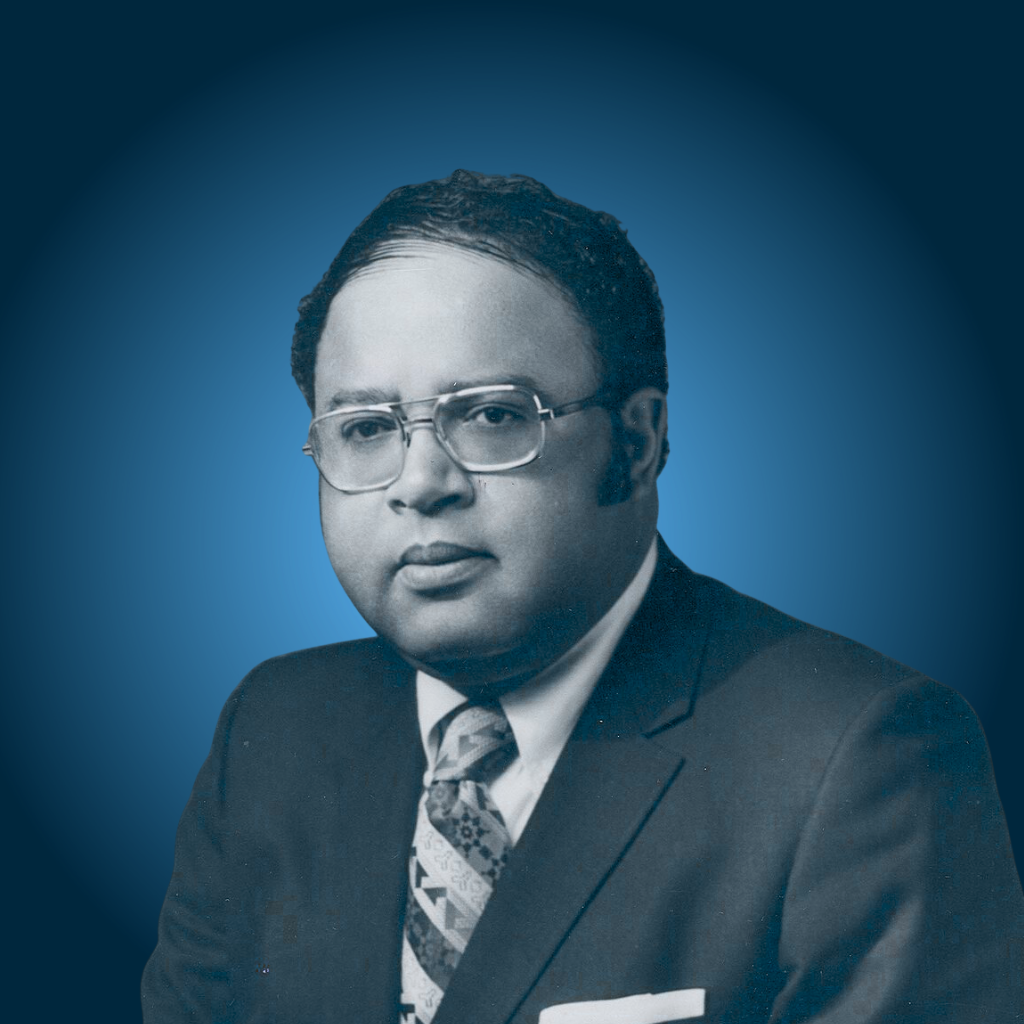 Episode 7.17: The Forgotten Civil Rights Legacy of Congressman Charles C. Diggs, Jr. | Interviewer: MATTHEW ROTH. The ways in which the Civil Rights Movement translated passion and protest into durable political change were complex, involving a wide range of actors beyond those most prominently enshrined in the popular imagination. In his new book, political scientist MARION ORR argues for the critical importance of a figure now widely forgotten: Michigan Congressman Charles C. Diggs, Jr., who during his tenure from 1955-1980 was a persistent and effective voice for desegregation and Black self-determination. In his discussion with historian Matthew Roth, Orr describes Diggs' roots in his Detroit family's funeral home, the House of Diggs; his political career as a pathbreaking Black Michigan Senator and then U.S. Congressman; his accomplishments, ranging from the desegregation of airline travel and Washington D.C. home rule to the founding of both the Congressional Black Caucus and institutions critical to the anti-Apartheid movement; and finally, to his downfall with a criminal conviction for the financial mismanagement of his congressional office. Orr's book is House of Diggs: The Rise and Fall of America's Most Consequential Black Congressman, Charles C. Diggs Jr. | — | ||||||
| 4/3/26 |  Episode 7.16: Fortress Power: How Design Shapes Control and Resistance | Interviewer: RAFAEL KHACHATURIAN. In this episode, DEREK DENMAN explores the concept of "fortress power," a form of governance rooted in the design and control of space. Tracing its origins from early modern fortresses to contemporary borders, cities, and infrastructure, Denman reveals how architecture and planning shape surveillance, movement, and political authority. The conversation examines how promises of security often intensify control and inequality, highlighting the enduring and evolving relationship between space, power, and resistance. | — | ||||||
| 3/13/26 |  Episode 7.15: Presidential Words Matter: A Conversation with Obama Speechwriter Cody Keenan | Interviewer: MATTHEW ROTH. Speech was central to the political success of both Barack Obama and Donald Trump, who each emerged through insurgent campaigns bolstered by the energy generated at mass rallies. CODY KEENAN, Director of Speechwriting for the Obama White House, argues that this is where the similarity ends, however. While Obama chose his words carefully in order to navigate the divisions in society and craft a hopeful story of America that foregrounded its ability to change in the face of fear and entrenched prejudice, Trump gives rein to America's reactionary id in a voluminous but largely unstructured stream of speech. In his discussion with historian Matthew Roth, Keenan reflects on the period of the Obama administration at the focus of his bestselling book, Grace: President Obama and Ten Days in the Battle for America, as well as on the art and importance of speechwriting, the state of Democratic politics, and the Obama post-presidency. Keenan is currently a visiting professor at Northwestern University and a partner at the speechwriting firm Fenway Partners. | — | ||||||
| 2/6/26 |  Episode 7.14: Politics Can Still Be Local: A Discussion with Pennsylvania State Rep Candidate Leo Solga | Interviewer: MATTHEW ROTH. If today's politicians, even and the state and local level, often seem more interested in scoring off ideological opponents to gain clicks than in working across party lines to solve problems, LEO SOLGA aspires to follow a different path. Solga is a recent Penn graduate in Political Science and a candidate in the Democratic primary for Pennsylvania House District 148. In his discussion with historian Matthew Roth, he describes his journey into politics and his positions on such issues as transit, education, reproductive rights, housing, and criminal justice. Above all, he argues that politics can and should be rooted in the concrete concerns of constituents and a deep and personal connection to local districts – and that Pennsylvania state government, which has not yet become consolidated under one party, is a place where cross-party collaboration is a necessity. The Pennsylvania primaries take place on May 19, 2026. | — | ||||||
| 1/9/26 |  Episode 7.13: Democracy as a Public Health Intervention | Interviewer: JOSHUA ROSE. In this episode of the Andrea Mitchell Center podcast, Joshua Rose speaks with Penn Political Science Professor JULIA LYNCH about her book Getting Better: The Policy and Politics of Reducing Health Inequalities and the politics of public health. Drawing on case studies from the United States, Brazil, Germany, and the UK, the conversation explores how social inequality, democratic participation, and political will shape health outcomes - and why expanding political voice may be one of the most powerful tools for improving public health. | — | ||||||
| 12/18/25 |  Episode 7.12: A Philadelphia Church and the West African Revival, 1918–1929 | Interviewer: JOSHUA ROSE. Host JOSHUA ROSE speaks with Dr. ADAM MOHR, Senior Lecturer in Penn's Critical Writing Program, about his 2023 book The West African Revival: Faith Tabernacle Congregation on the Guinea Coast, 1918–1929. Mohr traces how a Philadelphia-based divine-healing church became an unlikely catalyst for a mass revival across West Africa in the aftermath of the 1918 influenza pandemic—when medical systems faltered and religious healing practices took on new urgency. Mohr follows the revival's long arc into the present, including the Pentecostal traditions it helped seed—and the striking ways those West African churches have since returned to Philadelphia through migration. | — | ||||||
| 12/15/25 |  Episode 7.11: Marriage, the Welfare State, and the Politics of "Family Values" | Interviewer: JOSHUA ROSE. In this episode of the Andrea Mitchell Center for the Study of Democracy podcast, host JOSHUA ROSE speaks with Penn Law and History Professor SERENA MAYERI about her book Marital Privilege: Marriage, Inequality, and the Transformation of American Law. Mayeri unpacks how Supreme Court decision-making around family and privacy can defy ideological expectations, why challenges to marriage's legal primacy were often fragmented rather than movement-coordinated, and how today's "traditional family values" revival intersects with longstanding conservative legal projects and post-Dobbs uncertainty. | — | ||||||
Want analysis for the episodes below?Free for Pro Submit a request, we'll have your selected episodes analyzed within an hour. Free, at no cost to you, for Pro users. | |||||||||
| 12/3/25 |  Episode 7.10: Democracy as Dispersion of Power: A Conversation with Samuel Bagg | Interviewer: RAFAEL KHACHATURIAN. Over the past decade we have witnessed an unfolding global crisis of democracy, in its liberal-democratic, representative, capitalist form. As elite power has continued to grow without constraints, classical democratic theory has struggled to keep pace with these momentous changes. In this episode, political theorist SAMUEL BAGG sat down with RAFAEL KHACHATURIAN to discuss how elites gain systematic advantages in modern society, and why resisting this state capture is crucial for thinking about the future of democracy. Episode recorded in February 2025. | — | ||||||
| 10/31/25 |  Episode 7.9: Unlimited Money, Limited Oversight: Virginia's Democracy on Trial | Interviewer: MATT BERKMAN. Journalist and anti-corruption investigator JOSH STANFIELD joins host MATT BERKMAN to unpack Virginia's feverish election season, discussing campaign cash, a runaway data-center boom, and ethics enforcement. Drawing on his FOIA work, Stanfield details lawsuits over nondisclosure by statewide officials, ICE activity, and government surveillance, reflecting on what all of this means for democracy in Virginia today. | — | ||||||
| 10/21/25 |  Episode 7.8: Socialism, Logically: Scott Sehon on Rights, Welfare, and Markets | Interviewer: RAFAEL KHACHATURIAN. Philosopher SCOTT SEHON joins the podcast to discuss his book Socialism: A Logical Introduction (Oxford University Press). Sehon presents a "master argument" for socialism and defines socialism along two axes: collective economic control and egalitarian distribution. He addresses common critiques of socialism based on rights, the sanctity of private property, and concerns about exploitation. The discussion spans Hayek and Friedman, climate change as the clearest market failure, and how logical reasoning can cut through today's polarized debates. *This episode was recorded last year. | — | ||||||
| 10/10/25 |  Episode 7.7: Stemming the Tide of Vaccine Refusal: Beyond MAHA's Vision of Patient Empowerment | Interviewer: MATTHEW ROTH. Anti-vaccine rhetoric is on the rise in the U.S., encouraged now by MAHA-dominated health policies emerging from Washington. It is tempting to paint this as a top-down process, but neonatologist and immunologist BENJAMIN A. FENSTERHEIM argues that the problem runs deeper and is rooted in the institutional arrangements of our healthcare system. In his conversation with historian Matthew Roth, he describes his work caring for newborns, the increasing pushback by parents against routine preventive measures, and his reflections on how the relationship between doctors and patients must fundamentally change to ensure that the best medical decisions are made. Fensterheim is an Attending Neonatologist with the Division of Neonatology at the Children's Hospital of Philadelphia and an Instructor at the Perelman School of Medicine at the University of Pennsylvania. | — | ||||||
| 9/18/25 |  Episode 7.6: Credibility in Prisons | Interviewer: CARRIE WELSH. Why does the American criminal justice system produce unreliable knowers? In this episode, host CARRIE WELSH is joined by philosopher and prison education director JOHN FANTUZZO and re-entry consultant and executive director RAYMOND POWELL for a conversation about the epistemological foundations of mass incarceration. Drawing on a forthcoming paper and lived experience, they unpack how the prison's economy of credibility systematically undermines the efforts and perspectives of incarcerated people and extends punishment far beyond prison walls. Their conversation ends with a call to center the knowledge of incarcerated and formerly incarcerated people in efforts to reduce society's reliance on incarceration. | — | ||||||
| 8/26/25 |  Episode 7.5: Trump and the Era of Ungoverning: A Discussion with Russell Muirhead and Nancy Rosenblum | Interviewer: MATTHEW ROTH. In their 2024 book Ungoverning: The Attack on the Administrative State and the Politics of Chaos, Professors RUSSELL MUIRHEAD (Dartmouth) and NANCY ROSENBLUM (Harvard) analyze the emergence of "ungoverning," a political trend aimed at limiting or dismantling key functions of the administrative state. They situate this development within broader shifts in American politics, tracing its roots to earlier debates over the role of government and examining how it has been intensified in the Trump era. In conversation with historian Matthew Roth, they reflect on what makes this movement distinctive, the challenges it poses for democratic governance, and the importance of safeguarding (and also reforming) the administrative state. | — | ||||||
| 8/8/25 |  Episode 7.4: The Age of Choice: A Conversation with Sophia Rosenfeld | Interviewer: JOSHUA ROSE. Historian and Penn Professor SOPHIA ROSENFELD discusses her new book The Age of Choice: A History of Freedom in Modern Life, exploring how choice became central to modern ideas of freedom — and why our obsession with it can leave us anxious, overwhelmed, and divided. From the rise of shopping and religious freedom to romance, politics, and reproductive rights, she traces the surprising history and complicated legacy of living in an "age of choice." | — | ||||||
| 7/10/25 |  Episode 7.3: Rethinking the COVID Era: A Conversation with Frances Lee and Stephen Macedo | Interviewer: MATTHEW ROTH. When the Sars-CoV-2 spread across the world in the spring of 2020, it triggered unprecedented lockdowns in nearly every country, including democracies where such drastic measures were previously considered unlikely to be feasible. The hope was that the virus could be stopped and eventually eliminated, and that deaths could be minimized in the meantime. In their new book, In Covid's Wake: How Our Politics Failed Us, political scientists FRANCES LEE and STEPHEN MACEDO examine the sequence of decisions that led to these policies and conclude that not only did they not work as envisioned, but that the decision-making process itself was deeply flawed. In their conversation with historian Matthew Roth, the authors describe the pre-existing consensus among health officials, that non-pharmaceutical interventions (NPIs) would likely be counterproductive; how that consensus quickly flipped during the crisis, after which open debate was stifled; the political polarization that led to different measures in different U.S. states; and the reasons why the comparative, pre-vaccine mortality data from the states show no sign of that a more stringent approach helped. | — | ||||||
| 6/18/25 |  Episode 7.2: Brazil's Pink Tide and the Politics of Redistribution | Interviewer: RAFAEL KHACHATURIAN. In this episode, host Rafael Khachaturian speaks with sociologist and political theorist NARA ROBERTA SILVA about the trajectory of Brazil's left over the past two decades. Together, they unpack the rise and contradictions of the Workers' Party (PT), Brazil's role in the Latin American "pink tide," and the tensions between grassroots mobilization, state power, and neoliberal constraint. From participatory budgeting in Porto Alegre to Lula's turn to pragmatic governance, Silva offers a sharp, historically grounded reflection on the promises and limits of leftist rule in the Global South. The conversation also turns to the reactionary surge that followed, tracing the conditions that enabled Jair Bolsonaro's rise. | — | ||||||
| 6/11/25 |  Episode 7.1: The Workings of Canadian Democracy in the Shadow of Trump | Interviewer: MATTHEW ROTH. In an era that has seen the rise of right-wing populism, which has often pitted itself against the institutions of liberal democracy, recent election outcomes in Canada and Australia hint at a counter-trend. Political scientist LORI TURNBULL, an expert on not just Canadian politics but of the nuts-and-bolts of Canadian democracy, guides us through her country's recent election, which in many ways was similar to that of the 2024 US election. A highly unpopular leader was dragging down the electoral prospects of his party as it was challenged by an insurgent conservative movement. The outcome, however, was very different. In her discussion with historian Matthew Roth, she explores why the the national political landscape changed so swiftly, what the stakes of the recent election were, and how Canadian democratic institutions differ in their functioning and spirit from those of the US. And she assesses the long-term health of Canadian democracy as it faces many of the same cultural and political challenges reshaping the rest of the world, as well as some that are uniquely its own. | — | ||||||
| 5/13/25 |  Episode 6.15: Panic Wisely: Navigating Collapse in an Age of Crisis | INTERVIEWER: RAFAEL KHACHATURIAN. In this episode, Rafael Khachaturian speaks with IRA ALLEN, Associate Professor of Rhetoric, Writing, and Digital Media Studies at Northern Arizona University, about his latest book, Panic Now: Tools for Humanizing. Allen explores panic as a vital, practical response to the unfolding crises of climate, capitalism, and colonial legacies. He argues for embracing panic as a catalyst for solidarity, novel social forms, and collective resilience in the face of civilizational collapse—offering a provocative rethinking of how we might navigate and even thrive amid uncertainty. | — | ||||||
| 5/6/25 |  Episode 6.14: Crossing the Line: Finding America in the Borderlands | INTERVIWER: YARA DAMAJ. Author SARAH TOWLE discusses her book, Crossing the Line: Finding America in the Borderlands. | — | ||||||
| 4/22/25 |  Episode 6.13: Democracy's New Frontier: Integrating Ecosystems into Political Communities | INTERVIEWER: CATHY BARTCH. In this episode of the Andrea Mitchell Center Podcast, host Cathy Bartch is joined by environmental experts CAROLINA ANGEL BOTERO and FERNANDA JIMENEZ to explore innovative approaches to democracy that extend beyond traditional, human-centered perspectives. Together, they discuss the Rights of Nature movement emerging from Latin America, the complexities of recognizing ecosystems as democratic participants, and how redefining our relationship with the natural world could shape a more inclusive and equitable democratic future. | — | ||||||
| 3/11/25 |  Episode 6.12: Dying Abroad: A Conversation with Osman Balkan | INTERVIEWER: MATT BERKMAN. In this episode, Matt Berkman speaks with OSMAN BALKAN, Associate Director of the Huntsman Program at the University of Pennsylvania and author of Dying Abroad: The Political Afterlives of Migration in Europe. Their conversation delves into the profound yet often overlooked decisions migrants face around death and burial—choices that reflect deeply contested questions about belonging, citizenship, and identity. Drawing from Balkan's firsthand experiences as an undertaker and extensive research in Berlin and Istanbul, this discussion sheds light on how death becomes a site of political struggle and a poignant measure of what "home" truly means in our globalized world. | — | ||||||
| 3/6/25 |  Episode 6.11: The Path Ahead for Syrian Reconstruction | INTERVIEWER: YARA DAMAJ. The collapse of the Assad regime has reshaped Syria's political landscape, bringing both significant opportunities and deep uncertainties. This episode unpacks the factors behind Assad's downfall, the power struggles within the opposition, and the ongoing fight for justice after years of repression. As regional dynamics shift, the future of Syria remains uncertain, with major implications for governance, security, and diplomacy. Penn PhD Candidate YARA DAMAJ interviews IBRAHIM BAKRI, Associate Director of the Andrea Mitchell Center for the Study of Democracy. | — | ||||||
Showing 25 of 100
Sponsor Intelligence
Sign in to see which brands sponsor this podcast, their ad offers, and promo codes.
Chart Positions
5 placements across 5 markets.
Chart Positions
5 placements across 5 markets.