
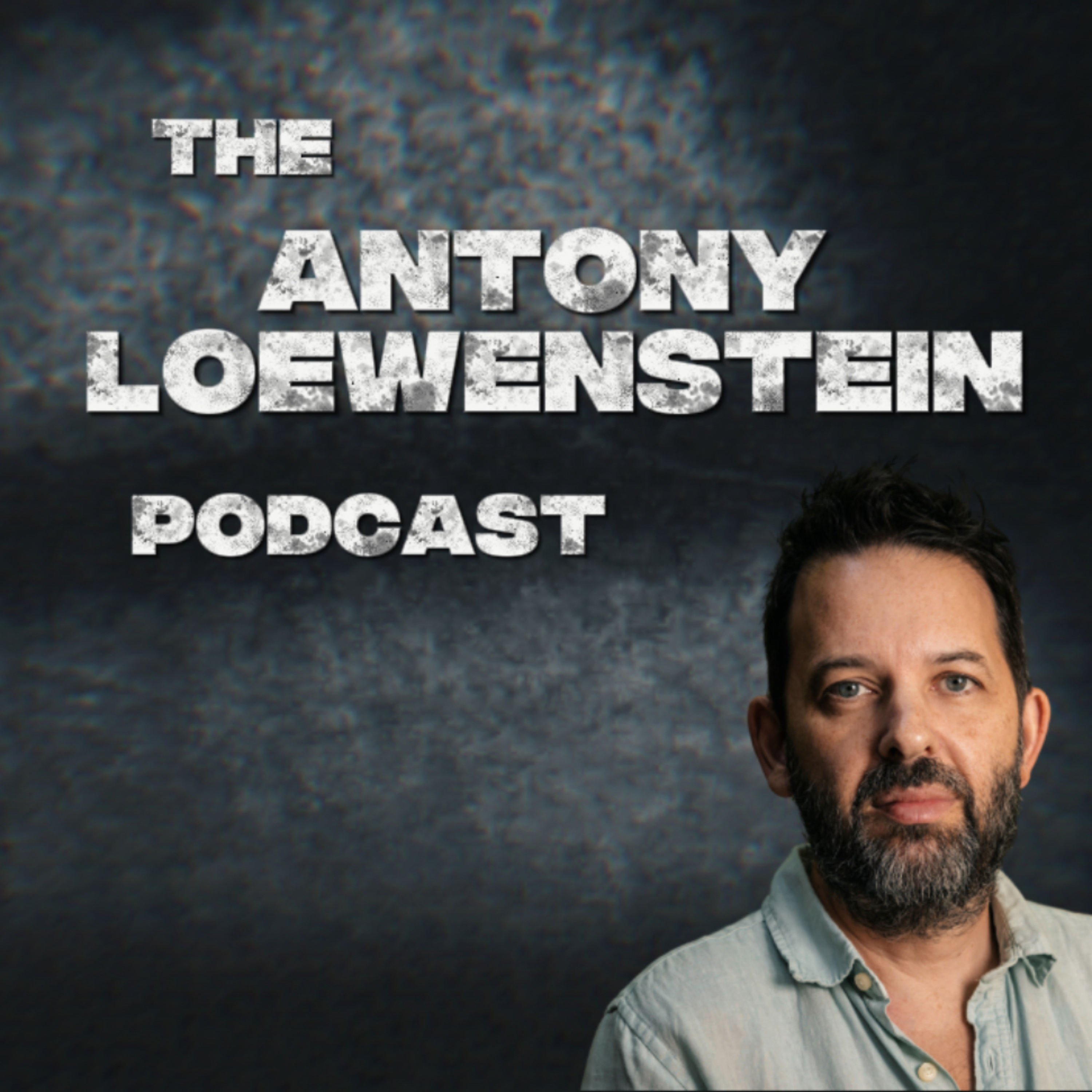
Insights from recent episode analysis
Audience Interest
Podcast Focus
Publishing Consistency
Platform Reach
Insights are generated by CastFox AI using publicly available data, episode content, and proprietary models.
Total monthly reach
Estimated from 1 chart position in 1 market.
By chart position
- 🇦🇺AU · Politics#37100K to 300K
- Per-Episode Audience
Est. listeners per new episode within ~30 days
50K to 150K🎙 ~2x weekly·21 episodes·Last published 4d ago - Monthly Reach
Unique listeners across all episodes (30 days)
100K to 300K🇦🇺100% - Active Followers
Loyal subscribers who consistently listen
40K to 120K
Market Insights
Platform Distribution
Reach across major podcast platforms, updated hourly
Total Followers
—
Total Plays
—
Total Reviews
—
* Data sourced directly from platform APIs and aggregated hourly across all major podcast directories.
On the show
Recent episodes
The Far Right Global Movement and How to Fight It
Jun 22, 2026
Unknown duration
Inside Israel's Booming Arms Trade with Antony Loewenstein
Jun 15, 2026
Unknown duration
Inside the Feed (Part 2): Antony Loewenstein Reacts to Viral Clips on War, Media & Immigration
Jun 8, 2026
Unknown duration
Gaza Is Being Forgotten: On-the-Ground Truths with Antony Loewenstein
Jun 1, 2026
Unknown duration
Inside the Spin: Antony Loewenstein Reacts to Viral Israeli Propaganda Clips
May 25, 2026
Unknown duration
Social Links & Contact
Official channels & resources
Official Website
Login
RSS Feed
Login
| Date | Episode | Description | Length | ||||||
|---|---|---|---|---|---|---|---|---|---|
| 6/22/26 | The Far Right Global Movement and How to Fight It | In this episode, Antony Loewenstein explores the global rise of right-wing politics and asks what a real progressive alternative looks like. From the surge of figures like Trump and Pauline Hanson to shifting public sentiment, he examines how fear, economics, and power are reshaping politics today.Looking beyond critique, Antony discusses what effective resistance could look like and whether a new, hopeful vision for the left can emerge in response. | — | ||||||
| 6/15/26 | Inside Israel's Booming Arms Trade with Antony Loewenstein | In this episode, Antony Loewenstein uncovers how Israel’s arms industry has reached record highs, generating billions while wars in Gaza and across the region continue. Drawing on over a decade of investigation, he explores who is buying these weapons and why global demand is surging despite widespread public criticism.He also examines the growing disconnect between public opinion and political elites, and the silence surrounding these profits, asking what accountability looks like in a world where war has become big business. | — | ||||||
| 6/8/26 | Inside the Feed (Part 2): Antony Loewenstein Reacts to Viral Clips on War, Media & Immigration | In this episode, Antony Loewenstein returns for Part 2 of his reaction series, breaking down a new batch of widely shared social media clips spanning Gaza, war narratives, Australian media, and immigration debates. From interviews defending alleged war crimes to viral claims about aid in Gaza and fear-driven rhetoric about national identity, Antony unpacks the messaging, context, and omissions behind what millions are watching online.Blending sharp media critique with on-the-ground insight and political analysis, Antony examines how these clips shape public opinion and what gets lost in the process. This episode expands beyond propaganda alone, highlighting how misinformation, nationalism, and emotional storytelling intersect across different issues dominating the digital conversation today. | — | ||||||
| 6/1/26 | Gaza Is Being Forgotten: On-the-Ground Truths with Antony Loewenstein | In this episode, Antony Loewenstein confronts the ongoing reality in Gaza, arguing that a devastating war and alleged genocide have slipped from global attention despite continuing daily suffering. Drawing on firsthand accounts from Palestinians inside Gaza including stories of life in tent cities, collapsing infrastructure, and desperate attempts at survival, Antony paints a stark picture of a territory still under siege, where medical care is scarce, movement is restricted, and civilians endure unimaginable conditions that rarely make headlines.He also explores the broader political context, from international inaction and media silence to shifting public opinion in the West and the role of governments including Australia and the United States. Through personal testimony, investigative insight, and reflections on solidarity and accountability, Antony makes the case that Gaza remains central to understanding global justice today and warns of the consequences of looking away. | — | ||||||
| 5/25/26 | Inside the Spin: Antony Loewenstein Reacts to Viral Israeli Propaganda Clips | What’s really behind the viral clips flooding your feed? Antony Loewenstein reacts to widely shared social media videos associated with Israeli propaganda, unpacking how they’re crafted, why they spread, and what key context is often missing.Through a critical lens, Antony Loewenstein examines the narratives, visual tactics, and emotional messaging used to shape public opinion online, offering viewers a deeper understanding of how digital propaganda operates in real time. | — | ||||||
| 5/18/26 | Life Inside Iran Today Secret Stories from an Anonymous Insider | What is life really like inside Iran right now?Antony shares exclusive audio messages from an anonymous Iranian insider living in Tehran, offering a rare and deeply personal look into everyday life inside the country. For her protection, her identity has been concealed and her voice altered, but her experiences reveal the reality of navigating checkpoints, censorship, and constant uncertainty in a highly controlled environment.Through her story, we hear how people continue to live, adapt, and find moments of freedom, from underground gatherings to navigating internet blackouts and the looming fear of conflict. This episode goes beyond headlines, providing an unfiltered perspective on what life inside Iran truly feels like right now. | — | ||||||
| 5/11/26 | About Australia’s Antisemitism Royal Commission | If you value independent journalism, support this show: https://bit.ly/4rqn9wF This week, Antony Loewenstein is joined by producer Lem for an extended conversation unpacking Australia’s Royal Commission into antisemitism and social cohesion, the political forces behind it, and the broader debate around Israel, Palestine, Zionism, protest movements, and free speech. Antony examines how the Bondi terror attack became tied to a wider national conversation about antisemitism, the role of pro-Israel lobbying in shaping media and political narratives, and the growing push to criminalise pro-Palestine speech and protest in Australia and beyond. The episode explores the distinction between antisemitism and anti-Zionism, the emotional and political impacts of reporting on Gaza, the conflation of criticism of Israel with hatred of Jewish people, and how governments, media organisations, and lobby groups are responding to rising tensions. Antony also reflects on historical antisemitism, the role of nationalism, the future of democratic protest, and why many people are increasingly turning away from mainstream media coverage in search of independent journalism and more honest conversations. | — | ||||||
| 5/4/26 | The One Nation Series P3: The Media Made Pauline Hanson Bigger Than Her Votes | If you value independent journalism, support this show: https://bit.ly/4rqn9wF In this final episode of the One Nation Series, we break down the real reason Pauline Hanson and One Nation feel “everywhere” right now and why that perception doesn’t match the actual vote.Journalist Amy Remeikis joins to unpack how media dynamics, not just voter sentiment, are amplifying far-right politics in Australia. | — | ||||||
| 4/27/26 | The One Nation Series P2: How Pauline Hanson Changed Australia Without Winning | If you value independent journalism, support this show: https://bit.ly/4rqn9wF Pauline Hanson is often framed as a political outsider. But what if her real impact wasn’t electoral success, it was shifting the boundaries of what mainstream politics could say and do?In this episode, we trace how One Nation reshaped Australian political rhetoric from the late 1990s onward, and how both major parties absorbed elements of Hanson’s agenda. Rather than being pushed out of relevance, Hanson helped normalise positions on migration, national identity and security that later became standard across the political spectrum.We look at how John Howard strategically captured One Nation voters, how the Tampa crisis marked a turning point in asylum policy, and why Hanson’s prosecution and imprisonment strengthened her political narrative instead of ending it. The episode also explores the role of commercial media in keeping her visible during her so-called “wilderness years,” and how that visibility helped enable her return to the Senate in 2016. | — | ||||||
| 4/21/26 | The One Nation Series P1: The Birth of One Nation | If you value independent journalism, support this show: https://bit.ly/4rqn9wF In this episode, Antony Loewenstein speaks with political analyst Amy Remeikis about how Pauline Hanson’s rise in the late 1990s reshaped Australian politics — and why her success was not accidental.They explore the economic anxiety following the early-1990s recession, the cultural shift under Paul Keating, and how John Howard’s message of stability and nostalgia created the conditions for Hanson’s breakthrough. Rather than emerging from nowhere, Hanson’s politics reflected ideas already circulating inside mainstream conservative rhetoric at the time. The conversation also examines the media’s role in amplifying Hanson’s profile, elevating her claims alongside expert analysis, and helping normalize rhetoric that had previously been considered outside the political mainstream. | — | ||||||
Want analysis for the episodes below?Free for Pro Submit a request, we'll have your selected episodes analyzed within an hour. Free, at no cost to you, for Pro users. | |||||||||
| 4/13/26 | Ben Roberts-Smith And Afghanistan | If you value independent journalism, support this show: https://bit.ly/4rqn9wF Antony Loewenstein explores the arrest of Ben Roberts-Smith and the wider legacy of Australia’s war in Afghanistan, a conflict defined by civilian deaths, media silence, political lies, and almost no accountability. This episode asks what the West was really doing in Afghanistan, and why the crimes committed there are still being denied. | — | ||||||
| 4/7/26 | Why Judiasm is Facing A Profound Moral Crisis | If you value independent journalism, support this show: https://bit.ly/4rqn9wF In this episode of The Antony Loewenstein Podcast, Antony argues that Judaism is facing a profound moral crisis driven by the conflation of Jewish identity with Zionism and Israel’s actions in Gaza, the West Bank, and beyond. He reflects on Jewish history, including long traditions of anti‑nationalism, and explains why equating Jews with Zionism is both historically false and politically dangerous. Drawing on contemporary Jewish voices and movements, he calls for a moral reckoning and the building of a new, inclusive Jewish identity rooted in justice, solidarity, and universal human dignity. | — | ||||||
| 4/2/26 | The Death Sentence That Was Always There | If you value independent journalism, support this show: https://bit.ly/4rqn9wF In this episode, Antony Loewenstein examines Israel’s decision to legalise the execution of Palestinians and what it exposes about the wider realities of occupation, apartheid, and state violence stretching from Gaza and the West Bank to Lebanon and Iran. Cutting through media spin and Western complicity, he argues this legislation is not an anomaly but part of a long and accelerating pattern that defines Israel’s role in the region today.Produced by Lena Helou and Lem Zakharia | — | ||||||
| 3/23/26 | The Palestine Laboratory Podcast Ep 3: Privatizing the Occupation | If you value independent journalism, support this show: https://bit.ly/4rqn9wF The Palestine Laboratory Podcast: Privatising The OccupationNOTE: First released in late 2024 with the US outlet, Drop Site News, we are now re-releasing this series. For more information, see: https://www.thepalestinelaboratorypodcast.comIn the wake of 9/11, Israel’s defense industry boomed, positioning itself as a key beneficiary of the "war on terror." Loewenstein explores how private Israeli companies market their surveillance technology—tested first on Palestinians—across the globe, claiming to have the answers to address ‘global insecurity.’ In reality, it results in tighter borders, greater monitoring of refugees, and increased state surveillance. We hear from Palestinians about how these repressive tools are being used today in both Gaza and the West Bank. Can democracy exist in a society under mass surveillance? And, does it actually make us any safer?Guests: Jez Heywood, Andrew Feinstein, Mona Shtaya, Mariam DawasCreditsHost: Antony LoewensteinSeries Producer: Elle MarshProducer: Bethany Atkinson-QuintonProduction & Sound Engineering: Tim JenkinsField Recording: Cinnamon NippardStudio Recordings at 2SER: Michael Jones and Jonathan ChangOriginal Music: Ara Koufax Music Direction: Sunless StudioPodcast Artwork: Debashish ChakrabartySpecial Thanks: Anu HasboldAdditional music in the series is from: Use Knife, Muqata'a & The Album Leaf | — | ||||||
| 3/20/26 | The Myth of the “Strong Jew” and Israel’s War Narrative | If you value independent journalism, support this show: https://bit.ly/4rqn9wF Antony Loewenstein examines how Israel’s modern identity has been shaped by a powerful founding idea: the creation of the “strong Jew.”In this conversation, he unpacks how early Zionist leaders, including David Ben-Gurion, framed a new national identity in direct contrast to the perceived “weakness” of European Jews during the Holocaust — a framing that ignores the reality of widespread Jewish resistance under Nazi rule.We also explore how this narrative continues to influence Israeli politics and public messaging today, particularly in moments of conflict. From government rhetoric praising national resilience, to disparities in civilian protection between Jewish and Palestinian communities, Loewenstein argues that power, perception, and storytelling remain central to how the war is understood — both inside Israel and globally.This episode looks at:The origins of the “strong Jew” identity in Zionist thoughtThe historical inaccuracies behind the “passive Holocaust victim” narrativeMedia control and censorship within Israel during wartimeUnequal access to safety and infrastructure across communitiesHow national myths shape modern military and political behaviourA critical conversation about identity, history, and the narratives that define nations under pressure. | — | ||||||
| 3/16/26 | The Palestine Laboratory Podcast Ep 2: How To Make Friends | If you value independent journalism, support this show: https://bit.ly/4rqn9wF NOTE: First released in late 2024 with the US outlet, Drop Site News, we are now re-releasing this series. For more information, see: https://www.thepalestinelaboratorypodcast.comInvestigative journalist Antony Loewenstein uncovers how the Palestine Laboratory has operated since 1948, detailing Israel’s long-standing role as a major arms dealer to some of the world’s most repressive regimes. Using declassified documents, Loewenstein traces secret deals made with dictators from Pinochet's Chile to apartheid South Africa and explores how Israel's military model is now being replicated in places like Myanmar and India. As history repeats itself, how does Israel continue to act with impunity?Guests: Daniel Silberman and Sasha Polakow-SuranskyCreditsHost: Antony LoewensteinSeries Producer: Elle MarshProducer: Bethany Atkinson-QuintonProduction & Sound Engineering: Tim JenkinsField Recording: Cinnamon NippardStudio Recordings at 2SER: Michael Jones and Jonathan ChangOriginal Music: Ara Koufax Music Direction: Sunless StudioPodcast Artwork: Debashish ChakrabartySpecial Thanks: Anu HasboldAdditional music in the series is from: Use Knife, Muqata'a & The Album Leaf | — | ||||||
| 3/13/26 | What's Happening in Lebanon, Iran and Gaza | If you value independent journalism, support this show: https://bit.ly/4rqn9wF In this podcast, Antony Loewenstein examines a Middle East engulfed in war, from Lebanon and Iran to Gaza and Palestine. He explores the forces driving chaos, the profiteering around conflict, and the global politics shaping the region at this pivotal moment. An unfiltered dose of independent journalism that cuts through the noise.Produced by: Lena Helou and Lem Zakharia | — | ||||||
| 3/9/26 | The Palestine Laboratory Podcast Ep 1: Start-Up Nation | If you value independent journalism, support this show: https://bit.ly/4rqn9wF Investigative journalist Antony Loewenstein questions the narratives he was taught growing up in the Jewish Diaspora as he traces the origins of Israel’s military-industrial complex, examining how Israel became one of the world’s leading arms and tech exporters. When a military force essentially creates a nation, can they ever be truly separated?Guests: Mariam Dawwas, Haim Brasheeth-Zabner and Ghada KarmiContent warning: This episode contains references to violence, including weapons of warfare, which may distress some listeners.CreditsHost: Antony LoewensteinSeries Producer: Elle MarshProducer: Bethany Atkinson-QuintonProduction & Sound Engineering: Tim JenkinsField Recording: Cinnamon NippardStudio Recordings at 2SER: Michael Jones and Jonathan ChangOriginal Music: Ara Koufax Music Direction: Sunless StudioPodcast Artwork: Debashish ChakrabartySpecial Thanks: Anu HasboldAdditional music in the series is from: Use Knife, Muqata'a & The Album Leaf | — | ||||||
| 3/6/26 | The US Israel Strike on Iran | If you value independent journalism, support this show: https://bit.ly/4rqn9wF In this episode, Antony Loewenstein discusses the real reasons behind the US and Israel’s strike on Iran, drawing on his firsthand reporting inside Iran and years of journalism across the Middle East. He unpacks the wider geopolitical agenda driving the conflict, Australia’s role in backing it, and why mainstream narratives fail to explain what’s truly at stake.Produced by Lena Helou and Lem Zakharia | — | ||||||
| 3/2/26 | Inside the US Kidnapping of Venezuela’s President | If you value independent journalism, support this show: https://bit.ly/4rqn9wF In this episode, Antony Loewenstein speaks with Latin America expert Dr. Rodrigo Acuña about the dramatic US kidnapping of Venezuelan president Nicolás Maduro in January 2026 and what it reveals about the future of American power in the region.They unpack the long history behind the crisis, including how Venezuela has been portrayed in Western media, the legacy of Hugo Chávez, and why successive US administrations have targeted governments that challenge American dominance in Latin America. Rodrigo draws on decades of research and on-the-ground experience to explain how Venezuela became a flashpoint for debates around sovereignty, oil, and global power.The conversation explores the immediate fallout of Maduro’s removal, including sweeping concessions over Venezuela’s oil sector and what Rodrigo describes as an “occupation without troops.” They also examine contested elections, media narratives, and the broader implications of a revived Monroe Doctrine under Trump, signalling a more aggressive approach to US influence across the Western Hemisphere.The episode widens out to look at the region more broadly, including the rise and fall of Latin America’s “pink tide,” the erosion of regional alliances, and the growing pressure on Cuba as US sanctions intensify. Ultimately, it’s a deep dive into the geopolitics of regime change, media framing, and the ongoing struggle over sovereignty in Latin America.Produced by: Lena Helou and Lem Zakharia | — | ||||||
| 2/23/26 | Pauline Hanson and the Mainstreaming of Far-Right Politics | If you value independent journalism, support this show: https://bit.ly/4rqn9wF In this episode, Antony Loewenstein examines the global surge of far-right populism and its obsessive focus on immigration and Islam across Australia, the US, the UK and Europe. Using recent comments by Pauline Hanson as a starting point, he explores how anti-Muslim rhetoric has been normalised in mainstream media and politics, and why similar language would be unthinkable if directed at other groups. The episode unpacks the deeper forces driving this shift, economic insecurity, media failure, and political opportunism, while challenging the myth that far-right figures represent “ordinary people.” Antony also traces the historical roots of these narratives, from the War on Terror to Australia’s offshore detention regime, and how Western immigration policies have influenced global approaches to borders and refugees. Ultimately, he argues that the current debate is not a calm discussion about immigration, but a broader ideological battle over multiculturalism, colonial legacy, and the kind of societies Western nations want to become. | — | ||||||
| 2/16/26 | What the Media Won't Say About The Israeli President's Visit | If you value independent journalism, support this show: https://bit.ly/4rqn9wF This week on the Antony Lowenstein Podcast, we examine the controversial Australian visit of Israeli President Isaac Herzog: Why he came, how the visit was framed, and why it triggered protests across the country. Publicly positioned as a gesture of solidarity following the Bondi massacre, Herzog’s trip quickly became a flashpoint in Australia’s already tense debate around Israel, Palestine, and media narratives. Antony unpacks Herzog’s political record and public statements, the way he is portrayed in Western media, and the broader context of Israel’s war in Gaza. He also examines how the visit was covered by Australian outlets, whose voices were amplified or ignored, and why tens of thousands of Australians took to the streets in Sydney, Melbourne, and Canberra. The episode explores allegations surrounding Herzog’s rhetoric, the political calculations behind the visit, and the Australian government’s response, including questions around protest rights, policing, and the language of “social cohesion.” More broadly, this conversation looks at how diaspora communities are positioned in public discourse, and what this moment reveals about power, protest, and dissent in modern Australia. | — | ||||||
| 2/9/26 | Jeffrey Epstein, Israel, and the Ties the Media Won’t Touch | If you value independent journalism, support this show: https://bit.ly/4rqn9wF For years, Jeffrey Epstein has been framed primarily as a lone sexual predator embedded in elite social circles. While his crimes against underage girls are real, horrific, and central to his story, this episode examines a dimension of the Epstein case that much of the mainstream media has avoided: his deep and sustained ties to Israel, Israeli intelligence, and the global surveillance and defence industry.In this episode, investigative journalist Antony Loewenstein explores newly released documents, leaked correspondence, and long-ignored reporting that suggest Epstein operated as a key intermediary for Israeli political, intelligence, and corporate interests over decades. Drawing on reporting from Drop Site News, court documents, and historical context, the episode interrogates how Epstein accumulated immense power, wealth, and access and why his role appears to have been protected even after his criminal behaviour was widely known in elite circles.Produced by: Antony Loewenstein, Lem Zakharia and Lena HelouOverlay sources:https://en.wikipedia.org/wiki/Pizzagate_conspiracy_theoryhttps://www.allenandunwin.com/browse/book/Lucia-Osborne-Crowley-The-Lasting-Harm-9781761066566https://www.ynetnews.com/business/article/ry4ridpvyghttps://www.youtube.com/shorts/kP4Vka4WUgchttps://www.dropsitenews.com/s/epstein-and-israel/archive?sort=newhttps://www.dropsitenews.com/s/the-palestine-laboratoryhttps://www.dropsitenews.com/p/modi-epstein-files-steve-bannon-india-trump-bjphttps://www.dropsitenews.com/p/jeffrey-epstein-aided-alan-dershowitz-mearsheimer-walt-israel-lobbyhttps://www.theguardian.com/us-news/2026/feb/04/jeffrey-epstein-files-noam-chomskyhttps://www.justice.gov/epstein/files/DataSet%209/EFTA00634274.pdf | — | ||||||
| 2/3/26 | The Legacy of the ‘War on Terror’ | If you value independent journalism, support this show: https://bit.ly/4rqn9wF In this episode, Antony traces how the post-9/11 “War on Terror” helped shape today’s political and media climate including the normalization of anti-Palestinian racism across many Western elite circles. He revisits the early messaging of “tolerance” from George W. Bush alongside the reality of Afghanistan, torture, rendition, and Guantánamo Bay, and connects that legacy to contemporary narratives about Israel/Palestine, media accountability, and the ongoing denial of Palestinian identity and history.Antony also reflects on what it means to speak as a Jewish critic of Israeli policy, the kinds of abuse and accusations that follow, and the ongoing attempt to frame resistance as “terror” while state violence is legitimized. He argues that neoconservative thinking never truly disappeared, and that while public support for Palestinians has risen, elite media and political institutions continue to enable dehumanization and avoid accountability.Overlay sources:https://www.theguardian.com/commentisfree/2023/mar/14/iraq-war-9-11-george-bush-post-truthhttps://www.allenandunwin.com/browse/book/Paul-McGeough-In-Baghdad-9781741142198https://costsofwar.watson.brown.edu/costs/humanhttps://mondoweiss.net/2020/05/atlantic-editor-who-promoted-erroneous-conspiracy-to-gin-up-iraq-war-bewails-arab-propensity-to-conspiracy-thinking/https://www.booktopia.com.au/pity-the-nation-robert-fisk/book/9780192801302.html?srsltid=AfmBOooeWLPuhXSG0bgSte6u8F3tIoEDPsTO_XpDhi9xuBpKHD8eyNQNhttps://search.wikileaks.org/plusd/https://www.theguardian.com/commentisfree/2015/jun/15/afghanistan-should-leave-its-copper-in-the-ground-to-avoid-further-strife | — | ||||||
| 1/27/26 | Randa Abdel-Fattah on Palestine, Australia, and Silence | If you value independent journalism, support this show: https://bit.ly/4rqn9wF This week, Antony Loewenstein speaks with Randa Abdel-Fattah; Palestinian Australian writer, academic, and former lawyer, and author most recently of “Discipline”.They reflect on knowing each other for over two decades, before turning to Randa’s visits to Palestine in 2000 and 2010 with her father, including returning to his village Burqa, and what dispossession looks like when it fractures people from land, memory, and ancestry.The conversation moves to the present: how Randa thinks about “after Zionism,” why she rejects future-tense ideas of “coexistence,” and what it means to practise solidarity now, including with anti-Zionist Jewish communities.They discuss how Palestinians process ongoing violence in Gaza and the West Bank, the psychological toll of constant exposure, and why refusing to “switch off” has become a discipline in itself.Antony and Randa also examine Australia’s media and cultural institutions including the silencing of pro-Palestinian voices, the use of “risk management” as censorship, and what the Adelaide Writers’ Week controversy revealed about power, narrative control, and whose speech is treated as dangerous.The episode closes with a wider discussion about the rise of the far right in Australia, the positioning of far-right parties as “pro-Israel,” and why Randa believes building independent institutions and alternative platforms is no longer optional.Overlay sources:https://meanjin.com.au/latest/inaudible/https://mondoweiss.net/2026/01/paraglides-cultural-safety-and-decolonization-randa-abdel-fattah-on-her-ban-from-adelaide-writers-week-and-the-silencing-of-palestinians/https://tickets.bluemountainswritersfestival.com.au/Events/AFTER-ZIONISM | — | ||||||
Showing 25 of 31
Pitch Fit is a Pro feature
See how bookable this show is for guests, which brands already advertise, the per-episode ad value, and the best-fit guest and sponsor profile. The numbers are blurred on the free plan.
How readily this show books outside guests like you.
How proven this show is for host-read sponsorships.
For Guests
ProFor Advertisers
ProUpgrade to Pro to unlock guest cadence, sponsor categories, fit scores, and per-episode ad value for this show.
Chart Positions
2 placements across 1 market.
Chart Positions
2 placements across 1 market.