
Insights from recent episode analysis
Audience Interest
Podcast Focus
Publishing Consistency
Platform Reach
Insights are generated by CastFox AI using publicly available data, episode content, and proprietary models.
Total monthly reach
Estimated from 1 chart position in 1 market.
By chart position
- 🇨🇦CA · Visual Arts#1335K to 30K
- Per-Episode Audience
Est. listeners per new episode within ~30 days
2.5K to 15K🎙 Weekly cadence·11 episodes·Last published 3mo ago - Monthly Reach
Unique listeners across all episodes (30 days)
5K to 30K🇨🇦100% - Active Followers
Loyal subscribers who consistently listen
1.5K to 9K
Market Insights
Platform Distribution
Reach across major podcast platforms, updated hourly
Total Followers
—
Total Plays
—
Total Reviews
—
* Data sourced directly from platform APIs and aggregated hourly across all major podcast directories.
On the show
Recent episodes
The Artist's Journey Podcast E9 - Dwayne Wannamarra Kennedy: Australian Artist | Contemporary Indigenous Art Cultural Heritage
Feb 3, 2026
3m 19s
The Artist's Journey E8 - Art Appreciation as Sacred Custodianship: Impression Expression Abstract
Jan 20, 2026
19m 21s
The Artist’s Journey E7 Podcast - New Year 2026: Art as Incarnation & Embodiment with Host Jo Bowers PhD
Jan 6, 2026
24m 46s
The Artist’s Journey E6 Podcast: Slow Down for Christmas: A Night of Music, Memory & Art - Xmas Special with Dr Jo Bowers
Dec 16, 2025
29m 30s
The Artist’s Journey Podcast E5: How to Reconnect to Kinship in Art as Corroboree and Culture with Jo Bowers PhD
Dec 2, 2025
28m 06s
Social Links & Contact
Official channels & resources
Official Website
Login
RSS Feed
Login
| Date | Episode | Description | Length | ||||||
|---|---|---|---|---|---|---|---|---|---|
| 2/3/26 |  The Artist's Journey Podcast E9 - Dwayne Wannamarra Kennedy: Australian Artist | Contemporary Indigenous Art Cultural Heritage | Welcome to Episode 9 in The Artist’s Journey series. Today we feature the works of Dwayne Kennedy. For full visuals be sure to watch the YouTube or Substack video production where the paintings appear during the voice over. Thanks for your interest in our work. Paintings are available on the website - any questions be in touch.YouTube Description:Discover the powerful artwork of Dwayne Wannamarra Wyndier Andrew Kennedy, a visual artist from Guyra based in Armidale, New South Wales, Australia. Dwayne honors his Waradjuri, Kamilaroi, Irish, and French family heritages through stunning paintings that blend traditional Aboriginal Australian art with impressionist, abstract, and contemporary styles.🎨 About the Artist:Dwayne creates acrylic paintings on stretched canvas, wooden boards, and panels, drawing inspiration from his family’s identity, culture, and the struggles and joys of everyday people.His work is deeply rooted in empowerment, resilience, and the sacred practice of Aboriginal songlines and dreaming. After surviving severe childhood burns, Dwayne found art as a sanctuary and healing practice—a way to reflect on life, meaning, and survival.His background in graphic arts and fashion design brings a unique contemporary perspective to his traditional and figurative works.⏱️ Timestamps:0:00 - Introduction to Oz FineArt & Dwayne Kennedy 0:27 - Artistic Style & Mediums 1:05 - Cultural Inspiration & Life Philosophy 1:32 - Overcoming Trauma Through Art 2:13 - Art as Sacred Practice & Healing 2:42 - Aboriginal Songlines & Cultural Teachings 3:16 - Visit Our Website Learn More: Visit https://ozfineart.au to explore Dwayne’s complete collection and experience the profound wisdom and strength his paintings offer.#AboriginalArt #IndigenousArtist #AustralianArt #ContemporaryArt #Waradjuri #Kamilaroi #AboriginalCulture #IndigenousArtwork #AcrylicPainting #ArtHealing #CulturalHeritage #NSWArtist #ArtsAndCulture #SacredArt #Dreamtime #Songlines #AboriginalPainting #FirstNationsArt #IndigenousHeritage #ArtTherapyKeywords:Aboriginal art, Indigenous Australian artist, Dwayne Kennedy artist, Waradjuri art, Kamilaroi culture, contemporary Aboriginal painting, traditional Indigenous art, Australian landscape paintings, Aboriginal songlines, sacred art practice, Indigenous cultural heritage, NSW artists, Armidale artists, acrylic Aboriginal paintings, First Nations artwork, Aboriginal impressionist art, Indigenous abstract art, cultural healing through art, Aboriginal contemporary designTranscript:Dwayne Wannamarra Kennedy: Australian Artist | Contemporary Indigenous Art Cultural Heritage[00:00:00] Welcome to Oz FineArt. Today we feature the works of Dwayne Wannamarra Wyndier Andrew Kennedy. Dwayne is a visual artist from Guyra based in Armidale, New South Wales, Australia. He honors his Waradjuri, Kamilaroi, Irish and French family Heritages. His works spans a range of styles including traditional Aboriginal Australian,impressionist, abstract and abstract realism with elements of contemporary graphic arts and design. Dwayne creates paintings in acrylics on stretched canvas, wooden boards, and panels. As a visual artist, his paintings and ceramics are inspired by his family’s identity and culture. His work is driven by the struggles and joys of everyday people, those whose perseverance and whose [00:01:00] finding empowerment creates a way forward for others.Over the years he’s created commissioned Australian landscapes and figurative works. His studies in graphic arts and fashion design have given his work quite a strong form and a unique contemporary perspective. Art for Dwayne is a personal and essentially a practice of the self like breathing. It has been a sanctuary since childhood.Surviving early childhood severe burns to most of Dwayne’s upper body gave him a fresh perspective on identity and human relationships. Immobilized for so long, he had to rely on his family. Which helped him find a deep inner source of resilience and strength. This experience of recovery through trauma fostered a [00:02:00] profound commitment to positive attitudes and empowerment and values that have guided his relationships and his lifelong work in disability and mental health support.Dwayne’s Art practice is incredibly healing and offers a way to reflect on life, meaning, survival and empowerment. He believes that the contemporary reawakening of sacred dreaming and Aboriginal songlines, indigenous songlines, is at the heart of truly an artful practice of living that can profoundly help people in their daily lives.Art as sacredness, art as sacred practice seeks to immediately understand and convey a deep and mysterious message that cultural teachings are still alive and well, and awakening in today’s world. And these [00:03:00] reveal more to people over the years. Dwayne’s work, and living with his paintings, provides a profound and wonderful source of insight, wisdom, and strength. To see and experience more of his works, visit our website.Thanks for reading Art Wisdom | The Artist's Journey Show & Podcast! Subscribe for free to receive new posts and support my work. This is a public episode. If you would like to discuss this with other subscribers or get access to bonus episodes, visit ozfineart.substack.com | 3m 19s | ||||||
| 1/20/26 | 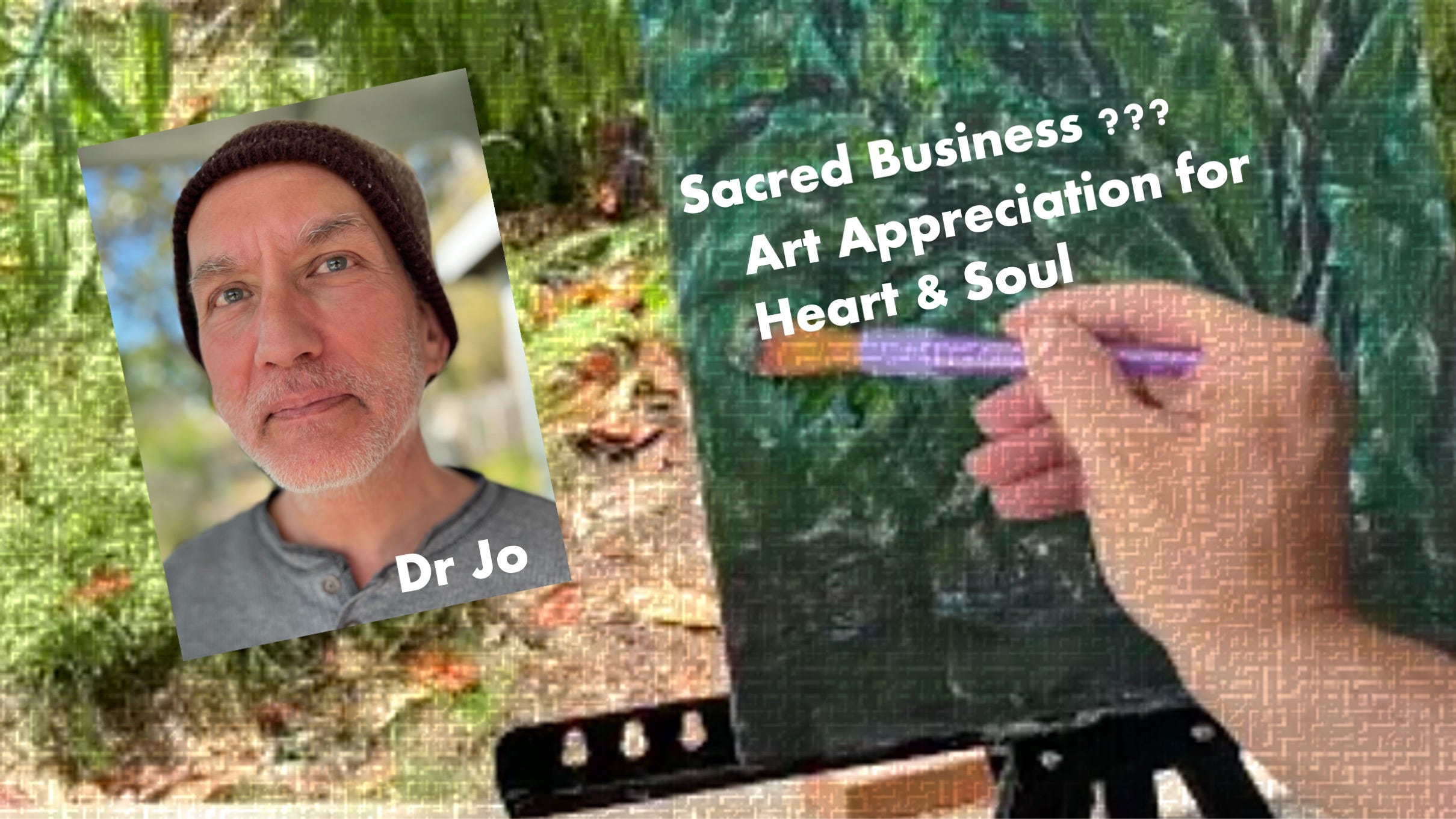 The Artist's Journey E8 - Art Appreciation as Sacred Custodianship: Impression Expression Abstract | Description:The Dreaming Meets the Waking World.In this session we step into the quiet cathedral of an Australian garden to witness the plum tree in its brief, explosive confession. This is not merely a painting demonstration; it is a meditation on “Sacred Business” and the act of custodianship.Join me for a 19-minute journey en plein air, where we explore how the deep time of Indigenous and Celtic lineage. We move beyond the canvas to discuss the therapeutic power of art, the shift from Impressionism to Abstraction, and the elegance of curating your own private sanctuary.In this episode, we explore:-The Therapeutic Gaze: How neuroaesthetics and “soft fascination” in nature quiet the mind.-The Impressionist Lens: Capturing the vibration of light rather than the architecture of form.-Lineage & Deep Time: Finding the echoes of Celtic knotwork and Indigenous “Spirit of Place” in the twisting branches.-The Art of Curating: Why collecting art is an act of arranging meaning and energy in your home.Claim This ArtefactIf this piece resonates with your interior landscape, you are invited to view the finished work and explore our current collection. 🌿 Visit the Gallery: [ozfineart.au]Start your collection and bring the sanctuary of the garden into your space.Join the Inner CircleFor exclusive essays and the written transcript of this journey, subscribe to ‘Art Wisdom’ on Substack. 📜 Read & Subscribe: [https://ozfineart.substack.com/]#ArtAppreciation #PleinAir #AustralianArt #SacredBusiness #ArtCollectingTimestamps:0:00 - Introduction: The moment before creation 0:35 - Understanding transience and custodianship 1:15 - Witnessing the plum tree in bloom 1:50 - The fleeting nature of light 2:18 - The art of deep attention and gazing 4:09 - St. Claire of Assisi and transformation 5:24 - First marks and the Impressionist tradition 5:57 - The Group of Seven and medieval art 6:27 - Giotto and the Franciscan tradition 6:57 - Neuroaesthetics and soft fascination 7:37 - The painting as meditation 8:05 - Squinting to see essence 8:34 - Looking for harmonies, not details 9:07 - The Impressionist stage 9:40 - Working with shifting light 10:05 - Living in the moment 10:38 - Deep time and sacred connection 11:14 - Standing on sacred ground 11:54 - Art as Sacred Business 12:19 - Celtic and indigenous connections 12:39 - Goddess Aine and transformation 13:18 - Sacred geometry and Song Lines 14:04 - Life, death, and rebirth cycles 14:19 - Weaving worlds together 15:22 - Curating art for your home 15:42 - Moving past visual recording to feeling 16:32 - Expressionism and emotional core 17:04 - Owning original art as an anchor 17:49 - The value of custodianship 18:29 - From timeless wonder to wonderful details 18:50 - Invitation to explore collectionsTranscript[00:00:00] There is a moment just before the brush touches the canvas where the world seems to hold its breath. It’s a pause. Where the dreaming meets the waking world. We are here in a quiet cathedral in the Australian bush, in the garden. Witnessing a plum tree in this brief moment of time, an explosion, a confession of bloom.This is not just a tree, it’s a lesson in transience, it’s a sacrament. And this act of painting en plein air is not merely about the capturing of a likeness. This is an act of Custodianship. An act of Sacred Dreaming. To [00:01:00] witness the light, to honour the land, to honour Sacred Country, and to translate these ephemeral values, these concrete and earthy valuesinto something permanent, into something that we can celebrate, into a painting that we admire and appreciate. Welcome to The Artist Journey. I’m your host, Dr. Jo. Welcome to our garden. This is where the dreaming meets the waking world. You’re watching a plum tree in full permissionless bloom, a riot of color and texture against the Australian sky.But what we’re really witnessing here is the creation of ourselves and how we move with the [00:02:00] impressions of nature into a place of interiority. What we’re doing here is witnessing. This is an act of primal custodianship. To paint en plein air or in the open is to enter a negotiation with the elements.It’s not a passive act at all. It’s an action of transcendence. It’s a way of coming to terms with ourselves, with understanding our identity. This is truly a sacred business. When I set up my easel, I’m not just observing the tree, I’m. Stepping into a stream of consciousness, a time between times. The light that I see and that you see on the canvas right now is actually quite fleeting.It changes. It transcends. [00:03:00] It moves. The light moves through time and will never exist exactly in this way again. And in the same way, the tree that I observe and that I try to capture as I’m tracing the trunk lines of the beautiful, beautiful bark, shifts and changes before my eyes. And the tree itself as a living organism changes as well through time, perhaps beyond our perception of time.So never existing exactly in the same way. Again, my role then, and perhaps yours as well as you watch, is to be the witness. And within this, to gaze upon a deeper reality. In our modern lives, we’re often starved at this kind of [00:04:00] deep attention. We scan, we scroll, we glance. But art demands that we gaze. I’m reminded of St.Clair of Assisi, who implied in one of her profound letters to a beloved friend, something akin to this notion that to gaze upon the naked Christ, the naked Jesus, is to know true love. The sense of the medieval ‘gaze’ was an action of the self that transforms the mind, the body, and brings us into a place of soulful resonance, where we literally transform upon this lake of being. Given what we give our time to, what we give our energy to, and how this resonates with us.Changes us. And [00:05:00] for Claire, in her mysticism, in her deep, profound, loving kindness, and her giving of herself to her sisters and within her community, she embodied this action of transformation, this action of loving kindness.As the first marks go down in the canvas, and even now as we deepen the colors and we provide the structure of the painting, we’re engaging with a tradition that revolutionized how humanity sees itself. The Impressionists, like Monet, Renoir, and Pissaro broke the studio walls. They understood that the world is not made of rigid lines and black shadows.The world is made of profound [00:06:00] vibrations and relationships of color. I’m reminded of the Group of Seven, in Canada, whose works transformed a whole generation and more, in our perceptions of nature. This tradition goes back profoundly deeply within history. Back to again, the medieval times. After Claire and Francis walked inAssisi. The artist Giotto, in Italy, during the middle age, reflected on the Franciscan tradition. And his work revolutionized within this tradition an artfulness and culture that rendered the sacred within the domestic. That transformed our understanding of human relationships and our relationships with nature as a sacred place.This is a therapeutic [00:07:00] relevance. This is in modern terms, what we call ‘neuroaesthetics.’ This is the study of how the brain responds to art, and this tells us that we’re looking at a ‘soft fascination,’ which in this field of science describes patterns that are found within nature, like clouds or foliage or the tree that we’re painting now- and how our brain shifts from a high beta state of stress into an alpha state of relaxation.The painting, as an action, but also our appreciation of art, our depth of understanding of art- as this forms within our experience, as we gaze upon the painting like an icon or a window into our souls, we also enter into this alpha state of relaxation, and this [00:08:00] changes us. This gives us new perception, new meaning.When I squint my eyes, for example, as an artist, and I’m mixing with color, I’m physically blurring the world to understand its essence. I’m moving from the structure of the tree to how the colors textures and meaning emerge. The energy of the tree comes forward in the painting. This is a lesson for the collector and for the art lover.Sometimes you see, to actually see the truth of a thing or an object, you must stop looking for the sharp details. And start looking for the overall harmonies. You need to look for the space between the notes and how the notes interact within the music of the art. And this is an [00:09:00] impressionist stage, and it’s linked to what comes next in our deep affiliations.But the impressionist stage is a true impression of the tree, given a subjective perception, given a personal view. This is a fleeting moment. And yes. This is a window into a more pervasive truth. The sun is moving. The shadows on the tree are shifting from cools to warms to deep tones, and I have to work quickly.The impressionism is an exercise in presence. You can’t worry so much about the mistakes you’ve made five minutes ago. And mistakes themselves become part of the process and part of the journey and the learning. You can’t worry about the finished product [00:10:00] either. You must live in the moment. You must apply the brush.You must live with the color. And this is a truth that is. Beyond art. This is the mindfulness that we find and a philosophy that we find within the moment. What we call an indigenous cultural teachings, a deep time, a time of connection, a place that is sacred. This is where we look at light, but we see beyond it. We look at structure.We see a fluidity of connectedness. We see the gnarled, dark wood of the plum tree, for example, twisting upward, and yet we see the vibrancy of colors and how they interact. We are standing on sacred ground. The Australian landscape is not a blank [00:11:00] canvas. It’s written over tens of thousands of years of story and stewardship by the First Nations people in their interaction with the sacredness of the country.This art is an ultimate expression of the Sacred Business. Art, not as a commodity. Rather, Art as a map of survival, of spirit and law. We paint with this profound reverence for the Spirit of Place in our Mi’kmaq heritage and the Sacred Pipe that we carry within this country speaks of the essence of the power that is found hidden within creation and with Creation’s Song we sing that Our Stories Are Our Medicine.I look at the twisting branches. I feel the echo of [00:12:00] my own lineage rising to meet the land from my Celtic origins. I’m reminded of the goddess Aine, and her giving of self. In her wings of transformation in how she combines and brings together the mysteries of life and of love, of family, and of kinship within her abundance, within her vision, within her giftedness, within her creativity and intuition.We see within the Celtic tradition and the indigenous peoples of Australia, this understanding of the sacred geometry of nature. We see this endless line like the Song Lines. And Medicine Trails, that turn knots into [00:13:00] beautiful flowers. That are like knotwork, given to purpose and meaning that reflect back on itself- symbolizing an eternal cycle of life, death, and rebirth.This life, death and rebirth cycle, we see within the curves of the branch of the tree and the depths of color as they come together. This is not a straight line. Nature abhors straight lines. In fact. And lives within spirals and turns and circles. Encapturing this organic, distinct calligraphy of the plum tree-i’m weaving with these worlds together a mystery. A timelessness. Ancient and yet true, the red and deep ochers of Australia and the rhythmic, cyclical understanding of our [00:14:00] Celtic origins, and our Aancestors, give us this sense of the beautiful colors emerging. This creates a layered experience. When you curate art for your own home, you’re looking for these layers.You’re looking for a piece that holds a conversation between the past and the present. A work of art that is for you, a bridge. A bridge between cultures and eras, a bridge that anchors your soul, your heart, your spirit, your body in the moment and within your sense of creation. Art within your home, within your collection is an expression of your own personality.And so when you connect with the art of an artist, this is where [00:15:00] you’re heading. As the painting develops, you can see the shifting of colors and how things are coming together. We move past the recording of visual effects. This is a branch, for example. We have the bones of the tree. Now we’re putting in the feeling. And this is expressionism at its heart.This is the externalization of our interiority, of our internal world. The plum tree is no longer just a plant. It’s an explosion of joy. It is a shout of life arising in creation. It is, the brush strokes becoming more aggressive perhaps, and more confident. And yet it is also a painting that builds on texture and creates a topography of being on the canvas.And here we have brush strokes against the edges of abstraction. Many collectors are [00:16:00] intimidated by abstract art. But in its purest form, abstract art is a poetry of being. To abstract is to ‘draw away.’ We are drawing away the unnecessary details to reveal the emotional core. Think of it like music. We don’t just ‘do’ a C major chord, and ask what does it represent?Rather, we feel its resonance. And so here we have our completed work. Our resonance of the plum tree. Given in the truth and being of the details now, that we apply, with our smaller brush. In our world that is increasingly digital ephemeral and rented, owning your own original work of art is an anchor. It’s [00:17:00] a declaration of permissionless indulgence in beauty.It’s an investment in your own mental wellbeing. Imagine this piece on your wall in your collection, not just playing a role of decor, but being a window that brings you to this garden, to this place, to this memory of your own becoming. Every time you walk past it, you are inviting a sense of pause. You are inviting a sense of memory that brings this lesson of the plum blossoms and the ripe abundance of the fruit into your own life, into your own future, into your wellness.This is the value that we offer through Oz FineArt. We’re not just selling objects, but we’re offering a sense of custodianship. [00:18:00] You become the new custodian of this story. And so this is the change that is now. We’re traveling a great distance from timeless wonder and over through impressionist and expressionist experiences, to a sense of the neuroaesthetics of art. And of moving from timeless wonder into wonderful details that bring us to this place. We extend an invitation. This is the philosophy of Sacred Business that resonates. We ask you if this connects with you in any way, visit our websiteand explore our collections. Perhaps this plum tree or another piece from our archive will invite you to a [00:19:00] sense of resonance. If so, we welcome you to be in contact and to acquire one of our pieces. Thank you for watching and for being a part of our community of discerning individuals. Until we meet again, may your days be filled with the art of living. This is a public episode. If you would like to discuss this with other subscribers or get access to bonus episodes, visit ozfineart.substack.com | 19m 21s | ||||||
| 1/6/26 | 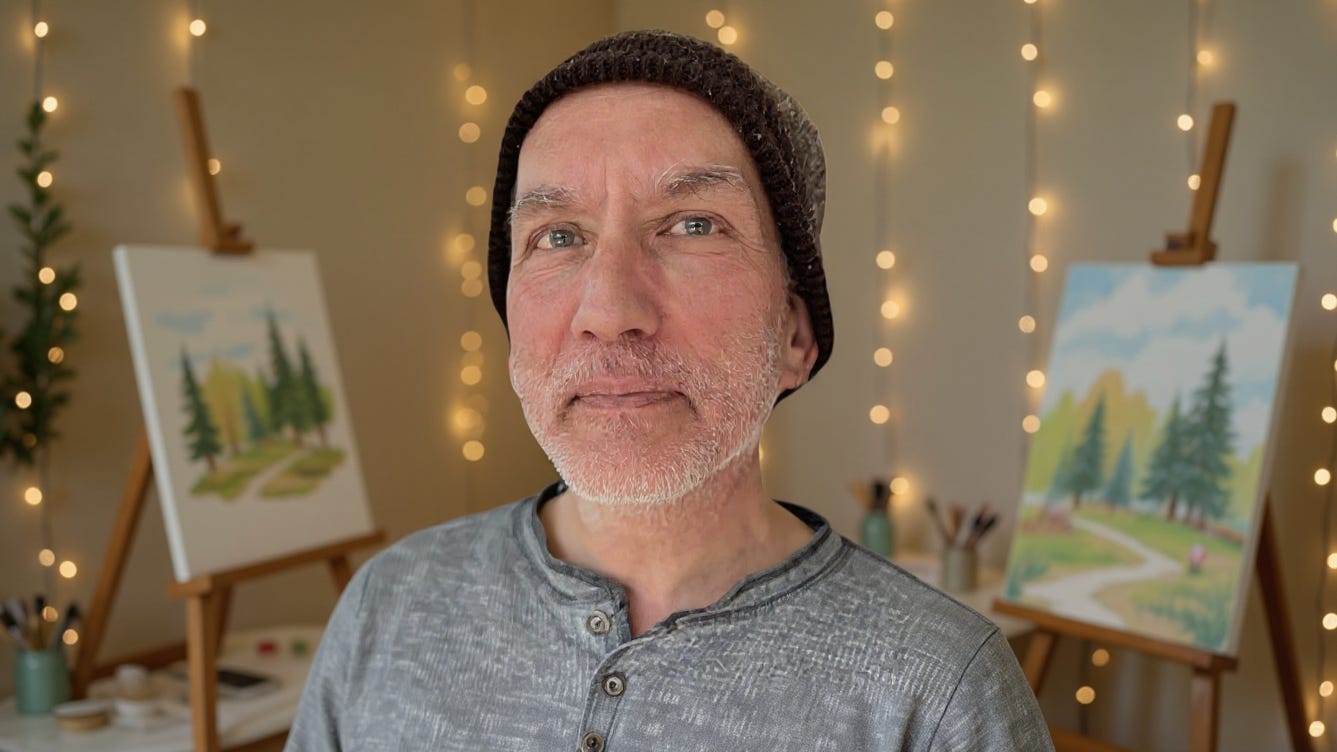 The Artist’s Journey E7 Podcast - New Year 2026: Art as Incarnation & Embodiment with Host Jo Bowers PhD | Join Dr. Jo Bowers as they explore the profound connection between art, incarnation, and embodiment during the holiday season. This episode of The Artist’s Journey delves into how art serves as a manifestation of divine energy, personal growth, and community. Discover the power of creativity, the symbolism of the brushstroke, and the role of art in nurturing relationships and cultural identity.✨ Presented by Art Wisdom | The Artist’s Journey Show & Podcast🌐 Visit: https://OzFineArt.Au🎨 Subscribe for more inspiring conversations on art, creativity, and the human spirit.Timestamps:00:00 - Introduction: The Holiday Season & Art00:52 - Family, Ancestry, and Manifestation01:51 - About The Artist’s Journey & Oz FineArt03:11 - The Meaning of Incarnation04:25 - Divine Energy and Personal Growth05:59 - The Force Within: Art & DNA07:17 - The Artistic Journey as Metaphor08:40 - Rebirth, Hope, and Renewal10:20 - Life’s Struggles and Artistic Transformation11:24 - Creativity, Vulnerability, and Community12:42 - Altruism and the Way of the Artist13:34 - Sharing Energy Through Art14:59 - Art as Custodianship and Sovereignty16:15 - The Embodiment of Presence in Art17:08 - Incarnational Energy and Creativity18:02 - Flowers as Metaphor for Personhood18:53 - Manifesting Something from Nothing20:00 - Celebrating Identity, Culture, and Relationships21:21 - The Music of Creation and Life’s Symphony22:49 - Growth, Agency, and Vulnerability24:37 - Self-Expression and Artistic Vision25:31 - Sharing Art and Community Engagement27:47 - Podcast Spirit and Audio Quality28:44 - The Embodiment of Art30:29 - Art, AI, and Digital Creativity32:00 - Digital Art as New Expression33:52 - Art as Communication Across Time35:15 - Presence, Energy, and the Divine36:28 - Embracing the Present Moment37:59 - Blessings and Closing Reflections40:52 - Final Thoughts and FarewellKeywords:art, incarnation, embodiment, Christmas, Jo Bowers, Oz FineArt, artist journey, creativity, divine energy, personal growth, community, cultural identity, brushstroke, digital art, AI art, holiday season, inspiration, self-expression, transformation, spirituality, family, ancestry, rebirth, hope, renewal, podcast, fine art, creative processConnect with us:Website: https://OzFineArt.AuSubstack: Art Wisdom | The Artist’s Journey Show & PodcastApple Podcasts: The Artist’s JourneyArt #Christmas #Embodiment #Creativity #Podcast #JoBowers #OzFineArtTranscript[00:00:00] The holiday season is such a time of joy, celebration. It’s also a time of family gathering and of cultural festivities. The holiday season is a time to reflect. It’s often a time of deep personal solitude, and within this spirit of the season, we think about the role that fine art plays in our life. We look to artists for inspiration and we find within their work a deep resonance that gives us this sense of reconnecting with our origins and our origin story with our ancestral[00:00:51] medicine, the power of our family line coming forward into our lives again and giving us [00:01:00] energy to move forward and to manifest what we need in our life and in this time. This is the Artist Journey. I’m your host, Jo Bowers, PhD. Our show appears natively on Oz FineArt YouTube, Oz FineArt Collective on Substack and Apple Podcasts.[00:01:22] Our sponsor is OzFineArt.Au and artist scholar, practitioner inspired project. That combines artfulness transformational agency and the sacred business of nurturing relationships in our interconnected world. Please join our community by visiting our home at OzFineArt.Au. Please consider acquiring one of our beautiful artworks[00:01:51] and do remember to join our community bimonthly periodical. We so look forward to seeing you. [00:02:00] Thank you so much. Many of the stories and the most profound meanings of this time of year relate to the incarnation that is the manifestation of divine energy into the world and this manifestation. It is not an external event that happens to us.[00:02:25] This is a manifestation that moves within us to change us, to help us to grow, to give us new energy and life power and wisdom. This manifestation of the incarnation energy of the divine person, the divine essence, the divine energy is moving throughout creation all the time, all around us in every moment.[00:02:58] Much like the [00:03:00] Star Wars theme, the, the Force that is with us, the Force that is with you. It is a deeply personal and manifest reality. It is the breath that we breathe. It is the very nature of our energy within our DNA that is unfolding over time and giving us new life, and regenerating ourselves and helping our bodies to grow to become more beautiful as we age, as we[00:03:37] grow in personhood as we become the manifest beings that we are meant to be. And this is the artistic journey. This is the journey of the artist as a metaphor for your growth, for your being, for your becoming. These are [00:04:00] powerful stories about your origins. When you reflect on the Christmas story of the incarnation of God into a baby, born in a stable, we’ve got to imagine for a moment that we are there.[00:04:19] We are amongst the people in that place, celebrating the birth of a child. And in that moment come to terms with our own inner rebirthing. Our finding, again, a sense of hope, a sense of renewal, a sense of healing after years of becoming adults and working so hard to fit into the world. And to bring forward our mortgages and our jobs and [00:05:00] our responsibilities and our raising children and our engaging in projects and and programs and so many.[00:05:10] So many things over the years that dominate our energy and pull us into a different head space where we stress and we are filled with anxiety and often levels of depression. In the sense that we come against the struggles of life and we’re not able to respond as much as we would like perhaps, and this incapacity to respond prevents us from.[00:05:43] Manifesting the energy that we know, we sense in our fullness, in our potential, in the spirit of our being. Having a human experience can be a very frustrating moment, [00:06:00] can be a very difficult path, and so within this manifestation story, the artwork of our lives. Is transformed. The artwork of our lives is transformed, and in that[00:06:19] is a creative moment, a powerful moment, a moment of becoming, a moment of sharing who we are and the truth and vulnerability of our core humanity, of our very nature. The center and heart of who we are, sharing that with others through color, texture, and form. Through intimacy, through moments of deep connection, through a sense of community and family, through giving and serving others in a way that [00:07:00] extends ourselves.[00:07:02] That gives us a deeper capacity for altruism that is caring for another person in such a way that we would truly wish them the best, that we would want the best for them, that we would give of ourselves to them freely, not expecting return. And when we are able to engage in this practice, this is the way of the artist.[00:07:34] This is the artist that gives to others through their work, through their imagery, through their color, texture and form, and through the works that they produce. They share the energy of life. The energy of becoming, the energy of being. And this is a powerful story because this is, this is the, this is [00:08:00] the intimacy of the artist that is shared with others in the vulnerability of humanity, of their deep sense, of their personality and their self and their story, and how they have overcome obstacles.[00:08:19] Gone through difficult and hard times, and yet the embodiment of their energy in their artwork is a powerful presence. It is a gift to self and others. Such a gift that we want to remark about. We want to share it with others. It is remarkable that this work of art exists as a manifestation, as an embodiment of the spirit of the season, the spirit of family, the spirit of culture, and of place the [00:09:00] spirit of identity.[00:09:02] So I share with you one of the deepest, greatest secrets. In the art world, that art itself is a form of custodianship. And custodianship is a way for us to reclaim our sense of sovereignty, our independence, our interdependence, our relational truth, our sense of family and community, our cultural place.[00:09:37] Our cultural meaning, our identity art is a custodial act of sovereignty in the artistic process, then the work on the canvas and each brush stroke is an embodiment of presence. When you think of the brushstroke as an [00:10:00] embodiment of presence. The action of touching the canvas with that brush, with that paint and the delicacy and movement involved in that action.[00:10:15] It conveys energy, it conveys presence. It gives an immediate sense of the texture form, color. Power, meaning and story that the artist conveys. It is an external physical manifestation of the artist’s own body, of their energy, of their self. And in the sense each brush stroke becomes an embodied presence.[00:10:48] An embodied manifestation of an incarnational energy, an incarnational moment of becoming where we participate in the [00:11:00] creativity of the divine. We participate in the energy of the create creative, creative spirit within the spirit of evolution. The spirit of becoming. The spirit of mother Earth of, of creation itself is manifest through this creative process.[00:11:22] And so you look behind me at the beautiful flowers. Each stroke of the paint that created those flowers spontaneously manifested a beautiful moment, a beautiful insight, a beautiful presence. So each flower is a person. Each flower is in a sense containing the energy of personhood. That is the essence of character.[00:11:52] You know what I mean? The essence of a meaning, a story and identity, and that [00:12:00] form on the canvas moves through this mysterious process of becoming nothing to something. Manifesting something from nothing. And how beautiful is that? We all come from that same place. We all come from that same place of the nothing, so to speak, into a beautiful something that flowers that blooms.[00:12:30] That becomes present, that becomes real, that grows over time and has a story, has an origin, and has a destination and an end. And when we celebrate this, we celebrate our unique identities, our unique sense of culture, our unique and personal sense of family and relationships, of friendships and [00:13:00] depth of meaning.[00:13:01] And presence and purpose that is part of our daily life. Part of our intimate moments when we are alone with ourselves and these moments resonate, they convey a music of creation that that reverberates, that truly resonates beyond the moments themselves that connect. In a very powerful way with so many divergent energies and these converge and become part of the symphony of our lives, of the way that we interact and become.[00:13:49] Who we are with and amongst others in our lives, in our work, in our culture and families. These ways that we [00:14:00] grow in our personhood and who we are are deeply connected to our sense of self. To our agency, to our choice and sense of control, to our ability to come to terms with our contingency, our weaknesses, and our depth of humanity, our vulnerability, and in this space, just like the fragility of those flowers, we too come to terms with ourselves, with who we are.[00:14:37] With our limitations and our strengths, and these become the colors, the textures, and the forms that we express in our personalities, in our lives, in our very, the very fabric of our existence and how we think and feel about ourselves is important. [00:15:00] It is important how you feel and think about yourself, and so it’s important work to improve that sense of yourself over time and to give yourself the[00:15:14] ability and the capacity to grow to develop yourself as a person, as a being, as an artist to embody within your own sense of self, the artistic vision of becoming beauty, of a manifesting beauty, creativity, and form into the world. Uh, at the same time that technique interacts with emotion, feeling a sensate, experience, a visual sense, uh, an ability to move with the emotive feeling, the emotive [00:16:00] sense, and the intuitive direction that this painting might be taking to interact with how the paint is emerging on the canvas.[00:16:11] Through that emotive process, it’s really a profound moment at some level. This is a very, very, very personal moment of coming to terms with your own self, with your identity. And yet part of this is what we share with with others. So if you are willing please to share this video with others by liking the video and sharing comments below what art resonates with you.[00:16:47] Yeah, particularly in this season, this holiday season, what artworks are you drawn to that convey meaning to you, that speak to your heart, to your mind, [00:17:00] to some part of you that you wish to manifest and to share with others? Share the artwork with others in community, and I invite you to do that. Um, under the video, if you’re on YouTube, if you’re in our substack.[00:17:16] Uh, community. Please do, uh, share in comments and like and subscribe to our substack as well. And we are also, uh, pushing out this recording to Apple Podcasts and we celebrate you if you’re listening to us on podcast. Um, and I think that Substack actually pushes out this as a podcast as well, that’s native to the platform.[00:17:47] So we celebrate that because we love. The podcast spirit, which is part of the reason why we’re working on the quality of our audio recording, and we hope they’re, hope we’re [00:18:00] improving that as we go along. Thank you so much for being with us, and we are delighted to share this time with you, especially at this beautiful, festive moment of the year.[00:18:14] The embodiment of art then is a profound. And beautiful moment where the brush stroke is an embodiment of our presence. The brush stroke is an expression of our bodies, of our beings, of our personhood, and of our relationships with each other within time and space and in community. This is why art is a deeply human experience and why art, even in the abstract sense, art is a, is a.[00:18:48] Is a presence, a sharing of a relationship, and as such, the humanity of art can be expressed through artificial [00:19:00] intelligence and through digital art forms, but still expresses and is a manifestation of further manifestation of the power and beauty. Of human creativity and I have no problem with, with AI and with artificially produced.[00:19:20] Paintings and artworks in the sense that for me it’s a philosophical stance and it’s also just a practical sense that we cannot stand in the way of technology. Technology will continue to evolve and emerge, and in that evolution it is expressing. A further manifestation of the spirit and power of human creativity and human agency in the world.[00:19:52] So for me, digital art is a beautiful expression of a new form of becoming [00:20:00] a, a new way that our. Our expression of ourselves extends into a digital realm, a, uh, alternative space or alternative reality that humans are together manifesting, and that this expresses our creative spirit, our mental capacity to share such dynamic creative worlds with each other.[00:20:32] And with others in the sense that this digital world that we’re creating and co-creating is part of our physical reality. And we’ve always known this from the earliest cave paintings of our ancestors, millennia, millennia ago these cave paintings also manifested a form of [00:21:00] externalization and a creative manifestation of the energy, power, and form that that ancestor expressed on the cave wall[00:21:11] that that beautiful image on the cave wall was a form of virtual reality that was being shared within a community, a culture, a time, a place. And that is a powerful realization when you think of it that way. Art is a moment of communication and when you think about art as communicating with each other, the cave painting, my paintings on the back wall here, the beautiful twinkling lights of the Christmas tree and the sound of my voice coming through this amazing.[00:21:55] Recording within this cyber space that we share [00:22:00] is also an absolute manifestation of an energy, of a presence, of a giftedness, of an embodiment. A manifestation of the divine presence in our lives in this very moment that we share with each other. When you grasp that, let the light bulb go on in your mind.[00:22:28] Let the connections happen between the dots of your thoughts. Let the clouds. That come and go in your mind, connect within you, a sense of agency, a sense of surrender. A sense of truly accepting this is the moment that we have, this is what we share in this moment, and this is real. Thank you for that creation.[00:22:59] Thank you for [00:23:00] that Mother Earth. Thank you for that great spirit. Thank you for this power that we share. Ta. I wish you every blessing, blessing upon you and your children now and for seven generations to come. Blessings on your life. Blessings on your home. Blessings on your spirit. Blessings on your body, blessings in your relationship.[00:23:32] Blessings in your healing. Oh, I offer you the prayers of the ancestors, the prayers of our, of our families, old and new, and yet becoming of the elders past and present, and of our children’s children’s children into the future. May all of these prayers and [00:24:00] blessings surround you, hold you. Give you peace and restore your energy, giving you hope and healing.[00:24:12] And the ability to continue in your life with the essence of your own story, the essence of your purpose in this world, that you may find that path and be it one with yourself and find within that the power, the presence and the giftedness to become a manifest being of light, compassion, and love. Thank you so much. This is a public episode. If you would like to discuss this with other subscribers or get access to bonus episodes, visit ozfineart.substack.com | 24m 46s | ||||||
| 12/16/25 | 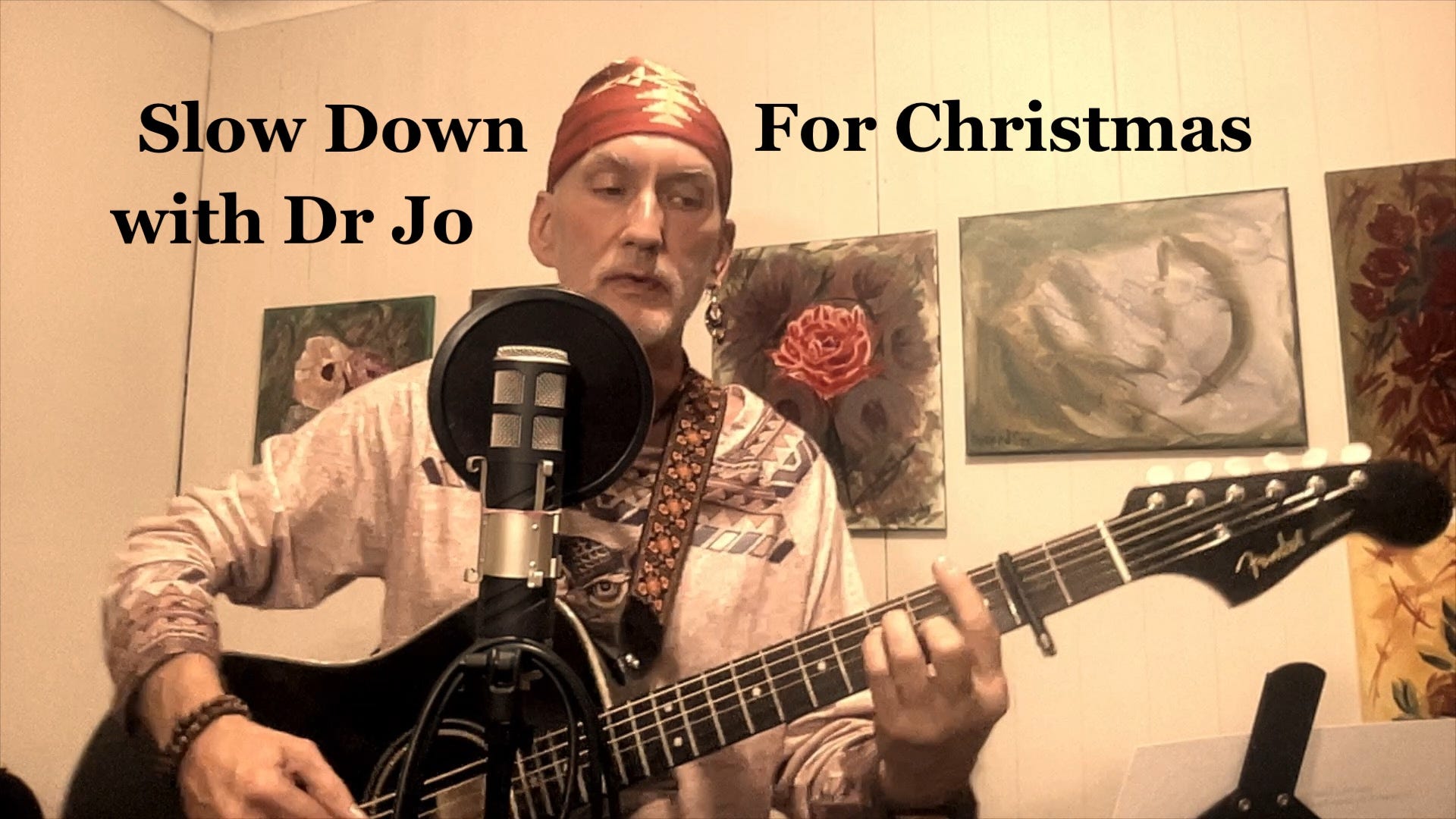 The Artist’s Journey E6 Podcast: Slow Down for Christmas: A Night of Music, Memory & Art - Xmas Special with Dr Jo Bowers | Join Dr. Jo Bowers PhD for this Artist’s Journey Christmas Special—a 29-minute celebration of music, art, and reflection designed to help you slow down, heal social media fatigue, and rediscover deep meaning this holiday season.Experience original songs like “Sing for the Maritimes,” “Little Baby Jesus,” and “Nanny’s Arms,” plus a heartfelt discussion on the Incarnation, the healing power of the hearth, and the story behind the painting “Christ Consciousness” by Australian Aboriginal contemporary artist Dr Dwayne Wannamarra Kennedy.Enjoy festive cheer, beautiful Christmas music, and stories that honor the journey of 2025. Whether you’re seeking inspiration, comfort, or a sense of connection, this special episode offers a space to reflect, reconnect, and celebrate the true spirit of Christmas.Wishing you a Merry Christmas and Happy Holidays from all of us at The Artist’s Journey!#ChristmasSpecial #ArtAndMusic #JoBowers #Healing #Incarnation #HolidayReflection #ChristmasMusic #ChristOurDreaming #MentalHealth #202500:00 Intro & Welcome03:20 Sing for the Maritimes (Song)08:30 Reflection & Transition09:00 Christmas/Incarnation Theme13:30 Little Baby Jesus (Song)19:00 Reflection & Transition20:00 Nanny’s Arms Story & Song Intro21:00 Nanny’s Arms (Song)27:00 Closing Reflections29:00 Community Invitation & Sign-off🌐 Website: https://ozfineart.au🖼️ Instagram: / ozfineart.au 👤 Facebook: / jorandibowers 🌱 Bluesky: https://bsky.app/profile/ozfineart.bs...💼 LinkedIn: / jrbowers 📰 Art Wisdom Blog: https://ozfineart.au/blogs/oz-fineart...🎙️ The Artist Journey Show & Podcast: https://ozfineart.au/pages/the-artist...Stay connected for more art, music, and stories from The Artist’s Journey! Sign up – scroll to bottom of pages @OzFineArt.auTranscript[00:00:00] Welcome to The Artist Journey. This is our Christmas special, and I am your host, Dr. Jo Bowers. I’m so excited and moved to be with you tonight to share an evening of music, art, and memories. And as I’ve been sitting here in our studio, I’ve been wondering how to close out this year with you. Paradoxical year of 2025 where we have had a lot of movement forward and excitement and [00:00:30] growth.And at the same time, all of us have been dealing with the stress and strains of the mechanical world that we live within the new age of AI dawning on us this year, and the transactional way of the internet has shifted it towards commerce and sales and a depersonalization has been emerging in social media [00:01:00] where we all, in one way or another feel deeply fatigued.So I wanted to step back from this environment that we’re struggling with all of us now and offer a space apart, a place where we can enjoy, kickback, enjoy some music and some memories and some stories at this special time of Christmas. And [00:01:30] so I thought, what better gift could I offer personally to you than to share my owncompositions Art is, is like an anchor for our soul and art like music. And this time of year, in particular, Christmas, the holiday season calls our soul back home. Back home, not just to the place that we [00:02:00] lived growing up, or to a particular house or location, but to the country. To the place, to the depth of connection that we once felt as children to the land and to the people that we grew up with.And so art and music is that anchor. It calls us back home. I was looking, a couple of weeks ago through footage of a trip that me and my [00:02:30] partner made back to my home in Canada to Nova Scotia to Mi’kma’ki, the place of the Mi’kmaq First Nation, and so I decided to share some of those images with you. The song is called Sing for the Maritimes.It’s a classic Canadian folk song in many respects with a yearning for a place with a deep connection to that [00:03:00] place with many memories and stories of that special place and memory acts for us like a medicine. Memory is a way of lifting our spirits and bringing us back to a part of ourselves that is important.And so I think that this song, for me to share this with you now, is a profound moment because it’s bringing ourselves back [00:03:30] together. This song is a way of rekindling. I encourage you as you’re listening to this song, sing for the Maritimes, to call up within yourself, a memory of a time when you felt connected.Let this be a calling for you, a calling of your spirit to come home.[00:04:00] Sing for the Maritimes, Sing for the MaritimesSing for the ocean breeze, [00:04:30] the flowers fields and autumn treesSing for the Maritimes.Walking the rocks of Peggy’s Cove, [00:05:00] Pickin’ Mayflowers growing in droves,Lying with my head to’rd the sky, [00:05:30] Dreamin’ of summer passing by.Sing for the Maritimes, Sing 00:06:00] for the MaritimesSing for the highland trails, the lonely paths and ghostly talesSing for the Maritimes .[00:06:30]Lovin’ blueberry fields of Parrsboro, In Annapolis Valley apples growWalking with my lover to [00:07:00] Fisherman’s CoveNo hardship stops the dreamin’, never grow oldSing for the Maritimes, Sing for the MaritimesSing for the .[00:07:30] ocean breeze, the flowers fields and autumn trees .[00:08:00],[00:08:30] Sing for the Maritimes – to endWelcome back. That song really takes me back to a specific place, but also a place in my spirit. [00:09:00] And I feel that here, even in Australia, and this is what art does for us. It locates us. It gives us a sense of place. It grounds us into a new reality and an awareness that that works within us to awaken, to change, to enliven us in our spirit, in our minds.So I want to talk about a deeper theme [00:09:30] related to Christmas theologically. We can call this theme incarnation. But philosophically, I think this theme relates ultimately to an act of embodiment. Think about it. The divine didn’t say, I am other than this world. I, I am apart from this [00:10:00] world. The divine essence said, I am more than an abstract idea.I am more than a detached presence somewhere else in the cosmos. I will become a body, I will become presence. I will become a person. So Christmas is when the divine shows up in our [00:10:30] world, in our reality, in an incarnate way in body, and this embodiment is within the mess of this world. This is within the upheaval and the humanity, and the tensions and the frictions of this world.And the Divine comes to be a part of that. To play with that. And [00:11:00] so even as we think in this digital and very mechanical age that we live within, and we are entering into even more now with the rise of artificial intelligence, and many of us are struggling with this emerging theme. This emerging dominant power within the world and this new way of working, this new way that will demand a shift in our thinking in the same [00:11:30] way we are.We’re not made of machines. We are not an artificial intelligence. Our intelligence is embodied. Our way of life is an artfulness, and so I’d like to shift the focus of our discussion to this painting behind me, to Christ our dreaming. This beautiful indigenous painting by Dr. Dwayne Wannamarra Kennedy [00:12:00] is a stunning example ofhis indigenous, Australian Aboriginal artwork. And this is a rendition of the Christ figure and the rays of light that pour out from the embodiment of the Christ- presence are rays of light that shine within all of creation that connect the parts of [00:12:30] the cosmos, parts of ourselves, and that bring us home to a place of deeper connection.And this is a sacred story within the dreaming, within the Australian indigenous dreaming tradition where the land, the embodiment of the land, and of our ancestors, is a totemic power. A presence embodied within [00:13:00] the image of the Christ in the painting as an anchor, as a doorway, as a passageway. Through which we can find parts of ourselves and rekindle the fire of our sense of identity.Our sense of place, our sense of connection, our sense of country. I share this song with you as it has been finished, produced, recorded for the [00:13:30] first time for this show, and I hope you enjoy this. This song is called Little Baby Jesus, and it comes from a time of greater innocence. I hope you can reconnect to the spirit of Christmas. [00:14:00]Little Baby Jesus, Wrapped in Mamma’s Arms so warmBe for us the Sweet Peace that shone into our hearts.1. When the [00:14:30] star rose into the sky, Something went strange inside my heartAnd I knew this was the King foretold by the.[00:15:00] prophets of old2. [00:15:30] When the day long begins to fade, a journey far and fearsome madeWe three Kings sought out this place where precious [00:16:00] babe be born.3. Kneeling beside the Saviour’s bed, bearing gifts we bowed insteadAll that we [00:17:00] bring pales in compare… to this child’s [00:17:30] radiant light.4. Worn out for years, poor have borne the lies,[00:18:00] Kingdoms rise and fall, there’s no disguise,Humbles your heart in Bethlehem… can you understand why??[00:18:30]Song ends approx. [00:19:00].Thank you for listening. That was the song, ‘Little Baby Jesus’ by Dr. Jorandi Bowers. I was very happy to share that [00:19:30] song with you, and interestingly enough, the last verse of the song expresses that paradoxical nature of life and of society and the politics and the world that we live in very much so today.This next song that I would like to share brings forward a sense of an appreciation for grief and loss. It was the summer of 1994, and I was living in an 18th century planter home [00:20:00] in Wolfville Nova Scotia. My grandmother, a person very dear to me, passed away, but in the lead up to the funeral, I wrote a commemorative song.The song is called Nanny’s Arms. I sang that song at St. Mary’s Basilica in Halifax. It was probably one of the most difficult days of my life. But I pulled myself together. I was enabled [00:20:30] by some power greater than myself to share that song with the family, with the community in Halifax. And I’m very grateful for that memory.And so it’s a very great privilege to share this with you through this podcast and show The Artist’s Journey. This is ‘Nanny’s Arms.’It is been so many [00:21:00] years since I’ve been a child. I remember your laughter and how you forgave. What is this memory that clings to me?I still sleep with your crocheted squares [00:21:30] but I can’t remember where your rosary is, that pretty pink rosary that you gave to me.With the faith of a child.[00:22:00] In heaven’s arms. You lifted me higher and higher and higher. My Nanny, you’ve always been good to me.You’ve [00:22:30] been everything that a mother can be, you were strong when all the world was forlorn and wrong. You sacrificed for family.These woolly socks we are wear say [00:23:00] something about the love you gave.With the faith of a child, in heaven’s arms. You lifted me higher and higher and higher .[00:23:30]. My Nanny, you’ve always been good to me.We never had all that much. And Halifax was many years unkind.[00:24:00]Granddaddy served in the war and came back a little bit a broken man. And it was said that during those years, Nanny went to bed without food. Because she loved, and she was broken in her love.With the faith of a child, in heaven’s arms. You lifted me higher and higher and higher. My Nanny, you’ve always been so good, so good to me.Song ends approx. [00:27:00]That was ‘Nanny’s Arms’ by Dr. Jorandi Bowers. It is [00:27:30] such a privilege and such a joy to share these memories with you, and it is a reminder that our personal stories are our medicine. Our stories are our medicine. This is a deep teaching within our indigenous culture. And the significance of this is that that art, music, song, dance culture, family- the country, our [00:28:00] ancestors, our family- all of these aspects are so interconnected.So interconnected that we are all within kinship. M’sit No’koma, ‘All My Relations’ are a part of me. A part of me that is a part of the All. And that it is not so much about us as individuals, but it is about us as part of this collective, part [00:28:30] of humanity, and this aspect of us is calling us forward at this time, particularly at Christmas, to awaken to a new sense of ourselves- as our collective identity as part of this bigger story, this bigger picture.Please do join our community at OzFineArt.Au. This is our website, our [00:29:00] Home in the internet universe, where we have designed a place to connect and to reconnect through sharing of stories, Sacred Stories, and the Medicine of art, the Medicine of artful living.We invite you to join us and to sign up for our bimonthly. We wish you all a very merry Christmas and a happy New Year, and we will see you again soon. Thank you so [00:29:30] much. This is a public episode. If you would like to discuss this with other subscribers or get access to bonus episodes, visit ozfineart.substack.com | 29m 30s | ||||||
| 12/2/25 | 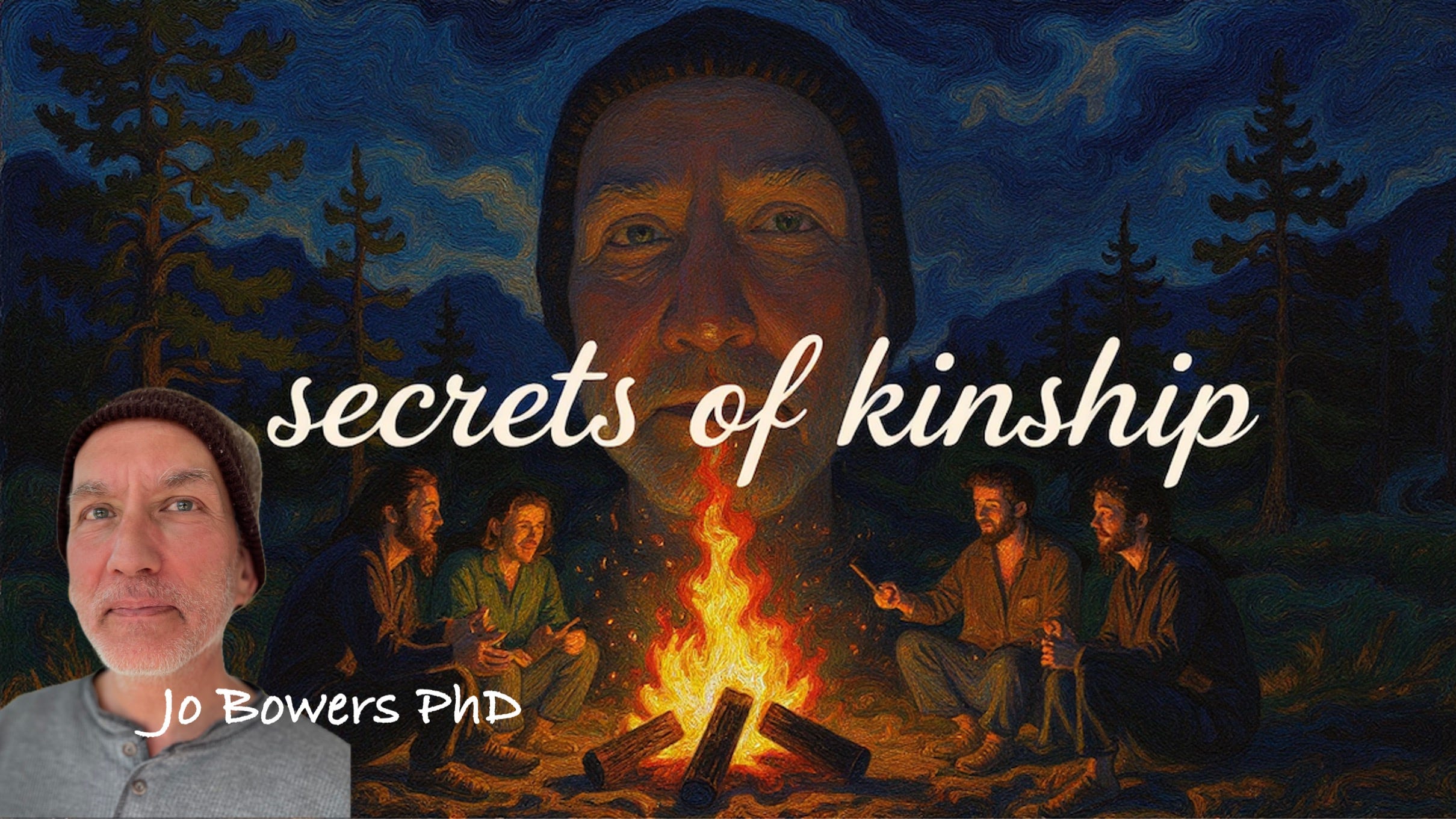 The Artist’s Journey Podcast E5: How to Reconnect to Kinship in Art as Corroboree and Culture with Jo Bowers PhD | Join Jo Bowers, PhD, on The Artist Journey as we explore the deep connections of kinship, art, and community. Discover how Indigenous traditions, art therapy, and the Corroboree Circle inspire resilience, healing, and authentic relationships in our modern world.Timestamps00:00 – Introduction: The Meaning of Kinship01:19 – Health, Relationships, and Resilience03:16 – The Artist Journey & Host Introduction03:22 – Where to Find Us & Sponsor04:12 – Art as Life: Indigenous Perspectives06:55 – The Yellow Rose: Friendship and Art08:00 – Art as Sacred Medicine & Community Healing28:08 – Closing Thoughts: Custodianship, Empowerment, and CommunityKeywordsart, kinship, community, Indigenous culture, Corroboree, healing, art therapy, resilience, relationships, Jo Bowers, Oz Fine Art, art as medicine, family, connection, empowerment, artist journey, sacred art, storytelling, mental health, creativity, custodianshipConnect with us:Website: https://ozfineart.auSubstack: Oz Fine Art CollectiveApple Podcasts: The Artist JourneyLike, subscribe, and comment below: What does art mean to you? Which artwork resonated most?Transcript[00:00:00] In our modern world, we talk about networks and contacts and followers, but what about kinship? What about the enduring connections that humanity has nurtured for millennia under the stars, around the circle, around the hearth of the family? Kinship is really the heart and soul of human connections. What have we done with kinship in the modern world?[00:00:34] We’ve replaced it with follower counts. How joyful. Well, there is another way. And we can make the choices that we need to make to encourage real and genuine connections. This show is about the Corroboreeee Circle, the places where we meet and share authentic human [00:01:00] bonds of friendship. This is about the nature of art itself as a form of custodianship that is of our mutual responsibility to take care of ourselves and each other.[00:01:15] This is the story of the circle. Our health science tells us is intimately connected to the quality of our relationships, to the depth of our connections. These are the enduring qualities that sustain us, that give us meaning and purpose and a sense of place. These connections not only define our identity, but they provide for us a sense of resilience, our ability to cope with the stresses of life and the challenges of the modern world are.[00:01:48] Intricately linked to how strong our relationships are in our day-to-day life. These are the forms of friendship and kinship that strengthen [00:02:00] our mental health and our capacity to cope. These are the ways that we survive the vagaries of life in society, losing jobs. Having to move homes, the loss of a loved one without intimate connections, without solid friendships, without family that we can rely on.[00:02:22] These major challenges in life become almost unbearable in indigenous cultures. There is an ancient and wise teaching, a living truth, that art and lifestyle are never separated. They, they are one and the same. They are in kinship with each other. In our experience of family, community, and sacred country, there’s a coming together of all of the parts of our lives.[00:02:54] There’s a sense of community, there’s a sense of sharing and of a [00:03:00] bond that is stronger than even the ties of blood. The Corroboree in Indigenous Cultures is a gathering place of song and dance of story. This is the Artist Journey. I’m your host, Jo Bowers PhD. Our show appears natively on Oz Fine Art YouTube Oz Fine Art Collective on Substack and Apple Podcasts.[00:03:27] Our sponsor is. OzFineArt.Au. An artist scholar, practitioner inspired project that combines artfulness transformational agency and the sacred business of nurturing relationships in our interconnected world. Please join our community by visiting our home at ozfineart.au.[00:03:53] Please consider acquiring one of our beautiful artworks. And do remember to join our [00:04:00] community bimonthly, periodical. We so look forward to seeing you. Thank you so much.[00:04:09] In indigenous cultures, art was never meant to be some painting hanging on a wall. Art was part of life and remains to be this day. This is a dynamic and moving process. This is an expression of family, culture, and community, a connection with the sacred country. Art is a place of gathering. Art is the song and dance that’s shared around the fire.[00:04:42] Art is the song that expresses our hearts, our desires, our dreams, and our stories of origin. Art is the lifeblood of the family. Art in this sense is a personal expression that’s shared amongst a [00:05:00] community, not a commodity so much to be sold on the open market or to be devalued by having a price tag attached to it.[00:05:08] But art is, in this sense, a sacred object, a sacred artifact of a living culture. And this is true. Today, just as much as centuries past and even in our modern world, we can appreciate art in this deeper connection that it provides for us, this deeper sense of purpose, identity, and place. These truths are certainly not lost on us today when you join an art class or.[00:05:44] Join a local ceramic association, or when you engage in a painting course or you visit a gallery, or you explore a new artist that you didn’t know before, you [00:06:00] are instinctively involving yourself in this ancient tradition of. Reconnecting to the heart, to the soul of family and community, to the humanity that you share.[00:06:13] When you explore and learn about art, you are literally appreciating the soul of humanity. And, and as such, there is so much. To learn and so much to appreciate and enjoy in this artistic journey. Moving from a sense of isolation and even loneliness through reconnecting with art, especially with others, is really at the heart of what we’re on about.[00:06:44] And in this sense, I share one of. Dwayne Wannamarra’s paintings of the yellow rose. This painting is especially poignant for me because it came out of a conversation I had with Dwayne [00:07:00] that I challenged him to paint a, picture of a rose that was really realistic. And that I was struggling at that time to do this myself.[00:07:11] I wanted to see how would he paint a rose, and I knew that his painting skills in the realism side of painting were a bit stronger than mine. And so I asked him to do this. And the, a result of the painting was poignant for me of the solitary, beautiful yellow rose representing friendship.[00:07:33] Especially, and that he painted this rose coming out of the conversations that we had was very powerful for me. This was born out of a playful conversation, but at the same time, it expressed the depth of love and caring and of consideration in our friendship over many years. And so this social connection, this deep.[00:07:57] Spiritual bond that we share [00:08:00] through art is a form of sacred medicine. It is literally a way of healing the soul, healing the mind from our innate sense of a loneliness and isolation that we get stuck into like a rut and getting ourselves out of this. Sometimes takes a fair bit of work, a fair bit of effort, and really I’ve found that making that process easier, uh, is, is central to what really art and sharing art with others is all about.[00:08:37] It provides a third element in therapy. There’s this principle of the third element, which always. Is an enabler is a way of facilitating change and development and growth. The third element in therapy is that part that is inserted into the process that makes things easier [00:09:00] and or more enjoyable. That makes learning more approachable, more interesting, and more innovative, more creative.[00:09:10] The third element enables us to engage in a process of stepping out of our limitations and moving towards our possibilities. This third element is really the process that art provides in so many ways as a therapeutic element in our lives. Also, a medium of education and a process of moving forward in learning and development and in relationships.[00:09:42] Art is something that we share in the sense that is a way of learning together, of bringing our insights into community and family and moving these. These realizations forward in ways that art [00:10:00] expresses moments in our lives. Events and, and celebratory times and places of deep grief and loss art expresses an almost.[00:10:13] Becomes a symbol of those times and memories. And so this process accumulates over time and grows and becomes even more important as the years go on. This is really, I suppose, at the heart of what the ancient cultural traditions speak about in the seasonal gatherings of the family of, of the wider clan.[00:10:39] Every year we would have a. Big family reunion, and they were wonderful times of gathering on the beach where our grandparents and our parents would all get together, and cousins and the whole clan, the whole tribe would be there. And what a beautiful event. Such [00:11:00] powerful memories for me and these gatherings really came to symbolize.[00:11:08] A special time each year that we would look forward to, and that would sustain us through the darkness of winter. That would give us a sense of hope that sharing and remembering those times together would. Create laughter and joy when we would share the stories of what we did together on the beach and how we prepared beautiful meals and how we sat together under the stars around the fire and told stories, and heard songs played by members of the family on their instruments and, and, and their beautiful voices.[00:11:46] These moments these times would combat the isolation that would remind us of our humanity on one hand, but of our deep connections, of our identity, our sense of [00:12:00] place, our place within community, within country. This is part of the Powwow. This is part of the custodianship that emerges through the Corroboree.[00:12:11] This is our sense of mutual respect. And of taking care of each other through good times and through hard times. And art becomes an expression of this in the sense that this is an artifact of the power of our relationships, of the sacredness of our bonds. This is why community in this modern and social world that we are in now, we really thank you so much for having time with us.[00:12:43] We value your time and your, your consideration of these themes that we share in this show. This is the artist journey. And I am your host, Jo Bowers, PhD. Our community is so central to our [00:13:00] lives, and so we reach out in this modern way and we reach across the screen to you in your life, in your home. And thank you so much for being with us.[00:13:12] It is enjoyable for us to be with you, and we hope that you enjoy this process too. Please subscribe to our channel if you haven’t already, and like, and, comment below please, if you’re watching on YouTube. If you’re listening on Apple Podcasts, we invite you to visit our website, Oz Fine Art au. A beautiful new website that.[00:13:36] Explores the narratives and stories of our art, including the paintings behind me on the gallery wall here. And these paintings express many stories and and beautiful events in our lives that we share with others openly and. Would hope that you enjoy that and that you would visit our website and [00:14:00] get in touch with us and enjoy, this process.[00:14:03] We also have a bimonthly periodical on Substack. You can also subscribe to that by visiting our website, OzFineArt.au. Thank you so much. There is definitely another layer to this. Deep movement of kinship that we share, and that is that when you choose to bring a piece of art into your life, you are entering into a relationship of respect and caring and support for the artist and the artist’s family and their community.[00:14:41] You’re not simply making a purchase. You’re actually engaging in a form of custodianship. That is forming a sense of relationship and of a co-responsibility and co creativity with the artist. Collecting [00:15:00] art is not simply about acquiring art. Collecting art is becoming a custodian. It is becoming a, a patron of the arts.[00:15:11] And patrons of the arts are people who care deeply, who invest their personal resources into artists and to the artistic community. And these are people with deep and passionate of values. Becoming a collector and a custodian is a serious decision. It is a way of life. It’s a value system that incorporates these ancient, ancient, ways of life and of, an insight into what is most valuable, even in a sense, what is our spirituality.[00:15:50] It is making our sense of meaning in that we’re, we are. Making central the purpose and place of art as part of [00:16:00] our lives to such a degree that we, we invest in it, we put our energy into it, we put our money at it, we give whatever we can to it, and it becomes a central part of our identity and our purpose, our sense of sharing within the human community.[00:16:19] And this really, I think this is a form of sovereignty. Because custodianship above all is a form of an independence, but a, an acknowledgement of our interdependence, our reliance on each other in community and of the, the realization that when we pay forward. We are doing the deepest work. When we give, we receive, when we open up, we learn the most and we, we give forward.[00:16:58] And it makes such a big [00:17:00] difference for the people that we in relationship with, for those artists, their families, for our friends and families who see and enjoy and participate in this artistic. Journey. This is moving out of a passive role as well, I think, and it is about a, a tremendous sense of empowerment and of self-actualization that is of, of moving forward with our own sense of agency, our ability to make choices and become active in the role of an art custodian.[00:17:40] You’re not just owning a painting, you’re. Nurturing its story you’re carrying forward. It’s it’s narrative and its history. You’re being part of a communal history and how that is shared amongst others. And there’s this tension always [00:18:00] between the, the deeply personal layers of a story, the way that an artwork expresses an artist’s own personal life.[00:18:09] Their family, their depth of culture and their spirituality, and yet this is always counterpoint in some sense, to sharing that in the social milieu, in the social environment, these values, these personal aspects of art can form attention a kind of uncomfortable space because it’s difficult sharing our personal lives in this.[00:18:38] Social environment, and this is part of the innate tensions and creativity of the artistic process. And rather than looking at this as losing as a form of loss, as a form of. Of, sacralizing what is sacred [00:19:00] amongst individuals and in community. There is a sense that we can reframe this and understand this in a deeper sense that the empowerment that comes from sharing our deep personal and human stories can enhance our, our personal and familial.[00:19:23] Stories that this can enhance over time. Our sense of empowerment within our family and community. This is a healing process that happens as art becomes expressed, shared, and then reflected upon where the, the sale of that art becomes. An expression of empowerment becomes an expression of feeding back energy to an individual artist, to their family, to their community, and this becomes a, a [00:20:00] affirming and a, a powerful way to support those individuals in their artistic journey.[00:20:08] And of course communities around the world have found new ways to actualize this sense of sovereignty in their artwork and the way that they present the artwork to the wider world. And this is really important because our defining how we value our art ourselves in relationship to the wider quote unquote market is, is an important step.[00:20:36] And it’s important not just for us as individual artists, but as artists within community, within a collective, within a, within a sense of com communal evaluation of that art. And what I mean is there are, there are centers, there are, there are nonprofit associations that have been formed. There are.[00:21:00][00:21:01] Literally groups of artists that get together and share the burdens of, of selling their art in the marketplace and sharing the aspects of this, which there’s so many, there’s so many different layers to all of these issues and, and processes and steps involved in, you know, between. Actually making a piece of art and having it sold, in the, in the marketplaces is just an amazingly complex process in, in some sense, especially in our modern world.[00:21:38] And so the more help we have to do these. Steps to have ideas of how to, how to proceed with this is so helpful and so important. And so this also expresses our sense that we need to come to terms with the value of our [00:22:00] artifacts, the value of our artwork, and, and this. Is a difficult process itself of learning and growth and discovery, and this also is part of the empowerment of the elders and the leaders within our communities that.[00:22:20] In some senses, you know, this art journey and over the years, particularly through the colonization story, has disempowered the elders in so many ways, and we’re turning this around over time. I think that communities are addressing these concerns in new and innovative ways. And it’s so important that the authentication of the artworks and their certificates of authentication are central to this,[00:22:52] this notion that art is grounded within a relationship to the artist [00:23:00] and that artist’s sense of place and community and identity and the history of that artist within that tradition is so important. One of the deeply personal lessons that I’ve learned over the years is that the Corroboreeee and the Powwow and the seasonal gathering of the clan are meant to be teachings that help me in my[00:23:26] times of deep isolation and of the sorrow and grief and loss that I have felt by being far away from family. And what comforts me in those times is this realization of connection. It is the custodial identity within me, within my spirit that has strengthened not because of anything that I have done or that I do per se, but because of the connections and the [00:24:00] acknowledgement that I have seen and witnessed by my family within my community.[00:24:06] And this has given me. The teachings that I need to sustain my life, to sustain my work in the world, to enable me to help others, comes from this depth of, really, self-respect that I have learned by having been given that gift from others. And so I so appreciate that because it is a profound gift and it is something that has enabled me to accomplish amazing things over the years from getting[00:24:42] higher degrees in the academy to publishing books, to being a teacher and a lecturer for many years to engaging in, therapy work as a psychotherapist and to make [00:25:00] beautiful art and see other people enjoy that. Art is a calling for me. It’s not something I can choose to do. It’s something rather that I can choose to respond to, that I can channel and allow.[00:25:17] And nurture and support. And that’s a sacrifice in many ways because when you put yourself out there, it’s difficult. It’s not that easy. And you have to come to terms with that. And there’s a lot of steps along the way, a lot of issues that need to be dealt with. And I am doing it step by step. I’m getting there, but I’m not there.[00:25:43] And I admit that I’m so human And this is part of our humanity. And I think this is really, you know, this is at the heart of it because it’s the Corroboree and the Powwow and it’s the cultural gatherings and it’s the, [00:26:00] the moments around the fire, and the stories that we share- that enable us to understand how human we are and that we are all together human.[00:26:12] And when you know that it deepens your sense of kinship deepens your feeling of connection. It gives you not only a sense of connecting with others and compassion for their struggles, for their stories, but their struggle and their stories inform your own sense. Well, if, if they can cope with that, I can cope with my little piece here and I can move forward with what I have to deal with as hard as it is for me.[00:26:41] I can do it because I have that support, because I just acknowledge that, and, and that’s the first step. I think it’s the first, the middle and the last step to acknowledge that is really at the heart of humanity and it’s at the center. The [00:27:00] centerpiece of artwork is how these beautiful pieces of art express our relationships, our humanity, our contingency, how that paint on the canvas and those gorgeous colors express the emotional vulnerability that we share.[00:27:21] As human beings, the stories that mean the most to us and how that flower could express a depth of friendship, a depth of relationship, a beautiful moment in our story of being together and. This is just so powerful and I love it. I’m so glad that you’re with us today. And if you’ve listened this far in the video, please do like, subscribe and comment below what of these artworks behind me here, for example, do you connect with, do you appreciate?[00:27:59] [00:28:00] So thank you so much for being with us and have a great day. This is a public episode. If you would like to discuss this with other subscribers or get access to bonus episodes, visit ozfineart.substack.com | 28m 06s | ||||||
| 11/18/25 |  Podcast E4 The Artist’s Journey with Jo Bowers PhD - Unlocking Secrets of Creativity: Artful Alchemy of Soul | [00:00:00] In our last episode, we talked about the mind as a canvas. What about the heart? What about the heart? In our modern world, we just assume, and we’re brought up to think that our emotions have to be controlled all the time and contained. What if it was the case that our emotions were meant to be expressed?[00:00:28] If the mind. Is a canvas. The heart is a palette. The heart is the color of our lives, and if we’re always trying to control and we turn off, particularly our emotions, what does that do to the source? And the energy of creativity that sits at literally the heart, the center, the [00:01:00] foundation of our lives.[00:01:03] This is ‘The Artist Journey.’ I’m your host, Jo Bowers PhD. Our show appears natively on OzFineArt YouTube on the OzFineArt Collective on Substack and in Apple Podcasts. Our show, The Artist Journey is sponsored by OzFineArt.Au, an artist scholar, practitioner inspired project that combines artfulness transformative agency and the sacred business of nurturing relationships in our interconnected world.[00:01:36] Art therapy, business leadership, and marketing. Please join our community at OzFineArt.au. Consider purchasing our beautiful artworks and please remember to sign up for our bimonthly periodical. We look forward to seeing you. Thank you so [00:02:00] much.[00:02:01] To get in tune with both the landscape of the mind and the palette of the heart means that we need to channel our emotions to use them more effectively, to access them, to allow ourselves to be aware on one hand, but on the other hand, to allow that movement of energy to speak to us in nuance and meaning and power.[00:02:31] This I like to call the alchemy of artistic living. The transformation of our lives that allows us to become self-aware, to engage in personal development, to move forward with a sense of our identity. We can only discover our style and our identity when we allow ourselves to express [00:03:00] that, to literally practice the art of expression.[00:03:06] I want you to feel this to, to to sense this. The colors of your heart provide for this emotional alchemy, core engine of your creativity, of your source arises in the colors. Of the palette of your heart. I want you to drop into that to feel that, the sense of that, the feeling of that, the connection with that, because it takes work because we’re so stuck, we’re so stuck up here in the mind, and our critical sense is so [00:04:00] hypervigilant.[00:04:02] And we self evaluate and edit all the time in everything we do as we grow older, to move back into the source, the heart means that we reconnect with the emotional energy, the raw power, and directly beneath that heart. Is the intuitive basis, the intuitive foundation, the feeling sense that is embodied, our kinesthetic self, that holds us, that is our unconscious anchor, these aspects of ourselves, the mind being the canvas, the heart.[00:04:51] Being the palette, the source of color, texture, and form, and the intuitive [00:05:00] sense that holds us in its hands and will not let us fall. This is divinely created system. This is a Creator blessing in our lives that provides for us our sense of creative agency. I wish for you that you can deeply, deeply connect with this teaching because it’s at the heart and the focus at the center of this sacred modality, as I like to call it, this sacred process that we enter into in this artistic journey.[00:05:45] This journey of human discovery and at the basis of this is a sense of trust, not trust in anyone else, but trust in what you [00:06:00] know, what you know to be true. Because you experience it. This isn’t a belief, this isn’t a construct of the mind. This is not even a teaching that is handed down to us, Only in the sense that the teachers, the elders, they suggest that you get in touch with your inner truth.[00:06:28] And they’re so wise, they point us back to ourselves. They point us back to our own experience. It is the basis to understand truth, insight, wisdom. And these aspects are what guide us forward in life in the artistic process. Then when I was painting the image of the florals behind me, [00:07:00] I needed to almost[00:07:06] turn off or just not focus on my critical mind. I needed to stand in front of the canvas of the mind, the blank canvas, and imagine color, and then drop into my heart. And this is what I would like you to do for yourself. Stand before the canvas of your life. Imagine it blank with ultimate possibility.[00:07:44] With complete possibility. Open ended. And drop down into your heart. Imagine the colors of the heart and [00:08:00] express from there. Allow that to flow. To engage in such a form of expressionist creativity means that we allow, we embrace, we acknowledge, we channel emotion and the power of that. The raw power that into forms of creativity.[00:08:27] Your form of creativity may or may not be painting. Your form of creativity could be writing, could be cooking, could be crochet. Your form of creativity could be gardening. Perhaps your form of creativity is intuition and queuing into the emotions of others. Maybe your sense of creativity is in business and you love [00:09:00] marketing or you love business leadership, and you have a keen eye for the ways forward in the corporate and business world.[00:09:13] All of these aspects and gifts are given to us. Yeah, we channel them best when we’re connecting. Not so much with the critical sense up here in the mind, but where that sense is integral, where it is integrated with our heartfelt energy and our intuitive insight. I think of the piece Cathedral, which I’ll bring up for you here.[00:09:47] Cathedral was painted in a way to express really deep and longstanding emotional turmoil and a sense of, [00:10:00] irreconcilable differences with the institution of the church. And so the painting expressed over a period of days while we were working on this piece, the intense emotional upheaval. And in order for me to paint this work, I needed to key into those emotions to allow them to flow, to be expressed on the canvas of the mind, to allow them to percolate.[00:10:32] And once allowing that and expressing it, the forum on the Canvas takes on its own life, its own expressions. And this is so true of the projects that we engage in life, of the way that we use our emotional energy for generative ends, for positive purposes. The next painting I’ll share is Black Opal by Dwayne Wannamarra [00:11:00] Kennedy.[00:11:01] Block Opal is an amazing work and it’s so passionately beautiful. For him to be able to paint this image he also needed to take a step down into the emotional center, the heartfulness of agency, the heartfulness of presence. And when he painted these beautiful colors and textures, he was imagining and thinking of the black opal of the opal within the depth of the, of the heart, of the earth, of Mother Earth and of the work of the Rainbow Serpent moving through the landscape and[00:11:47] creating the colors of the opal in that deep pressured place underneath, deep underneath the crust of the earth. And so this [00:12:00] painting expresses that incredible resilience, the power of being able to survive. The enabling insight that allows us to move forward with creativity in our lives after great hardship and struggle.[00:12:19] These are narratives of two interconnected paintings, but very different, aren’t they? Expressing very different sensibilities and coming from different places and different stories of origin. Connecting with art then is a form of personal awakening, and when you understand this, you begin to realize that participating in the artfulness of living is central to art appreciation.[00:12:59] Take [00:13:00] this in a stepwise fashion because introducing yourself to the artist way, to the, process of self discovery and awareness takes a bit of time, takes a bit of patience, takes a capacity for self-discovery that grows over time. Doesn’t happen all at once. Can be difficult at first because we’re confronted by our shadows.[00:13:27] We’re confronted by our fears, by negative emotions, and we think, oh my God, I don’t want to go there. I don’t trust myself enough to go there. This takes time. Give yourself time and understand that this is nurturing. If you can nurture others towards this journey, how much more do you need to nurture yourself in this journey?[00:13:56] I think that then this [00:14:00] connection with our inner self, this connection with the canvas of the mind and the palette of the heart and the intuitive depth of our being is a way. A process, an orientation towards growth, a way that we can enter into art appreciation and collecting of art that gives us a keen sense of our personal values, our personal likes and dislikes, our personal preferences, and where we sit on this spectrum of artistic identity.[00:14:43] Of self, personal and artistic identity. These connections, these connections are really a form of medicine. They enable within us key skills, yes, but they also [00:15:00] reconnect us with the most important values, the most important energy of our own bodies, of ourselves, of our experience, emotionally, physically.[00:15:11] Psychologically. And so this medicine compounds in its effectiveness over time and increases our, our positive energy in such a way that it reforms our neural networks, our neurology, the pathways of our neurons in our mind, our memory is reformed as we engage in this. Artistic process of living and this sense of connecting with our inner truth and the peacefulness that this brings, emerges over time.[00:15:51] Once we work through the difficult edges, once we work through our shadows. There is a landscape of [00:16:00] creativity that exists in the world, exists in your inner world that is very powerful. It is a very powerful, creative space to live within. That it a world of abundance inwardly within your own being. I think then that.[00:16:22] Isn’t it profound that these insights are so personal, but they’re also really shared? We are a community, so I encourage you, please leave some comments below. Share your experience of reconnecting with yourself, of reconnecting with the artistic journey of the artist way, and share how do you do this?[00:16:49] What insights would you recommend to others? What simple steps would you suggest to reconnect with yourself, to reconnect with, uh, [00:17:00] with art itself and what that means for you in the artistic? Process. What ways do you connect to other people’s art that really deeply resonates with you? How does that happen for you?[00:17:14] This would be a, a really great insight to share with our community in the comments and in our Substack community as well, where you can comment once you have subscribed to the OzFIneArt Collective. So I just encourage you there to also subscribe, please to our channel and to share it forward with others to let others know.[00:17:42] An artist in this sense then is really a cartographer mapping the territories of the mind and heart. And the soul, the intuitive soul, the cartographer artist, is [00:18:00] expressing and exploring the landscapes of our being and the potentialities of that explored at the edges of consciousness.[00:18:13] The artist connects with the intuitive wonder of the universe. We are, after all, Stardust. In our bodies, we are made of the very substance of creation. At the moment of the Big Bang, the so-called big bang and creative moment of the universe and the expansion of the universe is this outward growth that is continually unfolding within that encounter point is the inward journey.[00:18:49] The ways that the universe spirals in on itself and engages in this retrospective [00:19:00] agency, and this critique and self-creation aspect moves in counterpoint to the expansion of the universe and these two movements, the inward and the outward. The, the generative and the deconstructive. These layers are so vitally important.[00:19:25] So many of us and in western society have queued into the critical mind to such a degree, to such an extent that we’ve lost our sense of creativity. We’ve lost our sense of possibility. We’ve lost wonder and awe. And the majesty of the universe and our own bodies. To regain that mysticism is, an experiential process that begins with exactly what we’re on [00:20:00] about here in this discussion.[00:20:02] The Artist’s Journey is a pathway into personal mysticism, to the practice of self-awareness and discovery is really what mysticism is all about. It’s an experiential awakening to the potentials, the powers of spirituality, and what is spirituality but the ability to come to terms with what means the most to me.[00:20:37] What means the most to you is your spirituality. That’s in fact what it means, and that’s in fact part of the scholarly definition of spirituality, which is ‘how a person makes their sense of meaning.’ How you make your sense of meaning is really your spirituality. [00:21:00] When you put it in that way a spirituality is everything.[00:21:04] It’s, our beliefs, values, sensibilities, it’s our experience expressed in stories. Our spirituality is our culture and familial story. Our spirituality is our sense of value, our sense of identity, and in all the different ways that that’s expressed, and how powerfully too to express that in art is a beautiful event.[00:21:32] It’s a seismic event. It’s an event that ought to be celebrated. So then the heart’s palette is our greatest source of strength, our greatest source of creativity, our greatest location of self, our identity, our place, the heart is country. The heart is literally the sacred country [00:22:00] upon which we dwell.[00:22:02] I Remember speaking with the elders and learning about this sense that the country itself is the embodiment of our elders, of our ancestors and their lives. Their very essence, their their very physicality is embodied in the way that their bodies were given back to Mother Earth, and the way that Mother Earth carries us and nurtures us is central to this sense of the heart. The heart[00:22:33] is our place of connection with the environment around us. And so the heart is so many things, but it is a conduit of communication with our inner truth. As well as a way that we intuitively and cognitively connect to the world around us and to the people in our lives, to the [00:23:00] people on this planet who share this journey with us.[00:23:04] This is a key insight that the artist journey is a way for us to connect and reconnect, to honor and to respect. And these are so central values in the journey. And the process here we’re talking about is certainly not, it’s not a magic pill by any means, but it is a sacred form of magic and mysticism that is experiential.[00:23:35] That’s the secret. That’s really the secret because it’s your experience that is most valuable. It’s what you know to be true is where the value rests and resides and, and from that knowing and the unknowing within that. There’s always a sense of mystery, right? There’s so much that [00:24:00] we don’t know, but what you do know is what you know, and that’s the foundation.[00:24:07] That’s the beginning. That’s the cornerstone upon which is built a sense of agency of. Action and fulfillment of what it is that you want to achieve. What it is that you want to form as your goal to manifest that goal in your life is to cue into your energy, first of all, and then. Have a sense of, of the steps towards making that real in your life, making that true and having that interconnected in our heartfelt way that resonates and fits and is congruent with, you know, that fits with your family, [00:25:00] your environment, your community.[00:25:03] And when we, when we find this pathway it really, it’s a powerful thing because we not only have a sense of where we’re going, but we have a clearer idea of how to get there. That’s not just an idea, but it is a manifest truth. That comes from this connection that exists at this heartfelt palette level where we can see the details of the colors of our journey unfolding in front of us, step by step by step.[00:25:44] And so this artist journey is central critical to our very source of energy. Our very source of creativity, inspiration, our very source [00:26:00] of forward looking power to manifest our truth, our beauty, our individuality in the world, as we become the custodians of our own emotional center, our emotional world.[00:26:23] We are tending to the landscape of our minds, the landscapes of our being. Our heart becomes well tuned like an instrument, like a beautiful classical guitar. Our heart sings the music of our being. Our heart manifests the music and wonder and power. Of our becoming our heartbeat, our heartbeat [00:27:00] becomes in sync with the heartbeat of Mother Earth and our lives connect with the cosmos at an expansive level, at a transpersonal level that manifests within us a connection.[00:27:20] That is primordial, and this connection comes about in our dreams, in our unconscious images and creativity. This power manifests in our waking moments when we arise from our beds in the morning and we have a new energy. A new vitality. This power manifests in our sense of health. Mentally, physically, [00:28:00] emotionally, our centeredness grows and encourages ourselves to also heal and to let go[00:28:15] of contaminants within our system in such a way that we transform over time, our healthfulness expands and grows in its potentiality, and we increase our likelihood of longevity through the mental, emotional, and physical processes of our body, which is now in sync with the artist’s journey. These are powerful, powerful realities that move forward our sense of living a long, healthy, and happier life of contentment and peace in this moment.[00:28:59] [00:29:00] Please do subscribe, like, and offer comments in our community underneath the video or wherever you access this resource. And if you’re listening on podcasts, we thank you so much for your participation as well. Please visit our website. OzFineart.Au a beautiful home for our artwork, and we’re so interested to hear your feedback and comments on the website as to what resonates with you when you dialogue with our artwork?[00:29:38] I so look forward to having your presence in our lives. Thank you so much for joining us This is a public episode. If you would like to discuss this with other subscribers or get access to bonus episodes, visit ozfineart.substack.com | 29m 45s | ||||||
| 11/4/25 |  How to Live Longer & Be Happy - Health Longevity | The Artist’s Journey PODCAST E3 | This productions goes out on YT and Substack - click here for the post and the video link.Below is my crazy image - kinda looks like me on a nutty day and maybe with 10 years shaved off… being generous LOL.Transcript[00:00:00] When you look at art, what do you see? When I look at you looking at art, I see your heartbeat. Your gaze is as important as your heartbeat, your art appreciation, your actually seeing the color is as important as medicine. I see a person who has disconnected from their core self. I see a person that is floating, that is unanchored. In the modern world, we have separated the body from the spirit. We have separated medicine from the soul.[00:00:48] This is the Artist Journey. I’m your host, Joe Bowers PhD. Our show appears natively on OzFineArt YouTube on the OzFineArt Collective on [00:01:00] Substack and in Apple Podcasts. Our show, ‘The Artist Journey’ is sponsored by OzFineArt.Au, an artist scholar, practitioner inspired project that combines artfulness transformative agency and the sacred business of nurturing relationships in our interconnected world.[00:01:21] Art therapy. Business, leadership and marketing. Please join our community at OzFineArt.Au. Consider purchasing our beautiful artworks. And please remember to sign up for our bimonthly periodical. We look forward to seeing you. Thank you so much.[00:01:43] In the modern world, we have separated the body from the spirit. We have separated medicine from the soul.[00:01:54] One has become a rather formal and scientific [00:02:00] type of approach over the last couple of hundred years, and the other is at the fringes, and yet.[00:02:10] The scientific research, particularly in longevity and health, in wellbeing and mental capacity, all of these areas throughout psychology and the sociology of the body are revealing a different story emerging at the frontier of science. And that is: the deepest connections draw us into our truth. Give us a sense of the sacred. And these are vital to not only our wellbeing, but our living a long and happy life.[00:02:47] What if the path to living a longer and healthier life was not about what we consume, but rather it’s about what we [00:03:00] create. What if what we create is an aspect of simply what we choose to participate in, what we choose to witness? This is a powerful, powerful truth. It’s at the core of longevity and science.[00:03:20] Today. We’re not talking about art so much as a commodity, but we’re looking at art as a lifestyle, as a way of being.[00:03:33] So I share with you one of the deepest, greatest secrets in the art world. That art itself is a form of custodianship. And custodianship is a way for us to reclaim our sense of sovereignty, our independence, our interdependence. [00:04:00] Our relational truth, our sense of family and community, our cultural place, our cultural meaning, our identity art is a custodial act of sovereignty.[00:04:18] And as such, let’s explore together what this means at the coalface. At the intersection of our action and thought, when we gaze upon a piece of art, our heart and soul, our body is responsive. And so that gaze holds power. And that truth is at the core of art as a lifestyle of self-creation.[00:04:53] Our first lesson is that the mind is a canvas. [00:05:00] Art is actually a cognitive nurturing, and in the sense our minds are not filling cabinets. We’re not filling up data centers in our brains. What is actually happening is our minds are a living landscape of memory, and like any landscape, it needs to be tended.[00:05:24] You need to care and nurture your mind. You need to weed at times and take care, and this means taking an active role in learning and self-development. I.[00:05:40] This first lesson is so vital, so important because when you gaze at a piece of art, you’re not just looking at a piece of art. You are engaging your mind in a responsive relational act, an act of [00:06:00] sovereign presence that gives your body, your heart, your being, and your neural network. Information and a responsive experience.[00:06:15] And the experiential moment of gazing upon art literally gives your brain a workout. And this is so important to understand the active, participatory relational layers of our, of our interaction with art is a form of self-creation.[00:06:41] Look at a painting like a ‘Mi’kmaq Six Worlds’ that we completed in the past. It’s not just a pretty picture or a piece of art per se. It’s actually a narrative story, a story of creation, a story of [00:07:00] interaction, and of people’s lives at various levels. It’s not just an image, it’s a living cosmology, a cultural worldview.[00:07:10] And as such, this aspect of the painting encourages the viewer to participate in that narrative, to use the imaginal sense, and to engage in this cosmological exploration of the world of the six worlds. And what do they mean and where are they and how do we get there? And what do we find and who do we meet?[00:07:39] And what happens along the way, and all of these aspects, fire neuro networks in our brains, our neurology responds and we get a good cognitive workout. Looking at this artwork and coming to terms with our [00:08:00] experience as we go through this journey of becoming.[00:08:07] Please like and subscribe to this channel and share it with somebody that you care about. And if you’ve enjoyed this, we just appreciate you leaving some comments below. And. Giving us some feedback and sharing your insights and your experience of art. Art as an experience is meant to be shared with others.[00:08:31] Be bold and courageous and put yourself out there and share some comments below. We also run a Substack newsletter, which comes out at least bimonthly. And you can find us at OzFineArt.Au, and you can subscribe there to our newsletter, OzFineArt.Au is a beautiful and brand new website and I encourage you to visit [00:09:00] and spend some time gazing upon the artwork.[00:09:03] Pulling them up, looking at them, reading their stories and learning about art as a form of custodial sovereignty. How beautiful, how gorgeous. Thank you so much. And so really, custodianship is not about winning a prize. It’s more about a steady and ongoing nurturing of self, a depth of connection that we experience and that we grow within in a meaningful way.[00:09:40] It’s not a, not a magic pill or a medicine that we swallow, but rather it is a way of life, a lifestyle shift that engages our neurology. Our emotions, our minds, our beings, our relational sense [00:10:00] in all of these levels. In a holistic sense, art is a form of becoming. And this aspect is proven within the scientific literature to[00:10:16] engage in positive chemical releases in the brain that promote wellbeing, emotional stability, cognitive functions, and to reduce the vagaries of growing older and increasing our longevity. It’s a powerful practice that helps us to move more fully, to engage not only in physical activity, but in mental activity. Meaningful and mental activity that connects us to objects of value, to stories, to the heart of custodianship, which is [00:11:00] truly a sense of our taking heed.[00:11:05] Of living in a responsive way of having responsibility for what we care for, for who we are. When we engage in art, we become custodians of our own cognitive truth, of our own identities. We become custodians of our own story. Our narrative begins to emerge. We begin to understand who we are. Our identities grow and our custodial role[00:11:38] becomes a way of sharing forward nurturing others and helping future generations to learn these skills of becoming.[00:11:52] This is the same for us in the sense of our being creators with the [00:12:00] Creator. We are problem solving. We are engaging in a creative way of analyzing and understanding. We are learning new skills, we’re gaining new knowledge. We’re translating the knowledge that exists within our memory, the landscapes of our minds, and literally changing the colors.[00:12:26] Changing the textures, changing and upskilling the aspects of the objects and stories that make up the corridors of our minds. The chambers of our soul. And in such that creative process is universal. This is part of all of us, and it is central to ‘The Artist’s Journey.’. And my gosh, isn’t this an amazing process?[00:12:56] This is becoming, this is [00:13:00] creating, this is a sacred act of sovereignty. This is custodianship in practice.[00:13:10] Thank you again for being with us today, and I just wanted to also mention we really appreciate your being with us. You’re spending your valuable time and I affirm that it’s so wonderful. Thank you. The paintings behind me has been delightful to share with you also in the background, and these paintings are available at our website, OzFineArt.Au. You can visit our website and explore the paintings and learn about them and read their narratives, their stories, which are developed for your wellbeing, for your appreciation for your capacity to engage with art as a form of lifestyle and self-creation. We [00:14:00] encourage those among you who want to acquire our art to become collectors of our art.[00:14:06] Please dive in and get in touch with us and we can discuss your acquisition and how we can help you to purchase our artwork. Thank you so much. Have a great day. This is a public episode. If you would like to discuss this with other subscribers or get access to bonus episodes, visit ozfineart.substack.com | 14m 20s | ||||||
| 10/15/25 |  Art as Sacred Connection: Falling in Love with Art | Transcript:[00:00:00] Good morning. It’s the 15th of October today. I’m your host, Joe Bowers, PhD, and I am here in our little recording studio and gallery space, I saw a post about two weeks ago maybe. From a very loving, dedicated wife of a gentleman, who she said was blind and finding it very difficult to access posts on Substack.[00:00:39] And we just joined the platform on Substack not too long ago. It’s a much more narrative and story-driven platform. And already, I think in our first month, first few weeks we’ve made contact with people and had beautiful [00:01:00] exchanges in depth discussions.[00:01:02] And, it feels to me like. The old days of blogging on the internet when people were gathering together and finding community, finding real connections. And I think that’s pretty rare these days. And the vibe on Substack is pretty positive at the moment, and that’s really special.[00:01:26] This gentleman as partner and I hope that you find this recording with our post that’s going out later today. And I hope that you enjoy it. It comes out from the heart. So this post today, I’m gonna be partly reading and. Speaking to it as I go along, which I like to do as I’m reading my material.[00:01:55] It’s more creative that way. So the table of [00:02:00] contents that, shows a little bit later in the post shows, the different topic areas. And what you find with my writing is that I like to use metaphors to bring across. A point. I like the layered approach to meaning and the poetry of that and the philosophy of it.[00:02:22] this comes, back to my learning how to learn in the early days of my training and. Personal development. the deeper we explore topics, the more layers of meaning surface. And it’s an endless process of deepening and of, moving forward in our mental capacity as well, to think in more complex layers.[00:02:52] Over time. my writing became more philosophical and with complex long sentences that ran for a whole [00:03:00] paragraph or a page. when I advanced in my academic training and went on to university to do a research degree at the PhD level. my master’s research project was all over the place with that kind of philosophical writing, my PhD was driven by a sociologist and, my senior professor,[00:03:24] Instilled in me to simplify, break it down, simplify it, break it down, simplify it, make your sentences readable. So I got that driven into my brain and It changed my approach to writing and it simplified my neuro pathways. Also, it simplified my way of thinking, and made me more focused on the point that I’m trying to get forward.[00:03:56] But now, later in life, I find I’m [00:04:00] integrating these two extremes, bringing them back together. I’m coming back to my poetry, coming back to my fine art, coming back to my paintings, which you see behind me.[00:04:12] This is just a podcast for now. As we say, not just a podcast. I love podcasts. I love radio productions. Growing up with it over the years on, radio Canada was a powerful, beautiful experience for me. I remember sitting in my bedroom in the cold freezing winters of Canada listening to CVC. To stories and commentaries and people’s lives and events.[00:04:43] It was such an exciting experience to have that auditory story in the midst of your personal world and your life to connect with a world that was out there and so full of potential and power and excitement [00:05:00] and adventure. Anyway, back to our post. I diverge. So in this post, the heading main headings, were and are falling in love.[00:05:11] My first powerful metaphor, human connections, remarkable art. New fidelity in art participation and digital art participation. So you see there’s a narrative flow here from, connecting with a deeply human experience to moving into how do we apply this in the field of fine arts and what does this feed back to us about our human experience?[00:05:43] How does this help us to grow? How does this inform our consciousness? how does this enable us to raise our consciousness, to feel the vibrations and the energy of art, and what does this do in our lives? [00:06:00] Then I go into introducing a holistic model of art as a process of becoming, and this model of art is really quite.[00:06:10] Beautiful, I think, and it’s a complex model, and I’ll try to explain it a bit more in this discussion, particularly for those who are visually impaired. So you’ll get a description of this model and what it looks like on the page. And then I offer a complimentary research paper, which is titled The Australian Art Market Comparative Analysis of Regional Indigenous and Artist LED Models.[00:06:43] And this is a, a written paper. There is not an audio layer to that, at least not yet. My readers, my, if my participants hear this and they, see the paper [00:07:00] and you’re interested in it, if you want me to record it, I will. Just let me know. Send me, comments or, dip into substack. Send me a note. Or you can email me at Ozzie, that’s spelled A-U-S-S-I-E, ozzie@sineart.au.[00:07:26] That’s ozzie@sineart.au. That’s our email address for this project. And as Substack, is today, you put a line through your. newsletter, your publication, and you can have paid subscription content under the line, so to speak. So those who, invest in A monthly, annual, or a premium tier subscription.[00:07:59] In our case, we [00:08:00] call that the custodial circle, the custodial members who want to support us at that level. the paid content goes out to the paid subscribers, whether monthly or annual, or at the premium and the table of contents for those sections in this content Today is the artist process and prosperity model is explored.[00:08:29] And discussed further and goes a little bit more of a deep dive into the first introduction to this model, which will continue in future posts likely, And the next section in the paid content section is the heart of.[00:08:45] Purpose, exploring that a bit more and that metaphor, that deeper sense of that going into then relational alignment, like I mentioned before, how these, these growth [00:09:00] processes in art, particularly with fine art, acknowledges this journey that we undertake as human beings where art is part of our evolution of, of meaning.[00:09:15] Purpose, culture, our identity and our consciousness, and our sense of ourselves and who we are. And then the last section in the paid section of the post is the unconscious repertoire when technique becomes art. And that’s an integral moment. And this lineup of concepts and approaches here where we pull it all together and we explore the unconscious repertoire and how this operates within the life of an artist.[00:09:57] But more so we’re looking at this as [00:10:00] a human being. How do our connections with art and the art process inform and change us as people? Isn’t it true that when we fall in love, we put forward what we feel is our best self?[00:10:16] We hope with every fiber of our being, that our special person will love what we have to offer. And yet, ironically, as I explored in my video earlier this month, our most vulnerable parts, our shadow sides, We most hope that our loved one will accept this paradox of revealing and concealing is the very essence of building courage to act and also opens the intimacy pathways to earning that person’s trust.[00:11:00][00:11:01] I’ve come to see this same dynamic at the heart of quote unquote sacred business. The deeply human act of connection. This is what business is really all about. We make this moment powerful and meaningful through art, because art is like falling in love. Art is coming to terms with relationships.[00:11:36] Relational moments. Art is embodying our connection, our feeling, our felt sense. We actually do this with pieces of art and music. I do personally, I have over the years as a musician and a painter, and in so [00:12:00] many ways as a poet and philosopher. We form very deep bonds that can last literally beyond this lifetime.[00:12:12] This is especially true in the world of fine art and yes, in pop art as well, where we form lasting bonds with an artist. Their work and our lives are so enriched. We change insight, and this informs our relationships with others. When we share that love or even dislike for a particular artist or a composer, our culture deepens through this defining moment.[00:12:46] I was thinking about this just yesterday actually, when I was listening to. And I felt depressed. I felt down [00:13:00] listening to this piece on the piano, and I thought to myself, why do I feel so depressed? When I listened to Chopin for the first time ever, I looked it up and did some research about his life and found out that Chopin had a very, very difficult life.[00:13:20] He was struggling with tuberculosis. Also, while he composed many of his beautiful works and astonishing artist, so deeply gifted, and yet he suffered with depression himself, and he also deeply, deeply suffered from unrequited love. He was rejected by a couple of. Ladies that he fell in love with over time and this impacted his sense of himself and he reflected this in his music[00:13:58] Brought me to that [00:14:00] place that he may have felt not so productive for me. But personally, I find Chopin’s music is a vortex. It’s like an entryway into another realm, and it’s energetic, it’s artistic, it’s interpersonal, Very powerful. It’s energetic vortex. So we discover more about ourselves and this informs us this relationship we have with the art and it enriches our social relationships.[00:14:43] Human connections for an art or music collector. These bonds are a form of sacred contract that is built on a foundation of humanity, vulnerability, and a growing sense of assurance and [00:15:00] trust. The collector or art lover feels assured the artist or musician has reached a level of performance in their craft and that this warrants enduring loyalty and support.[00:15:16] This affirmation of the artist and their work in question is no small offering, and in many cultures is called a form of devotion and affection. I was listening to a beautiful, Indian artist last week I see in his following that deep devotion and affection, and no wonder he’s such a beautiful artist, gorgeous singer songwriter in the West.[00:15:46] We say this is an investment in an acquisition. I laugh out loud, at least when getting transactional, these are the words that are used. But when we’re not as blunt and [00:16:00] bottom line or was Westerners, we might say instead that the artist is admired and respected. Seth Godin, a Western business and marketing guru suggests that when an artist achieves this level of admiration, they produce something remarkable.[00:16:19] Remarkable. Is Seth Word that really defines this characteristic of something of value that is, it’s worth mentioning. It’s worth making remarks about. And so we’ve got this feeling for this today when a Facebook compatriot posted one of our paintings and the painting was The Bishop’s Rose Gorgeous painting.[00:16:46] Andrew posted the Bishop’s Rose and later wanted to add the link to the paintings webpage to share that part of it story with his [00:17:00] followers. And I was very moved by that and very touched by that because our.[00:17:05] For him in that sense was remarkable. It was worth making a mark, making a comment about and sharing that forward. This kind of organic reach is, is where we are building community and art participation and. It’s not so much about the monetary value or even about the aesthetic value of the work. It’s rather about the human and felt story that’s being shared.[00:17:34] We now feel, and we know profoundly that an artist embeds their story. Their joy and their grief into their work onto the canvas. A painting is an offering. It is, as I shared, an externalization of something inward that speaks back a story of our own [00:18:00] becoming.[00:18:00] A collector in turn responds to this call. The collector hears the call to acquire a work of art and so deeply because when they connect with the story, the meaning.[00:18:46] I’ll finish this small section. So we’re talking about the collector responding to the call of art, you know, and, we use this term collector, it’s a fancy term, but really a [00:19:00] person that, that holds a piece of art in their hand and they will not let it fall, is a person that falls in love with that piece of art.[00:19:11] A person that admires it or appreciates it in some way, they need to have it. They want to have it. When you feel that for the first time and you feel the magic of holding a piece of real, genuine, you know, one of a kind art that is authentic, that is directly from the artist. It changes your life. I have pieces of art from different artists and it informs my sense of value in life.[00:19:46] It informs my consciousness. It gives me a sense of participating in those artists life, in their energy and what they stand for, and that makes a great deal of difference for me. [00:20:00] I see the story you’re telling me. And it resonates with my own, this is this feeling. I connect with this piece of art. I need to have it.[00:20:13] it doesn’t need to be a painting. It could be any kind of craft or physical object or a sculpture. It could be a piece of copper that’s carved into a beautiful bracelet. What we feel then is that art appreciation transcends ownership of an image or an object or a canvas. Art appreciation transcends ownership, and yet ownership.[00:20:43] Expresses that deep appreciation. it embodies that relationship. When we put down our cash for something, we’re exchanging energy for energy. That’s what’s happening. We are really queuing into the value of that. And it’s not about [00:21:00] the money. It’s not about the price. It’s about the meaning.[00:21:04] if we connect with that piece of art, then that’s meant to be with us. It’s meant to be for us. Especially now in this technological era and with AI looming over our heads. To gaze upon an image on our phone. A real genuine art is to hold a piece of art in the mind and the heart, even to touch the soul.[00:21:32] To have that art on the canvas, to know that the artist touched that canvas with the brush and that their soul is expressed in that art is a very powerful thing.[00:21:50] New fidelity in art participation, [00:22:00] this new modality in art and culture. Is a new and reformed experience of sacred and ancient custodianship. If you catch your head around this notion, you are opening up to a secret that no one’s talking about right now. Everyone is focused on the risks and downsides of the technology revolution, but as we look deeper into this, we see that our era is redefining the very nature of art.[00:22:34] Digital forms of art in both reproduction and in original digital creations are reframing the essence of sharing art rather than in one piece, personally owned. The reframe expands this concept toward a shared moment and a continuity in a cultural [00:23:00] sharing of parts and fractions of an artwork, and often across vast distances.[00:23:10] Digital art participation. A person in Australia can hold a share of a real physical painting hanging at a gallery in France. Their investment can attract personal value, cultural meaning, as well as a. Likely percentage increase or decrease in the share of value of that painting.[00:23:43] Likewise, an artwork that’s grafted into an NFT - A non fungible, a non fungible token that’s hard to get your tongue around. A non fun, a non [00:24:00] fungible token that’s funny is said to be an art asset. An NFT, if you don’t know about NFTs, they’re little beasties that are created on the blockchain[00:24:15] And they are a digital. Signature. You could say they are like a, a little file folder that contains a set of data. That data, can be many different things. But in this illustration here, we’re talking about the data being a piece of art. So the art is digitized. The visualization of that art is digitized into this.[00:24:43] Token, which exists on the blockchain, and it is immutable, it can’t be changed. it is eternal. For as long as the web exists, this token will exist and the data [00:25:00] within the token enables it to be. linked to an individual’s, wallet that is to personal ownership and sovereignty. And there is a sense of sovereignty for sure in the way that this is linked back immutably to an individual in time and space[00:25:24] Inheritance, so to speak, to their sovereign right of ownership of this piece of digital real estate, you could say. So the NFT is a digital form of art that imprints a permanent enduring and incorruptible nature to the work or its representation. the latter quality of the digital form raises questions for the asset class definition.[00:25:54] Just like real estate and physical objects endure over time and they’re also subject [00:26:00] to aging and entropy. We don’t know that that’s necessarily the case with an NFT in terms of aging and entropy and most assets. Even gold has an aspect of entropy that is built in as stable an asset as gold is.[00:26:18] It is a physical object subject to the vagaries of existence as a physical object. one might suggest that the digital systems and their evolution also comprise forms of entropy. I think there’s merit in this argument, and this is a perspective that’s born out of the experience of generational changes in technology that may hold merit over time and like a physical painting then an NFT.[00:26:53] May involve both concrete asset class definition as [00:27:00] well as this sense of entropy and even this new form of participation and cultural exchange is being rewritten. By blockchain code and owning a piece of art as in a painting, an original artwork can be rewritten on the blockchain and made possible in ways that support real artists in real time.[00:27:26] For example, artists have built into their NFTs the code that would allow them to have a royalty kickback when their works are resold in the future, ensuring the support of the artists in ways that were never possible in the past. We’re looking at NFTs, at OS Fine Art and thinking that, at minimum we could use an NFT as a digital certificate of authenticity akin with our physical [00:28:00] certificates or PDFs that we have.[00:28:02] For each artwork, we produce three certificates, a certificate of authenticity. A certificate of narrative significance, which tells the story of the artwork and why it’s important. And we have a certificate of custodial providence and the certificate of custodial providence ensures the history. And ownership and that level of custodial, providence is part of the authenticity.[00:28:34] It’s usually included within that certificate of authenticity itself. But we have expanded these certificates to ensure in an immutable end. Profound way that these layers of an artworks providence is really properly documented and ensures that this value is continual, continual [00:29:00] continued over time for.[00:29:02] The lover, appreciator and collector of art. So however you slice the pie here, art appreciation is both participation and potentially about some level of ownership. Or at best, what we prefer to call custodianship, the sacred Act of Custodianship. This latter concept arises from indigenous wisdom, and like most ancient cultural teachings, the vision is more holistic and less transactional.[00:29:38] The exchange we call art within our experience and in culture is an act of profound connection. So how do we rebuild a sacred culture today? How do we nurture a sacred business that honors this sacred [00:30:00] custodial contract where respect and enduring relationships of value are supported across generations? And this is integral to the act of. Art creation and sharing. We need a model that is holistic, not just a transactional business model, but we need a sacred business model.[00:30:26] We need a holistic model as a process of becoming in art. Art as becoming, becoming as art. We need a map where every action stems from an authentic core. This is why we develop the artist process and prosperity business model. It reframes the sacred business, not as a machine for generating revenue, but as a living system for cultivating authentic relationships.[00:30:59] The artist [00:31:00] and prosperity business model is an oval egg shape. Design with a small egg in the middle, which is, a matte blue color, and the larger egg is an orange color. And then we have a kind of oval. asymmetrical, oval around the central egg, expanding into the circle, giving a sense of expansion and growth and movement.[00:31:29] In the design of the logo around that egg, that orange egg, the larger egg around that are circles. Four circles on both sides of the egg, and at the bottom is the subtitle story and narrative identity. So at the top we have artist process. At the bottom we have story and narrative identity.[00:31:57] As a foundation, I believe the [00:32:00] story and the narrative and the identity of the artwork and the process is really where the gold lies. That’s where we dig into the gold of the meaning and purpose and identity of an artwork. That is the power of its medicine, of its story. That is, the dreaming of the artwork and what that means.[00:32:23] This is the identity of the piece on the left side of the diagram. Then we have. On the other side of the diagram, we have the functional, quadrants, I would say, or domains of action and participation within the egg itself. We have a whole range of different headings, and these convey from the center, from the heart outward in a radiating way.[00:32:54] At the heart, we’ve got processes and artifacts. The processes of [00:33:00] art creation. and the artifacts that are generated such as paintings, some canvas or sculptures in the clay studio, these are the embodiments of a process. They are the concrete operational layers of manifesting the art as a creative process, that crafting of art and that crafting is the.[00:33:27] Is the integrity and the professionals professionalism and the skills involved, the processes and the artifacts are at the heart. Without them, we might say, well, why bother? Right? Because it’s really, it’s the power of the beauty. In the art of the, of the embodiment of that art that makes it special. Even with a digital piece of art, like an NFT.[00:33:53] That NFT expresses a physicality, even though it is a digital product, is a, it comes [00:34:00] from a process and it is an artifact of a artistic process. Whether or not we agree with that or not, you know, is debatable, but that has always been the case with artwork. From the earliest times on until today. So within the circle, we look then, and we at the, at the two sides of this picture as it radiates outward.[00:34:27] One side looks at the goals and visions, the growth and learning, the revenue streams, the sustainable income, the prosperity manifesting. And the other side looks at the communications, the productions, the relationships, media and purpose, nurturing, awareness, welcoming and engagement. And so you see here there’s a very holistic picture [00:35:00] merging of the quadrants, of the manifestation of how the process and the artifacts radiate energy outward into the world, and how the artist process.[00:35:15] Radiates outward into the world and forms quite profound, integral relationships with people, places and times, and with processes and with environments and ecologies.[00:35:33] At the base then of this orange egg, we have the term long-term career trajectory. So there’s a sense then that this process we’re talking about within the egg itself is about the artist growth, the artist’s career, their portfolio. Their sense of themselves, their identity, and how that forms over [00:36:00] time and how it grows into an integrity.[00:36:05] It grows into a sense of expressing, a style and a purpose and a meaning, and even a destiny, So these are very profound areas within the circle, within the model, and. on the left side, we have tradition, method, form, and medium. Four key areas that inform, inspire, direct, and guide and artists process in creating artifacts of meaning and value.[00:36:40] On the other side of the diagram, we have home, website, venue, gallery, we have social and tools, and we have community and family. And those are areas of [00:37:00] manifestations of places and times that embody. That outward expansion of energy that comes from the artist’s process and the artifacts that they generate.[00:37:13] The innermost circle processes, artifacts, relationships, and media. And purpose is that engine of the artist. It is the creativity, energy, and create or energy that the artist channels and manifests your media and. Purpose is your authentic voice, your why. This purpose is the seed from which everything else grows.[00:37:41] It dictates the artifacts you create, the processes you follow, and most importantly, the relationships that you cultivate. When this engine is running in alignment, it naturally powers the entire system. Your core purpose [00:38:00] informs your communications with clarity and soul. The quality of your relationships fosters a welcoming engagement.[00:38:09] This is a living system where prosperity is the natural outcome of an authentic value-driven practice, and that’s where we’ll leave the model for today.[00:38:23] You can please take a look, around our website gallery when you go to get this paper, your complimentary copy. If you’re already subscribing to this podcast, you can move over to Substack and or go directly to our website to find the paper. You can find this information at substack or. Via our website, Oz Fine Art au.[00:38:54] Now, the paper itself is, is that that website, Oz Fine Art au, [00:39:00] and the papers entitled The Australian Art Market Comparative Analysis of Regional Indigenous and Artists LED Models. So it’s a very well. researched paper with a lot of citations And because we are a regional Australian gallery online, we wanted to understand more deeply.[00:39:24] The positioning of our brand, but also the, compatriots that are part of the culture of regional Australian art. So we surveyed regional galleries across New South Wales and Queensland and further afield as well. And we came up with a integral analysis that enabled us to see. To get a snapshot of the current Australian fine art market and where things are at at the moment.[00:40:00][00:40:01] I. To get a copy of this paper, we suggest you click on the paper title in the Substack post if you’re here, and that will bring you to our website, Oz Fine Art au. If you’re not in Substack at the moment, what you can do is go directly to our website, Oz Fine Art au, and You can just do a search in the search window at the upper right hand corner of the website, put in the words Australian art market or, or even just Australian.[00:40:41] you can put in the words indigenous or. Artist led with a hyphen, but I think just the first part of the title would do the artist’s art market or something like that. Put that into the search. The paper will come up, click on the link for [00:41:00] the paper. You’ll get a description there of the paper, the abstract and everything.[00:41:05] And then you put in the coupon code, which, is Aussie art market analysis under slash. XP for expiry, 15 dash 1225. That’s Ozzy Art Market analysis underscore. XP 15 dash 12 dash 25, and that’s the coupon code. If you can’t get that clear from this recording, go to our substack and you can find this post and you can get that.[00:41:43] It’s in the, the public part of this post before it goes into the paid section of the post, so it is public and accessible. So you put in the coupon code and you get a hundred percent off the value of the paper. And, [00:42:00] I think, we valued the papers at about $25 per paper.[00:42:05] And, that’s under the, the industry standard, which is $30 for us for a scholarly paper. the average. Cost of a paper now is $30. it goes up to even up to 200 or more per paper if you buy papers individually without, other types of subscriptions or obviously if you’re part of a university[00:42:32] A library, you may have access that way, but we’re, we’re not publishing the papers in those forums. We’re doing it directly to you. So we put the price down a bit to $25 to make it more accessible. So thank you so much for listening, and then I will conclude this recording here today.[00:42:55] At the break line for our paid [00:43:00] subscribers and they can continue to read on from here, through the email and the substack post. I am your host, Joe Bowers, PhD. I’m an artist who’s work contemporary expressionism, impressionist abstract, and I’m informed by a mysticism of nature family. And I moved and inspired by a psychodynamic experience and an emotional resonance.[00:43:31] My art embodies this felt sense of connection of meaning and purpose and identity of the struggles and vagaries of human existence of the deep and profound existential issues, problems and concerns that we share as human beings, even. My floral series from 2005 expresses and embodies a sense of this deep, profound [00:44:00] yearning for connection.[00:44:02] This yearning for and expression of love of fidelity. Of intimacy, of connection within nature and in our relationships because those flowers on the canvas connect. They connect meaning, they connect story, they are steeped in narrative and purpose and even destiny. They are an expression of love.[00:44:30] They’re, an expression of fidelity. And dare I say fecundity in the sense that art is an embodiment of passion, of feeling, and of presence. It is a gift of intimacy, and it is on canvas. It is such an amazing and powerful thing when color, form and [00:45:00] texture on the canvas express such a profound and spiritual meaning.[00:45:06] Thank you so much again for your time, and we’ll conclude this recording for our sub post, as we call it, for October of the Artist Journey Podcast on Substack. This is a public episode. If you would like to discuss this with other subscribers or get access to bonus episodes, visit ozfineart.substack.com | 45m 25s | ||||||
| 10/1/25 | 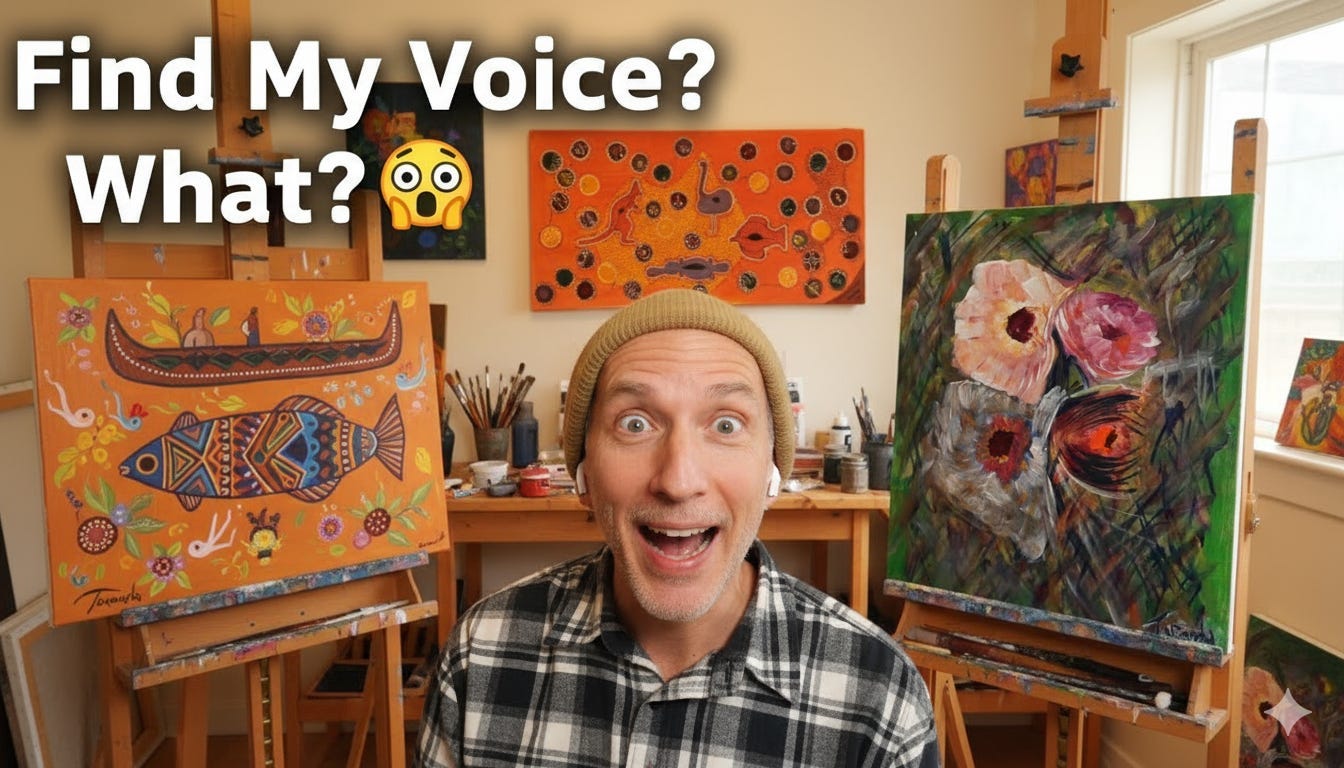 Finding Your Voice: The Deepest Human Project of All | The Artist's Journey | Ep 2 | Podcast | The Most Human Journey: On Finding Your Authentic VoiceWhat does it truly mean to find your voice?It is, perhaps, the most central and important dynamic of our lives—and often, the most frightening. The process of discovering our own voice is not just a journey for the artist, but for every human being. It’s the quiet, persistent work of understanding: What is it that I’m on about? What is the value that I have to bring to others? How do I want to speak from my own authentic place, in relationship to all that I have received?This month’s episode of The Artist’s Journey is an exploration of this profound question. It is a meditation on the dynamic moments that awaken us to who we are and give us the capacity, the skill, and the courage to put forward our own voice into the world. It is about finding our own sense of empowerment, and the story of how we learn to become ourselves.Key TakeawaysFor those who prefer to read before they listen, here are five central ideas from our conversation:* Finding Your Voice is a Universal Human Journey: While we use the artist as a metaphor, the search for an authentic voice—for a sense of self and purpose—is a struggle and a triumph that belongs to everyone.* Our Voice is Forged in Relationship: We first discover who we are by pushing against the world and having the world push back. Our identity and moral compass are formed in the dynamic, relational space between ourselves and others.* Mastery is When Technique Disappears: True artfulness, whether in music, painting, or therapy, is achieved when the learned skills become so ingrained they are part of our “unconscious repertoire,” allowing pure emotion and intuition to flow through.* Art and Love are Mirrors of the Soul: The vulnerability required to create art is deeply similar to the vulnerability of falling in love. Both are acts of putting our deepest selves forward, hoping to be seen, understood, and accepted.* The Modern World is a Distorted Mirror: In an age of social media, the challenge of holding onto an authentic self is more profound than ever. We are all navigating a new frontier of human evolution, learning how to stay true in a world of constant change.Show Notes* (00:00) The central question: What does “finding your voice” really mean, not just for the artist, but for all of us?* (02:15) The first steps of individuation in childhood, and how the “push and pull” of relationships forms our moral compass and our ability to be responsible.* (04:30) The musician’s metaphor: How learning an instrument, and learning from mistakes, accelerates the journey from conscious effort to intuitive mastery.* (07:10) The painter’s process: A moment of surrender and bold self-expression, where the externalization of an inner feeling becomes a story that speaks back to us.* (09:00) The profound parallel in human relationships: The vulnerability of “putting our best foot forward” while hoping our deepest self will be accepted.* (12:45) The therapist’s journey: Learning the “micro-skills” of empathy until they become an invisible art form, allowing for true presence with another.* (15:20) Clarifying our focus: Using the artist’s journey as a metaphor for the deeper, more important human project of finding an authentic voice in a time of historical struggle.* (18:10) How style emerges over time through focused work, and how the “narrative of becoming” shapes our very personality.* (22:00) The simple, yet deceiving, steps to finding your own voice: listening, observing, and engaging in the feedback loop of action and awareness.* (23:45) The metaphor of the mirror: Contrasting the soulful reflection of ancient mirrors with the often harsh and distorted mirror of social media.* (27:30) The universal struggle: How we are all, as a human family, now engaged in the artist’s timeless challenge of maintaining identity in a complex public sphere.* (29:50) A call to connect and continue the journey together.Resources & Links Mentioned* Our Home: Visit our website at OzFineArt.au to view our full collection of artworks.* The Model: The Artist Process & Prosperity Business Model we discussed is a core part of our philosophy.* This Publication: If you’re reading this in your browser, subscribe to the Oz FineArt Collective to get our publications directly in your inbox.My Personal Reflections: The Power of a True MirrorIn the episode, I speak about the distorted mirror of our modern, online world. It can be a confronting and alienating place, reflecting back an image of ourselves that feels untrue. It made me reflect on the profound need we all have for a true mirror.A true mirror is not one that simply shows our surface; it’s one that reflects our essence. It can be a person, a place, or, I believe, a piece of art.When you live with a work of art that resonates with your soul, it becomes a quiet, steady presence in your life. It doesn’t shout or demand attention. It simply is. On a chaotic day, a serene landscape can reflect back the peace you are yearning for. During a time of uncertainty, a bold abstract can mirror the courage you are trying to find within yourself.This is the sacred role of art in our homes and in our lives. It is a way to curate our own reflection. In a world of distorted mirrors, a thoughtful art collection becomes a sanctuary of true mirrors, each one gently reminding us of who we are, what we value, and the story we are here to live. It is a quiet conversation with the deepest part of ourselves.Join the ConversationThe journey to our authentic voice is paved with moments of breakthrough, where the struggle of learning a new skill suddenly gives way to a feeling of effortless flow.Think of a time you learned something new—a recipe, a song, a new role at work, or even how to drive. Can you recall that magic moment when the technique disappeared and your own unique style began to flow through you?Share your story in the comments below.Which area of life currently feels like the most powerful “mirror” for you?Full Episode Transcript(For the benefit of accessibility and for those who prefer to read, we’ve included the full transcript of the episode below. Please note that this is a direct, verbatim transcript from the recording and has not been edited for polish.)Join the ConversationThe journey to our authentic voice is paved with moments of breakthrough, where the struggle of learning a new skill suddenly gives way to a feeling of effortless flow.Think of a time you learned something new—a recipe, a song, a new role at work, or even how to drive. Can you recall that magic moment when the technique disappeared and your own unique style began to flow through you?Share your story in the comments below.(A Substack Poll will be embedded here)Which area of life currently feels like the most powerful “mirror” for you?* My closest relationships* My work or career* My creative pursuits or hobbies* My connection with nature* My spiritual or reflective practices Welcome back to the Artist’s Journey on Oz FineArt. This show today is about finding your voice. What does finding your voice really mean? It is such a central and important dynamic and scary process to go through to find my own voice, not just as an artist, but we’re talking about as a human being, as a person.What is it that I’m on about? What is it that I want to convey? What is it that I want to respond to? How is it that I want my voice to come forward? In what ways do I want to express myself in relationship to all that I’ve received from my parents, my culture, my school, my upbringing from social media and all that, I’mdownloading into my brain every day? How is it that I want to speak from my own authentic place? I think the metaphor of the artist’s journey is helpful, but God, this is about all human beings. This is about finding my own sense of empowerment. My sense of myself - who am I? And what is the value that I have to bring to others?What is it that I want to convey? Huge questions, but it comes down to a few central steps. A few dynamic moments that just awaken us to who we are and give us our voice, give us the capacity and the skill, and the ability to put forward our own voice into the world. Join us on this journey of discovery. The first steps to individuation, to finding ourselves to our own personal identity come forward in our early childhood when we are interacting with our parents and coming to terms with myself in comparison to my mother and my father, my sisters, my brothers. This sense of identity that’s emerging in these early years is fragile on one hand, but it’s also really strong and robust because we can push out our identities against the world.We often push out against the world. To find who we are. And so we often push too far. We’re pushing boundaries all the time. We’re trying to see where the boundary is even, or if there is a boundary. And when we have good parenting, those parents are pushing back at us. They’re pushing back boundaries.They’re giving us a sense of, of right and wrong of. I can do this, but I shouldn’t do this. I should do, do the right thing and learn not to do the wrong thing. And we have this emerging sense then of, uh, a moral. Compass that guides us as we grow older, and this gives us a sense of valuation and becoming a valuable human being.Becoming a valuable person means that we form values. But we also respond through values. So that’s really the core definition of becoming responsible, is being able to respond appropriately in each situation and every situation is different. And knowing how to respond in one versus another is the, the depth of the breadth of the, the extent of, of responsibility.The ability to respond in different situations. Coming to terms with our identity, then as we grow older, is a dynamic process that involves the push and pull of relationships, the ups and downs of learning, the making of mistakes, and being able to pick ourselves up again and learn from those, those errors and those mistakes. To realizethat learning itself is like a musician. Learning the guitar and each chord that you make on the guitar can be, at first a very painful process. I know, I know. I studied guitar for a number of years and I advanced in, uh, folk. And in classical guitar work, and I loved it so much. I spent hours after hours, day after day, night and morning and evening and afternoons, all passionately focused on improving my music. And mistakes for mebecame a routine practice. The more mistakes I made, the more learning I made, and the more I could learn from mistakes and be aware of them and make the correction more quickly. The faster the learning process became, so it kind of accelerated itself. The, the, the wheel, the hamster’s wheel of learning got faster and faster.When I learned to correct the, um, the mistakes that I was making and how I was holding my hands, for example, on the neck of the guitar, and being able to switch between the chords with the fingers more quickly was both a memory process, in the muscles, but it was also a cognitive process and awareness.And the more I became aware of the musculature process, of the communication between the muscles and my mind - and how my unconscious self, my gut, my intuition and my feeling part of me was interacting with this process of learning, of the technical aspects of that - it was a combination of emotion, sense, feeling, and intuition that emerged within what you would call art, the artfulness of music and the sameprinciples, same basic principles apply to how do I find my voice as an artist, as a painter when I’m working with Paint on the Canvas? It is a similar process for me as it was years ago, learning classical guitar in that I need to learn some of the techniques of how to hold a brush, for example, how to apply a bit of paint on the canvas, and then how to blend that paint.But at the same time, that technique interacts with emotion, feeling, a sensate experience a visual sense, an ability to, to move with the, the emotive feeling, the emotive sense, and the intuitive direction that this painting might be taking - to interact with how the paint is emerging on the canvas through that emotive process is really a profound moment.It’s a moment of surrender, but it’s also a moment of bold self-expression that kind of focuses not the mind so much, but the being, the heart, the, the, the a, the energy of self towards a communication towards an expression of meaning. And that meaning that expression becomes a story. It becomes an embodiment.It becomes something other than myself. As I reflect on that, that creativity process, that externalization of something inward is expressed in, speaks back to me, a story of my own becoming. And isn’t this the way in our human relationships as well? In our relationships. Isn’t it true that uh, when we’re, when we’re falling in love with somebody for the first time, we put forward what we feel might be our best self, obviously, and we’re hoping to God that that person really loves what we have to offer. We’re afraid very often to show our shadow side to them because we feel vulnerable and we’re cautious about sharing the parts of us thatare contentious and difficult to live with. We want to pull in that person to have them be part of our lives because we love them so deeply and we want to be a part of that forever. And the same is true with that other person. They’re dealing with the same sign of kind of dynamic of of, of putting the best foot forward.And yet being cautious about showing themselves too much. And isn’t it ironic that, we, in a way, we hope to be accepted in our deepest selves. And the parts of us that are most vulnerable is where we hope the most, that our loved one would accept us. And isn’t it painful when that doesn’t happen? It’s a similar process as, as an artist or as a musician, that when we interact with the music itself, that music is what we fall in love with, and we express our energy towards that beautiful music.And learning the intricacies of that music and hearing and feeling that music expressed back to us through our artistic expression. We come to terms with a part of ourselves that is also deeply emotive and vulnerable. And, And deeply insightful in that we are combining parts of ourselves that are both our best foot forward and our deepestparts of vulnerability. And the expression of our deepest emotion through that musical expression. And a similar way as a painter will bring forward their best self to express on the canvas, the epitome of their capacity, their best skills, put forward on the canvas. At the same time, expressing the shadows and the nuances and colors that express their deep feeling.Sometimes despair, sometimes a profound loneliness. Sometimes a existential, really profound grief and loss that emerges through the colors of a painting. I think of some works by the impressionists - where they express this depth of personal feeling through the beauty on the canvas that makes the viewer almost intuit immediately, through an immediacy of presence, what that painter may have been feeling in the moment that they express this on the canvas and this raw emotion in color emerged through this beautiful, um, inspiration of what we came to know as expressionism: the ability to express pure emotion and pure color on the canvas that conveys this immediacy of depth and meaning and a sense of purpose through sharing our most vulnerable places as human beings. You know, this reminds me so much also of the journey of becoming a therapist and my teaching of counselors for so many years. How to learn the skills of empathy, how to learn the skill of intuitive presence, to be with somebody, to listen to their story. To put our own ego identity aside enough that we can be present to another person and to deeply listen to deeply, you know, be with them, to journey with them.And this process of learning the skills of therapy, we call them micro skills in communication, is a difficult process for a therapist coming into the profession because you are, again, learning the techniques, learning the techniques of the artfulness of therapy. Just like a musician or a painter learns the techniques of the artfulness of that approach.And it takes time to learn those skills in such a way that they become part of our unconscious repertoire: our innate ability to flow with those skills in such a way that they no longer are the focus anymore. The focus of the technique on the canvas, for example, isn’t the focus of the work. It’s not what a person might try to convey on unless that is what they’re trying to convey, but usuallyit’s the theme. It’s the overarching um, message. It is the feeling, it is the scene and how that scene is conveyed on the canvas. It’s the artfulness of putting all of those tools of the trade together in a package that almost makes the technique disappear. And what emerges is the immediacy of that artwork for the viewer, for the person who is participating and appreciating in that artfulness.Much like as a client, I find it very difficult as a therapist being a client in therapy because I’m always looking at what the therapist is doing, how they’re engaging the skills, and they’re usually not doing very well. And it’s really kind of ironic and funny to observe them trying to be a therapist when you’re very much aware of the techniques and of the areas that are involved. In such a similar way, artists with other artists are keenly aware of the skills and technique and processes and steps involved in the artistic process, which is why there’s so many videos on YouTube that are process oriented. Where artists are sharing techniques with each other or helping emerging or beginning artists to learn those steps, those early steps in that process of learning and growth.It’s a great process, and it’s really important to have that interprofessional dialogue. It’s not so much my focus here, though, in this series, although we’ve called this ‘The Artist’s Journey,’, we’re using this as a storyline, as a metaphor of something much more profound, much deeper, and much more sort of, uh, I would dare say important.More important and relevant to the human project that we are engaged in right now at this time, historically. Where we are all struggling so much, so deeply, to find that authentic voice, to find that voice within a spirit of respect and of responsibility for ourselves and for others within society. This is part of the journey that we’re going through as the human species.To come to a place of altruism after years of division. To come to a place of giving of the self to others in a world of abundance means that we must grow. We must transcend our hiccups, and hour, our shortcomings to find a place where we can be more powerfully ourselves and more engaged in an act of loving kindness and of mutual communication with each other in respect. In all of these areas, I think, you know, in art, in music therapy, in business, in commerce, in so many areas of life that I have experienced where you focus on the work at hand, the, the style emerges over time where you focus on, on the work as its own entity, as its own energy, as its own purpose and focus.That work begins to express themes. And those themes over time emerge to become what we call an artistic style. A style of personality. A style of working in the world. And it is such that our personality itself is a construction of, of this thematic uh, emergence. This emerging of the themes of who we are as a person is what we call personality.In my understanding of that, then there are obviously dispositions of personality. But there is also a thematic, a narrative quality, a storied quality of who we are. Uh oh. This is who I am. This is where I come from. These are the relationships that helped to form me. This is who I am emerging to be. This is who I hope to be.This is all about a story. This is all about a narrative of becoming. And when you understand that, it’s going, it’s like a wow. It’s a big wow because you go, wow. You know, this is part of the reality of my life. This is how my life interacts with other people’s lives. And as we interact and overlap in our stories, we, we change each other.We influence each other. We grow and we evolve as human beings. And this is the nature of relationships. This is why ‘The Artist’s Journey’ is such a powerful metaphor and a powerful process. Because the journey itself is about a responsiveness and a reflexivity that enables us to be responsive and to be reflexive. To respond in a way that is flexible and engaging of our critical sense, our sense of right and wrong.Our moral compass is engaged through the artistic process as, wow, I first realized my sense of my own artistic style was emerging after having painted several works and coming to terms with the sense that I was expressing an emotive. Impression on the canvas that had a psychodynamic element to it. In other words, I was expressing emotion and feeling with a therapeutic edge.It was like expressing something that wanted to emerge. To share a story of transformation. To share a moment of insight. So that I would be able to communicate that. And the viewer would grasp that when they saw this work, when they saw this image. They would go, wow, I wonder what that means. I wonder what that feels, how does that make me feel?They would get an immediate sense of the feeling. An immediate sense of a narrative or a story. For example, it could be as simple as a tree. Or I would often use the image of a wigwam from the Mi’kmaq Nation as a symbol of family and relationship and place where the fire in that wigwam expressed the warmth of family, the intimacy of a home. The context of that home within nature and the unity that that vision conveyed.Also counterpoint to my current feeling of disjointed culture. Of a culture that has lost its way. Of a modern experience in the world of alienation where this image of the wigwam and the fire, the hearth fire of the family, would express this yearning for connection. This yearning for family and for place that had been taken away from a people. But not just a people, from all of us in a way, from all of humanity.Through this historical process that we’ve been going through of human evolution, we are all, as a human family, struggling to connect in these ways. And so these metaphors have power. They have a commonality to them. A story that we can understand. A story that we can share. I think this is central to the artist journey. But it’s also a human journey.It’s a journey of everyone and every place, and every time. The steps then, you know, of finding your own voice are quite simple, but deceivingly so. And I would just like to convey this in this sense that listening to yourself is a process that happens over time only when you engage with life. As you engage with life in relationship or with an artful process or with music or you know, in business or in commerce, when you engage in a process of collecting art, for example, or in art appreciation, you are engaging in a learning process as well as an active participatory process. You’re learning as you are acting. And the action feeds back to you insights and new awareness. And so that, that feedback loop is itself where you begin to learn to listen, to observe. Listening is a form of observation, just as watching, seeing, is a form of observation. Seeing is believing in a sense.When we see ourself reflected back to us, we then begin to see, you know, another layer of the reality emerging. When you think about the, um, metaphor of the mirror, today’s mirror is very bold. It’s very crass. It’s very, it’s very flat in a sense. The mirror that we look into in in the, uh. In the washroom in the morning, the mirror on the wall is very transparent and reflects back immediately what it sees. But in older cultures, the mirror was a refractive surface of metal. And so the surface was bent and it conveyed a much more artistic sense of reflection. And that reflection in the mirror in the old cultural sensitivity was a form of a, of a poetic sensibility. It was even less so than looking at your own image in in, in a pond, in a clear pool of water.The water was very also clearly reflective and a bit confronting for an individual without any mirrors in their lives. To see the likeness of their face reflected back in the clear pool of of the water. And so there was a mysteriousness about this. There was a sense of a sacredness to the mirror and the role that the mirror mirror plays.And so in our present sense of this, now in today’s world, we have a social media that’s pointing back this very refractive, very harsh view of self. And at the same time, social media distorts and provides a almost medieval mirror-like quality of a refraction of self, where it distorts the image of the self.And what we see reflected back to us is sometimes a very alienating image of who we are. And that filtering of that social media online is is very confronting and very difficult and can be a source of alienation for people that don’t have already a sense of themselves emerging inwardly. And so it’s a fragile place to be when we’re putting ourselves out there on this social platform. And what will we see reflected back and how will we deal with that internally in ourselves is a very powerful question to ask.But I have to say that in one sense artists are some of the best at knowing what this process is, over a very, very, very long time. Over centuries past, where artists have been continually needing to put themselves out there to share their most vulnerable uh, selves with the world through their art and their artistic process and their production of art in the world. They have engaged in this process of performativity. That is the performance of the art in the social milieu. In the social forums. And the struggle with coming to terms with what does that mean? Who am I? As an artist? How can I maintain my sense of identity in a world that doesn’t necessarily understand or even appreciate what it is that I do?These are questions that we ask today in the world of social media. And now everyone in society is engaging in this process. And I would dare say that most people, the vast majority of people engaging online, are struggling with these very questions. How will I find my voice? How will I articulate my perspectives?How will I cope with putting myself out there and having this reflected back to me in ways that may be quite distorted at times? How will I cope with this social world that is emerging? And what does this mean? And who am I in this? These are profound questions. And I think at the heart of this is, you know, this metaphor of the artist and the artist’s journey, which we all share most profoundly now as a human family. We are together in this struggle. We are in a sense exploring this new frontier of human evolution. Of sharing our identity in cyberspace. Of sharing our identity through artificial intelligence. Of sharing our identity through these applications and formats and structures and environments online.And what does this mean for us as a human family? What does it mean for me and for you in your identity? In who you are in the deepest self? And how can you hold onto that in a world of constant change and constant evolution? These are profound questions. We’ll explore them more in this series together. I invite you to like, and subscribe. Particularly if you’ve listened to this point in the video, please do subscribe. So you’ll get the next, drop to your, notification and let other people know, let youTube know that you like and you subscribe to this so that other people can enjoy this as well.We are OzFineArt.Au. Visit our website, OzFineArt.Au and we are on Substack. and the publication is called Oz FineArt Collective And thank you so much for participating and for being with us today.-End of Transcript- This is a public episode. If you would like to discuss this with other subscribers or get access to bonus episodes, visit ozfineart.substack.com | 30m 37s | ||||||
| 9/18/25 | 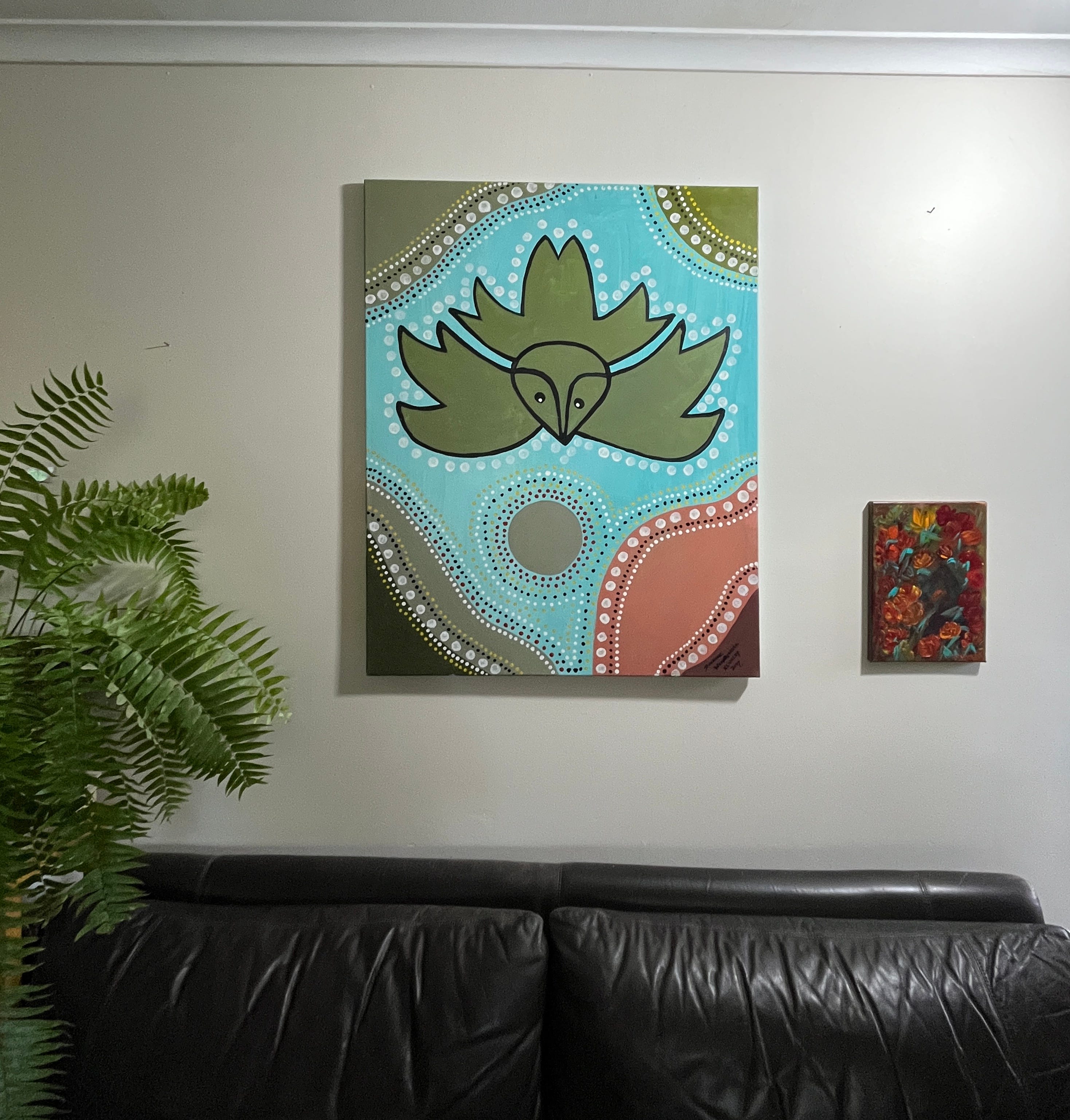 Ep 1: Substack and Your Other Sites | Lesson 1: What we learned todayWhen you create a Substack publication, you get a subdomain like yourpublication.substack.com, which serves as your publication's home on the web.Many creators use their Substack publication as a complement to their existing website rather than a replacement.Your Substack can serve as a dedicated space for your newsletter content and subscription management, while your main website continues to serve other purposes (read more).The advantage of keeping the substack.com domain is that you benefit from being part of the Substack network, which helps with discovery and growth through features like Recommendations and cross-posts (read more). This built-in network helps you spend less time on marketing and more time creating content.As an existing business owner with two websites, we did not really want a third! But the rationale makes sense. It may also create SEO and AEO reach that is already challenging to create. We decided to use the existing URL structure and see how the advantages pan out with the Substack ecosystem.Jo Bowers partners with Dwayne Kennedy, both PhDs in Counselling Psychotherapy with many years experience as artists, therapists, and business leaders.Image credits:Eagle Dreaming - Signature Collection | Year: 2007 | Medium: Acrylic on Canvas, Size: 100 x 80 x 2 cm - approx. 39 x 31.5 x 0.8 in Premium Investment Value for this Original Reflects Cultural & Narrative Significance as well as Print SeriesArtist: Dr Dwayne Wannamarra Wyndier Andrew KennedyValued $25,000 - available upon launch at ozfineart.au or contact us directly to help you acquire this powerful work and legacy investment. This is a public episode. If you would like to discuss this with other subscribers or get access to bonus episodes, visit ozfineart.substack.com | 2m 10s | ||||||
Want analysis for the episodes below?Free for Pro Submit a request, we'll have your selected episodes analyzed within an hour. Free, at no cost to you, for Pro users. | |||||||||
| 9/17/25 |  Oz FineArt Review Launch | An audio of the launch. See prior post for text. This is a public episode. If you would like to discuss this with other subscribers or get access to bonus episodes, visit ozfineart.substack.com | 0m 50s | ||||||
Showing 11 of 11
Sponsor Intelligence
Sign in to see which brands sponsor this podcast, their ad offers, and promo codes.
Chart Positions
1 placement across 1 market.
Chart Positions
1 placement across 1 market.