Insights from recent episode analysis
Audience Interest
Podcast Focus
Publishing Consistency
Platform Reach
Insights are generated by CastFox AI using publicly available data, episode content, and proprietary models.
Most discussed topics
Brands & references
Est. Listeners
Based on iTunes & Spotify (publisher stats).
- Per-Episode Audience
Est. listeners per new episode within ~30 days
10,001 - 25,000 - Monthly Reach
Unique listeners across all episodes (30 days)
25,001 - 75,000 - Active Followers
Loyal subscribers who consistently listen
5,001 - 15,000
Market Insights
Platform Distribution
Reach across major podcast platforms, updated hourly
Total Followers
—
Total Plays
—
Total Reviews
—
* Data sourced directly from platform APIs and aggregated hourly across all major podcast directories.
On the show
From 10 epsHosts
Recent guests
Recent episodes
Before the Diagnosis: What to Do When Your Child Is Struggling and Support Feels Miles Away
May 5, 2026
27m 25s
Growing Up Together: Siblings and Autism
Apr 28, 2026
12m 38s
PDA Parenting
Apr 21, 2026
14m 02s
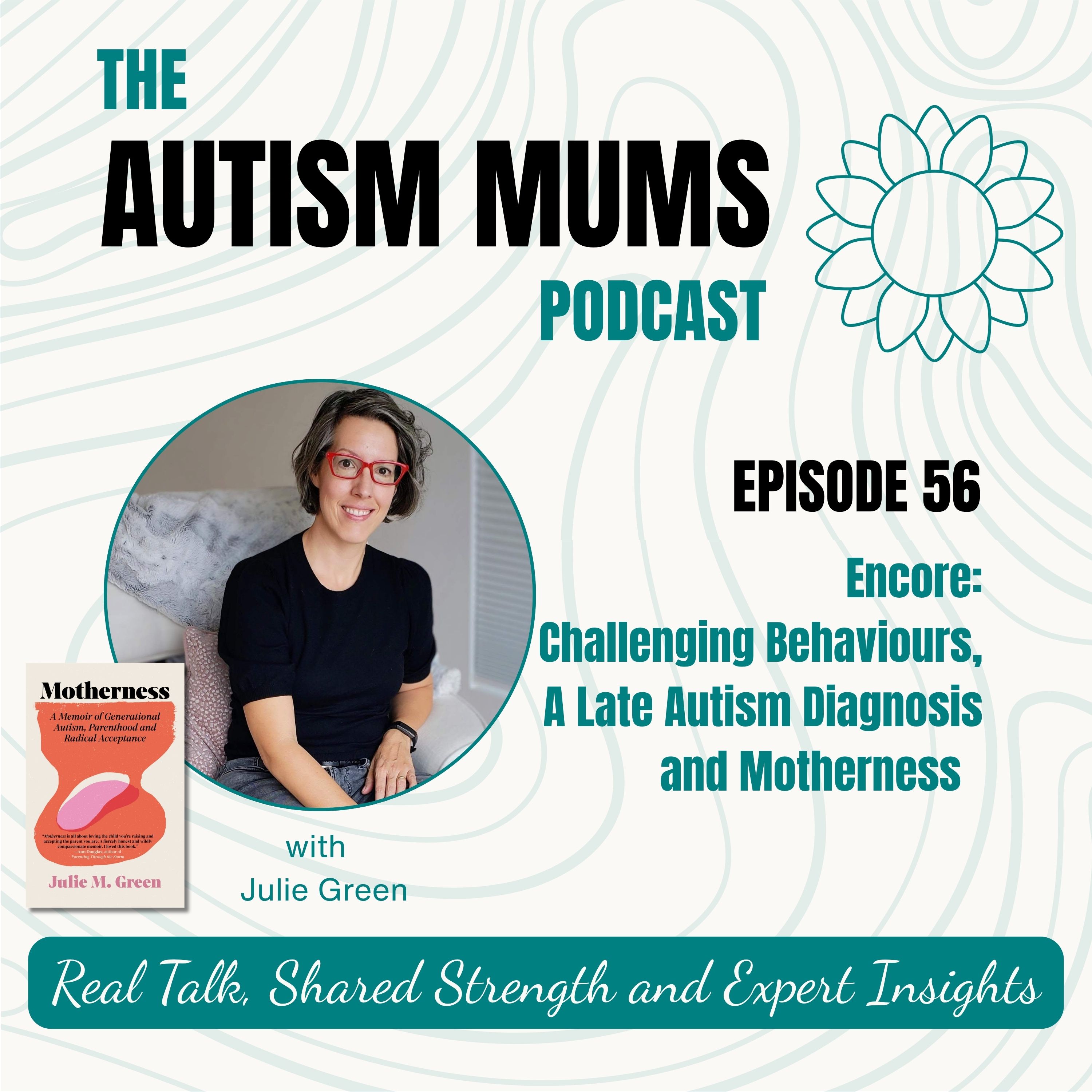
Encore: Challenging Behaviours, A Late Autism Diagnosis and Motherness with Julie Green
Apr 14, 2026
24m 14s
Travelling with Autistic Children
Apr 7, 2026
24m 00s
Social Links & Contact
Official channels & resources
Official Website
Login
RSS Feed
Login
| Date | Episode | Topics | Guests | Brands | Places | Keywords | Sponsor | Length | |
|---|---|---|---|---|---|---|---|---|---|
| 5/5/26 | ![]() Before the Diagnosis: What to Do When Your Child Is Struggling and Support Feels Miles Away✨ | child strugglesparenting support+4 | — | SENDIASSEducation Act 1996 | — | child supportSEN register+6 | — | 27m 25s | |
| 4/28/26 | ![]() Growing Up Together: Siblings and Autism✨ | sibling dynamicsPDA in sibling relationships+5 | — | MyTime Young CarersSibs+3 | — | siblingsautism+5 | — | 12m 38s | |
| 4/21/26 | ![]() PDA Parenting✨ | PDAautism+4 | — | PDA Society | — | PDAPathological Demand Avoidance+5 | — | 14m 02s | |
| 4/14/26 | ![]() Encore: Challenging Behaviours, A Late Autism Diagnosis and Motherness with Julie Green✨ | autism diagnosisparenting+4 | Julie Green | National Autistic SocietyMotherness+2 | — | autismparenting+5 | — | 24m 14s | |
| 4/7/26 | ![]() Travelling with Autistic Children✨ | travelling with autistic childrenfamily trips+3 | — | — | — | autistic childrentravel tips+3 | — | 24m 00s | |
| 3/31/26 | ![]() Autistic Burnout in Children✨ | autistic burnoutchildren+3 | — | The Autism Mums Podcast | — | autistic burnoutshutdowns+3 | — | 17m 25s | |
| 3/24/26 | ![]() Toothbrushing Tips for Autistic Children✨ | toothbrushingautistic children+3 | — | U-Shaped ToothbrushesHi-Smile Toothpastes | — | toothbrushingautism+3 | — | 13m 50s | |
| 3/17/26 | ![]() Why Friendships Change When You’re Raising an Autistic Child✨ | friendshipautism+4 | — | The Autism Mums Podcast | — | autistic childfriendships+5 | — | 12m 30s | |
| 3/10/26 | ![]() Why Understanding Neurodivergence Changes Everything with Paul Mosson✨ | neurodivergenceADHD+3 | Paul Mosson | Costs Lawyer Standards BoardDisabling Barriers Scotland+2 | — | neurodivergenceADHD+3 | — | 49m 41s | |
| 3/3/26 | ![]() Encore: Exploring Sleep Struggles for Autistic Children✨ | sleep strugglesautistic children+3 | Maria Moreno | Mindful MotherTumago | — | sleep strugglesautistic children+3 | — | 27m 12s | |
Want analysis for the episodes below?Free for Pro Submit a request, we'll have your selected episodes analyzed within an hour. Free, at no cost to you, for Pro users. | |||||||||
| 2/24/26 | ![]() Encore: It Shouldn’t Be This Hard: Advocating Through the System | In this week’s re-released episode of The Autism Mums Podcast, we’re talking about something that so many families raising autistic children will recognise - the exhausting and often disheartening process of dealing with the local authority.This episode is an honest look at how hard it can be to get what your child needs and how important it is to stay organised, persistent and strong.Key TakeawaysKeeping on top of it all: Parents and carers are often left chasing reports, updates, and decisions just to keep things moving.You Can’t Assume Progress is Happening (unfortunately): If you're not following up, you're at risk of falling off the radar.Options for Your Child: Parents are frequently kept in the dark about available options regarding alternative provision and specialist schoolsTravel Expectations Can Be Unrealistic: Specialist schools may be far from home, making logistics overwhelming.Change is Needed: Better communication, transparency and supportive systems would ease the burden on both families and staff.Connect with The Autism Mumshttps://theautismmums.com/Follow us on Instagram https://www.instagram.com/theautismmumsFollow us on Facebook https://www.facebook.com/theautismmums | — | ||||||
| 2/17/26 | ![]() Encore: Breaking Down Barriers to Education for Neurodivergent Children | We're returning to the archives for this episode of The Autism Mums Podcast. We're talking about some of the real challenges families face with the current education system, especially when it comes to supporting autistic children.Key TakeawaysOutdated Education System: The current education system is often rigid and not designed to accommodate the diverse needs of neurodivergent children.Importance of Flexibility: There's a need for more flexible learning environments that allow for play and creativity, especially for younger children.Struggles with Inclusion: Being in school is different from being included in school; many children face challenges that are not adequately addressed.Identifying Needs Early: Early identification of challenges, such as speech or coordination issues, is crucial, but support often falls short.Training for Educators: There is a significant need for enhanced training for teachers on special educational needs to better support neurodivergent students.Impact of Environment: The classroom environment, including displays and changes, can greatly affect a child’s ability to learn and cope.Communication Gaps: There are often communication breakdowns between schools, parents, and local authorities, leading to misunderstandings and lack of support.Mental Health Considerations: The mental health of both children and parents is deeply affected by the educational experience and the pressure to conform.Advocacy and Trusting Instincts: Parents should trust their instincts regarding their child's needs and advocate strongly for appropriate support.Systemic Challenges: Financial motivations can influence decisions made about educational support, complicating the advocacy process for parents.Mentioned in This EpisodeThe quote Victoria mentioned seeing on social media is: When a child at school is anxious about going home, concerns would be raised. But when a child is anxious about going to school, we as parents are expected to encourage them to go no matter what. Think about that for a second. - seen on CureJoy Kids on Facebook.Connect with The Autism Mumshttps://theautismmums.com/Follow us on Instagram https://www.instagram.com/theautismmumsFollow us on Facebook https://www.facebook.com/theautismmums | — | ||||||
| 2/10/26 | ![]() Encore: Caring for Yourself When Your Child Is Having a Tough Day | In this week's episode of The Autism Mums Podcast we're returning to our earlier episode where we talk about ways to look after yourself when your child is having a tough day.Key TakeawaysHow supporting our children with their emotions can leave us feeling completely drained.Common mistakes we’ve made when trying to "push through" a tough day.Simple ways we try to carve out moments of calm: meditation, breathing space, and gentle resets.How creating a comforting environment - with blankets, candles, soft music - can make a difference.Allowing yourself to cancel non-essential tasks or meetings when you need breathing space.The power of talking it out with someone who truly understands.Finding and building a supportive community around you.The importance of zoning out, resting, and knowing that tomorrow is a new day.Mentioned in This EpisodeGabby Bernstein’s Meditation AppConnect with The Autism Mumshttps://theautismmums.com/Follow us on Instagram https://www.instagram.com/theautismmums | — | ||||||
| 2/3/26 | ![]() Encore: Practical Ways to Help Your Autistic Child with Daily Life | We're re-releasing another episode from the archives this week where we talk about the practical ways we can help our autistic children with daily life.We’re sharing some of the things that have helped us make daily life a bit easier with our autistic children. From using timers and visual timetables to experimenting with tooth brushes and finding softer clothing.These are ideas that have worked for us, they might help you too, or simply offer reassurance that you’re not alone on this journey.Key TakeawaysTimers and visual supports can help ease transitions by giving your child a sense of control and predictability.Choosing soft, seamless clothing may make a difference for children who find layers uncomfortable.Toothbrushing challenges might be eased by trying different tools like U-shaped or triple-angled toothbrushes.Flexibility is key - what works one day might not work the next, and that’s okay.Planning days out in advance with visual itineraries can reduce anxiety about what's coming next.Noise sensitivity might be supported by using ear defenders, earbuds, or listening to favourite music.Strong smells can sometimes be managed with things like balaclavas or carrying scents like orange oil to mask overwhelming smells.Having a sensory kit (with familiar snacks, toys, and calming tools) may offer comfort when you're out and about.Mentioned in This EpisodeHere are some of the tools and resources discussed in this episode:Visual timersLaminated visual timetablesSeamless/sensory-friendly clothingU-shaped toothbrush and triple-angled toothbrushEar defendersBach's Rescue RemedyOrange Essential OilTiger balmThe Early Birds course by the National Autistic SocietyStretchy resistance bands for calming sensory feedbackConnect with The Autism Mumshttps://theautismmums.com/Follow us on Instagram https://www.instagram.com/theautismmumsFollow us on Facebook @theautismmums | — | ||||||
| 1/27/26 | ![]() Encore: What is PDA? | Another episode from the archives this week. We're returning to our episode where we dive into the unique challenges of raising a child with a PDA (Pathological Demand Avoidance) profile. We're sharing our personal stories, strategies, and reflections to help parents and caregivers better understand and support their children navigating PDA-related behaviours.Key TakeawaysPDA is driven by anxiety and a need for control; traditional demands can trigger refusal.Offering controlled choices helps reduce pressure and gives children a sense of agency.Visual schedules and plenty of preparation help ease transitions and reduce stress.Managing your own calm and letting go of nonessential demands are important for low-demand parenting.It’s okay to adjust family routines to what works for your child, even if it looks different from your original parenting ideals.Misunderstandings from others can be painful but focusing on your child’s needs is what matters most.Mentioned in This EpisodePDA SocietyDr. Naomi Fisher webinars and resourcesConnect with The Autism Mumshttps://theautismmums.com/Follow us on Instagram https://www.instagram.com/theautismmumsFollow us on Facebook @theautismmums | — | ||||||
| 1/20/26 | ![]() Encore: Getting an EHCP | We're returning to the archives again this week to our episode all about EHCP's. We’re talking about the journey to getting an EHCP - what it is, why it matters, and what the process looked like for our families.We’ll share the lessons we learned along the way with the hope that it helps you navigate the process and feel a little more prepared.Key TakeawaysAn EHCP can provide vital, legally binding supportYou don't need a formal diagnosis to apply for an EHCPSchools may not always initiate an EHCP request. If they don't parents can.Timelines and deadlines are crucial - keep a track of key dates.Support groups, SENDIASS and organisations like IPSEA can provide guidance and practical help.The right provision can make a huge difference to your child's wellbeing.Mentioned in This EpisodeSENDIASS (Special Educational Needs and Disability Information Advice and Support Services)IPSEA (Independent Provider of Special Education Advice) — ipsea.org.ukEarlyBird course (National Autistic Society support programme for parents)Connect with The Autism Mumshttps://theautismmums.com/Follow us on Instagram https://www.instagram.com/theautismmumsFollow us on Facebook @theautismmums | — | ||||||
| 1/13/26 | ![]() Encore: Victoria's Son's Autism Diagnosis Journey | In this week’s encore episode of The Autism Mums Podcast, Victoria reveals the emotional journey of her son’s autism diagnosis. She reflects on the early signs that were often misunderstood and the battles faced in educational settings, culminating in the significant moment of receiving an official diagnosis. As one of our most popular episodes, we wanted to share this again as there are so many on this path to diagnosis.Key TakeawaysAutism signs can often be masked or misunderstood, especially in young children.Building a support network of other parents is crucial.Professionals may miss signs too, trusting your instincts matters.The diagnosis process can feel long and isolating, but community support makes a difference.Receiving a diagnosis is often a moment of both relief and grief and that's OK.Mentioned in This EpisodeThe Early Birds Course (National Autistic Society)ASDivas and Dudes Support GroupThe Girl with the Curly Hair by Alis RoweThe Complete Guide to Asperger’s Syndrome by Tony AttwoodTADDS Outreach TeamTotal Children's TherapyADOS-2 Autism Diagnostic Observation ScheduleCAMHS (Child and Adolescent Mental Health Services)Connect with The Autism Mumshttps://theautismmums.com/Follow us on Instagram https://www.instagram.com/theautismmumsFollow us on Facebook: @theautismmums | — | ||||||
| 1/6/26 | ![]() Encore: Natalie's Son's Autism Diagnosis Journey | In this week’s encore episode of The Autism Mums Podcast, we are revisiting our look into the journey toward an autism diagnosis. Natalie opens up about her experiences with her son, reflecting on the subtle early signs and the drawn-out process of seeking support.Key TakeawaysEarly signs aren't always obvious: It's common to realize things only in hindsight.Not all settings impact children the same way: Different environments can highlight or mask challenges.The path to diagnosis is often long: Waiting times can be frustrating, but support exists even before official diagnoses.Grief is a natural part of acceptance: It's okay to mourn the loss of expectations while embracing a new, beautiful reality.Practical support makes a difference: Courses like EarlyBirds offer real-world tools tailored for neurodivergent children.Mentioned in This EpisodeEarlyBirds Programme by the National Autistic SocietyConnect with The Autism Mumshttps://theautismmums.com/Follow us on Instagram https://www.instagram.com/theautismmumsFacebook - @theautismmums | — | ||||||
| 12/30/25 | ![]() Encore: Helping Your Autistic Child with Anxiety | In this week’s encore episode of The Autism Mums Podcast, join us as we navigate the complex landscape of anxiety in autistic children. We share our personal insights and experiences, exploring the diverse ways anxiety can manifest, including meltdowns, shutdowns, and sensory overloads.Whether you're early on in your autism journey or navigating school-age challenges, this episode offers reassurance, relatable stories, and real-world strategies that can make a difference.Key TakeawaysAnxiety presents differently in autistic children: It might show up as shutdowns, meltdowns, repetitive questions, anger, or even physical symptoms like tummy aches.Avoidance can be common: Children may retreat to their rooms or refuse to go places when overwhelmed.Sensory overload can be a major trigger: Noisy environments, bright lights, and even scratchy clothing can heighten anxiety.Routine changes, even positive ones, can be stressful: Children may want changes, but still struggle when they occur.Social unpredictability can add pressure: Not knowing who will be present or what will happen in social settings can create discomfort.Masking and perfectionism can lead to burnout and chronic anxiety.Support strategies matter: Ear defenders, visual timetables, sensory tools, role play, and validating feelings can help.Validation and patience are key: Simply saying 'I hear you' can help children feel safe and understood.Mentioned in This EpisodeMindfulness sessions – Supportive techniques that help children become aware of how anxiety feels in their bodies.https://www.mindful.org/mindfulness-for-kids/Visual timetables and planners – Visual supports that help prepare autistic children for transitions and daily routines.Example resources: Twinkl Visual TimetablesNoise-cancelling headphones and sunglassesEdz Kidz Ear DefendersBreathing exercises for childrenhttps://copingskillsforkids.com/deep-breathing-exercises-for-kids BBC Documentary – Inside Our Autistic Minds by Chris PackhamWatch here: BBC iPlayer – Inside Our Autistic MindsHarry Potter Studio Tour (UK)Mentioned as an example of a venue with quiet spaces and autism-friendly accommodations.Accessibility info https://www.wbstudiotour.co.uk/additional-needs/Connect with The Autism Mumshttps://theautismmums.com/Follow us on Instagram https://www.instagram.com/theautismmumsFollow us on Facebook @theautismmums | — | ||||||
| 12/23/25 | ![]() Autism and Challenging Behaviour with Carl Draper (Part 2) | In this week’s episode of The Autism Mums Podcast, we welcome back Carl Draper for part two of our conversation.In the first part, Carl shares his personal experiences as a parent, how his understanding of behaviour has changed over time, and why unmet needs and stress responses are so often misunderstood.In this second part, Carl reflects on the challenges we can’t always predict or prevent, the importance of support systems and environment, and what helps parents regulate their own emotions when things feel overwhelming.BiographyCarl Draper was born in a North Nottinghamshire mining village and moved to Bournemouth at 19, where he served as a beach lifeguard and discovered his love for surfing. Accepted into the Royal Marines, his plans changed after a serious leg injury during a heroic rescue, an event that earned him a Local Hero Award and a feature on BBC’s 999 Rescue. He later became RNLI head trainer for lifeguards across Dorset, then served over a decade with Dorset Ambulance Service. Shifting to education, he trained firefighters and police nationwide before retraining as a mental health nurse. Carl is currently studying at Bournemouth University. In 2015, he founded Waveslider, winning the Bournemouth Tourism Award in 2017, and began documenting life with his son Bodhi in 2020.Key TakeawaysNot everything can be planned for, and learning to cope with the unexpected is an essential life skillAvoiding triggers completely can increase anxiety over time rather than reduce itThe right support system — at home, at school, or beyond — can be life-changing for familiesRoutine provides security but can also create vulnerability during periods of changeParents need their own ways to regulate stress and should seek support without guiltConnect with Carl DraperFollow Carl’s journey with his son Bodhi on the Waverslider Photography Facebook PageFollow Carl on InstagramConnect with The Autism Mumshttps://theautismmums.com/Follow us on Instagram https://www.instagram.com/theautismmumsFollow us on Facebook https://www.facebook.com/theautismmumsTranscriptVictoria Bennion: [00:00:00] Hello and welcome back. This is part twoof our conversation with Carl Draper. Carl is currently training to be a mentalhealth nurse and he's the founder of Wave Slider, where he shares his brilliantphotos and documents life with his son Bodhi.Victoria Bennion:Frank Bodi's Assistance Dog is also a regular on Wave slider. If you haven'tlistened to part one yet, we'd really recommend going back first because Carlshares some powerful context about what challenging behavior can look like andhow much can change when we start meeting a child's stress response with calm.Victoria Bennion: Intoday's episode, we pick up the conversation by talking about the things wecan't always predict or control. Those sudden changes, those moments where aplan falls apart and the ways that it can trigger big feelings for our childrenand for us too. So let's jump back in.Victoria Bennion: Arethere any steps that you can take, do you think, to prevent the behaviorsbefore they escalate, [00:01:00] before theyreach that peak?Carl Draper: That'sreally hard question. Because a lot of the times where we're getting to thestage with the things we're speaking about now. What you are now asking is whatdo we do about the things we can't control?Victoria Bennion:true.Carl Draper: What youcan't see coming? For example, there's a plane coming at three 30 thisafternoon.Carl Draper: Fine,we'll go after school, mate, pick you up. You get down to the airport at three15 and the fog rolls inVictoria Bennion: Oh,that's so true.Carl Draper: and nowthe plane's diverted and he can see it on the tracker going the oppositedirection.Carl Draper: Arethings out of your control. So a good one I've had a, a lot of stick on waveslider recently because we've had the fireworks, you know, the bonfire period,bonfire night, where a lot of animals get distressed.Carl Draper: A lot ofpeople get distressed, which I'm very well aware of. However, Frank is trained,calm, uncomfortable to go and watch the fireworks because he's, he goes where [00:02:00] Bodhi goes. So we went to see a fireworksdisplay. He had a great time. We went to Ringwood one weekend and the followingweekend we went to Little downCarl Draper: and Iwasn't gonna take Frank because it's really busy there, and Bodhi wants to goon the rides. With your autistic people, you tend to get two types of autisticpeople, even though. All autistic people have different traits and severitiesand you know, varying degrees of, you tend to get a sensitive.Carl Draper: Autistictype want quietness, you know, earphones, that sort of thing. And then you getyour sensory seeker, that's Bodhi. I want it loud, I want fast, I want more, Iwant adrenaline. So he wants to go on the rides. So I said, well, we won't takeFrank, and then we can go on the rides. And then I spoke to my youngestdaughter, ki.Carl Draper: Who'salso got an autistic son and she said, oh, we're gonna go to little Dan. Areyou taking Frank? And I explained why. And she said, well, [00:03:00] how about Zach? My fella goes on the rideswith Bodhi. You hold Frank so Zach Kiers fellow, he'd more than happy to go onthe rides. So we thought, yeah, brilliant. So I took, Frank, took Bodhi, wewent down there, it was absolutely jam packed, shoulder to shoulder withpeople. We went an hour early because Bodhi was impatient, and I thought, fine.Carl Draper: Wewalked around, he made a list of all the rides he wanted to go on, which wasbasically all of them. um, unfortunately, Kiir and Zach got into the queue andthey sold out tickets.Natalie Tealdi: OhNatalie Tealdi: no.Carl Draper: Couldn'tget in. Not her fault You know, Just, it just happened to be that busy thattime. Her bless the Keer phones and she's like, I'm really sorry dad.Carl Draper: We'realmost at the front of the queue and they've just sold out a tickets and likethis just pit of despair starts to come into me. 'cause I'm like, I've nowgotta tell Bodhi it can't go any rides. And we're standing in front of them. SoI had half an hour of hell. I was literally pinned up against the wall and itwas bad for me because I had no [00:04:00]escape route.Carl Draper: youknow, I got there in the end, but yeah, it was really difficult. It's a goodopportunity to teach him how to have a strategy and cope with. These situationsthat are out of our control.Carl Draper: youknow, As bad as it was it it turned out really good.Carl Draper: So youcan't plan for the unseen.Victoria Bennion: no.Victoria Bennion: I think that's true. As much as we can try and do everything that we think you're right. These things come up. We had, a day this week where it was raining. Idunno if you had rain. You probably did. You're notVictoria Bennion:that far fromCarl Draper: Yeah.Victoria Bennion:Rain and rain and my son's timetable said outdoor learning on one of his slotsin his timetable that he refers to before he goes inVictoria Bennion: sohe then didn't know what that session would be because it says outdoorlearning, but it can't be outdoor learning because it's rain and then itspirals into, I can't possibly get outta the car. I can't do this day becauseit's raining and it's, it's affected everything. And there's nothing you can doabout the rain, as you say.Carl Draper: I'mactually learning to not avoid it. 'cause actually you, I found a [00:05:00] little while ago, it's really unhealthybecause you find yourself trying to work out what can go wrong and thenavoiding it, and then it makes you more stressed.Victoria Bennion:true.Carl Draper: Whereasnow I'm at the point of, well, we just deal with it if and when it happensbecause he, he's gotta learn to become independent one day.Carl Draper: And thatinvolves negotiating, you know, the... | — | ||||||
| 12/16/25 | ![]() Autism and Challenging Behaviour with Carl Draper (Part 1) | In this week’s episode of The Autism Mums Podcast, we welcome back Carl Draper for part one of a two-part conversation.His last episode, learning to hear a child who doesn't speak, sparked so many questions from listeners, that we invited Carl back to talk more about the topic of challenging behaviours and autism. In this first part, Carl shares his personal experiences as a parent, how his understanding of behaviour has changed over time, and why unmet needs and stress responses are so often misunderstood.BiographyCarl Draper was born in a North Nottinghamshire mining village and moved to Bournemouth at 19, where he served as a beach lifeguard and discovered his love for surfing. Accepted into the Royal Marines, his plans changed after a serious leg injury during a heroic rescue, an event that earned him a Local Hero Award and a feature on BBC’s 999 Rescue. He later became RNLI head trainer for lifeguards across Dorset, then served over a decade with Dorset Ambulance Service. Shifting to education, he trained firefighters and police nationwide before retraining as a mental health nurse. Carl is currently studying at Bournemouth University. In 2015, he founded Waveslider, winning the Bournemouth Tourism Award in 2017, and began documenting life with his son Bodhi in 2020.Key TakeawaysEmotional regulation in parents plays a crucial role in reducing escalationChallenging behaviour is often a stress response linked to unmet needsChanges in routine and adult stress can significantly impact a child’s ability to copeA balance between boundaries and flexibility helps create emotional safetyChildren learn regulation by observing the behaviour of those around themLetting go of social judgement and outdated expectations allows families to parent with confidenceConnect with Carl DraperFollow Carl’s journey with his son Bodhi on the Waverslider Photography Facebook PageFollow Carl on InstagramConnect with The Autism Mumshttps://theautismmums.com/Follow us on Instagram https://www.instagram.com/theautismmumsFollow us on Facebook https://www.facebook.com/theautismmumsTranscriptVictoria Bennion: [00:00:00] Today we're joined once again by ourfriend Carl Draper, who many of you will remember from episode nine. For thosewho don't know Carl, he is currently training to be a mental health nurse andis the founder of Wave Slider, where he shares his brilliant photographs anddocuments life with his son Bodhi.Victoria Bennion:Frank Bodie's Assistance Dog is also a regular on wave slider. Carl's lastappearance on the podcast really struck a chord, and after that episode wentlive, he received an overwhelming number of messages from parents and carerswanting to know more about how he supports his son through moments of distress.Victoria Bennion: Andwhat's often labeled as challenging behavior. So today, Carl is back with us totalk honestly and openly about exactly that we could talk to Carl for hours. Sowe've split our conversation into two episodes. In this first part, Carl shareshis personal journey as a parent. How his understanding of [00:01:00] behavior has changed over time.Victoria Bennion: Thepowerful impact of learning to regulate his own emotions and what it reallylooks like to meet chaos with calm, even in the most public and confrontingsituations. This is a really raw, reflective, and incredibly insightfulconversation about unmet needs, stress responses, and the reality of parentingautistic children in a world that doesn't always understand. Natalie Tealdi:Welcome to the podcast, Carl. It's great to have you back.Carl Draper: Hi, howare you?Natalie Tealdi: Good.Thank you. So can we start by explaining how you define challenging behavior inthe context of autism, and can you also give us some examples of what you'veencountered?Carl Draper: Okay, soI guess our definition of challenging behavior is. Changing at the moment interms or context of autism? I think the one thing to remember where the childliked Bodhi is that he [00:02:00] is equallyprofoundly autistic and a DHD. So you have that autism side where, he likes hisroutine.Carl Draper:Everything has to be perfect. Everything's good. And then you've got the A DHDside, which is a constant clash, which is like letting a hand grenade off inthe middle of everything. I quite often think of Bodhi as pizza. He's perfectlyround cut into perfect triangles and comes in a square box.Natalie Tealdi: Ilove that.Carl Draper: He justdoesn't, it doesn't fit, but it's perfect, the challenging behavior, it allcomes with an unmet need and an inability to communicate his needs. So goingback to prior to when he was medicated for his A DHD, we had daily challengingbehavior where every evening at bedtime he would.Carl Draper: Go fromsettle to completely challenging, pinning you against the wall, pulling yourhair, grabbing your [00:03:00] face. And what Irealized is I think I was the biggest cause of this challenging behaviorbecause I come from a world where, I grew up in a pit village. Old social normsin that world where, you know.Carl Draper: A lot ofpeople would say, oh, slap never did me any harm. And the way that I wasbrought up, I couldn't regulate my own emotions. So when he got challenging, ifthat's the word, which is actually a stress response because of an unmet need,I would then shout, get angry and become stressed, slam a door and display allthe wrong behaviors.Carl Draper: And dothe wrong thing. And then after a while you realize that I'm teaching him howto respond in these situations. So then he would slam a door shout and getangry. And I had, it's not a light bulb moment, but there was certainly amoment where I just thought, that's me. He's not listening to what I say, buthe's [00:04:00] mirroring what I do.Carl Draper: Werealized that we needed to change our parenting behaviors and styles and getsome education. Yes, those differences with the autism and the A DHD, but a lotof it was based on how we reacted to Bodhi. When he had an unmet need. Sonumber one, I had to learn to regulate my own emotions.Carl Draper: Now,learning to hear a child who doesn't speak is the easiest thing I've everlearned to do, and he was totally silent until seven. Learning to regulate myown emotions is by far the hardest thing I've ever tried to do, but we aregetting there and we are now seeing the results. So for every night, for nearlya year.Carl Draper: Atbedtime, I had to take Frank German shepherd. out the house and go and sit inthe car until Charlie settled him down to bed. And during that time, you'relearning to regulate your own emotions. You're learning new parenting styles,new behaviors. You're changing the way [00:05:00]you are. The way you see, the way you think.Carl Draper: Learningto put, his needs first. But you do still get other challenging behaviors or astress response, which can cause embarrassment. So for example, he might dothat in a shop. You know, some people call it a meltdown and a lot of times Iused to get embarrassed 'cause I was aware that people were watching.Carl Draper: Duringthe summertime we went to a superstore Very hot day. So we didn't take Frank,it was too hot to take. Frank. We went to this superstore and going to a shopwith Bodhi is very difficult. I dunno if you've ever seen supermarket sweep,Carl Draper: He wantseverything at everything times 10. So he went to this shop and he had afixation at the time over bottles of water. Dunno why he's been through thesame with pick and mix sweets. He'll always have a pick and mix tub of sweets,but never eats them. He just wants to look at them and touch them.Carl Draper: He isnever eaten one. But this occasion we [00:06:00]got to the checkout and he wanted a bottle of water from next to the counterand, the car was full of bottles of water. The house was full of bottles ofwater. Every time we went to the shop, he wanted a bottle of water. So Idecided on this day that I was gonna stand my ground and say no, because atsome point we, need to teach him boundaries and that you can't always have whatyou want.Carl Draper: Ratherthan he is going to sort of have a meltdown get him a bottle of water for aneasy exit. So he, he had a full on stress response and it ended up on thefloor. I sat on the floor with him and I was now doing the right behaviors. Iwas... | — | ||||||
| 12/9/25 | ![]() Rebuilding Relationships While Supporting Neurodivergent Children with Carla Wainwright | In today’s episode, of The Autism Mums Podcast, Victoria is hosting solo as Nat is home with an unwell little one. She’s joined by the wonderful Carla Wainwright, a Holistic Wellness Coach and Relationship Transformation specialist who supports parents and couples navigating the stress, overwhelm, and emotional load that can come when a child’s health or development needs extra support.Carla Wainwright's BiographyCarla Wainwright is a Holistic Wellness Coach and Relationship Transformation specialist who helps parents and couples navigate the stress, disconnection, and overwhelm that can come when a child’s health or development needs extra support. With a graduate degree in biological sciences, a 4-year practitioner diploma in Homeopathy and Heilkunst, and over 25 years as an embodied yoga teacher, Carla blends science, somatic practice, and coaching to guide couples in rekindling intimacy, deepening connection, and restoring shared purpose. Her compassionate, practical approach creates space for parents to thrive - both individually and together—while walking alongside their child’s unique health journey.Key TakeawaysMany relationship challenges stem from the fact that none of us were taught how to stay connected when life feels overwhelming.Parenting a neurodivergent or high-needs child can magnify existing patterns of disconnection within a couple.Emotional exhaustion and nervous system overload often show up as distance, irritability, or feeling like “roommates” instead of partners.Co-regulation—calming your nervous systems together—is often the first gentle step toward rebuilding intimacy.Small, simple practices like sitting side-by-side, holding hands, or breathing together can create emotional safety.Clear and compassionate communication, especially using “I” language, helps both people feel heard rather than blamed.Loving, well-expressed boundaries can strengthen a relationship rather than push partners apart.Prioritising your relationship supports the whole householdUnderstanding each partner’s unique coping style can ease misunderstandings and reduce conflict.The path back to connection starts with nervous system regulation—first for yourself, and then with each other.Connect with CarlaInstagram: https://www.instagram.com/carlawainwright/ Facebook: https://www.facebook.com/CarlaWainwrightCreatrix/Website: https://www.carlawainwright.com/Free Gift: The Connected Way Forward – Carla’s free 3-minute connection practice for couples, designed to gently rebuild closeness even when life feels overwhelminghttps://www.carlawainwright.com/connected-way-forward Connect with The Autism MumsWebsite https://theautismmums.com/Follow us on Instagram https://www.instagram.com/theautismmumsFollow us on Facebook https://www.facebook.com/theautismmumsTranscriptRebuilding Relationships While Supporting NeurodivergentChildren with Carla Wainwright[00:00:00] Victoria Bennion:Hello and welcome. It's Victoria and I'm on my own today as Nat has an illchild, but I'm grateful to be joined by our guest, Carla Wayne Wright. Carla isa holistic wellness coach and relationship transformation specialist who helpsparents and couples find their way through the stress and emotional load thatcomes with supporting a child whose development or health needs are a littledifferent.Victoria Bennion:Welcome to the podcast, Carla. It's great to have you here with us today.Carla Wainwright: Oh,I'm thrilled to be here. Thank you.Victoria Bennion: Howdid you get into this line of work? I wonder if you Could talk to us about yourown journey.Carla Wainwright:Sure. Yeah. So, you know, my background actually started in science, so Iworked for many years as a wildlife biologist. I always had like a deep passionfor nature and animals, and I began to shift into homeopathy and holistichealth. As a result of, you know, my own healing journey. And when I waspracticing as a homeopath, you know, I was working with families who hadchildren with complex or neurodivergent needs and, you know, [00:01:00] parents is usually the mother would comein, of course wanting to support the child, but it became really clear to me,of course, there was this immense stress that the parents were carrying andthat the stress was showing up in the family dynamic and also in therelationship. And so I would always encourage the mother to get support and,and treatment as well because,Carla Wainwright: it,the mother's falling apart. It's so hard for her to support her, her child, andher family. And so over time, I did this for quite a while and then in my ownjourney , of healing my own trauma, I became a sex, love and relationshipcoach. And that worked naturally expanded to supporting women and couples.Carla Wainwright: AndI have a deep. Passion to support couples, to reconnect to , their intimacy, ,their connection, their emotional resilience. I, I really feel that. You know,the container of the couple., It's like this beautiful, sacred container forgrowth and evolution. But we're not taught how to do this.Carla Wainwright:Relationships [00:02:00] can be beautiful andpowerful and deeply challenging, and that's even without all the extraresponsibilities of, of parenting and caregiving. One of my passions issupporting couples to, strip off some of those layers of their own hurtexperiences or traumas to really connect back to one another in the ways thatbrought them together in the first place so that their relationship and theirfamilies can flourish.Carla Wainwright: Weall wanna thrive. But often we need support to be able to do that. So it, itis, it's one of my great joys to be able to support couples on that path and inturn, really allow their families and their childrens to thrive as well.Victoria Bennion: Oh,that's lovely. What are some of the common challenges that you see couplesfacing when they're raising a child who needs extra support?Carla Wainwright:Yeah, so this is something that. Many, many couples deal with. And you know,actually I would say that couples who may not even have children face all kindsof challenges. And, um, I think I'd like to preface this [00:03:00] by, by saying, I, I feel likerelationships are something that we're just supposed to magically know how todo without any training.Carla Wainwright:And, uh, the reality is, is that most of us didn't, we weren't necessarilymodeled great relationships in our families, like I certainly wasn't. Some ofus were lucky to have parents who modeled great relationships, but it's not thenorm. And then of course we have culture and just society modeling, not alwayshealthy relationships.Carla Wainwright: Sowe're somehow just supposed to magically know how to navigate relationships andhave a thriving partnership that is able to weather all kinds of storms andchallenges. And the reality is, is that we don't really have. That base. So Ialways come to, you know, the idea of relationships with a lot of compassionbecause.Carla Wainwright:Often the starting point is that we actually don't really know how to stayconnected, especially when things are difficult. So if we layer on top of thatparenting a child who needs extra support, this really then can amplify [00:04:00] a lot of preexisting patterns ofdisconnection that might be already.Carla Wainwright:Present in a relationship. And you know, there's so many challenges thatcouples can face. So of course there's the emotional exhaustion, nervous systemoverload. You know, parents are running on empty living in fight or flightmode. And then we can layer on top of that for women. As they move into theirlater thirties and forties all of the perimenopausal symptoms, which are alsoexacerbating stress responses and hormone fluctuations and make everything inlife that much more difficult.Carla Wainwright: Um.Other challenges that parents face are, you know, there's an uneven load. Oftenone parent is taking on more of the emotional, logistical, or therapeutic careand that can create , more distance. And you know, when that distance reallybegins to take hold, the identity of the couple. Begins to become lost and thecouple really starts to function more... | — | ||||||
| 12/2/25 | ![]() Managing Christmas Challenges for Neurodivergent Families | In this week's episode of The Autism Mums Podcast we're talking about something that many families find really tough, the Christmas season. It's a time that's meant to feel magical, but for many of our autistic children, it can actually be really overwhelming, unpredictable, and stressful.Key TakeawaysUnderstanding Christmas Overwhelm: Many autistic children find the Christmas season stressful due to changes in routine and expectations.Addressing Pre-Christmas Challenges: Difficulties can arise well before Christmas Day, with alterations in school activities and the build-up of holiday expectations.Communication and Preparation: Clear communication about what to expect can help reduce anxiety in children. Discussing plans with them beforehand is crucial.Adjusting Traditions: Families may wish to consider adapting their traditions to better suit their child's needs, such as avoiding large gatherings or adjusting meal times.Managing Social Expectations: The pressure to participate in Christmas events, such as school plays and gatherings, can cause significant distress for neurodivergent children.Sensory Sensitivities: Decorations and festive environments can be overwhelming, emphasising the need for a personalised approach to celebrations.Flexibility on Christmas Day: It can be helpful to allow for breaks and personal space on Christmas Day, adapting activities to match children's comfort levels.Creating a Supportive Environment: Setting up a calm and understanding atmosphere at home can make the season more enjoyable for neurodivergent family members.Encouraging Open Dialogue: Encouraging children to express their needs, such as using visual aids to communicate comfort levels, can help.Finding Joy in Simplicity: Embracing a less traditional Christmas that meets individual family needs can be just as fulfilling as adhering to societal expectations.Connect with The Autism MumsWebsite – https://theautismmums.com/Follow us on Instagram https://www.instagram.com/theautismmumsFollow us on TikTok https://www.tiktok.com/@theautismmumsFollow us on Facebook https://www.facebook.com/theautismmumsTranscriptVictoriaBennion: [00:00:00] Todaywe're talking about something that many families find really tough.It's the Christmas season. It's a time that's meant to feel magical,but for many of our autistic children, it can actually be reallyoverwhelming, unpredictable, and stressful.NatalieTealdi: We're gonna talk through some of the commonchallenges that come long before Christmas Day. What happens on theday itself, and what we've learned works for our families. Hopefullyit helps you feel a little more understood and a little moresupported this year.VictoriaBennion: For many of our children, the struggles start waybefore Christmas day when everything starts to change. Routines aredifferent expectations, the look and the feel of a school. For one ofmy children, these struggles were really apparent from preschool ageand they had a lot of trauma to work through in subsequent years of,it sounds awful, doesn't it?But the trauma from Christmas,from doing Christmas at school every year.NatalieTealdi: I know it's something that you think will bereally fun and I know that's where it comes from. It comes from a[00:01:00] place of yeah, let's be a bitmore relaxed and make it really fun for the kids in a build up toChristmas. But actually for some children it's just horrific.VictoriaBennion: Absolutely. And for some it is fun. I think worthacknowledging that, but for our children, it's really not fun. Iremember there was an instance we went into school and they werecompletely off timetable and. He was having so much anxiety. And Isaid to the TA on the door, can you tell him what to expect from theday? What have you got planned? And she said, oh, you know, lots offun things. And I thought we might as well just go back to the carright now. He was horrified.NatalieTealdi: Yeah. It's that not knowing what's happening,isn't it? And everything being different and looking different.VictoriaBennion: The decorations there was one year the PTA didthis lovely winter wonderland outside the school and it was asurprise to the children as they came in and we walked up thepavement and there's all these oohs and ahs and there was a snowmachine and people dressed [00:02:00] upand my son was completely white. Really, really anxious. I think hemade it into school, but he couldn't speak. He was just absolutelyhorrified by it.NatalieTealdi: Yeah, what used to upset my son was the Christmasjumper days, so not wearing a school uniform that really upset himbecause, you know, when we go to school we wear uniform and that'sjust how it is and well, why are they changing it? And that createsanxiety and uncertainty and it is things that are supposed to be funand that are fun for a lot of people, but not others.VictoriaBennion: Yeah, and actually when, I didn't know back thenthat. Change had such an impact. That was in my oblivious era. Butactually when you think about it, there's so much change, isn'tthere? Another pressure that I know my son felt was the Christmasplays every year, and that's when I noticed it at preschool. It wasthe first play and all the family were coming in. It was gonna be inthe village hall, and. I know my timekeeping [00:03:00]isn't always the most amazing, NatalieTealdi: No comment. VictoriaBennion: No come on. We were. We were not early, put itthat way. We were not early. But the reason we went early was becausehe kept taking off his shepherd's costume. I kept putting it back on.He kept taking it off and in the end I took him to the village halland took him to the room where all the children were and handed themthe costume. And I said, I can't. Get him to wear it. It wasn't thathe protested really loudly, he just kept taking it off. Looking back,I feel so bad about that, that whole event, but I remember taking myplace in the audience.Were you there? Did you come?No, He must have been working.So it was the wider family and, he was holding onto one of thepreschool workers' hands. She was lovely with him and he was wearinghis costume and they led them round and they sat up on the stage andI watched him just sit on the stage frozen. He didn't join in. He wassupposed to do a dance. He didn't get up and do the [00:04:00]dance and. I've just felt so awful for him. And in later years when Iknew that how much of a struggle that was for him, I looked back witheven more horror that he'd had to go through that. In fact, one ofthe mums had a recording of it that I saw a couple of years ago, andwatching it back, I actually had to leave.It was from a good place, butlooking at, oh, how cute are they? And all I could see was. Just theterror. The terror in his face, and then the guilt that he'd gonethrough that and I hadn't known.NatalieTealdi: I think when you know, years later, things lookvery different in their. I know I've looked back at videos andthought, oh my gosh, he's really struggling there, and I had no ideaat the time. I didn't understand. VictoriaBennion: Yeah. NatalieTealdi: But also I think with those plays, it's somethingthat you really look forward to as a mom and a parent.Like just seeing them all cuteand dressed up. And it's something that you really look forward toseeing, isn't it? And I don't think [00:05:00]we've ever had a successful oneVictoriaBennion: No.NatalieTealdi: with either of mine.VictoriaBennion: No, I don't. I'm not sure that we have two. Ithink the one in reception, I seem to remember they dressed up asanimals and that. Was the only one that he participated in. Therewasn't a stage, so maybe that was why. But they were down on thefloor just in front of us and I | — | ||||||
| 11/25/25 | ![]() Charmaine Champ: Supporting Neurodivergent Children with Toileting Challenges | Toileting challenges can feel overwhelming for parents of neurodivergent children, especially when withholding, accidents, or anxiety become part of everyday life. In this episode, we’re joined by the compassionate and highly experienced Charmaine Champ, who brings over 30 years of professional and lived experience to help families understand what’s really happening inside their child’s body. Charmaine shares why toileting can feel so hard, the small steps that make progress possible, and the gentle, practical strategies that help children feel safe and confident. BiographyCharmaine Champ is a Registered Nurse in Learning Disability (RNLD), Community Nurse Specialist (BSc Hons), Queen’s Nursing Institute Award winner, and a Continence, Sleep, and Understanding Emotions Consultant with over 30 years’ experience supporting children and young people. Drawing on a rich background across clinics, schools, charities, NHS services, and family homes, as well as her own lived experience as a mum in a neurodivergent household, Charmaine specialises in helping children recognise, understand, and respond to the messages their bodies send, so wees and poos can happen comfortably and safely. Her approach blends research-backed guidance with a compassionate, gut-health-informed lens, empowering families, carers, and professionals to support neurodivergent children with toileting, sleep, and emotional regulation in a way that truly meets their individual needs.Key TakeawaysWhy recognising internal body cues matters for understanding a child’s toileting challenges and choosing the right starting point.What withholding really signals and how seeing it as communication—not behaviour—shift the whole approach.Breaking skills into tiny, achievable steps helps children feel safe, confident, and less overwhelmed.Identifying missed signals such as difficulty noticing hunger, fullness, or the need to poo or wee can unlock new progress.Sensory needs play a powerful role, influencing where, when, and how a child feels able to use the toilet.Consistency across home, school, and healthcare builds familiarity and reduces anxiety for neurodivergent children.Medications like Movicol require proper guidance, and understanding dosage and purpose helps parents advocate with clarity.Using visuals and accessible communication makes environments more supporting and inclusive for all children.Understanding the ‘why’ behind toileting patterns gives parents reassurance, confidence, and a clearer sense of direction.Mentioned in This EpisodeBristol Stool Chart Connect with Charmaine ChampFree gift: https://clear-steps-consultancy.newzenler.com/courses/what-to-do-about-poo Email: Info@clearstepsconsultancy.co.uk Website: https://www.clearstepsconsultancy.co.uk Facebook: https://www.facebook.com/ContinenceConsultantTrainer Instagram: https://www.instagram.com/continenceconsultanttrainerConnect with The Autism MumsWebsite – https://theautismmums.com/Follow us on Instagram https://www.instagram.com/theautismmumsFollow us on Facebook https://www.facebook.com/theautismmumsFollow us on TikTok https://www.tiktok.com/@theautismmumsTranscriptVictoria Bennion:Today, we’re talking about toileting - it's a topic that many families navigate behind closed doors without proper guidance and clarity. To help us bring light, understanding, and practical support to this area, we’re joined by the wonderful Charmaine Champ. Charmaine is a Queen’s Nursing Institute Award–winning specialist with over 30 years of experience supporting children and young people with their toileting, sleep, and emotional regulation needs. She’s also a mum in a neurodivergent household, so she understands these challenges from both a professional and a personal perspective. In our conversation, she explains why toileting can be so complex for our children, what might be happening inside their bodies, and how small, gentle steps can lead to real progress. If your child struggles with toileting we think you’re going to find this episode incredibly helpful. Welcome to the podcast, Charmaine.Charmaine Champ:Thank you very much..Victoria Bennion: Canyou share your journey and talk a little bit about what inspired you todedicate over 30 years to supporting children and young people, particularlythose with learning disabilities?Charmaine Champ:Yeah, of course. . It probably started when I had a school placement. So youremember when you were at sort of school? Many years ago. I don't think they doit now, but many years ago I used to have like a work placement and I worked ina special needs school as from my work placement and absolutely loved it.Charmaine Champ: AndI was like, oh, I really. I really like doing this. I'd like to do more of it.And then I decided that I was going to become a nurse, but I wanted to be alearn disability nurse. And when I was doing my different placements, I wasworking with lots of different people, families, children's, all differentages.Charmaine Champ: Andjust thought, do you know what, I just, that's what I wanna specialize in. Ijust want to [00:01:00] help people get theirviews across because so often things were happening to people and. They didn'tknow, like, I worked with a lot of children where they had really complexcases, so they may be non-speaking, they may have difficulties like getting aboutphysically as well.Charmaine Champ: Iwanted to help with like communication side of things, just trying to get theirmessage across. So that's where it all started from work placement. You neverthink that these things would start from there, would you?Victoria Bennion: Ohno, I did mine in a barrister's chambers. It'sNatalie Tealdi: Ohyeah.Victoria Bennion:random.Charmaine Champ: Imean, you never know where these things take you to.Charmaine Champ: Overthe years cause then I now live in a neurodivergent household. So I not onlyhave had to my professional experience, but I have personal experience as well.Victoria Bennion:Could you talk a little bit about your approach?Charmaine Champ:Yeah, of course. . I've been able to gather, , research that's taken [00:02:00] place over the years. So there's lots ofdifferent research available as well as like my experience as well, and put itall together within our holistic p and p approach. So this is all about notjust looking at one area.Charmaine Champ:Often you'll hear. I've been to the doctor or I've been to consultant wherever,and they're just looking at medication or they're just looking at, you know, ittends to be just looking at medication, and although medication plays a vitalrole and it does help, it isn't the only way to help our children.Charmaine Champ: Sowhat I do, I've developed, the holistic p and p approach to make sure that weare looking at more than one area because it's not just about just sitting onthe toilet equally. It's not just about just having medication. And often Ifind that toileting progress isn't able to be made when just one approach islooked at.[00:03:00] Charmaine Champ: Sowhen our children, if they're just having the medication and we've been in thatprocess for years and years and years and we just think we're making noprogress whatsoever. My child is still having accidents. They're stillwithholding, you know, they're still only pooing in an nappy, whatever that maybe.Charmaine Champ: , Itwon't work because like we mentioned before, it may not , be given them theright way, but equally we haven't looked at the other areas. So we tend to lookat, the p and the P approach, the holistic approach to make sure that we arelooking at more than one area to make sure that our children can progress in away that's gonna... | — | ||||||
| 11/18/25 | ![]() Creating Inclusive Holidays for Neurodivergent Families with Karen Mason | In this week's episode of The Autism Mums Podcast we welcome Karen Mason to the show.BiographyKaren Mason grew up in Hertfordshire with five brothers and built a 35-year career with Bourne Leisure, one of the UK’s leading holiday park operators. Alongside her professional journey, she supported three neurodivergent family members and cared for her father through dementia. These personal experiences highlighted the lack of support for neurodivergent families in holiday parks. Driven to make a difference, Karen founded My Safe Place, combining her industry expertise with her passion for inclusion. Her mission is to create safe, welcoming environments for all families to enjoy accessible and stress-free holidays.Key TakeawaysUnderstanding Personal Experiences: Karen Mason's journey emphasises the importance of personal experiences in shaping her understanding of neurodivergent needs and challenges.The Importance of Inclusion: Karen's mission with My Safe Place focuses on creating inclusive environments that cater specifically to the needs of neurodivergent families.Recognising the Need for Support: The lack of support for neurodivergent families in holiday settings highlights a significant gap in accessibility and understanding within the hospitality industry.Creating Safe Spaces: Karen's work is dedicated to fostering safe, welcoming spaces that allow families to enjoy stress-free holidays together.Industry Expertise Meets Compassion: Karen combines her professional background in the holiday sector with her passion for inclusion, showcasing how expertise can drive meaningful change.Mentioned in This Episodewww.mysafeplacesouthern.co.ukConnect with KarenEmail: karen@mysafeplacesouthern.co.ukFacebook: @mysafeplacesouthernInstagram: @mysafeplacesouthernukConnect with The Autism MumsWebsite – https://theautismmums.com/Follow us on Instagram https://www.instagram.com/theautismmumsFollow us on Facebook https://www.facebook.com/theautismmumsFollow us on TikTok https://www.tiktok.com/@theautismmumsTranscriptCreating Inclusive Holidays for Neurodivergent Families with Karen MasonVictoria Bennion: [00:00:00] Welcome to the podcast. Karen,Karen Mason: Thanks.Victoria Bennion: could you start by talking us through your journey to starting my safe place please?Karen Mason: Yeah, sure. So I've actually worked in the park industry, holiday parks for over 35 years now, and worked in various roles operationally, managing parks, all sort of jobs. I decided about 18 months ago after an episode supporting my brother and his neurodivergent children that I wanted to pivot where I was in the business and help and encourage parks to become more inclusive when it came to neurodivergent guests.So I literally stopped what I was doing and. Spent now researching, talking to lots of families, working with local charities, and my Safe place evolved. And here we are. We're to ready to [00:01:00] go.Natalie Tealdi: Oh, that's brilliant. Excellent. I understand you pivoted overnight. Your business was it the experience with your nephew that was the catalyst for that?Karen Mason: Absolutely. So my brother has three neurodivergent children that I've helped support over the years and the stress of that situation actually led to my brother being admitted to hospital 18 months ago. So I stepped in to help support the family in many different ways. And it was a conversation one day with my brother where I was saying, look you guys.Need a holiday break. He just looked at me in disbelief, said where are we gonna go? Nowhere is geared up for us and we've tried to have two breaks on holiday parks and it failed and it was really stressful. And I just had a light bulb moment because I work in that industry and why hadn't I, it was so true that there isn't [00:02:00] accommodation that's safe and secure for neurodivergent families. There's no provision in terms of staff training, sensory areas, and I went to bed and I woke up the next day and I said to my husband, I'm setting up a new business and it's called My Safe Place, and this is what we're doing.Natalie Tealdi: how brilliant. Yeah, I can talk from my experience really. 'cause we used to have a caravan of our own and we. He took our son, I think only a handful of times, but every time was really difficult. I think he got overexcited and it just ended up being a really stressful experience for us. And I think you've really tapped into a gap there because if they were better set up, then there'd be places to go when they're dysregulated and just having that more supportive environment, you don't feel like such an outsider.Karen Mason: Absolutely. I've heard from so many families now I didn't realize it was such a problem actually to get [00:03:00] away. It evolved because originally I thought, okay, what can we do? Can we maybe just look at encouraging parks to maybe have a sensory room on site, and then you go one step further and think actually that's not enough.The main feedback I had from families was accommodation that wasn't safe. They were worried about. Damage to the property. Various other things. So because I've helped design a lot of park homes in my career and I've got a strong connection with the manufacturers, I was able to go and sit with them and design a diverse, friendly unit.Natalie Tealdi: Brilliant.Victoria Bennion: Yeah, could you talk to us about what that looks like?Karen Mason: Okay, so it's still slightly under wraps a little bit at the moment. However it's say the heart of it really was based around safety. So I know a lot of the parents were saying the caravan doors and windows were not lockable, and so they. [00:04:00] Children were trying to escape. That was a big issue.Things like in the kitchen, having safety door locks, the magnetic locks on the units. And we've also designed in things like robust furniture. With rounded edges. We've got flooring that's stain resistant. So all the things that as a mother, you'd be panicking a little bit about,Natalie Tealdi: Yeah.Karen Mason: The safety.And then we are going to be having, bedroom will be a purely sensory bedroom. So we'll have a safe bed in there and we'll have, a unit and various other items so that if the child is, needing to regulate you don't have to actually leave the accommodation, you can. You can just relax. And one of the main things I wanted was for the master bedroom and en suite to feel [00:05:00] comfortable and luxurious because let's face it, as parents, you need a break. You need to feel like you're at a holiday. So I didn't wanna design the unit so it looked like an accessible unit or clinical.It still would very much suit. Young children because it's got a lot of safety measures.Natalie Tealdi: SoundsVictoria Bennion: I think it's, yeah. It's great that you've actually spoken to families and you've used that to inform the changes. 'cause they. Sound so well thought out.Karen Mason: Yeah. I was really lucky as well to have worked with local charity, diverse abilities. They've been incredible. We spent some time with them talking to the staff. We actually did a photo shoot with them for our new website. So the feedback was great.It's difficult, 'cause one size doesn't fit all. 'cause as you'll be aware, each child is so different. But I just wanted. To have some provision. 'cause something's better than nothing at all. So even if a [00:06:00] park doesn't have all of the provisions that I would like, if they maybe didn't have the accommodation but had the sensory room or a sensory garden and we did some staff training, that would be music to my ears.Natalie Tealdi: Yeah. I think a big part of it is building that awareness, isn't it, as well, and the training's such a big part of that.Karen Mason: Yeah, I'm actually working with a training provider who specializes in activities for neurodivergent children. Because again, on some of the larger sites where they have entertainments and activities we decided the training we needed.Introduction to neuro diversity for seasonal staff and part-timers. Then we'd have training activity team leaders, management, and we would like them to have a site ambassador who is responsible for [00:07:00] overseeing all of the above. And if they tick those boxes that we then would benchmark them. Be part of our accreditation scheme that we'd like to roll out.Natalie Tealdi: Brilliant.Victoria Bennion: Yeah. Fantastic.Natalie Tealdi: And you mentioned your modular sensory garden rooms. Could you tell us more about that Karen Mason: so in the early days, because my husband is from a background of construction we. wanted to build sensory rooms for people at... | — | ||||||
Showing 25 of 59
Sponsor Intelligence
Sign in to see which brands sponsor this podcast, their ad offers, and promo codes.
Chart Positions
1 placement across 1 market.
Chart Positions
1 placement across 1 market.