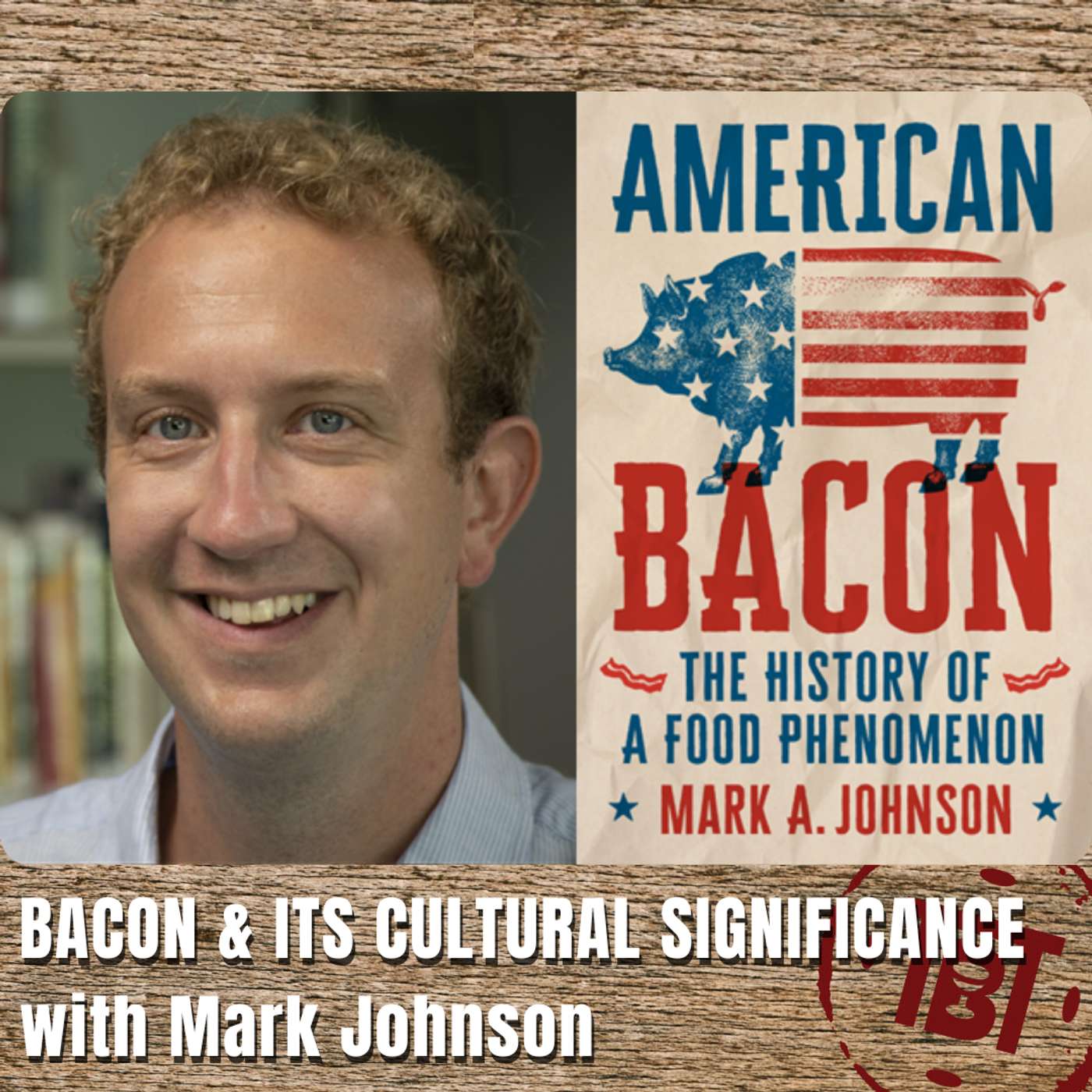
Bacon & Its Cultural Significance with Mark Johnson
About this episode
The episode explores the cultural significance of bacon through a conversation with historian Mark Johnson, focusing on its historical meanings and societal implications.
Host Andrew Camp welcomes historian Mark Johnson, author of “ American Bacon ,” who explains how his work on Alabama barbecue led him to study bacon’s shifting meanings. Johnson describes food as a narrative device for telling difficult histories and highlights a recurring theme of performance, including his claim that modern bacon enthusiasm can resemble minstrel-like impersonation, exemplified by a 1983 New York Times “In Praise of Bacon” cartoon mocking yet admiring a “Georgia mountain man.” The conversation traces bacon’s role from a broad term for cured pork in colonial America, both staple and insult, through English associations of respectability with beef and mutton, and early U.S. debates that sometimes reclaimed bacon as humble republican virtue. In the 19th–20th centuries bacon became linked to Southern “backwardness,” fat, and health fears; by 1977 the USDA considered banning it over nitrites/nitrates. Bacon’s resurgence is tied to distrust of dietary experts, low-carb culture, fast food, and upscale “rustic” Southern cuisine that can romanticize marginalized peoples without materially benefiting them, prompting discussion of systemic change, food deserts, and…
People in this episode
Host: Andrew Camp
Guest: Mark Johnson
Topics covered
- cultural significance of bacon
- food history
- Southern cuisine
- dietary trends
- culinary colonialism
- performance in food culture
Keywords
- bacon
- food history
- cultural significance
- Southern cuisine
- dietary trends
- culinary colonialism
- Mark Johnson
Mentioned in this episode
Organizations: University of Alabama, University of Maryland, Purdue University, University of Tennessee at Chattanooga
Books & works: American Bacon
More episodes of The Biggest Table
Explore listener stats, chart rankings, contacts and more on the The Biggest Table podcast page.