
Insights from recent episode analysis
Audience Interest
Podcast Focus
Publishing Consistency
Platform Reach
Insights are generated by CastFox AI using publicly available data, episode content, and proprietary models.
Total monthly reach
Estimated from 3 chart positions in 3 markets.
By chart position
- 🇦🇺AU · Hobbies#1765K to 30K
- 🇲🇽MX · Hobbies#1801K to 10K
- 🇭🇰HK · Hobbies#136500 to 3K
- Per-Episode Audience
Est. listeners per new episode within ~30 days
1.9K to 13K🎙 Daily cadence·47 episodes·Last published yesterday - Monthly Reach
Unique listeners across all episodes (30 days)
6.5K to 43K🇦🇺70%🇲🇽23%🇭🇰7% - Active Followers
Loyal subscribers who consistently listen
3.6K to 24K
Market Insights
Platform Distribution
Reach across major podcast platforms, updated hourly
Total Followers
—
Total Plays
—
Total Reviews
—
* Data sourced directly from platform APIs and aggregated hourly across all major podcast directories.
On the show
Recent episodes
Mexico: Carranza's Plan of Guatalupe
May 11, 2026
43m 53s
Mexico: El Estado de Chihuahua 1 Peso Series Dos Caritas Banknote (1915)
May 10, 2026
41m 08s
Mexico: El Estado de Chihuahua 50 Centavos Dos Caritas Series (1914-1915)
May 10, 2026
20m 01s
Mexico: Constitutionalist Government 5 Pesos Infalsificables Series Banknote (1915)
May 8, 2026
47m 50s
Switzerland: Swiss National Bank 10 Francs Banknote (9th Series) (2017)
May 6, 2026
40m 21s
Social Links & Contact
Official channels & resources
Official Website
Login
RSS Feed
Login
| Date | Episode | Description | Length | ||||||
|---|---|---|---|---|---|---|---|---|---|
| 5/11/26 |  Mexico: Carranza's Plan of Guatalupe | The Mexican Revolution, a seismic socio-political upheaval spanning the second decade of the twentieth century, cannot be understood merely as a singular, unified agrarian revolt. Rather, it was a profoundly complex, multi-factional civil war characterized by shifting military alliances, deep ideological schisms, and violently competing visions for the architectural framework of the modern Mexican state. At the structural epicenter of this decade-long conflict lies the Plan of Guadalupe (Plan de Guadalupe), an essential political and military manifesto originally proclaimed on March 26, 1913, by Venustiano Carranza, the sitting governor of the northern state of Coahuila. For scholars, educators, and historical researchers seeking the primary source material, the complete textual archives of the Plan of Guadalupe—in both its original Spanish and English translations—are maintained by official and academic repositories. Initially conceived and drafted as a narrow, strictly legalistic denunciation of a reactionary military coup d'état, the Plan of Guadalupe evolved over four tumultuous years into a sweeping, unprecedented vehicle for socio-economic transformation and constitutional reform. By deeply examining the original 1913 proclamation, deconstructing the radical legislative additions of 1914 and 1916, and contrasting the document with concurrent revolutionary manifestos, a nuanced historiographical perspective emerges. The Plan of Guadalupe was not a static declaration of eternal, unyielding principles; rather, it was a highly dynamic, adaptable instrument of political survival.5 It demonstrates, with historical clarity, how a fundamentally conservative, constitutionalist leadership was forced by the pressures of civil war to appropriate the radical agrarian and labor demands of its enemies in order to consolidate ultimate state power, thereby laying the inescapable groundwork for the remarkably progressive Mexican Constitution of 1917.5 | 43m 53s | ||||||
| 5/10/26 | 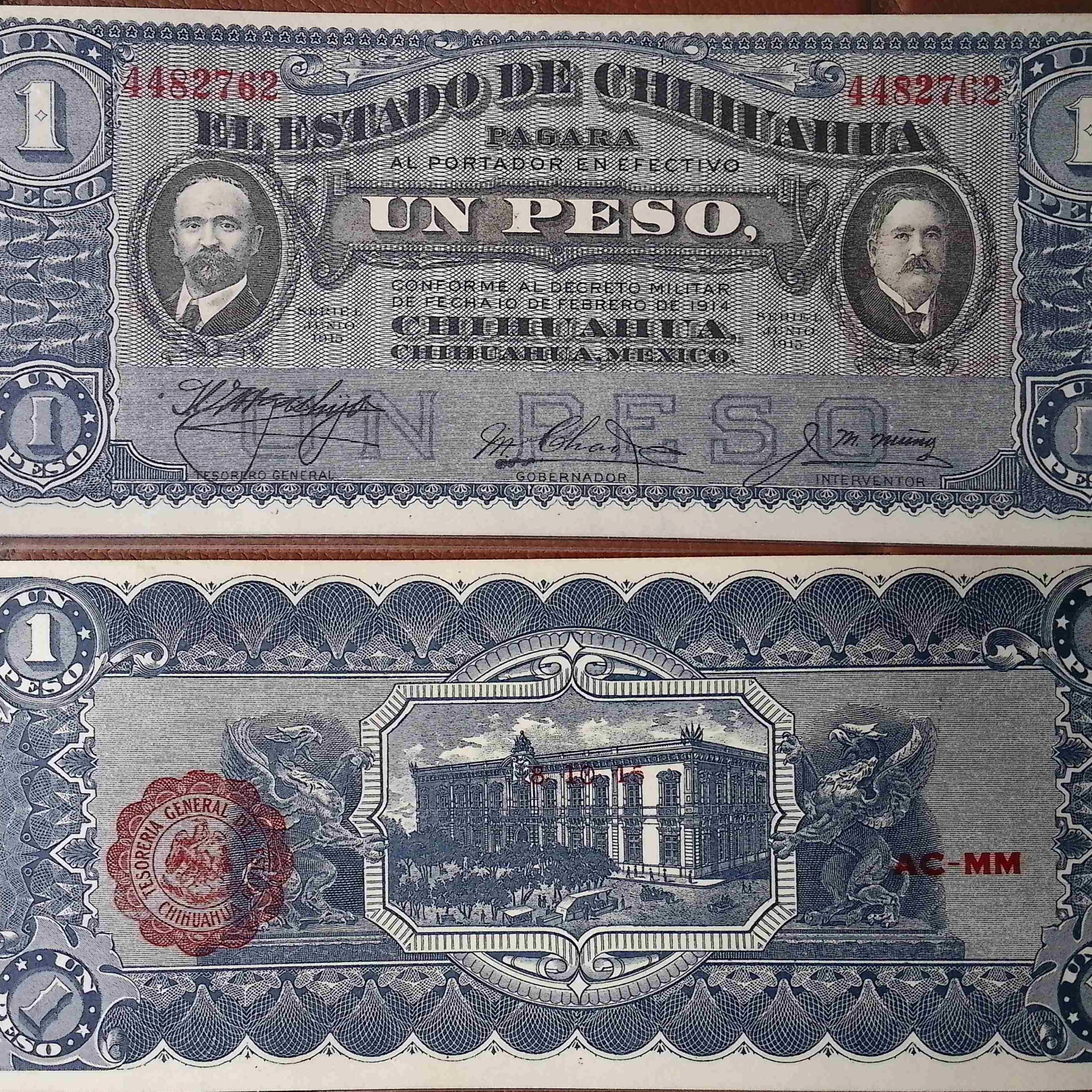 Mexico: El Estado de Chihuahua 1 Peso Series Dos Caritas Banknote (1915) | The 1 Peso banknote issued by the State of Chihuahua during the Mexican Revolution, colloquially categorized within the numismatic community as the "Dos Caritas" (Two Little Faces) series, represents a critical intersection of military logistics, fiat monetary policy, and revolutionary propaganda.1 Authorized under the military decree of February 10, 1914, by the Division of the North (División del Norte) commanded by General Francisco "Pancho" Villa, This localized currency issue highlights the economic mechanisms utilized to sustain a massive armed rebellion.1 The production, forced circulation, counterfeiting, and eventual demonetization of the Chihuahua 1 Peso note offer a detailed record of the localized monetary policies that defined the Mexican conflict between 1913 and 1915.3 This report provides an evidence-based examination of the specific banknote pictured, integrating its physical characteristics with the broader historical, technical, and market contexts of the series. | 41m 08s | ||||||
| 5/10/26 | 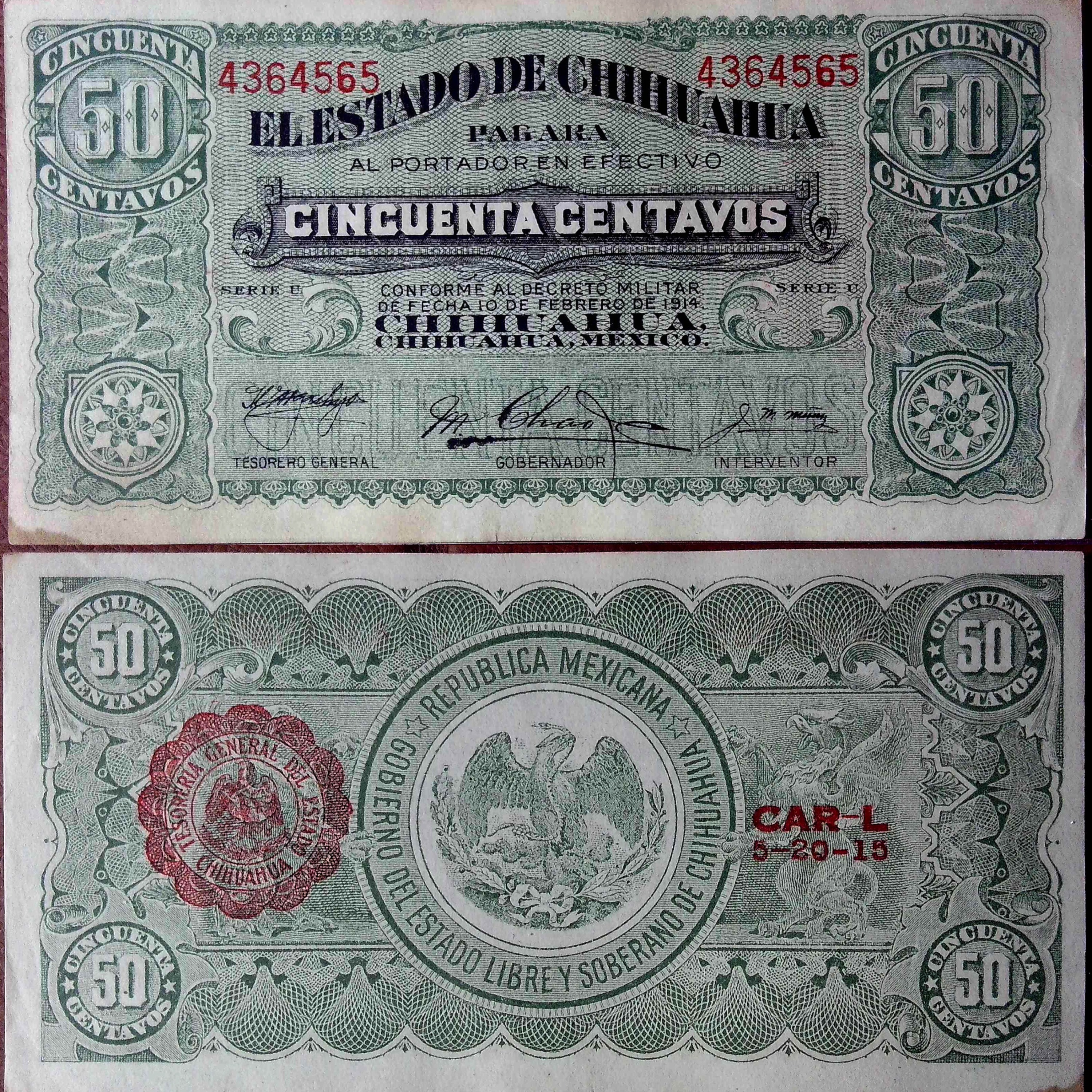 Mexico: El Estado de Chihuahua 50 Centavos Dos Caritas Series (1914-1915) | This popdcast provides a comprehensive numismatic and historical analysis of the 50 Centavos banknote issued by the State of Chihuahua under the military decree of February 10, 1914. It explores the economic collapse and regional fragmentation of the Mexican Revolution that necessitated the creation of the "Dos Caritas" series, authorized by General Pancho Villa to pay his Division of the North and sustain regional commerce. The document details the administrative roles of signatories Manuel Chao and Sebastin Vargas hijo, the logistical challenges of contracting American lithographers like Norris Peters Co., and the complex system of military revalidation stamps known as resellos.Additionally, the analysis examines the technical specifications and security measures of the banknote, highlighting the absence of modern features like UV reactivity or watermarks in favor of intricate geometric lathe work and secret treasury marks. The report concludes with a market assessment, identifying the specific serial number 4364565 as part of the final 1915 Norris Peters print block and providing a visual grade estimation of Very Fine to Extremely Fine. Through recent sales data and population reports, it establishes a valuation matrix for collectors, underscoring the note's significance as a tangible relic of Mexico's revolutionary monetary history. | 20m 01s | ||||||
| 5/8/26 | 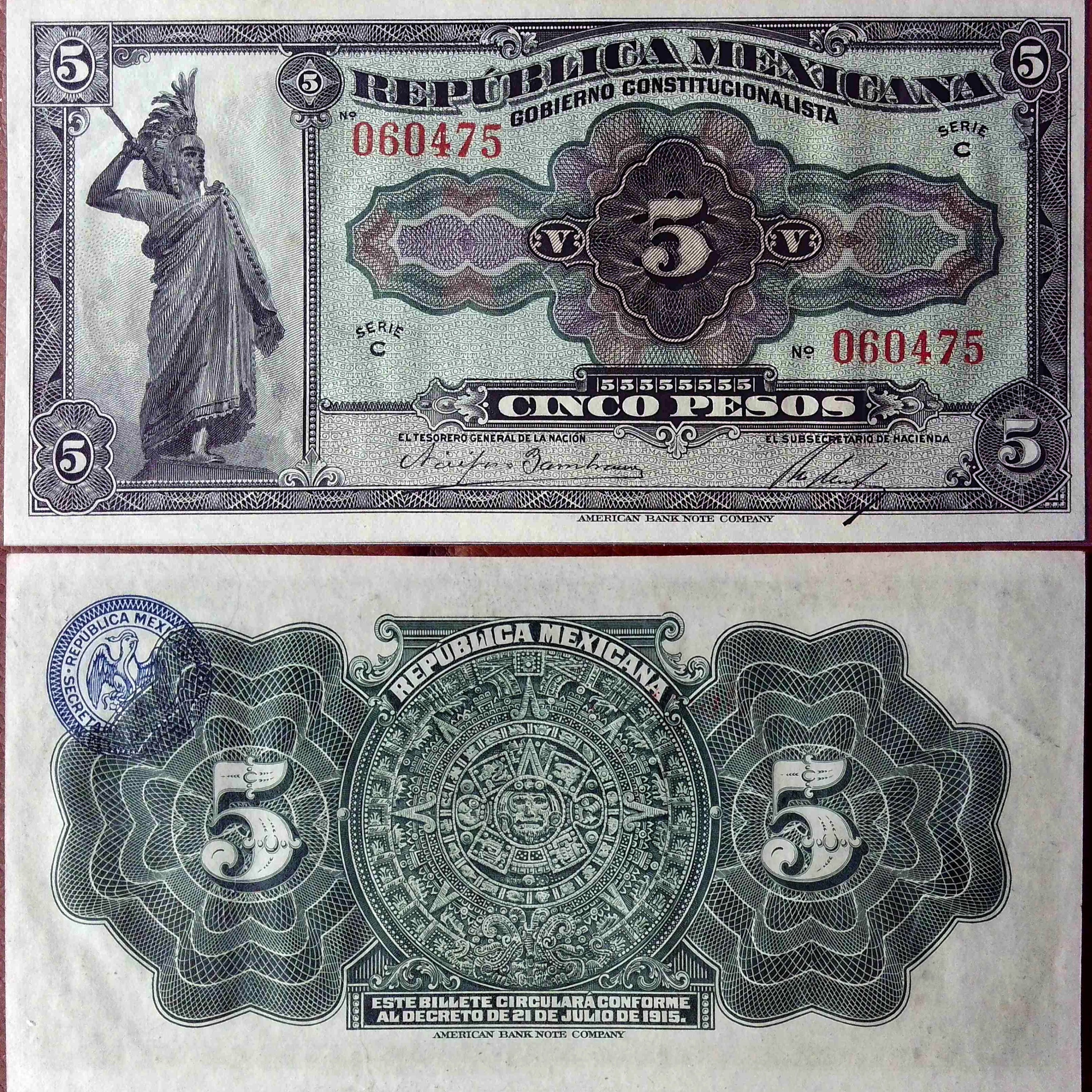 Mexico: Constitutionalist Government 5 Pesos Infalsificables Series Banknote (1915) | This podcast provides a comprehensive numismatic and historical analysis of the 1915 Mexican 5 Pesos Constitutionalist Government 'Infalsificables' banknote (P-S685), issued by Venustiano Carranza's faction during the Mexican Revolution. It details the banknote's specifications, the macroeconomic context of its creation via the July 21, 1915 decree to replace chaotic provisional currencies, and the use of the American Bank Note Company to ensure advanced anti-counterfeiting security. The analysis further explores the political symbolism in the banknote's design, featuring the Monument to Cuauhtémoc and the Aztec Calendar Stone, the roles of signatories Nicéforo Zambrano and Rafael Nieto, and the ultimate economic demise of the series due to unbacked issuance and subsequent hyperinflation, concluding with a modern market valuation and visual grading of the note. | 47m 50s | ||||||
| 5/6/26 | 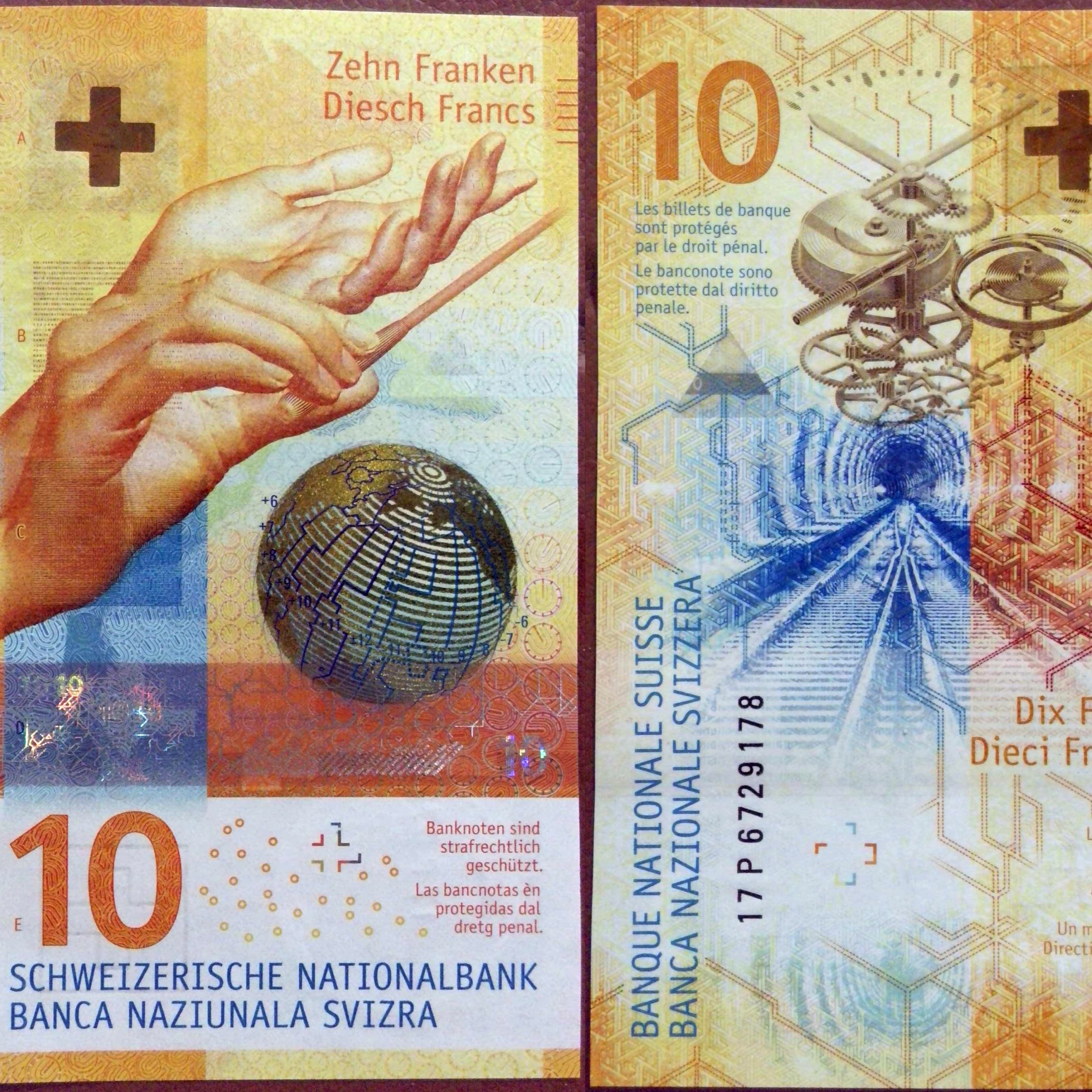 Switzerland: Swiss National Bank 10 Francs Banknote (9th Series) (2017) | This podcast provides a comprehensive numismatic and technical examination of the 2017 Swiss National Bank 10 Francs banknote from the ninth series. It encompasses a detailed condition assessment and visual analysis of the note, an exploration of Switzerland's legislative and historical monetary framework, and a review of the macroeconomic and political climate during the series' issuance. Furthermore, the report details the institutional architecture of the Swiss National Bank, the biographies of the note's signatories, and a thematic breakdown of the abstract iconography used in the series. Technical specifications regarding the Durasafe substrate, advanced security features, and micro-printing are analyzed alongside market data on grading populations and secondary market valuations. | 40m 21s | ||||||
| 5/6/26 | 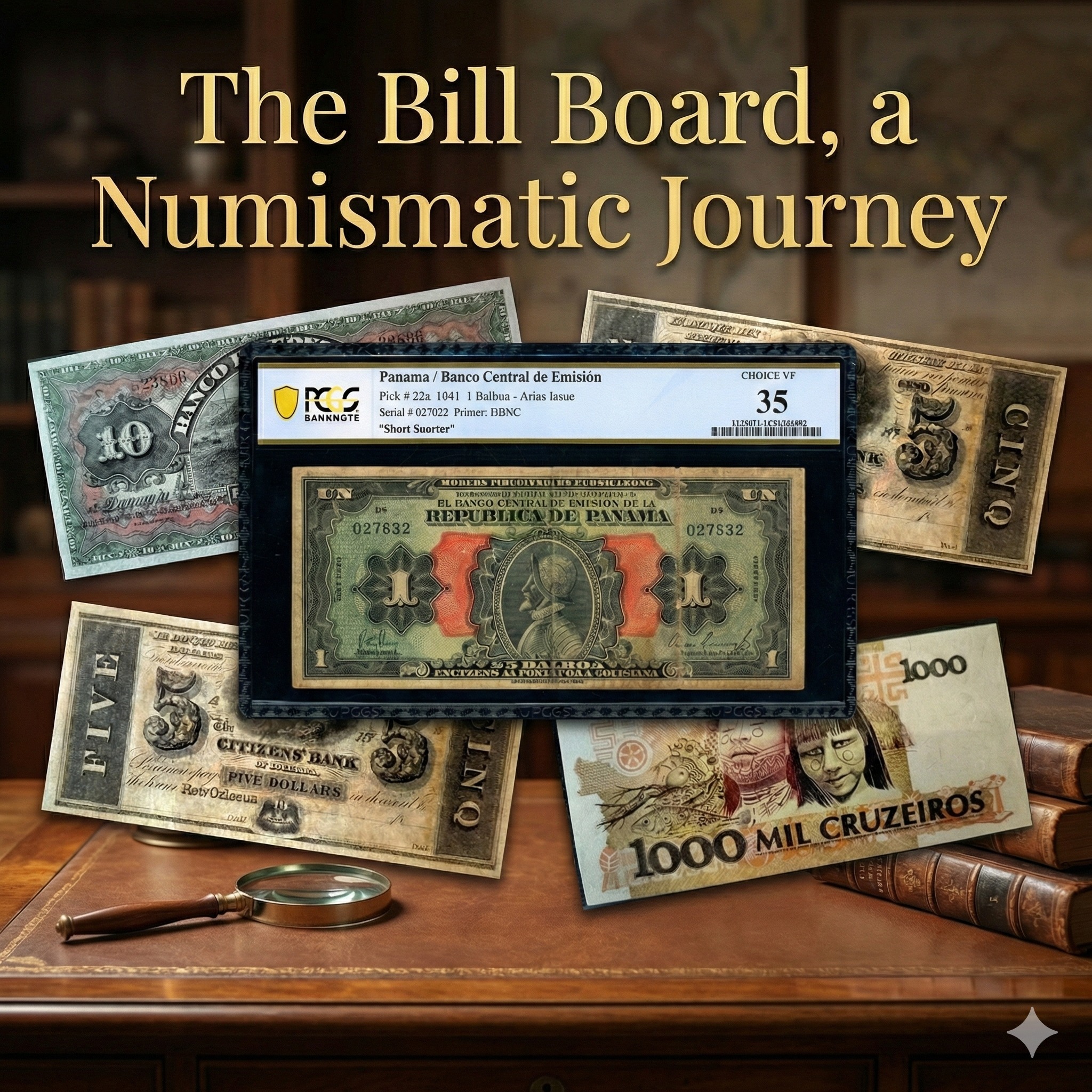 Mexico: Mexican Commercial Issuing Banks (1897-1914) | The podcast analyzes the architecture and eventual collapse of the Mexican banking system between 1897 and 1914, established by the Ley General de Instituciones de Credito. Championed by Jos Yves Limantour, this law created a centralized, two-tiered structure that favored two privileged national banks (like the Banco Nacional de Mexico) while strictly regulating 32 regional Banks of Issue, which maintained stability through high metallic reserves and the Banco Central clearinghouse system. This system, characterized by efficient corporate governance through interlocking directorates and insider lending, fueled massive economic expansion, particularly in the northern mining and agricultural sectors. However, the institutional stability was entirely dependent on the political survival of the Porfiriato; the outbreak of the Mexican Revolution led to the forced looting of reserves by various armies and ultimately culminated in Venustiano Carranza's 1916 decree, which resulted in the systematic confiscation and dissolution of all private banks, ending the era of private paper currency issuance and leading to the eventual creation of the Banco de Mexico in 1925. | 50m 50s | ||||||
| 5/5/26 | 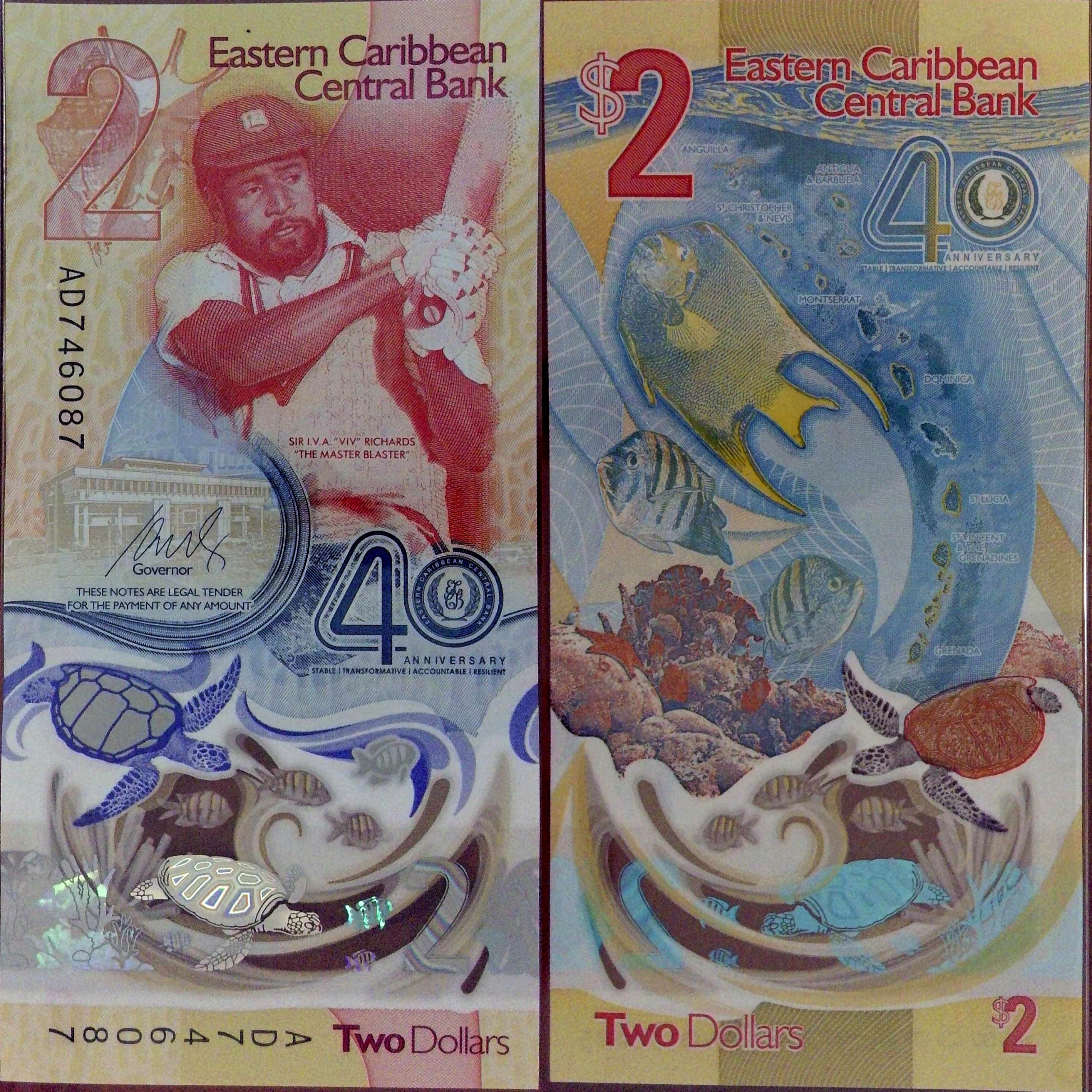 OECS: Eastern Caribbean Central Bank Two-Dollar Commemorative Banknote (2022) | This podcast provides a comprehensive numismatic and historical analysis of the Eastern Caribbean Central Bank's (ECCB) $2 commemorative polymer banknote issued in 2022. It examines the note's vibrant design and advanced security features, such as the ARGENTUM™ silver ink and aqua-blue holographic foil, while placing the issue within the broader economic and political context of the Organisation of Eastern Caribbean States (OECS). The report details the institutional history of the ECCB and its predecessor, the British Caribbean Currency Board, and highlights key figures including Governor Timothy Antoine, Chairman Camillo Gonsalves, and the subject of the note, cricket legend Sir Vivian Richards. Finally, the document offers a technical market analysis, evaluating the specimen as being in Gem Uncirculated condition with an exploration of its current valuation and mintage statistics. | 36m 38s | ||||||
| 5/5/26 | 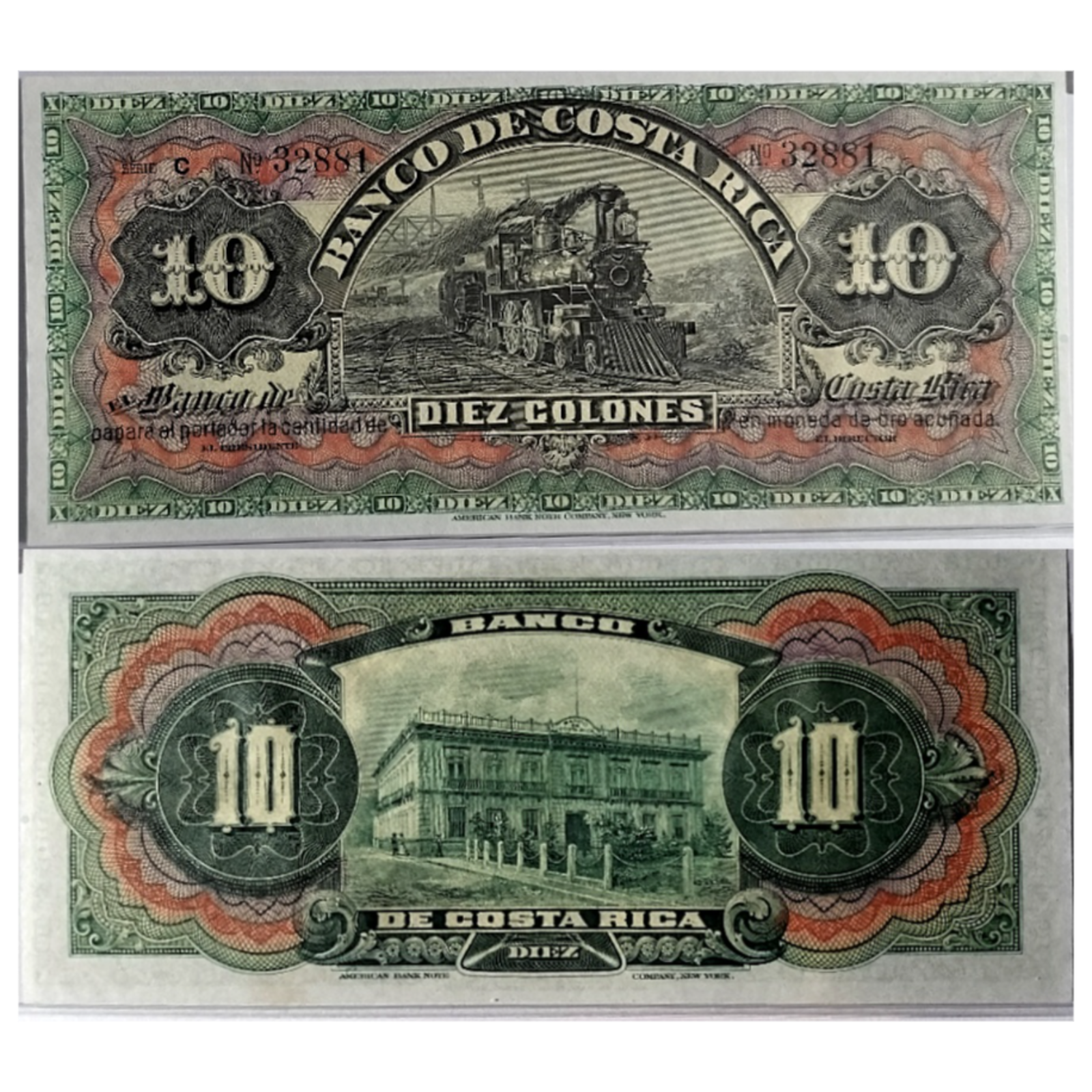 Costa Rica: Banco de Costa Rica 10 Colones Series C Remainder (1908) | This podcast provides an in-depth analysis of the Banco de Costa Rica 10 Colones (Serie C) banknote, exploring its significance within the historical and economic landscape of early 20th-century Costa Rica. It details the nation's transition to the gold standard and the establishment of the colón currency, while also chronicling the institutional history of the Banco de Costa Rica and its role in financing major infrastructure projects like the Atlantic and Pacific railroads. The podcast dissects the note's iconography—specifically the María Cecilia locomotive and the bank's neoclassical headquarters—and examines technical aspects such as the American Bank Note Company's security features and production methods. Finally, it synthesizes market data and numismatic classifications to distinguish between the rare issued notes and the more common remainder varieties | 42m 53s | ||||||
| 5/3/26 | 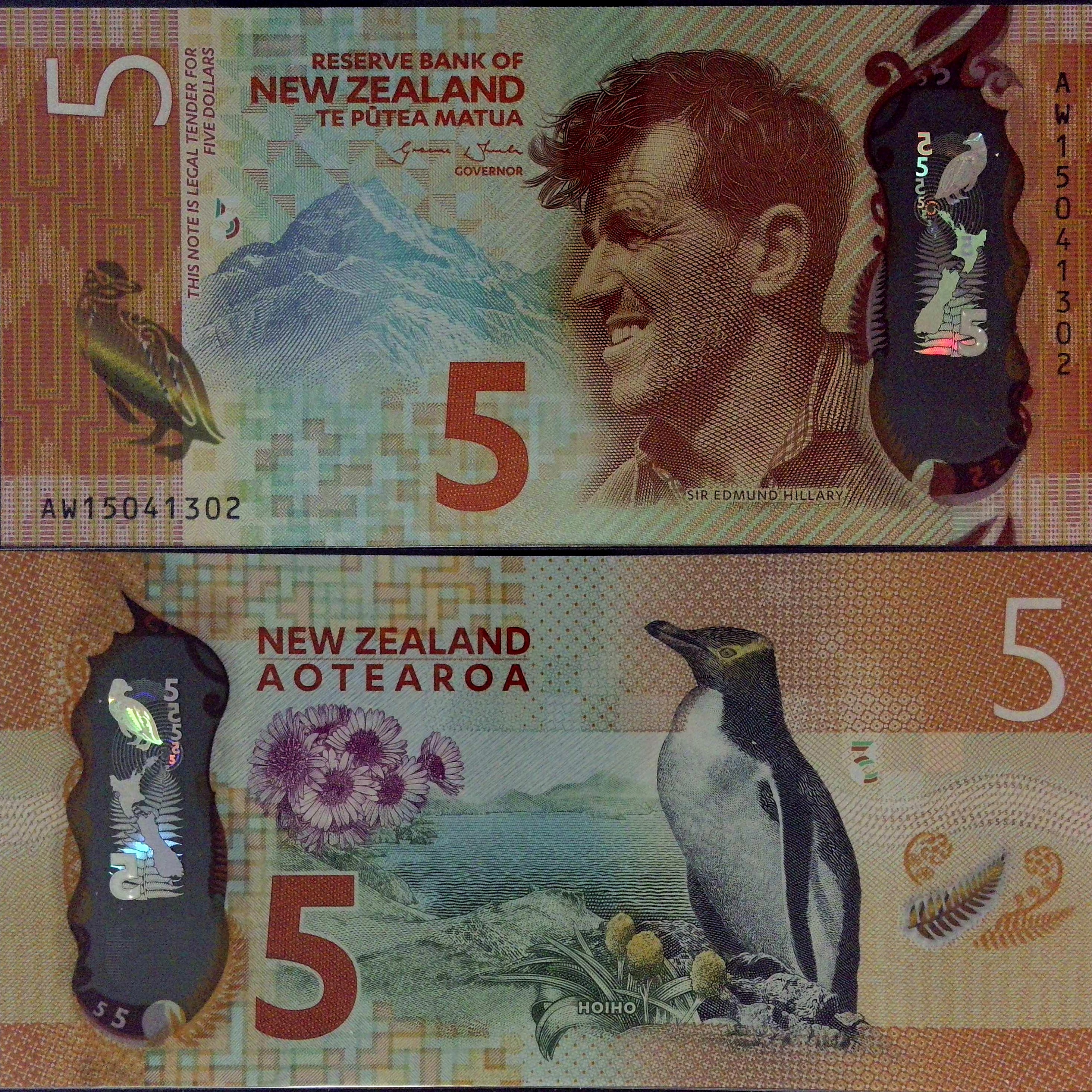 New Zealand: The Reserve Bank of New Zealand 5 Dollar Series 7 Banknote (2015) | This podcast provides a comprehensive numismatic and macroeconomic analysis of the 2015 New Zealand Series 7 five-dollar banknote, exploring its role within the "Brighter Money" initiative. It details the nation's transition to advanced polymer substrates and high-resolution intaglio printing, set against a background of delicate 2015 economic policy and the leadership of Reserve Bank Governor Graeme Wheeler. Furthermore, the analysis examines the note's intricate topographical elements—including portraits of Sir Edmund Hillary and indigenous Māori motifs—while highlighting the sophisticated security architecture, such as Spark Live technology and holographic windows, that earned it international recognition as the 2015 Banknote of the Year. | 42m 01s | ||||||
| 5/3/26 | 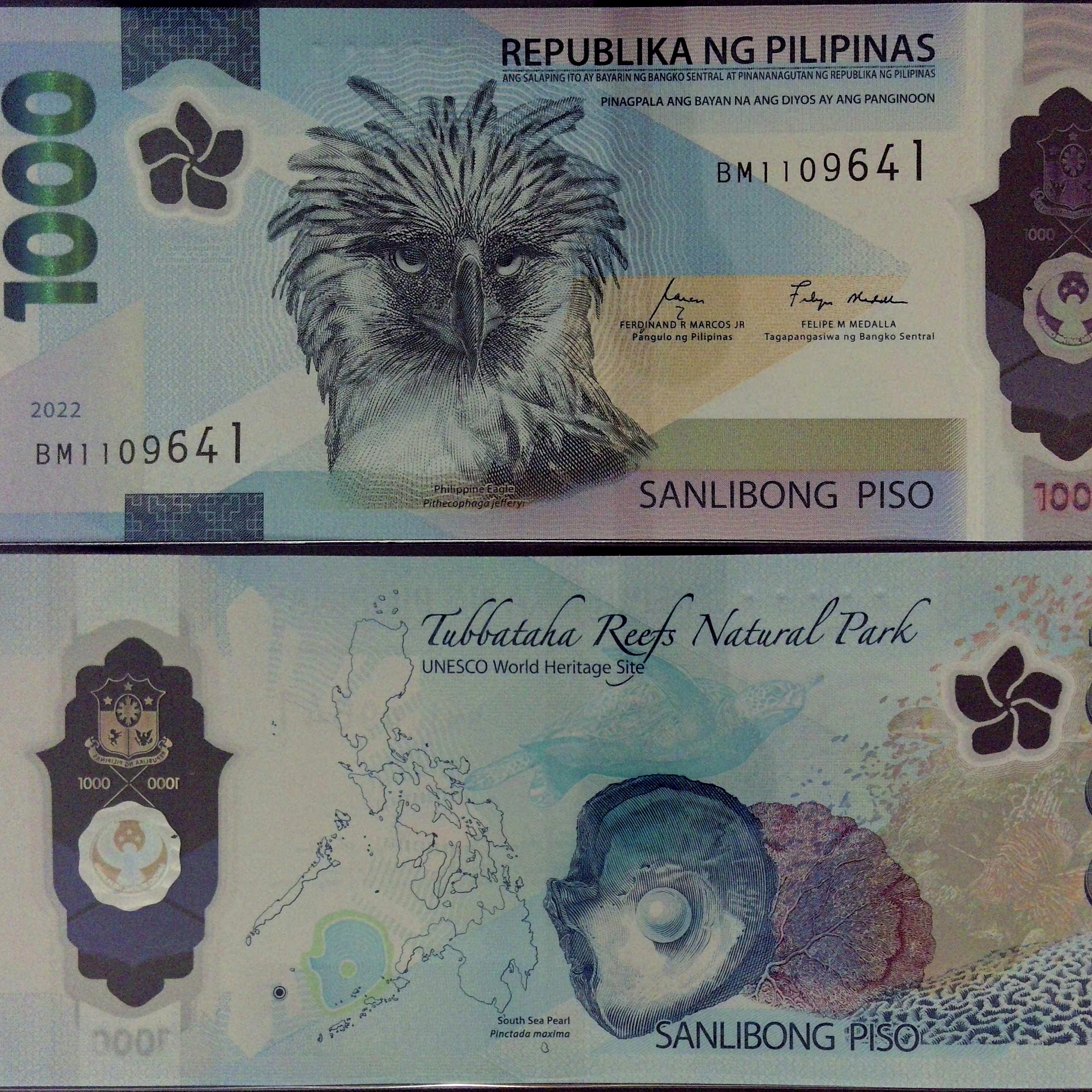 Philippines: Republika NG Pilipinas 1000 Pisos First Philippine Polymer Banknote Series Banknoe (2022) | This podcast analyzes the 2022 Philippine 1000 Piso polymer banknote, documenting the nation's systemic transition from cotton-abacá to polymer substrates. The document details the institutional history of the Bangko Sentral ng Pilipinas (BSP) and the complex economic and political climate surrounding the note's issuance, characterized by post-pandemic recovery and the 2022 executive transition. It features comprehensive biographies of signatories Ferdinand R. Marcos Jr. and Felipe M. Medalla, followed by a meticulous iconographic examination of the obverse and reverse imagery, including the Philippine Eagle and Tubbataha Reefs. Furthermore, the protocol outlines the banknote's advanced eleven-point security architecture and provides a specialized market valuation for the specific BM1109641 serial, identifying it as a rare commemorative emission from the BSP's 30th Anniversary folder series. | 40m 43s | ||||||
Want analysis for the episodes below?Free for Pro Submit a request, we'll have your selected episodes analyzed within an hour. Free, at no cost to you, for Pro users. | |||||||||
| 5/2/26 | 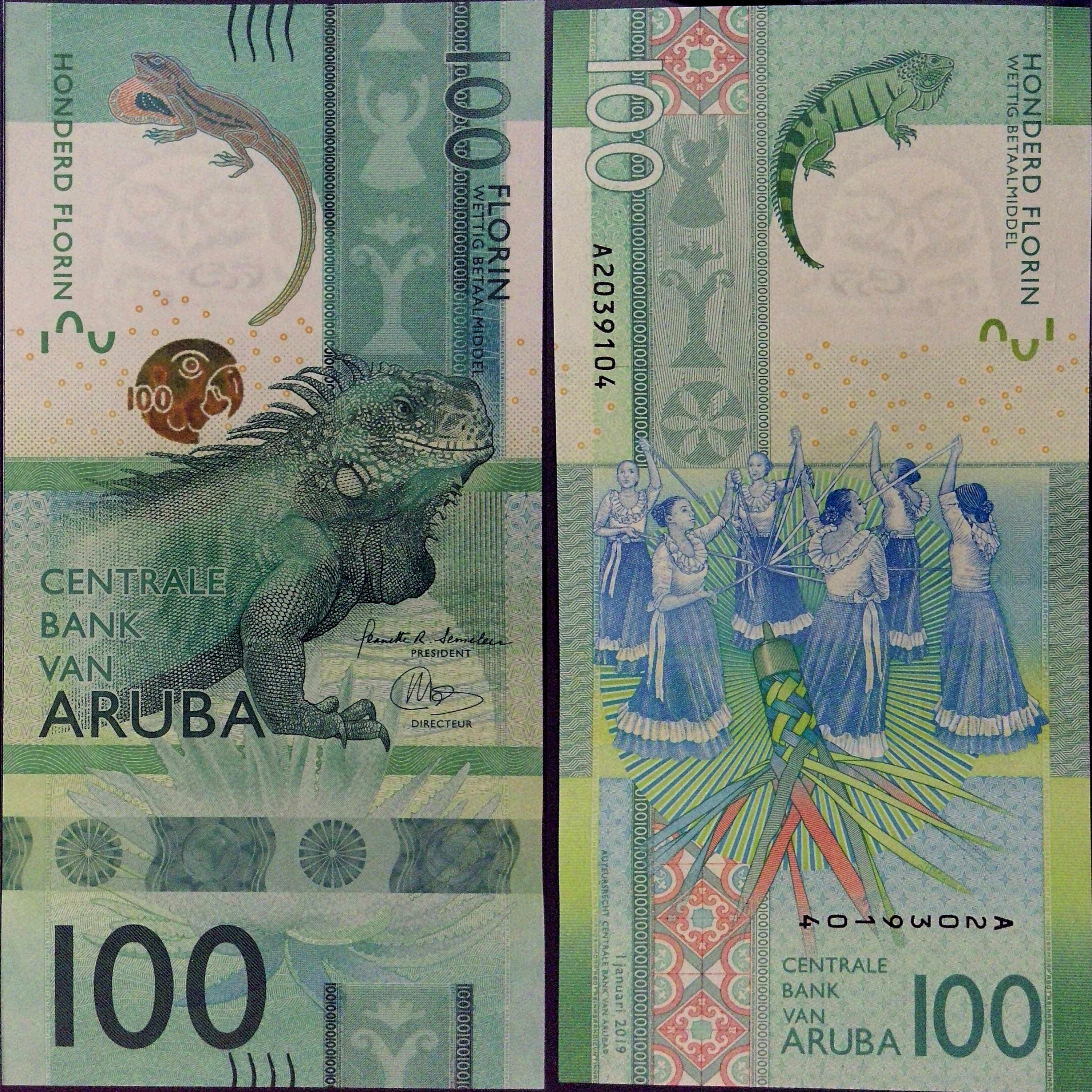 Aruba: The Centrale Bank van Aruba 100 Florin Stars of Aruba Series Banknote (2019) | The podcast provides a comprehensive numismatic, economic, and security analysis of the 2019 Centrale Bank van Aruba 100 Florin banknote, part of the "Stars of Aruba" series. It begins by detailing the note's technical specifications, contextualizing its issuance within Aruba's autonomous status under the Kingdom of the Netherlands and its strict fixed peg to the U.S. dollar, managed by the Centrale Bank van Aruba (CBA). We trace the evolution of the Aruban florin, profiles the signatories (President Jeanette R. Semeleer and Director Miriam Gonzalez), and reviews the implementation timeline, including the 10-week co-circulation and 30-year redemption plan. A deep iconographic analysis explains the cultural and ecological significance of the vertical design, which features the Iguana iguana, the striped anole, and the Aloe plant on the obverse, and 'Baile di Cinta' dancers on the reverse. Furthermore, the analysis details the elite anti-counterfeiting measures, such as Crane Currency's MOTION SURFACE® technology, and concludes with a market valuation, third-party grading requirements, and recognition of the note's prestigious 2019 IBNS Bank Note of the Year Award. | 44m 37s | ||||||
| 4/25/26 | 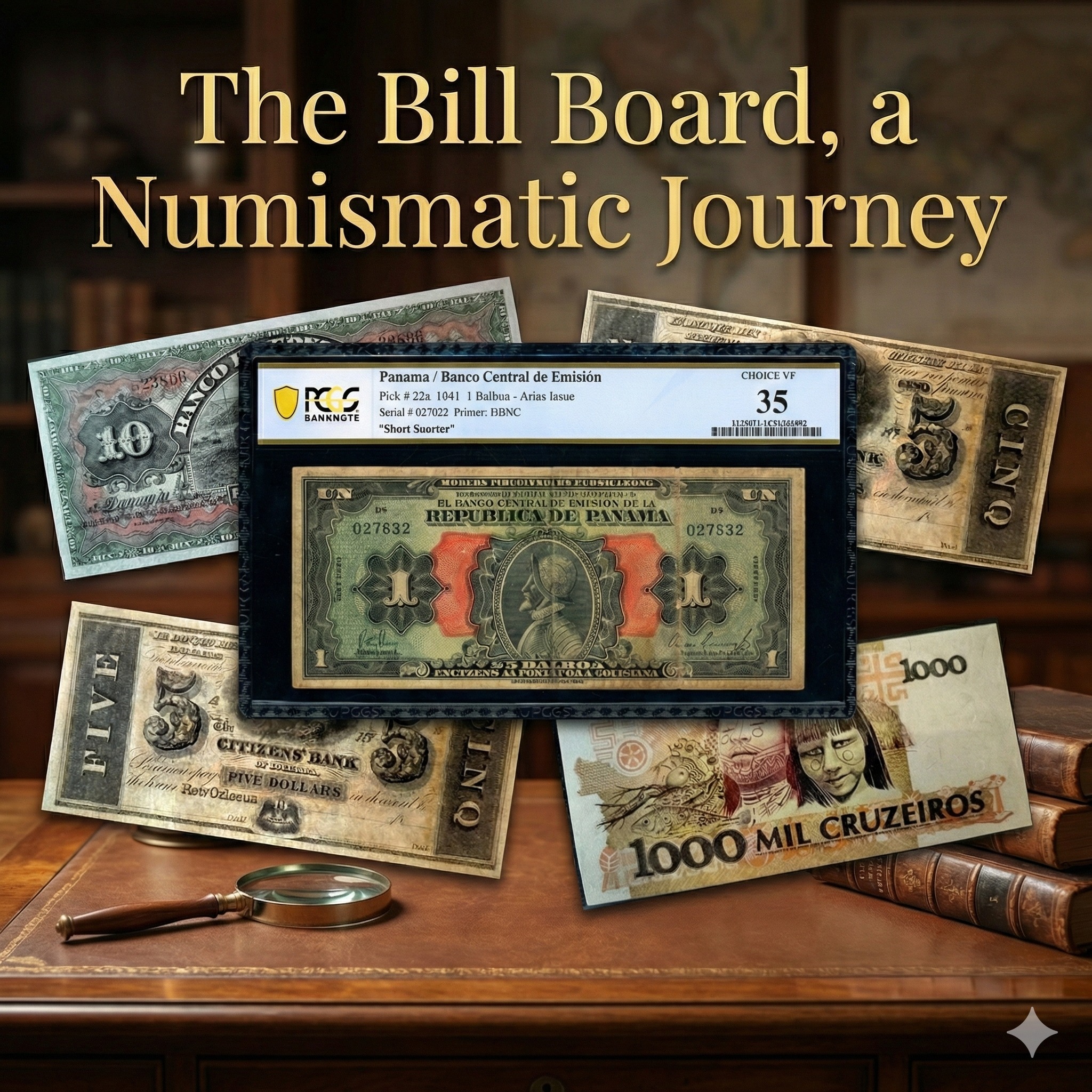 Mexico: The Private Business of Porfirio Díaz and the Early Modernization of Mexico (1876-1911) | This podcast analyzes the intersection of political power and private enterprise during the "Porfiriato," the three-decade rule of Porfirio Díaz in Mexico. The core thesis of the source context is that Mexico's modernization was not merely a state project but a vehicle for the personal enrichment of Díaz and a loyal, privileged elite. Díaz functioned as a "politician-entrepreneur," centralizing economic decision-making within the presidency to facilitate a system of "organized thievery" characterized by corruption, conflicts of interest, and quid pro quo arrangements.Critical Takeaways:The Politician-Entrepreneur: Díaz modeled himself after U.S. military-industrial figures, using his political office to found, promote, and profit from diverse enterprises in banking, drainage, and power generation.Peaceful Invasions: Between 1879 and 1883, a series of reconnaissance visits by U.S. capitalists (labeled "Peaceful Invasions") laid the groundwork for foreign investment and the normalization of binational relations.Centralization of Power: Through constitutional amendments and the privatization of policymaking, Díaz shifted control of national resources (water, mining, banking) to the executive branch to benefit his private ventures.Elite Unification: Díaz neutralized political rivals by incorporating them into a new "educated" entrepreneurial class, using business partnerships and social institutions like the Jockey Club to ensure loyalty.Foreign Dependency and Collapse: The regime's reliance on foreign capital and the creation of monopolies eventually sparked social polarization and economic nationalism, leading to the 1910 Revolution. | 42m 00s | ||||||
| 4/24/26 | 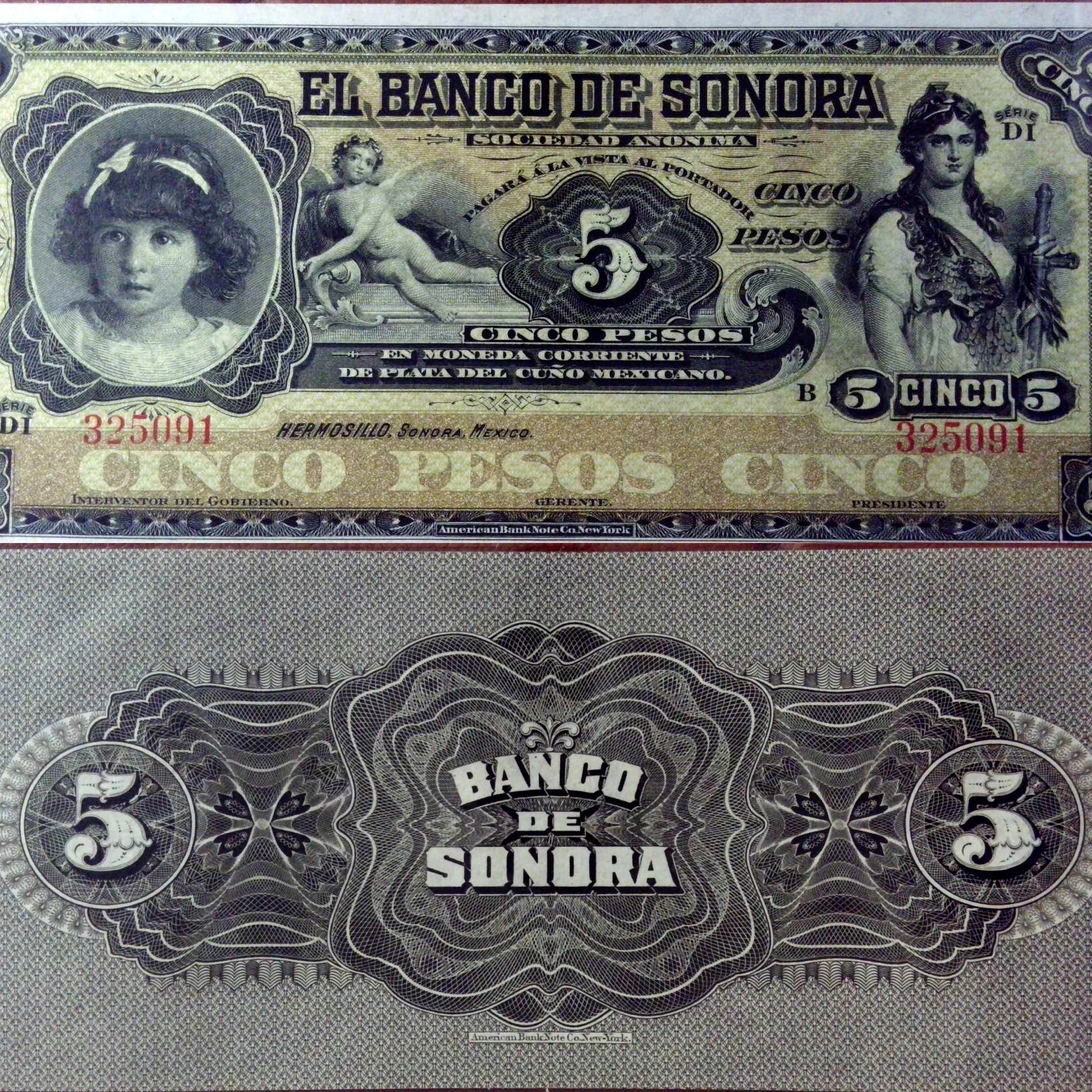 Mexico: El Banco de Sonora 5 Pesos Banknote (1911) | This podcast provides a comprehensive numismatic and historical evaluation of the El Banco de Sonora 5 Pesos banknote, specifically analyzing an unissued remainder from the 1911 Series DI. The report synthesizes the banknote's design, detailing the visual iconography—including the portrait of Hortensia Corral Vélez and the vignette of Minerva—and the high-security anti-counterfeiting measures employed by the American Bank Note Company. Furthermore, the analysis contextualizes the currency within the political and economic history of Sonora during the Porfiriato and the subsequent Mexican Revolution, explaining how the bank's establishment supported regional commerce and how the political instability led to the preservation of large quantities of unissued notes. Finally, the report concludes with a detailed market analysis, establishing a current valuation for the subject banknote based on its pristine Crisp Uncirculated grade. | 28m 11s | ||||||
| 4/24/26 | 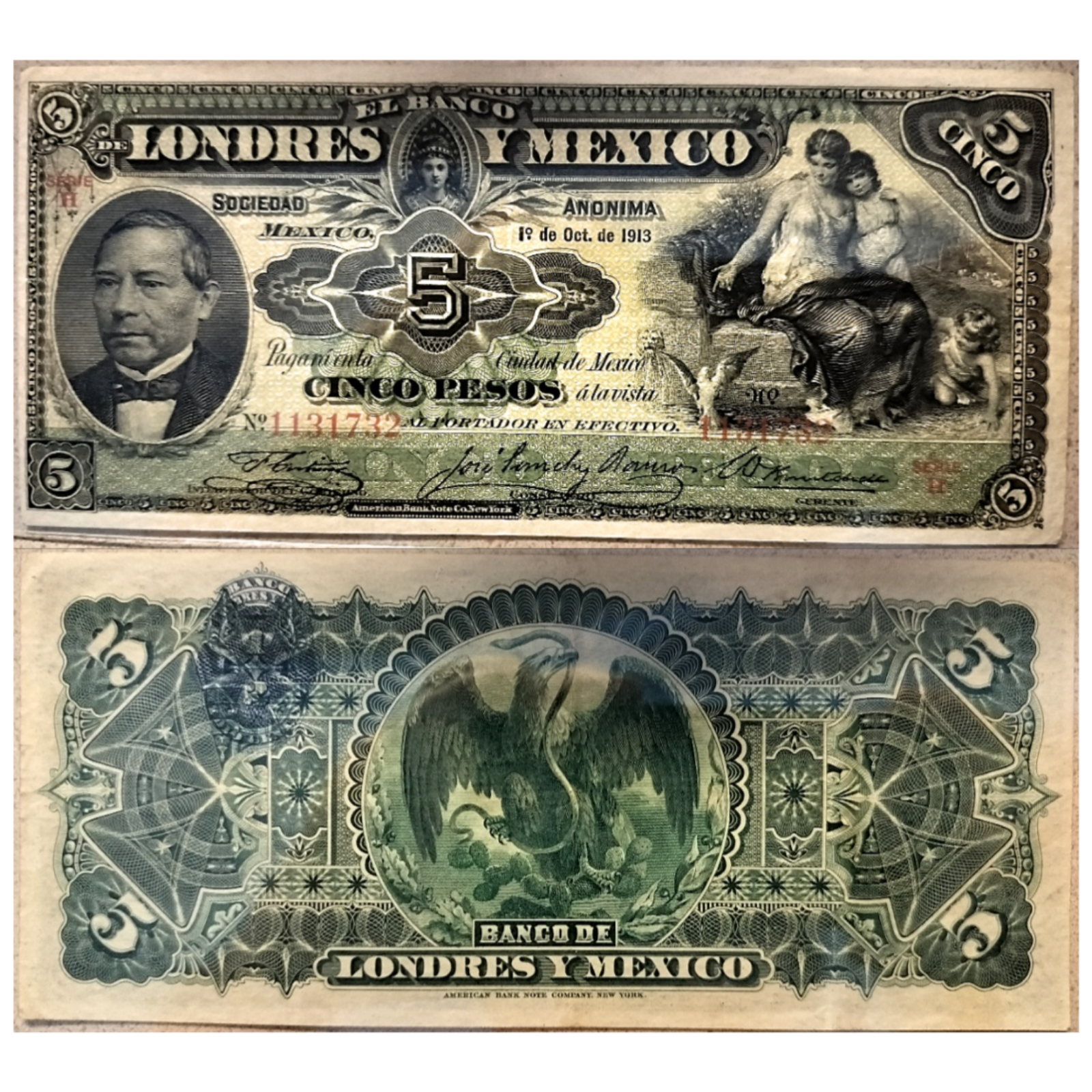 Mexico: Banco de Londres y Mexico 5 Pesos (1913) | This podcast provides a comprehensive numismatic and historical analysis of the 1913 Series H 5 Pesos banknote issued by El Banco de Londres y México. It details the note's physical and iconographic features, including portraits of Benito Juárez and allegorical vignettes, while tracing the institutional evolution of Mexico's first bank of issue from its British origins through the "Mexicanization" process led by Porfirian elites. Furthermore, the analysis situates the banknote within the volatile macroeconomic context of the Mexican Revolution, exploring the impact of the Huerta regime's monetary decrees, the scarcity of silver, and the eventual transition to a centralized banking system under the Banco de México. The report concludes with a forensic condition assessment and market valuation based on contemporary auction data and third-party grading population reports. | 43m 33s | ||||||
| 4/23/26 | 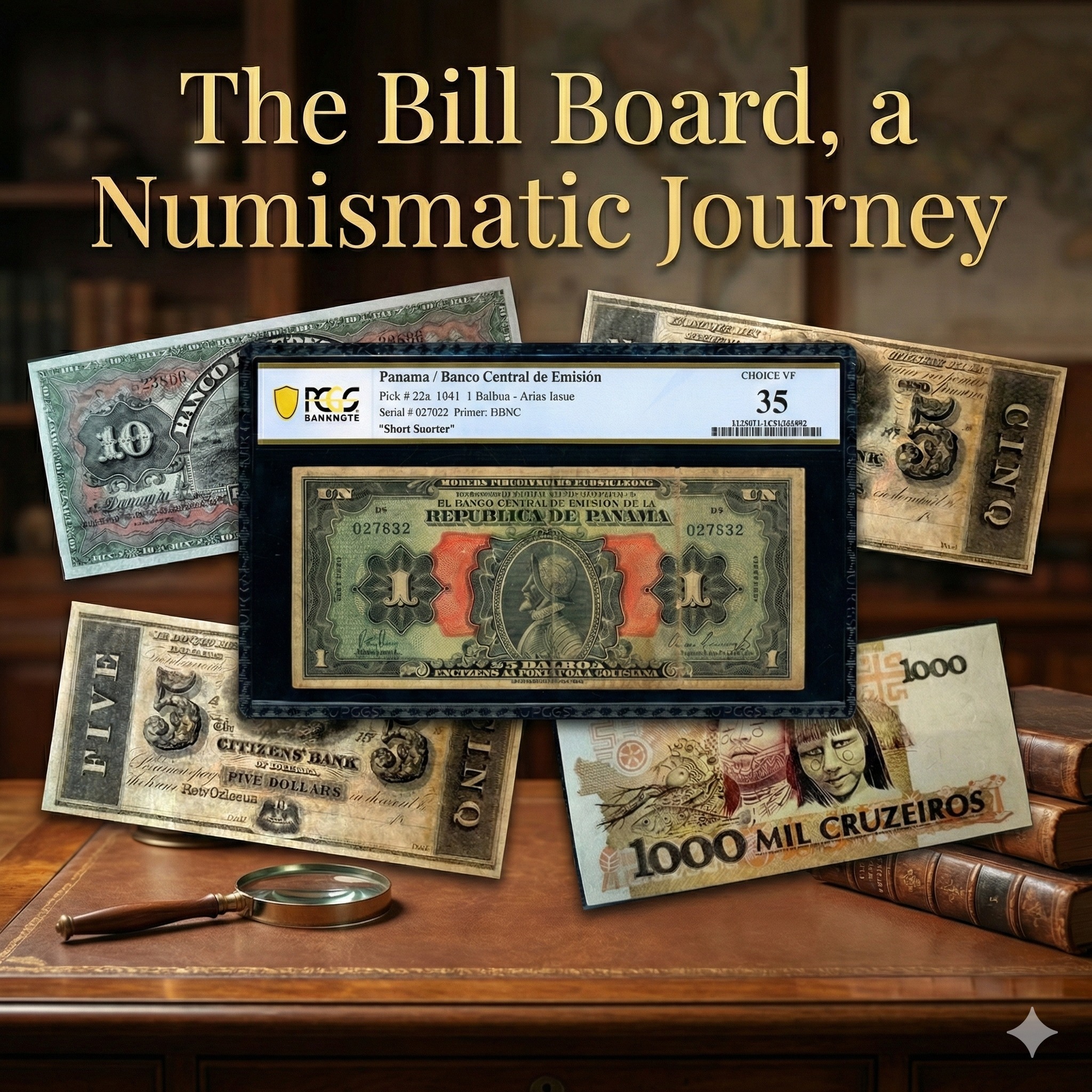 The Transition to the Gold Standard (1717–1914) | OverviewThe podcast details the global shift from bimetallic and silver systems to the gold standard between 1717 and 1914, a process fundamentally altering international finance and trade. This transition began inadvertently in Great Britain in 1717 following Sir Isaac Newton's coinage adjustments, which overvalued gold and, through Gresham's Law, expelled silver from circulation. The subsequent rise of British global power established network externalities that compelled other nations, notably Germany in 1871, to adopt gold monometallism to stabilize capital flows, formalizing the fixed-exchange-rate "classical gold standard" era. Implementing this standard required major legislative and institutional overhauls for countries like the United States, Mexico, and Costa Rica to guarantee currency convertibility and manage banknote issuance. The movement's primary consequence was the global demonetization of silver, which transitioned from a stable store of value to a volatile commodity, ending the era of historical coins like the Mexican 8 Reales. Although it stabilized exchange rates and facilitated global commerce, the gold standard's rigid constraints on monetary policy ultimately led to its suspension at the start of World War I. | 39m 36s | ||||||
| 4/20/26 | 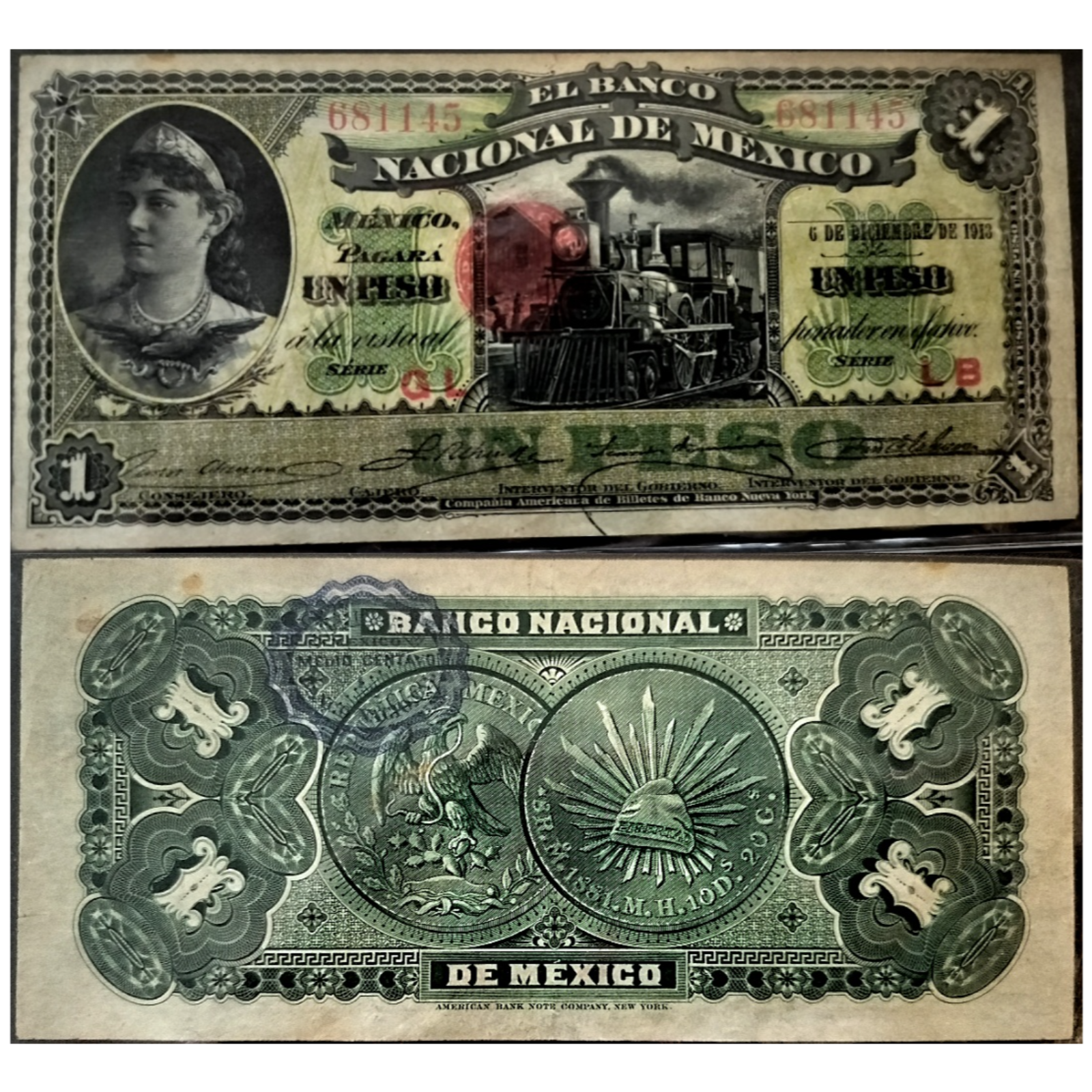 Mexico: El Banco Nacional de México 1 Peso Banknote (1913) (Revised) | The podcast provides a detailed numismatic and historical analysis of the 1913 El Banco Nacional de México 1 Peso banknote, which was issued as an emergency measure during the Mexican Revolution to address the severe shortage of silver coinage caused by public hoarding. It traces the history of the bank's establishment as a quasi-monopoly under Porfirio Díaz’s regime and the subsequent legislation that both controlled and ultimately ended its note-issuing privilege after the 1917 Constitution. Key elements of the banknote's design are analyzed, including the scandalous inclusion of the non-consensual portrait of Manuela García-Teruel y Manso ("Doña Manuelita") and the use of the "Anthracite Burner" locomotive and an engraved silver coin to project industrial progress and financial credibility. Finally, the analysis details the banknote's security features, printing logistics (such as the dual-control series letters), and contemporary market valuation, which places the historical collectible in the Very Fine grade range. | 49m 45s | ||||||
| 4/18/26 | 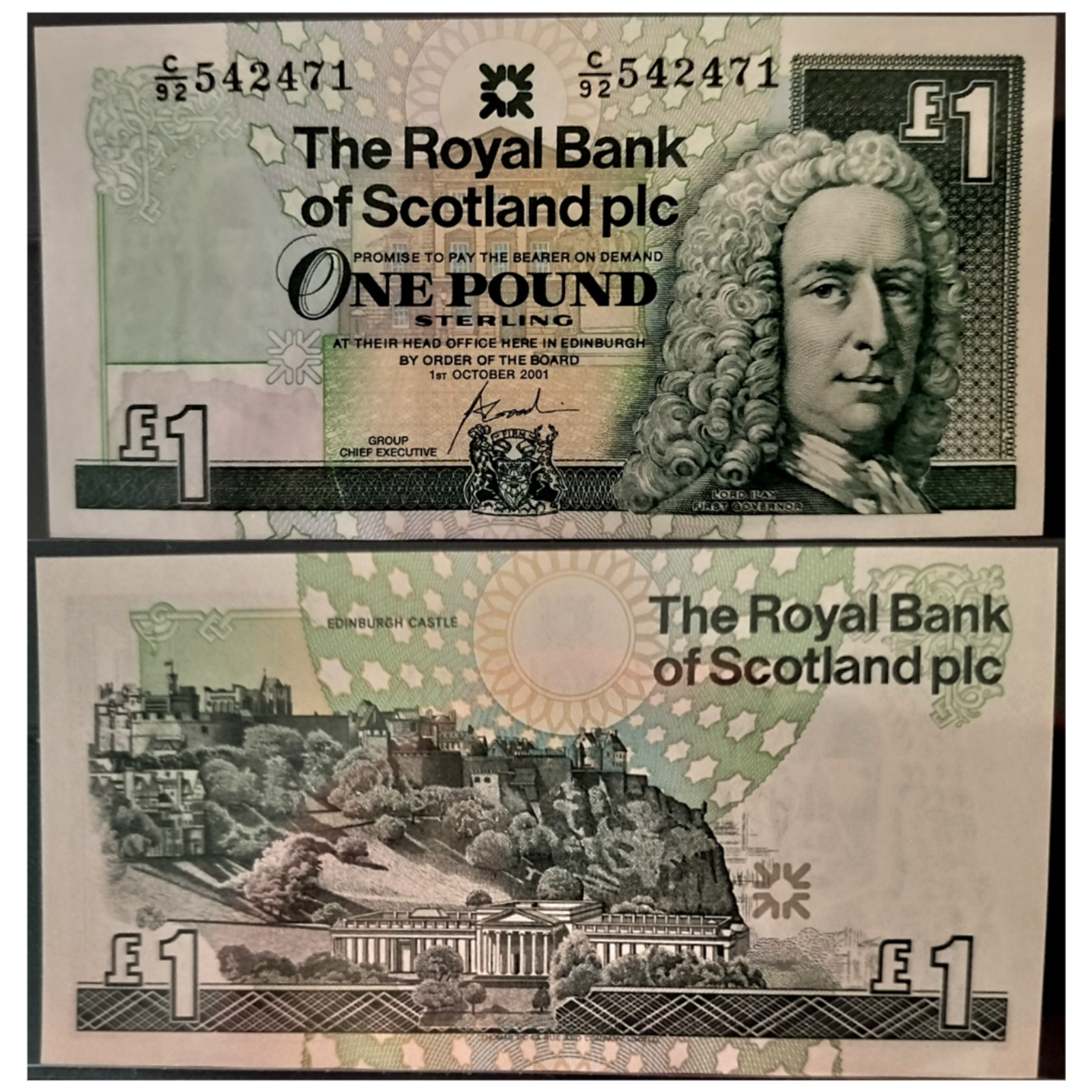 UK: Royal Bank of Scotland One Pound Banknote (1 October 2001) | The banknote examined in this report is a 1 Pound Sterling (£1) promissory note issued by the Royal Bank of Scotland (RBS), carrying the date of 1 October 2001.1 The issuance of paper currency in Scotland operates under a distinct historical and legal framework that separates it from the centralized fiat models observed in most global economies.2 In Scotland, three retail commercial banks—the Bank of Scotland, the Royal Bank of Scotland, and the Clydesdale Bank—retain the historic authority to issue their own banknotes for public circulation.2Despite circulating extensively and enjoying universal acceptance in retail and commercial transactions throughout Scotland and the broader United Kingdom, these banknotes are not classified as legal tender.3 Under Scottish law, no paper currency holds the status of legal tender, including the notes issued by the Bank of England, which hold that status exclusively in England and Wales.4 Instead, Scottish banknotes are legally defined as promissory notes.3 To ensure the stability of this system and protect the consumer base, issuing banks are mandated by law to back their circulating currency completely with an equivalent sum of Bank of England banknotes or physical gold reserves held at the central bank.3Historically, this unique issuance system was regulated by the Banknote (Scotland) Act 1845, a legislative framework that governed the creation and distribution of Scottish currency for over a century and a half.6 This act formalized the rights of existing banks to issue notes while preventing new institutions from entering the currency market. The 1845 Act was eventually superseded by the Banking Act 2009 and the Scottish and Northern Ireland Banknote Regulations 2009, which modernized the regulatory oversight of these retail bank issues.3 Because these notes represent a promise to pay rather than fiat legal tender, they are not abruptly withdrawn from circulation with a fixed expiration date.3 Instead, older series are gradually removed from the money supply as they are deposited into the banking system.3 Consequently, historic notes, such as the 2001 RBS £1 issue, remain legal currency and hold their face value indefinitely, although individual retailers maintain the discretion to refuse older designs in everyday trade.3 | 58m 28s | ||||||
| 4/17/26 | 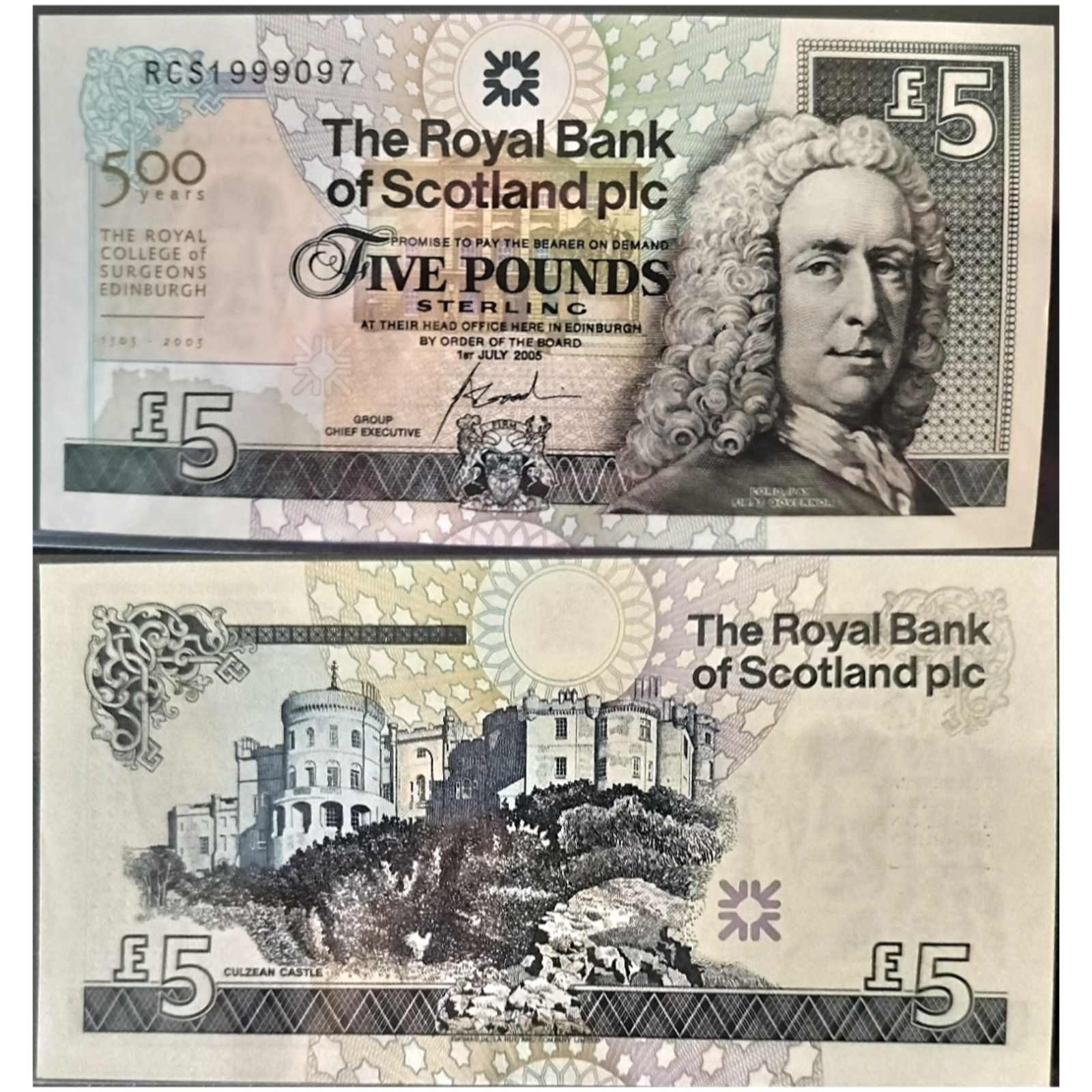 UK: Royal Bank of Scotland £5 Ilay Commemorative Series Royal College of Surgeons Banknote (2005) | The Royal Bank of Scotland 2005 £5 Commemorative Banknote (P-364), a late-stage issue within the "Ilay Series" (1987–2016), was authorized on 01 July 2005 to mark the quincentenary (500th anniversary) of the Royal College of Surgeons of Edinburgh. Its issuance coincided with a period of UK economic deceleration and major international events, including the G8 Summit and the 07 July 2005 London bombings. The obverse features the standard series anchor, a portrait of Lord Ilay (Archibald Campbell), the bank's inaugural governor, but is uniquely enhanced by a gold overprint of the RCSEd crest and commemorative text, along with the signature of Group Chief Executive F Goodwin. The reverse, in keeping with the Ilay Series' focus on Scottish architecture, prominently displays a detailed intaglio vignette of Culzean Castle, complemented by a geometric sunburst pattern and Celtic scrollwork. | 37m 39s | ||||||
| 4/15/26 | 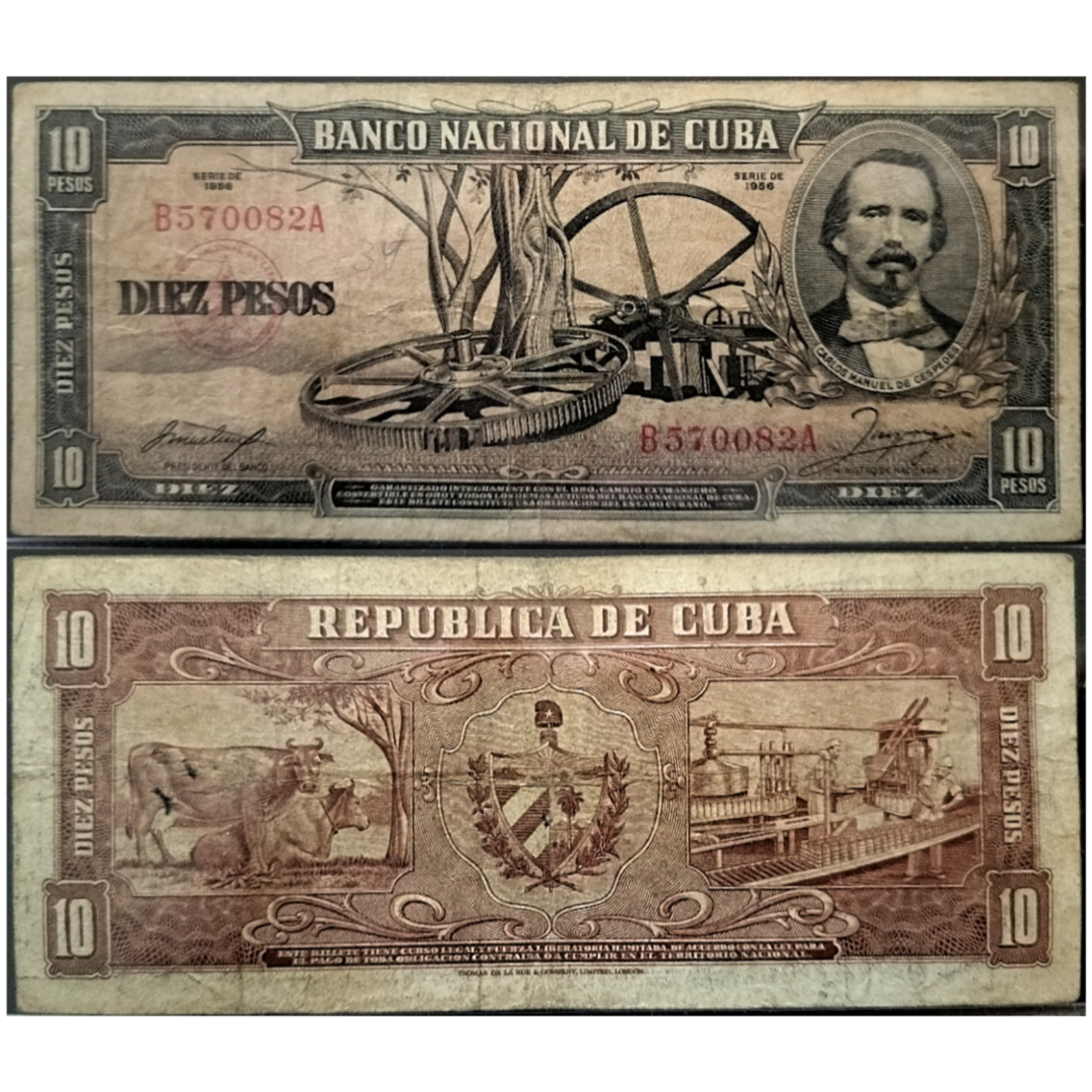 Cuba: Banco Nacional de Cuba 10 Pesos Banknote (1956) | This document provides a detailed analysis of a specific 10 Pesos banknote (Pick Number 88a) issued by the Banco Nacional de Cuba in the "SERIE DE 1956." The analysis begins with a meticulous visual identification of the banknote's features, including the portrait of Carlos Manuel de Céspedes, the unique illustration of a tree and gear wheel, the red serial number B570082A, and the signatures of Sáenz and Rainery. The document further details the brown reverse, which displays the Cuban Coat of Arms and scenes of the dairy industry, noting that it was printed by "THOMAS DE LA RUE & COMPANY, LIMITED, LONDON." Following this visual and cataloging description, the document transitions to examining the essential historical context of Cuba in the 1950s to understand the circumstances surrounding the banknote's issuance. | 36m 16s | ||||||
| 4/14/26 | 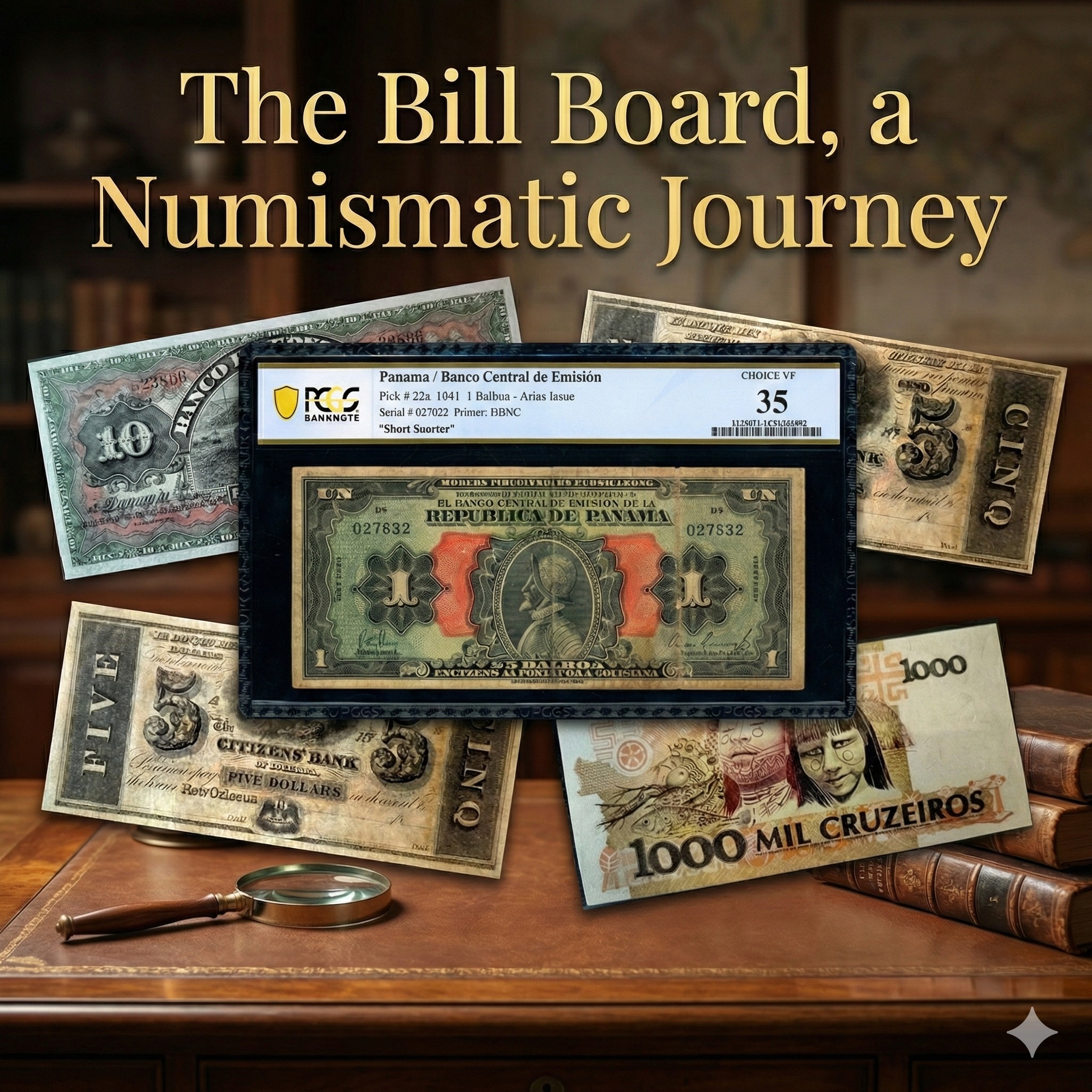 Mexico: The 1897 General Law of Credit Institutions: A Decade of Financial Transformation in Mexico (1897–1907) | The trajectory of Mexico’s economic development during the Porfiriato—the extended era of President Porfirio Díaz’s administration—was fundamentally altered by the reorganization of its financial architecture in the late nineteenth century. Prior to the legislative sweeping reforms of 1897, the Mexican banking system was a fragmented, loosely regulated amalgamation of institutions that operated under bespoke, ad-hoc concessions granted by varying levels of the federal and state governments.1 The sector was dominated by a stark oligopoly. The Banco Nacional de México (Banamex), a politically connected institution formed in 1884, held a virtual monopoly on note issuance and acted as the government's primary financial agent.1 Operating alongside it was the Banco de Londres y México, a foreign-backed entity that had operated since 1864 without a special concession but managed to thrive due to skillful management and a strict avoidance of speculative government loans.1 Together, these two "city banks" headquartered in Mexico City controlled approximately 80 percent of the banking system's assets by the late 1890s, with Banamex alone commanding a 56 percent market share in 1895.3While this concentration of financial power provided a semblance of stability to a federal government perennially starved of credit, it severely stifled regional economic growth. State and provincial banks held a mere 13 percent of the market share in 1895, leaving vast swaths of the geographically immense nation without adequate credit facilities or a reliable medium of exchange.3 Furthermore, the lack of a standardized legal framework meant that the rights, obligations, and legal validities of regional banks of issue were constantly in question, a precariousness that hindered the mobilization of capital necessary for industrial and agricultural expansion.4 The system was wholly inadequate to support the modernization of domestic commerce, the expansion of the railroad network, or the integration of regional markets.Recognizing that the modernization of the Mexican economy required a deep, liquid, and geographically dispersed financial system, Finance Minister José Yves Limantour engineered a comprehensive legislative overhaul.1 The result was the General Law of Credit Institutions (Ley General de Instituciones de Crédito), enacted in 1897. This landmark legislation was designed with a dual, somewhat paradoxical mandate: to induce the rapid expansion of competitive banking across all Mexican states, while simultaneously imposing strict regulatory constraints to prevent speculative over-expansion and financial instability.The analysis indicates that the 1897 law was not merely a financial regulation, but a profound instrument of political economy designed to consolidate the central government's authority over the states while appeasing foreign creditors and domestic elites. The comprehensive overview provided in this report details the statutory provisions of the 1897 General Law of Credit Institutions, its structural mechanisms of political and economic control, and its profound impact over the subsequent decade (1897–1907). It traces how the law catalyzed the establishment of commercial banks, revolutionized the use of banknotes in domestic commerce, and structurally integrated the Mexican economy. | 50m 26s | ||||||
| 4/14/26 | 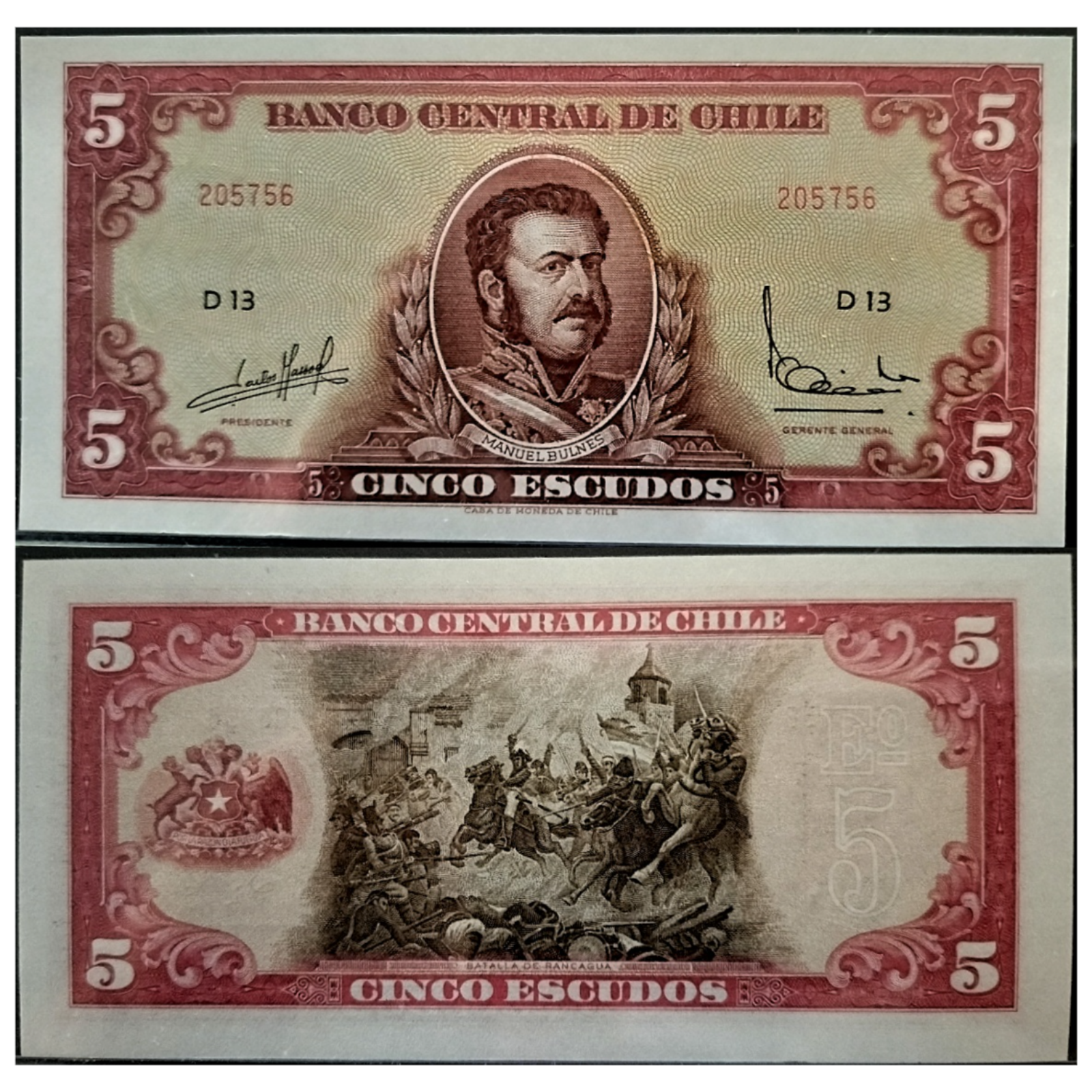 Chile: Banco Central de Chile 5 Escudos Banknote (1964-1970) | The subject of this evaluation is the Chile 5 Escudos banknote, issued undated (ND) between the years 1964 and 1970 by the Banco Central de Chile. Identified universally under the standard numismatic cataloguing system as Pick number 138 and designated in the Numista database as N# 202831, this banknote belongs to the second type of 5 Escudos notes within the broader 1962-1975 Escudo series.This document provides a comprehensive numismatic and historical evaluation of the Chile 5 Escudos banknote issued between 1964 and 1970 (Pick 138). It encompasses a detailed visual analysis of the note's obverse and reverse imagery—specifically featuring Manuel Bulnes Prieto and the Battle of Rancagua—while situating the currency within the broader context of Chile's 1960s monetary reforms and the "Revolution in Liberty" under President Eduardo Frei Montalva. Furthermore, the report details the technical specifications, security features like the Diego Portales watermark, and a thorough market analysis including grading distributions and recent valuation data for collectors. | 37m 53s | ||||||
| 2/17/26 | 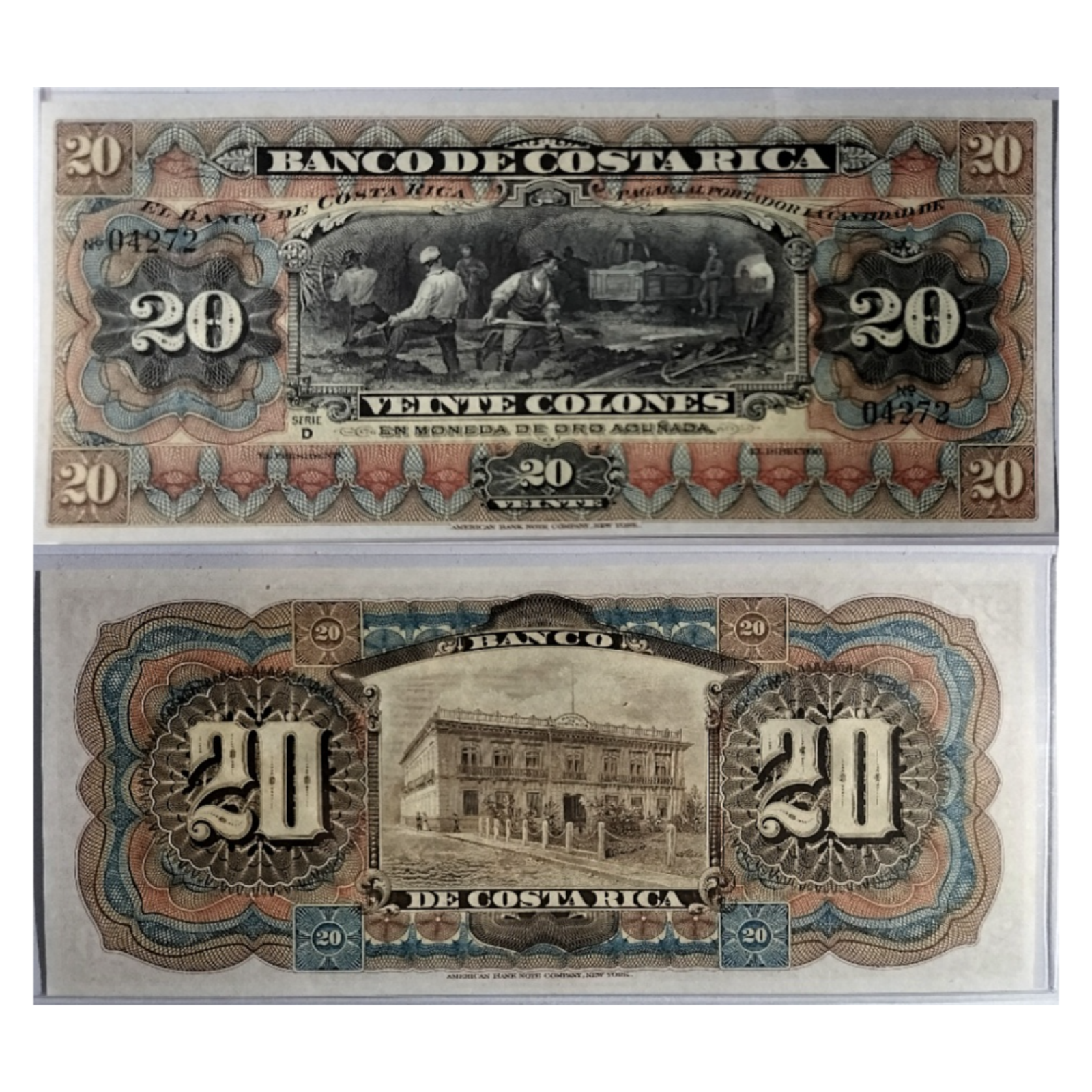 Costa Rica: Banco de Costa Rica 20 Colones Series D (1901) | The turn of the 20th century marked a definitive inflection point for the Republic of Costa Rica, a period characterized by the ascendancy of the "Liberal State" and the aggressive modernization of its economic infrastructure. The banknote we are looking at—the Banco de Costa Rica 20 Colones, Series D, dated 1901 encapsulates the nation’s aspirations toward industrial progress, financial stability, and architectural grandeur.The specific specimen under analysis, identified by Serial Number 04272, belongs to a series of banknotes produced by the American Bank Note Company (ABNC) of New York. By deconstructing its physical composition, iconographic narratives, and institutional origins, we reveal the broader economic tapestry of the "Generation of Olympus" (Generación del Olimpo)—the liberal elite that governed Costa Rica and sought to integrate its coffee-based economy into the gold-standard global markets of Europe and North America.1This report asserts that the Series D 20 Colones note was designed to function as a "monument in paper." At a time when the Costa Rican Colón (introduced in 1896) was solidifying its value against gold, the Banco de Costa Rica—the nation's premier financial institution—commissioned a currency that visually equated the extraction of mineral wealth (the obverse mining scene) with the solidity of banking institutions (the reverse architectural portrait). The survival of Serial 04272 as a high-grade remainder allows for a pristine view into the engraving mastery of the late Victorian era, offering numismatists and historians alike a tangible link to the zenith of private bank issuance in Central America. | 25m 14s | ||||||
| 2/16/26 | 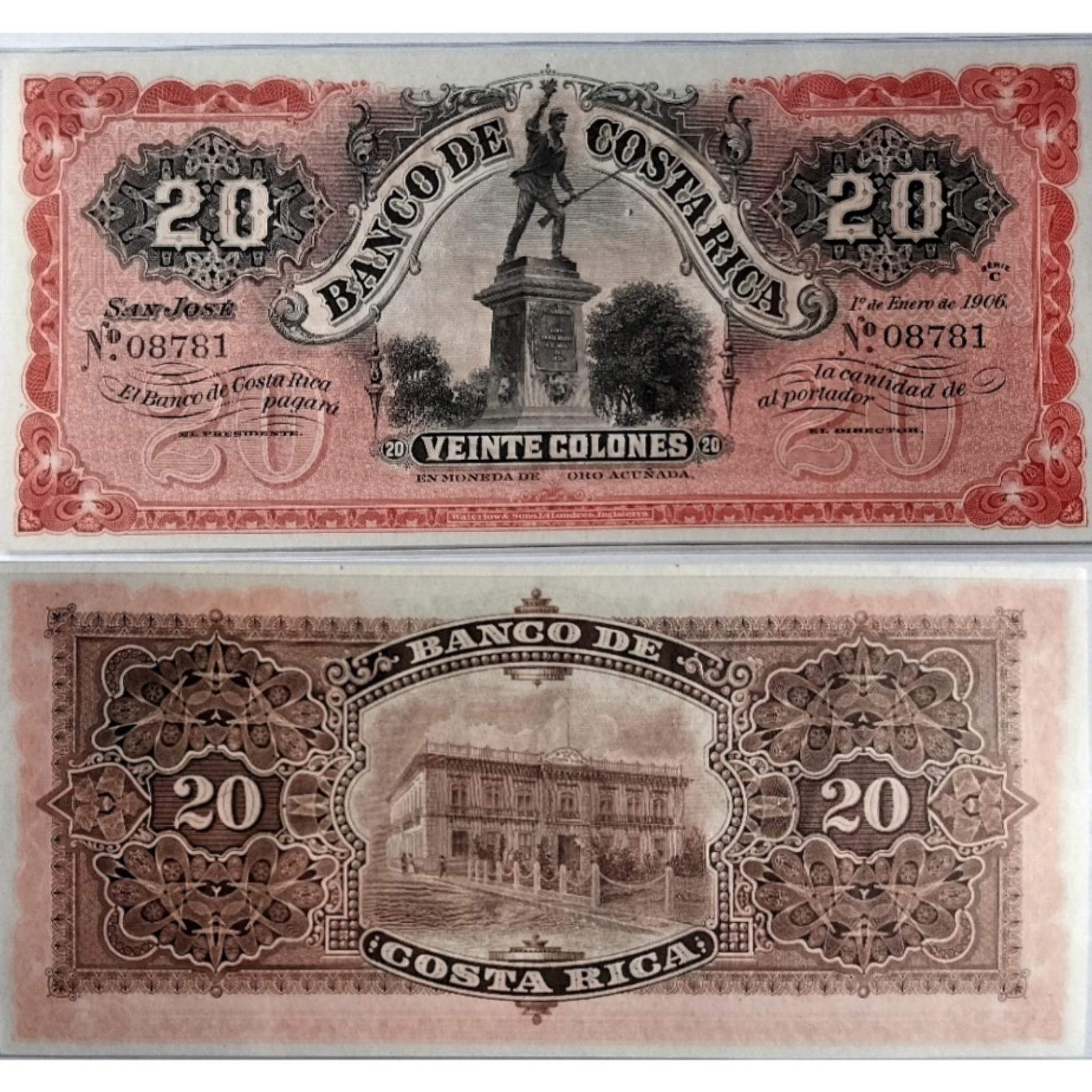 Costa Rica: Banco de Costa Rica 20 Colones Series C (1906) Banknote | A review of the history of the bank, the iconongraphy on the banknote, the Series C, and the market and technical specs. Did you know there was an American who wanted to establish English speaking colonies and slave states in Latin America and who was celebrated in the U.S>? Listen and find out where he fits in to the story. | 30m 10s | ||||||
| 2/15/26 | 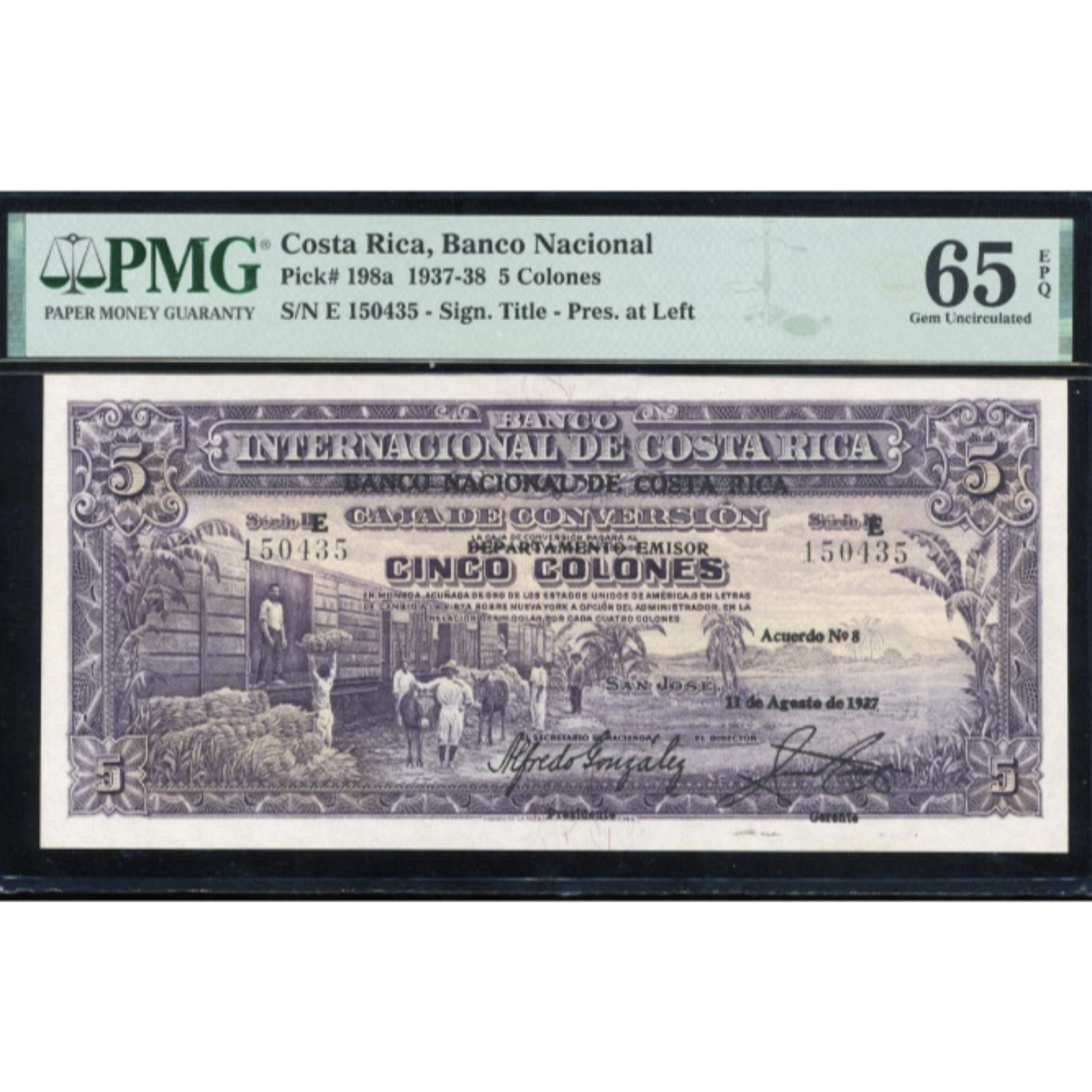 Costa Rica: PMG 65 EPQ Banco National De Costa Rica 5 Colones 1937-1938 (Pick 198a) | The study of Latin American currency provides a unique lens through which to view the economic and political evolution of the region. We are looking at the Costa Rica 5 Colones note of 1937-1938, cataloged in the Standard Catalog of World Paper Money as Pick 198a. This banknote is not merely a medium of exchange; it is a transitional artifact that bridges two distinct eras of Costa Rican banking history: the period of the Banco Internacional de Costa Rica and the subsequent establishment of the Banco Nacional de Costa Rica.This report focuses on a specific, high-grade specimen of this issue: a 5 Colones note graded PMG 65 EPQ (Gem Uncirculated), identified as a "Top Pop" (Top Population) rarity. The existence of such a pristine example is a statistical anomaly given the tropical climate of Costa Rica and the heavy circulation these low-denomination notes typically endured. The note is characterized by its provisional nature—a revalidation of an earlier issue via a typographic overprint—and its striking obverse vignette, familiarly known to collectors as the "Banana Train."The visual narrative of the note, depicting the loading of bananas onto a railway car, encapsulates the "Green Gold" era of Costa Rica, dominated by the United Fruit Company and the Atlantic Railroad. This report will dissect the historical context, technical specifications, security features, and market dynamics surrounding this numismatic treasure, providing a definitive reference for the advanced collector. | 29m 59s | ||||||
| 2/11/26 | 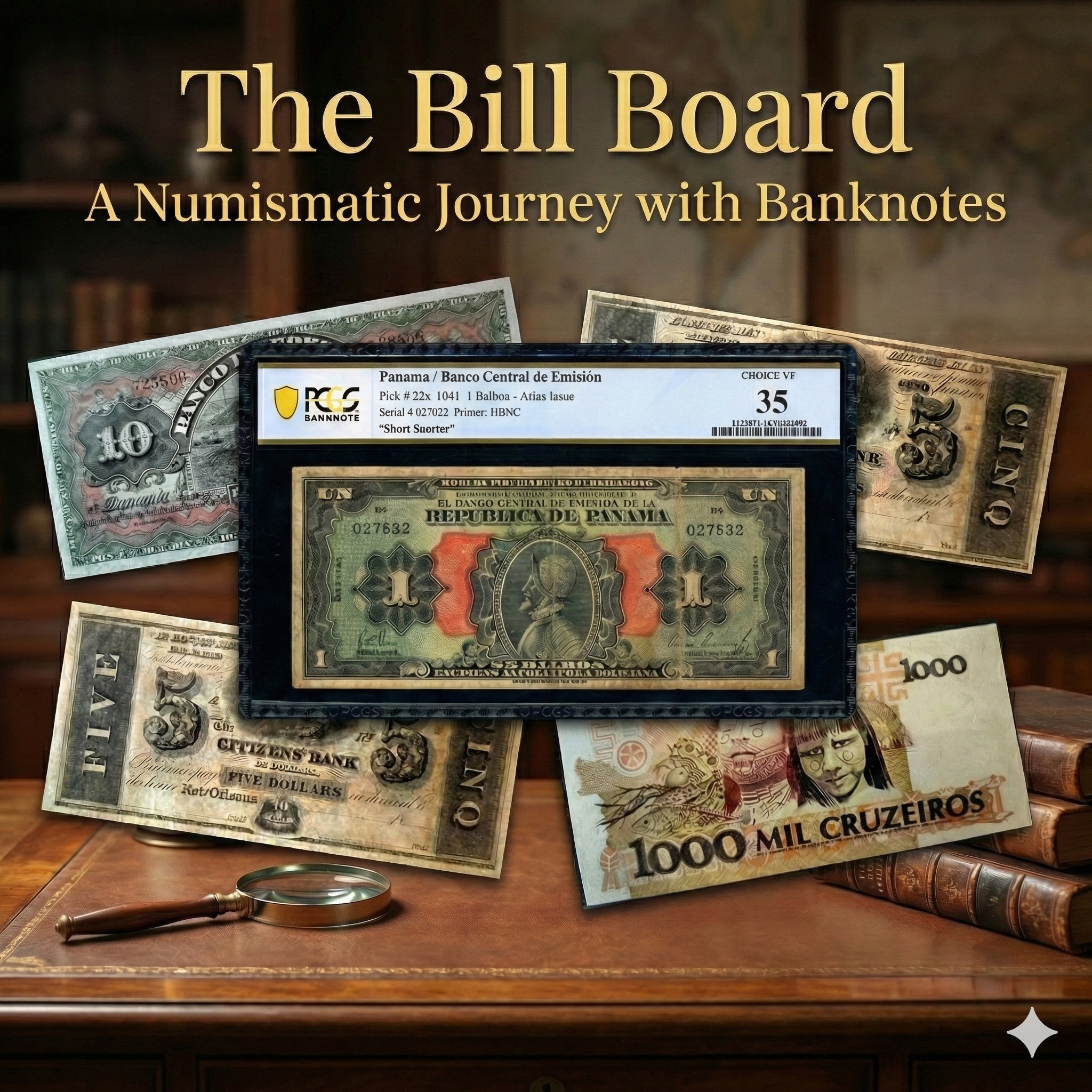 Mexico: Mexican Currency History from Cacao to Polymer | Great overview to start with Mexican currency, from pre-Hispanic, to colonial to pre-revolution to revolution to independence to the latest issues, the Series G | 31m 01s | ||||||
Showing 25 of 63
Sponsor Intelligence
Sign in to see which brands sponsor this podcast, their ad offers, and promo codes.
Chart Positions
3 placements across 3 markets.
Chart Positions
3 placements across 3 markets.