
Insights from recent episode analysis
Audience Interest
Podcast Focus
Publishing Consistency
Platform Reach
Insights are generated by CastFox AI using publicly available data, episode content, and proprietary models.
Est. Listeners
Based on iTunes & Spotify (publisher stats).
- Per-Episode Audience
Est. listeners per new episode within ~30 days
25,001 - 50,000 - Monthly Reach
Unique listeners across all episodes (30 days)
75,001 - 150,000 - Active Followers
Loyal subscribers who consistently listen
15,001 - 40,000
Market Insights
Platform Distribution
Reach across major podcast platforms, updated hourly
Total Followers
—
Total Plays
—
Total Reviews
—
* Data sourced directly from platform APIs and aggregated hourly across all major podcast directories.
On the show
Recent episodes
The Weapons of World War 2 (Part 2)
Apr 28, 2026
3h 02m 34s
Tesla vs Edison- Debunking the Myth of the War of the Currents
Apr 27, 2026
1h 45m 50s
What was Being a Ninja Really Like
Apr 24, 2026
29m 12s
The Stories of WWII (Part 2)
Apr 23, 2026
3h 25m 48s
The Truth About Land Mines
Apr 22, 2026
23m 14s
Social Links & Contact
Official channels & resources
Official Website
Login
RSS Feed
Login
| Date | Episode | Description | Length | ||||||
|---|---|---|---|---|---|---|---|---|---|
| 4/28/26 |  The Weapons of World War 2 (Part 2) The Weapons of World War 2 (Part 2) | In the video today we're looking at World War 2's slightly absurd secret weapons and the Japanese battleship with guns that weighed more than entire American battleships. Moving on from there we cover the Russian KV Tanks that were so tough they literally would take out anti-tank guns by driving over them. Next up we do a dive into the German space shuttle, that time Germany teamed up with IBM for mass murder, the insane way British pilots would take out one of Germany's greatest weapons, the German designed, one man spherical tank, the Russian flying tank, the sad story of the exploding anti-tank dogs, the forgotten metal can that made Blitzkrieg possible and ultimately won WWII for the Allies when they stole it, the tiny submarine that changed the course of WWII, and the bizarre fake army that defeated the Axis. Next up a flying adventure looking at the insanely amazing story of the Night Witches, followed up by another flying adventure looking at if planes actually scream when they dive. Finally, we look at the pivotal WWII gun that you'd never want to put down... Because of its propensity to accidentally fire when you did so. 0:00 WWII’s Most Absurd ‘Secret Weapons’ 16:37 The Japanese Battleship with Guns that Weighed More than Entire American Battleships... 25:43 Driving Over Anti Tank Guns: The Remarkable Russian KV Tanks 31:34 The Nazi Space Shuttle 45:38 How the Nazis Teamed Up with IBM for Mass Murder (And How the First Ethical Hacker Fought Back) 1:01:57 A Wingtip and a Prayer: the Insane Way British Pilots Defeated Germany’s Secret Weapon 1:19:47 The Mysterious Kugelpanzer: The German Designed, One Man Spherical Tank 1:25:26 That Time the Russians Built a Literal Flying Tank 1:29:10 The Exploding Anti-Tank Dogs of World War II 1:34:56 The Forgotten Metal Can That Made Blitzkrieg Possible and Ultimately Won WWII When Allies Stole It 1:42:00 The Midget Submarine That Changed the Course of WWII 2:00:16 The Bizarre Story of the Massive Fake Army That Defeated the Nazis and Helped End WWII 2:23:42 With a Pistol and a Prayer- The Incredible Story of The Night Witches 2:37:21 Do Airplanes Actually “Scream” as They Dive as Commonly Depicted in Hollywood Films? 2:51:11 The Pivotal WWII Gun That Nobody Wanted to Put Down: The Plumber's Nightmare Learn more about your ad choices. Visit megaphone.fm/adchoices | 3h 02m 34s | ||||||
| 4/27/26 |  Tesla vs Edison- Debunking the Myth of the War of the Currents Tesla vs Edison- Debunking the Myth of the War of the Currents | Popular history gets the War of the Currents wrong pretty fundamentally. This is the real story. Learn more about your ad choices. Visit megaphone.fm/adchoices | 1h 45m 50s | ||||||
| 4/24/26 |  What was Being a Ninja Really Like What was Being a Ninja Really Like | A relatively common trope today is that of the noble and honorable Samurai warrior opposed by their shadowy brother from another mother, the mystical and morally corrupt, black garbed assassin warrior known as the ninja. These fabled shadow warriors of Japanese history have been a staple of modern pop culture since around the 1960s when super-spy James Bond encountered them on a trip to Japan in You Only Live Twice. Prior to this, ninjas were something few people outside of their homeland were aware of. This has contributed to the real-world history of the ninja and their origins being rather chock full of admittedly awesome myths and legends, all surrounding them like a thick, shadowy fog. Something we feel the ninjas of history would feel proud of. Afterall, hiding and remaining unseen is sort of their whole deal… And, indeed, even in their time, they seemed to like to play up some of the stories that arose around what they were capable of and how they did what they did. This all brings us to the topic of today- just who were the ninja and what did they actually get up to in reality? To begin with, in a nutshell the ninja were elite, mercenary spies that also doubled as a type of swiss army knife of special forces, skilled in everything from sabotage, espionage, ambush, arson, assasination, to there is even evidence that they were highly trained in first aid and use of various medicines. As historian Yamada Yüji notes, “You need to know the topography of the enemy’s position, the condition of his food supplies, the structure of his castle. It was the job of the shinobi [ninja] to obtain this kind of crucial information. They would infiltrate the enemy domain and ascertain the lay of the land…and create chaos through acts of sabotage and arson.” On that note, debunking our first ninja myth, there’s no historical record of them dressing in the stereotypical ninja outfits we all know and love today. Because the thing was, wearing such garb would be one heck of a way for them to stand out in many types of missions. As such, ninjas mostly seem to have worn the garb of everything from monk to farmer to servant- whatever a particular mission required, rather than any set uniform. We’ll have some examples of them doing just this later on, but for now, ninjas so commonly wearing the clothing of farmers and the like even gave rise to the idea for a time that they were mostly simple farmers who simply took money for spying. While there certainly were individuals who did just that, when talking actual ninjas as we think of them, they were anything but simple, and there are even nobles who were samurai who are known to have been trained up in ninjitsu. More on this later. But for now, let’s look at the origin of the ninja. Authors: Karl Smallwood and Daven Hiskey Host: Daven Hiskey Producer: Caden Nielsen Learn more about your ad choices. Visit megaphone.fm/adchoices | 29m 12s | ||||||
| 4/23/26 |  The Stories of WWII (Part 2) The Stories of WWII (Part 2) | In the video today we're looking at a variety of interesting stories from WWII from the man who fought in WWII with a sword and bow, to the kids who led the resistance movement in Germany, to how flatulence decided the outcome of WWII. 0:00 Why Did Japan Join the Nazis? (Given, You Know, the Nazis Explicitly Hated Non-Aryans) 40:09 The Women Who were Used for Breeding by the Nazis 57:25 How Do German Schools Teach About WWII? 1:07:21 The Man Who Fought in WWII With a Sword and Bow: 1:12:32 What were Hitler's Relatives Up to During and After WWII? 1:42:31 The Kids Who Led the Resistance Movements Against the Nazis 2:13:48 Why Did So Many Nazis Choose Argentina to Flee to After WWII? 2:49:22 The Forgotten Armed Nazi Operation Carried Out on North American Soil During WWII 2:58:22 The Forgotten Nazi Holocaust Plan Before They Decided On the Holocaust 3:09:39 How Hitler's Flatulence Defeated Nazi Germany Learn more about your ad choices. Visit megaphone.fm/adchoices | 3h 25m 48s | ||||||
| 4/22/26 |  The Truth About Land Mines The Truth About Land Mines | It is a classic war movie trope: a squad of soldiers are marching through the jungle when, suddenly, they hear an ominous click. One of the soldiers freezes and, glancing down, spots a telltale metal disk under his foot. His heart begins to beat furiously: he has just stepped on a landmine. His comrades urge him to stay perfectly still, for if he moves even an inch the mine will explode, blowing off his leg and very likely killing him. The seconds and minutes tick by in unbearable suspense as the soldiers scramble to come up with some way - any way - of getting their squadmate out of this sticky situation alive, despite how relatively easy it would be in that scenario to solve the problem by simply keeping downward pressure on the person’s shoe, then taking their foot out and putting a rock or something on the shoe after. Nevertheless, a highly-effective means of introducing tension, this scenario has appeared in dozens of films including 2014’s The Monuments Men, 2017’s Kingsman: the Golden Circle, and the appropriately-titled 2015 Georgian exploitation film Landmine Goes Click. But does it have any basis in reality? Author: Gilles Messier Editor/Host: Daven Hiskey Producer: Caden Nielsen Learn more about your ad choices. Visit megaphone.fm/adchoices | 23m 14s | ||||||
| 4/21/26 |  The Real Life Expendables The Real Life Expendables | The years 2010 to 2014, saw the release of the three Expendables films, throwback action romps starring a roster of aging 1980s action stars including Sylvester Stallone, Dolph Lundgren, Bruce Willis, Chuck Norris, Jean-Claude Van Damme, and Arnold Schwarzenegger as retired mercenaries back for one final job - and, presumably, easy nostalgia-fuelled paycheques. While the notion of assembling a team of 60-year-olds to carry out a dangerous mission might seem like pure Hollywood nonsense, it is not as outlandish as it might appear. Faced with a potential diplomatic crisis, during the Second World War British Intelligence called upon a team of real-life Expendables to carry out a daring commando raid in neutral Portuguese India. This is the incredible story of Operation Creek, the last ride of the Calcutta Light Horse. The Battle of the Atlantic, which raged from the very first day of WWII to the very last, has been covered extensively on this channel. But the desperate struggle between Allied shipping and German U-boats was not confined to the frigid waters of the North Atlantic. U-boat operations ranged as far afield as the Indian Ocean, where the marauding submarines wreaked havoc on ships sailing in and out of British India. And this deadliness only increased thanks to an unexpected helping hand. Author: Gilles Messier Editor: Daven Hiskey Host: Simon Whistler Producer: Samuel Avila Learn more about your ad choices. Visit megaphone.fm/adchoices | 15m 16s | ||||||
| 4/20/26 | The Truth About Thomas Edison's Adulthood and Inventions | History remembers Thomas Edison as one of the greatest inventors of all time. The Internet thinks he was a fraud. Which is true? Learn more about your ad choices. Visit megaphone.fm/adchoices | 1h 37m 55s | ||||||
| 4/17/26 |  Is Nuclear Winter Actually a Possibility or Just Pseudoscience? Is Nuclear Winter Actually a Possibility or Just Pseudoscience? | As horrific as a nuclear war would be in the immediate, a common idea is that the real troubles for humanity, and the world, would actually occur in the long aftermath, triggering what is now commonly known as nuclear winter- a nightmarish scenario in which atmospheric temperatures would drop dramatically, crops would fail, and widespread famine, disease, and unrest would follow, leading to a catastrophic reduction in the global population, or even the end of human civilization. But just what is ‘nuclear winter’ anyway? Who came up with it, and is it actually a real possibility, or just some scientists with way too much time on their hands and a news media who loves them some good doomsday scenarios, whether they are valid possibilities or not. Well, put on your gas mask and lead-lined underwear as we dive into the controversial history and science of one of the most frightening doomsday scenarios ever conceived. Surprisingly, the first published suggestion that a nuclear war could alter the global climate appeared not in an official scientific publication, but rather in fiction. In the post-apocalyptic short story Tomorrow’s Children by American science fiction writer Poul Anderson, first published in the March 1947 issue of Astounding Science Fiction, a team of scientists hunt down mutated humans in the wake of a nuclear war. At one point, the story’s protagonist High Drummond observes that: “Winter lay heavily on the north, a vast grey sky seeming frozen solid over the rolling white plains. The last three winters had come early and stayed long. Dust, colloidal dust of the bombs, suspended in the atmosphere and cutting down the solar constant by a deadly percent or two. There had even been a few earthquakes, se off in geologically unstable parts of the world by bombs planted right. Half of California had been ruined when a sabotage bomb started the San Andreas Fault on a major slip. And that kicked up still more dust. Fimbulwinter, thought Drummond bleakly. The doom of the prophecy.” Anderson later adapted this story into a full-length novel titled Twilight World, first published in 1961. The same phenomenon also appears in Christopher Anvil’s short story Torch, published in the April 1957 issue of Astounding Science Fiction. In this story, a Soviet nuclear ballistic missile test in Siberia accidentally sets fire to an oil field, releasing large amounts of oily soot into the atmosphere that blots out the sun and triggers a global ice age. The term Fimbulwinter or “mighty winter” in Anderson’s original 1947 story is drawn from Norse Mythology, and refers to a series of three particularly harsh winters preceding Ragnarök, the apocalyptic battle of the Gods that will destroy and cleanse the world. While the origins of any mythological concept are hard to pin down, it has been speculated that Fimbulwinter may have been inspired by the Volcanic Winter of 536, in which a series of simultaneous volcanic eruptions ejected vast amounts of particulates - especially sulfur dioxide - into the upper atmosphere. They lingered there for years, blocking out the sun’s rays and causing global temperatures to drop by as much as 2.5 degrees Celsius or 4.5 degrees. As Roman historian Precopius recorded: “And it came about during this year that a most dread portent took place. For the sun gave forth its light without brightness, like the moon, during this whole year, and it seemed exceedingly like the sun in eclipse, for the beams it shed were not clear nor such as it is accustomed to shed. And from the time when this thing happened men were free neither from war nor pestilence nor any other thing leading to death.” Author: Gilles Messier Host / Editor: Daven Hiskey Producer: Samuel Avila Learn more about your ad choices. Visit megaphone.fm/adchoices | 48m 35s | ||||||
| 4/16/26 |  The Stories of WWII The Stories of WWII | In the video today, we're looking at a variety of fascinating stories from WWII, everything from what the German public actually knew about the holocaust during WWII to the biggest POW camp breakout, to that time the U.S. government teamed up with the mafia against the Germans, to the young war gamers who changed the course of the war with their games and much, much more. 0:00 What Did the German Public Know About the Holocaust During WWII? 53:37 How Do the Japanese Teach About WWII? 1:05:53 The Wild Story of the Biggest POW Camp Breakout of World War II 1:19:45 A Dinner Jacket, the Nazis, the “British” Accent, and What This All Has to Do With the BBC News 1:26:13 How a WWII Famine Helped Solve a 2,000 Year Old Major Medical Mystery 1:35:10 That Time the US Government Teamed Up with the Mafia to Defeat the Nazis 1:47:26 That Time the British Pitted a Few Canoeing Commandos against a Fleet of Nazi Ships... And Won 2:01:13 Argentina's Secret Nazi Fusion Lab 2:16:46 The Forgotten Nazi Holocaust Plan Before They Decided On the Holocaust 2:28:02 The Young War Gamers Who Changed the Course of WWII 2:40:24 That Time British Witches Tried to Stop a Nazi Invasion Using Magic 2:49:57 The Nazi Interrogator Who Killed Them with Kindness Learn more about your ad choices. Visit megaphone.fm/adchoices | 3h 03m 53s | ||||||
| 4/15/26 |  The Quest for the Recoilless Gun The Quest for the Recoilless Gun | If you’ve ever shot a gun, then you will have quickly learned the first fundamental rule of shooting: recoil sucks. Depending on the calibre, weight of the firearm, and your technique, just a few minutes of shooting something like a hunting rifle can quickly leave your shoulder bruised and sore. And the bigger the firearm, the worse the problem becomes, with large-calibre military artillery pieces requiring elaborate systems of hydraulic cylinders to absorb their prodigious recoil. This, in turn, makes these weapons extremely heavy and difficult to move around the battlefield. There are two basic solutions to this problem: mount the artillery on heavy armoured vehicles… or somehow eliminate the recoil itself. Over the last century, engineers around the world have devised dozens of ingenious methods to achieve just that, creating weapons that are simultaneously powerful and long-ranged while being light and compact enough to be moved around the battlefield by regular troops or light vehicles. This is the fascinating technology behind recoilless weapons. To begin with, let’s first examine the physics behind recoil. One way to understand this phenomenon is via Newton’s Third Law - that is, “For every action, there is an equal and opposite reaction.” A more useful principle, however, is conservation of momentum. Momentum, defined as an object’s ability to resist changes in motion, is given by the simple formula mass times velocity. When an object is split into pieces and those pieces propelled in different directions - such as in the case of a bomb exploding or, more relevant to our discussion, a firearm shooting a projectile - the momentum of the overall system is conserved. In other words, if you add up the momentum - mass times velocity - of every individual piece, they will sum up to the original momentum - in the case of a stationary object, zero. Most firearms shoot a projectile significantly lighter than themselves; however, as this projectile is travelling at a very high velocity, its momentum equals that of the firearm, which, being much heavier, will recoil at a significantly lower velocity. The heavier the firearm, the slower it recoils and vice-versa. This, along with surface area in contact with your shoulder, is why, despite sometimes being quite painful, the recoil of most firearms is nowhere near strong enough to actually rip your shoulder off - unlike the projectile being fired downrange. Based on this physical analysis, it stands to reason that if you placed two identical firearms back-to-back and fired them in opposite directions, their recoil would cancel out and the whole assembly would remain stationary. This is known as the counter-shot or counter-weight principle, and was the operating principle of the first recoilless firearm to see combat: the Davis Gun. Patented by U.S. Navy Commander Cleland Davis in 1914, the Davis gun was specifically intended for use aboard aircraft. During the First World War more conventional small-calibre cannons were experimentally fitted to various aircraft for use against balloons, zeppelins, ships, submarines, ammunition dumps, and other specialized targets; however, aircraft of the period were rather flimsy constructions of wood, wire, and canvas, and were easily damaged by the recoil of such weapons. Thus, by the end of the war both the American and British navies and flying services showed great interest in Davis’s design. The Davis Gun effectively comprised two gun barrels mounted back-to-back and fired a special double-ended cartridge. On firing, a conventional shell was propelled out the forward barrel towards the target, while an equivalent mass of lead shot and grease was expelled out the rear, the recoil of the two barrels cancelling each other out. Of course, standing directly behind what is effectively a gigantic shotgun is a good way to have a very bad day, meaning the Davis gun had to be rather awkwardly mounted at the very front of the aircraft with its barrel pointing downward at a steep angle so that the counter-shot was propelled safely up and over the top wing. There were other problems as well. Since the gun had to propel two projectiles at equal velocity, the propellant charge - and thus the cartridge - was much larger than usual, making it awkward to handle. Author: Gilles Messier Host/Editor: Daven Hiskey Producer: Samuel Avila Learn more about your ad choices. Visit megaphone.fm/adchoices | 41m 34s | ||||||
Want analysis for the episodes below?Free for Pro Submit a request, we'll have your selected episodes analyzed within an hour. Free, at no cost to you, for Pro users. | |||||||||
| 4/14/26 |  Creating the Terminator Creating the Terminator | “They could have fired me on the spot. But you know, they’re idiots” That’s a quote from James Cameron about the reaction of gathered executives to the first screening of The Terminator, which according to the director, really didn’t go all that well. However, largely due to Cameron’s background working on cheesy B-Movies, there was nobody else in Hollywood the studio could bring in to finish the movie. In fact, the success of Terminator and by extension the career of James Cameron owes a lot to the director’s B-movie chops, connections and experience. Oh, and a vicious bout of food poisoning that left him delirious and on the verge of shitting himself for like 5 whole days. On this, there is a long-standing industry legend that the genesis of The Terminator was a nightmare Cameron had whilst working on the cinematic turd that is, Piranha II: The Spawning, a film about genetically engineered flying piranha that is largely only noteworthy for being the directorial debut of Cameron, outside of a little film he made funded by his dentist. The legend posits that Cameron had to take a break from tossing rubber piranha at his actors when he came down with food poisoning. Whilst recovering in a cheap Italian hotel, Cameron is said to have had a nightmare about a chrome skeleton attempting to stab him with a kitchen knife and that that image was so terrifying he was convinced it could be a great hook for a film. Cameron then immediately sketched out the basic design of what would become the Terminator. Which is a great story, but it’s not the whole story and there are several details James Cameron himself has dismissed or clarified over the years. Author: Karl Smallwood Editor: Daven Hiskey Producer: Samuel Avila Host: Simon Whistler Learn more about your ad choices. Visit megaphone.fm/adchoices | 28m 16s | ||||||
| 4/13/26 | The Truth About the Incredible Childhood of Thomas Edison | In this episode, Gilles and Daven are doing a deep dive into the childhood of one of the greatest inventors in history, Thomas Edison. Learn more about your ad choices. Visit megaphone.fm/adchoices | 51m 15s | ||||||
| 4/10/26 |  The Actual Most Painful Sting and How Did They Figure That Out? The Actual Most Painful Sting and How Did They Figure That Out? | Who among us hasn’t had this experience? You are eating a lovely outdoor meal or working peacefully in the garden when unexpected guests arrive. Dressed in menacing yellow and black, they buzz annoyingly around you, coming between you and your juicy steak or prized roses. You try to gently shoo them away, but they just grow more and more aggravated until, suddenly, you feel it: that sharp, searing pain, flashing up your hand, as if you’ve just been stabbed with red-hot poker. If you’re lucky, your finger will swell up and you will have to endure that throbbing agony for an hour or two. If, however, you happen to be among the unlucky 0.5-7% of the general population that is allergic to insect stings, you can look forward to the delights of anaphylactic shock: a sudden drop in blood pressure, itchy hives, and difficulty breathing which, in severe cases, can lead to death without immediate medical intervention. Whether we like it or not, venomous creatures like bees, wasps, scorpions, spiders, snakes, and jellyfish are a part of everyday life for nearly every human on earth, with hundreds of thousands of species worldwide being capable of delivering some kind of painful or toxic bite or sting. Thankfully, however, as is often the case in nature, most of these organisms will not attack unless directly provoked. And, if you happen to live in a part of the world where the worst stings you have to face are those of bees, paper wasps, and yellowjackets, consider yourself very, very lucky, for mother nature holds far greater horrors in her arsenal, from ants with bites so painful they are used as tests of manhood, to wasps whose stings have been likened to being thrown into a live volcano, and fish with venom so excruciating it can literally stop your heart. But which bite or sting is the absolute worst? Which organism on this planet is, as the English rock band The Police might have put it, the “King of Pain”? Well, let’s find out as we dive into the agonizing world of the worst bites and stings in nature. Author: Gilles Messier Host/Editor: Daven Hiskey Producer: Samuel Avila 0:00 Intro 6:00 Schmidt Theory and His Wine Lover-esk Index 17:20 The Starr Sting Pain Scale 20:00 Nathaniel "Coyote" Peterson's BSI and Looking Beyond Insects 25:30 The Ultimate Stings- The Platypus and Stonefish Learn more about your ad choices. Visit megaphone.fm/adchoices | 33m 51s | ||||||
| 4/9/26 |  What was It Actually Like to be a Gladiator, History's Literal Deadliest Fart Killing 1000s, & More What was It Actually Like to be a Gladiator, History's Literal Deadliest Fart Killing 1000s, & More | In the podcast today, we're looking at what it was really like to be a gladiator in Ancient Rome, how corrupt the roman senate was, what's the deal with roman gods and much, much more. 0:00 What was It Like to Be a Gladiator in Ancient Rome? 18:13 How Corrupt was the Roman Senate Really? 32:50 What's the Deal with the Roman Gods? 46:51 The Roman Emperor Who Tried to Make His Horse Consul 59:46 Julius Caesar and His Pirate Adventure 1:06:22 History's Literal Deadliest Fart and the Origin of Mooning 1:20:49 Intentionally Removing People From History (Damnatio Memoriae) 1:24:45 Did Nero Really Fiddle When Rome Burned? 1:32:23 That Time the Title 'Emperor of Rome' was Up for Auction (and the Sorry Soul Who Won) 1:43:42 The Colosseum's Big Brother, The Circus Maximus 1:49:35 Are C-Sections Really Named After Julius Caesar? 2:00:12 Where Did Goth Teen Subculture Come From and Why is it Associated With Roman Invaders? Learn more about your ad choices. Visit megaphone.fm/adchoices | 2h 18m 27s | ||||||
| 4/8/26 | 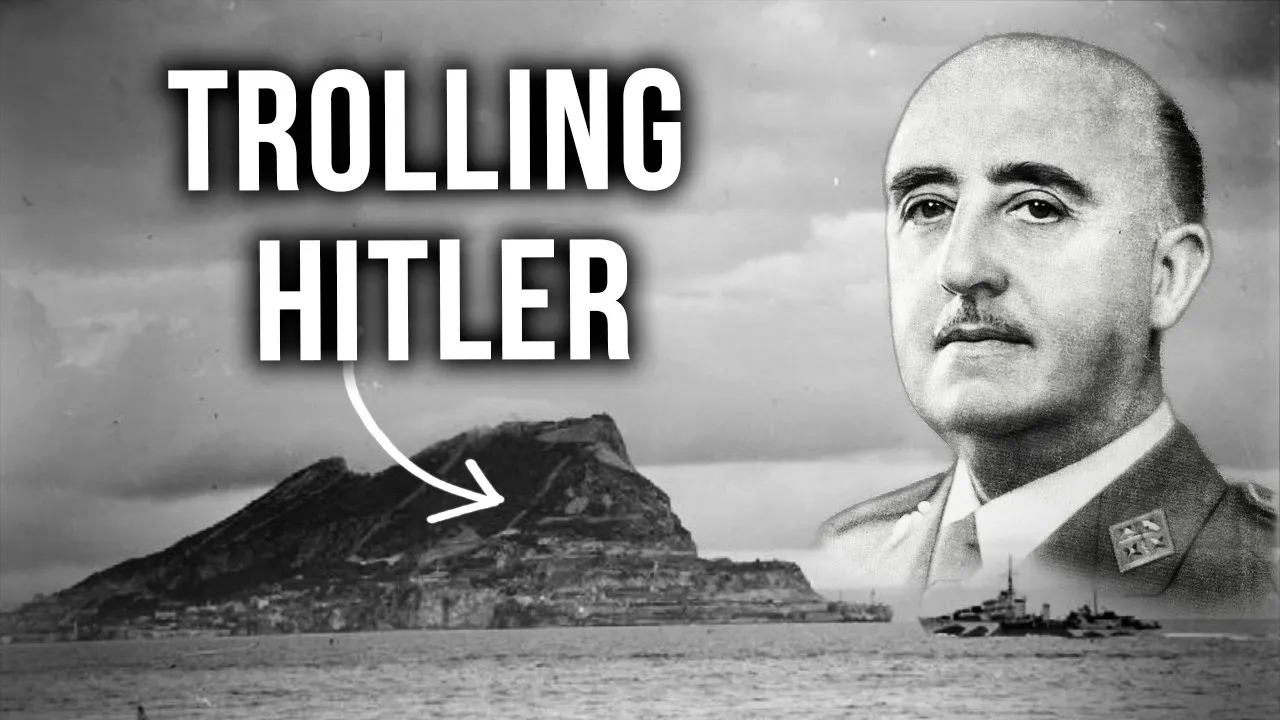 The Rock WWII Turned On The Rock WWII Turned On | At the southern tip of Spain, jutting out into the Mediterranean Sea, lies Gibraltar, a narrow peninsula measuring only 6.8 square kilometres or 2.6 square miles in area and dominated by a 426 metre or 1,298 foot high limestone monolith: the legendary Rock of Gibraltar. A British overseas territory and naval base since 1713, Gibraltar has long been of vital strategic importance, controlling the narrow passage between the Mediterranean and the Atlantic Ocean. And at no time was this truer than during the Second World War, when the Axis powers plotted to capture Gibraltar in a bid to cut Britain off from its overseas Empire and starve her into submission. And though the heavily-defended enclave would be a tough nut to crack, the very real threat of invasion led British military planners to take elaborate precautions should the“Rock” ever fall. And perhaps the most extreme of these contingencies was an utterly bonkers plan to seal six men into a secret network of tunnels and chambers carved into the Rock of Gibraltar. Provided with several years’ worth of food and water, these volunteers were to spy on the occupying Axis forces and report their movements back to Britain, secretly keeping Gibraltar in the fight. This is the bizarre tale of Operation Tracer. What is now known as the Rock of Gibraltar was formed during the early Pliocene Epoch around 5 million years ago, when the collision of the African and Eurasian tectonic plates lifted up and inverted a large slab of the Eurasian plate, composed of the 200-million-year-old Catalan Bay Shale, Gibraltar Limestone, Little Bay Shale, and Dockyard Shale formations. The ongoing movement of these plates continues to push the Rock of Gibraltar steadily skyward, with the monolith growing in height at a rate of around 0.05 millimetres or 0.002 inches per year. The area has been inhabited for at least 125,000 years, with the bones, tools, and other remnants of both neanderthals and modern Homo sapiens being found in numerous caves dotting the peninsula. In antiquity the Rock of Gibraltar, then known as Mons Calpe, was frequently visited by Phoenician, Greek, and Roman mariners, with the Greeks recognizing the mountain as one of the two “Pillars of Heracles.” According to Greek mythology, while trying to obtain the Cattle of Geryon - the 10th of his 12 Labours - the legendary hero smashed his way through the Atlas Mountains, forming the Straits of Gibraltar and connecting the Atlantic Ocean and Mediterranean Sea. The identity of the other pillar has been lost to history and is heavily debated among classicists, though it is now widely believed to be either Monte Hacho or Jebel Musa in Morocco.... Author: Gilles Messier Editor: Daven Hiskey Host: Daven Hiskey Producer: Samuel Avila Learn more about your ad choices. Visit megaphone.fm/adchoices | 36m 02s | ||||||
| 4/7/26 |  Billionaire Build a Car- The Insane Car Brand Where Every One is Literally One of a Kind Billionaire Build a Car- The Insane Car Brand Where Every One is Literally One of a Kind | Few brands are as closely associated with the idea of “luxury” as Rolls-Royce, a car manufacturer so fancy schmancy that the company's official website doesn’t even bother to list how much the things it sells are. Rolls-Royce knows that for anyone serious about buying one of their automobiles, price is not a concern. And to be clear, what you can get for said insane amount of money is likewise insane in customization, which we’re going to now talk about because it’s a lot more interesting, and occasionally bizarre, than even we originally thought when dreaming up this topic. But in any event, to this end, Rolls-Royce, who as a company can be fairly certain that the average person strolling into one of their showrooms likely has a credit card with a limit rivalling the GDP of a small nation, offers clients a level of customisation and self-expression seldom seen outside of old episodes of Pimp My Ride or the Need For Speed games to the point that literally every every car they sell is one of a kind. Or as we like to call the brand- Billionaire Build a Bear. One thing we should clarify first though is that even with a luxury brand like Rolls-Royce there are levels to the fanciness on offer with the price increasing accordingly. Now, we know we said in the introduction that Rolls-Royce themselves don’t list how much their cars cost because that would be tacky and only for plebians, but it’s not hard to find out how much they sell for by consulting things like trade magazines or browsing the secondary market. With this in mind the least you’d be looking to spend on a new Rolls-Royce is about £250,000 (about $310,000) for a stock Rolls-Royce Ghost which online auction site Auto Trader describes as the brand's “entry level model”. Meanwhile a Rolls-Royce Phantom will set you back a cool £350,000 (about $450,000). If this is too rich for your blood, older models, like from the 70’s, sometimes pop up for sale for as little as £10,000 (about $12,000). As good a deal as this may sound be warned, older models of many luxury cars are very often a huge pain in the butt to fix and maintain, with collectors frequently bemoaning that you can easily spend more than a car’s listed value, just to get it to run... Author: Karl Smallwood Host: Simon Whistler Editor: Daven Hiskey Producer: Samuel Avila Learn more about your ad choices. Visit megaphone.fm/adchoices | 21m 33s | ||||||
| 4/6/26 | The Truth About Tesla's "Inventions" (Daven and Gilles) | Tesla is often cited to have been a genius ahead of his time and held back by finances. But what did he ACTUALLY invent, and is it true that most of his inventions only existed in his head because that is the only place they could possibly work? Well, let's dive into it all shall we? Learn more about your ad choices. Visit megaphone.fm/adchoices | 2h 31m 04s | ||||||
| 4/3/26 | 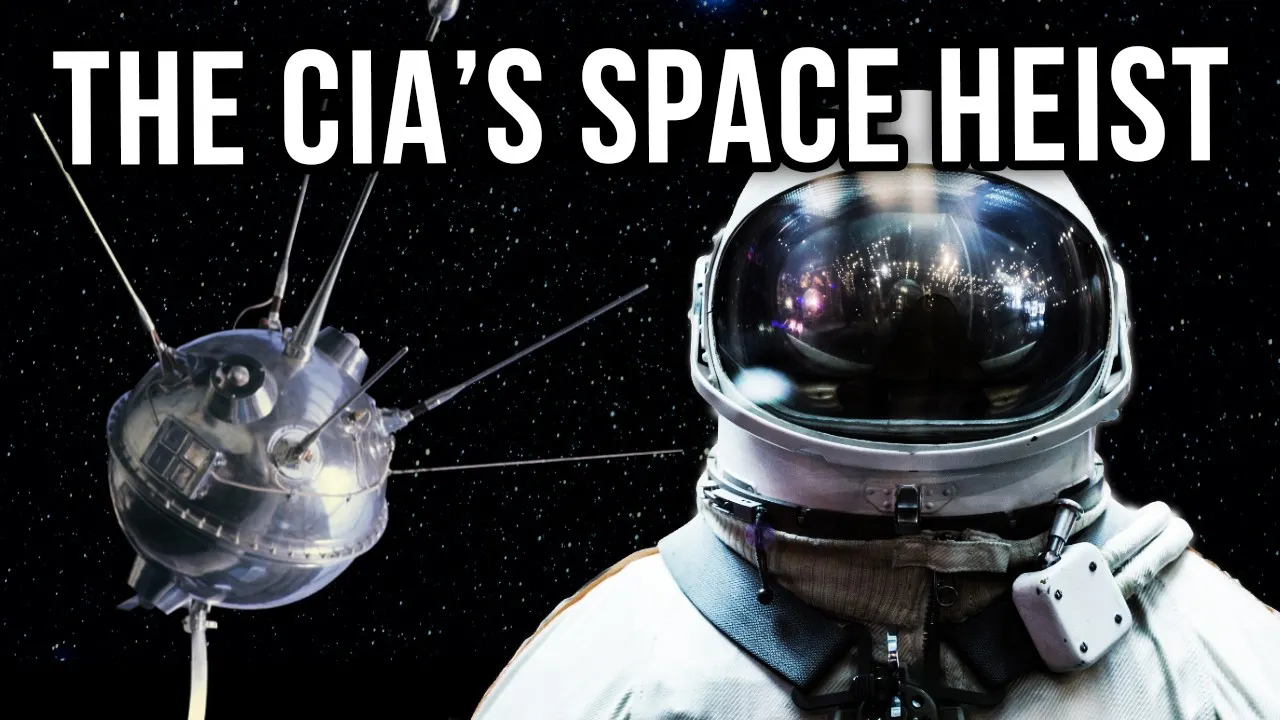 The Incredible Soviet Probe Space Heist The Incredible Soviet Probe Space Heist | Anyone interested in the shirt can find it here: https://store.todayifoundout.com/products/beep-beep-sputnik-2 On October 4, 1957 at 7:28 PM Greenwich Mean Time, a massive R7 Semyorka rocket roared off the launch pad at Baikonur Cosmodrome in Kazakhstan and soared into the night sky. The following morning, the world awoke to the stunning news: the Soviet Union had launched Sputnik 1, the world’s first artificial satellite, into earth orbit. In Washington, DC, American politicians and military officials flew into a panic. Not only had the supposedly backwards Soviets achieved spaceflight years ahead of Western predictions, but the same R7 rocket which had placed Sputnik in orbit could also place a nuclear warhead anywhere in the Continental United States with less than 30 minutes’ warning. Worse still, unlike a manned strategic bomber, such intercontinental ballistic missiles could not be intercepted or shot down. Overnight, outer space became a new battlefield in the escalating Cold War. As the American government and aerospace industry geared up to compete in this newly-declared Space Race, intelligence agencies like the CIA sought to learn all they could about Soviet space technology. This proved a daunting task, for the closed nature of Soviet society made it all but impossible to infiltrate using human agents. As a result, analysts were forced to glean what little they could from grainy spy plane and satellite photographs and intercepted telemetry signals. But then, in late 1959, an unlikely opportunity suddenly presented itself: a chance to “kidnap” and examine a genuine Soviet space probe. This is the audacious story of the Great Lunik Heist. Author: Gilles Messier Host/Editor: Daven Hiskey Producer: Caden Nielsen 0:00 Shirt 0:13 Intro 7:14 Planning the Luna Space Heist 8:46 Kidnapping the Spacecraft 13:32 The Results of the Heist Learn more about your ad choices. Visit megaphone.fm/adchoices | 21m 05s | ||||||
| 4/2/26 |  Does Absinthe Really Make You Hallucinate, The Wine Lover's Meltdown, Inventing Bloody Mary & More Does Absinthe Really Make You Hallucinate, The Wine Lover's Meltdown, Inventing Bloody Mary & More | In the episode today, we're looking at whether absinthe actually makes you hallucinate or not. Next up the hilarious story of the wine lover's meltdown, and then the popular cocktail that includes a dehydrated human toe. Finally whether or not tapping a shaken can of soda actually reduces foam. Who invented the bloody mary drink. Where does the practice of pouring one out for your homies come from. Why alcohol content is referred to as a proof. How much it would cost to fill a swimming pool with booze. And why wine is almost always drunk in wine glasses instead of regular glasses. 0:00 Does absinthe actually make you hallucinate? 14:27 The wine lover meltdown 21:55 The popular cocktail that includes a dehydrated human toe 33:48 Does tapping a shaken can of soda actually reduce foam 45:32 Who invented the bloody mary drink 1:01:48 Where does the practice of pouring one out for your homies comes from 1:08:49 Why is alcohol content referred to a proof 1:12:24 How much would it cost to fill a swimming pool with booze 1:25:08 Why is wine almost always drunk in wine glasses instead of regular glasses Learn more about your ad choices. Visit megaphone.fm/adchoices | 1h 43m 42s | ||||||
| 4/1/26 |  The Dark Origins of the Treadmill and Why Oscar Wild was the Worst The Dark Origins of the Treadmill and Why Oscar Wild was the Worst | “We sewed the sacks, we broke the stones, We turned the dusty drill: We banged the tins, and bawled the hymns, And sweated on the mill: But in the heart of every man Terror was lying still.” These are the words of famed master of the pen, Oscar Wilde, in his Ballad of Reading Gaol, referencing his time spent at Pentonville Prison for, ironically, mastering working with a different type of pen… As a brief aside, while many lament the initial thing that set forth a chain of events that saw Wilde imprisoned today, specifically his affair with Lord Alfred Douglas, very surprisingly, unlike with the likes of the great Alan Turing and countless thousands others who were unjustly punished for their sexuality, it turns out there is a LOT more to the story of Wilde’s conviction that many a biographer skirts over, though to be fair this is in part because some elements of the original transcript from the original trial were only discovered in the year 2000. Reading through those, however, even in modern times and through a modern lens and sensibilities, Wilde would have almost certainly found himself behind bars, disgraced, and absolutely vilified pretty well universally on the interwebs. But we’re not here to discuss Oscar Wilde, the full story of his conviction was simply a rabbit hole we were previously woefully ignorant of, and will share more on later in the Bonus Facts if you’re interested as well- though fair warning, it’s quite dark and, oof. Never look too deeply into your heroes, especially when they are from the past, which was of course, the worst. But in any event, embedded in Wilde’s aforementioned poem, he references sweating on the mill. This was a device created by famed engineer Sir William Cubitt in the early days of Cubitt’s career, with the primary purpose of the surprisingly feature rich machine being both to punish prisoners in an excruciating way for upwards of 10 hours per day, while also isolating them in that task so that they could properly think about what they’d done wrong. While Wilde may have abhorred the machine, having been forced to march on it for a couple years, another famous master wordsmith, Charles Dickens, would praise it, writing, "It is a satisfaction to me to see that determined thief, swindler, or vagrant sweating profusely at the treadmill... [knowing] he is doing nothing all the time but undergoing punishment." Here now is the story of when humans first started exercising for fitness’ sake, as well as the rather torturous invention of the treadmill, which saw prison death rates ramp up considerably once implemented, but paradoxically also seemed to be a major health boon to those that survived their monotonous march. Author / Host: Daven Hiskey Producer: Samuel Avila 0:00 Intro 3:13 When Humans Started Purposefully Exercising 6:47 Prison Reform and Inventing the "Treadmill" 22:02 Inventing the Modern Treadmill 29:02 Cooking with Dogs 32:14 Oscar Wilde was the Worst Learn more about your ad choices. Visit megaphone.fm/adchoices | 47m 24s | ||||||
| 3/21/26 |  What Really Causes Spontaneous Human Combustion? What Really Causes Spontaneous Human Combustion? | For those of us of the slightly more seasoned vintage growing up in or living in the late 20th century, which was totally only a decade ago and I’ll take no further input on this matter, spontaneous Human Combustion ranks alongside the likes of quicksand, the Bermuda triangle. and rain that melts your skin off as one of those things that everyone from the news to popular social consciousness taught us was going to be something we’d simply have to deal with in our day to day lives for some reason. And then, just as suddenly as a person randomly turning into ash, everyone just moved on and stopped talking about it… Which leads us to the subject of today’s video- what ever happened to everyone spontaneously combusting? Where did the idea come from, how did it proliferate public consciousness, and what’s up with all the people who did burst into flames and turned to ash, generally leaving only things like arms and legs behind? Can awesome science explain what happened to them? Authors: Karl Smallwood and Daven Hiskey Host: Daven Hiskey Producer: Caden Nielsen Learn more about your ad choices. Visit megaphone.fm/adchoices | 42m 52s | ||||||
| 3/20/26 |  How Ancient Romans Made Perfectly Straight & Durable Roads, Concrete Better Than Ours, & Much More How Ancient Romans Made Perfectly Straight & Durable Roads, Concrete Better Than Ours, & Much More | In the video today we're looking at how the Ancient Romans made incredibly long, perfectly straight and incredibly durable roads, what it was like being a slave in ancient rome, how they made concrete better than ours, were they really as wild as we sometimes think today or more prudes, did gladiators really live or die based on thumbs up or thumbs down by the audience, that time a farmer was given ultimate power twice and changed the world by walking away both times after he'd done what Rome asked of him, what really happened on the ides of march, and the chickens that shaped world history. Host: Simon Whistler Producer: Pacience Hiskey 0:00 How Did the Ancient Romans Manage to Build Perfectly Straight, Ultra Durable Roads? 17:35 What was It Really Like to Be a Slave in Ancient Rome? 31:14 How Did the Ancient Romans Make Concrete So Much Better Than Ours? 41:42 Were the Ancient Romans Really Wildly Debauched or Actually Prudes 53:45 Did Gladiators Really Live or Die Based on Thumbs Up or Thumbs Down by the Audience? 1:04:24 That Time a Farmer was Given Ultimate Power Twice and Changed the World By Walking Away Both 1:14:55 Fact From Fiction: What Really Happened on the Ides of March? 1:37:03 The Chickens That Decided Ancient Rome’s Major Events and Shaped World History Learn more about your ad choices. Visit megaphone.fm/adchoices | 1h 52m 00s | ||||||
| 3/19/26 | 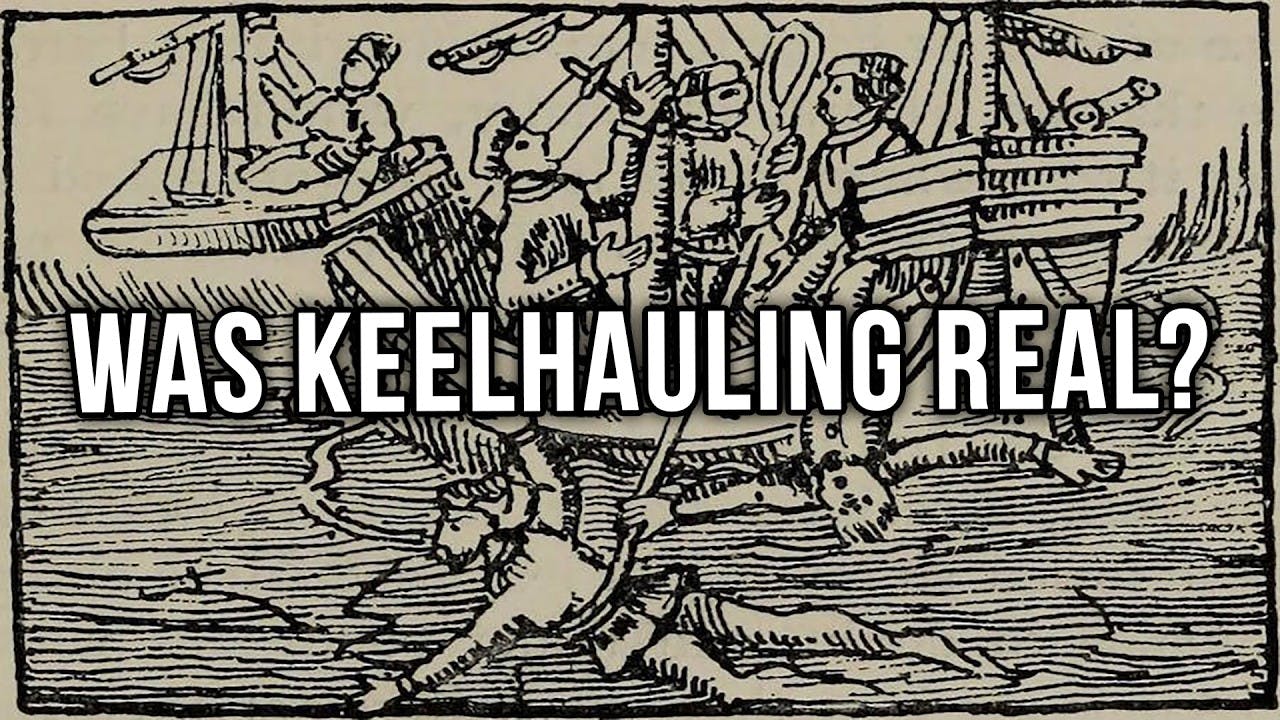 Was Keelhauling Actually a Thing? Was Keelhauling Actually a Thing? | Running the gauntlet. Starting. Flogging with the cat ‘o 9 nine tails. Gagging. Clapping in irons. Hanging from the yardarm. While this all might sound like a super fun Saturday night with the misses when the grandparents are watching your kiddos for you, it turns out these are actually just a few of the dizzying array of corporal and capital punishments inflicted upon sailors of old - both navy men and pirates - to enforce discipline and punish a wide variety of crimes. But while most of these punishments are fairly well-known, you may have noticed two notable practices missing from the list: that old staple of pirate movies, “walking the plank”… and keel-hauling. Perhaps the most infamous of all nautical punishments, keel-hauling struck such fear into the hearts of sailors over the centuries that the term survives to this day as a byword for particularly harsh discipline. But what was keel-hauling? How did it work, who invented it, and was it actually a real thing? Or, like so much popular seamen lore, was it just the product of some adventure writer’s imagination? Well, put on your eyepatch and tricorn hat, strap on your peg-leg, as we dive into the reality of one of the Age of Sail’s most barbaric practices. Author: Gilles Messier Producer: Caden Nielsen Host/Editor: Daven Hiskey Learn more about your ad choices. Visit megaphone.fm/adchoices | 22m 17s | ||||||
| 3/18/26 |  Conspiracy: The Stories Behind Flat Earth, All Seeing Eye, Little Green Men Fake Moon Landing & More Conspiracy: The Stories Behind Flat Earth, All Seeing Eye, Little Green Men Fake Moon Landing & More | In today's video, we're looking at What's Up with the All Seeing Eye on the Dollar Bill? Who Started the Flat Earth Conspiracy Theory, How Many Believe This, and What Do They Believe? Why is the Stereotypical Image of Aliens Green or Grey Bald Humanoids? How Do We Actually Know We Landed on the Moon? What Really Causes Chemtrails? The Truth About the Freemasons: The Not-So-Secret Society Did Any Musicians Actually Put Backwards Satanic Messages in Their Songs? and Why Do People Think There are Aliens in Area 51? Chapters: 0:00 What's Up with the All Seeing Eye on the Dollar Bill 14:52 Who Started the Flat Earth Conspiracy Theory, How Many Believe This, and What Do They Believe? 35:37 Why is the Stereotypical Image of Aliens Green or Grey Bald Humanoids? 54:33 How Do We Actually Know We Landed on the Moon? 1:28:12 What Really Causes Chemtrails? 1:35:49 The Truth About the Freemasons: The Not-So-Secret Society 1:48:12 Did Any Musicians Actually Put Backwards Satanic Messages in Their Songs? 2:03:04 Why Do People Think There are Aliens in Area 51? Learn more about your ad choices. Visit megaphone.fm/adchoices | 2h 13m 20s | ||||||
| 3/17/26 |  Is It Really Possible for a Nuke to Ignite the Atmosphere? Is It Really Possible for a Nuke to Ignite the Atmosphere? | At exactly 5:30 AM on July 16, 1945, the world’s first atomic bomb, codenamed Trinity, detonated over the desert in New Mexico, unleashing in an instant the power of 18,000 tons of TNT. The atomic age had begun. As night turned to day and a fireball 200 metres across rose into the sky, the scientists of the Manhattan Project who had built the bomb reacted in different ways. Some were jubilant, others more somber. J. Robert Oppenheimer, the scientific director of the project, famously recalled a line from the Hindu scripture (ba-ga-vad gee-ta) Baghavad Gita: “Now I am become death, destroyer of worlds”; while Kenneth Bainbridge, director of the Trinity test, was more blunt, stating: “Now we’re all sons of bitches.” Elsewhere around the test site, money frantically changed hands as scientists settled a series of private bets. Some had wagered that the test would be a dud, or that it would reach just a fraction of its predicted yield. But others, including Italian physicist Enrico Fermi, had wagered on a more disturbing outcome: that the intense heat of the bomb would ignite the atmosphere, setting off an unstoppable chain reaction that would wipe out all life on earth. This apocalyptic bet has since become an infamous part of nuclear lore, but does it have any basis in reality? Could the Trinity test - or any nuclear weapon, for that matter - actually have set earth’s atmosphere ablaze? Well, let’s dive into it, shall we? Author: Gilles Messier Host: Daven Hiskey Producer: Samuel Avila Learn more about your ad choices. Visit megaphone.fm/adchoices | 15m 48s | ||||||
Showing 25 of 241
Sponsor Intelligence
Sign in to see which brands sponsor this podcast, their ad offers, and promo codes.
Chart Positions
1 placement across 1 market.
Chart Positions
1 placement across 1 market.