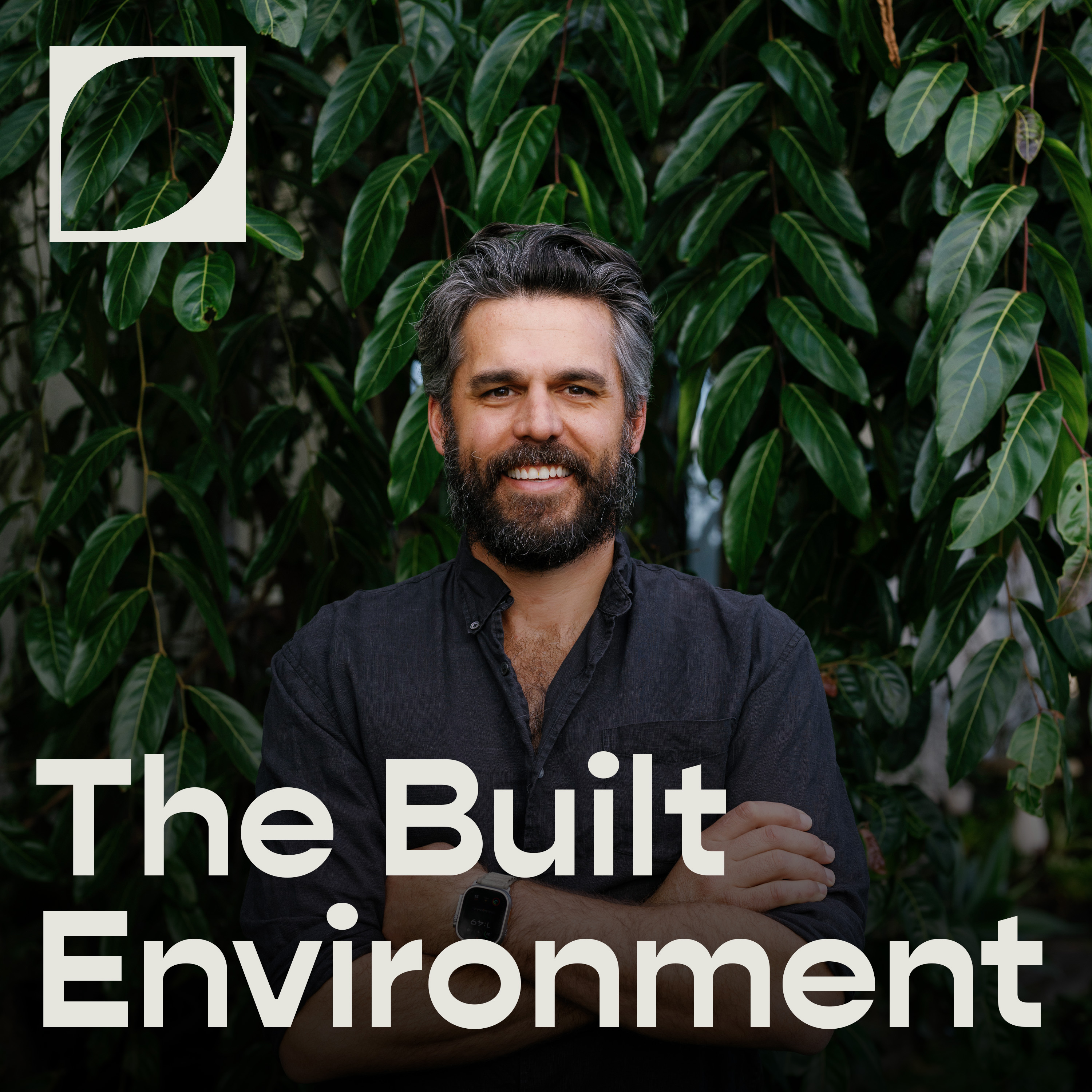
Passive House: Principles, Performance and Practical Application
From The Built Environment by Dean Ipaviz
February 2, 2026 · 1h 28m · Season 1 · Episode 8
About this episode
Dean Ipaviz interviews Daniel Kress about the principles and practical applications of Passive House in residential construction.
Passive House is one of the most misunderstood concepts in residential construction... often dismissed as “too expensive,” “too European,” or “not suited to Australian climates.” In this episode, Dean sits down with Daniel Kress, founder of Smart Plus Academy, to talk about what Passive House is, how it works, and why builders need to understand it. Drawing on decades of experience across Germany, Ireland, Canada and Australia, Daniel explains the building physics behind comfort, airtightness, moisture control and energy use, and why most Australian homes still get these fundamentals wrong. The conversation also explores cost myths, window performance, the limits of NatHERS, and how better design-build integration can dramatically reduce construction risk. It’s a practical, builder-level conversation about performance, process, and why understanding Passive House principles can make you a better builder. In this episode: Daniel’s journey from German carpentry and prefab construction to Passive House education Why Passive House works in all climates, including Australia The science of comfort: temperature, humidity, CO₂ and health outcomes Airtightness explained The difference…
People in this episode
Host: Dean Ipaviz
Guest: Daniel Kress
Topics covered
- Passive House
- residential construction
- building physics
- energy efficiency
- design-build integration
Keywords
- comfort
- airtightness
- moisture control
- energy use
- Australian homes
Mentioned in this episode
Products: Passive House, Smart Plus Academy
Places: Germany, Ireland, Canada, Australia
More episodes of The Built Environment
- Lightweight Cladding and the Shift Away from Brick · March 29, 2026 · 58 min
- Sydney Build Panel: How Builders Can Cut Carbon: Timber, Heat Pumps & Low-Carbon Concrete · March 12, 2026 · 40 min
- Ventilation Explained: Heat Recovery Systems & Airtight Homes · March 10, 2026 · 44 min
- Heat Pumps Explained: Efficient Hot Water, Heating & the All-Electric Home (Part 1) · March 3, 2026 · 49 min
- Embodied Carbon & Timber: The Case for Plantation Forestry · February 23, 2026 · 1h 15m
- Cross Laminated Timber Explained: Carbon, Cost & Construction · February 16, 2026 · 1h 6m
Explore listener stats, chart rankings, contacts and more on the The Built Environment podcast page.