Insights from recent episode analysis
Audience Interest
Podcast Focus
Publishing Consistency
Platform Reach
Insights are generated by CastFox AI using publicly available data, episode content, and proprietary models.
Most discussed topics
Brands & references
Total monthly reach
Estimated from 4 chart positions in 4 markets.
By chart position
- 🇳🇿NZ · Investing#133500 to 3K
- 🇭🇺HU · Investing#171500 to 3K
- 🇦🇷AR · Investing#182500 to 3K
- 🇰🇪KE · Investing#196500 to 3K
- Per-Episode Audience
Est. listeners per new episode within ~30 days
1K to 6K🎙 ~2x weekly·291 episodes·Last published 2d ago - Monthly Reach
Unique listeners across all episodes (30 days)
2K to 12K🇳🇿25%🇭🇺25%🇦🇷25%+1 more - Active Followers
Loyal subscribers who consistently listen
800 to 4.8K
Market Insights
Platform Distribution
Reach across major podcast platforms, updated hourly
Total Followers
—
Total Plays
—
Total Reviews
—
* Data sourced directly from platform APIs and aggregated hourly across all major podcast directories.
On the show
From 11 epsHost
Recent guests
Recent episodes
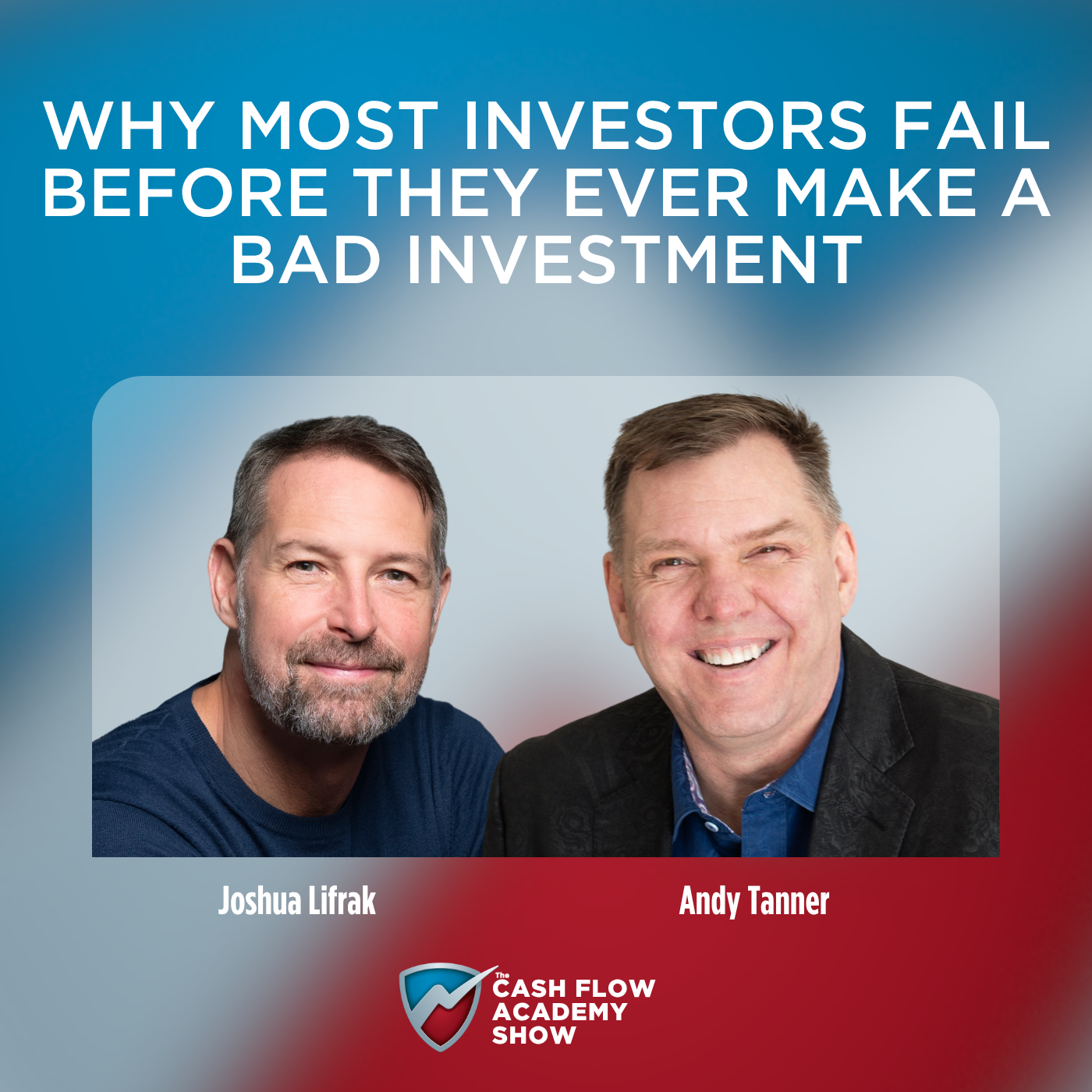
Why Most Investors Fail Before They Ever Make a Bad Investment
May 13, 2026
Unknown duration
Why Smart Traders Still Blow Up Their Options Accounts
May 6, 2026
41m 01s
Why Buy and Hold Is a Prayer — Not a Strategy
Apr 30, 2026
39m 48s
The Lie That Money Equals Wealth Is Distorting Your Investment Decisions
Apr 22, 2026
37m 19s
How Fear Disguises Itself As Logic In the Market
Apr 18, 2026
32m 55s
Social Links & Contact
Official channels & resources
Official Website
Login
RSS Feed
Login
| Date | Episode | Topics | Guests | Brands | Places | Keywords | Sponsor | Length | |
|---|---|---|---|---|---|---|---|---|---|
| 5/13/26 | ![]() Why Most Investors Fail Before They Ever Make a Bad Investment | Long before people lose money in the market, they lose control of themselves. In this episode, Andy Tanner sits down with performance coach and author Joshua Lifrak to explore why investing is ultimately a mental game. Drawing from his experience working with professional athletes, executives, and the Chicago Cubs organization during their championship run, Joshua explains why resilience is not a personality trait. It's a trainable skill. They discuss why the brain is wired for survival instead of growth, how fear disguises itself as logic, and why most people react emotionally instead of responding intentionally. This episode is about becoming the kind of person who can think clearly, recover quickly, and make better decisions when uncertainty shows up — because it always does. Want to Learn More? – Explore free education and tools at cashflowbonus.com to strengthen your investing foundation – Keep building your financial education at yourinvestingclass.com | — | ||||||
| 5/6/26 | ![]() Why Smart Traders Still Blow Up Their Options Accounts✨ | options tradingrisk management+3 | — | cashflowbonus.comyourinvestingclass.com | — | options accountstrading mistakes+3 | — | 41m 01s | |
| 4/30/26 | ![]() Why Buy and Hold Is a Prayer — Not a Strategy✨ | buy and holdinvestment strategy+3 | — | — | — | buy and holdinvestment strategy+5 | — | 39m 48s | |
| 4/22/26 | ![]() The Lie That Money Equals Wealth Is Distorting Your Investment Decisions✨ | money vs wealthinvestment decisions+4 | Ryan Young | cashflowbonus.comyourinvestingclass.com | — | wealthmoney+6 | — | 37m 19s | |
| 4/18/26 | ![]() How Fear Disguises Itself As Logic In the Market✨ | market psychologyinvesting behavior+4 | — | cashflowbonus.comyourinvestingclass.com | — | fear of lossfear of missing out+5 | — | 32m 55s | |
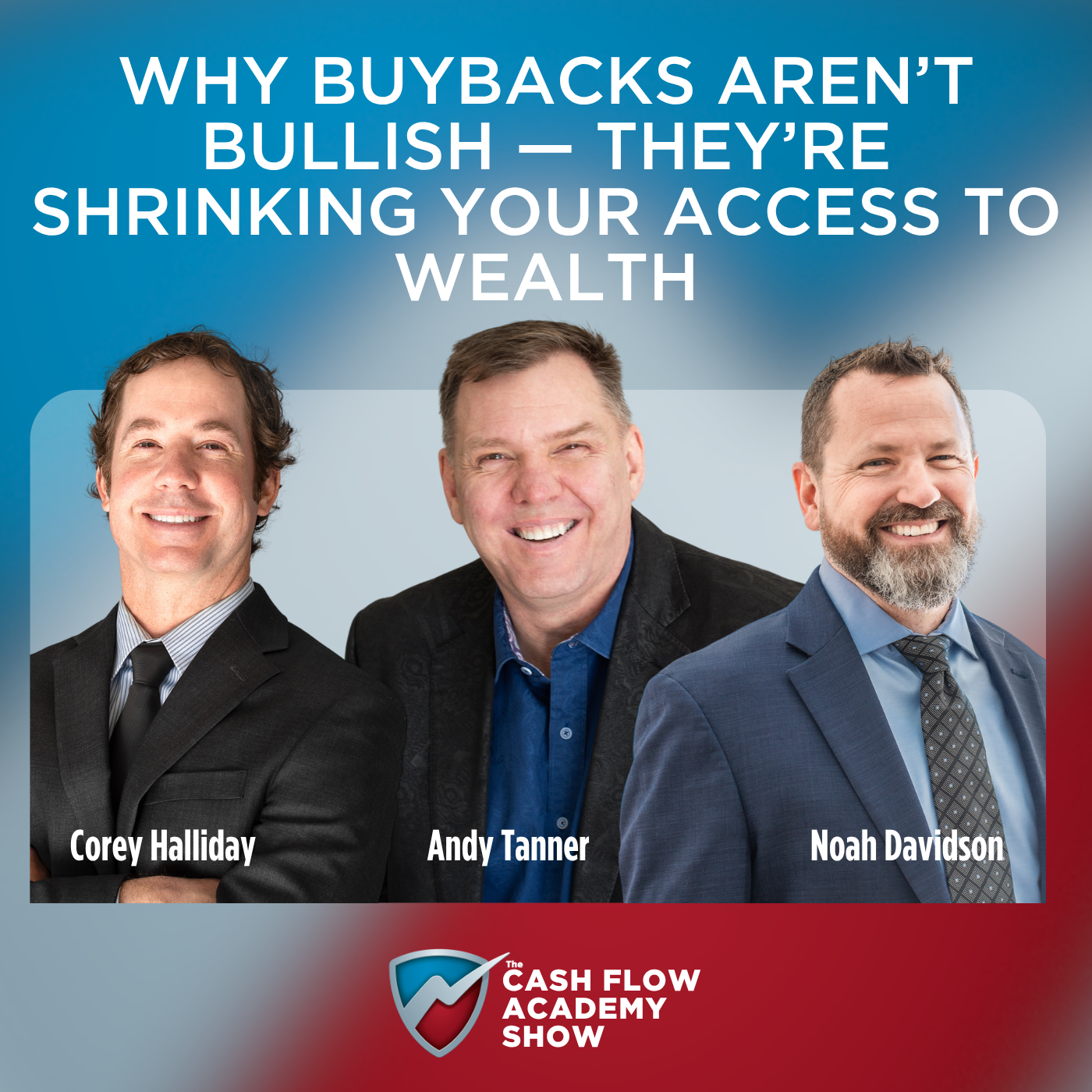
| 4/8/26 | ![]() Why Buybacks Aren't Bullish — They're Shrinking Your Access to Wealth✨ | stock buybackswealth distribution+3 | — | cashflowbonus.comyourinvestingclass.com | — | buybacksinvestors+3 | — | 1h 16m 24s | |
| 4/1/26 | ![]() Why Education Doesn't Transform You—and What Actually Does✨ | educationtransformation+4 | Joseph Pine | cashflowbonus.comyourinvestingclass.com | — | educationtransformation+4 | — | 38m 56s | |
| 3/25/26 | ![]() Why Focusing on Currency Misses the Real Investing Target✨ | currencyinvesting+4 | Barry Eichengreen | cashflowbonus.comyourinvestingclass.com | — | currencyinvesting+7 | — | 33m 20s | |
| 3/18/26 | ![]() Why Volatility Isn't the Risk — Being Unprepared Is✨ | market volatilityinvestment strategies+4 | Noah DavidsonCorey Halliday | Cash Flow AcademyVIX+1 | — | volatilityrisk management+4 | — | 1h 13m 59s | |
| 3/11/26 | ![]() War Doesn't Break Markets — It Exposes Where Money Moves✨ | geopolitical conflictmarket behavior+3 | Noah DavidsonCorey Halliday | cashflowbonus.com | — | warmarkets+7 | — | 51m 52s | |
Want analysis for the episodes below?Free for Pro Submit a request, we'll have your selected episodes analyzed within an hour. Free, at no cost to you, for Pro users. | |||||||||
| 3/4/26 | ![]() Why Going All-In on Crypto Is the Real Risk✨ | crypto investmentrisk management+3 | Sir John Hargrave | cashflowbonus.comyourinvestingclass.com+1 | — | cryptoBitcoin+5 | — | 25m 46s | |
| 2/25/26 | ![]() The Most Expensive Mistakes Traders Make Aren't Market Mistakes✨ | psychological trapstrading mistakes+3 | Corey HallidayNoah Davidson | — | — | sunk cost fallacyanchoring+3 | — | 50m 15s | |
| 2/18/26 | ![]() Gold Isn't Wealth — It's a Warning Signal | Most people think rising gold prices mean opportunity. They see a chart going vertical and assume it's time to buy. But gold doesn't surge because the economy is thriving. It surges when confidence is cracking. In this episode, Andy, Corey, and Noah unpack what gold's recent move is really signaling — and why chasing it for growth may miss the point entirely. Gold is not a cash-flowing asset. It doesn't innovate. It doesn't expand margins. It doesn't pay dividends. It sits. So why are sovereign nations accumulating it? Why are futures markets squeezing? And what does that tell us about currency confidence, debt levels, and global positioning? We break down the difference between owning bullion as insurance and owning mining companies as productive assets. We explore why volatility creates opportunity in options markets. And we challenge the assumption that price alone equals value. This isn't a conversation about predictions or targets.It's about positioning. When gold rises, the question isn't "How high will it go?" The better question is, "What is the market afraid of — and how should a disciplined investor respond?" Gold isn't wealth. It's information. And how you interpret it determines whether you react emotionally — or allocate strategically. Want to Learn More? – Explore free education and tools at cashflowbonus.com to strengthen your investing foundation – Keep building your financial education at yourinvestingclass.com. | — | ||||||
| 2/11/26 | ![]() Why Focusing on Goals Is Holding Investors Back | Most investors believe their biggest risk is market performance. If they diversify correctly and stay invested long enough, everything should work out. That belief is comforting. And incomplete. Markets don't fail portfolios nearly as often as behavior does. Investors exit at the wrong time. Advisors rebalance too late. Risk is misunderstood until it shows up all at once. By then, decisions are driven by emotion, not design. In this episode, Andy Tanner sits down with Phillip Toews, author of The Behavioral Portfolio, to challenge the idea that better forecasting or higher returns solve investor problems. They don't. Portfolio structure does. Phillip explains why traditional models like the 60/40 portfolio were never designed for real human behavior — especially during extended downturns, rising-rate environments, or retirement distribution phases. He outlines why most investors are unprepared for how deep losses can actually go, and how that lack of preparation leads to perfectly timed mistakes. This conversation isn't about predicting crashes or chasing performance. It's about understanding history, accepting uncertainty, and building portfolios that account for both economic reality and psychological limits. If you've ever wondered why disciplined plans fall apart at the worst possible moments, this episode reframes the problem — and offers a clearer way to think about risk, preparation, and long-term decision-making. Want to Learn More? – Explore free education and tools at cashflowbonus.com to strengthen your investing foundation – Keep building your financial education at yourinvestingclass.com. | — | ||||||
| 2/4/26 | ![]() Why Most Portfolios Fail When Behavior Matters Most | Most investors believe their biggest risk is market performance. If they diversify correctly and stay invested long enough, everything should work out. That belief is comforting. And incomplete. Markets don't fail portfolios nearly as often as behavior does. Investors exit at the wrong time. Advisors rebalance too late. Risk is misunderstood until it shows up all at once. By then, decisions are driven by emotion, not design. In this episode, Andy Tanner sits down with Phillip Toews, author of The Behavioral Portfolio, to challenge the idea that better forecasting or higher returns solve investor problems. They don't. Portfolio structure does. Phillip explains why traditional models like the 60/40 portfolio were never designed for real human behavior — especially during extended downturns, rising-rate environments, or retirement distribution phases. He outlines why most investors are unprepared for how deep losses can actually go, and how that lack of preparation leads to perfectly timed mistakes. This conversation isn't about predicting crashes or chasing performance. It's about understanding history, accepting uncertainty, and building portfolios that account for both economic reality and psychological limits. If you've ever wondered why disciplined plans fall apart at the worst possible moments, this episode reframes the problem — and offers a clearer way to think about risk, preparation, and long-term decision-making. Want to Learn More? – Explore free education and tools at cashflowbonus.com to strengthen your investing foundation – Keep building your financial education at yourinvestingclass.com. | — | ||||||
| 1/28/26 | ![]() Gold Won't Make You Rich — Cash Will Quietly Make You Poor | Most investors still treat gold like a lottery ticket and cash like a safety blanket. They watch gold make new highs and assume it's finally "working." They sit on piles of cash and feel conservative and responsible. Both instincts are dangerously backwards. In this episode, Andy Tanner, Corey Halliday, and Noah Davidson reframe gold's real job in your life. Gold is not a growth engine. It's insurance. Its rising price is less a reason to celebrate and more a signal about what's happening to your currency, your grocery bill, and your future purchasing power. You'll hear why "cash is a loser" in an inflationary system that must keep printing, why gold bugs get one thing right and one thing very wrong, and why owning productive assets often beats hoarding metal — even when gold is surging. They also break down the practical side: physical gold vs ETFs, miners vs metal, and how options on gold-related assets can create cash flow while you quietly accumulate your hedge instead of chasing headlines. This is not about gold predictions. It's about understanding what gold, cash, and real assets are each designed to do — so you can position yourself like an owner, not a spectator. | — | ||||||
| 1/21/26 | ![]() Why Demographics, Not Policymakers, Quietly Control Your Financial Future | You've been told elections, central banks, and headlines are what move markets. But what if most of your financial future was locked in the day people were born… or never born at all? In this episode of the Cash Flow Academy, Andy Tanner sits down with demographer Kenneth Gronbach, author of Upside: Profiting from the Profound Demographic Shifts Ahead, to show why economics is really a subset of demographics — not the other way around. They unpack how a "missing" Generation X quietly crushed entire industries like motorcycles and jeans, why China and Japan are aging into economic dead ends, and why immigration is actually propping up labor, consumption, and tax bases in the Americas. You'll hear how massive Baby Boomer wealth, delayed Millennial family formation, and Latino population growth are converging into powerful tailwinds for specific sectors like housing, healthcare, autos, and local services. More importantly, you'll learn how to think: where demand is mathematically guaranteed to rise, where it's destined to fall, and why "policy plus demographics gives you the future." This conversation won't tell you what stock to buy next. It will give you a clearer map of who will be working, earning, spending, and needing care over the next several decades — so you can position your portfolio with intention instead of reacting to the latest headline. | — | ||||||
| 1/14/26 | ![]() Why AI Won't Replace Workers—It Will Replace the Value of Work | Most people still believe their job is their security. A steady paycheck feels like stability. Skills feel like protection. And adapting to new technology feels like the answer. But what if the real shift isn't about jobs disappearing… it's about labor itself losing value? In this episode, Andy Tanner, Noah Davidson, and Corey Halliday unpack a deeper implication of AI that most investors are missing. Using Salesforce as a real-world example, they explore why profitable companies are cutting thousands of jobs—not to survive, but because they no longer need the labor. That changes the equation. This isn't creative destruction. It's substitution at scale. And when companies redirect billions away from wages and into stock buybacks, they're signaling something critical: ownership is becoming more valuable than participation. You'll learn why traditional advice around income and career security may be incomplete, how shrinking share float quietly shifts wealth toward owners, and why many investors are optimizing for the wrong variable entirely. This is not a prediction about markets or timelines. It's a framework for thinking clearly about where value is moving—and what that means for your position in the system. Want to Learn More? – Explore free education and tools at cashflowbonus.com to strengthen your investing foundation – Keep building your financial education at yourinvestingclass.com | — | ||||||
| 1/7/26 | ![]() Why Inflation Isn't a Fed Problem—It's a Government Debt Problem | Rates go up, inflation goes down. That's the story we've been told. But what if that explanation is incomplete—and in some cases, backwards? In this episode, Andy Tanner sits down with Dr. John Cochrane to challenge one of the most widely accepted ideas in modern finance. They unpack why inflation may have less to do with central bank policy and more to do with something far less discussed: government debt and credibility. If inflation were simply a matter of interest rates, it would already be solved. Instead, this conversation reframes inflation as a question of trust. Do markets believe future obligations will be honored without devaluing the currency? And what happens when that belief starts to crack? You'll hear why rising interest rates can actually worsen the problem they're meant to fix, how fiscal policy quietly drives price levels, and why historical examples—from the U.S. to Europe—point to the same underlying dynamic. This is not about predictions or politics. It's about understanding the structure beneath inflation—and why most investors may be watching the wrong lever entirely. Want to Learn More? Visit cashflowbonus.com to access free investing resources, including the ebook and action items discussed in this episode. | — | ||||||
| 12/31/25 | ![]() Narrow Your Focus and Invest With Confidence | The team breaks down the often-overlooked skill of picking fewer, better investments. Instead of chasing endless opportunities, the team explains why clarity, discipline, and defined criteria matter more than volume. Using relatable analogies and timeless investing principles from Warren Buffett, they explore how focus, temperament, and long-term thinking help investors build portfolios they can actually manage with confidence. What You'll Learn in This Episode: - Why narrowing your stock choices leads to better decision-making and stronger conviction - How to create clear criteria for selecting high-quality investments - What Buffett means by temperament and specialization and why both matter - How economic moats protect businesses and support long-term growth - The role of diversification without overcomplicating your portfolio - Why market psychology and your personal environment influence investing success Want to Learn More? Visit cashflowbonus.com to access free investing resources, including the ebook and action items discussed in this episode. | — | ||||||
| 12/17/25 | ![]() Jobs Shock & Market Reality | This episode centers on staying prepared, managing risk, and building a balanced approach in a potentially overextended market. The team breaks down the jobs report revisions from August 2025 and what they signal for the broader economy. With markets running on AI-driven optimism, the team compares today's environment to the dot-com era and questions whether investors are ignoring early warning signs. They also unpack how the Federal Reserve's dual mandate shapes rate decisions, including why the probability of a rate cut jumped to 95% after the new jobs data. What You'll Learn in This Episode - The difference between dividend kings, aristocrats, and champions - Why payout ratios matter for sustainable income - How to avoid value traps and identify healthy yields - Tips for finding quality stocks "on sale" - How to boost dividend returns with technical analysis and options Action Items - Explore free education and tools at cashflowbonus.com to strengthen your investing foundation - Keep building your financial education at yourinvestingclass.com. | — | ||||||
| 12/10/25 | ![]() How to Find Dividend Stocks on Sale | Andy, Noah, and Corey dive into the power of dividend investing — one of the most reliable paths to long-term wealth. They explain why Warren Buffett's success with Coca-Cola is a masterclass in patience and compounding returns, and outline what separates dividend kings, aristocrats, and champions. The team also discusses how to spot value traps, evaluate payout ratios, and find stocks that offer both growth and stability. Plus, they share practical ways to enhance returns using technical analysis and options. What You'll Learn in This Episode - The difference between dividend kings, aristocrats, and champions - Why payout ratios matter for sustainable income - How to avoid value traps and identify healthy yields - Tips for finding quality stocks "on sale" - How to boost dividend returns with technical analysis and options Action Items - Explore free resources at cashflowbonus.com - Review three stocks' 52-week highs and lows to gauge volatility | — | ||||||
| 12/3/25 | ![]() Closing the Knowledge-Behavior Gap | Andy, Noah, and Corey break down what really drives success in any field — and it's not just knowledge. They discuss why experience, mentorship, and consistent action matter more than theory, and share personal stories that illustrate how great coaching can close the gap between what you know and what you do. The team also explores how fear and isolation hold people back, and why a supportive community can make all the difference. What You'll Learn in This Episode - Why mentorship accelerates real success - How to bridge the gap between knowledge and action - The importance of structured education and accountability - How fear stops progress — and how to overcome it - The value of community in long-term growth Action Items - Explore free resources at cashflowbonus.com - Contact Corey or Noah about mentorship opportunities to help close your knowledge-behavior gap | — | ||||||
| 11/26/25 | ![]() Steady and Profitable: Building Double-Digit Returns | Andy, Noah, and Corey reveal how investors can consistently earn double-digit returns without taking big risks. Using Warren Buffett's strategy with Occidental Petroleum (OXY) as an example, they explain how steady, fundamentals-based investing and smart options strategies can generate reliable cash flow and long-term growth. What You'll Learn in This Episode: - How to build consistent double-digit returns - Lessons from Buffett's OXY investments - How selling put options creates income and limits risk - Why dividends and cash flow drive lasting success - How to pair fundamentals with technical analysis Action Items: - Explore free resources at cashflowbonus.com | — | ||||||
| 11/19/25 | ![]() How Gold Protects Your Portfolio | Andy Tanner sits down with Dana Samuelson, a 45-year veteran of the precious metals market, to break down why gold continues to shine as economic uncertainty rises. Dana explains the forces pushing gold to $4,000 an ounce — including a weakening dollar, low interest rates, and major central banks increasing their gold reserves. Andy highlights why gold remains a powerful hedge, a store of value, and a critical part of a balanced portfolio designed to weather inflation and downturns. Together, they explore the advantages of owning both physical gold and mining stocks, and why gold's role in wealth protection has never been more relevant. What You'll Learn in This Episode - Why gold has surged to $4,000 and what's driving the move - How gold protects investors during inflation and economic volatility - The benefits of physical gold vs. gold mining stocks - Why gold carries no counterparty risk - How central banks influence the precious metals market Action Items - Learn more about precious metals at cashflowbonus.com - Visit American Gold Exchange to purchase gold or silver Want to Learn More? Continue your investing education with free classes and resources at yourinvestingclass.com. | — | ||||||
Showing 25 of 295
Sponsor Intelligence
Sign in to see which brands sponsor this podcast, their ad offers, and promo codes.
Chart Positions
4 placements across 4 markets.
Chart Positions
4 placements across 4 markets.