
Insights from recent episode analysis
Audience Interest
Podcast Focus
Publishing Consistency
Platform Reach
Insights are generated by CastFox AI using publicly available data, episode content, and proprietary models.
Total monthly reach
Estimated from 6 chart positions in 6 markets.
By chart position
- 🇬🇧GB · Management#1105K to 30K
- 🇮🇹IT · Management#1251K to 10K
- 🇧🇪BE · Management#4710K to 30K
- 🇮🇪IE · Management#643K to 10K
- 🇳🇿NZ · Management#703K to 10K
- Per-Episode Audience
Est. listeners per new episode within ~30 days
11K to 47K🎙 Weekly cadence·54 episodes·Last published 2mo ago - Monthly Reach
Unique listeners across all episodes (30 days)
23K to 93K🇬🇧32%🇧🇪32%🇮🇹11%+3 more - Active Followers
Loyal subscribers who consistently listen
9K to 37K
Market Insights
Platform Distribution
Reach across major podcast platforms, updated hourly
Total Followers
—
Total Plays
—
Total Reviews
—
* Data sourced directly from platform APIs and aggregated hourly across all major podcast directories.
On the show
Recent episodes
The Difference Between Reflection and Reflexivity in Coaching
Feb 24, 2026
Unknown duration
How Do We Help Clients When They're Really Stuck?
Jan 6, 2026
Unknown duration
Why taking your time in coaching matters
Nov 11, 2025
Unknown duration
Narcissism: tools for coaches and their clients
Oct 14, 2025
Unknown duration
Contracting in coaching: beyond the tick box
Sep 23, 2025
Unknown duration
Social Links & Contact
Official channels & resources
Official Website
Login
RSS Feed
Login
| Date | Episode | Description | Length | ||||||
|---|---|---|---|---|---|---|---|---|---|
| 2/24/26 | 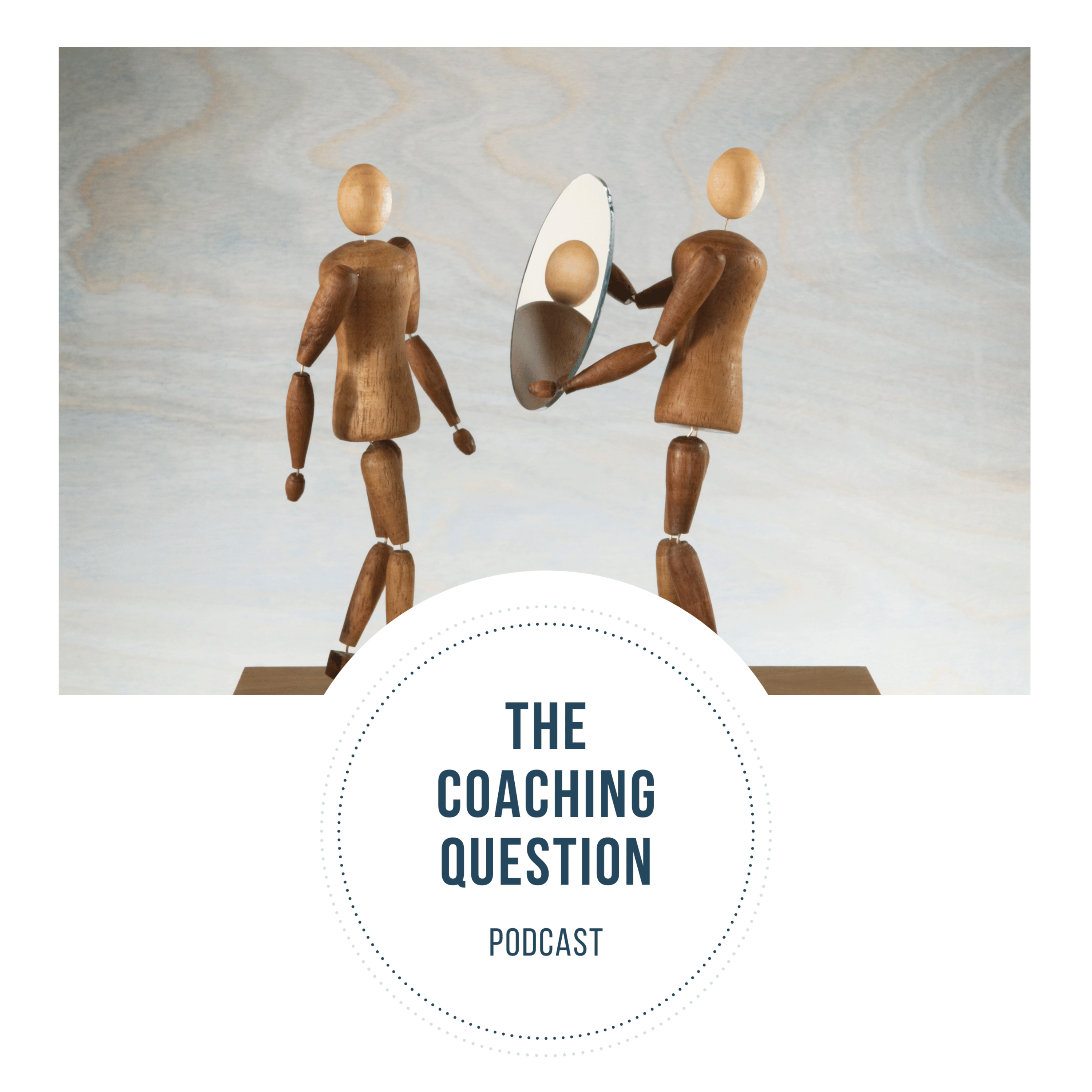 The Difference Between Reflection and Reflexivity in Coaching | We explore a deceptively subtle but powerful distinction: the difference between reflective practice and reflexive practice in coaching.Most coaches are trained to reflect. Fewer develop the capacity to be reflexive.This conversation unpacks why that matters - and how reflexivity represents a deeper layer of professional and personal maturity.If this episode sparked reflection (or reflexivity), we’d love to hear your thoughts.And if you found it valuable, please review and share! | — | ||||||
| 1/6/26 |  How Do We Help Clients When They're Really Stuck? | We explore why even highly capable, motivated clients can stay stuck despite knowing what they want to change. We introduce Robert Kegan and Lisa Lahey’s Immunity to Change model, which reveals how unconscious competing commitments can quietly block progress - not through resistance, but through self-protection.The model is brought to life through a live example, as Sarah works through the four-column process and uncovers the hidden assumptions shaping her behaviour. The conversation shows how these protective patterns develop for good reasons, and how the model connects with Transactional Analysis ideas such as drivers, script beliefs, and discounting.We offer practical guidance for coaches: work collaboratively, normalise competing commitments, and move slowly and carefully. It’s a thoughtful exploration for coaches who want to move beyond action planning and support deeper, more sustainable change.Resources:"The Real Reason People Won't Change" by Robert Kegan and Lisa Lahey (Harvard Business Review, 2001) – The original article that introduces the Immunity to Change framework.The Immunity to Change Map – You can find versions of the four-column template online to use with your clients.Transactional Analysis – For those interested in the connections we discuss between TA and this model, explore our previous episodes on psychological drivers, script beliefs, and discounting. | — | ||||||
| 11/11/25 |  Why taking your time in coaching matters | We explore why taking your time at the start of a coaching session is one of the most powerful, and most frequently overlooked, skills in coaching. We unpack the common tendency for coaches, especially those under pressure or early in their practice, to leap toward solutions the moment a client states a goal. Through rich metaphors like the tandem bicycle, the pencil sharpener, and the Bake Off proving drawer, we show how deeper exploration at the outset creates clarity, focus, and stronger outcomes.We link this slow, spacious beginning to the ICF competencies, highlighting why establishing and maintaining agreements requires more than simply naming a topic. The conversation also touches on the psychological drivers behind the rush to “get going,” including the TA hurry-up driver and the unconscious desire to appear helpful. We share our three practical tips, as well as personal practices that help us stay grounded and intentional, from mindfulness to checking our internal drivers. It’s a thoughtful, encouraging conversation for any coach wanting to strengthen presence, clarity, and quality in their sessions.Resources:Nancy Kline, “Time to Think” & “More Time to Think” (especially helpful for more experienced coaches)Claire Pedrick / 3D Coaching, Metaphors and practices for sharpening focus and staying client-ledEmma Donaldson-Feilder & Liz Hall, Relational Mindfulness ProgrammePaul Heardman, Article on supervision from a constellationist perspective in Coaching at Work | — | ||||||
| 10/14/25 |  Narcissism: tools for coaches and their clients | In this episode we explore how coaches can support clients who are dealing with a narcissistic boss. We unpack what narcissism truly means - beyond social media clichés - and discuss the difference between narcissistic personality disorder and narcissistic tendencies that may still create toxic dynamics at work.We highlight common signs that a client might be working for a narcissist, such as self-doubt, confusion, or feeling “never good enough,” and examine the systemic factors that can keep such leaders in place. We emphasise the importance of reflective practice and supervision to help coaches avoid collusion and remain grounded, especially when personal triggers or family histories come into play.We offer practical strategies for helping clients manage these complex relationships, from strengthening boundaries and self-care to finding support outside the organisation. We also discuss when a more directive coaching style may be needed, and how compassion - for both client and boss - can bring balance and perspective to this challenging dynamic. | — | ||||||
| 9/23/25 |  Contracting in coaching: beyond the tick box | In this episode we unpack contracting as a living, multi-layered practice rather than a one-time formality.We explore three distinct levels of contracting:Administrative – The essentials: when and where sessions happen, confidentiality agreements, cancellation terms, fees, and note-taking.Professional – Clarifying goals, purpose, scope, and whether to involve other parties such as a line manager or HR.Psychological – The unspoken relational agreements, unconscious patterns, and “felt sense” of the coaching space.Drawing on real-world examples, we show how unconscious dynamics - such as parent-child patterns - can affect the work, and why Always Be Contracting (ABC) is such a useful mantra. We discuss practical ways to keep contracts alive, including naming ruptures in the relationship and agreeing upfront how to address them.We also delve into psychological distance between coach, coachee, and organisational stakeholders, using the concept of the three cornered contract from Julie Hay. Rarely an equal-sided triangle, the shape reflects engagement levels and potential for collusion.We discuss multi-stakeholder contracting: bringing all key parties (coach, coachee, sponsor/HR) together at the start and ideally again mid-way and at the end, to align on purpose, roles, confidentiality, and progress. If you’ve only seen contracting as a tick-box exercise, this episode might change your view, and your practice.Resources: Three levels of contracting Contracting in team coaching | — | ||||||
| 8/5/25 |  Discounting: how clients unconsciously keep themselves stuck | In this episode we discuss how clients can inadvertently keep themselves stuck by ignoring aspects of themselves, others or the situation. Discounting is a classic topic that emerges in coaching sessions. We share how using Julie Hay’s “Steps to Success” model can help to shed a light on a client’s discounting beliefs and create more enabling ones. This approach is versatile in its application, but can be practically applied in-person through using physical cards on the floor and walking side-by-side with a client, helping them to embody each stage in the process.We offer useful coaching tips focused on how, as a coach, we might tune into what clients are discounting, reflecting on one’s own biases as a coach, and fostering genuine partnership. This is the article we reference - thanks to Spark for this. This includes the diagram for steps to success:https://www.sparkcoachingandtraining.co.uk/blog/transactional-analysis-discount-store-of-coaching#:~:text=Remember%20that%20discounting%20is%20an,done%20something%20about%20this%20earlier. This episode is a valuable listen for coaches looking to deepen their understanding of client resistance and strengthen their coaching conversations. | — | ||||||
| 7/22/25 |  Shadow, projection, and transference: demystifying coaching psychology | In this episode we explore how psychodynamic concepts like projection, shadow, and transference show up in coaching. These unconscious patterns can distort the coaching relationship, making reflective practice essential for staying present and effective.We highlight the role of supervision in spotting these dynamics, supporting coaches normatively, formatively, and restoratively. Parallel process - when patterns in coaching mirror the client’s wider context - can offer powerful insights.We share three practical tools to deepen self-awareness and strengthen client work. | — | ||||||
| 7/8/25 |  Coaching in turbulent times: self-care, supervision & preparedness | In this episode we explore the impact of global turbulence on our coaching practice. With ongoing uncertainty in the world, including recent political events, we discuss how these external challenges affect both coaches and our clients. We dive into key themes such as emotional impact, self-awareness, supervision, and the importance of reflective practice.Sarah reflects on her approach to media consumption, questioning whether avoiding distressing news is self-protection or a way of disconnecting. We discuss how world events shape our clients’ experiences, particularly those facing discrimination or personal struggles, and why coaches must be aware of these influences. Supervision provides a vital space to regulate emotions, stay present, and avoid becoming entangled in clients’ challenges. Although we've already recorded one episode on supervision, there is so much to say on this topic that we've recorded another, We also explore strategies for creating safe, open coaching spaces, setting clear expectations, and developing a “third eye” perspective—stepping back to observe both the client and ourselves. Through thoughtful discussion, we offer insights on resilience, preparedness, and maintaining authenticity in the face of uncertainty. | — | ||||||
| 6/24/25 |  How should we end our coaching engagements? | In this episode, we discuss the often-overlooked topic of endings in coaching relationships. This is an update to a special we did when Gregor’s Coaching At Work article was published but we’ve updated and expanded on our thinking since. So we’ve explored how endings can impact both coaches and clients, offering practical insights and tips on how to approach this significant stage of the coaching process.Also, we reflect on how clients may struggle with letting go of the coaching relationship and how coaches can approach this phase with care and thoughtfulness. We talk about how integrating measurable outcomes into the coaching process—such as reviewing achievements and impact with clients—can be a valuable part of a coaching practice. Touched upon is the importance of thinking about coaching as a process that impacts not just the individual, but the team, clients, and suppliers. We recommend exploring the broader effects of the coaching work and how those ripple effects can inform future coaching endeavours.We share our 3 top tips on ending coaching engagements.Resources: Rachael Hanley-Browne https://www.rh-b.com/ Article Gregor co-authored in Coaching At Work magazine: https://www.coaching-at-work.com/2022/04/29/finishing-touches/Previous episode on endings if you really want it! https://the-coaching-question.captivate.fm/episode/how-do-we-best-end-coaching-engagements | — | ||||||
| 6/10/25 |  Empathy vs. compassion in coaching | In this episode, we dive into the critical distinction between empathy and compassion in coaching, exploring how these concepts influence the effectiveness of coaching sessions. Drawing from our own coaching and supervisory experiences, we discuss the importance of boundaries, self-awareness, and personal responsibility in both coaching and supervision. We touch on how coaches can maintain their energy and emotional resilience in their practice.As usual, we share our 3 top tips.If you found this episode useful, please consider leaving a positive review on Apple Podcasts. Your feedback helps us reach more listeners!Resources:Robin Shohet: This isn’t a direct quote but he encourages coaches to pay exquisite attention to how someone makes you feel.Kristin Neff: Self-compassion expert, with further resources on her website; https://self-compassion.org | — | ||||||
Want analysis for the episodes below?Free for Pro Submit a request, we'll have your selected episodes analyzed within an hour. Free, at no cost to you, for Pro users. | |||||||||
| 5/27/25 |  Reflect, transform, lead: the power of inside-out coaching | In this episode, we explore the dynamics of "inside-out" versus "outside-in" coaching approaches and how these impact sustainable transformation for leaders.We discuss the nuanced process of recognising when clients are ready for deeper, reflective work and using "safe experiments" to help leaders overcome resistance and embrace deeper transformationTouching on frameworks like Immunity to Change, we highlight the importance of creating space for reflection, especially in high-pressure roles. We also delve into the evolving journey of coaches themselves, offering valuable insights for anyone aiming to lead from a place of authenticity and resilience.Resources:Forbes article on Inside Out Leadership: How Leading From The ‘Inside Out’ Transforms Lives, Work Cultures And Businesses Forbes article on Stoic Leadership: Stoic Lessons For A Successful Leadership MindsetBook: One Small Step Can Change Your Life: The Kaizen Way by Robert Maurer | — | ||||||
| 5/13/25 |  The delicate balance between support & dependency in coaching | In this episode, we dive into the nuanced dynamics of coaching relationships, exploring the importance of progress markers, autonomy, and the delicate balance between ongoing support and the risk of dependency. We discuss how effective coaching isn’t just about achieving goals, but involves creating a "thinking partnership" that helps clients broaden their perspectives, especially at senior levels. We emphasise the value of supervision as a critical tool for coaches to manage relational boundaries, maintain client autonomy, and address potential dependencies on both sides.Whether you're a coach, a coaching supervisor, or someone in HR commissioning and managing coaching contracts, this episode offers insights into structuring impactful, sustainable coaching engagements. | — | ||||||
| 4/29/25 |  Overwhelm and the value of internal work in senior leaders | In this episode, we explore the highly relevant topic of overwhelm and how this shows up in coaching, especially with senior leaders.We talk about developmental fallback and the need for leaders to be aware of their internal states and triggers, especially during times of stress, So they can avoid reverting to less resourceful behaviours. This is also something coaches need to be aware of to meet their coachees at the appropriate level. We discuss the value of taking the time to resource yourself, and paying attention to preparedness, so you can be less reactive to your environment and increase your effectiveness as a leader. You’re in charge of your environment, not vice versa. We also touch on practical strategies for reflection, including structured journaling to help leaders become more trigger-aware. We share the power of breathwork as a free, accessible tool for managing stress and enhancing focus. Tune in for actionable insights encouraging personal growth and effective leadership in challenging times.You will notice that this season has a slightly different format of a more casual conversation, perhaps the kind you might have during coaching supervision - we hope you like it!Resources:Article: Leaders and overwhelmVideo: Above and below the line | — | ||||||
| 7/23/24 |  A TA perspective on leading former peers, performance management and conflict avoidance | In this episode we continue our exploration of the application of Transactional Analysis in coaching. We build on the previous episode with our fictional case study of Adam.Adam has moved into a management role where he is managing colleagues who were once teammates, and he is finding it hard to manage their performance. We share various coaching techniques we might employ to support Adam, enabling him to understand how best to work with other people. The transition into managing colleagues who were once teammates is one that often comes up in coaching, and we explore how valuable TA can be in understanding how our unconscious drivers can influence our behaviour. Listen to this episode to learn various coaching techniques that coaches might employ such as using the ‘allowers’ approach in TA, reframing, non-violent communication, somatic coaching and unpacking beliefs. | — | ||||||
| 7/9/24 |  Using TA when clients struggle to say no and delegate, getting close to burnout | In this episode of the Transactional Analysis series of The Coaching Question Podcast, we explore how we might apply TA in our coaching practice using a new fictional case study of a client called Adam.Adam has recently been promoted to his first 'Manager of Manager' role, struggles to say no, delegate, deal with poor performance and is at danger of burning out. Building on the previous episode, we explore his behavioural drivers and using his challenges as a lens, we illustrate the practical application of TA. We share how generating awareness of Driver behaviour leads to clients becoming more aware of the choices they have available to them, rather than sticking with automatic behaviour that their early experiences have taught them.Listen to this episode to understand more about how TA can add value to coaching challenges and reflect on your own possible triggers and beliefs. References:The Leadership Pipeline is covered in Season 1, Episode 2Feedback and FeedForward are covered in Season 2, Episode 2Vertical Development episode is covered in Season 2, Episode 9The functional model is described by Samantha Kynaston hereWare sequence | — | ||||||
| 6/25/24 |  Using TA to help when people pleasing gets in the way | In this episode, we continue to delve into Transactional Analysis (TA), with our fictional client named Alicia. Alicia has brought two challenges to coaching; difficulty delegating and a tendency to please others.You’ll hear about the concept of behavioural drivers within TA, which are behavioural tendencies that we learn in childhood and carry with us into adulthood. In many ways they are a strength, but they can be over-pronounced which can lead to difficulties and stress. In Alicia’s context the behavioural drivers that have made her successful in the past are now getting in the way of her being successful.Listen to this episode to learn how, as Executive Coaches, we employ our knowledge of behavioural drivers along with other TA tools such as the Drama Triangle to support clients in increasing their self-awareness. | — | ||||||
| 6/11/24 |  Using TA to help clients become trigger aware and move toward autonomy | In this episode, we dive into the practical application of TA in a coaching scenario using a fictional character Alicia, who represents a typical client struggling with saying no, setting and maintaining boundaries, resulting in potential burnout. With Alicia as a fictional case study, we discuss how we might support her as Executive Coaches skilled in applying TA to our work. Building on the PAC model shared in an earlier episode, we use TA to identify possible triggers that might move Alicia into her child ego state when she feels lacking in confidence. We then talk about the importance of becoming trigger aware and managing one's state to shift into the adult ego state. We touch on the challenge of working with deeply embedded patterns and how this can be sensitively done within a coaching relationship.We mention the Feedforward process developed by Marshall Goldsmith and compared with feedback it is generative and focused on the future rather than the past. Listen to this episode to understand how the PAC model can be practically applied to a coaching topic, and how our client’s experiences earlier in life can affect their behaviour in the here and now. Resources:https://marshallgoldsmith.com/articles/try-feedforward-instead-feedback/ | — | ||||||
| 5/28/24 |  A coach's favourite part of TA - The Drama Triangle | In this episode, we build on our introduction to TA by introducing the Drama Triangle.Explicitly using the Drama Triangle is a technique that is hugely valuable in supporting clients to understand the roles they play in relationships with others. Coaches love working with this tool because it is visual and easy to understand. We present the core idea that as human beings, we are relational, and in our relationships, we play what in TA is called ‘games’.Listen to this episode to learn about how, as human beings, we can find ourselves unconsciously caught up in relational dynamics that are unhelpful. We tend to interact with others in different ways to receive recognition, and we may find ourselves feeling surprised, irritated, frustrated or even angry following an interaction with another person.You’ll learn how insightful the drama triangle can be for supporting clients when they have brought some form of a relational challenge to coaching. | — | ||||||
| 5/14/24 |  Coaching with Transactional Analysis (TA) - An Introduction | In this first episode of Season 4 of The Coaching Question, we introduce the theme of the season - Transactional Analysis (TA) and its application in coaching.We find that TA offers a valuable lens for coaching, and in this episode we briefly share some of the core ideas offered by TA and highlight how these can support clients to deepen their self-awareness and gain new insights.Listen to this episode to understand where TA is positioned in relation to other coaching approaches. We share our perspective on the nature of TA, which encompasses both psychodynamic and in-the-moment techniques. TA reflects the importance of how behaviours learned and decisions taken in the past influence our behaviours and actions in the present. Given that TA involves an element of acknowledging the past, we also clarify the distinction between coaching and therapy.You’ll learn how TA can be practically applied in coaching sessions as we introduce the concept of the Parent-Adult-Child ego states, and how, by raising awareness of these in coaching, clients gain insights into their patterns of behaviour. Transactional Analysis offers a very valuable framework for coaching, helping clients to gain self-awareness, challenge limiting beliefs, and develop new strategies for personal growth. | — | ||||||
| 6/1/22 | How do we best end coaching engagements? | In this special episode, we chose to reflect on endings in coaching. Gregor was one of four coaches who contributed to an article on this topic for Coaching At Work, and we wanted to take the opportunity to think this through together on our podcast. We talk about the emphasis that is placed on the start of coaching engagements, and the importance that is placed on the results that are achieved. Yet, ending a coaching engagement well is a topic that appears to have received less attention, but is crucially important. Listen in if you’d like to learn more about how we can best end coaching engagements.About the article:Further to a webinar on ‘Ending Well’, organised by APECS (The Association for Professional Executive Coaches and Supervisors) in November 2021, there was a general recognition that very little had been written on practices related to ending with coaching clients. Wanting to address this topic further, four coaches who had attended the webinar penned an article for Coaching At Work. This has now been published in the May 2022 edition. The intent of the article was to start an inquiry, which may lead to further research that could define and propose best practices within the profession. Resources:Coaching at work - https://www.coaching-at-work.com/APECS - https://www.apecs.org/ | — | ||||||
| 5/17/22 | What coaching skills do leaders need? | In this episode we consider the relevance of leaders integrating coaching skills into their day-to-day work. We reflect on coaching as a mindset and an approach, which can be seen in the way they behave. We discuss some examples of coaching skills that a leader may begin to introduce to their repertoire, such as developing a coaching presence, creating space for others to think, active listening and demonstrating curiosity.Coaching is highlighted by McKinsey as the number one skill citizens will need in the future of work. Listen in to this episode if you are interested in learning more about cultivating a coaching style of leadership in your organisation. Resources:Mckinsey article - “Defining the skills citizens will need in the future world of work”: https://www.mckinsey.com/industries/public-and-social-sector/our-insights/defining-the-skills-citizens-will-need-in-the-future-world-of-workLogical levels of learning: https://www.skillsyouneed.com/lead/logical-levels.htmlReference for Nancy Kline’s Time To Think Pairs process: https://cdn.southampton.ac.uk/assets/imported/transforms/content-block/UsefulDownloads_Download/BE99E9F85CF5447B8537AE3625B93814/Instructions-Thinking-Pairs.pdfWAIT acronym - Why Am I Talking? | — | ||||||
| 5/3/22 | Why work with metaphors in coaching? | In this episode we explore how we can use metaphors in coaching and how this wonderful tool, that is actually ever present in our language, can help coaches, their clients, leaders and organisations.Metaphors offer us a symbolic language that goes beyond the limitations of the english language and provides us with a completely different way of expressing ourselves. This can be hugely powerful in coaching when, as a coach, we may offer our client feedback in the form of a visual representation of what we are seeing and/or hearing, or for a client to use as a way of expressing what they are feeling and experiencing. This can open up new learning and insights for the client, and enable them to shift their perspective and achieve transformational change. We share some stories from our coaching practice and reflect on the use and value of metaphor in our coaching sessions with clients.Listen in to this episode if you are curious about the role of metaphor in coaching or if you’d like to learn how metaphor can facilitate change. | — | ||||||
| 4/19/22 | When is it best to use actors and why should coaches be interested? | In this episode we sit down with Anna Carus-Wilson of Frank Partners. Anna is a professional actor who works with leaders in business and we wanted to talk to her about the work that she does, and explore the parallels with our work as coaches. Frank Partners are a team of highly skilled facilitators and coaches who bring the practical, playful, resilient and creative nature of the rehearsal room into the business world. They have a particular specialism in helping people to become more confident, brave and skilled communicators through their workshops and one to one work.Given that much of our work as coaches is about working with our clients to develop their impact, presence, credibility, leadership and communication, we knew there would be some similarities in the work we do. We share stories as we explore how both actors and coaches create safe environments in which people can experiment and rehearse conversations, receive feedback and deepen their self awareness. We also conclude that just as actors are often improvising in the moment, coaches dance in the moment with their clients moving alongside them wherever they go - also a form of improvisation.As coaches there is much that we can learn from actors, and for HR practitioners, there is huge value to be gained from moving towards more experiential and challenging behaviour change programmes. About Anna Carus-Wilson:Anna is one of the founders of Frank Partners alongside Neil Bett, and like all of the Frank team is a professional actor by background and training. She works with clients like Nike, Vodafone, Dyson, Burberry and News UK to create bespoke programs that help people communicate better. Resources:Patsy Rodenberg - 2nd Circle: https://youtu.be/Ub27yeXKUTY | — | ||||||
| 4/5/22 | What is imposter syndrome and why is imposter psychology important in coaching? | Imposter Syndrome often comes up in coaching, but it isn’t always labelled as such. It may show up as a lack of confidence, or self-esteem, self-belief or a drive for perfectionism. In this episode we reflect on how, in our experience, imposter syndrome can show up in coaching. We share some of the ways in which we might work with a client who brings this to their coaching session.Listen in to this episode if you’d like to learn more about imposter syndrome and take away some practical steps to help yourself or support a colleague for whom this may be a challenge. Resources:MeditationI have a body but I am not my bodyI have thoughts but I am not my thoughtsI have physical sensations but I am not my sensationsI have emotional feelings but I am not my feelingsI have beliefs but I am not my beliefsI play many roles but I am not my rolesI am the self, the watcher who when present can choose in full consciousnessLoving kindness meditation - https://self-compassion.org/How Women Rise by Sally Helgesen and Marshall Goldsmith - https://www.amazon.co.uk/How-Women-Rise-Habits-Holding/dp/1847942245What Got You Here Won’t Get You There by Marshall Goldsmith - https://www.amazon.co.uk/What-Got-Here-Wont-There/dp/1846681375Overcoming Imposter Syndrome by Gill Corkindale - https://hbr.org/2008/05/overcoming-imposter-syndrome Acceptance and Commitment Therapy - https://www.youtube.com/watch?v=Z29ptSuoWRcBrené Brown video - it's not the critics who count - https://www.youtube.com/watch?v=8-JXOnFOXQk | — | ||||||
| 3/22/22 | How does onboarding coaching work and why is 1st 90 days coaching important? | Onboarding is an area in which coaching can play a crucial role in supporting the successful transition of a senior leader. So often, organisations focus on the selection and assessment of the new hire, but the importance of setting that new hire up for success can be easily overlooked.In this episode we interview Gillian Frame, an executive coach who does a lot of work in this space. There are many insights and observations that Gillian shares about the process of joining a new organisational culture. The key things for leaders to consider as they adjust to the demands of the role, the expectations of stakeholder and themselves and the way in which they establish themselves in the role.Listen in to this episode if you are interested in how coaching can support transitions, specifically onboarding and a successful first 90 days in a new role.About Gillian Frame:Gill has been coaching in business for over 20 years. She works regularly with people who are preparing themselves to move into a new role or new organisation. Aside from coaching, she has a long standing bread-making habit and likes to feel creative by practicing her silver jewellery making and taking photographs, particularly of mushrooms and fungus. ResourcesThe First 90 Days by Michael Watkins - https://www.amazon.co.uk/First-Days-Updated-Expanded-Strategies/dp/1422188612 HBR – Onboarding a new leader – remotely: https://hbr.org/2020/05/onboarding-a-new-leader-remotely HBR When do we really need face-to-face interactions: https://hbr.org/search?search_type=search-all&term=Michael+watkins+hybrid | — | ||||||
Showing 25 of 54
Sponsor Intelligence
Sign in to see which brands sponsor this podcast, their ad offers, and promo codes.
Chart Positions
6 placements across 6 markets.
Chart Positions
6 placements across 6 markets.