
Insights from recent episode analysis
Audience Interest
Podcast Focus
Publishing Consistency
Platform Reach
Insights are generated by CastFox AI using publicly available data, episode content, and proprietary models.
Total monthly reach
Estimated from 1 chart position in 1 market.
By chart position
- 🇳🇬NG · Entrepreneurship#513K to 10K
- Per-Episode Audience
Est. listeners per new episode within ~30 days
1.5K to 5K🎙 ~2x weekly·33 episodes·Last published 3d ago - Monthly Reach
Unique listeners across all episodes (30 days)
3K to 10K🇳🇬100% - Active Followers
Loyal subscribers who consistently listen
1.2K to 4K
Market Insights
Platform Distribution
Reach across major podcast platforms, updated hourly
Total Followers
—
Total Plays
—
Total Reviews
—
* Data sourced directly from platform APIs and aggregated hourly across all major podcast directories.
On the show
Recent episodes
A Smarter Way to Hire, Delegate, and Scale Your Business with Samantha Prestidge
Jul 7, 2026
Unknown duration
From Operator to Owner: How to Fully Step Into the CEO Role
Jun 23, 2026
Unknown duration
From Founder Overload to Operational Clarity with Adam Wolf
Jun 9, 2026
Unknown duration
Overcoming Imposter Syndrome As a Founder
May 26, 2026
Unknown duration
The Truth About the Second-in-Command Role with Cameron Herold
May 12, 2026
Unknown duration
Social Links & Contact
Official channels & resources
Official Website
Login
RSS Feed
Login
| Date | Episode | Description | Length | ||||||
|---|---|---|---|---|---|---|---|---|---|
| 7/7/26 |  A Smarter Way to Hire, Delegate, and Scale Your Business with Samantha Prestidge | Welcome back to The COO Solution Podcast. In this episode, host Derek Fredrickson sits down with Samantha Prestidge, founder of a US-based virtual assistant agency, to explore one of the biggest challenges founders face as their businesses grow: delegation.Most business owners know they need help. What they often do not know is what to delegate, who to hire, or how to create support that actually frees them from day-to-day operational work.Samantha explains why delegating tasks is very different from delegating outcomes, and why that distinction often means the difference between building a scalable business and creating more work for yourself. She explains how founders can identify the responsibilities that truly belong on their plate, build trust with team members, and create support systems that drive results rather than dependency.Derek and Samantha also discuss virtual assistants, hiring frameworks, AI, operational leverage, accountability, and the mindset shifts required to stop being the bottleneck in your own business.Whether you are hiring your first assistant, building out your team, or simply trying to reclaim more time for strategy and growth, this episode offers practical insights for creating a business that runs more effectively without requiring you to do everything yourself.In This Episode:[01:16] Why Founders Struggle to Delegate The common mistake founders make when trying to identify what they should hand off.[03:12] Delegating Tasks vs. Delegating Outcomes Why true delegation requires clarity around results, not just activities.[06:40] Samantha’s Journey Into People and Process How a background in staffing, operations, and process improvement shaped her approach to business support.[11:43] The Trust Factor in Delegation How founders can begin letting go without creating unnecessary risk.[19:42] AI vs. Human Support Where automation works best and where human judgment remains essential.[22:31] Why Delegation Is an Investment, Not a Cost Understanding the real ROI of operational support inside a growing business.[28:46] The Simple Framework for Hiring Support How founders can identify what to keep, what to delegate, and what role they actually need.[33:07] U.S.-Based vs. International Virtual Assistants Samantha shares her perspective on the differences, trade-offs, and common experiences among founders.[37:24] What Samantha’s Team Actually Supports The types of tasks, projects, and responsibilities that virtual assistants can successfully own.Action Steps for Listeners:Identify the responsibilities that only you can perform as the founderDefine outcomes before delegating tasksEvaluate where operational bottlenecks are consuming your timeBuild support around business goals, not just activity listsConsider where AI can automate low-value workCreate systems that allow your team to think critically, not simply follow instructionsInvest in support that gives you leverage, capacity, and focusResources & Links:Samantha Prestidge on LinkedIn - https://www.linkedin.com/in/samanthacordero-auxosvs/Free Quiz – Take the free 25-question quiz to see if your business is ready for the support of a Fractional COO: https://thecoosolution.comPodcast Page – https://thecoosolution.com/podcastSubscribe & Stay ConnectedNew episodes drop soon — subscribe to The COO Solution Podcast so you don’t miss an episode! Let’s connect:➡️ LinkedIn➡️ Instagram➡️ Facebook👉 If this episode resonated with you, share it with a founder who is carrying too much of the business alone and needs a better framework for delegation, support, and sustainable growth. Hosted on Acast. See acast.com/privacy for more information. | — | ||||||
| 6/23/26 |  From Operator to Owner: How to Fully Step Into the CEO Role | Welcome back to The COO Solution Podcast. In this episode, host Derek Fredrickson explores one of the most important yet least discussed transitions in business ownership: the shift from operator to owner.Many founders spend years building systems, hiring great people, and creating operational structure so the business can run without their constant involvement. But when that moment finally arrives, something unexpected happens. Instead of stepping back, many founders stay involved. They continue solving problems, answering questions, and managing details that no longer require their attention.Derek unpacks why this transition is so difficult, the identity shift it requires, and the hidden costs of staying trapped in the operator role after the business has outgrown it. He also shares personal experiences, client stories, and practical strategies for stepping fully into the CEO role and leading at the next level.This episode is for founders who have built a business that can operate without them and are now asking: If I’m no longer responsible for everything, what is my role now?In This Episode:[00:01] The Identity Crisis After Success Why founders often struggle when the business stops needing them in the day-to-day.[02:01] Building the Leader, Not Just the Business The next phase of growth requires personal evolution.[03:00] Why Founders Stay in the Weeds The hidden attachment to the operator identity.[04:35] How Great COOs Create Freedom Why operational leadership helps founders step into bigger roles.[05:40] Operator Thinking vs. Owner Thinking A practical example of shifting from doing the work to owning the outcome.[08:30] The Cost of Staying an Operator How founder dependency limits growth, leadership, and scalability.[11:10] A Real Founder Transformation What changes when operational ownership moves off the founder’s shoulders?[13:40] What the Owner Role Actually Looks Like The mindset and leadership shifts are required at the next level.[17:00] The COO as a Strategic Partner Why the right second-in-command accelerates founder growth.[18:00] Three Steps to Start the Transition Simple actions to begin moving from operator to owner.Why This MattersMany founders believe scaling is about building better systems, hiring stronger leaders, or improving execution. Those things matter.But eventually, the biggest bottleneck becomes the founder’s identity.The business cannot grow beyond the founder’s willingness to evolve. When founders remain trapped in operational thinking, they limit their team's growth, exhaust themselves with the wrong work, and prevent the business from reaching its next stage.This episode explores the leadership transformation required to move from being the person who runs the business to the person who leads it.This conversation will help you:Recognize where you are still operating instead of leadingUnderstand the hidden costs of founder dependencyIdentify the difference between operator thinking and owner thinkingCreate space for higher-level strategic leadershipStep fully into the CEO role your business now requiresAction Steps for Listeners:Audit your calendar and identify where you are still operating unnecessarilyDefine the small number of responsibilities that truly require your involvementDelegate one operational responsibility completely this weekBlock time for strategic thinking instead of reactive problem-solvingInvest intentionally in your growth as a leader, not just as an operatorResources & Links:Free Quiz – Take the free 25-question quiz to see if your business is ready for the support of a Fractional COO: https://thecoosolution.comPodcast Page – https://thecoosolution.com/podcastLet’s connect: ➡️ LinkedIn ➡️ Instagram ➡️ Facebook👉 If this episode resonated with you, share it with a founder who has built a business that can run without them but is still struggling to fully step into the CEO role. Hosted on Acast. See acast.com/privacy for more information. | — | ||||||
| 6/9/26 |  From Founder Overload to Operational Clarity with Adam Wolf | Welcome back to The COO Solution Podcast. In this episode, host Derek Fredrickson sits down with Adam Wolf, founder of Wolf Retirement Navigation, for an honest conversation about what happens when a growing business reaches the point where operational support is no longer optional.Adam shares how years of wearing every hat in the business eventually led to frustration, overwhelm, and the realization that growth without stronger systems would eventually limit both the client experience and the company itself. He opens up about the pressure founders carry, the difficulty of letting go, and why bringing in operational leadership became one of the most important decisions for the business's future.Derek and Adam discuss what it actually looks like to implement operational structure inside a founder-led company, including systems, accountability, reporting structure, team communication, and project management. They also explore the emotional side of leadership, including trust, delegation, and the challenge of moving from being deeply involved in everything to building a company that can scale sustainably.This episode offers a transparent behind-the-scenes look at the founder-Fractional COO relationship, the realities of operational change, and why successful scaling starts with building the right foundation first.In This Episode:[01:08] The Breaking Point That Led to Operational Support Why growth, client demands, and operational pressure pushed Adam to seek help.[03:37] Founder Frustration and Wearing Too Many Hats The hidden cost of carrying too much responsibility inside a growing business.[04:47] Team Buy-In and Operational Change How Adam’s team responded when operational leadership entered the business.[07:04] The Personal Weight Founders Carry Adam shares the mental load of trying to manage everything alone.[09:12] Choosing the Right Fractional COO Partner Why structure, process, and methodology mattered more than promises.[12:10] Implementing Systems and AccountabilityHow Asana, SOPs, and operational structure changed the way the company functions.[13:55] Learning to Let Go as a Founder What it felt like for Adam to slowly remove work and decisions from his plate.[16:10] Why Operational Change Takes Time Derek explains why sustainable growth requires process before scale.[20:54] The CEO–COO Relationship Dynamic The importance of trust, accountability, and alignment between founder and operator.[24:04] Advice for Founders Considering a Fractional COO Adam shares what he wishes he had done earlier in his growth journey.✅ Action Steps for Listeners:Identify where operational bottlenecks are slowing your business down Evaluate which responsibilities are draining your time and energy Build systems before aggressively scaling your company Create accountability structures that support both leadership and team growth Consider whether operational leadership could free you to focus on your strengths 🔗 Resources & Links:Adam Wolf - Wolf Retirement Navigation Website– https://wolfretirement.com Free Quiz – Take the free 25-question quiz to see if your business is ready for the support of a Fractional COO: https://thecoosolution.comPodcast Page – https://thecoosolution.com/podcastSubscribe & Stay ConnectedNew episodes drop soon — subscribe to The COO Solution Podcast so you don’t miss an episode! Let’s connect: ➡️ LinkedIn ➡️ Instagram ➡️ Facebook👉 If this episode resonated with you, share it with a founder who feels stuck carrying too much of the business alone and is ready to build the operational foundation required to truly scale. Hosted on Acast. See acast.com/privacy for more information. | — | ||||||
| 5/26/26 |  Overcoming Imposter Syndrome As a Founder | Welcome back to The COO Solution Podcast. In this episode, host Derek Fredrickson dives into a topic that quietly affects far more founders than most people realize: imposter syndrome.The most capable founders are often the ones carrying the most self-doubt. They question whether they are qualified, experienced, or truly capable of leading at the level their business now demands. Meanwhile, the leaders who appear most confident are often the ones who question themselves the least.Derek shares a personal story from the early days of building The COO Solution and unpacks how imposter syndrome subtly shapes leadership, decision-making, delegation, and company culture. This episode is not about eliminating self-doubt. It is about learning to lead in its presence.If you have ever felt like you are one mistake away from being “found out,” this conversation will completely reframe how you think about leadership, growth, and what it really means to scale as a founder.In This Episode:[00:19] Derek’s Personal Experience with Imposter SyndromeThe moment Derek questioned whether he belonged in the room with a $10–15 million founder, and the reframe that changed everything.[02:11] Why This Topic MattersWhy imposter syndrome is often a sign that a founder deeply cares about doing the job well.[05:00] How Imposter Syndrome Shows Up in FoundersThe hidden patterns that self-doubt creates inside leadership and decision-making.[05:42] Pattern #1: Over-Explaining DecisionsWhy founders overjustify choices when they do not fully trust their own judgment.[06:27] Pattern #2: Waiting for CertaintyHow imposter syndrome disguises itself as “being thorough” and slows momentum across the business.[07:09] Pattern #3: Micromanagement and ControlThe deeper reason founders struggle to let go—even when they trust their team.[10:12] Pattern #4: Struggling to Own SuccessWhy many founders minimize wins but fully internalize failures.[11:18] Reframing Leadership and Self-DoubtWhy great leaders do not eliminate doubt—they learn to lead alongside it.[12:23] Your Team Does Not Need a Perfect LeaderHow vulnerability and decisiveness together build trust faster than false confidence.[13:28] The Role of the CEO Is to Grow at the Pace of the CompanyWhy scaling a business requires founders to continually evolve alongside it.[16:02] Why the Right COO Changes EverythingHow a trusted second-in-command creates the space for founders to grow into stronger leaders.[18:25] Three Practical Steps to Shift Your Relationship with Self-DoubtActionable ways founders can recognize, separate, and reframe imposter syndrome in real time.📌 Why This MattersImposter syndrome does not just affect confidence. It affects leadership.Unchecked self-doubt changes how founders make decisions, delegate responsibility, trust their teams, and show up inside their companies. Over time, those patterns create operational bottlenecks, team frustration, and leadership exhaustion.This episode reframes imposter syndrome not as proof that you are unqualified, but as evidence that you are growing into a larger version of your role.✅ Action Steps for Listeners:Notice where self-doubt may be shaping your decisions or leadership style.Separate feelings from facts when questioning your capabilities.Identify where control or micromanagement may actually stem from fear.Build support systems and relationships that allow you to grow as your business grows.🔗 Resources & Links:Free Quiz – Take the free 25-question quiz to see if your business is ready for the support of a Fractional COO: https://thecoosolution.comPodcast Page – https://thecoosolution.com/podcastSubscribe & Stay ConnectedNew episodes drop soon — subscribe to The COO Solution Podcast so you don’t miss an episode! Let’s connect: ➡️ LinkedIn ➡️ Instagram ➡️ Facebook👉 If this episode resonated with you, share it with a founder or CEO who may be quietly carrying the weight of self-doubt behind the scenes. Hosted on Acast. See acast.com/privacy for more information. | — | ||||||
| 5/12/26 | 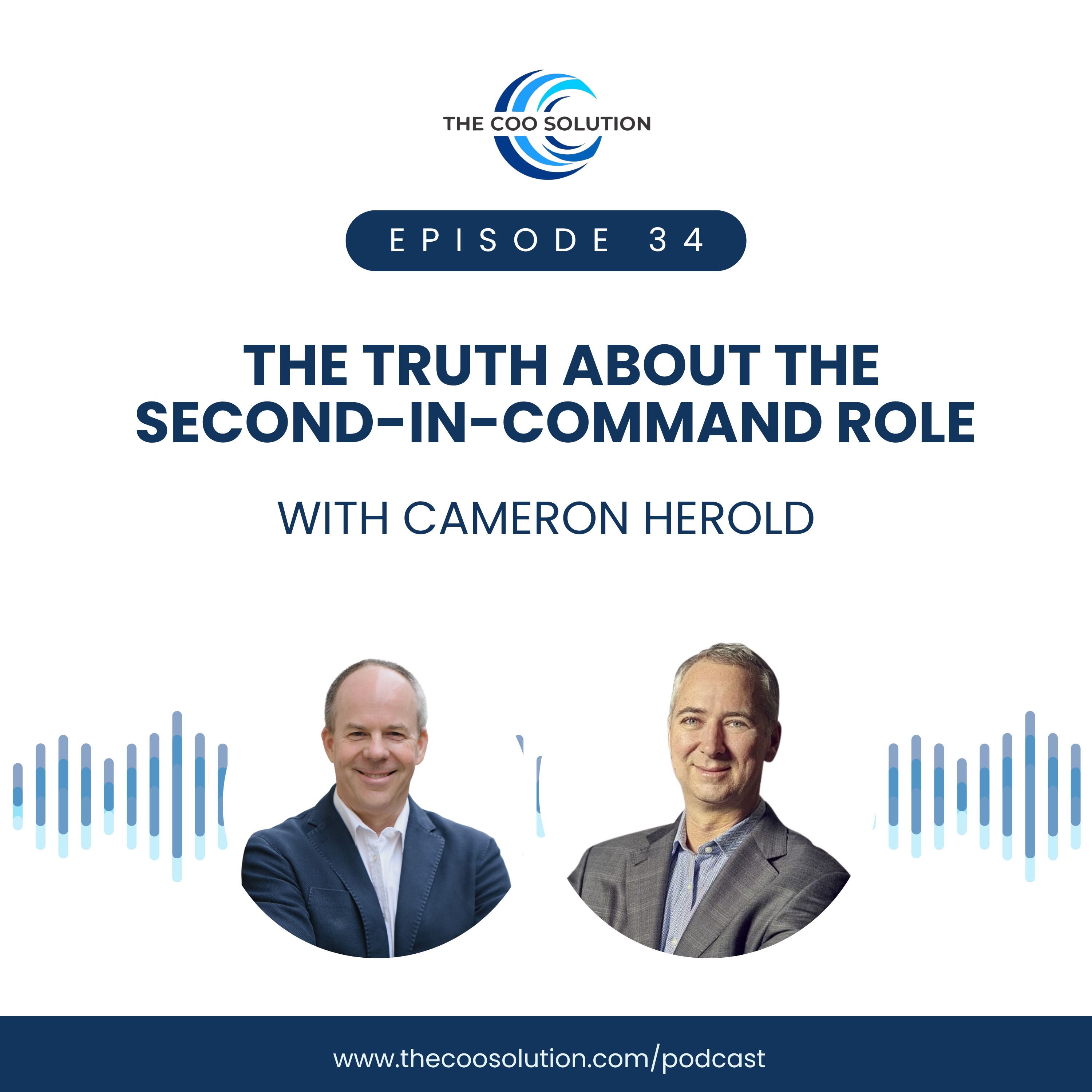 The Truth About the Second-in-Command Role with Cameron Herold | Welcome back to The COO Solution Podcast. In this episode, host Derek Fredrickson sits down with Cameron Herold, founder of the COO Alliance, author of Second in Command, and one of the most recognized voices in the world of operational leadership, to unpack what the second-in-command role really looks like at scale.Cameron shares his journey from being a COO inside high-growth companies like 1-800-GOT-JUNK to building a global platform dedicated to elevating the COO role. He explains why the second-in-command role is one of the most misunderstood in business and why getting it right can completely change a company's trajectory.This episode explores how founders should think about hiring a COO, why fit matters more than experience alone, and how different types of operators thrive at different stages of growth. Derek and Cameron also dive into the realities of fractional leadership, the importance of early ROI, and what separates true operational leaders from managers with inflated titles.They also unpack the concept of Vivid Vision and how alignment between the CEO and COO creates clarity, momentum, and execution across the entire organization.In This Episode:[00:53] Why Cameron Champion the COO Role How his experience as a second-in-command led to building a global COO community.[04:28] Entrepreneurial vs Corporate COOs Why different business stages require different types of operators.[09:17] Where Founders Start When Hiring a COO Why understanding yourself comes before defining the role.[11:27] The Different Types of COOs How the role shifts depending on the company’s needs.[13:09] What a True COO Actually Is The difference between a COO, VP, and Director.[16:53] What Great COOs Do Differently Why real operators come in with clarity and direction.[19:08] Fractional vs Full-Time COO When each model makes sense for scaling businesses.[24:17] The Power of Vivid Vision How alignment turns vision into execution.[30:42] CEO–COO Relationship Dynamics Why trust, communication, and alignment are critical.[35:15] Creating ROI in the First 90 Days How early wins build momentum and confidence.✅ Action Steps for Listeners:Define your strengths and gaps as a founder before hiring a COOClarify what outcomes you expect in the first 90 daysIdentify whether you need execution, strategy, or leadership developmentEvaluate fractional vs full-time based on your current stageCreate a clear Vivid Vision to align your team🔗 Resources & Links:Cameron Herold Website – https://cameronherold.comFree Quiz – Take the free 25-question quiz to see if your business is ready for the support of a Fractional COO: https://thecoosolution.comPodcast Page – https://thecoosolution.com/podcastSubscribe & Stay ConnectedNew episodes drop soon — subscribe to The COO Solution Podcast so you don’t miss an episode! Let’s connect: ➡️ LinkedIn ➡️ Instagram ➡️ Facebook👉 If this episode resonated with you, share it with a founder or operator who is stepping into the second-in-command role. Hosted on Acast. See acast.com/privacy for more information. | — | ||||||
| 4/28/26 |  Maintaining Company Culture While Scaling | Welcome back to The COO Solution Podcast. In this episode, host Derek Fredrickson dives into one of the most overlooked but critical challenges in scaling a business: maintaining company culture.As companies grow, hire, and expand into new markets, something subtle often begins to shift. The energy changes. The team feels less connected. The values that once defined the business become less visible in day-to-day operations. This isn’t a sudden breakdown. It’s a slow drift.Derek explains that culture doesn’t erode because founders stop caring. It erodes because it stops being operationally reinforced. And in high-growth phases, culture often gets deprioritized in favor of speed, hiring, and execution.This episode explains why culture breaks down during scaling and how strong operational leadership keeps it intact as the business grows.In This Episode:[01:13] The Reality of Culture Erosion Why culture breakdown is often subtle, gradual, and easy to miss until it’s already affecting the business.[02:06] Growth vs. Identity How rapid hiring and expansion create misalignment between the company’s original values and current operations.[04:16] Hiring for Speed vs. Hiring for Fit Why urgency in hiring can quietly lower the culture bar and shift team dynamics.[05:09] Leadership Layer Misalignment How middle management defines culture in practice and why misalignment at this level spreads quickly.[06:52] The Communication Gap Why founders stop talking about culture and how new hires are left to interpret it on their own.[07:52] When Systems Undermine Culture How processes and workflows can contradict the values a company claims to uphold.[08:59] Making Culture Operational How strong COOs embed culture into meetings, performance reviews, and daily execution.[10:01] Leadership as Culture Carriers Why every leadership hire amplifies culture and how to build a team that reinforces it.[11:14] Accountability Beyond Performance Why culture must be enforced, not just stated, and how leaders address misalignment early.[11:14] Letting Culture Evolve Without Losing It How to protect core values while allowing the company to mature as it scales.📌 Why This MattersCulture is not a soft concept. It is an operational discipline.The companies that scale successfully are not the ones that protect culture by intention alone. They are the ones who build systems, establish leadership accountability, and create operating rhythms that reinforce it daily.When culture is aligned with operations, teams perform with clarity, trust, and consistency.When it is not, growth creates friction, misalignment, and disengagement.This episode shows you how to:Identify early signs of culture drift during scalingAlign leadership behavior with company valuesBuild systems that reinforce culture consistentlyProtect your company’s identity while allowing it to evolve✅ Action Steps for Listeners:Conduct a culture audit by observing how your business actually operates day to dayEvaluate your leadership team and identify who is actively carrying your cultureCreate one intentional “culture moment” in your weekly operating rhythmAlign your systems and processes with the values you expect your team to follow🔗 Resources & Links:Free Quiz – Take the free 25-question quiz to see if your business is ready for the support of a Fractional COO: https://thecoosolution.comPodcast Page – https://thecoosolution.com/podcastSubscribe & Stay ConnectedNew episodes drop soon — subscribe to The COO Solution Podcast so you don’t miss an episode! Let’s connect: ➡️ LinkedIn ➡️ Instagram ➡️ Facebook👉 If this episode resonated with you, share it with a founder who is scaling and wants to protect what makes their company great. Hosted on Acast. See acast.com/privacy for more information. | — | ||||||
| 4/14/26 |  Behind the Scenes: What It's Really Like to Be a COO with Danielle Levy | Welcome back to The COO Solution Podcast. In this episode, host Derek Fredrickson sits down with Danielle Levy, a fractional COO at The COO Solution, to pull back the curtain on what operational leadership really looks like behind the scenes.This conversation offers a rare inside perspective into the day-to-day role of a COO, how they partner with founders, and the real impact they have not just on the business, but on the people inside it. Danielle shares her journey into fractional COO work, how she approaches problem-solving, and what it takes to balance strategy with execution in a fast-moving business environment.If you’ve ever wondered what a COO actually does—or what it feels like to have one embedded in your company—this episode brings clarity to a role that is often misunderstood but critical for scale.In This Episode:[00:36] Danielle’s Journey into Fractional COO Work How a series of unexpected connections shaped her path into operational leadership.[05:51] What a COO Really Does Why Danielle defines the role as “professional problem solving” across strategy and execution. [07:58] Balancing Strategy and Execution How COOs design the path forward while guiding teams through the steps to get there. [09:01] Building Trust and Accountability Across Teams Why trust is the foundation for effective leadership and how it cascades through an organization. [12:39] How COOs Define Success The signals that show a client relationship is working—and when things start to drift. [14:15] The Moment That Captures the Impact of a COO A powerful story of how clarity and structure transformed a team member’s confidence and performance. [18:56] What Makes The COO Solution Model Different Why collaboration, support, and shared experience elevate both client outcomes and COO performance. [26:30] Leading Through Complexity and Human Challenges How operational leadership adapts when real-life situations impact the business. [28:58] What It Takes to Be a Fractional COO Why this role requires both strategic thinking and emotional intelligence—and is not for the faint of heart. [31:02] When Founders Should Consider Hiring a COO The signals that it’s time to bring in operational leadership to regain momentum and clarity. 📌 Why This MattersA COO is not just an operator.They are a force multiplier for clarity, accountability, and execution.When done right, operational leadership creates stability inside the business and confidence across the team. It allows founders to step out of the day-to-day while ensuring that the company continues to move forward with intention.This episode shows you:What a COO actually does inside a growing companyHow operational leadership impacts both strategy and team performanceWhy clarity and structure can transform how teams work and feelWhat to look for when deciding if your business needs a COO✅ Action Steps for Listeners:Reflect on whether your team has clear priorities, ownership, and structure.Identify where lack of clarity may be creating friction or inefficiency.Consider whether you are still carrying operational responsibility that could be delegated.Ask yourself if your business still feels aligned—or if it feels heavier than it should🔗 Resources & Links:Free Quiz – Take the free 25-question quiz to see if your business is ready for the support of a Fractional COO: https://thecoosolution.comPodcast Page – https://thecoosolution.com/podcastSubscribe & Stay ConnectedNew episodes drop soon — subscribe to The COO Solution Podcast so you don’t miss an episode! Let’s connect:➡️ LinkedIn➡️ Instagram➡️ Facebook👉 If this episode resonated, share it with a founder or operator who wants to understand what real operational leadership looks like inside a growing business. Hosted on Acast. See acast.com/privacy for more information. | — | ||||||
| 3/31/26 |  Why Most Founders Hire the Wrong Second-in-Command, and How to Get It Right | Welcome back to The COO Solution Podcast. In this episode, host Derek Fredrickson breaks down one of the most consequential leadership decisions a founder will make: hiring the right second-in-command.Many founders reach a point where the business is growing, revenue is increasing, and the team is expanding, but operational pressure is growing even faster. From the outside, everything looks successful. Internally, the founder is still the escalation point for decisions, priorities, and accountability.This is usually when the question surfaces: Do I need a COO?But Derek explains that most founders hire the wrong operational leader the first time. Not because they lack judgment, but because they are trying to solve the wrong problem. They believe they need relief from pressure, when what the company actually needs is a redesign of execution.This episode explores when operational leadership becomes necessary, how to distinguish between different operational roles, and what founders must clarify before bringing in a true second-in-command.In This Episode:[00:17] The Hire That Didn’t Change AnythingWhy do many founders hire operational support but still remain the bottleneck?[03:18] When Growth Outpaces StructureThe operational pressure that begins to appear between $3M and $7M in revenue.[05:29] The Real Question Behind Hiring a COOWhy the issue is rarely workload and almost always execution ownership.[07:45] COO vs. Integrator vs. Operations ManagerUnderstanding the differences between these roles and why they are often confused.[08:51] The Five Biggest Hiring Mistakes Founders MakeCommon traps that lead to ineffective second-in-command hires.[10:06] Fractional vs. Full-Time LeadershipWhy fractional operational leadership can accelerate structure in scaling companies.[15:41] The Founder Identity ShiftWhy is releasing control of execution often the hardest part of scaling?[16:42] Questions to Answer Before You HireThe structural clarity founders must establish before bringing in a COO.📌 Why This MattersHiring a second-in-command is not about adding headcount.It’s about installing operational leadership that allows the company to execute without the founder carrying the weight of every decision.When this role is structured correctly, founders regain strategic focus, teams gain clarity, and execution becomes consistent across the organization.When it’s structured poorly, the founder remains the bottleneck, just with a larger payroll.This episode shows you how to:Recognize when operational complexity requires a leadership structureUnderstand the difference between operational coordination and execution ownershipAvoid the most common mistakes founders make when hiring a COODecide whether full-time or fractional operational leadership makes sense for your stage of growth✅ Action Steps for Listeners:Identify whether you still personally own execution across departments.Clarify which decisions should move off your desk as the company scales.Define the outcomes a second-in-command would own before making a hire.Evaluate whether fractional leadership could provide the structure your business needs right now.🔗 Resources & Links:Free Quiz – Take the free 25-question quiz to see if your business is ready for the support of a Fractional COO: https://thecoosolution.comPodcast Page – https://thecoosolution.com/podcastSubscribe & Stay ConnectedNew episodes drop soon — subscribe to The COO Solution Podcast so you don’t miss an episode! Let’s connect:➡️ LinkedIn➡️ Instagram➡️ Facebook👉 If this episode resonated with you, share it with a founder who may be thinking about hiring their first second-in-command. Hosted on Acast. See acast.com/privacy for more information. | — | ||||||
| 3/17/26 | 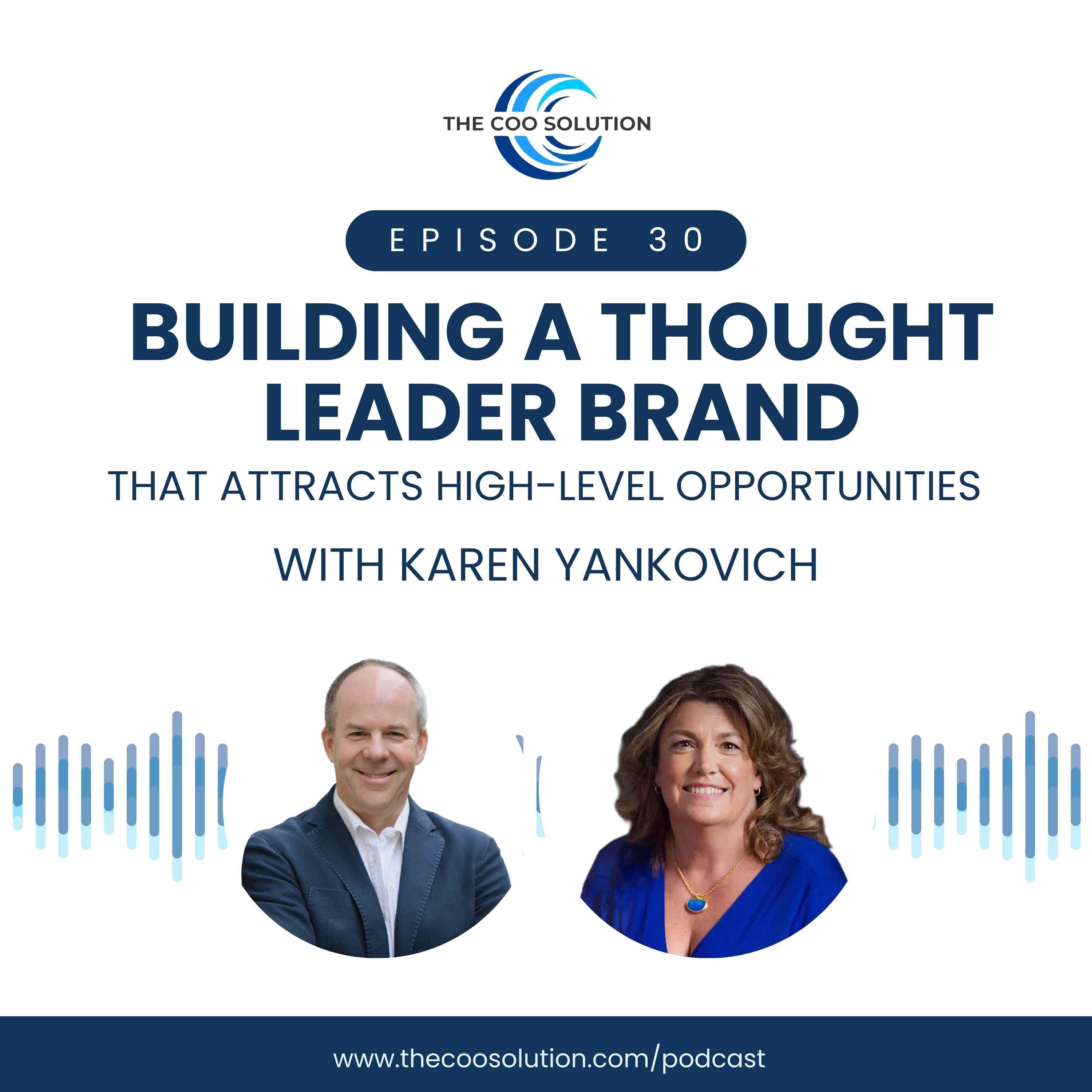 Building a Thought Leader Brand That Attracts High-Level Opportunities with Karen Yankovich | Welcome back to The COO Solution Podcast. In this episode, host Derek Fredrickson sits down with LinkedIn strategist, PR expert, and founder of Good Girls Get Rich, Karen Yankovich, to unpack what it really means to build a thought leader brand in today’s digital world.If you’ve ever wondered how some entrepreneurs consistently attract high-level opportunities, media features, partnerships, and premium clients without constantly chasing leads, this episode will shift your perspective.Karen breaks down the difference between a personal brand and a thought leader brand, why trust is the new currency online, and how platforms like LinkedIn can become your “money tree” when used strategically. This conversation goes far beyond posting content. It’s about positioning, credibility, visibility, and building relationships that lead to real revenue.In a world where AI, noise, and content overload are everywhere, standing out requires more than credentials. It requires clarity about what you stand for and the courage to be visible.In This Episode:[01:02] Personal Brand vs. Thought Leader BrandWhy being known for something specific builds trust faster than listing qualifications.[03:16] What Women Entrepreneurs Get Wrong About VisibilityWhy many women hesitate to promote themselves—and how to shift that mindset.[06:08] Imposter Syndrome at Every LevelWhy confidence isn’t a one-time achievement but an ongoing practice.[09:43] Why Your LinkedIn Profile Matters More Than You ThinkHow your profile can create unexpected opportunities—even locally.[12:38] Engagement Over PostingWhy LinkedIn isn’t about posting daily, but about building real relationships.[17:36] Leveraging PR Without a Big BudgetHow to strategically land podcast interviews and media exposure.[24:02] Visibility Builds TrustWhy sharing your beliefs and perspective attracts aligned opportunities.[28:35] The One LinkedIn Strategy Most People IgnoreHow jumping into conversations trains the algorithm and builds authority.[31:15] The “Money Tree” MindsetWhy LinkedIn works when you nurture relationships instead of spamming.📌 Why This MattersYour next high-value opportunity is rarely one cold DM away.It’s one relationship away.Thought leadership isn’t about being louder. It’s about being clearer. When your positioning, profile, and presence align with what you stand for, the right opportunities start finding you.This episode shows you how to:Build trust before someone ever speaks to youUse LinkedIn as a relationship-building platform, not a resumeLeverage PR and media strategically to increase credibilityAttract aligned, high-level clients without chasing them✅ Action Steps for Listeners:Review your LinkedIn profile from the perspective of your ideal client.Jump into five conversations a day around the topic you want to be known for.Identify one podcast or media outlet that aligns with your message and begin building a relationship.Get clear on what you stand for and let your voice reflect it.🔗 Resources & Links:Karen’s Free PR Resource: https://LinkedInForPR.comFree Quiz – Take the free 25-question quiz to see if your business is ready for the support of a Fractional COO: https://thecoosolution.comPodcast Page – https://thecoosolution.com/podcastSubscribe & Stay ConnectedNew episodes drop soon — subscribe to The COO Solution Podcast so you don’t miss an episode! Let’s connect:➡️ LinkedIn➡️ Instagram➡️ Facebook👉 If this episode resonated, share it with a fellow founder who’s been thinking about writing a book but wants to do it the smart way. Hosted on Acast. See acast.com/privacy for more information. | — | ||||||
| 3/3/26 |  Learning to Say No: Boundaries That Protect Your Time and Energy | Welcome back to The COO Solution Podcast. In this solo episode, host Derek Fredrickson tackles one of the most overlooked yet critical leadership skills founders must develop as their businesses grow: learning to say no.If you’ve ever felt stretched thin, constantly saying yes to new requests, ideas, meetings, or client demands—even when something in you knew it wasn’t the right call—this episode will hit home. Derek breaks down why overwhelm often isn’t a sign that things are going wrong, but that things are actually working… and why failing to establish boundaries is what quietly keeps founders stuck in reaction mode.This conversation reframes “no” as a leadership decision, not a rejection. You’ll learn why saying yes built your business early on, why that same habit eventually becomes a liability, and how boundaries create the space required for founder-level thinking, clarity, and scale.In This Episode:[00:12] The Cost of Always Saying Yes - Why agreeing to everything feels like leadership in the moment—but drains your energy fast.[01:08] The Real Reason Founders Feel Overwhelmed - Why overwhelm often comes from success, not failure.[03:09] Why Saying Yes Built Your Business—and Why It No Longer Scales - How survival-mode leadership quietly turns into dependency.[04:09] Growth Without Boundaries Creates Bottlenecks - Why your business has outgrown your availability.[05:09] The Leadership Shift That Changes Everything - Why saying no is the move that takes you from “here” to “there.”[06:14] How a COO Becomes the Operational Boundary - Why founders shouldn’t be the ones holding every no—and how a second-in-command changes the equation.[07:16] Saying No Creates Bigger Yeses - How space leads to clarity, better decisions, and real momentum.[08:18] From Reaction to Intention - What changes when prioritization, sequencing, and follow-through no longer depend on you.[09:24] The Question Every Founder Needs to Ask - Where are you still saying yes out of habit instead of strategy?📌 Why This MattersBoundaries aren’t about being rigid, unavailable, or difficult. They are about structure and growth without burnout. When everything remains open-ended and negotiable, leadership becomes reactive. When boundaries are in place, leadership becomes intentional.Learning to say no isn’t about doing less because you care less. It’s about choosing where your leadership actually matters most.✅ Action Steps for Listeners:Identify where you’re saying yes out of obligation instead of alignment.Notice which decisions, approvals, or meetings consistently pull you out of strategic focus.Consider whether a COO or second-in-command could hold operational priorities for you.Resources & Links:Free Quiz – Find out if your business is ready for the support of a Fractional COO: https://thecoosolution.comPodcast Page – https://thecoosolution.com/podcastSubscribe & Stay ConnectedNew episodes drop soon—subscribe to The COO Solution Podcast so you don’t miss an episode! Let’s connect:➡️ https://www.linkedin.com/company/the-coo-solution ➡️https://www.instagram.com/thecoosolution/➡️ https://www.facebook.com/thecoosolution👉 If this episode resonated, share it with a founder who’s saying yes too often and paying for it with their time and energy. Hosted on Acast. See acast.com/privacy for more information. | — | ||||||
Want analysis for the episodes below?Free for Pro Submit a request, we'll have your selected episodes analyzed within an hour. Free, at no cost to you, for Pro users. | |||||||||
| 2/17/26 | 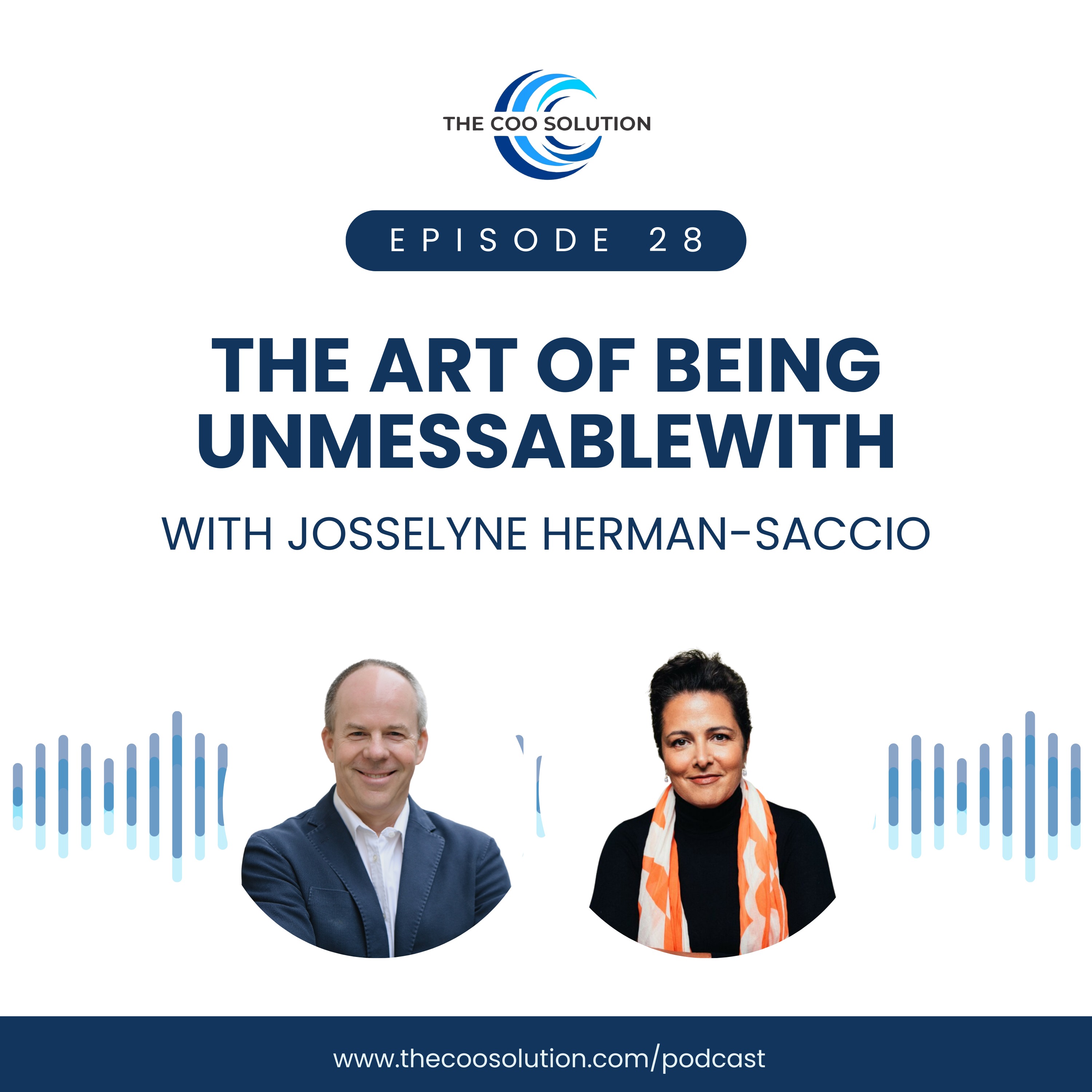 Be Unmessablewith: Leading From Vision Instead of Reaction With Josselyne Herman-Saccio | Welcome back to The COO Solution Podcast. In this episode, Derek Fredrickson sits down with master coach, speaker, and creator of The Art of Being Unmessable With, Josselyne Herman-Saccio, for a powerful conversation about leadership, burnout, and how to stop running your business from reaction and survival.With over 35 years of experience coaching leaders, entrepreneurs, and change-makers around the world, Josselyne brings a deeply practical framework for staying grounded in vision, even when life and business feel chaotic. This episode is not about hustle, pushing harder, or managing more. It’s about learning to lead from creation rather than crisis.If you’ve ever felt overwhelmed, stuck in firefighting mode, or as if your business has become something you’re managing rather than intentionally creating, this conversation will shift how you think about leadership, vision, and freedom.In This Episode:[02:49] What It Really Means to Be “Unmessable With”Being unmessable isn’t about toughness or emotional shutdown; it's about staying anchored in your vision, no matter what’s happening around you.[05:17] Vision vs. GoalsThe critical distinction most leaders miss and why goals without vision often lead to dissatisfaction and burnout.[06:58] Why Context Shapes EverythingHow the same outcome can feel fulfilling or exhausting depending on the context you’re operating from.[09:36] The Trap of Reaction-Based LeadershipWhy high-performing founders often get stuck in survival mode and how it impacts their nervous system, decision-making, and creativity.[12:30] When Success Becomes a PrisonHow founders unintentionally become the bottleneck in their own businesses.[15:03] Designing a Life Instead of Chasing DreamsWhy most people die with their dreams intact and how to live your vision now, not someday.[20:48] The Real Causes of BurnoutWhy burnout isn’t about workload alone, but about narrative, context, and disconnection from vision.[23:35] Spotting the Red Flags of Reaction ModeHow to recognize when your nervous system has taken over and what to do in the moment.[26:56] Why You Can’t Think Your Way Out of StressThe importance of physical interruption and pre-designed practices.[30:06] Vision as a Daily PracticeHow to create a pre-designed way of returning to vision throughout your day.[33:57] Using Your Calendar as a Leadership ToolWhy your calendar is one of the most powerful places to intentionally design your life and business.Why This Conversation MattersMost founders are incredibly skilled at reacting, solving problems, and pushing through. But reaction-based leadership comes at a cost: burnout, loss of creativity, and businesses that depend entirely on the founder to function.This episode offers a different way. One where leadership comes from clarity, vision, and intentional design, not constant urgency. It’s a reminder that freedom, fulfillment, and sustainable growth are created, not earned through exhaustion.Action Steps for Listeners:Identify where you’re operating from reaction instead of vision.Notice the physical and mental red flags that signal survival mode.Pre-design a vision you can return to during stressful moments.Use your calendar intentionally to support energy, clarity, and leadership.🔗 Resources & Links:Be Unmessable With – Josselyne’s website and free resources: https://beunmessablewith.comFree Quiz – Take the free 25-question quiz to see if your business is ready for the support of a Fractional COO: https://thecoosolution.comPodcast Page – https://thecoosolution.com/podcastSubscribe & Stay ConnectedNew episodes drop soon — subscribe to The COO Solution Podcast so you don’t miss an episode! Let’s connect:➡️ LinkedIn➡️ Instagram➡️ Facebook👉 If this episode resonated, share it with a fellow founder who’s been thinking about writing a book but wants to do it the smart way. Hosted on Acast. See acast.com/privacy for more information. | — | ||||||
| 2/3/26 |  The ROI of Streamlining Business Operations: What It Means for Your Bottom Line | Welcome back to The COO Solution Podcast! In this solo episode, host Derek Fredrickson breaks down one of the most overlooked drivers of sustainable growth: streamlined business operations.If your business is growing but still feels chaotic, unpredictable, or overly dependent on you, this episode will connect the dots. Derek explains why most founders aren’t stuck because of a lack of effort or talent, but because of hidden operational inefficiencies that quietly drain profit, time, and energy.This conversation reframes operations not as “busywork” or overhead, but as one of the fastest ways to unlock real ROI. You’ll learn how clarity, structure, and the right second-in-command leadership can move your business from reactive chaos to proactive, scalable growth.In This Episode:[00:10] Crisis Mode Explained – Why working harder doesn’t fix operational chaos.[01:32] Why Operations Drive ROI – How structure directly impacts profit, efficiency, and peace of mind.[02:36] The COO Difference – Why founders can’t streamline operations alone.[03:34] Frontstage vs. Backstage Operations – Understanding the “what” vs. the “how” of your business.[04:39] What Business Operations Really Include – From onboarding to communication to accountability.[05:59] Hidden Inefficiencies – The silent profit killers most founders overlook.[07:14] Operations = Profit – A real example of how streamlining freed time and increased revenue.[08:26] Why a COO Is Essential – Translating vision into execution without founder burnout.[09:33] What Founders Should Focus On – The right role to play if you want ROI without micromanaging.[10:35] Your Challenge – Identify one chaotic area and take the first step toward stability.📌 Why This MattersYou can’t scale complexity. You can scale simplicity.Streamlined operations create:Predictable executionReduced founder dependencyStronger team performanceHigher profitabilityWhen systems, processes, and accountability are in place, your business stops relying on you for every decision and starts running with confidence.✅ Action Steps for Listeners:Identify one operational area that feels chaotic or draining.Clarify what’s broken and why it matters.Decide who should own fixing it.Consider how a COO or second-in-command could ensure it runs smoothly without you.Resources & Links:Free Quiz – Find out if your business is ready for the support of a Fractional COO: https://thecoosolution.comPodcast Page – https://thecoosolution.com/podcastSubscribe & Stay ConnectedNew episodes drop soon—subscribe to The COO Solution Podcast so you don’t miss an episode! Let’s connect:➡️ https://www.linkedin.com/company/the-coo-solution➡️ https://www.instagram.com➡️ https://www.facebook.com/thecoosolution👉 If this episode resonated, share it with a founder who’s ready to stop firefighting and start scaling with intention. Hosted on Acast. See acast.com/privacy for more information. | — | ||||||
| 1/20/26 | 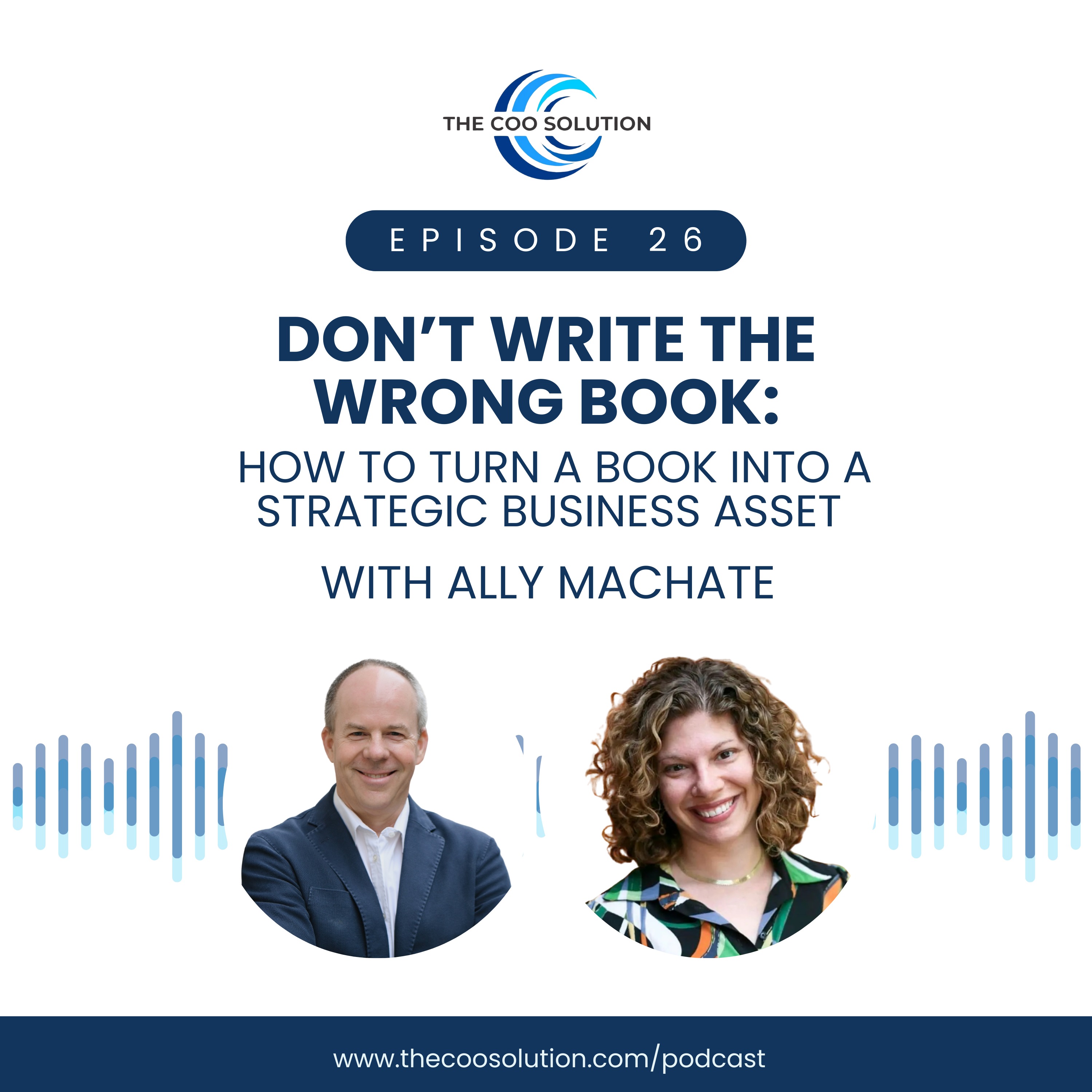 Don’t Write the Wrong Book: How to Turn a Book into a Strategic Business Asset with Ally Machate | Welcome back to The COO Solution Podcast! In this episode, host Derek Fredrickson sits down with Ally Machate, publishing strategist, bestselling author, and founder of The Writer’s Ally, to unpack one of the biggest myths in entrepreneurship: that every business owner should write a book.With over 25 years in the publishing industry, including experience at Simon & Schuster, Ally brings a grounded, strategic perspective to what it really takes for a book to support business growth. This conversation goes far beyond writing advice. It’s about clarity, intention, and using a book as a leveraged business asset rather than a vanity project.If you’ve ever thought, “I should write a book,” but weren’t sure why, when, or how it fits into your business strategy, this episode will give you the framework to decide before you invest years of time and energy.In This Episode:[00:00] The Big Question - Should every entrepreneur write a book, or is that advice outdated?[02:22] Ally’s Publishing Journey - From traditional publishing to building a trusted author services company.[03:00] The Myth Explained - Why a book can be powerful but only if it’s the right tool at the right time.[03:40] Timing Matters - Why writing a book too early can actually stall your growth.[04:09] The Real Cost of a Book - Time, energy, and resources most founders underestimate.[05:32] Right Book vs. Wrong Book - Why good writing isn’t enough without a clear business goal.[07:36] Start With the End in Mind - How to reverse-engineer your book from the outcome you want.[07:53] Strategy Examples - Speaker books, lead-generation books, credibility books, and where people go wrong.[08:37] Case Study: The Wrong Format - Why a workbook failed to land keynote speaking opportunities.[10:39] Memoir vs. Business Book - How personal stories should support the reader’s transformation, not overshadow it.[13:02] Storytelling That Serves Strategy - Why every book uses story, but the reader’s problem must stay front and center.[15:41] AI and the Writing Process - The difference between AI-assistive tools and AI-generated books and why it matters.[18:51] What Readers Really Want - Why the market is rejecting AI-generated creative work.[25:17] Traditional vs. Self-Publishing - How publishing has come full circle and what entrepreneurs should choose today.[28:15] Books as Business Tools - Why entrepreneurs shouldn’t aim to sell books but to sell what comes next.[31:00] The Real Leverage - Why giving away books can be more profitable than selling them.[32:25] How Ally Helps Authors - From idea clarity to publication and marketing, without writing the wrong book.📌 Why This MattersA book is not a rite of passage. It’s a strategic decision.When aligned correctly, a book can:Build authority and trustOpen doors to speaking and partnershipsGenerate leads for high-ticket offersWhen misaligned, it becomes an expensive distraction.This episode helps you decide when and what to write, and whether to write at all, so your book supports your business instead of draining it.✅ Action Steps for Listeners:Get clear on what you want a book to do for your business.Identify the book's target audience and the problem it solves.Decide whether a book is the right tool right now.Use AI as a thinking partner, not a replacement for your voice.🔗 Resources & Links:Don’t Write the Wrong Book — Ally’s evergreen webinar 👉 https://offers.thewritersally.com/coosolutionFree Quiz – Take the free 25-question quiz to see if your business is ready for the support of a Fractional COO: https://thecoosolution.comPodcast Page – https://thecoosolution.com/podcastSubscribe & Stay ConnectedLet’s connect:➡️ https://www.linkedin.com/in/derekfredrickson/➡️ https://www.instagram.com/thecoosolution/➡️ https://www.facebook.com/thecoosolution👉 If this episode resonated, share it with a fellow founder who’s been thinking about writing a book but wants to do it the smart way. Hosted on Acast. See acast.com/privacy for more information. | — | ||||||
| 1/6/26 |  Stop Running Your Business In Crisis Mode: How to Lead Proactively | Welcome back to The COO Solution Podcast. In this solo episode, host Derek Fredrickson tackles a challenge nearly every founder faces at some point: running a business in constant crisis mode.If your days are filled with urgent decisions, constant interruptions, and putting out fires instead of leading strategically, this episode will feel uncomfortably familiar. Derek breaks down why reactive leadership drains your energy, stalls growth, and keeps your team dependent on you, and more importantly, how to shift into proactive leadership that creates stability, predictability, and freedom.You’ll learn how strong systems, clear accountability, and the support of a second-in-command can move your business out of survival mode and into sustainable growth.In This Episode:[00:00] Crisis Mode Defined What it looks like when your business is running you instead of the other way around.[01:16] Why Reactive Leadership Fails Why urgency feels productive but quietly kills growth, focus, and team performance.[02:24] The Founder Bottleneck How scaling without structure turns the CEO into the central point of failure.[03:40] Signs You’re Stuck in Crisis Mode Long hours, rushed decisions, inconsistent execution, and a team waiting for direction.[04:47] The Shift to Proactive Leadership How to move from reacting to problems to preventing them altogether.[05:56] Identifying Recurring Chaos How to spot patterns, recurring emergencies, and energy drains that need systems—not effort.[06:56] The Role of a Fractional COO How a trusted second-in-command creates operational stability and protects the founder’s time.[07:15] What Stability Actually Looks Like Real-world results when systems, ownership, and decision-making are no longer centralized.[08:12] The Systems That Stop Firefighting Why SOPs, workflows, and clear communication eliminate repeat problems.[09:17] Your Actionable Challenge Identify three recurring issues this week and assign ownership to one, or build a process for one.📌 Why This MattersRunning your business in crisis mode isn’t a badge of honor—it’s a warning sign. When everything feels urgent, nothing truly moves forward. Proactive leadership allows you to step out of daily chaos, empower your team, and create a business that runs predictably without your constant involvement.Stability doesn’t come from working harder. It comes from structure, clarity, and the right support.✅ Action Steps for Listeners:Identify three recurring issues that consume your time every week.Assign clear ownership or create a process for at least one of them.Document one workflow that currently lives only in your head.Consider whether a fractional COO could help you shift from reaction to leadership.Resources & Links:Free Quiz – Find out if your business is ready for the support of a Fractional COO: https://thecoosolution.comPodcast Page – https://thecoosolution.com/podcastSubscribe & Stay ConnectedNew episodes drop soon—subscribe to The COO Solution Podcast so you don’t miss an episode! Let’s connect:➡️ LinkedIn➡️ Instagram➡️ Facebook👉 If this episode resonated, share it with a founder who’s stuck in firefighting mode and ready to lead proactively. Hosted on Acast. See acast.com/privacy for more information. | — | ||||||
| 12/23/25 | 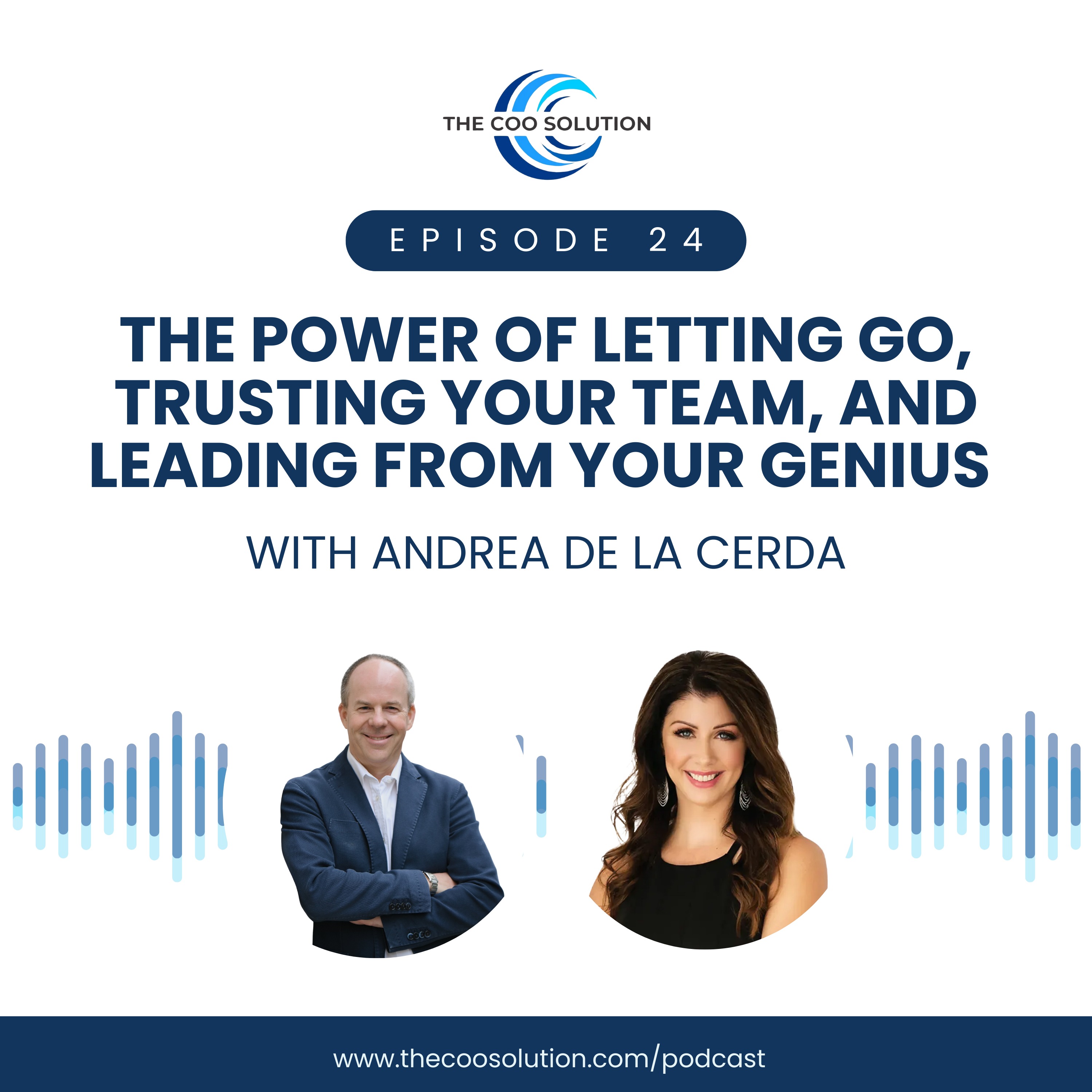 The Power of Letting Go, Trusting Your Team, and Leading from Your Genius with Andrea de la Cerda | Welcome back to The COO Solution Podcast!In this episode, Derek sits down with Andrea de la Cerda, CEO of Clover Agency and founder of Candula, for a powerful conversation on leadership, trust, and what it truly means to step into the visionary role.Andrea shares her honest journey of hitting the “I can’t do this alone anymore” moment, why she chose Fractional COO support, and how learning to let go transformed both of her companies. From clearing operational chaos to reclaiming her energy and building a future-focused vision, Andrea shares the mindset shifts and practical changes that helped her lead at a higher level.If you’ve ever felt stretched thin, overwhelmed by the weeds, or afraid to relinquish control, this episode will speak directly to you.In This Episode:[01:09] The Turning Point Why Andrea finally admitted she needed strategic operational support—and why she wanted it now.[02:31] When the Business Becomes “Too Big” The moment business ownership shifted from excitement to exhaustion.[04:24] Hiring People Smarter Than You How Andrea embraced the power of surrounding herself with experts—and the mindset shift that changed everything.[07:52] Protecting Your Energy as a CEO Why staying in your zone of genius isn’t optional—it’s essential.[11:37] The First 90 Days with a Fractional COO The cleanup phase, the systems audit, and how trust became the foundation for real progress.[15:45] Stepping Out of the Weeds How having a true second-in-command opened up space for vision, growth, and long-term planning.[18:47] Delegating Big Initiatives A real example of how Andrea leaned on her COO to execute a major company-wide upgrade from start to finish.[22:19] Why Visionaries Need a “Make-It-Real” Partner The difference between making ideas up vs. making them happen.[23:51] The Wake-Up Call for Her Second Business How burnout resurfaced—and how she knew it was time to duplicate the Fractional COO support for her second company.[28:52] Advice for Founders Hesitating to Let Go Andrea’s guidance for leaders afraid to relinquish control or bring in high-level support.[31:56] Her Personal Mindset Practices Meditation, breathwork, journaling, therapy, and how she stays grounded as a leader.📌 Why This MattersYour effectiveness as a CEO depends on your energy, clarity, and ability to stay in your zone of genius. When you’re buried in operations, compliance, or constant decision-making, you lose the capacity to lead.Andrea’s story is a real-world example of what happens when a visionary gets the right operational partner—your business grows, your confidence returns, and the future opens up.✅ Action Steps for Listeners:Identify what drains your energy most—and ask if it belongs on your plate.Visualize your business with experts in their zone of genius supporting you.Ask yourself: What would shift if I stopped doing everything myself?Consider whether now is the time to bring in a Fractional COO.Resources & Links:Connect with Andrea de la Cerda on LinkedIn - https://www.linkedin.com/in/andrea-de-la-cerda-1380219/Free Quiz – Take the free 25-question quiz to see if your business is ready for the support of a Fractional COO: https://thecoosolution.comPodcast Page – https://thecoosolution.com/podcastSubscribe & Stay ConnectedNew episodes drop soon — subscribe to The COO Solution Podcast so you don’t miss an episode! Let’s connect:➡️ LinkedIn➡️ Instagram➡️ Facebook👉 If you found this episode valuable, share it with a business owner who’s ready to scale smarter. Hosted on Acast. See acast.com/privacy for more information. | — | ||||||
| 12/9/25 |  The 3 Systems Every CEO Needs to Break the Bottleneck and Scale | The 3 Systems Every CEO Needs to Break the Bottleneck and ScaleWelcome back to The COO Solution Podcast! In this solo episode, Derek Fredrickson breaks down the root reason most founders stay overloaded, overwhelmed, and stuck in the weeds: you can’t delegate chaos.If your team depends on you for answers…If projects stall unless you step in…If your business grows but you get busier instead of freer…Then you’re missing one (or more) of the three foundational systems that make scaling possible.In this episode, Derek walks through the exact systems that free your time, remove you as the bottleneck, and create clarity and consistency across your team so the business can run without you.In This Episode:[00:02] The Pain of Growth Without FreedomWhy your business can look successful on the outside but feel heavier than ever behind the scenes. [01:02] The Real Problem: Not People — SystemsWhy even great teams fail without structure, and why all roads still lead back to the founder. [03:12] System #1: CommunicationHow to eliminate “quick questions,” stop being the hub, and streamline updates, decisions, and collaboration.[04:20] System #2: OperationsWhy you can’t scale what lives in your head — and how SOPs, workflows, and tools create consistency you can trust.[05:28] System #3: AccountabilityThe system that keeps everyone aligned, performing, and owning results (without you chasing follow-ups).[06:34] Case Study: From Firefighting to FreedomHow one CEO went from daily chaos to finally leading again after installing these three systems.[07:34] The Big QuestionWhich system is missing for you — communication, operations, or accountability?📌 Why This MattersA business that requires you to run is not scalable. It’s fragile. Freedom comes from systems, not hustle.With the right structure underneath you, your team moves faster, decisions get made without you, and growth becomes effortless instead of exhausting.✅ Action Steps for ListenersIdentify which of the three systems is weakest in your business.Document one core process that your team still depends on you for.Establish a simple accountability rhythm: scorecards, metrics, and owners.Audit your communication flow — eliminate anything that unnecessarily routes through you.Resources & Links:Free Quiz – Find out if your business is ready for the support of a Fractional COO: https://thecoosolution.comPodcast Page – https://thecoosolution.com/podcastSubscribe & Stay ConnectedNew episodes drop soon—subscribe to The COO Solution Podcast so you don’t miss an episode! Let’s connect:➡️ LinkedIn➡️ Instagram➡️ Facebook👉 If this episode helped you see where your business might be stuck, share it with a founder who needs it. Hosted on Acast. See acast.com/privacy for more information. | — | ||||||
| 11/25/25 | 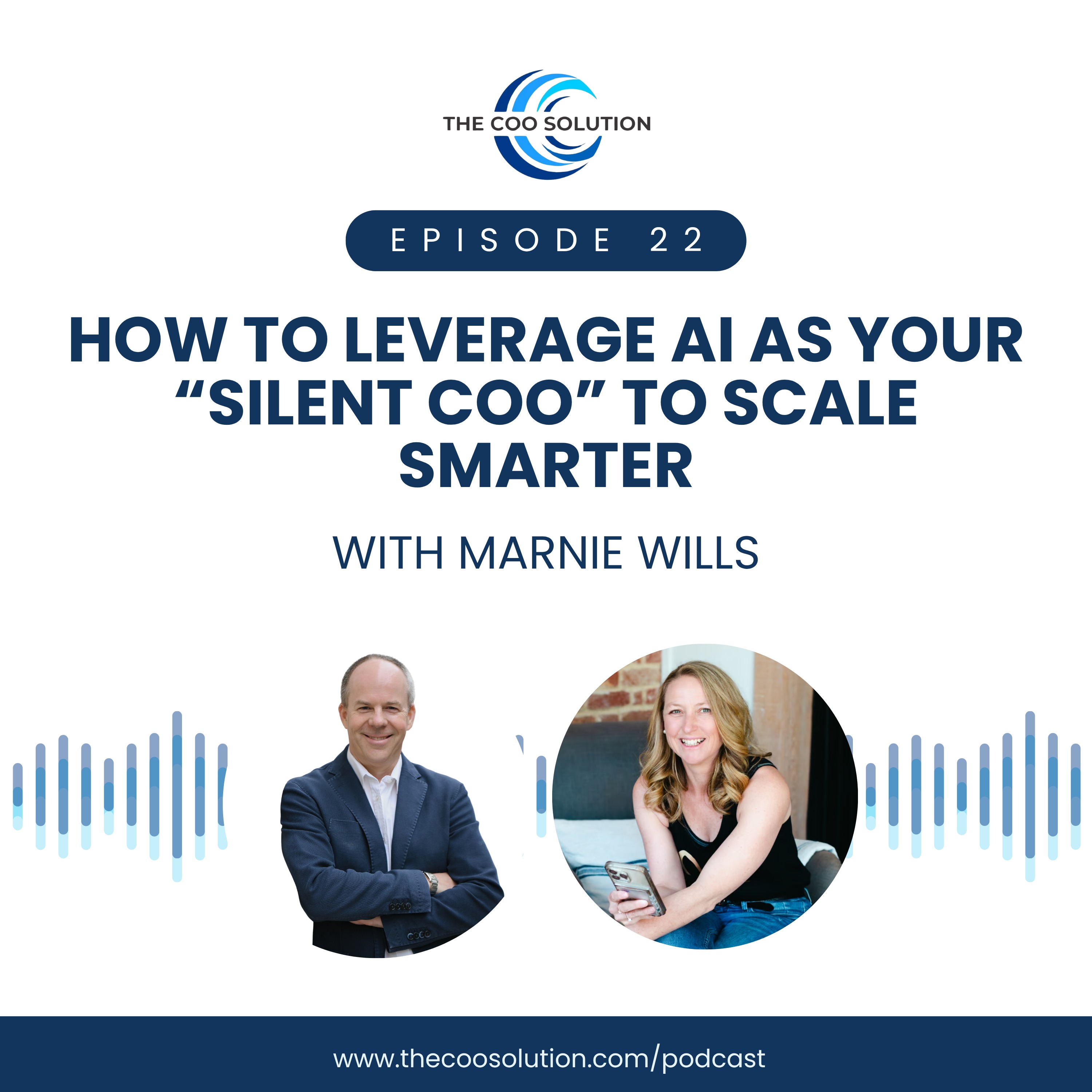 How to Leverage AI as Your “Silent COO” to Scale Smarter with Marnie Wills | Welcome back to The COO Solution Podcast!In this episode, Derek sits down with AI strategist and educator Marnie Wills for a practical and eye-opening conversation about how founders can utilize AI not just for content or marketing, but as an operational partner that functions like a second brain or a “silent COO.”Marnie explains how AI can support decision-making, streamline communication, accelerate execution, and enhance every aspect of your operations. She also shares how leaders can shift into an AI-first mindset, how to involve their team, and why the future of business belongs to those who learn to collaborate with AI, rather than compete with it.If you’ve been curious about how to apply AI beyond simple prompts, this episode will change everything about the way you work.In This Episode:[01:04] How Marnie’s entrepreneurial journey and early adoption of AI tools changed her confidence, capacity, and efficiency as a business owner.[02:54] Why your AI model must be continuously updated and trained with your meetings, notes, research, brand identity, and operational context.[09:40] Using AI to capture what you read, watch, research, and learn—so you never lose track of insights again.[24:43] What founders need to understand about data training, toggling off training settings, and when to use temporary chats.[30:20] Real examples of how Marnie built AI tools for her team, gamified adoption, and built SOP creation into their weekly workflow.[39:57] Agents & Monetizable Tools How businesses can create AI tools based on their IP—for lead generation, customer experience, or paid offerings.[43:29] Why even experts feel behind and why curiosity, consistency, and intention are the keys to staying ahead.Why This MattersAI is no longer a trend. It’s a foundational shift in how every business operates. When used as a strategic partner, AI can help founders make more informed decisions, streamline operations, empower teams, and eliminate the bottlenecks that slow growth.This episode shows you how to move beyond “prompting” and start using AI like a true operational asset.Action Steps for Listeners:Select one AI tool (Claude, Perplexity, or Recall) and integrate it into your daily workflow.Begin training a “second brain” by feeding your AI meeting notes, ideas, goals, and brand guidelines.Discuss with your team: Where could AI help remove friction or accelerate your workflow?Explore how your business could eventually build its own AI tool using your IP.Resources & Links:Connect with Marnie Wills on LinkedIn - https://www.linkedin.com/in/marnie-wills-entrepreneur/Free Quiz – Take the free 25-question quiz to see if your business is ready for the support of a Fractional COO: https://thecoosolution.comPodcast Page – https://thecoosolution.com/podcastLet’s connect:➡️ LinkedIn➡️ Instagram➡️ Facebook👉 If you found this episode valuable, share it with a business owner who’s ready to scale smarter. Hosted on Acast. See acast.com/privacy for more information. | — | ||||||
| 11/11/25 |  The 5 Key Signs It’s Time to Hire a Fractional COO | Welcome back to The COO Solution Podcast! In this solo episode, host Derek Fredrickson breaks down one of the most common turning points for growing business owners — recognizing when your company has outgrown you as its operator.Suppose you’ve been feeling stuck, overextended, or like your business only moves when you’re involved. In that case, this episode will help you identify the five clear signs that it’s time to bring in operational leadership. Derek shares how a Fractional COO bridges the gap between vision and execution, creating structure, accountability, and sustainable growth — so you can finally lead instead of manage.In This Episode:[00:07] The Hidden Leadership Gap — Why growth feels heavy even when business is booming.[02:07] Sign #1: You’re the Bottleneck — When everything runs through you, speed and progress stall.[04:11] Sign #2: You’re Managing Instead of Leading — Why CEOs should be thinking, not doing.[05:16] Sign #3: You Have a Team, But No Accountability — How lack of clarity keeps your team busy, not productive.[06:19] Sign #4: You’ve Hit a Ceiling — Why hustle alone won’t get you to the next level.[08:10] Sign #5: You’re Losing Trust in Your Business — The emotional cost of constantly checking in.[09:38] The Cost of Waiting — What happens when you delay getting the proper operational support.[10:55] Real Client Transformation — How one founder went from chaos to clarity in 90 days.[11:48] Your Call to Action — How to know if your business is ready for a Fractional COO.📌 Why This MattersFreedom doesn’t come from doing more. It comes from letting go. When you wait too long to install operational leadership, growth stalls and burnout sets in. A Fractional COO helps you reclaim time, clarity, and trust in your business, so you can finally lead with focus and confidence.✅ Action Steps for Listeners:Identify which of the five signs describes your business right now.Audit your role — are you leading, or managing?Book a strategy call at thecoosolution.com to explore whether Fractional COO support is right for you.Resources & Links:Free Quiz – Take the free 25-question quiz to see if your business is ready for the support of a Fractional COO: https://thecoosolution.comPodcast Page – https://thecoosolution.com/podcastSubscribe & Stay ConnectedNew episodes drop soon — subscribe to The COO Solution Podcast so you don’t miss an episode! Let’s connect:➡️ LinkedIn➡️ Instagram➡️ Facebook👉 If you found this episode valuable, share it with a business owner who’s ready to scale smarter. Hosted on Acast. See acast.com/privacy for more information. | — | ||||||
| 10/28/25 | 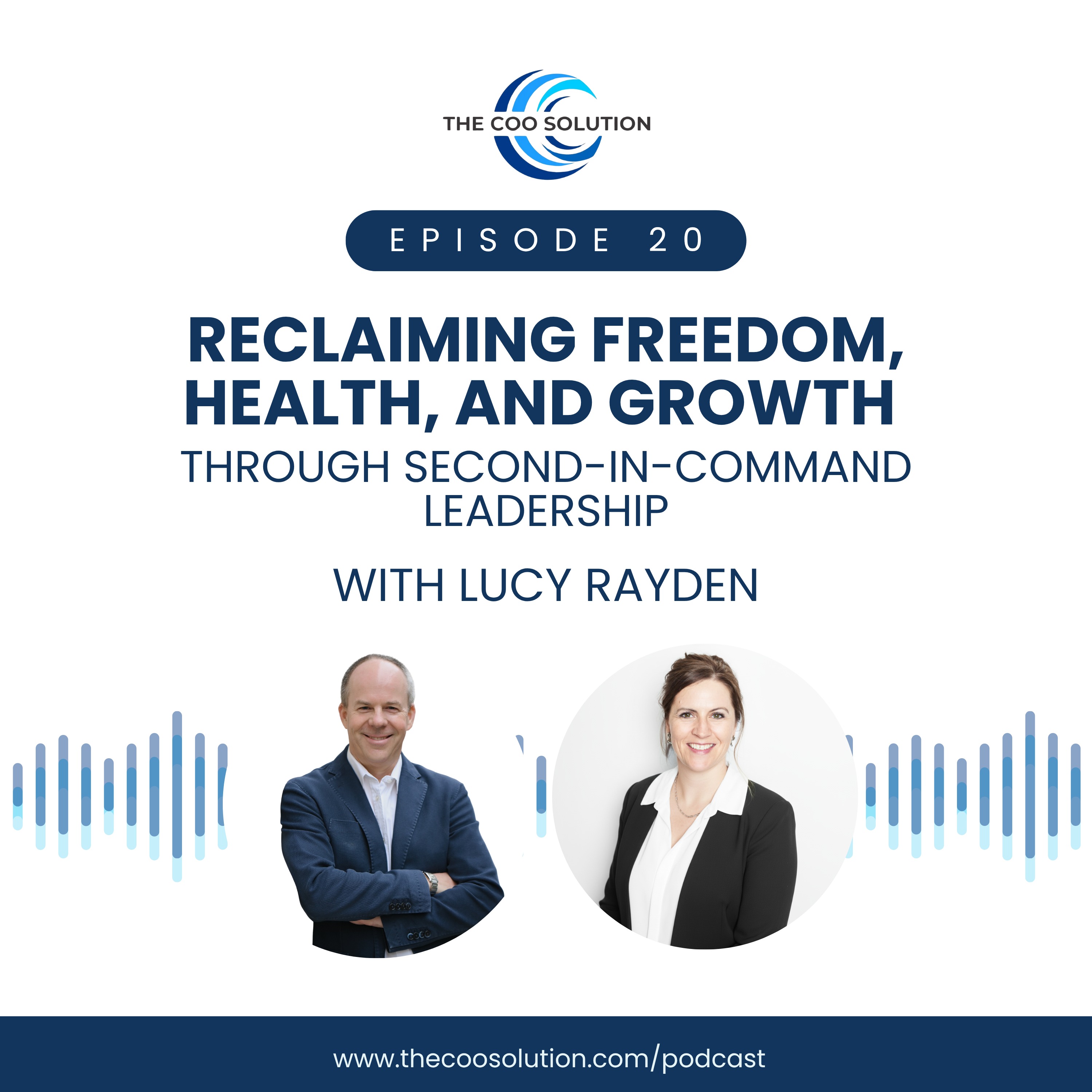 Reclaiming Freedom, Health, and Growth Through Second-in-Command Leadership with Lucy Rayden | Welcome back to The COO Solution Podcast! In this episode, host Derek Fredrickson interviews Lucy Rayden, founder of InTech Search, a global recruitment firm specializing in deep tech industries like semiconductors, photonics, and electronics.Lucy opens up about her journey from burnout to breakthrough and how bringing in a fractional COO helped her regain balance, reclaim her time, and transform her business operations for sustainable growth.She shares the pivotal moments that led her to step back, invest in the right support, and rebuild her company into a stronger, more systemized version of itself. This conversation dives deep into leadership evolution, burnout recovery, team accountability, and the powerful mindset shift from doing it all to leading intentionally.In This Episode:[01:00] Lucy’s Turning Point – The moment of burnout forced her to reevaluate how she was leading and living.[02:40] Hiring for Experience, Not Just Skills – Why bringing in a seasoned second-in-command changed everything.[06:00] The Power of Letting Go – How releasing control led to clarity, alignment, and stronger systems.[10:00] Real Change in Action – From chaotic communication to streamlined operations with structure and accountability.[16:00] The Marketing Breakthrough – How a fresh approach simplified execution and reignited visibility.[22:00] “Who, Not How” – Finding the right people accelerates results more than doing it yourself.[28:00] Leadership and Lifestyle – The lessons Lucy learned about rest, self-care, and redefining success.[35:00] Ego and Self-Awareness – How great leaders get out of their way and build more innovative teams.📌 Why This MattersLucy’s story is a powerful reminder that success doesn’t come from doing more — it comes from building a business that runs without depending on you. When you invest in systems, support, and the right people, you buy back more than your time — you buy back your life.✅ Action Steps for Listeners:Audit your leadership habits — where are you still holding on too tightly?Identify one area where an experienced second-in-command could help.Simplify communication: one system, one process, one point of truth.Schedule time to rest — not as a reward, but as a requirement.Resources & Links:InTech Search - https://intechsearch.com/about-us/Lucy Rayden on LinkedIn - https://www.linkedin.com/in/lucyrayden/Free Quiz – Take the free 25-question quiz to see if your business is ready for the support of a Fractional COO: https://thecoosolution.comPodcast Page – https://thecoosolution.com/podcastSubscribe & Stay ConnectedNew episodes drop soon—subscribe to The COO Solution Podcast so you don’t miss an episode! Let’s connect:➡️ LinkedIn➡️ Instagram➡️ Facebook👉 If Lucy’s story resonated with you, share this episode with another business owner ready to scale smarter, not harder. Hosted on Acast. See acast.com/privacy for more information. | — | ||||||
| 10/14/25 |  The Self-Managing Team — How to Build a Business That Thrives Without You | Welcome back to The COO Solution Podcast! In this solo episode, host Derek Fredrickson unpacks one of the biggest breakthroughs every business owner needs to experience: how to build a self-managing team that runs (and thrives) without you.If you’ve ever wondered what would happen if you stepped away from your business for a week or two and feared it would all fall apart, this episode will shift your perspective. Derek walks through the three core pillars that make a self-managing team possible: systems, accountability, and trust. He shares how these work together to free you from day-to-day bottlenecks, empower your team to take ownership, and allow your business to grow sustainably, without constant supervision.In This Episode:[00:08] The Vision – What would it feel like if your business kept running (and thriving) without you?[01:38] The Reality Check – Why most founders don’t have businesses—they have jobs with helpers.[02:30] Why It Matters – The burnout, bottlenecks, and missed potential that come from doing it all.[04:22] The 3 Pillars of a Self-Managing Team:Systems & Processes – SOPs, automation, and project management tools that create repeatability.Accountability Structures – Roles, scorecards, and KPIs that keep everyone aligned and transparent.Culture of Ownership & Trust – How to move from micromanaging to true leadership.[07:09] The Mistakes That Keep You Stuck – Hiring helpers instead of owners, keeping everything in your head, and avoiding hard conversations.[09:38] A Real Client Example – How one founder went from overwhelm to taking a two-week unplugged vacation while her business grew.[12:04] Your Takeaway – What happens when you finally stop being the bottleneck and let your team lead?📌 Why This MattersYou can’t scale if everything depends on you. Freedom comes from systems, structure, and trust—not from doing more. When you empower your team to own their roles and outcomes, your business doesn’t just survive your absence—it thrives because of it.✅ Action Steps for Listeners:Audit your current operations: Could your business run for a week without you?Start documenting your key systems and processes.Create accountability by assigning clear owners for every result.Build trust through delegation—not micromanagement.Resources & Links:Free Quiz – Take the free 25-question quiz to see if your business is ready for the support of a Fractional COO: https://thecoosolution.comPodcast Page – https://thecoosolution.com/podcastSubscribe & Stay ConnectedNew episodes drop soon—subscribe to The COO Solution Podcast so you don’t miss an episode! Let’s connect: ➡️ LinkedIn ➡️ Instagram ➡️ Facebook👉 If you found this episode valuable, share it with a fellow business owner ready to scale smarter! Hosted on Acast. See acast.com/privacy for more information. | — | ||||||
| 9/30/25 |  Leading As A Whole Human And The Power of Second-in-Command Leadership, With Kristie Clayton | Welcome back to The COO Solution Podcast! In this episode, host Derek Fredrickson sits down with Kristie Clayton, founder of Herverse and a seasoned second-in-command leader turned visionary, to explore what it really means to thrive in leadership.Kristie shares her journey from COO to CEO, the power of Integrator–Visionary partnerships, and why embracing “whole human leadership” transforms not only how we lead, but also how we live. From the sandbox analogy for vision and execution to building trusted communities for women executives, Kristie’s insights are packed with wisdom and practical takeaways.If you’ve ever wondered how to balance strategy with emotional intelligence—or how to step fully into your role as a leader without losing yourself—this conversation is a must-listen.In This Episode:[01:32] Kristie’s journey from second-in-command to visionary leader.[06:21] The “energy boost vs. vampire” test: how to find your leadership sweet spot.[10:42] Why visionary–integrator partnerships are essential for scaling.[16:07] How to say “no” without stifling your visionary’s ideas.[20:59] The sandbox analogy: creating space for ideas before execution.[23:35] Whole Human Leadership—bringing strategy + emotional intelligence together.[28:38] A real-world story of leading with empathy instead of just data.[33:55] The origin of Herverse: building community for women second-in-command leaders.[41:30] What to expect from Herverse membership, mastermind, and annual summit.[45:22] Kristie’s gift: a special discount for listeners to join Herverse events.📌 Why This MattersTrue leadership isn’t about titles or doing it all—it’s about alignment, energy, and leading as your whole self. By embracing the integrator–visionary dynamic and connecting with supportive communities, you can grow faster, lead with confidence, and create lasting impact.✅ Action Steps for Listeners:Identify whether your current role is giving you energy or draining it.If you’re a visionary, give your ideas a “sandbox” before execution.As an integrator/COO, practice saying “tell me more” instead of “no.”Explore communities like Herverse to surround yourself with peers on the same journey.Resources & Links:Learn more about Herverse + upcoming Summit: https://herverse.orgUse code Thrive2025 for 10% off summit registration or elite membership.Free Quiz – Take the free 25-question quiz to see if your business is ready for the support of a Fractional COO: https://thecoosolution.comPodcast Page – https://thecoosolution.com/podcastSubscribe & Stay ConnectedNew episodes drop soon—subscribe to The COO Solution Podcast so you don’t miss an episode! Let’s connect:➡️ LinkedIn➡️ Instagram➡️ Facebook👉 If you found this episode valuable, share it with a fellow business owner ready to scale smarter! Hosted on Acast. See acast.com/privacy for more information. | — | ||||||
| 9/16/25 |  How to Align Your Team With Your Vision and Mission | Welcome back to The COO Solution Podcast! In this solo episode, host Derek Fredrickson unpacks one of the most overlooked yet critical elements of scaling a business: team alignment.If your team is working hard but progress still feels off or if you’re frustrated that projects move forward but don’t quite match your bigger vision, this episode is for you. Derek reveals why alignment isn’t just a buzzword but the foundation of efficiency, accountability, and scalable growth.You’ll learn how to identify signs of misalignment, the role a COO plays in bridging the gap between vision and execution, and practical steps to clarify roles, strengthen accountability, and build a culture where everyone is rowing in the same direction.In This Episode:[00:54] The Hard Truth – Why your team’s alignment determines your capacity for growth.[01:59] The Cost of Misalignment – How inefficiency, confusion, and missed objectives slow progress.[05:48] The COO as the Bridge – Why a second-in-command is essential for turning vision into reality.[09:09] The Alignment Audit – Three key questions to evaluate your team’s clarity and priorities.[13:37] Common Challenges – Overlapping roles, top performers bogged down, and chasing tactics over strategy.[14:37] Four Steps to Align Your Team – Clarify vision, define roles, establish accountability systems, and review regularly.[18:16] Culture of Alignment – Communication, empowerment, and recognition as lasting drivers of growth.[21:45] Your Action Step – Map out roles and responsibilities and identify one misalignment to correct this week.📌 Why This MattersWithout alignment, even the most talented teams and innovative ideas fall short. Scaling requires more than a system. It demands that your people, roles, and priorities connect seamlessly with your vision. This episode gives you the framework to realign your team and unlock growth with clarity and confidence.✅ Action Steps for Listeners:Audit your team: Do roles, responsibilities, and accountability connect with your vision?Identify at least one area of misalignment and correct it this week.Create a “clarity document” to communicate roles, priorities, and expectations.Consider how a fractional COO can help bridge the gap between your vision and your team’s execution.Resources & Links:Free Quiz – Take the free 25-question quiz to see if your business is ready for the support of a Fractional COO: https://thecoosolution.comPodcast Page – https://thecoosolution.com/podcastSubscribe & Stay ConnectedNew episodes drop soon—subscribe to The COO Solution Podcast so you don’t miss an episode! Let’s connect:➡️ LinkedIn➡️ Instagram➡️ Facebook👉 If you found this episode valuable, share it with a fellow business owner ready to scale smarter! Hosted on Acast. See acast.com/privacy for more information. | — | ||||||
| 9/2/25 |  The Power of Support: How a Fractional COO Transformed Amy Anderson’s Vision | Welcome back to The COO Solution Podcast! In this special episode, host Derek Fredrickson sits down with Amy Anderson, CEO of ACG Practice Partners and a current client of The COO Solution. Amy is an expert in the aesthetics industry who has helped hundreds of surgeons and practice leaders launch and scale successful, high-performing practices.In this candid conversation, Amy shares what it was like to amicably split from her previous partnership, launch a new company, and face the overwhelm of starting fresh—even with clients and team members by her side. She opens up about the fears she navigated, the clarity she gained from partnering with a fractional COO, and how quickly momentum began to shift in her business.Together, Derek and Amy unpack the tangible benefits of second-in-command support, the importance of core values in building team culture, and why letting go of “doing it all” creates the space for visionary leadership.In This Episode:[01:22] Amy’s Journey – From co-founding a consulting firm to launching ACG Practice Partners.[02:46] The Overwhelm of Starting Over – The fears, doubts, and heavy responsibility of re-launching.[07:18] Why Amy Chose a Fractional COO – The turning point that made support non-negotiable.[14:43] Quick Wins & Relief – How structure, strategy, and accountability shifted everything.[19:31] Partnership with Jessica – The “boots on the ground” COO experience.[22:32] CEO Mindset – How Amy is learning to protect her time and think bigger.[29:05] Core Values in Action – Integrity, empathy, expertise, and excellence as guiding principles.[35:49] Final Insights – Why accountability and support are game-changers for entrepreneurs.📌 Why This MattersEven the most talented, experienced entrepreneurs can hit a wall when they try to do it all themselves. Having the right second-in-command unlocks both business momentum and personal peace of mind. Amy’s story is a powerful reminder that scaling requires both strategy and support.✅ Action Steps for Listeners:Audit your role—where are you holding on to tasks that no longer serve you as CEO?Define (or revisit) your company’s core values and use them to guide hiring and decision-making.Consider the impact of adding second-in-command support, whether through a fractional COO or another leadership partner.Resources & Links:Connect with Amy Anderson: Instagram @amyandersonMBA | ACG Practice Partners | LinkedInFree Quiz – Take the free 25-question quiz to see if your business is ready for Fractional COO support: https://thecoosolution.comSubscribe & Stay ConnectedLet’s connect:➡️ https://www.linkedin.com/in/derekfredrickson/➡️ https://www.instagram.com/thecoosolution/➡️ https://www.facebook.com/thecoosolution👉 If you found this episode valuable, share it with a fellow business owner ready to scale smarter! Hosted on Acast. See acast.com/privacy for more information. | — | ||||||
| 8/19/25 |  Delegation Mastery: Freeing Yourself from Micromanagement | Welcome back to The COO Solution Podcast! In this solo episode, host Derek Fredrickson dives deep into one of the most common challenges business owners face: micromanagement. If you’re feeling overwhelmed and stretched thin, chances are you’re still holding on to too much, and it’s keeping your business stuck.Derek shares how learning the art of effective delegation unlocks freedom, builds trust, and creates the space you need to focus on what only you can do. From systems and SOPs to team trust and role clarity, this episode delivers a practical roadmap to help you stop micromanaging and start scaling.In This Episode:[00:45] Why You’re Still the Bottleneck – The emotional and operational cost of doing it all yourself.[02:49] The Hidden Damage of Micromanagement – How it stalls growth, drains your energy, and disempowers your team.[03:46] Delegation = Freedom – Why letting go doesn’t mean losing control (and what it actually gives you back).[04:43] Common Delegation Mistakes – Vague expectations, hovering, and assigning tasks to the wrong people.[07:19] Systems That Support Delegation – Why you can’t scale without documented processes and tools that keep everyone aligned.[08:19] SOPs and Structure – How to ensure your team operates effectively without you.[09:17] Delegation and Trust – The difference between micromanaging and being informed.[11:03] Action Step – Delegate one task this week with clear expectations and outcomes.Why This MattersScaling your business requires a shift in both mindset and systems. If you’re still stuck in every detail, you’ll never reach your next level. Delegation isn’t optional—it’s the foundation for growth, freedom, and a truly self-managing team.Action Steps for Listeners:Identify one task to delegate this week and outline success criteria.Match it to the right team member and give them ownership.Consider where systems, documentation, or a fractional COO could help you let go with confidence.Resources & Links:Free Quiz – Take the free 25-question quiz to see if your business is ready for Fractional COO support: https://thecoosolution.comPodcast Page – https://thecoosolution.com/podcastSubscribe & Stay ConnectedNew episodes drop soon—subscribe to The COO Solution Podcast so you don’t miss an episode!Let’s connect:➡️ https://www.linkedin.com/in/derekfredrickson/➡️ https://www.instagram.com/thecoosolution/➡️ https://www.facebook.com/thecoosolution👉 If you found this episode valuable, share it with a fellow business owner ready to scale smarter! Hosted on Acast. See acast.com/privacy for more information. | — | ||||||
| 8/5/25 |  Why Role Clarity Is the Secret to a Confident, Scalable Team with Melissa Ortiz | In this episode of The COO Solution Podcast, host Derek Fredrickson sits down with Melissa Ortiz, founder of Activate Human Capital Group, to explore the often-overlooked root cause of team frustration, burnout, and misalignment: unclear roles.If your team is working hard but not necessarily on the right things, this episode is for you.Melissa breaks down what role clarity really means—and why it matters more than ever for growing companies. From using the Predictive Index to hiring smarter, to transforming underperforming teams into aligned, high-performing units, this episode is packed with practical advice for founders, integrators, and team leaders.In This Episode:[00:56] The Power of Alignment – Why engagement and clarity go hand in hand.[02:33] Why Role Clarity Is the Missing Link – And what “right seat” really looks like.[05:04] Job Description ≠ Clarity – What founders often get wrong when hiring.[08:17] Getting Practical – How to create a one-pager that defines success for each role.[12:44] From Chaos to Confidence – How teams transform when responsibilities are defined.[14:40] Living Documents – How to revisit and update role clarity as your business evolves.[18:32] All About Predictive Index – Why this five-minute assessment is game-changing.[21:12] Think-to-Talk vs. Talk-to-Think – How this distinction improves communication.[27:00] Hiring Smarter – How to define your ideal candidate profile using PI.[31:07] Sifting Through the Noise – Using assessments to save time (and bad hires).[34:39] The Waste Factor – How role clarity and alignment eliminate wasted time, energy, and talent.Why This MattersConfused roles create confusion everywhere else—in decision-making, accountability, and even culture. This episode will help you step back, audit your team, and reset the foundation for scale. Whether you’re hiring or optimizing an existing team, clarity is your first and most powerful move.Action Steps for Listeners:Identify one role on your team that needs a clarity reset. Ask: “What exactly do I expect from this person?”Create or update a one-pager that outlines time allocation, core responsibilities, and success metrics.Consider using the Predictive Index to improve your hiring and communication strategy.Resources & Links:Activate HCG Website: https://activateHCG.comConnect with Melissa on LinkedIn: https://www.linkedin.com/in/melissa-ortiz-employee-retention-expert/Free Quiz – Take the free 25-question quiz to see if your business is ready for Fractional COO support: https://thecoosolution.comPodcast Page – https://thecoosolution.com/podcastLet’s connect:➡️ https://www.linkedin.com/in/derekfredrickson/➡️ https://www.instagram.com/thecoosolution/➡️ https://www.facebook.com/thecoosolution👉 If you found this episode valuable, share it with a fellow business owner ready to scale smarter! Hosted on Acast. See acast.com/privacy for more information. | — | ||||||
Showing 25 of 39
Pitch Fit is a Pro feature
See how bookable this show is for guests, which brands already advertise, the per-episode ad value, and the best-fit guest and sponsor profile. The numbers are blurred on the free plan.
How readily this show books outside guests like you.
How proven this show is for host-read sponsorships.
For Guests
ProFor Advertisers
ProUpgrade to Pro to unlock guest cadence, sponsor categories, fit scores, and per-episode ad value for this show.
Chart Positions
2 placements across 1 market.
Chart Positions
2 placements across 1 market.