
Insights from recent episode analysis
Audience Interest
Podcast Focus
Publishing Consistency
Platform Reach
Insights are generated by CastFox AI using publicly available data, episode content, and proprietary models.
Est. Listeners
Based on iTunes & Spotify (publisher stats).
- Per-Episode Audience
Est. listeners per new episode within ~30 days
10,001 - 25,000 - Monthly Reach
Unique listeners across all episodes (30 days)
25,001 - 75,000 - Active Followers
Loyal subscribers who consistently listen
5,001 - 15,000
Market Insights
Platform Distribution
Reach across major podcast platforms, updated hourly
Total Followers
—
Total Plays
—
Total Reviews
—
* Data sourced directly from platform APIs and aggregated hourly across all major podcast directories.
On the show
Recent episodes
Why Don't Birds Get Electrocuted on Wires? | Science Podcast for Kids
Apr 29, 2026
Unknown duration
What Happens If Your Car Gets Struck By Lightning? | Mind-blowing science facts for kids
Apr 22, 2026
Unknown duration
What Would Aliens Think Is the Weirdest Thing Humans Do? | Curious Questions to keep kids thinking
Apr 15, 2026
Unknown duration
Why Don't Woodpeckers Get Headaches? | Amazing Animal facts for Kids
Apr 8, 2026
Unknown duration
Do Cats, Lions and Tigers Understand each other? | Animal facts for kids
Apr 1, 2026
Unknown duration
Social Links & Contact
Official channels & resources
Official Website
Login
RSS Feed
Login
| Date | Episode | Description | Length | ||||||
|---|---|---|---|---|---|---|---|---|---|
| 4/29/26 |  Why Don't Birds Get Electrocuted on Wires? | Science Podcast for Kids Why Don't Birds Get Electrocuted on Wires? | Science Podcast for Kids | You've seen it hundreds of times. Birds sitting perfectly still on power lines, completely unbothered, while thousands of volts of electricity run through the wire beneath their feet. So why aren't they getting zapped? Why don't birds get electrocuted on wires? In this episode of The Curious Kidcast, Charlie dives into one of nature's most brilliant everyday mysteries and explains the surprising science behind it in a way that's fun, funny, and genuinely fascinating for the whole family. This week's question comes from a curious listener who spotted birds on a power line right after last week's episode about lightning striking a car. It's the kind of question that sounds simple but leads straight into some seriously cool science about electricity, circuits, voltage, and why birds are accidentally brilliant electrical engineers. What your child will learn in this episodeWhy birds can sit safely on a single power line without getting electrocutedWhat a circuit is and why electricity needs a complete path to flowWhat voltage means, explained in a totally kid-friendly wayWhy touching two wires at once makes the situation much more dangerousWhy humans get electrocuted more easily than birdsHow rubber gloves protect electricians using the exact same scienceWhy large birds like hawks and eagles face more risk than small birdsScience made fun for kids aged 7 to 12This episode is packed with kid-friendly explanations, laugh-out-loud comedy, and a three-question multiple choice quiz at the end to test what your child has learned. Learning science doesn't have to feel like school, and The Curious Kidcast proves it every single episode. Whether your child is obsessed with nature, animals, electricity, or just loves asking "but why?", this episode is made for them. Great for homeschooling familiesLooking for a fun and educational resource to support your homeschool science curriculum? This episode works brilliantly as a starting point for lessons on electricity, circuits, conductors, and insulators. It introduces key STEM vocabulary like voltage, current, circuit, conductor, and insulator in a way that sticks, because the explanation is built around something children can actually see in the real world. Use it as a discussion starter, a car journey lesson, or a fun way to wrap up a topic on energy and electricity. A podcast the whole family can enjoy togetherThe Curious Kidcast is designed for curious children, engaged parents, and homeschooling families who love learning together. Every episode explores a genuine question about the world, from animals and nature to space, weather, the human body, and the science hiding inside everyday life. It's funny enough for kids, accurate enough for parents, and educational enough for teachers and homeschoolers. Send in your child's questionDoes your child have a question they'd love Charlie to answer on the show? Every episode is inspired by a real listener question, and the more unusual it is, the better. Visit curiouskidcast.com to send in your child's question and they could be featured in a future episode. Subscribe and never miss an episode The Curious Kidcast is available on all major podcast platforms including Spotify, Apple Podcasts, Amazon Music, and Google Podcasts. Subscribe today so your family never misses a new episode, and if you enjoy the show, please leave a review or share it with another family who loves learning. Every share helps more curious kids discover the show. Topics covered in this episodeBirds on power lines, why birds don't get electrocuted, electricity for kids, how circuits work, voltage explained for children, science for kids, nature facts for kids, bird facts, electrical safety for children, STEM learning, homeschool science, fun science facts, family learning, kids podcast, educational podcast for children, curious questions, everyday science mysteries, learn science at home | — | ||||||
| 4/22/26 | 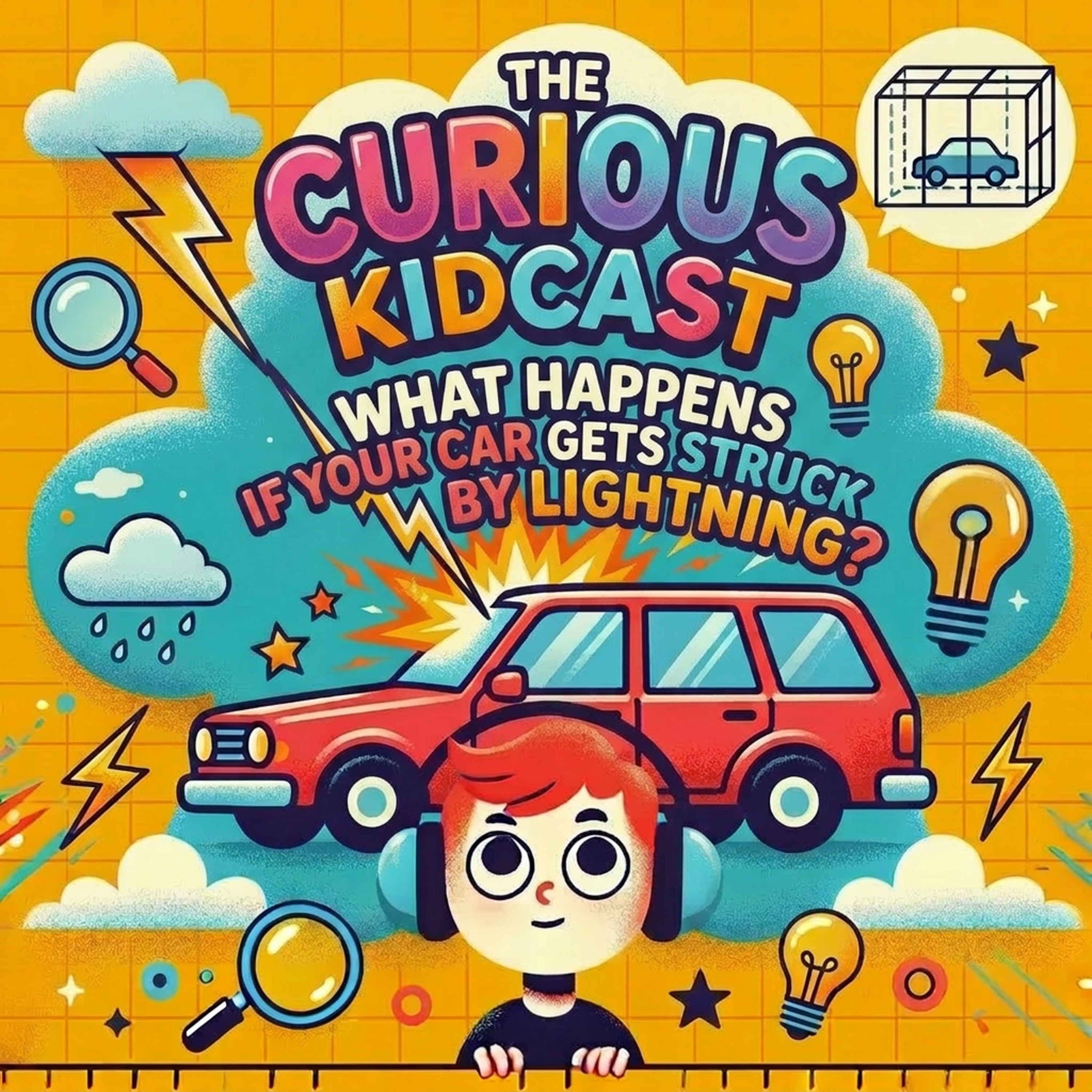 What Happens If Your Car Gets Struck By Lightning? | Mind-blowing science facts for kids What Happens If Your Car Gets Struck By Lightning? | Mind-blowing science facts for kids | Have you ever been sitting in a car during a thunderstorm and wondered, what would actually happen if lightning hit us right now? In this episode of The Curious Kidcast, Charlie digs into the surprising, myth-busting, laugh-out-loud science behind what really happens when lightning strikes a car. The answer might shock you, and yes, the pun was absolutely intended.This episode is packed with fun facts for kids, real science explained simply, and a three-question quiz at the end to test what you have learned. It is perfect for curious kids, families on a road trip, homeschool science lessons, or anyone who has ever looked out of a car window during a storm and felt just a little bit nervous.What You'll Learn in This EpisodeWhat lightning actually is and why the sky has a tantrum during a stormWhy being inside a metal car is often safer than being outside during lightningWhat a Faraday cage is and how it protects the people inside a vehicleThe most common lightning myth, and why rubber tyres do not protect youWhat damage lightning can do to a car's electronics, bodywork, and windowsWhat to do, and what not to do, if you are caught in a lightning stormWhy convertibles, motorbikes, and bicycles offer almost no protection at allWhat to check after your car has been struck by lightningFun Facts From This EpisodeLightning can reach temperatures five times hotter than the surface of the sunA single bolt of lightning releases enough energy to power a light bulb for around three monthsThe Faraday cage effect, which helps protect car passengers, was discovered by Michael Faraday in the 1800s, a man who had almost no formal schooling as a childLightning can jump through air, which is not even a conductor, across gaps of hundreds of metres, so rubber tyres are no protection at allModern car electronics including sat navs, sensors, and engine computers can all be damaged by a lightning strike even when passengers are unharmedPerfect ForKids aged 7–12Homeschool scienceFamily road tripsSTEM learningWeather educationCurious kidsNature scienceElectricity for kidsSafety for childrenFun learningParentingEducational podcastsPrimary school scienceScience myths bustedCurriculum ConnectionsThis episode supports science learning for children aged 7 to 12 and connects to the following educational themes:Physics: Electrical charge, conductors and insulators, energy transferEarth Science: Weather systems, thunderstorms, atmospheric electricitySafety Education: What to do during severe weather eventsHistory of Science: Michael Faraday and the discovery of electromagnetic inductionCritical Thinking: Identifying and debunking common science mythsHomeschooling families can use this episode as a standalone science lesson or as a springboard for further research into electricity, weather, and the history of physics. A follow-up activity could include building a simple model Faraday cage at home using aluminium foil and a cardboard box.Submit Your QuestionThis episode started with a brilliant question from River in Nebraska, asked on a stormy school run. Your child's question could be the next episode of The Curious Kidcast. We love hearing from curious kids all over the world, and no question is too big, too small, or too wonderfully weird.Got a question for Charlie? Visit curiouskidcast.com and send it in. Every question is read, every curious mind is welcome, and the weirder the question, the better.If you enjoyed this episode, please subscribe on your favourite podcast platform and share it with a friend, classmate, parent, or teacher. It really helps other curious kids find the show. | — | ||||||
| 4/15/26 | 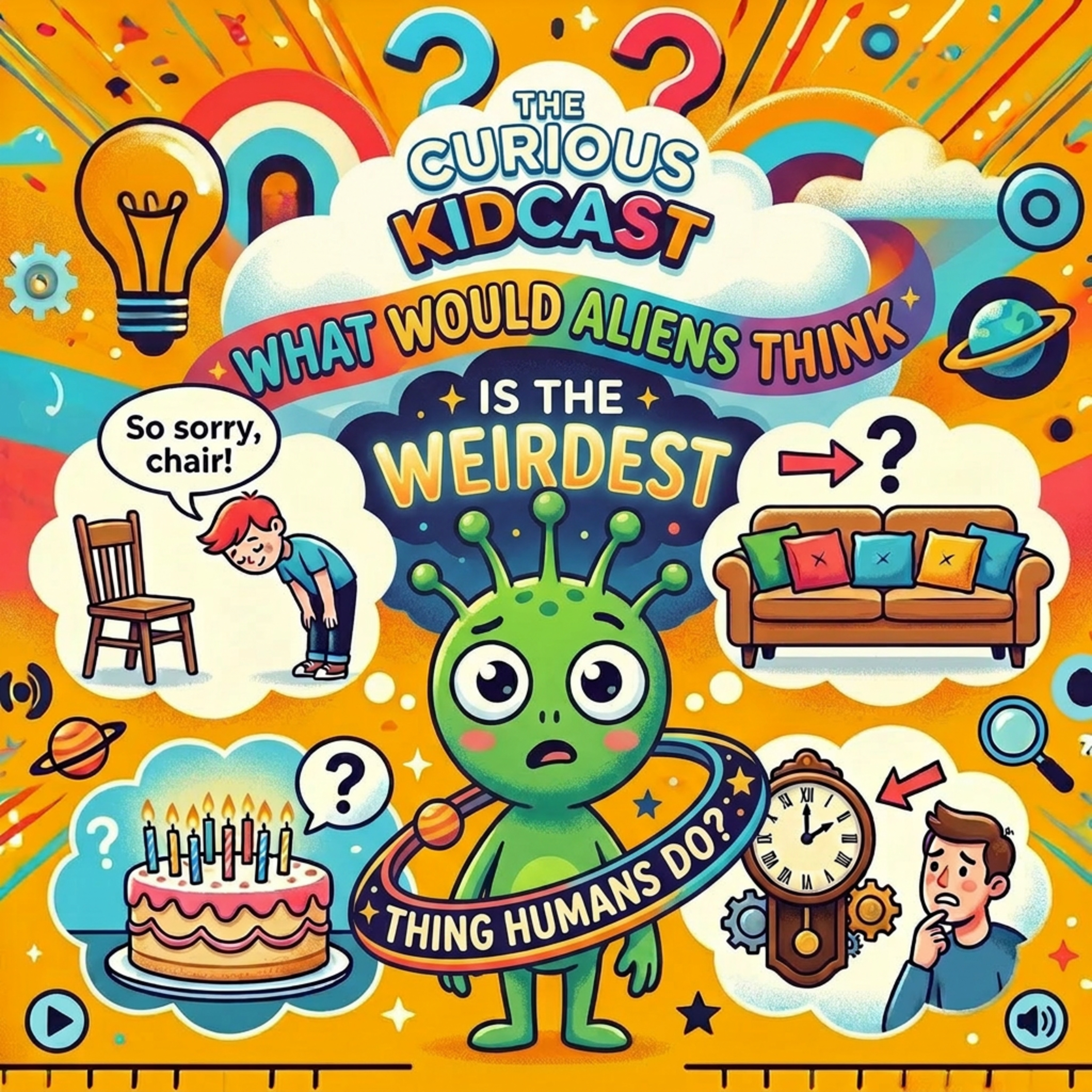 What Would Aliens Think Is the Weirdest Thing Humans Do? | Curious Questions to keep kids thinking What Would Aliens Think Is the Weirdest Thing Humans Do? | Curious Questions to keep kids thinking | What if aliens landed on Earth right now and started taking notes on everything we do? Would they be impressed by our cities and aeroplanes, or would they be completely baffled by the fact that we apologise to chairs, argue about pineapple on pizza, and spend twenty five minutes arranging cushions before guests arrive?In this episode of The Curious Kidcast, Charlie explores one of the funniest and most thought-provoking science questions we've ever received. It's an episode packed with fun facts, big ideas, silly observations and genuine moments that'll make kids and parents think differently about everyday human life.What You'll Learn in This EpisodeWhy humans obey invisible things like time and money, and why that's actually very strange when you think about itHow human language is so complicated that even we sometimes get it wrongWhy food is about way more than just staying alive, and why breakfast foods only belong in the morning apparentlyWhat music really is from a science point of view, and why aliens might be very confused by concertsWhy humans apologise to furniture and why that might actually say something lovely about usWhat the weirdest truly normal thing humans do probably is, and why aliens might secretly be jealous of itPerfect ForKids aged 7 to 11 who love asking big questionsFamilies looking for fun, educational listening togetherHomeschooling parents looking for engaging science and humanities contentParents who want their children to think critically and creativelyTeachers looking for a fun classroom listening activityFun Facts From This EpisodeHumans are the only species on Earth known to organise their lives around invented systems like money and clocksLanguage is so complex that the same sentence can mean completely opposite things depending on how it's saidMusic is essentially organised vibrations of air, and yet it can make humans cry, dance, or feel things they can't even put into wordsHumans regularly apologise to objects that cannot hear them, including chairs, doors, and robotsEvery human culture in history has invented some form of music, story and ritual, suggesting meaning-making is built into who we areGreat Conversation Starters After ListeningWhat do you think would confuse an alien most about your daily routine?If you had to explain money to someone who'd never heard of it, how would you do it?What's one human habit you've never really thought about before?If you could ask an alien one question about their planet, what would it be?Do you think aliens would find humans impressive, weird, or both?Curriculum ConnectionsThis episode connects naturally to topics in primary science, social studies, philosophy for children, PSHE, and creative writing. It encourages critical thinking, perspective-taking and scientific curiosity, making it a great companion for home education and classroom learning alike. The episode also touches on how humans use systems, symbols and shared beliefs to organise society, which links to humanities and early sociology concepts.Links and ResourcesVisit The Curious Kidcast website to submit your own question for a future episodeShare this episode with a friend, a classmate, or anyone who's ever said sorry to a piece of furnitureEpisode Tagsscience for kidskids podcastfamily podcasthomeschoolingfun factslearn at homeSTEM kidscurious kidsnature and scienceeducational podcastparentingkids educationfunny podcastalienshuman behaviourphilosophy for kidsprimary sciencebig questionsGot a question you'd like Charlie to answer?Head over to curiouskidcast.com and submit your question. It could be about space, animals, science, history, or something so brilliantly strange that Charlie needs to sit down for a moment before answering it.If you enjoyed this episode, please leave a review and share it with another family. It really helps more curious kids find the show. | — | ||||||
| 4/8/26 | 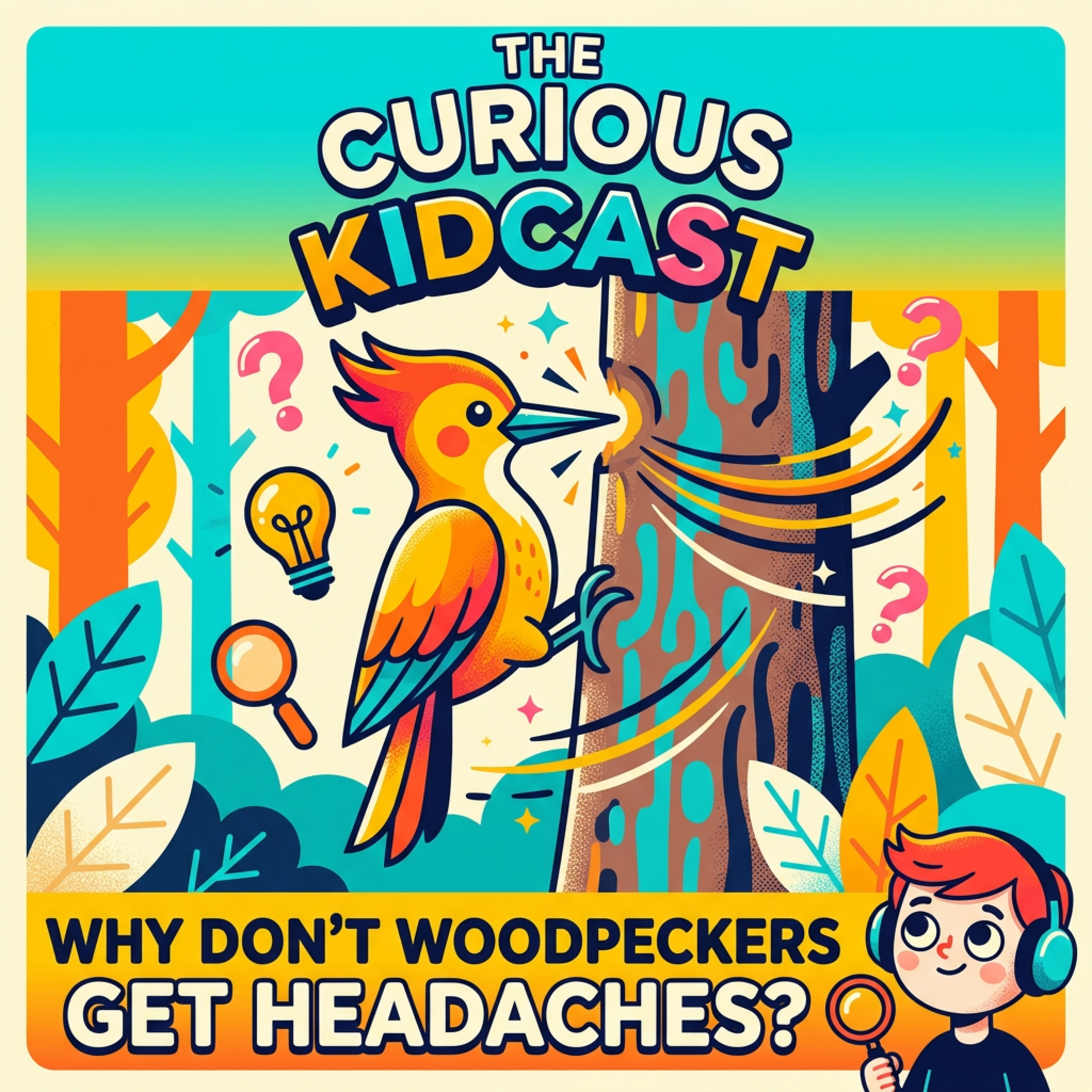 Why Don't Woodpeckers Get Headaches? | Amazing Animal facts for Kids Why Don't Woodpeckers Get Headaches? | Amazing Animal facts for Kids | A woodpecker can hammer its beak into a tree trunk up to 10,000 times every single day. That is faster than most people can clap, and it never stops. Yet despite all that pounding, woodpeckers go about their business without any sign of pain, dizziness, or injury.In this episode, Charlie digs into the extraordinary biology behind one of nature's most puzzling birds, exploring why their entire body, from beak to tail, is built to absorb the kind of forces that would knock any human flat.Along the way, listeners discover one of the strangest facts in all of zoology: where exactly a woodpecker's extremely long tongue actually goes when it is not in use. The answer is genuinely astonishing.Did you know?The word for copying ideas from nature to solve human problems is biomimicry. Scientists studying woodpeckers have used their findings to help design better helmets and safer sports gear for humans.The 8 Superpowers Explored in This EpisodeSuperpower 01The Specialised SkullStrong, uniquely shaped, and lined with natural padding that cushions the brain on every impact, like built-in bubble wrap.Superpower 02The Chisel BeakShaped like a woodworking chisel and designed to redirect force away from the brain rather than directly into it.Superpower 03A Snugly Fitted BrainA smaller, tightly packed brain has less room to slosh around during impact. Less wobble means far less damage.Superpower 04Natural Shock AbsorbersBone structures and soft tissues in the head work together like the springy soles of running trainers, absorbing each peck.Superpower 05Powerful Neck MusclesIncredibly strong muscles that both power the peck and act as a braking system, bringing the head to a safe, controlled stop.Superpower 06The Wrap-Around TongueThe tongue-support bones are so long they loop around the outside of the skull, potentially acting as a built-in crash helmet.Superpower 07Built-In Safety GogglesA special extra eyelid called the nictitating membrane snaps shut during pecking, protecting the eyes from flying wood chips.Superpower 08Grippy Feet and a Stiff TailTwo strong feet and a rigid tail create a stable three-point base on the tree, keeping every peck perfectly controlled.New science adventures land every week. Subscribe on your favourite podcast app and share the show with a curious kid you know.Got a Curious Question?Your question could be the next episode. The weirder the better. Send it in at curiouskidcast.com.The Curious Kidcast — Science, nature, and the world's best questions, explored for curious kids aged 7–12. | — | ||||||
| 4/1/26 | 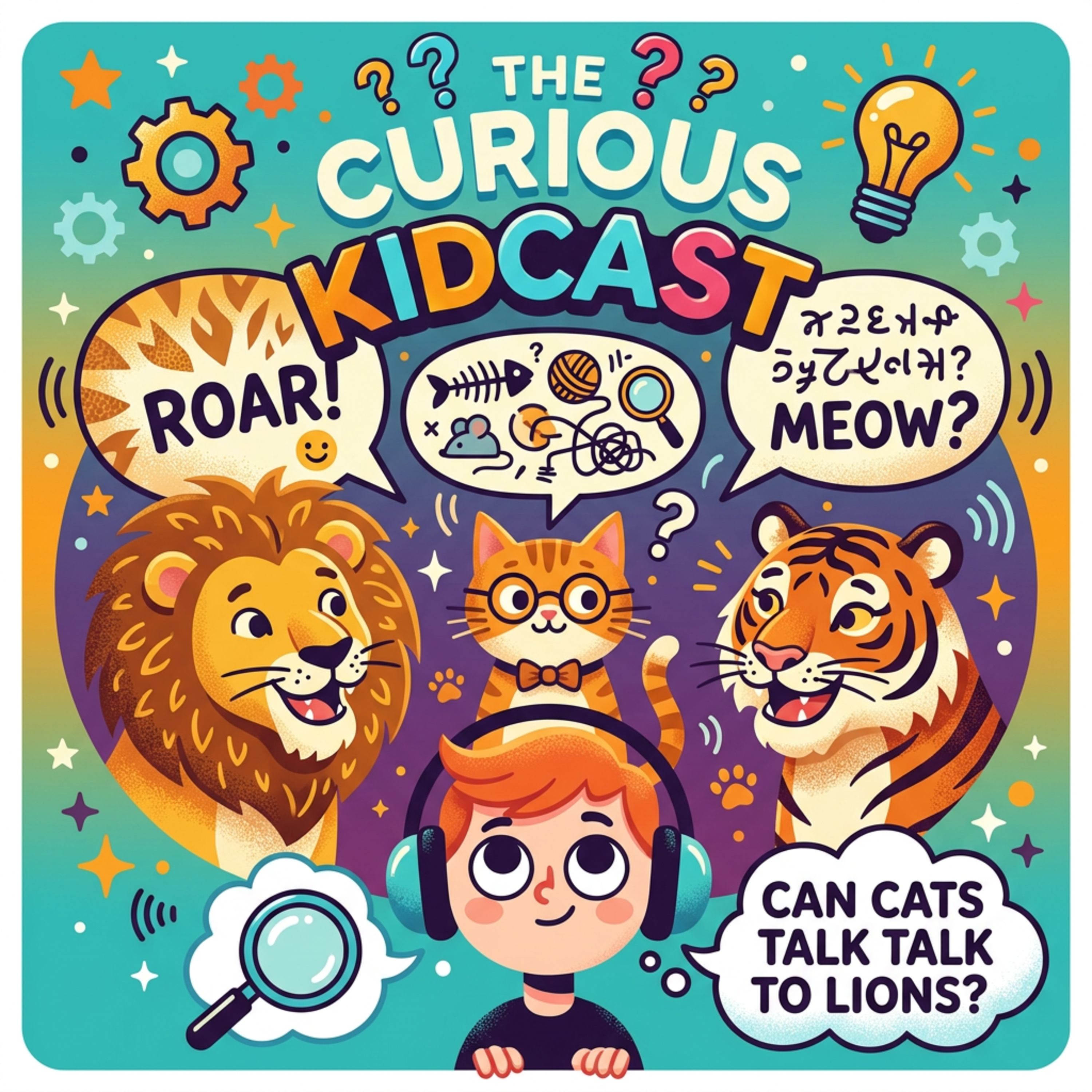 Do Cats, Lions and Tigers Understand each other? | Animal facts for kids Do Cats, Lions and Tigers Understand each other? | Animal facts for kids | In this episode of The Curious Kidcast, host Charlie dives deep into the science of animal communication to find out whether cats, lions, and tigers can actually understand each other.This episode is packed with fun facts about animal communication, the feline family, body language in big cats, and even whether cats from different countries around the world speak the same language. It is a brilliant episode for curious kids aged 7 to 11, perfect for science learning at home, homeschool nature study, family car journeys, or just satisfying that brilliant, never-ending curiosity your child carries everywhere.What Your Child Will LearnThis episode introduces kids to real science concepts in a fun, accessible, and laugh-out-loud way. By the end of the episode, young listeners will be able to:Explain what the feline family is and which animals belong to itUnderstand how cats, lions, and tigers use body language, sound, and scent to communicateDescribe what a slow blink means in cat communicationExplain why cats from different countries can still understand each otherUnderstand the difference between species-specific signals and universal animal communicationAnswer fun quiz questions about animal science with growing confidenceKey Science Topics CoveredThe Feline Family Cats, lions, and tigers all belong to the biological family Felidae, commonly called the feline family. This shared ancestry means they have a lot of physical and behavioural traits in common, including sharp claws, strong hunting instincts, excellent night vision, and overlapping communication systems. Understanding this helps children build foundational knowledge in biology, taxonomy, and the natural world.Do Cats From Different Countries Understand Each Other? A standout section of this episode explores whether a cat from England would understand a cat from Japan or Canada. The answer is a resounding yes. Domestic cats are all the same species and use the same core set of signals regardless of geography. This connects to big ideas in biology around species identity, universal behaviour, and the difference between learned habits and instinctive communication.Why This Episode Is Great for Homeschoolers and FamiliesThe Curious Kidcast is designed to make science and nature irresistibly engaging for children aged 7 to 11. This episode on feline communication ticks a wide range of curriculum boxes, including animal biology, ecosystems, classification of living things, and communication in the natural world. It also encourages children to ask questions about everyday life, like wondering why your cat behaves the way it does, and to turn those observations into genuine scientific curiosity.About The Curious Kidcast The Curious Kidcast is a fun, facts-filled science and nature podcast for children aged 7 to 11. Every episode starts with a real question sent in by a real kid, and host Charlie investigates the answer with plenty of humour, surprising science, and an end-of-episode quiz. Episodes are screen-free, family-friendly, and designed to make learning feel like an adventure. The Curious Kidcast is perfect for curious kids, busy parents, homeschool families, and anyone who believes that asking big questions is always a great idea.Subscribe and never miss an episode. If your child has a question they would love Charlie to investigate, head to curiouskidcast.com and send it in. You can also find The Curious Kidcast on Spotify, Apple Podcasts, and wherever you listen to podcasts. | — | ||||||
| 3/25/26 |  Why are bubbles always round? | Science for kids explained Why are bubbles always round? | Science for kids explained | Ever watched a bubble float past your nose and thought, "Hang on, why is that round?" In this episode of The Curious Kidcast, your host Charlie dives deep into one of the most brilliant questions a curious kid can ask. Packed with fun facts, gentle laughs, real science and everyday examples from nature, this is family learning at its best. Whether you are a kid, a parent, a homeschooling family or just someone who never quite got a proper answer to this question, you are in exactly the right place.In this episode you will learn:What a bubble actually is and how it formsWhat surface tension means in simple, fun languageWhy a sphere is the most efficient shape in natureHow air pressure and the soap film work togetherWhy shaped wands still make round bubblesHow bubble science connects to raindrops and everyday natureWhat minimal surfaces are and why scientists actually care about soap filmsEpisode SummaryThis kids science podcast episode starts with a brilliant question from Priya, a listener from Birmingham, England, who was blowing bubbles through a straw in her living room when it suddenly hit her: why are they always round. Charlie takes that question and turns it into a fun, fact filled journey through physics, nature and the hidden maths that shapes the world around us.Kids discover that bubbles are round because of a force called surface tension, which pulls the thin soap film inward while the trapped air inside pushes outward. When these forces balance perfectly in every direction, the shape that uses the least surface area and the least energy is always a sphere. The episode uses real life comparisons, silly observations and easy examples to make sure the science sticks.Along the way, there are fun digressions about water strider insects walking on ponds, why the middle seat on a packed bus is a terrible experience for bubbles and people alike, and why being scientifically lazy is sometimes the most correct thing you can do. It is the kind of episode that sparks dinner table conversations and garden experiments in equal measure.Science Concepts CoveredSurface tension and why water molecules are extremely clingySpheres and minimal surface area as a geometric and physical principleEnergy efficiency in natural systemsAir pressure and how it balances with surface tension inside a bubbleSoap chemistry and why plain water does not make good bubblesMinimal surfaces and how mathematicians and engineers use soap filmsNature connections including raindrops, water droplets and foamWhy Kids and Families Love The Curious KidcastThe Curious Kidcast is a science and nature podcast built around the questions real kids actually ask. Every episode takes a single brilliant question and answers it properly, with real facts, fun storytelling and plenty of comedy. It is designed to make kids feel like their curiosity matters, and to give parents and homeschooling families a reliable, entertaining and genuinely educational listen they can enjoy together.Episodes cover science, nature, the human body, animals, space, everyday physics and much more. If your child has a question they would love to hear answered on the show, you can submit it directly on the website.Have a Question for CharlieNo question is too silly, too weird or too random on this show. If your child has been wondering about something and cannot get a satisfying answer, send it in. It might just become the next episode. Visit curiouskidcast.com to submit your question and subscribe so you never miss an episode.If you are listening on a podcast app, leaving a review really does help other curious kids and families find the show. Share this episode with a friend, a classmate, a parent or anyone who has ever looked at a bubble and wondered why it is round.Keywords: science for kids, educational podcast, homeschooling, family learning, kids podcast, fun facts, nature science, parenting, curious kids, surface tension, bubble science | — | ||||||
| 3/18/26 |  Are there other earths out there? | Amazing Space trivia for kids Are there other earths out there? | Amazing Space trivia for kids | What if there was another planet, somewhere far out in space, that looked just like Earth? What if it had oceans, mountains, clouds, and maybe even its own version of pizza? In this episode of The Curious Kidcast, your host Charlie tackles one of the biggest questions curious kids ask: are there other Earths out there?What Your Child Will LearnWhat scientists mean when they talk about "another Earth"What an exoplanet is and why they are so excitingWhy liquid water is one of the most important ingredients for lifeWhat the Goldilocks Zone is and why it mattersReal exoplanets scientists have discovered, including Kepler-452b and TRAPPIST-1How scientists find planets using the transit method and the wobble methodWhat biosignatures are and how future telescopes might detect lifeWhy the universe is probably too big for Earth to be completely uniqueEpisode HighlightsWhy a year on Kepler-452b is slightly longer than on Earth, which means waiting even longer for ChristmasA star system called TRAPPIST-1 that has seven Earth-sized planets orbiting the same starWhy "Earth-like planet" headlines can be a little sneaky, and what scientists actually knowThe wobble method, possibly the greatest name in all of scienceA three-question fun quiz to test what your kids have learnedPerfect ForCurious kids aged 7 to 11Families who love learning together on car journeys, walks, or at homeHomeschool science lessons on space, astronomy, and the solar systemParents looking for safe, funny, and genuinely educational contentTeachers looking for a fun supplement to KS2 science topicsAnyone who has ever looked at the night sky and wondered "is anyone else out there?"Episode Quiz QuestionsAt the end of every episode, Charlie runs a fun multiple choice quiz. This episode's questions cover:What do scientists call planets outside our solar system?What is the nickname for the "just right" distance from a star?How does the transit method work?Can your child get all three right? Listen and find out.Fun Facts From This EpisodeScientists have discovered more than 6,000 exoplanets outside our solar systemOn some planets, it rains molten ironThe Goldilocks Zone is the region around a star that is not too hot and not too cold for liquid waterKepler-452b is often called Earth's cousin and takes 385 days to orbit its starTRAPPIST-1 has seven planets orbiting the same star, some in the habitable zoneThe Milky Way contains hundreds of billions of stars, many of which have their own planetsKeywords and Topics Coveredkids scienceexoplanetsspace for kidshomeschool sciencefamily podcastare there other earthsGoldilocks ZoneKepler-452bTRAPPIST-1alien life for kidsfun science factsnature and scienceeducational podcastlearning for kidscurious kidsparentingKS2 sciencebiosignaturestransit methodwobble methodGot a question you'd like Charlie to answer?Head to curiouskidcast.com and send it in. It could be about space, animals, the human body, food, weather, or why adults always say "we'll see" when they clearly mean no. We want to hear from you. About The Curious KidcastThe Curious Kidcast is a fun, funny, and properly researched science and nature podcast for kids aged 7 to 11. Each episode takes a real question asked by a real child and turns it into an audio adventure packed with facts, comedy, and a short quiz. It is completely safe for kids, loved by parents, and the perfect companion for families who love learning together.New episodes are released weekly. Subscribe so you never miss one, and if your child has a burning question about the world, the universe, or anything in between, visit curiouskidcast.com to send it in. | — | ||||||
| 3/11/26 |  What if you were swallowed by a whale, could you survive inside? What if you were swallowed by a whale, could you survive inside? | What if a mouth the size of a school bus opened beneath you in the ocean and, WHOOOMP, you were inside a whale. Could you survive in there. This week Charlie dives deep into one of the wildest questions ever sent into the show, and the answers are even more surprising than you think.About This EpisodeIn this episode, Charlie explores the science behind whale anatomy, finds out which whale could theoretically swallow a human and why it almost certainly never would, and investigates a famous 1891 sea legend that most historians think was made up entirely for newspaper headlines.Along the way we discover just how staggeringly big blue whales really are, learn about the deep-sea battles between sperm whales and giant squid, and hear about the real-life lobster diver who ended up inside a whale's mouth in 2021 and lived to tell the tale. It is science, nature, history, and just a little bit of comedy all mixed together, which is exactly what The Curious Kidcast is about.Key Facts Covered in This EpisodeBlue Whale Fast FactsThe largest animal that has ever lived on Earth, bigger than any dinosaurCan grow up to 30 metres long, about the same as three buses parked end to endCan weigh around 150 tonnes, heavier than 25 elephantsIts tongue alone can weigh as much as an entire elephantCan scoop up around 70,000 litres of water in a single gulpThroat is only about the size of a grapefruit, because they eat tiny krillFilters food through comb-like structures called baleenSperm Whale Fast FactsHas a much larger throat than a blue whale, large enough for a human to technically fit throughCan dive more than 2,000 metres below the surface, deeper than four Eiffel Towers stacked upHunts squid and fish in the deep, pitch-black oceanDoes not eat humans, we are simply not part of their dietOften found with round scars from giant squid suction cups after deep-sea battlesWhy You Could Not Survive Inside a Whale's StomachAlmost no oxygen inside the stomach, you would pass out very quicklyPowerful stomach acids designed to dissolve fish and squidComplete darkness, extreme warmth, and an indescribably bad smellWhat Kids Will LearnThis episode is a brilliant entry point into marine biology and ocean science for curious kids. Alongside the comedy and storytelling, listeners come away understanding the difference between baleen and toothed whales, how filter feeding works, why animal size does not always equal danger, and how scientists use physical evidence like scars to learn about behaviour they cannot directly observe. For homeschooling families, this episode pairs well with topics on marine ecosystems, food chains, animal adaptation, and scientific scepticism when evaluating historical claims.Something to Think AboutAt the end of the episode, Charlie poses a bonus question to think about: whales are mammals just like us, which means they need to breathe air. So how do they sleep in the ocean without drowning. Science for KidsNatureOceanWhalesMarine BiologyFun FactsFamily PodcastHomeschoolingLearnParentingKids Ages 7-11AnimalsEducationGot a big, weird, wonderful question you want answered on The Curious Kidcast? Maybe something about space, animals, history, or how things work. Send it in and it could be the next episode.You can also subscribe on all major podcast platforms so you never miss an episode.The Curious Kidcast · curiouskidcast.com · Science, nature and fun facts for curious kids aged 7–11 · Hosted by Charlie | — | ||||||
| 3/4/26 |  When Will We Get Flying Cars? | Curious Questions from Curious Kids! When Will We Get Flying Cars? | Curious Questions from Curious Kids! | What if your morning school run meant lifting off from your driveway, soaring above the traffic, and landing at school in minutes. In this episode, Charlie answers the big question: when will flying cars actually exist. From the world's first attempt in 1917 to electric flying taxis already being tested in Dubai today, this episode is packed with science, laughs, and a quiz to test how much your curious kid has learned.What Your Family Will LearnThis episode is a brilliant companion for homeschool science lessons, long car journeys, or bedtime listening. By the end, kids aged 7 to 11 will be able to explain the core science and history of flying cars in their own words.✓ Why lifting a heavy car off the ground is so difficult (physics of flight)✓ The four main types of flying car and how each one works✓ Real companies building real flying vehicles right now✓ Why safety, power, and air traffic rules all have to be solved first✓ A realistic timeline for when flying cars might arrive in our lives✓ How flying cars could save lives in emergencies and help remote communitiesFlying cars have been a dream for more than a century. The very first attempt, the Curtiss Autoplane, was built in 1917 and mostly just hopped along the ground. Since then, inventors have tried hundreds of designs. The idea was even immortalised in the classic 1960s cartoon The Jetsons, which showed an entire futuristic city of airborne vehicles. The year 2000 came and went without them, but the dream, and the engineering effort, has never stopped.The Science Behind the ChallengeCharlie breaks down the four big problems engineers are working to solve. First, weight: cars are thousands of kilograms heavy and lifting that requires enormous power. Second, energy: flying uses far more fuel or battery than driving, and running out mid-air is not an option. Third, safety: every computer, sensor, and backup system must work perfectly every time. Fourth, air traffic: thousands of flying vehicles over a city need a whole new kind of management system, much like the one already used for commercial aircraft, but far more complex.The TimelineExperts estimate flying taxis could be operating in major cities by around 2040. Private flying cars affordable to families may follow by 2050 or beyond. Rules, infrastructure, battery technology, and public trust all need to develop in parallel. A child who is eight years old today could well be riding a flying taxi to work in their twenties.Homeschool & Classroom IdeasThis episode pairs naturally with science topics on forces, flight, energy, and the future of transport. Here are some simple activities to extend the learning after listening.Paper aeroplanes: Experiment with wing shapes and weights to explore lift and drag.Design challenge: Draw or build a model of your own flying car and explain how it would work.Map activity: Find Dubai, Birmingham, Slovakia, and Germany on a world map and discuss what connects them to today's episode.Debate: Should flying cars be allowed over cities. What rules would your child put in place.Timeline: Create a visual timeline from 1917 to 2050 and plot flying car milestones on it.Got A Question For The Curious Kidcast?Every episode starts with a question from a real curious kid. If your child has something they have always wondered about, we want to hear it. Their question could be our next episode.And if you enjoyed this episode, please share it and subscribe wherever you listen to podcasts. | — | ||||||
| 2/25/26 |  What Makes Food Spicy? | Science Podcast for kids What Makes Food Spicy? | Science Podcast for kids | Spicy food isn't actually hot. There are no flames, no sparks, and nothing burning in your mouth at all — and yet your eyes water, your face turns red, and you start desperately fanning your tongue like a penguin trying to take off. In this episode, Charlie digs into the brilliant, bizarre science behind what spice really is, why your brain gets completely fooled, and how a single tiny molecule inside a chilli pepper has been outwitting mammals for thousands of years.What You Will Learn in This EpisodeThis episode covers how a chemical called capsaicin works, why it tricks your brain's heat sensors into firing even when there is no real heat, and why your body responds with sweating, tears, and a racing heart. We also explore why spicy food can feel exciting and even pleasurable thanks to endorphins, the body's natural feel-good chemicals.We look at the chilli plant's surprisingly clever evolutionary strategy: using capsaicin to repel mammals while letting birds eat freely and carry seeds far and wide. Birds, it turns out, cannot feel spice at all. Their heat receptors are simply different.Charlie also explains why water makes a spicy mouth worse (capsaicin is oily and water just spreads it around), why milk genuinely works (a protein called casein grabs onto capsaicin molecules and removes them), and how different spices like wasabi, black pepper, and Sichuan pepper each create completely different sensations.Why This Episode Is Great for Homeschooling and Learning at HomeThis episode connects naturally to several areas of science that children aged 7 to 11 encounter in school and home learning. The story of capsaicin introduces the idea that our senses can be tricked, which opens up discussions about how the nervous system works, how the brain processes signals, and why we feel pain. The concept that spicy is a pain signal rather than a taste is genuinely surprising to most children and adults alike, making it a brilliant entry point for conversations about the five senses and how they are sometimes more complex than we think.The section on plant evolution and why chilli peppers developed capsaicin in the first place is a natural fit for topics in biology covering adaptation, survival strategies, and the relationship between plants and animals. The bird and mammal contrast provides a clear, memorable example of how different species can experience the same thing in completely different ways.The Scoville Scale introduces a real-world example of how scientists measure and compare things, connecting to maths and data skills as well as science. The milk and water explanation is a simple, practical lesson in chemistry: oil and water do not mix, and knowing why helps children understand solutions, mixtures, and how the body interacts with food.Related Topics to ExploreIf this episode sparked curiosity, here are some related areas to explore further. The human nervous system and how pain signals travel from nerve endings to the brain. Plant evolution and defence strategies, including thorns, toxins, and other adaptations. The science of taste and smell, and how the two senses work together when we eat. The history of spices in food, cooking, and trade around the world. Endorphins, the brain's reward system, and how the body manages discomfort.Do you have a question you would like Charlie to answer on the show? Visit curiouskidcast.com to send it in. If you enjoyed this episode, please share it with a friend, subscribe so you never miss a new episode, and leave a review wherever you listen. Every curious question helps.Full episode transcript available at curiouskidcast.com · The Curious Kidcast is suitable for children aged 7–11 and is designed to be enjoyed by families together. | — | ||||||
Want analysis for the episodes below?Free for Pro Submit a request, we'll have your selected episodes analyzed within an hour. Free, at no cost to you, for Pro users. | |||||||||
| 2/11/26 |  Could You Ride a Water Slide from Space? | Crazy kids questions explained Could You Ride a Water Slide from Space? | Crazy kids questions explained | Ever wondered what would happen if you built a water slide from the edge of space all the way down to Earth? In this wildly fun science episode, host Charlie explores one of the most imaginative questions ever asked by a kid: could we actually ride a water slide from 100 kilometres up?This educational and entertaining podcast episode is perfect for curious kids, homeschooling families, and anyone who loves learning about science through fun, engaging storytelling. We dive deep into physics, gravity, engineering, and space science while keeping things hilarious and kid-friendly.What Kids Will LearnSpace Science: Discover what the Kármán line is and why it marks the edge of spaceGravity Facts: Learn how gravity works and why you'd get faster and faster falling from spacePhysics for Kids: Understand the speed of sound and sonic booms explained in a fun wayWater Science: Find out why water behaves strangely in space (it boils, freezes, and floats away)Engineering Challenges: Explore why building super tall structures is so difficultEnergy and Power: Learn about the massive amounts of energy needed to pump water upwardEarth Science: Discover why Earth's atmosphere and conditions make it so specialFun Facts from This EpisodeThe edge of space is 100 kilometres high - that's like stacking 11 Mount Everests on top of each otherYou could travel faster than the speed of sound (1,200 km/h) on a space water slideWater has an "identity crisis" in space - it can boil and freeze at the same timeThe tallest water slides today are only 50-60 metres tallPumping water 100 kilometres up would use more energy than entire towns use in a dayEven the strongest materials we have would collapse under their own weight at 100 kilometres tallPerfect for Homeschool Science CurriculumThis episode makes an excellent addition to homeschool science lessons covering:Physical science and physics fundamentalsSpace and astronomy unitsEngineering and design thinkingCritical thinking and problem-solvingSTEM education for elementary and middle school studentsEducational Value for Parents and TeachersThe Curious Kidcast transforms complex scientific concepts into accessible, engaging content for children. This episode teaches critical STEM concepts while encouraging curiosity, creative thinking, and scientific reasoning. It's perfect for:Car rides and family road tripsHomeschool science timeQuiet time or rest periodsBedtime learning routinesClassroom science enrichmentFeatured Science TopicsGravity, Space Science, Physics for Kids, Engineering, Water Properties, Atmospheric Pressure, Sonic Boom, Kármán Line, Materials Science, Energy Conservation, Earth Science, STEM LearningWhy Kids Love This EpisodeHilarious explanations and kid-friendly humor throughoutRelatable comparisons to everyday experiencesInteractive quiz to test what they learnedAnswers a question kids actually wonder aboutMakes complex science fun and accessiblePerfect length for short attention spansListen and LearnSubscribe to The Curious Kidcast for more fun science episodes that answer the questions kids really want to know. Perfect for curious children, homeschooling families, and anyone who believes learning should be an adventure.Submit Your QuestionDoes your child have a curious question they'd love answered? Visit curiouskidcast.com to submit questions and join our community of curious learners.Tagskids podcast, science for kids, educational podcast, family podcast, homeschool resources, STEM education, space facts, gravity explained, physics for children, curious kids, parenting podcast, learning through fun, nature science, educational entertainment, family learning, science facts for kids, homeschooling science, children's education, fun learningThe Curious Kidcast - Where science meets curiosity and learning is always an adventure. Perfect for kids ages 7-11, families, educators, and homeschoolers. | — | ||||||
| 2/4/26 |  Can Cows really Predict Rain? | Fun Animal facts for kids Can Cows really Predict Rain? | Fun Animal facts for kids | Episode Summary: Join host Charlie on The Curious Kidcast as we investigate one of the oldest weather myths in history. Can cows really predict rain by lying down? This fun, educational episode combines science, nature observation, and critical thinking skills perfect for curious kids ages 7-11 and their families.What Kids Will Learn in This EpisodeThe fascinating science behind cow behavior and why cows lie downHow to think like a scientist and question popular beliefsThe difference between correlation and causationAmazing facts about cow digestion and ruminationHow modern meteorologists actually predict weatherWhy our brains sometimes trick us into seeing patterns that aren't thereOther common animal weather myths debunkedPerfect For:Homeschool science curriculum and nature studyFamily road trips and car ride entertainmentKids who love animals and natureParents looking for educational screen-free contentEncouraging critical thinking and scientific reasoningSTEM learning at homeFun Science Facts Your Kids Will DiscoverIn this episode, kids learn incredible nature facts they can share with friends and family. Did you know cows spend 12 hours a day lying down? Or that they have four stomach compartments and re-chew their food? These fun facts make science engaging and memorable for young learners.Educational Value for Homeschooling FamiliesThis episode is ideal for homeschool science lessons focusing on:Animal behavior and biologyWeather science and meteorology basicsScientific method and critical thinkingPsychology and how our brains workSeparating myths from scientific factsInteractive Quiz IncludedTest your kids' knowledge with three fun multiple-choice questions featured in the episode. Great for family discussion and reinforcing learning.Episode HighlightsWhy ancient farmers believed cows could predict weatherScientific studies that tested the cow-rain mythHow cows actually sense atmospheric changesThe truth about woolly caterpillars, groundhogs, and other animal weather predictorsModern weather forecasting technology explained for kidsWhy Parents and Educators Love The Curious KidcastThe Curious Kidcast makes learning science fun for the whole family. Each episode encourages kids to ask questions, think critically, and explore the natural world around them. Perfect for curious minds who want to understand how things really work.Share Your QuestionsDoes your child have a burning question about science, nature, or how the world works? Visit curiouskidcast.com to submit your question for a future episode.Subscribe for More Fun Science LearningDon't miss future episodes packed with fascinating facts, educational content, and fun for the whole family. Subscribe to The Curious Kidcast on your favorite podcast platform.Topics CoveredAnimal behavior, weather science, cow biology, scientific method, critical thinking, nature observation, folk wisdom, meteorology, atmospheric science, cognitive biases, pattern recognitionAge RangeBest suited for kids ages 7-11, but enjoyable for the whole family including younger and older siblingsEducational StandardsAligns with Next Generation Science Standards (NGSS) for elementary life science, earth science, and scientific inquiry. Supports homeschool curriculum in biology, meteorology, and critical thinking development.The Curious Kidcast - Making science fun, one question at a time. Perfect for curious kids, engaged parents, and homeschooling families who love to learn together. | — | ||||||
| 1/28/26 |  What's it like inside a Tornado? | Exciting adventures for kids What's it like inside a Tornado? | Exciting adventures for kids | Episode Summary: Join Charlie from The Curious Kidcast as we explore the fascinating science behind one of nature's most powerful forces - tornadoes! This fun and educational episode answers Jake from Nebraska's burning question about how spinning air can create destructive storms that can even lift cows into the sky!What Kids Will Learn in This EpisodeThis science-packed episode is perfect for curious kids aged 7-11, homeschooling families, and parents looking for engaging educational content. Children will discover:The Science of Tornado Formation: Learn about warm air, cold air, and wind shear - the three key ingredients that create tornadoesHow Storms Work: Understand supercells, mesocyclones, and how spinning air becomes a powerful tornadoTornado Types and Shapes: Explore rope tornadoes, cone tornadoes, wedge tornadoes, and multi-vortex tornadoesThe Enhanced Fujita Scale: Discover how scientists measure tornado strength from EF0 to EF5Inside a Tornado: Find out what it's really like inside a tornado - the wind, sound, darkness, and pressureTornado Geography: Learn where tornadoes happen most often, including Tornado AlleyStorm Safety: Understand why we can't stop tornadoes but how we can predict them and stay safePerfect For:Homeschool Science Curriculum: Great supplement for weather, earth science, and natural phenomena lessonsCurious Kids: Perfect for children who love asking "why" and "how" about the natural worldFamily Learning Time: Enjoy together during car rides, dinner prep, or before bedSTEM Education: Introduces physics, meteorology, and scientific thinking in a fun, accessible wayNature Enthusiasts: Ideal for kids fascinated by weather, storms, and natural phenomenaEpisode Highlights:Why tornadoes sound like freight trainsThe amazing true fact about flying cows in tornadoesHow scientists study tornadoes using storm chasers and dronesWhy Mars has dust tornadoes tooA fun three-question quiz to test your tornado knowledgeFun Science Facts Kids Will LoveThroughout this episode, children will discover fascinating tornado facts including:Tornadoes can spin at over 300 kilometers per hourThe inside of a tornado is pitch black even during daytimeTornadoes can change shape as they move across landscapesStorm chasers follow tornadoes to collect scientific dataAntarctica is the only continent where tornadoes don't formEven Mars experiences dust tornadoesWhy Families Love The Curious KidcastThe Curious Kidcast makes science learning fun for the whole family. Each episode:Answers real questions from real kidsUses age-appropriate humor and relatable examplesExplains complex science concepts in simple, engaging waysEncourages curiosity and continued learningIncludes interactive quiz segmentsPromotes STEM education through entertaining storytellingEpisode DetailsHost: CharlieTopic: Tornado science, weather phenomena, atmospheric conditionsAge Range: Perfect for kids 7-11 years oldEducational Focus: Meteorology, earth science, physics, safety educationSubscribe and ShareLove learning about science and nature? Subscribe to The Curious Kidcast for more fun, educational episodes that answer kids' most curious questions about the world around them. Perfect for family listening, homeschool enrichment, and nurturing your child's natural curiosity.Have a Question?Does your child have a burning science question they'd love answered? Visit curiouskidcast.com to submit questions for future episodes. We love hearing from curious kids and families!Keywords and TopicsScience for kids, tornado facts, weather education, homeschool science, kids podcast, educational content, family learning, nature phenomena, STEM learning, parenting resources, fun facts for children, meteorology for kids, earth science, natural disasters explained, storm safety, curious kids, science explained simply | — | ||||||
| 1/21/26 |  Is Space Full of Junk? | Amazing quesions for kids Is Space Full of Junk? | Amazing quesions for kids | How Much Stuff Have We Put in Space? (And Do Things Ever Crash Up There?)Episode DescriptionJoin Charlie on The Curious Kidcast for an exciting space adventure that answers Liam from Texas's burning question: how much stuff have humans really put in space, and do things ever crash up there? This fun, educational science podcast for kids explores the fascinating world of satellites, space junk, and cosmic collisions in a way that makes learning an absolute blast!Perfect for curious kids, homeschooling families, and parents looking for engaging educational content, this episode transforms complex space science into an entertaining journey through Earth's orbit. Discover why space is busier than rush hour traffic, learn about astronauts who lost gloves in space, and find out if we'll ever need a giant cosmic vacuum cleaner!What Your Kids Will LearnThe history of space exploration, starting with Sputnik 1 in 1957How many satellites and objects are currently orbiting Earth (spoiler: way more than you think!)Why space debris travels at 28,000 kilometres per hour and what makes it so dangerousReal examples of space crashes and collisionsWhat Kessler Syndrome is and why scientists are worried about itHow space agencies track and avoid dangerous space junkAmazing facts about the International Space Station and its 16 daily sunrisesInnovative ideas for cleaning up space (including space harpoons!)Fun Science Facts Featured in This EpisodeThere are over 9,000 active satellites orbiting Earth right nowScientists track more than 20,000 large objects in space (bigger than a tennis ball)Millions of tiny fragments zoom around Earth at bullet speedA paint chip traveling at orbital speed can crack a spacecraft windowMost space junk burns up in the atmosphere and becomes shooting starsAstronauts have actually lost tools and gloves during spacewalksRockets drop parts along the way, leaving debris in orbitEducational Topics CoveredThis episode is perfect for homeschool science curriculum and family learning time, covering:Space Science: Orbital mechanics, satellites, and space technologyPhysics: Speed, velocity, and kinetic energyEnvironmental Science: Space pollution and debris managementHistory: The space race and human space explorationProblem-Solving: Engineering solutions for space cleanupCritical Thinking: Understanding cause and effect in space collisionsInteractive Quiz IncludedTest your family's knowledge with our fun three-question quiz.Why Parents and Educators Love The Curious KidcastAge-Appropriate Content: Designed specifically for kids ages 7-11Educational and Entertaining: Combines solid science facts with kid-friendly humorHomeschool-Friendly: Perfect supplement to science curriculumScreen-Free Learning: Great for car rides, quiet time, or family listeningSparks Curiosity: Encourages kids to ask more questions about the worldEpisode HighlightsIntriguing cold open about space junk zooming overhead at incredible speedsThe story of Sputnik 1, the first beeping beach ball in spaceMind-blowing statistics about how crowded space really isReal-life space crash stories, including the famous 2009 satellite collisionExplanation of intentional space crashes Fun analogies kids can relate to (cosmic bumper cars, the worst piñata party ever)Cool space cleanup ideas like giant nets and harpoonsInteractive quiz to test what kids learnedKeywordskids podcast, science for kids, space education, homeschool science, educational podcast for children, family learning, STEM for kids, fun facts, nature and science, parenting resources, space junk, satellites, astronomy for kids, educational entertainment, curious kids, learning podcast, age-appropriate science, homeschool resources, family-friendly podcast, children's education, science funThe Curious Kidcast - Where every question leads to an adventure in learning! Perfect for curious kids ages 7-11 and the families who love learning with them. | — | ||||||
| 1/14/26 |  How do animals sense earthquakes before they happen? | Mind-blowing adventures for kids How do animals sense earthquakes before they happen? | Mind-blowing adventures for kids | Join Charlie on The Curious Kidcast for a fun and fascinating science adventure exploring how animals can sense earthquakes before they happen. Kids will learn about animal behavior, earth science, and the amazing ways nature connects us all. Perfect for family listening, homeschool science lessons, or curious kids who love learning fun facts about the natural world.What Kids Will LearnHow animals detect tiny vibrations in the ground before earthquakes (foreshocks)The science behind electromagnetic fields and how birds and fish use them to navigateWhy certain animals can smell gases like radon released before earthquakesReal-life stories of animals predicting earthquakes throughout historyWhy human senses aren't as sharp as animal senses for detecting natural disastersHow scientists are using animal behavior combined with technology to predict earthquakesThe connection between instincts, nature, and survivalEducational Topics CoveredEarth Science: Earthquakes, seismic activity, foreshocks, and underground geological processesAnimal Biology: Sensory systems in mammals, birds, reptiles, and fishPhysics: Vibrations, electromagnetic fields, and infrasoundChemistry: Underground gases and how they're released during seismic eventsScientific Method: How researchers test animal behavior in laboratoriesPerfect for HomeschoolingThis episode makes an excellent addition to your homeschool curriculum for:Science lessons: Earth science, biology, and animal behavior unitsGeography: Natural disasters and how different regions experience earthquakesCritical thinking: Understanding scientific theories and how research is conductedNature studies: Animal instincts and sensory systemsWhy Parents and Educators Love The Curious KidcastAge-appropriate science content for kids 7-11Fun, engaging delivery that keeps children interested in learningAccurate scientific information presented in kid-friendly languageEncourages curiosity, critical thinking, and scientific inquiryPerfect for car rides, homework breaks, or family timeSupports STEM education and homeschool science curriculumKeywords & TopicsKids science podcast, animal behavior, earthquake prediction, nature facts for children, homeschool science, family educational content, STEM learning, curious kids, earth science, wildlife instincts, natural disasters explained for kids, fun learning, educational entertainment, science made easy, parenting resources, kid-friendly factsSubscribe & ShareLove learning fun science facts with your family? Subscribe to The Curious Kidcast so you never miss an episode. Share this with other parents, homeschooling families, and curious kids who love exploring the natural world.Have a question you'd like answered? Visit curiouskidcast.com and submit your question. Your child's curiosity could be featured on our next episode.About The Curious KidcastThe Curious Kidcast is a science and nature podcast designed for kids ages 7-11 and their families. Hosted by Charlie, each episode explores fascinating questions about the world around us, combining accurate science with fun storytelling, humor, and interactive learning. Perfect for homeschooling families, parents seeking educational content, and kids who are naturally curious about how things work.Connect With UsWebsite: curiouskidcast.comSubmit questions, share feedback, and explore more episodes about science, nature, animals, space, the human body, and more fascinating topics that spark curiosity in young learners. | — | ||||||
| 1/7/26 |  Who Decided When the New Year Starts? | A Surprising History for Kids Who Decided When the New Year Starts? | A Surprising History for Kids | Why does the New Year start on January 1st? Who decided that, and why does it happen in the middle of winter? Join host Andy on The Curious Kidcast for a hilarious, fact-filled adventure through history that will make kids and parents laugh while learning together.In this fun educational podcast episode, kids discover the fascinating science and history behind our modern calendar. From ancient Mesopotamia to the Romans, from the Moon to the Sun, this episode explores how different cultures around the world celebrate the New Year in their own special ways.What Your Kids Will Learn:The science behind Earth's orbit and what a year really meansHow ancient civilizations used nature to track timeWhy months are called "months" (hint: it involves the Moon)The difference between lunar and solar calendarsFascinating facts about ancient Egyptian, Mesopotamian, and Roman culturesWhy September, October, November, and December have confusing namesWho Janus was and why January is named after himHow Julius Caesar and Pope Gregory changed our calendarsDifferent New Year celebrations around the world including Chinese New Year, Rosh Hashanah, and NowruzCritical thinking about human traditions and cultural differencesPerfect For:Kids ages 7-11 who love learning fun factsFamilies looking for educational entertainmentHomeschooling parents seeking engaging science and history contentCurious children who ask "why" about everythingParents who want screen-free learning activitiesClassroom teachers looking for supplemental educational materialsRoad trips and family car ridesBedtime learning routinesEducational Topics Covered:Science: Earth's orbit, astronomy, solar and lunar cyclesHistory: Ancient civilizations, Roman Empire, medieval EuropeMath: Calendar calculations, leap years, time measurementGeography: World cultures and their traditionsCultural Studies: Different New Year celebrations globallyCritical Thinking: Questioning traditions and understanding human systemsFun Facts Kids Will Love:Ancient Mesopotamian New Year parties lasted 11 daysThe word "month" comes from "moon"Julius Caesar had a salad named after himJanus was a Roman god with two facesSome countries skipped 10 days when switching calendarsThe Earth doesn't know it's New Year's DayWhy Parents & Teachers Love The Curious Kidcast:Makes complex science and history accessible and fun for kidsEncourages children to ask questions and think criticallyScreen-free educational content perfect for homeschoolingEngages kids with humor while teaching real factsBuilds knowledge across multiple subjectsFamily-friendly content everyone can enjoy togetherSupports curriculum learning in science, history, and social studiesListen & Subscribe:Don't miss future episodes of The Curious Kidcast! Subscribe now and never miss an adventure in learning. Perfect for curious kids, families, and homeschooling parents who want to make education fun.Have a Question?Does your child have a curious question they'd like answered? Visit curiouskidcast.com to submit your questions. Your child's question might be featured in an upcoming episode!Share the Learning:If your kids enjoyed this episode, share it with other families! Help spread the joy of curious learning to kids everywhere.Keywords:kids podcast, educational podcast for children, science for kids, history for kids, fun learning, family podcast, parenting resources, homeschool curriculum, curious kids, nature and science, educational entertainment, kids facts, world cultures for kids, astronomy for children, ancient history, STEM learning, family-friendly content, screen-free activities, critical thinking for kidsThe Curious Kidcast - Where curious minds come to learn, laugh, and explore the world around them. | — | ||||||
| 12/24/25 |  Curious Kidcast Fact-bomb Special - Become the Smartest kid in the room! Curious Kidcast Fact-bomb Special - Become the Smartest kid in the room! | Top 8 Mind-Blowing Science Facts for Kids! 🧠💥 Perfect for kids, families, and homeschoolers who love fun science learning! Episode Overview Get ready for an exciting science adventure! This educational podcast episode explores 8 incredible facts about nature, animals, and the human body that will amaze kids and adults alike. From butterfly biology to weather phenomena, these fascinating science facts make learning fun for homeschool lessons, family time, or satisfying your child's natural curiosity about the world around them. Each fact is presented in an engaging, kid-friendly way that sparks curiosity and encourages further exploration. Parents and homeschooling families will love how these facts create perfect opportunities for deeper learning discussions and hands-on activities. 8 Amazing Science Facts Your Kids Will Love 🦋 Fact #8: Butterflies Taste With Their Feet! Discover how butterflies use special taste sensors on their feet to identify delicious flowers! This fascinating insect fact teaches kids about amazing animal adaptations in nature. 🦩 Fact #7: A Group of Flamingos is Called a "Flamboyance"! Learn the fabulous vocabulary of animal groups! Kids will love this fun nature fact about flamingos while expanding their science vocabulary. 🫀 Fact #6: Your Stomach Gets a New Lining Every Few Days! Explore the amazing human body! Children learn how their stomach protects itself with fascinating biology that explains body functions in kid-friendly terms. 🐼 Fact #5: A Baby Panda is Smaller Than a Mouse! Kids will be amazed to learn that baby pandas start tiny and grow into bamboo-loving giants. Perfect for teaching children about animal life cycles. 🤧 Fact #4: A Sneeze Travels at 100 Miles Per Hour! This fun science fact teaches kids about the human body's amazing abilities while introducing concepts of speed and force in an engaging way. ☁️ Fact #3: A Cloud Can Weigh Over a Million Pounds! Explore weather science with this mind-blowing fact! Children learn about physics, weight, and weather phenomena in this educational segment. 🦦 Fact #2: Sea Otters Hold Hands While They Sleep! The cutest marine animal fact ever! Kids learn about sea otter behavior and ocean life while developing appreciation for nature's adorable creatures. 👃 Fact #1: You Can't Hum While Holding Your Nose! Try this interactive science experiment with your kids! This hands-on fact teaches children about how sound works through fun experiential learning. Why Families and Homeschoolers Love This Episode Educational and Fun: Science facts are presented in an engaging, accessible way that keeps kids interested and excited about learning. The content covers multiple scientific disciplines including biology, physics, zoology, and anatomy. Perfect for Homeschool Science: Use this episode as a springboard for various science lessons. Parents can extend learning by researching topics further, conducting related experiments, or using the facts as writing prompts for children. Encourages Curiosity: Each fact inspires children to ask questions and learn more about the natural world. The interactive elements, like the humming experiment, make science tangible and fun for kids of all ages. Family Bonding: Great content for parents and kids to explore together during car rides, meal times, or dedicated family learning sessions. Ideal For Kids ages 6-12, homeschool families, science-loving children, parents seeking educational content, family road trips, classroom supplements, and anyone raising curious learners who love exploring nature and science. Subscribe for more fun educational content that makes science exciting for kids and families! New episodes bring fresh facts, nature exploration, and learning adventures perfect for homeschooling and family fun. | — | ||||||
| 12/17/25 |  How Could Santa Visit Every House in One Night? | Christmas Science for Curious Kids How Could Santa Visit Every House in One Night? | Christmas Science for Curious Kids | How does Santa Claus deliver presents to every house on Earth in just one night? This fun podcast for kids explores the amazing physics, quantum mechanics, and cutting-edge technology that could make Santa's mission possible.Perfect for curious kids, families who love learning together, and homeschool science lessons, this episode combines laugh-out-loud comedy with fascinating facts about time zones, Einstein's theory of relativity, warp drives, and more. Kids will discover real scientific concepts while exploring the magic of Christmas.What Kids Will LearnTime Zones: How Earth's 24 time zones give Santa extra hours to complete his journeyEinstein's Theory of Relativity: Understanding time dilation and how traveling fast affects timeQuantum Mechanics: Mind-bending concepts like superposition and quantum tunneling explained for kidsAdvanced Physics: Anti-gravity, warp drives, and pocket dimensions made fun and accessibleNature and Biology: How reindeer might use bio-magnetic fields to flyTechnology and Engineering: The incredible tech behind Santa's sleigh and AI navigation systemsPerfect for Families Who LoveEducational podcasts that make science fun for kidsHomeschool learning resources and STEM educationFamily-friendly content that parents and kids enjoy togetherNature, space, and physics topics explained simplyHoliday traditions with an educational twistCurious kids who love asking "how" and "why" questionsEpisode HighlightsDiscover how Santa could eat 500 million cookies in one nightLearn why Earth spinning at 1,670 km/hour makes Santa's job harderExplore how time travel and relativity could give Santa weeks instead of hoursUnderstand pocket dimensions and why Santa's sack is bigger on the insideFind out how quantum mechanics might let Santa be in multiple places at onceLearn about Rudolph's glowing nose as a biological navigation systemFun quiz with silly multiple-choice questions to test what kids learnedWhy Parents and Educators Love This PodcastThe Curious Kidcast makes complex science topics accessible and entertaining for children. This episode is perfect for:Homeschool families: Screen-free educational content that covers physics, earth science, and critical thinkingParents: Clean, age-appropriate entertainment that sneaks in real learningRoad trips and family time: Engaging content that sparks conversation and curiosityBedtime learning: Calm, friendly format perfect for winding down while staying curiousSTEM education: Introduces advanced scientific concepts in kid-friendly languageInteractive LearningThis episode includes a fun quiz section where kids can test their knowledge with multiple-choice questions about time zones, time dilation, and pocket dimensions. Perfect for family game time or reinforcing what they learned.Join The Curious Kidcast CommunitySubscribe to The Curious Kidcast for more episodes that answer kids' biggest questions about science, nature, space, animals, and the world around us. Every episode combines education with entertainment, making learning an adventure.Have a question you'd like answered? Visit curiouskidcast.com to submit your curious questions.Share This EpisodeHelp other families discover the joy of learning together. Share this episode with friends, homeschool groups, teachers, and anyone raising curious kids who love science and fun facts.Keywordskids science podcast, educational podcast for children, family podcast, homeschool science curriculum, STEM learning for kids, fun facts for kids, physics for kids, Christmas science, how does Santa work, parenting podcast, nature education, learn science at home, curious kids, family learning, kids education, science facts, quantum mechanics for kids, Einstein for kids, space and time, holiday learning, festive scienceFrom all of us at The Curious Kidcast, happy holidays and keep exploring the wonderful world of science! | — | ||||||
| 12/10/25 |  Why do we get goosebumps? | Fun body facts for curious kids Why do we get goosebumps? | Fun body facts for curious kids | Ever wondered why your skin gets all bumpy when you're cold, scared, or listening to amazing music? Join host Andy on The Curious Kidcast as we explore the fascinating science behind goosebumps in this fun, educational episode perfect for kids and families.This kid-friendly science podcast episode answers a question from a listener who wanted to know why their arms got covered in tiny bumps during a scary movie. Through humor, storytelling, and accurate science facts, kids will learn about evolution, the human body, and the surprising connections between goosebumps, ancient humans, and animal behavior.Perfect for Homeschooling FamiliesThis episode covers key science concepts including human anatomy, evolution, the nervous system, and comparative biology—making it an excellent resource for homeschool science curriculum, family learning time, or curious kids who love asking "why?"What Kids Will LearnHuman Biology: Understanding the arrector pili muscle and how goosebumps formEvolution Facts: Why humans still have this ancient survival mechanismBrain Science: How the hypothalamus controls body responsesAnimal Behavior: How cats, birds, hedgehogs, and other animals use the same trickEmotional Science: Why music and powerful moments can give us "frisson"Fight-or-Flight Response: Understanding the body's danger alarm systemComparative Anatomy: Connecting human and animal adaptationsKey Science Facts CoveredWhat the arrector pili muscle does and how it creates goosebumpsWhy early humans had more body hair and needed goosebumps for warmthHow goosebumps helped ancestors look bigger to scare predatorsThe science behind emotional goosebumps from music and powerful momentsWhy you can't get goosebumps on your face or palmsHow goosebumps help activate stem cells for skin repairOther leftover evolutionary traits humans still haveHow animals like cats, birds, and porcupines use the same mechanismWhy Parents and Educators Love The Curious KidcastScience made fun and accessible for kids ages 7-11Answers real questions from real kidsPerfect length for car rides, homeschool breaks, or family learning timeCombines humor with accurate scientific factsEncourages curiosity and critical thinkingNo ads or inappropriate content—100% kid-friendlySupports STEM education and science literacyGreat for auditory learners and reluctant readersFeatured Quiz QuestionsTest your family's knowledge with these fun quiz questions from the episode:What's the name of the tiny muscle that creates goosebumps?Can you get goosebumps on your nose?What's the French word for emotional shivers?Connect With The Curious KidcastHave a question your curious kid wants answered? Visit us at curiouskidcast.com to submit questions, download educational resources, and explore more episodes about science, nature, and the amazing world around us.Perfect for: Science-loving kids, homeschool curriculum, family car rides, classroom listening, bedtime learning, curious minds, STEM education, nature enthusiasts, and parents who want to nurture their child's natural curiosity.Related Topics and EpisodesIf your family enjoyed learning about goosebumps, you'll love these related science topics:Why do we hiccup?Why is yawning contagious?How does our brain control our body?What are emotions and where do they come from?Amazing animal adaptations in natureHuman evolution facts for kidsTagskids science podcast, educational podcast for children, homeschool science, why do we get goosebumps, human body facts, science for kids ages 7-11, family learning, parenting resources, STEM education, nature science, fun facts for kids, biology for kids, evolution explained for children, curious kids, educational entertainment, kid-friendly scienceSubscribe to The Curious Kidcast for more fun, educational science episodes that make learning an adventure for the whole family. | — | ||||||
| 12/3/25 |  Why Does Time Go Slow for Kids But Fast for Adults? | The Mind-Blowing Science Explained Why Does Time Go Slow for Kids But Fast for Adults? | The Mind-Blowing Science Explained | Ever wonder why summer holidays feel endless when you're a kid, but adults say the years fly by? Join host Andy on this fascinating science adventure as we explore one of nature's biggest mysteries - why time feels different as we grow older! This educational kids podcast episode combines fun facts with real brain science to help children learn about memory, perception, and how our minds work. Perfect for homeschooling families, parents looking for quality educational content, and curious kids who love to learn about science and nature. What Kids Will Learn Brain science facts: How our internal clock works and why it's so unreliable Memory and learning: Why new experiences create stronger memories The nature of time: Understanding how we measure change in the world around us Psychology for kids: How emotions affect our perception of time Fun science concepts: The "pizza theory" of life and time fractions Practical tips: How to make time feel fuller and create lasting family memories Perfect for Homeschooling and Family Learning This episode offers parents and educators a fun, engaging way to teach kids about: Science concepts in everyday life Critical thinking and observation skills Mindfulness and attention practices Memory formation and brain function The nature of human perception Educational Fun Facts Covered Why routine days feel shorter than adventure-filled days How your brain acts like a time machine The science behind why "time flies when you're having fun" Why new experiences are so important for kids and families How memory affects our perception of time passing The mathematical reason each year feels proportionally shorter Interactive Learning: Quiz Included Kids can test their knowledge with three fun science questions at the end, making this perfect for family listening and homeschool science lessons. Why Parents and Kids Love The Curious Kidcast Educational content that's actually fun for kids ages 7-11 Science made accessible and entertaining for children Perfect for family car rides, homeschooling, or bedtime learning Encourages curiosity and questions about nature and science Kid-friendly humor that keeps young learners engaged Quality educational podcast parents can trust Discussion Questions for Families and Homeschoolers What's the longest day you can remember? What made it feel so long? Can you think of a "first time" experience you had recently? What new things could we try as a family to create more memories? How does time feel different at school versus during holidays? What family traditions help mark special moments in our year? Subscribe for More Kids Science & Learning Fun The Curious Kidcast answers the questions that make kids' brains do cartwheels! From nature and science to history and the world around us, we make learning fun for the whole family. New episodes weekly - Subscribe now so your kids never miss an adventure in learning! Have a Question? Does your child have a curious question about science, nature, or how the world works? We'd love to hear it! Visit curiouskidcast.com to submit questions for future episodes. Keywords kids science podcast, educational podcast for children, homeschooling podcast, family learning, brain science for kids, fun facts podcast, parenting resources, science education, learning podcast, kids nature show, educational fun, family podcast, curious kids, science facts, homeschool science, children's education, family activities, learn about time, memory science, brain facts for kids, educational entertainment | — | ||||||
| 11/26/25 |  Why Can’t We Remember Being Babies? | Mind-Blowing Brain Science! Why Can’t We Remember Being Babies? | Mind-Blowing Brain Science! | Ever wondered where all your baby memories went? You were there. You lived through it. So why can't you remember your first giggle, your first cuddle, or that hilarious moment you discovered your own feet. Join Andy on an epic brain adventure as we solve one of the greatest mysteries of being human. In this episode, we'll explore why your baby brain was too busy becoming amazing to keep memories, meet the memory librarian living in your head, and discover some absolutely hilarious scenarios about what would happen if babies could actually remember everything. Spoiler alert: it would be chaos. Perfect for curious kids, parents, and homeschoolers who love science, fun facts, and learning how the human brain actually works.Topics Covered: Baby brain development, neuroscience for kids, memory formation, hippocampus function, implicit vs explicit memory, neural connections, cognitive scienceWhat You'll LearnWhy babies can't form long-term memories during the first three years of lifeHow the baby brain differs from an adult brainThe role of the hippocampus in memory storage and organizationThe difference between implicit and explicit memoriesHow neural connections form and reorganize in the developing brainFun facts about animal memory compared to human memoryWhy brain development is more important than memory storage in infancyKey Brain Science FactsBabies are born with approximately 100 billion neuronsBy age 2, babies have more neural connections than they will ever have againBy age 3, babies have double the connections that adults haveThe hippocampus is the brain's memory librarian responsible for storing story-style memoriesThe hippocampus is still developing in babies and isn't fully ready for long-term memory storageChildren aged 3 can remember things clearly, but by age 7, half of those memories disappearBy age 10, almost all memories from age 3 are goneThe baby brain rewrites itself constantly, replacing old connections with new onesUnderstanding Memory TypesImplicit MemoriesBody memories and automatic skills that babies develop without using words or conscious effort. Examples include learning to suck, grab, recognize voices, smile, and crawl.Explicit MemoriesStory-style memories that require language and the hippocampus to store and recall. These are the memories you can actually talk about and explain to others.Homeschooling & Learning ResourcesThis episode is perfect for home educators looking to teach children about:Basic neuroscience and brain functionHow memory works and developsChild development and developmental psychologyCritical thinking through science explorationComparative biology and animal memory systemsWhy This Episode Matters for Parents and EducatorsUnderstanding baby brain development helps parents support healthy cognitive growthKnowledge of memory formation helps educators teach age-appropriate contentThis science explains why babies need repeated exposure to learnIt shows why early childhood experiences shape development even though they aren't rememberedGreat conversation starter for families interested in neuroscience and learningHave More Questions?Visit curiouskidcast.com to submit your own questions for future episodes. We'd love to explore more mysteries with you.Related Topics to ExploreHow the brain learns and developsSleep and memory consolidationWhy repetition helps learningHow babies develop language skillsThe importance of early childhood experiencesHow animals learn and rememberBrain plasticity in childrenCognitive development stagesAbout The Curious KidcastThe Curious Kidcast is an educational podcast hosted by Andy, designed to explore fascinating questions from curious young minds. Each episode makes science fun, accessible, and engaging for kids aged 7-11, while providing valuable learning opportunities for parents and educators interested in science, nature, learning, and family education. | — | ||||||
| 11/19/25 |  What If you Went Inside a Volcano? | A Fun Science Adventure for Kids What If you Went Inside a Volcano? | A Fun Science Adventure for Kids | Ever wondered what would really happen if you went inside a volcano? In this exciting episode of The Curious Kidcast, host Andy takes kids on a thrilling educational journey deep into one of nature's most powerful forces. This science podcast for kids explores volcano facts, magma chambers, lava flows, and the fascinating geology that makes volcanoes work.Perfect for homeschooling families, parents looking for educational content, and curious kids who love learning about science and nature. This episode combines fun storytelling with real scientific facts to help children understand volcanoes in an engaging, age-appropriate way.What Kids Will LearnThis educational podcast episode teaches children important science facts about:Volcano Science: How volcanoes form and what makes them eruptEarth Science for Kids: Understanding tectonic plates and magma chambersNature Facts: The difference between magma and lavaReal Science: What scientists use to study volcanoes safelyGeography Learning: How volcanoes create new land and affect our planetSTEM Education: Temperature, pressure, and volcanic gases explained for kidsCritical Thinking: Why humans can't go inside volcanoes (but robots can try)Topics Covered in This Family Science PodcastUnderstanding Volcanoes - Science Made Fun for KidsWhat is inside a volcano - magma chambers, conduits, and lava tubesHow hot is lava - temperature facts kids can understandVolcanic gases and why they're dangerousHow scientists study volcanoes with robots and dronesCan you fall into lava - separating movie myths from science factsNature and Earth Science EducationHow tectonic plates create volcanoesWhy volcanoes are good for Earth and natureAnimals and organisms that live near volcanoesHow volcanic soil helps plants and farmingThe role of volcanoes in creating Earth's atmosphereFun Volcano Quiz for KidsTest your knowledge with three fun science questions about volcanoes, perfect for homeschool learning and family science activities.Why Parents and Educators Love The Curious KidcastEducational and Entertaining: Science facts presented in a fun, engaging wayAge-Appropriate Content: Perfect for kids ages 7-11, safe family listeningHomeschool Resource: Supports science curriculum and natural learningEncourages Curiosity: Inspires kids to ask questions and explore natureScreen-Free Learning: Quality audio education for family timeSTEM Focus: Builds science literacy and critical thinking skillsPerfect ForHomeschooling families teaching earth science and geologyParents looking for educational podcasts for kidsRoad trips and family car ridesClassroom science lessons and nature studiesKids who love learning about volcanoes, nature, and scienceBedtime learning and quiet time activitiesSTEM education and science enrichmentSubscribe to The Curious KidcastJoin thousands of families who make learning fun with The Curious Kidcast. Each episode answers real questions from curious kids around the world, covering topics in science, nature, space, animals, and more.Have a question? Visit curiouskidcast.com to submit your child's curious question for a future episode.Keywords and Topicsvolcano facts for kids, science podcast for children, educational kids podcast, homeschool science curriculum, nature learning, family podcast, kids science education, earth science for kids, fun educational content, learning through podcasts, parenting resources, STEM education, volcano science, geology for kids, educational entertainment, curious kids, science facts, homeschooling resources, nature education, family learning, kid-friendly scienceShare This EpisodeHelp other families discover fun science learning. Share this episode with friends, homeschool groups, and parents who want to inspire curiosity in their kids.The Curious Kidcast - Where questions become adventures and learning is always fun. | — | ||||||
| 11/12/25 |  Why Do Onions Make Us Cry? | Amazing Facts for Children Why Do Onions Make Us Cry? | Amazing Facts for Children | Join Andy on The Curious Kidcast as we explore the fascinating science behind why onions make us cry! This fun, educational podcast episode takes kids on an exciting journey through chemistry, plant biology, and kitchen science.Perfect for curious kids, homeschooling families, and anyone who loves learning about nature and science through entertaining stories and facts. Discover the amazing chemical reactions happening in your kitchen and learn clever tricks to stop those onion tears.What Kids Will LearnThe chemistry behind onion tears and how plant defenses work in natureWhy our eyes produce tears as a natural defense mechanism5 proven methods to stop crying when chopping onionsFascinating facts about onions from ancient Egypt to modern scienceHow scientists created tearless onions using plant breedingEducational Topics CoveredChemistry for Kids: Simple explanations of chemical reactions, enzymes, and acidsBiology & Nature: Plant defense mechanisms and how organisms protect themselvesFood Science: Understanding what happens when we prepare and cook foodHistory: Ancient civilizations and their relationship with onionsCritical Thinking: Science experiments and observation skillsFun Facts Featured in This EpisodeAncient Egyptians buried onions with mummies as symbols of eternal lifeGreek athletes ate onions before competitions thinking it made them strongerThe tear-causing gas is called syn-propanethial-S-oxideScientists in Japan created a "Smiley Onion" that doesn't make you cryOnion skins can be used to make natural dye for craftsOnions have been eaten by humans for over 5,000 yearsPerfect ForHomeschool science curriculum and STEM learning activitiesCurious kids who love asking "why" questions about natureFamily listening during car rides or meal preparationClassroom science lessons for elementary studentsParents looking for educational entertainment for childrenKids interested in cooking, chemistry, and how things workQuiz QuestionsThe episode features an interactive quiz to test kids' knowledge and reinforce learning:What enzyme starts the onion's chemical reaction?Why did ancient Egyptians bury onions with mummies?What is the tearless onion called?Share Your Questions!Does your child have a curious question about science, nature, or how the world works?Visit curiouskidcast.com to submit their question for a future episode!Why Parents and Teachers Love This PodcastMakes complex science concepts fun and accessible for kidsEncourages curiosity and critical thinking skillsScreen-free educational entertainment for familiesSupports homeschool and classroom learning objectivesAge-appropriate humor that keeps kids engagedReal science facts backed by researchInspires hands-on experiments and family activitiesRelated Learning TopicsIf your kids enjoyed this episode about kitchen chemistry, they might also be curious about:Why peppers taste spicyHow taste buds workWhy different foods have different smellsPlant biology and how vegetables growOther chemical reactions in everyday lifeTags:kids scienceeducational podcasthomeschool resourceschemistry for childrennature educationfamily learningfun factsSTEM educationparenting resourcescurious kidsfood sciencescience experimentsSubscribe to The Curious KidcastNever miss an episode! Subscribe now and join thousands of curious families learning together.New episodes answer real questions from real kids about science, nature, and the fascinating world around us.About The Curious KidcastThe Curious Kidcast is an educational science podcast for kids aged 7-11, hosted by Andy. Each episode explores fascinating questions about nature, science, and how the world works, making learning fun and accessible for curious young minds. Perfect for homeschool families, classroom use, or quality family listening time.Educational, entertaining, and always curious - that's The Curious Kidcast way! | — | ||||||
| 11/5/25 |  How do fireworks create all those Bright Patterns? | Amazing science for kids How do fireworks create all those Bright Patterns? | Amazing science for kids | The Curious Kidcast - Science Podcast for KidsEpisode: Fireworks Science Explained for ChildrenPerfect for: Kids aged 7-11, homeschooling families, curious learnersDuration: Educational and entertaining science fun for the whole familyAs its Bonfire Night in the UK today, we answer the question: How do fireworks create those amazing shapes, colors, and patterns in the sky? This fun and educational kids podcast episode breaks down the science of fireworks in a way that's perfect for children, homeschooling families, and anyone who loves learning about how things work.Discover the chemistry behind red, blue, green, and gold fireworks, learn how pyrotechnics experts arrange stars inside shells to create hearts, rings, and willow patterns, and explore the physics of burst charges and lift systems. Perfect for curious kids who love science, nature, and understanding the world around them.What Kids Will LearnChemistry for Kids: How different chemicals create red, blue, green, yellow, and orange colors in fireworksPhysics Fun: Understanding how lift charges, burst charges, and fuses work togetherEngineering Concepts: How firework makers design patterns like hearts, rings, and chrysanthemumsScience Vocabulary: Learn words like pyrotechnics, atoms, strontium, barium, and copper compoundsSafety Education: Important facts about firework safety for kids and familiesSTEM Learning: Real-world applications of science, technology, engineering, and mathKey Science Topics CoveredFirework Chemistry - Fun Facts for KidsHow atoms release energy as colored light when heatedWhy blue fireworks are the hardest color to makeWhich chemicals create each firework color (strontium for red, barium for green, copper for blue)How metals like aluminum and magnesium create bright white and silver sparksFirework Shapes and PatternsHow stars are arranged inside shells to create specific patternsThe difference between peonies, chrysanthemums, willows, and palm fireworksMulti-break shells and layered firework designsHow crossettes split mid-air for criss-crossing effectsCreating complex shapes like hearts, rings, and smiley facesFirework Components ExplainedLift charge - launches the firework into the skyShell or case - holds all the components togetherStars - small pellets that burn to create color and lightBurst charge - makes the shell open and spread the starsFuse - controls the timing of the explosionPerfect For Homeschooling and Family LearningFun Quiz IncludedTest your child's knowledge with three fun firework science questions covering chemistry, firework components, and color facts. Great for reinforcing learning and making science education interactive and engaging for kids.About The Curious KidcastThe Curious Kidcast is a science podcast for kids that answers fascinating questions about how the world works. Hosted by Andy, each episode transforms complex science into fun, engaging stories perfect for children aged 7-11. Our educational podcast is designed for families who love learning together, homeschooling parents seeking quality STEM resources, and curious kids who never stop asking "why?"Subscribe and ShareIf your kids enjoyed learning about firework science, please share this episode with other families, subscribe for more fun science facts for children, and visit our website at curiouskidcast.com to submit your own curious questions.Keywords for Parents and Educatorsscience podcast for kids, educational podcast for children, homeschooling resources, STEM learning, chemistry for kids, physics explained, fun science facts, kids nature podcast, family learning activities, parenting resources, how things work, fireworks explained for kids, children's education, curious kids, science education, learning podcast, facts for kids ages 7-11, British science education, Bonfire Night science, pyrotechnics for children, safe science learning | — | ||||||
| 10/28/25 |  If I swallow a seed, will a plant grow in my stomach? | Crazy Science Questions If I swallow a seed, will a plant grow in my stomach? | Crazy Science Questions | Join host Andy on The Curious Kidcast as we explore one of childhood's most fascinating questions: Can a plant really grow in your stomach if you swallow a seed? This fun, educational science podcast for kids dives deep into the biology of digestion, the amazing world of seeds, and why your tummy isn't a garden.Perfect for homeschooling families and curious kids who love to learn about nature, this episode combines humor with real science facts to explain how digestion works, what seeds need to grow, and why old wives' tales persist through generations.What Your Kids Will LearnDigestive Science: How the human stomach uses acid and enzymes to break down foodPlant Biology: The four essential things seeds need to germinate (soil, water, sunlight, and air)Seed Anatomy: Understanding seed coats, plant embryos, and protective mechanismsNature Facts: How seed dispersal works in animals and humansGermination Process: The fascinating stages of how seeds wake up and growFun Plant Facts: Amazing trivia about sunflowers, bamboo, apple seeds, and ancient seedsWhy Parents and Homeschoolers Love This EpisodeThis educational podcast episode is designed to spark curiosity and make science fun for children. Parents and homeschooling families will appreciate how complex scientific concepts are explained in kid-friendly language with plenty of humor and relatable examples.The episode encourages critical thinking, addresses common childhood fears with facts, and includes an interactive quiz section that reinforces learning. It's perfect for car rides, family learning time, or as a supplement to homeschool science curriculum about plants, biology, or the human body.Episode HighlightsThe historical origins of the "seeds in stomach" myth and why parents told this storyA hilarious comparison of your stomach to a powerful washing machine with acidThe truth about seed dispersal and how nature uses animal digestionInteractive quiz with three fun questions about seeds and plantsAmazing seed facts including 2,000-year-old seeds that still growChild-friendly explanations of photosynthesis, metabolism, and germinationEducational Standards AlignmentThis episode supports learning objectives in:Life Science and Biology (plant life cycles, human body systems)Scientific Inquiry and Critical ThinkingNatural History and Folklore StudiesSTEM Education for Elementary StudentsPerfect ForHomeschooling families looking for engaging science contentParents wanting educational entertainment for kidsTeachers seeking supplementary classroom materialsKids curious about how their bodies workFamilies who love learning together through nature and scienceYoung scientists eager to explore biology and plant scienceTry This at HomeExtend the learning with these fun family activities mentioned in the episode:Grow a bean in a jar using damp paper towelsPlant seeds in soil and track their growth in a journalDraw daily pictures of plant changes and observe germinationDiscuss the difference between myths and scientific factsSubscribe and ShareIf your kids enjoyed this episode, please share The Curious Kidcast with other families who love learning. Subscribe to never miss an episode where we answer fascinating questions about science, nature, animals, space, and more.Have a question you'd like answered? Visit curiouskidcast.com to submit your child's curious question. We read every submission and feature the best ones in future episodes.About The Curious KidcastThe Curious Kidcast is an educational science podcast for kids that makes learning fun through humor, storytelling, and fascinating facts. Hosted by Andy, each episode explores questions from real kids about the world around them. Perfect for families, homeschoolers, and curious minds ages 7-11.Tags:kids scienceeducational podcasthomeschoolingnature factsfamily learningfun educationparenting resourcesplant sciencebiology for kidsSTEM learningcurious kidsscience facts | — | ||||||
Showing 25 of 68
Sponsor Intelligence
Sign in to see which brands sponsor this podcast, their ad offers, and promo codes.
Chart Positions
6 placements across 4 markets.
Chart Positions
6 placements across 4 markets.