

The Daily AI Show
by The Daily AI Show Crew - Brian, Beth, Jyunmi, Andy, Karl, and Eran
Is this your podcast?Insights from recent episode analysis
Audience Interest
Podcast Focus
Publishing Consistency
Platform Reach
Insights are generated by CastFox AI using publicly available data, episode content, and proprietary models.
Most discussed topics
Brands & references
Total monthly reach
Estimated from 3 chart positions in 3 markets.
By chart position
- 🇹🇭TH · Technology#4410K to 30K
- 🇹🇼TW · Technology#643K to 10K
- 🇮🇪IE · Technology#136500 to 3K
- Per-Episode Audience
Est. listeners per new episode within ~30 days
4.0K to 13K🎙 Daily cadence·763 episodes·Last published today - Monthly Reach
Unique listeners across all episodes (30 days)
14K to 43K🇹🇭70%🇹🇼23%🇮🇪7% - Active Followers
Loyal subscribers who consistently listen
5.4K to 17K
Market Insights
Platform Distribution
Reach across major podcast platforms, updated hourly
Total Followers
—
Total Plays
—
Total Reviews
—
* Data sourced directly from platform APIs and aggregated hourly across all major podcast directories.
On the show
From 30 epsHosts
Recent guests
Recent episodes
Claude Wants to Be Your Coworker In Slack
Jun 24, 2026
Unknown duration
AI Talent Wars Hit Google Hard In the Pocket
Jun 23, 2026
Unknown duration
Amazon Drops The Altman Movie
Jun 22, 2026
Unknown duration
The AI Grid Conundrum
Jun 20, 2026
Unknown duration
GPT 5.6 vs Fable 5 Faceoff
Jun 19, 2026
Unknown duration
Social Links & Contact
Official channels & resources
Official Website
Login
RSS Feed
Login
| Date | Episode | Topics | Guests | Brands | Places | Keywords | Sponsor | Length | |
|---|---|---|---|---|---|---|---|---|---|
| 6/24/26 | Claude Wants to Be Your Coworker In Slack | The hosts opened with practical AI use cases, including Claude Code for household budgeting and agent systems for separating client and freelancer knowledge. They discussed Claude Tag for Slack, why enterprise adoption may be harder in Microsoft Teams environments, and how IT and security constraints can block AI enablement. The episode also covered OpenAI and Broadcom’s custom chip effort, foldable iPhone rumors, Meta’s new glasses, creative AI stories, and Google open sourcing its flood forecasting AI models.Key Points Discussed00:00:18 Opening, Claude Code Budgeting, and Agent Knowledge Boundaries00:08:06 Claude Tag for Slack and AI Coworkers00:15:18 Slack vs Microsoft Teams in Enterprise AI00:33:36 OpenAI and Broadcom Custom AI Chip00:38:05 Foldable iPhone Ultra Rumors00:46:45 Meta Glasses, Wearables, and Use Cases00:56:16 Creative AI, Michael Caine, and Cannes Lions00:59:17 Google Open Sources Flood Forecasting AI01:09:35 Wrap-Up and Community NotesThe Daily AI Show Co Hosts: Jyunmi Hatcher, Brian Maucere, Karl Yeh | — | ||||||
| 6/23/26 | AI Talent Wars Hit Google Hard In the Pocket | The hosts discussed a range of current AI stories, starting with a robo-taxi conundrum around safety, displaced drivers, and whether data contributors deserve compensation. They covered model testing around Fugu/Sakana, major AI talent departures from Google, and SpaceX/XAI-related compute deals. The show also explored practical AI automation through Claude Code, AI adoption in banking, cybersecurity risks, and the Workday lawsuit involving AI-driven hiring bias.Key Points Discussed00:00:18 Robo-Taxi Conundrum and Driver Displacement00:07:07 Fugu Testing and Claude Fable Comparisons00:11:55 Google AI Talent Departures00:18:05 SpaceX Losses and Reflection AI Deal00:24:25 Claude Code Home Budget Automation00:39:57 AI Workflow Tradeoffs and Systemic Fixes00:42:37 Lloyd’s and Santander Banking AI00:45:40 OpenAI Cybersecurity and Patching the Planet00:48:01 Five Eyes AI Security Concerns00:50:09 Workday AI Hiring Bias Lawsuit00:59:46 Wrap-Up and Community InviteThe Daily AI Show Co Hosts: Brian Maucere, Beth Lyons, Andy Halliday, Anne Murphy | — | ||||||
| 6/22/26 | Amazon Drops The Altman Movie | Brian, Andy, and Beth discussed several AI news stories from the weekend, starting with Amazon stepping away from distributing the Sam Altman-focused film Artificial. They explored Inception Labs, Mercury II, diffusion-based reasoning models, and how open models may change enterprise AI decisions. The hosts also covered Sakana Fugu, Codex handoffs, transcript attribution, AI-assisted full-body scanning, and the tradeoffs around autonomous taxis. The episode closed with updates and speculation around Anthropic’s Fable V, Mythos, and Sonnet 5.Key Points Discussed00:00:18 Opening And Father’s Day Check-In00:02:04 Amazon Steps Away From Artificial00:08:49 Inception Labs And Diffusion Reasoning00:19:14 OpenRouter And Local Model Compute00:26:01 Transcript Attribution And Atomization00:28:35 Sakana Fugu Reasoning Router00:37:11 Codex Handoffs Between Hosts00:43:27 AI Full-Body Scan Debate00:50:31 Waymo, NYC, And Robotaxi Tradeoffs00:55:56 Anthropic Fable V And Mythos UpdatesThe Daily AI Show Co Hosts: Brian Maucere, Andy Halliday, Beth Lyons | — | ||||||
| 6/20/26 | 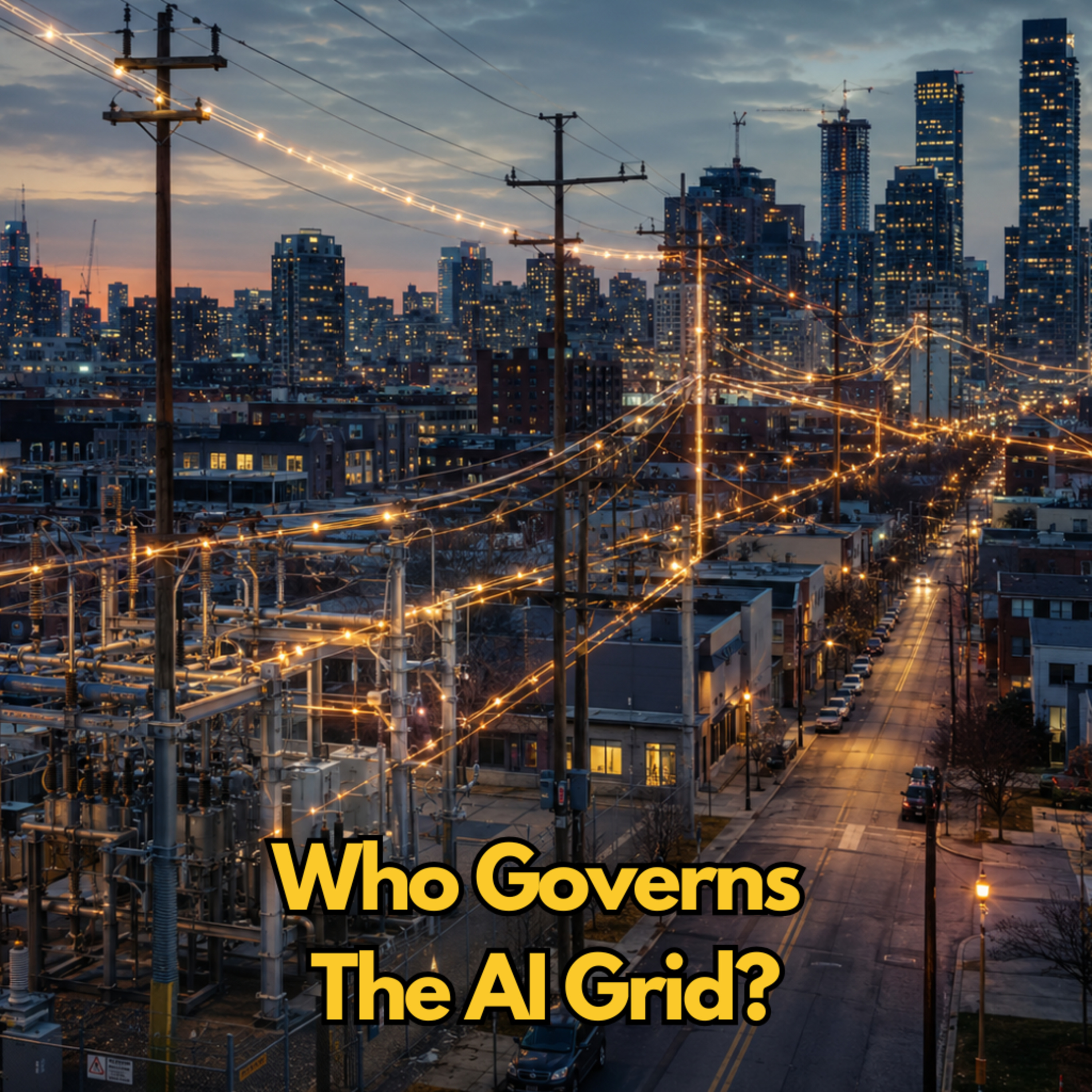 The AI Grid Conundrum | Electricity gives us a useful way to think about AI governance. Power is experienced locally. People care where the plant is built, how much the bill costs, who gets service restored first, and what risks their community absorbs. But electricity also depends on a grid that stretches beyond any one town or state. Local choices matter, yet no community can pretend the system ends at its border.AI is beginning to take on that same shape. A school board may want one set of rules for student chatbots. A hospital network may need another for diagnostic tools. A state may want strict limits on automated hiring or child-facing AI companions. Those decisions are local in the sense that the harms are felt locally. But the systems underneath are rarely local. The same foundation models, cloud providers, data brokers, software vendors, and security standards may sit behind thousands of separate uses.That creates a governance problem that neither side can solve cleanly. If every state or city writes its own AI rules, communities keep the power to respond to what they actually fear. They are not forced to accept a distant standard written for someone else’s politics, industries, or risk tolerance. But a patchwork can also make the system harder to inspect, harder to secure, and harder to trust. An AI tool used across hospitals, schools, banks, and employers may end up governed by dozens of overlapping rulebooks while the technical system underneath remains the same.A single national framework has the opposite appeal. It could make audits clearer, liability easier, security stronger, and compliance less chaotic. But it could also erase the places where disagreement matters. Communities do not all face the same risks from AI, and they do not all define harm the same way. A clean grid can become a quiet transfer of power away from the people who live with the consequences.The Conundrum:As AI becomes more like infrastructure, should governance stay close to the communities that experience its harms, allowing different places to write different rules around schools, hospitals, policing, hiring, energy use, and children?Or should AI be governed more like a national grid, with shared standards strong enough to keep a deeply connected system reliable, auditable, and secure, even when that means local communities lose some control over the systems shaping their lives?When AI is experienced locally but built and operated through shared infrastructure, what deserves more weight: the legitimacy of local rulemaking, or the reliability of one common system? | — | ||||||
| 6/19/26 | GPT 5.6 vs Fable 5 Faceoff | The episode opened by marking Juneteenth and episode 750 of The Daily AI Show. The hosts discussed three major AI updates: GPT 5.6 rumors, Claude Code artifacts, and Perplexity Brain’s agent memory system. They then debated model access, benchmark usefulness, Google’s position, Fable’s expected return, and whether new models are becoming too efficiency-biased for complex agent work. The back half focused on HTML artifacts, Codex record and replay, browser automation for legacy software, and why practical AI deployment often means building simple tools instead of forcing users into agent workflows.Key Points Discussed00:00:18 Juneteenth and Episode 750 Opening00:02:04 GPT 5.6, Claude Artifacts, and Perplexity Brain00:03:42 Claude Code Artifacts and HTML Interfaces00:09:17 Perplexity Brain and Agent Memory00:13:38 Perplexity Model Access and Credit Friction00:19:38 GPT 5.6 Rollout and OpenAI Hiring00:23:20 Google, Fable, and Model Release Timing00:27:04 Benchmarks Versus Real Workflow Results00:33:21 Karl Yeh Joins the Discussion00:39:01 Beth’s HTML Facilitation Board Demo00:45:02 Codex Record and Replay00:48:05 Codex and Chrome for Legacy Software00:54:08 AI Automation for SME Systems00:57:04 Simple Apps Versus Forced Agent Workflows01:02:13 Wrap-Up and Weekend Build PromptThe Daily AI Show Co Hosts: Beth Lyons, Andy Halliday, Karl Yeh | — | ||||||
| 6/18/26 | What Are AI Harnesses And Why Do They Matter? | The episode opened with Midjourney Medical, an ultrasonic scanning concept aimed at making preventative full-body imaging faster, cheaper, and more spa-like than traditional MRI workflows. The hosts then discussed preventative medicine, GLP-1s, OpenAI’s leaked financials, and the pressure that cheaper Chinese models could put on frontier AI business models. The middle of the show focused on model harnesses, Claude Design, Replit integration, and how the software layer around AI models is becoming as important as the model itself. The episode closed with DeepSeek’s state-backed cap table, Codex reset updates, and Brian’s first hands-on review of Sakana Marlin’s strategic research output for AI-native company planning.Key Points Discussed00:00:15 Opening and Community Welcome00:02:33 Midjourney Medical Surprise00:12:36 GLP-1s, Food Noise, and Preventative Health00:19:05 OpenAI Financials Leak00:20:57 Chinese Models Challenge Frontier Pricing00:26:07 Claude Design and Replit Integration00:31:31 Defining AI Harnesses00:44:24 DeepSeek Funding and State Control00:46:14 Codex Reset Bank Update00:47:13 Sakana Marlin Research Test00:57:53 AI-Native Company Roadmap01:02:48 Wrap-Up and Newsletter NotesThe Daily AI Show Co Hosts: Brian Maucere, Beth Lyons, Andy Halliday, Karl Yeh | — | ||||||
| 6/17/26 | AI Consciousness, Cursor, and World Models | The episode opened with Brian Maucere describing internal AI command center work at Scaled, including a “chief of staff” agent for consultants and project managers. The hosts then discussed usability, AI systems architecture, token governance, and how AI work is shifting from prompting to operational design. News topics included Odyssey’s world model funding, XAI and SpaceX’s Cursor acquisition, cheaper Chinese coding models, Adobe creator survey results, AI-generated film trailers, Cursor’s potential GitHub competitor, and BitTorrent’s decentralized inference network. The AI in Science segment focused on consciousness research and the move from judging behavior to evaluating underlying mechanisms in animals and AI systems.Key Points Discussed00:00:18 Opening and AI Science Day00:01:04 Brian’s AI Chief of Staff Agent00:08:32 Usability QA and AI Systems Governance00:13:55 Odyssey Raises For World Models00:16:15 Cursor, XAI, and Coding Agents00:17:38 Chinese Models Challenge Frontier Pricing00:27:46 SpaceX Stock and Valuation Debate00:30:13 Adobe Creator AI Survey00:36:20 Feature-Length AI Film Trailers00:42:17 Cursor’s GitHub Competitor00:45:19 BitTorrent Decentralized AI Inference00:49:36 AI in Science: Consciousness Tests01:04:42 Future Projects and Creative AI Tools01:11:08 Wrap-Up and Community NotesThe Daily AI Show Co Hosts: Jyunmi Hatcher, Andy Halliday, Brian Maucere | — | ||||||
| 6/16/26 | xAI Grabs Cursor and Sakana Goes Deep | The episode opened with Sakana Marlin, a new strategic research tool designed for long-horizon autonomous analysis rather than basic deep research. The hosts then discussed the idea that “chat is dead,” focusing on HTML artifacts, interactive dashboards, visual decision tools, and how AI-generated interfaces can replace long linear chat threads. The middle of the show covered XAI’s Cursor acquisition, agentic coding harnesses, and the broader SpaceX, Tesla, Starlink, Optimus, and robotics ecosystem. The episode closed with discussion of world models for embodied AI, humanoid robot funding, firefighting robot use cases, Brian’s Sakana research test, Meta AI search across Facebook groups, and ongoing uncertainty around Fable 5 and a possible 5.6 release.Key Points Discussed00:00:18 Opening and Episode Setup00:01:31 Sakana Marlin Strategic Research00:08:45 HTML Artifacts Replace Chat00:17:00 Chore Dashboards and Visual Motivation00:29:14 XAI Buys Cursor00:34:04 SpaceX, Tesla, Starlink, and Optimus00:43:01 World Models for Robotics00:46:08 Humanoid Robot Funding00:47:29 Firefighting Robots00:51:25 Brian Tests Sakana Marlin00:53:37 Meta AI Searches Facebook Groups01:01:05 Wrap-Up and Fable 5 WatchThe Daily AI Show Co Hosts: Beth Lyons, Andy Halliday, Anne Murphy, Karl Yeh, Brian Maucere | — | ||||||
| 6/15/26 | Et tu, Jassy? | The episode opened with the weekend news that Fable 5 and Mythos access had been restricted after reported U.S. government action tied to security concerns. The hosts discussed Amazon’s possible role, the lack of a clear review process, Anthropic’s position, and whether AI models are starting to be treated like national security infrastructure. They then moved into model release fatigue, the practical difference between Fable 5 and Opus 4.8, and OpenRouter Fusion’s multi-model approach. The show closed with Google DeepMind’s AGI-to-ASI paper, AI-targeted document instructions, NotebookLM source updates, Google Pinpoint, and Brian’s Claude Code course work for teenagers.Key Points Discussed00:00:19 Opening and Episode Setup00:01:19 Fable 5 and Mythos Takedown00:02:53 Amazon’s Role and Government Pressure00:06:31 Commerce Letter and Foreign Access Limits00:10:01 Oversight, Jailbreaks, and Model Safety00:16:19 Timing, SpaceX IPO, and Market Impact00:20:12 Fable 5.6 Rumors and Model Release Fatigue00:24:16 OpenRouter Fusion and Multi-Model AI00:29:44 Fable 5 Versus Opus 4.8 in Practice00:32:50 Google DeepMind’s AGI To ASI Paper00:42:28 NotebookLM Updates and Google Pinpoint00:51:43 Fable Empathy and Lost Model Attachments00:52:21 Claude Code Course Safety Boundaries00:55:01 Wrap-Up and Tomorrow’s ShowThe Daily AI Show Co Hosts: Brian Maucere, Beth Lyons, Andy Halliday | — | ||||||
| 6/13/26 |  The Quiet Exception Conundrum | Rules used to be blunt because institutions were blunt. A bank could not fully understand every late payment. A school could not perfectly weigh every missed deadline. A city agency could not review every permit, fine, appeal, medical form, tax delay, or benefits request with deep personal context. So society relied on public rules. They were imperfect, sometimes cruel, but at least people could see the line.AI changes the cost of context. A system can read the medical notes, employment history, family disruption, past behavior, neighborhood conditions, financial pressure, and communication patterns behind a case. It can tell the difference between someone gaming the system and someone caught in a bad week. It can recommend quiet exceptions that no human office had the time or information to consider.At first, that seems like obvious progress. Fewer people get crushed by rigid policies. A missed payment becomes a payment plan. A failed class becomes a second path. A penalty becomes a warning. Institutions become more humane because they can finally see the person behind the file.But once exceptions become easy, the old meaning of fairness starts to blur. Two people may break the same rule and receive different outcomes for reasons neither can fully see. The system may be right in each case, but public trust was never built only on being right. It was built on the feeling that rules applied in a way people could recognize, compare, and challenge.The Conundrum:As AI gives institutions the ability to judge people with far more context, should we welcome a world where rules become more flexible, personal, and merciful?Or does fairness require some shared bluntness, because once every rule bends privately around each person’s data, justice may become more compassionate while also becoming harder to see, harder to contest, and harder to trust?When AI can make better exceptions than humans ever could, what should carry more weight: the mercy of being understood as an individual, or the stability of living under rules everyone can recognize? | — | ||||||
Want analysis for the episodes below?Free for Pro Submit a request, we'll have your selected episodes analyzed within an hour. Free, at no cost to you, for Pro users. | |||||||||
| 6/12/26 | SpaceX IPO Tests AI Hype✨ | SpaceX IPOAI market sentiment+5 | — | Fable 5Claude Code+4 | — | SpaceXAI+8 | — | 1h 06m 36s | |
| 6/11/26 | Diffusion Gemma Changes Text AI✨ | text generationenterprise infrastructure+5 | — | Diffusion GemmaAnthropic+6 | — | Diffusion GemmaClaude Corps+7 | — | 57m 20s | |
| 6/10/26 | Fable 5 Early Reviews Are Shocking✨ | Fable VAI agent behavior+4 | — | Fable VClaude Code+2 | — | Fable VAI agent behavior+5 | — | 1h 16m 40s | |
| 6/9/26 | Hey Siri, why are you a year late?✨ | Apple WWDCSiri AI+5 | Anne MurphyGareth Hood | SiriApple+6 | — | SiriApple WWDC+7 | — | 1h 00m 32s | |
| 6/9/26 | Apple’s Siri AI Comeback Test?✨ | AI assistantsApple updates+4 | — | SiriCodex+7 | — | SiriOpenAI+5 | — | 57m 26s | |
| 6/6/26 |  The AI Injury Conundrum✨ | AI in sportsinjury prediction+4 | — | — | — | AIsports injuries+5 | — | 31m 33s | |
| 6/5/26 | Stacking AI Tools and the Self-Improving Workflow✨ | AI newsstacking AI subscriptions+4 | — | ChatGPT Dreaming v3Perplexity+8 | — | AI toolsChatGPT+6 | — | 1h 06m 33s | |
| 6/5/26 | Persistent AI Agents and Waterless Data Centers✨ | AI newspersistent autonomous agents+5 | — | MAIDGX Spark+9 | data centers | AI newspersistent agents+7 | — | 1h 02m 26s | |
| 6/3/26 | Codex Wants Your Whole Workflow✨ | AI workflowidentity shift+4 | Kyle Shannon | CodexPerplexity+1 | — | CodexAI Salon+5 | — | 1h 43m 10s | |
| 6/2/26 | Wait, How Many New Billionaires From This IPO?✨ | AI wealth creationIPO+5 | — | Claude 4.8Nematron III Ultra+3 | — | AnthropicIPO+6 | — | 1h 00m 48s | |
| 6/1/26 | Anthropic’s Conway Might Change Everything | The crew spend most of the episode unpacking Anthropic’s rumored Conway system and the broader shift from chat-based assistants toward persistent, always-on agents. The discussion expands into memory, caching, Microsoft’s agent-runtime direction, and what it would take for AI tools to manage work continuously across projects. In the second half, they move through a broader Monday roundup that includes NVIDIA’s robotics work, DuckDuckGo’s no-AI-search growth, AI interpretability in self-driving systems, and the growing backlash to AI-generated ads and media. The episode closes with a science-leaning note on AI being used to help investigate ancient Egyptian sites.Key Points Discussed00:02:56 Anthropic’s Conway and Persistent Agents00:19:34 Microsoft Build and Windows as an Agent Runtime00:20:59 Anthropic’s Slash Dream and Memory Management00:34:57 NVIDIA Cosmos III and Robot Reasoning00:39:15 DuckDuckGo’s No-AI Search Surge00:46:29 Carl’s AI Media Demo Segment00:46:44 Alpamayo’s Self-Driving Interpretability Demo00:51:35 AI Ads Versus Reality00:56:40 Human-Made Media, AI Tools, and Backlash01:01:01 AI and Egyptian ArchaeologyThe Daily AI Show Co Hosts: Brian Maucere, Beth Lyons, Andy Halliday, Karl Yeh | — | ||||||
| 5/30/26 | 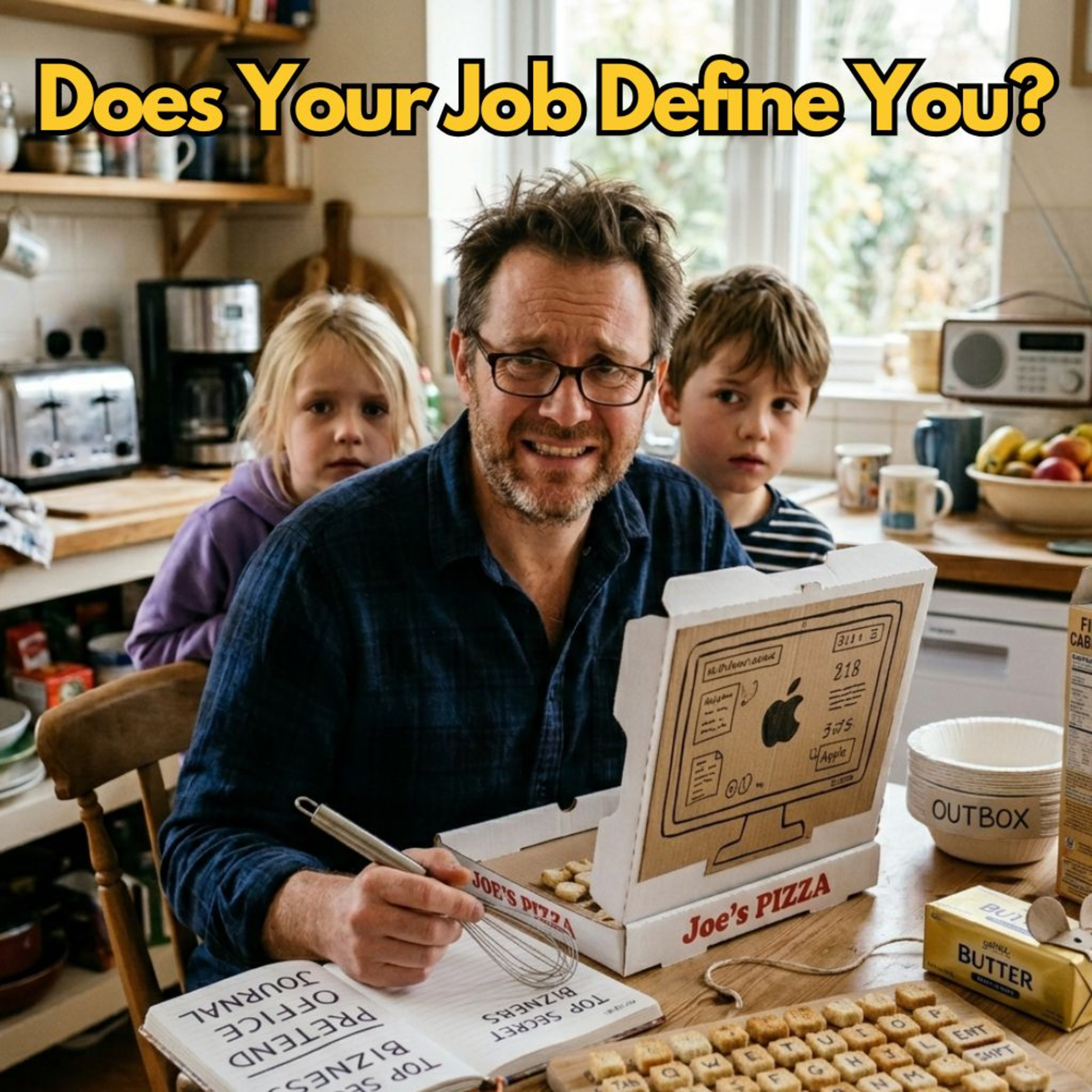 The Post-Work Status Conundrum | Let's say it is 2046. Maybe we get AGI or ASI. Maybe we get something short of it but still powerful enough to absorb much of the cognitive and organizational burden that once gave large parts of the professional class their identity. Either way, one plausible future is not the end of work, but the weakening of work as a trusted signal of who is truly carrying weight.That would not land the same way everywhere. Some cultures already place more dignity in family life, local belonging, or who a person is apart from their job. Others still treat occupation as one of the main public proofs of seriousness, sacrifice, and worth. In those societies, AI would not just threaten employment. It would destabilize a status system people have quietly organized their lives around.But status systems do not vanish when one breaks. They mutate. If work becomes a weaker way to sort out who deserves admiration, authority, or self-respect, people will look elsewhere. Some of those replacements may emerge naturally through culture, community, and personal life. Others may be encouraged by institutions trying to keep society coherent. Neither path is clean.A future with weaker work identity may be healthier in some ways. It may also create a strange new scramble over what counts as a meaningful life, with no guarantee that the replacement values will be any wiser or more humane than the old ones.The conundrum: If AI weakens work as the main shared source of status in societies that have long treated employment as moral proof, is it better to let new forms of meaning emerge on their own Or does that vacuum become dangerous enough that institutions will need to actively elevate other forms of contribution like caregiving, civic service, mentorship, local leadership, or cultural participation.When AI scrambles the old connection between job and worth, what is more unsettling: a society that lets status mutate on its own, or one that starts trying to manufacture better reasons for people to matter? | — | ||||||
| 5/29/26 | Opus 4.8 Lands, Cipher Cracked After 500 Years | Today's AI news lineup: Anthropic's Opus 4.8 launch and token economics, Sakana Labs' diffusion-block pre-training, an AI cracking a 500-year-old diplomatic cipher, and Cognition's $1B raise for Devin.The conversation opened on the freshly launched Opus 4.8, weighing Every's review against real-world token efficiency and cost, then moved into how the model reshapes compound-engineering workflows and sub-agent setups. From there it ranged widely: unsettling LLM survival simulations, a breakthrough from Sakana Labs that slashes pre-training compute by avoiding full-density back propagation, and a pair of "cool factor" stories where AI decoded a diplomatic letter that resisted decryption for over 500 years and shed new light on the ancient Antikythera mechanism. The funding picture loomed large too, with Cognition's $1B Series D for Devin and Anthropic's $65B raise at a $965B valuation prompting a hard look at the token economics underneath it all, before wrapping with weekend AI resources to dig into.KEY POINTS DISCUSSED:00:00:00 Anthropic Opus 4.8 Launch and Every's Review00:04:26 Workflow Keyword and Compound Engineering Sub-Agents00:12:51 Opus 4.8 Token Efficiency and Cost00:21:04 LLM Survival Simulations and AI Violence00:25:29 Sakana Labs Diffusion Blocks Pre-Training00:31:13 AI Decodes 500-Year-Old Diplomatic Cipher00:36:21 Antikythera Mechanism Ancient Analog Computer00:40:42 Vox AI Neurological Conditions Framework00:45:57 Vibe Coders and Zero2Claude.dev Course00:53:44 Devin and Cognition's $1B Series D Raise00:56:47 Anthropic $65B Raise and Token Economics01:01:06 Weekend AI Resources and Show Wrap-UpThe Daily AI Show Co Hosts: Andy Halliday, Beth Lyons, Gareth Hood | — | ||||||
| 5/29/26 | AI Surpasses Humans In Creativity Tests | Today's AI news lineup: KPMG's Anthropic deal, a BioHub protein model, ingredient embeddings for flavor pairing, a creativity study, OpenRouter's $113M raise, SynthID watermarking, and a Kickstarter pet translator collar.The hosts worked through a dense Thursday mix of enterprise alignment moves, frontier science, and cultural signals. A new study of 100,000 people found generative AI now beats average humans on creativity tests, complicating the long-held bet that taste and originality would remain the human edge. Watermarking expanded across providers as China tightened restrictions on AI researcher travel, and a $250M OpenAI Foundation research push landed alongside fresh Anthropic interpretability work touching mythos and the Pope. The episode closed with a Kickstarter collar promising to translate what your pet is actually saying.KEY POINTS DISCUSSED:00:00:00 Welcome and Tuesday-Thursday Mixup00:01:16 KPMG-Anthropic Deal and Big Four AI Alignment00:06:28 BioHub Evolutionary Scale Model for Proteins00:10:01 Epicure Ingredient Embeddings and Flavor Pairings00:16:21 Study Finds AI Surpasses Humans in Creativity00:20:57 OpenRouter Raises $113M for Multi-Model Routing00:27:43 Karl on Enterprise Token Budgets and Codex Rollouts00:42:37 Google SynthID Watermarking Expands Across Providers00:47:00 China Restricts AI Researcher Travel; Manus Relocates00:48:54 OpenAI Foundation Funds $250M Economic Impact Research00:51:11 Anthropic Interpretability, Mythos, and the Pope00:56:19 Petit Chat Kickstarter Pet Translator CollarThe Daily AI Show Co Hosts: Andy Halliday, Beth Lyons, Gareth Hood, Karl Yeh | — | ||||||
| 5/27/26 | Your Digital Afterlife Starts Now! | Jyunmi Hatcher leads a wide-ranging episode that starts with AI news and then shifts into a long featured conversation with guest Nikki Weiss on digital thanatology. The panel discusses what happens to our data, accounts, plans, and digital identity when someone dies, and why most people are unprepared for that transition. They explore digital legacy, grief bots, end-of-life planning, and the ethical questions raised by AI systems that could simulate or extend someone after death. The episode closes with an AI-and-science segment focused on emerging grief-bot research and why the field needs guardrails before the technology scales.Key Points Discussed00:08:02 AI News Roundup Begins00:08:10 Groupon’s AI-Native Pivot00:11:53 New Coding Benchmark Shakes Up Claude vs Codex00:17:52 Figure Robots and Retail Deployment00:20:33 Digital Thanatology Segment Begins00:23:49 Nikki Weiss’s Background in Death Tech00:37:26 Digital Legacy and the Grief Bot Question00:49:42 Practical End-of-Life and Account Planning01:05:18 Data Centers, Tracking, and the Digital Afterlife01:18:23 AI and Science: Grief Bots of the LivingThe Daily AI Show Co Hosts: Brian Maucere, Andy Halliday, Jyunmi Hatcher | — | ||||||
Showing 25 of 820
Sponsor Intelligence
Sign in to see which brands sponsor this podcast, their ad offers, and promo codes.
Chart Positions
3 placements across 3 markets.
Chart Positions
3 placements across 3 markets.