Insights from recent episode analysis
Audience Interest
Podcast Focus
Publishing Consistency
Platform Reach
Insights are generated by CastFox AI using publicly available data, episode content, and proprietary models.
Most discussed topics
Brands & references
Est. Listeners
Insufficient chart data. Estimates will improve as the show charts.
- Per-Episode Audience
Est. listeners per new episode within ~30 days
N/A🎙 Daily cadence·1,000 episodes·Last published today - Monthly Reach
Unique listeners across all episodes (30 days)
N/A - Active Followers
Loyal subscribers who consistently listen
N/A
Market Insights
Platform Distribution
Reach across major podcast platforms, updated hourly
Total Followers
—
Total Plays
—
Total Reviews
—
* Data sourced directly from platform APIs and aggregated hourly across all major podcast directories.
On the show
From 29 epsHosts
Recent guests
Recent episodes
Canada’s push for nuclear power
Jun 24, 2026
Unknown duration
Why more LGBTQ+ people are trying to flee the U.S.
Jun 23, 2026
Unknown duration
How short-term rentals are fuelling human trafficking in Canada
Jun 22, 2026
Unknown duration
Patrick Radden Keefe, in conversation at The Globe
Jun 21, 2026
Unknown duration
U.S. and Iran sign an initial peace deal – now the challenge begins
Jun 19, 2026
Unknown duration
Social Links & Contact
Official channels & resources
Official Website
Login
RSS Feed
Login
| Date | Episode | Topics | Guests | Brands | Places | Keywords | Sponsor | Length | |
|---|---|---|---|---|---|---|---|---|---|
| 6/24/26 | ![]() Canada’s push for nuclear power | The federal government wants Canada to get back into nuclear energy, pushing to increase nuclear power use and to build and export more Canadian-made nuclear reactors. For the first time in over three decades, a large nuclear reactor is being built in Canada. But The Globe’s investigative reporter and data journalist Matt McClearn says there’s a reason these projects fell out of favour. There are famous, very deadly examples of nuclear accidents like Chernobyl and Fukushima, and these projects can be incredibly costly and time-consuming to construct. | — | ||||||
| 6/23/26 | ![]() Why more LGBTQ+ people are trying to flee the U.S. | On June 20, Rainbow Railroad released a report on the state of global LGBTQ+ persecution. As an advocacy group, Rainbow Railroad helps at-risk LGBTQ+ people get to safety around the world. This past year they received the highest number of requests for support since their operation began. Most of these requests came from the United States. Canada also makes the list of top ten countries for requests. Devon Matthews is Rainbow Railroad’s chief programs officer. She’s on the show to talk about the report’s findings, what’s fueling this spike in requests and the state of safety for LGBTQ+ people. | — | ||||||
| 6/22/26 | ![]() How short-term rentals are fuelling human trafficking in Canada | A court case in Winnipeg has offered a rare glimpse into the mechanics of how human trafficking can work. And it showed that short-rental rentals, like Airbnb and Vrbo, can be used by traffickers while on the move with their victims. But some cities, like Winnipeg, are taking action. Temur Durrani is a reporter for The Globe based in Winnipeg. He explains the story of a Quebec teenager who survived being trafficked and the regulations Winnipeg has put in place to try and combat human traffickers from using short-term rentals. | — | ||||||
| 6/21/26 | ![]() Patrick Radden Keefe, in conversation at The Globe | Patrick Radden Keefe, investigative journalist and staff writer at The New Yorker, is best known for his narrative non-fiction true crime stories and deep dives into history. His best selling books include Say Nothing, Empire of Pain, and The Snakehead, as well as the podcast Wind of Change.Keefe visited The Globe and Mail’s Toronto offices in June 2026 to talk to Globe feature writer Ian Brown about his latest work, London Falling: A Mysterious Death in a Gilded City And A Family’s Search For Truth, along with insights into investigative writing and reporting and what it takes to unearth stories from the criminal underworld. This recording of that interview has been edited for length. | — | ||||||
| 6/19/26 | ![]() U.S. and Iran sign an initial peace deal – now the challenge begins | The U.S. and Iran signed a memorandum of understanding this week to end the war, and reopen the Strait of Hormuz. The 14-paragraph agreement lays out the stipulations for each side – including that all military operations between the U.S., Iran and their allies will stop, that the U.S. will lift all sanctions against Iran, and Iran will allow vessels through the Strait of Hormuz. But Thomas Juneau, professor at the Graduate School of Public and International Affairs at the University of Ottawa, says this initial agreement was actually the easy part. Now comes the difficult task of sorting out the specifics around issues the two sides have disagreed on for decades. | — | ||||||
| 6/18/26 | ![]() Saskatchewan could hold the key to Canada’s foreign trade goals | Could Saskatchewan be the key to unlocking Canada’s trade potential? While Ottawa works to double non-U.S. exports over the next decade and rebuild important partnerships, politicians and business leaders may learn a lot by looking to the province in the centre of the country. Nearly twenty years ago, Saskatchewan began strategically diversifying their trading partnerships. It was a great success – the province now exports over 65 per cent of what it makes to about 160 countries. Today, the Globe’s agriculture and food policy reporter Kate Helmore explains how Saskatchewan made a name for itself overseas and what Ottawa could learn as it seeks to branch out to new trading partners. | — | ||||||
| 6/17/26 | ![]() The fight to make streaming platforms fund Canadian content | Canada’s Online Streaming Act is a thorn in the side of the U.S. administration. The law, passed in 2023, brings streaming platforms like Netflix, Paramount and Disney under Canada’s broadcast regulations, and requires them to support and promote Canadian content. But the implementation of the law has been slow, and the regulator, the CRTC, has been taken to court by U.S. streaming platforms. Now, the Canadian government is asking the CRTC to back down on some of its funding requirements. Today, we speak with Barry Hertz, The Globe’s deputy arts editor and film editor. He explains the holdups in getting the Online Streaming Act off the ground, the impact on the industry and how the minister in charge of this file defends his government’s decision to push for a rollback on funding requirements for Canadian content. | — | ||||||
| 6/16/26 | ![]() Ready to launch: Canada enters the space age | Despite Canada’s contributions to space technology and science, it lags behind other G7 nations in rocket launching capabilities. But that’s now changing – with federal investment and private business teaming up to eventually send spacecraft into orbit. It signals a growing political and economic interest in Canada. The Globe’s science reporter Ivan Semeniuk attended one of the recent launches in Nova Scotia. He’s on the show to explain the building up of spaceports, why the government is turning attention to space and how this fits into a larger idea of Canadian sovereignty. | — | ||||||
| 6/15/26 | ![]() Seafood supply changing East Coast menus this summer | Summer is peak tourist season for the Atlantic provinces, and many restaurants rely on revenue made during the season to get them through the rest of the year. But this summer, chefs and restaurateurs are facing a challenge: Staples tourists have come to expect, like scallops, haddock, and oysters, will be in short supply. Dakshana Bascaramurty is The Globe’s food culture reporter. She’ll explain what’s causing these shortages, what it means for businesses and customers, and how chefs are adapting to the new landscape. | — | ||||||
| 6/14/26 | ![]() Introducing Pitch and Power: How Soccer Shapes Everything | Introducing Pitch and Power: How Soccer Shapes Everything, The Globe and Mail’s new soccer podcast for World Cup 2026. Every Thursday, throughout the tournament, host Eoin O’Callaghan will look at eight moments that changed soccer, the moments and stories that extend beyond the field and into politics, culture and the moral climate of their day. | — | ||||||
Want analysis for the episodes below?Free for Pro Submit a request, we'll have your selected episodes analyzed within an hour. Free, at no cost to you, for Pro users. | |||||||||
| 6/13/26 | ![]() Pierre Poilievre: An interview, in full✨ | politicsinterview+3 | Pierre Poilievre | The DecibelThe Globe and Mail | — | Pierre PoilievreConservative leader+3 | — | 57m 40s | |
| 6/12/26 | ![]() Canada’s first steps towards a social media ban✨ | social mediaonline safety+3 | Dr. Michael Geist | University of OttawaThe Globe and Mail+2 | — | social media banchildren protection+3 | — | 26m 33s | |
| 6/11/26 | ![]() The risks and rewards of the IPO hype in Canada✨ | IPOinvesting+4 | Meera Raman | The GlobeApotex+1 | — | IPO hypeCanada+7 | — | 22m 42s | |
| 6/10/26 | ![]() World Cup 2026: Breakout stars, dark horses and Canada’s chances✨ | World CupCanada's chances+4 | Neil Davidson | The Globe | CanadaMexico+3 | World CupCanada+5 | — | 26m 21s | |
| 6/9/26 | ![]() Is smoking making a comeback?✨ | smokingvaping+4 | Dr. Robert Schwartz | Centre for Mental Health and AddictionsOntario Tobacco Research Unit | Canada | smokingvaping+4 | — | 24m 13s | |
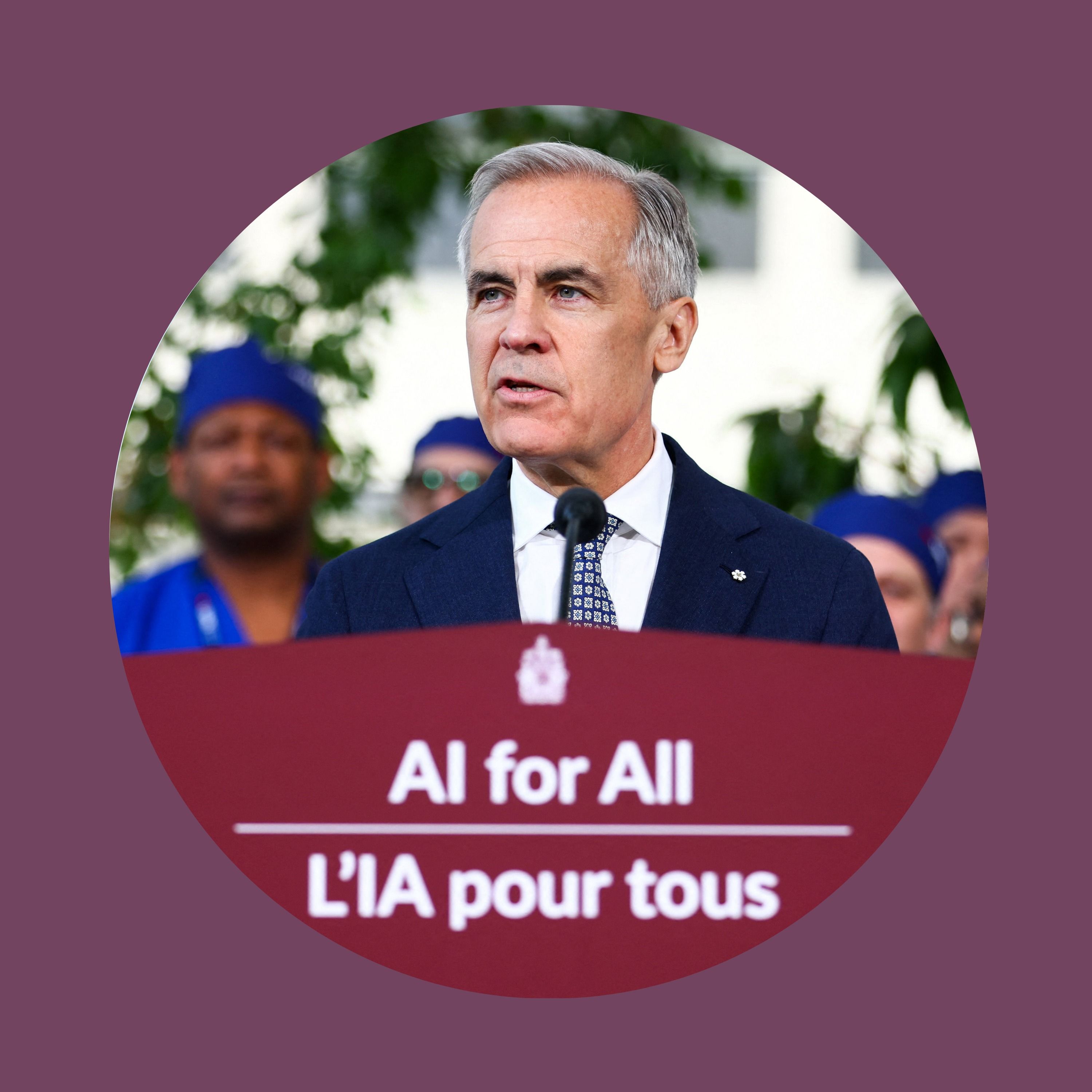
| 6/8/26 | ![]() Carney’s plan for AI in Canada, explained✨ | AI strategyCanadian technology+4 | Joe Castaldo | The GlobeCanadian businesses+1 | Canada | AICanada+6 | — | 23m 18s | |
| 6/5/26 | ![]() Patrolling the Arctic with the Canadian military✨ | arctic securitymilitary strategy+3 | Gavin John | The GlobeCanadian military | Canada | ArcticCanadian military+5 | — | 26m 30s | |
| 6/4/26 | ![]() The recession question✨ | economyrecession+3 | Mark Rendell | The GlobeStatistics Canada | Canada | Canadaeconomy+3 | — | 22m 05s | |
| 6/3/26 | ![]() How alcohol sales explain Canada’s internal trade problem✨ | interprovincial tradealcohol sales+3 | Jason Kirby | The GlobeThe Globe and Mail | Canada | alcohol salesinterprovincial trade+3 | — | 23m 04s | |
| 6/2/26 | ![]() Unpaid and overworked: labour violations in Canadian trucking✨ | labour violationstrucking industry+3 | Sara MojtehedzadehMahima Singh | The Globe and Mail | Canada | truckinglabour laws+3 | — | 26m 09s | |
| 6/1/26 | ![]() A crack in Carney’s Liberal caucus over climate | Liberal MP Steven Guilbeault has announced his resignation from Mark Carney’s government, after stepping down from cabinet last fall.. During his time in Canadian parliament Mr. Guilbeault has become a symbol for the Liberal party’s climate conscience. His decision to depart centres on the Prime Minister’s approach to climate policy and it signals the most public disruption in the perceived unity of the Liberal caucus. Marieke Walsh is The Globe’s senior political reporter. She’s here to discuss the politics and policy surrounding climate and what Mr. Guilbeault's resignation means for the Prime Minister. Questions? Comments? Ideas? Email us at thedecibel@globeandmail.com | — | ||||||
| 5/29/26 | ![]() Uncovering FIFA’s costly World Cup demands on Canadian cities | Vancouver and Toronto are getting ready to host FIFA World Cup matches in June and July, and the demands FIFA makes tend to be costly. Requirements from FIFA go from stadium renovations to branding enforcement, transportation and even tax exemptions. All three levels of government have already spent hundreds of millions of dollars in preparation. Contracts between FIFA and host cities aren’t usually public, but Greg Mercer, The Globe’s investigative reporter, managed to get access to them. He’s on the show to explain what he learned and how FIFA manages to make all these expensive and exorbitant demands on host cities. Questions? Comments? Ideas? Email us at thedecibel@globeandmail.com | — | ||||||
| 5/28/26 | ![]() What’s behind the surge in military enlistment in Canada | Canada has been pushing to increase its defence efforts. Earlier this year, Canada reached their NATO defence spending target of two per cent of GDP. On Wednesday, Prime Minister Mark Carney announced plans to obtain new early warning aircraft technology. And, the Canadian military is seeing an increase in enlistment rates. Janice Dickson is The Globe’s international affairs reporter. Earlier this month, she visited a military recruitment booth at a job fair. She’s on the show to talk about what is drawing potential recruits to enlist and what is behind this surge in enlistment. Questions? Comments? Ideas? Email us at thedecibel@globeandmail.com | — | ||||||
| 5/27/26 | ![]() The search for graves at Tk’emlups, five years on | Tk’emlúps te Secwépemc First Nation near Kamloops, B.C. was the site of a national reckoning over the legacy of residential schools. On May 27, 2021, the First Nation announced it had discovered 215 probable unmarked graves on the ground of a former residential school, using ground-penetrating radar technology. The number was later revised to around 200 probable graves. Since that revelation, leaders of the First Nation have been reluctant to provide more information and have not yet conducted an archeological dig of the former residential school grounds. Five years on and with few concrete answers, a loud contingent of skeptics and denialists have grown. Globe reporters Willow Fiddler and Patrick White join The Decibel to report on what they have learned since, the impact of the initial announcement, the complexities of working on a site like this, and what is planned for the investigation going forward. Questions? Comments? Ideas? Email us at thedecibel@globeandmail.com | — | ||||||
| 5/26/26 | ![]() A reality check on Alberta separatism | Political tensions are rising in Alberta. Last week, Alberta Premier Danielle Smith announced the province will hold a referendum on whether to hold a subsequent referendum on secession from Canada. Division and debate has been stirred up between federalists and separatists. And those who want to leave argue that Alberta will be better off, more economically successful and have full control over its natural resources. The Globe’s editorial board did a reality check on some of the arguments for separatism.. Oliver Moore, a member of The Globe’s editorial board, is on the show to talk about why separatists want to leave Canada and to help us sift through the legal myths and realities around Alberta separatism.. Questions? Comments? Ideas? Email us at thedecibel@globeandmail.com | — | ||||||
Showing 25 of 1177
Sponsor Intelligence
Sign in to see which brands sponsor this podcast, their ad offers, and promo codes.