
The Defiant
The internet of money is being built with blockchain technology and without banks. We call it DeFi, short for Decentralized Finance, and this is where you can hear the builders and users of this cutting edge world tell t...
Insights from recent episode analysis
On the show
- Mike Silagadze2 eps
- Griff Green1 ep
- Gabe Shapiro1 ep
Also: Alex Pruden, Omer Goldberg, Tom Sullivan, Stani Kulechov, Jing Wang, Yuval Rooz, isabelfoxenduke, 0xBinari, rodarmor, domodata, NathanOnCrypto, Rune Christensen, Johann Kerbrat, Dean Eigenmann, binji, David Phelps, John Zettler
Audience Interest
Podcast Focus
Publishing Consistency
Insights are generated by CastFox AI using publicly available data, episode content, and proprietary models.
Most discussed topics
Brands & references
Total monthly reach
Based on the show's feed history.
Built from
By chart position
- 🇦🇹AT · Technology#5322K to 274K
- Per-Episode Audience
Est. listeners per new episode within ~30 days
22K to 274K🎙 Biweekly cadence·339 episodes·Last published 6d ago - Monthly Reach
Unique listeners across all episodes (30 days)
32K to 392K🇺🇸71%🇦🇹29% - Active Followers
Loyal subscribers who consistently listen
13K to 157K
Market Insights
Platform Distribution
Reach across major podcast platforms, updated hourly
Total Followers
—
Total Plays
—
Total Reviews
—
* Data sourced directly from platform APIs and aggregated hourly across all major podcast directories.
| Date | Episode | Topics | Guests | Brands | Places | Keywords | Sponsor | Length | |
|---|---|---|---|---|---|---|---|---|---|
| 10/16/26 | STRK’s L1 Bet: Eli Ben-Sasson on Starknet’s Exit Plan | Starknet says it is “actively considering becoming an L1” — leaving Ethereum to become what it calls the first fully quantum-resistant network, with 2027 as the target. StarkWare co-founder and CEO Eli Ben-Sasson joins Camila Russo to explain the plan.The announcement came as a post on X on Oct. 8, with no governance proposal attached. STRK ran from $0.05 to $0.12 in five days and has since given back most of it. In the same week, StarkWare shipped Shadow Accounts, a privacy primitive that gives users a separate address per app, and launched OffMarket, a service for trading on Polymarket without linking positions to a public wallet.We get into:— What becoming an L1 actually means for Starknet, and what replaces Ethereum’s settlement guarantees— Who approves the move, and when a proposal goes to governance— Why Ben-Sasson thinks the quantum threat is “much closer than we think”— Where he lands in the “bunker mode” fight between Justin Drake, Vitalik Buterin and Yehuda Lindell— Why StarkWare is demoing ML-DSA signatures when Buterin named lattices as the next risk— Shadow Accounts, OffMarket, and building privacy on a counterparty that can switch you off— Starknet’s revenue, emissions, and whether an L1 changes the economicsGuest: Eli Ben Sasson | 45m 37s | ||||||
| 10/15/26 | 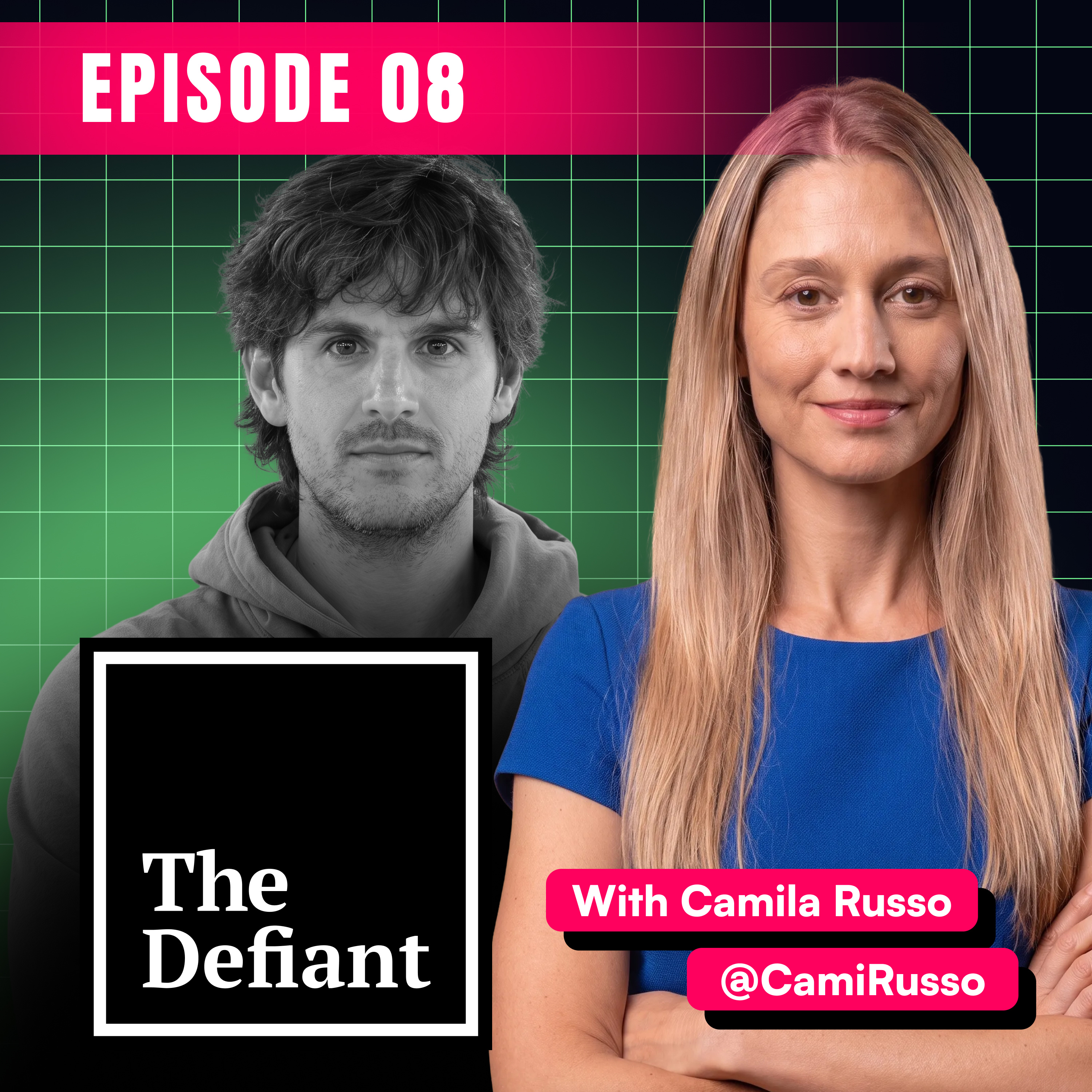 Ledger Was Hacked — Who Do You Trust With Your Keys Now? | Up to $93M drained from more than 300 wallets, and the software was never touched. Ledger confirmed a physical implant inside signers sold through reseller CryptoBilis, reading recovery phrases off the screen at setup and sending them out over a mobile network.So the question stops being what happened and becomes who you trust. The vendor? The reseller? The sealed box? The device already sitting in your drawer? Yourself?Guest: Pablo Sabbatella (@PabloSabbatella), founder of Opsek (@opsek_io) | 17m 34s | ||||||
| 9/25/26 | 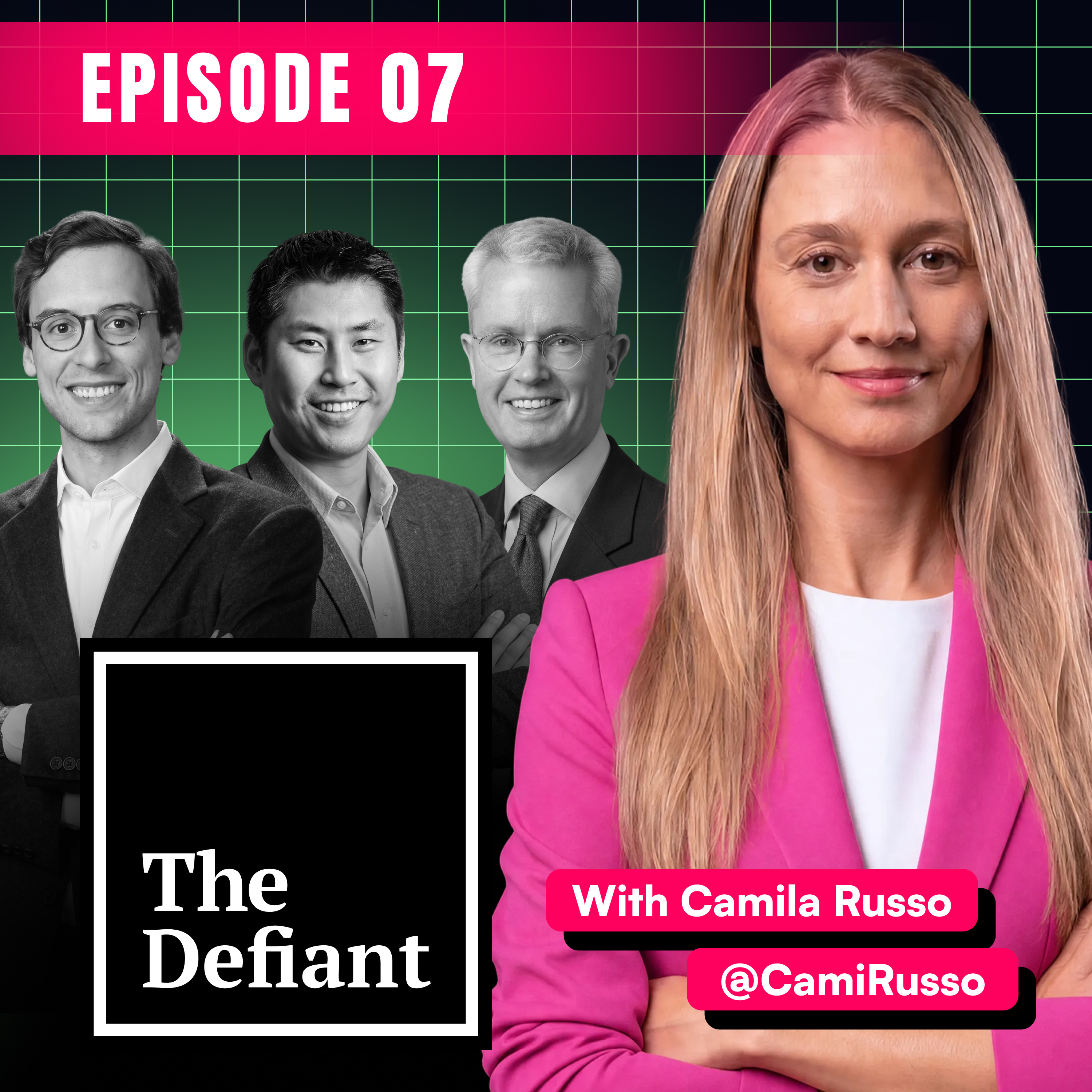 Tokenized Stocks Get an SEC Sandbox. Who's Left Out? | The SEC just gave tokenized U.S. stocks a five-year path to trade on AMMs outside exchange registration rules. The largest tokenized stock platform in the market doesn't qualify.Days after the Senate declined to move ahead on the CLARITY Act, the SEC issued an exemption order for "tokenized securities venues." It sets conditions: permissioned pools, public blockchains, and tokens that carry the full rights of the underlying share. Synthetic and linked products are outside the sandbox.Camila Russo sits down with Peter Curley of Ondo Finance, whose offshore equity-linked notes hold about $1 billion in TVL but aren't eligible; Gabriel Otte of Dinari, whose broker-dealer-issued dShares fit the order almost exactly; and Rodrigo Seira of Cooley, who explains why the order is a proof of concept built to survive a legal fight with Citadel and others.Gabe calls synthetic stock tokens "indisputably worse" for investors and says he's never heard a good argument for permissionless securities. Peter says Ondo already has product-market fit and the SEC has left room for more models. So is the order a set of red lines, or a first draft?"There is no rule book here. We're literally trying to build the future."Guests: Peter Curley (Ondo Finance) | Gabriel Otte (Dinari) | Rodrigo Seira (Cooley) Topics: tokenized stocks, SEC exemption order, tokenized securities venues, AMMs, Ondo Global Markets, Dinari dShares, synthetic stocks, equity-linked notes, permissioned DeFi, CLARITY Act, Hester Peirce, Paul Atkins, RWA | 17m 00s | ||||||
| 9/17/26 | Solana's Historic Governance Vote — While Robinhood Invades Its Meme Coin Turf | Solana just took the most historic step in its governance history: its first real on-chain vote, where any SOL holder — not just validators — could weigh in on the network's constitution, inflation and fees.Camila Russo sits down with Nick Almond, Head of Governance at the Jito Foundation, right as that shift collides with a new threat: Robinhood's own chain moving in on meme coins, the one corner of crypto that was always Solana's. Nick breaks down how the vote actually played out — including the disinflation proposal that was decided with eight seconds left after Kraken flipped its vote — how JitoSOL swung its entire stake pool with a 13% quorum trigger, and why he still thinks Solana's shot at attracting new apps, from tokenized stocks to meme coins, is stronger than people give it credit for.Presented by Oasis — a self-custody wallet built on a 2/3 multisig. You hold two keys, Oasis holds a recovery key, and never has unilateral access. Oasis is giving away a CryptoPunk to the first 500 new or upgraded plans through October 31: https://www.oasisvault.io/cryptopunk | 54m 55s | ||||||
| 9/13/26 | Can RobinHood Chain Take This Boom? w/ ARB's Steven Goldfeder | Robinhood is surging on Arbitrum's stack, and today we're joined by ARB co-founder Steven Goldfeder to break down the boom.On this stream we discuss:Does the tokenization / meme craze have legs?Spiking Robinhood feesWhere's crypto's decentralization promise when Robinhood owns the sequencer?The landlord model and the ARB rallyWho's the next Robinhood?Guest: Steven Goldfeder, Co-Founder and CEO of Offchain LabsLike, subscribe, and hit the bell so you don't miss our next streams. | 58m 29s | ||||||
| 8/11/26 | EthereumEIP-8363+3 | Jérôme de TycheyMike Silagadze | ether.fiEthereum+2 | — | ETH stakingEIP-8363+3 | — | 20m 35s | ||
| 8/3/26 | tokenizationdigital assets+4 | Nadine Chakar | DTCCBesu+3 | — | DTCCtokenization+8 | — | 29m 34s | ||
| 7/30/26 | MemecoinsCoinbase+4 | Austin CampbellJason Yanowitz+1 | Zero KnowledgeNYU Stern+5 | — | memecoinsCoinbase+5 | — | 17m 37s | ||
| 7/29/26 | CLARITY Actcrypto regulation+5 | Miller Whitehouse-LevineAmanda Tuminelli+1 | Solana Policy InstituteDeFi Education Fund+4 | US Congress | CLARITY Actcrypto+6 | — | 18m 10s | ||
| 7/7/26 | Michael SaylorBitcoin+5 | Scott MelkerKaleo | BitcoinMSTR+2 | — | Michael SaylorBitcoin+5 | — | 10m 19s | ||
| 7/1/26 | Ethereum FoundationETH Labs+3 | Josef ChalomViktor Bunin | Ethereum FoundationETH Labs+3 | — | EthereumETH Labs+3 | — | 13m 34s | ||
| 6/19/26 | decentralized AIgovernment regulation+4 | Jake BrukhmanHaseeb Qureshi+1 | Fable VMythos+5 | — | unstoppable AIdecentralization+5 | — | 26m 13s | ||
| 6/8/26 | DeFisecurity+4 | Mike Silagadze | Ether.fiDeFi United | — | DeFisecurity+5 | — | 45m 29s | ||
| 6/1/26 | DeFi hacksinstitutional investment+4 | John ZettlerSunand Raghupathi+1 | KrakenVeda+2 | — | DeFihacks+5 | — | 56m 59s | ||
| 5/25/26 | EthereumEthereum Foundation+4 | Dankrad FeistLaura Shin+2 | Ethereum FoundationEthereum | — | EthereumEthereum Foundation+4 | — | 52m 28s | ||
| 5/14/26 | DeFi yieldssmart contract risk+4 | Santiago Roel SantosDaniele Ugolini+1 | InversionRysk Finance+1 | — | DeFiyields+5 | — | 56m 35s | ||
| 4/30/26 | DeFicrypto bailouts+3 | Dean Eigenmannbinji+1 | AaveDeFi United+2 | — | DeFibailout+5 | NEXOCODE | 58m 52s | ||
| 4/23/26 | DeFiArbitrum+5 | Griff GreenGabe Shapiro | Arbitrum Security CouncilKelpDAO+3 | North Korea | ArbitrumNorth Korea+8 | — | 56m 49s | ||
| 4/10/26 | quantum computingcryptography+4 | Alex Pruden | Project 11Bitcoin+1 | — | quantum computingBitcoin+7 | — | 35m 53s | ||
| 3/30/26 | DeFi exploitrisk management+4 | Omer Goldberg | Chaos Labs | — | DeFiexploit+4 | NEXOdefiant | 41m 22s | ||
| 3/20/26 | tokenizationblockchain+4 | Tom Sullivan | DTCCSEC+1 | U.S.U.S. securities market | tokenizationDTCC+7 | — | 42m 46s | ||
| 3/13/26 | DeFiAave+4 | Stani Kulechov | AaveAave Labs+1 | — | AaveDeFi+5 | NEXONdefiant | 52m 22s | ||
| 3/6/26 | OptimismEthereum L2+4 | Jing Wang | OptimismEthereum | — | OptimismEthereum+7 | NexoCODE | 36m 59s | ||
| 2/27/26 | Layer 2Ethereum+4 | Yuval Rooz | Digital AssetCanton | Ethereum | Layer 2Ethereum+4 | — | 51m 45s | ||
| 2/26/26 | Bitcoin RenaissanceNFTs on Bitcoin+4 | isabelfoxenduke0xBinari+3 | StarkWare | — | BitcoinOrdinals+8 | — | 20m 41s | ||
| 2/20/26 | DAO governancedecentralized finance+3 | Rune Christensen | SkyGenesis Capital+2 | — | DAOgovernance+7 | — | 55m 56s | ||
| 2/11/26 | Robinhood Layer 2 LaunchTokenized Stocks & Real-World Assets+2 | Johann Kerbrat | RobinhoodEthereum+2 | — | RobinhoodEthereum+6 | — | 41m 21s | ||
Showing 27 of 339
Pitch Fit is a Pro feature
See how bookable this show is for guests, which brands already advertise, the per-episode ad value, and the best-fit guest and sponsor profile. The numbers are blurred on the free plan.
How readily this show books outside guests like you.
How proven this show is for host-read sponsorships.
For Guests
ProFor Advertisers
ProUpgrade to Pro to unlock guest cadence, sponsor categories, fit scores, and per-episode ad value for this show.
Chart history for The Defiant
Peaked at #53 in AT, currently #53 in AT.
| Market | Genre | Peak | Current | Trend |
|---|---|---|---|---|
| AT | — | #53 | #53 | — |
Chart Positions
1 placement across 1 market.
Chart Positions
1 placement across 1 market.