

Insights from recent episode analysis
Audience Interest
Podcast Focus
Publishing Consistency
Platform Reach
Insights are generated by CastFox AI using publicly available data, episode content, and proprietary models.
Total monthly reach
Estimated from 5 chart positions in 5 markets.
By chart position
- 🇺🇸US · Government#1435K to 30K
- 🇸🇪SE · Government#1771K to 10K
- 🇰🇪KE · Government#3100K to 300K
- 🇨🇿CZ · Government#563K to 10K
- 🇵🇭PH · Government#127500 to 3K
- Per-Episode Audience
Est. listeners per new episode within ~30 days
55K to 177K🎙 Weekly cadence·13 episodes·Last published 5mo ago - Monthly Reach
Unique listeners across all episodes (30 days)
110K to 353K🇰🇪85%🇺🇸8%🇸🇪3%+2 more - Active Followers
Loyal subscribers who consistently listen
33K to 106K
Market Insights
Platform Distribution
Reach across major podcast platforms, updated hourly
Total Followers
—
Total Plays
—
Total Reviews
—
* Data sourced directly from platform APIs and aggregated hourly across all major podcast directories.
On the show
Recent episodes
2025: The Year in Diplomacy
Dec 17, 2025
26m 37s
The Loss of International Students in the U.S.
Dec 3, 2025
23m 52s
From Soldier to Diplomat: Overcoming Culture Shock
Nov 19, 2025
29m 49s
Sleeper Threats to U.S. and Global Security
Nov 5, 2025
27m 52s
The Diplomacy Behind the Gaza Deal
Oct 22, 2025
26m 13s
Social Links & Contact
Official channels & resources
Official Website
Login
RSS Feed
Login
| Date | Episode | Description | Length | ||||||
|---|---|---|---|---|---|---|---|---|---|
| 12/17/25 |  2025: The Year in Diplomacy | Guest: Marc Grossman, former U.S. undersecretary of state for political affairs and ambassador to TurkeyThe world looks very different at the end of 2025 compared to the beginning of the year. How did diplomacy contribute to that difference, and what were the major diplomatic successes and failures?On this episode of “The Diplomacy Podcast,” we discuss the Trump administration’s diplomacy, its highs and lows, and their impact on the world. My guest is Marc Grossman, former U.S. undersecretary of state for political affairs, assistant secretary for European affairs, director-general of the Foreign Service and ambassador to Turkey. He spent 32 years in the Foreign Service.Having served as the State Department’s third-ranking official under Secretary of State Colin Powell, Grossman talks about what he learned during their daily 5 p.m. meetings. He also discusses the recent loss of expertise in the department, as a result of mass firings.As always, my guest’s opinions don’t necessarily represent my own views.Watch or listen to the episode above, or on one of these platforms: YouTube, Spotify, Apple Podcasts. This is a public episode. If you would like to discuss this with other subscribers or get access to bonus episodes, visit nicholaskralev.substack.com | 26m 37s | ||||||
| 12/3/25 |  The Loss of International Students in the U.S. | Guest: Kate Byrnes, former U.S. ambassador to North Macedonia and deputy chief of mission in GreeceThe Institute of International Education reported last month that new enrollments of foreign students at U.S. colleges and universities decreased by 17 percent this fall compared to the same time last year.On this episode of “The Diplomacy Podcast,” we discuss what that means for the future of U.S. education, science, economy and soft power. My guest is Kate Byrnes, former U.S. ambassador to North Macedonia and deputy chief of mission in Greece. She spent 32 years in the Foreign Service, most recently as a senior foreign policy adviser to the commandant of U.S. Europe Command in Stuttgart, Germany.Byrnes also talks about the tension between free speech and visa policies. She explains the historical role of educational and cultural exchanges in U.S. public diplomacy, and their impact on foreign publics’ perceptions of and trust in the United States.As always, my guest’s opinions don’t necessarily represent my own views.Watch or listen to the episode above, or on one of these platforms: YouTube, Spotify, Apple Podcasts. This is a public episode. If you would like to discuss this with other subscribers or get access to bonus episodes, visit nicholaskralev.substack.com | 23m 52s | ||||||
| 11/19/25 |  From Soldier to Diplomat: Overcoming Culture Shock | Guest: Charles A. Ray, former U.S. ambassador to Cambodia and Zimbabwe and former deputy assistant secretary of defense.The U.S. military and the Foreign Service are two parts of the same national-security apparatus, but that may be where their similarities end. Their cultures, missions and approaches to those missions are very different — and often exactly the opposite.On this episode of “The Diplomacy Podcast,” we discuss those differences with someone who has experienced both — first as a soldier in the U.S. Army for 20 years, and then as a career diplomat for three decades.My guest is Charles A. Ray, a former U.S. ambassador to Cambodia and Zimbabwe, and former deputy assistant secretary of defense. He now teaches at the Washington International Diplomatic Academy and chairs the Africa program of the Foreign Policy Research Institute.Ray also talks about the U.S. strikes that have killed dozens of civilians on boats in the Caribbean and the Pacific, which the Trump administration claims are smuggling drugs to the United States, though it hasn’t provided proof.As always, my guest’s opinions don’t necessarily represent my own views.Watch or listen to the episode above, or on one of these platforms: YouTube, Spotify, Apple Podcasts.To support the podcast with a donation, click here. This is a public episode. If you would like to discuss this with other subscribers or get access to bonus episodes, visit nicholaskralev.substack.com | 29m 49s | ||||||
| 11/5/25 | 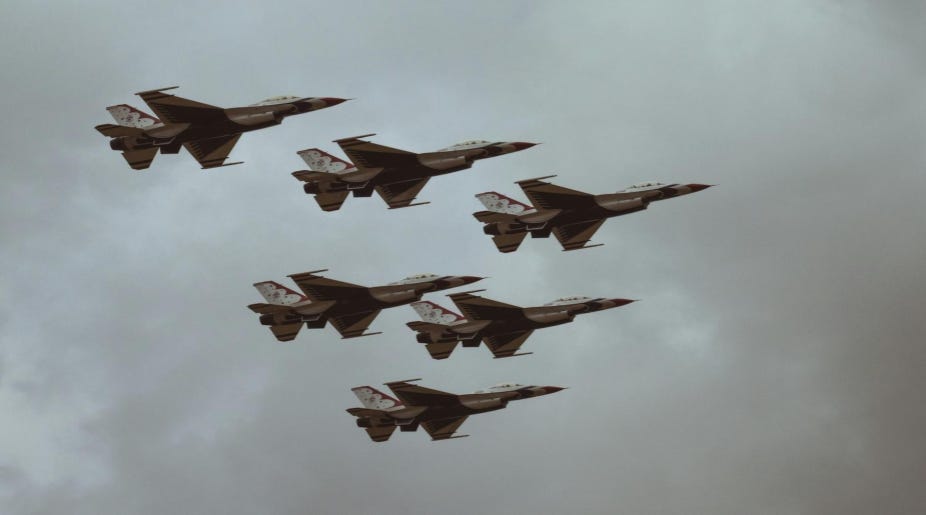 Sleeper Threats to U.S. and Global Security | Guest: Tom Countryman, former U.S. assistant secretary of state for international security and nonproliferationThe Trump administration has done an excellent job inundating us with all kinds of news, pronouncements and orders. But lately, I’ve found myself wondering what sleeper threats to U.S. and global security are not making headlines. So I asked an expert.On this episode of “The Diplomacy Podcast,” we discuss hidden risks for both the United States and the world. My guest is Tom Countryman, former U.S. assistant secretary of state for international security and nonproliferation. He spent 34 years in the Foreign Service and currently chairs the board of the Arms Control Association, a Washington think tank.Countryman worries that we are not practicing the diplomacy necessary to avert an armed conflict with China, and to preempt an erratic reaction by Russian President Vladimir Putin should he lose his war against Ukraine. Countryman is also concerned about the Trump administration’s air strikes on boats in the Caribbean and the Pacific without evidence to back its claim that they were smuggling drugs.As always, my guest’s opinions don’t necessarily represent my own views.Watch or listen to the episode above, or on one of these platforms: YouTube, Spotify, Apple Podcasts. This is a public episode. If you would like to discuss this with other subscribers or get access to bonus episodes, visit nicholaskralev.substack.com | 27m 52s | ||||||
| 10/22/25 |  The Diplomacy Behind the Gaza Deal | The Trump administration has won much praise for brokering a deal between Israel and Hamas to stop the war in Gaza. The ceasefire has proven very fragile, and three senior U.S. officials are currently in Israel to bolster it, following Trump’s visit there last week.On this episode of “The Diplomacy Podcast,” we discuss the deal’s chances of full success, and what it means for the future of the decades-long Israeli-Palestinian conflict. My guest is Danielle Pletka, distinguished senior fellow in foreign policy and defense studies at the American Enterprise Institute, a conservative think tank.“By itself, architecturally, it’s a great deal,” Pletka says. “Execution-wise, there is nothing to it. But of course, that’s not Donald Trump’s problem. That’s the problem with every single deal that’s ever taken place in the Middle East that has involved the Palestinians, that has involved terrorist organizations, which is, execution doesn’t happen. The ceasefire is already falling apart. I suspect that the rest of this goes in fits and starts — fundamentally nowhere.”She also believes that the deal would not have happened had Israel not bombed a site in Qatar where it thought Hamas leaders had gathered. This is a public episode. If you would like to discuss this with other subscribers or get access to bonus episodes, visit nicholaskralev.substack.com | 26m 13s | ||||||
| 10/15/25 |  Five Europeans Ponder Trump's America | Educated everyday people, not members of the elite or foreign-policy experts, share their views.The United States still receives more attention by the world’s media than any other country, and the average citizen on every continent is fairly well informed about what happens in Washington. What do they think about the Trump administration’s actions in the last nine months, and how are they affected by those actions?During a recent trip to Europe, I posed these questions to people in several countries, and you can hear the responses of some of them on this episode of “The Diplomacy Podcast.” Not everyone I spoke with agreed to go on the record, and those interviews weren’t recorded.My conversations took place before Trump announced on Oct. 9 that Israel and Hamas had accepted the first phase of his proposed deal to end the war in Gaza, for which he has won much praise. The Europeans — and one American who has made Austria his home for the last quarter-century — focused on developments in the United States and Trump’s handling of Europe, and didn’t discuss his Middle East policies.I plan to travel to the Middle East and other parts of the world in the coming months, as I wrote in September, so you will hear from people there as well on future episodes.Watch or listen to this episode above, or on one of these platforms: YouTube, Spotify, Apple Podcasts. This is a public episode. If you would like to discuss this with other subscribers or get access to bonus episodes, visit nicholaskralev.substack.com | 22m 17s | ||||||
| 9/3/25 | 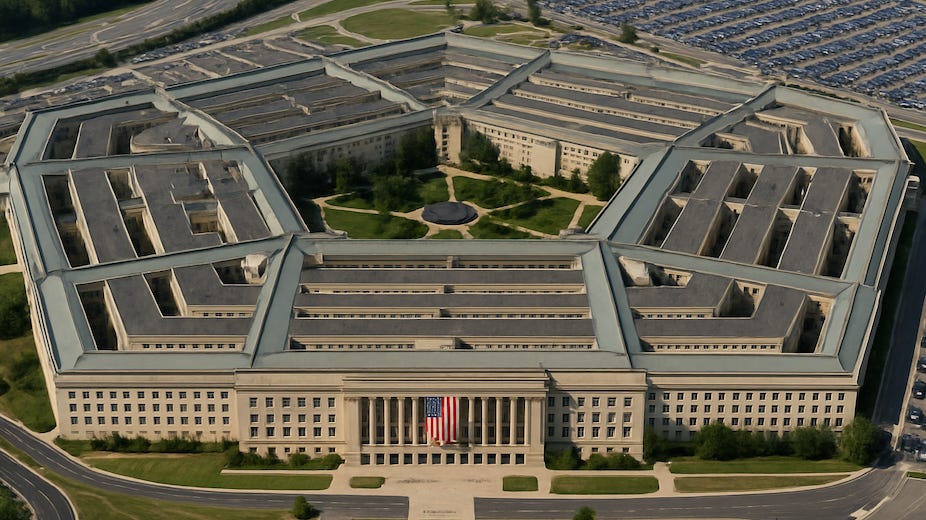 The U.S. Military Posture Amid Domestic Deployments | Guest: Michael O'Hanlon, chair in defense and strategy at the Brookings Institution.Understanding the relationship between diplomacy and military force is essential in designing and implementing national security policy. At a time of domestic deployments of armed service members and a breakdown of the traditional interagency policy process created after World War II, what are the dynamics in that relationship?On this episode of “The Diplomacy Podcast,” we discuss the state of the U.S. defense posture more than seven months into the second Trump administration. My guest is Michael O’Hanlon, director of foreign policy research and chair in defense and strategy at the Brookings Institution. This is a public episode. If you would like to discuss this with other subscribers or get access to bonus episodes, visit nicholaskralev.substack.com | 30m 07s | ||||||
| 8/27/25 |  The Shock in Transatlantic Relations | Guest: Gabrielius Landsbergis, former foreign minister of Lithuania.The relationship between the United States and Europe has been quite shaken in the last seven month — from diverging worldviews to disagreements about Russia to punishing tariffs. How do things look from Europe?On this episode of “The Diplomacy Podcast,” we discuss the impact of the Trump administration’s policies and actions on transatlantic relations. My guest is Gabrielius Landsbergis, who served as Lithuania’s foreign minister from 2020 to 2024. This is a public episode. If you would like to discuss this with other subscribers or get access to bonus episodes, visit nicholaskralev.substack.com | 28m 49s | ||||||
| 8/6/25 |  The Foreign Policy of an Imperial Presidency | Guest: Elizabeth Saunders, professor of political science at Columbia University.The U.S. Supreme Court surprised many constitutional lawyers last summer, when it granted presidents “absolute immunity” for their official acts. How has that ruling affected foreign-policy decisions in the first six months of the second Trump administration?On this episode of “The Diplomacy Podcast,” we discuss the impact of the high court’s decision on the checks and constraints on executive power that have long existed in the U.S. democratic system.My guest is Elizabeth Saunders, professor of political science at Columbia University. Having studied the gradual weakening of those checks over decades, she concludes that the 2024 ruling “essentially unbounds the presidency from the constraints of the law.” This is a public episode. If you would like to discuss this with other subscribers or get access to bonus episodes, visit nicholaskralev.substack.com | 28m 39s | ||||||
| 7/23/25 |  The Future of America's Global Power | Guest: Chas Freeman, former U.S. ambassador to Saudi Arabia and assistant secretary of defense.No other country in history has achieved the level of soft power the United States enjoyed for decades, with a peak in the early 1990s. Even more significant was the potent combination of military, economic and soft power, as I noted last month. That combination enabled Washington to organize and manage the world to its own liking.On this episode of “The Diplomacy Podcast,” we discuss the factors that helped the United States become the world’s undisputed hegemon and consider the future of its role on the global stage. My guest is Ambassador Chas Freeman, a former career diplomat for three decades.Freeman, who also served as deputy chief of mission in China and Thailand, says that U.S. diplomacy has been replaced by “outright bullying.”He also argues that the Trump administration’s policies are quickly killing U.S. economic power, and military power will soon be the only one of three left. Soft power predisposes others to follow your lead and “inculcates trust,” he says. “We had that for much of the Cold War, and even our adversaries admired our diplomacy.” This is a public episode. If you would like to discuss this with other subscribers or get access to bonus episodes, visit nicholaskralev.substack.com | 29m 15s | ||||||
Want analysis for the episodes below?Free for Pro Submit a request, we'll have your selected episodes analyzed within an hour. Free, at no cost to you, for Pro users. | |||||||||
| 7/9/25 |  The Loss of National Security Expertise | What do the collapse of U.S. policymaking and gutting the NSC mean for Americans' safety?The Trump White House has slashed the staff of the National Security Council, whose role is to coordinate policymaking, by more than half. Deliberation of policy options barely exists, and it’s not clear who — if anyone — advises the president.On this episode of "The Diplomacy Podcast," we discuss the recent NSC purge and its implications for Americans’ safety and security, with Ambassador Cindy Courville, a former NSC senior director for African affairs. She was also the first U.S. ambassador to the African Union.She offers insight into how the "interagency process," which is essential in a democracy but has been largely abandoned, helped presidents make difficult and highly consequential decisions for decades.Courville, who worked in the George W. Bush White House as a civil servant detailed from the Defense Intelligence Agency, also talks about what the loss of significant national security expertise means in practice. This is a public episode. If you would like to discuss this with other subscribers or get access to bonus episodes, visit nicholaskralev.substack.com | 24m 08s | ||||||
| 6/25/25 |  The State of Diplomacy on Ukraine | Rare insight from one of the architects of U.S. post-Cold War policy in Europe.As the Russia-Ukraine conflict risks becoming the latest forgotten war, a major reason is the deadlock in diplomatic efforts to end it. On this episode of "The Diplomacy Podcast," we discuss the state of diplomacy five months into the second Trump administration with Ambassador Daniel Fried, a 40-year Foreign Service veteran.With expert insight and a rare ability to explain complex matters in plain English, Fried assesses Trump's attempt to "stop the killing" so far. Fried is a former assistant U.S. secretary of state for European and Eurasian affairs and former senior director for Europe at the National Security Council.Drawing on his decades of experience working with both Russian and Ukrainian officials, Fried shares some of the rules he developed when dealing with them. He also reflects on the war's origins and evaluates the prospects for diplomatic success. This is a public episode. If you would like to discuss this with other subscribers or get access to bonus episodes, visit nicholaskralev.substack.com | 27m 09s | ||||||
| 6/11/25 |  Unpacking the Student Visa Crisis | Guest: Janice Jacobs, former U.S. assistant secretary of state for consular affairs and ambassador to Senegal.The Trump administration has launched an unprecedented attack on international students. Harvard students face particular peril as the university fights the administration’s campaign to take away its ability to enroll foreign citizens.We explain how student visas work and clarify what students and their families should keep in mind as they deal with the current challenges. My guest is Ambassador Janice Jacobs, our resident consular expert at the Washington International Diplomatic Academy. She served as assistant secretary of state for consular affairs from 2008 to 2014. This is a public episode. If you would like to discuss this with other subscribers or get access to bonus episodes, visit nicholaskralev.substack.com | 24m 59s | ||||||
Showing 13 of 13
Sponsor Intelligence
Sign in to see which brands sponsor this podcast, their ad offers, and promo codes.
Chart Positions
5 placements across 5 markets.
Chart Positions
5 placements across 5 markets.