
Insights from recent episode analysis
Audience Interest
Podcast Focus
Publishing Consistency
Platform Reach
Insights are generated by CastFox AI using publicly available data, episode content, and proprietary models.
Most discussed topics
Brands & references
Est. Listeners
Insufficient chart data. Estimates will improve as the show charts.
- Per-Episode Audience
Est. listeners per new episode within ~30 days
N/A🎙 Daily cadence·320 episodes·Last published today - Monthly Reach
Unique listeners across all episodes (30 days)
N/A - Active Followers
Loyal subscribers who consistently listen
N/A
Market Insights
Platform Distribution
Reach across major podcast platforms, updated hourly
Total Followers
—
Total Plays
—
Total Reviews
—
* Data sourced directly from platform APIs and aggregated hourly across all major podcast directories.
On the show
From 1 epsHost
Recent guests
Recent episodes
Episode 327 | Rhea Wanchoo | M&W Education | Part 2 | The EdisonOS Podcast
Jun 27, 2026
Unknown duration
Episode 326 | Michael Scheller | Astute Academics | Part 2 | The EdisonOS Podcast
Jun 22, 2026
Unknown duration
Episode 325 | Charles (CJ) Palma Jr | CJ101 Tutoring | Part 2 | The EdisonOS Podcast
Jun 18, 2026
Unknown duration
Episode 324 | Philip Bates | UWorld | Part 2 | The EdisonOS Podcast
Jun 17, 2026
Unknown duration
Episode 323 | Eliza Kimball | Crimson Connections LLC | The EdisonOS Podcast
May 1, 2026
54m 38s
Social Links & Contact
Official channels & resources
Official Website
Login
RSS Feed
Login
| Date | Episode | Topics | Guests | Brands | Places | Keywords | Sponsor | Length | |
|---|---|---|---|---|---|---|---|---|---|
| 6/27/26 | 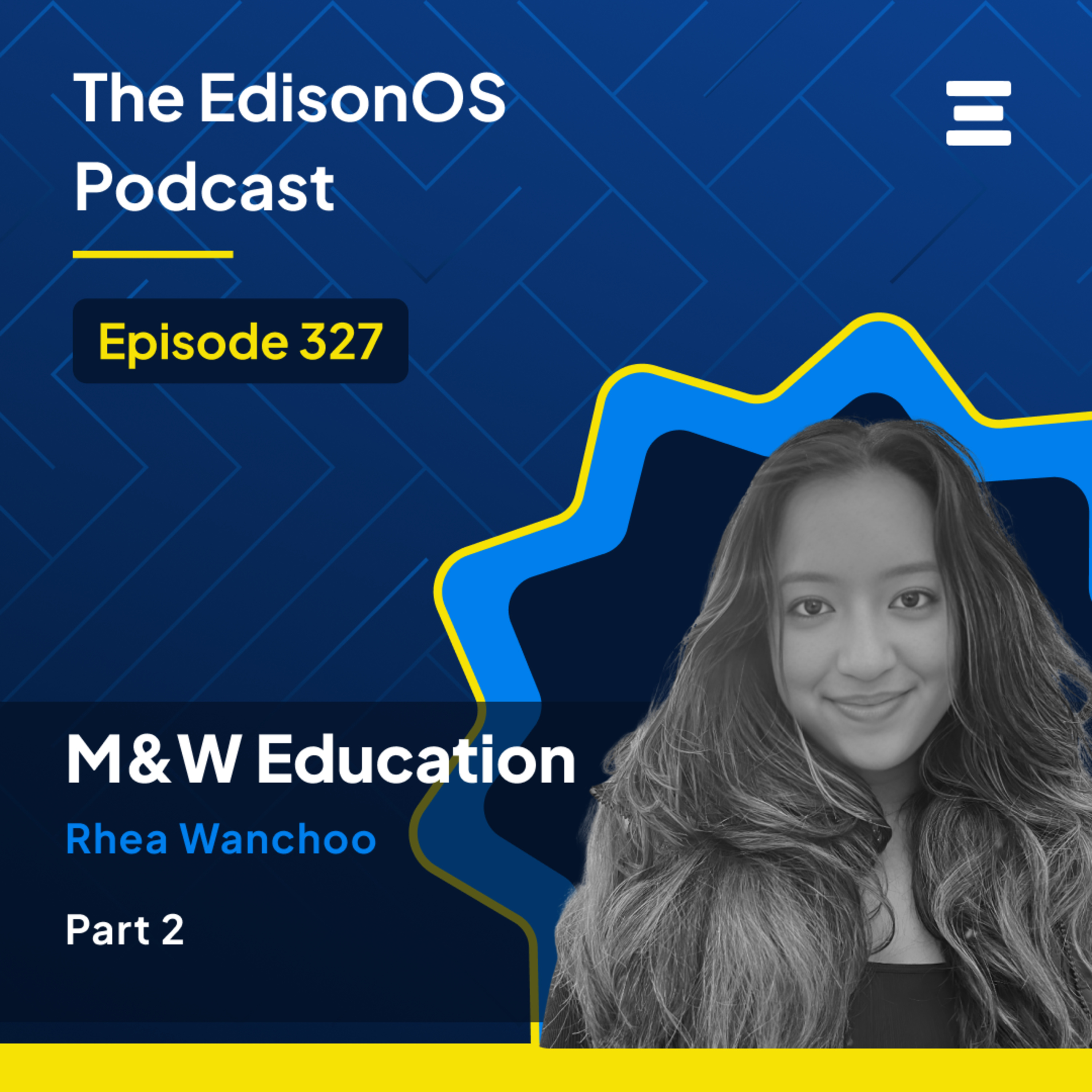 Episode 327 | Rhea Wanchoo | M&W Education | Part 2 | The EdisonOS Podcast | In this episode, Rhea Wanchoo, co-founder of M&W Education, shares how her background in academic psychology shaped a company built at the intersection of test prep, college admissions, and student confidence. Drawing from her experience working with students through high school and into the college transition, Rhea explains why effort alone is never enough and why the biggest gap she sees is not hard work but the absence of structure, clear feedback, and a personalized system.She discusses how the computer adaptive format of the digital PSAT triggers a different psychological reaction than the old paper based test, why high GPA students still struggle on test day due to anxiety and poor simulation of real conditions, and shares why she considers the overwhelmed student the hardest to help, not the underprepared one, because stress blocks execution even when the ability is fully there. | — | ||||||
| 6/22/26 | 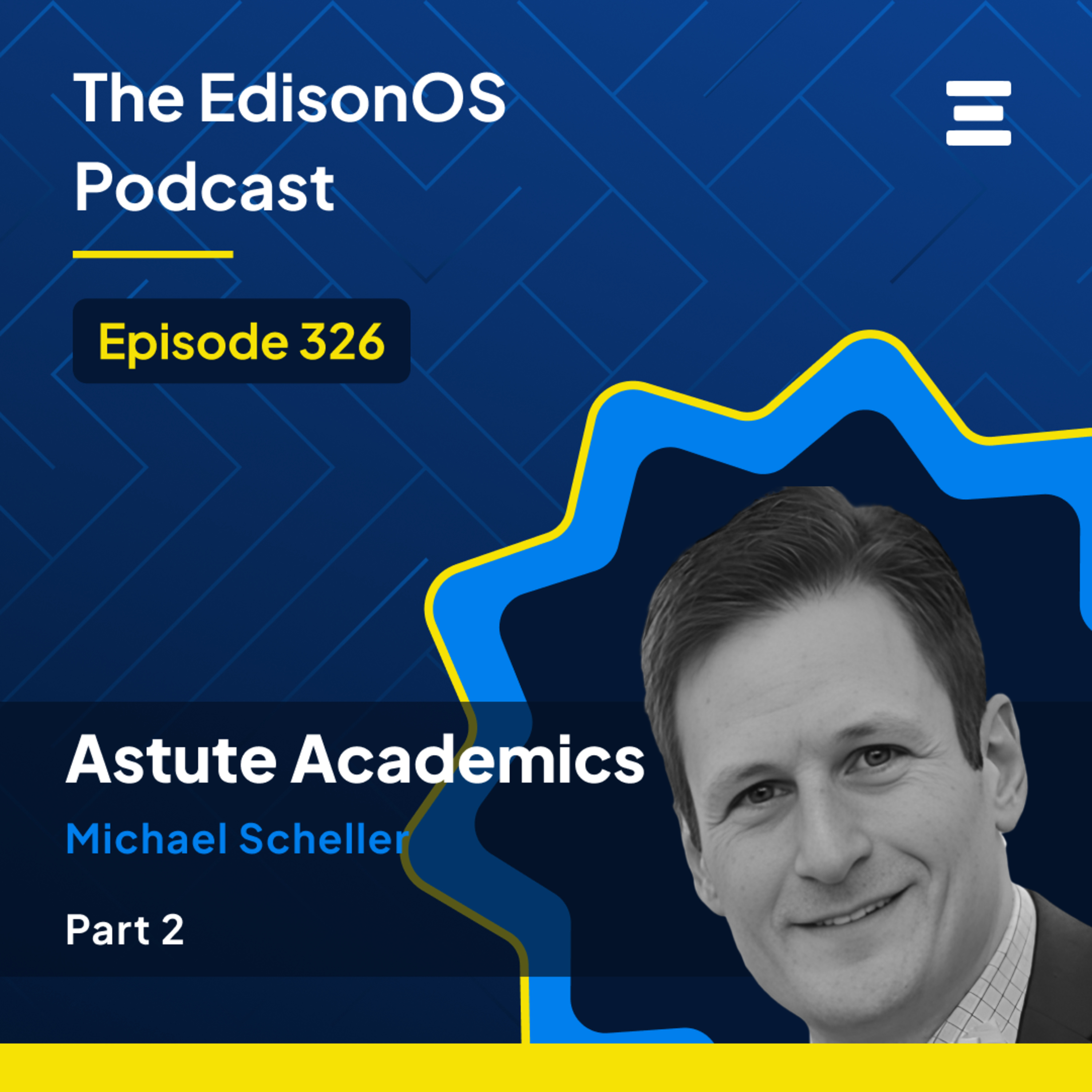 Episode 326 | Michael Scheller | Astute Academics | Part 2 | The EdisonOS Podcast | In this episode, Michael Scheller, an experienced test prep coach, shares his direct and no-nonsense perspective on PSAT and AP preparation, explaining why he believes prepping specifically for the PSAT is a waste of resources and why strong SAT prep naturally covers it. Drawing from tens of thousands of hours working with students across New Jersey and Connecticut, Michael breaks down how cutoff scores, state testing requirements, and AP placement policies vary dramatically by district and why knowing your school is the single most important rule.He discusses the dangers of overloading on AP courses, sharing a real student story where jumping from one AP to five led to a downward spiral that was only reversed by scaling back, and warns families against blindly following advice from social media, reminding listeners that what works in one state can be completely irrelevant in a highly competitive market like New Jersey or Massachusetts. | — | ||||||
| 6/18/26 | 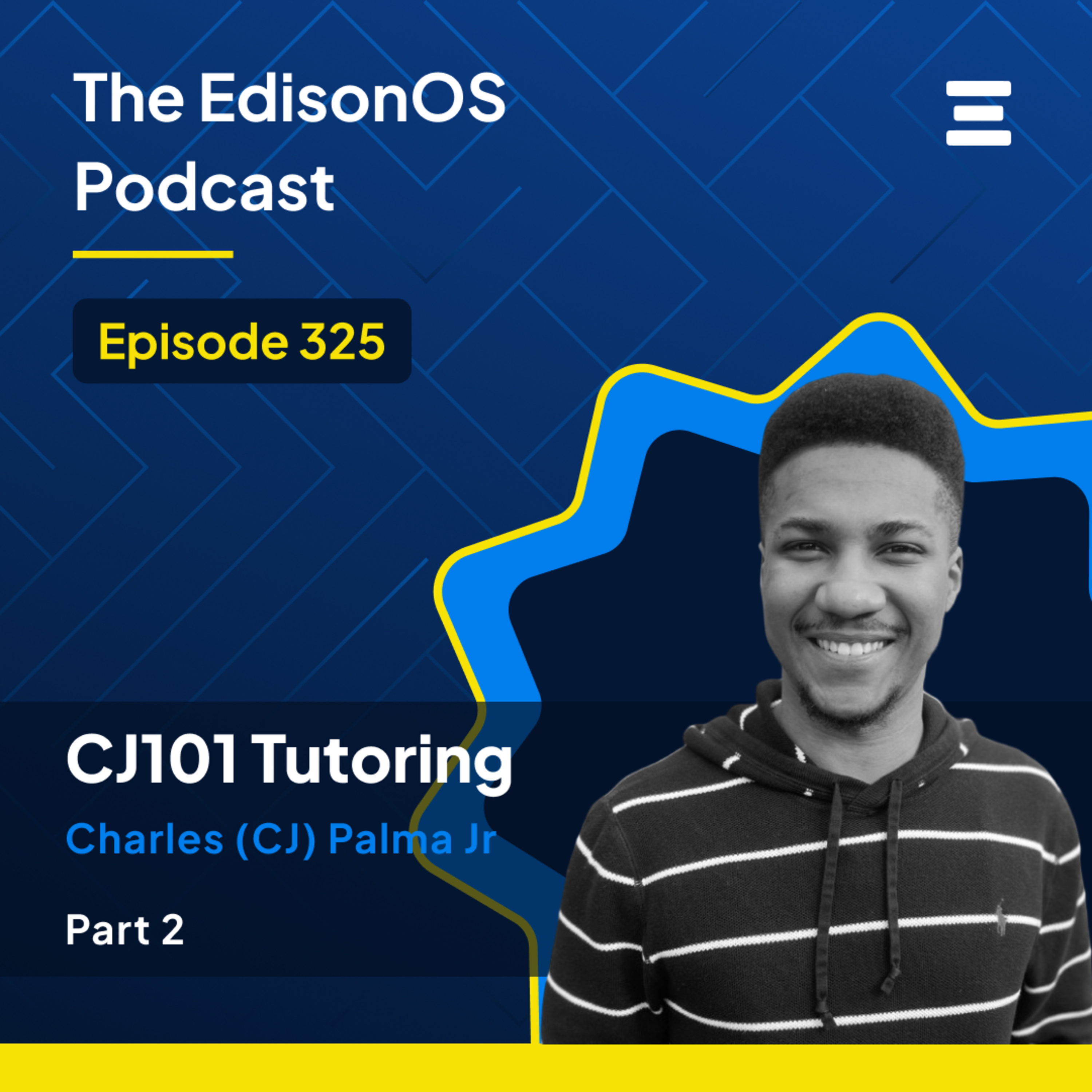 Episode 325 | Charles (CJ) Palma Jr | CJ101 Tutoring | Part 2 | The EdisonOS Podcast | In this episode, CJ Palma, founder of CJ101 Tutoring, shares how his unique background in marine science, computer science, and psychology shapes his approach to teaching AP Environmental Science, and how growing up as a second generation American informs the empathy driven strategies he brings to test prep. Drawing from his own academic and entrepreneurial journey, CJ explains why building resilience in students matters just as much as the score itself.He discusses common misconceptions students have about the digital and adaptive PSAT, including how to handle the emotional reaction to a tougher second module, the careless calculator errors he sees most often, and why he believes consistent quality study time matters more than cramming, while also reminding students that what they take away from this process goes far beyond the test score. | — | ||||||
| 6/17/26 |  Episode 324 | Philip Bates | UWorld | Part 2 | The EdisonOS Podcast | In this episode, Philip Bates, who leads college readiness at UWorld, reveals how the digital and adaptive shift in the PSAT and AP exams is reshaping test prep and what it will take for these exams to stay relevant in a test optional world. Drawing from his work with school districts nationwide, Philip explains why teaching content alone isn't enough, students also need to be taught executive function skills like how to study, write effective essays, and use tools such as the embedded Desmos calculator.He discusses the importance of using PSAT and AP data to find curriculum gaps rather than just piling on more practice questions, and shares why successful rollout of resources like UWorld depends on building teacher buy in early, training school leaders the spring before launch, and being ready to fix problems quickly when something doesn't go smoothly. | — | ||||||
| 5/1/26 |  Episode 323 | Eliza Kimball | Crimson Connections LLC | The EdisonOS Podcast✨ | tutoringmentorship+4 | Eliza Kimball | Crimson Connections LLCHarvard | Ivy League | tutoringmentorship+5 | — | 54m 38s | |
| 4/22/26 |  Episode 322 | Dr. Emily Levy | EBL Coaching | The EdisonOS Podcast | In this episode, Dr. Emily Levy, founder of EBL Coaching, shares how growing up around her mother's school for students with learning disabilities in Florida shaped her path from Wall Street back into special education. Drawing from her doctorate and years of hands-on experience, Emily explains how a multi-sensory approach, integrating visual, auditory, and tactile methods, can be life-changing for students with dyslexia, ADHD, and other learning differences.She discusses how pandemic learning gaps are still showing up today, particularly in students who missed early foundational skills in reading and math, and shares why she now sees a diagnosis not as a label but as a gift that unlocks the right tools and resources for a child to thrive. | — | ||||||
| 4/22/26 |  Episode 321 | Gabe Futrell | Principal | The EdisonOS Podcast | In this episode, Gabe Futrell, principal of Bill Metz Elementary in Monte Vista, Colorado, shares how over 15 years in one rural school community has shaped his approach to leadership. Drawing from more than two decades in education, Gabe explains how a love for small towns and the mountains first brought him to the San Luis Valley and why the people around him have kept him there.He discusses the IE Time intervention model his school adopted just before COVID, targeting every student with daily small group reading and math support, and shares how sticking with that approach through and after the pandemic drove significant academic growth. He also reflects on the challenges of high poverty, the importance of distributive leadership, and why saying no to good ideas is sometimes the only way to become great at the right ones. | — | ||||||
| 4/16/26 | 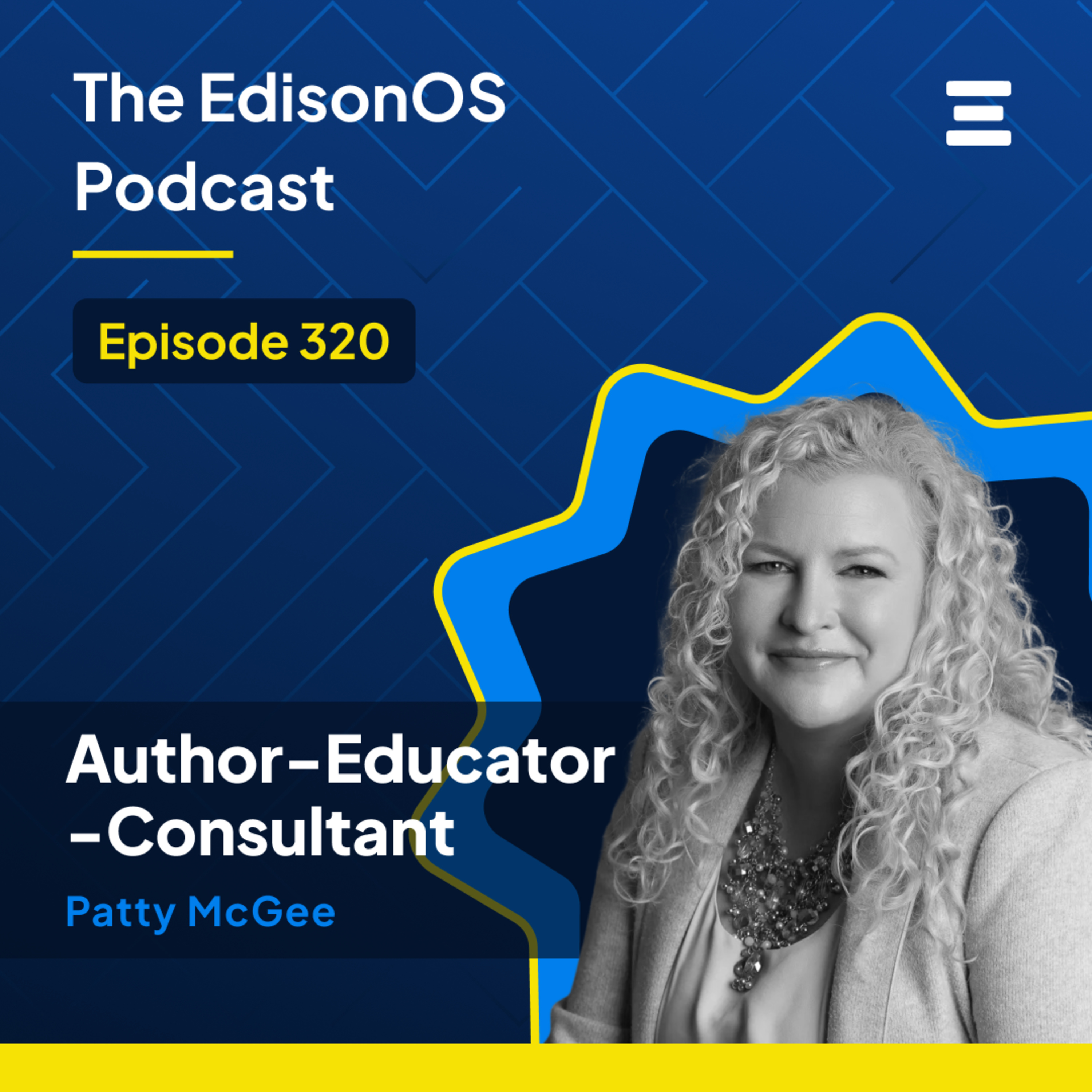 Episode 320 | Patty McGee | Author-Educator-Consultant | The EdisonOS Podcast | In this episode, Patty McGee, literacy consultant, educator, and author, describes herself as a "traveling teacher" who spends time in schools helping teachers and students rather than staying distant from the classroom. Drawing from her own early struggles with poor literacy instruction, Patty explains why strong literacy teaching must center student choice, student voice, and goal-centered responsive instruction.She challenges the growing overreliance on phonics in the wake of the science of reading movement, warns against the assign and assess culture in writing instruction, and shares why she sees AI as a tool to amplify human voice rather than replace it. She also offers a simple yet powerful shift for teachers: to look at student writing with the same admiring eye we bring to student art. | — | ||||||
| 4/7/26 | 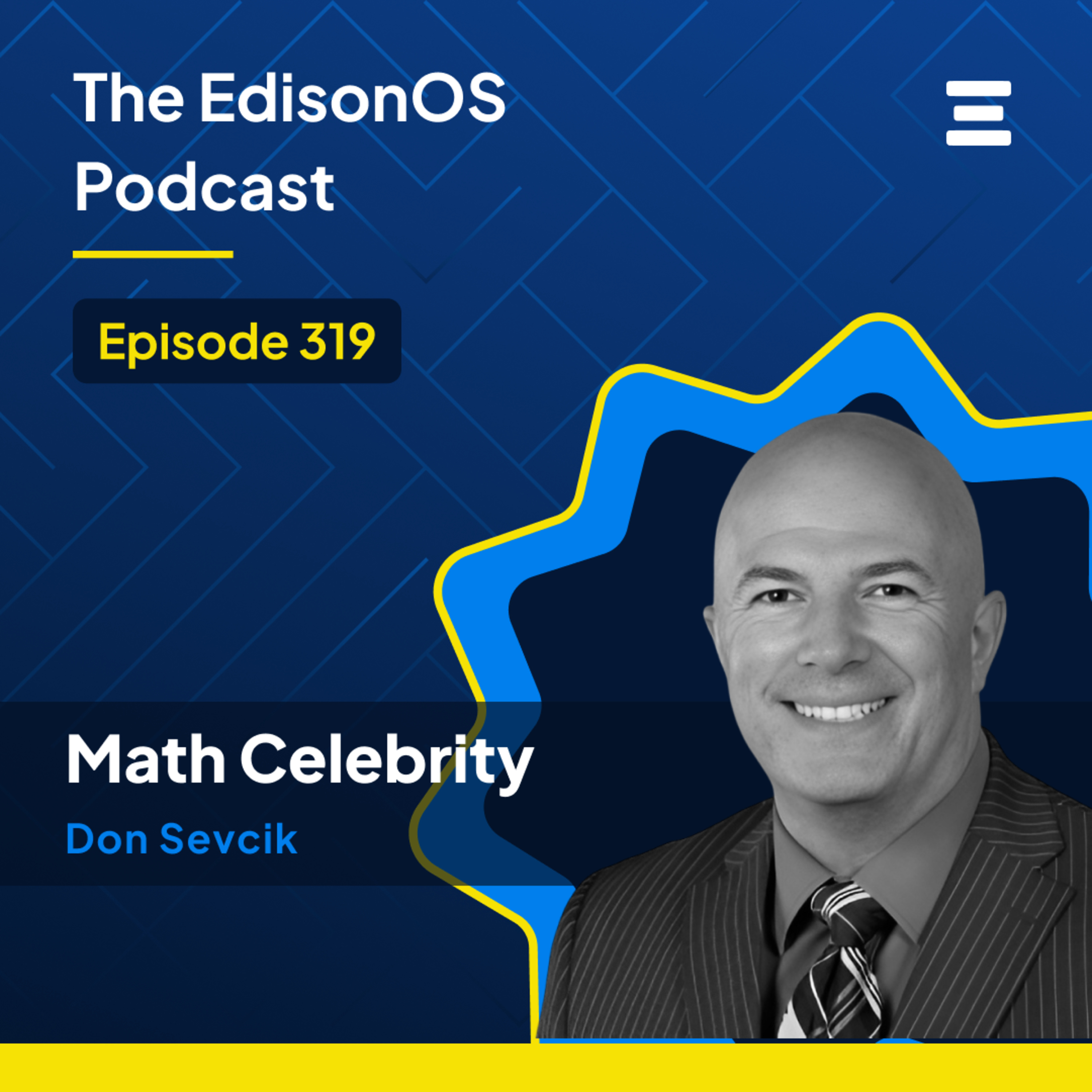 Episode 319 | Don Sevcik | Math Celebrity | The EdisonOS Podcast | In this episode, Don Sevcik, creator and founder of Math Celebrity with eight million users annually and zero paid marketing, reveals how watching a team in India struggle with a 300-page pension book led him to build Excel step-by-step calculators that became the blueprint for automating his math tutoring brain on a website. Drawing from 17 years building the platform, Don explains his pattern IQ philosophy teaching students to identify problem types before solving them, a skill missing when teachers label everything but critical when problems appear unlabeled on exams.He discusses his sixth-year breakthrough in 2013 when someone typed an actual equation instead of searching for concepts, forcing him to partner with a Czechoslovakian programmer to build pattern recognition that launched version 2.0 and exploded traffic. Don shares his inversion mental model borrowed from Charlie Munger, focusing on eliminating unforced errors rather than chasing perfect presentations, emphasizing he can control stupid mistakes but not whether customers say yes. He reveals his biggest belief reversal that good products don't sell themselves, admitting if he started over he'd build a sales team first and validate demand before writing code, and stresses his 80-20 rule and first principles thinking from homeschooling his kids, explaining if you can't teach it at fifth grade level you don't understand it. | — | ||||||
| 3/26/26 | 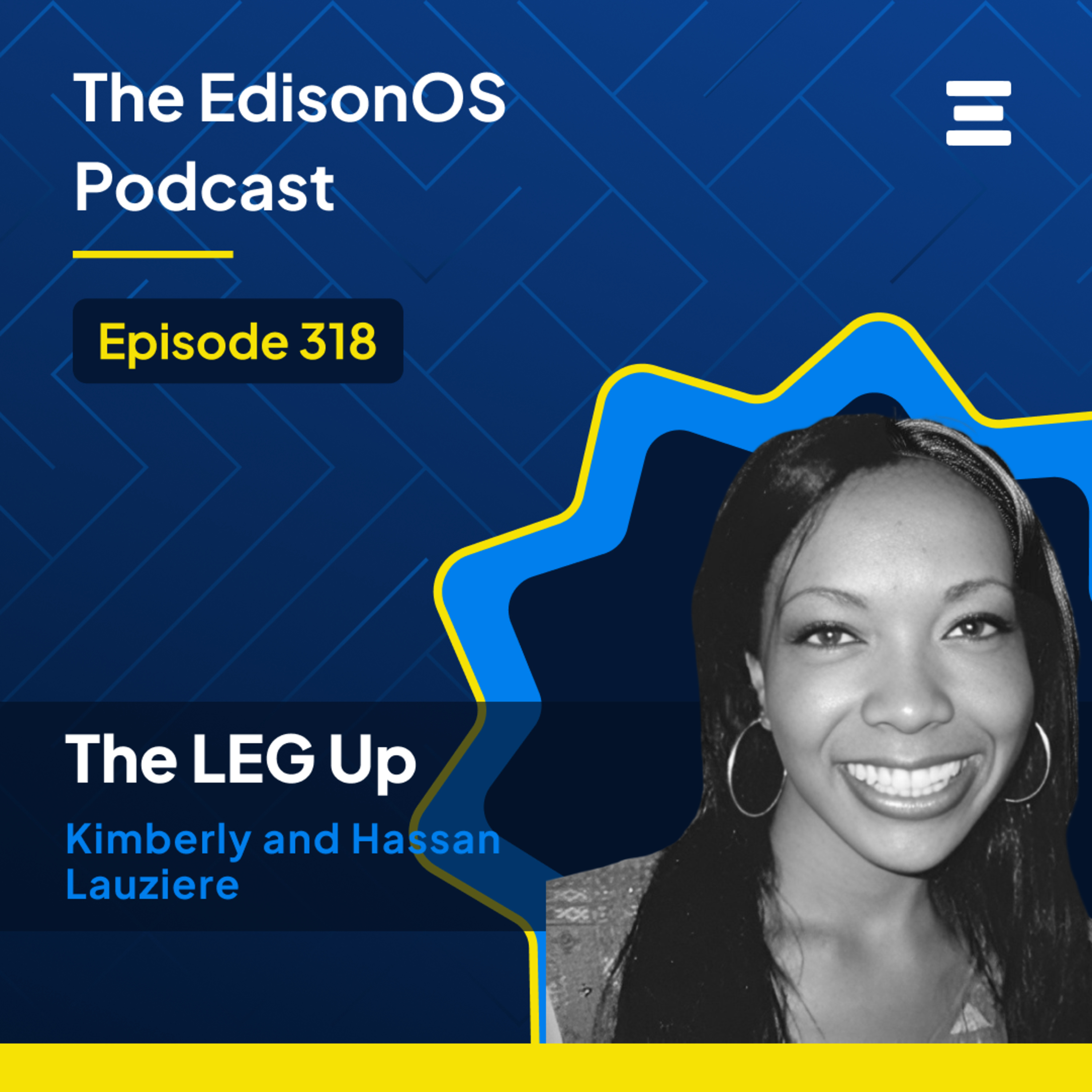 Episode 318 | Kimberly and Hassan Lauziere | The Lauziere Education Group | The EdisonOS Podcast | In this episode, Hassan and Kimberly, founders of The Lauziere Education Group with backgrounds in physics, math, English, and literature, reveal how they left corporate careers to build a holistic learning ecosystem after traveling to over 50 countries and discovering education should extend beyond classroom walls. Drawing from their diverse subject expertise, they explain how all disciplines are intertwined through critical thinking, logic in essays mirrors physics problem-solving, and math requires reading comprehension just as literature demands analytical rigor.They discuss the breakdown in modern education from curriculum abandoning classics for newer books without foundational history and philosophy, to culture prioritizing sports over developing minds, to social media destroying the focused attention needed to actively engage with past thinkers. Hassan and Kimberly share their reading restoration approach starting students with 10 minutes daily and gradually building stamina, emphasizing mastery over speed and letting students choose topics that interest them. They reveal their evolution from thinking students should pursue highest-paying jobs to realizing fulfillment comes from alignment with purpose, and share their practice of daily prayer, meditation, and learning something new while having interesting debates with each other, urging 16-year-olds feeling school is pointless to view it holistically as people, teachers, experiences, and environment rather than just classes preparing their future selves. | — | ||||||
Want analysis for the episodes below?Free for Pro Submit a request, we'll have your selected episodes analyzed within an hour. Free, at no cost to you, for Pro users. | |||||||||
| 3/26/26 | 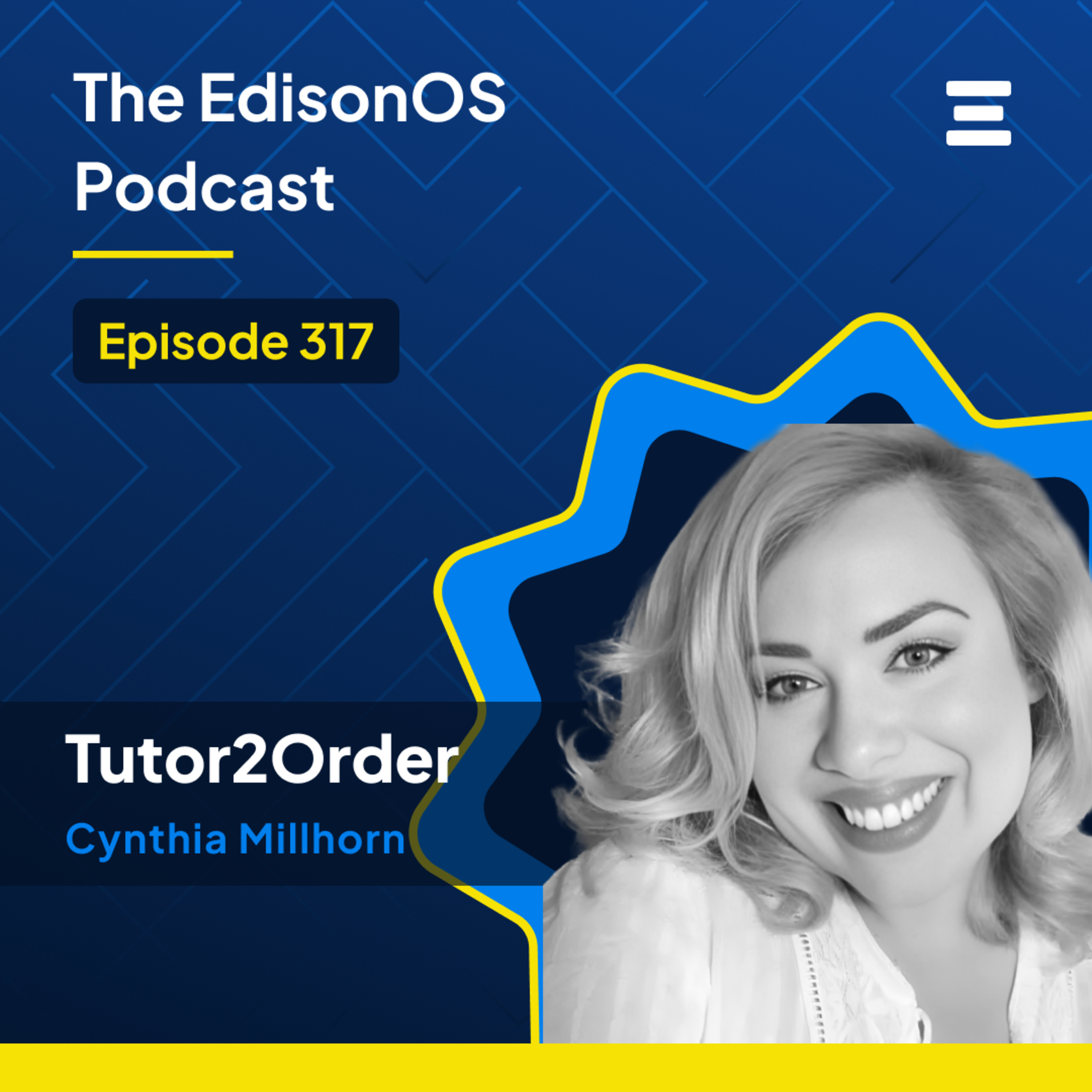 Episode 317 | Cynthia Millhorn | Tutor2Order | The EdisonOS Podcast | In this episode, Cynthia Millhorn, founder of Tutor2Order with 20 years of experience blending journalism, performance, and creative writing, reveals how she left tutoring companies after noticing they matched tutors based on subject knowledge alone without pedagogy or ability to assess student needs. Drawing from her background in qualitative research and therapy, Cynthia explains how pandemic students elevated with individual attention now lack communication skills and self-advocacy, unable to work in teams or comfortably address needs with teachers.She discusses her anecdotal storytelling approach teaching students that asking questions means paying more attention rather than being unintelligent, and shares her holistic assessment philosophy connecting poor class performance to underlying issues parents might not know about. Cynthia reveals her strong AI resistance, staying far away because it feeds user information into databases and lacks integrity compared to wonderful existing resources, emphasizing human tutors provide non-negotiable rapport that bots cannot establish. She evolved from believing diagnoses were fixed limitations to discovering the brain can rewrite neuropathways, proving students with dyslexia can become excellent writers and those who can't spell aloud can overcome it, urging parents to give children freedom to fail because crushing perfectionism prevents the trying that leads to surprising success. | — | ||||||
| 3/26/26 | 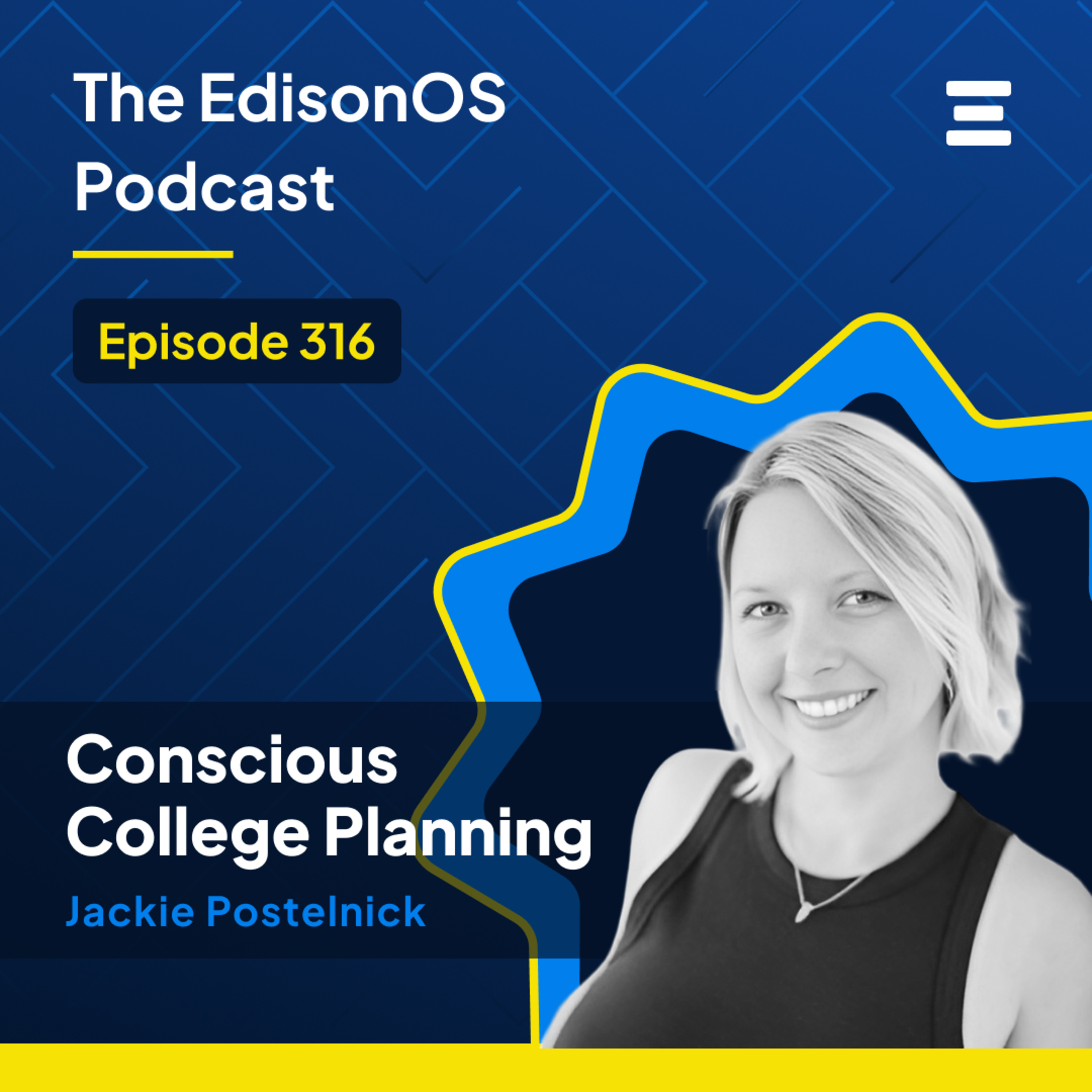 Episode 316 | Jackie Postelnick | Conscious College Planning | The EdisonOS Podcast | In this episode, Jackie Postelnick, founder of Conscious College Planning with over a decade starting in financial aid, reveals how today's broken system puts undue pressure on students to choose majors before understanding their purpose and impact they want to have on the world. Drawing from guiding over a thousand families, Jackie explains her conscious decision-making philosophy that combines college fit with student identity and affordability rather than chasing top 50 rankings.She discusses the biggest shift she's noticed in student preparedness: pandemic-era writing skill gaps that leave students unable to express themselves authentically in essays despite getting A's in English. Jackie shares her concern about University of Illinois this year where normally admitted students were outright declined, not even waitlisted, highlighting record competition. She reveals her evolution from dismissing gut feelings about schools to embracing both research and sensation, helping students name why they feel drawn to certain colleges. Jackie explains her frustration with high school counselors being off put by independent consultants rather than partnering together, and emphasizes her fit-first philosophy choosing a decent college with 60% scholarship over a great college with student loans because affordability is part of fit. | — | ||||||
| 3/19/26 | 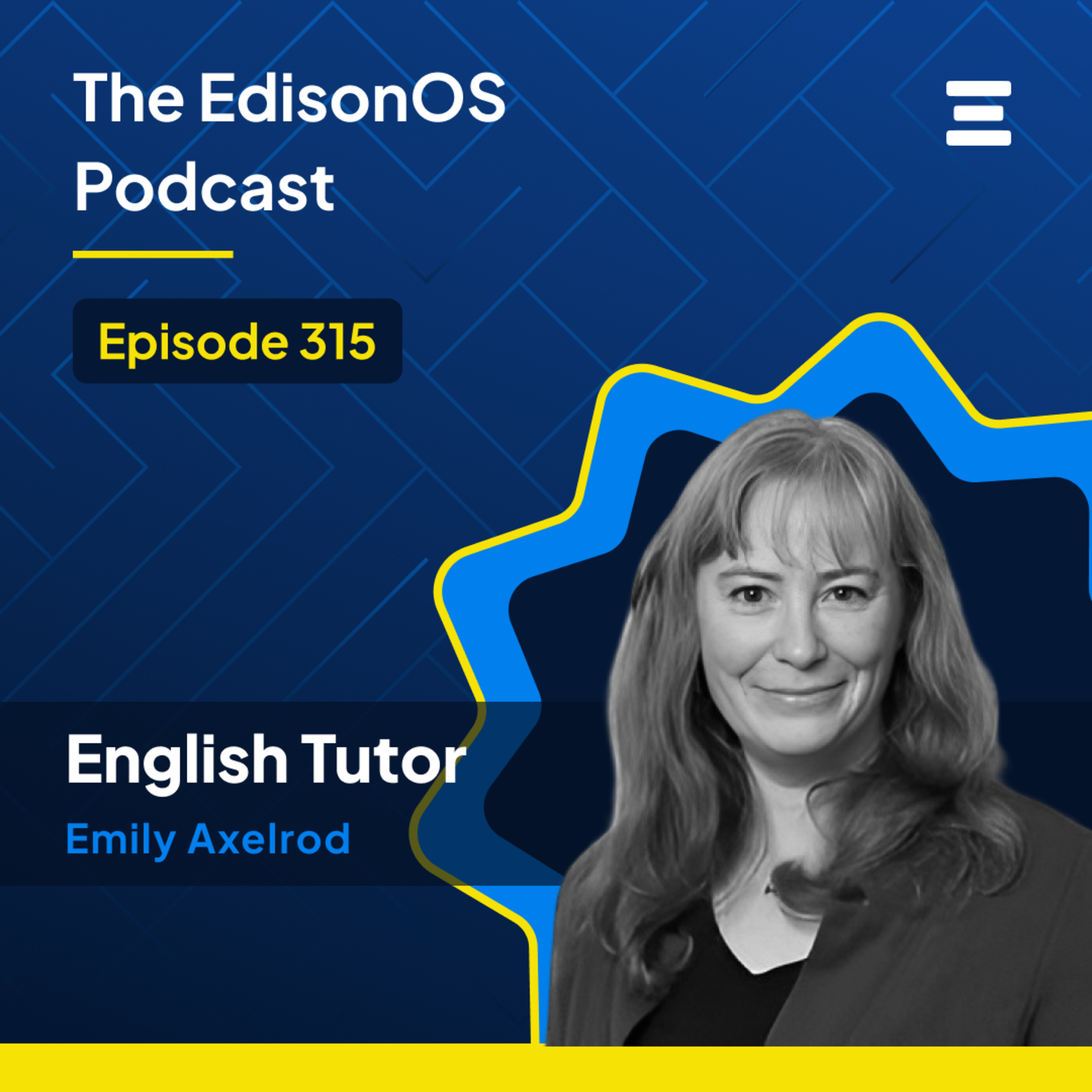 Episode 315 | Emily Axelrod | English Tutor | The EdisonOS Podcast | In this episode, Emily Axelrod, an English tutor with over a decade teaching teens for standardized tests, reveals how the digital SAT has become more challenging despite shorter passages because students have less material to grasp and form answers. Drawing from her experience working with neurotypical students and those with attention deficit disorder and on the spectrum, Emily explains her rapport-first approach that establishes compatibility and identifies special needs including undiagnosed ones before administering diagnostic tests.She discusses her pattern-focused strategy analyzing where students make errors, whether at the beginning when not paying attention or toward the end when running out of time, and emphasizes both academic skills and test-taking skills must be learned despite College Board not wanting students to think that way. Emily shares her cautious AI perspective, revealing one useful application where a student used AI to decode why he got something wrong better than College Board's explanation, while strongly discouraging AI-generated practice questions in favor of official Blue Book materials. She explains her pricing philosophy that experienced tutors charging $50 to $100-plus per hour may require fewer sessions than cheaper alternatives, and encourages families to get creative with small group discounts and sliding scales so financial burden doesn't block access to quality tutoring. | — | ||||||
| 3/19/26 | 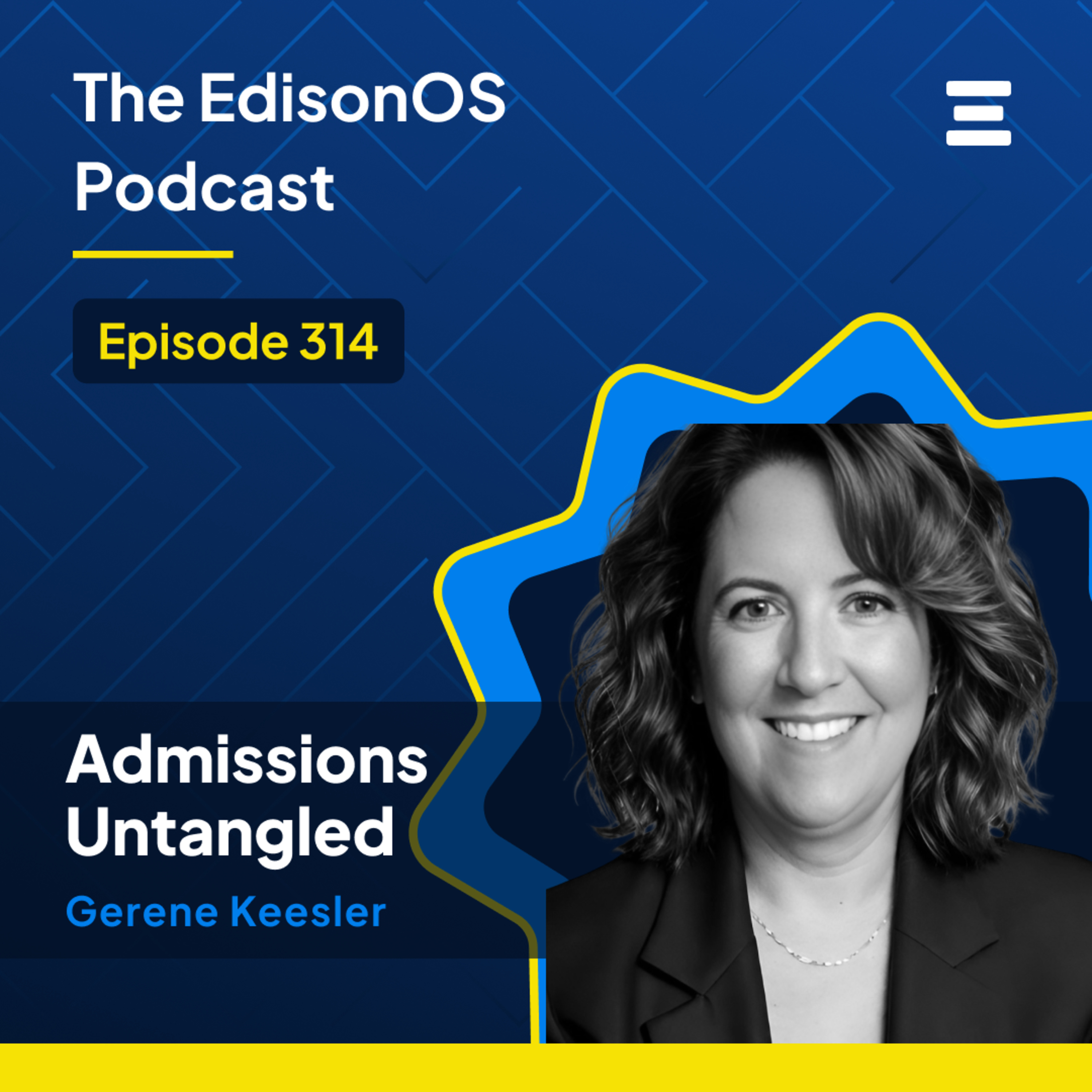 Episode 314 | Gerene Keesler | Admissions Untangled | The EdisonOS Podcast | In this episode, Gerene Keesler, founder of Admissions Untangled with over three decades in college admissions, reveals how her Hispanic background kept her learning differences hidden until a neuropsychological exam in her 30s that she dragged her parents to. Drawing from living with epilepsy and being on the autism spectrum, Gerene explains her knots philosophy for two types of stressed students: high achievers taking maximum AP and dual enrollment who risk burnout, and students especially boys who refuse accommodations out of shame despite everything being confidential.She discusses her eight-minute application reality where admissions officers spend limited time reviewing materials, making the essay the one place students have complete control to shine and tell a cohesive story. Gerene shares her test-optional success story of a California student awarded $245,000 in merit scholarships across 19 schools without submitting any test scores. She reveals her ninth and tenth grade starting philosophy that builds extracurricular profiles from non-traditional activities like caring for ailing grandparents, teaching leadership and empathy that becomes meaningful essay material, and emphasizes families must stop pushing students toward their own alma maters because fit matters more than legacy, and stresses the one habit that would change outcomes is reading regularly instead of seeking quick answers online. | — | ||||||
| 3/19/26 | 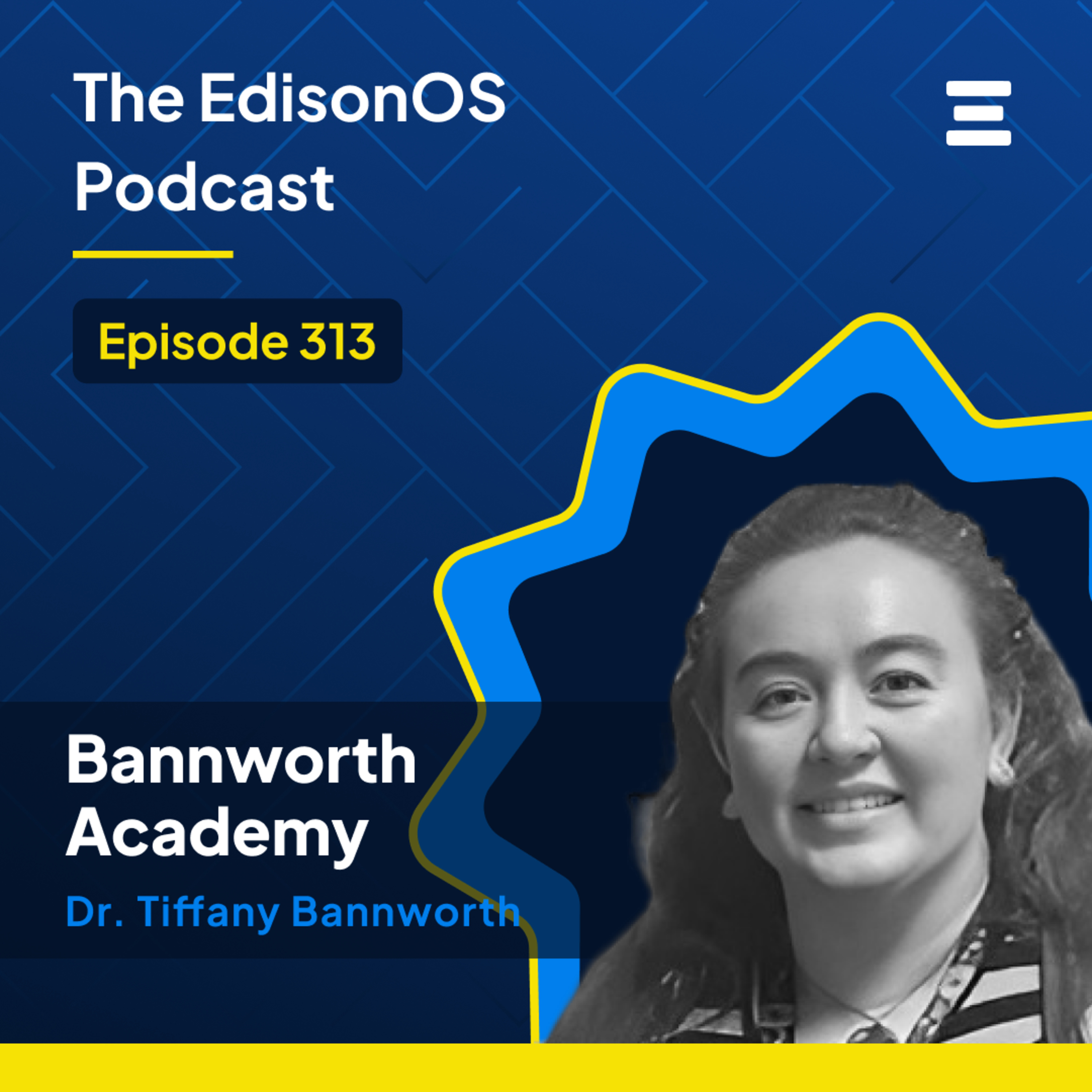 Episode 313 | Dr. Tiffany Bannworth | Bannworth Academy | The EdisonOS Podcast | In this episode, Dr. Tiffany Bannworth, founder of Bannworth Academy voted best private school in Florida three years running, reveals how sitting in a rigid eight-hour meeting where she was starving and running campuses from her cell phone convinced her traditional education was fundamentally broken. Drawing from her background in archaeology and paleontology, Dr. Tiffany explains her Bannworth Education Method ™ combining global teaching and Chrono teaching to break free from the Rockefeller industrial age model designed to produce button-pushers rather than genius.She discusses her Maslow-based philosophy that students cannot engage in upper-level thought when basic needs like hunger or temperature discomfort are unmet, and shares why she believes one-size-fits-all education fails because there is no one-size-fits-all child. Dr. Tiffany reveals her three-part AI approach teaching literal prompt writing to help socially bashful and autistic students practice saying exactly what they want, correcting AI hallucinations to build vocabulary for standing up for themselves, and using AI to curate primary source lists while maintaining critical thinking. She emphasizes her three concrete home practices for families: staying involved in what children learn to avoid indoctrination, doing monthly warrior activities together as a family, and allowing children to be bored because boredom gives way to creativity rather than constant tap-dancing entertainment. | — | ||||||
| 3/13/26 |  Episode 312 | Harrison Kmiec | Harrison Kmiec Tutoring | The EdisonOS Podcast | In this episode, Harrison Kmiec, founder of Harrison Kmiec Tutoring, reveals how his stressed college experience as a math and stats major inspired him to become an additional resource for STEM students who couldn't always access office hours. Drawing from his own neurodivergent background, Harrison explains how he views ADHD and neurodivergent mindsets as having creative strengths, not just flaws, and develops multiple solution methods outside sessions so students can find their own learning style and build confidence.He discusses his long-term goal setting approach that reassures students about gradual progress rather than fixing everything in one session, and shares why he avoids homework-heavy strategies, instead pointing out minor consistent mistakes students should review in spare time. Harrison reveals his $50 hourly rate philosophy of setting prices to the lowest amount he needs to get by financially while never half-assing quality, and explains why he doesn't rely on AI tools like ChatGPT for tutoring because they lack the long-term learning strategy that comes from tutors who understand the sustained process of mastering a subject over time. | — | ||||||
| 3/12/26 |  Episode 311 | Judith S Bass | Bass Educational Services, LLC | The EdisonOS Podcast | In this episode, Judith S Bass, founder of Bass Educational Services, LLC reveals how watching her brother diagnosed with minimal brain dysfunction in 1965 shaped her 25-year mission serving neurodivergent students. Drawing from personally visiting over 400 colleges nationwide, Judith explains her early-start philosophy of meeting students freshman year to teach life skills like taking medicine independently before discussing college in junior year.She discusses her three-tier support system from basic compliance to comprehensive programs, and shares how she evaluates whether staff genuinely enjoy this population because students sense when someone is just going through the motions. Judith reveals her new PRISM platform with a student quiz assessing readiness that sometimes recommends gap years. She explains her strengths-based counseling approach focusing on what students can do rather than limitations, and shares her ideal college redesign eliminating timed tests entirely, integrating disability services into main campus buildings, and educating professors on simple accommodations like giving five-minute transition warnings for autistic students. | — | ||||||
| 3/6/26 |  Episode 309 | Lizz Wilson | Lizz Wilson Tutoring | The EdisonOS Podcast | In this episode, Lizz Wilson, a private teacher and former engineer in the Bay Area, reveals how she applies century-old mastery learning principles to modern test prep through highly tailored one-on-one curricula. Drawing from her belief that reducing students to test scores is part of the educational system's core problem, Lizz explains her conversation-based diagnostic approach that prioritizes understanding what students have truly mastered over simply grading their performance.She discusses her perspective on learning styles as a neuromyth—arguing students must approach subjects from all modalities to achieve true mastery, not just their preferred style. Lizz shares her hidden curriculum philosophy of understanding each student's home environment without judgment, explaining how knowing a parent's pressure about scores helps her address student panic more effectively. She reveals her unconventional approach to building grit by helping students recognize their dedication to personal interests like video games or movies—showing them they already know how to work hard, even in pursuits that aren't academic, and emphasizing that humans weren't made to be productive machines but to enjoy beauty for its own sake. | — | ||||||
| 3/5/26 |  Episode 308 | Judy Cinesi | College Path Consultants | The EdisonOS Podcast | In this episode, Judy Cinesi, founder of College Path Consultants with 20 years of high school counseling experience, reveals how she bridges the gap created by public school counselors managing 500-700 students each. Drawing from her work in both private college preparatory schools with 100 students and traditional public schools, Judy explains her best-fit philosophy—believing happiness on campus drives student success regardless of the institution's prestige.She discusses her anxiety-reduction approach that helps families understand not every student needs AP Calculus to succeed, and shares why pushing advanced coursework in middle school often backfires when children aren't ready. Judy reveals what University of Chicago admissions officers told her directly: they can identify parent interference in applications and set those aside without review. She emphasizes the most expensive mistake families make is not doing homework on in-state tuition incentives, and warns against AI-generated essays that use vocabulary 17-year-olds don't know, explaining how students should polish their own authentic voice rather than let parents or technology dehumanize their applications. | — | ||||||
| 2/26/26 | 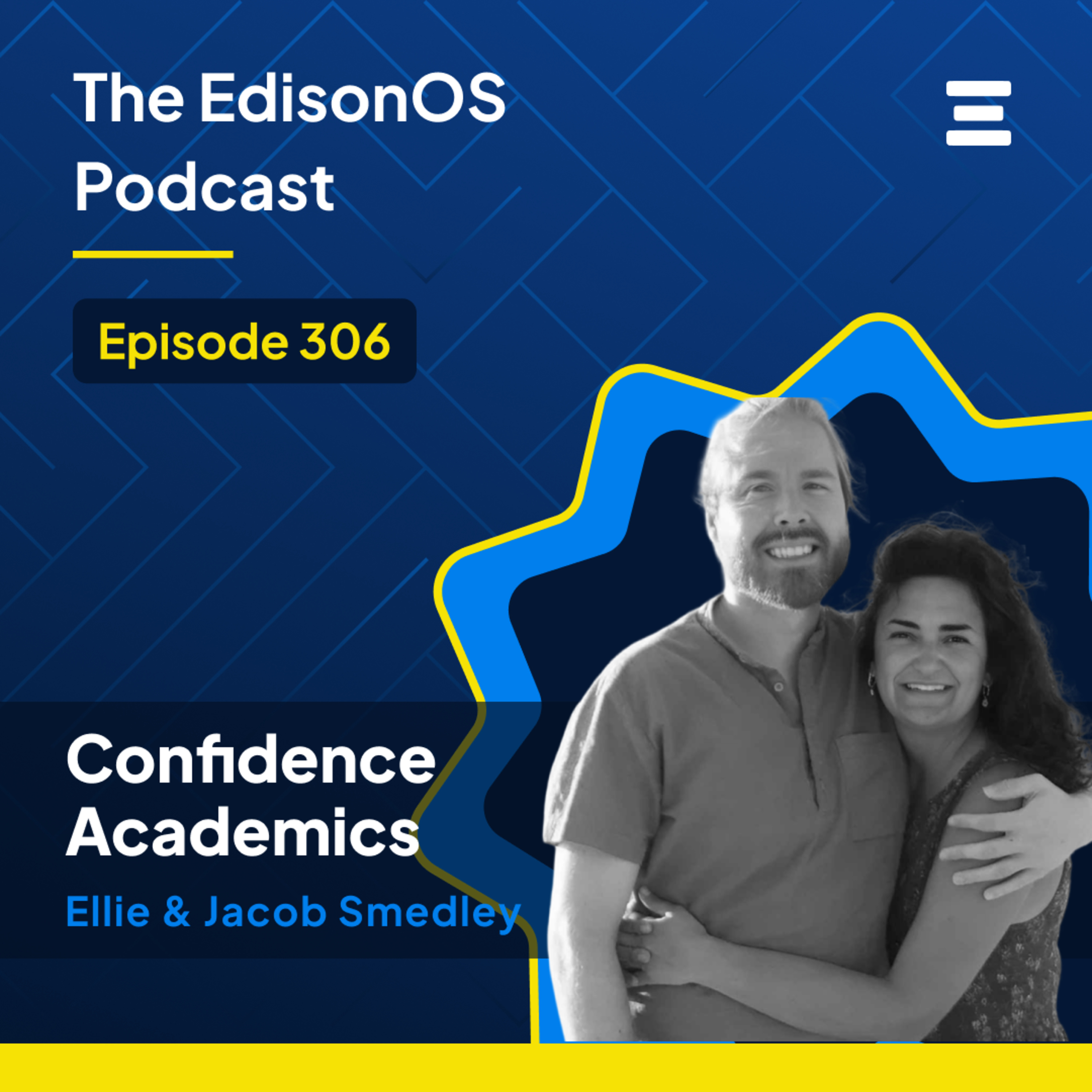 Episode 306 | Ellie & Jacob Smedley | Confidence Academics | The EdisonOS Podcast | In this episode, Ellie Smedley, founder of Confidence Academics and former math curriculum writer for eight years, reveals how her confidence-first approach shapes her nine-session SAT prep program. Drawing from her curriculum development background, Ellie explains her "show what you know" philosophy that encourages students to display all their work and build from existing knowledge rather than focusing on pass-fail outcomes.She discusses her unique benchmark session where students rank SAT math domains by confidence level—not scores—opening conversations about their mathematical beliefs and anxieties. Ellie shares her curriculum creation insights about crafting wrong answer choices that target common misconceptions without confusing students, emphasizing that questions should be crystal clear even if answers seem viable. With marketing partner Jacob handling business development, she explains their realistic pricing strategy based on national averages and intro session discounts to remove commitment barriers for families unsure about personality fit. | — | ||||||
| 2/26/26 |  Episode 305 | Dan Marlin | Galin Education | The EdisonOS Podcast | In this episode, Dan, Test Prep Director at Gallin Education, reveals how his company navigated the digital SAT transition while maintaining paper-pencil ACT prep in Wisconsin, where most testing centers haven't switched. Drawing from his journey starting as a graduate student recruited on LinkedIn who never left, Dan explains his diagnostic-first approach that helps families choose between ACT and SAT based on actual performance rather than regional myths about coastal versus Midwest preferences.He discusses his philosophy that having a test score is better than not—even in the test-optional era—because it provides flexibility for scholarships and specific programs that still require scores. Dan shares his perspective on AI in tutoring, acknowledging free tools like Khan Academy while emphasizing the human value-add of pattern recognition and dynamic adjustment that comes from knowing each student personally, especially when students struggle to identify what a mixed problem is asking them to do. | — | ||||||
| 2/20/26 | 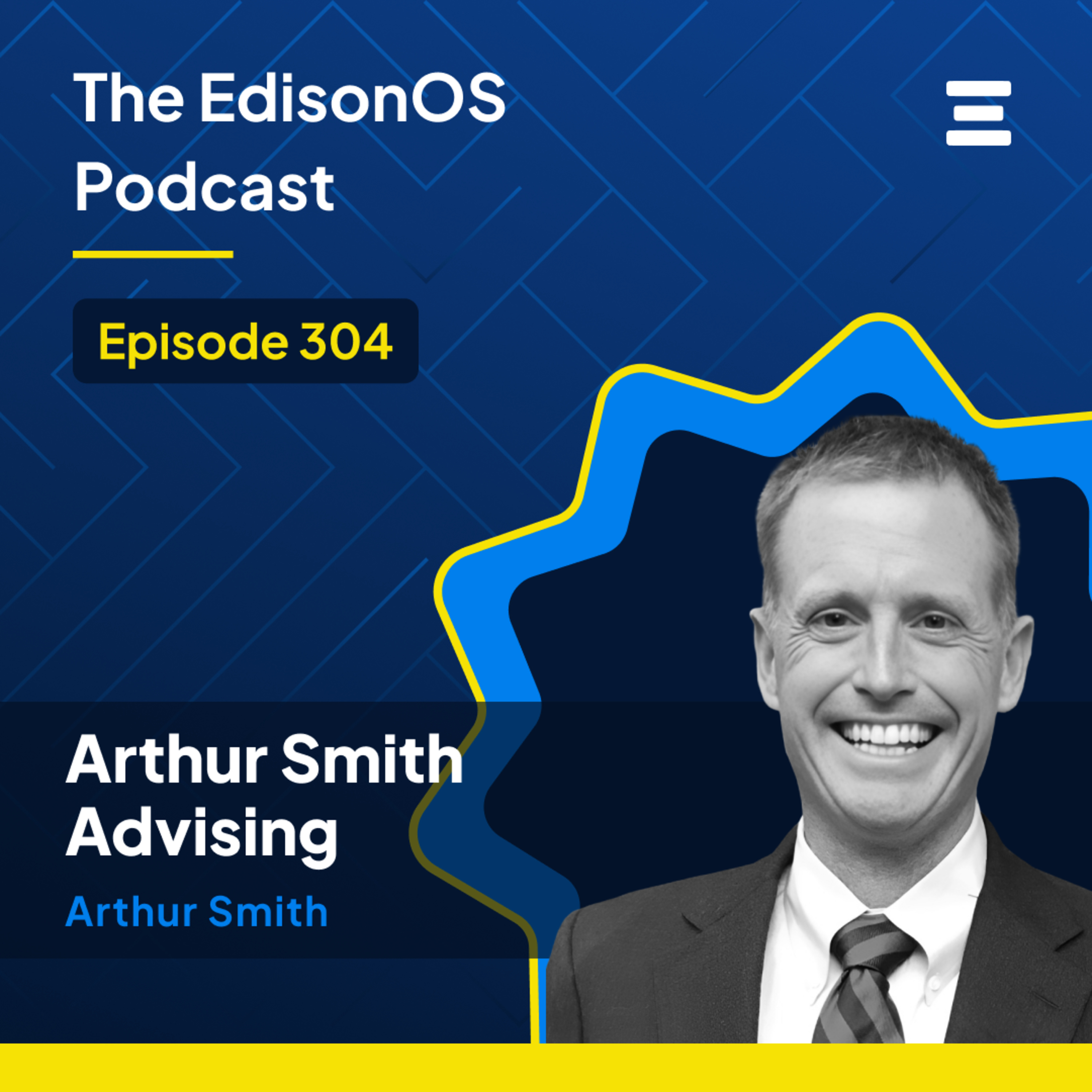 Episode 304 | Arthur Smith | Arthur Smith Advising | The EdisonOS Podcast | In this episode, Arthur Smith, founder of Arthur Smith Advising with nearly 30 years in higher education, reveals how his dual experience as a Cornell admissions dean and 23-year track coach shaped his mentorship philosophy. Drawing from chairing admissions committees at an Ivy League institution, Arthur explains how he looks for "spark" in applications—that genuine curiosity and vulnerability that separates piled-up achievements from authentic student identity.He discusses the two critical gaps he saw in college counseling: the shortage of counselors for millions of students, and widespread misconceptions creating unnecessary stress about the opaque admissions process. Arthur shares his quality control approach of personally vetting every application despite working with multiple counselors, all longtime colleagues who share his philosophy. He explains his evolving perspective on AI—using it ethically to organize thoughts while ensuring students write their own essays, and understanding which colleges use AI screening tools that could inadvertently hurt applicants. | — | ||||||
| 2/12/26 | 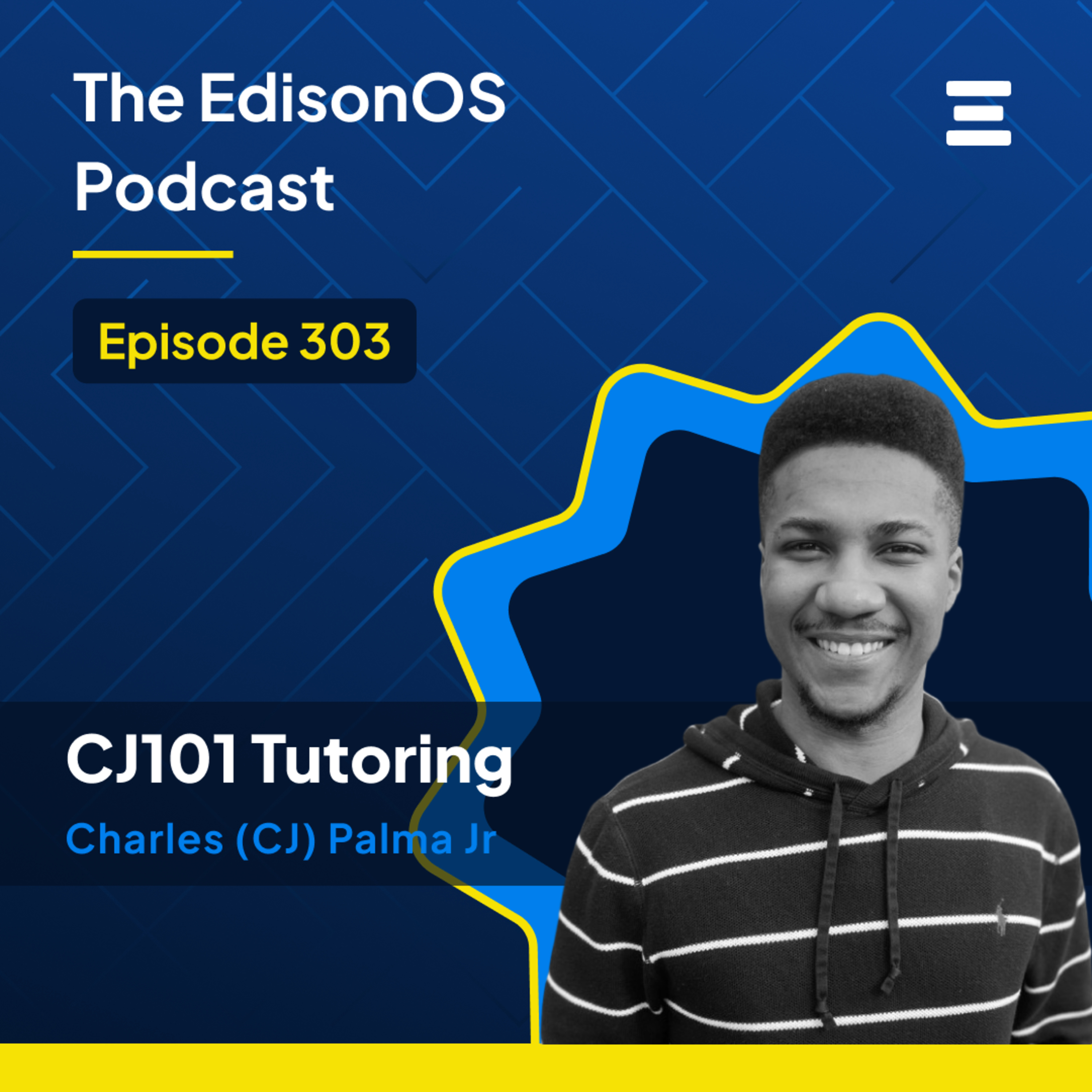 Episode 303 | Charles (CJ) Palma Jr | CJ101 Tutoring | The EdisonOS Podcast | In this episode, CJ Palma, founder of CJ 101 Tutoring, reveals how his unique combination of degrees in Marine Science, Computer Science, and Psychology—plus his experience as a first-generation American—shaped his empathy-driven approach to test prep. Drawing from personal experience taking the SAT without preparation (thinking it was an IQ test), CJ explains his mission to democratize information about standardized testing for families without privileged access.He discusses his human-first philosophy where AI handles test bank generation while tutors focus on what technology can't replicate—gathering information about students faster than their underdeveloped frontal lobes can articulate. CJ shares his unconventional path from software engineering to tutoring after his father's illness, and explains why he prioritizes building a small business over scaling, advocating for accessible information without paywalls so parents can make informed decisions regardless of economic background. | — | ||||||
| 2/5/26 | 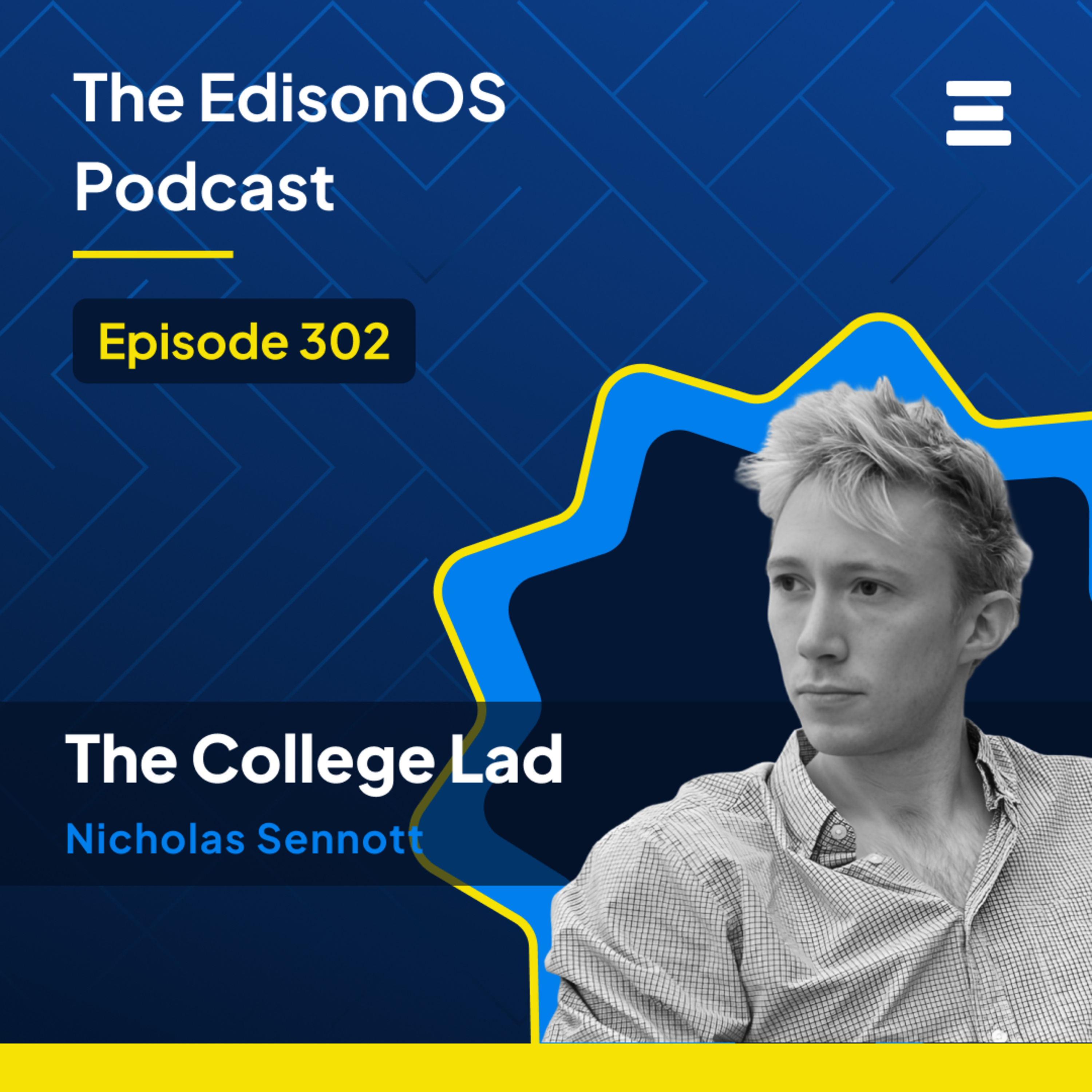 Episode 302 | Nicholas Sennott | The College Lad | The EdisonOS Podcast | In this episode, Nicholas Sennott, founder of The College Lad, reveals how the pandemic forced his pivot from pure SAT/ACT prep into college essays and AP tutoring, ultimately strengthening his business. Drawing from his journalist parents' influence, Nicholas explains his signature "three reasons answers are wrong" technique that helps students move beyond gist-based reading to the close reading these tests demand.He discusses his unconventional philosophy of having students take the actual SAT or ACT early—after just one month of prep—to eliminate test-day anxiety and leverage superscoring policies, rather than waiting six months to take it for the first time. Nicholas shares why he prioritizes small group classes of four to five students where peers learn from each other, and explains his no-package approach that bills by session to ensure genuine connection before long-term commitment. | — | ||||||
| 1/31/26 | 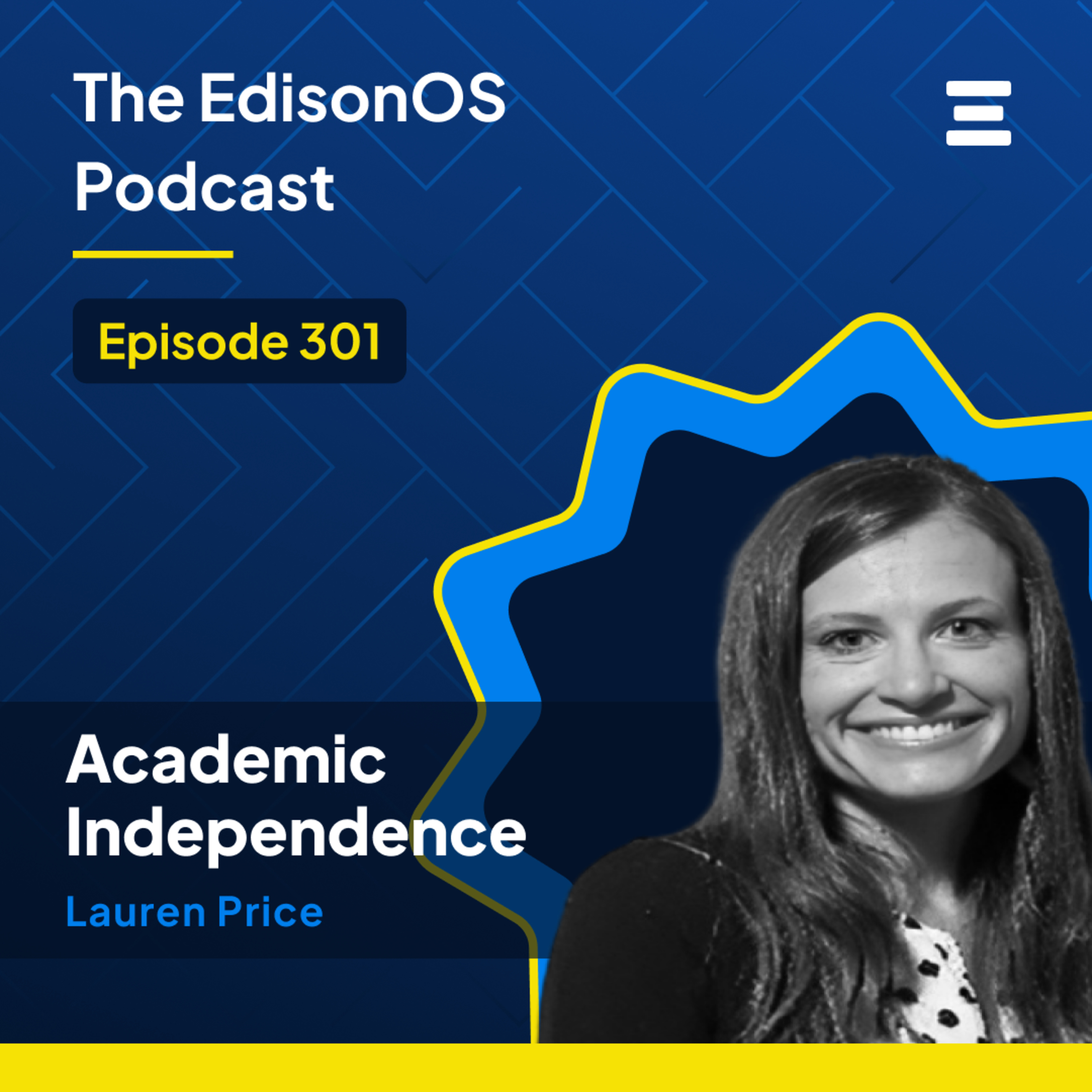 Episode 301 | Lauren Price | Academic Independence | The EdisonOS Podcast | In this episode, Lauren Price, founder of Academic Independence, reveals how her background in educational psychology and brain science shapes her unique approach to test prep. Working with around 500 students annually, Lauren explains her philosophy of empowering students to become academically independent rather than tutor-dependent, rooting her methods in self-regulated learning and executive function development.She discusses her diagnostic self-report surveys that assess students' self-regulation, motivation, and mindset before beginning work, and shares why she trains tutors to ensure students talk more than the tutor during sessions. Lauren explains her strategic timing recommendations based on math exposure, and emphasizes setting realistic goals in first sessions to align parent and student expectations before the work even begins. | — | ||||||
Showing 25 of 117
Pitch Fit is a Pro feature
See how bookable this show is for guests, which brands already advertise, the per-episode ad value, and the best-fit guest and sponsor profile. The numbers are blurred on the free plan.
How readily this show books outside guests like you.
How proven this show is for host-read sponsorships.
For Guests
ProFor Advertisers
ProUpgrade to Pro to unlock guest cadence, sponsor categories, fit scores, and per-episode ad value for this show.