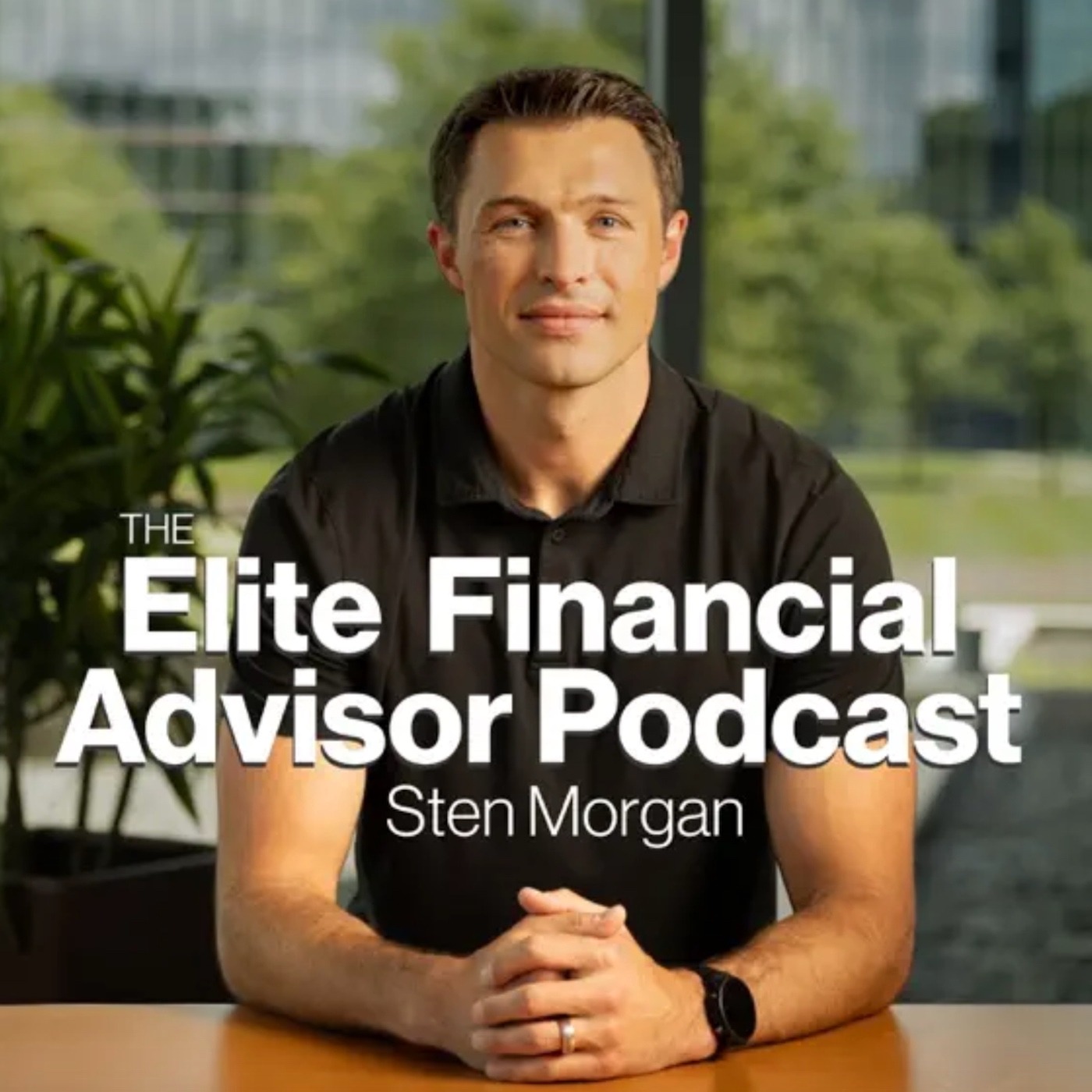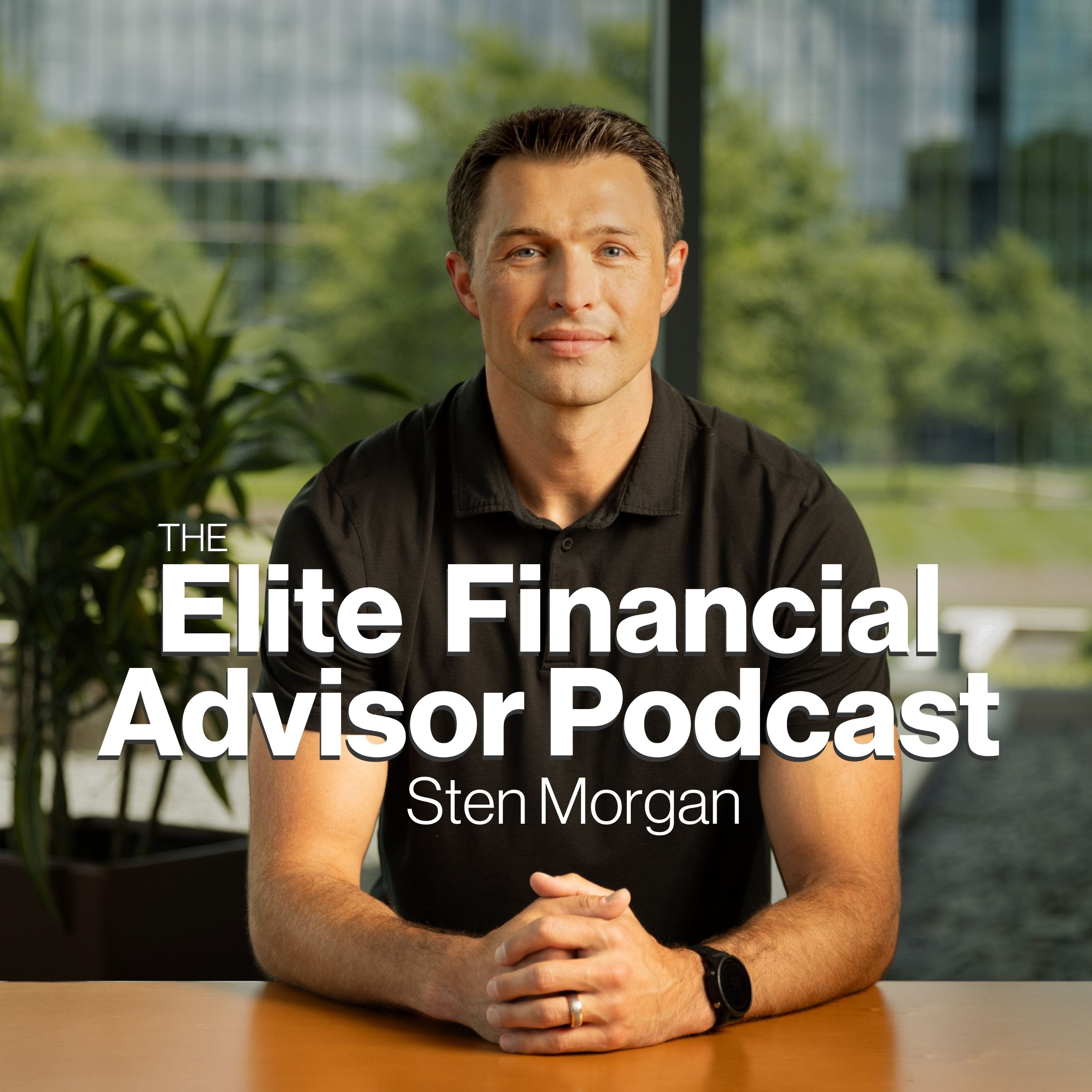
The Elite Financial Advisor Podcast With Sten Morgan
by Sten Morgan
Is this your podcast?Insights from recent episode analysis
Audience Interest
Podcast Focus
Publishing Consistency
Platform Reach
Insights are generated by CastFox AI using publicly available data, episode content, and proprietary models.
Most discussed topics
Brands & references
Total monthly reach
Estimated from 2 chart positions in 2 markets.
By chart position
- 🇦🇪AE · Entrepreneurship#813K to 10K
- 🇲🇾MY · Entrepreneurship#117500 to 3K
- Per-Episode Audience
Est. listeners per new episode within ~30 days
1.1K to 3.9K🎙 Daily cadence·229 episodes·Last published yesterday - Monthly Reach
Unique listeners across all episodes (30 days)
3.5K to 13K🇦🇪77%🇲🇾23% - Active Followers
Loyal subscribers who consistently listen
1.4K to 5.2K
Market Insights
Platform Distribution
Reach across major podcast platforms, updated hourly
Total Followers
—
Total Plays
—
Total Reviews
—
* Data sourced directly from platform APIs and aggregated hourly across all major podcast directories.
On the show
From 15 epsHost
Recent guests
Recent episodes
239 The Skill AI Can’t Replace: Why Elite Advisors Must Master Communication with John Gatewood
Jun 26, 2026
35m 23s
238 Jeremie Kubicek / Know Yourself. Lead Yourself
Jun 19, 2026
31m 00s
237 The Future Financial Advisor: Why Human Connection Wins in an AI World
Jun 12, 2026
37m 16s
236 From Shared Expenses to Formal $1 Billion Team: How Holden Fox Built a Real Advisory Firm
Jun 5, 2026
37m 13s
235 From Practitioner to Entrepreneur: Sten's Journey
May 29, 2026
46m 43s
Social Links & Contact
Official channels & resources
Official Website
Login
RSS Feed
Login
| Date | Episode | Topics | Guests | Brands | Places | Keywords | Sponsor | Length | |
|---|---|---|---|---|---|---|---|---|---|
| 6/26/26 | ![]() 239 The Skill AI Can’t Replace: Why Elite Advisors Must Master Communication with John Gatewood | In this episode of Elite Advisor Podcast, Sten Morgan sits down with John Gatewood to talk about how communication mastery, not technical knowledge, has become the real differentiator for elite advisors in the age of AI.They discuss listening so clients feel truly heard, speaking with the conviction that motivates people to act, and how financial advisors can build the authentic connection that AI can never replace.If you're ready to stop settling for comfortable and start building at your highest level, this conversation will challenge how you think about your business, your value, and the impact you create for clients.In This EpisodeThe one skill AI can't replace: information is being commoditized, but the human connection that motivates a client to act is not.Why information alone never moves people - gyms are full in January and empty by March - and why every decision to act is emotional, not logical.The messenger is the message: in turbulent markets, clients watch how confidently you speak more than what you actually say.John's order of operations for every meeting: connection before content, understanding before advising, their story before your solution.A practical challenge for this week: record one of your meetings and watch it back, because communication is a trainable skill, not a personality trait.Episode Timestamps00:00 - Introduction00:40 - Why a 45-Year Veteran Is Still Building Frameworks02:04 - The Black-Wall Family Office: John's Origin Story04:36 - From Reciting a Script to Actually Moving People12:57 - Why Information Alone Never Motivates Anyone14:24 - The One Skill AI Can't Replace17:18 - The Messenger Is the Message28:26 - Coaching the Introverted Advisor: Connection First Free Resources for Financial Advisors:Want to become a more elite advisor? We have free resources to help you improve the way you think, communicate, and grow your business. Get access to our free course on how to become an Elite Advisor, plus training videos that show you how to whiteboard ideas with clients using real examples. Get the free resources here: https://www.eliteadvisornetwork.com/free?utm_source=youtube&utm_medium=podcast&utm_campaign=ep_239_john_gatewoodGet the Free Book: Value First Prospecting Most advisors were trained to sell first and hope trust shows up later. Value First Prospecting shows you how to create demand, lead with ideas, and turn first meetings into strategy conversations instead of sales meetings. You can claim a free copy of Sten Morgan's book, Value First Prospecting. Just cover shipping. Get the book here: https://www.valuefirstbook.com?utm_source=youtube&utm_medium=podcast&utm_campaign=ep_239_john_gatewoodAttend How to Charge LIVE: If you want more revenue, more confidence, and a clearer planning process, you do not need more theory. You need reps, feedback, and a proven system. How to Charge LIVE is our in-person training experience where advisors learn how to start charging for advice, communicate their value, and build a stronger planning business. Learn more about How to Charge LIVE here: https://www.howtochargelive.com?utm_source=youtube&utm_medium=podcast&utm_campaign=ep_239_john_gatewoodJoin Elite Plus: Elite Plus is for advisors who are done dabbling and ready to become Elite. Inside Elite Plus, you get proximity, accountability, real-time coaching, and a complete operating system to help you remove resistance and grow at a higher level. If you are serious about implementation, better thinking, and becoming the advisor your clients actually need, Elite Plus is the next step. Join Elite Plus here: https://www.eliteadvisornetwork.com/plus?utm_source=youtube&utm_medium=podcast&utm_campaign=ep_239_john_gatewoodConnect With Elite Advisor NetworkWebsite: https://www.eliteadvisornetwork.com?utm_source=youtube&utm_medium=podcast&utm_campaign=ep_239_john_gatewood Podcast: https://podcasts.apple.com/us/podcast/elite-advisor LinkedIn: https://www.linkedin.com/company/elite-advisor-network YouTube: https://www.youtube.com/@eliteadvisornetworkSubscribeSubscribe for more conversations, training, and practical ideas to help financial advisors reject average and become elite.#EliteAdvisorNetwork #FinancialAdvisor #StenMorgan #ValueFirstProspecting #FinancialPlanning #AdvisorMarketing #AdvisorGrowth | 35m 23s | ||||||
| 6/19/26 | ![]() 238 Jeremie Kubicek / Know Yourself. Lead Yourself | In this episode of Elite Advisor Podcast, Sten Morgan sits down with Jeremie Kubicek to talk about how the Five Voices framework reshapes the way you lead, communicate, and connect - starting with the one voice you were built to lead from.They discuss knowing your foundational communication voice, speaking the language of every client and team member, and how financial advisors can build deeper trust, stronger teams, and a culture people don't want to leave.If you're ready to stop settling for comfortable and start building at your highest level, this conversation will challenge how you think about your business, your value, and the impact you create for clients.In This EpisodeYou are all five voices, but you have one foundational voice - and most leaders "play someone on TV" they're not, which is exactly why they come across as average.The Five Voices framework (Nurturer, Guardian, Creative, Connector, Pioneer) built on the Big Five and Jung's work - and why 73% of people are present-oriented, not future-oriented.A practical move for this week: read the room. Start with people and feelings for feelers, and competence and credibility for thinkers.Jeremie's core philosophy - "know yourself to lead yourself." Leading from raw title and power produces compliance, not engagement; learn someone's language and they'll run through walls for you.Your week-ahead challenge: build a culture people don't want to leave, and start using AI by talking to it - ask it to ask you the right questions first.Episode Timestamps 00:00 - Introduction 00:58 - The Five Voices, Explained02:55 - The Science Behind an Assessment That Actually Sticks06:16 - Start With Yourself: Know Yourself to Lead Yourself08:32 - How to Roll It Out Across Your Team16:13 - Speaking Every Client's Language in Prospecting Meetings22:04 - Build a Culture People Don't Want to Leave27:09 - The Simplest Way to Start Using AI TodayGet the Free Episode Companion Guide: Want the cheat sheet for this episode? We turned the biggest ideas into a one-page companion guide - the Five Voices blueprint, key takeaways, and three action steps to run this week. Grab your free copy here: https://gobeelite.com/elite-advisor-podcast-companion-page?utm_source=youtube&utm_medium=podcast&utm_campaign=ep_238_jeremie_kubicekFree Resources for Financial Advisors: Want to become a more elite advisor? We have free resources to help you improve the way you think, communicate, and grow your business. Get access to our free course on how to become an Elite Advisor, plus training videos that show you how to whiteboard ideas with clients using real examples. Get the free resources here: https://www.eliteadvisornetwork.com/free?utm_source=youtube&utm_medium=podcast&utm_campaign=ep_238_jeremie_kubicekGet the Free Book: Value First Prospecting Most advisors were trained to sell first and hope trust shows up later. Value First Prospecting shows you how to create demand, lead with ideas, and turn first meetings into strategy conversations instead of sales meetings. You can claim a free copy of Sten Morgan's book, Value First Prospecting. Just cover shipping. Get the book here: https://www.valuefirstbook.com?utm_source=youtube&utm_medium=podcast&utm_campaign=ep_238_jeremie_kubicekAttend How to Charge LIVE: If you want more revenue, more confidence, and a clearer planning process, you do not need more theory. You need reps, feedback, and a proven system. How to Charge LIVE is our in-person training experience where advisors learn how to start charging for advice, communicate their value, and build a stronger planning business. Learn more about How to Charge LIVE here: https://www.howtochargelive.com?utm_source=youtube&utm_medium=podcast&utm_campaign=ep_238_jeremie_kubicekJoin Elite Plus: Elite Plus is for advisors who are done dabbling and ready to become Elite. Inside Elite Plus, you get proximity, accountability, real-time coaching, and a complete operating system to help you remove resistance and grow at a higher level. If you are serious about implementation, better thinking, and becoming the advisor your clients actually need, Elite Plus is the next step. Join Elite Plus here: https://www.eliteadvisornetwork.com/plus?utm_source=youtube&utm_medium=podcast&utm_campaign=ep_238_jeremie_kubicekConnect With Elite Advisor Network Website: https://www.eliteadvisornetwork.com?utm_source=youtube&utm_medium=podcast&utm_campaign=ep_238_jeremie_kubicek Podcast: https://podcasts.apple.com/us/podcast/elite-advisor LinkedIn: https://www.linkedin.com/company/elite-advisor-network YouTube: https://www.youtube.com/@EliteAdvisorNetworkSubscribeSubscribe for more conversations, training, and practical ideas to help financial advisors reject average and become elite.#EliteAdvisorNetwork #FinancialAdvisor #StenMorgan #ValueFirstProspecting #FinancialPlanning #AdvisorMarketing #AdvisorGrowth | 31m 00s | ||||||
| 6/12/26 | ![]() 237 The Future Financial Advisor: Why Human Connection Wins in an AI World✨ | human connectionAI in finance+4 | Shannon Reid | — | — | financial advisorAI+5 | — | 37m 16s | |
| 6/5/26 | ![]() 236 From Shared Expenses to Formal $1 Billion Team: How Holden Fox Built a Real Advisory Firm✨ | financial advisorybusiness growth+4 | Holden Fox | — | — | financial advisorsgrowth model+3 | — | 37m 13s | |
| 5/29/26 | ![]() 235 From Practitioner to Entrepreneur: Sten's Journey✨ | transition from producer to leaderovercoming savior complex+3 | Wendell Moon | — | — | financial advisorsleadership+5 | — | 46m 43s | |
| 5/22/26 | ![]() 234 Best Practices of Prospecting with Gavin Filasek, Wes Young, and Sten✨ | prospectingfinancial advising+4 | Wes YoungGavin Filasek | — | — | prospectingfinancial advisors+4 | — | 44m 51s | |
| 5/15/26 | ![]() 233 Stop Overcomplicating Financial Planning (What Clients Actually Want) with H. Adam Holt✨ | financial planningclient clarity+4 | H. Adam Holt | Asset-Map | — | financial advicebusiness success+3 | — | 36m 29s | |
| 5/8/26 | ![]() 232 How To Level Up Client Experience with Efficient Financial Planning with Austin Harris✨ | client experiencefinancial planning+3 | Austin Harris | Edward Jones | — | financial adviceclient experience+3 | — | 27m 52s | |
| 5/1/26 | ![]() 231 Why Advisory Firms Break as They Grow And How to Build the Right Team with Angie Herbers✨ | advisory firmsteam building+4 | Angie Herbers | herbersandcompany.com | — | advisory firmscommunication skills+5 | — | 45m 37s | |
| 4/24/26 | ![]() 230 How Great Advisors Grow: Values, Pressure, and Building a Career That Lasts with Terri Kallsen✨ | career growthfinancial planning+4 | Terri Kallsen | CFP BoardRise Growth Partners+1 | — | financial planningcareer seasons+5 | — | 33m 37s | |
Want analysis for the episodes below?Free for Pro Submit a request, we'll have your selected episodes analyzed within an hour. Free, at no cost to you, for Pro users. | |||||||||
| 4/17/26 | ![]() 229 Why Advisors Should Stop Competing on Investments and Start Winning with Tax Planning with Ed Slott✨ | tax planningretirement+4 | Ed Slott | IRAhelp.comThe Digital Toolbox for Elite Financial Advisors+1 | — | tax planningretirement tax rules+5 | — | 34m 28s | |
| 4/10/26 | ![]() 228 Build a Process, Not a Pipeline: How Great Advisors Grow Without Selling with Justin Louis✨ | advisory careergrowth process+4 | Justin Louis | $1B+ firm | — | financial advisingsales identity+3 | — | 31m 40s | |
| 4/3/26 | ![]() 227 The Next Level Requires a New You: Best of Michael Kitces and Sten Morgan✨ | growthleadership+3 | Michael Kitces | — | — | business growthleadership problems+3 | — | 25m 03s | |
| 3/27/26 | ![]() 226 Stop Selling Products and Get Paid for Advice by Positioning Yourself Better with Jeffrey Levine✨ | financial advisoryprofessional identity+4 | Jeffrey Levine | — | — | financial advisoryprofessionalism+6 | — | 35m 52s | |
| 3/20/26 | ![]() 225 Conscious Capitalism, AI, and the Advisor Advantage — Omani Carson on What’s Next✨ | conscious capitalismAI in finance+4 | Omani Carson | Conscious CapitalismAI+3 | — | financial advisorconscious capitalism+5 | — | 38m 24s | |
| 3/13/26 | ![]() 224 Retention Isn’t Performance, It’s Trust: Build Relationships, Use AI, and Scale Your Advisor Capacity with Michelle Lynch✨ | client relationshipsfinancial advisory+4 | Michelle Lynch | Raymond James | — | financial planningAI+5 | — | 32m 47s | |
| 3/6/26 | ![]() 223 Unlocking Emotional Intelligence for Leaders with Brad Stinson✨ | emotional intelligenceleadership+4 | Brad Stinson | PATHfinderThe Digital Toolbox for Elite Financial Advisors+1 | — | emotional intelligenceleadership+7 | — | 27m 12s | |
| 2/27/26 | ![]() 222 Build the Foundation Before You Scale: Systems, SOPs, and Clean Data with April Rome | Sten sits down with April Rome to unpack the uncomfortable truth about growth in advisory firms: most advisors don’t build operations — they assume it’s handled until systems hit capacity and break. April explains the common traps (too much tech, broken processes, no SOPs, messy data) and why firms must simplify, systematize, and stress-test capacity before turning on growth. They share how Legacy intentionally slowed down to rebuild the foundation—sometimes losing people in the process—so the business could scale with healthier workflows, better hiring, cleaner metrics, and a leadership team that stays in its lane while still owning outcomes.TakeawaysMost advisors aren’t wired for ops — which is why it’s often ignored until it breaks.“More tech” is rarely the solution; simplification usually is.Without SOPs and clean data, teams create invisible band-aids that mask deeper problems.If systems aren’t designed to scale, growth becomes a burnout machine.Healthy ops protects the advisor’s time so they can stay in their superpower: clients + advice.Fixing ops can trigger change resistance — and sometimes team turnover.“High support + high challenge” becomes possible once the chaos is removed.Capacity isn’t just emotional — it’s operational: workflows, training, cross-coverage, dashboards.Clean metrics and scorecards matter because “work hard and hope” is not strategy.You can’t build a skyscraper on a small foundation — expand the base before you scale.https://gobeelite.com/ | 28m 14s | ||||||
| 2/20/26 | ![]() 221 $20,000 for Planning: The Process That Changed Everything with Mark Hansen | Mark shares how he accidentally entered the advisory industry, then quickly realized the real work isn’t portfolio construction — it’s communication, process, and helping people make decisions. He walks through a brutal season of 2025 where he lost clients month after month, hit a professional low point, and used that pressure to refine a clear, structured planning process. That clarity (plus stronger boundaries and confidence) led to a major breakthrough: business owners paying $20,000+ for planning — not products — and Mark learning what it means to “walk into the wind” of entrepreneurship and identity-level growth as an advisor and family man. 10 TakeawaysGreat advisors aren’t just investment managers — they’re decision coaches and communicators.A cohesive step-by-step process beats “vomiting information” onto clients.Simplicity and brevity are a gift — too much info creates confusion, not value.You don’t need every answer immediately — calling out the gray area is often the value.If you only get paid by selling products, you’re forced into bad incentives.High planning fees require confidence + structure + clean articulation, not hype.Sometimes “losing clients” is actually business model transition (A ➜ B).Prospecting isn’t always cold outreach — being ready with your “what I do” can convert casual moments.Strong boundaries matter: building a business cannot cost your family everything.Borrowing belief works: “Then borrow ours.” Momentum creates real confidence after the first “yes.”https://gobeelite.com/ | 37m 58s | ||||||
| 2/13/26 | ![]() 220 Doing Legacy Better: The Conversation Advisors Aren’t Having (and Why It Wins Trust + Retention) with Alex Kirby | In this episode, Sten Morgan sits down with Alex Kirby, founder of Total Family, the company behind FamilyOS, a legacy platform built for wealth advisors. Total Family helps advisors support families in defining Values, Purpose, and Roles, and preserving stories and legacy so families can pass on more than wealth across generations.https://www.totalfamily.io/They unpack why legacy work is both a massive differentiator and a low-risk conversation starter for prospects and clients—especially business owners and high-net-worth families who rarely have a place to talk about meaning, values, purpose, and family dynamics.Alex shares his personal story—growing up as an only child with 10 step/half siblings through six marriages and five divorces—and how working with closely held businesses taught him that money doesn’t solve family complexity. That realization led him into legacy frameworks (Hughes, Grubman, York) and eventually into building software that makes legacy practical and scalable.Sten explores how legacy conversations can drive new business, retention, and multi-generational stickiness, and how Total Family’s “client-does-the-work, advisor-debriefs-the-output” approach reduces the time burden while deepening trust.TakeawaysLegacy ≠ estate planning. Estate planning is the structure—legacy is the “why.”Alex compares estate planning to building a house: documents are the blueprint + construction, but legacy is the earlier step—standing on the land asking, “What do we want this to become?”“Wealth” is bigger than money: it’s the well-being of the family.Total Family focuses on values, purpose, legacy letters, family histories, and identity—not asset allocation—because advisors already handle the financial mechanics.Legacy is a differentiator because the bar is lower than advisors think.Competing on market commentary is brutal (everyone plays there). But in legacy, clients have few outlets—so asking thoughtful questions alone can set you apart.You don’t need all the answers—just ask better questions and follow up well.A simple prompt like, “When I say legacy, what comes to mind?” can open a door clients often walk right through.Clients aren’t uninformed about estate planning—they’re uninspired.Alex cites David York (Entrusted): people know they need documents, but they don’t feel the meaning behind them. Facilitate the “why,” and the follow-through becomes natural.Legacy work is retention—but the real retention problem is the spouse and kids.Advisory retention might be ~97% while the original client is alive, but it can drop dramatically when assets transfer. Legacy work builds real relationships before that moment.Advisors must decide what categories they won’t budge on—and legacy may belong on that list.Sten notes some planning topics are non-negotiable. Alex agrees in principle, but emphasizes legacy can start with “small steps” rather than a heavy emotional leap.Make legacy accessible: prompts matter.Asking a stoic patriarch to “write a love letter” may shut things down—but asking for a paragraph on hard work, responsibility, friendships, or what shaped them can unlock the same depth through a different door.Scale requires this rule: clients do the work; advisors integrate and debrief.Total Family’s design helps clients define values/purpose in minutes, then the advisor has a simple high-impact role: review outputs, ask meaning questions, and connect it back to planning.Lead by example or clients will feel the disconnect.Alex strongly recommends advisors go through the tool themselves first. When you’ve wrestled with your own values/purpose, you show up with authenticity—not a scripted “legacy pitch.”https://gobeelite.com/ | 35m 10s | ||||||
| 2/6/26 | ![]() 219 Be Curious, Not Salesy: How Advisors Can Turn Networking into a Superpower with David Castro | In this episode, Sten Morgan sits down with Nashville-based connector and entrepreneur Dave Castro to tackle a hard truth: financial advisors should be among the best networkers in the market… but often they’re among the worst.Dave breaks down why traditional networking (showing up, exchanging cards, and asking for referrals) fails most advisors—and how to flip the script by becoming a relationship-first giver who makes meaningful introductions, follows up consistently, and shows up with authentic confidence.They explore practical strategies like remembering names, tracking follow-ups, developing a compelling “what do you do” story of transformation, and learning to override introvert resistance through intentional reps.Dave also introduces his mobile networking tool Icebreaker, designed to help professionals identify ideal connections in real-time at events using Bluetooth discovery and lightweight relationship tracking.The core message is simple: givers get—and advisors who become known as valuable connectors will build trust faster, deepen influence, and win more business naturally.TakeawaysAdvisors should be elite networkers—but most aren’t.Dave’s blunt observation: financial planners are relationship-based professionals, yet often fail to network effectively because they don’t build momentum or reciprocity.Showing up isn’t enough—“checking the box” doesn’t build relationships.Going to the event repeatedly can work over time, but it’s slow and weak if you’re not following up, remembering people, or creating meaningful connection.The missing ingredient: learn to give referrals + make introductions.Dave argues the biggest “level up” for advisors is becoming someone who talks about other people, connects them, and helps them win—before asking for anything.Follow-up is where networking turns into outcomes.If you’re not tracking relationships, noting details, and re-engaging intentionally, you’re losing the value of every coffee, lunch, and handshake.Confidence comes faster when you stop bringing “nervous sales energy.”Sten shares how early-career desperation made networking feel pressured. Calm confidence comes from shifting the goal from “get business” to “be helpful.”The fastest baby-step to becoming a better networker: curiosity.Curiosity removes self-consciousness, lowers anxiety, increases trust, and makes the other person feel valued instantly.Be authentic—don’t try to become the “life of the party.”Dave emphasizes you don’t have to be loud or extroverted. Advisors win by being a steady beacon: curious, comfortable, and genuinely service-minded.Getting “judged” is actually medicine for growth.Dave reframes rejection and awkward feedback as a necessary callus-building process that helps people stop fearing opinions and show up more grounded.Your “what do you do?” answer should be a transformation story.Instead of “I’m a financial advisor,” lead with a specific outcome:who you helphow you helpproof/story that makes it real“Pop the clutch”: serve first, then let them ask what you do.One of Dave’s best practical frameworks: build momentum in the conversation by being curious and helpful first—then your work lands with more trust when they ask.https://gobeelite.com/ | 37m 37s | ||||||
| 1/30/26 | ![]() 218 The Advisor Shift Is Here: How Planning, EQ, and AI Are Changing the Industry with Adam Correa | Sten interviews Adam Correa, CFP®, Vice President of Financial Planning at LPL, who supports financial planning adoption across a massive advisor network (30,000 advisors, 2,000+ 1:1 engagements, 500+ presentations). Adam shares his unconventional path into financial advice—starting in fintech at eMoney, becoming an advisor, then transitioning into an LPL home office coaching role focused on helping advisors move into a planning-led, fee-for-service model.Together, they unpack the “head trash” many advisors face about charging for advice, the real reason some advisors outperform (communication + EQ, not just IQ), and why the industry is rapidly shifting away from product-centered value toward holistic, planning-driven client relationships. Adam emphasizes that advisors must self-reflect on their book of business, focus on ideal clients, streamline their planning process, and embrace tools (including AI) to create capacity. Sten reinforces that offering planning as a standalone service creates optionality, improves client trust, increases AUM long-term, and transforms the advisor from a “salesperson” into a “problem solver.”Key TakeawaysFinancial planning isn’t “one-size-fits-all.”Adam emphasizes planning varies by practice and client type—what matters is aligning it with your ideal client and service model.The best advisors don’t win because they’re the smartest — they win because they communicate best.Sten and Adam both agree that communication, storytelling, and client connection are the “10X skill.”EQ builds buy-in faster than IQ.Advisors can build amazing plans, but if the client doesn’t feel understood, they won’t act.Most advisors are overloaded because they never “self-reflect” as business owners.Advisors get stuck serving too many clients, which kills their capacity to deliver real planning.You must identify your ideal client—and stop building a random book.The old “anyone with a financial pulse” model creates burnout and limits growth.Advisors need to stop leading with investment performance conversations.Adam suggests “shock therapy”: push the statement aside and ask, “What’s important about money to you?”AI won’t replace advisors—but it will replace advisors who don’t evolve.Adam explains AI can become a paraplanner-like assistant, freeing time and increasing scale, but the human coaching role remains irreplaceable.Fee-for-service planning removes conflict of interest and increases trust.Adam highlights a key point: paying directly for advice can feel more objective than “free plans” attached to product incentives.Charging planning fees doesn’t cannibalize AUM — it can jumpstart it.Adam states LPL data shows active planners grow faster, and planning often leads to larger, stickier relationships.Planning-first relationships create better clients and filter out bad ones.If someone isn’t responsive during planning, you get paid and you avoid years of headaches.https://gobeelite.com/ | 32m 37s | ||||||
| 1/23/26 | ![]() 217 The Missing Fuel Behind Elite Performance with Dr. Jarrod Spencer | In this conversation, Sten Morgan sits down with Dr. Jarrod Spencer, a concierge health and sports psychologist who works with elite performers—from pro athletes and championship teams to high-level executives. Jared breaks down the difference between “mental” work (thought-based) and “emotional” work (body-based), and why emotional energy is the real fuel behind health, leadership, and performance.They explore how the culture around mental health has shifted (especially after high-profile moments like Olympic and pro sports withdrawals), and what high performers actually want: not an excuse to stop performing, but tools to show up at their best under pressure. Jared lays out a practical model for growth—outside-in learning (content + frameworks) combined with inside-out work (self-awareness + counseling/coaching)—and explains why most people’s limitations aren’t intellectual, but emotional.A major throughline is that sleep is the foundation: without sleep, performance tools don’t stick. Jared shares tangible insights on circadian rhythm, phone addiction, and how better emotional energy leads to clearer thinking, stronger relationships, and better decision-making—especially for advisors who are paid to solve complex problems. The episode ends with a powerful question for every leader: “What is it like on the other side of you?”TakeawaysEmotional energy is performance fuel. When it’s high, you think clearer, lead better, and perform stronger—when it’s low, even great people unravel.High performers don’t want an “out”—they want an edge. The goal isn’t avoidance; it’s learning to show up well under pressure.Growth requires two lanes: outside-in learning (podcasts/books/frameworks) + inside-out work (therapy/coaching, “know thyself”).Leadership is built on EQ, not IQ. Emotional development drives trust, influence, and decision-making.Sleep is the foundation of mental health and performance. If sleep is broken, mindset tools and performance techniques won’t stick.Phone scrolling at night is “anti-melatonin.” Most people know what to do—but addiction and environment (including a partner’s habits) keep them stuck.The biggest limitations are usually emotional. You can have the knowledge and resources—emotional blind spots are what typically trip people up.Motivation determines how deep people go. Some pursue optimization; others finally act when relationships or life pressures force the issue.Trust is built in layers. People “test the waters” first; real transformation happens when rapport is strong enough to go deep.A better you changes the room. The question “What is it like on the other side of you?” becomes a compass for leadership and client relationships.https://gobeelite.com/ | 33m 58s | ||||||
| 1/16/26 | ![]() 216 How to Strengthen Your Legacy with a Letter: Blake Brewer | In this episode, Sten Morgan sits down with Blake Brewer, the founder of Legacy Letter, who’s on a mission to help one million people write a meaningful, lasting letter to the people they love most. Blake shares the moment that shaped his entire life: at 19, while snorkeling with his dad in Hawaii, his father drowned in treacherous waters. Hours later, Blake’s mom handed him a letter his dad had written for him—words that brought comfort, clarity, peace, and direction when he needed it most.That legacy letter didn’t just help Blake grieve—it helped him grow. Years later, as a father himself, Blake realized writing a letter to his own kids was both harder and more transformative than he expected. That experience became the spark for a structured process—workshops, templates, prompts, and an online program—that has now helped 20,000+ people write their own legacy letters.Sten and Blake also unpack why this matters deeply for financial advisors: many clients are building wealth, but struggle to pass down values, voice, and relationship. The legacy letter becomes a powerful tool—not only for families, but for advisors who want to deepen trust, create more meaningful client conversations, and build multi-generational relationships. It’s simple, but it’s not easy—and it might be one of the most impactful “gifts” an advisor can introduce to a client’s life.TakeawaysA legacy letter can change someone’s life. Blake’s father’s letter became a source of comfort, clarity, and stability after sudden loss.Simple doesn’t mean easy. Most people want to write a letter—but perfectionism, emotion, and “where do I start?” keep them stuck.Your words become their inner voice. What parents say becomes what children repeat to themselves—confidence or criticism often starts at home.Writing the letter changes the writer. The process clarifies values, strengthens identity, and gives you something to “go live out.”Legacy isn’t just money—it’s relationship, meaning, and values. Advisors can help clients pass down more than wealth.It can restore relationships. A well-written letter can soften conflict, reopen connection, and rebuild family rhythms.For advisors, this creates deeper trust. Clients often become more bonded to the advisor who helps them do something this meaningful.It gives advisors better conversations than performance alone. In down markets, legacy conversations can matter more than numbers.It can become part of a repeatable practice. Not a “one-off idea,” but a woven-in component alongside estate planning and family planning.There’s a scalable pathway. Blake offers workshops, a $97 online program, and an advisor “Legacy Letter Advocate” model to roll it out to clients.https://gobeelite.com/ | 29m 29s | ||||||
| 1/9/26 | ![]() 215 From Passion to Profit: Ritik Malhotra's Journey | In this conversation, Ritik Malhotra shares his entrepreneurial journey, discussing his early passion for technology, the challenges of starting and scaling companies, and the importance of product-market fit. He emphasizes the need for small, resilient teams during the ideation phase and the significance of clear communication and leadership styles. Malhotra also provides insights for financial advisors, highlighting the importance of understanding their unique value propositions and the role of technology in supporting their businesses. He concludes by discussing Savvy Wealth's mission to empower advisors and the importance of focusing on the purpose behind their work.TakeawaysRitik's journey began with a love for computers at a young age.The ideation phase is akin to a science lab experiment.Small teams are crucial during the product-market fit phase.Clarity in communication helps alleviate team anxiety.Written communication fosters understanding and alignment.Successful leadership requires balancing inspiration and example.Overcoming mental resistance is key to entrepreneurial success.Financial advisors must find their unique value propositions.Savvy Wealth aims to empower advisors by reducing friction.The purpose of work goes beyond daily activities. https://gobeelite.com/ | 32m 51s | ||||||
Showing 25 of 239
Pitch Fit is a Pro feature
See how bookable this show is for guests, which brands already advertise, the per-episode ad value, and the best-fit guest and sponsor profile. The numbers are blurred on the free plan.
How readily this show books outside guests like you.
How proven this show is for host-read sponsorships.
For Guests
ProFor Advertisers
ProUpgrade to Pro to unlock guest cadence, sponsor categories, fit scores, and per-episode ad value for this show.
Chart Positions
2 placements across 2 markets.
Chart Positions
2 placements across 2 markets.