The End of the Road in Michigan
by Thumbwind Publications
Is this your podcast?Insights from recent episode analysis
Audience Interest
Podcast Focus
Publishing Consistency
Platform Reach
Insights are generated by CastFox AI using publicly available data, episode content, and proprietary models.
Most discussed topics
Brands & references
Est. Listeners
Insufficient chart data. Estimates will improve as the show charts.
- Per-Episode Audience
Est. listeners per new episode within ~30 days
N/A🎙 Weekly cadence·89 episodes·Last published 5d ago - Monthly Reach
Unique listeners across all episodes (30 days)
N/A - Active Followers
Loyal subscribers who consistently listen
N/A
Market Insights
Platform Distribution
Reach across major podcast platforms, updated hourly
Total Followers
—
Total Plays
—
Total Reviews
—
* Data sourced directly from platform APIs and aggregated hourly across all major podcast directories.
On the show
From 18 epsHost
Recent guests
No guests detected in recent episodes.
Recent episodes
History of St. Clair Flats: A Voyage to Detroit’s Lost Island Playground
Aug 27, 2026
15m 29s
When Copper Went Quiet: Three Public Works Projects That Remade Keweenaw County
Aug 20, 2026
16m 51s
Buried Alive: Michigan's Deadliest Mine Disaster | The Barnes-Hecker Mine Collapse of 1926
Aug 5, 2026
19m 37s
The Train That Fled Into the Fire: The Metz Disaster of 1908
Aug 1, 2026
13m 33s
The Good Hart Murders: A Family, a Cottage and a Killer Who Walked Away
Jul 31, 2026
13m 58s
Social Links & Contact
Official channels & resources
Official Website
Login
RSS Feed
Login
| Date | Episode | Topics | Guests | Brands | Places | Keywords | Sponsor | Length | |
|---|---|---|---|---|---|---|---|---|---|
| 8/27/26 |  History of St. Clair Flats: A Voyage to Detroit’s Lost Island Playground | At the mouth of the St. Clair River, a maze of channels and islands became Detroit’s favorite summer escape. Steamers carried families to Harsens Island, Tashmoo Park, private clubs and waterfront hotels where the docks served as front doors.This episode of The End of the Road in Michigan traces the history of the St. Clair Flats from its Anishinaabe roots and early navigation channels through the peak of its resort era. It follows the famous steamer Tashmoo, its close 1901 race against the City of Erie and the 1936 accident that ended its career.The story also examines the area’s strangest legal question. Residents could own their cottages while leasing the lake bottom beneath them from the state of Michigan.Through a narrative, History of St. Clair Flats: A Voyage to Detroit’s Lost Island Playground recounts how water shaped transportation, recreation, property ownership, and daily life in one of Michigan’s most unusual communities.The End of the Road in Michigan is a production of Thumbwind Publications | 15m 29s | ||||||
| 8/20/26 | 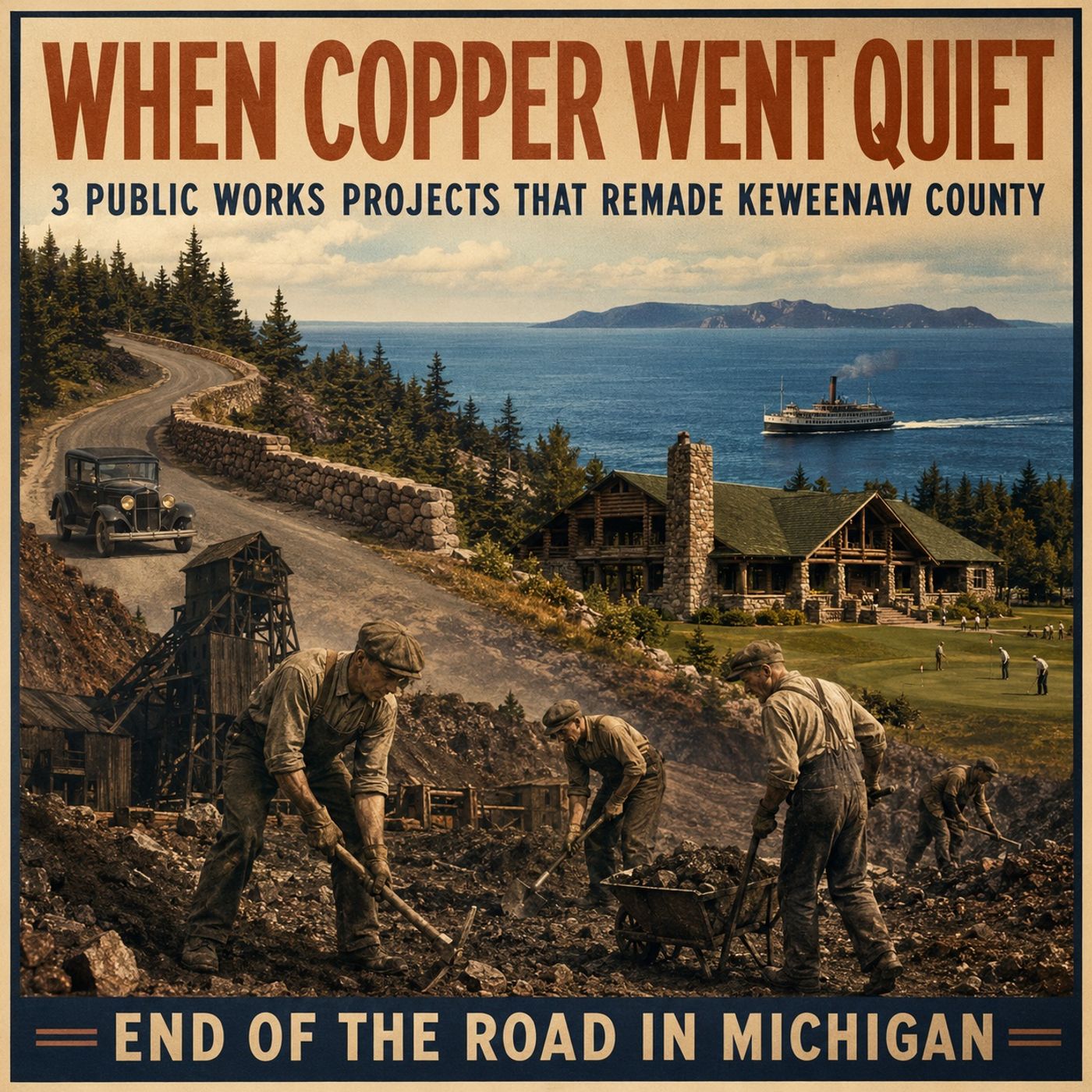 When Copper Went Quiet: Three Public Works Projects That Remade Keweenaw County | When copper mines closed during the Great Depression, more than three-quarters of Keweenaw County’s workforce was reportedly unemployed. Local and federal officials responded with three major public projects that helped create a new tourism economy at Michigan’s northern tip.This episode of End of the Road in Michigan examines the construction of Brockway Mountain Drive, Ocha Potter’s controversial Keweenaw Park and Golf Course, and the early development of Isle Royale National Park.Relief workers carved a road across Brockway Mountain, cleared thousands of trees and stumps for a publicly owned resort, and built early visitor facilities on Isle Royale. Critics dismissed Potter’s golf course as “Potter’s Folly,” but the lodge, road and national park remain important Keweenaw attractions more than 90 years later.These projects did not replace the copper industry or end the region’s hardship. They did, however, provide wages, build lasting public facilities and help establish Copper Harbor as a major Michigan vacation destination.#MichiganHistory #KeweenawPeninsula #CopperHarbor #IsleRoyale #GreatDepressionThe End of the Road in Michigan is a production of Thumbwind PublicationsThis episode includes AI-generated content. | 16m 51s | ||||||
| 8/5/26 | 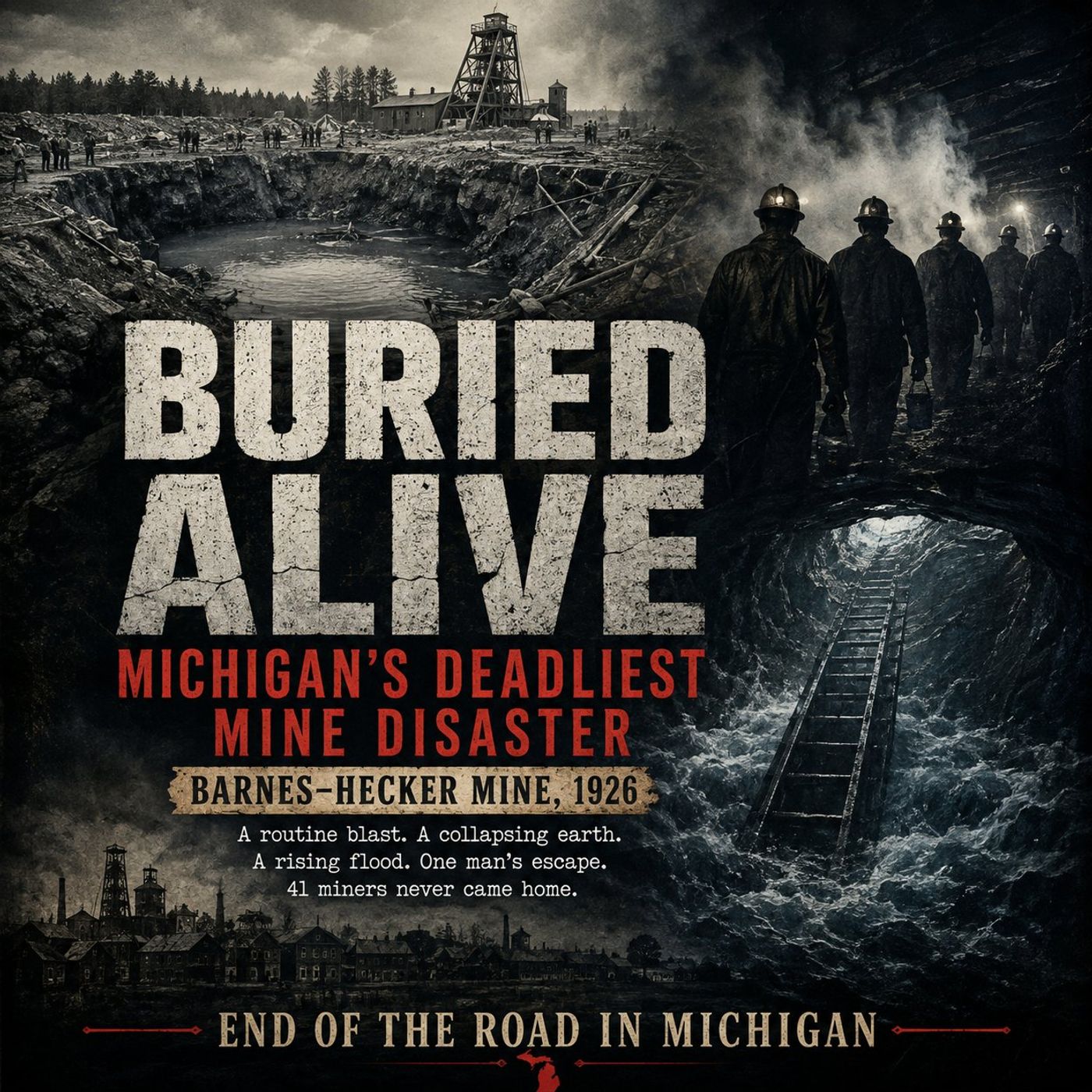 Buried Alive: Michigan's Deadliest Mine Disaster | The Barnes-Hecker Mine Collapse of 1926 | On a cold November morning in 1926, fifty-one miners descended into the Barnes-Hecker Mine near Ishpeming expecting another ordinary shift. Minutes later, a violent collapse sent water, mud, and thousands of tons of earth crashing into the underground workings.Only one miner escaped.Forty-one men were never recovered and remain buried beneath Michigan's Upper Peninsula nearly a century later.In this episode of End of the Road in Michigan, we reconstruct the disaster minute by minute using historical records, eyewitness accounts, and modern research. You'll hear the remarkable story of Wilfred Wills, the lone survivor who climbed nearly 800 feet to safety, the families who waited at the mine entrance for news that never came and the questions that still surround Michigan's deadliest mining disaster.This is more than the story of a mine collapse. It is a story about courage, sacrifice, and a community forever changed by one of the worst industrial tragedies in American history.Join us as we remember the fifty-one men of the Barnes-Hecker Mine.The End of the Road in Michigan is a production of Thumbwind Publications | 19m 37s | ||||||
| 8/1/26 | 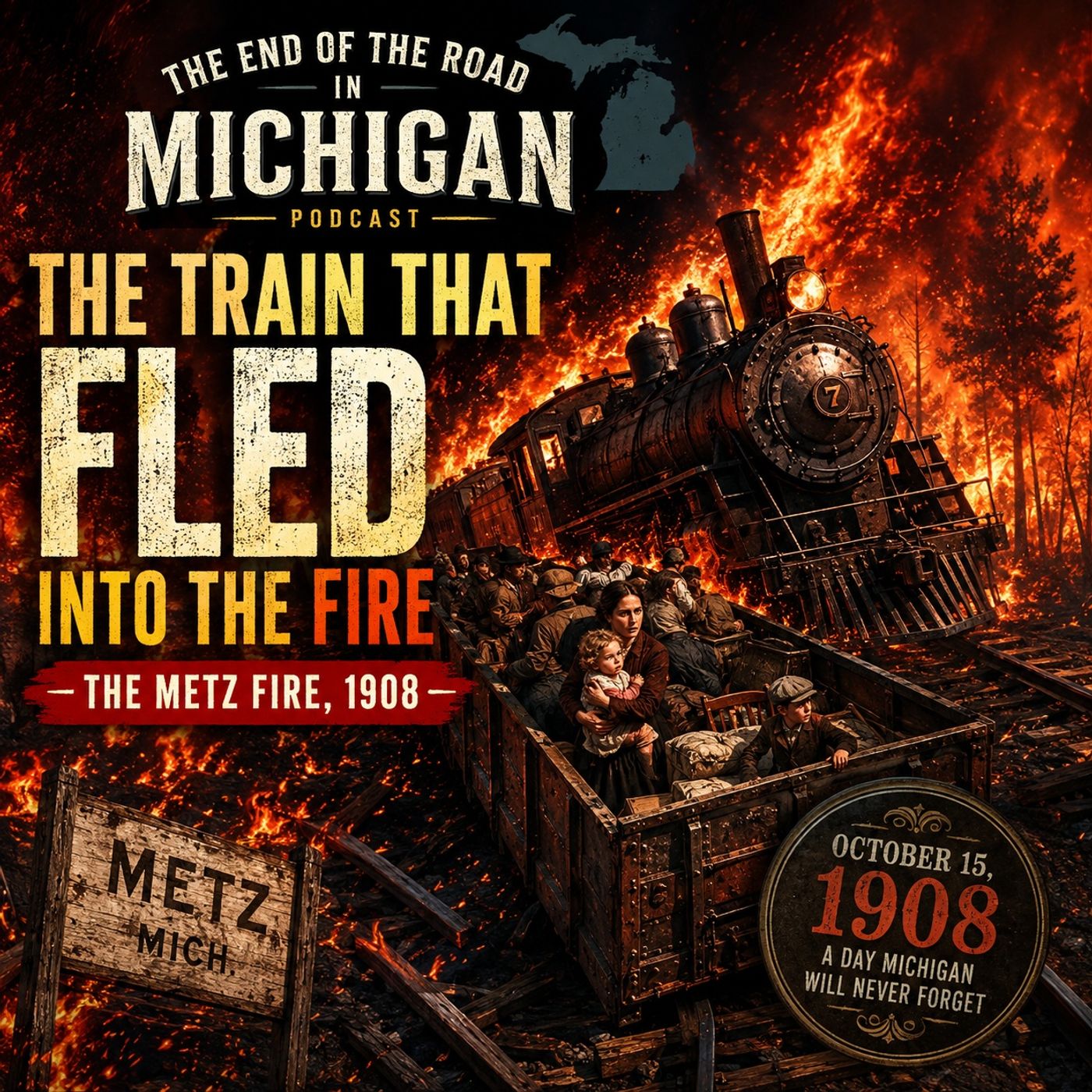 The Train That Fled Into the Fire: The Metz Disaster of 1908 | On Oct. 15, 1908, a freight train pulled away from Metz, Michigan, carrying families trying to escape one of the worst forest fires in state history.The passengers believed the railroad would carry them to safety. Instead, the train entered a burning corridor lined with cedar posts, railroad ties, hemlock bark and timber. Heat had damaged the tracks, and the locomotive derailed near Nowicki’s Siding. The open freight cars behind it became a deadly trap.In this episode of The End of the Road in Michigan, we revisit the Metz Fire of 1908, the doomed relief train and the families caught between flames on both sides of the track. The story includes the desperate evacuation, the survivors who crawled through smoke and burning ground, and the residents who stayed behind and lived.The fire killed 37 people across Presque Isle County, destroyed much of Metz and left hundreds without homes as winter approached. It also exposed the dangers created by logging waste, drought and the lack of organized emergency planning in early 20th-century Michigan.This is the story of a village built by the railroad—and the night that railroad carried its people into the fire.The End of the Road in Michigan is a production of Thumbwind PublicationsThis episode includes AI-generated content. | 13m 33s | ||||||
| 7/31/26 |  The Good Hart Murders: A Family, a Cottage and a Killer Who Walked Away | In June 1968, Richard and Shirley Robison took their four children to the family’s secluded summer cottage near Good Hart, Michigan. Twenty-seven days later, a caretaker entered the locked home and found all six members of the family dead.Investigators built a strong circumstantial case against Richard’s employee, Joseph Scolaro, pointing to missing business funds, an unexplained gap in his movements and links to weapons connected to the crime.But prosecutors never brought the case to trial, and Scolaro died before a jury could hear the evidence.In this episode of End of the Road in Michigan, we examine the crime scene, the delayed discovery, the prime suspect and the question that still divides investigators and true-crime researchers: Was the Good Hart case solved in everything but a courtroom?The End of the Road in Michigan is a production of Thumbwind PublicationsThis episode includes AI-generated content. | 13m 58s | ||||||
| 7/28/26 | 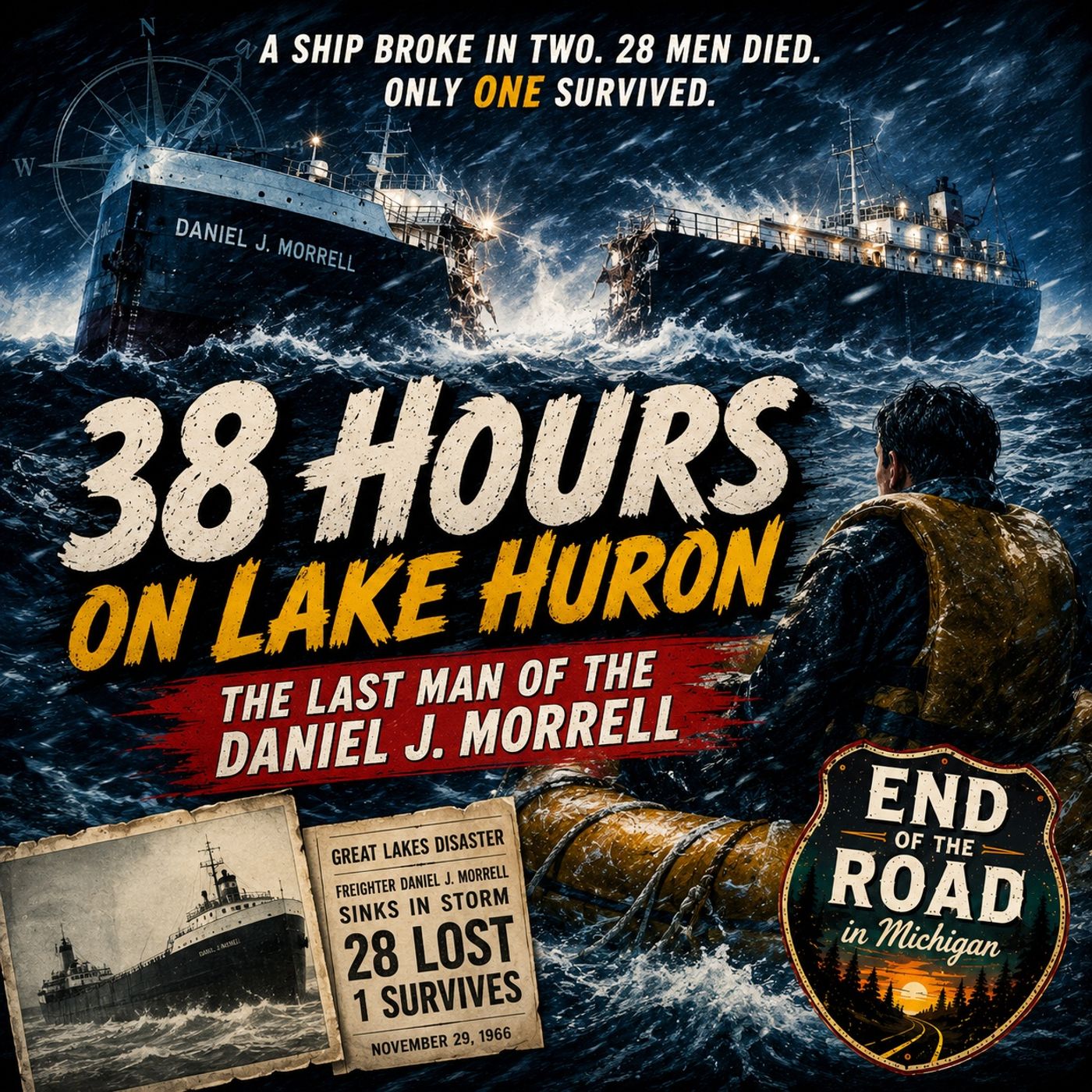 38 Hours on Lake Huron: The Last Man of the Daniel J. Morrell | Before dawn on Nov. 29, 1966, the Great Lakes freighter Daniel J. Morrell broke in two during a violent storm on Lake Huron.Twenty-nine men were aboard. Only one came home.Watchman Dennis Hale escaped onto a life raft with three crewmates. One by one, the other men died from exposure as the raft drifted through freezing spray, towering waves and two nights of darkness. Hale remained alone for 38 hours before a Coast Guard helicopter spotted movement on what appeared to be a raft carrying four bodies.In this episode of End of the Road in Michigan, we follow the Morrell’s final voyage, the terrifying sight of its powered stern racing through the storm, the delayed search and the remarkable survival of the man who lifted one arm toward the sky.The End of the Road in Michigan is a production of Thumbwind PublicationsThis episode includes AI-generated content. | 14m 32s | ||||||
| 7/27/26 |  The Senator Who Knew Too Much: Murder, Corruption and a Deadly Silence | On Jan. 11, 1945, Michigan state Sen. Warren G. Hooper was found shot to death in his car along M-99 near Springport. Four days later, he was expected to testify in a sweeping corruption investigation involving bribery, political influence and some of the most powerful figures in Michigan.Hooper was no innocent bystander. He had admitted taking bribes himself and agreed to cooperate with investigators in exchange for immunity. That made him a dangerous witness.In this episode of End of the Road in Michigan, we follow the roadside murder, the Purple Gang connection, the conspiracy convictions, the strange prison theory and the unanswered question that still hangs over the case more than 80 years later:Who killed Warren Hooper — and who wanted him silenced?The End of the Road in Michigan is a production of Thumbwind Publications | 7m 48s | ||||||
| 7/27/26 |  The Banker Who Robbed His Own Bank in Hudson | In 1864, a respected young banker in Hudson, Michigan, vanished with $60,000 in cash—money that belonged to townships, soldiers, and widows.His name was William Treadwell, and the bank he robbed was his own. This episode traces a Civil War–era crime that stunned the state: a carefully planned theft, a dramatic jailbreak, and a betrayal that ended in murder deep in the Ohio woods.It’s a true-crime story of greed, trust, and downfall—one of the strangest financial scandals in Michigan history.The End of the Road in Michigan is a production of Thumbwind Publications | 7m 48s | ||||||
| 7/25/26 |  Vanished Over Superior: The Kinross Intercept Mystery | On a cold November night in 1953, a U.S. Air Force jet vanished over Lake Superior while chasing an unidentified radar contact. The crew—Lt. Felix Moncla and Lt. Robert Wilson—were never found. In this episode, we dig into the facts behind the so-called Kinross Incident: radar records, Cold War tensions, conflicting official reports, and the moment two blips merged into one and disappeared.Was it a tragic accident, a Cold War misidentification—or something stranger? No speculation, just a sharp look at one of Michigan’s most enduring aviation mysteries.The End of the Road in Michigan is a production of Thumbwind Publications | 7m 25s | ||||||
| 7/25/26 | 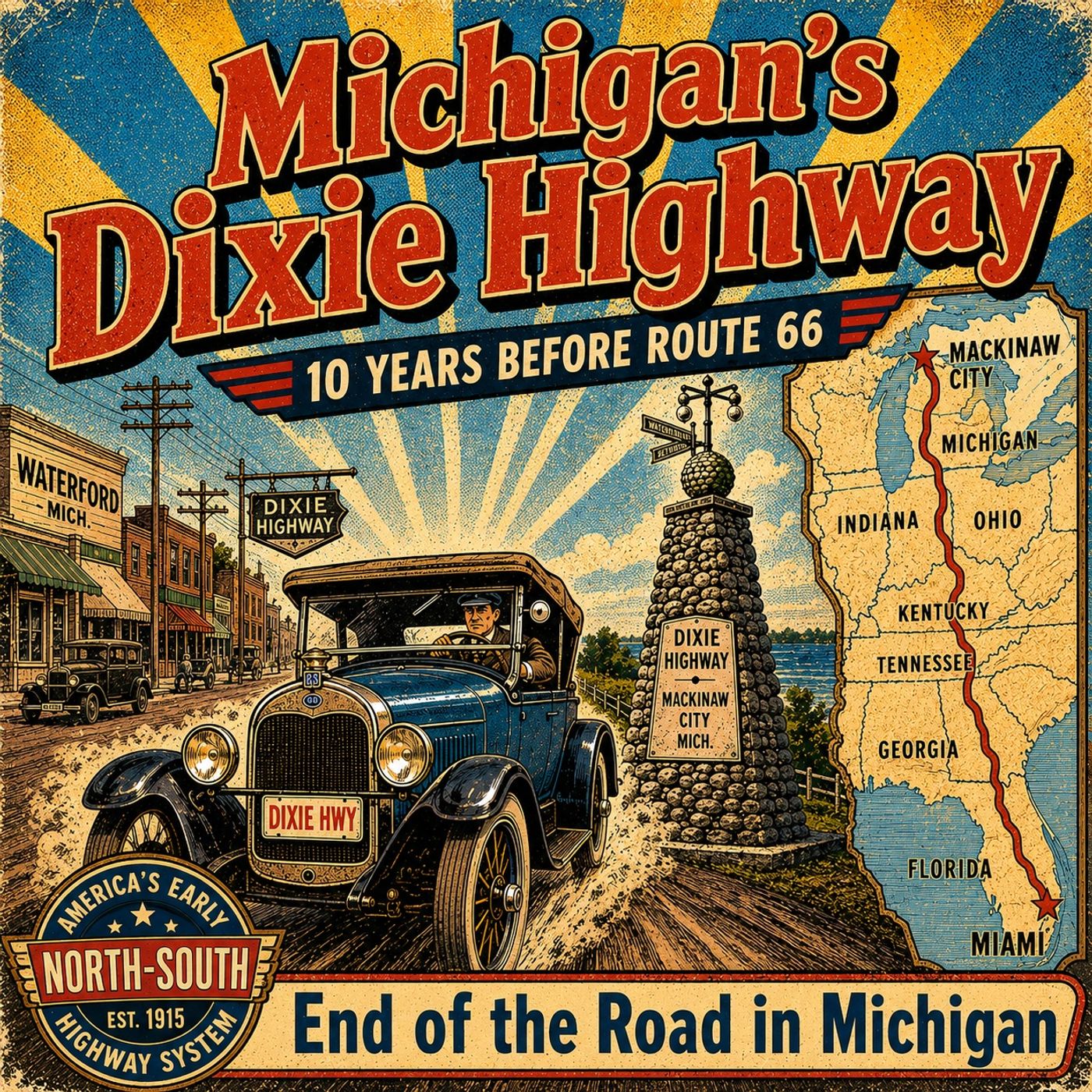 Michigan’s Dixie Highway - 10 years before Route 66 | Before Route 66 became an American road-trip icon, Michigan motorists were already following another ambitious highway south.In this episode of End of the Road in Michigan, we trace the history of the Dixie Highway, a sprawling early automobile route that linked Michigan with Florida beginning in 1915. Its eastern and western divisions crossed the Lower Peninsula, passed through communities such as Detroit, Waterford and Mackinaw City, and helped usher in a new era of tourism, roadside businesses and long-distance driving.We look at Carl G. Fisher’s role in promoting the route, Michigan’s push to become part of the system, the rough conditions early motorists faced, and the stone monument that once marked the highway at Mackinaw City.We also explain how the Dixie Highway predated Route 66 by more than a decade and how much of its route was later absorbed into numbered highways such as U.S. 31. Historic maps, postcards and photographs reveal a time when a “highway” could still mean dirt, gravel and uncertainty.This is the story of the road that pointed south — from the Great Lakes toward Miami — and helped change how Americans traveled. Follow End of the Road in Michigan for more stories from Michigan’s past.The End of the Road in Michigan is a production of Thumbwind Publications | 11m 28s | ||||||
| 7/11/26 | industrial historysugar production+4 | — | Republic Truck CompanySwift & Co. | Alma, Michigan | Alma Michigansugar beet+6 | — | 9m 03s | ||
| 7/1/26 | commercial fishingLeland history+4 | — | Thumbwind Publications | Leland MichiganLake Michigan+1 | Leland Michigancommercial fisheries+5 | — | 9m 50s | ||
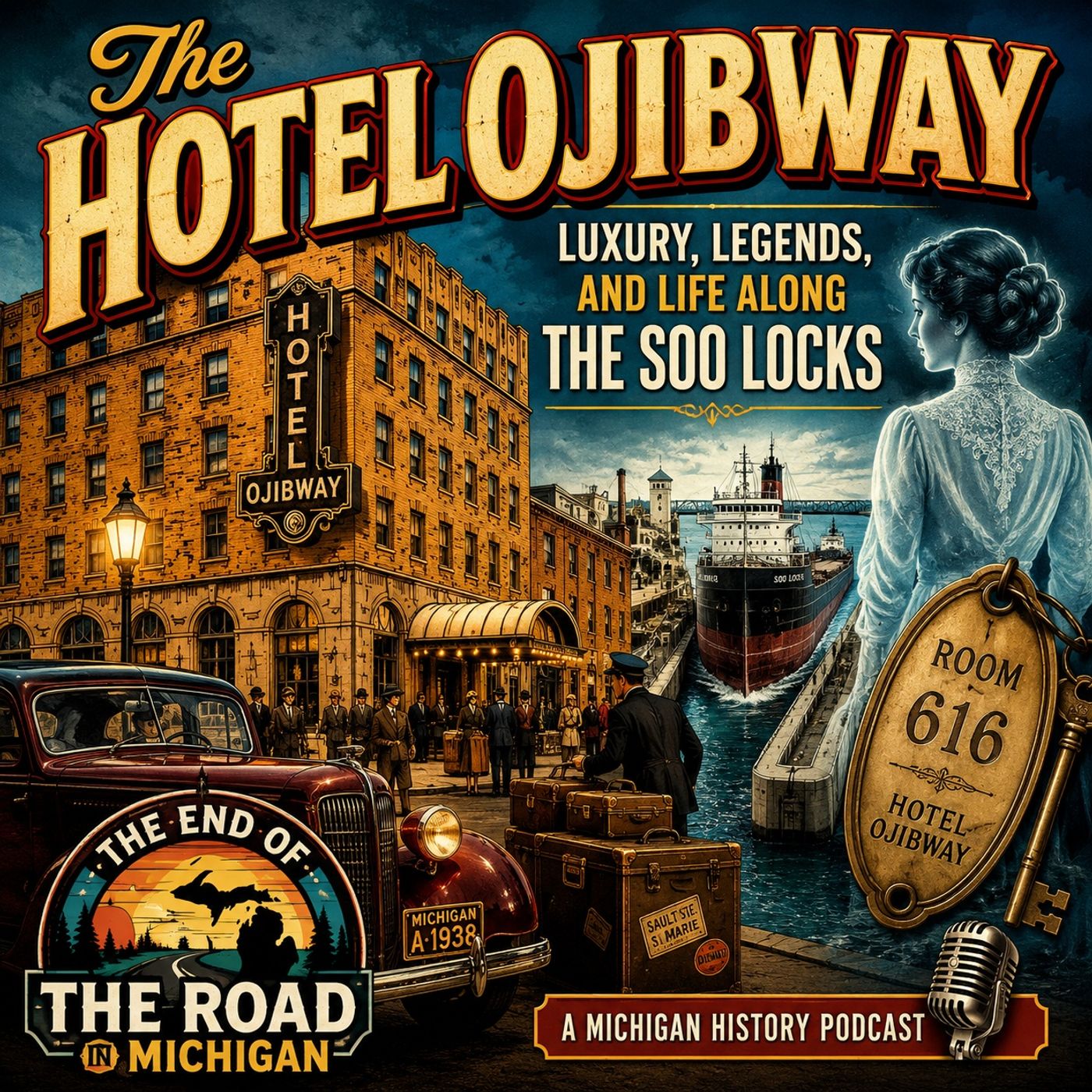
| 6/26/26 | historyhotels+4 | — | Hotel Ojibway | Sault Ste. MarieMichigan+1 | Hotel OjibwaySault Ste. Marie+5 | — | 4m 21s | ||
| 6/24/26 | ghost townsMichigan history+3 | — | — | MichiganUpper Peninsula+26 | ghost townsMichigan+6 | — | 18m 59s | ||
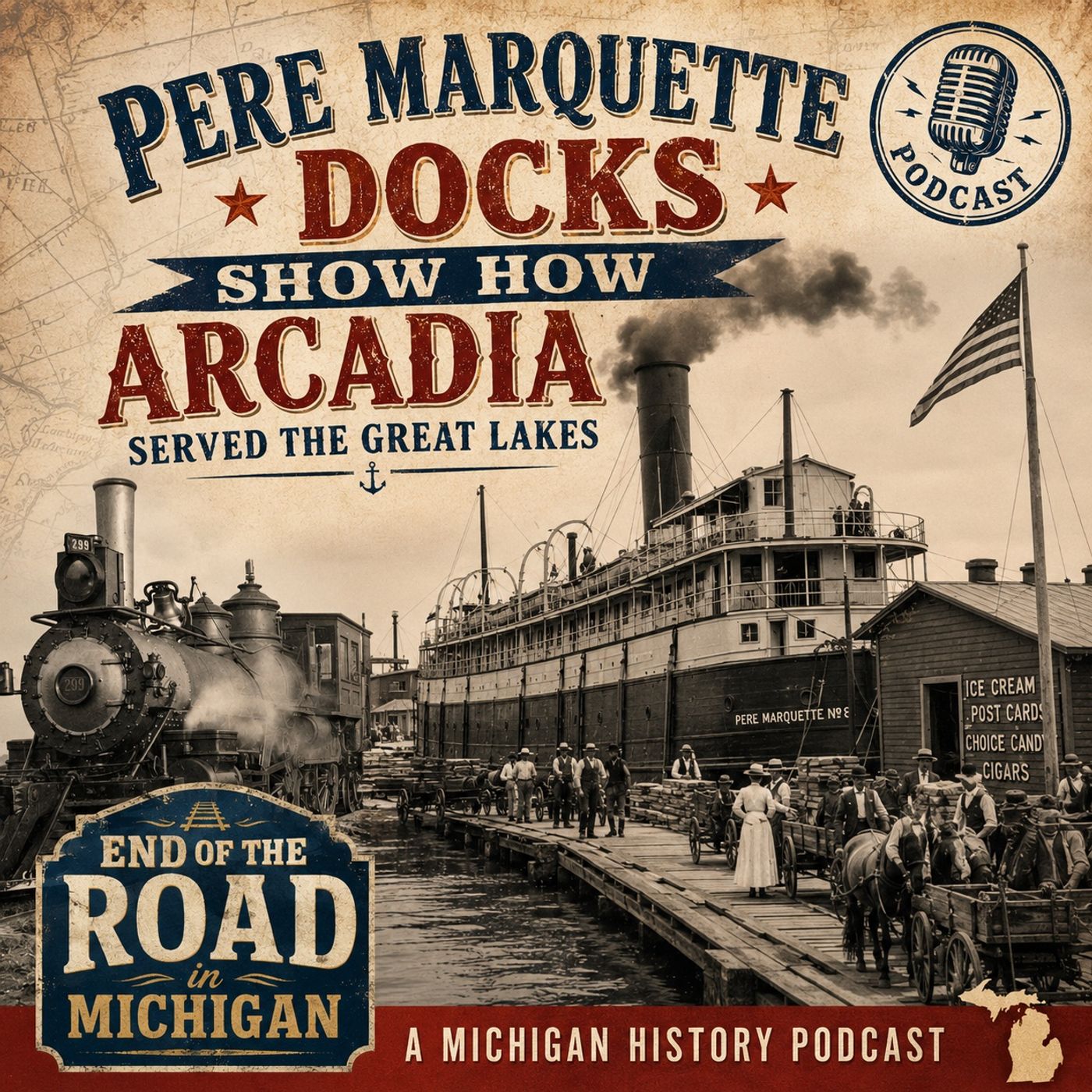
| 6/21/26 | Michigan historyGreat Lakes shipping+4 | — | Pere Marquette RailroadArcadia & Betsey River Railway+1 | ArcadiaLake Michigan | Pere Marquette docksArcadia Michigan+8 | — | 10m 40s | ||
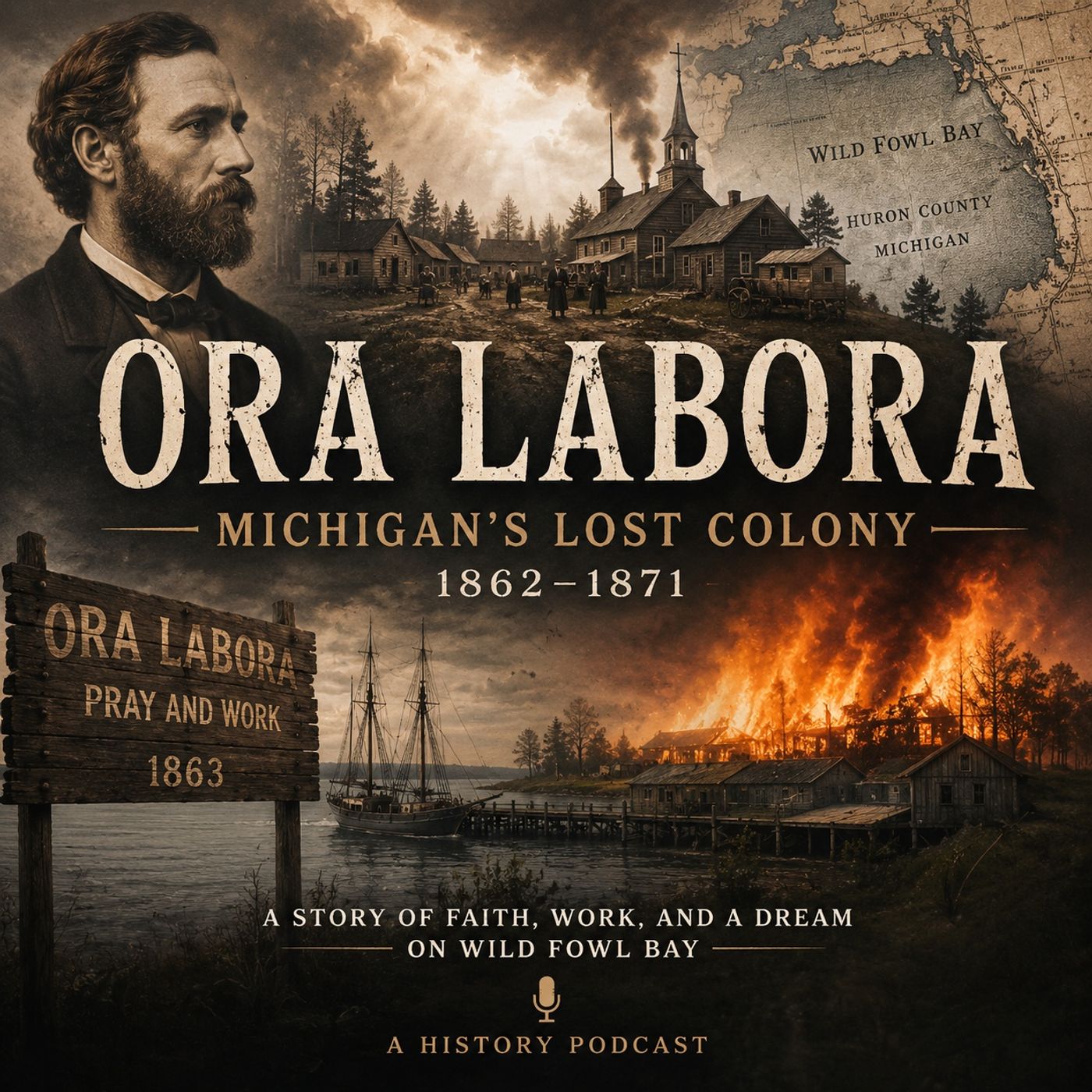
| 6/16/26 | historysettlement+5 | — | Harmony Society of Pennsylvania | Wild Fowl BayBay Port, Michigan+1 | Ora LaboraMichigan+7 | — | 12m 38s | ||
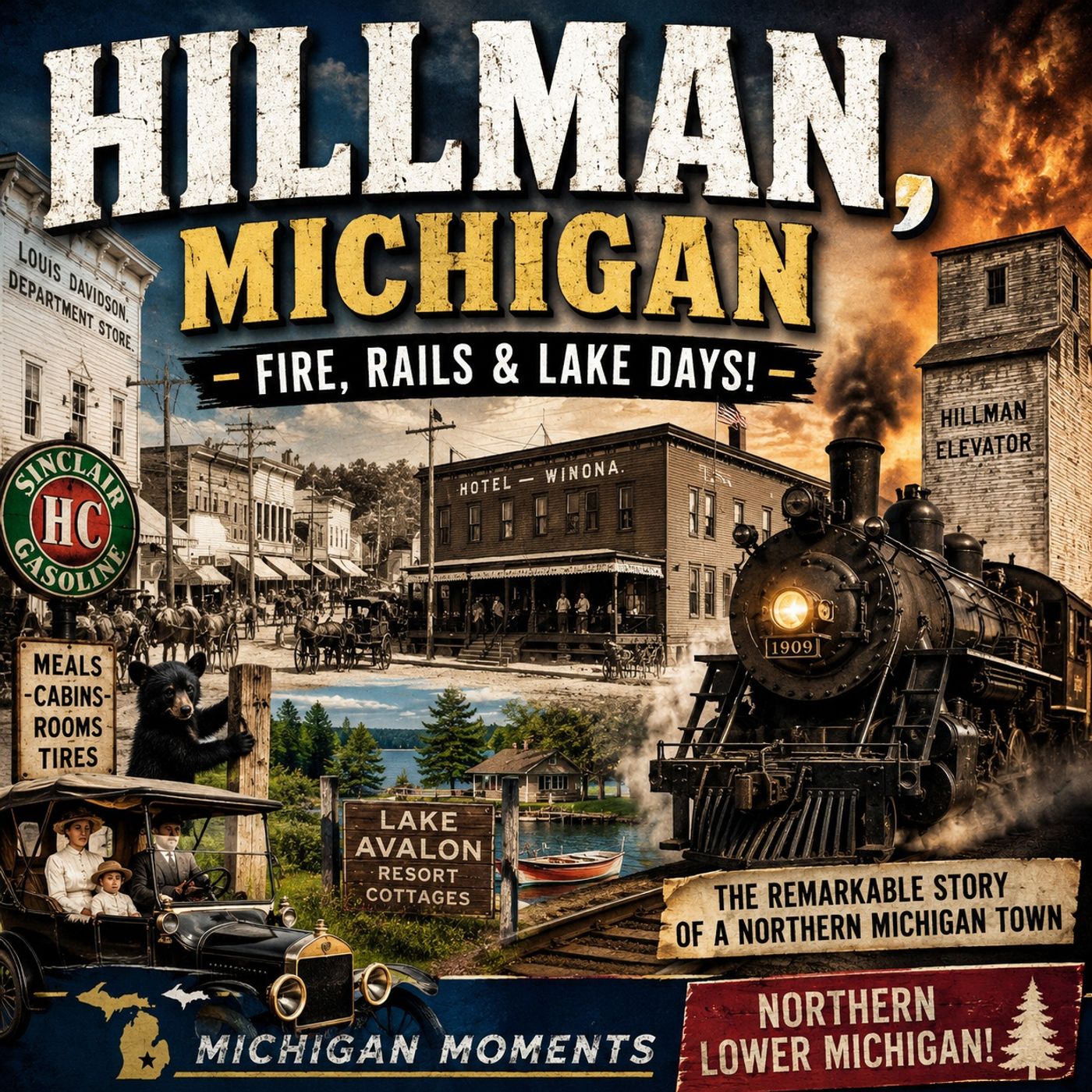
| 6/16/26 | Hillman historyMontmorency County+5 | — | Detroit & Mackinac RailwayLouis Davidson’s Department Store+2 | Hillman, MichiganMontmorency County+4 | HillmanMontmorency County+8 | — | 10m 46s | ||
| 6/3/26 | roadside attractionstourism+4 | — | Thumbwind Publications | MichiganSpikehorn Meyers+1 | roadside tourismMichigan attractions+3 | — | 12m 12s | ||
| 5/31/26 | Prohibitioncrime+4 | — | Thumbwind PublicationsPurple Gang | DetroitWindsor | Purple GangCollingwood Massacre+5 | — | 14m 05s | ||
| 5/29/26 | historical eventswildfires+3 | — | — | MichiganBay City+3 | Metz Firenorthern Michigan+5 | — | 15m 22s | ||
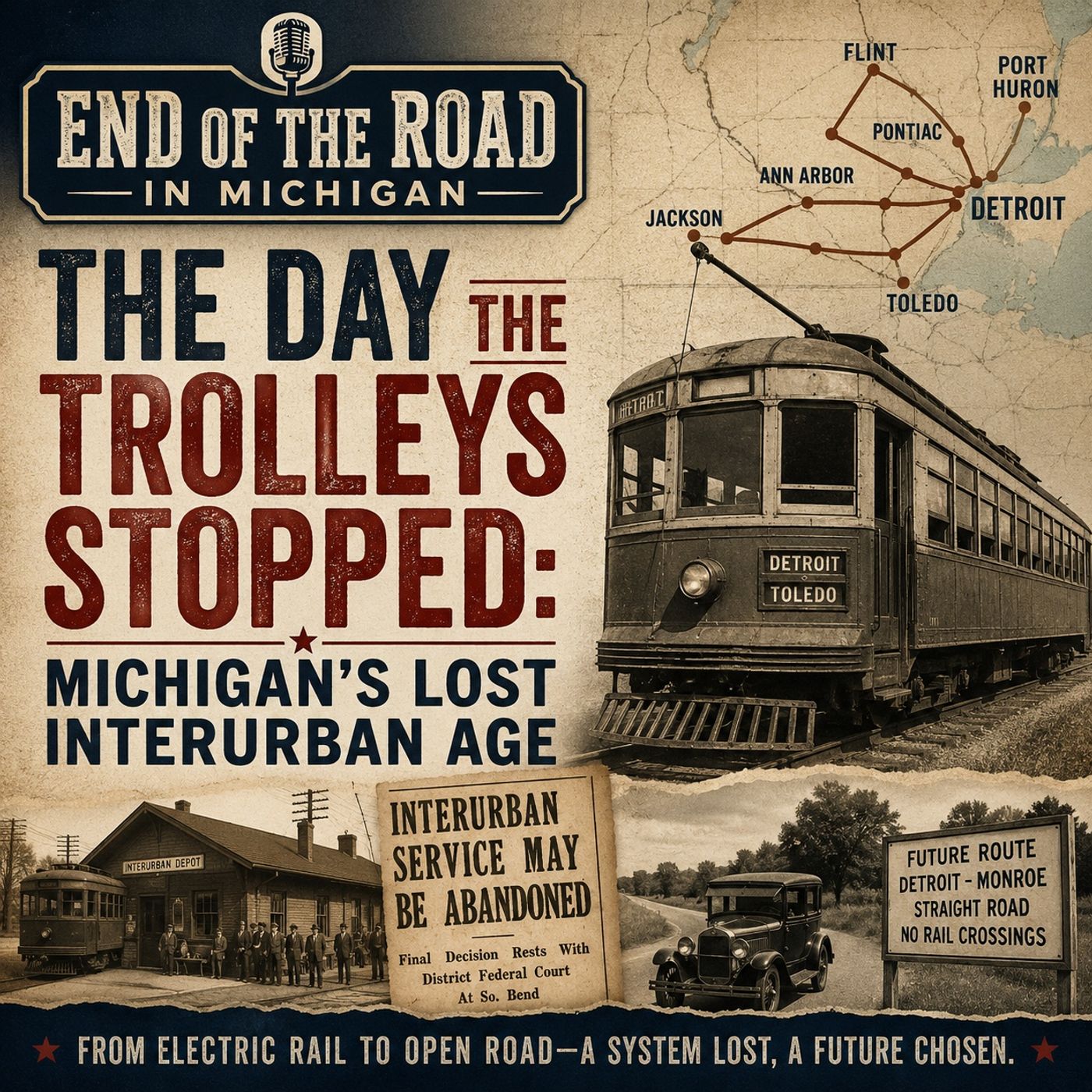
| 5/29/26 | electric railinterurban rail network+3 | — | — | MichiganDetroit+3 | Michiganinterurban+7 | — | 14m 16s | ||
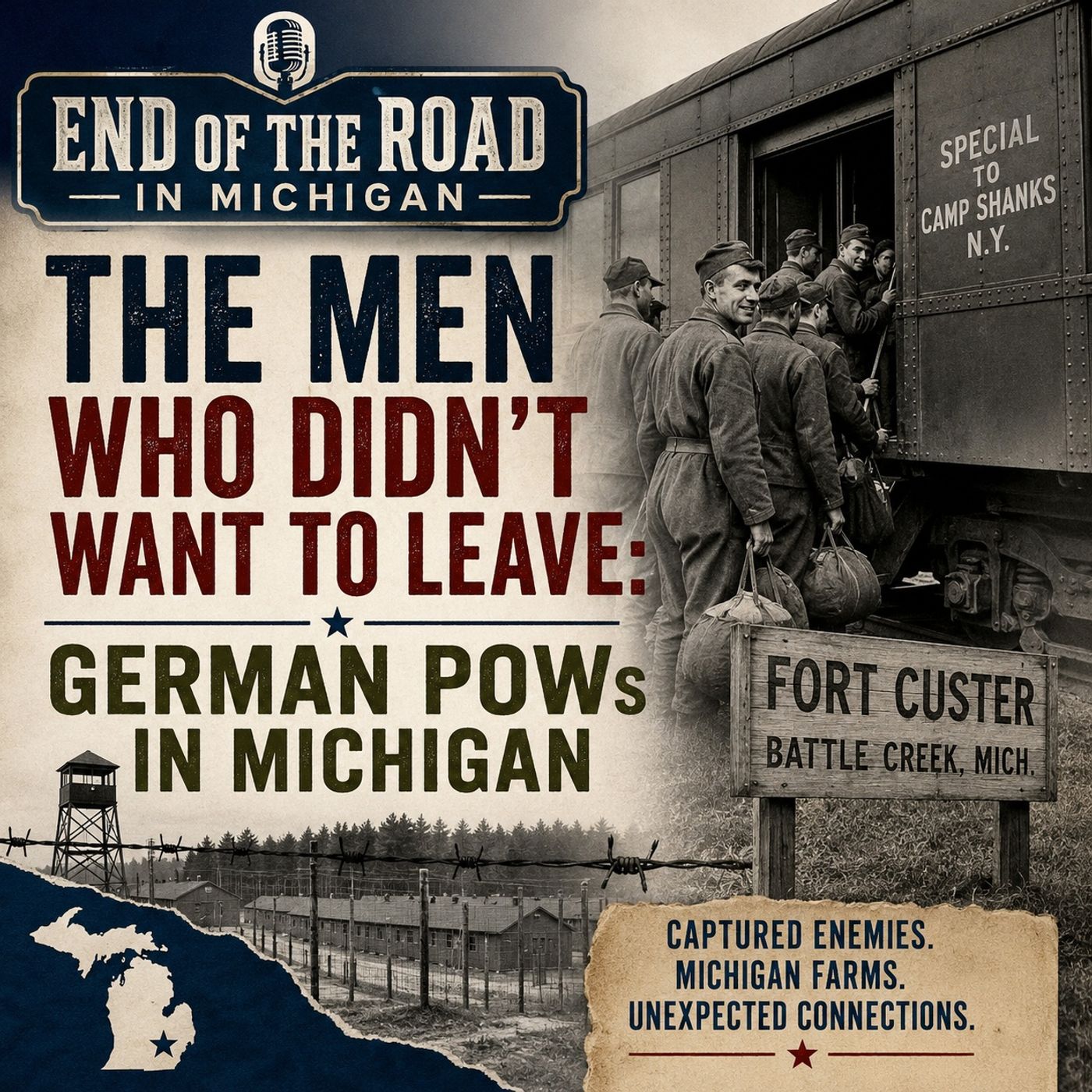
| 5/28/26 | German POWsWorld War II+4 | — | Thumbwind Publications | MichiganFort Custer+1 | German POWsMichigan+5 | — | 12m 45s | ||
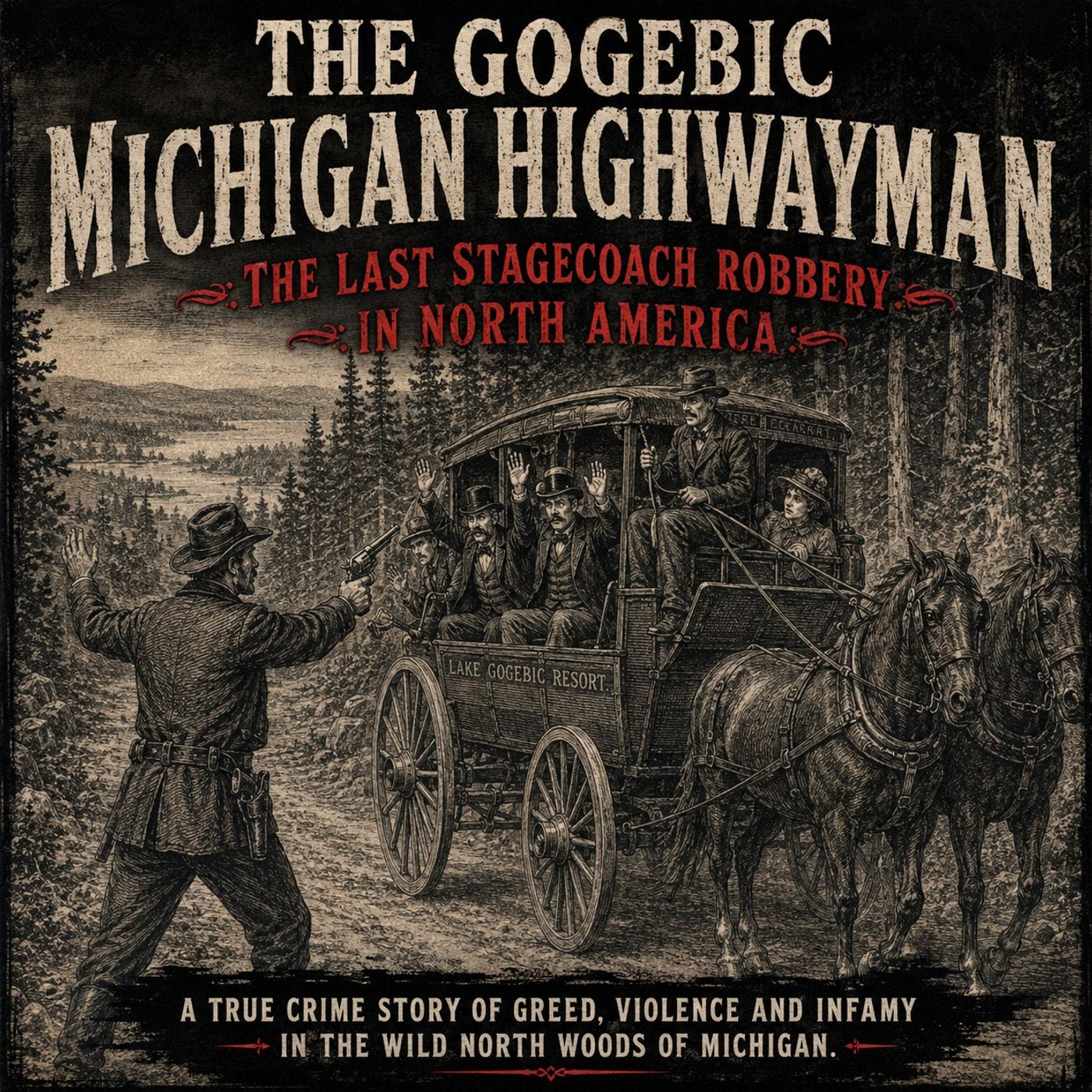
| 5/27/26 | true crimeMichigan history+3 | — | Milwaukee, Lake Shore & Western Railroad | Lake GogebicGogebic County+1 | Gogebic Highwaymanstagecoach robbery+3 | — | 9m 10s | ||
| 3/13/26 | historymusic+3 | — | Michigan’s first state parkInterlochen Arts Academy | Interlochen, MichiganMichigan | InterlochenMichigan+3 | — | 8m 04s | ||
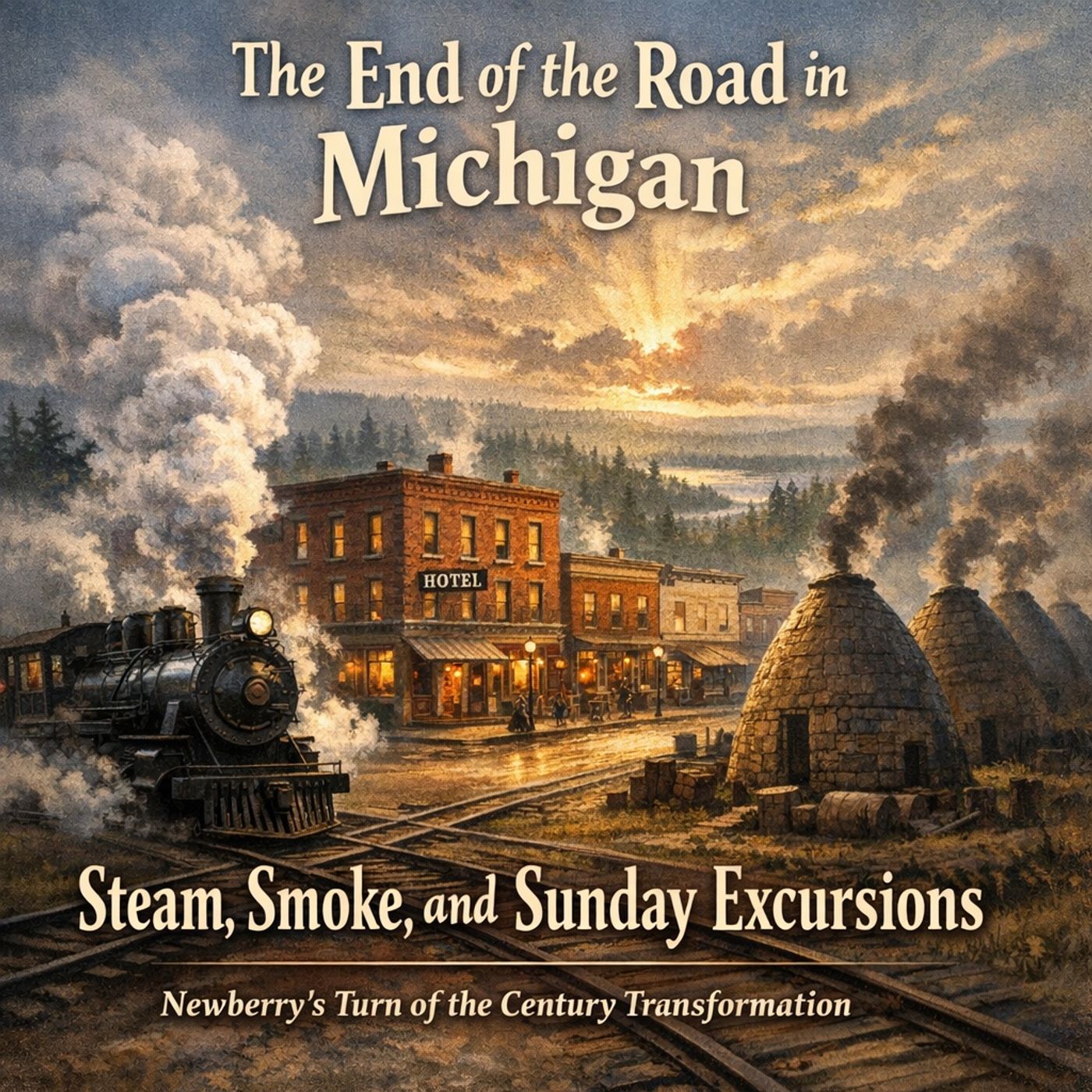
| 2/27/26 | railroadstimber economy+4 | — | Thumbwind Publications | Newberry, MichiganLuce County+1 | NewberryMichigan+5 | — | 7m 49s | ||







Showing 25 of 112
Pitch Fit is a Pro feature
See how bookable this show is for guests, which brands already advertise, the per-episode ad value, and the best-fit guest and sponsor profile. The numbers are blurred on the free plan.
How readily this show books outside guests like you.
How proven this show is for host-read sponsorships.
For Guests
ProFor Advertisers
ProUpgrade to Pro to unlock guest cadence, sponsor categories, fit scores, and per-episode ad value for this show.