

Insights from recent episode analysis
Audience Interest
Podcast Focus
Publishing Consistency
Platform Reach
Insights are generated by CastFox AI using publicly available data, episode content, and proprietary models.
Total monthly reach
Estimated from 8 chart positions in 8 markets.
By chart position
- 🇬🇧GB · Earth Sciences#7630K to 100K
- 🇨🇦CA · Earth Sciences#9130K to 100K
- 🇦🇺AU · Earth Sciences#1045K to 30K
- 🇺🇸US · Earth Sciences#1235K to 30K
- 🇯🇵JP · Earth Sciences#9010K to 30K
- Per-Episode Audience
Est. listeners per new episode within ~30 days
48K to 170K🎙 Weekly cadence·126 episodes·Last published 2w ago - Monthly Reach
Unique listeners across all episodes (30 days)
96K to 340K🇬🇧29%🇨🇦29%🇦🇺9%+5 more - Active Followers
Loyal subscribers who consistently listen
29K to 102K
Market Insights
Platform Distribution
Reach across major podcast platforms, updated hourly
Total Followers
—
Total Plays
—
Total Reviews
—
* Data sourced directly from platform APIs and aggregated hourly across all major podcast directories.
On the show
Recent episodes
Battelle's Chlorinated Conference: PFAS, AI, and What's Next
Jun 9, 2026
Unknown duration
Rohail Khan on Closing C-Suite Deals and Beating the No Decision Trap
May 26, 2026
Unknown duration
ToxiMapp: Mapping 1,900 Toxins Near Your Home
May 12, 2026
Unknown duration
Microplastics, CCL 6 and EPA Drinking Water Policy with Megan Quinn of Waste Dive
Apr 28, 2026
Unknown duration
Inside the $8 Billion DOE Nuclear Waste Cleanup Program: Steve Moore on Veolia's Federal Services
Mar 17, 2026
Unknown duration
Social Links & Contact
Official channels & resources
Official Website
Login
RSS Feed
Login
| Date | Episode | Description | Length | ||||||
|---|---|---|---|---|---|---|---|---|---|
| 6/9/26 | 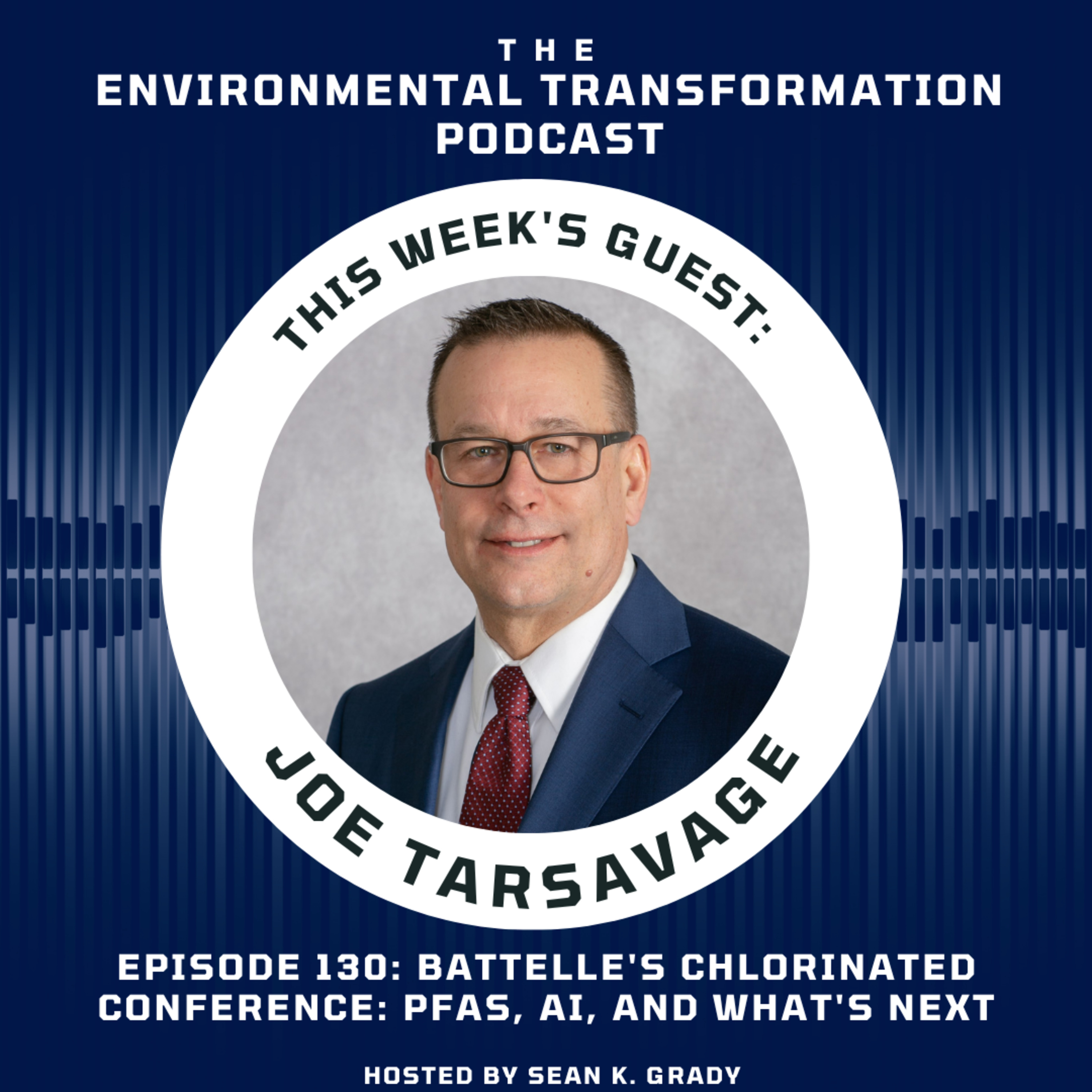 Battelle's Chlorinated Conference: PFAS, AI, and What's Next | Battelle's Chlorinated Conference draws 1,500 environmental professionals from 23 countries, and its division manager explains why PFAS treatment is pushing the industry to its limits.Joe Tarsavage, Division Manager of Environmental Solutions at Battelle, discusses the 30-year history of the Chlorinated Conference, how PFAS contamination has reset treatment standards from two nines to five or six nines of removal, and why that gap is driving rapid innovation across the remediation sector. He also addresses how artificial intelligence is beginning to reshape site investigation, data analysis, and client reporting, and why the industry is only scratching the surface of what that technology can do.Tarsavage details Battelle's expanding conference portfolio, including the upcoming Sediments Conference in Austin in January 2027 and the newly rebranded Battelle Bloom Conference in June 2027, which will broaden the traditional bioremediation platform to include critical minerals and land optimization. He also touches on emerging contaminants now appearing on EPA's CCL 6 list, including microplastics and 6PPD-quinone, and what it will take for laboratories and researchers to develop reliable analytical methods for those compounds.The conversation also covers Battelle's student mentoring program, the value of deliberate mentorship in a field where it no longer happens organically, and what Tarsavage is asking conference participants to help shape for future events.#Battelle #PFAS #EnvironmentalConsulting #remediation #technologyCHAPTERS:0:00 Introduction and Joe Tarsavage's Role at Battelle0:58 History and Growth of the Chlorinated Conference2:55 PFAS as the Dominant Industry Topic5:00 Building the Conference Platform and Steering Committee6:05 AI and Digital Technology in Environmental Work8:50 How Reporting Timelines Have Changed Over 30 Years9:45 Poster Sessions, Student Competition, and Mentoring12:45 What Has Changed Most Over the Conference's 30 Years14:45 Vapor Intrusion, PFAS, and Evolving Regulations16:30 PFAS Treatment Challenges and Innovation17:50 Where Battelle and the Conference Are Headed Next19:35 Emerging Contaminants: Microplastics and 6PPD-Quinone21:15 Battelle's Role in Methods Development22:00 Conference Venue Plans and Future Locations23:45 The Value of Networking at Industry Conferences25:30 Closing RemarksReply | — | ||||||
| 5/26/26 | 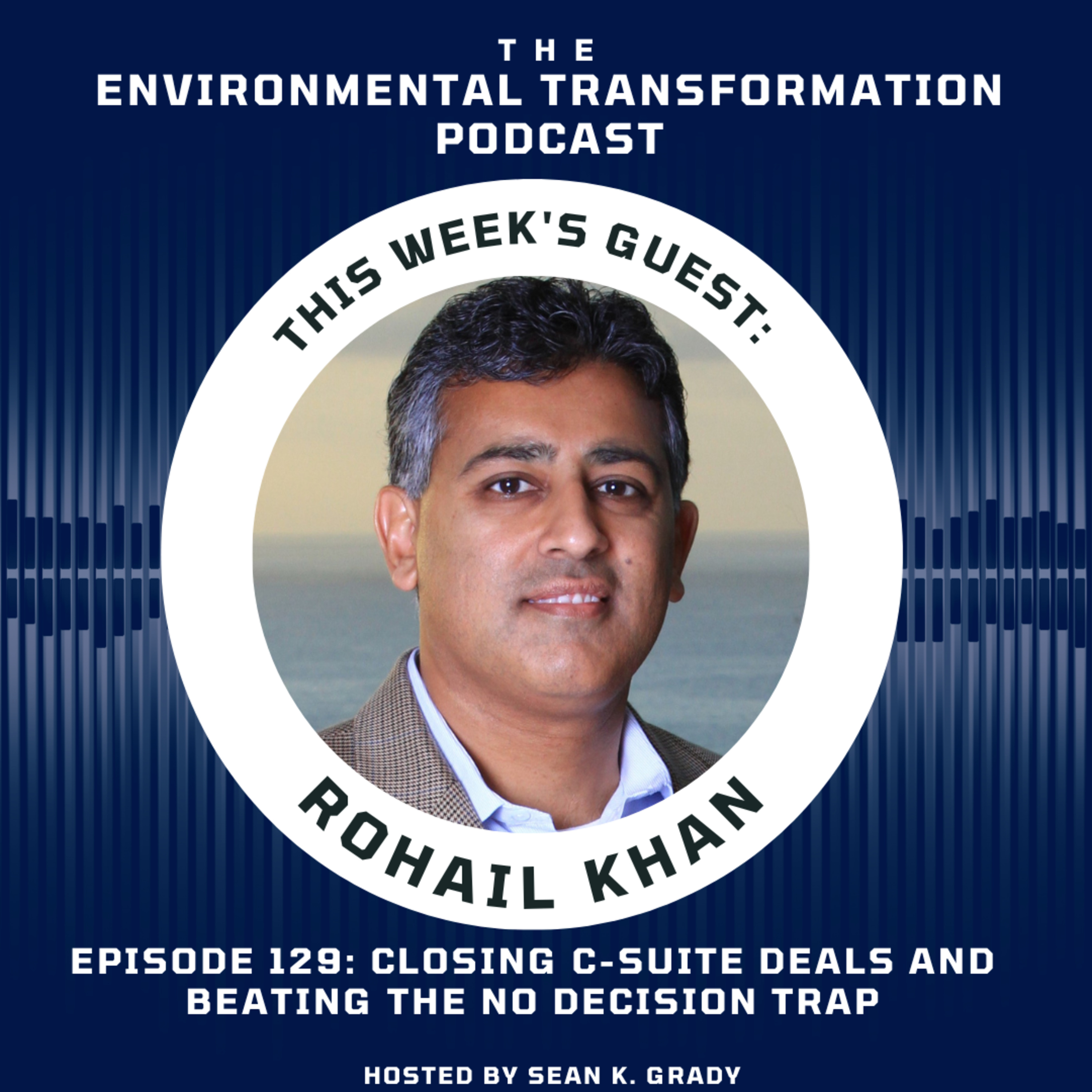 Rohail Khan on Closing C-Suite Deals and Beating the No Decision Trap | Forty percent of prospects never make a buying decision, and the reason is rarely the competition. Rohail Khan, founder of Avant.AI and executive consultant for Corporate Visions, breaks down why the status quo is the most dangerous competitor in any sales cycle and how to defeat it.Khan draws on 25 years as a C-suite executive, including roles at Xerox and Bank of America, to explain what CEOs and CFOs actually pay attention to during a pitch and why most sales teams lose the room within the first five minutes. The conversation covers how to use earnings call transcripts to find unconsidered risks, how to escape the commodity trap by shifting from features to financial outcomes, and why "you phrasing" transfers ownership to the buyer in ways that change the entire power dynamic of a pitch.Host Sean Grady also gets into Daniel Kahneman's prospect theory, the EBITDA pivot, the value wedge, and the three deadly sins of sales messaging. Khan offers specific AI prompt strategies using tools like Perplexity and Gemini to surface insights that clients do not yet know they need.Whether you manage large accounts, prepare executive proposals, or are trying to break through to the C-suite for the first time, this conversation delivers a concrete framework for turning uncertainty into urgency.Learn more about Corporate Visions at corporatevisions.com. Visit Sean Grady's website at seankgrady.com to sign up for the newsletter.#SalesPodcast #CSuiteStrategy #EnvironmentalTransformationTAGS:Rohail Khan, Avant AI, Corporate Visions sales training, C-suite selling, executive sales strategy, no decision sales, EBITDA pivot, value wedge, prospect theory, Daniel Kahneman loss aversion, B2B sales podcast, sales training podcast, closing deals, unconsidered needs, sales messaging, commodity trap, Environmental Transformation PodcastCHAPTERS:0:00 Introduction and Rohail Khan's Background2:55 The Elevator Pitch and C-Suite Preparation8:00 Understanding the CEO, CFO, and COO Mindset11:30 Using Earnings Calls for Sales Research15:55 Sponsor Messages16:40 Why No Decision Is the Biggest Competitor19:45 Finding Unconsidered Needs With AI Research25:30 Biggest Preparation Mistakes in Executive Pitches29:30 You Phrasing and the Power Dynamic Shift31:45 The EBITDA Pivot and Avoiding Speeds and Feeds34:30 Breaking Through the Procurement Gatekeeper38:30 The Value Wedge and Defensible Differentiation41:00 Making the Customer the Hero Through Storytelling43:00 Decision-Making Psychology and Managing Risk47:30 Prospect Theory and the Cost of Inaction52:30 Telling Details Versus Superlatives in a Pitch53:45 Reframing Emotional Anchors With Analogies55:30 The Three Deadly Sins of Sales Messaging56:30 How to Connect With Corporate Visions | — | ||||||
| 5/12/26 | 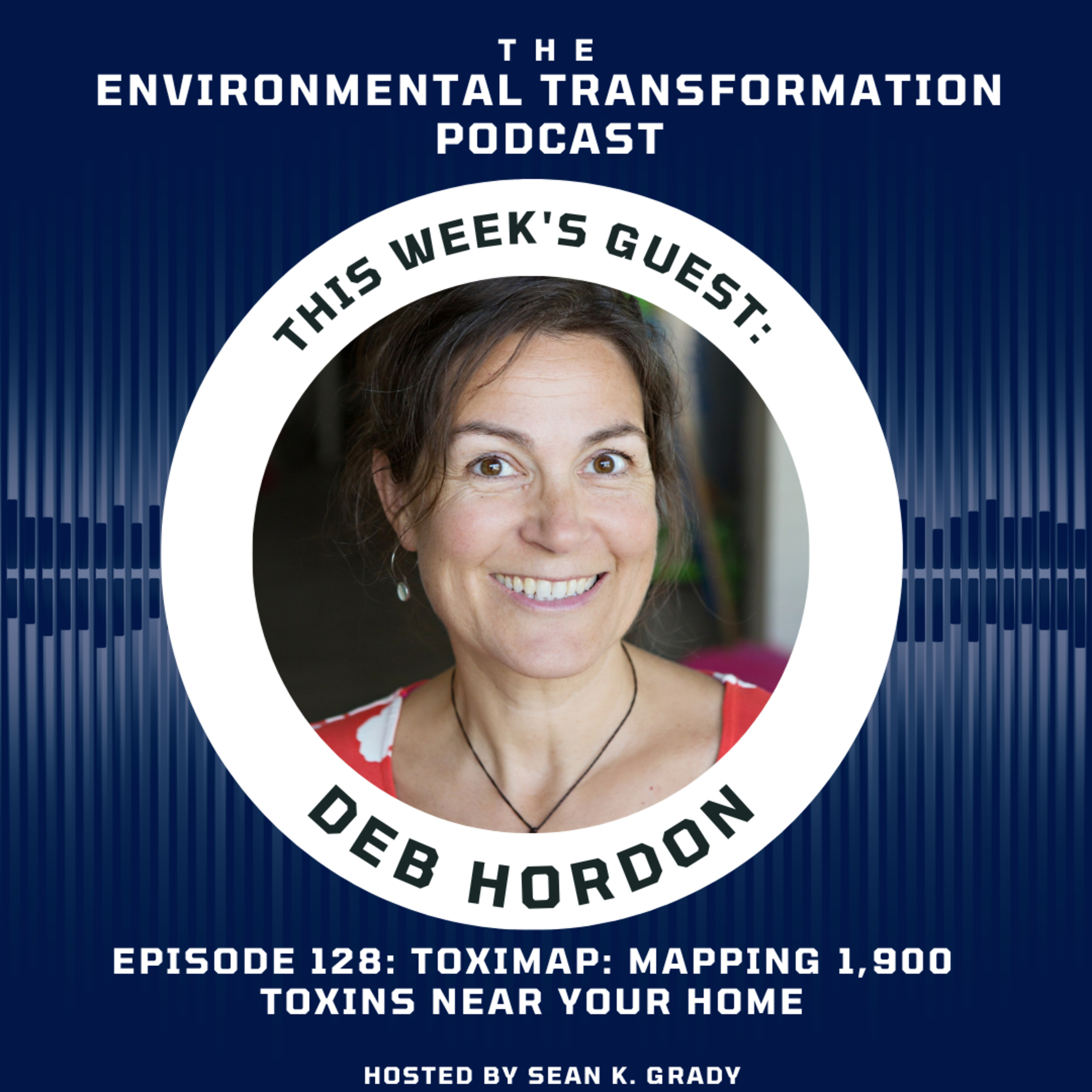 ToxiMapp: Mapping 1,900 Toxins Near Your Home | ToxiMapp aggregates over 60 geospatial environmental datasets to show users exactly which toxicants are present in the air, water, and soil near any U.S. address, and the platform's founders say most people have no idea what surrounds them.Deb Hordon, Ph.D., founder and CEO of ToxiMapp, built the platform after moving her infant daughter into two separate communities with cancer clusters. Neither location looked dangerous. One was a picturesque seacoast area between Maine and New Hampshire with expensive real estate and top-rated schools. The data told a different story. Peter Cada, chief environmental scientist at ToxiMapp and an instructor at Duke University's Nicholas School of the Environment, joined to build the underlying data infrastructure, drawing on his prior work contributing to the EPA's EnviroAtlas.The episode covers how ToxiMapp's patent-pending toxin intensity scoring system works across air, water, and land media; why the platform is positioned as a shortcut for Phase I environmental site assessments and NEPA reviews; how partnerships with healthcare providers and diagnostic labs like Mosaic Diagnostics connect environmental exposure data to clinical testing; and what the roadmap looks like as the platform approaches 1,900 tracked toxicants and adds surface water and expanded air quality datasets.The conversation also addresses PFAS contamination, the ethics of publishing environmental data near residential properties, crowdsourcing as a future data collection strategy, and the platform's current pricing model starting at $19.99 per address search.#EnvironmentalHealth #ToxiMapp #toxins #data #mapping #environment #riskmanagement #pfas TAGS:environmental toxins map, toxic neighborhood score, environmental site assessment tool, PFAS tracking, EPA ECHO alternative, EnviroAtlas, Mosaic Diagnostics, cancer cluster, environmental intelligence platform, geospatial environmental data, phase one ESA, brownfield sites, Superfund sites, environmental consulting tools, air water soil contamination, environmental health podcast, GIS environmental analysisLearn more at https://www.toximapp.com/Thanks to our Sponsors: Cascade Environmental, E-Tank & E-Pump, and WASTELINQ | — | ||||||
| 4/28/26 | 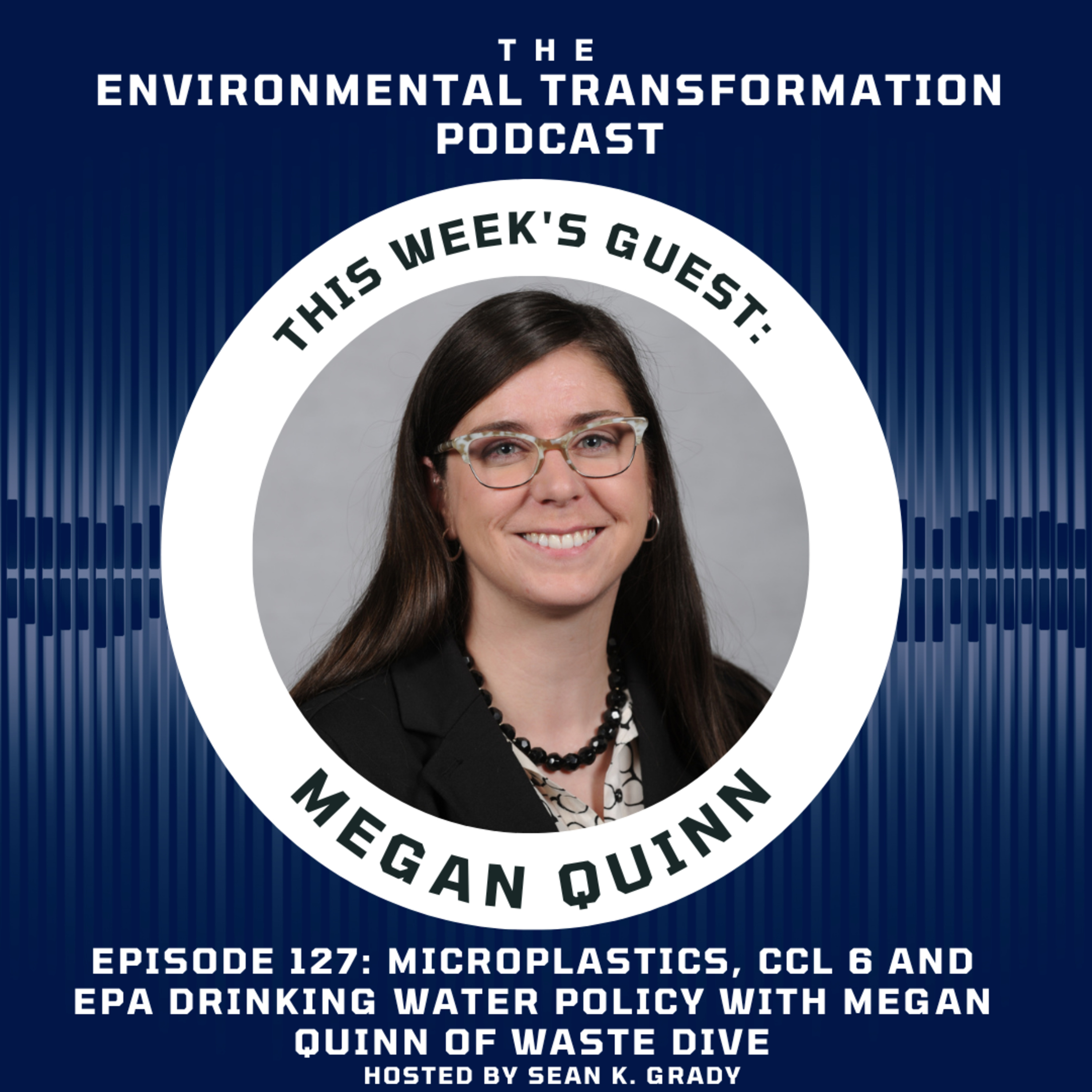 Microplastics, CCL 6 and EPA Drinking Water Policy with Megan Quinn of Waste Dive | Microplastics appear on a federal contaminant watchlist for the first time, and the regulatory path forward remains far from certain. Megan Quinn, senior reporter at Waste Dive, breaks down what the EPA's proposed new Contaminant Candidate List 6 actually means for water utilities, landfill operators, and chemical manufacturers, and why the lack of standardized test methods could slow any future regulation significantly.Quinn explains how the CCL process works, who sits on the newly reshuffled Science Advisory Board, and why the parallel push from the MAHA movement adds political complexity to what is otherwise a science-driven process. The conversation draws on direct parallels to how PFAS moved through the regulatory pipeline over more than a decade, from early CCL listings to drinking water standards to hazardous substance designations, offering a framework for understanding how microplastics and newly listed pharmaceuticals might follow a similar, lengthy trajectory.The episode also covers the dissolution of the EPA's Office of Research and Development, New Mexico's move to regulate PFAS as a hazardous waste, the Department of War's updated PFAS destruction and disposal guidance, and what the rollback of certain PFAS drinking water standards signals about the current administration's regulatory priorities. The public comment period for the draft CCL 6 closes June 5, 2026.Megan Quinn covers state and federal recycling policy, PFAS, chemical recycling, environmental justice, and EPA regulatory changes for Waste Dive.0:00 Introduction and Megan Quinn's Background1:55 What Is the Contaminant Candidate List 65:00 Public Comment Period and Finalization Timeline6:45 Science Advisory Board Changes Under Trump8:45 Who Is Affected by CCL 610:30 Should Companies Begin Sampling Now13:00 Lack of Analytical Methods for Microplastics15:10 EPA Research Capacity and Budget Cuts17:30 Private Industry's Role in Federal Research19:15 Public Concerns and Red Flags21:00 PFAS as a Regulatory Roadmap for Microplastics25:45 How Waste Dive Covers EPA Announcements28:00 New Mexico PFAS Rules and PFAS Incineration30:15 Advice for Stakeholders Watching CCL 633:30 Who Is Monitoring for Microplastics Now34:30 Closing Remarks | — | ||||||
| 3/17/26 | 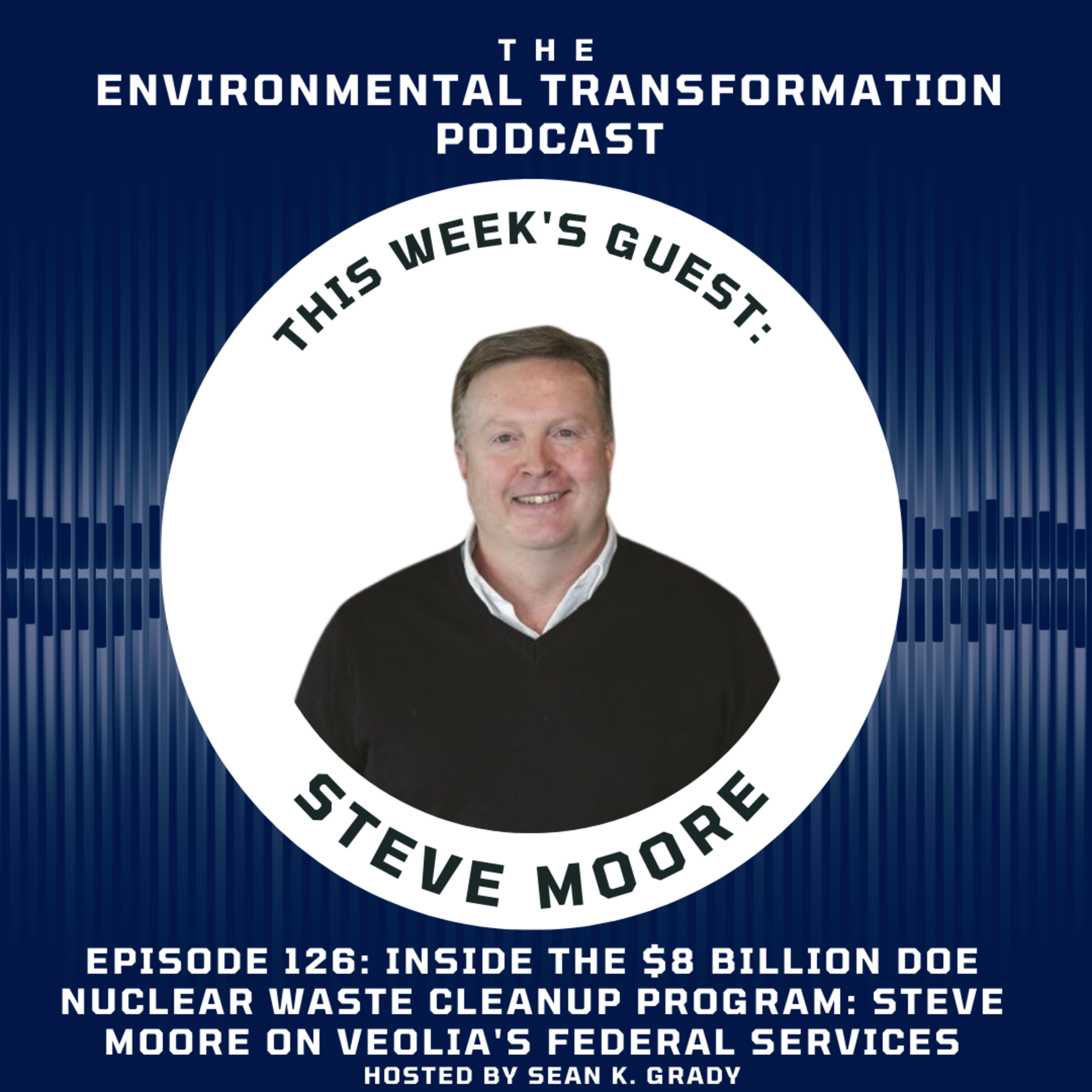 Inside the $8 Billion DOE Nuclear Waste Cleanup Program: Steve Moore on Veolia's Federal Services | The U.S. Department of Energy spends roughly $8 billion annually cleaning up nuclear waste from Manhattan Project-era sites like Hanford, Washington and Oak Ridge, Tennessee. On this episode of the Environmental Transformation Podcast, host Sean Grady sits down with Steve Moore, president and CEO of Veolia Nuclear Solutions Federal Services Group, to discuss the agency's most pressing environmental liabilities and innovative remediation technologies.Moore describes the scale of the challenge: 56 million gallons of high-level radioactive waste currently stored in above-ground tanks at Hanford alone. He explains how Veolia's patented GeoMelt vitrification technology transforms reactive metals and radioactive waste into stable glass, and discusses the company's operations of two of the largest radioactive waste landfills in the nation.The conversation covers emerging opportunities to revitalize federal sites as data centers and advanced reactor facilities, the "competetition" model where contractors collaborate on complex projects, and why the nuclear remediation field offers meaningful careers for young professionals seeking challenging environmental work. | — | ||||||
| 2/24/26 | 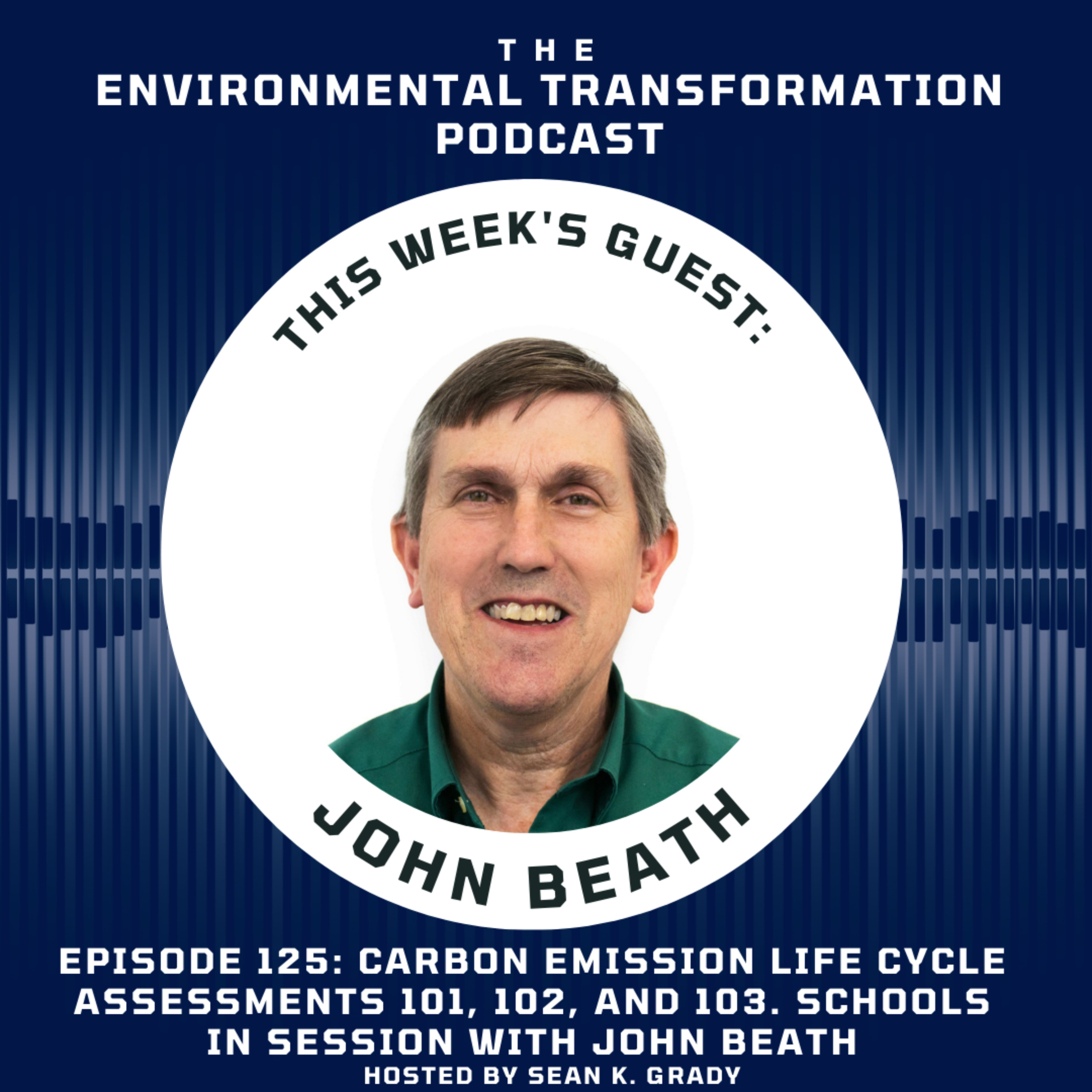 Carbon Emission Life Cycle Assessments 101, 102, and 103. Schools in session with John Beath | Sean Grady interviews John M. Beath, P.E. (TX), LCA-CP, CEO and founder of John Beath Environmental, LLC, on the Environmental Transformation Podcast. Beath explains life cycle assessment (LCA), carbon footprints and how companies evaluate emissions across raw materials, manufacturing, transportation and product use.In this episode, Beath breaks down LCA basics for beginners, including emission factors, primary vs. secondary data and environmental databases. He also discusses LCA 101, LCA 102 and LCA 103, transparent Excel-based modeling, EV vs. internal combustion trade-offs, grid impacts, charging and temperature effects, EPDs, and why plug-in hybrids can be a practical near-term solution for reducing combustion-related air pollution in daily driving. | — | ||||||
| 1/27/26 | 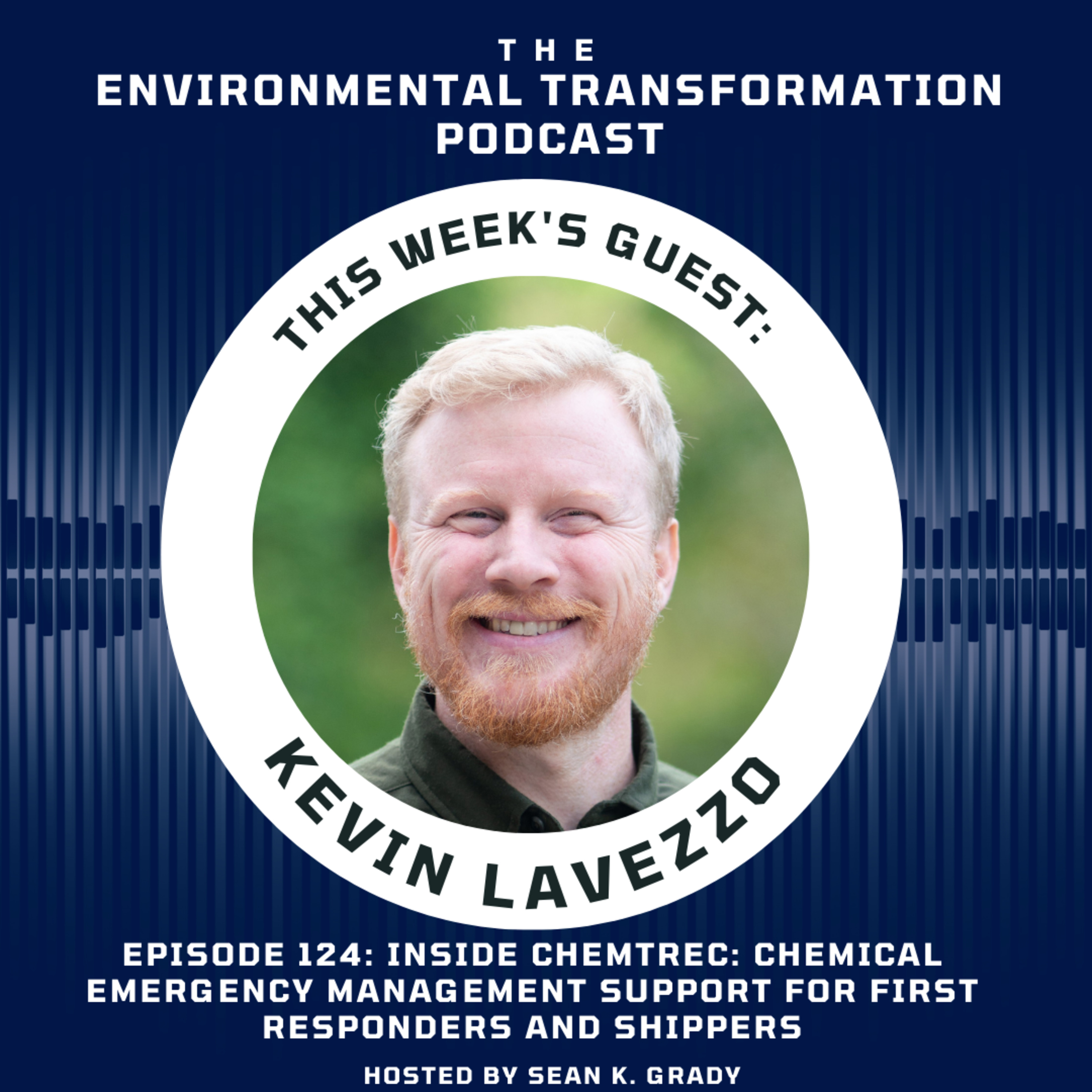 Inside CHEMTREC: Chemical Emergency Management Support for First Responders and Shippers | Host Sean Grady talks with Kevin Lavezzo of CHEMTREC about the side of the chemical world most people never see, but responders rely on when accurate information matters. They unpack what CHEMTREC actually does, including how its Emergency Operations Center triages calls, uses tools like the Emergency Response Guidebook (ERG), and connects callers with product experts.Lavezzo explains a common misconception: first responders can call CHEMTREC for help without paying a fee, and the team will still work to support a response even when company information is incomplete. The conversation also covers how CHEMTREC supports compliance for shippers, manages safety data sheets, provides hazmat and regulatory training, and coordinates parts of incident response through partners.They also dig into real-world challenges, from language barriers and global response complexity to responder skill gaps with monitors and interpreting SDS details, plus emerging trends like lithium-ion battery incidents and severe weather impacts on transportation.Thanks to our Sponsors: Cascade Environmental, E-Tank & Pump, and WASTELINQ. | — | ||||||
| 1/6/26 | 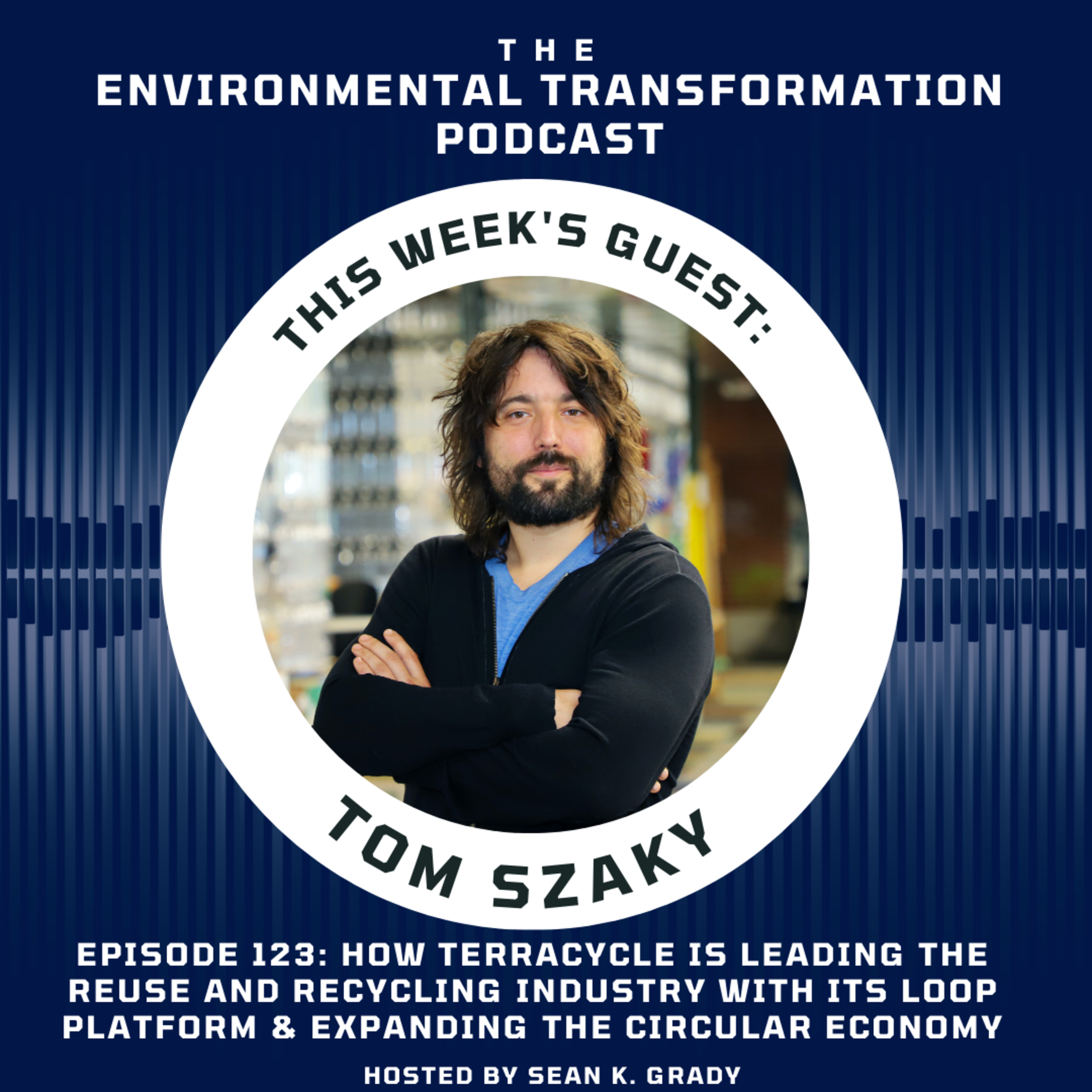 How Terracycle is leading the reuse and recycling industry with its Loop platform & expanding the circular economy with CEO Tom Szaky | TerraCycle CEO and co-founder Tom Szaky returns to the Environmental Transformation Podcast with host Sean Grady for an update on what has changed since his last appearance in episode 20 in 2020. Szaky breaks down why most items are “not recyclable” because of economics, not technology, and why reuse is TerraCycle’s biggest investment through the Loop platform, including what it has taken to scale in France. The conversation also digs into U.S. recycling headwinds, extended producer responsibility, Senate Bill 54 and Senate Bill 343 in California, and why education and “making it fun” can move behavior fast. Szaky also explains TerraCycle’s current Regulation CF raise, the planned Regulation A offering, and where to learn more at www.terracycle.com. Thanks to our Sponsors: Cascade Environmental, E-Tank, and WASTELINQ | — | ||||||
| 12/9/25 | 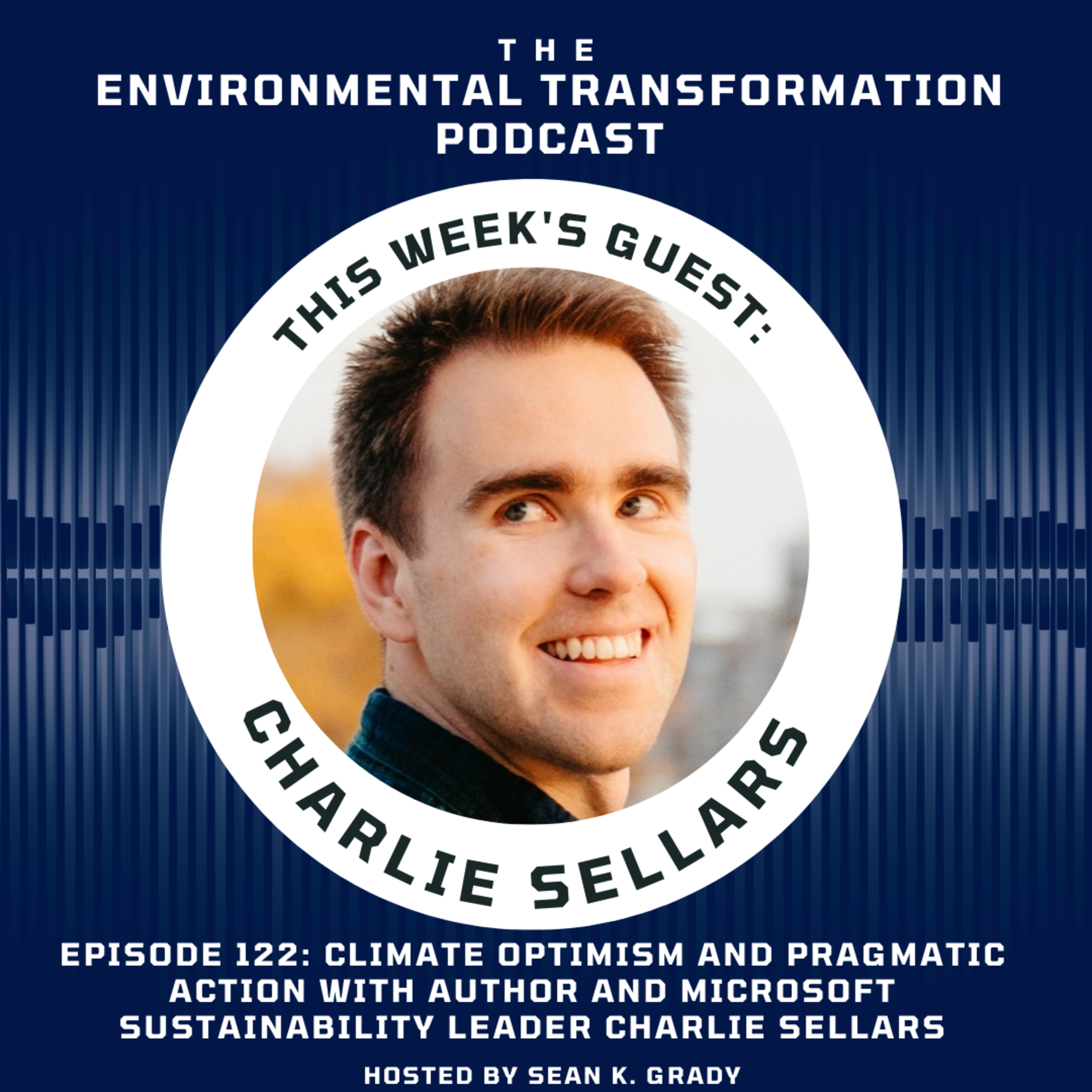 Climate Optimism and Pragmatic Action with Author and Microsoft Sustainability Leader Charlie Sellars | On the Environmental Transformation Podcast, host Sean Grady talks with Charlie Sellars, author of “What We Can Do, a Climate Optimist Guide to Sustainable Living” and a director of sustainability at Microsoft. Topics include:• Why “crisis language” can burn people out, and how Sellars frames “pragmatic” climate optimism. (“crisis language kind of burns people out”; “The optimism language is a pragmatic language.”)• Carbon accounting basics and early carbon footprint labels in food. (“we’re kind of at day one of carbon accounting”; “Sweet Green will actually put the, uh, carbon footprint of your meal”)• Life cycle assessment and the “make it, move it, use it, lose it” framework. (“It’s called lifecycle assessment”; “make it, move it, use it, lose it framework.”)• Right to repair, product longevity, and the power of buying signals and reviews. (“right to repair movement”; “voting with their, uh, their wallets”; “leaving a positive review”)• Clean energy debates on nuclear, solar barriers, and how AI is driving data center energy demand. (“discouraging nuclear power generation”; “preventing people and companies from installing solar panels”; “what they’re used for is now ai”; “AI obviously takes a lot of energy.”) | — | ||||||
| 12/2/25 | 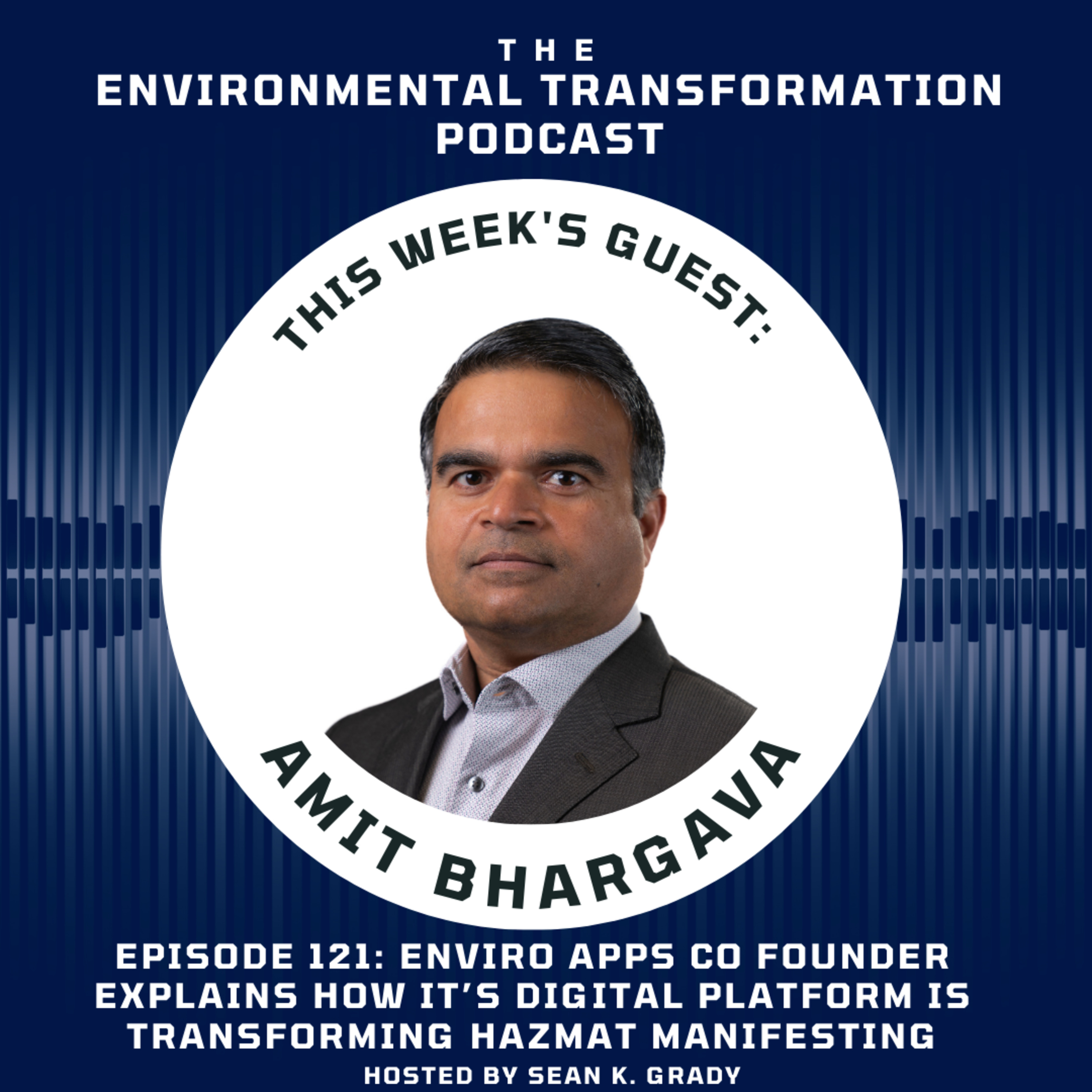 Enviro Apps Co Founder Explains how it’s Digital platform is transforming Hazmat Manifesting | On this episode of the Environmental Transformation Podcast, host Sean Grady speaks with Enviro Apps co founder Amit Bhargava live at the EHS Hazmat Summit. Bhargava explains how his platform streamlines digital hazardous waste and dangerous goods documentation, improves emergency response times, reduces administrative burden, and helps shippers and carriers save money. He also discusses regulatory hurdles, SAP integrations, sustainability features, and real time data access for emergency responders. Thanks to our Sponsors for their support of the podcast: WASTELINQ, Cascade Environmental, E-Tank | — | ||||||
Want analysis for the episodes below?Free for Pro Submit a request, we'll have your selected episodes analyzed within an hour. Free, at no cost to you, for Pro users. | |||||||||
| 11/18/25 | 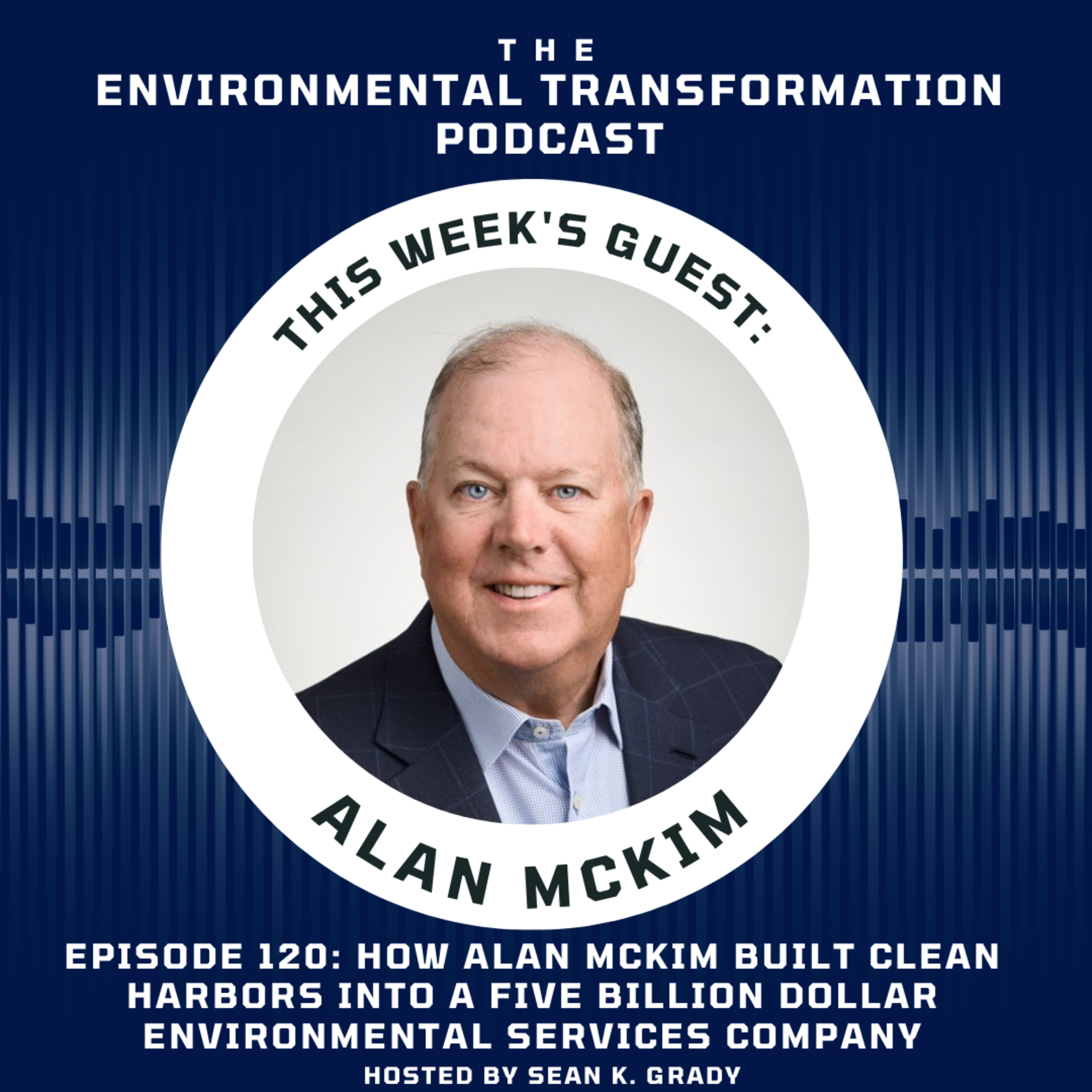 How Alan McKim Built Clean Harbors into a Five Billion Dollar Environmental Services Company | Alan McKim, founder of Clean Harbors, joins the Environmental Transformation Podcast to discuss how he grew the company from a four-person startup in 1980 into one of North America's largest environmental and industrial services providers. McKim reflects on early emergency response work, major acquisitions including Safety Kleen, going public during the 1987 crash, and building a nationwide network of 20,000 employees, 10,000 vehicles, 700 service centers, and 100 permitted waste facilities. He also shares insights from his Undercover Boss experience, the role technology plays in Clean Harbors operations, and lessons from his book, “Doing the Doing.”Thanks to our Sponsors: WASTELINQ, E-Tank, and Cascade Environmental | — | ||||||
| 11/11/25 | 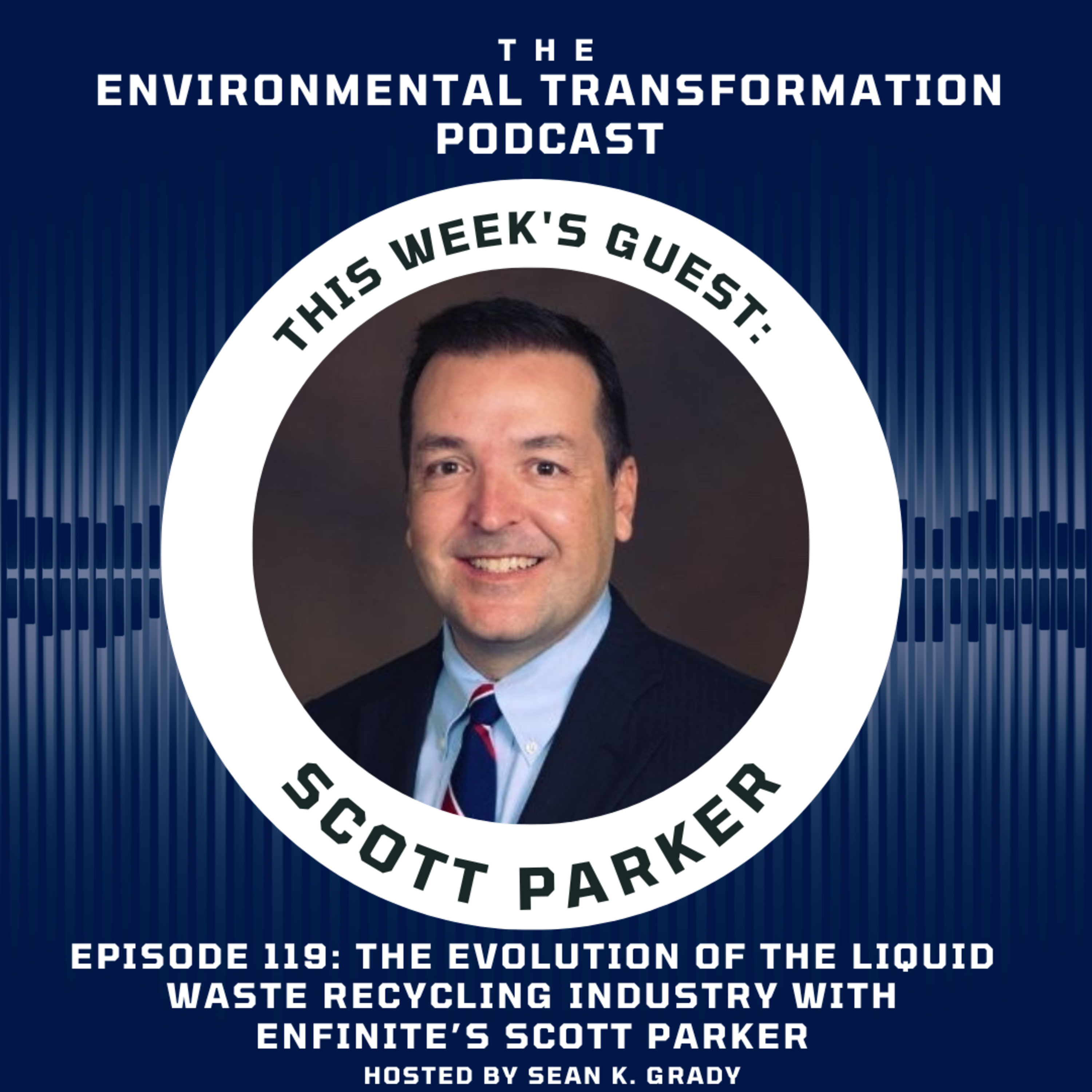 The Evolution of the Waste Liquid Recycling Industry with Enfinite's Executive Director Scott Parker | Host Sean Grady welcomes Scott Parker, Executive Director of Enfinite—the Industrial Liquid Recycling Association—to discuss the organization’s rebrand from NORA and its mission to connect, educate, and protect the industrial liquid recycling industry. Parker shares Enfinite’s history, key regulatory advocacy work, challenges like PFAS management and driver shortages, and how members are embracing technology and sustainability.Get more episodes of The Environmental Transformation Podcast for in-depth discussions on environmental leadership and innovation. | — | ||||||
| 10/14/25 |  How Digital Twins Are Revolutionizing Industrial Water and Energy Management | Dr. Slava Libman, co-founder and CEO of FTD Solutions, joins host Sean Grady on the Environmental Transformation Podcast to discuss how digital twin technology is transforming industrial water and energy use. Libman shares FTD’s origin story, explains how digital twins help facilities optimize performance and reduce costs, and explores their impact on sustainability and ESG goals. He also covers real-world applications in semiconductor manufacturing, collaboration through SEMI and IRDS, and how AI and data analytics are shaping the future of industrial efficiency.Thanks to our sponsors: Cascade Environmental, E-Tank, and WASTELINQ | — | ||||||
| 9/28/25 |  Robert Bilott on PFAS, Dark Waters and Fighting Forever Chemicals | Host Sean Grady interviews attorney Robert Bilott live from the AHMP EHS Hazmat Summit in Louisville, Kentucky. Bilott, the lawyer whose work inspired the film Dark Waters, shares his decades-long fight against DuPont over PFAS contamination, the failures of early chemical disclosure, and the challenges of pushing the EPA to regulate forever chemicals. He discusses his book Exposure, the ongoing litigation nationwide, the impact on water utilities and ratepayers, and how consumer demand is forcing change. Bilott also explains how states like New Jersey and Minnesota are leading regulation, the global scope of PFAS contamination, and the need for new technology and laws to address the crisis.Thanks to our Sponsors: Cascade Environmental, E-Tank, and WASTELINQ | — | ||||||
| 9/16/25 |  Sourgum CEO Joe DiNardi-Mack on Bringing Tech Innovation to Waste and Recycling | Sourgum co-founder and CEO Joe DiNardi-Mack shares how his team is using technology, AI, and data analytics to modernize the waste and recycling industry. He discusses scaling a nationwide waste management platform, supporting local haulers, improving routing and diversion rates, and offering enterprise waste solutions. Topics include waste management software, recycling technology, sustainability strategies, startup growth, Series A funding, and building an operating system for waste services across the U.S.Thanks to our Sponsors: WASTELINQ, E-Tank, and Cascade Environmental | — | ||||||
| 9/9/25 |  Lisa Foster: Emotional Intelligence Training and One-on-One Meeting Tips for Managers | Lisa Foster is a business coach, speaker, and author of Bag Lady: How I Started a Business for a Greener World and Changed the Way America Shops. In this episode of the Environmental Transformation Podcast, host Sean Grady talks with Lisa about her journey founding 1 Bag at a Time, Inc., one of the first reusable grocery bag companies in the U.S., and how she scaled it to sell millions of bags. Lisa shares insights on leadership, emotional intelligence, and building high-performing teams. She also previews her free one-hour training on one-on-one meetings and her upcoming six-week leadership series.To receive at 20% discount on Lisa's Leadership Essentials course starting September 24, 2025, sign up here!https://calendly.com/lisadfoster/leadership-essentials-group-coaching-series-cloneThanks to our sponsors: Cascade Environmental, E-Tank, and WASTELINQ. | — | ||||||
| 8/26/25 | 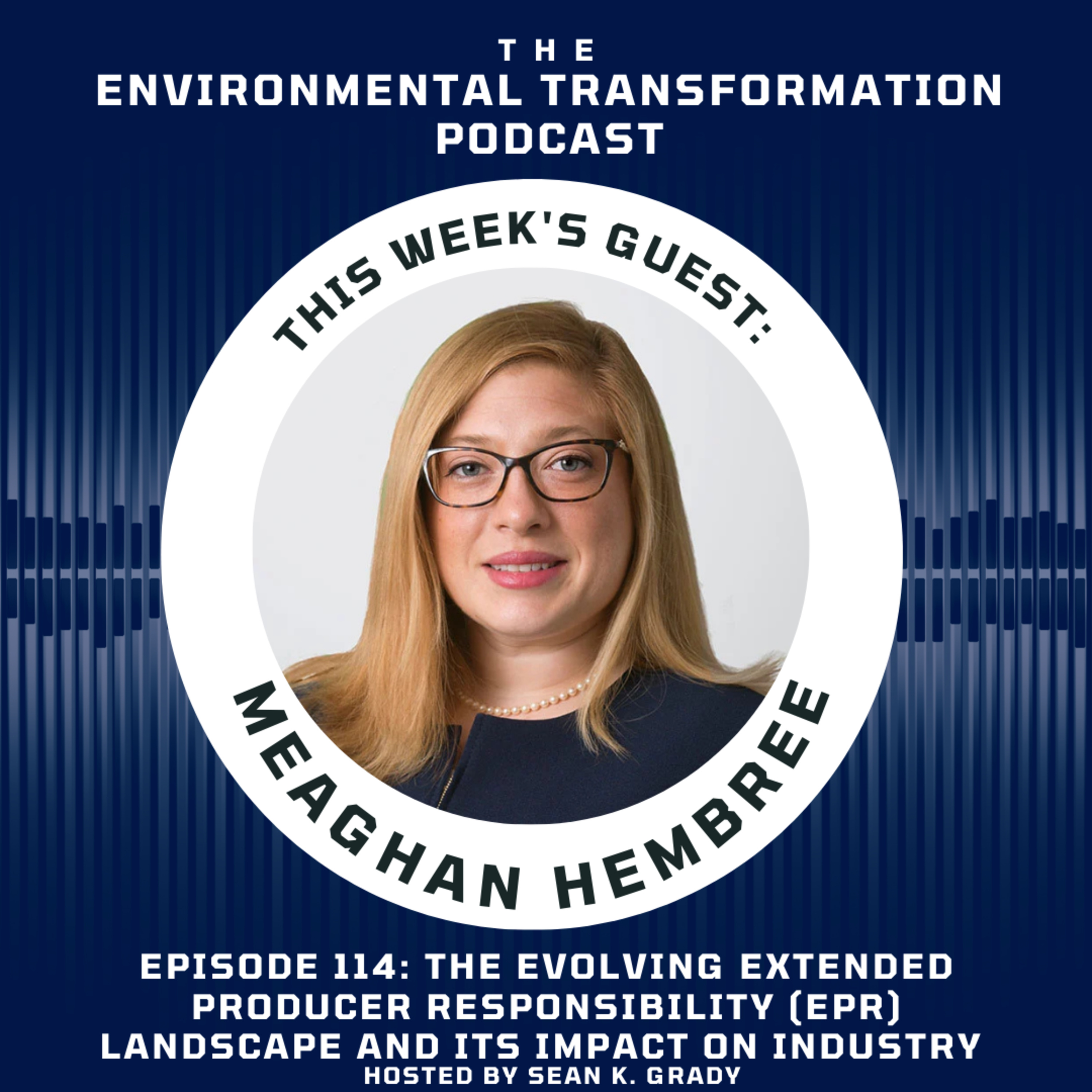 The evolving Extended Producer Responsibility (EPR) landscape and its impact on industry with Meaghan Hembree Attorney at Holland and Knight | In this episode of the Environmental Transformation Podcast, host Sean Grady talks with Meaghan Colligan Hembree, Environmental, Compliance & Disputes Partner at Holland & Knight in Washington, D.C. She counsels Fortune 500 companies and global brands on chemical risk, environmental compliance, and high-stakes disputes.Hembree explains extended producer responsibility (EPR) laws, how they affect packaging, plastics, recycling, and supply chains, and what companies must do to prepare for compliance across states and globally. The discussion also covers the China waste import ban, circular economy challenges, and the future of recycling infrastructure.00:00 Why Recycling Needs a National Approach01:13 Meet Megan Colligan Hembry: EPR Legal Expert02:25 EPR Explained: Extended Producer Responsibility04:54 The 2018 Turning Point & Policy Responses07:19 Industry's Struggle: Adapting to China’s Ban11:39 How Companies Organize for EPR Compliance13:38 Packaging, Supply Chains, and Regulatory Complexity16:14 Operational Challenges Inside EPR Programs18:46 EPR’s Impact on Product and Package Design21:24 Data Collection & Reporting Complexities24:50 Making Packaging Truly Recyclable28:12 Beyond Packaging: Tires, Batteries & Other EPR Products32:48 Does EPR Drive Innovation and Sustainability?35:47 Federal vs State EPR: Who Should Take the Lead?40:19 RCRA, Universal Waste, and Circular Economy Paths45:47 Will EPR Raise Prices? Costs, Consumers & Fairness50:03 Will EPR Actually Improve Recycling for Consumers?52:00 Why Systematic Recycling Education Matters54:34 Making Recycling Trendy & Accessible55:40 Closing Thoughts & Outlook on EPR and SustainabilityOpvTDfEuhQpfjN4UpcG5 | — | ||||||
| 7/29/25 | 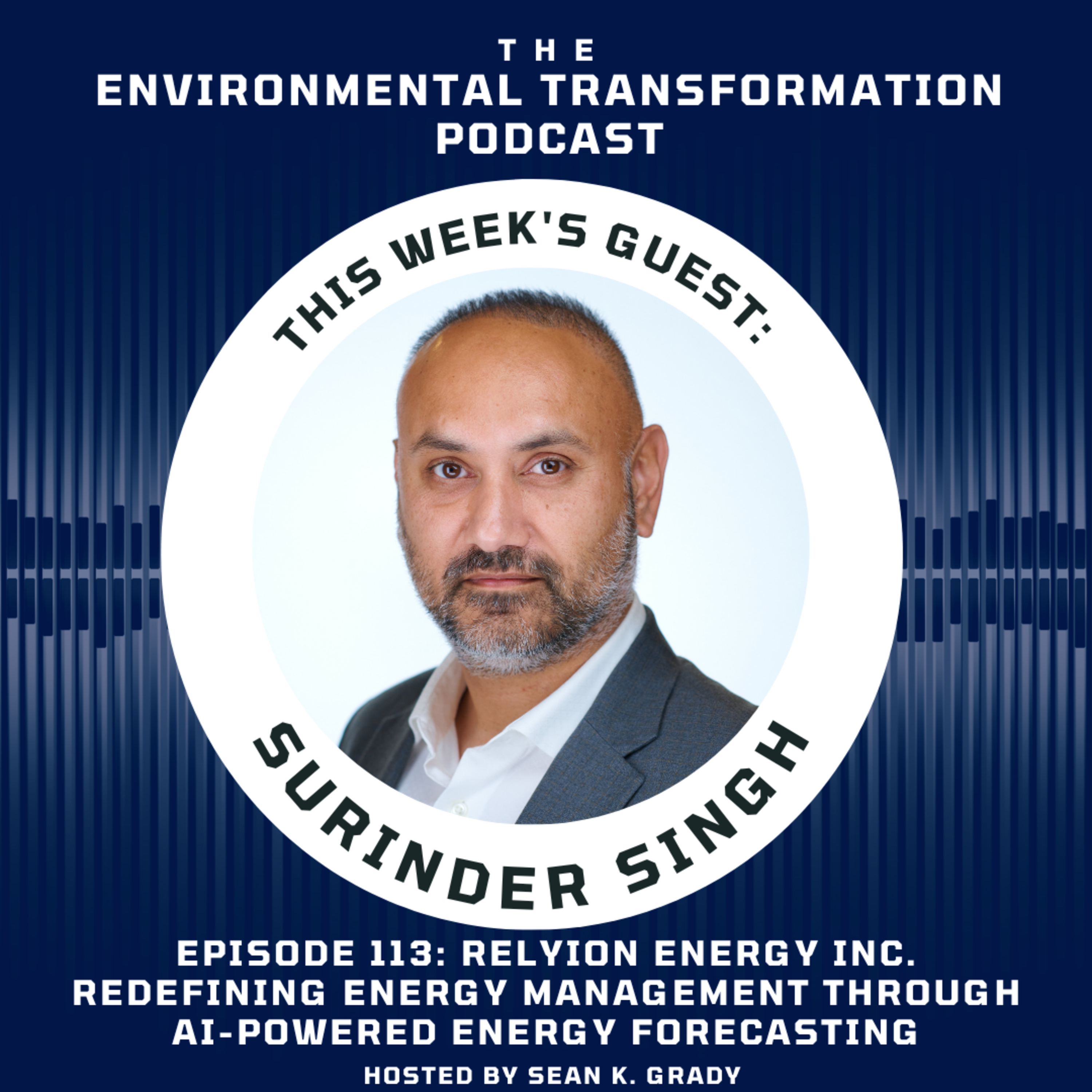 Relyion Energy Inc: Redefining Energy Management Through AI-Powered Energy Forecasting | Host Sean Grady interviews Dr. Surinder Singh, CEO and co-founder of Relyion Energy Inc. Dr. Singh explains how his company is reshaping energy management through AI-driven forecasting, energy management systems (EMS), and battery management systems (BMS). He shares the story behind Relyion's technology, how it extends battery life up to 20 years, and why utility-scale clients, data centers, and commercial operators are turning to their solutions for smarter, more efficient energy usage. Learn how Relyion outperformed traditional forecasting tools by 13x in ERCOT and why now is the right time to adopt these game-changing innovations.Chapters:00:00 – Introduction to Dr. Surinder Singh and Relyion Energy02:13 – The Three Pillars: Forecasting, EMS, and BMS07:25 – Extending Battery Life Beyond 20 Years12:40 – Relyion’s Early Use of Recycled EV Batteries16:50 – Transitioning from Product Demonstration to Platform Innovation21:30 – Minimal-Invasive Technology and Deployment Flexibility24:42 – Beating Traditional Forecasting Models: PG&E and ERCOT Case Studies29:58 – The Power of Forecasting + EMS for Grid Efficiency34:22 – Grocery Store Case Study: ROI in Under 3 Years38:09 – EV Charging, Microgrids, and Peak Shaving Optimization41:32 – Battery Agnosticism and Real-Time Adaptation48:40 – Implementation Timeline and Customer Onboarding53:01 – Cloud-Based Forecasting and Edge AI Hardware56:11 – Commercial Growth and Market Expansion59:55 – Relyion’s Holistic Approach vs. Siloed Competition1:03:05 – Utility Design and Grid Planning Applications1:05:28 – Gen AI and New Demands on the Grid1:07:20 – How to Connect with Relyion Energy🔗 Learn more: https://www.relyionenergy.com📧 Contact: contactus@relyionenergy.com#EnvironmentalTransformation #EnergyAI #BatteryTech #UtilityGrid #Sustainability #CleanTech #DrSurinderSingh #RelyionEnergy #PodcastChapters | — | ||||||
| 7/15/25 | 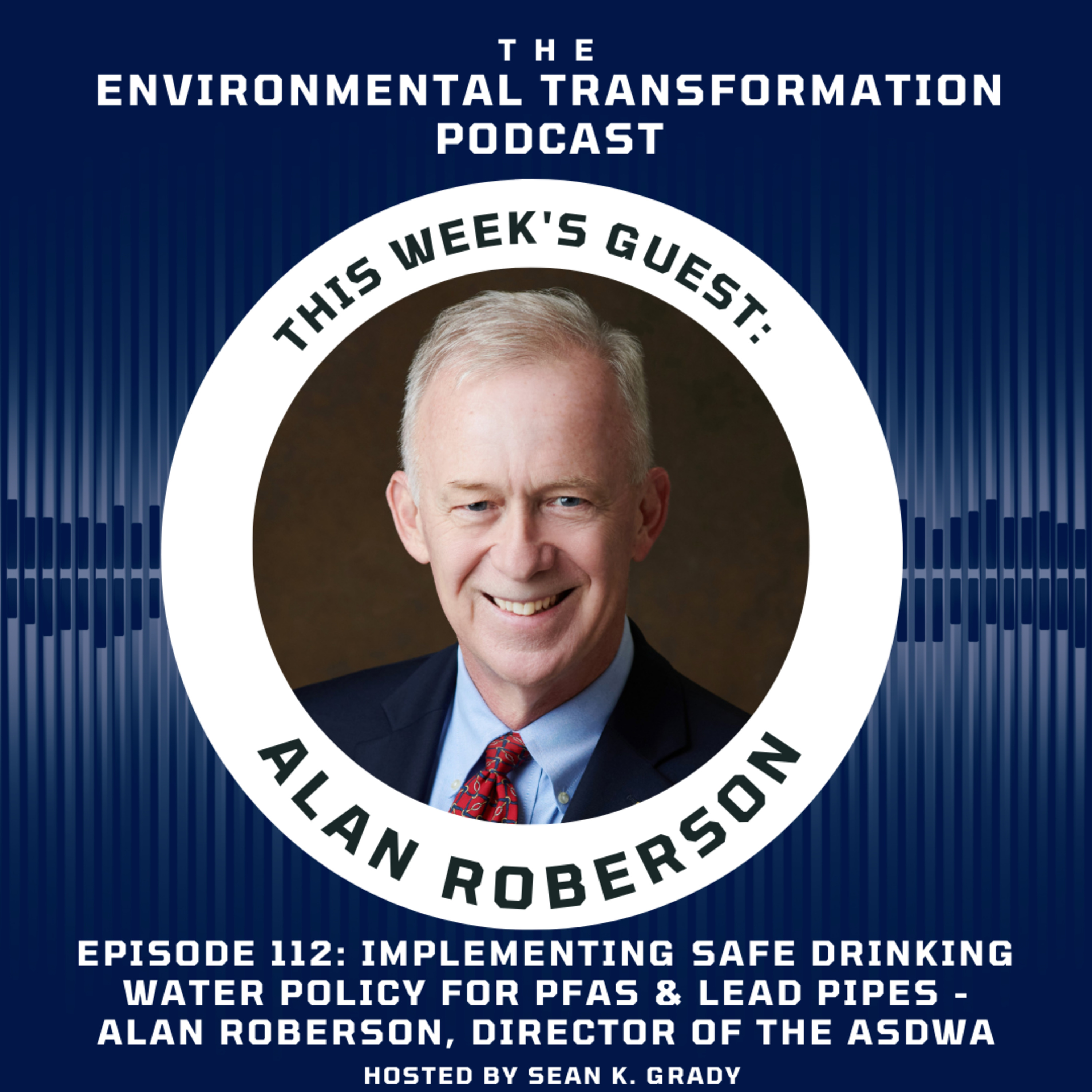 Implementing safe drinking water policy for PFAS & Lead Pipes - Alan Roberson, Director of the ASDWA | In this episode of the Environmental Transformation Podcast, host Sean Grady talks with Alan Roberson, Executive Director of the Association of State Drinking Water Administrators (ASDWA). Roberson shares insights from over 34 years in water policy, including how ASDWA supports state drinking water agencies, challenges of PFAS regulation, and the impact of federal funding shortfalls on public health protection. The discussion covers drinking water regulations, the role of state labs, infrastructure funding, workforce shortages, and more.Chapters with Timestamps:00:00 – Introduction and Guest Background02:12 – What Is ASDWA and Its Mission04:33 – ASDWA’s Role in Federal Rulemaking07:05 – PFAS Regulation Updates and Compliance Timelines13:42 – State Data Sharing and Collaboration18:20 – Concerns Over GenX and Short-Chain PFAS22:01 – Cost of Compliance and Affordability26:44 – Federal Funding Gaps and SRF Limitations31:10 – Holding Polluters Accountable34:40 – State-Level PFAS Standards and Support38:02 – Lab Testing Capacity and State Limitations42:35 – Lead Pipe Inventories and Replacement Challenges46:10 – Regulatory Burdens and Ratepayer Equity49:20 – Infrastructure Needs and Workforce Challenges54:00 – ASDWA’s Top Priorities for 202557:30 – Final Thoughts and ClosingPFAS drinking water rule, Safe Drinking Water Act, lead pipe replacement, Alan Roberson, ASDWA, EPA drinking water standards, public health and water utilities, SRF funding, UCMR5, GenX chemicals, state drinking water labs, water infrastructure, environmental policy, clean water initiatives, water workforce shortage, environmental transformation podcast | — | ||||||
| 7/1/25 |  PFAS Regulation in Flux: Legal Insights from Environmental Attorney Phil Comella | Veteran environmental attorney Phil Comella joins host Sean Grady on the Environmental Transformation Podcast to break down the EPA’s proposed rollback of PFAS drinking water regulations. With over 40 years of experience, Comella offers expert legal insight on how the delayed compliance deadlines, potential MCL reductions, and CERCLA implications could affect municipalities, water utilities, waste management companies, and communities already exposed to PFAS. The conversation covers legal risks, scientific uncertainty, and the regulatory gaps that complicate cleanup and accountability.Thanks to our sponsors: Cascade Environmental, E-Tank, and WASTELINQ📍 Chapters:0:00 – Introduction and Phil Comella’s background2:42 – What the EPA’s PFAS proposal actually means6:30 – Delays, politics, and public health impact10:10 – Why the proposed changes matter for communities14:50 – Legal risk for utilities, ratepayers, and manufacturers19:25 – Superfund and the challenge of hazardous substance listings24:40 – The case for a dedicated PFAS statute28:35 – Wastewater treatment, landfills, and managing leachate33:45 – PFAS in household products and regulatory blind spots38:50 – Exposure, science, and tort law consequences44:25 – Thoughts on the path forward for EPA regulation50:00 – Dark Waters, science-based policy, and legal legacy🧪 Get expert legal context on one of today’s most pressing environmental health challenges. | — | ||||||
| 6/17/25 |  Potential Impacts of the Newly Proposed EPA PFAS Rule to Affected Communities with Emily Donovan | Emily Donovan of Clean Cape Fear returns to the Environmental Transformation Podcast to discuss the EPA’s proposed rollback of the PFAS drinking water rules and how it potentially could impact contaminated communities like hers in North Carolina. Host Sean Grady explores the legal, regulatory, and public health stakes behind the EPA’s May 14 announcement, with Donovan providing on-the-ground insight into the movement to hold polluters accountable, protect public drinking water, and stop PFAS exposure. Thanks to our Sponsors: Cascade Environmental, E-Tank, and WASTELINQ📍 Chapters:0:00 - Intro and Emily Donovan returns2:05 - Clean Cape Fear’s 8-year mission6:40 - PFAS origins and EPA rule rollback10:10 - Anti-backslide concerns and regulatory uncertainty17:15 - Public health risks of short-chain PFAS22:00 - Who pays for clean water? Utilities, polluters, or the public27:50 - Legal action and transparency challenges32:10 - National awareness and the role of media38:45 - Partnerships with advocates like Mark Ruffalo and Keen43:10 - Final thoughts: Doing what’s right for communities🎧 Listen, learn, and join the “little army of goodness” working to end PFAS contamination. | — | ||||||
| 5/27/25 |  Breaking Down Human Organizational Performance with The HOP Nerd, Sam Goodman | Welcome to the Environmental Transformation Podcast with your host, Sean Grady. In this high-impact episode, we’re joined by Sam Goodman, also known as The HOP Nerd—a leading voice in Human and Organizational Performance (HOP), safety culture innovation, and host of The HOP Nerd Podcast.🎙️ In This Episode:Sam breaks down what HOP (Human and Organizational Performance) really means, why traditional safety programs often fall short, and how organizations can shift from blame-based models to system-level improvements that foster real operational learning, psychological safety, and frontline employee engagement.🧠 Topics We Cover:What is Human and Organizational Performance (HOP)?How HOP differs from traditional safety programsThe dangers of TRIR (Total Recordable Incident Rate) obsessionWhy blame, shame, and retrain doesn't workMoving from “who failed?” to “what failed?”How leadership response shapes safety cultureUsing comedy and storytelling to drive cultural changeThe origins and mission of The HOP NerdDownloadable video resources for safety meetings🔑 Key Takeaways for Safety Professionals & Leaders:Stop focusing on just injury metrics—start listening to workers.Safety isn’t the absence of incidents—it’s the presence of capacity to fail safely.Silence in an organization is dangerous—learn how to create environments where truth-telling is encouraged.Good safety culture starts with curious, calm leadership responses.🔥 Whether you're in EHS leadership, a frontline worker, or just tired of meaningless checklists, this episode gives you the tools and mindset shift you need to create sustainable safety transformation.📌 More from Sam Goodman — The HOP NERD:🌐 https://www.thehopnerd.com🎧 The HOP Nerd Podcast – Available on all major platforms📺 Safety satire videos & learning tools: The HOP Nerd YouTube Channel👷♂️ Who is Sam Goodman?Sam is a HOP practitioner, speaker, consultant, and podcast host who brings humor, insight, and real-world experience to the conversation about modern safety systems. His work is deeply influenced by leaders like Todd Conklin and Sidney Dekker, but his approach is distinctly his own—bold, funny, and transformative.🔎 SEO Keywords:Human and Organizational Performance, HOP safety, Sam Goodman HOP NERD, modern safety leadership, safety culture podcast, TRIR criticism, safety differently, safety improvement strategies, frontline safety communication, operational learning, leadership response safety, psychological safety in the workplace, HOP tools, safety performance podcast, environmental transformation podcast📣 Subscribe, rate, and review the podcast to help more safety and environmental professionals discover practical strategies that make a difference! | — | ||||||
| 5/13/25 |  Thermal Treatment of Organic Containments and PFAs with TerraTherm's SVP Jim Galligan | In this episode, host Sean Grady sits down with Jim Galligan, Senior Vice President at TerraTherm, to discuss advanced thermal remediation technologies. Jim, an industry veteran with over 34 years of expertise, dives deep into thermal conduction heating (TCH), electrical resistance heating (ERH), and steam-enhanced extraction (SEE)—powerful techniques used to remediate recalcitrant contaminants like PFAS, chlorinated solvents (PCE, TCE), PCBs, dioxins, and petroleum hydrocarbons.Learn how thermal remediation effectively targets complex contaminant source zones, even beneath buildings or challenging infrastructure, and discover why depth and geology are no longer barriers. Jim dispels common myths about thermal technologies, addresses lifecycle costs compared to traditional methods like chemical oxidation, and explains critical factors such as power infrastructure and hydrogeological site characterization.Ideal for environmental consultants, remediation engineers, and project managers looking for proven strategies to achieve rapid and reliable cleanup goals. Join us as we uncover how TerraTherm is driving innovation in environmental remediation, offering sustainable solutions and unparalleled performance in treating soil and groundwater contamination.#EnvironmentalTransformation #ThermalRemediation #TerraTherm #SoilCleanup #GroundwaterRemediation #PFAS #environmentalengineering 00:00 – Introduction to the Environmental Transformation Podcast01:15 – Meet Jim Galligan: 34 Years in Thermal Remediation03:25 – Overview of TerraTherm and Its Mission06:40 – What Is Thermal Remediation? Key Technologies Explained10:55 – Thermal Conduction Heating (TCH) Deep Dive13:45 – Electrical Resistance Heating (ERH) Explained16:05 – Steam-Enhanced Extraction (SEE) Use Cases18:10 – Ideal Site Conditions for Thermal Remediation22:30 – Treating Deep Contaminant Zones: Why “Deeper Is Cheaper”25:00 – Real-World Project Examples and Case Studies29:15 – Site Selection and Design Considerations33:45 – Comparing Lifecycle Costs of Thermal vs. Chemical Treatments37:20 – Power Infrastructure Needs and Utility Coordination41:50 – Debunking Common Myths About Thermal Remediation50:10 – Regulatory Cleanup Goals and Treatment Effectiveness54:20 – Remediation of PFAS, Dioxins, PCBs, and VOCs59:30 – Thermal’s Impact on Soil and Microbial Recovery1:03:00 – Thermally Enhanced Bioremediation and Future Innovations1:06:40 – How to Design an Effective Thermal Treatment System1:10:00 – How to Contact TerraTherm and Learn More | — | ||||||
| 4/29/25 |  The National Waste and Recycling Association's Mission with CEO Michael E. Hoffman | In this episode of the Environmental Transformation Podcast, host Sean Grady welcomes Michael Hoffman, president and CEO of the National Waste and Recycling Association (NWRA). Hoffman shares his 37 years of experience in the waste and recycling industry, discusses NWRA's advocacy efforts at the local, state, and federal levels, and outlines his vision for improving safety, membership engagement, and industry innovation. He also explains the challenges surrounding packaging EPR, PFAS regulation, battery recycling, and workforce development. Learn how technology, policy, and collaboration are shaping the future of waste and recycling.Thanks to our Sponsors for their support of the podcast: Cascade Environmental, E-Tank, and WasteLinq. | — | ||||||
| 3/25/25 |  Driving Sustainability and Innovation: Veolia’s 2025 Vision with Jim Sullivan | Join host Sean Grady as he welcomes Jim Sullivan, Chief Strategy and Development Officer at Veolia North America’s Environmental Solutions and Services (ESS) group. In this insightful conversation, Jim discusses his extensive career journey at Veolia, detailing how his roles in sales, operations, and strategic leadership have shaped the company’s sustainability vision and innovation strategy.Discover how Veolia’s ESS group is driving significant advancements in hazardous waste management, recycling solutions, and circular economy initiatives across North America. Jim shares insights into the upcoming launch of the groundbreaking Gum Springs facility, a cutting-edge project set to redefine sustainable waste management through innovative energy recovery and zero-discharge operations.This episode dives deep into key industry trends, including the challenges and strategies around managing PFAS, regulatory shifts, leveraging AI and data analytics for improved customer experience, and the critical role of mergers and acquisitions in expanding Veolia’s environmental capabilities.If you're interested in environmental sustainability, waste management innovations, or the future of the environmental services industry, don't miss this episode! Thanks to our sponsors: Cascade Environmental, E-Tank, and WASTELINQ | — | ||||||
Showing 25 of 35
Pitch Fit is a Pro feature
See how bookable this show is for guests, which brands already advertise, the per-episode ad value, and the best-fit guest and sponsor profile. The numbers are blurred on the free plan.
How readily this show books outside guests like you.
How proven this show is for host-read sponsorships.
For Guests
ProFor Advertisers
ProUpgrade to Pro to unlock guest cadence, sponsor categories, fit scores, and per-episode ad value for this show.
Chart Positions
8 placements across 8 markets.
Chart Positions
8 placements across 8 markets.