
Insights from recent episode analysis
Audience Interest
Podcast Focus
Publishing Consistency
Platform Reach
Insights are generated by CastFox AI using publicly available data, episode content, and proprietary models.
Total monthly reach
Estimated from 19 chart positions in 19 markets.
By chart position
- 🇦🇺AU · Film Interviews#5630K to 100K
- 🇬🇧GB · Film Interviews#6930K to 100K
- 🇩🇪DE · Film Interviews#7030K to 100K
- 🇨🇦CA · Film Interviews#1495K to 30K
- 🇺🇸US · Film Interviews#1665K to 30K
- Per-Episode Audience
Est. listeners per new episode within ~30 days
131K to 453K🎙 ~2x weekly·155 episodes·Last published 2w ago - Monthly Reach
Unique listeners across all episodes (30 days)
262K to 906K🇦🇺11%🇬🇧11%🇩🇪11%+16 more - Active Followers
Loyal subscribers who consistently listen
105K to 362K
Market Insights
Platform Distribution
Reach across major podcast platforms, updated hourly
Total Followers
—
Total Plays
—
Total Reviews
—
* Data sourced directly from platform APIs and aggregated hourly across all major podcast directories.
On the show
Recent episodes
Ep 151 | Ian Hunter - VFX Supervisor on Cameron, Burton and more
Jun 9, 2026
1h 40m 55s
Ep 150 | David Dozoretz - Pre-vis Pioneer, VFX Supervisor and Director
May 26, 2026
1h 36m 53s
Ep 149 | Craig Caton-Largent — Jurassic Park Raptors, ET & Digital Domain
May 12, 2026
1h 12m 22s
Ep 148 | Jim Davidson — Model Maker on Terminator 2 & Batman Returns
Apr 28, 2026
1h 30m 14s
Ep 147 | John Duncan — ILM Model Maker (Star Wars, Star Trek, Pirates)
Apr 14, 2026
1h 07m 10s
Social Links & Contact
Official channels & resources
Official Website
Login
RSS Feed
Login
| Date | Episode | Description | Length | ||||||
|---|---|---|---|---|---|---|---|---|---|
| 6/9/26 | 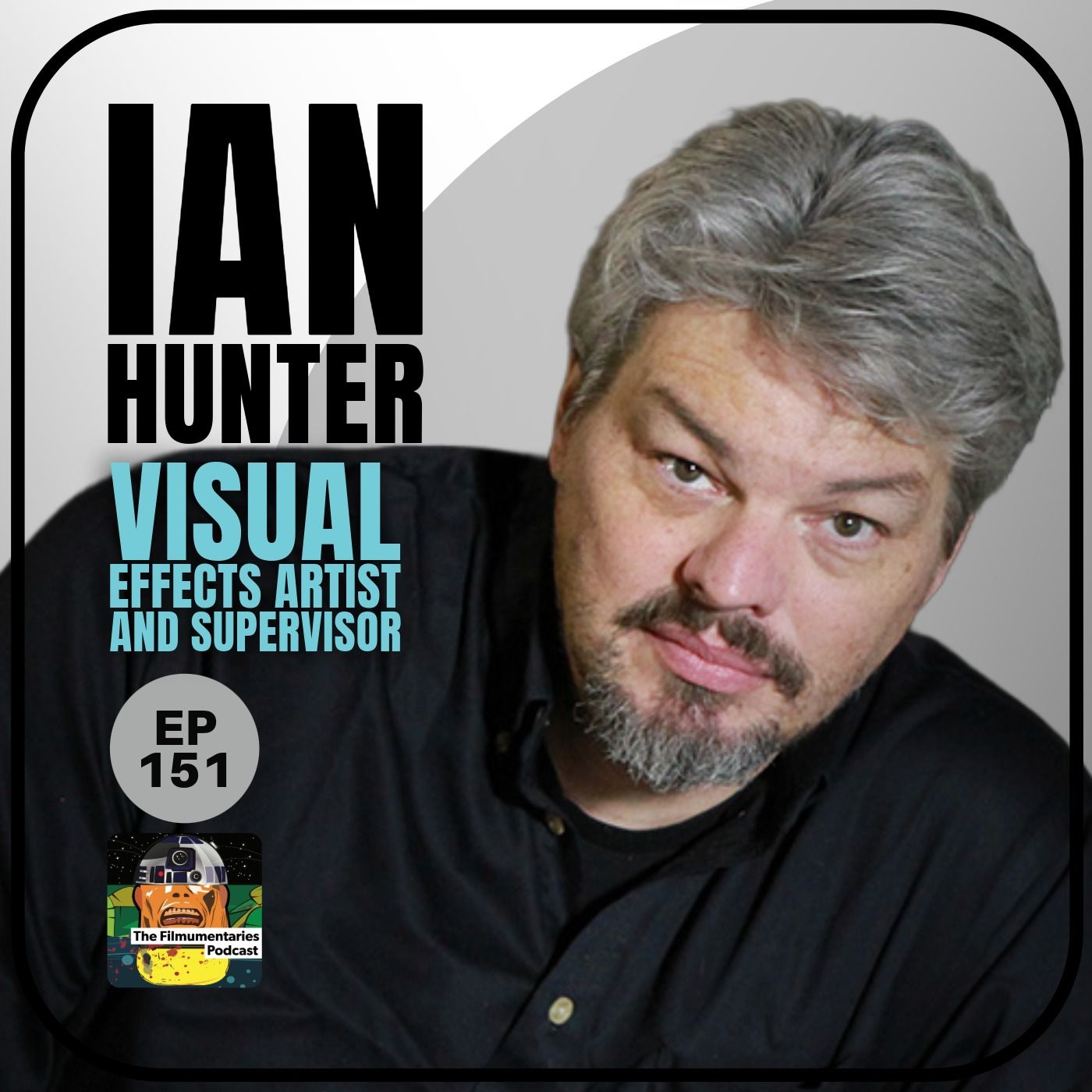 Ep 151 | Ian Hunter - VFX Supervisor on Cameron, Burton and more | Ian Hunter has spent four decades building miniatures, supervising visual effects and thinking like a filmmaker on some of the most demanding productions in Hollywood. In this episode, he traces a career that began in a garden shed with a punched-up piece of German black velvet and ended up — via James Cameron, Tim Burton, the Coen Brothers, and Christopher Nolan — on some of the most iconic screens in the world.Ian grew up surrounded by art. His father painted oils and acrylics, played music and did pastel portraits, and encouraged his three sons to make things — even when those things destroyed the materials he'd given them. The moment that really clicked, Ian recalls, was being handed a model kit as a kid and taking to it immediately. That creative instinct only grew stronger. In high school, he and his brothers were making Super 8 films, scratching laser effects onto the film with a pin and blowing up overloaded resistors for explosions. One of those films required them to fake-rob a local bank — and the encounter that followed, with the surprisingly enthusiastic vice president of the Monrovia Wells Fargo, led to a meeting with the mother of Rick Baker, whose work Ian had recently encountered in a traveling special effects exhibition and been completely floored by.After drifting away from an aerospace course at Cal Poly Pomona and working in an acid bath plastics factory, Ian answered a classified ad looking for model makers — and on the strength of a modest portfolio, was hired the same day. His first feature was The Abyss. He and fellow model maker Jim McGee built the flooded engine room of the Montana submarine with almost no direction beyond James Cameron's bare-bones description, and shipped it to South Carolina having never seen a frame of the live action. The production was not without its disasters — Ian found himself entangled in the notorious wax crane fiasco, and talks about the valuable early lesson of knowing when to call something out before it goes wrong.From there, a friend pointed him toward Boss Film, Richard Edlund's company in Marina del Rey, where a chance encounter with departing model supervisor Mark Stetson changed everything. What was supposed to be a one-week favour on a music video turned into six years. Working with Stetson took Ian from being a junior model maker building things in isolation to visiting sets, talking directly with directors, and understanding that miniature work only succeeds when it becomes invisible — just more shots in a movie, telling the story rather than showing off the technique.Among the projects from that period, Ian talks at length about Total Recall — including the behind-the-scenes chaos of a scale miscommunication on the final day of shooting, a scene involving a little person that nobody had accounted for, and the moment he glued a Coke can to a model building because they were running out of time. That Coke can, dressed up and shot from the front, made it into the finished film. So did one in Waterworld. And Inception. And Interstellar. And, after the story apparently got around, director Fede Álvarez greeted Ian on Alien: Romulus by asking exactly where he was planning to hide it.Ian built the suburb for Edward Scissorhands — deliberately making it more bland and mundane than real life — and talks about one of his proudest in-camera shots: the final view through the bedroom window and out over the snow-dusted neighbourhood, achieved with a 1:24 scale model and real snow shakers on the night. On Batman Returns he built the Penguin's zoo, and describes receiving one of his all-time favourite compliments from Tim Burton — who, after watching a pyrotechnics test, asked simply: "Where did you shoot this?" Not realising he was looking at a miniature. The zoo also gave Ian one of his best examples of a happy accident: a polar bear sculpture that was supposed to explode but instead toppled slowly sideways with flames coming out of its feet. Tim Burton loved it. The entire subsequent engineering challenge was figuring out how to recreate the mistake.On the X-Files movie, Ian and his partner Matthew Gratzner built a collapsing federal building on a tight budget, referencing Oklahoma City bombing photographs for the detail of damaged concrete and exposed floors. The late Roger Ebert reviewed the finished film and said the sequence should have been cut — because it was too reminiscent of real tragedy. Ian reflects on that as a marker: they'd gotten past the technique and into the emotion.The conversation turns to Christopher Nolan, with whom Ian has worked across multiple films. Ian describes Nolan as collaborative but definitive, someone who discusses a shot in depth and then tells you exactly what he wants. He talks about the liberation Nolan offered on Interstellar when he told the crew to stop following the previs — pre-vis is just a guy at a computer on a Friday trying to get the shot out the door, Nolan told them; if you can see a better angle, do that instead. The result was that the miniature crew started shooting faster, and a number of shots that had been planned as digital moved across to the physical side. Ian also describes the meticulous sun-angle calculation that went into matching the Inception hospital sequence — setting up models in a parking lot at a precisely calculated skewed angle to hit the exact quality of light that had been captured in Calgary on a specific date.On First Man with Damien Chazelle, Ian had drawn storyboards before the first meeting proposing a documentary approach — cameras attached to the spacecraft, nothing sweeping or cinematic, everything either very close or very wide as if shot from another ship. Chazelle walked in and described exactly the same idea. They spent twenty minutes together going through the sequence, working to an animatic cut to music, and Ian went off and shot it. That shorthand — that moment of being in sync before the conversation has really started — is something Ian describes as central to how he has survived in an industry where so many practical effects houses have not. He's a model maker, yes. But more than that, he's a filmmaker.This podcast is completely independent and made possible by listener support. If you’d like to help me keep making these episodes, you can join my Patreon community here: https://patreon.com/jamiebenning Watch more on YouTube:Check out the Filmumentaries YouTube channel for behind-the-scenes clips and extra content: https://youtube.com/filmumentariesAll my links | 1h 40m 55s | ||||||
| 5/26/26 | 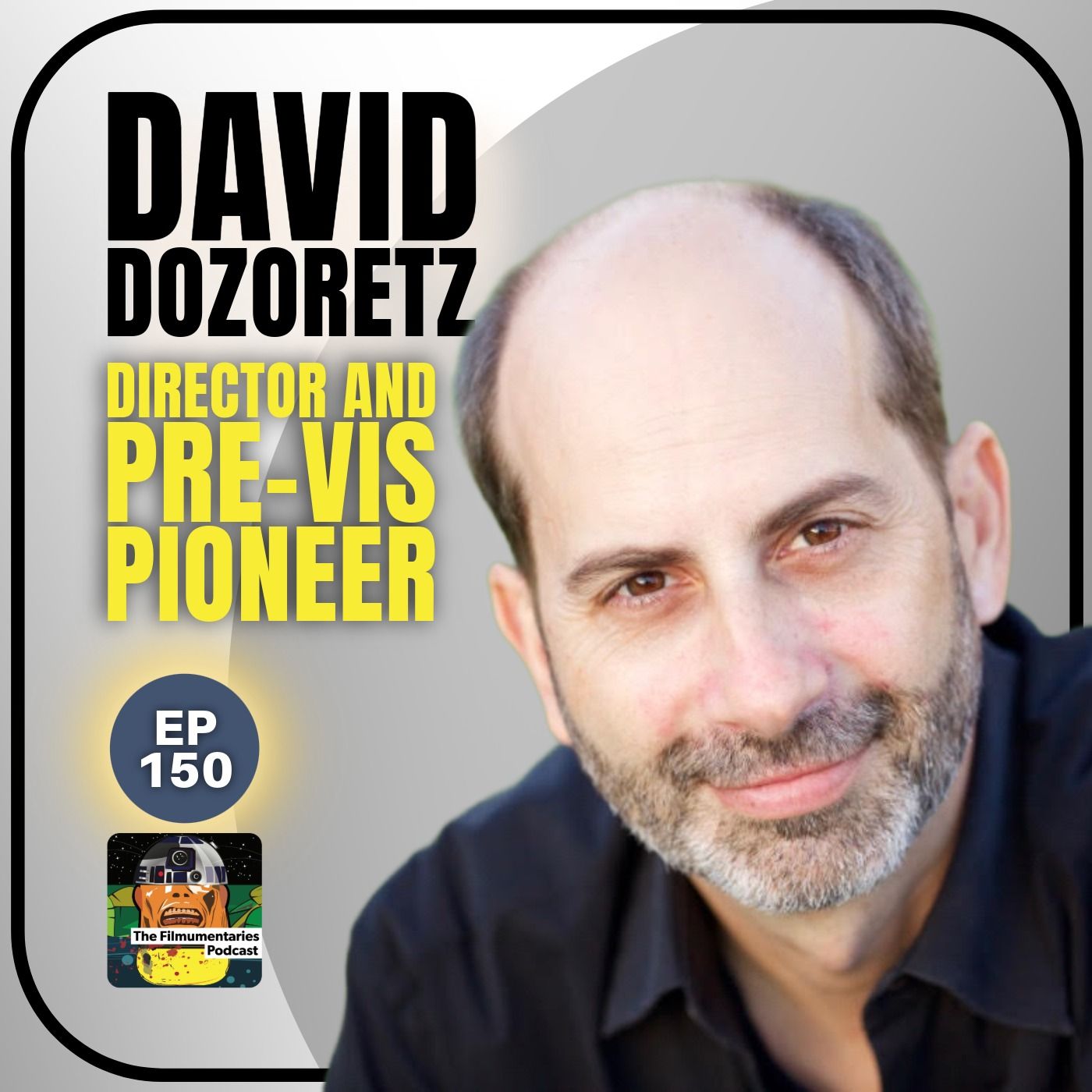 Ep 150 | David Dozoretz - Pre-vis Pioneer, VFX Supervisor and Director | In this episode I chat with visual effects supervisor, second unit director and digital pre-visualisation pioneer David Dozoretz about a career that traces the entire arc of how modern filmmaking shifted from analogue to digital — and how, somewhere in the middle of that shift, pre-vis went from a curious side experiment to a fundamental part of how films get planned and shot. David talks about growing up in Phoenix, falling in love with cinema the day his sister snuck him into the projection booth at the Cine Capri during The Empire Strikes Back asteroid sequence, and how a chance encounter with a Lucasfilm coffee-table book in a university bookstore set him on the path to ILM. He arrived at ILM in 1991 as an intern, became known as "the computer nerd in the art department and the art nerd in the computer department," and ended up bridging the gap between the two as digital began to take over.We get into his first feature — the original Jurassic Park — his year-long apprenticeship in the legendary ILM art department alongside Doug Chiang, Ty Ellingson, Harley Jessup, Mark Moore and Stefan Dechant, and the time he had to split a $1,400 piece of 3D software into two $700 purchase orders to get round ILM's general-manager sign-off threshold. It's a small story but it tells you everything about the era — digital tools were arriving faster than the institutions running things knew what to do with them.A big part of the conversation focuses on the early years of digital pre-visualisation. David did the first major digital previs sequence in mainstream cinema — the train and helicopter sequence in Brian De Palma's Mission: Impossible, the work John Knoll asked him to do that's now credited as one of the reasons the sequence got greenlit. From there he went on to spend four years working with George Lucas on The Phantom Menace, building the entire pod race in previs (a 25-minute version that almost no one has ever seen got whittled down to the 9-and-a-half-minute final), establishing his now-famous three rules of previs (no textures, no motion blur, no shadows) and then immediately having to break all three of them to convey the sense of speed and floating in the pod race itself.There are some lovely George Lucas stories too, including the time George walked into the editing room and reacted to David's droid-factory post-vis with "honestly, I was a little worried about that one — looks like it's gonna work," and the moment when George trailed off mid-sentence trying to describe a desert landscape and David — a 21-year-old kid — finished the thought with "John Ford?", which David thinks is the moment Lucas decided he could trust him. Later in the conversation we move into David's own company, Persistence of Vision, and his work on Titan A.E., Behind Enemy Lines, JJ Abrams' Mission: Impossible III, the 2009 Star Trek reboot (including the previs realisation that Vulcan being orange meant the costumes — originally designed to evoke 70s NASA — had to be completely redesigned) and Journey to the Center of the Earth 3D, where David served as second unit director on the first digital stereoscopic film and the production was effectively beta-testing the cameras Jim Cameron was building for Avatar. We finish on Zafari, David's 52-episode children's animated series rendered almost entirely in Unreal Engine — one of the earliest large-scale uses of real-time rendering in mainstream animation, which saved 30% of the production budget — and on a wider conversation about AI, the future of filmmaking, the importance of human authenticity, and David's lovely closing thought: study the art and history of cinema, study the drawing, not just the pencil. The tools will keep changing. The language won't. Topics coveredGrowing up in Phoenix and the Cine Capri projection-booth moment during EmpireDiscovering The Art of Special Effects book and the road to an ILM internshipJoining the ILM art department in 1991 alongside Doug Chiang, Ty Ellingson, Harley Jessup and Mark MooreBridging the art and computer departments as digital arrived at ILMThe $1,400 / two-$700-purchase-orders workaround for buying 3D softwareWorking on the original Jurassic Park as his first featureDoing previs for the Star Wars Special Editions (the dewback shots, Mos Eisley fly-bys)John Knoll asking him to previsualise the train-and-helicopter sequence on Mission: ImpossibleHow that previs is credited as one of the reasons the sequence got greenlitJoining the new Skywalker Ranch art department under George LucasFour years on The Phantom Menace and the 25-minute version of the pod raceThe three rules of previs (no textures, no motion blur, no shadows) — and breaking all of them to make the pod race workGeorge Lucas reacting to the droid factory post-vis ("looks like it's gonna work")The Jake Lloyd head-turn morph that saved a reshootWhy pod racers go 500 mph in some shots and 2,000 mph in othersThe cinematographer who declared previs "shit" — and was overruled by the studioFounding Persistence of Vision and the move from Lucas to wider HollywoodTitan A.E. and the Don Bluth / Gary Goldman Phoenix animation studioBehind Enemy Lines and pre-vising aerial actionMission: Impossible III with JJ Abrams — the Shanghai building swing and the windmill helicopter sequenceThe Star Trek reboot orbital skydive — and how previs forced a costume redesign because Vulcan was orangeJourney to the Center of the Earth 3D as second unit director, using Jim Cameron's pre-Avatar camerasZafari, Unreal Engine, and saving 30% of an animated TV budget through real-time renderingThe shift from analogue to digital to 3D to real-time to AI — and what stays constantDennis Muren's wisdom on authenticity at the Jurassic Park wrap partyWhy a human premium will remain in an AI-augmented filmmaking worldGeorge Lucas, John Ford and the moment a 21-year-old earned a director's trustThe advice David gives to young filmmakers: study the drawing, not just the pencilSupport the Podcast This podcast is completely independent and made possible by listener support. If you'd like to help me keep making these episodes, you can join my Patreon community here: patreon.com/jamiebenning Watch on YouTube Check out the Filmumentaries YouTube channel for behind-the-scenes clips and extra content: youtube.com/filmumentariesThis podcast is completely independent and made possible by listener support. If you’d like to help me keep making these episodes, you can join my Patreon community here: https://patreon.com/jamiebenning Watch more on YouTube:Check out the Filmumentaries YouTube channel for behind-the-scenes clips and extra content: https://youtube.com/filmumentariesAll my links | 1h 36m 53s | ||||||
| 5/12/26 |  Ep 149 | Craig Caton-Largent — Jurassic Park Raptors, ET & Digital Domain | In this episode, I chat with creature effects artist, puppeteer and digital pioneer Craig Caton-Largent about a career that arguably traces the entire arc of modern visual effects — from foam latex and animatronics to motion control, performance capture and full CG animation. Craig talks about growing up on a sheep and cattle ranch in Washington State, being captivated by the 1960s Batman TV show and then Planet of the Apes, and teaching himself prosthetics from Dick Smith's Monster Makeup Handbook. After tracking down Dick Smith's address in Who's Who in America, he wrote a letter that led to a year of mentorship over cassette tapes and ultimately introductions to Rick Baker, Stan Winston and Tom Burman. We get into his first job on Charles Band's Metal Storm: The Destruction of Jared-Syn, working on the Olympic alien for the 1984 closing ceremonies, sculpting barnacles on Cocoon, building Spock's seamless silicone ears on Star Trek IV: The Voyage Home, undulating menacingly under shaving cream on Larry Cohen's The Stuff, and puppeteering Slimer's mouth on the original Ghostbusters. A big part of the conversation focuses on Jurassic Park, including the design evolution of the T-Rex, the helicopter convention moment that led to the McFadden motion base, the logistics of moving the full-size animatronic across the San Fernando Valley at night, and Craig's work as the Raptor puppeteer, including the now-legendary "head tilt" at the kitchen window that earned an on-set "It's like Alien, I love it" from Spielberg. We also talk about Craig's twenty-year stint as the caretaker, or "doctor", to the original ET puppet, including the time the LAPD turned up at his garage door thinking he was running a crack lab while he was actually repainting ET. Plus the story of how Stan Winston handing him a couple of SGI machines led, almost overnight, to him becoming one of the eight co-founders of Digital Domain alongside James Cameron and Scott Ross. Later in the conversation we move into Craig's animation career as a final layout artist and character TD at DreamWorks and Disney, with credits on Tangled, Rise of the Guardians, How to Train Your Dragon 2 and Turbo, and stories from working with Guillermo del Toro at DreamWorks. We finish on Craig's current role as Creative Director of the 3D Animation and Visual Effects department at the New York Film Academy in Burbank. Topics coveredGrowing up on a Washington State ranch and falling in love with Planet of the ApesFamous Monsters of Filmland and Dick Smith's Monster Makeup HandbookCold-writing to Dick Smith and a year of cassette-tape mentorshipArriving in Hollywood at the start of the "golden age" of effectsFirst feature work on Metal Storm: The Destruction of Jared-SynThe closing ceremonies of the 1984 LA Olympics and Ron Cobb's alienSculpting barnacles and cocoons for Cocoon (1985)Seamless silicone Spock ears on Star Trek IV: The Voyage HomeThe Stuff with Larry Cohen and "undulating menacingly"Puppeteering Slimer's mouth on GhostbustersDesigning the T-Rex around helicopter flight simulator technologyWorking with McFadden Simulation on the T-Rex motion baseMoving the full-size T-Rex across the San Fernando ValleyBuilding a 70lb Steadicam-rigged Raptor insert head for Jurassic ParkUsing parrots as reference for bird-like Raptor movementThe kitchen porthole head tilt, and Spielberg's "It's like Alien" reactionUsing Kermit the Frog's voice on set as the Raptor performerTwenty years as ET's "doctor", and the LAPD crack-lab incidentET's arm in a rifle case at JFK a week after 9/11Motion capture experiments and blood-spread effects on Interview with the VampireA flying logo on an Amiga, and becoming a co-founder of Digital DomainWorking with Stan Winston, James Cameron and Scott RossMoving into animation: character rigging at Disney on TangledFinal layout and virtual camera work at DreamWorks on Rise of the Guardians, How to Train Your Dragon 2 and TurboLunches with Guillermo del Toro in the DreamWorks canteenPre-vis on the Total Recall remake with Len WisemanTeaching the next generation at the New York Film Academy, BurbankThe unique "intergalactic award" Spielberg gave Craig for puppeteering ETThis podcast is completely independent and made possible by listener support. If you’d like to help me keep making these episodes, you can join my Patreon community here: https://patreon.com/jamiebenning Watch more on YouTube:Check out the Filmumentaries YouTube channel for behind-the-scenes clips and extra content: https://youtube.com/filmumentariesAll my links | 1h 12m 22s | ||||||
| 4/28/26 | 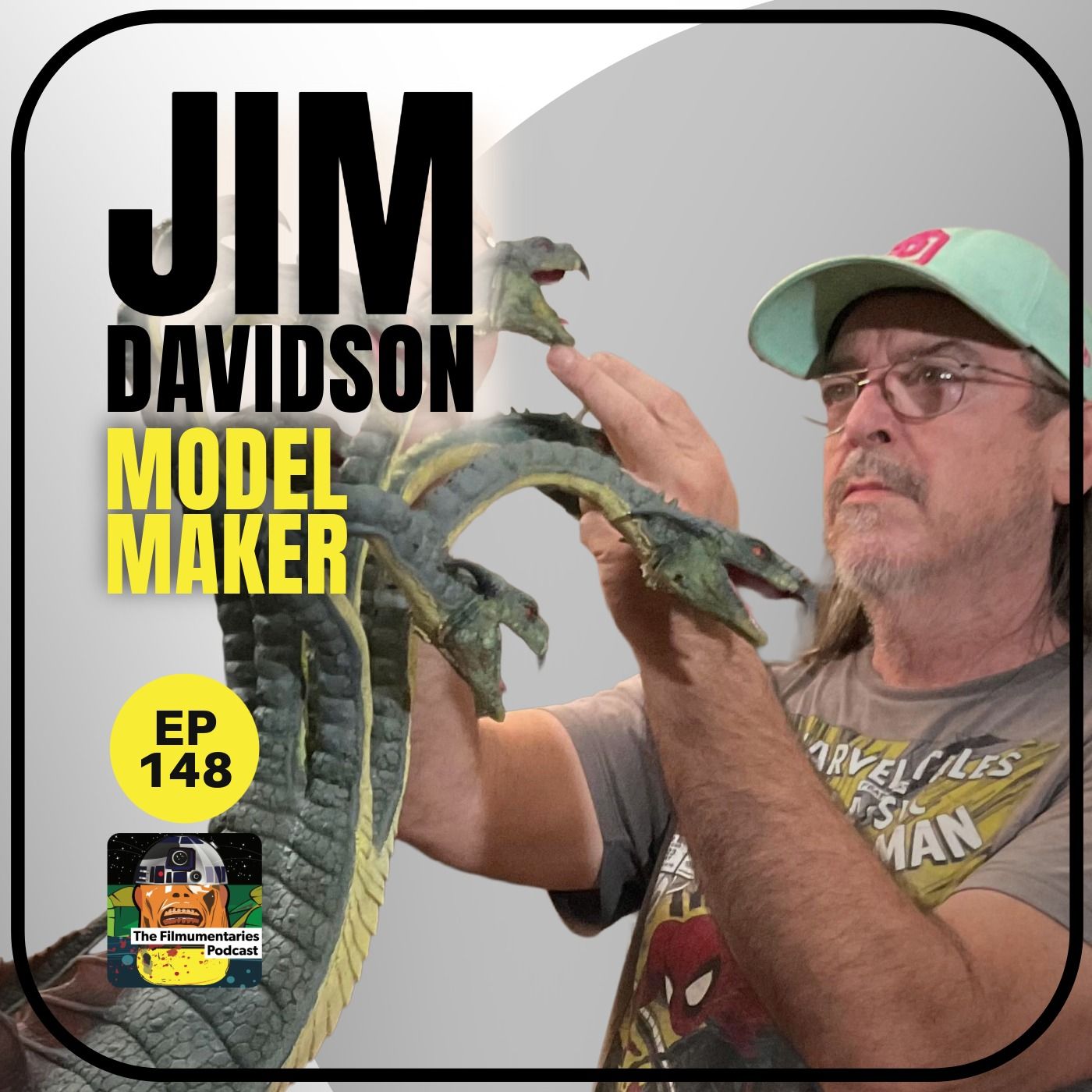 Ep 148 | Jim Davidson — Model Maker on Terminator 2 & Batman Returns | In this episode, I chat with model maker Jim Davidson about his journey from a dinosaur-obsessed kid in the 1970s to working on some of the most memorable practical effects sequences in modern cinema. Jim talks about discovering the work of Ray Harryhausen, and how seeing Star Wars at the age of 12 made him realise that visual effects could be a real career. We get into how a chance meeting with future Oscar-winning art director Robert Stromberg led to his first break in the industry, and how that snowballed into working with the Skotak brothers on major productions. Jim shares detailed insights into the making of the nuclear nightmare sequence in Terminator 2: Judgment Day, including how the miniature buildings were constructed, destroyed, and reset using a combination of breakaway materials, air cannons and practical ingenuity. We also talk about his work on Batman Returns, the realities of working in small, tight-knit effects crews, and the creative problem-solving that defined that era of filmmaking. A big part of the conversation focuses on the industry shift following Jurassic Park, when CGI began to replace large-scale practical effects. Jim reflects on witnessing that transition first-hand, and why he chose not to move into digital work. There’s also discussion of his later work, including returning to stop motion for Creepshow, bringing things full circle back to the techniques that first inspired him. It’s a fascinating look at a very specific window in film history, from someone who was right in the middle of it. Topics CoveredGrowing up in the 1970s and early creative influencesDiscovering Ray Harryhausen and stop motionThe impact of Star Wars on a generationBreaking into the film industry through Robert StrombergEarly work and first film projectsWorking with the Skotak brothersPractical effects techniques on Terminator 2Building and destroying miniature citiesIn-camera effects vs optical compositingWorking on Batman Returns miniaturesLife on practical effects crews in the 80s and 90sThe rise of CGI after Jurassic ParkTransition from analog to digital workflowsMatte painting: traditional vs PhotoshopReturning to stop motion on CreepshowReflections on a career in practical effectsThis podcast is completely independent and made possible by listener support. If you’d like to help me keep making these episodes, you can join my Patreon community here: https://patreon.com/jamiebenning Watch more on YouTube:Check out the Filmumentaries YouTube channel for behind-the-scenes clips and extra content: https://youtube.com/filmumentariesAll my links | 1h 30m 14s | ||||||
| 4/14/26 |  Ep 147 | John Duncan — ILM Model Maker (Star Wars, Star Trek, Pirates) | Episode 147: John DuncanIn this episode, I’m joined by model maker John Duncan, whose career spans nearly fifteen years at Industrial Light & Magic and includes work across Star Wars, Star Trek, Galaxy Quest, Pirates of the Caribbean, The Matrix and more.John talks about his early fascination with building miniatures as a kid, making models out of paper and cardboard, and how that instinct to just try things eventually led him into the film industry. What started as architectural model work and a stint in television quickly turned into a career at ILM, beginning in 1993, where he arrived for what was meant to be a two-week job and stayed for over a decade .We get into the realities of model making for film, learning to build for the camera rather than for close inspection, working under tight deadlines, and letting go of work when it needs to be modified or destroyed for the shot.John also discusses his time as a concept model maker on the Star Wars prequels, working with Doug Chiang to create what he describes as “3D blueprints” for the wider production. These models helped bridge the gap between design, practical builds and digital assets, ensuring consistency across departments.There’s plenty here on specific projects too, including building the Enterprise-E for Star Trek: First Contact, working on the ships for Galaxy Quest, and contributing to the large-scale pirate ships in Pirates of the Caribbean. He also shares stories about unusual materials, problem-solving on the fly, and the collaborative nature of the ILM model shop.We also talk about the shift from practical models to digital effects, where miniatures still have a place today, and why physical builds continue to resonate with filmmakers and audiences alike.John is thoughtful, practical, and clearly still passionate about the craft. This is a great insight into a side of filmmaking that often goes unnoticed, but is absolutely fundamental to how these films were made.Topics coveredGrowing up building models and early creative influencesFirst steps into the film industry via architectural modelsJoining ILM in 1993 and working alongside industry legendsBuilding models for camera vs building for displayWorking on Star Trek: First Contact and Galaxy QuestConcept model making on the Star Wars prequelsCollaborating with Doug Chiang and George LucasThe idea of “3D blueprints” in film productionPractical effects vs digital effectsWorking on Pirates of the CaribbeanMaterials, techniques and problem-solving in the model shopReplica prop community and fan researchWhy physical models still matterThis podcast is completely independent and made possible by listener support. If you’d like to help me keep making these episodes, you can join my Patreon community here: https://patreon.com/jamiebenning Watch more on YouTube:Check out the Filmumentaries YouTube channel for behind-the-scenes clips and extra content: https://youtube.com/filmumentariesAll my links | 1h 07m 10s | ||||||
| 3/24/26 |  Ep 146 | Don Bies — Inside the Lucasfilm Archives (R2-D2 Operator) | In this episode, I sit down with Don Bies – former Lucasfilm archivist and special effects artist at ILM – for a deep dive into his career and his time inside the Star Wars archive. Don takes me right back to his childhood in Chicago, where a viewing of the 1931 Frankenstein sparked a lifelong fascination with makeup effects and filmmaking . From experimenting with homemade prosthetics to building a full-size R2-D2, his early passion eventually led him to California. We talk about his first major break working on The Fly, where he contributed to several effects – many of which ended up on the cutting room floor, but gave him invaluable experience. From there, Don’s path into Lucasfilm begins, starting with operating R2-D2 on commercials alongside Anthony Daniels, Peter Mayhew and even George Lucas. That connection ultimately led to him working on the Lucasfilm archives. This is where things get really interesting. Don describes what it was like stepping into a warehouse full of original Star Wars props, models and documents – much of it undocumented and at risk of being lost or discarded . He shares stories of discovering key items like Darth Vader’s helmet hidden in a crate, uncovering original manuscripts and audio recordings, and building one of the first digital catalogues of the collection. We also get into:His role in early Lucasfilm exhibitions and the growth of the archiveWorking at Skywalker Ranch and the unique creative environment thereThe transition period between Return of the Jedi and the Special EditionsWearing multiple costumes (including Boba Fett) during the Special Edition shootsThe reality of preserving film history inside a working production companyIt’s a brilliant conversation that really captures a moment in time when Star Wars history could easily have been lost – and the people who helped save it.This podcast is completely independent and made possible by listener support. If you’d like to help me keep making these episodes, you can join my Patreon community here: https://patreon.com/jamiebenning Watch more on YouTube:Check out the Filmumentaries YouTube channel for behind-the-scenes clips and extra content: https://youtube.com/filmumentariesAll my links | 1h 48m 26s | ||||||
| 3/17/26 |  Ep 145 | Alec Gillis — Creature FX Artist (Aliens, Predator, Tremors) | In this episode of The Filmumentaries Podcast, I’m joined by creature effects designer Alec Gillis, founder of Studio Gillis and co-founder of Amalgamated Dynamics Inc. (ADI) alongside Tom Woodruff Jr.Alec has spent more than four decades helping bring some of cinema’s most memorable creatures to life. After beginning his career working under the legendary Stan Winston, he went on to contribute to films including Aliens, Predator, Alien³, Tremors, Death Becomes Her, Starship Troopers and many more.In this conversation we talk about how a childhood encounter with Ray Harryhausen’s Jason and the Argonauts set him on this path, the early days building stop-motion creatures in his parents’ garage, working for Roger Corman alongside a young James Cameron, and what it was like joining Stan Winston Studio during one of the most exciting periods in creature effects history.We also talk about the eight-week scramble to build the Predator, working with David Fincher on Alien³, forming ADI with Tom Woodruff Jr., and how practical creature effects continue to evolve in an industry now dominated by digital tools.This interview was recorded remotely, but I recently had the chance to visit Alec in Los Angeles while filming interviews for our upcoming Joe Alves documentary, where we spoke in person about his work on Jaws 3-D.Topics discussed• Discovering movie magic through Ray Harryhausen• Building stop-motion creatures as a kid• Learning the craft during the Roger Corman years• Meeting and working alongside James Cameron• Life inside Stan Winston Studio• Creating the Predator in just eight weeks• The production of Alien³ and working with David Fincher• Founding Amalgamated Dynamics Inc. with Tom Woodruff Jr.• Practical effects in the digital era• Mentoring the next generation of creature artistsSupport the PodcastI hope you enjoy it.This podcast is completely independent and made possible by listener support. If you’d like to help me keep making these episodes, you can join my Patreon community here: https://patreon.com/jamiebenning Watch more on YouTube:Check out the Filmumentaries YouTube channel for behind-the-scenes clips and extra content: https://youtube.com/filmumentariesAll my links | 1h 48m 48s | ||||||
| 2/10/26 |  Ep 144 | Randy Thom — Oscar-Winning Director of Sound at Skywalker Sound | In this episode, I chat with Academy Award-winning sound designer Randy Thom about his journey from college radio to shaping the soundscapes of some of cinema’s most iconic films.We discuss:Growing up loving movies and discovering sound via college radio in OhioMaking a cold call to Walter Murch and landing a job on Apocalypse NowEarly sound experiments at Skywalker RanchRecording effects for The Empire Strikes Back and Raiders of the Lost ArkCollaborating with Robert Zemeckis and David LynchWhy sound should be involved in pre-productionThe evolution from analog to digital workflowsThe creative and economic impact of AI on film soundThe philosophy behind “inventing” sonic spaceWinning an Oscar for The Right StuffWinning a BAFTA for The RevenantRandy also reflects on mentorship, collaboration at Skywalker Ranch, and why storytelling always matters more than authenticity.Listen now and take a deep dive into the craft of cinematic sound.See below for all the links you might need!This podcast is completely independent and made possible by listener support. If you’d like to help me keep making these episodes, you can join my Patreon community here: https://patreon.com/jamiebenning Watch more on YouTube:Check out the Filmumentaries YouTube channel for behind-the-scenes clips and extra content: https://youtube.com/filmumentariesAll my links | 1h 03m 55s | ||||||
| 2/5/26 |  BONUS - Crowdfunding for the LA Trip | This is a short bonus episode with a very specific purpose. Patrick Tyndall and I are in the middle of a GoFundMe campaign to get us back to Los Angeles to finish filming Not Your Average Joe, our documentary about legendary production designer Joe Alves. This episode is me explaining where the project is at, what we’ve already achieved, and why this upcoming LA trip feels so important. We’ll be in Los Angeles from 22–28 February 2026, filming interviews and B-roll that cover some key chapters of Joe’s life and career, including:Joe’s short but intense motor racing career, including racing alongside Dickie SmothersThe story of Joe introducing a major Hollywood actor to racing, setting them on a path to a serious motorsport careerAn interview with Alec Gillis the effects artist who built the articulated sharks for Jaws 3A conversation with Ann Dusenberry, who worked closely with Joe on Jaws 2An interview with Dean Cundey, cinematographer on Escape from New YorkOngoing efforts to involve Steven Spielberg in the projectThe documentary has only been shot over a relatively small number of days so far, all fitted around regular jobs and family life, but the material we’ve captured already has been incredible. This next trip is about joining the dots and getting the remaining pieces that will allow us to bring Joe’s story properly over the finish line. At the time of recording, the GoFundMe is sitting at around $1,000, and we need roughly $3,000 to make the trip work. Any contribution helps, but just as importantly, sharing the campaign on social media genuinely makes a difference. If you’ve ever enjoyed the podcast, the articles, or the behind-the-scenes conversations, this is me asking for a bit of help to make sure this story gets told. Donate here!This podcast is completely independent and made possible by listener support. If you’d like to help me keep making these episodes, you can join my Patreon community here: https://patreon.com/jamiebenning Watch more on YouTube:Check out the Filmumentaries YouTube channel for behind-the-scenes clips and extra content: https://youtube.com/filmumentariesAll my links | 5m 56s | ||||||
| 1/27/26 | 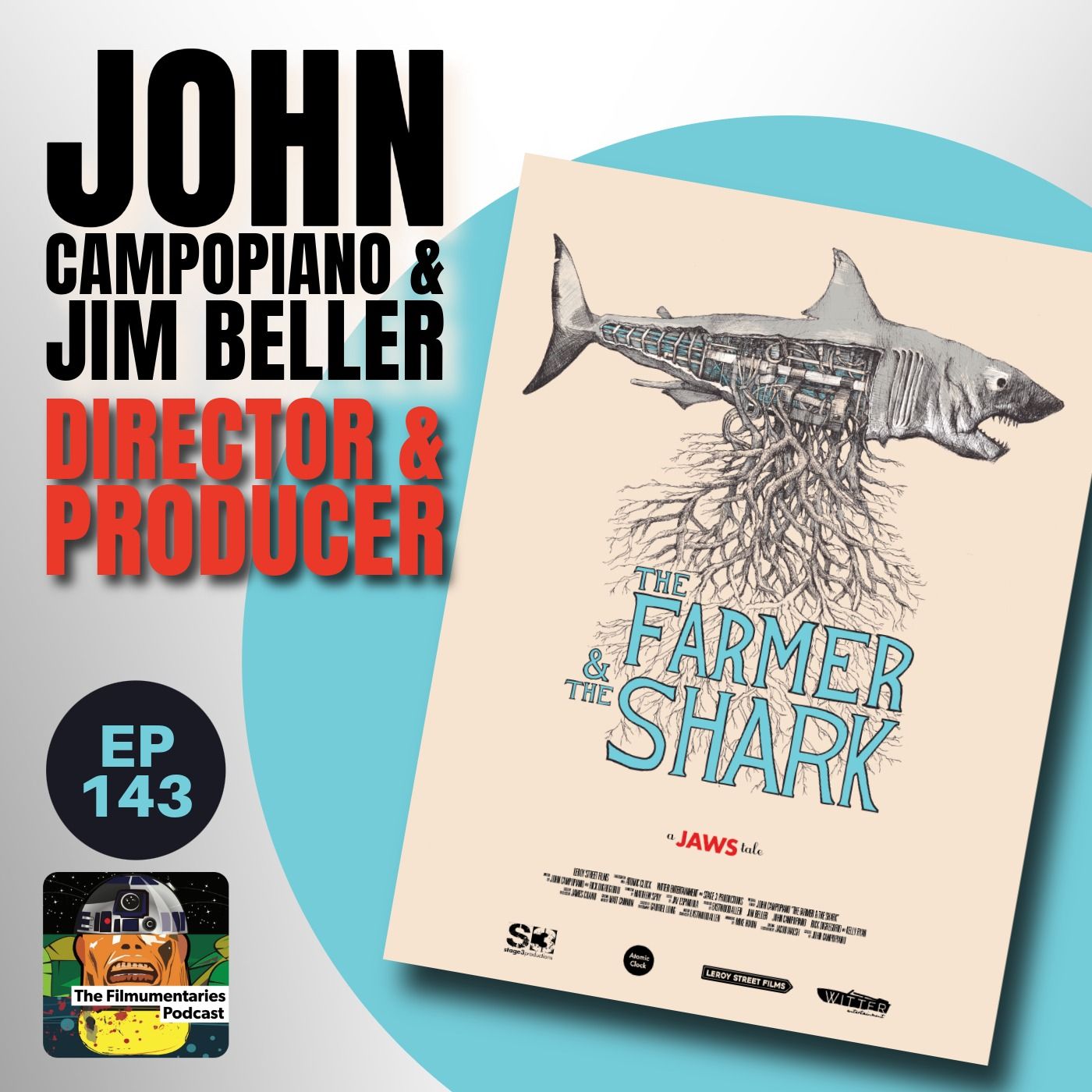 Ep 143 | The Farmer and the Shark — John Campopiano & Jim Beller (Jaws Doc) | In this episode of The Filmumentaries Podcast, I’m joined by filmmaker John Campopiano and producer Jim Beller to talk about their new documentary, The Farmer and the Shark. The film centres on Craig Kingsbury, a farmer from Martha’s Vineyard who appeared in Jaws (1975), playing Ben Gardner, the local fisherman whose abandoned boat is discovered by Chief Brody early in the film. From that small but unforgettable role, the documentary explores Craig’s life, his connection to the island, and how his story intersects with the legacy of Jaws. John Campopiano is the director of the film and is known for documentaries including Unearthed & Untold: The Path to Pet Sematary and Pennywise: The Story of IT. Jim Beller is one of the producers of The Farmer and the Shark - former producer of my Inside Jaws - A Filmumentary and all round Jaws expert.I should note that I haven’t seen the finished film yet, so this conversation focuses on the making of the documentary, how the project came together, why Craig Kingsbury’s story stood out, earning trust, and shaping a film around a real person whose life briefly intersected with a cinematic landmark. If you’re looking for a calm, thoughtful conversation about film history, storytelling, and the people behind the scenes, I hope this episode provides a welcome distraction. GuestsJohn Campopiano — DirectorJim Beller — ProducerFilms DiscussedThe Farmer and the SharkJaws (1975)Support the Podcast - If you enjoy The Filmumentaries Podcast, you can support the show on Patreon. Your support helps cover the time, research, travel, and production costs involved in making these episodes. Thanks for listening.This podcast is completely independent and made possible by listener support. If you’d like to help me keep making these episodes, you can join my Patreon community here: https://patreon.com/jamiebenning Watch more on YouTube:Check out the Filmumentaries YouTube channel for behind-the-scenes clips and extra content: https://youtube.com/filmumentariesAll my links | 37m 22s | ||||||
Want analysis for the episodes below?Free for Pro Submit a request, we'll have your selected episodes analyzed within an hour. Free, at no cost to you, for Pro users. | |||||||||
| 1/6/26 |  Ep 142 | Jon Spira — New Mike Hodges Book (Get Carter, Flash Gordon) | Jon's Kickstarter LinkSummaryIn this conversation, Jon Spira discusses his new book 'I'll Settle for Nothingness: Conversations with Mike Hodges', detailing the genesis of the book, his friendship with the legendary filmmaker, and the exploration of Hodges' versatile career. The discussion covers many things including the making of 'Morons from Outer Space', the challenges of unproduced films, and the emotional journey of writing the book. Spira also shares insights into Hodges' legacy, his experiences with the BFI, and the Kickstarter campaign for the book's publication.TakeawaysThe book is a collection of conversations with Mike Hodges.Jon Spira's friendship with Hodges developed through their shared love of cinema.'Morons from Outer Space' is a film that has gained a cult following despite its initial failure.Hodges was a versatile filmmaker, working across various genres.The Terminal Man is a significant film that was poorly marketed and overlooked.Hodges had many unproduced films that reflect his creative vision.The BFI is preserving Hodges' legacy through his film archive.Spira aims to honor Hodges' memory through this book.The emotional journey of writing the book was profound for Spira.The Kickstarter campaign is a way to celebrate Hodges' work and legacy. This podcast is completely independent and made possible by listener support. If you’d like to help me keep making these episodes, you can join my Patreon community here: https://patreon.com/jamiebenning Watch more on YouTube:Check out the Filmumentaries YouTube channel for behind-the-scenes clips and extra content: https://youtube.com/filmumentariesAll my links | 43m 16s | ||||||
| 12/23/25 | 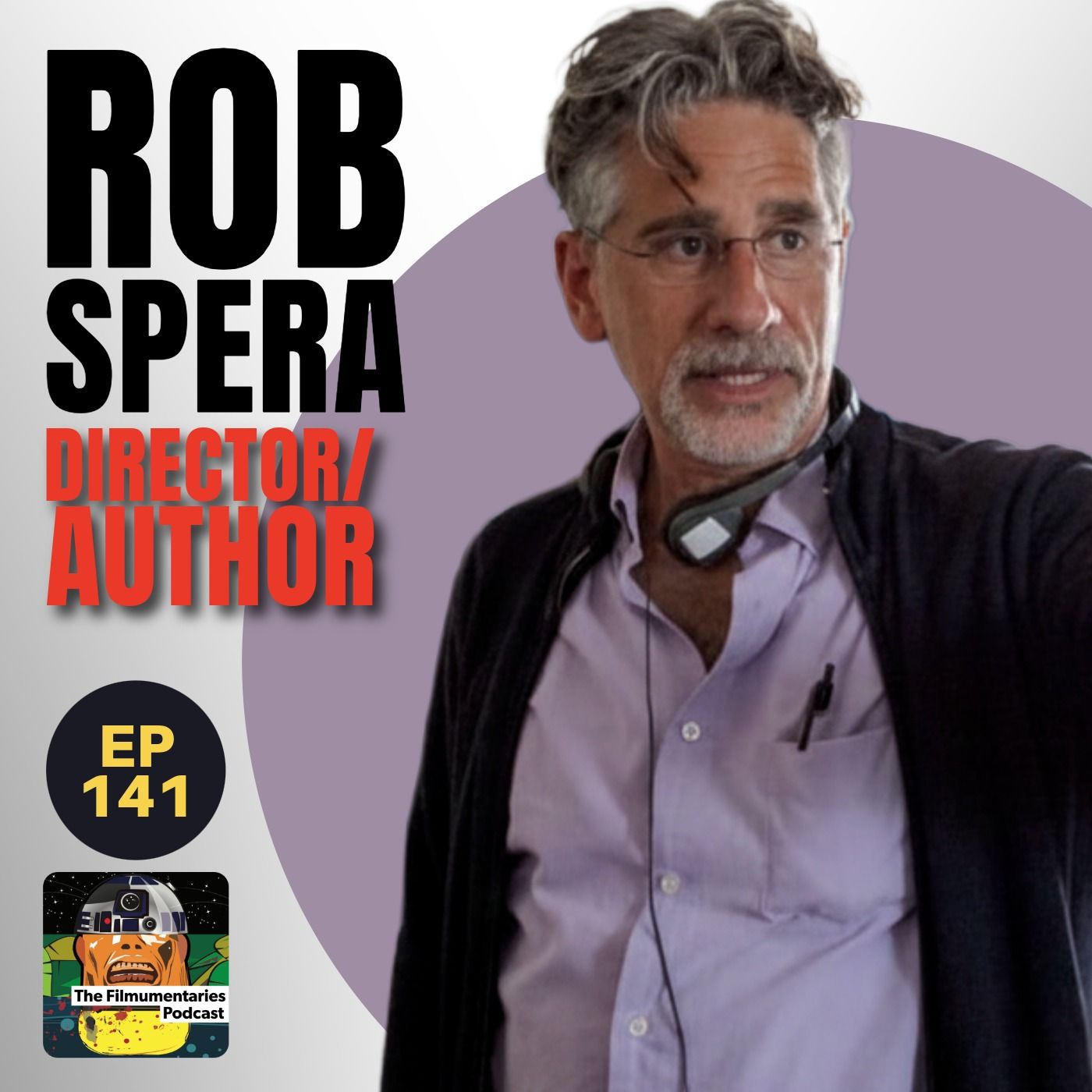 Ep 141 | Rob Spera — The Film/TV Director's Field Manual | Rob Spera is a film and television director, educator, and the author of Film/TV Director’s Field Manual: 70 Maxims to Change Your Filmmaking. With decades of experience directing features, episodic television, and theatre, Rob brings a deeply practical, human-centred approach to directing and leadership. In this conversation, we discuss:Why Rob describes his book as an “anti-textbook”The idea that the camera’s job is to photograph subtextBuilding non-redundant frames that invite the audience to participateWhy kindness and psychological safety are essential creative toolsLetting go of control and empowering collaboratorsWhat “write what you know” really meansHow directors can practise their craft between jobsFilm/TV Director’s Field Manual – available via Amazon and Rob’s websiteHAPPY HOLIDAYS!This podcast is completely independent and made possible by listener support. If you’d like to help me keep making these episodes, you can join my Patreon community here: https://patreon.com/jamiebenning Watch more on YouTube:Check out the Filmumentaries YouTube channel for behind-the-scenes clips and extra content: https://youtube.com/filmumentariesAll my links | 50m 16s | ||||||
| 12/9/25 | 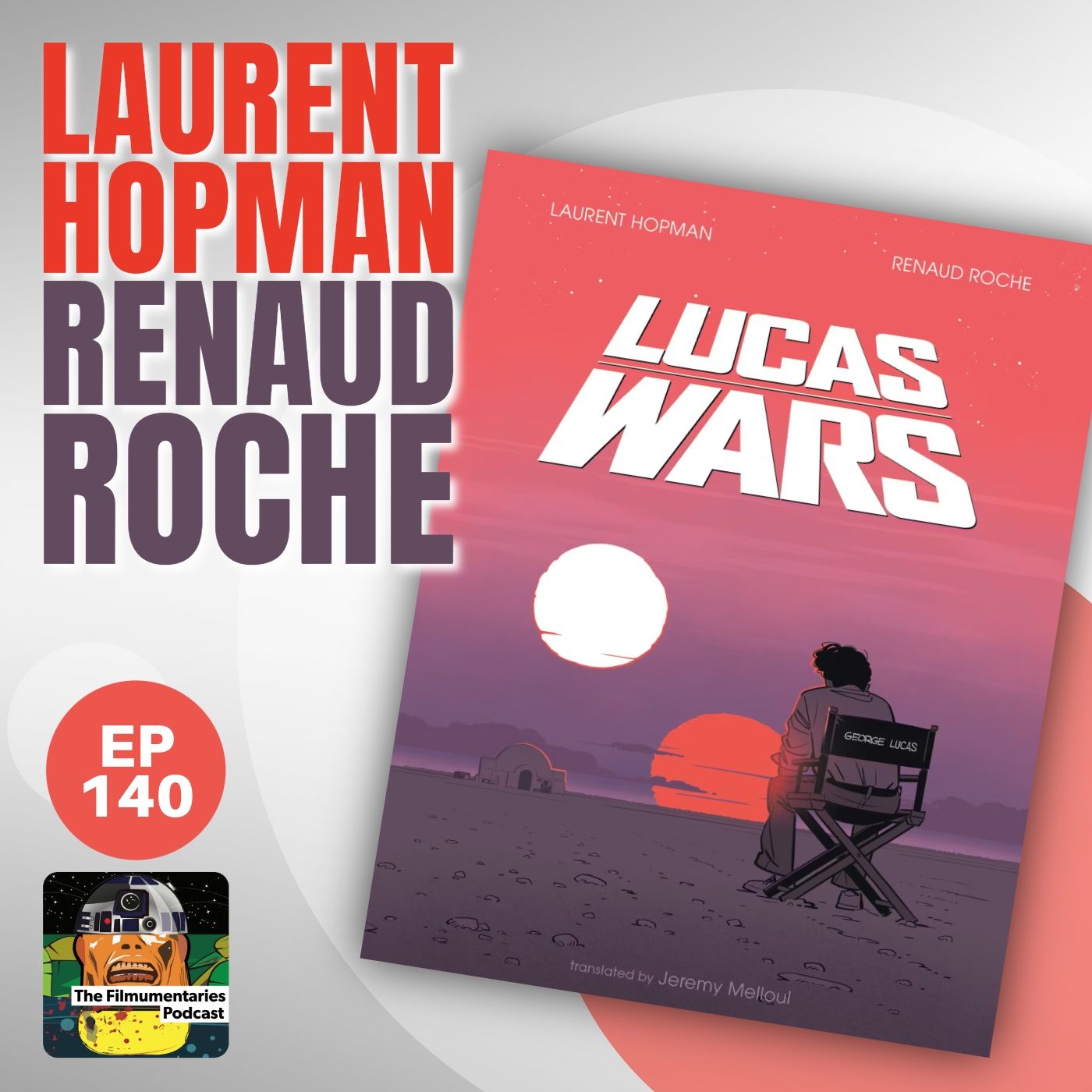 Ep 140 | Lucas Wars — Laurent Hopman & Renaud Roche on the Star Wars Graphic Novel | In this episode of The Filmumentaries Podcast, I’m joined by Laurent Hopman and Renaud Roche, the writer and artist behind the acclaimed graphic novel Lucas Wars, which tells the behind-the-scenes story of the making of Star Wars from a deeply personal, human perspective. Laurent shares his background as an entertainment journalist and how years of research, interviews, books and documentaries fed into the script. Renaud talks about coming from a traditional animation and storyboarding background, studying at Gobelins in Paris, and how cinematic visual language shaped the way he approached the book’s artwork. We discuss:Why the emotional journey of George Lucas became the heart of the storyHow the pair condensed vast amounts of historical research into a tightly structured graphic novelThe challenge of visually dramatising meetings, offices and creative conflictThe relationship between Lucas and Spielberg, and how it shapes both volume one and the upcoming sequelThe meaning behind the iconic twin suns coverVisiting Skywalker Ranch and Lucasfilm after the book’s releaseBalancing historical accuracy with storytellingWhy Lucas Wars connected with readers beyond the core Star Wars fandomWe also talk about the upcoming second volume, which covers The Empire Strikes Back and Raiders of the Lost Ark, and how expanding into Spielberg’s world adds a new layer to the story. As always, if you enjoy the podcast and would like to support what I do, you can find me on Patreon, and the show is also available on YouTube if you prefer to watch the interviews. BUY IT HEREThis podcast is completely independent and made possible by listener support. If you’d like to help me keep making these episodes, you can join my Patreon community here: https://patreon.com/jamiebenning Watch more on YouTube:Check out the Filmumentaries YouTube channel for behind-the-scenes clips and extra content: https://youtube.com/filmumentariesAll my links | 57m 53s | ||||||
| 11/25/25 | 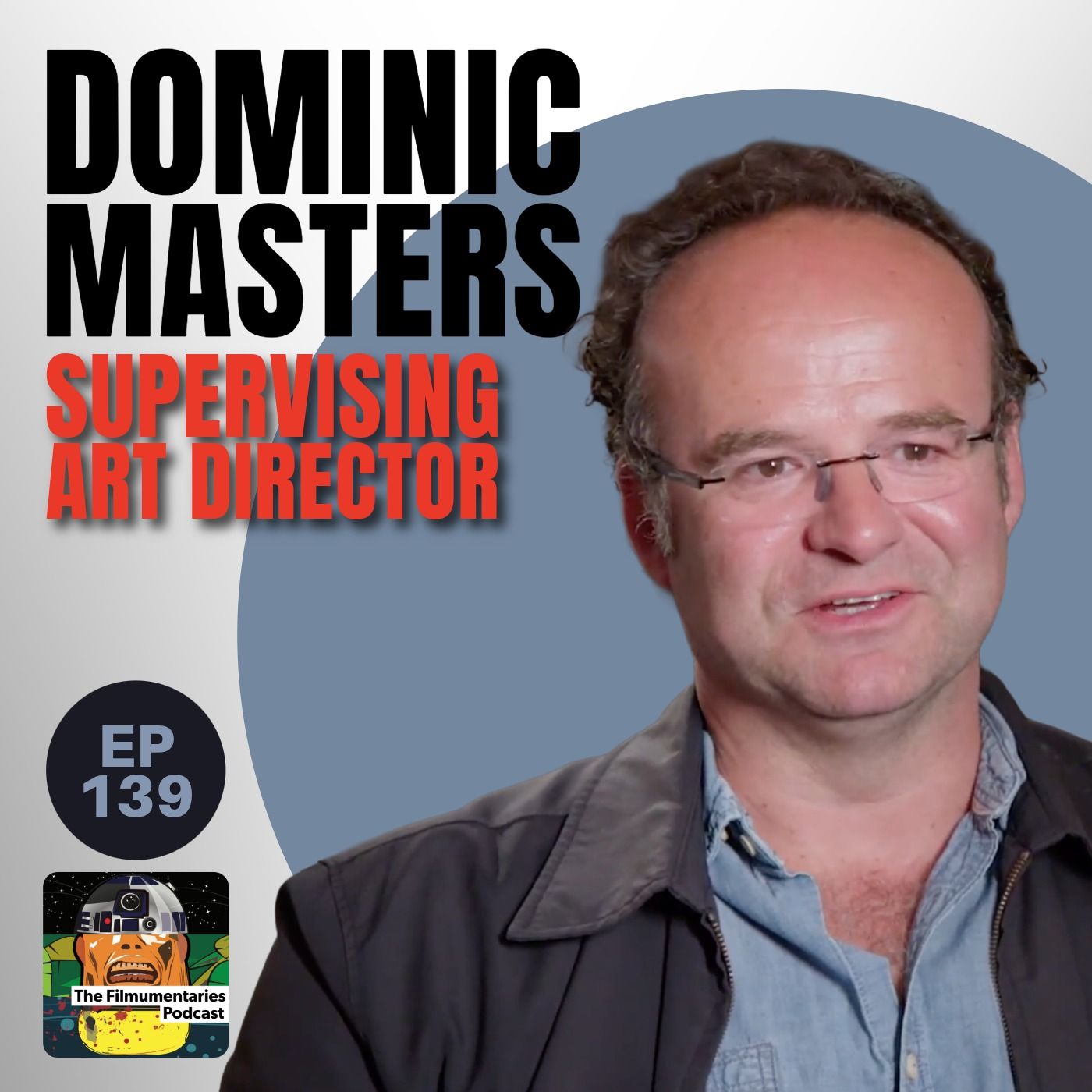 139 - Art Directing from Titanic to House of the Dragon with Dominic Masters | In this episode of The Filmumentaries Podcast, I speak with art director and supervising art director Dominic Masters, whose decades-long career spans some of the biggest films and series of the last 40 years. He grew up around movie sets thanks to his father, the legendary production designer Tony Masters (2001: A Space Odyssey, Papillon, Dune), and started his own journey at 19 when he spent eight months in China on Tai-Pan — the first Western movie ever shot there. Dom talks about learning the foundational skills of drafting, the early struggles of finding work in the British film industry of the mid-80s, and the unique lifestyle of moving from production to production — that strange micro-community that forms on set, often in far-flung locations. We cover his experiences on Titanic working under James Cameron, the shift from physical sets to set extensions and digital workflows, the evolution of the art department, and how shows like House of the Dragon demand an enormous level of coordination, creativity and technical precision. We also talk about the British Film Designers Guild, the camaraderie that forms in the art department, and his personal creative outlets, photography and music, that keep him balanced between jobs. It’s a wide-ranging, honest conversation with someone who has seen the industry evolve from the studio backlots of the 1970s to enormous contemporary productions. Topics discussedGrowing up around film sets and learning from legendary designersHis first job on Tai-Pan in 1985 and the experience of shooting in ChinaThe hierarchy and craft of the art departmentCollaboration with directors, designers, construction and VFXWorking on Titanic and the extraordinary scale of the buildThe Harry Potter films, James Bond films, and shifting directorsThe intensity and scale of House of the DragonSurviving the freelance lifestyle and industry downturnsCreative outlets outside the jobGuest Dominic Masters – Art Director / Supervising Art DirectorSelected credits: House of the Dragon, Belfast, Wonder Woman, Now You See Me 2, Casino Royale, Harry Potter, Titanic, The World Is Not Enough, The Avengers.This podcast is completely independent and made possible by listener support. If you’d like to help me keep making these episodes, you can join my Patreon community here: https://patreon.com/jamiebenning Watch more on YouTube:Check out the Filmumentaries YouTube channel for behind-the-scenes clips and extra content: https://youtube.com/filmumentariesAll my links | 1h 09m 45s | ||||||
| 11/11/25 | 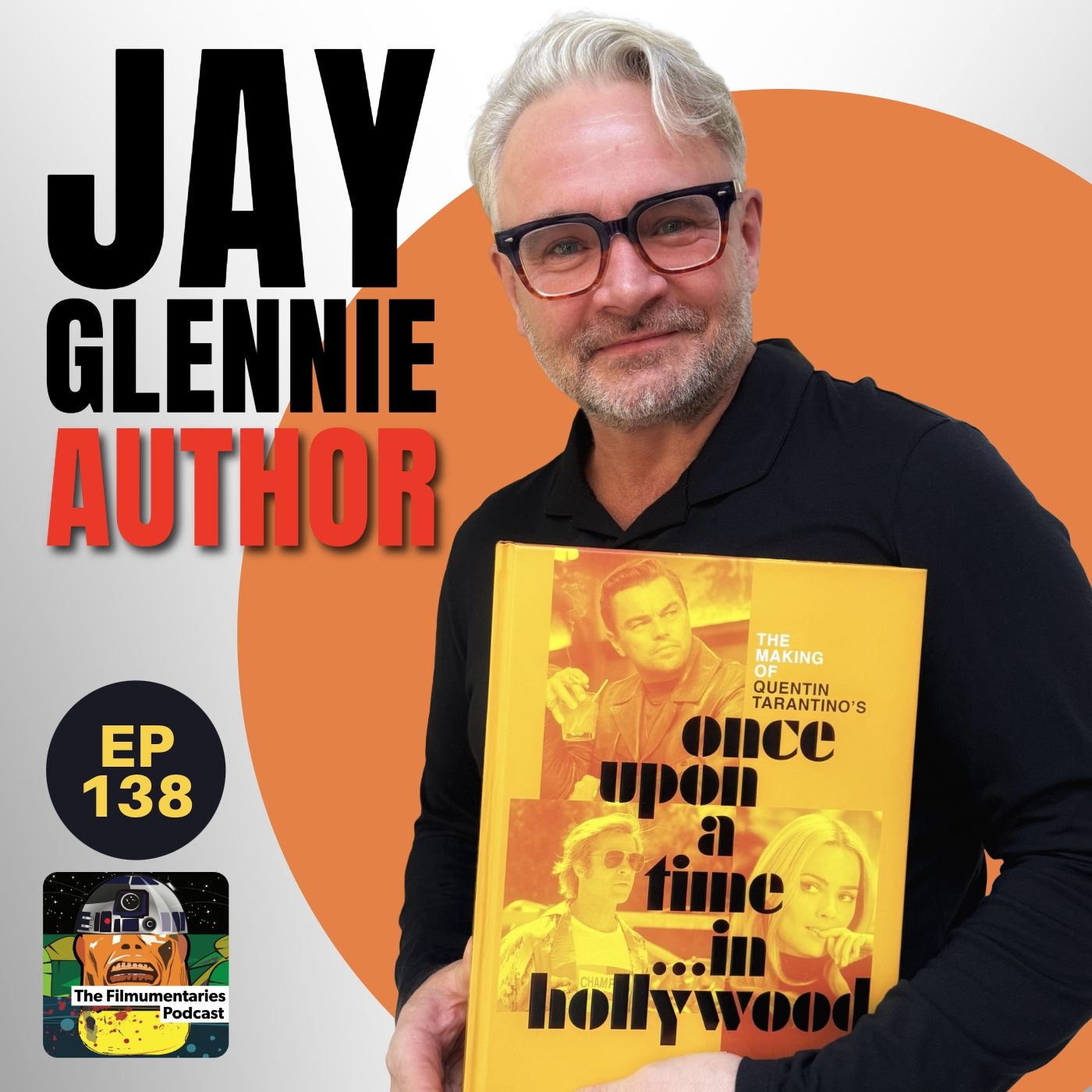 138 - Jay Glennie on "The Making of Quentin Tarantino's 'Once Upon A Time ...In Hollywood" | In this episode of The Filmumentaries Podcast I speak with author and film historian Jay Glennie about his new book, The Making of Quentin Tarantino’s Once Upon a Time ...In Hollywood. Jay has a real gift for pulling together people, memories and materials, and this book is packed with insight from the cast and crew, including Leonardo DiCaprio, Brad Pitt, Margot Robbie and Quentin himself.We get into how long Quentin carried the idea for the film, the script secrecy following The Hateful Eight leak, and the vital work of the ADs, casting team, DP, production designer and producers. Jay talks about the careful balancing act of handling contradictory memories, how he preserves the voices of the people he interviews, and how he approaches a project that is still fresh in everyone’s mind. We also look at what comes next in his ten book Tarantino series.Big thanks to Jay and to TITAN books.Buy Jay Glennie’s book - published by TITAN.This podcast is completely independent and made possible by listener support. If you’d like to help me keep making these episodes, you can join my Patreon community here: https://patreon.com/jamiebenning Watch more on YouTube:Check out the Filmumentaries YouTube channel for behind-the-scenes clips and extra content: https://youtube.com/filmumentariesAll my links | 40m 03s | ||||||
| 11/5/25 | 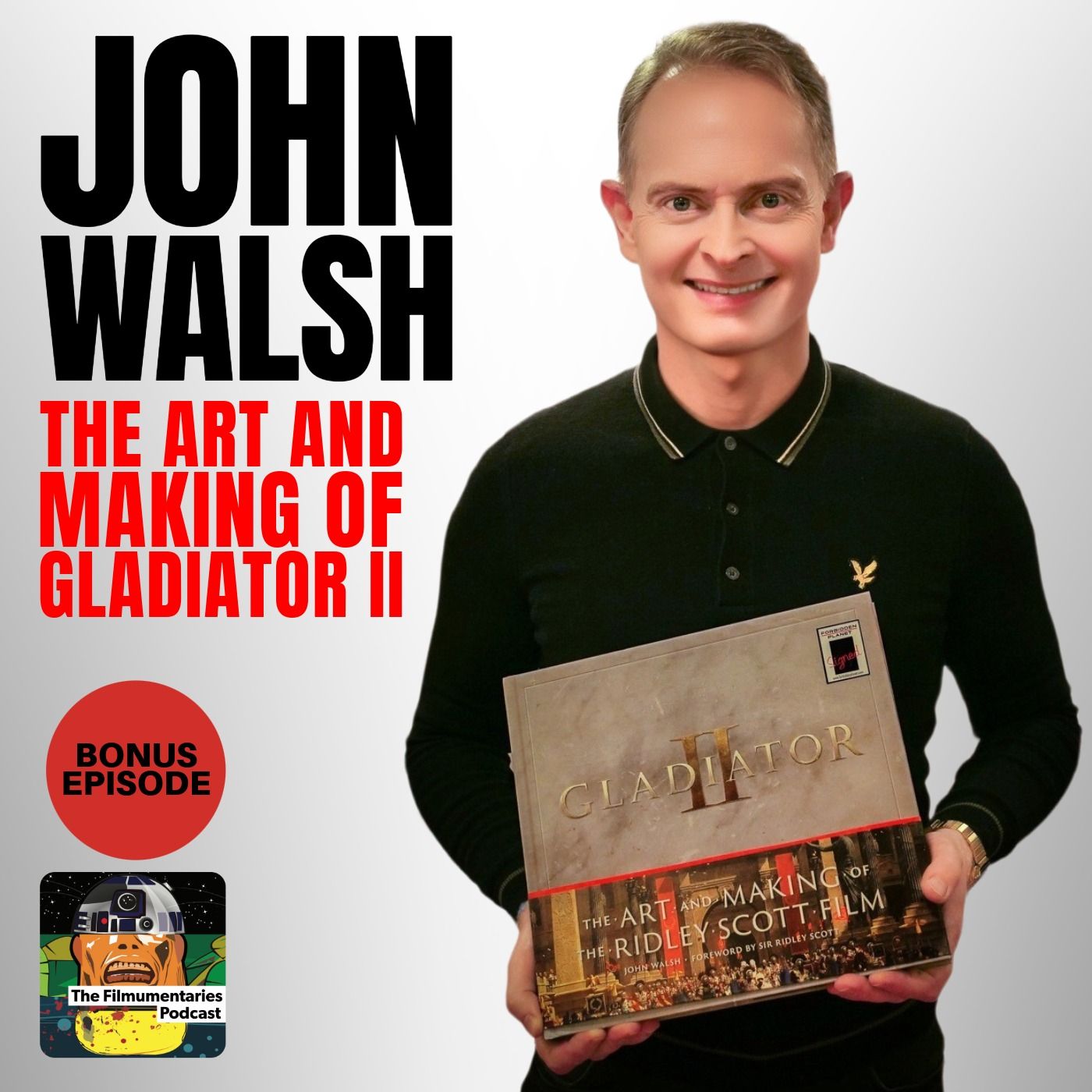 BONUS - John Walsh on Writing The Art And Making of Gladiator 2 Book | In this bonus episode of The Filmumentaries Podcast, host Jamie Benning, that's me... talks with author and filmmaker John Walsh about his new book The Art and Making of Gladiator II. Walsh discusses how he was approached by Abrams Books and Paramount Pictures to chronicle the creation of Ridley Scott’s Gladiator sequel, offering rare insights into the production design, visual effects, and creative collaboration behind one of the most ambitious films of the decade. The conversation explores how Walsh handled the challenge of documenting a still-in-production movie, his access to thousands of behind-the-scenes images, and the process of balancing art direction, photography, and storytelling in an official studio book. We also look ahead to Walsh’s next project — a deep dive into The Texas Chain Saw Massacre, and reflect on the enduring value of physical “making-of” books in today’s digital film culture.BUY THE BOOK HEREThis podcast is completely independent and made possible by listener support. If you’d like to help me keep making these episodes, you can join my Patreon community here: https://patreon.com/jamiebenning Watch more on YouTube:Check out the Filmumentaries YouTube channel for behind-the-scenes clips and extra content: https://youtube.com/filmumentariesAll my links | 32m 13s | ||||||
| 10/28/25 | 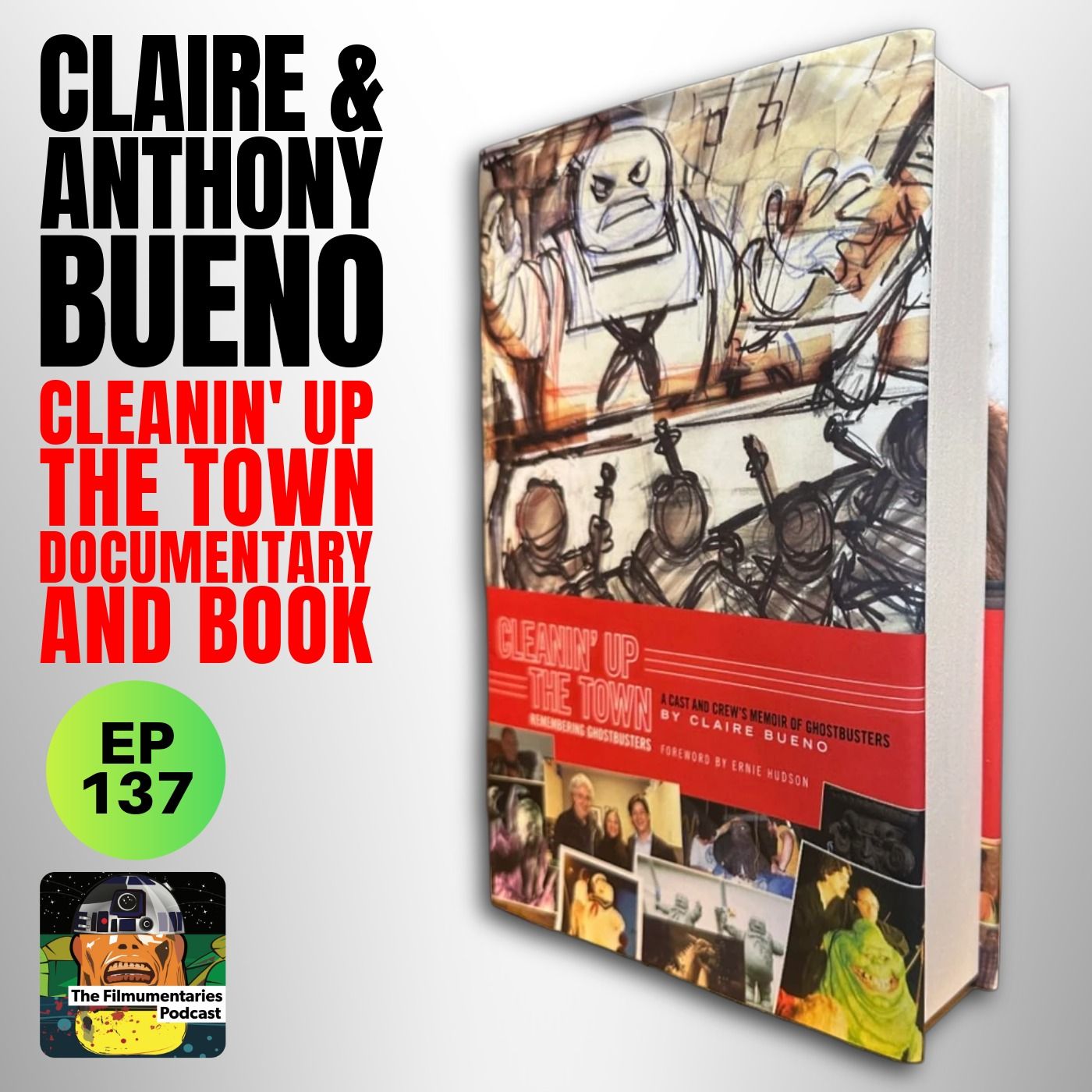 137 - The Long Road to "Cleanin’ Up the Town" with Claire and Anthony Bueno | In this episode of The Filmumentaries Podcast, I sit down with sibling filmmakers Claire and Anthony Bueno, the creative team behind Cleanin’ Up the Town: Remembering Ghostbusters - a feature documentary more than a decade in the making, and the definitive oral history of one of the most beloved comedies of all time. The Buenos spent years interviewing dozens of cast and crew members from the original Ghostbusters, including Dan Aykroyd, Ernie Hudson, Sigourney Weaver, and the late Harold Ramis. The result is an extraordinary behind-the-scenes portrait that captures both the technical wizardry and the creative spirit that defined the 1984 classic. Claire’s new companion book, also titled Cleanin’ Up the Town, builds upon the documentary by presenting full-length interviews, previously unseen material, and new reflections from the filmmakers and craftspeople who brought Ghostbusters to life. In our conversation, Claire and Anthony share what it took to get the project made -the years of persistence, the challenges of rights and access, and the rewards of telling such a beloved story from a fan’s perspective. Whether you’re a lifelong Ghostbusters enthusiast or simply interested in independent documentary filmmaking, this is a fascinating glimpse into the dedication required to bring such a massive project to life.This podcast is completely independent and made possible by listener support. If you’d like to help me keep making these episodes, you can join my Patreon community here: https://patreon.com/jamiebenning Watch more on YouTube:Check out the Filmumentaries YouTube channel for behind-the-scenes clips and extra content: https://youtube.com/filmumentariesAll my links | 1h 12m 38s | ||||||
| 10/7/25 | 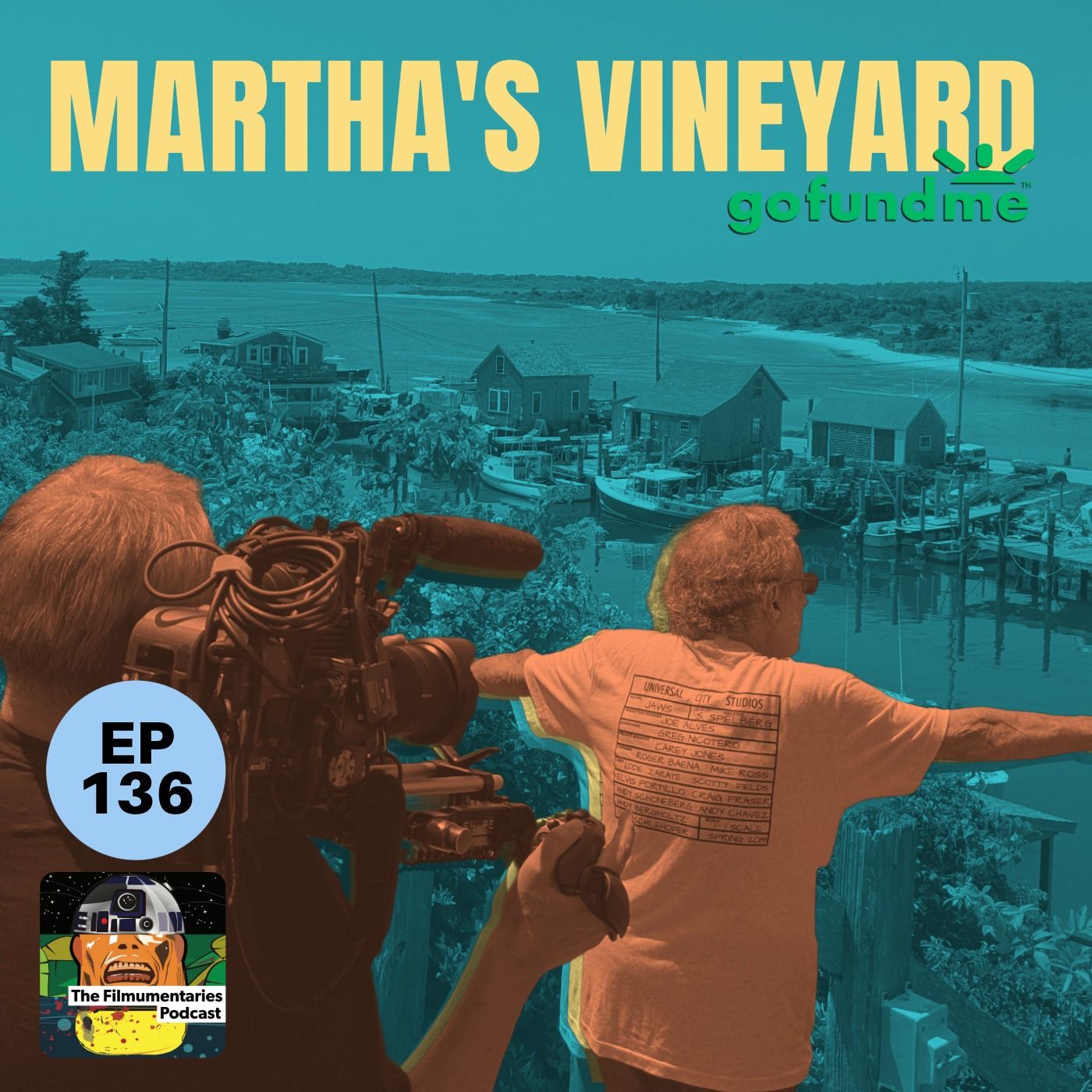 136 - Martha's Vineyard - Special Report | Episode 136: A Martha’s Vineyard special report on the Joe Alves Documentary shoot. This week’s episode is a little different. It is a behind the scenes update on our ongoing feature documentary about production designer and director Joe Alves (Jaws, Close Encounters, Escape from New York, Jaws 2, Jaws 3D). I take you through our trip to Martha’s Vineyard in June 2024 to capture Joe’s return to the island for the 50th anniversary of Jaws. Thanks to your generosity, we raised over £7,000 to cover the travel, ferry, car hire, and accommodation. Every penny went into the shoot. In this episode, I share:The challenges and triumphs of making the trip possibleShooting new interviews with Joe Alves, Marty Milner, Charles de Lauzirika, and Richard DreyfussFilming at iconic Jaws locations including Menemsha and the 4th July beach.The overwhelming warmth of the Jaws community and the atmosphere of the anniversary celebrationsHow the project has evolved from a short film idea into a full feature documentaryYour support is still needed!We still have more to do, including chasing interviews with Dean Cundey, John Carpenter, Lea Thompson, and Steven Spielberg. If you would like to support the film, visit the GoFundMe link in the show notes. Thanks again for helping us push this project forward. We could not do it without you. Support the documentary GoFundMeThis podcast is completely independent and made possible by listener support. If you’d like to help me keep making these episodes, you can join my Patreon community here: https://patreon.com/jamiebenning Watch more on YouTube:Check out the Filmumentaries YouTube channel for behind-the-scenes clips and extra content: https://youtube.com/filmumentariesAll my links | 39m 32s | ||||||
| 9/23/25 | 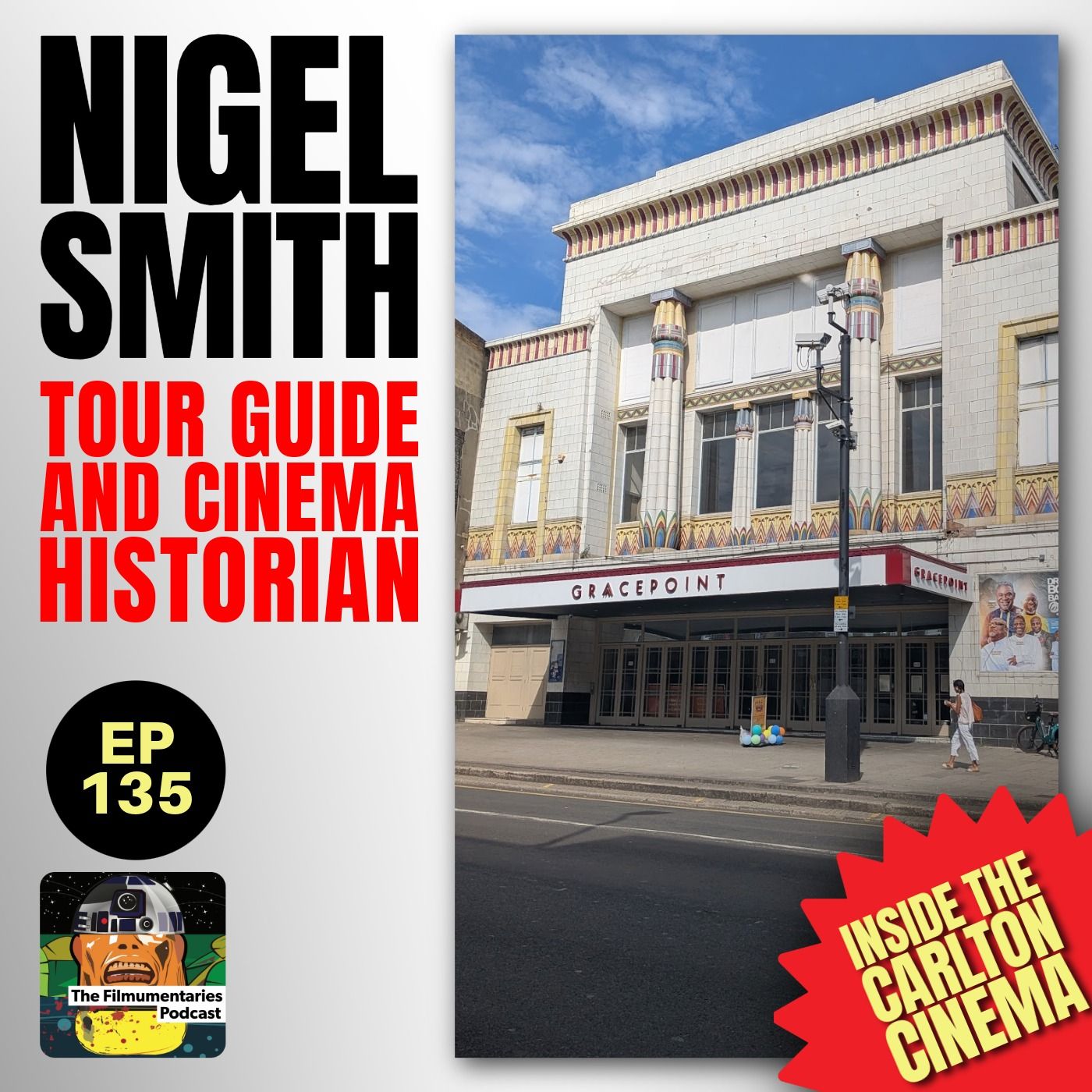 135 - Inside the Carlton Cinema with historian Nigel Smith | Cinema historian Nigel Smith joins Jamie to explore the hidden history of London’s picture houses. In particular the Egyptian-style Carlton in Islington. Nigel brings these spaces back to life through stories, archives, and first-hand recollections. In this episode, Nigel and Jamie discuss:How London’s old cinemas became coffee shops, bingo halls, and churchesThe difference between “going to the pictures” in the 1930s–50s and cinema-going todayHow local archives, trade papers, and oral histories help piece together forgotten storiesWhy repertory and community cinemas may hold the key to the future of film-goingNigel’s Memory Palaces project, documenting almost 100 cinema buildings with photos and storiesFind more from Nigel:memorypalaces.co.uk and Instagram @nigelsmithwalks.This podcast is completely independent and made possible by listener support. If you’d like to help me keep making these episodes, you can join my Patreon community here: https://patreon.com/jamiebenning Watch more on YouTube:Check out the Filmumentaries YouTube channel for behind-the-scenes clips and extra content: https://youtube.com/filmumentariesAll my links | 36m 23s | ||||||
| 9/9/25 | 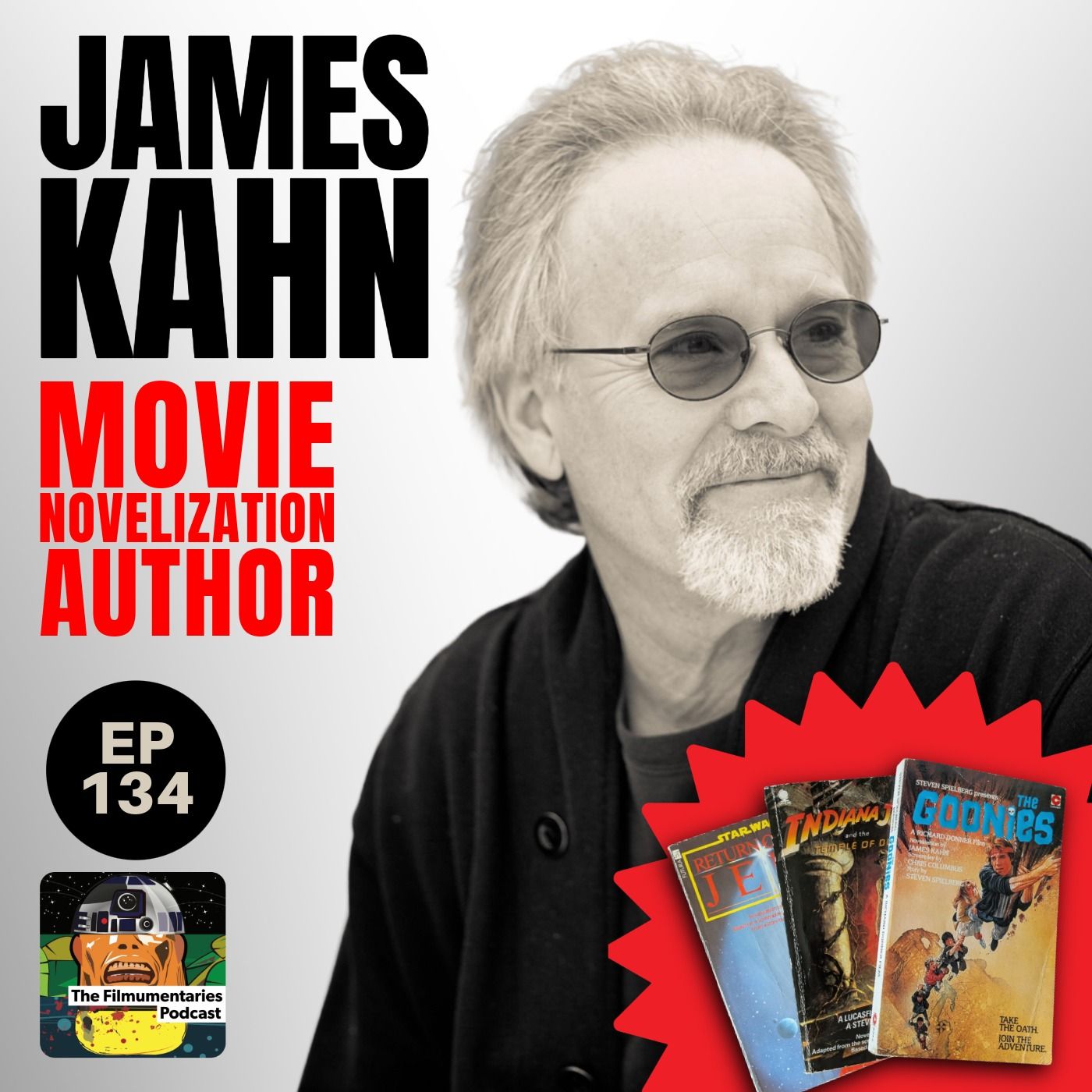 134 - Inside the Movie Novelizations of the ’80s with James Kahn — Jedi, Goonies & Poltergeist | In this episode of The Filmumentaries Podcast, I talk with James Kahn, the novelist behind some of the most iconic movie novelizations of the 1980s, including Return of the Jedi, Indiana Jones and the Temple of Doom, The Goonies, and Poltergeist. James shares how a chance encounter while working as an ER doctor in Santa Monica led him onto the set of ET: The Extra-Terrestrial, where he met Kathleen Kennedy and Steven Spielberg, an opportunity that set his writing career in motion. We discuss:How James went from emergency medicine to Hollywood writerHis early break writing the Poltergeist novelizationThe creative freedom Spielberg gave him on Temple of Doom, The Goonies, and othersWriting Return of the Jedi under intense secrecy — including how George Lucas gave him a decoy script where Luke kills the EmperorInventing backstory details that became “canon” for decades, like Ben and Owen being brothers and hints about Anakin’s fall into the lava pitsGiving Short Round his own chapter and exploring Mikey’s POV in The GooniesHow his books helped fans relive these films long before home videoWhy a great novelization is about more than retelling a screenplayHis recent memoir, A Jedi Memoir: A Double Life, weaving together stories from Hollywood and emergency medicineIf you grew up with these books, this one’s packed with insights, behind-the-scenes stories, and moments of movie history you probably didn’t know. If you enjoy the show and want to help me keep making these conversations, please consider supporting the podcast on Patreon:All the linksThis podcast is completely independent and made possible by listener support. If you’d like to help me keep making these episodes, you can join my Patreon community here: https://patreon.com/jamiebenning Watch more on YouTube:Check out the Filmumentaries YouTube channel for behind-the-scenes clips and extra content: https://youtube.com/filmumentariesAll my links | 50m 32s | ||||||
| 8/27/25 | 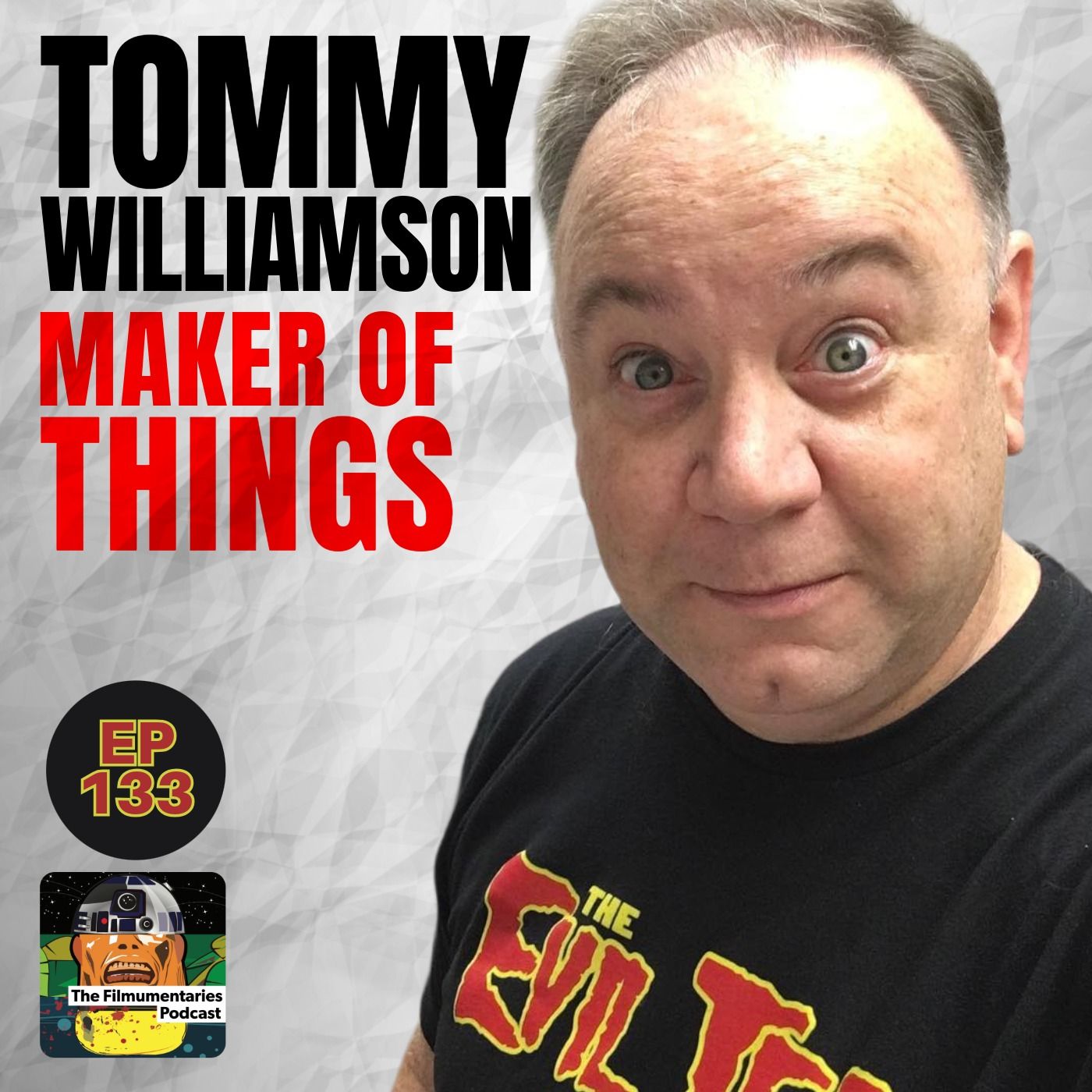 133 - From The Blob to Pan’s Labyrinth: Tommy Williamson Talks VFX, Guillermo del Toro and Making Movie Magic | In this episode of The Filmumentaries Podcast, I sit down with Tommy Williamson, a visual effects artist, prop maker, and lifelong creator whose career spans more than three decades. Tommy has worked on films including Spider-Man 2, Sin City, The Mist, Dune: Prophecy, and the modern masterpiece Pan’s Labyrinth. Tommy shares his journey from building paper-craft UFOs as a kid to working alongside Guillermo del Toro and becoming one of the artists helping to bridge the worlds of practical effects and cutting-edge digital VFX. We also dive into his passion for prop replicas and his work as the creator behind Nerds and Makers, where he builds incredible recreations of iconic movie props. If you love behind-the-scenes filmmaking stories, prop-making secrets, and hearing from the artists who bring movie magic to life, this episode is for you. In this episode, we discuss:Tommy’s early love of model making and practical effectsHis first big break on the 1988 remake of The BlobAdapting to the digital VFX revolution after Jurassic ParkWorking closely with Guillermo del Toro on Pan’s LabyrinthThe creative process behind his Nerds and Makers prop replicasWhy keeping one foot in both practical and digital worlds makes him a better artistThe importance of experimentation, curiosity, and lifelong creativity“I’ve always had to make things. It’s absolutely in my DNA. Even now, I’ll work on a show all day and then spend my evenings printing a lightsaber or a blaster. I can’t not do it.” — Tommy WilliamsonYou can follow Tommy and see his incredible prop builds on Instagram: @nerdsandmakersThis podcast is completely independent and made possible by listener support. If you’d like to help me keep making these episodes, you can join my Patreon community here: https://patreon.com/jamiebenning Watch more on YouTube:Check out the Filmumentaries YouTube channel for behind-the-scenes clips and extra content: https://youtube.com/filmumentariesAll my links | 1h 14m 14s | ||||||
| 8/12/25 | 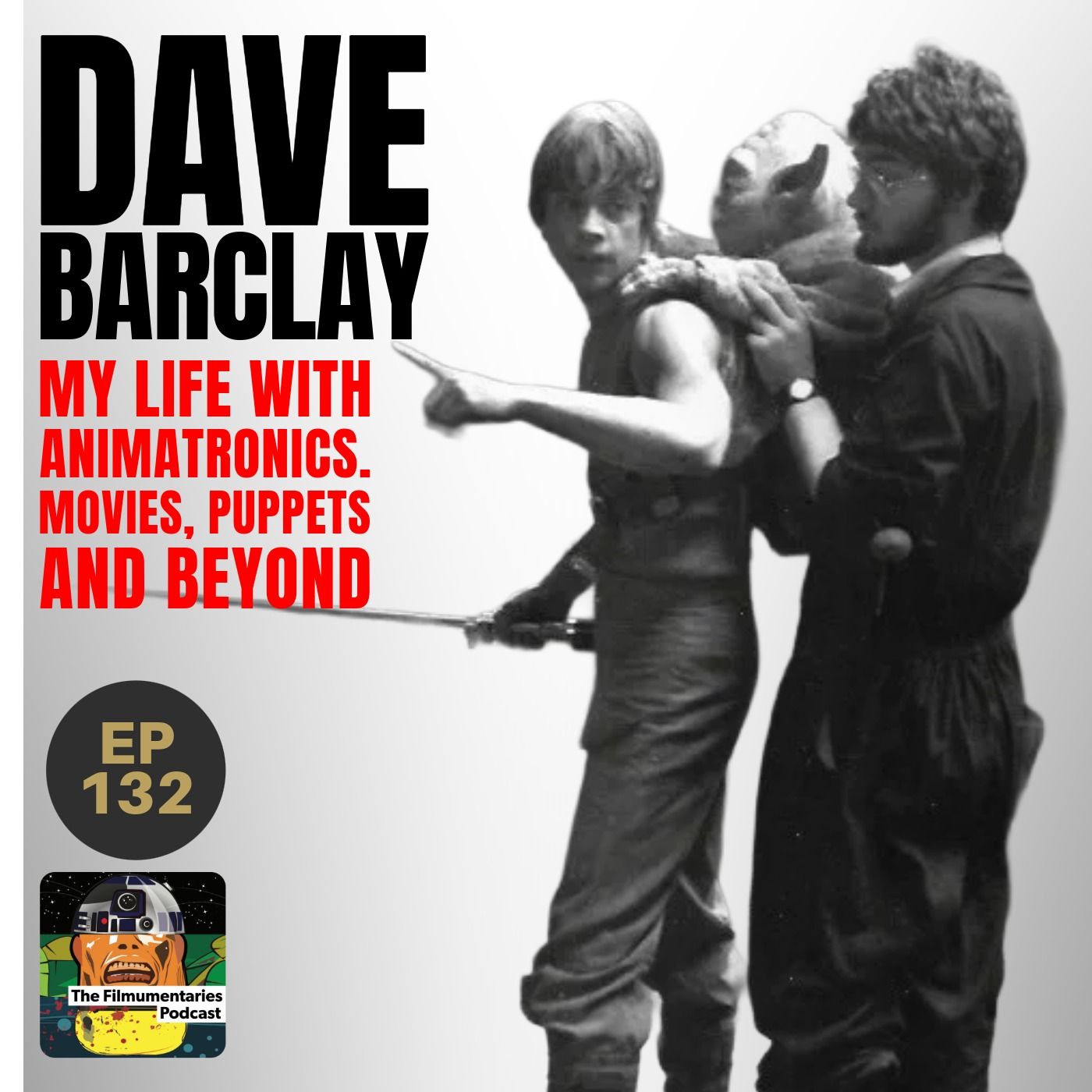 132 - Dave Barclay - My Life With Animatronics. Movies, Puppets and Beyond | Episode 132 - Dave Barclay - My Life With Animatronics. Movies, Puppets and Beyond!At just 19 years old, Dave Barclay found himself stepping into the role of chief puppeteer for Yoda in The Empire Strikes Back. It was the start of an extraordinary career in animatronics and puppetry that would see him bringing to life some of cinema’s most beloved and memorable characters. In this episode, Dave takes us back to his creative beginnings, growing up in a family of puppeteers, and the serendipitous chain of events that led from working in Hamleys toy shop to meeting Mark Hamill — and ultimately joining Stuart Freeborn’s Yoda team. We cover:His early inspirations from Planet of the Apes to making masks at home.The technical and creative challenges of performing Yoda alongside Frank Oz.Becoming chief puppeteer for Jabba the Hutt in Return of the Jedi.Working on The Dark Crystal, Little Shop of Horrors and Who Framed Roger Rabbit.The importance of collaboration between puppeteers, animators, special effects teams and actors.The process of writing his new autobiography My Life with Animatronics, Movies, Puppets and Beyond, filled with stories and photos from across his career.Dave’s journey is a mix of artistry, technical problem-solving, and being in the right place at the right time — but also about saying “yes” when opportunity knocks. Listen now to hear stories from a man whose work has shaped how we see and believe in some of cinema’s most iconic creatures. Find Dave’s book:My Life with Animatronics, Movies, Puppets and Beyond – available now at Cool Waters Productions.All my linksThis podcast is completely independent and made possible by listener support. If you’d like to help me keep making these episodes, you can join my Patreon community here: https://patreon.com/jamiebenning Watch more on YouTube:Check out the Filmumentaries YouTube channel for behind-the-scenes clips and extra content: https://youtube.com/filmumentariesAll my links | 1h 18m 26s | ||||||
| 8/6/25 |  BONUS - Propstore's Stephen Lane and Tim Lawes on some iconic props! | In this special bonus episode of The Filmumentaries Podcast, I take you behind the scenes of Propstore’s upcoming Los Angeles auction, featuring some truly jaw-dropping pieces of movie history. I was invited to a press preview at London’s Dorchester Hotel, where I spoke with Propstore’s Tim Lawes (Director of Consignment) and Stephen Lane (CEO and Founder) about some of the headline items, including:A screen- and photo-matched Darth Vader hero lightsaber from The Empire Strikes Back and Return of the JediThe iconic Jaws clapperboard with teeth, plus Bruce the shark’s eyesJane Fonda’s Barbarella costume and blasterWe discuss the thrill of uncovering long-lost props, the stories behind these legendary items, and what it means for collectors to own a piece of cinematic history. The auction runs September 4–6, 2025, streamed online from Los Angeles, with the full catalogue available at propstore.com. Next episode: My interview with puppeteer Dave Barclay, whose incredible career goes far beyond Jabba the Hutt.All my linksThis podcast is completely independent and made possible by listener support. If you’d like to help me keep making these episodes, you can join my Patreon community here: https://patreon.com/jamiebenning Watch more on YouTube:Check out the Filmumentaries YouTube channel for behind-the-scenes clips and extra content: https://youtube.com/filmumentariesAll my links | 14m 51s | ||||||
| 7/22/25 | 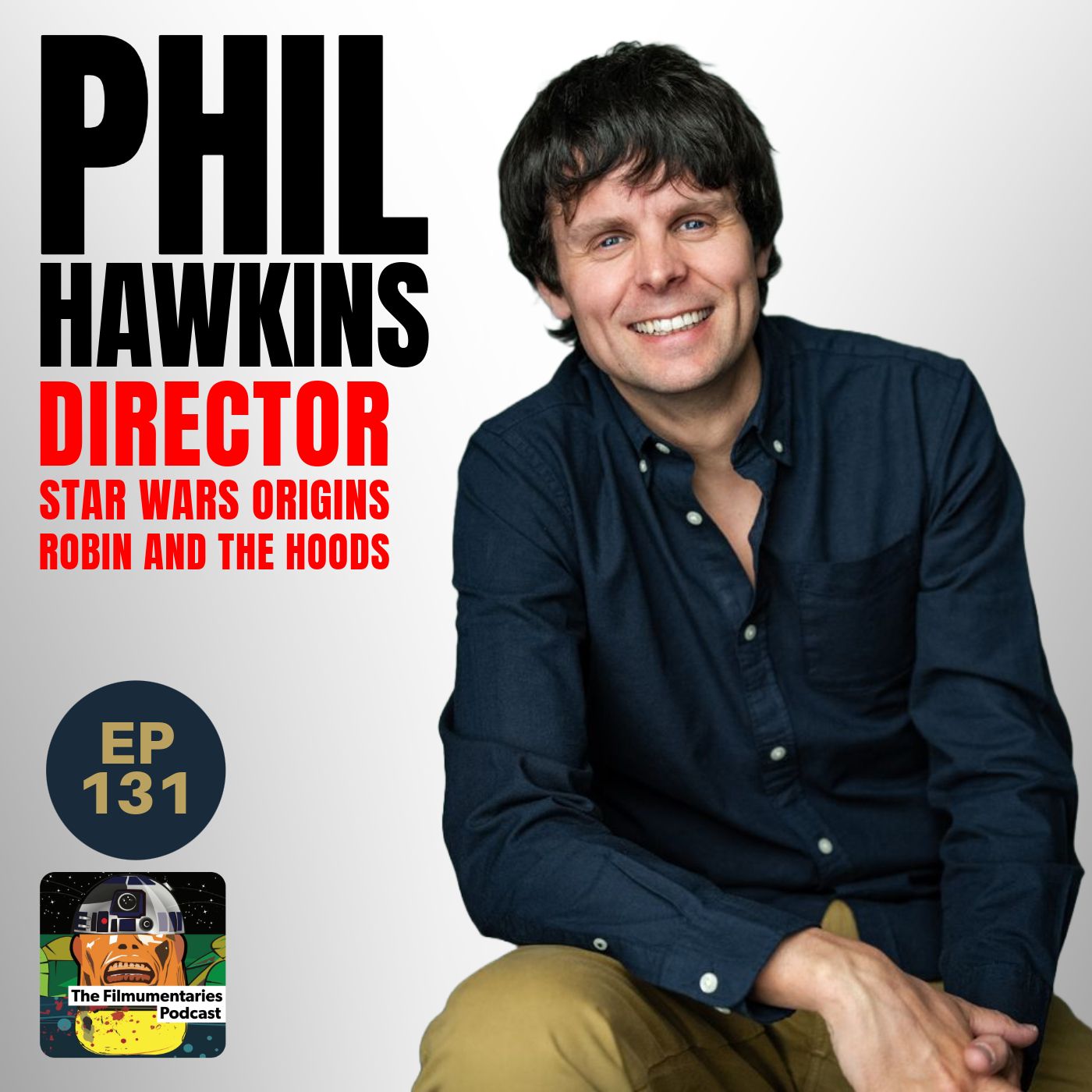 131 - Phil Hawkins - From Fan Films to Features. | In episode 131 of The Filmumentaries Podcast, I sit down with director Phil Hawkins to talk about his journey from a kid obsessed with Jurassic Park and Star Wars to a filmmaker directing commercials, indie features, and ambitious projects like Star Wars: Origins and the Sky Original Robin in the Hoods. Phil shares how he taught himself filmmaking as a teenager, cutting together VHS tapes and roping in friends to create homemade sci-fi adventures. We discuss how this DIY approach evolved into making shorts and, later, a career in commercials – where he honed his craft in visual storytelling, working with big crews, and balancing creative ambition with tight schedules. We also talk about his fan-favourite short film Star Wars: Origins, which went viral for its bold concept and cinematic scale, and how it helped open doors to bigger opportunities, including his recent family feature Robin in the Hoods. Along the way, Phil reflects on the importance of collaboration, and the lessons learned from juggling creativity with industry realities. If you’re interested in how a director moves from self-taught beginnings to studio-backed projects while staying true to his passion, this is a conversation worth hearing. Listen now to hear:How VHS edits and fan films became Phil’s film school.The leap from shorts to commercials – and what commercials teach about storytelling.Making Star Wars: Origins and the risks and rewards of fan filmmaking.Crafting Robin in the Hoods and wrangling a cast of young actors for an adventure film.Phil’s thoughts on building a creative, respectful set environment.Star Wars OriginsAll the linksThis podcast is completely independent and made possible by listener support. If you’d like to help me keep making these episodes, you can join my Patreon community here: https://patreon.com/jamiebenning Watch more on YouTube:Check out the Filmumentaries YouTube channel for behind-the-scenes clips and extra content: https://youtube.com/filmumentariesAll my links | 1h 24m 04s | ||||||
| 7/8/25 | 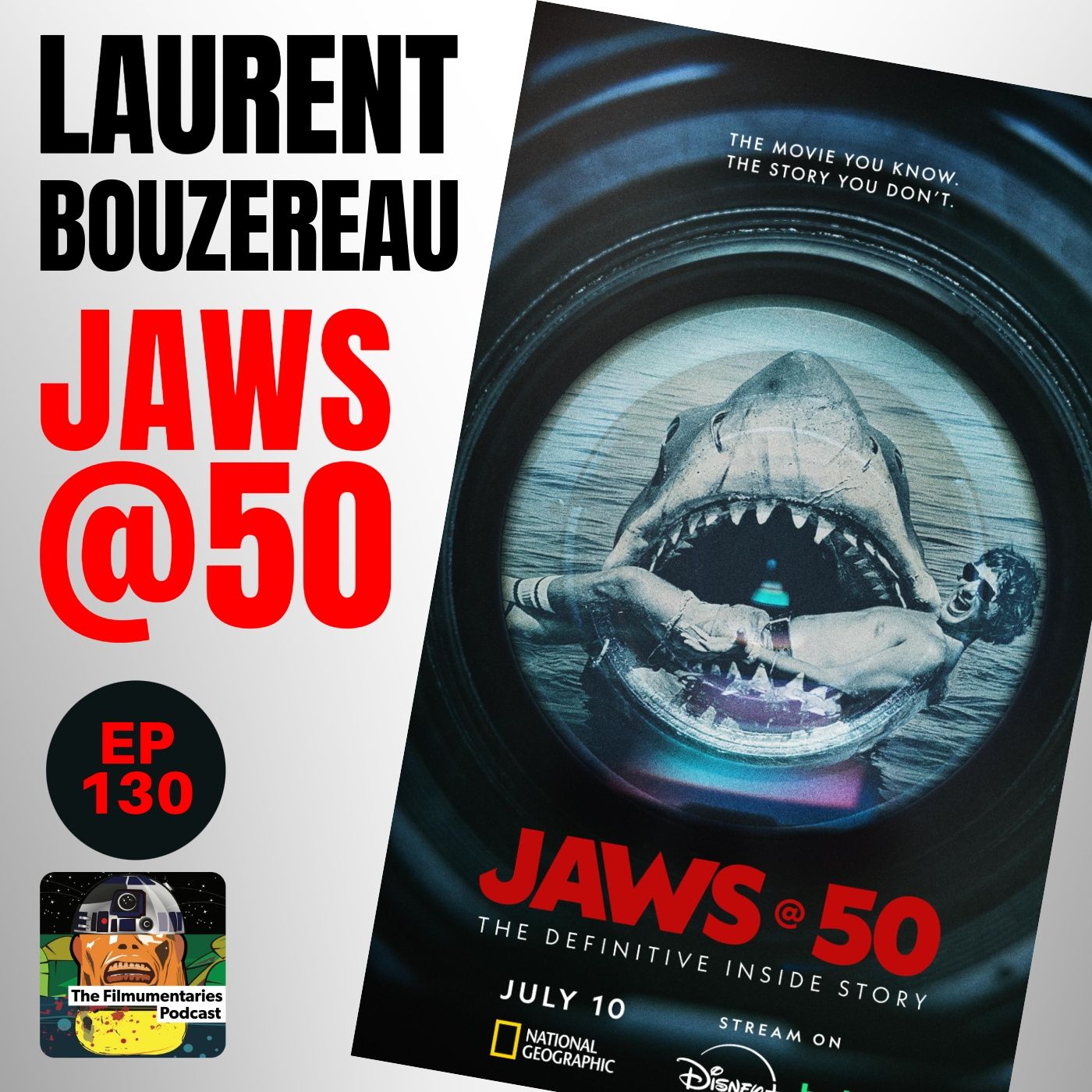 130 - Jaws @ 50 with Director Laurent Bouzereau | Episode 130 – Laurent Bouzereau on “Jaws at 50” In this special episode, I catch up with the legendary documentary filmmaker Laurent Bouzereau to discuss his latest project, Jaws @ 50: The Definitive Inside Story, premiering Friday 11th July at 8pm on National Geographic and streaming the same day on Disney+. Laurent, whose behind-the-scenes work on Jaws, Indiana Jones, and Spielberg has inspired me for years, reflects on the challenges of revisiting Jaws 30 years after his original 1995 documentary. We talk about the new angles he explored, from Spielberg’s emotional recollections and rare 8mm footage to fresh perspectives from filmmakers like Guillermo del Toro, Jim Cameron, and Jordan Peele. Recorded on the fly on Martha’s Vineyard during the Jaws 50th celebrations, this short but meaningful conversation touches on the legacy of Jaws, the humanity behind the production, and how Laurent’s approach has shifted over the years. Also in this episode:An update on my Joe Alves documentary and the incredible support from GoFundMe donorsA mention of my new two-part article on ILM's animation legacy: ILM Evolutions: Animation from Rotoscoping to Rango – now live on ILM.comLinktreeSupport the podcastThis podcast is completely independent and made possible by listener support. If you’d like to help me keep making these episodes, you can join my Patreon community here: https://patreon.com/jamiebenning Watch more on YouTube:Check out the Filmumentaries YouTube channel for behind-the-scenes clips and extra content: https://youtube.com/filmumentariesAll my links | 22m 33s | ||||||
Showing 25 of 159
Sponsor Intelligence
Sign in to see which brands sponsor this podcast, their ad offers, and promo codes.
Chart Positions
19 placements across 19 markets.
Chart Positions
19 placements across 19 markets.